Buzz Aldrin on the Moon, July 20, 1969 – Apollo 11. Photo credit: Neil Armstrong.
Reverse side: Cumquat Publishing Co. P.O. Box 4932, St. Louis, MO 63108
When considering this photo the isolation stands out. Besides Michael Collins orbiting the moon while waiting for their return, Buzz Aldrin and Neil Armstrong were alone. The sense of isolation is profound.
They were trained to deal with the mission and by all accounts did well. It was a unique moment in history, one in which many Americans took pride.
I witnessed what I could on television when it happened or on replay. I remember grainy images, a reality that seemed surreal.
It is a great photograph. One I’ll think about all day.
We often co-exist with an illusion we have unlimited time to live our lives. Living each moment, our fundamental outlook is there will be another. Many of us believe that each new moment has the potential to be better than the one in which we find ourselves. It may be true, yet there are limits.
When I retired April 28, 2020, at the beginning of the coronavirus pandemic, I wasn’t ready. I looked forward to getting dressed in my uniform (jeans, a shirt with the company logo, and hard-toed boots), driving across the lakes in my 1997 Subaru, and working an eight-hour shift that had a unique yet recurring set of variables that demanded something from me but not a lot. It was a retirement job to pay bills until Social Security kicked in at the full rate. I exited the work force with eyes open to avoid contracting the coronavirus.
I want another source of steady income.
If I return to the workforce, it will be on my terms, avoiding any public-facing job because of infectious diseases living in members of the public. That was a lesson of my last employment. I spent a lot of time sick before the pandemic because of contagious people.
While transferring files from my 2013 CPU to the new one I found file folders with ideas for earning money. Some of them brought income, yet not enough to rely on them without other sources. Having retired from my main career in 2009, I spent time exploring alternative forms of employment that would help pay the bills. It was a mixed bag, the best part of which was meeting so many people. A fellow couldn’t live on it.
We have a decent home life. I improved my gardening and cooking, and I’m writing more. I am focused on being a better photographer. I don’t view any of these activities as sources of income. If I have an abundance from the garden I may sell it at the local farmers market or donate to the food bank. Freelance writing brings something in, but it is lowly paid work. I would rather enjoy this creativity for what it is: a regular decent meal with ingredients I grew, and a legacy of writing. From time to time a subject gains a broader readership, as in the recent school board election coverage. There is personal satisfaction in it and that’s enough.
I resist commercializing our home life. A life worth living has some privacy. I enjoy creative outlets provided by gardening and meal preparation, opinion pieces to newspapers, and posting photos on Instagram. I attempt to refrain from stupid stuff on Twitter, which is my main place to mouth off. I am careful about what I say and depict about our private lives on those platforms.
What will I do with this moment? Write a few more words, edit, then hit schedule so it posts at 5 a.m. comme d’habitude. I look forward to breakfast as it’s been 11 hours since eating anything. There are onions and garlic from the garden… and a half used jar of Guajillo chili sauce I made. I’ll concern myself with breakfast just as soon as I finish this post. The anticipation makes life worth living.
Photo Credit: The American Scene Collection, American Oil Company 1969.
Reverse side: Washington Skyline, Washington, D.C. Located on the axis of the Lincoln Memorial and the Washington Monument, the Capitol Building is shown in the foreground with the Washington Monument illuminated in the background. See the U.S.A. in a Chevrolet. As you travel ask us.
Life would have been simpler if I had stuck to the same path as friends in high school. Maybe follow a narrative such as after school and military service find a job, raise a family, work it until retirement, then settle back and relax in the golden years. Simple.
Actual living was not simple. While many in my cohort married and started a family immediately after high school, I did not and that made a difference.
The trauma of being injured while young, and the subsequent hospital stay, removed me from conventional pathways. I wrote about it in 2009:
My earliest defining moment was the day, at age 3-1/2, when a swing-set set up in the basement of our Madison Street home collapsed and injured my head. My parents were horrified. I remember the pool of blood on the basement floor, holding the thumb of the ambulance driver, taking ether dripped into a funnel to anesthetize me for the stitches to mend my gashed head. I am lucky to be alive. What I learned through the injury and recovery in the hospital was that there is an infrastructure of knowledge and caring to support us when things happen. I watched the routines of the hospital staff, the doctor checking up on me, changing room mates and bed linen, daily visits from my parents and the handling of my propensity to get out of bed and walk around. This experience assured me that although we are vulnerable, we are not alone.
Over the years, Doctor Kuhl would examine the scar on my forehead and talk about my recovery when I visited him in his office. Today, I don’t think of the scar, and suspect most people do not even notice it. What I do think about is that while we are not alone, we must be part of a society that helps protect those who are most vulnerable, including the injured and infirm. When I was very young, I made a withdrawal from this bank and now the debt needs repaying.
Big Grove News, Jan. 18, 2009.
Little has changed since I wrote this. While I relied on the infrastructure of society, at high school graduation I had neither the interest nor skills to get married and start a family. I went to college instead.
In late 1968 or 1969, I sought Father’s approval while figuring out what to do after high school. Maybe I would study engineering, I told him. The practical, rational approach of an engineer to problem-solving was appealing. He neither approved nor disapproved. He looked surprised it was on my mind. He was completing his own education and perhaps was preoccupied. He would be gone soon afterward.
During senior year in high school we made a class trip to Washington, D.C. and New York City. It was my first trip on a commercial aircraft. We saw the U.S. Capitol and Washington monument depicted in this postcard at about the time it was printed. We played cards for nickels and dimes in our room each night. My winnings paid for incidental expenses through New York. In some ways the class trip was the beginning of living on my own and experiencing the world outside my home town. It seems appropriate it would start with the nation’s capitol.
My life divides into segments: preschool, education, work and family, moving to Indiana, and moving back to Iowa. Each was important for different reasons. As I went through time I didn’t know how each step would unfold.
My education, including military service and graduate school, had the momentum of youth. When I finished school at age 29, I was ready to do great things. Available opportunities were a disappointment. The trajectory of youth found me alone and unsettled, without a career or path forward. I would have to make my own way and that complicated things. In retrospect it was a good complication. If I hadn’t left my home town permanently for university, life may have been simpler.
I’m glad my circumstances gave me the chance to leave home and be different.
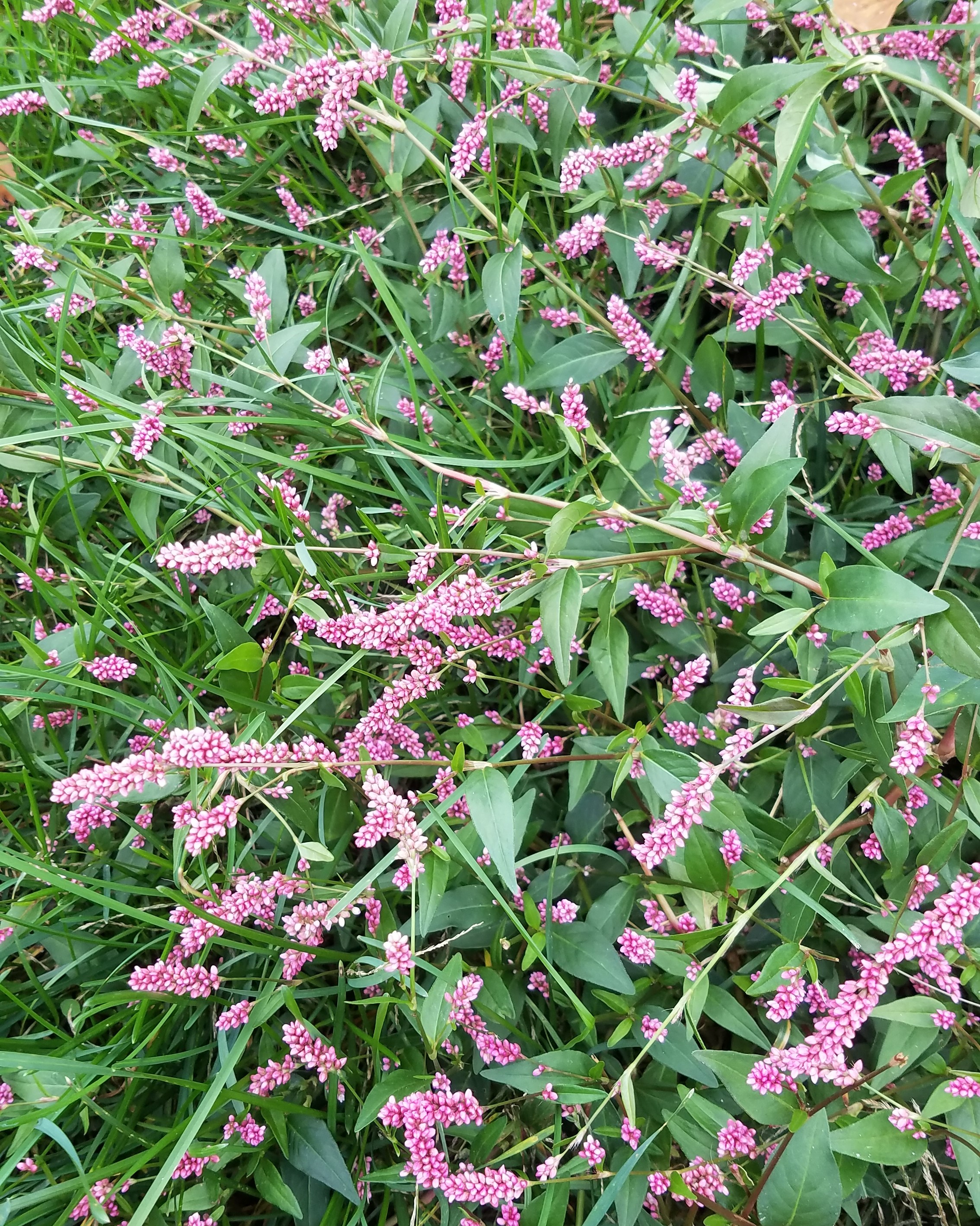
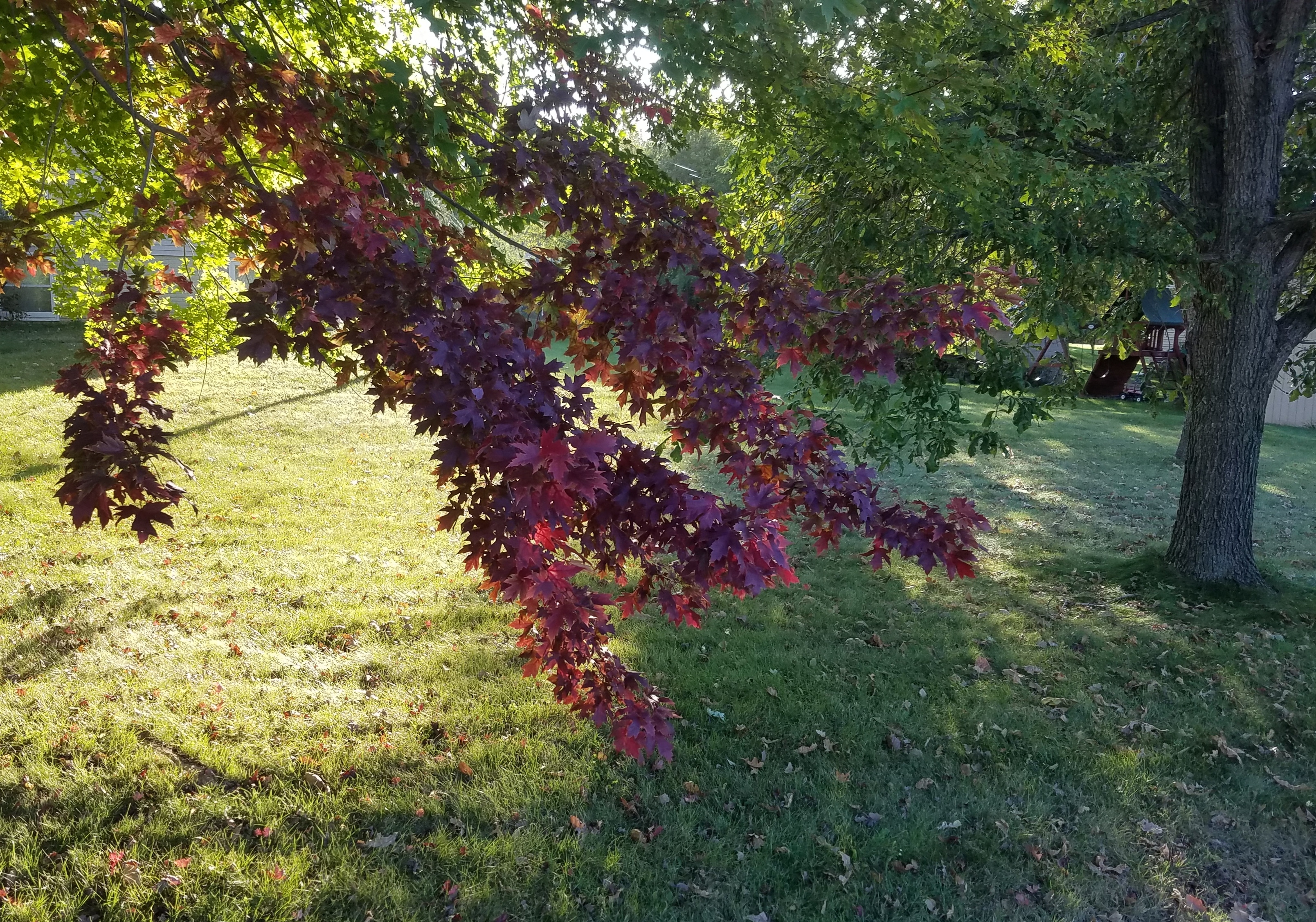
A hard frost is coming. This is Iowa and it has usually been here by now. We wait.
Lilacs near the front door are beginning to bud, so it’s crazy warm. Rain is in the forecast, although chances seem slight. A dry spell would be better so the lawn can be mowed one last time. Outside my personal world, we could use more rain. We could also use a hard frost. I went walking on the state park trail since we had neither.
Determining where I left my autobiography this spring is not as easy as I thought it would be. I know where the major documents are located and the ideas I had for structure (sigh of relief!) yet things migrated elsewhere in the intervening months. The main trouble is when one has written consistently since 1974, and has access to much of that writing, it is hard to get through it to see where the narrative should go. These things don’t write themselves, I’m finding. At present I want it grounded in some kind of reality. That could change, yet not now.
Year two of this autobiographical writing will proceed differently. I must lay out a timeline and hang documents and artifacts on it. I accumulated stacks of three ring binders for the purpose. I wrote extensively about some key moments in my life, others come to mind frequently, and some I haven’t even touched. Need to organize, fill our the voids, and pare down repetition. If by spring I have a set of binders on a shelf with documents arranged in chronological order in them, this year’s writing will be deemed successful.
Friday was good. I have positive feelings about the coming weekend. We will make through winter again, I believe. On the other side awaits a new garden and fresh opportunity of the kind spring in the Northern Hemisphere can bring.
We anticipate the renewal which begins here and now. Yet first we want a hard frost.
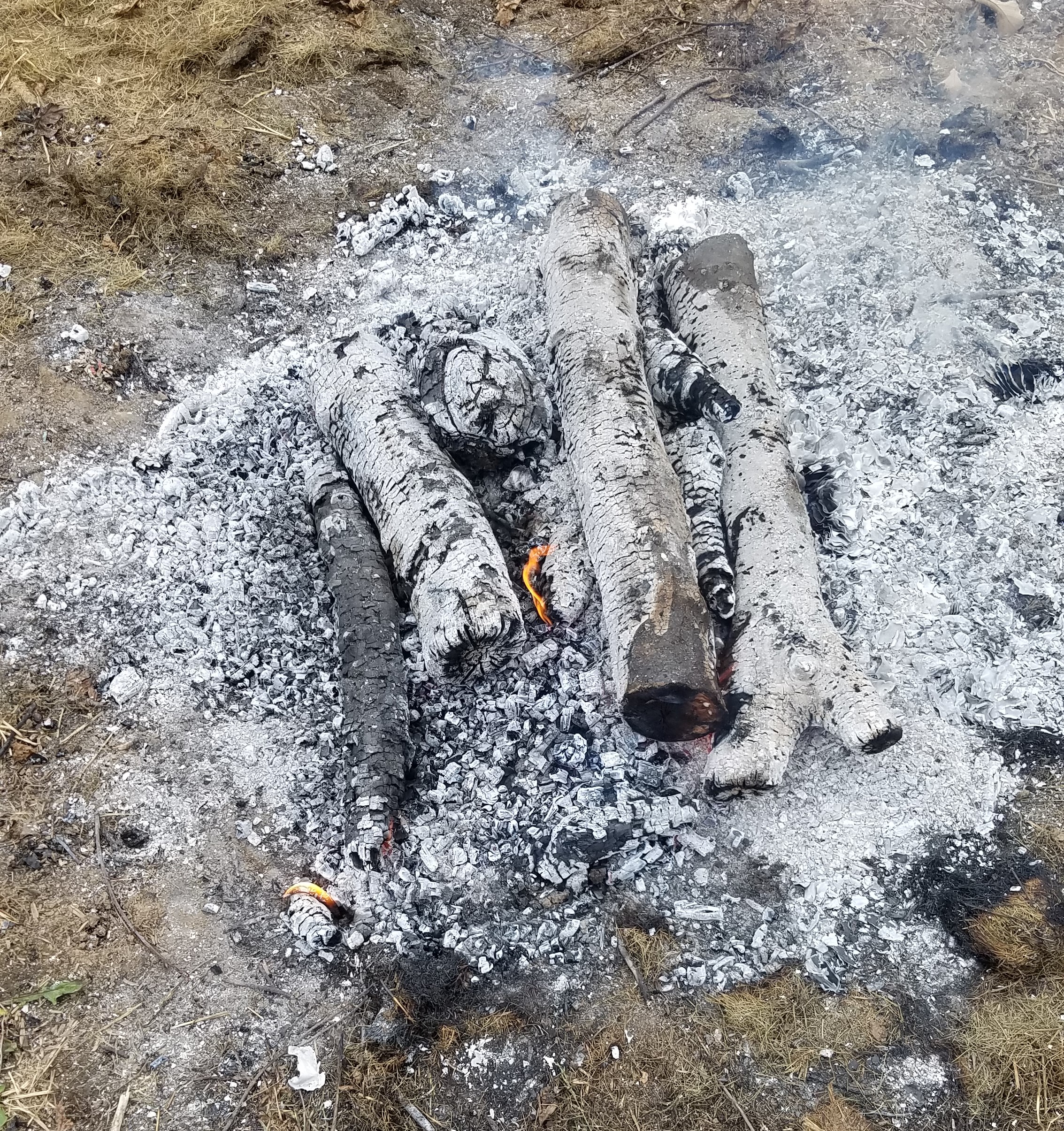
The brush pile included the last branches blown down by the Aug. 10, 2020 derecho. With enough rain to sate the drought, it was time to burn it. By nightfall it was reduced to ash, then a steady rain fell until morning.
One more mowing and I will get the John Deere serviced. After that, it will rest in the garage until spring. Deconstruction of the garden is ahead. I’ll need the mowed lawn to spread things out and organize for winter storage. I want to salvage and reuse landscaping fabric and the staples used to hold it in place.
The compost piles need to be moved and turned. I want to clear the garden plot where they are for more productive use. As my gardening skills improve I want more planting space next year. I have many wants.
I sat on the grass and watched the fire burn. I re-stacked the burning logs with a garden hoe and reduced the perimeter of the fire as it burned. I used old business cards mixed with shredded paper to start the fire. A pile of them lay under the burning branches. Once I turned them over they ignited.
We had an unexpected overnight visitor. I made a pot of chili using a fresh tomato, canned whole tomatoes, two kinds of frozen tomato sauce, and a can of organic tomato paste. It provided flexibility for supper time so we could focus on conversation.
A new day begins in our post derecho lives. The brush pile is gone, preparing a path toward garden’s end and winter.
Trail walking at Lake Macbride State Park on Oct. 25, 2021.
By the end of the year I will be seventy years old. More than anything, I’m glad to have lived this long. The plan is to go on living.
My work life ended last year because of the coronavirus pandemic. I would like a new source of income to supplement our pensions, yet there is only slight financial pressure to locate one. I am not ready to return to retail or any public-facing job as I’m not convinced it would be good for me. Each day without work outside home seems a little weird. I’m trying to adjust to a new path. It isn’t going well.
There is no bucket list because I did most of what I intended going through my days. The list of things I want to accomplish isn’t long: organize and write an autobiography; maintain good health and a decent quality of life. I need to be here for those who depend upon me.
How childcare was handled during my life helped me become who I am. Mother stayed home with us while Father worked at the meat packing plant. She was there for most of the important moments of my life. I don’t know how they made it on less than $100 per week yet we had a good quality of life even after Dad died and as I left home for college. When our daughter was born, I earned enough for my spouse to provide full time childcare while I worked outside home. It freed me for jobs that demanded time and energy. I was able to travel much of the country and see things of which I had no idea. My life would have been different had these childcare arrangements not existed. Now my concern is who will care for me as I become infirm.
Having taken a course on aging in America in graduate school, I feel ready for what is ahead. Coping with sadness and loss is here. So is dealing with physical limitations. I can sense the isolation and loneliness coming. With turbulence in society there is concern for our physical security. Most of all, changes in the environment, in our neighborhood, and in myself will require attention I hadn’t anticipated. For the time being I feel hope these changes can be adequately addressed.
Today it feels comfortable to get in the car and go on a couple hundred mile trip. That won’t always be the case and I’m ready to let go of driving when the time comes. For the moment, our 2002 Subaru won’t last another five years so it will need to be replaced. I did a study of how much we can afford to spend on big purchases over the next ten years based on our income. It is not as much as I would have liked. Fingers crossed, it will be enough.
What I’ll do with my remaining time is unknown. The framework is two stages: the next ten years, and those afterward. If I maintain my health and avoid common diseases (cardio-respiratory, cancer, diabetes, dementia and Alzheimer’s disease, and depression) the septuagenarian years will be a time of getting bigger projects done: writing, home repair and refurbishing, and gardening. After age eighty, should I live so long, the pace of things is expected to slow down. Both my mother and maternal grandmother were mentally alert and active until age 90 so I’m hopeful.
Time goes so fast!
I walk on the trail as often as I can. It is exercise. It is a chance to reflect on my life. It is an opportunity to consider the future. Mostly, though, it is walking. As long as I’m doing it I feel I’ll live forever, even if I know differently. It is always a journey home.
Reverse side: illegible postmark and message written in pencil.
This postcard is intended to be a joke. I love it for its gossipy nature. It was written in pencil and the script has all but faded away. The postmark and address are illegible. If there was a written message, it is gone. Names are written next to the figures in the image, but can’t be read. It is reflective of a forgotten time of white privilege.
What world does this represent? The man and women are unlikely married and that alone is noteworthy according to the sender. If Facebook existed at the time of the postcard, an appropriate comment and discussion thread would be forthcoming.
I have used Facebook since March 2008 to stay in touch with our daughter after her move to Colorado after college. She encouraged me to join. I have no regrets.
To feel better about Facebook, I limit use of the platform. I cross post from Instagram, serve as admin for two private groups, and occasionally post some of my writing there. Most of my daily activity is checking notifications and responding as briefly as I can. I respond with a vague notion that friends who show up in my timeline will be those with whom I interact.
As part of my usage, I curate the “life events” part of my profile some Sunday afternoons. At first it was a timeline of selected musical concerts I attended. Eventually I added other significant events like an audience with Pope Paul VI, buying our first home computer, and selected key moments of engagement in society. I work on it from time to time and it encourages me look up dates and record them as a reference for my autobiography. Because I isolate myself from most of what is toxic about the platform my list of grievances is short. The private group with neighbors is particularly useful in my role as president of our home owners association.
While white privilege persists, societal attitudes reflected in this postcard do not. The circle of people with whom one might share such a titillating message is limited to a small subset of those we know. Most think the better of mocking young love in an age where joy is stripped from many aspects of life. We encourage behaviors of white privilege and keep such thoughts to ourselves. The better behavior would be to determine how to recognize and purge white privilege completely from our thoughts and deeds.
The postcard is distinct. Coming from the time it does, I appreciate the ideas behind it. That taunting, juvenile assertion more often found on the playgrounds of graders than in adult society.
To read all of my posts in the series, click on the tag Postcards from Iowa.
My first freelance article appeared in the Iowa City Press Citizen Oct. 17, 2014. In the first year I wrote 76 articles for the newspaper, which when added to my previous work for the Solon Economist and North Liberty Leader brought the total to 100 before moving on to other writing. At least I think that’s how it went.
Freelancing for a newspaper paid a flat fee per article published. The income was dependable, if low at $50 each.
The best part of newspaper work was meeting so many people in the community. It opened a window to the work and attitudes of young people and entrepreneurs. I also got chased away from a splash pad by someone because I “looked suspicious.”
Some of my favorites include Trevor Owen, who gave up culinary school to cook as he knew how and opened a restaurant in Wellman; interviewing local icon Willard Boyd; interviewing Scott Koepke about his visit to the White House garden; the bridal shop at Iowa River Landing; interviewing Ellen Buchanan; and learning about Iowa’s child mental health problems from Tammy Nyden. It’s hard to pick a favorite because every one of them was engaging at some level.
I’ve taken to writing letters and opinion pieces in newspapers and for the most part get published. There is no pay for that. I don’t have much interest in writing for money, although I created a Patreon account, just in case I lose the ability to pay for this website.
I kept paper copies of most of the printed articles. The differing sizes of the clippings makes them difficult to store. I suppose I’ll transcribe some of them into digital format and include the most significant ones in an appendix to my autobiography.
At least I had the opportunity to write for newspapers. I wouldn’t call sitting through school board and city council meetings fun, exactly. But it is a common experience I’m glad to share with others that had it.
It was another day of rain on Wednesday. We need rain yet I’m getting a bit tired of being cooped up.
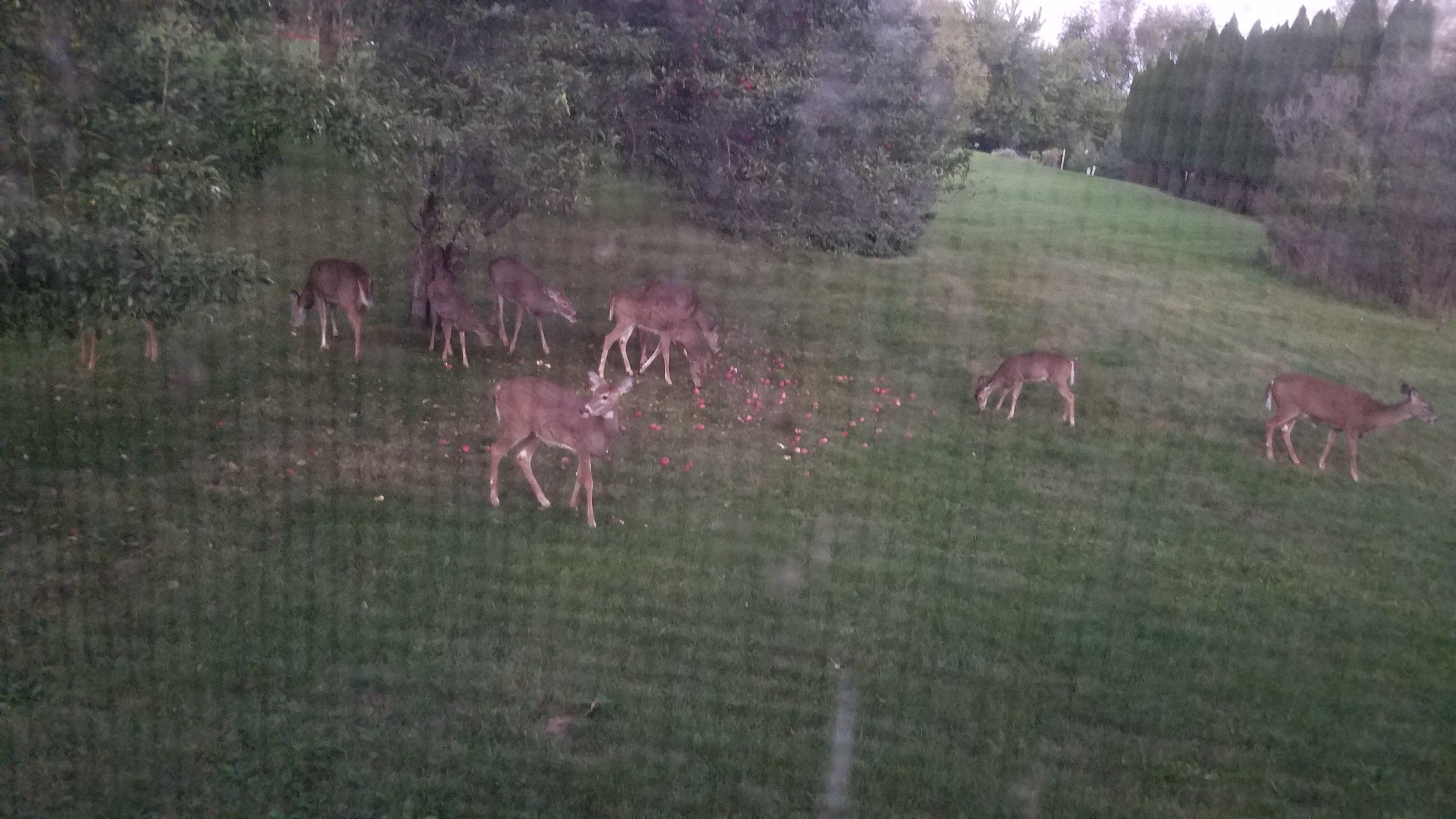
We ate the last of the acorn squash I grew for dinner. We are down to the yellow and red storage onions, 27 garlic heads, and about ten pounds of potatoes. There is garden gleaning to do and the first frost has not been forecast. We have a glut of apples and deer are not making enough progress eating fallen ones under the tree, even if they all know the smorgasbord is open.
I bought two boxes of packets of USDA organic gummy bears for any trick or treaters this year. I haven’t decided whether or not to turn on the front door light because of the recent outbreak of COVID-19 in the schools. I want to be ready because of supply chain issues much publicized in the media. Only regret is the gummies have gelatin, so are not a vegetarian option for the kiddos, as parents today call their children.
I wonder how my mental capacity is changing with age. I wonder if I will be able to tell it changed… probably not. I’m not ready to kick back and work on my reading pile for the rest of my days. God help me if I connect a new television to the cable. There are more gardens to grow and a house to fix up, all with the limited resources of a pensioner. I’m ready to retire, but not sure what that means in 2021.
Reverse side: “In All That Is Good, Iowa Affords the Best.” Iowa was admitted as a state Dec. 28, 1846. The Capitol was built 1873-1886 at a cost of $3,296,256. The domes are plated with 22-carat gold. The mural “Westward” hangs at the head of the grand stairway. “Iowa, Her Affections Like The Rivers Of Her Borders, Flow To An Inseparable Union”
We don’t pick the circumstances of our birth. Because life has been tolerable in Iowa I stayed. I had experiences elsewhere: in the military which took me to South Carolina, Georgia and Germany, and a work transfer to Indiana. Both times I returned to my home state. If I had found a place more suitable for living I would have moved there. A person gets used to what they know.
I graduated from the University of Iowa twice yet I don’t consider myself to be a “Hawkeye,” the nickname for graduates. I don’t even follow the sports teams despite large sums of money the state invests in them. I don’t farm or work for someone any longer. As a pensioner I could live anywhere. So far I continue to choose Iowa.
It is not bad living here… yet. Despite growing coarseness in society, where personalities rage at one another, denigrate liberals and intellectuals, and do dumb things, I’m still here. We are a place where Qanon members and dark money lobbyists are close to the governor while I am not. The postcard is not clear about “all that is bad” yet we have plenty of that in Iowa. At the point where there is concern for personal safety I might leave. Where would I go? To a place where my pension dollars would stretch further. Perhaps outside the United States.
The designer of this card was a publicist and an optimist. I recognize the objects on the front side and have been in the state capitol and historical building many times. The idea we are an “inseparable union” is ridiculous in 2021. It would be fitting to mention the two bordering, polluted rivers flow to the Gulf of Mexico where they contribute to a large dead zone. Hardly stuff to be used in promoting the state. The card is undated but is a product of the 20th Century. We are so past that now.
We make the best lives we can. We are handicapped by education, social status and physical attributes. Those handicaps can be overcome. In Iowa I’ve always been able to find work enough to own a house and pay the bills. Emblematic of our financial circumstances is I drive a 2002 automobile. It is low mileage and serves basic transportation needs. I wouldn’t want to make a trip to New Jersey in it.
There is a migration of young people leaving the state. Why would they stay? Drawn to large cities like New York, Chicago and Los Angeles, they also move to Colorado where Denver has become a gathering place for young professional people. Florida used to be a destination until Governor Ron DeSantis came along. Now there is an ongoing exodus from Florida as well. Iowa’s governor seems resolved to follow DeSantis’ lead. It’s another reason young people leave the state.
I like this postcard and wish the slogans were true. If wishes were horses, beggars would ride.





 Journey Home
You must be logged in to post a comment.