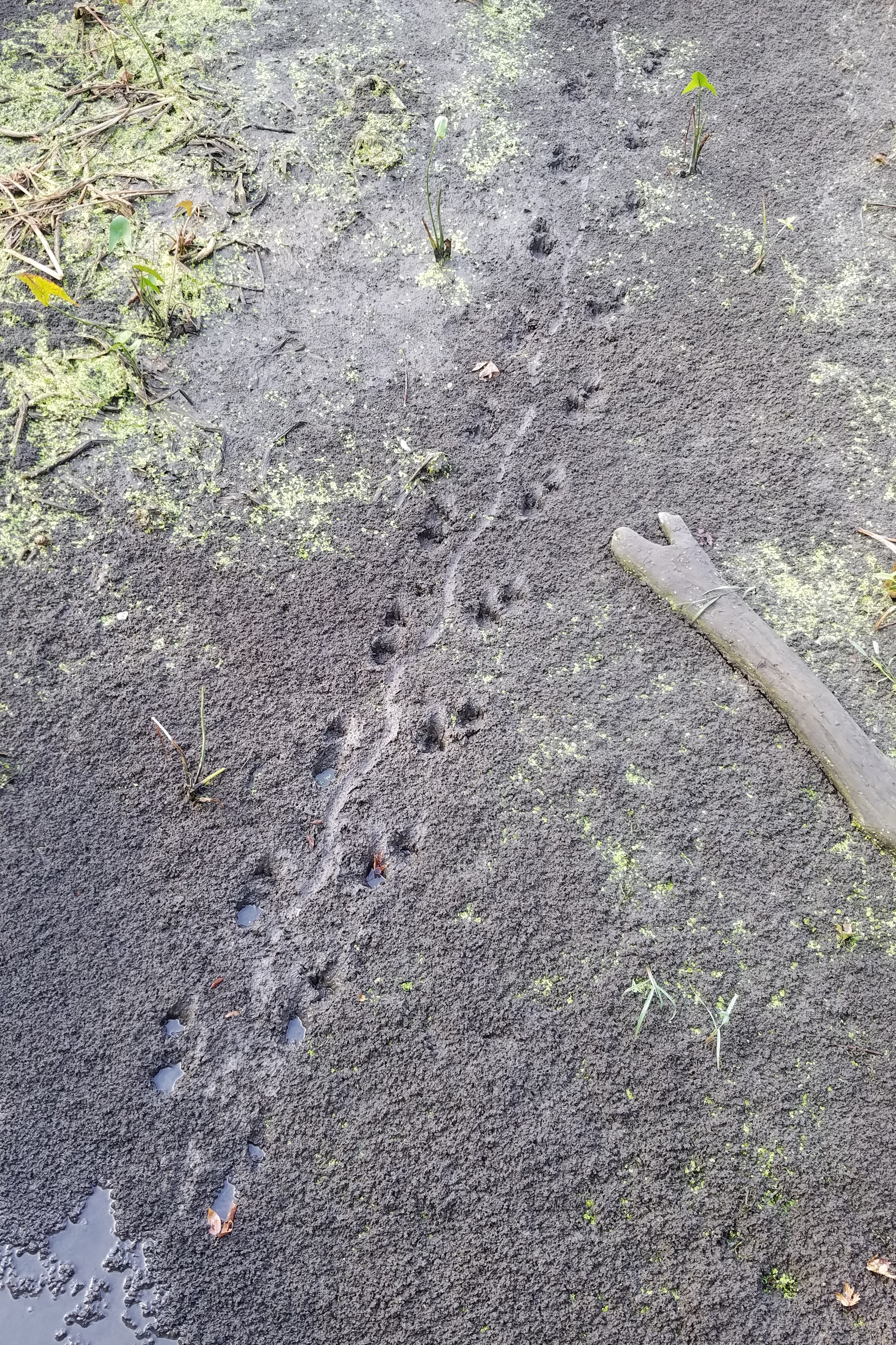
Drying drainage ditch leading to the lake before the rain.
Friday I moved my 2013 CPU and installed a new one on my writing desk, a consequential decision for a writer.
On the one hand, things go bad with old hardware and I don’t want to crash and lose files. On the other, there is a lot to learn about using the new computer even though for most applications the transition has been reasonably smooth. I have a lot of files to deal with.
The most consequential decision was to convert from my 2006 version of Microsoft Office to Microsoft 365. The concern is I haven’t been through all of the email files going back to 1999 and that remains on the to do list for my autobiography. I don’t really want to import all those files to the new hardware or put it in the cloud. Luckily the new version of Outlook can synchronize with the web version of Gmail, or so it seems I’ll have access to that part of the archive. Is it worth a three-hour tutorial video to learn the functionality? Probably.
The other decision pertains to photos. I used Google Picasa since close to its inception. I have files from the earliest days of my conversion from film photography to digital, including a photo of Barack Obama taken on my flip phone at the Harkin Steak Fry in 2006. I began curating all the photos yet I hadn’t planned to convert software while I did. Google stopped supporting Picasa in 2016, which shows how closely I follow that segment of the internet. I don’t remember a notice from Google. I’m looking at newer photo managing software like Fotor and GIMP, but I may finish the curation project on my old CPU with Picasa and use the new software going forward.
Saturday morning I looked up a lot of passwords. I kept the old monitor, Made in China in October 2003, according to the sticker. I should likely upgrade to a new one when the budget gets a bit ahead of where it is now. A new monitor is not as critical as a new CPU. Other old peripherals bought long ago continue to function so they won’t be replaced until they die.
Sometimes I think we’d all be better off with a text-based command line interface to the internet. But for IBM, Apple and Microsoft, that could have been our future. It would have been a different digital world.
I needed this change. As I approach my seventieth birthday there is an urge to discard stuff not worth passing along to those who succeed me. Old computer files may be one of the least important legacies to leave behind. Curation work is full of memories and I appreciate that aspect of it. Curating files keeps me busy without spending money, which is also something a pensioner needs.
I welcome the new Dell CPU. Hopefully I won’t have to buy many more.
Most everyone was affected by the six-hour outage of Facebook on Monday, Oct. 4. Being offline with the social media network had limited impact on my daily life, although globally, many people rely on WhatsApp which was also down along with Instagram.
I discovered the outage while logging in to read the Facebook pages of school board candidates. The research was not critical so I worked on something else when I couldn’t get in. Like with any interruption, it was hard to get back to the project even when Facebook returned.
When former Facebook data scientist and whistleblower Frances Haugen was testifying before the Senate Commerce Subcommittee on Consumer Protection on Tuesday, it got wall-to-wall media coverage. For someone plugged into the internet like I often am, it could not be ignored. By the end of the day, Facebook founder and chief executive officer Mark Zuckerberg had responded to the proceedings on his social media site. The endgame here is two things. When billions of people participate in an online social media platform there will be problems. Facebook and other social media applications should be regulated more than they are. Now it’s time for the Congress to do their work.
I joined Facebook in March 2008, the spring after our daughter graduated from college. It was a way to stay in touch. Over the years Facebook was eclipsed in our relationship by other social media apps and today I gain insight on Twitch, and to some extent Tik Tok. The migration of the millennial generation from Facebook has to be bad for the company’s bottom line.
I don’t use WhatsApp. I make a post on Instagram every day or two and cross post it to Facebook. My time on Facebook is reading notifications, wishing friends a happy birthday, being admin for two private groups (high school classmates and neighbors), and posting selected writing from this blog. I store some information on the platform yet my main biographical information is on LinkedIn. Facebook serves a function in my life yet could easily be replaced.
We hear about advertising on Facebook a lot. I don’t recall seeing many ads, and that’s likely because I rarely scroll my time line and when I do, my ad settings are to show me the most generic types of ads selected by the platform based on demographics they know. I get a lot of ads about medicines, the names of which I can’t pronounce. They are easily dismissed without reading. I am not looking to buy something when on Facebook so I pay little attention to ads.
My visits to Facebook are brief and with purpose. I save my scrolling time for Twitter where I maintain lists of users in whom I have interest. Facebook decided what posts I should see and occasionally I see something that is of genuine interest. Not often, though. Not often enough to spend much time there.
I’m agnostic about Facebook and its related companies. I use the application when it brings value. Otherwise I don’t open it and don’t have it installed on my mobile device. When there is a hiccup on the internet we all hear it. With time, it becomes part of the background noise and out of sight. I’m okay with that.
Reverse side: Abraham Lincoln from New Salem. This bronze statue by Avard Fairbanks was given to the State of Illinois by the Sons of Utah Pioneers in 1954. It is located at the top of the hill in New Salem State Park near the entrance to the village. Published by Color-View, Inc., 208 N. Main St., Rockford, Ill. Postmarked May 17, 1962 in Rochelle, Ill. with a note from Father.
I grew up in Davenport, Iowa. Iowa is not the land of Lincoln. That is across the Mississippi River in Illinois.
Father sent this postcard from Rochelle, Ill. where he presumably attended a meeting for the Amalgamated Meat Cutters and Butcher Workmen of North America. I don’t recall. I was ten years old. The message on the back was, “I’ll be home before the card gets there so I’m saying goodbye to Rochelle.”
We stopped by Father’s step-mother’s place in Rock Island one time. She wasn’t home. Gladys was grandfather’s second wife after Ina Elizabeth died young of food poisoning. Grandfather died of complications from surgery. According to her obituary, Gladys owned and operated Deaton’s Diner for 35 years. She kept the family name, adding two additional husbands by hyphenation after grandfather died. She told me, in the only letter I have from her, that the marriage into the Deaton family was a business proposition. All three of her husbands are buried next to her in a Rock Island Cemetery we visited decades ago. The cemetery sexton knew “Mrs. Deaton” well.
In high school, we took the bus downtown then walked across the Centennial Bridge to Rock Island where a movie theater was screening a serialized story of The Batman made by Columbia Pictures in 1943. After the television program debuted in 1966, I was all about the Batman. All 15 serial episodes were screened one after another. It was a long walk to see them, but we felt it important to include the serial in our Batman fandom.
On my trip back to Iowa from military service I stopped and stayed with friends in Springfield, Ill. for a couple of days. During that trip we visited Lincoln’s tomb and his house, which had been opened to the public. I recall a number of book shops displaying various Lincoln books in street-facing windows. Many words have been written about the 16th president. He felt more real to me after that visit.
I spent the most time in Illinois when we lived in Indiana. Work took me all over. I got to know Chicago and the suburbs, as well as most other parts of the state. I went anywhere with an opportunity to recruit truck drivers.
I’m lucky to have this postcard. It’s one of the few notes Father sent me. It could easily have disappeared with my comic book and baseball card collections left in Mother’s attic when I moved from home in 1970 to attend college. I don’t think of Father much these days. When I do, it’s comforting to have things I know he touched as well. It is part of making a life in the time of the coronavirus.
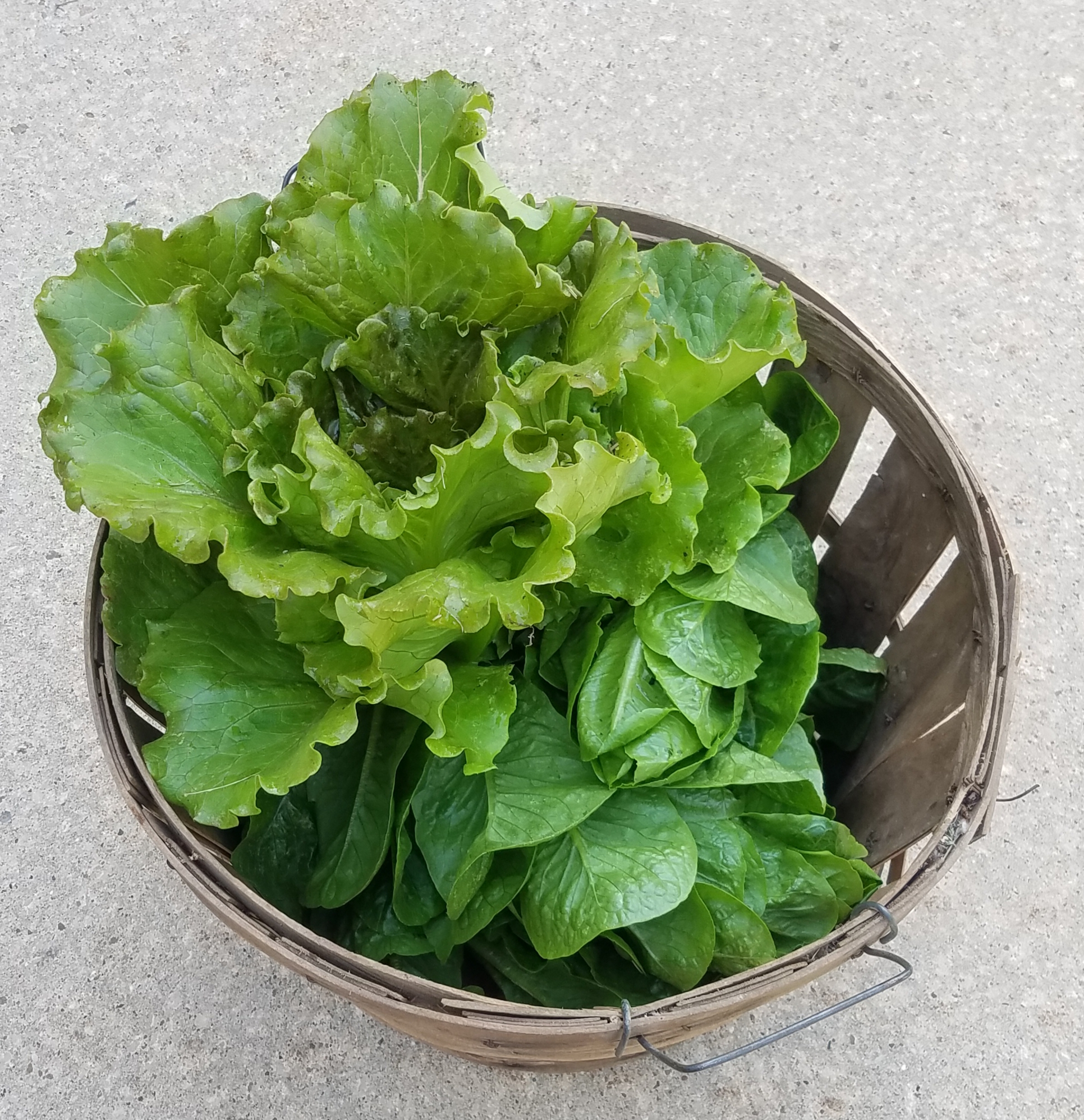
Lettuce harvested Sept. 29, 2021 from the row covered plot.
Democrats either don’t know how or haven’t the will to make Governor Kim Reynolds pay a political price for outrageous and sometimes false statements she makes. As the recent Selzer poll illustrated, Reynolds’ approval rate continues to improve. Democrats sit back and watch the numbers move up while wringing their hands. We can do better than that.
By pay a political price I mean hitting her where she lives among her Iowa political constituencies. I don’t mean posting a mean tweet or writing a blog post for limited circulation. Complaining about the governor’s latest outrage to friends may make us feel better but does little to impact her popularity. We tend to believe no one could support this governor. The fact is many do, enough to re-elect her.
Reynolds does not write her own talking points. She recycles frequently updated Republican political buzzwords. Reynolds now beats the word “inflation” like a drum.
“We have a crisis at the border, a disaster in Afghanistan, and inflation is soaring,” Reynolds said in an Aug. 19 press release. “President Biden is failing on each of these issues… I have had enough, and I know Iowans have too.”
She name checks the president, associating “inflation” with the Biden administration, along with two other talking points. Inflation! Disaster! Crisis! She wasn’t the first to do this.
The Koch network-backed Heritage Foundation rolled out the “inflation” attack seven days earlier in an opinion piece in the Washington Examiner. “Diminishing the paychecks of the average person with inflation and weak growth will only advance the Chinese narrative that they are outpacing the U.S. free enterprise system,” wrote Jessica Anderson and The Heritage Foundation’s Vice President James Carafano.
Not so fast!
It is not credible to say there is inflation when personal experience doesn’t reflect it. My weekly expenses for groceries and sundries remain unchanged in 2021 compared to 2020. Yes, fuel prices are higher but for Pete’s sake there were two recent hurricanes in the Louisiana-Texas oil patch on the Gulf Coast. Of course this disrupted petroleum product supply and prices spiked. Meat prices are up, yet is that market manipulation among the small number of meat packers? Congress believes so and is investigating. Are these things inflation? No, they are not.
The last paragraph is a perfect example of what Democrats do wrong. We use logic in a culture war. We also set ourselves up to lose.
How do we make Governor Reynolds pay a political price for crying “inflation” along with other right-wing inspired parroting of Heritage Foundation’s current framing? Like most Democrats, I don’t know what will work. What I do know is it is time to figure it out.
Our response cannot be there is no inflation, no crisis at the border, or no disaster in Afghanistan. When we do this the effect is to reinforce Reynolds’ framing of the issues and help her gain popularity. We’re not supposed to be helping her!
The first thing we have to do is accept reality. Three headlines appeared in the Iowa City Press Citizen on Sept. 23:
“Grassley has big lead in possible matchup.” “Sen. Ernst’s job approval ticks upward slightly.” “How much longer can we keep doing this?”
The first two refer to politics and the third to employee burnout at University of Iowa Hospitals and Clinics during the coronavirus pandemic. These reflect realities many Democrats seek to dismiss. We must embrace them and work to change the underlying reality.
We can’t use Republican framing to try to advance our causes. A hot topic in Iowa today is mask mandates in schools. Reynolds’ familiar refrain on wearing face masks can be found in a Sept. 13 press release, “…parents’ ability to decide what’s best for their child.”
Don’t get me started. Not because I can’t logically explain the ways this statement is wrong, but because I can. In a culture war we need a different approach from logic because it serves Reynolds more than Democrats.
I hope Democrats will find their way to make Reynolds pay for the misrepresentations and outright lies. If we don’t have the will, we may as well kick back and take it easy while Republicans dominate the state’s politics.
~ First published in the Fall 2021 issue ofThe Prairie Progressive, Iowa’s oldest progressive newsletter. Prairie Progressive is funded entirely by reader subscription, available only in hard copy for $12/yr. Send check to Prairie Progressive, Box 1945, Iowa City 52244. Click here for archived issues.
As a freelancer for the Iowa City Press Citizen I took any story offered by my editor. I was recommended by her predecessor when the newspaper was short reporters. The P-C was in transition as their parent company Gannett outsourced printing, sold the presses, and moved from spacious offices on North Dodge Street to a walk-up on Linn Street. In all, I wrote about 100 freelance articles for the Press Citizen, Solon Economist and North Liberty Leader during 2014-2015.
The following article about Scott Koepke’s visit to the White House Garden during the Obama administration was one of several front page stories I got. I had been working for a couple of farms tied into the local food movement and Koepke’s experience was as good as local food gets. It is one of my favorite newspaper articles among those I wrote.
Lessons for Iowa from the White House Kitchen Garden
A local food advocate and gardener recently returned from Washington, D.C., where he had the opportunity to visit first lady Michelle Obama’s White House Kitchen Garden.
“I’m still floating from the experience,” said Scott Koepke, education and outreach coordinator for New Pioneer Food Co-op, after the trip. “I’ve been telling folks that I wish I had some grandkids to pass this story on to. It was a once-in-a-lifetime opportunity for a gardener.”
Koepke’s sister, Ann, arranged a formal tour of Obama’s kitchen garden on Oct. 20. While there, he found lessons to apply in Johnson County. “If the president can do it, we can do it,” he said.
“What I appreciate most about Michelle Obama’s influence is that she has not only put nutrition and balanced diets high on the national agenda, but she has shown a creative use of green space for edibles, not just turf grass. As such, the White House garden message advances biodiversity, food security and, as the tagline on my email says, ‘Building community by building soil.’ “
The visit to Washington directly serves Koepke’s work with the Soilmates program, an interactive, organic garden and compost education service for children and adults, offered by the co-op.
He works with area schools to create garden clubs with plots of vegetables on school property. Koepke interacts with more than 33 organizations and 8,000 school children and community members annually, covering gardening, composting, soil science, local foods and life skills.
One of New Pioneer’s primary environmental missions is to stimulate the local production of organic food, Koepke said. Soilmates’ child-driven focus hopes to advance that mission by growing stronger community roots and sprouting the next generation of gardeners and soil-lovers.
“Just like seeds that often lay dormant, sometimes the gardening experience doesn’t manifest itself in transforming a life until years after the initial introduction of getting in the dirt,” Koepke said. “I’ve had folks come back to me many years after they worked with me saying that the lessons learned in the school garden helped them through rough waters. I couldn’t ask for anything more rewarding as a teacher.”
“The White House kitchen garden experience has affirmed even more the work I’m so blessed to do here with children in school gardens,” Koepke said.
Local farmer and school garden advocate Kate Edwards, of Wild Woods Farm, confirmed the didactic nature of the White House Kitchen Garden. “I think the White House garden is a fantastic example and a wonderful use of space,” Edwards said in a text message. “Growing a garden is a fantastic way to interact with the food system and to take a vested interest in your own health.”
The support comes from other advisers, too.
“I believe Soilmates is on the leading edge in Johnson County to nature-based good health and education,” said Joyce Miller, Kirkwood Elementary School garden adviser. “Demand for this approach is flourishing. I have known Scott Koepke and his work with local school garden programs for years. He developed his Soilmates curriculum to present the delight and benefits of growing soil and food organically, teaching children life skills in the process.”
Mike O’Leary, a retired elementary school principal at Coralville Central, helped oversee their school garden for 15 years. Since retiring, he also has been involved with school gardens at Hills and Hoover elementaries.
“Having a garden space at a school is like having an additional ‘outdoor classroom,'” O’Leary said. “Students don’t need to take a bus or field trip to see first-hand how you can grow your own food. The Soilmates program has been successful.”
Establishing and maintaining a school garden is not without its challenges, Koepke said.
Supporting a garden club places demands on teachers whose plates already are full. If a key teacher leaves and a garden becomes neglected, it could easily be turned back to grass for its easy maintenance.
That’s what happened after first lady Eleanor Roosevelt dug a “victory garden” on the White House lawn during World War II. During the Truman administration, it was converted back to turf — that is, until Michelle Obama’s arrival.
Koepke’s job is to make sure the Soilmates program and the school gardens it engenders is a vibrant and growing element of life in the Cultural Corridor. Visiting the White House garden proved to be an inspiration.
~ First published on Dec. 1, 2014 by the Iowa City Press Citizen.
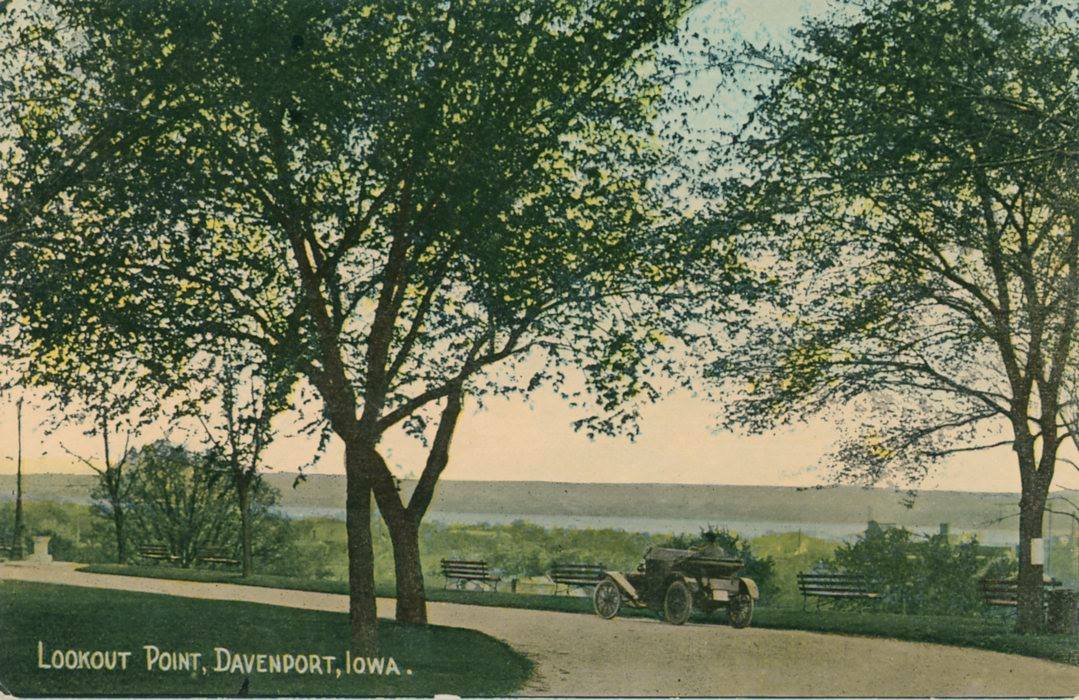
Riverview Terrace Park, Davenport, Iowa postcard. Provenance unknown.
I played at Lookout Park, which was within walking distance of home, before I attended school. The main features are the view of the Mississippi River depicted in this postcard, a long, steep hill in front of the benches, and a stairway from the bottom to the top.
I liked to take a cardboard box up the stairs and then slide down the grassy hill with neighborhood children. After the slide, we would mount the stairs to the benches, take a rest, and then slide down again. It seemed like endless hours of fun in a time when there were few responsibilities.
The city purchased the property in 1894, then known as Lookout Park, and changed the name to Riverview Terrace around 1900. It is listed on the National Register of Historic Places. Despite the official name, we called it Lookout Park.
Tom Barton of the Quad City Times reported the park had been closed by the city with concrete barricades placed so vehicles can’t get in or out. I knew the neighborhood was in decline, yet it’s sad to think of the after hours drinking, littering, prostitution and drug dealing he reported going on in a place with more positive memories.
“This has been an ongoing problem that ebbs and flows, and it began to flow again” this summer, said Ward 3 Alderwoman Marion Meginnis, who represents the area. “The design (of the park) has made it an attractive nuisance.”
Though closed to vehicles, the three-acre site remains open to the public, Meginnis stressed in the article, and is meant as a temporary measure until city staff can decide how best to address and discourage crime.
Sometime we don’t want to know what is happening in the old neighborhoods. At the same time, bad news triggers fond memories. There are days I wish I could forget about everything and slide downhill like we did. Being carefree is a part of youth we didn’t appreciate as we lived it. There is no going back, just remembering.
When I arrived at the University of Iowa campus in fall 1970, the university president was Willard Boyd who officed in Old Capitol. The previous term, the president’s office had been occupied by protesters and the academic year ended abruptly. During my freshman year, Boyd held meetings with students and I attended one in Quadrangle dormitory where I lived. He seemed approachable and that surprised me. It proved to be an enduring character trait.
I last spoke to Boyd for an article I wrote for the Iowa City Press Citizen on Oct. 22, 2014. He was much as I remembered him. Following is the piece about the anniversary of the legal name of the State University of Iowa.
50th Anniversary of UI name change — or not
Fifty years ago today, the university in town decided to keep its legal name, “State University of Iowa,” but replaced it with the familiar nickname now in everyday usage. It was not the “Hawkeyes.”
Willard “Sandy” Boyd, currently Rawlings/Miller professor of law and president emeritus, was university provost at the time.
“Virgil Hancher (university president from 1940 until 1964) was a lawyer and said, ‘It is named in the constitution, therefore it shall be ever thus,’ ” Boyd explained. “Howard Bowen (who succeeded Hancher as president) said he ‘wasn’t a lawyer, so we’ll leave it,’ suggesting a nickname, ‘University of Iowa.’ ”
On Oct. 22, 1964, the Iowa state Board of Regents passed a resolution approving the usage of “University of Iowa” to describe the constitutionally named State University of Iowa, keeping the original name for legal purposes.
“I believe the change was intended to reduce confusion between Iowa and Iowa State,” said Mark Schantz, who received his bachelor’s degree from Iowa in 1963 and retired from the College of Law in 2013.
There is less confusion and almost no controversy now, but it wasn’t always so.
Early on, university officials attempted to change the naming convention for the State University of Iowa in practical usage.
In a letter dated Jan. 18, 1918 (available in the University of Iowa Special Collections), C.H. Weller, the university editor, requested permission from University President Walter Jessup to use “University of Iowa” on printed invitations.
“I have been trying for several years to accustom people to the name ‘University of Iowa,’ in harmony with the nomenclature of practically all other great state universities,” he wrote. “The legal name, of course, is ‘State University of Iowa’ (not ‘The State University of Iowa’), but the general use of a shorter term in informal usage is nothing unusual.”
In a Nov. 21, 1963, editorial, the Press-Citizen wrote, “The problem in the names of Iowa’s three state-supported institutions of higher education is that there is a law — the one that says the State University of Iowa is at Iowa City, Iowa State University is at Ames and the State College of Iowa is at Cedar Falls. This may be clear to Iowans, although it’s doubtful, but the plethora of ‘states,’ ‘Iowas’ and ‘universities’ seems to be just too much for those who don’t deal with it frequently.”
The newspaper called for the name to be changed to the University of Iowa.
Has the confusion continued?
The answer is yes, according to University Archivist David McCartney.
“It’s correct to say that our esteemed institution has always been named the State University of Iowa,” he wrote in a December 2010 article for the University of Iowa Spectator. “It’s complicated, as they say. To this day, people still occasionally (and understandably) confuse the names of Iowa’s public universities.”
That’s something today’s Hawkeyes, Cyclones and Panthers will be certain to clarify.
Reverse side: The Pine Barn Inn — Danville, PA 17821 As Featured in ‘Back Roads and Country Inns’ Photo by C.G. Wagner, Jr.
I stayed at The Pine Barn Inn while director of maintenance for a large transportation and logistics company. For many years we bought Fruehauf Trailers built in Fort Madison, Iowa. I was in Danville to evaluate a Strick Corporation trailer manufacturing plant as prelude to picking a new vendor. By 1993 the writing was on the wall that Fruehauf was going out of business.
A leveraged buyout in 1986 by the company’s management left Fruehauf burdened with debt, and in 1989 the company was broken up and sold, though one segment, the truck trailer unit, retained the name Fruehauf Trailer Corporation. That corporation declared bankruptcy in 1996 and was sold to Wabash National the next year.
While many in the truckload segment of the transportation business were buying Wabash National plate trailers, the owner of our privately held company was apparently not a fan. We chose Strick for a non-Freuhauf plate trailer build over others I evaluated.
I traveled a lot during my transportation and logistics career. It came to a point where I would wake on an airplane and not know where I was or where I was going. The job had me traveling to both coasts and from Florida to the Upper Peninsula of Michigan. I had a heavy carbon footprint in those days.
When I supervised a driver recruiting operation I had offices in Iowa, Indiana, Kentucky, Georgia, West Virginia, Pennsylvania and Missouri. We even did driver recruiting in Astoria, New York near LaGuardia Airport. I met people from everywhere and spent a lot of time in transit.
I don’t remember much about The Pine Barn Inn, except it was clean and met my personal needs. That’s what I wanted during business trips. Today I hope most of my traveling is finished. At least I still have this postcard.
The debt ceiling is in the news. Once again, for the same reason: a Republican president ran up the debt on the American people and a Democratic president is left cleaning up the mess.
At the same time, Iowa is participating in its decennial redistricting process. Voters in the Iowa Quad Cities aren’t sure who their member of congress might be. Currently it is Mariannette Miller-Meeks. If the first redistricting map is accepted by the legislature, it could be Ashley Hinson.
Both congresswomen have joined the Republican block to say they will not vote to raise the debt limit. Shame on them. They should focus on solutions, not obstruction.
While neither was in office when the 45th president and the Congress ran up our bill, it is clear from this statement by both and from their voting record earlier this year, their interests lie more with Washington Republicans than with Iowans.
Both voted against the American Rescue Plan Act which benefited many Iowans. One expects them both to vote against the Build Back Better Act when it comes up for a U.S. House vote in the near future.
Regardless of the redistricting outcome, they both need to find other work.
~ Published by the Quad-City Times on Sept. 27, 2021.
Text on the postcard: Stratford, Ontario, Canada The Festival Theatre viewed from across the Avon River is one of three theatres offering an excellent selection of theatrical performances during the Stratford Festival (May to November). Photo Credit: Robert B. Hicks
When our daughter was in middle school we began taking family vacations. They persisted through the summer between junior and senior year in high school.
It began with a week-long trip to Orlando, Florida where we stayed in a motel and made day trips to theme parks, including Walt Disney World, Universal Studios and Sea World. It was our first air travel together. For me, vacationing was participation in a great American adventure. It had one foot standing on consumerism and the other on a job that consumed much of my life. While we had only a brief sampling of what Orlando has to offer that first year, it was a positive experience. We made summer vacations annual.
Next was a trip to Colorado where we visited friends and did some mountain sight seeing. We drove among the 14,000-foot peaks and spent the rest of the time visiting people. After that, it was trips to Stratford, Ontario for the Stratford Festival of plays, and everything around them. I don’t recall how many plays we saw but our daughter insisted on meeting the actors to get the program autographed after each one. Vacations in Stratford became something else.
I didn’t realize it then, yet it became clear later, vacations were a crucible for making a life from the raw materials of society. They transitioned us through releasing our child to college and then to the greater challenges of living a creative life. Upon reflection, there are not many creative communities like the one in Stratford. We were fortunate to have had those trips.
It’s hard to say whether we will return to Stratford as a family, or take any kind of vacation. We will always have those summers to remember.







 Journey Home
You must be logged in to post a comment.