We collaborated on the Thanksgiving Day menu yet I did most of the cooking. I made baked beans, wild rice, steamed broccoli, sweet potato and apple sauce. No specific dessert yet the baked beans served double duty because of how much brown sugar was in them. I made applesauce in the morning from the last of the cooking apples in storage. It was prelude to making apple sauce cake, yet I didn’t get that far.
I used the Social Security Administration life expectancy calculator and found I can expect to live 14 more years based on gender and birth date. One presumes the SSA has more data than most to make this calculation. It doesn’t seem like a lot: 14 more Thanksgivings, 14 more garden harvests, 14 more springs and summers, 14 more winter writing sessions… I don’t look forward to reading all the obituaries yet I will. Hopefully my name won’t be among them until the statistics have been borne out. Fourteen is a finite number. As we all should know, it is 14, plus or minus.
Over time I watched the 1994 film The Shawshank Redemption multiple times. As the character Andy Dufresne said in a letter to his friend Ellis Boyd Redding, “Remember Red, hope is a good thing, maybe the best of things, and no good thing ever dies.” That is, unless one consults with the Social Security Administration. After which we’ll have a pretty good idea when death is near.
The character Dufresne also famously said, “Get busy living, or get busy dying.” It’s good advice, especially as winter approaches and we get on with our lives.
The year has been okay, yet nothing to write home about. In fact, most of the year was spent at home with three months of my spouse being gone to help her sister. Whatever happened mostly happened in Big Grove Township.
Each year, beginning at Thanksgiving, I review my life. In the past I reviewed my most viewed blog posts. There are additional highlights to include this year.
Writing
My most viewed blog post was History of a Wing Nut published Aug. 25, on Blog for Iowa. I wrote, “(Mariannette) Miller-Meeks has become a wing-nut institution. Iowans deserve better.” I reviewed the influence of the fossil fuel industry on her work in the Congress, as well as her six congressional campaigns. It was the third most popular new post on Blog for Iowa this year.
On Journey Home my remembrance of friend since high school Joe Garrity was the most popular post. Joe died March 22 of complicated health issues triggered by COVID-19. It makes no sense this post would get so much traffic, except for the fact his obituary was not widely published. I continue to miss Joe and our many conversations, letters and emails.
The worm turned for me regarding the climate crisis this year. In a Sept. 21 letter to the editor of the Cedar Rapids Gazette, I wrote, “Environmental activism seems unlikely to solve the climate crisis. All the talk about climate change distracts us from the fundamental problem: the effect of unmitigated capitalist growth ravaging the resources and systems of the earth and its atmosphere.” The words “climate change” have become a lightning rod for people who seek to sustain the unsustainable status quo. A single activist can do little unless they team with other, like-minded people. In the meanwhile, Earth is experiencing it’s hottest temperatures on record in 2023.
Health
My almost 72-year-old frame still carries me along. I developed a regimen of exams, tests, and monitoring. If I’m not in perfect health, I feel aware of my deficiencies. I can no longer jog the way I did and now walk 30 minutes daily along the state park trail. The path is similar each day and I have been able to watch the turning of seasons up close.
In our household, my spouse is vegan and I am ovo-lacto vegetarian. We’ve been working through menu planning since she decided to eat vegan during the coronavirus pandemic. We developed a core ten or so dishes which we prepare in rotation. We need more than that. This was an unexpected development, yet there is unique engagement in trying new things while shifting our diet. Much more to come from the kitchen on this next year.
Reading
As of today I finished reading 62 books in 2023.
In fiction, my favorite was Whose Names Are Unknown by Sanora Babb. I also enjoyed The Last Chairlift by John Irving, and American Dirt by Jeanine Cummins.
None of the poetry stood out particularly. I read Plantains and Our Becoming by Melania Louisa Marte. I believe she has a bright future and look forward to her next book. I revisited Adrienne Rich’s Diving into the Wreck. I first read this in graduate school. She’s an important poet, although reading her is a bit like taking medicine.
More than half of what I read was nonfiction. I interviewed Thom Hartmann regarding his new book The Hidden History of American Democracy and published my review here, on Blog for Iowa, and on Bleeding Heartland. I asked if this would be his last in the Hidden History series and he said he didn’t know but is negotiating with his publisher.
Timothy C. Weingard’s Mosquito: A Human History was likely the best nonfiction of the year. Other top nonfiction includes The Farmer’s Lawyer by Sarah Vogel, A Fever in the Heartland by Timothy Egan, Democracy Awakening by Heather Cox Richardson, and White Trash: The 400-Year Untold History of Class in America by Nancy Isenberg. Each of the nonfiction books I read had redeeming qualities. That’s likely because of how I selected them.
Three other books stood out yet defy category. I re-read Martha Paulos’ Doggerel. Martha and I were friends at university and we had constant conversations about art, literature, and living a creative life. Someone had given a mediocre review of the book on Goodreads and I felt I had to balance it with a positive one. Marilynne Robinson’s When I was a Child I Read Books was exceptional. I’m not a fan of some of her work, but this one… holy cow! The other was William Styron’s Darkness Visible: A Memoir of Madness. I had no idea of his problems when I heard him read in the English Philosophy Building at the university. We often live for such reading experiences as these three books represent.
Kitchen Garden
For the first year, deer got into the tomato patch. I changed the fencing to allow more space between rows and it was a disaster. Deer were able to land between rows and eat the tender leaves of recently planted tomatoes. Once inside the fencing they couldn’t figure out how to get out and bent the stakes over to make their exit. I’m going back to the old way in 2024.
Bell peppers were poor quality and cucumbers, zucchini, and cruciferous vegetables thrived. There was a bumper crop of hot peppers and fennel. There was a problem with the garlic mulch which cut production by about 20 percent. There was still enough garlic to last the full year.
We had all the pears we could eat. All four varieties of apple trees produced something and two were abundant. I put up all the apple cider vinegar, apple butter and apple sauce we would need for a couple of years. We filled the produce drawer of the refrigerator to preserve fresh apples, and there remains a bushel with which I need to do something soon. I didn’t hardly touch the production of Earliblaze and Red Delicious apples. The deer made out with nightly visits for an apple feast.
The portable greenhouse didn’t make it through the season and will have to be replaced in the spring. Row cover was great for herbs and lettuce, although the fabric saw its last crop in 2023 and will be replaced. The freezer and canning jars were filled early in the season with leafy green vegetables and vegetable broth. I figure I have 14 more seasons in the garden before age catches up with me, at least according to the Social Security Administration.
Overall the garden was a success, as was the use of produce in the kitchen. I put 100 cloves of garlic in the ground in October for next July’s harvest.
Photography
My Instagram account is a record of the best photos I’ve taken. The subjects are the kitchen garden, hiking, and sunrises, with a bit of travel and indoors shots thrown in. The quality of photos produced by the camera in my mobile device is remarkable. What once was a throw away snapshot process is now something more.
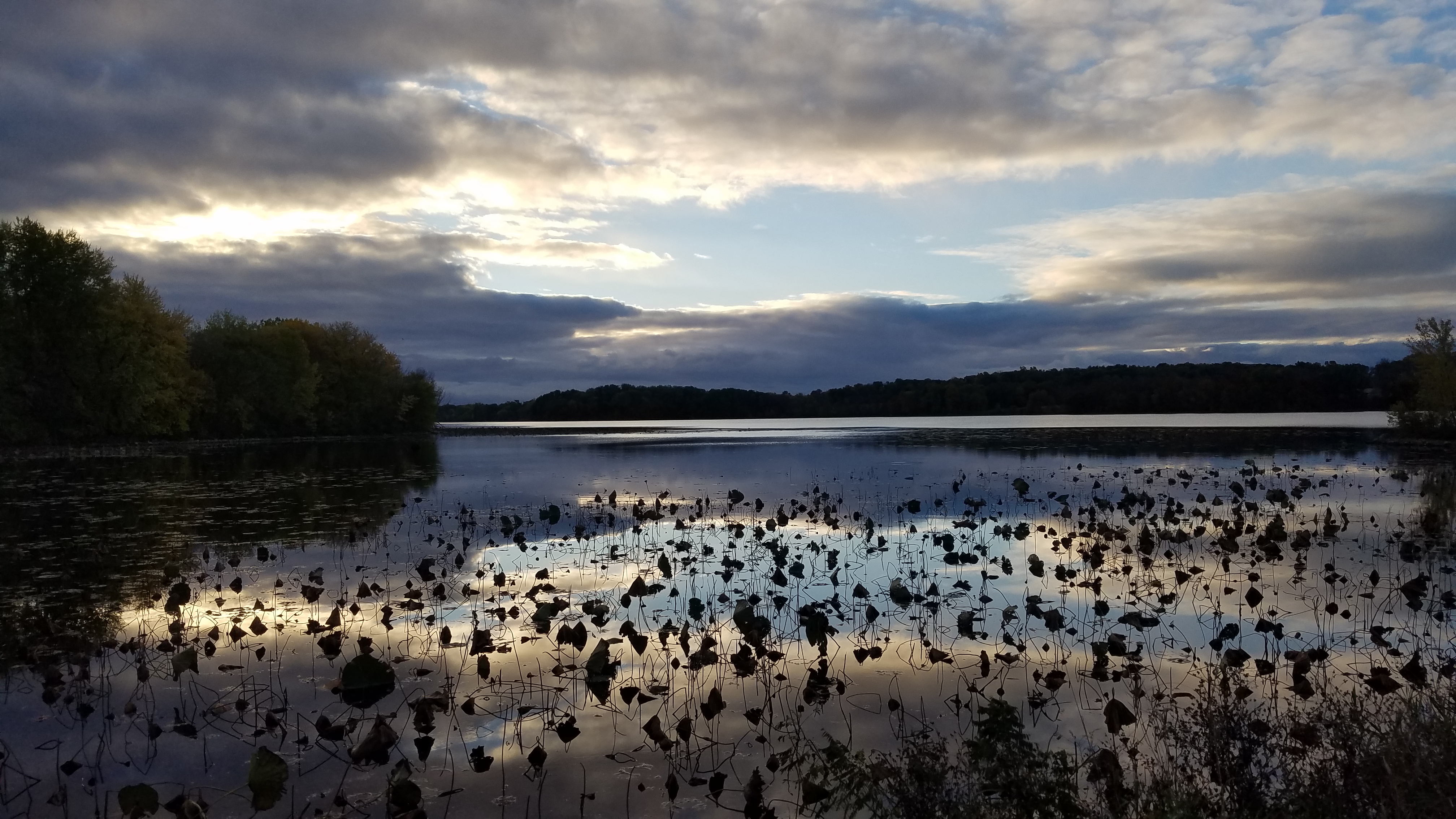
Sunrise on Lake Macbride October 2023.
Financial
Living on our pensions was a struggle so we had to borrow money. Maybe it’s because the mechanical systems in our home were mostly the original ones installed in 1993 and needed replacing this year. We are also living with a car loan for a couple more years. There are some health care bills but most of those expenses have been covered by insurance. Compared to most Americans, we are doing okay. There wasn’t as much discretionary spending in 2023. There will be less in 2024.
Compared to previous years, this one wasn’t stellar. All the same, it is important to give thanks for our many blessings this time of year.
Elon Musk’s purchase of Twitter led me to a dismal place regarding social media. Whatever I thought I had before him no longer exists. The whole idea of social media seems bankrupt. There is some good in that, accompanied by a lot of bad.
A couple of weeks ago I logged into every social media account I have and tried posting on them at least daily to see what best served my needs. The list is as follows:
Facebook
Instagram
Threads
X
Post
Blue Sky
Spoutible
LinkedIn
It is time to make some decisions, and here they are.
The trio of Meta applications is going to stay. I use Instagram to post an almost daily stream of photos about my life. Most of it is gardening and trail walking, with a few other things added as serendipity provides. These are all cross-posted on Facebook and are my main contribution there. A lot of people comment to me they like my photographs, both on the platforms and in real life. I publicize an occasional event on Facebook or post a link to a blog post I wrote. I also created Facebook groups to support my high school class and the home owners association where we live. Facebook and Instagram are mostly outlets for my creativity, not sources of news outside the two groups mentioned.
Threads is new with new opportunities. I plan to stick it out there until the inevitable advertising begins and things shake out as to whether or not I will develop the same kinds of relationships I had on X before Musk. In general, there are a lot of people posting as it relates to their jobs, and I fell into a place where creatives hang out and for now am enjoying the vibe of sharing less job-related stuff. The app is clean and easy to use. Because of habits developed at X, I don’t hesitate to block people/bots/porn sites as needed. I am open to staying or leaving, whichever is best for my mental health.
LinkedIn is the odd duck. I discover a lot of useful information there and connect with people I’ve known for decades. I keep saying to myself now that I’m retired and printed my LinkedIn resume there’s no further use for it. Right after that someone from a past life surfaces wanting to get in touch. Will let LinkedIn ride for now.
I haven’t been able to get any meaningful traction on Spoutible, Blue Sky, and Post. I won’t close my accounts, yet likely won’t use them much either.
I need to pull the plug on X. What keeps my account active is relationships formed over the 15 years I have been on the platform. The trouble is Musk’s politics and attitudes as manifest on the site. He is a bad egg and poisons the entire experience. Who needs that?
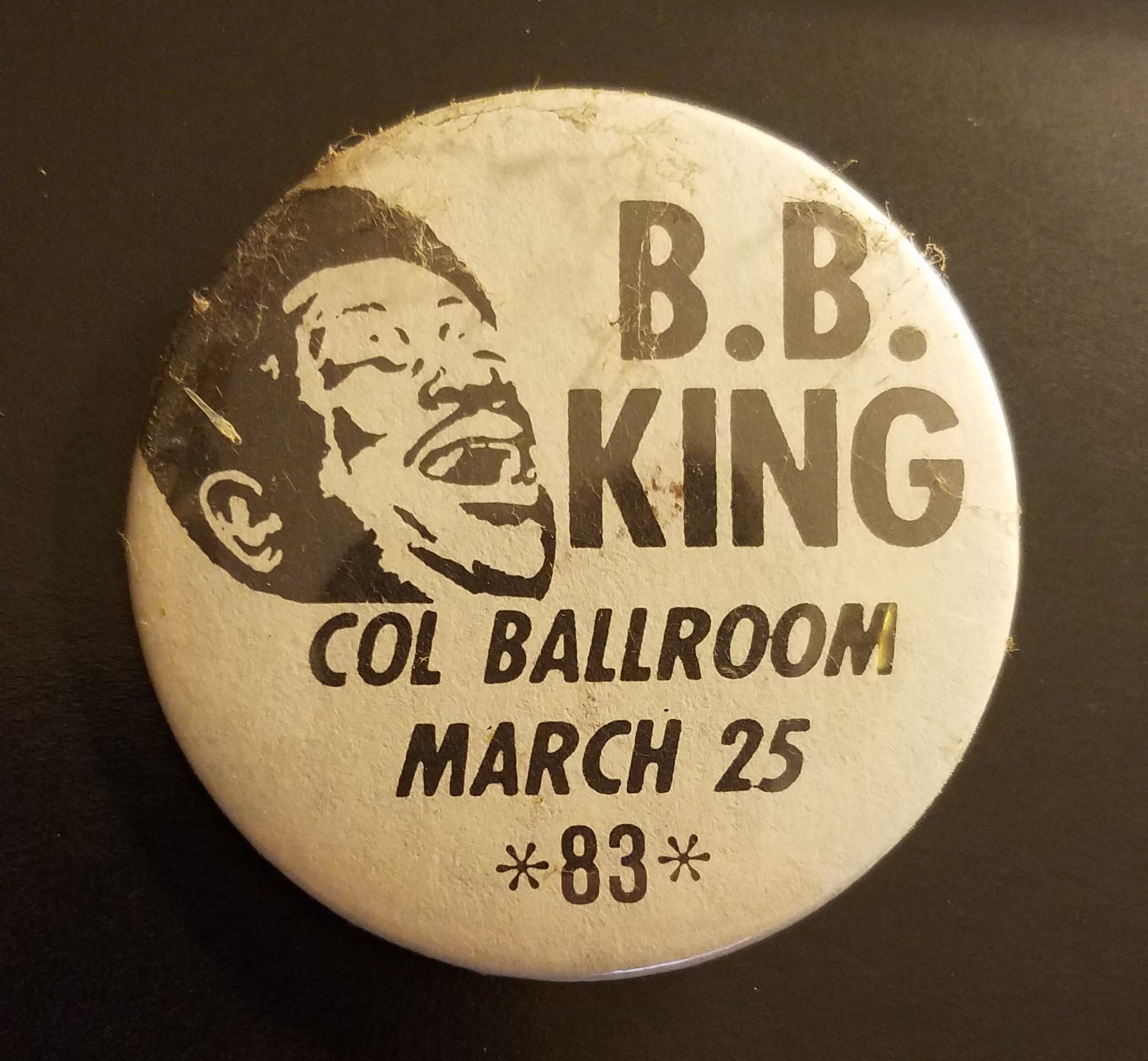
The one time I heard B.B. King sing Thrill is Gone live was at the Col Ballroom in my hometown of Davenport. My sister and I went together and a grade school friend from our neighborhood was the opening act. It was a great evening. I don’t know how he did it — maybe that’s part of his genius — but King put feeling into every song he sung. Here’s the money verse. May you have happy landings on social media.
You know, I'm free, free now, baby
I'm free from your spell
Oh, free, free, free now, baby
I'm free from your spell
And now that it's all over
All that I can do is wish you well
It is totally shocking that I’ve been procrastinating getting back to work on my memoir. It’s not like there is anything better to do.
Today I started with a small piece of editing. The task has been languishing on my to-do list and now it’s done. I decided to work on Part II, which is my life after university and military service, beginning the summer of 1981.
After graduate school, I took a trip, found a job, and met my future spouse. I wanted to stay in Iowa and Johnson County is an oasis in a cultural desert of corn, soybeans, hay, oats, hogs, cattle, and sheep which was and remains Iowa. I had no interest in returning to my home town of Davenport. There was really no other place to live in Iowa, I reckoned. The challenge today is memory and artifacts from the second part of my life are too numerous to mention them all in a book. I don’t relish going through everything to cull items for the narrative. Hence the procrastination.
I worked as an admissions clerk at the University of Iowa Dental Clinic after graduate school. We saw patients from all around Iowa — wealthy patients with private insurance, indigents with limited means, and everyone in between. Anyone who came to my desk was accepted for treatment. The exposure to people from diverse backgrounds was inspiring. In 1981 I didn’t worry about much beyond getting to work on time, learning what I could about people, and doing my best.
Outside my admissions work I put hours and hours into researching and writing fiction. I developed a couple of frameworks, read lots of books, and viewed countless movies. Somehow I failed to realize that writing means producing a certain number of words on a regular basis. I know that now and thus far produced about 127,000 words of an autobiography. All the same, I’ve been avoiding the big task of culling things into a viable narrative. I feel there are one, maybe two chances to go through everything while I’m alive. I want to gain what insights I can and get the story right.
I wrote a task for tomorrow: read the next 100 pages of the draft and take notes. This will lead to updating the outline and help identify where the narrative devolves into a series of snippets from journals and cut and paste paragraphs. The best way to get going is take one step each day and make sure it gets done. I don’t know any other way to get started, and time’s a wasting. This is what I mean by it’s time to get to work.
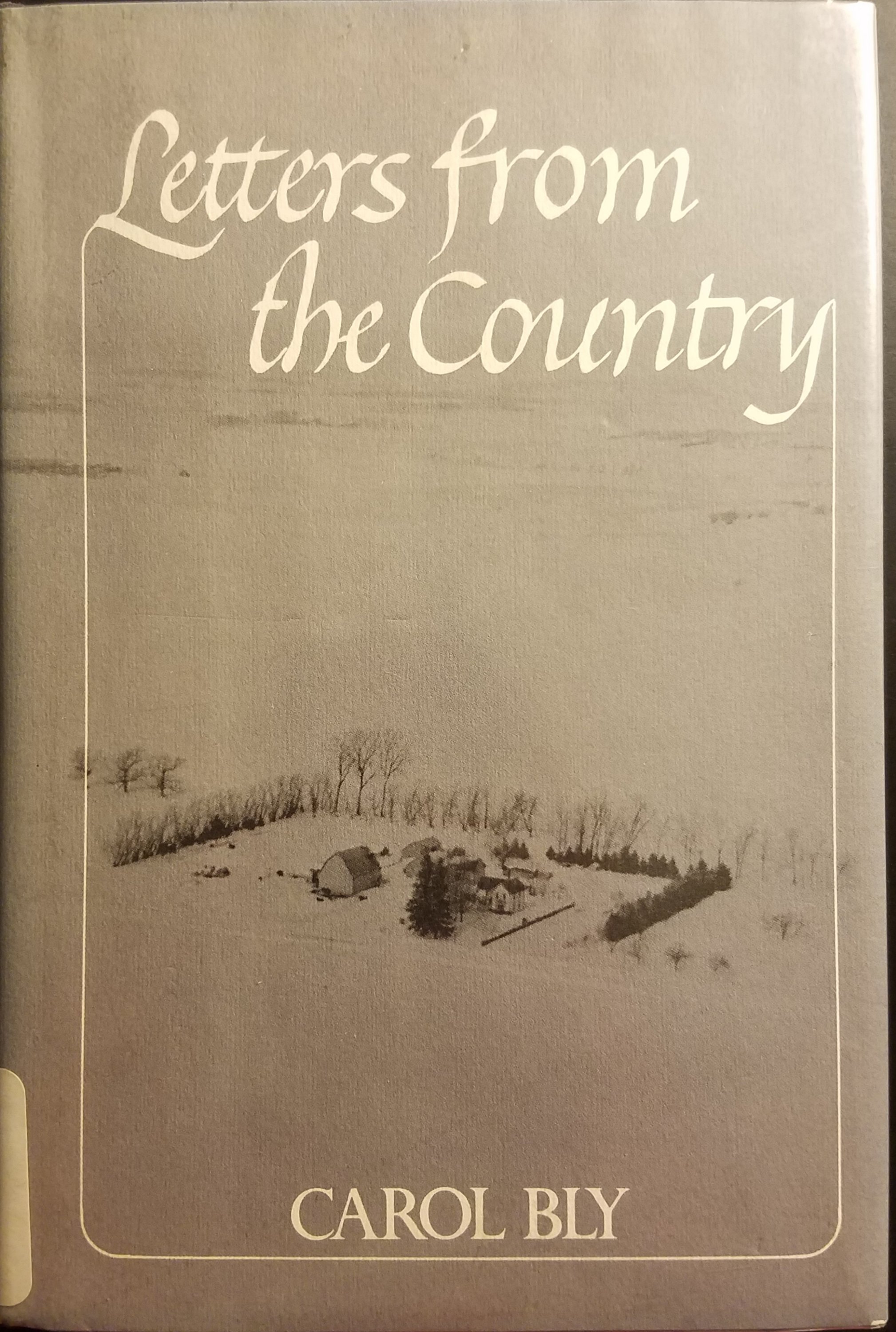
It was a long time getting to Letters from the Country by Carol Bly. My copy is a discard from the Lake County Indiana Public Library where I picked it up from a used book shelf. We moved back to Iowa in 1993, so the purchase was more than thirty years ago. Attracted by the idea of letters from southwestern Minnesota, where my family bought land from the railroad in 1883, the book failed to stand up to time when I recently read it. If its insights and comments were relevant when it was written in the 1970s, such relevance escapes the reader in a time of internet connections, processed food, sports utility vehicles, and 24/7 right wing talk radio.
There are some truths buried in this time capsule of a book, particularly about how rural people interact with each other. It is a learned protocol of avoiding difficult things in life. Things like problems that have complex solutions that are not obvious, or telling someone “thanks for sharing ” immediately after they spill their guts about something intensely personal that affected them greatly. Away from the distractions of large cities, there is a sense that people have to live with each other and therefore don’t tend to burn any bridge with someone they might see in the neighborhood, or at the convenience store, library, or American Legion. For the most part, this means avoiding talk about politics unless one knows the politics of everyone in the room.
People don’t take well to being told what to do or how to live their lives. Bly’s book is full of that and partly, it’s why it seems outdated. Times have changed. She writes about bringing intellectual pursuits from the city to rural areas, which is a noble idea. Today, folks just get into their SUV and drive to Chicago to see the latest exhibition at the Art Institute. Or they fly to New York to see what’s on Broadway. For the time being, arts and the humanities are taught in rural public schools. The annual cycle of K-12 school musical, dramatic, and literary productions are part of the fabric of rural society. The direction our politics is heading may remove these topics from curricula in the near future to focus on skills needed to get a job, raise children, and get along well enough to not rock the boat of social mores.
Some of the letters mention the frequency with which rural folk write their congressman. Not writing is a sign of a decent level of satisfaction in the community. That’s why, Bly wrote, rural folks don’t write that many letters. If current elected officials seem out of touch with reality, it’s not because they don’t know what’s going on with citizens. They choose to address their concerns while adding a layer of indoctrination in the new ways of a national conservative culture. Why talk about poor air and water quality — real problems in Iowa — when citizens can be scared by tales of bogeymen laden with fentanyl illegally crossing the border with Mexico. The latter pays a political premium.
I didn’t dislike Letters from the Country. I do want to say more than “thanks for sharing” to the author. What I will say is it is good to read Bly’s analysis of what’s wrong with country folk and their way of life. Maybe it just needs updating. That would be a fit project for someone to take as long as it is not me.
Trail walking on the state park trail on Oct. 30, 2023.
Content creator is an upcoming profession that employs many according to a Washington Post article titled, “Millions work as content creators. In official records, they barely exist.” Authors Drew Harwell and Taylor Lorenz assert, “Millions have ditched traditional career paths to work as online creators and content-makers, using their computers and phones to amass followers and build businesses whose influence now rivals the biggest names in entertainment, news and politics.” Goldman Sachs forecasts this sector of the economy could generate half a trillion dollars annually by 2027. It is a thing!
Not so fast! I don’t see many financially stable folk living on revenues generated from content they create for a website, streaming service, substack, or podcast. Roughly 12 percent of participants in a recent survey of content creators indicated annual earnings of more that $50,000, according to Harwell and Lorenz. 46 percent said they made less than $1,000. It may be true some are earning a living as content creators, and some earn a lot, but rivaling the biggest names in entertainment, news and politics? Please.
Cutting the cord from a single employer job and venturing on our own is possible. I did it more than once in 55 years in the workforce. To me, breaking loose is mostly about developing a sustainable lifestyle without working a “big job.” It is individualistic and empowering. It relies on others much differently from working for a large company. It will drain your personal bank accounts more quickly than you can log into Twitch. It is something of a dream.
When I retired from a transportation and logistics career I started a small consulting firm with me as the only employee. The idea was to take contracts to do work in the peace and justice movement that would help pay bills and become a platform for bigger, better things. To supplement my income, I took any kind of transactional work, including newspaper freelancing, farm work, jobs through a temporary service, and others. While I had the organization, I found it nearly impossible to have enough jobs in the pipeline to stay busy and generate needed income. In the end, I retired on my Social Security pension with Medicare as my health coverage and do my content creation on that financial platform.
A piece of advice I gave someone pursuing a content creator career was to get 10 years in with a company or companies that paid/withheld Social Security taxes. With a potential worklife of 50+ years, spending ten of them in a company that participates in Social Security seems very doable without infringing on creativity. I also said they should wait until full retirement age before filing to collect benefits so as to maximize the monthly pension payment. The response was predictable: “Is Social Security even going to be around?” Who knows if Social Security will change from it’s current process? There is not enough money to pay full benefits after 2033 without Congress changing something. Medicare begins to run out of money in 2031. So many people rely on these programs, it’s hard not to image the Congress doing something to secure them for the future.
At our core we seek a way of living that meets our needs. While we don’t seek to join a cult, we do have an impulse to gravitate toward support groups that are not necessarily just family. Utopian movements of the 19th Century were communal in nature. (The Library of Congress lists some). I think of Brook Farm, the Shaker Community, Rappites (a.k.a. The Harmony Society), and the Amana Colonies when I think of utopian communities. They followed the impulse to break away from broader American culture and join together to better meet common needs. Longer term they were all unsustainable, yet people seek this form of community today in different ways.
My experiences with the millennial generation revealed a different kind of pursuit of being part of a community. Large group activities were commonplace when millennials were in their 20s. They persisted through the years. While members found what today seems like traditional jobs with a commute, workplace, payroll, and benefits, they bonded together in a way that had a separate trajectory from a single person-single job career. It was antithetical to the rugged individualism of myth and legend, especially after 1981. With good employment being harder to find, it is no wonder people cut loose and become individualistic entrepreneurs in the context of a larger group. Being a content creator can be attractive in a society that has comparatively few outlets for creative impulses. Like my small consulting firm, content creator is an umbrella organization to do many different things.
Being a content creator is viable for some. The challenge is to develop enough income streams so as to have a financial base to pay quotidian bills like rent, groceries, transportation and utilities. The temptation is to take a big job to accomplish this. At the same time, if done well, a big job demands a full share of one’s daily energy. I wrote about this in my unpublished autobiography.
We had a discussion with a friend of hers about how she had to give up her artwork after taking a job at John Deere. She was tired after work, raising a child, and found little time or desire to make art. I knew if I took a full time job, I might find myself in the same situation.
An Iowa Life, unpublished manuscript by Paul Deaton
I found myself in this situation several times, notably when in 1984 I began my career in transportation and logistics. Being creative and managing creative content that generates income are both difficult when working as an exempt employee in a management position. One makes a choice to live this way. I’m not sure being an effective content creator is possible in this type of work environment.
I think of the 46 percent of content creators who in the survey earned less than $1,000 per year. It is impossible for an American to live on this amount of money without significant support from others and other institutions. Some books have been written explaining how to do this. Yet what seems evident is turning the dream of freedom from economic needs to pursuit of content creation in a transactional society is possible only with more boilerplate opportunities to earn income than there are. Finding and developing such a community is the necessary first step many content creators stumble into. Recognizing it up front would save time and provide a better path to success.
What I’m describing is utopian, although not the way the 19th Century utopian movements were. Maybe a better descriptor is “communal.” Whatever one calls it, it is a dream until proven viable and sustainable in a transactional society. If it were easy, we’d all be content creators.
One last shot before the deciduous tree leaves have fallen. Oct. 27, 2023.
The first hard frost is a couple weeks late. The forecast is Sunday night with ambient temperatures in the 20s. I’m ready. Perishables are harvested from the garden, the garden hose rolled up in the garage. I plan to mow one more time. With any luck it will be before the Trick or Treaters come Tuesday evening.
Kale harvest before the first hard frost, Oct. 27, 2023.
The wheat straw covering my garlic patch sprouted. I assume frost will kill it. I’ve never had that much seed in my straw. Buying it from a different vendor makes a difference. If wheat survives the cold, I’ll have to turn the straw and kill it myself. I am reluctant to add the descriptor “wheat murderer” to my resume. Garlic takes precedence over making a few wheat biscuits.
Golf carts of Halloween.
Halloween trick or treat night is an occasion for parents of young children to get out the golf cart and run with their neighborhood peers. I get around the neighborhood by walking, but I’m old school.
Short post today. It’s turning out to be a busy Sunday. Thanks for reading.
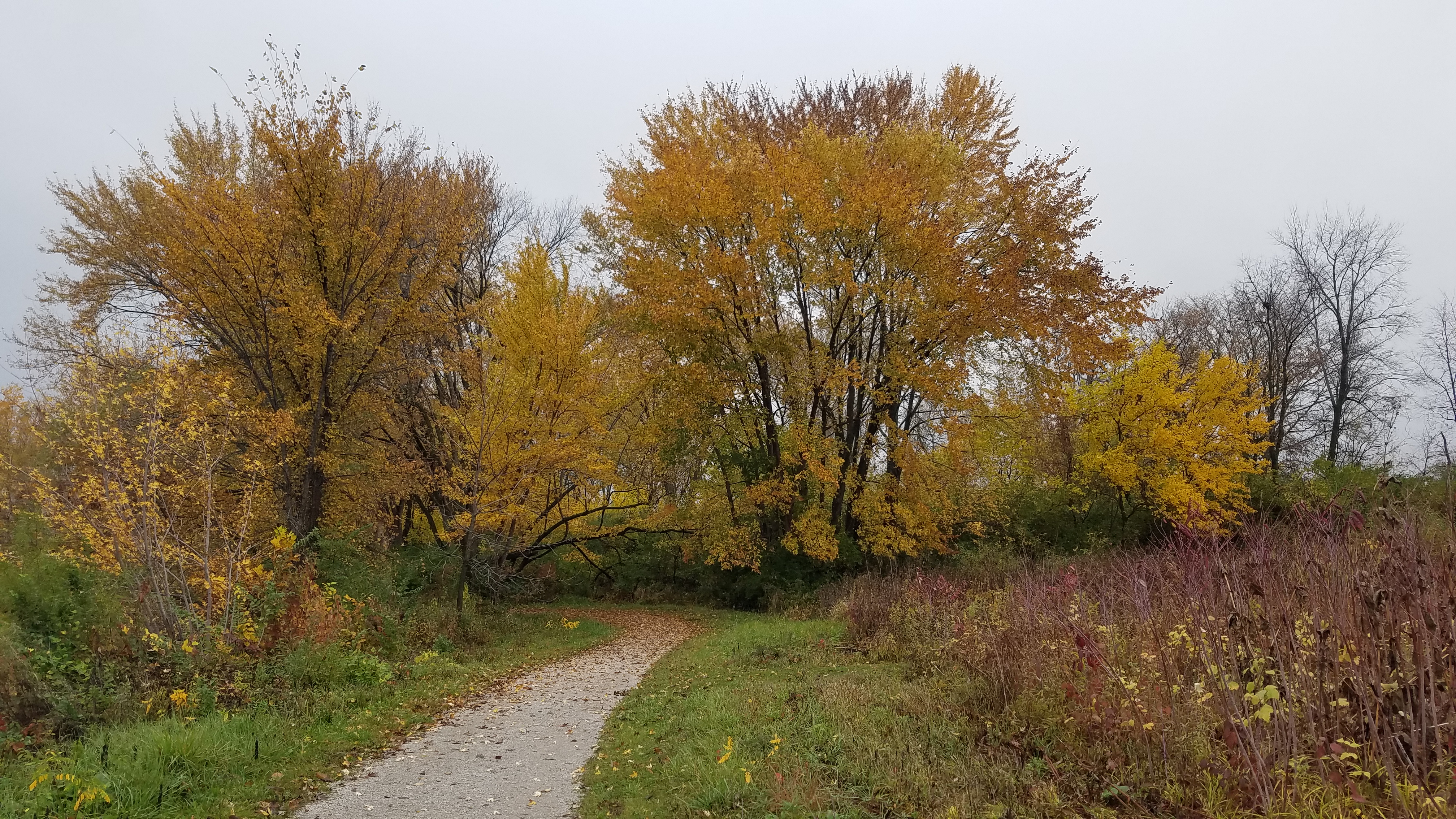
Past peak fall colors on the state park trail on Oct. 25, 2023.
Rain and thunderstorms are forecast through 3 p.m. We need the rain. On my trail walk yesterday the culvert where water runs off the watershed remained bone dry. If winter arrives, and there is inadequate rain, we will start the growing season behind the curve. That has consequences.
An acquaintance saw Rachel Maddow in Phoenix last night. Maddow is on her book tour for Prequel: An American Fight Against Fascism. My copy is waiting in queue to be read. I delayed reading Prequel because I needed a break after reading Wallace Stegner’s intense history of the opening of the American West. With social media we all do everything together all the time. Books I recently read have a page on this blog, here. Do join in and try one of them!
I started the first task on a sorting table. The sorting table is a place in my writing area where I bring boxes and piles and lay them out so I can dispose of the contents. It serves a number of functions, the most important of which is doing research for the main creative work in progress. In addition to determining dates and ideas to be included in writing, the sorting table serves to identify books to be taken to Goodwill, books to go on the to-read shelf (which is now overly full), and documents and artifacts that need further sorting and contemplation or recycling. Today’s stack had a box containing mostly bookmarks along with receipts for events I attended and my military driver’s license. There is good stuff in the box yet it’s a hodge-podge of life’s detritus. Some of it is going in the trash bin after all the paper gets shredded to start brush pile fires.
There is garden work to do after the rain. For the time being I’ll hole up at my writing table and focus on getting a few things done. Thanks for reading.
I haven’t written about how qualified and competent Joe Biden is as our president. He is uniquely qualified to be president, especially right now. That I haven’t written about this may be due to possessing that certain Iowa bias based upon his three dismal appearances in the Iowa caucuses, including in 2020. I don’t blame him for axing Iowa in the nominating poll position. No one asked for my opinion. He is successfully holding back the forces of authoritarianism and fascism.
Vice President Joe Biden, May 2010 in Cedar Rapids. Photo by the author.
While returning to writing my autobiography it’s immediately clear: I have a lot of work to do. Given the limited window of October 2023 to March 2024, what work will I do? I need to get Part II framed up with main events so I can later hang details upon it.
The early part of a life is easy to describe because during education and early work experience, a single thread can tie everything together. That’s less the case as a person moves on to next steps, which may include marriage, a family life, relationships, work, and pursuit of health, welfare and happiness. I wrote previously about this and what I said then holds true. Part II is to describe the life for which I spent 30 years preparing.
A related process is going through boxes of belongings and downsizing. Partly this helps focus on aspects of the story I might have forgotten. Partly, the unused detritus of a long life should be passed on to people who might use it today. This is better done by the owner than left to heirs. Our child doesn’t want all the stuff that fits into our house, so I would be serving her interests by processing it now. For a while, I’ll be going through and eliminating possessions, keeping what best fits the story as it evolves.
Lastly for today, I need to set aside a specific time of day to write. That’s likely to be after I finish morning tasks and eat breakfast. I hope to settle into my desk by the eight or nine o’clock hour and write until noon.
Writing desk while living at Five Points in Davenport in 1979-1980.
For three weeks after graduate school in May and June 1981, I visited a number of friends. The trip took me to Springfield, Illinois; Columbus, Georgia; Fort Rucker, Alabama; New Orleans; and along the Mississippi River north through Vicksburg Mississippi; Portageville and Ballwin, Missouri; and then home to Iowa City. It was the last trip after finishing my education and before applying said education to my life. I had no idea how things would turn out.
The trip was unlike the Grand Tour I made after undergraduate school. Since then, I had served in the military, lived in Europe for three years, attended graduate school on the G.I. Bill, and moved through degree preparation like a fish swims through water. Two artist friends brought a bottle of champagne to my place and helped celebrate my graduation. We discussed audiences and art. How much are artists influenced by their audiences? Should they be influenced? I believed then, and more so now, a writer must concern themselves with an audience. In 1981, I had no art, little public writing, and no concept of audience other than people who held a certain undefined social status.
Each place I went held vestiges of antebellum life. From the black housekeeper of an IRS worker, to racist attitudes among my former Army buddies, to a local culture where the next Ku Klux Klan meeting was all the social buzz, it was everywhere I went.
What struck me more than anything was the ordinariness of people I met. People stood at odds with the American culture I know. Or maybe, they represented an American culture I hadn’t come to know. While Lincoln’s bones rest in Springfield, the living there seemed unprepared to take up the unfinished tasks of the dead. Instead they participated in a culture devoid of life as they performed old, well-patterned ceremonies of living that had lost their meaning by 1981. My trip was a hard reckoning with reality.
Near Columbus, Georgia I visited a place that today is called Historic Westville. The ticket I bought is printed with the message, “Westville. Where it’s always 1850.” Westville is a fabricated village made from buildings built before 1850 and moved to what was once an open field. It was to represent the zenith of cultural life in the antebellum south. People who had visited Colonial Williamsburg would be disappointed by Westville, yet the designers did the best they could. Attendance was slight the day I visited.
In one building I met a period costumed woman who showed me an example of home spun thread. There was a spinning wheel and she showed me how it worked. However, despite the knowledge, she didn’t know how to make homespun herself. I found something about this disappointingly characteristic of modern day Americans. We may know the ideas behind how things work, to actually do such work, to put ideas into motion, is a step too far for many. Americans, above all else, must practice those things they know are important. When it came to equality under the law, the south of my trip failed to measure up.
After finishing my long education I had to get going in life. I felt an urge to put into practice what I learned during the first thirty years. I knew then I couldn’t be like some of the friends I encountered on this trip south. What I would become was both unknown and an open book. As much as any other time, I began writing that book in 1981.






 Journey Home
You must be logged in to post a comment.