Categories
Writing

End of Year Holidays

Photo by Suzy Hazelwood on Pexels.com

On the shortest day of the year, I grabbed a couple of stacks and started going through artifacts of my life. The current pile is mostly cards and notes sent for occasions long forgotten. I developed a new rule: If I can’t recall who sent an item, it’s off to the shredder.

The owner of his namesake home, farm, and auto supply company used to send an annual, hand-written birthday card while I was employed there. Apparently, I kept them all. Amy Klobuchar sent a Christmas card in 2019 when she was running for president. I think she will run again. Tom Harkin’s operation was a Democratic machine and I have a couple of his Christmas cards. I am sorry to see him gone from the U.S. Senate.

My friend Ed sends irregularly arriving letters about the Veterans for Peace chapter we founded. In one was a photograph of 16 of us at the Iowa City Public Library. I pulled that out and put it on the magnetic white board next to my writing table. The group suffered a bit as the World War II and Korean War veterans died. In this month’s letter it was uncertain whether our chapter would survive.

There was a ticket stub from the June 13, 2009 performance of Midsummer Night’s Dream by William Shakespeare. Riverside Theatre produced the play on the Festival Stage at Lower City Park. Our child and I spent several nights there through those years, guarding the property from vandals. After our shift, we had breakfast at Hamburg Inn No. 2. I found a card from Ron Clark and Jodi Hovland thanking us for our support. One season, they both played mechanicals in Midsummer Night’s Dream, although I don’t recall if it was this performance. Theirs were some of my favorite performances in the many Shakespearean plays I have seen.

I found one of the last letters from Mother in an envelope addressed by my sister. Mother apologized for not baking a fruitcake due to complications with the aftermath of a root canal. I’m afraid the fruitcake tradition is barely alive at this point. If we were to make one, it would not be anything like hers. I believe we have family fruitcake recipes stashed away in piles and cookbooks. So, there’s that.

I found a recipe for Date Pinwheels provided by a friend from when we worked at the university. It is written in his hand. I pulled it out of the pile to stick in my hand written cookbook. My spouse and I were visitors to his apartment a few times. He was a fan of the Star Wars movies and had copies on the new technology of VHS video cassette. We watched a movie or two with him on VHS. We won’t be making any date pinwheels because one of us is vegan and we’ve yet to find a good substitute for eggs and butter in baking.

I finished the first stack and the next is a pile of letters, drafts and papers. Most of this pile is related to my autobiography. I kept most letters I received and there are many tucked away in different places. This pile has ones to which I referred in writing the first part of the work.

I printed the State of Illinois Bureau of Labor Statistics Report on the Cherry Mine Disaster on Nov. 13, 1909. My grandfather worked the Cherry Mine although was not present the day of the fire which claimed 259 lives. He worked in several mines over his long career as a coal miner. I learned more about coal mining than I thought possible from reading this report. It explained the mine, how it was dug, and has a detailed description of the sequence of events during the disaster. Being a coal miner must have been a drudgery, one with constant danger of being buried alive. This is a common thread throughout my side of the family where both Mother and Father were descendants of coal miners.

Eventually I will dispose of all this paper. There is too much to leave as an inheritance. The purpose of my autobiography is to distill a narrative from these diverse documents. For now, having gone through them, they are back on the sorting table until I refer to them again. It’s a fit way to spend part of the holiday season.
Categories
Writing

41 Years

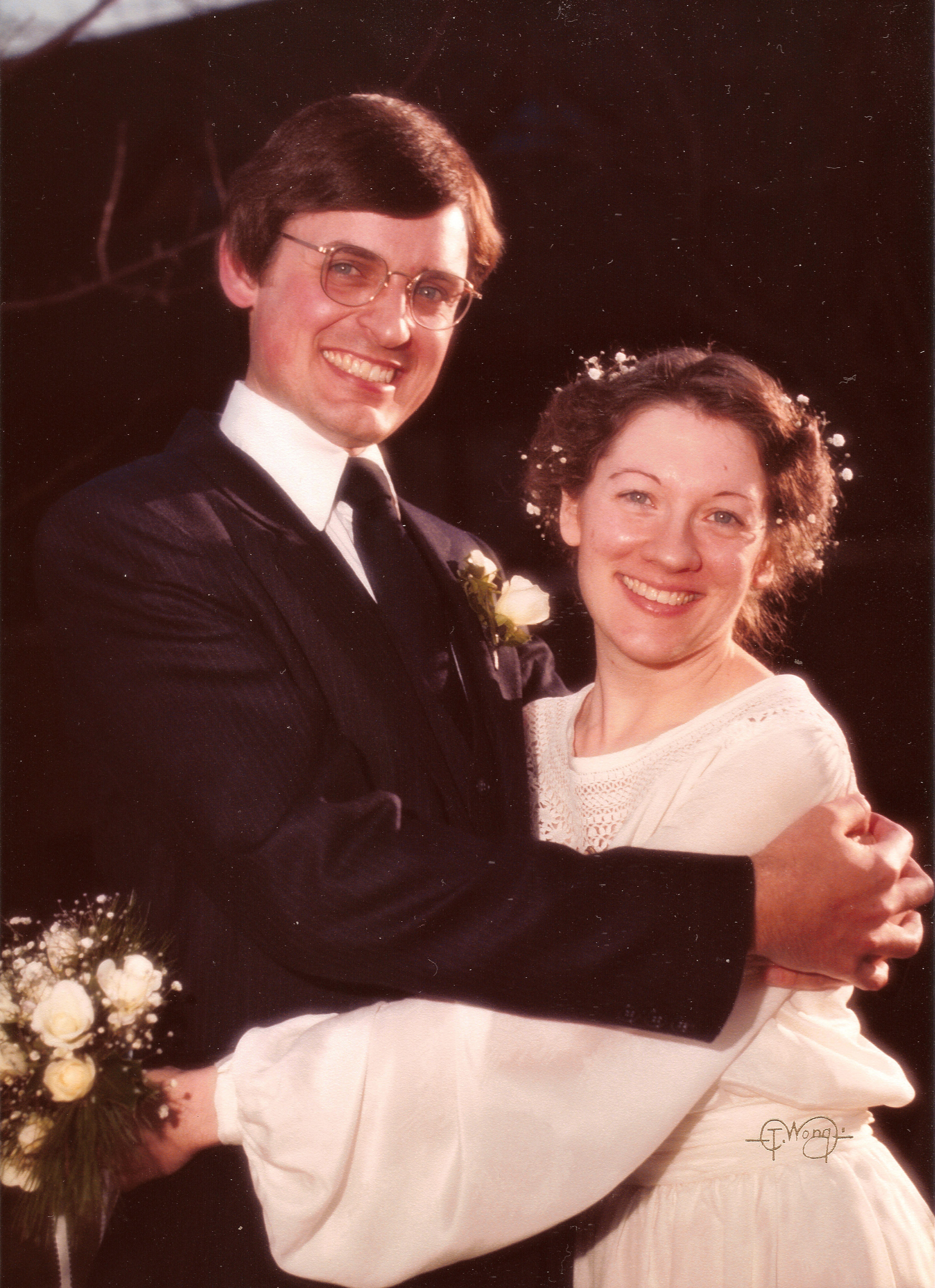
Unitarian Universalist Society of Iowa City, Dec. 18, 1982.

Yesterday we noted it has been 41 years since our wedding. We are still together. We spend more time together and need each other as we age. In these times, that a marriage lasted so long is atypical. That’s us.

I wrote about this moment in my work in progress autobiography:

If one looks at the wedding photograph of us standing in front of the church door, right after taking our vows, it represents what happiness looks like. The day was also a unique embarkation on a search for truth and meaning in our lives.

In the moment of that photograph, on a warm December day, within a small gathering of family and friends, at a modest reception, and with a wedding trip planned, we started the journey we continue today. Words can’t capture how we felt except to say, it was a defining moment full of every potential that life offers.

An Iowa Life, work in progress.

As we age, I do most driving and in-person shopping. Together we nurture our health. Like many marriages, ours had ups and downs. I try to focus on the good as I age. There is no denying we made a happy start. This photo is evidence.

Categories
Writing

Substack and Me

Ready to check email.

Wikipedia: Substack is an American online platform that provides publishing, payment, analytics, and design infrastructure to support subscription newsletters. It allows writers to send digital newsletters directly to subscribers. Founded in 2017, Substack is headquartered in San Francisco.

Finding an audience is challenging. When I started writing in public in 1974, letters to the editor were the usual way to get people to read my work. I had vague notions of becoming a novelist, yet found it difficult to break from the exigencies of a life to produce a novel. In 2007, I began blogging and that, combined with social media, satisfied and is satisfying my need for a readership. I have modest needs.

I read a large number of WordPress blogs and the writing is usually good. There are about 60 million WordPress blogs. Regardless, most don’t seem to get much traction. While the static format can and does gain readership, authors yearn for something more.

I can see why Substack is more attractive than a static blog. It harks back to earlier days when everyone had a junk mail, or later, a junk email list. We would send out the same newsletter to everyone on the list. Often recipients replied and you knew they read your writing. The efficacy of that was mixed. I look at my daily stats of emails sent from this blog to email subscribers and less than 10 percent get opened. Can Substack, with email delivery, be any better?

A number of Substack missives find their way into my email inbox. The ones I read regularly can be counted on one hand: Heather Cox Richardson, Laura Rozen, Art Cullen, Liz Mair, and one finger left over. Simple fact is there are too many Substacks, not enough time. Julie Gammack has organized a large number of Iowa Substack writers, and listed 45 of them on a Sunday morning email. There are good writers among them, yet there are so many. It is too much work to pan through them all to find nuggets of gold.

I wonder why a writer like Heather Cox Richardson publishes on Substack rather than being syndicated in a couple hundred newspapers. I suppose there is a benefit to being able to hit send on the computer when the piece is done, rather than meeting a newsroom deadline. Hopefully she has many paid subscribers and is getting rich from her Substack. Her reach and influence is a modern phenomenon. She deserves to be well-paid.

I get asked if I am moving to Substack. I am not. I figure to write in public until the 50th anniversary of my first letter to the editor in 1974. After that, I’ll focus on my unfinished autobiography and hopefully complete it by the time I turn 75… or before my mental capacity wanes. Then I plan to take it easy. God willing my eyes hold up and I’ll read more books written by others. I don’t see myself as an audio book guy. I may take up writing letters to friends, although my cohort is beginning to die off. I will continue gardening.

What has been important is building community, now with a new group of people whose interests intersect with mine. That new group will include many more young people, something I find is happening already on my new micro-blogging account on Threads. That is important as I wind down outside activities and focus on writing. If more young people read my posts, that’s what I want. I am far from cracking the code of any kind of viewership.

People will do what they want regarding Substack. I’m of an age where I don’t want to spend time learning something new, especially when I expect to be at writing in public for less than a year more. Like anything, Substack is no panacea for what ails a writer. As they say, though, not my circus, not my monkeys. I say live and let live… on substack if you please.

Categories
Writing

Afternoon Walk

Trail walking, Dec. 13, 2023.

It was 2:30 p.m. by the time I took my daily walk along the lake trail. Many people were out as the ambient temperature approached 50 degrees Fahrenheit. It was a wholly different community in the afternoon compared to morning.

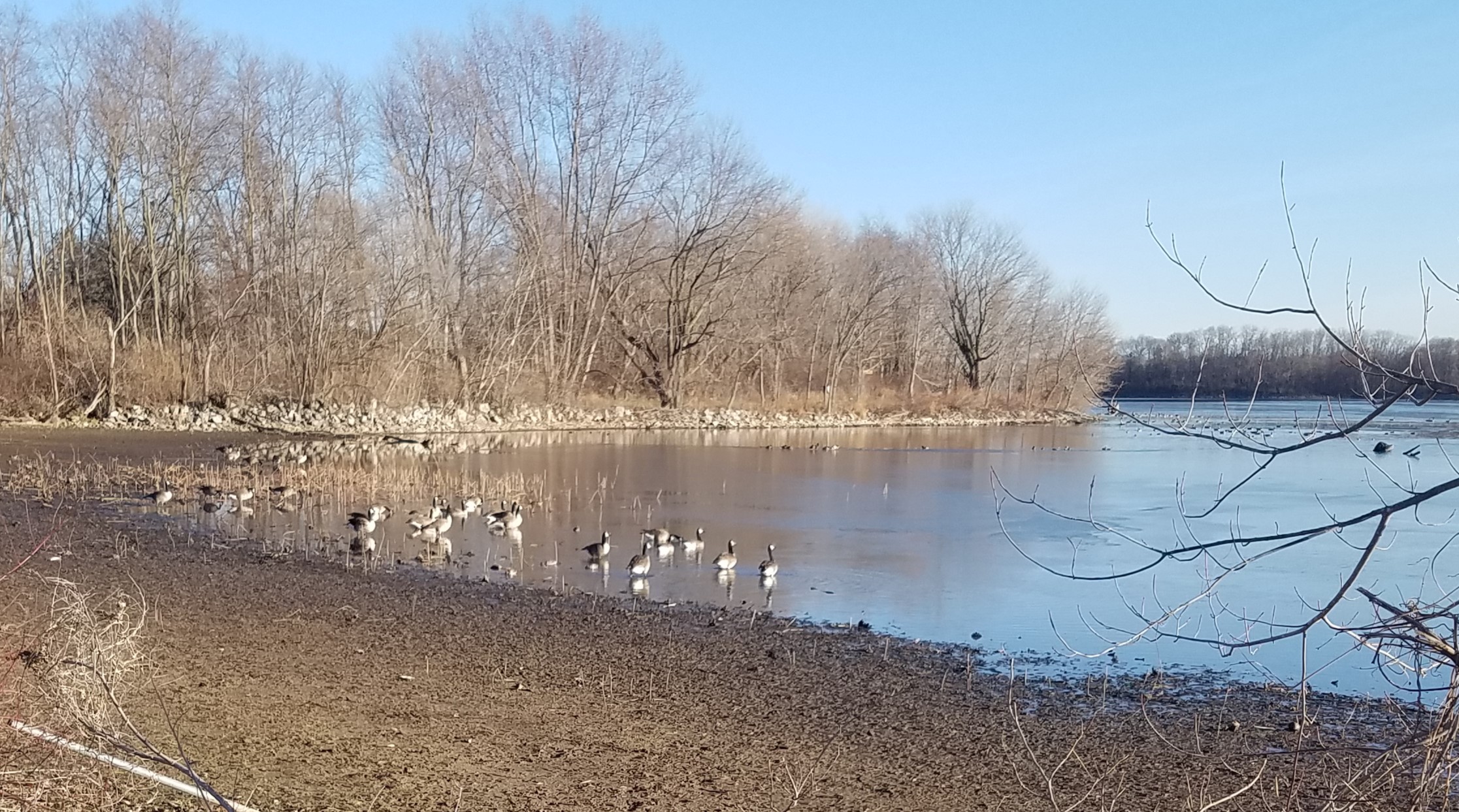
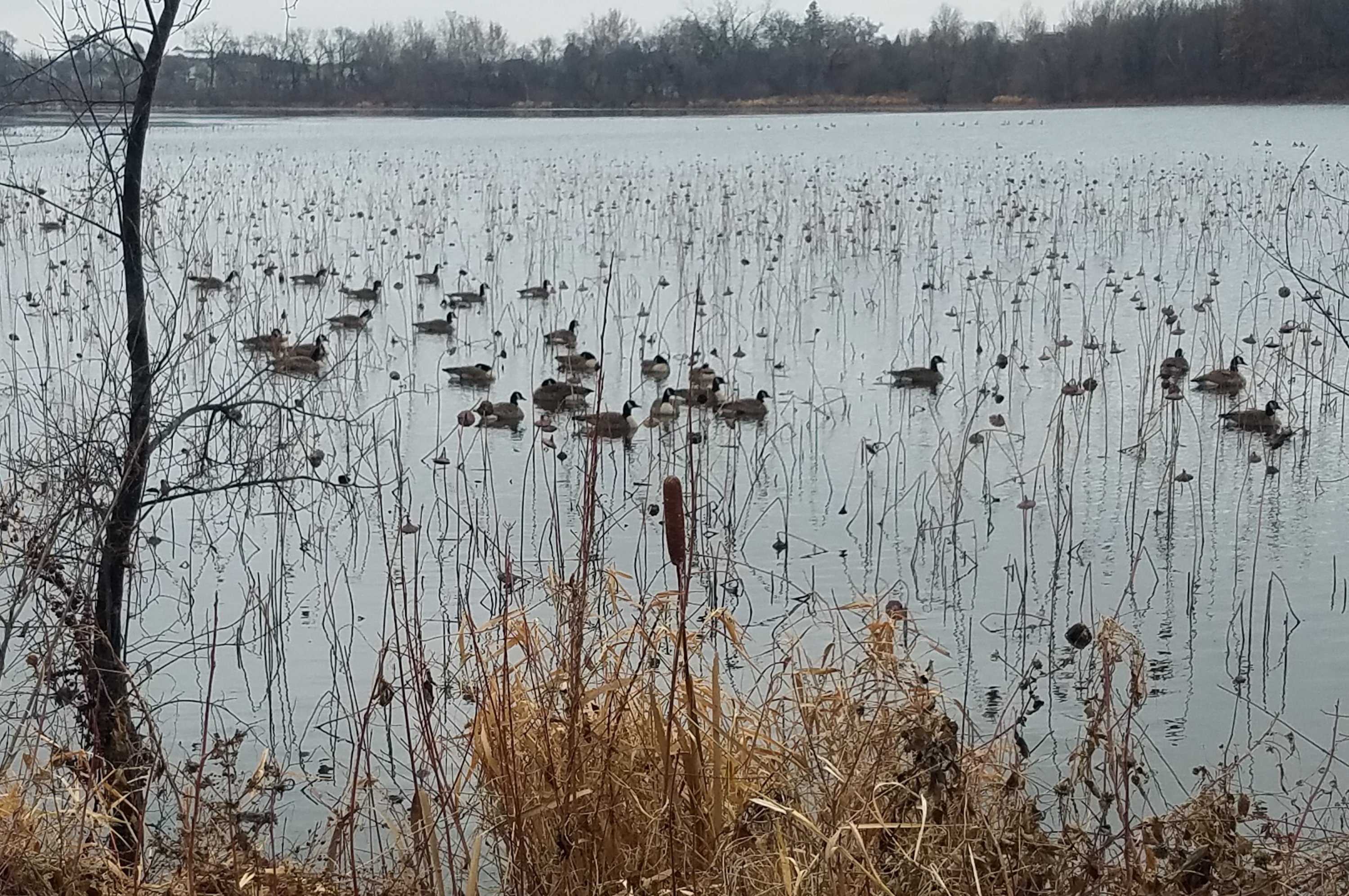
A large flock of geese swims on the lake. I don’t know why they linger. Ice had formed on parts of the surface, and waterfowl took to standing on it in groups. If it remains this warm, I’m not sure they will migrate further south. The lake has plenty in it to nourish them.

I was told by someone close to me I get a bit grouchy during winter. The warm weather encourages me to get outdoors, although communing with geese and other waterfowl doesn’t seem to relieve the condition. Breathing outdoors air is good for us, and the stench from nearby hog lots has mostly been absent. When spring comes farmers will spread manure on their fields and we locals will notice. This is part of living in Iowa, although anymore, grouchiness is endemic to living in the United States. We should treasure those among us who can resist this.

While checking the mail toward sunset, my neighbors were outdoors with their small children in the warm air hanging colored lights on a tree for the holidays. While walking back to the house, I remembered when our child was little. I said “hello” and minded my own business. Those early family memories are precious and fleeting. I didn’t want to intrude.

And so it is, we are living a life and then all of a sudden realize it is shorter than we thought it would be. My reaction to winter is to nestle into my writing room, turn on the space heater, and try to make progress on my autobiography. I also avoid thinking about my ultimate death and return to dust. Except for the manure spreading farmers, I look forward to spring. So it goes.

Categories
Writing

In the Word Hunt

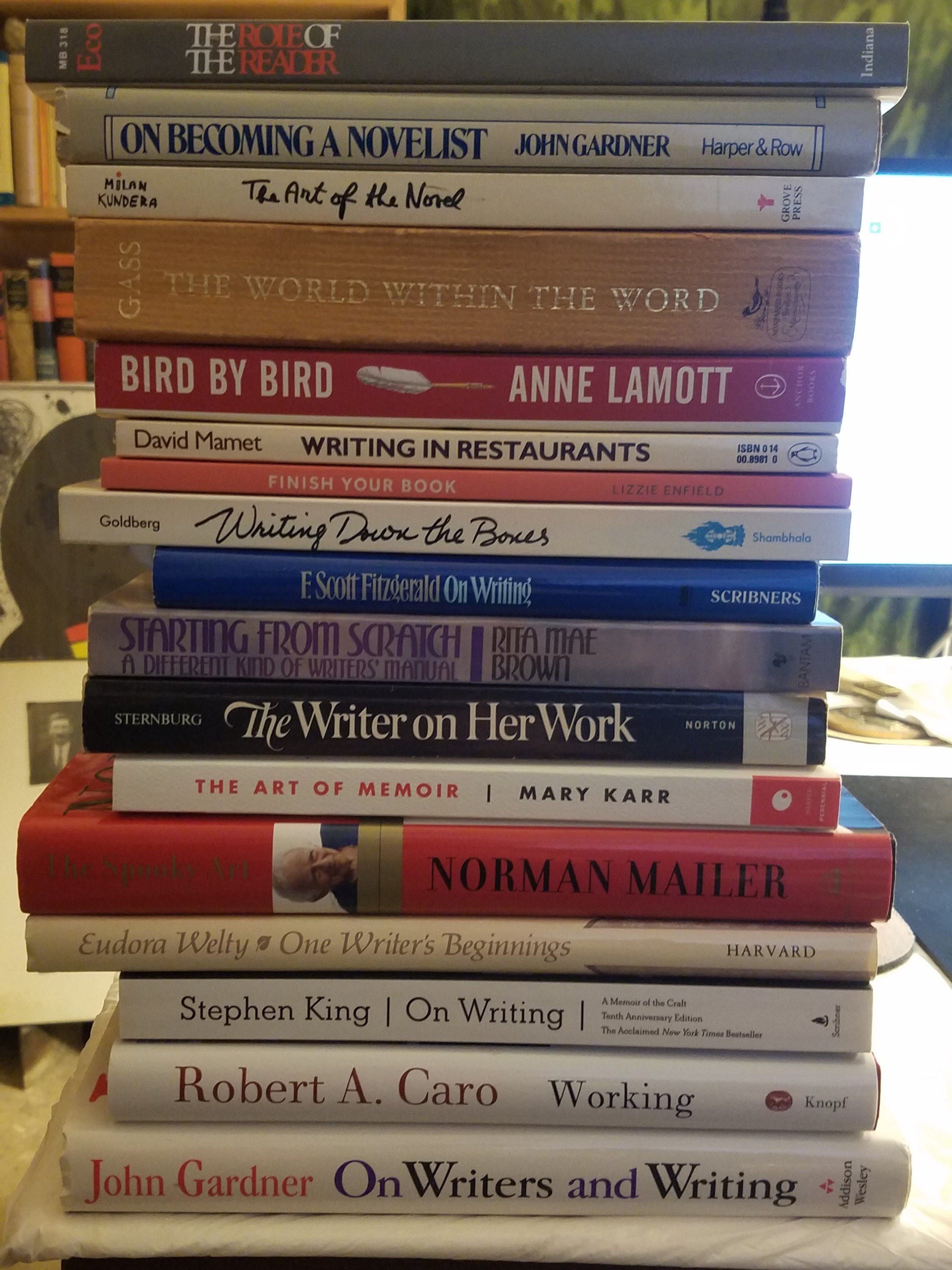
Over the weekend I read Anne Lamott’s Bird by Bird: Some Instructions on Writing and Life. Apparently I was the only person in the known universe who had not heard of her. Printed right there — inside the front cover — are 17 other published works of her fiction and nonfiction. My copy is the 25th Anniversary Edition! I’ve been here all along. Where has she been?

I couldn’t write like her. First, I don’t think I am capable of her stylistic renderings. Second, I prefer a more utilitarian approach. Maybe number two is a reason people have trouble finishing my longer works. The book was entertaining with a couple of nuggets I might actually use. The namesake one, “Just take it bird by bird,” is something similar to what I heard long ago during a Dale Carnegie course, “An air traffic controller can land only one plane at a time.” So it has been without knowing Lamott.

I don’t need to review Lamott’s book because it speaks for itself. I posted a photo of the cover on social media and so many people commented it was one of their favorites. Besides, there are 9,858 Goodreads reviews already.

What I do want to say is it is important to take a break from writing and read a book on being a writer and all that means. At a certain point such books are an easy read with a lot of head-nodding. In a long term project like my autobiography is, one that stretches into years, it is important to walk away for a while and listen to what others say about writing to gain a sense of perspective and hope. Reading about how to write can also be a way to break writers’ block.

I’ve taken to opening the garage door and standing outside in the predawn darkness. Today, stars were out. Because of the layout of trees in the yard, I couldn’t identify any constellations. It was just starlight shining down on me with a reminder we are all stardust. To put it in more utilitarian language, the way scientist Neil DeGrasse Tyson did, “The four most common chemically active elements in the universe—hydrogen, oxygen, carbon, and nitrogen—are the four most common elements of life on Earth. We are not simply in the universe. The universe is in us.”

I’m ready to get back to writing.

Categories
Writing

The Reagan Revolution and Us

My writing desk circa 1980. Five Points, Davenport, Iowa

Editor’s Note: Part of my autobiography in progress presents my experiences regarding work juxtaposed with the Reagan Revolution. This opening of part two is how I introduce the dialectic between my work experience, family life, and social changes after Ronald Reagan was elected president in 1980. This social environment would affect our family a lot through the years. Per every author who writes about writing, this is not the final draft.

Working title: Transition from bachelor to husband

Returning to Iowa from military service, it was tough to find work after graduate school. I made a conscious decision to stop moving from place to place, from activity to activity, and settle down. In June 1981, I looked for work that would pay the bills to stay in Johnson County. Then, and to some extent now, that’s where social action is for young, liberal-minded people in Iowa.

Buying every local newspaper, I marked each job in the help wanted pages with an “X” after contacting the company. The work environment had changed from a decade previously when all a person had to do was make the rounds of major employers to find a good paying, union job. No more.

My application for work got extra points for consideration at the university because of my military service. That led to more job offers. I took a job at the College of Dentistry because it was offered. At the University of Iowa there was a small retirement plan, no pension, and no health benefits.

About a month later, on Aug. 3, 1981, the Professional Air Traffic Controllers Organization (PATCO) went on strike. President Ronald Reagan ordered them back to work and on Aug. 5, he fired 11,345 workers who did not cross the picket line, breaking, and ultimately decertifying the union. While on a later business trip to Philadelphia, I met Reagan’s chief counsel in the PATCO action. We discussed the strike and Reagan’s handling of these government employees. My understanding of the action was confirmed. It was political.

What started in 1981 with the PATCO strike continues, without apology, as part of Reagan’s legacy of breaking unions. The unintended and maybe not considered consequence of Reagan’s union policy was to make life harder for middle class workers like me.

I met my future spouse at the beginning of the Reagan Revolution while we both worked at the University of Iowa College of Dentistry. We got to know each other, and a year after the PATCO strike, I proposed marriage on Aug. 18, 1982.

Categories
Writing

Heard it on a Radio

Waterfowl on the move, Tuesday, Dec. 5, 2023 on Lake Macbride.

My first was a handheld transistor radio purchased about 1963. I used it to listen to KSTT AM’s weekly Top 40 countdown. That year, the station moved from the Hotel Davenport to a new building at 1111 E. River Drive. When I was in high school we would drive past the station and wave at the disk jockey through the large picture window that faced the street. The corner drug store distributed paper copies of the KSTT Top 40 list and I tried to get one each week so I could follow along with the countdown. I have a couple of those in a scrapbook. The thing about radio was I could listen without the supervision of parents. If I plugged in the earphone, they wouldn’t know I was listening in bed. As a grader, that was important.

There was a large radio in the basement of the American Foursquare home from which I attended grade and high school. It was more a piece of furniture, standing taller than my waist. There was an AM dial yet I mostly used it to receive short wave signals from around the world. I spent a lot of hours roaming the dial and seeing what people said in English. It felt good to be exposed to radio signals from outside the United States. This is something I wouldn’t have done in my Midwestern life without that old radio.

I have few memories of listening to the radio in the series of Volkswagen vehicles I owned in high school and at university. I suppose I did listen to the radio, yet it made no lasting impression on me.

Upon arrival in Mainz, Germany in December 1976, I bought a General Electric multi band radio at the Post Exchange. It used batteries or could be plugged in. It gave up the ghost during the last few years, yet it produced high quality sound as I searched the AM, FM, and shortwave dials. I recall listening to live reports from the Vatican on Armed Forces Radio. The conclave of cardinals was electing a successor to Paul Paul VI and the reporter described the smoke rising from the Sistine Chapel after each vote. It seemed like a big deal when Pope John Paul I was named pontiff. It surprised everyone when he died 33 days into his pontificate.

While serving as an infantry officer, our unit had a long deployment to Baumholder for a training exercise that brought in much of Eighth Infantry Division and some of V Corps. The training was about readiness for a potential invasion of West Germany by the Warsaw Pact Armies through the Fulda Gap. I had roles to play at Baumholder, yet was also responsible to maintain garrison operations back at the kaserne in Mainz-Gonsenheim where we were based. I drove home from Baumholder most Saturday afternoons in my Chevy Truck while listening to Armed Forces Radio. The play list those days was old serialized mystery plays like The Shadow. The same playlist each Saturday helped make the 110 kilometer trip pass quickly. As each program ended, I ticked off the miles on the journey home.

In 1988 our family moved to Lake County in Northwest Indiana. We lived in a tract home in a neighborhood where all the homes appeared to have a similar design that included a ranch-style structure situated on a crawl space. Our version had a detached garage where most of my stuff lived in boxes. I had some space on the built in living room book shelves, an easy chair I received as a Christmas gift, and in the corner of the dining area we placed a word processor where I could write. I listened to local radio in our garage, mostly on weekends when I worked on projects.

Indiana, during the six years we lived there, was in transition. The heyday of large steel mills had ended and was being replaced by smaller, more efficient steel production facilities. Manufacturing across the Midwest was suffering because of the Reagan Revolution which drove it to locales where labor was cheaper. The local radio warned about developing a “steel-mill mentality” and to develop interests, especially among younger people, outside the mills.

There was a radio swap show on Saturday mornings. On it, callers would report items for sale and leave contact information. At the trucking terminal I managed, one Friday there was a theft from one of the parked trucks. The stolen consumer goods turned up on the radio swap show.

Folks in Lake County were mostly good people, although of an attitude that reminded me more of grouchy Bucks County, Pennsylvania folks than Iowans. Our daughter went to public school beginning in Kindergarten and it was a type of experience where kids, especially Hispanic kids, would be pulled out of school without notice, never to be seen in school again.

I traveled extensively throughout Indiana, visiting most parts of the state in my six years there. The radio was a constant companion even if I can’t recall to which stations I listened. About the only sure thing was listening to one of the two Chicago traffic radio stations when I had to make a trip into the city.

We moved back to Iowa in 1993 which was the heyday of Iowa Public Radio’s Saturday afternoon lineup. Programs like Thistle and Shamrock, Mountain Stage, and A Prairie Home Companion made an afternoon leading to supper time for me. It was more times than I can remember. I also listened to Car Talk while working in the garage on Saturday mornings. Listening to Iowa Public Radio on Saturdays was a thing until it wasn’t, due to budget cuts, Garrison Keillor retiring, and the coming to the air waves of local musician Bob Dorr who dominated the afternoons. To be honest, I could take only so many instances of Dorr going through his collection of vinyl LPs. It was the end of an era.

Today I mostly listen to afternoon news reports on public radio while fixing dinner, classical music when working in the kitchen during the afternoon, and to country music while driving in my automobile. The garage radio is usually tuned to country music. Automobile listening has become more important because the station to which I tune in is targeted by political advertisers. I can tell who’s got the dough for ads and who doesn’t. That, along with messaging, informs my view of what Republicans in the state are up to. Democrats don’t spend as much on radio advertising, simply because they don’t have the dollars.

The story of my radio listening isn’t just this. However, this post provides a sample of my life, something basic to my personality.

When our child lived in Colorado, before Keillor went off the air, I cooked dinner for us in their apartment with a Prairie Home Companion on in the background. It was a shared family experience that remained important to us. I value such memories. They can’t be repeated, only remembered. Memory of radio listening has become increasingly important as I age.

Categories
Writing

Late Autumn Changes

Selfie taken Dec. 4, 2023.

Yesterday I updated my profile picture across much of my internet presence. The 2011 image I had been using was taken in our garden by my spouse. That I’m now choosing a selfie is a sign of the times, the meaning of which is to be determined. Eventually the new image will be propagated throughout my accounts. I felt it was time for a change. An indoor shot in lieu of a garden image is indicative only of the season in which it was taken. The books in the background? Don’t make too much of those as it was a setting of convenience. In December it’s time to move most activities indoors and I spend a lot of each day in my writing room where there are shelved books.

The more impactful change is deactivating my X account on Nov. 22 after 15 years on the platform. That, combined with becoming more active on Threads decreased my personal mental tension almost immediately. I’ll miss certain people and accounts from X, yet the clean break will serve me longer term. So far, so good with Threads. There is so much more positive engagement on Threads it’s hard to believe that vibe will persist. In any case, there’s no going back to X.

I think the myth of the “big account” sustains X. That is, folks there feel like all the key players for their conversations remain. Likewise Threads in particular, but other new microblogging sites as well, have a paucity of news accounts. Some great news and commentary folk from X are moving or setting up accounts on other microblogging platforms, yet don’t post a lot. X is not dead, but gonna die, I predict, once news and political accounts abandon it. For now, I have newspaper subscriptions to get news when I need it. If I get desperate, there is always radio and cable television to backstop me.

As the year winds down, it’s time for budgeting as well as determining if this life in Big Grove Township is sustainable. Living on a fixed income has been challenging. I hope we can make it this way for a long while. Sadly, in American society, life is more often about financial numbers than fulfilling our wants and needs. This blog is an attempt to change that.

Thanks for reading.

Categories
Writing

Photos and Narrative

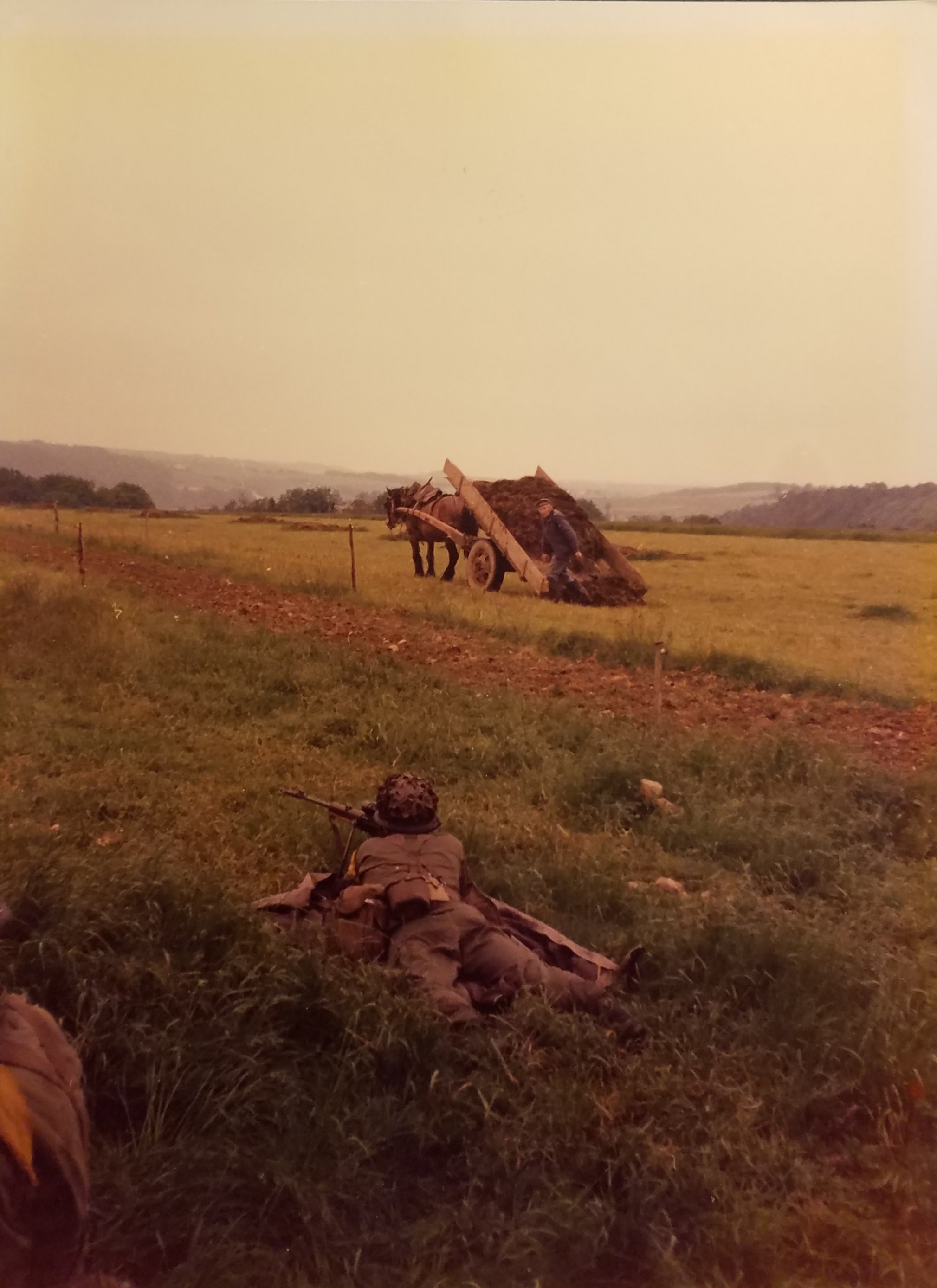
Farmer spreads manure while we were on maneuvers with the French Infantry Marines in Brittany, late 1970s. They keep the horse before the cart in Brittany. Photo by the author.

Three and a half years into retirement I’m not close to being finished culling belongings. It takes time, yet it’s more complicated than that. In particular, when I find a neglected packet of photographs, I can spend hours chasing memories close to whatever main event prompted me to take them. Moving to digital photography in 2007 hasn’t made it easier. If anything the number of photos multiplied each year because of the ease in taking them. Digital files mount up and I developed a special back up process so I don’t lose them. There are so many.

Everywhere I look in my archives, I find more photos all arranged in a hodge-podge manner. Once found, I remember taking most of them, yet how to tap them for pragmatic narrative is problematic. Each batch leads down a different rabbit hole.

I enjoy time spent with photographs yet need discipline in how I use my writing time, which sorting photos is. With the explosion of film photographs when I was a pre-teen, followed by digital in 2007, there are so many that simply looking at them is a huge task. There are six decades worth!

Luckily, Mother was keen on downsizing while living. Included in her belongings were many photos and she let me go through them, taking some prints, but mostly scanning them to files. That, too, was a massive undertaking. I got the images I wanted leaving the hard copies for my siblings.

When writing any book, the number of photos that can be included is small. I’m reading Rachel Maddow’s book Prequel and she used one or two images per chapter. That seemed like a lot. When I print my blog book each year, the photographs make the pages vibrant. They are a small subset of what’s available. I recently changed the size of them after recognizing the photo was as important as the text in many cases.

Sometimes I use a photograph as inspiration to write a paragraph or two without planning to include the snapshot in the book. A photograph can stir living memory from that mystical storage place in our brains. Often the narrative is better than the image. It focuses the reader’s attention on aspects of the story that drive narrative. Too many photos can get readers distracted from the narrative.

I have a short term project in my writing, but big picture I need to distill the boxes and crates of belongings to a usable number. I should pick photographs that advance a narrative, or record some specific moment in time. Seems like writing 101 and I’m only just arriving at this forking path.

Wish me luck.

Categories
Writing

At Municipal Stadium

Modern Woodmen Park (formerly Municipal Stadium), July 29, 2013. Photo Credit: Bohao Zhao, Wikimedia Commons.

Municipal Stadium in Davenport, Iowa was an important part of my growing up. As much as anything, it was a central gathering place for big events for the local proletariat in this sleepy city on the Mississippi River. Our family or I attended events there, including musical performances, high school football games, professional wrestling matches, and a revival meeting. I once attended a Minor League Baseball game there.

By the 1950s and ’60s no culture of big community events existed in Davenport. Segments of the population did gather at a stadium for events tailored to their interests. Promoters tried to make something of our sports teams, yet everyone seemed to have their own life with accompanying other things to do. Here are four things in which I participated at Municipal Stadium, as we called it then.

Herman’s Hermits

On Aug. 27, 1966, Herman’s Hermits played in Davenport at the Municipal Stadium. In the wake of Beatlemania, this was the best our Midwestern city could do. My cohort had watched the Beatles on the Ed Sullivan Show and talked about it at school. I had visions of becoming a musician, having gotten a guitar at the King Korn Stamp Store soon after the British Invasion began.

I don’t recall how I got tickets, but I had income from my newspaper route. Mother made the arrangements for bleacher seats. It was a sunny day for the concert.

If I wrote down everything I remember about the concert, the paragraph would not be long. Besides the concert, the Times Democrat story of Peter Noone and other band members shopping in the book section of the M.L. Parker Department Store struck home. It was the same place I had begun buying books with my own money. That made everything pretty real. A few of my classmates also attended the concert. The songs the band performed were not memorable, even the ones played on the radio.

All Star Wrestling

Father and we kids attended a professional wrestling match at Municipal Stadium. The stands were not packed although because of the popular Saturday morning television program, All Star Wrestling, the event drew a good-sized crowd. Patrons were unruly, with arguments breaking out among them. I almost got into a fight after mouthing off to a stranger. That day there was a cage match during which constructing a cage of chain-link fencing was part of the spectacle. Young women would visit the motel across the river where the wrestlers stayed and attempt to accompany them on tour. Such plebeian entertainments were typical in my home town.

The American Wrestling Association (AWA) was an American professional wrestling promotion based in Minneapolis from 1960 until 1991, according to Wikipedia. It was founded by Verne Gagne and Wally Karbo, originating as part of the Minneapolis Boxing & Wrestling Club. Unlike modern professional wrestlers of the WWE, Gagne was an amateur wrestling champion who was an alternate on the U.S. freestyle wrestling team at the 1948 Summer Olympics. He ran the AWA with a conservative sensibility, Wikipedia said, firmly believing that sound technical wrestling should be the basis of a pro-wrestling company. Cage matches reflected no basis in technical wrestling as Gagne had come to know it.

New Flying Buttresses

When Mother settled with the elevator company in 1973, after Father’s death, we kids got a share. Mine amounted to about $4,000, which I hastily spent on a Volkswagen micro bus, a Fender Telecaster Thinline guitar, a public address system and two Peavey guitar amplifiers. Some stage crew buddies and I formed a band. I’d call it a garage band but we mostly played in the basement of the bass player’s family home, or in Mother’s dining room. Because we invested in equipment from a music store on the Illinois side of the Quad Cities, when they staged a concert for bands to whom they sold equipment, we were invited to perform.

Municipal Stadium is the largest venue in which I played. We only performed a song or two, which made the rigamarole of setting up and tearing down, the main part of the time we spent there. We were all stage crew, so we lived in that realm. We played Six Days on the Road by Earl Green and Carl Montgomery. I remember breaking a string during the performance. We didn’t have a name and were introduced as Paul Deaton and his New Flying Buttresses. The name lasted exactly for that single gig.

Johnny Cash

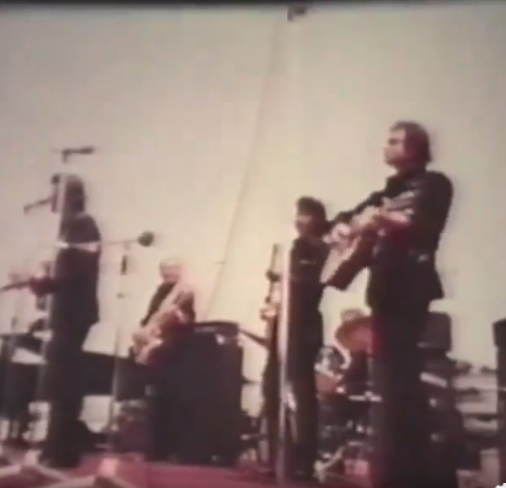
On July 22, 1974, Johnny Cash, Carl Perkins and their band traveled to Davenport to perform at Municipal Stadium at the request of the Rev. Tommy Barnett, then of the Westside Assembly of God. During his tenure as pastor, Barnett grew the congregation from 76 to more than 4,000 members. Westside buses could be seen each Sunday, plying the neighborhoods throughout the lower part of Davenport, picking up its church-goers for service and then delivering them home.

Carl Perkins and Johnny Cash playing at a Tommy Barnett Revival at Municipal Stadium. Screenshot from a video of uncertain provenance.

Cash was supportive of Barnett at the time, although he recanted his support in one of his memoirs. In researching this post, I found numerous stories about the concert, and having been there, found almost all of them to be greatly exaggerated. A short video of Barnett and Cash includes a panoramic shot of the crowd at Municipal Stadium (Link is here). The stadium and bleachers show the concert was well attended. I’d come to the concert to hear my shirt-tail relative June Carter Cash, but she stayed behind in Tennessee at the last moment. Since I had already been baptized, I passed on the opportunity to walk to the stage and be saved.

These are the kinds of events that attracted working class families in Davenport during the 1960s and ’70s. We weren’t Marxists, yet the word proletariat fits.