Categories
Social Commentary Writing

Diving In

Garden
Summer Garden

LAKE MACBRIDE— The ambient outdoor temperature was 50 degrees at 3 a.m., creating a yearning to work in the yard and garden. Other work, however, kept me busy this weekend. So much so, that when each day was done, bedtime couldn’t come soon enough— outdoors had to wait.

I’m okay with that, but I’m not.

When first feeling the urge to be a writer, many years ago, I had no idea what that meant. Now there is a full slate of writing jobs, some paid and some not, and meeting deadlines has become more of an issue. Writing and proof reading our weekly newspaper can’t be described as a stressful job, but beginning on Fridays, it’s crunch time.

The supervisory work at the warehouse also occurs on weekends, so there is little time for extras in the arc from Friday through Monday. The result has been to hang with a new, and very different group of people from the academicians, political activists, public figures, and peace and justice crowd that had become staples of my social life.

American lives move from a fixed point in time toward insularity. Frederick Jackson Turner wrote in 1893,

As each generation of pioneers moved 50 to 100 miles west, they abandoned useless European practices, institutions and ideas, and instead found new solutions to new problems created by their new environment. Over multiple generations, the frontier produced characteristics of informality, violence, crudeness, democracy and initiative that the world recognized as “American.”

The degree to which one takes issue with the frontier thesis asserted by Turner in The Significance of the Frontier in American History, there is no denying the bent toward utopianism that exists in daily life. People don’t care about money as much as they want to be able to pay their bills and live their lives. In doing so, they create an island of utopianism carved out of a complicated society. Perhaps I am corrupting what it means to be utopian, but that too is an American idea.

I heard a woman say she wanted the man to make the decisions for her last week. I was stunned. Only an insular life can espouse such a world view. One that lacks a basic connection to a greater society, and exists in the rarefied air of a peculiar social network.

Ugggghhhhh. That’s depressing,” said one friend.

“Thank goodness she’s in the minority,” said another.

“A sample of one does not a movement make,” said an activist I know.

Whatever repulsion there is to a woman who wants her man to do the thinking, it is part of the diversity of life which has become a context for my writing.

A writer must necessarily become isolated while working. At the same time, there is a constant want and need for contact with humanity in all of its diversity. Writers must break from the swaddling of the familiar and dive in— it’s as close to utopia as American living gets.


Categories
Work Life

Today’s New Path

Sunrise
Sunrise

LAKE MACBRIDE— A colleague at work is from Tanzania— in Iowa to attend the university. Until we met, I didn’t know much about his country, but in bits and pieces, I am learning.

“People think the Maasai are poor, but they are rich,” he said, describing the wealth found in their cattle herds. He also talked about how society is changing for the semi-nomadic people. They are becoming sedentary, he said.  No longer do they leave their dead for predators to consume. When they arrive in town they consume whiskey by the bottle, he added. We also talked about the difficulty of taking a census of Maasai. Census taking is a western notion, so it may be a futile effort.

I tried to preserve his emphasis, his words here. It is difficult, nearly impossible given my western outlook.

It is work to listen… even more work to hear. It’s a characteristic of people with a driving social style. This personality trait has gotten me where I am in life, but one wonders what has been missed while focusing on a task, goal or objective. My conversations about Tanzania remind me to work toward hearing what people say, which is much different than listening through a filter of cultural biases.

I look forward to continuing the conversation.

Categories
Work Life

Drinking Fountain

At Sunset
At Sunset

CORALVILLE— Perhaps the best perquisite of my warehouse job is the public drinking fountain. At anytime, I can partake in the cool, filtered water to quench my thirst. Maybe I’d like something more substantial, something that would pay the bills or reduce expenses. Yet the water is very good— and it meets a human need.

All around me, in every social setting, I hear stories of people who work for low wages and no benefits. People don’t talk much about this as a collective idea, yet it is everywhere. It is a way for companies to minimize the cost of human resources. It is also becoming the new normal.

Understanding the low wage, no benefit, temp worker culture is important, as it’s the life many people live. I write often about temp workers, wages, unions, and work because to survive in the seventh decade of life every source of income and expense reduction has become important. In a way, it represents preparation for the infirmity of being elderly. Health and mortality have become an issue as I proofread the weekly obituaries at the newspaper. A lot of the subjects are people younger than me, and already, I feel like a survivor.

My newspaper colleague Milli Gilbaugh recently wrote about people in my age group. “What we need is another 20 year category between “middle age” and “elderly” that includes the years from sixty to eighty. Maybe the word “older” would work, or “retired” which isn’t necessarily accurate, but it does give an indication of the age span involved. […] The term “retired” has a bunch of problems in that not everybody in the 60 to 80 year age range is retired. Some may be retired from life-long careers and spend their time supposedly enjoying the golden years, […] but most are still working, or have retired and taken a “retirement job” with less stress, fewer hours, and considerably less pay.” While Milli doesn’t cover everyone who works a low wage job, she defines something relevant that people haven’t been discussing.

Recently, when applying for a job at a large company, I knew my chances were slim. They mentioned on their website that the normal retirement age was 62. When they replied to my application, “after careful consideration, we have decided to continue our search for a candidate whose background and qualifications more closely match the requirements of the position,” I wasn’t surprised. I recognized the legalese for “we don’t want you, whatever your qualifications.”

I’d rather work for people who want me in their organization. As long as our family makes enough to live in kind and money, we’ll be okay. Better than that, we’ll live in a way that is better then a large segment of the global population. A global village that doesn’t take drinking water for granted.

Categories
Work Life

Transportation Required

Garden in Late Autumn

CEDAR RAPIDS— Vehicular transportation is required when a person lives in rural Iowa. Horses and bicycles won’t do, so there are trucks and cars. A year ago I bought a 1997 Subaru Outback Legacy to get me around, and it has been a serviceable vehicle. It was popular in its day, and remains so.

Most repairs can be effected by a mechanic in town, but a few items require the dealership support of trained mechanics, certified parts and the latest diagnostics. It’s an example of accessing the global supply chain and technical support staff. I seldom, if ever, want to make the trip, but am there now, using ultra slow WiFi to connect to the Internet while I wait.

The days are filling up with activities, but the whole system depends, upon getting around and hauling stuff with me.  At least there is coffee.

Categories
Work Life

Day in the Life

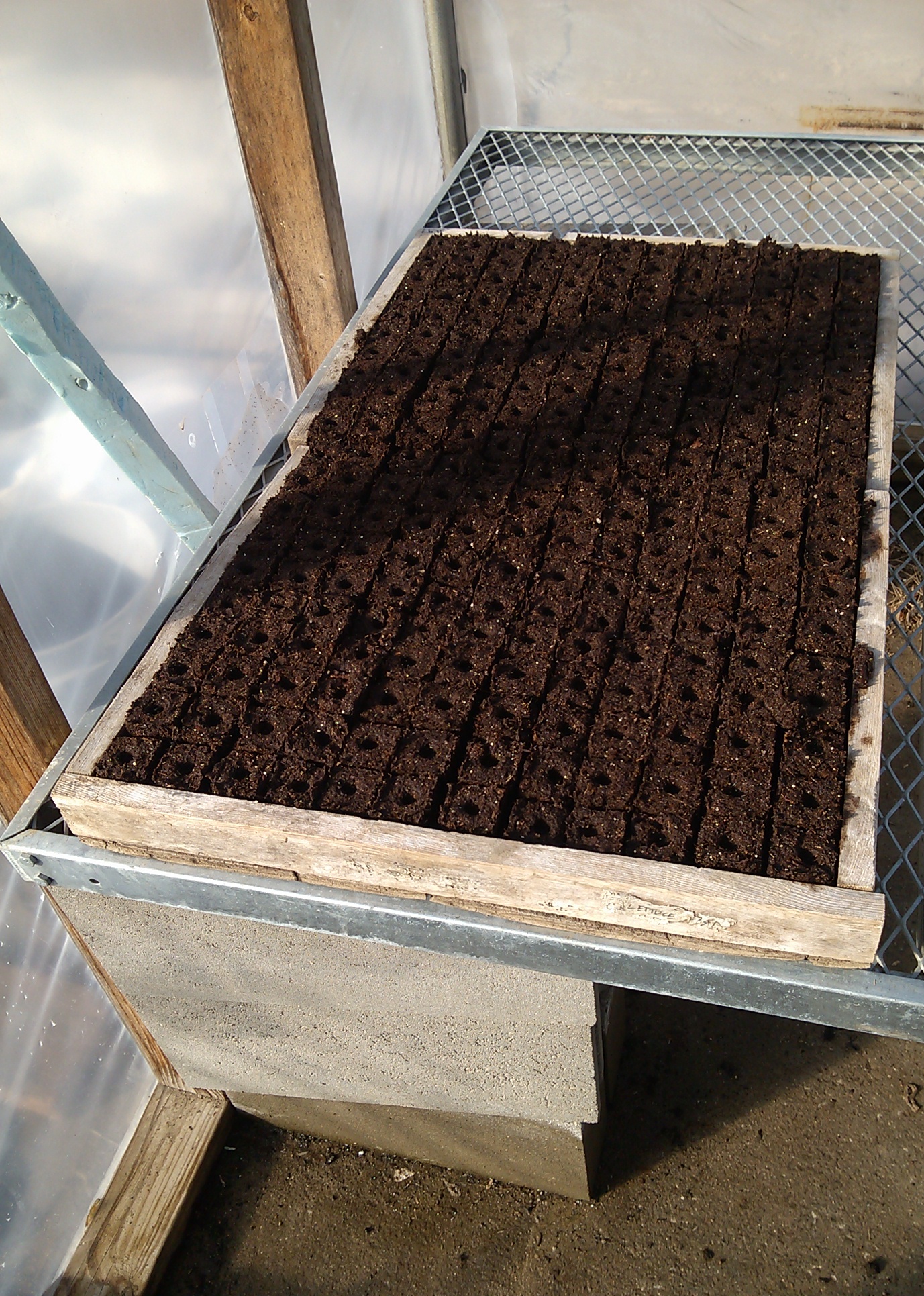
First Soil Blocks at the CSA

LAKE MACBRIDE— The winter of thinking and planning is over, leaving the doing and its requisite long days and short nights.

Yesterday began at 5 a.m. with finishing my newspaper article about the forestry meeting in town. Afterward, I spent a couple of hours at the farm, worked a shift at the warehouse, and attended a meeting about the global roll out of a nuclear abolition initiative with Rotary International. I returned home at 9:30 p.m. It was a long day.

Rotary International is engaged in its final work to eradicate polio around the world. What’s next for them may be working with others to bring an end to nuclear weapons. I signed up as one of three Iowa speakers for International Physicians for Prevention of Nuclear War, and its U.S. affiliate, Physicians for Social Responsibility, as we seek to engage Rotary Clubs worldwide. Rotary International and the International Red Cross Red Crescent Societies are the only non-governmental organizations recognized by the United Nations, and both have expressed an interest in nuclear abolition for humanitarian reasons. This is a really big deal, even if we don’t hear about it in the U.S. corporate media. I am thankful to be a small part of it.

The seeds planted indoors have sprouted. The growing season has begun.

Categories
Home Life

Wintry Trip to Town

Snowfall in Big Grove

LAKE MACBRIDE— The sound of scraping entered the house and overpowered the muffling noise of the furnace fan. It will require work to get to town for a meeting. At least the snow plow did its part.

The driveway is snow-packed from the car tires, so whatever fell last night won’t be easy to remove. Work was planned for indoors this morning: to write a story for the newspaper. Snowfall is a happy coincidence that will break the quiet and be part of today’s process of fresh air, physical labor and writing. It’s as good as it gets.

Whatever funk descended upon me in December is gone. The new jobs, the promise of spring, and hope that a sound financial platform will enable better writing portend great things. Here’s hoping I’m equal to February’s promise.

Solon During a Snowstorm
Categories
Work Life

On Minimum Wage

At Sunset
At Sunset

LAKE MACBRIDE— The talk of raising the minimum wage to $10.10 per hour, as President Obama suggested in his state of the union address, is from another country. He means well, but at $10.10 per hour, a life is hardly sustainable, even with overtime. What would better serve low wage workers is lifting the entire economy, combined with reducing regulations that hinder the efforts of small scale entrepreneurs. Where I live, the future is not about wage rates as much as it is about putting together a life that may include a job or jobs, but is not dependent upon them. Sustainability will be about creating local answers to the question, how shall we live?

The current discussion about wages is not really about sustainability. It is about boosting income for lowly paid workers. There are arguments that posit a relationship between increasing the minimum wage and reducing poverty. If increasing the minimum wage is an anti-poverty program, then I’m all for it. Especially if we agree that the action would not address the overall struggle people have to exit working poor status. Unless our elected officials index any potential increase in minimum wages to a formula that tracks buying power, all that will have been accomplished by raising the minimum wage is to throw the working poor a bone for today’s soup pot.

When I was a child I asked my father if we were poor. He said being poor was an attitude, and he did not consider our family to be poor. As I wrote elsewhere, “I had a normal city childhood among people who never had much money, but had a well defined culture centered on family, work and church.” It’s the presumptions about how today’s culture is defined with regard to the minimum wage that drive me mad.

Robert Reich has written that wages should track the economy. He said, if people have money to buy things, the economy does better. Government plays a role in stimulating the economy by making monetary payments to individuals through social programs, giving them more money to spend. Yet, most people I know don’t look at living with the same macroeconomic view Reich espouses, and are not fans of consumerism. Everyone wants to be a global strategist, but few want to apply equal skill and energy to improving life on a more granular level.

The analysis local people use, one that starts spending the new money that an increase in minimum wages would generate on education, training and the like, is ridiculous. People who are working poor, or living from paycheck to paycheck, already know how they will spend any extra money that comes into a household budget. The annual five or six thousand dollars we are talking about, in many cases, has already been spent on loans, medical bills, using credit cards, and incurring other forms of debt that are part of how people make cash flow without adequate income. To say that a $2.85 per hour increase in minimum wages would enable the working poor to exit poverty and join the middle class reflects a basic lack of understanding of the situation.

Advocating for an increase in the minimum wage is okay for those who are financially established, but it is a middle class progressive perquisite. Where I have trouble with it is in differentiating myself from the rest of the people on the planet as someone who is better than anyone else. I don’t do everything I would in the community; I wish I could do more. I also believe someone has to be working on a granular level to find a sustainable, replicable answer to the question, how shall we live? There is not much pay in doing that.

Categories
Work Life

Monday After the Storm

Snowfall
Snowfall

LAKE MACBRIDE— We had just made it home from dinner at a relative’s home when the wind picked up. We timed the visit so as to return before yesterday’s storm. When we got in, the windows rattled while a neighbor’s wind chimes clanged in the stiff breeze. Snow blew all night, covering our tire tracks leading to the garage. “Blizzard conditions, strong winds and life-threatening wind chill values (were) all possible in Iowa on Sunday,” according to the National Weather Service. This morning, the wind has died down, leaving temperatures below zero and the driveway to shovel.

Two new paying jobs are in the works. I am officially a newspaper correspondent. The publisher gave me a couple of story assignments on a trial basis. There is a school board meeting in the county seat tomorrow, and a city council meeting the following week. I’m to write a brief article about the events for publication in our local papers. Saturday morning I spent an hour training with one of the editors, talking about process and expectations. I’m looking forward to the challenges of a new form of writing. As she said Saturday, the pay is pocket change.

The other new job is as a shift supervisor at a warehouse club in Coralville. I will be part of a three-person management team for a company that does in-store product demonstrations. It has been a very social job, comprised of constant interaction with retail shoppers. I enjoyed that aspect of the work during my first week’s training. With the new work, about 85 percent of the year’s expenses are funded, which means the hunt for more paying work will continue.

Bison
Hunt for Revenue

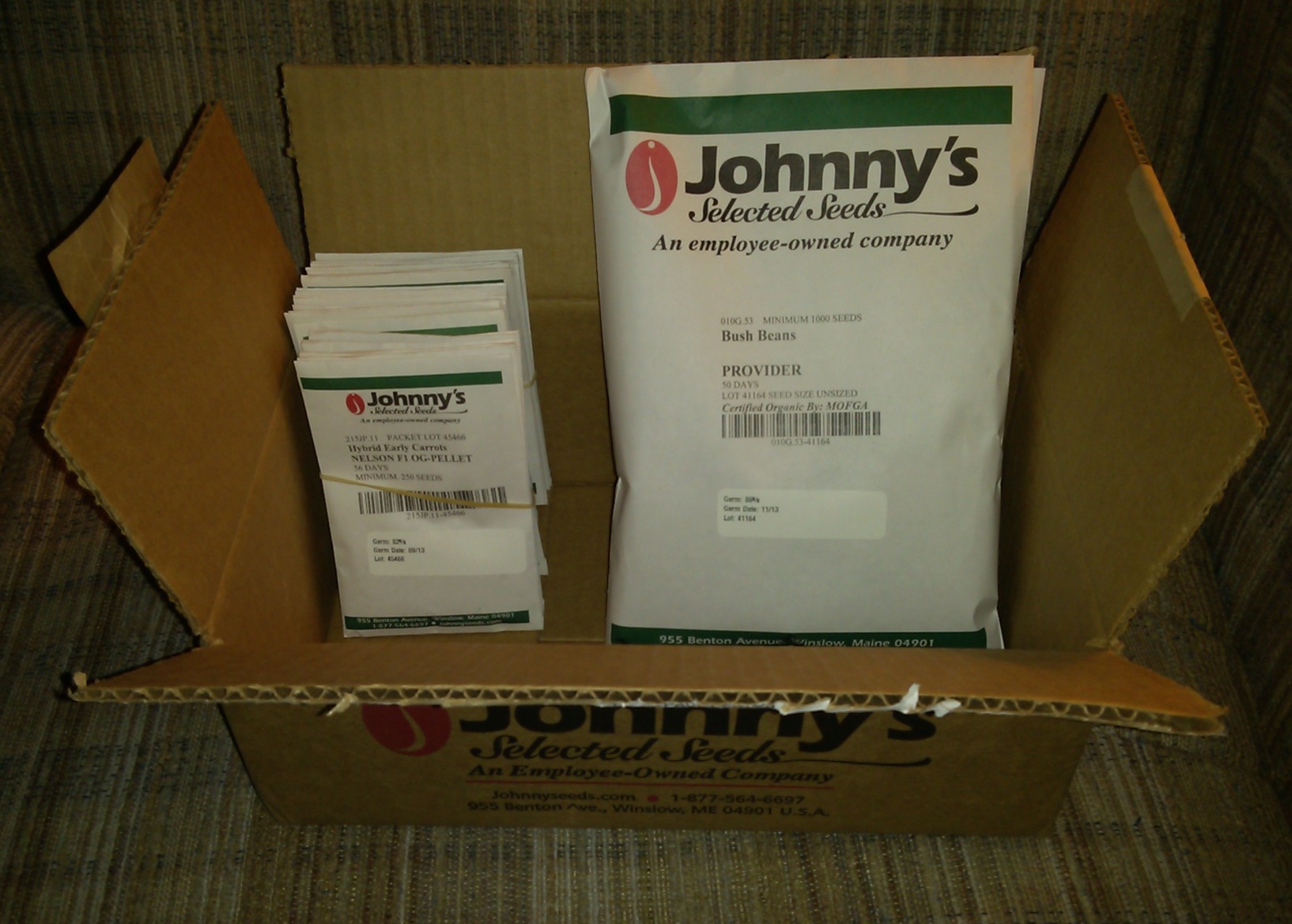
Final news of the weekend is the seed packets arrived on Saturday. By my grandmother’s oral tradition, the time to plant “Belgian lettuce” is March 2, so there is plenty of time to write a plan for the garden. Last year, the ground was still frozen on March 2, and with the crazy weather we have been having during recent years, I won’t predict. As soon as the ground is workable, I’ll plant the remainder of last year’s lettuce seeds in a tribute to Grandmother.

Seeds Have Arrived
Seeds Have Arrived

I bought celery seeds, and am looking forward to the experiment in growing this vegetable. There are also a lot of carrot seeds, seven varieties of tomatoes, six varieties of peppers, and much more. I have worked a garden of some kind every year since our wedding. This year’s garden is expected to be another layer of refinement in a process that has developed steadily over more than 30 years. I’m looking forward to setting up the table near the south-facing window to start seeds indoors again. Simply put, there is hope on Monday, after the storm.

Categories
Social Commentary

Snow Fell in Town

Newspaper Office
Newspaper Office

SOLON— An inch of snow had accumulated while I was inside working on next week’s newspaper. When one is the proof reader for a small weekly paper, he gets a preview of what’s happening. There is some action, but not much.

The second session of the 85th Iowa General Assembly began last week, as evidenced by the multitude of newsletters from our state representatives and senators. Our circulation spans two senate districts, so there were a total of four in my folder. As a recovering political junkie, I had already read the four at home, and then some. There was little news, except to say it’s open season in the Iowa legislature. My state representative was holding two listening posts today in Bennett and Lowden. Had the weather been better, I would have driven over.

What was in the news was that J.C. Penney is closing 33 stores and laying off 2,000 employees. On Thursday I accepted a part time job requiring white shirts, and I didn’t have any decent ones. I went to Penney’s yesterday morning to buy them. (Note to self: throw the rags in the closet away, as they are not shirts any more).

Upon arrival, I was one of a small number of customers in the store. A gent greeted me close to the door, offering his assistance. My shirt is an oxford-style, buttoned down collar with long sleeves. The gent attempted to compliment me by suggesting a size smaller than I required, but the photo of the tag from my old shirt clarified the matter. He helped me find what was wanted in short order.

I am baffled by the pricing scheme at large box stores. The tag on the shirt said $30. There was no other price posted. The gent told the cashier to make sure I received the 25 percent unadvertised discount. When she rang it up, the computer/cash register gave me a 50 percent discount. While discussing payment terms, she asked if I had a J.C. Penney credit card. I explained that I do, but prefer to keep all my charges on a single card, so I would use my MasterCard. Another discount. My final cost was $12.75 plus tax per shirt or 42.5 percent of the listed price.

Keep in mind there was no visible price advertising in the store and when I mentioned the discrepancy to the cashier she said the amount was correct. Price was dependent upon the cashier’s entries, the bar code and the computer database. The personal shopping experience was compelling because the price seemed to get lower every step taken toward payment. How do they make money that way? They’ve taken logic out of the process, and one supposes they have their reasons.

I pointed out to the cashier that our store wasn’t on the list to close. She said they were rated number one in the U.S. for sales by size. She asked if I had ever been to the Muscatine store scheduled to close. She had been, and wasn’t surprised because they had so little merchandise in it. We had a nice conversation.

The whole shopping experience was engaging on many levels, but I don’t see how this store could be making any money with so few customers and the vagaries of pricing. If they stay open, I’ll be back if I need additional shirts.

When I got home from the mall, I ordered garden seeds— 26 varieties costing $122.75 including shipping. That plus herb seedlings to be bought at one of the farms and I should be ready for planting. As soon as the snow lets up, I’ll be ready to get outside and prepare the soil.

For now there is snow, and I’m okay with that.

Categories
Work Life

Shedding Human Capital Costs

Garden
Garden

LAKE MACBRIDE— By the time I returned from military service and finished my master’s degree in 1981, American businesses were well into shedding the costs of human capital. I have pointed to the Reagan administration as a driver of this phenomenon, and will continue to refer to the post-Reagan era, but it began much earlier than that.

When I was ready to start a career, there were no local and viable opportunities for a job that offered what I expected in a benefits package, a pension or substantial retirement plan. The government job I took did not offer health insurance, or a retirement plan. If I thought about retirement at all as a 30-something, I relied on Social Security and Medicare to keep me out of poverty in old age. I still do.

The private company I picked when I left government had a marginal retirement plan, based on profit sharing. They developed a 401k plan when the 1978 IRS change began to be spread throughout private industry in the mid to late 1980s. 401k plans served to limit a company’s pension liabilities. Businesses then began to reduce the cost of health insurance and other payroll benefits.

Today, businesses continue to seek ways to shed the cost of human resources through outsourcing, off shoring, the use of temporary workers, and subcontractors. They also hire consulting firms that specialize in compensation programs, making sure that employee wages are kept consistent with the marketplace, namely lower than what a company might develop organically. To think pay and benefits offerings would return to the 1960s, when good-paying union jobs were available, would be to deny the reality that is today’s work environment.

A friend posted a link to an article titled, “Forever Temp?” that discusses manufacturing’s movement toward temporary workers. It is worth reading. The benefit of temporary workers is substantial for businesses. The cost of training, worker’s compensation, absenteeism, recruiting, personnel and existing employer-employee contracts can be avoided. This practice is so common that moral outrage over the loss of union jobs with good benefits is worn out. Temp workers are the new normal.

Perhaps the expectation that a person could enter a career and work in it until retirement is misguided. There are some cases where it is possible, but not for the vast majority of Americans. What matters now, is whether a job will persist, whether a paycheck is accurate and paid on time, and that there is a commitment to safety in the workplace. All of these things workers in the recent past used to take for granted, but now rely upon government intervention, rule making and enforcement.

Truth be told, I’d rather deal with the uncertainties of the current economic environment than become wrapped in the cocoon of the work-a-day world for low pay. I’d rather be prepared to make it on my own.