“I’ve been reading the paper lately,” said Kevin Samek to the Solon City Council on Aug. 6 during the citizens speak agenda item. “I’m a little concerned about the north sewer trunk.”
Samek had been reading my newspaper articles about the council and this long-standing community issue.
He went on to express his concerns about the way council was handling finances regarding the sewer line, and on a second topic said that public safety could be improved on Main Street by lowering the speed limit.
Council addressed his concerns by lowering the speed limit on Main Street from 25 to 20 miles per hour, and by unsuccessfully attempting to reach agreement with a developer over the sewer line at their Aug. 20 meeting. Samek filed to run for city council shortly afterward.
Two things about this story explain why some of us write in public.
Samek read my newspaper articles, and then did something about it, first by speaking to council, and then by deciding to run for public office. Informing and activating people to take action is what public writing is about. Whether we write for a newspaper, a blog, in social media, or appear on television or radio, the purpose is similar. We attempt to say something meaningful to readers and urge them to action.
The second important part of this story is that someone was there to witness the work of the city council and report on it. Often I am the only person seated in the gallery at council meetings and if I don’t write about them, it is doubtful anyone outside government would. Being there and having a point of view is important to restoring our Democracy. Writing publicly about what we witness is equally so. This is true not only for our government, but for much else in society.
As my summer job with Blog for Iowa ends, I urge readers to get involved with community life and take progressive action. We each have a unique perspective that is needed. There is a world out there and not enough people witnessing its reality and sharing it in public. Or, as Saul Bellow said more artfully, “there’s the most extraordinary, unheard-of poetry buried in America, but none of the conventional means known to culture can even begin to extract it.”
My hope is that people read what I wrote this summer and were moved to do something about issues that are important to them. As the political season turns to the fall campaign thanks for reading my summer posts. My advice is to never give up.
A blatant commercial plug from my favorite fall workplace:
Hi All,
Its that time again. Tractor rides, turnovers, slushies, apples, and blueberries. We open for the season tomorrow, August 1 and will be open every day after that for the next three months. Open 10 a.m. to 7 p.m. through the end of September. Grab the kids, that crabby spouse and come on out and enjoy our bit of heaven.
This weekend features blueberries. Great big, tasty ones from Michigan. Bluecrop variety— the best there is. Get them by the pound or by the 10 pound box. Either way you’re in for a treat. Blueberries freeze extremely well, allowing you to enjoy them all winter long— great in cereal, on yogurt or just plain. $4/pound or $34 for a 10 lb box.
We also have Georgia peaches available. Great big, juicy and tasty. These peaches actually taste like peaches— imagine that! $2.50/pound or $42 for a 25 pound box.
On the treat side, on Saturday and Sunday you can add to your blueberry fix with a slab of Bevo’s Blueberry Buckle, warm and yummy. Or, go with a hot turnover with ice cream. Or a couple of cider donuts. Or heck, its been a long dry spell, do one of each! Apple cider slushies will be flowing as well — plenty to choose from.
On the frozen side, we have apple and cherry turnovers available in 8 packs as well as apple, cherry and blueberry pies.
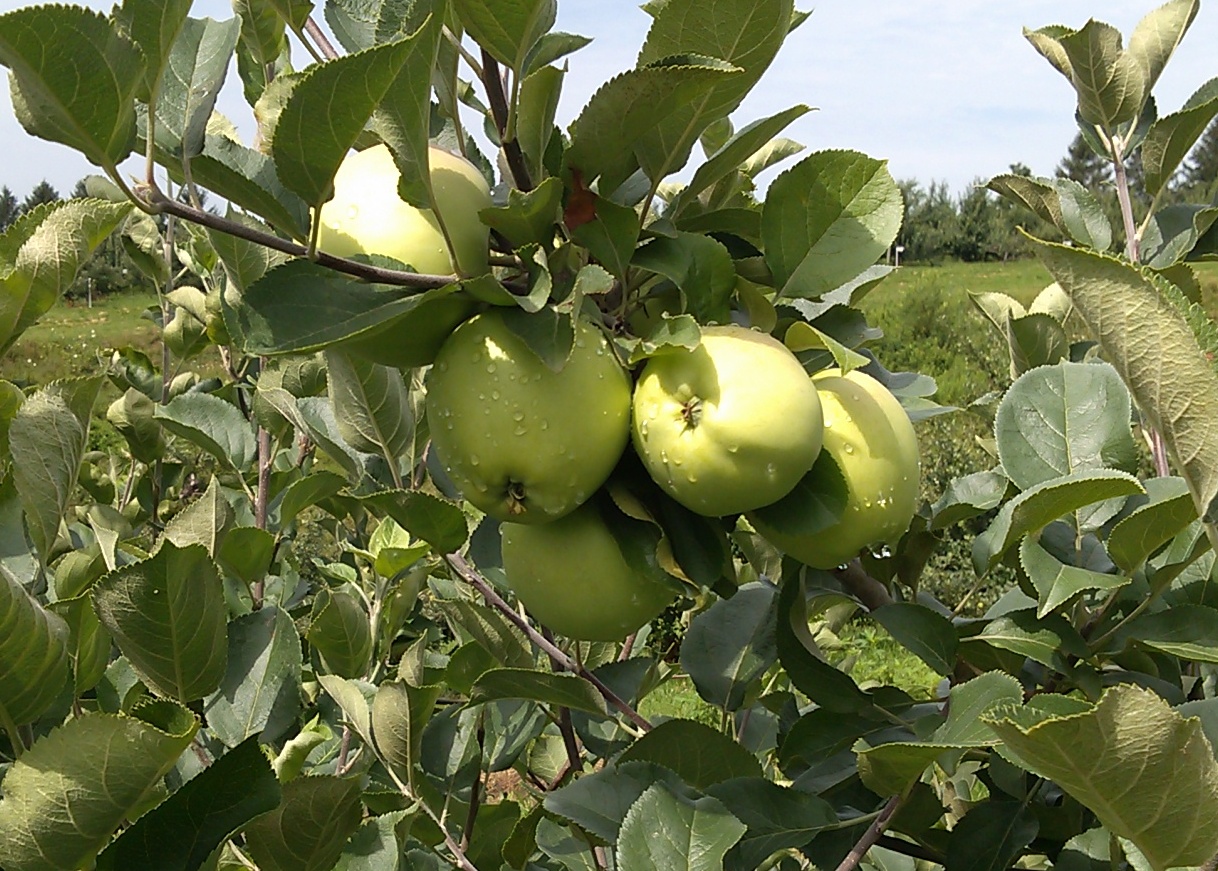
This weekend looks to be GREAT weather. Come by and get your first tractor ride of the season or enjoy a stroll through the orchard. The crop looks exceptional this year. We dodged several hail storms, came within a degree of a major freeze and withstood straight line winds. Through it all, the apples survived and thrived and we have a great looking crop nice sized fruit with good color and flavor. Knock on wood.
What’s Pickin’
While the crop looks great, most varieties are at least a week later than normal due to the cooler temperatures this summer.
Pristine— in the words of Chug Wilson, “the first good eating apple of the season”. Pristine also make very good pies, for those of you so inclined.
Jersey Macs— an early McIntosh, GREAT for applesauce. Good flavored eating apple, but a bit on the tart side Dutchess of Oldenberg— quite tart. This is an old time apple in Iowa, one of the first that settlers found could withstand the tough winters here. Our crop of Dutchess is quite small this year
Hope to see you all soon.
Paul Rasch
Wilson’s Orchard, 2924 Orchard Lane NE, Iowa City, Iowa 52240
LAKE MACBRIDE— The allure of imagination is a writer’s arena. It can be a saving grace, enabling us to survive in a world gone mad. It can be a distraction from existential realities that beckon for attention. It is a blessing and a curse, perhaps the result of our too large brain combined with the relative security of life on the American plains. Perhaps it is simply a way to live.
Writers seek allure more than imagination, at least this one does. That moment when an idea rises on the horizon. A shiny object, not unlike a fashion photograph— each element prepared meticulously for our viewing, the scent of perfume imagined despite the reality of a two dimensional image on a screen. Allure is the well from which a writer dips a ladle and drinks.
You go in each morning, and there’s a blank page. Maybe it takes five minutes, maybe it takes an hour. Sooner or later you start writing, and then the words begin to flow. Where does that come from? You can’t pinpoint it. You always wonder, “Will it all stop tomorrow?” In that sense it’s spooky. In other words, you’re relying on a phenomenon that’s not necessarily dependable.
There is no shortage of things to occupy our attention. A recent story on the cable television business reported there are 10 million households in the U.S. that have an Internet connection, but no cable television. It’s enough people for Home Box Office to perceive a market and develop a direct sales, Internet delivered, bundle of subscription programs. Radio, then television, and now the Internet, have served to suppress imagination’s allure. Programming fills our attention capacity as we plug in to our favorite diversion. For a writer, this is a low level poison trickling into our veins, suppressing creativity. Allure vanishes leaving us feeling empty and used, yet craving more.
“No ideas but in things,” wrote William Carlos Williams. Would that it were so. His 20th Century produced a consumer culture in which people collected things without ideas. Certain die cast toys, boxes of pasta, tools, and my addiction— books and reading material. The result of someone’s ideas tangible and in our hands. Maybe Williams was warning us.
As we age, we become aware of our physical limitations and imagine more. Aging bodies become temples of memory to be filled by righteous and earthy memories. As our bones stiffen writers strive to avoid calcification of ideas. It takes work. We are not always successful.
“Memory believes before knowing remembers,” wrote William Faulkner. As we age, the hard drive of memory falls into disuse. We repeat old jeremiads in society, trying to get along. We can forget the allure of the imagination.
When a writer loses the ability to be drawn to the allure, one is no longer a writer. A scribbler maybe, a blogger definitely, a writer only in external artifacts and behavior.
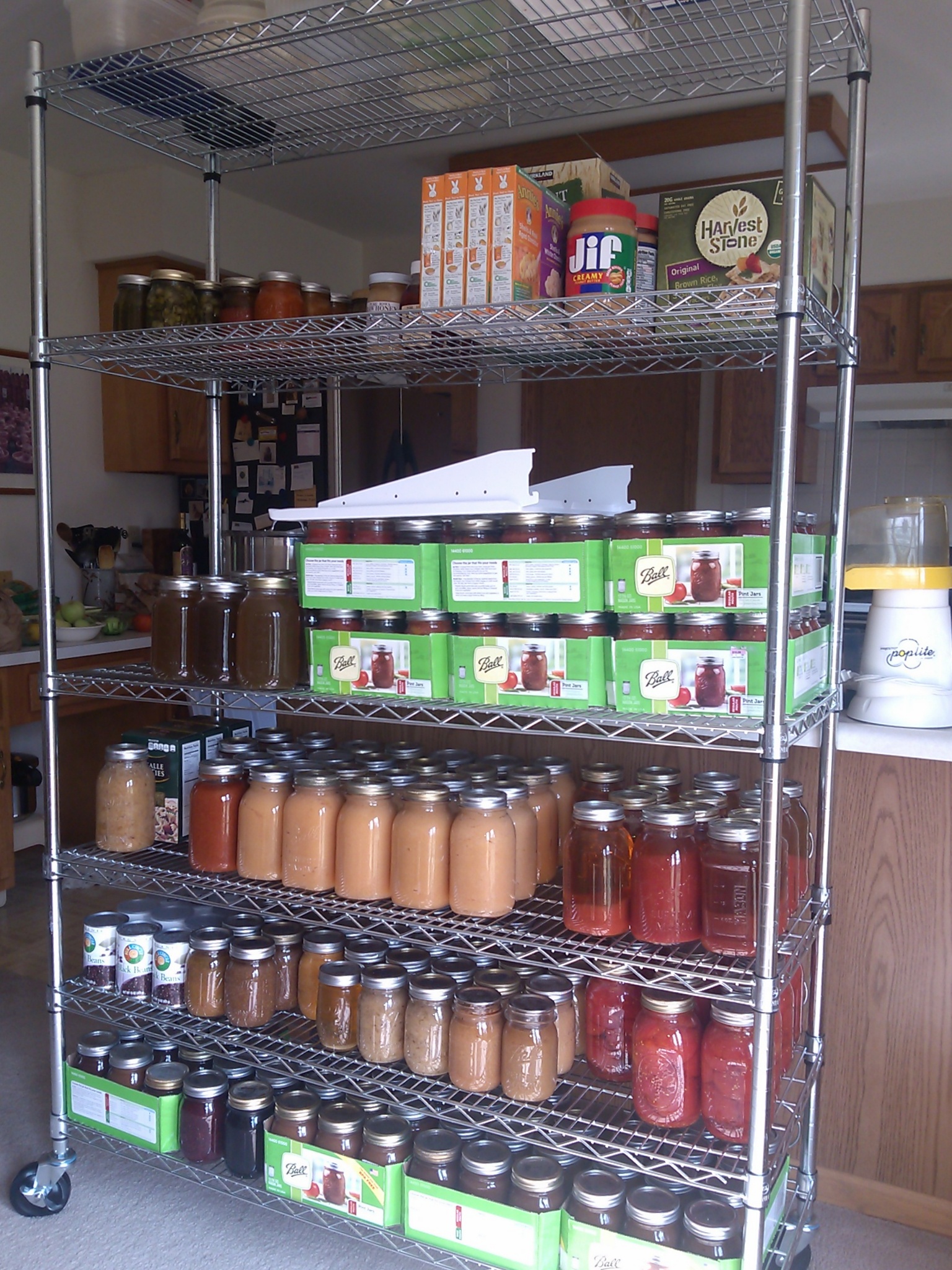
We may be driven to package our awareness, like a gardener spending weeks in the kitchen canning and freezing produce for a winter of use. The jars on a shelf serve a purpose, the least of which is nourishment. They become another distraction from the allure of a life of imagination.
INDEPENDENCE— Friday was a mini-retreat from paid jobs as I drove support for a small team of riders on the Register’s Annual Great Bike Ride Across Iowa (RAGBRAI). The first ride was Aug. 26 through 31, 1973, when people got whatever bike was in the garage tuned up and headed to the Missouri River for what was to become an annual event with thousands of riders on more expensive bicycles.
The day began at 4 a.m., and I arrived to pick up my team in Waterloo around 6:30 a.m. We waited and watched weather radar maps for a couple of hours until the storms passed. Rain held back Friday’s morning start, but in the end, it was a great day for being outside, and in Iowa.
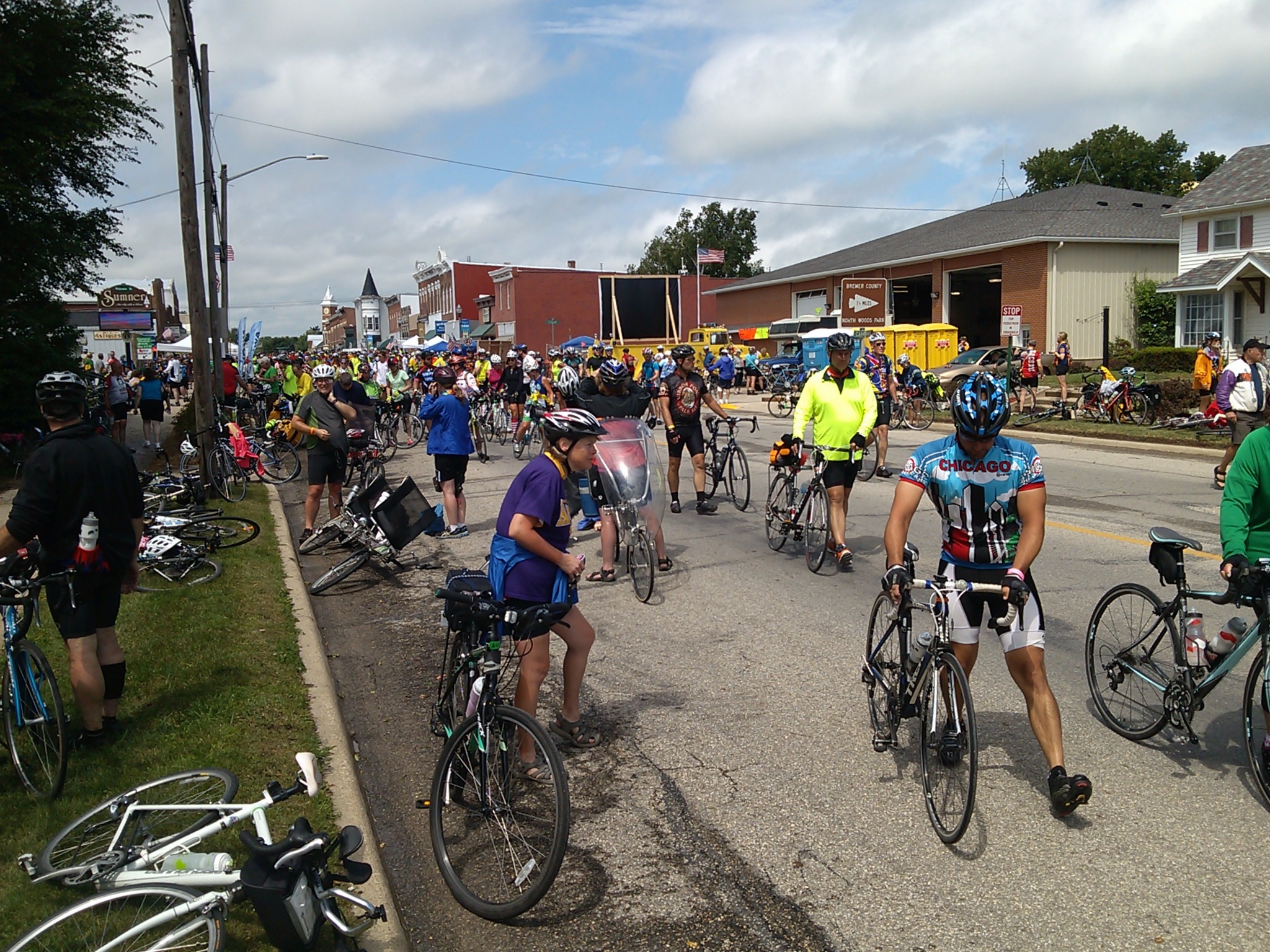
The support driver drops the riders off at the day’s starting point, which was in Waverly. We met in Sumner for lunch, and then I drove to Independence to pick them up. I was also on standby should something happen to one of our riders.
I spent a few hours at the public libraries in Sumner and Independence, and then sat on the front steps of the U.S. Post Office watching riders pass, and waiting for my team to finish for the day. It was time to do something different and get away.
We ended at a church spaghetti supper put on for the riders. It is a big deal for non-profits when RAGBRAI comes to town, and riders seek to carb up for the next day’s ride. After dropping the team at the motel, I headed home, making it back after 9 p.m. It was a long, thoughtful day.
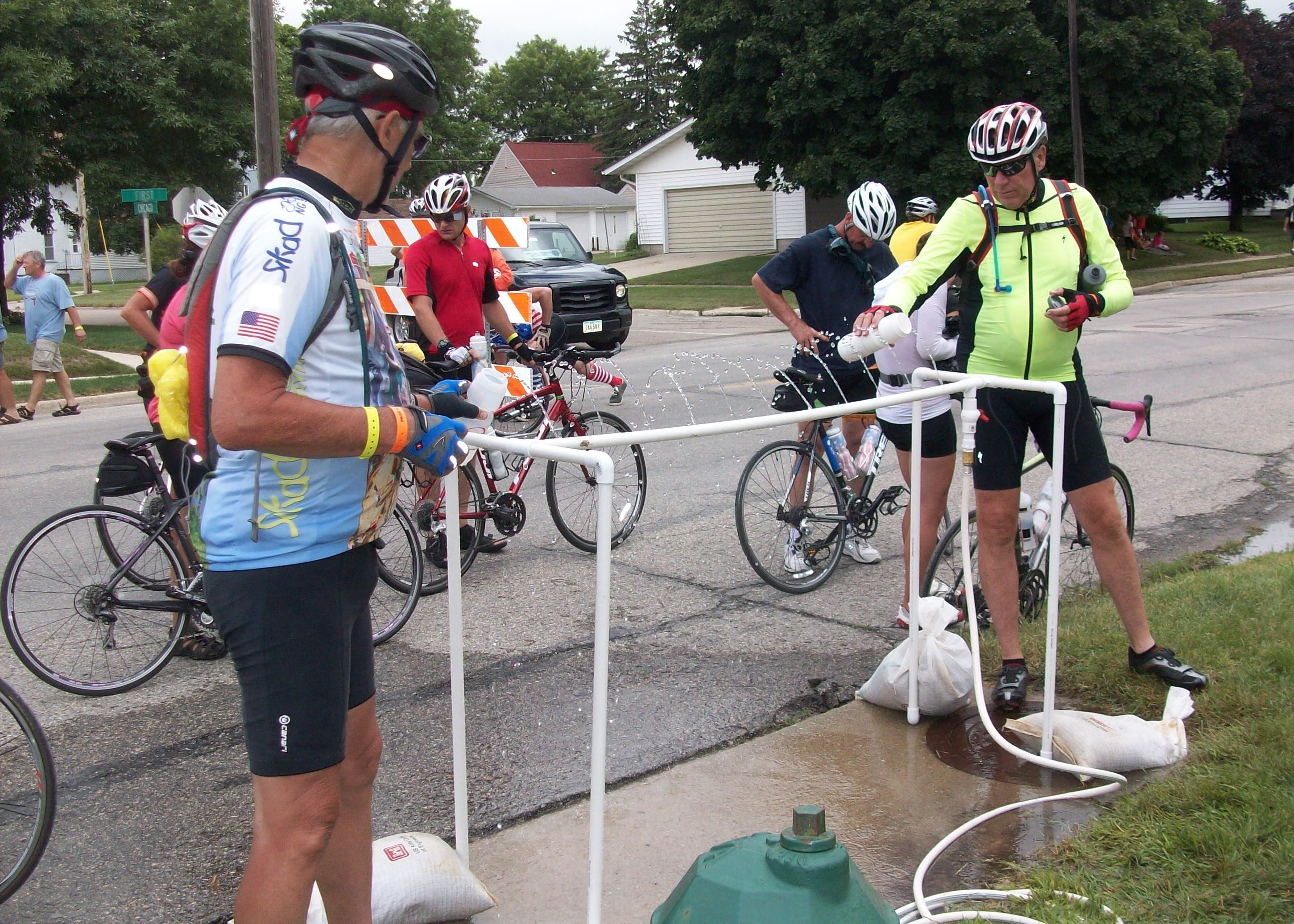
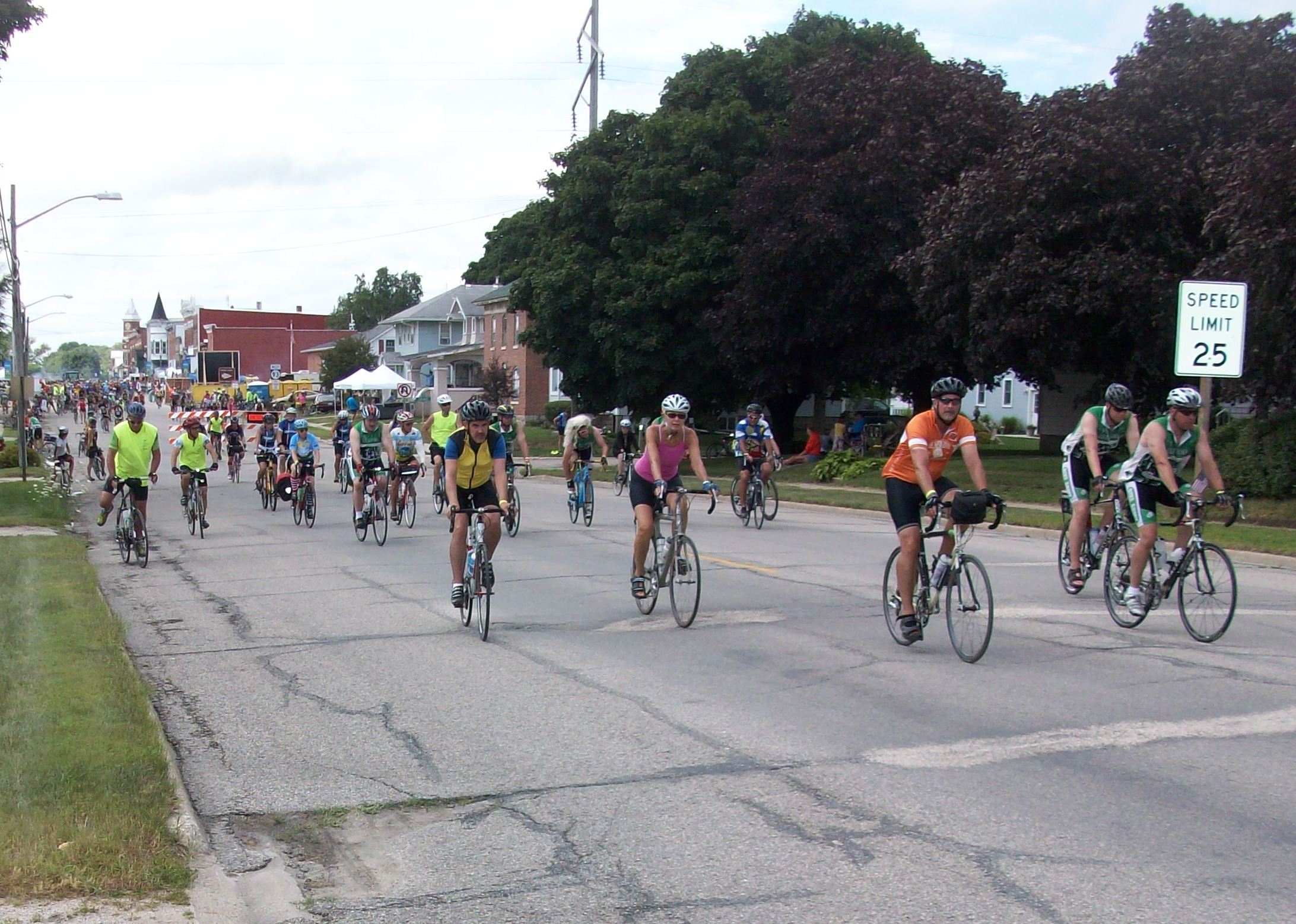
Here are some photos from the rest stop in Sumner, where we had lunch.
Meetup at the Post OfficeStreet Scene at SumnerLetsche’s Bike Shop Airs TiresFilling Water Bottles from a HydrantOn Main StreetStreet Pizza MakersPolitical Pizza ServerVeggie Slice at SumnerLeaving Sumner
LAKE MACBRIDE— When I returned to my computer after breakfast yesterday it crashed, disrupting the balance of the day.
It was a good, not great breakfast, and a familiar, but unwanted technical glitch in a life on the prairie.
Breakfast was in four layers: a mixture of cooked summer squash, onions, garlic scapes, salt and pepper on the bottom. Next, kale cooked after deglazing the pan with the juice of a lime, followed by scrambled eggs, and topped with grated cheddar cheese and chopped Italian parsley. It wasn’t my best work, but it served. I write about breakfast to avoid thinking about the work ahead today.
Luckily, I backed up in the early morning of July 8, my email resides in the cloud, and my photos and sound recordings are on my devices. There is about one week’s work on documents and spreadsheets that will have to be reconstructed. It could be worse.
After a shift at the warehouse, I stopped at our local technology store and sent the laptop off to be serviced. The prognosis is not good, with talk about the motherboard. I turned from the counter, walked over a few rows, and bought a new desktop CPU for $370.
Laptops seem to last about two years, and each of the last three of them was convenient to have, but crashed at an inconvenient time. Since 2012, when we got smartphones, having a laptop no longer seems necessary as I can check email and news stories on the go without one.
Like it or not, today will be struggling to get paying work done on the computer, and re-engineering this technology dependent life on the Iowa prairie. Having been through this twice previously, I know, but hate the drill.
The weekly planning session from waking until 6 a.m. is critical for generating enough income to pay bills. At the same time, it enables dispersion of mental troubles— the same way night vapors become dew, and are burned off by sunlight. It would be an insane world without a plan.
That said, even the best planning fails to accommodate everything we need and want to do. Wants give way to needs, and only those needs critical to social and economic survival get a time slot on the Google calendar. While a popular belief is that we have leisure time and hobbies, in the work-a-day world of low wage labor, such things are best left to what Thorstein Veblen called the “leisure class.”
After breakfast of a three-egg omelet of local farm eggs and sharp cheddar cheese imported from England, a glass of Florida orange juice, and black coffee, it’s time to get after the week’s work.
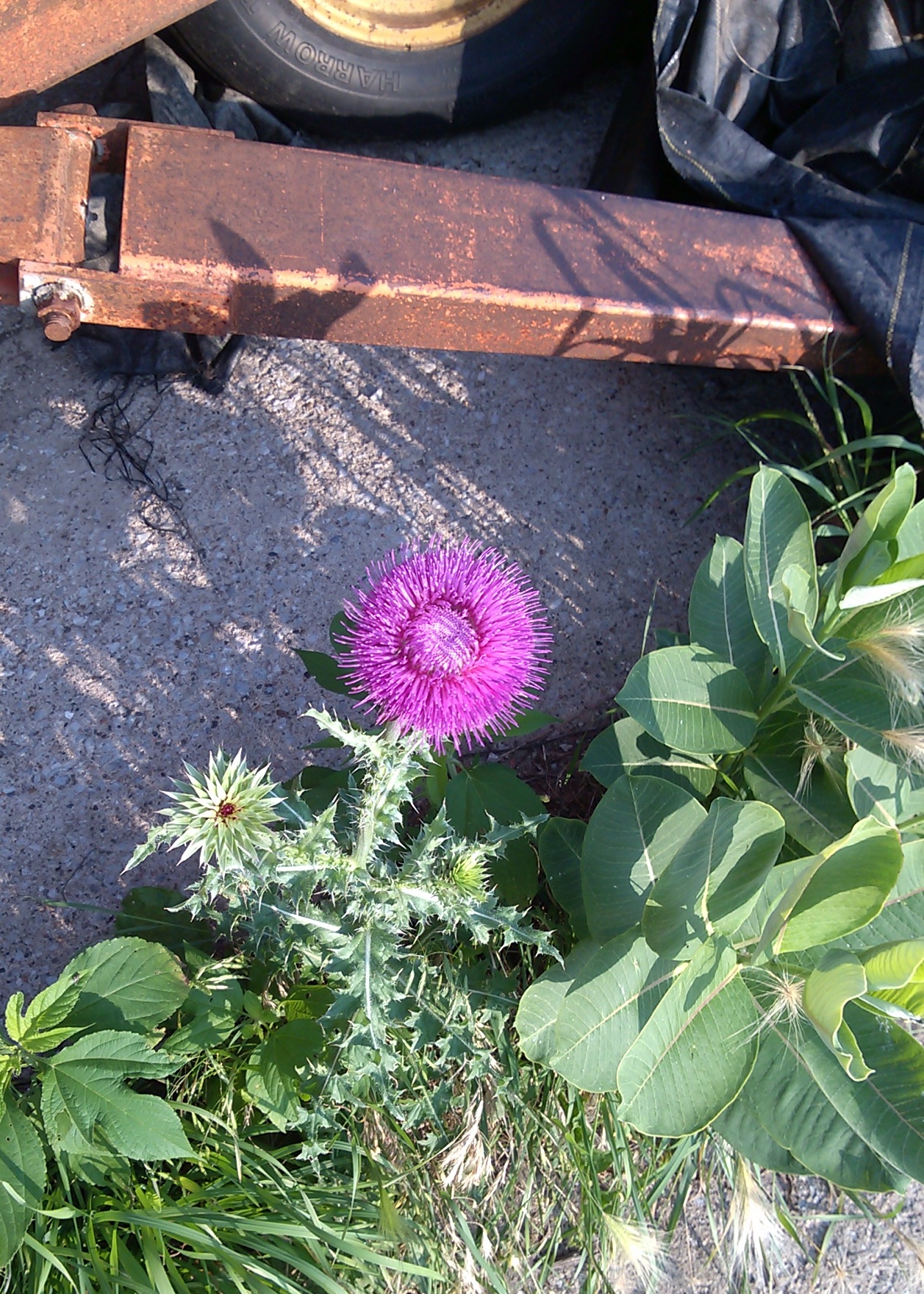
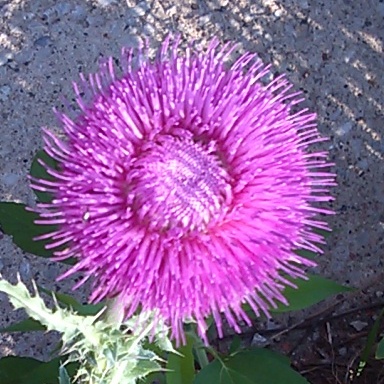
LAKE MACBRIDE— From a crack in the pavement, a thistle bloomed next to milkweed. The natural world lives in the increasingly human-made environment in which we attempt to adapt— plants, animals and people alike.
The weather report for the weekend is the return of the polar vortex, bringing rain and cool temperatures. Sun and warmth are the best help for gardens and farms, so the weekend will be a likely setback.
At the intersection of the industrial food supply chain and local cuisine I found a package of uncooked tortillas. Claiming to be “all natural,” the ingredients are recognizable— flour, water, oil, salt and sugar. The machine rolls them out thinner than I have been able to, and they cook quickly in a dry frying pan. A pack of 50 sold for $6.89, or about 14 cents each. They will be a welcome addition to the pantry for burritos, tacos, tortilla chips, quesadillas and casseroles as what I had been buying has ingredients not found in nature.
Thistle Flower
I’m busy all of the time these days, mostly with work. On a typical day, I work at three or four jobs, leaving little time for extra-curricular activities.
From time to time, it was possible to stand at the intersection of change for a while and smell the flowers. For that, I am grateful.
I am also grateful that after calculating my income for the year, it appears my federal taxes will fall in line, and that I sent enough, but not too much money into the Internal Revenue Service.
LAKE MACBRIDE— Five years ago today I drove out of the parking lot of CRST International in Cedar Rapids from a long career of transportation work into the unknown. There is no going back, nor would I. There is only forward.
Today, we have friends and family, food to eat, a home in which to live, and other accoutrements of modern life. We are doing okay. Compared to many, we are doing great. If the U.S. is not the greatest country on Earth, it is one of the greatest, at least according to a poll released today. That’s okay too.
Tomorrow the clevis and cotter pins bought at the hardware store will be installed on the grass collection attachment to the tractor. I will cut the full lawn to length for the first time this year. The garden is way behind, so I will abandon what isn’t planted and prepare the ground for the second growth of green beans, even though the first planting didn’t occur because things were so far behind.
Tomorrow will also be a culling of activities according to the Sumitomo model. Some of the barter work is nearing its end, some of it needs to go to make room for paid work. Contacts will be made about that.
Mostly, tomorrow will be a brief chance to examine who I am through tired eyes, and wonder at how we have survived in a turbulent world.
Then next steps, which will involve a chain saw and work in a pasture in sunlight.
LAKE MACBRIDE— My patience is worn out with the talk of minimum wages, living wages, and all else hourly wage related. Depending on what one wants to do in life, the discussion matters a little or a lot. For me, not so much, as I previously explained.
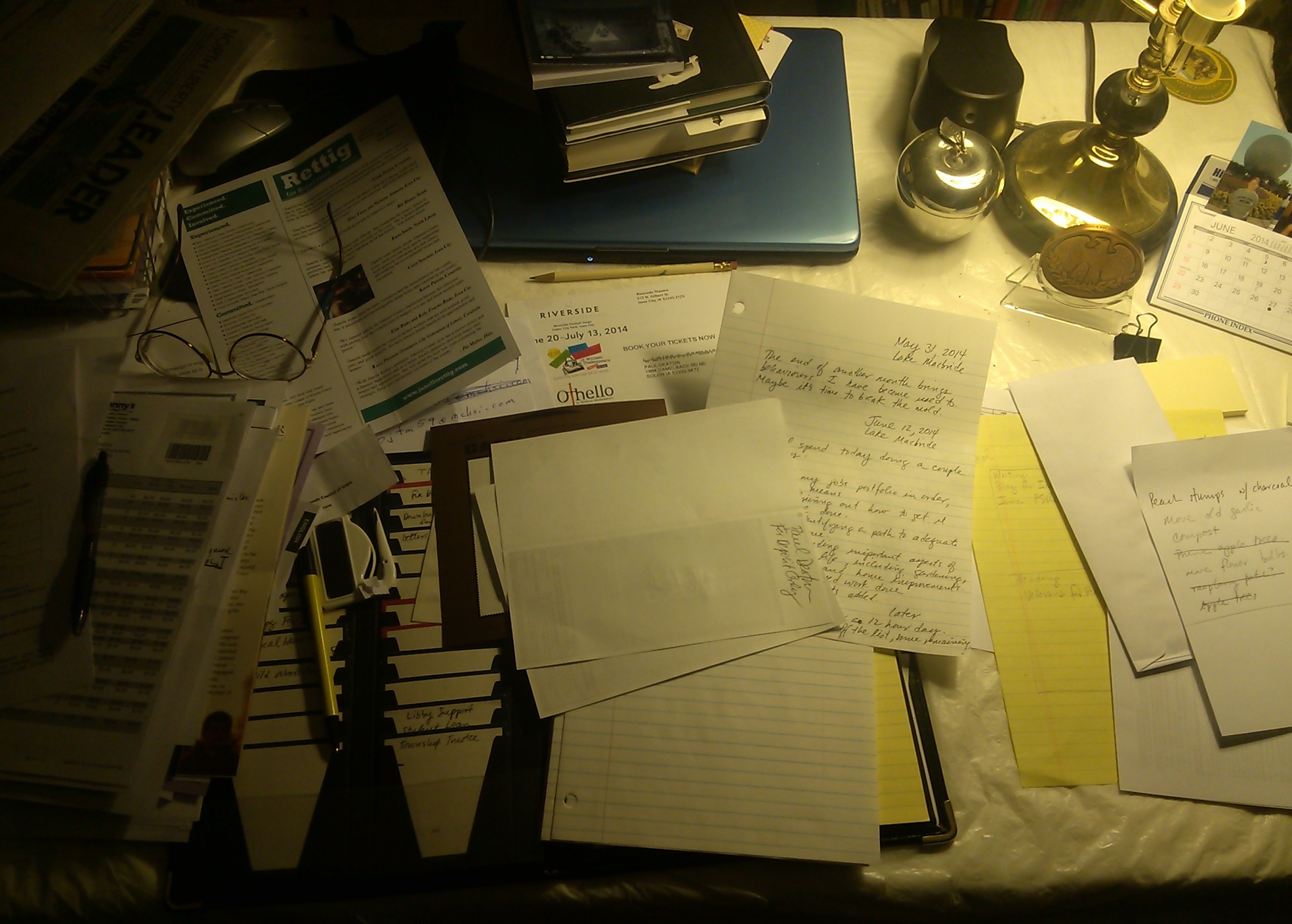
I’ve written about worker engagement and dealing with low wages. A post illuminated low wages, and I wrote about my experiences assembling kits for Whirlpool Corporation for a very low wage, no benefit job in North Liberty. The practical result of all this thinking, writing and doing has been a focus on finding enough work to keep me busy and aggregate enough income in the form of wages, fees and bartered goods to sustain our lives on the Iowa prairie. I’ve found there are plenty of jobs.
Farm work
Working on farms and in our garden eliminates hunger. We continue to purchase dairy products, bakery-made bread, rice and sundry items from merchants, but since beginning work on two community supported agriculture projects there has been plenty to eat and enough to share with friends and neighbors in a micro-culture of food. There is a shortage of people willing to work on farms, and this creates an opportunity to meet a basic need.
Farm work can also be flexible. My sawyering work illustrates the point. There is a quarter mile fence line to clear of dead trees, and my initial estimate was a job of more than 225 hours. The property owner is not in a hurry, so I can work as I have time and weather permits. This job is paid in cash, but its flexibility provides a premium that fits into the broader picture of sustainability I am trying to paint.
Warehouse work
Large corporations have plenty of opportunities for low wage, part time help. Finding the right situation, one that provides a steady, reliable paycheck and accommodates my aging frame, took a while, but finally materialized in the form of warehouse work.
The physical demands of building kits for Whirlpool were too much. The minor supervisory role I now play at a warehouse club is better suited physically, and provides the flexibility I need to put the rest of a sustainable job portfolio together. One has to love the constant interaction with warehouse club members as a perquisite of the job.
Presently the wages from warehouse work make a substantial contribution to paying monthly bills like utilities, communications, fuel and debt servicing, accounting for more than half of our cash income needs. The long range plan is to replace this work with a better opportunity for income. Because the work is flexible, regularly and predictably paid, and has considerable social interaction with members and co-workers, it provides a stable platform for change.
Non-governmental organization work
I’ll sign a fourth contract with Iowa Physicians for Social Responsibility on Monday. The first was almost five years ago, shortly after exiting my highly paid, full time work in transportation and logistics. The work functions at a high intellectual level and is engaging in a way few other jobs are. For that reason, the project will receive high value in my jobs portfolio.
Like with corporations and farm work, NGOs are constantly seeking low wage workers to accomplish the deliverables of grants received each year. Because the work is contractually defined and the pay is predetermined, administrative variables are minimal, enabling a focus on the work.
The new contract is to organize a series of presentations on the humanitarian impacts of nuclear war to Rotary clubs over a six-month period. It is great work if one can get it, and because of the ebb and flow of the work process, there is adequate flexibility to accommodate the rest of my jobs portfolio.
Writing and editing work
Being a writer is a tenuous endeavor in the age of social media. It seems unlikely writing will pay enough to reduce the number of jobs in my portfolio, but there is beer money to be made if one is willing. Such income is still cash income, meager though it may be, and contributes to paying monthly bills not limited to summer beverages.
My main work is the unpaid writing at this site. There are currently three other distinct writing jobs for monetary compensation: proof reading for a local, regional newspaper, correspondent work for the same newspaper, and being summer editor of Blog for Iowa. As with the NGO work, these jobs function at a high intellectual level, and receive high value in my jobs portfolio. The thing about them is with each article I write, my skills improve, so the work feeds upon itself.
Business development work
In March, I described the process of business development and the Sumitomo Quadrant. With the jobs listed in this post, there are enough to plug into the tool to figure out next steps. That is, next steps after figuring out how to get all the work these jobs are expected to generate finished over the coming six months. Business development, like gardening, has become a necessary, but important unpaid job in itself. One that most low wage workers I know don’t give adequate attention.
Conclusion
Plenty of jobs are available if one wants the work. Whether creation of a jobs portfolio will also make life sustainable is an open question. The aggregate monetary compensation of this portfolio is enough to get by. It doesn’t translate easily to a framework of minimum or livable wages and that’s the point. In order to sustain a life, we sometimes need to take chances, and work how the jobs become available. This includes uneven compensatory rates, bartering and organic work like gardening and business development.
To make the paradigm work, jobs that have flexibility and will contribute to financial and intellectual needs take priority. Above all else, a job has to enable me to go on living, or else what’s the point?
CEDAR COUNTY— Two white horses came down the hill and grazed around my temporary work site. I had forgotten how large an animal horses can be. Before long, they walked up the hill toward the barn where there was likely better repast. I continued to saw timber.
Who knew I would become a sawyer, even if only for a season?











 Journey Home
You must be logged in to post a comment.