Categories
Living in Society Writing

In the Shadow of Hotel Blackhawk

Hotel Blackhawk on Sept. 25, 2025.

Three things of note in my life happened in the Hotel Blackhawk in Davenport. My father met John F. Kennedy in this building. When I was coming of age, I had dinner here with Father and a union organizer named Clarence Skinner. My spouse and I spent our wedding night here. All were memorable events. At one time, my maternal grandmother worked as live-in household help for the then owner of this hotel, doing cooking and cleaning.

In the shadow of this building our high school class celebrated our 55th year reunion. As the sun set I stood at the entryway to a restaurant across the street to greet classmates and direct them to our area inside. It seemed a good time was had by all.

I had conversations with classmates, many of whom I have known since grade school. Some remembered a version of myself I’d forgotten. Here are some snippets. First names only.

John left our high school and finished at Davenport Central. He told me he thought I was the smartest person in our class. I replied the girls were smarter. In high school I went to John’s family home and got my best exposure to folk music. They had a record player and played Peter, Paul and Mary and others. These visits were part of the nascence of my interest in playing music. John worked a full career as a surveyor.

Tony and I reminisced about how he would walk out of his way to our family home to walk with me to grade school. I don’t recall how we started, but it was a dependable part of my young life. We were good friends, although we fell out when I left Davenport in 1970. Tony retired and is now a part time, self-employed photographer.

Tom and I spent a lot of time together. We hung out at the Cue and Cushion, which was a pool hall located in Northwest Davenport. I was not an alcohol drinker in high school but Tom was. He swiped booze from his father who had taken to marking the level in each bottle kept at home. Tom would take some and refill it with water to the line. He recalled how my mother would drive us to Credit Island and drop us off to play golf. We played round after round until Mother returned to pick us up. Every time I encounter Tom these days it is a positive experience. He retired at least ten years ago.

Barb called me aside to talk about politics. Her question, which she asked in an agitated manner, was “What are the Democrats doing?” I offered an answer but it was not a very good one. Everyone in our cohort is political to an extent. They do a good job, unlike me, of keeping it hidden. Barb and I have always gotten along well. She was our homecoming queen and recently lost her husband.

Tim was class president. We have done things together over the years, although I resist his invitations to play golf with a group of classmates. Despite childhood interest, I really can’t play. When he arrived, I told him about my father meeting JFK at the hotel. He replied with a story of how he inherited the tools of a grand parent and inside the tool box he found a personal note from Ted Kennedy thanking his grandfather for a political donation. He and his family are political. Joe Biden wrote about his sister in one of his books. Tim is an attorney, supposedly retired.

Therese and I haven’t seen each other for a long time. She wanted to talk about a trip we made from the University of Iowa to Terre Haute, Indiana to visit friends from high school. Her friend Renee worked at a K-Mart there and my friend Sara was attending Saint Mary of the Woods College. I don’t recall details of the trip in my Volkswagen beetle, but Therese said she slept most of the way down. She remembers me as an aspiring artist. I did ceramics and sold my wares at the Thieves Market on the bank of the Iowa River. She bought a vase I made for her mother. When her mother died, she got it back and noted my initials fired into the bottom of it. Being remembered as a creative at university was unexpected. I explained the artist thing didn’t really work out. She’s living in Connecticut and came back just for the reunion.

Mike was on stage crew with me and retired from being a pharmacist a number of years ago. His company offered early retirement and he took it without hesitation. I couldn’t do that job yet he made a career of it. He volunteers with a local food pantry, so we compared notes. They offer food once per month, and when they do they select items and put them in a box before clients arrive. It is different from the supermarket-style shopping we offer at our food pantry. He and his spouse stayed at the Hotel Blackhawk, redeeming some points he accumulated from frequent travel. He was the first person to RSVP he was coming to this reunion.

Kirby was wearing a knee brace that night. When we got into a conversation, I asked, “Weren’t you wearing a knee brace in high school?” He replied yes, but it was the other knee and he showed me his scar from surgery to fix it.

When you know people since childhood, it is easy to start a conversation. That’s what I did for four golden hours. I feel a better person for it. Interaction like this has more meaning as we age. I feel lucky to have been able to attend.
Categories
Living in Society

We’re Going Home – Walgreens

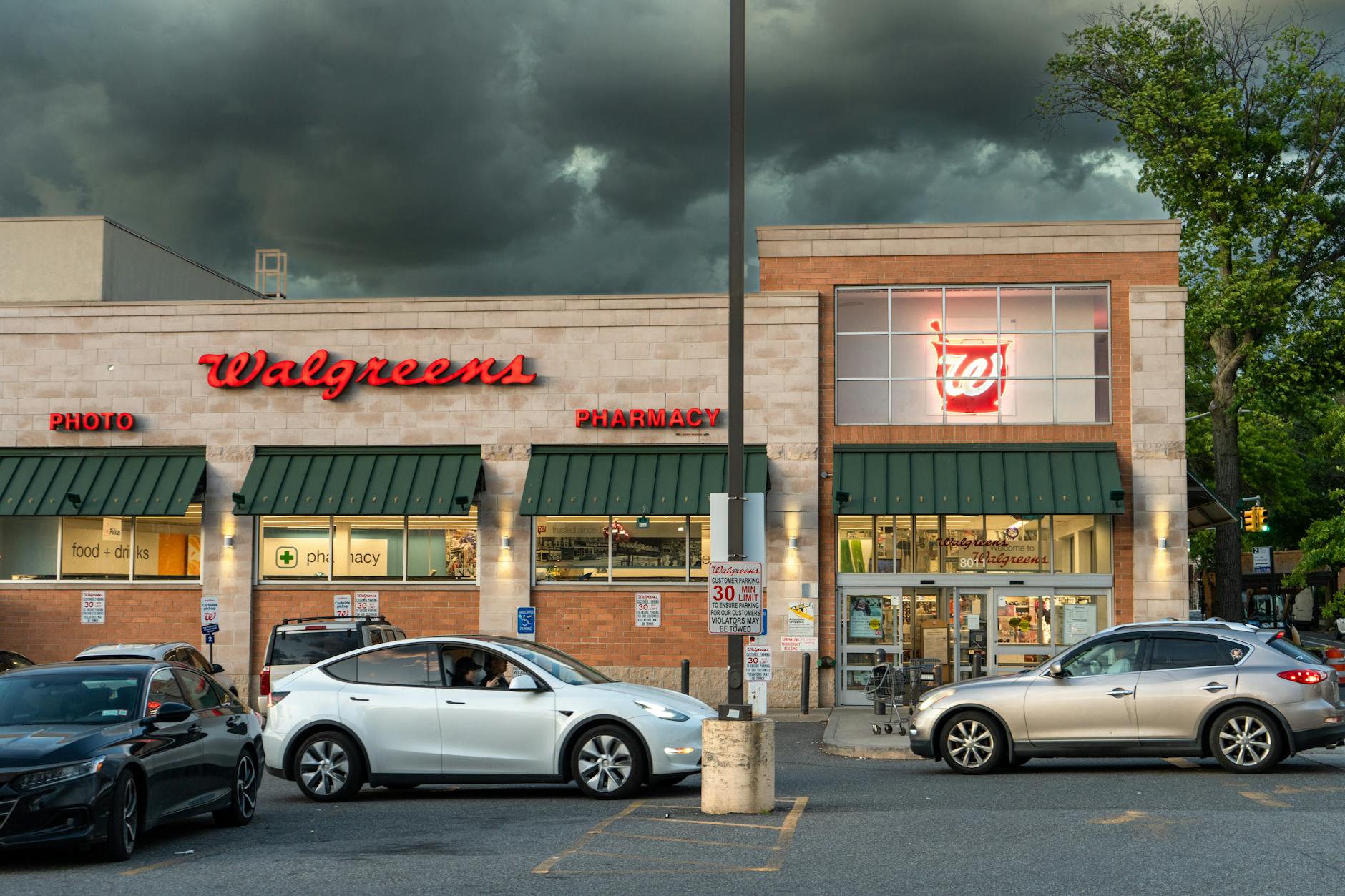
Photo by Yuugen Rai on Pexels.com

The deal for private equity firm Sycamore Partners to buy Walgreens closed on Aug. 28. We know what that means.

Private equity will restructure the company, sell off what parts it can, restructure real estate holdings, close stores, layoff employees, and increase company debt, while making their executives an obscene amount of money. Walgreens bankruptcy seems likely in the near-term future based on what happened with companies like Toys R Us. Sycamore Partners’ deal is leveraged with “more than double the average debt level used by private equity firms to acquire companies last year,” said U.S. Senator Elizabeth Warren in a letter to them. All of this is what private equity does in the United States. It does not contribute one whit to improving the consumer economy. Importantly, some consumers will lose access to pharmacy services when stores close.

On my way to the wholesale club I pass two Walgreens stores, which seems like a lot. I notice neither of them is within walking distance of residential housing. In other words, they depend upon our automobile culture. A person doesn’t go to Walgreens except to get something specific. This kind of shopping faces competition from online retailer Amazon where we can point, search and click to have a product Walgreens may or may not carry delivered to our home within a day or two. Amazon trucks are ubiquitous in our rural neighborhood. We see them more often than we think of going to Walgreens, whether or not we buy from them.

I have a Medicare Part D prescription drug plan and the company that administers it dictates which pharmacies are available to me. I wanted to use the nearest pharmacy to support their small business but they weren’t on the list. I picked the warehouse club because I go there twice a month for groceries anyway and getting my prescription would save a trip. The last time I went inside a Walgreens, it was because they are a UPS drop off point. I have also shopped there to review their large inventory of over the counter medications to find a specific dosage of vitamin B-12. They did not have it, so I got it by mail order from the manufacturer.

When I was a grader we had a locally owned drugstore with a pharmacy a block and a half from our home. In the mid-1960s, whenever I had extra money from my newspaper route, I would go in there to see what they had. Mainly, I looked for reading material (comic books or paperback novels) and candy. I was infatuated by baseball cards sold with a stick of bubble gum. Over the years, the drug store disappeared as automobile culture and larger scale retailers influenced our shopping. During the ten years I lived there, they were a part of the cultural landscape. In part, discounters like Walgreens contributed to their demise.

The only person I knew who depended upon Walgreens was my maternal grandmother who lived in downtown Davenport. There were no grocery stores there — today we would call it a food desert — but Walgreens sold a few grocery items like milk, butter, eggs, bread, and selected canned goods, all of which she bought. Without an automobile, it was a big production for her to visit a supermarket, involving a bus ride or having a relative pick her up and take her there. She got her prescriptions from Walgreens which was within walking distance.

Access to Walgreens is not important to me. I buy all of my bandages, ointments and sundry health items at the pharmacy in our nearby city. We went without a pharmacy for a while, and I’d like to see them be successful. Thing is, I don’t buy $100 of sundry items from them in a year, so Walgreens or no, it has been a struggle for them to survive.

The world we knew continues to change. Some parts of the future are hopeful and some definitely are not. Big Pharma will figure out how to sell us their medicines. As Walgreens begins the slow dance toward going out of business, I accept it as the failure of large retail franchises that can’t compete with Walmart or Amazon. It is a condition of modern society, and retail in particular. I hope they make it yet doubt they will. There are other causes than saving Walgreens that deserve my attention more.

Categories
Living in Society

We’re Going Home – Larry Pippins

Larry Pippins died Dec. 2, 2017. Photo Credit – E.J. Fielding Funeral Home and Cremation Services website.

We were at home talking about some of my Army buddies and turned to my friend Larry Pippins. I Googled him and found he died on Dec. 2, 2017, after an 18-month battle with ALS. I hadn’t known. May he rest in peace.

Larry was born three days before me in 1951. I picked this photo from the funeral home site because the way he is standing and the shape of his hands remind me of how I knew him in Germany where we met. I could imagine standing next to him and taking a burger from the tray.

Larry was born in Pensacola, Florida, one of the few native Floridians I have known. He was a male of the South and enjoyed fishing, hunting, kayaking, drinking whisky and vodka, as well as many other activities.

He and his first wife split soon after they left Germany. I stayed in touch with them both until the 1980s. Together they lived in a German castle near Heidesheim that had been subdivided into apartments. I remember more than one overnighter sleeping on the flokati rug they had in the living room. One time, after too much drinking, they had to have it laundered. Those were the days.

We were in the infantry, although he changed his MOS (military occupational specialty) to military police soon after leaving Germany. When we were together, I said the changes we experienced were to transition the military from being prepared for jungle warfare in Vietnam to fighting a war over oil in the Middle East. As so, there we were. He was deployed to the Middle East to support Operations Desert Shield and Desert Storm. I kept a photograph of Larry with a postcard he sent from Desert Shield framed and with a yellow ribbon on it in our Indiana living room until the war was over.

When Larry was accepted to Ranger School I shipped all the fatigues I had left from my service to him to use while in training. Finishing Ranger School was a high point for him at the time. After graduation, he didn’t think Ranger School was all it was cracked up to being. Not a complete waste of time, but close.

When I was living as a writer in Iowa City in 1981, he sent me an audio cassette in which he admonished me to re-join the military. I did not. We fell out of touch after he invited me to attend a change of command ceremony down South and I couldn’t. We hadn’t had a good conversation since we last met in Chicago in the early 1980s.

We spent so much time together in the military and then after leaving our first assignments we corresponded in the days before the internet and email. Tonight I’ll say a prayer for my Army buddy. He lived a decent life full of friends and family. He made something of himself. He was something.

Categories
Living in Society

We’re Going Home — Jimmy Carter

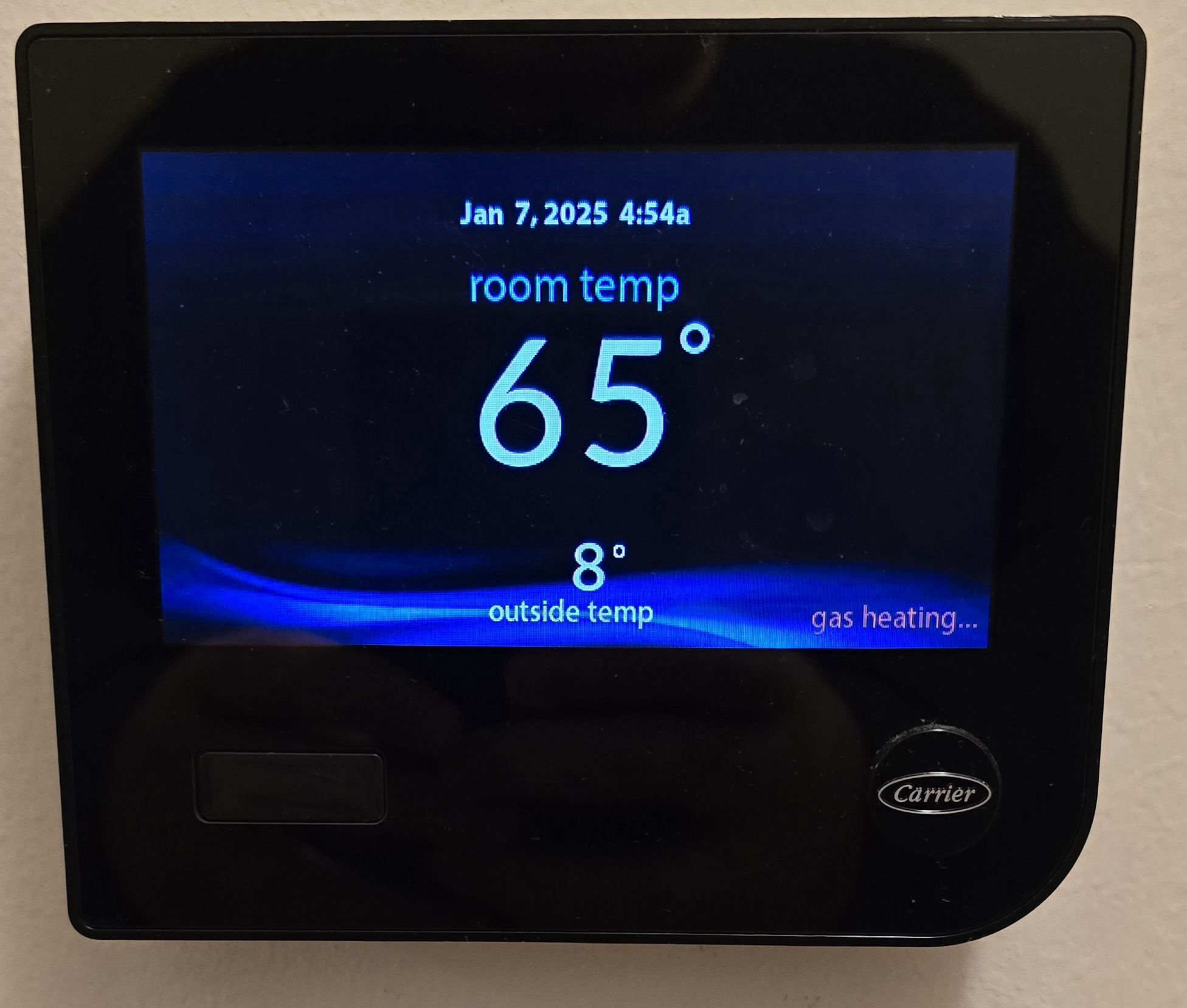
On Jan. 22, 1977, two days after being sworn into office, President Jimmy Carter called on all Americans to turn down their thermostats to 65 degrees during the day and cooler at night. We were in an energy crisis and using less natural gas and electricity was part of his plan to deal with it. He wasn’t a popular president.

As I write this post, Carter’s remains are enroute to Washington D.C. with his funeral service scheduled at the National Cathedral on Thursday, Jan. 9. I did not care for Carter as president. I caucused for Ted Kennedy during the Iowa precinct caucuses in 1980. If I had known then what I know now about Ronald Reagan, I would have been firmly in Carter’s camp and supported his re-election. Hindsight is usually twenty-twenty.

Because Jimmy Carter had a long post-presidential life, there is a tendency to revise the history of his presidency. Part of that is normal analysis. Part is wishful thinking. While working on another project, yesterday I found my journal entry about Carter written on May 30, 1982. I stand by this assessment of his presidency as much as anything else I recently read. Here it is in its unedited entirety:

About native ability: Jimmy Carter is one who comes to mind. He was a Washington outsider and this, I believe, was the cause of his downfall. In a popular magazine I read an article about Rosalynn and him down in Plains, Georgia living a life of word processors, bicycling, and family memories. Jimmy Carter seems to me to be a president who relied on his native ability to see him through. He was judged, even by members of his party, as a failure, though. Native ability was not enough.

Carter was decent, honest, and hard-working, but his lack of understanding of the Washington scene in which he placed himself made it impossible for him to be successful. His successor scorns him, members of the Democratic Party only extend the minimum of traditional courtesy due an ex-president. Yes, native ability is not enough these days. Not enough for Jimmy Carter, not enough for me.

There is a lot to be said about native abilities. It’s what made America what it was in its early days through the 20th Century. People call Carter a lot of things, yet the one that seems more apt is the “next modern president.”

What Carter sought to do was ahead of the times and he suffered for it. If his initiatives — like harnessing sunlight for energy, personal responsibility, human rights, respect for individuals, and others — had endured, America would be a much different place. Instead he is unrecognized, yet woven into the warp and weft of a society that believes it can be better than it is. He took steps to do what he could to realize such a place, using his native talents and abilities.

As Robert Browning said, “…a man’s reach should exceed his grasp, Or what’s a heaven for?” It seems unlikely there will be another like Jimmy Carter. May he rest in peace.

Categories
Writing

Closing the Door

Working the Garden

On Friday I put the cost of printing 25 copies of my memoir on my credit card and uploaded my manuscript and photo. My team contact said it will take about eight days to get the copyright and printing will follow soon thereafter. The cost included copyright, International Standard Book Number and Library of Congress registration. Things moved very quickly from the time I contacted Prime Publishing online. I was ready.

I know one other author who used Prime to make his books and he was very satisfied. In my case, I am publishing privately with no plan for commercial sales. The cost is much less than taking it to a local print shop.

So that’s that.

I need to organize my files for storage. After Labor Day, I pick up work on the second volume. I had 65,000 words written when I left part two to finish part one. It needs a better outline and eventually a re-write. Publishing the first volume is a turning point. I’m closing the door on that part of my life. It already feels different.

Categories
Living in Society

Starting Over

Writing desk circa 1980 with a telephone.

Like it or not, the demise of my handheld device on Thursday marked the end of an era. I procured my first smart phone — that’s what we called them then — to work on a political campaign in 2012. When the technician told me last week he could not recover my files or contacts because of the way the phone failed, I thought for a minute and walked away from all that. I don’t feel better, yet I am free.

What burned me particularly is my back up — the contact files on Microsoft Outlook — had wiped all the phone numbers there as well when I upgraded to the online version. I guess I’ll find out to whom I want to speak going forward. A main loss is recognizing who might be calling. Just like that, an era of telephony was over.

My spouse and I scheduled a day to go through papers and came upon a stack of clippings from when my father-in-law was installing rotary dial telephones around Iowa and Illinois in the 1950s. He lived in a small trailer, which he hauled around to Martelle, Marengo, and other less populous towns. He helped usher in a new era of rotary dial telephones. The family revisits this story often.

I don’t have much recollection of using the telephone in the 1950s. In fact, the telephone was not that important to my life, outside work, into the late 1990s when I got a flip phone to carry with me while traveling. I installed telephones in several places I lived during the interim, including in Germany where I seldom used it because the rates were so expensive. We used home telephones mostly for calling family and friends, and for staying in touch with work.

While wireless telephony has its roots in the 19th Century, what we called cell phones came into their own around 2000 when I got my flip phone. I could take a photograph and text it to someone else, in addition to talking to them on a call. Freeing myself from wired infrastructure was revolutionary. The smart phone, with its instant access to the internet was another wireless development that changed how we interact with the world.

It will be straight up work to rebuild my important contacts. In a way, being free from all the telephone history is a positive. In my remaining seasons on Earth is will mean a less cluttered life. Damn! Like many things, I just wasn’t prepared for a change.

Categories
Writing

Back to Writing

Cooking journal

On Wednesday I finished formatting part one of my autobiography for printing. The story ends with finishing my education as I turned 30 years old. Not all of my education was formal schooling by design. I accumulated many experiences in diverse social settings, including work, military service, and travel. With formatting done, I must go through the entire document one last time for content, spelling and language. Whatever deficiencies in the story must be addressed, although I think I’m there before I begin. The process of printing the book is a matter of a couple weeks, so meeting my end of year deadline should be doable.

On Thursday my hand held device died. While reading an email it went into a continuous loop of reboot, failing to restart each time. I figured out how to turn it off manually. I set the device aside for 30 minutes and tried again. I got a message there was a problem with the software. Because of the way it failed, I lost all my saved text messages, most of my files stored on the device, and most of my contacts. Like it or not, I’m getting a fresh start. As I told the technician at the phone store, “I’m ready to walk away from it.”

August 9 is a day for personal remembrance. It is the 79th anniversary of the atomic bombing of Nagasaki, Japan. That bombing was not necessary to end World War II, and arguably, neither was the Hiroshima bombing. There were needless lives lost in Nagasaki.

Today is also the day Richard Nixon resigned from the presidency, having announced it on national television the previous evening.

Richard Nixon announced his resignation from the presidency on Aug. 8, 1974. I had no idea who Gerald Ford was, or what kind of leader he would be. The next day he said, “My fellow Americans, our long national nightmare is over.”

I felt a strong sense of social responsibility and the moral outrage of youth in what I believed were the deception and lies of a man in whom the country had put its trust. Hearing Nixon’s address that night, in our small apartment, was catharsis. I remember this feeling as I typed here in Big Grove Township tonight. I was relieved that Nixon was leaving. More importantly, I felt that the many protests and demonstrations during the Vietnam war had finally borne fruit. Direct action to support a just cause could accomplish things, even force out a sitting president. It was a heady feeling.

Even with many experiences by the time I reached age 22, it was that moment of seeing Nixon resign on television that opened the possibilities of the world. I became aware that direct action, in concert with others I did not know, could engender change in society. I also learned that the people, places, and things we read about can be grounded in a reality that is not that distant from where we live. We are connected to each other in unlikely ways.

I refused to purchase a copy of Nixon’s memoirs until after his death. I did not want him to benefit from my interest in his presidency. In a way, Richard Nixon, with his deceit, arrogance, and imperial presidency, contributed to my political awakening. This led me to understand what I had studied in school was grounded. It was an unlikely connection for which, in retrospect, I am thankful. I wasn’t sure what would be next yet felt that I could take a couple of months and find out what else was in the world. (An Iowa Life, The Memoir of Paul Deaton, unpublished).

Now that part one of the memoir is finished, I look forward to finishing the rest. It is work to be taken up once harvest is finished.

Categories
Living in Society

We’re Going Home: A Reunion

Grade school classmates attending their high school class reunion on July 13, 2024

When there is a high school class reunion after 54 years, one never knows if there will be another. In discussions with classmates, we debated whether we should make up for the 50th class reunion lost in the coronavirus pandemic at the 55-year mark. A majority said we should do it now. There was a sense that some classmates would not make it a 55th year.

There were 258 photos of seniors in our high school class yearbook. Of those, 41 we know have died. We found about 70 willing to attend a reunion. With significant others, our numbers at the golf course pavilion in Bettendorf were about 100. There was plenty of food and a cash bar. One classmate put together an audio-visual presentation that included a speech from the former class president, and an in memoriam slide show with photos of our deceased classmates where available.

The topics we discussed were non-controversial. Noticeable was a lack of discussion about health. The survivors who made it looked young to me, like they had a lot of living yet to do. A couple used canes, and one had a walker. Unlike at the 2010 reunion, no one looked to be on the edge of mortality.

I didn’t hear any discussion of politics. When word of former President Trump’s injury during a shooting reached us, people talked about it in whispers while not knowing if reports were accurate. This is a cohort who experienced John F. Kennedy’s assassination together, in real time. By 1981, when a shooter attempted to kill Ronald Reagan, we had gone our separate ways.

Interest in golf and pickle ball was scant. A group walked the new I-74 Bridge Bike and Pedestrian Path. About a dozen toured the high school. Attendance at the high school shrunk by about half since we graduated. Mainly we sought ways to do things outside the scheduled events. Those who don’t remain in the Quad Cities infrequently return. Each of us has different memories of high school. I took time while there to visit my parents and maternal grandmother’s graves.

It was impossible to talk to everyone. I retain good memory of my high school years. A couple of times, when I mentioned some specific interaction, the other person who was there did not recall it. In a way the reunion was a test in the limits of shared memory. I suppose people live in a moment forged by life’s experiences where other experiences besides high school are most important. I was not very social in high school, so it was surprising the two dates I had both recalled and mentioned them. One can’t make too much of that.

As the glow of the warm July evening fades, I’m already on to what is next. I am just thankful for some time together with people I’ve known for so long.

Categories
Living in Society

We’re Going Home – Katie Tritt

Fallen maple leaves.

Katie Tritt went to sleep on Sunday and didn’t wake up. Yesterday the family announced her remains were donated to the University of Iowa College of Medicine. There will be a gathering in late February. On Saturday she attended a sports event and was living her best life. Now, she’s gone.

I didn’t know Katie well after she graduated high school in 1968, yet she and her family were a significant part of my growing up in Northwest Davenport. Her obituary is here.

When I think of life with my family before college, Katie was a person who made good where she was born and lived her life. There is something positive about that. She was a good person.

She worked her first job at the Dairy Queen at Five Points in Davenport, where all of us kids went when we could. She attended the same high school I did, two years ahead of me. She graduated from the University of Iowa, after which she taught school in the public elementary school where I attended Kindergarten and in the parochial grade school where I attended seventh and eighth grade. She was a substitute teacher until she passed. She was active in the community as an adult, in a way I was not destined to be.

When my spouse and I married, Mother held a reception for us in her home. Katie attended and we have some snapshots of her there. Even in 1982 there was a sense of neighborhood where we shared obligations to each other. The neighborhood as I knew it no longer exists.

Death strikes closer as we age. I hope the rest of my life can be as good as Katie’s was. May she rest in peace.

Categories
Living in Society

We’re Going Home – Gordon Lightfoot

Gordon Lightfoot passed on Monday. Early Morning Rain was on my playlist when I performed on the guitar. It is one of my favorite songs of any artist. May he rest in peace.