LAKE MACBRIDE— According to the National Oceanic and Atmospheric Administration (NOAA), January 2014 was the fourth hottest January on record. It was also the 347th consecutive month of global temperatures above the 20th century average. February is expected to be the 348th. From NOAA:
The combined average temperature over global land and ocean surfaces for January was the warmest since 2007 and the fourth warmest on record at 12.7°C (54.8°F), or 0.65°C (1.17°F) above the 20th century average of 12.0°C (53.6°F). The margin of error associated with this temperature is ± 0.08°C (± 0.14°F).
The global land temperature was the highest since 2007 and the fourth highest on record for January, at 1.17°C (2.11°F) above the 20th century average of 2.8°C (37.0°F). The margin of error is ± 0.18°C (± 0.32°F).
For the ocean, the January global sea surface temperature was 0.46°C (0.83°F) above the 20th century average of 15.8°C (60.5°F), the highest since 2010 and seventh highest on record for January. The margin of error is ± 0.04°C (± 0.07°F).
It is too damn hot, said as a resident of earth, located in an extremely cold Iowa winter.
Joint Statement by Senator Rob Hogg and Representative Bobby Kaufmann on Keystone XL Pipeline:
BIPARTISAN OPPOSITION TO KEYSTONE PIPELINE IN IOWA BECAUSE OF EXPECTED USE OF EMINENT DOMAIN
DES MOINES– Two Iowa state legislators– Senator Rob Hogg (D-Cedar Rapids) and Representative Bobby Kaufmann (R-Wilton)– joined today to call on Congress to oppose the proposed Keystone XL pipeline because of the expected use of eminent domain in the development of the project.
“I urge you to stand with those land-owners who do not want this pipeline running through their property,” wrote Rep. Kaufmann in a letter to Congressman Dave Loebsack of Iowa’s Second Congressional District. “The interests in oil profits should not supersede the rights of property owners.”
“It is not in America’s national interests to allow a foreign oil company to condemn American farms and ranches to take foreign oil to the Gulf Coast for sale on the global market,” wrote Sen. Hogg in a letter to Congressman Bruce Braley of Iowa’s First Congressional District. “The Keystone pipeline threatens America’s land, water, and wildlife – Congress should say no, the State Department should say no, and President Obama should say no.”
Senator Hogg and Representative Kaufmann’s letters were also submitted to the U.S. State Department in advance of the March 7 deadline for public comments on the Environmental Impact Statement on the proposal. The public can submit comments at the following web address: http://www.keystonepipeline-xl.state.gov/
Download PDF of Senator Hogg’s letter to Rep. Bruce Braley here.
Download PDF of Rep. Kaufmann’s letter to Rep. Dave Loebsack here.
LAKE MACBRIDE— Between now and Tuesday, the Iowa Utilities Board (IUB) is accepting comments on distributed generation, or generating electricity closer to the point of use. This request for comments kicks off their first policy-making. It is common sense that if I can produce some of my own electricity at home, as a citizen, I should have the freedom to do so in compliance with regulations that may be promulgated by the IUB and our government. I made this comment:
NOI-2014-0001: Enable Distributed Generation to Advantage Citizens
Any rules regarding distributed electricity generation should enable individuals, property owners, and businesses to generate some or all of their own electricity and sell excess into the grid. Regulated utilities have made a substantial investment in infrastructure and contracts, and should receive reasonable consideration for them.
Why bother with taking action? Because it matters that we develop ways to reduce the amount of carbon dioxide being dumped into the atmosphere. Distributed generation is a way to take personal control of the decision of how we will generate electricity, and open possibilities to use solar collectors to take advantage of our most abundant energy resource. It’s time to put a price on carbon, and part of the price is taking personal action to mitigate the causes of global warming. Distributed generation is part of an approach to doing so.
Here is the full text of the IUB press release on distributed generation:
Iowa Utilities Board opens inquiry, seeks public comment on distributed generation in Iowa
DES MOINES– The Iowa Utilities Board has opened a notice of inquiry (NOI) proceeding to gather information related to policy and technical issues associated with distributed generation, which is an approach that employs various technologies for power generation closer to the point of consumption.
Information gathered by the inquiry will assist the Board in addressing the potential widespread use of distributed generation, related consumer protections, and interconnection and safety considerations. In its December 2, 2013, and December 16, 2013, Energy Efficiency Plan orders, the Board informed rate-regulated utilities and other relevant parties of its intent to conduct this NOI proceeding.
The Board is asking for comments or information relevant to this inquiry, is accepting responses to its questions related to distributed generation, and could seek additional responses to more specific questions and/or schedule a workshop(s) after all initial comments have been received. For more information, please see the Board’s Order Initiating Docket No. NOI-2014-0001.
The inquiry responses will provide information to the Board and other groups involved in energy, environmental, and economic policy for a more thorough understanding of the technical, financial, regulatory, safety, and policy aspects of distributed generation. In addition to Iowa utilities, the Board invites broad participation from other state agencies, local government and non-governmental organizations, environmental groups, renewable energy trade associations, industrials, and any others with an interest in these issues to contribute in this process.
Anyone may participate, and also respond to the questions posed in the Board’s written order, by submitting comments via its electronic filing system, https://efs.iowa.gov. Questions regarding this inquiry docket may be addressed to Brenda Biddle, Brenda.Biddle@iub.iowa.gov.
The Board is interested in hearing an extensive range of comments. Initial comments are sought by February 25, 2014. The Board has not previously conducted an inquiry related to distributed generation and has not taken any particular positions as it begins to gather information.
On Thursday, Jan. 16, the U.S. Senate Committee on Environment and Public Works will hold a hearing entitled, “Review of the President’s Climate Action Plan,” begging the question, if a tree falls in a forest and no one is around to hear it, does it make a sound?
A well credentialed panel is scheduled to appear, including administrator of the U.S. Environmental Protection Agency Gina McCarthy. The hearing is important mostly to generate interest in a conversation about climate change that is on life support on Capitol Hill. (For more information about the hearing, click here). Who will be listening?
There aren’t enough votes in the 113th U.S. Congress to put a price on carbon emissions, something that is essential to slowing them. Recently, U.S. Senators Barbara Boxer (D-Calif.) and Sheldon Whitehouse (D-R.I.) announced formation of a task force to revive talk about climate change in the Congress, and to defend President Obama’s Climate Action Plan.
The goals of the task force are modest— introducing some small-scale bills intended to “use the bully pulpit of our senate offices to achieve (a) wakeup call,” Boxer said. She added, “we believe that climate change is a catastrophe that’s unfolding before our eyes and we want Congress to take off the blindfolds.” What will come of this year’s task force is unclear, but anyone paying attention can see the disruptive effects of changing climate on our society. However, as a writer on Daily Kos pointed out, it is another task force in another year, and legislation mitigating the causes of climate change, or dealing with its effects, is expected to be dead on arrival because the votes aren’t there.
Boxer has it right that people on the hill, and in the public, are asleep about climate change. The reason is the money spent by climate deniers. In December, Drexel University released a study of 140 different foundations funding an effort to delay action on climate change. The so-called Climate Change Counter Movement (CCCM) spent more than $900 million from 2003 through 2010. Author Robert J. Brulle wrote that the study was, “an analysis of the funding dynamics of the organized effort to prevent the initiation of policies designed to limit the carbon emissions that are driving anthropogenic climate change. The efforts of the CCCM span a wide range of activities, including political lobbying, contributions to political candidates, and a large number of communication and media efforts that aim at undermining climate science.” The efforts of CCCM have been successful, insofar as “only 45 percent of the U.S. public accurately reported the near unanimity of the scientific community about anthropogenic climate change,” according to the study.
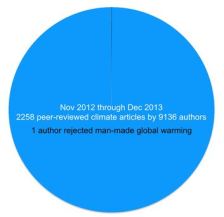
What does “near unanimity” mean? James Powell recently evaluated 2,258 peer-reviewed scientific articles about climate change written by 9,136 authors between November 2012 and December 2013. Only one article rejected anthropogenic global warming. This may not represent a consensus, but consensus is not the purpose of science. Science is to explain the world to us, and we don’t need to strike the word “near” to understand climate change is real, it’s happening now, human activity is causing it, and scientists believe that is the case.
I am not sure whether a group of rich politicians posturing in the Congress will make a difference. However, it’s the only game in town. They are willing to take positive action to support the president’s climate action plan, which doesn’t rely on new legislation that isn’t in the cards anyway. While not hopeful of meaningful action, fingers are crossed, and the game is on.
Following is this afternoon’s press release from the League of Conservation Voters:
WASHINGTON, D.C.– League of Conservation Voters (LCV) president Gene Karpinski released this statement on the creation of the Senate Climate Action Task Force, a group chaired by Senators Boxer and Whitehouse that includes more than a dozen senators committed to pushing for action on climate change:
“Big Oil and corporate polluters have worked with their allies in Congress to prevent action on climate change for far too long. This task force is the latest sign that environmental allies in Congress are fighting back, standing up for basic science and pushing for action on climate change. This is the type of strong leadership we need if Congress is finally going to get serious about addressing the climate crisis and meeting our moral obligation to future generations. We thank Senators Boxer, Whitehouse, Cardin, Sanders, Klobuchar, Merkley, Franken, Blumenthal, Schatz, Murphy, Heinrich, King, Markey, and Booker for speaking out on climate change today and look forward to continuing to work with them to address this vitally important issue.”
People seeking scientific proof of anthropogenic global climate change are barking up the wrong tree. The goal of science is not to prove, but to explain aspects of the natural world. Following is a brief explanation of climate change.
Around 1850, physicist John Tyndall discovered that carbon dioxide traps heat in our atmosphere, producing the greenhouse effect, which enables all of creation as we know it to live on Earth.
Carbon dioxide increased as a percentage of our atmosphere since Tyndall’s time at the beginning of the Industrial Revolution. As a result, Earth’s average temperature increased by 1.5 degrees Fahrenheit.
The disturbance of the global carbon cycle and related increase in carbon dioxide concentrations in the atmosphere is identifiably anthropogenic because of the isotope signature of atmospheric carbon dioxide.
We can also observe the effects of global warming in worldwide glacier retreat, declining Arctic ice sheets, sea level rise, warming oceans, ocean acidification, and increased intensity of weather events.
It is no wonder 97 percent of climate scientists and all of the national academies of science in the world agree climate change is real, it is happening now, it’s caused by humans, and is cause for immediate action before it is too late.
Following are prepared remarks for my talk at the Iowa United Nations Association event, “Speaking of… The Environment!” held at Prairie Lights Bookstore in Iowa City, Iowa on Tuesday, Nov. 12.
Thank you Iowa United Nations Association for organizing this event, and to Prairie Lights Bookstore for hosting us tonight.
Climate change is real. It’s happening now. Just ask a farmer. There are few people as close to the intersection between the natural world and human activities as they are. Any conversation I have had with a farmer, included discussion of long term changes in our climate, and how they dealt with them.
Recently, I had a conversation with farmers about this year’s crazy weather: a wet spring that delayed planting, followed by drought conditions in July through September. It was bad, but the worse news was that we can expect more of the same during the next several years.
What does this mean? For one thing, this year’s soybean crop is in and reports from the field are that pods formed on the plants, but didn’t fill out with beans because of the lack of rain. What could have been a great year for soybeans turned into an average one because of drought conditions related to our changing climate.
According to a group of Iowa climate scientists and academicians, the consequences of climate change on farmers are easy to understand. “As Iowa farmers continue to adjust to more intense rain events, they must also manage the negative effects of hot and dry weather. The increase in hot nights that accompanies hot, dry periods reduces dairy and egg production, weight gain of meat animals, and conception rates in breeding stock. Warmer winters and earlier springs allow disease-causing agents and parasites to proliferate, and these then require greater use of agricultural pesticides.” In addition, changes in our hydrological cycle cause increased soil and water runoff, and complications with manure applications. There is also pressure on crop yields.
Everything I mentioned puts pressure on our food system. We can expect more of the same going forward.
There is overwhelming evidence that climate change is anthropogenic, or caused by humans, yet most farmers don’t accept it, even as they deal with its effects.
Scientists don’t know where the tipping point lies, but the effects of climate change on farm operations are clear, and getting worse. Yet, even as we adapt, and farmers do adapt, we can do something about the causes of global warming and climate change without changing our way of life or hurting our economy.
We could start by dealing with the fact that globally, each day we dump 90 million tons of CO2 pollution into the atmosphere as if it were an open sewer. That has to change.
I’m not alone when I say we can do something about the causes of global warming and climate change to protect our food system before it’s too late. We should. Thank you.
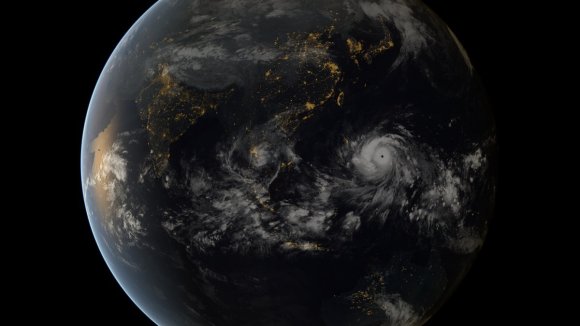
LAKE MACBRIDE— The news about Typhoon Haiyan is horrifying. For the moment, it is hard to determine the exact damage, but these quotes from the corporate media provide preliminary estimates.
CNN: “No building in this coastal city of 200,000 residents (Tacloban, Philippines) appears to have escaped damage from Super Typhoon Haiyan.”
USA TODAY: “As many as 10,000 people are feared dead in one city alone after Super Typhoon Haiyan— one of the most powerful storms ever recorded— slammed into the central islands of the Philippines, officials said.”
CBS NEWS: “The central Philippine city of Tacloban was in ruins Saturday, a day after being ravaged by one of the strongest typhoons on record, as horrified residents spoke of storm surges as high as trees and authorities said they were expecting a ‘very high number of fatalities.'”
REUTERS: “The death toll is expected to rise sharply from the fast-moving storm, whose circumference eclipsed the whole country and which late on Saturday was heading for Vietnam.”
LOS ANGELES TIMES: “What may be the fiercest typhoon in recorded history smashed into the Philippines early Friday morning, carrying winds that make Superstorm Sandy look like a weak relative. Even Hurricane Katrina, the modern measure of nature’s disastrous force on the United States, pales when compared to the punch and expected devastation from Typhoon Haiyan.”
Typhoon Haiyan was the second category 5 typhoon in the Pacific Ocean this year. While we consider the damage, and what it means, it’s time for a moment of prayer for the dead, and for the survivors.
RURAL CEDAR COUNTY— On a tour of an organic farm in Cedar County yesterday, talk turned to the impact recent unusual and severe weather events we have had. The story is similar to what others in the agricultural community have been saying.
Farmers are talking about two main weather events this year. The late, wet spring that delayed planting, and drought conditions during August and September. According to a recent gathering at the Farm Bureau, there will be more of the same during the next several years.
The late, wet spring caused some localized flooding on the property, but did not significantly impact the overall operations. They dealt with the weather. The apple crop was abundant because spring pollination conditions were almost perfect after a tough 2012, with the buds flowering after the last hard frost. A lot of apples were still on some of the trees.
Locally we lived through a period of six weeks without any rain. The effects of the summer drought on the vegetable crop were mitigated by irrigation using a drip tape system. There was plenty of water for irrigation, although like most farmers, he didn’t know how deep his well was dug. There was a farm pond should the well go dry.
Drought will reduce corn yield. We examined some ears on the stalk, and a second ear failed to form on many of them. What ears of corn were present did not fill out with kernels. Both conditions were attributable to the drought.
For the last several years, the ability to harvest vegetables later into the year exists because it was warmer later. Food can be harvested directly from the field, rather than drawn from storage and preserves during November and into December. My tour guide said he had only just begun to realize the persistent change, and was beginning to rethink his food planning for the 80 or so people who rely upon the farm for daily meals.
Farmers, more than most people, are sensitive to changes in the weather and climate. For 10,000 years the climate on earth has been stable, and this stability enabled the rise of agriculture, and along with it, our civilization. In Iowa, agricultural success is predicated on our assumptions about rainfall and the hydrological cycle. Things are changing, and what I saw yesterday is more evidence of that.
The era of climate stability is at an end, due largely to human activity. We continue to dump 90 million tons of CO2 pollution into the thin shell of atmosphere each day as if it were an open sewer. Without action on our part, adaptations like those on this farm will be ineffective over the long term. Whatever we were used to as normal has been disrupted by changing climate.
It may be evident to a farmer that the ecology of agriculture is changing in new ways. Yesterday’s farm tour was another example of why. Taking collective action to mitigate the causes of climate change has become the moral challenge of our time. We didn’t ask for this, but our personal involvement is as important as it has ever been as we work to sustain our lives in a turbulent world.
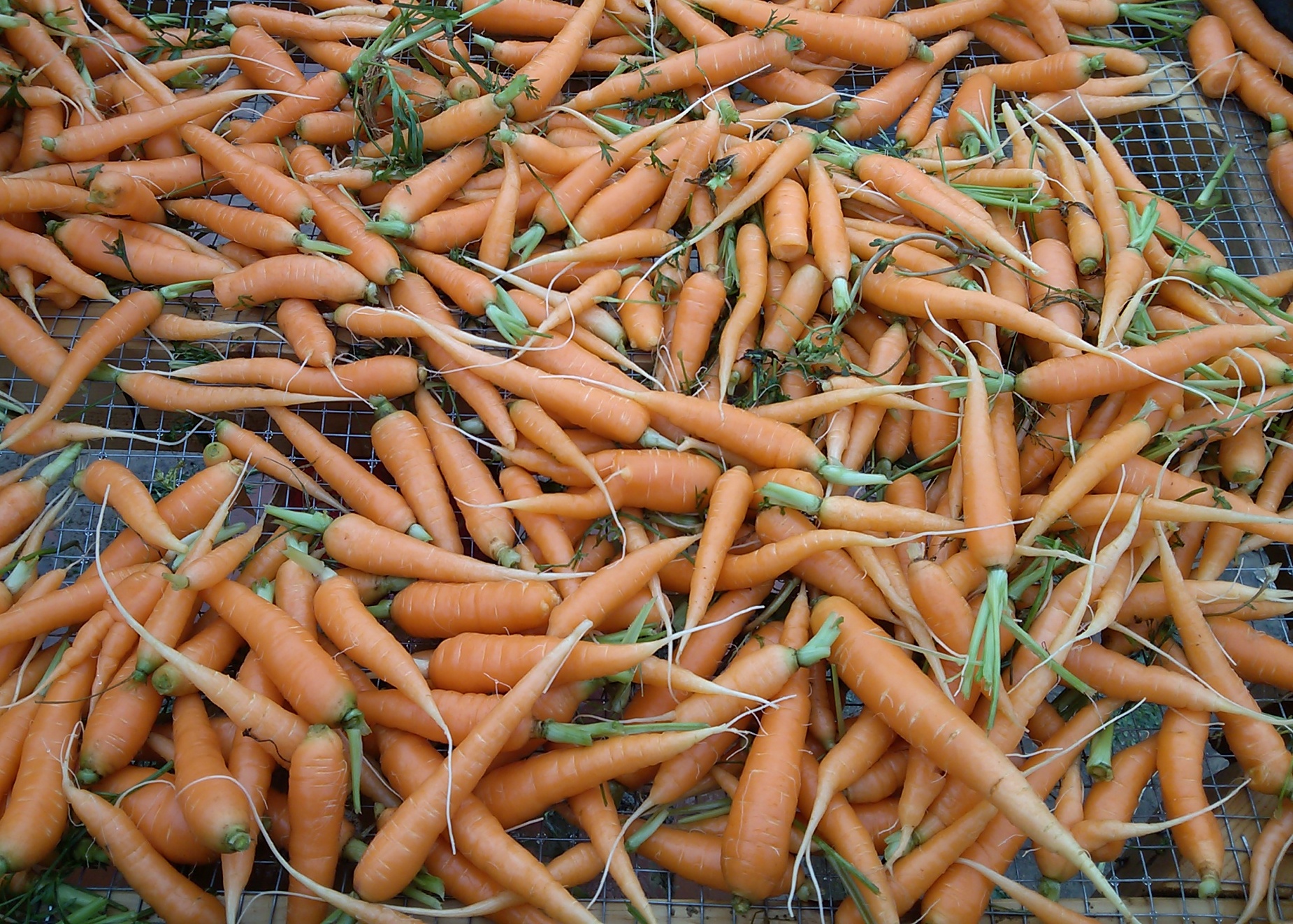
RURAL SOLON— It was a blustery day at the two acre farm where work took me yesterday. Carrots to harvest, tomato cages to deconstruct and roll up, and irrigation line to find and remove to the roads for later pickup. It was cold to the bone.
My time in the military prepared me for days like this. The key is to focus on the work and the cold will take care of itself, falling neatly into the background. Once one accepts there is no place to go to get warm, and nothing to do but the work, life doesn’t seem so bad and neither does the cold.
It was recently reported that September was the 343rd consecutive month of above average global temperatures. No surprise there, and October will be the 344th. What I would rather see is a tally of the actions people take, on a daily basis, to reduce their carbon footprint. That and a measurement of the aggregate impact it has on global warming. We would do better to collect our progress and see how we are doing than tick off the number of months of doom.
Working in a sustainable agriculture operation is said to help solve the climate crisis. According to Wikipedia, sustainable agriculture is the act of farming using principles of ecology, the study of relationships between organisms and their environment. A couple of things seem most important. Sustainable agriculture is site-specific. What one farmer does on his/her land may last over the long term to satisfy human food and fiber needs, sustain the economic viability of farm operations, and enhance the quality of life for farmers and society as a whole. It is hard to find fault with this, and the connection to the climate crisis is clear.
Where it gets sticky is that as the environment changes, so too do the organisms encountered on a parcel of land. This suggests that the work of adaptation is never really complete in sustainable agriculture. Most farmers I know are engaged in a process of constant experimentation to determine what does and doesn’t work to solve ecological problems. What is worrisome is they seldom, if ever, talk in terms of adaptation to climate change, even if that is what sustainable agriculture represents at its core. Note to self: initiate this conversation.
After noon, the two of us harvesting carrots and working in the field were called to the barn for lunch. Grilled cheese sandwiches, vegetable soup and sweet carrot bread for desert. Much better than restaurant fare, and an unexpected perquisite to break the cold. Not to mention the conversation about the fall share, and our hopes, dreams and experiences. Brief and pleasant interval in another day’s work in our ever changing environment.
DES MOINES— In the wake of 2013’s extreme weather roller coaster, marked by the wettest spring on record, followed by the second-driest July through September ever, a statewide group of leading Iowa science faculty and researchers released the Iowa Climate Statement 2013: A Rising Challenge to Iowa Agriculture at Drake University in Des Moines on Oct. 18. Below is the text of the statement. The document with the names of Iowa scientists endorsing it is here.
Iowa Climate Statement 2013: A Rising Challenge to Iowa Agriculture
Our state has long held a proud tradition of helping to “feed the world.” Our ability to do so is now increasingly threatened by rising greenhouse gas emissions and resulting climate change. Our climate has disrupted agricultural production profoundly during the past two years and is projected to become even more harmful in coming decades as our climate continues to warm and change.
Swings from one extreme to another have characterized Iowa’s 2013 weather patterns. Iowa started the year under the widespread drought that began in 2011 and persisted throughout 2012. But the spring of 2013 (March‐May) was the wettest in the 140 years of record‐keeping, creating conditions that hampered the timely planting of corn and soybean fields. During those months, sixty‐two Iowa counties experienced storms and flooding severe enough to result in federal disaster declarations.
By mid‐August, very dry conditions had returned to Iowa, subjecting many of the state’s croplands to moderate drought. These types of weather extremes, which are highly detrimental to Iowa’s crops, were discussed in our 2012 Iowa Climate Statement, where we also noted that globally over the past 30 years extreme high temperatures are becoming increasingly more common than extreme low temperatures. In a warming climate, wet years get wetter and dry years get dryer and hotter. The climate likely will continue to warm due to increasing emissions of heat‐trapping gases.
Climate change damages agriculture in additional ways. Intense rain events, the most notable evidence of climate change in Iowa, dramatically increase soil erosion, which degrades the future of agricultural production. As Iowa farmers continue to adjust to more intense rain events, they must also manage the negative effects of hot and dry weather. The increase in hot nights that accompanies hot, dry periods reduces dairy and egg production, weight gain of meat animals, and conception rates in breeding stock. Warmer winters and earlier springs allow disease‐causing agents and parasites to proliferate, and these then require greater use of agricultural pesticides.
Local food producers, fruit producers, plant‐nursery owners, and even gardeners have also felt the stresses of recent weather extremes. Following on the heels of the disastrous 2012 loss of 90 percent of Iowa’s apple crop, the 2013 cool March and record‐breaking March‐through‐May rainfall set most ornamental and garden plants back well behind seasonal norms. Events such as these are bringing climate change home to the many Iowans who work the land on a small scale, visit the Farmer’s Market, or simply love Iowa’s sweet corn and tomatoes.
Iowa’s soils and agriculture remain our most important economic resources, but these resources are threatened by climate change. It is time for all Iowans to work together to limit future climate change and make Iowa more resilient to extreme weather. Doing so will allow us to pass on to future generations our proud tradition of helping to feed the world.





 Journey Home
You must be logged in to post a comment.