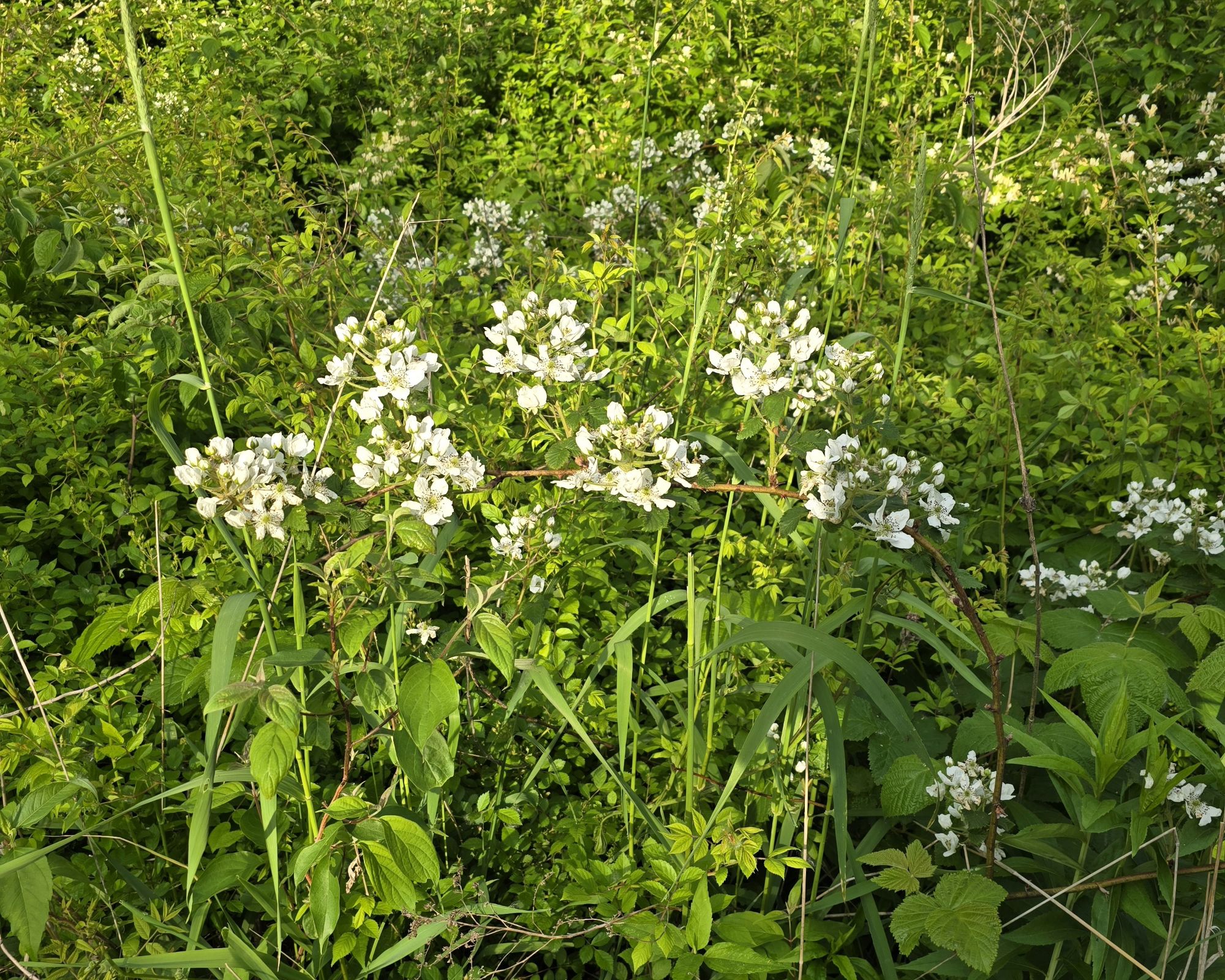
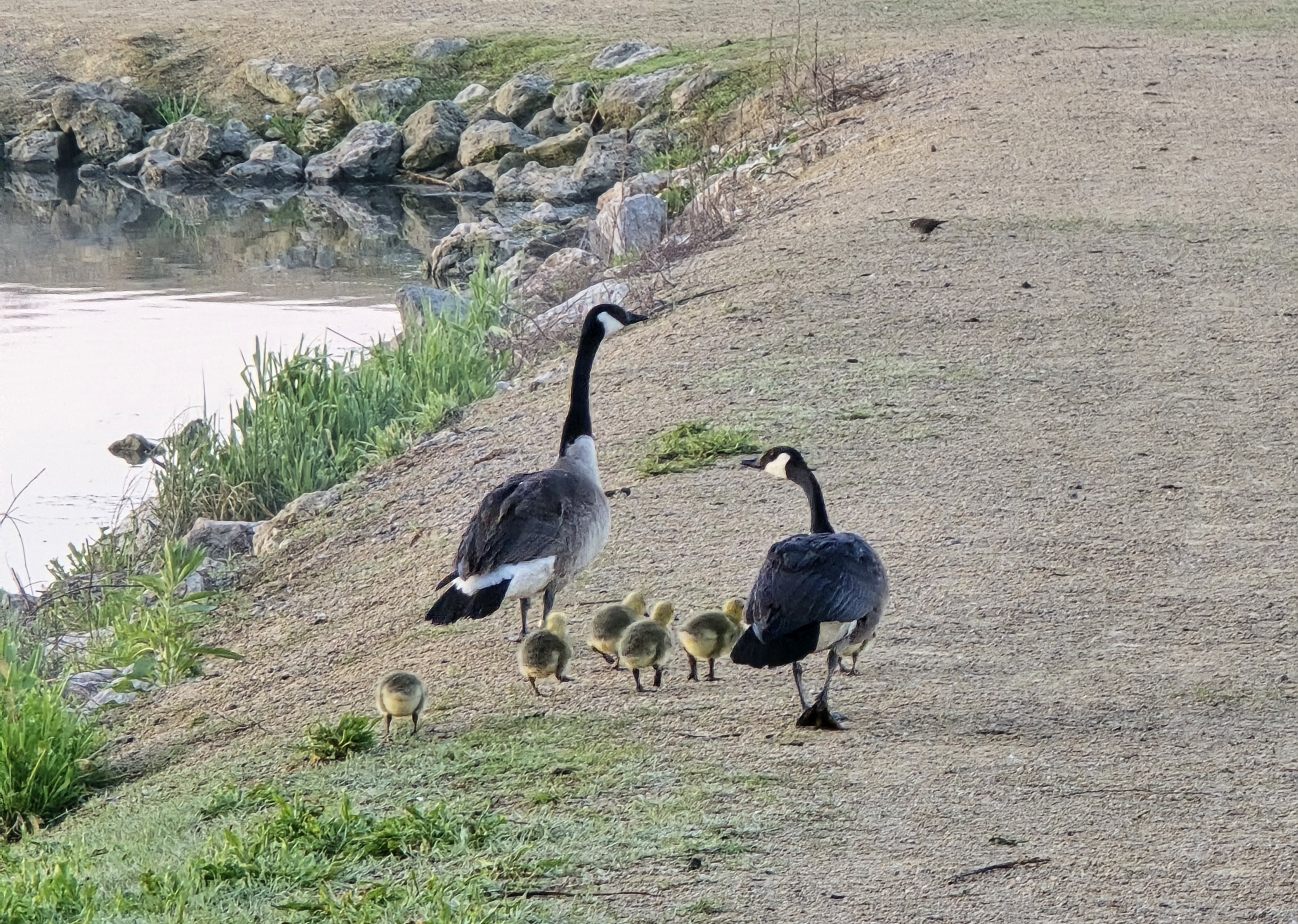
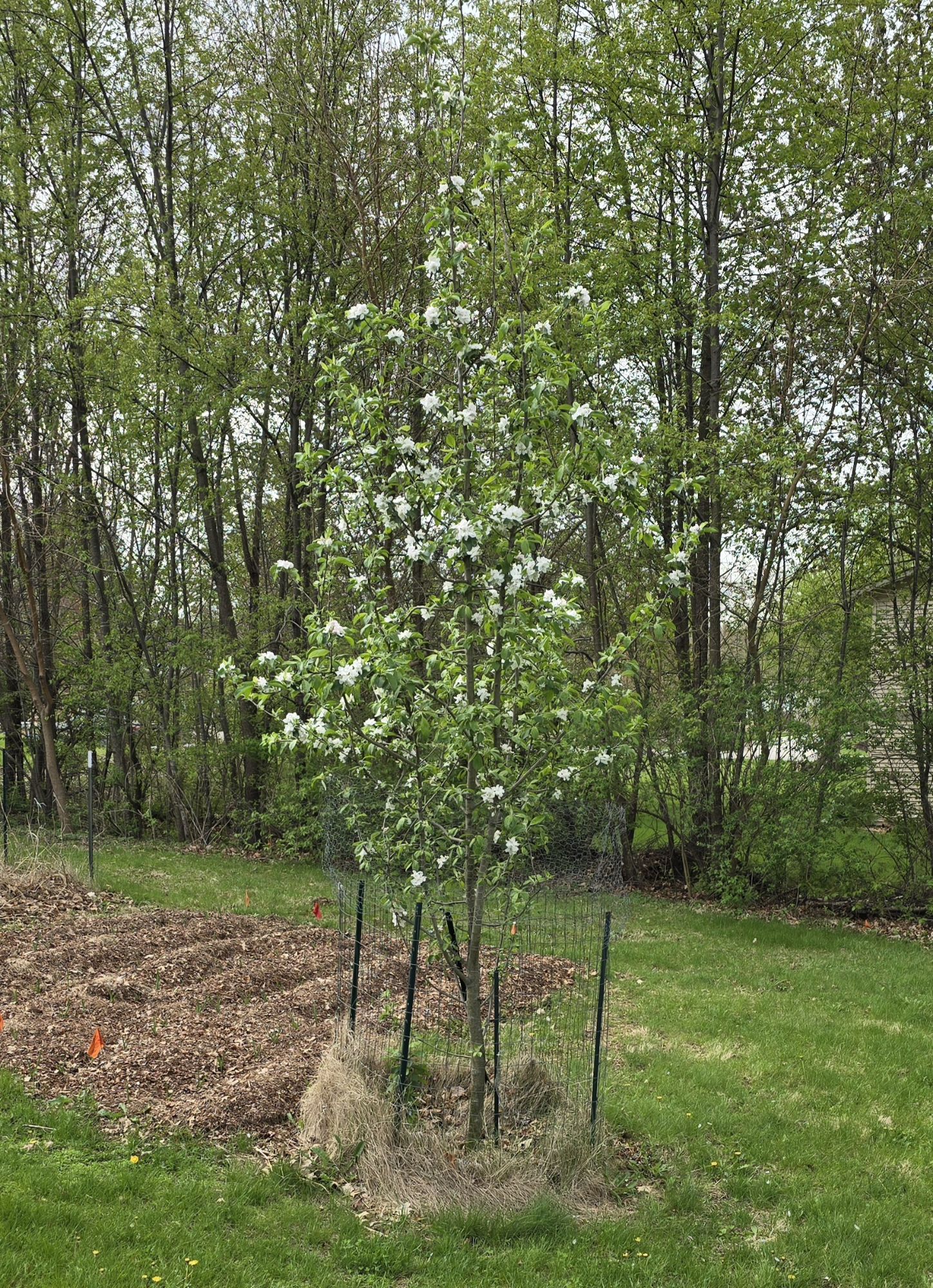
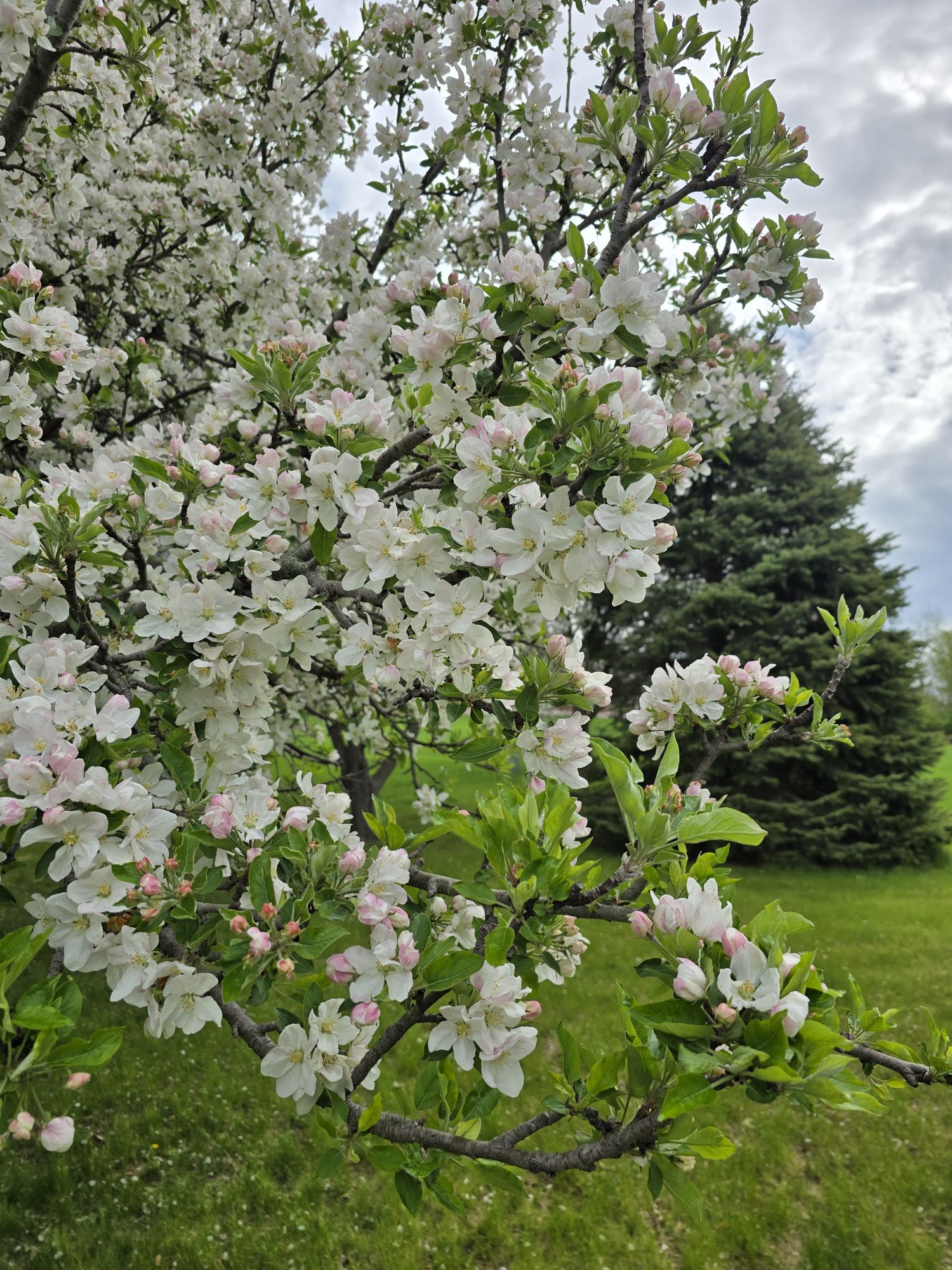
I plan to be out of office and away from writing computers for a couple of days. Here is a photo from a recent trail walk to keep you company.

The ambient temperature is chilly as I write. Not freezing, not spring, just chilly. I yearn to be outside working in the yard and garden. I don’t yearn enough to bundle up and brave the cold and wind. At least I got the garlic in the ground on Saturday and it rained Sunday. I’ll take little victories when they come.
I’ve been spending what seems like a lot of time writing. Each day includes writing emails, social media posts on BlueSky, and at least one blog post. All of that writing is to prime the pump for work on my autobiography. I’m on the draft of Chapter 25 of a possible 50, so the draft is half finished. Time writing is valuable for the distraction it provides. Distraction from our politics, mostly.
On Monday, Paul Krugman posted this graphic:

His comment was about the impact of economic uncertainty on small businesses. It’s not good, he said. However, there are more kinds of uncertainty during the current administration that are equally uncertain.
Will Social Security continue to provide steady retirement income? Will my veteran friends continue to have health care through a viable Veterans Administration system? Will my public library be able to afford things like interlibrary loans, websites, and other services if federal funding goes away? Will research facilities be able to create needed vaccines during the next, inevitable pandemic? When I’m infirm enough to need a nursing home will Medicaid be available to help defray costs? Life today is one big truckload of uncertainties, hence my need to be distracted from it.
As society grows more uncertain, the tendency is to withdraw into what is most important in life: family, maintaining a home, eating sufficiently well to avoid problems, maintaining physical and mental health, and more. Such concerns during the Reagan administration rose and my reaction was to withdraw into what I will call the “Reagan bubble.” Focus on what is important and the heck with everything else. Needing a Reagan bubble complicates things in significant ways.
The tendency is to conserve resources. That means less spending on retail in person and online. It also means using funds to pay down debt. Can we get by with the vehicle we currently own for a few more years? Will the washer and dryer hold up without needing replaced? Conserving resources, multiplied by a society that feels the same way about uncertainty will have negative fallout for the consumer economy. While I’m not an economist, it will be felt across the economy, not just in the consumer sector.
Living in the Reagan bubble will be good for my writing, the same way the coronavirus pandemic was. Until I finish the second book, I need that. That raises another question, though. Where will things be when I do finish the book, hopefully by the end of the year? It’s a big unknown. Those of us who have been to this rodeo before during the Reagan years know what to do.

The weather has been kind of pissy to this gardener. Ambient temperatures have been all over the place during the last ten days. The soil for the garlic patch has been spaded yet is too wet for tilling and planting due to intermittent rains. It is raining as I write… and wait for spring to truly arrive.
I received notice my Medicare Supplemental Insurance premium is increasing by 11.7 percent beginning May 1. Making a big assumption — that Social Security will continue to pay out as previously — there should be enough money to cover the additional $28.73 for me and a similar amount for my spouse. May have to cut back elsewhere, but insurance is a top tier priority.
My Social Security payment arrived on time this month. Two for two for the new administration. The Washington Post has been following the turmoil since DOGE turned its sights on the agency upon which more than 70 million Americans rely.
“What’s going on is the destruction of the agency from the inside out, and it’s accelerating,” Sen. Angus King (I-Maine) said in an interview with the Washington Post. “I have people approaching me all the time in their 70s and 80s, and they’re beside themselves. They don’t know what’s coming.”
Most of us fear what is coming. As the senator said, we don’t really know what’s coming, except that in fits and starts, the administration appears to be making random cuts and illogical accusations about the program with an endgame of privatizing or killing it. My fear is the billionaire class plans to rob the Social Security Trust Fund in its entirety. It’s almost $3 Trillion value won’t even begin to cover the tax cuts the president has proposed, and the Congress seems intent on legislating into law. That means more debt if it moves forward, in addition to poverty among many seniors, if it doesn’t kill them first. Republicans don’t seem concerned about bankrupting seniors, the government, or anyone but themselves.
Today’s news hits like a brick. I can deal with pissy weather and am reminded of this verse from Cristy Lane’s hit song One Day at a Time, which provides some resilience:
Do you remember, when you walked among men?
Well Jesus you know if you're looking below
It's worse now, than then.
Cheating and stealing, violence and crime
So for my sake, teach me to take
One day at a time.

The year we moved to Indiana’s Calumet Region in 1988 marked the onset of the worst U.S. drought since the Dust Bowl. The 1988-1990 North American Drought covered a smaller amount of geography compared to the 1930s Dust Bowl yet it was the most expensive extreme weather event in terms of monetary damages in U.S. history until that time.
Nearby Milwaukee, Wisconsin, set a record 55 consecutive days without measurable precipitation. During summer heat waves, thousands of people and livestock died. The drought led to many wildfires in western North America, including record fires in Yellowstone National Park in 1988.
While living in the Calumet, I understood the region’s activities were adding carbon dioxide to the atmosphere, enhancing the greenhouse effect that causes planetary warming. This includes the enormous Amoco Oil Company refinery located 23 miles from our house.
In 1988, we were turned inward, living our family life. We also had air conditioning. I did not understand how prevalent the deleterious effects of climate change would become in our lifetimes. It was one of what became a series of extreme weather events leading through time to when I wrote this post. We understand now.
The United Nations suggests ten thing we can do to address climate change. They even have an app! It is not too late to begin addressing our contributions to global warming and environmental degradation. Click here to learn more about what you can do.

Editor’s Note: Our arrival in Big Grove Township was marked by the first in a series of extreme weather events: the 1993 flood. It was called a once in 500-years flood, yet we would soon find out flooding had become more common, including the next 500-year flood event in 2008. I plan to weave at least six extreme weather events into my memoir, beginning with this chapter on Big Grove Township.
Big Grove Township was established before Iowa Statehood. The first sawmill was built here in 1839 by Anthony Sells on Mill Creek. Put the big groves of trees together with the sawmill and you have us. The oak, walnut, hickory, ash, elm and cottonwood that once thrived among numerous pure springs were gone when we bought our lot here. What dominates is the culture we and others brought with us to an area where all trees indigenous to the Northwest once existed in abundance yet no longer do. There is something essentially American in that.
There is a subdivision named Mill Creek today, suggesting this history. Throughout the area, people refer to early settlers and builders of homes instead of the people who now own and live in those structures. The names Cerny, Beuter, Andrews and Brown persist, as does the more recent name of Don Kasparek upon whose former farm our home is situated.
On the vacant lot we purchased, there were scrub grasses and a lone mulberry tree. The tree appeared to have been planted by a bird’s droppings while it perched on a surveyor’s re-bar marker. The ground had a high clay content which suggested Kasparek had removed the topsoil before subdividing the plats. When he died in 2003, I recognized him in our association newsletter. We speak of him from time to time in the neighborhood, although not always in a positive way.
I looked at an old picture of a building on Main Street in Solon, the nearest city. In sepia tones, seven teams of horses and wagons are lined up in front of a building on the dirt street. We can make out the lettering on the shop windows: Cerny Bros Grocery, Cerny Bros Hardware, and Cerny Bros Feed. While the roads have been paved for many years, much of downtown and the surrounding area resonates with the area’s origins in history before automobiles.
We built our home during the record-breaking floods of 1993. Governor Terry Branstad described the extreme weather event as “the worst natural disaster in our state’s history.” The Des Moines Register published a commemorative book titled Iowa’s Lost Summer: The Flood of 1993. Extreme weather delayed construction of our home that summer, causing us to stay with relatives and in motels for about a month after we moved from our house in Indiana. We moved in during August 1993. I was used to severe flooding from growing up in Davenport where the 1965 Mississippi River flood broke records. I was not used to flooding, 1993-style.
I couldn’t help but believe who I was represented itself in any of local history. My culture was what I brought with me, rooted in coal mining, factory workers, farming, home making, and the rural cultures of Virginia, Minnesota and LaSalle County, Illinois. Our history as a family goes back on both sides to the Revolutionary War. My line in Virginia goes a hundred years prior to the revolution.
That my ancestor Thomas Jefferson Addington is a common ancestor to the Salyer girls of the Salyer-Lee Chapter 1417 of the United Daughters of the Confederacy stands in contrast to the story of Maciej Nadolski working in coal mines in Allegheny, Pennsylvania after the Civil War and then buying land from the railroad in Minnesota. What of my father’s birth in Glamorgan, Virginia? What of the suppression of Polish culture by the Russians after 1865 that led to a massive migration of Poles to North America? If I weren’t here, we wouldn’t speak much of these things in Big Grove Township. Perhaps with time we will.

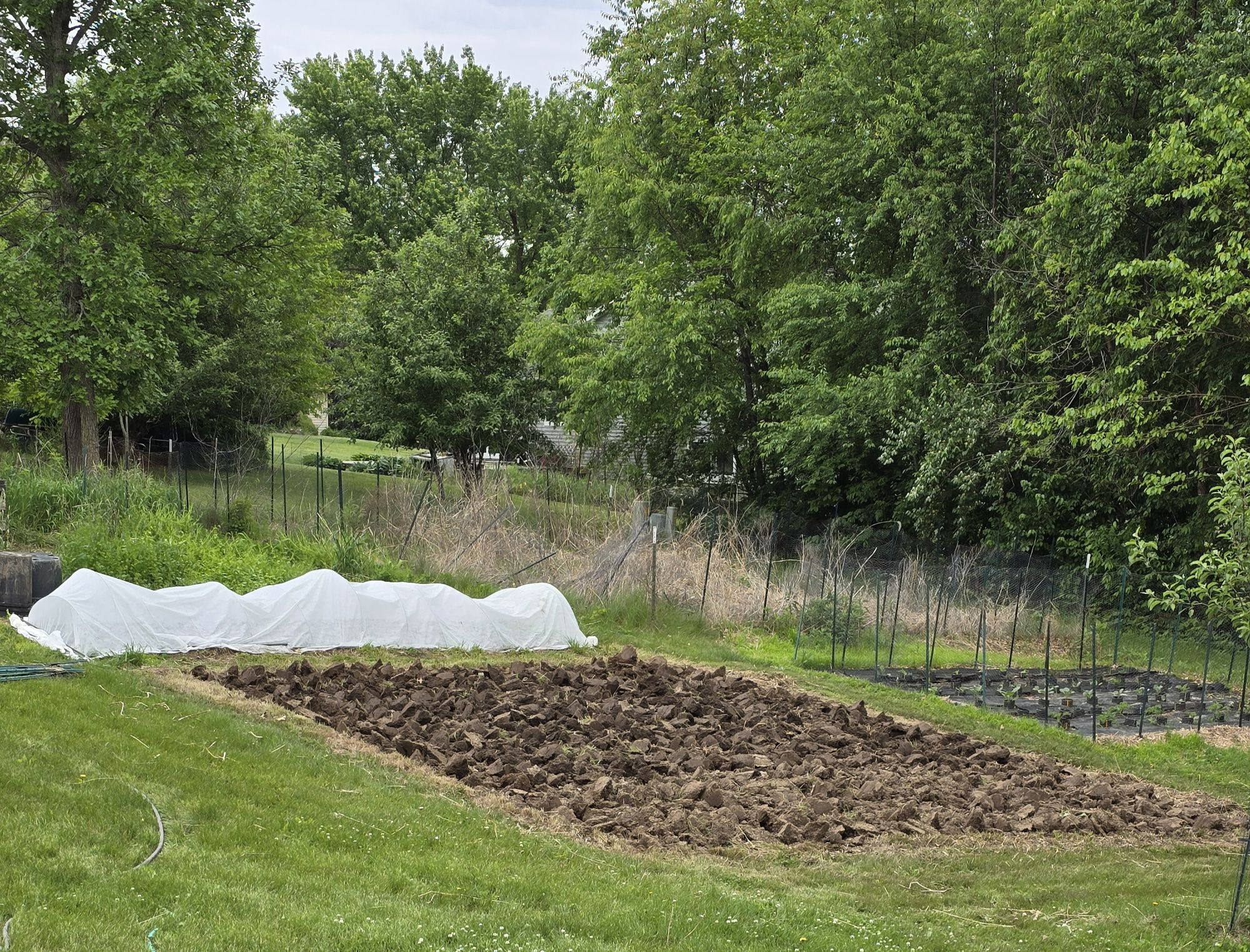
Ambient temperatures were in the high 70s on Friday. I walked out to the garden and had a look. After dumping the compost bucket into the bin, I turned over a spade full of soil in this year’s garlic bed. The moisture level is about right for planting. I thought I’d give it the rest of the day’s high temperatures to dry and plant garlic today. Last year was such a mess, I didn’t get garlic into the ground in November as usual. My farmer friends tell me with late planting, I will still get a crop.
Some parts of the garden have two years of clean up to do. Tearing down fencing, pulling up fence poles, recovering plastic sheeting for another use, and taking care of the vegetable stalks will require a multi-day project. I’m determined to get a garden in this year.
My views about the garden are changing. For example, the last year or so we have had something digging tunnels in the lawn just under the surface. I don’t know if the pest is eating the roots of grasses and other plants, or what it is doing. I’m inclined to not plant potatoes this season because they are cheap at the farmers’ market or grocer, and it will give the little animals one less food source. Potatoes have never been a main crop for me.
It was good to be out in the warm sunlight with a fresh breeze blowing against me. The soil felt good, the way it should feel after a mild winter. Once I get going, it should take me about 90-120 minutes to get the garlic in the ground.
After planting, it needs mulching. I plan to use last year’s tomato stalks and leaves and grasses mowed into a bag from the lawn. I have to watch this type of mulch more carefully so it doesn’t get matted and prevent the garlic shoots from getting to the light as they grow. With wheat straw you can just mulch it and forget it until harvest. I want to avoid this input cost.
Off and gardening we are. I expect I’ll need more time working the plots to get away from the national news. Respite, as good as it gets.

Time for a break after posting every day since the inauguration. Here is a photo from a recent trail walk. See you later! Cheers!

When the University of Iowa bought Mercy Iowa City Hospitals and Clinics in November 2023, we were thankful our hospital of decades did not close the doors because of bankruptcy. We haven’t had major health issues, yet our child was born there 40 years ago, and they kept the facility up since then. Why ruin a good thing?
Now called University of Iowa Health Care, there are changes to accommodate. For example, we have to wear a wrist brand inside the 2,828 square foot building when we are at an appointment. I suppose practitioners might confuse us with the other patient seeking treatment at the same time. It’s not like we are a small town. We’re up to 3,182 people according to the most recent census information. Hell, I don’t know the half of them! There were questions about the wrist bands at first, yet we didn’t want the administrators in the county seat to get mad at us and close the only clinic in this rural part of the county. We now wear them when asked.
I’ve been treated in our local clinic since we moved back to Iowa in 1993. The doctors and nurses used to be good. Nurses still are, but the first impulse of recent physicians seems to be to refer us to another clinic in the university system for a test or consultation. Hang on to your wallet, because if you don’t have good insurance, these referrals can run into the thousands of dollars.
Some practitioners, the male ones anyway, give me the wooden Indian look when I ask about my records from before the acquisition. They don’t say, but I think there is an issue with integrating our old medical records into the university system. No worries, though. Doctors today seem to live in the moment. They might say, “Don’t worry about those old records. Let’s take a look at you now!” That’s fine with me because I live in the now. I’d just as soon forget about all the ailments for which I have been treated in the last 32 years. The only major health concern from the old days is my being obese. That persists, yet the university has a solution.
I first noticed the double-wide waiting room benches when I went to the podiatry clinic. A six-hundred pounder could fit into one of those no problem. My spouse and I can share one since there is room to spare for the two of us. In another context, we might call the double-wides “accommodation.” I suppose the doctors get tired of telling patients they need to lose weight, therefore let them have double-wides. Now that I’m thinking about it, some of the examination chairs I’ve been in are double-wide as well.
Obesity is a problem in the state:
Iowa currently ranks 11th in the nation for adult obesity, according to the latest Behavioral Risk Factor Surveillance System (BRFSS) data. However, Iowa is one of 19 states with an obesity prevalence rate of at or over 35 percent. (Iowa Department of Health and Human Services website).
It is good the hospitals and clinics try to accommodate people with every characteristic. The University of Iowa is a teaching hospital that accepts patients from all over the state. That is, they accept people if there is room and sufficient staff to treat what ails them. Otherwise, we go to Illinois, Nebraska, or Minnesota. Anyway, if obese Iowans make it through the maze to treatment, they will be comfortable while they are at the clinics.
There is a dark side to all this, and that is people are getting fed up with all the accommodation in society. It’s not just the double-wides. It’s everything. It’s like we returned to the 19th Century world of the great novelists with their chatty gossip and sexual double entendres. Where wit and morality are front and center in books that purportedly corrupted youth. I’m thinking of Charlotte Smith, who promoted women’s rights as long as women knew and kept their place subservient to their husband and produced a large number of children. It is as if to say, “Here! You have a right to this double-wide. Also know that we are better than you and will lord it over you.”
Sorry for that last paragraph, which was a bit of a stretch. Sorry, not sorry.
Let’s face it, though. Some in the Iowa legislature and the Congress definitely want to tell us how to live. In many cases, it has become a big morality play in which we have to hear their values and comply… or else! Here I am thinking of the state bill to repeal the obscenity exemption for schools and libraries. Our local library emailed us:
While the intent behind these bills may be to protect community standards, the broad language used could lead to unintended consequences. By altering obscenity exemptions, these bills could subject libraries and educational institutions to increased legal scrutiny and potential penalties for materials deemed inappropriate by subjective standards. This shift could result in self-censorship among librarians and educators, limiting the diversity of materials available and hindering the open exchange of ideas that is fundamental to educational growth. (Email from the Solon Public Library, March 7, 2025).
They expect us to comply and remain in our station in society. They assert in this, they are better than us.
All of this said, I like the new arrangement with the University of Iowa Health Care organization. The people are friendly and helpful, and if something is wrong, and we can afford all the tests and consultations, problems can be detected early and addressed before they get out of control. That’s what we want with our health care. Double-wides are optional.

Editor’s Note: On Friday, FOX News mentioned President Donald Trump sent a letter to Iran’s Supreme Leader Ali Khamenei, seeking a new deal with Tehran to restrain its rapidly advancing nuclear program and replace the agreement he withdrew America from in his first term in office. Iranian state media immediately picked up on Trump’s acknowledgment, though there was no confirmation from Khamenei’s office that any letter had been received. This seems largely a head fake. The real issue is the nuclear weapons held by the United States and Russia.
When the president mused about all the money the United States was spending on refurbishing our nuclear weapons complex, he can’t be taken seriously. This is what he said:
There’s no reason for us to be building brand new nuclear weapons, we already have so many. You could destroy the world 50 times over, 100 times over. And here we are building new nuclear weapons, and they’re building nuclear weapons.
What motivates this comment? Tax cuts for the wealthiest Americans. I plan to view it with a skeptical eye until the discussion gets beyond the type of public brainstorming the president is known for. This is what he meant:
The U.S. House is having trouble coming up with enough savings to fund my $4.5 Trillion in tax cuts, so maybe we could use some of the nuclear complex monies.
Cognizant there is a national security issue around the use of nuclear weapons, the president’s team developed a policy. Invoking the failed Reagan missile defense policy, the administration proposes we try it again under the aegis of an “Iron Dome for America.” As Stephen J. Cimbala and Lawrence J. Korb point out in Bulletin of the Atomic Scientists, the plan has serious technology and policy problems. What needs to happen is renewal of discussions between Russia and the United States concerning arms control. If nuclear arms are eliminated, there would be no need for a missile defense system by any name.
Daryl G. Kimball of the Arms Control Association said, “a dialogue between Moscow and Washington could lead to negotiations to maintain or lower current limits on the world’s two largest nuclear arsenals before the New Strategic Arms Reduction Treaty (New START) expires in February 2026.” If the president is serious about reducing the number of nuclear weapons, this is a reasonable approach. I don’t think reason can be applied to the current administration when they lust after tax cuts for the wealthy.
While public oxygen is taken up by the uninformed chopping away at the federal government by Team DOGE, the country could be working on arms control. In a recent substack, Joe Cirincione opined that to keep Europe safe, two things were needed:
For over seven decades, there have been two basic frameworks that have stopped the spread of nuclear weapons in Europe. One is NATO, founded in 1949, that provided positive security assurance to Europe. America assured European NATO members that if they were attacked, the United States would defend them, including with our nuclear weapons. So, these countries did not need to get their own nuclear weapons. America would protect them.
That extended deterrence, as it is called, was not, by itself, enough to stop countries from considering their own nuclear arsenals. The United Kingdom got nuclear weapons in 1952 and France in 1960 despite the security assurances. Another framework was needed: the arms control and disarmament commitments embodied in the nuclear Non-Proliferation Treaty (NPT), negotiated in 1968 and ratified by the Senate under Richard Nixon in 1970.
We all know how the president feels about NATO. He doesn’t care for treaties any better. As we have seen, he appears to be forsaking Europe for his new relationship with Vladimir Putin.
So what is the administration doing to control nuclear weapons? Short answer: Nothing. He should be doing more, and elected officials need to hear from us on this topic. The U.S. Capitol Switchboard is (202) 224-3121.
You must be logged in to post a comment.