Categories
Kitchen Garden

Peppers and Tomatoes

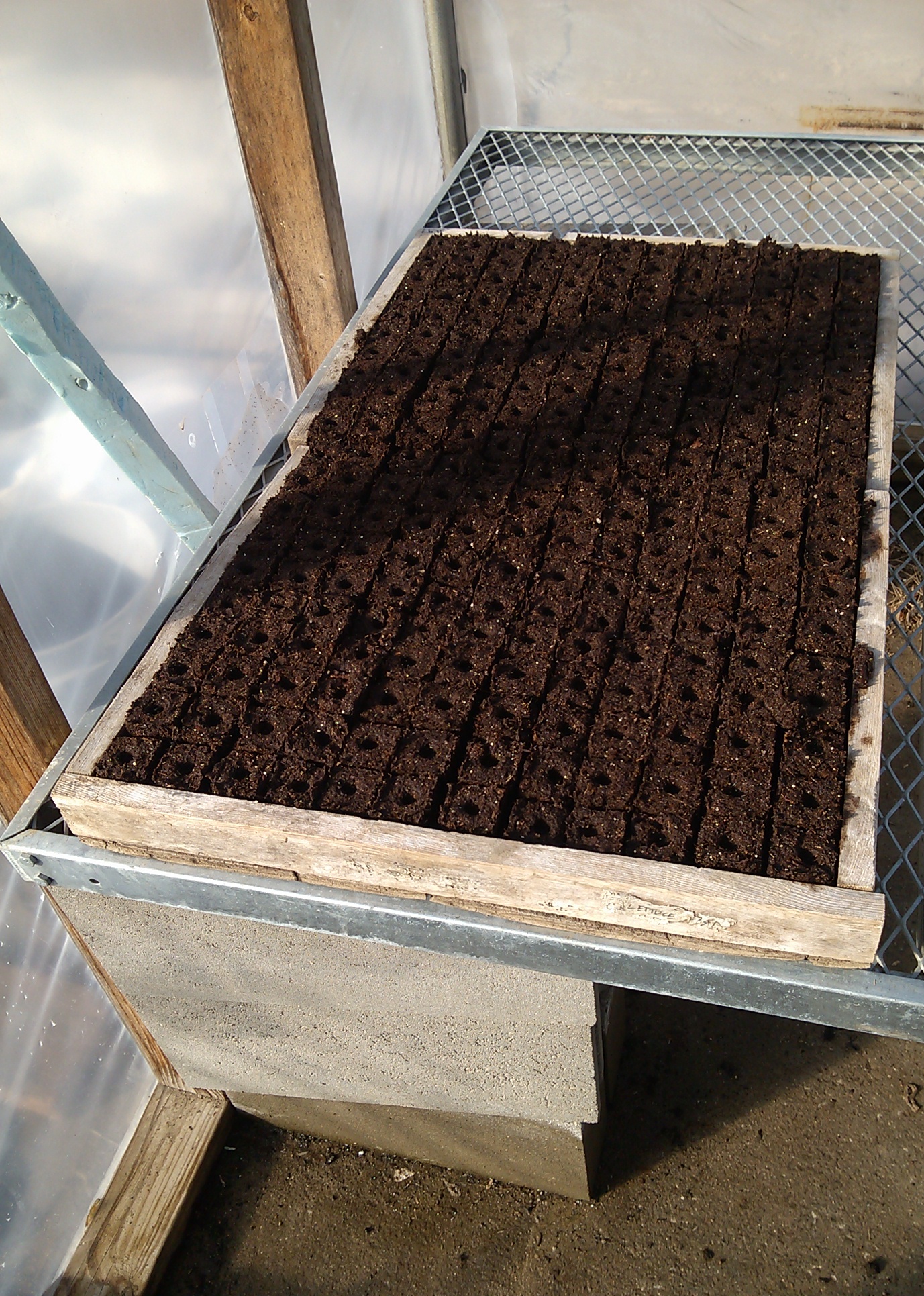
Seeding peppers on March 30, 2024

Saturday was the first day I worked up a sweat in the spring garden. I moved storage items around and contemplated where I should bury the potato containers. The fence around the southwest plot needs to come down, and ground cover taken up. The layout will be changed to accommodate six potato containers, mowing around the apple tree, and placing the large compost bin made of old pallets. There will be space leftover. It will be an awkwardly shaped space.

Potatoes do better when there is a fence around them to keep deer away. If I can find mulch to put around them, they won’t need much besides water and pulling a few weeds. I must remain vigilant to see if the Colorado Potato Beetle arrives. The insect hasn’t been around the last few years.

I moved chard, collards, and fennel seedlings into larger pots to allow them to grow. I also thinned the bok choy family of seedlings to one sprout per block. One never knows how older seeds will perform so I doubled up. About half the celery seeds germinated. I’m not sure if twelve plants will be enough and I may plant more.

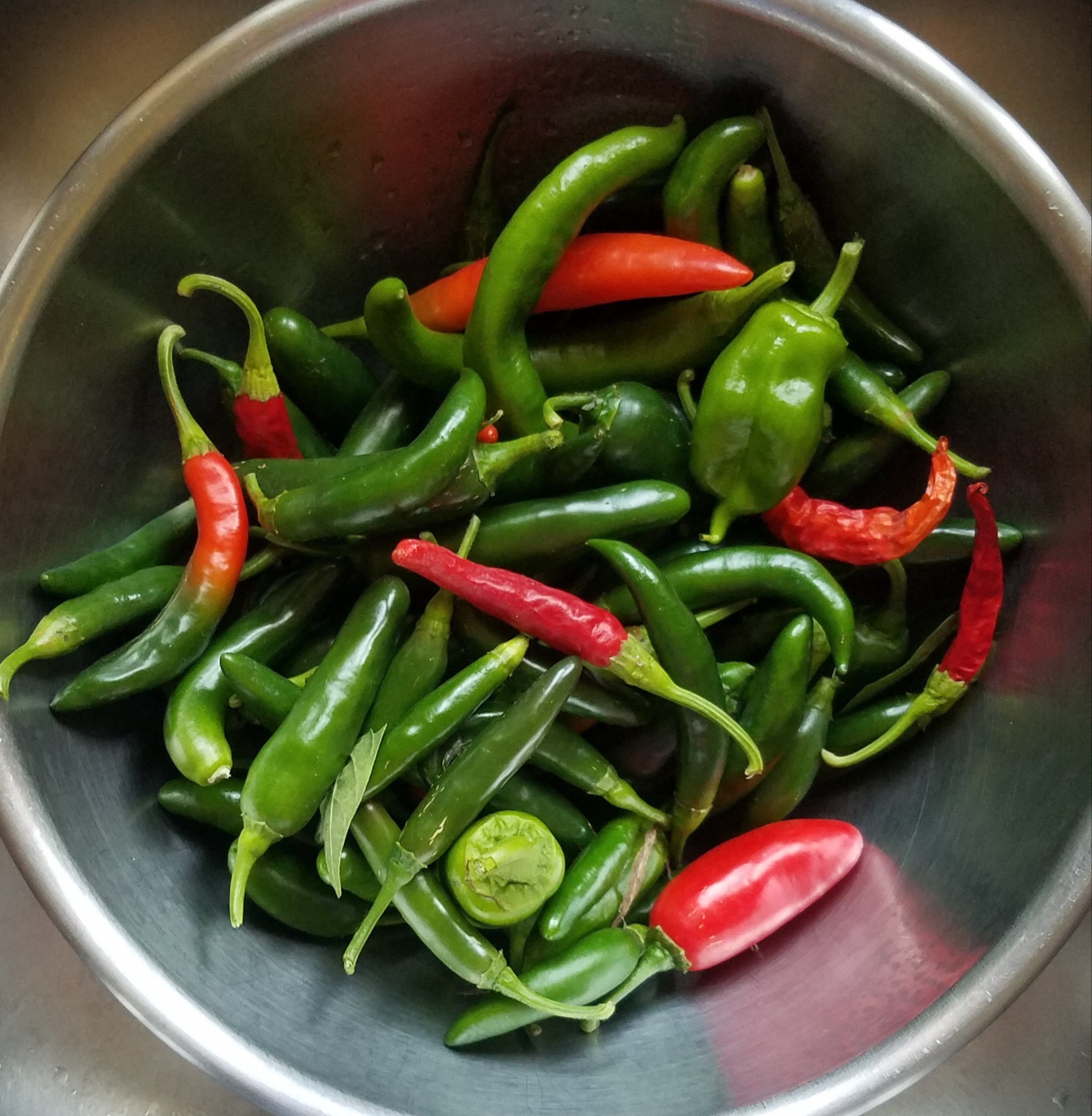
How many varieties of pepper seedlings should be planted? I cut back. Using the remaining bell pepper seeds from last year, I may not attempt to grow them again. With nice bell peppers available year-around at the wholesale warehouse, I am less worried about my failure to grow good bell peppers. The rest of the peppers are Serrano, Jalapeno, and a variety of long, red hot peppers for drying and converting into red pepper flakes. Reducing the variety aligns with how I use them. If I want a specialty pepper, I can likely get them at the farmers’ market.

The most important annual crop is tomatoes and I cut back the number of varieties this year. I’m a bit nervous about that with three varieties of plum, three slicers, and five cherries. For fresh eating, we tend to consume more cherry tomatoes than slicers. Both are reasons to grow a summer garden. The plums are mostly for canning whole or as sauce. There can never be enough of those.

I collected fallen branches and twigs from the yard and started a burn pile. I’m running behind on that, yet there is not a lot to burn. All the same, spring gardening has begun. It will be a constant activity from now until Memorial Day.

Categories
Kitchen Garden

Early Spring Chills

Black bean and kale taco filling.

With ambient temperatures in the twenties and thirties it has been a chilly early spring, of a kind that has me lingering indoors to find things to do. It is what it is. I hope to plant potatoes on Friday, yet if it’s too cold, I will delay. In the life cycle of Midwestern gardening, the growing season is extended by a warming climate and a few days doesn’t matter that much.

I plant potatoes in containers so the soil is less accessible to rodents. I move them each year, using the soil dug to bury them plus some soil mix and compost all blended with a cup or so of fertilizer in each tub. So far no critters dug their way into the tubs to eat the tubers.

A company in Monticello sells composted chicken manure, which is used by a lot of organic growers. I need to get over there and buy this year’s supply which is 150 pounds. There will likely be the annual discussion of which sales person gets credit for my sale. A few years ago we established that mine is a “house account” which means no sales person gets credit as I just walk into the office to buy it. Since beginning to use fertilizer, garden yields have improved.

Based on last year’s experience, I delayed planting peppers last weekend. Timing of seeding to planting time is more important for peppers and tomatoes. Any more, I don’t see an advantage of germinating early. I am cutting back on peppers and tomatoes this year with fewer varieties. For peppers to be successful in this climate, I need to install drip irrigation. I have been unwilling to do so, and there is an abundance of peppers when they come in around the county. I do plan to plant the varieties that grow well with my sparing watering.

I inspected the garlic and it is looking quite good. Taking time to loosen the straw mulch compacted over winter facilitated growth. It looks to be another great harvest.

When the weather finally breaks, there will be a lot of outdoors work to do. I am ready for it, even if there is plenty of indoors work to keep me busy.

Categories
Kitchen Garden

Getting Soil Mix

First Soil Blocks at the CSA

It was time to get soil mix for seed starting. The amount leftover from last year wasn’t enough to get through this weekend’s planting of herbs, cauliflower and broccoli. I emailed the dirt company (yes, we have those in Iowa) to make sure they had what I needed and drove over near Tipton yesterday to get it. The sun was so bright I had to wear sunglasses.

I enjoy that drive. When I was a paid political campaign consultant I got to know Cedar County quite well, both cities and rural areas. I could name the owners of some of the farms as I passed. The direct route to the dirt company is over gravel roads. While the car needs a wash when I finish the trip, I feel comfortable in that geography without a map. I have driven those roads so much I don’t need one.

It was also a great day to be outdoors driving along massive fields coming out of winter. There were a few pieces of farm equipment on the roads, yet most of the fields haven’t been touched this year. Corn stubble left from the 2023 harvest was everywhere. The Cedar River seemed lower than usual, likely a result of continuing drought conditions. It seemed like the end of winter, although with spring not far away.

It has been more than ten years since I had a pickup truck. I miss those days. To get the soil mix to fit in our subcompact, I had to remove the shelf in the back window and flip down the seats. I laid a couple of towels over everything so it wouldn’t get dirty. The subcompact held to the roads pretty well as I am an experienced rural driver.

I figure there are 14 more gardens in me before I get too old to grow them. Back in the day when we first married I just stuck tomato plants in the ground and hoped they produced. I added some skills in the 41 years since those first plantings. It helped to work on a vegetable farm for eight years.

The new portable greenhouse arrived, my fourth since I began using them. One was damaged in a straight line wind storm, the next by the August 2020 derecho, and last year the zipper tore loose. With a new one, this year should be fine. I’d prefer a permanent greenhouse yet even with the replacements it has been much cheaper to use the portable ones. We have plenty of uses for any extra cash, so the savings is welcome.

The kale seedlings are sprouting their third leaves so it’s time to put them in a bigger container before planting. With new soil mix in the garage, I’m ready.

Categories
Kitchen Garden

Vegan Cooking by Accident

Vegan applesauce muffins.

My spouse went vegan a while back and I didn’t. I’m having to re-learn how to cook for both of us and I’m okay with that. It’s more work than expected, but I shouldn’t just kick back and grow old according to my former ways. This vegan bent in cooking, combined with other dietary restrictions we follow, led to a long list of food we don’t buy or seldom eat. Long-time readers may be familiar with some of them.

  • A pox on avocados because popular demand leads to deforestation with avocados being planted beneath the canopies of tropical rain forests before the rain forests are cut down. Either we are serious about preserving rain forests or we are not. That means no guacamole or avocado toast in our household.
  • Coconut oil? It’s a saturated fat people! Don’t be eating it when other, healthier options are available. I read the summaries pertaining to lauric acid. Still don’t eat it.
  • I forget why we don’t like mushrooms, yet there hasn’t been one of those in the kitchen for decades.
  • We never bothered being pescatarian enroute to vegetarianism. Folks should lay off fish for the sake of maintaining our fisheries. If unchecked, humans would take every fish that swims in the seas. If you missed it, sushi is usually some kind of fish, so avoid it.
  • Don’t get me started on jackfruit. Leave that one in Mexico or Guatemala. See the first item about deforestation.
  • Seitan is fine unless one has a sensitivity to wheat. We don’t eat it regularly.

After a long search for a recipe to make vegan pumpkin bread with my wealth of frozen Casper pumpkin flesh, I developed this one, which was good.

Vegan Pumpkin Bread

Dry ingredients:

  • 2 cups all purpose flour
  • 1/2 cup granulated sugar
  • 1 teaspoon baking soda
  • 1 teaspoon baking powder
  • 1 scant teaspoon pumpkin pie spice plus extra cinnamon to taste
  • Pinch of sea salt

Wet ingredients

  • 2 teaspoons vanilla extract
  • 1/3 cup water at room temperature
  • 1/3 cup apple sauce
  • 1-1/2 cups pumpkin puree (or 15-ounce can prepared pumpkin)

Preheat convection oven to 350 degrees Fahrenheit.

Mix dry and wet ingredients separately then add wet to dry. Mix thoroughly, although not too much. Pour into a loaf pan greased and lined with parchment paper. Bake 55 minutes or until a toothpick comes out clean. Remove to a rack and let sit for 10 minutes. Makes 8-10 slices.

Categories
Kitchen Garden

Deconstructing a Garden

Breakfast bowl of grits.

I let my southern roots show by making grits for breakfast. There is no recipe, just an approximation. For a single large serving bring two cups of liquid to a boil (half milk/half vegetable broth) and add half a cup of grits. Salt and pepper to taste and cook on medium low heat until the texture of ground corn begins to show. Add one tablespoon of butter and then half a cup of shredded extra sharp cheddar cheese. Stir until every thing melts and the dish comes together. When the grits are soft, they are finished.

Last of the hot peppers as I cut the pepper plants down to clear the plot.

I’m taking down the third garden plot because I need a place to store tomato cages over winter. This was a hot pepper, fennel, eggplant and tomato plot. Fennel is coming back to life so I may get enough for a stir fry or two. To preserve the ground cover for another year, I cut the plants off close to the ground, remove the staples, and lift it off gently to get minimal tearing. Reusing assets like ground cover is a key economic factor in gardening.

Looks like we’ll get a hard frost over the weekend. It’s about time. I rely on cold weather to suppress garden pests. In addition, I already have enough hot peppers and kale to last until next year.

A local farm had a bumper crop of specialty pumpkins this year. Everything was priced half off over the weekend. I bought a large Casper pumpkin for pumpkin bread. I’ll bake it all and freeze it in amounts to fit the recipe. What they don’t sell will be fed to their cattle. Cattle enjoy eating pumpkins, apparently.

That’s all for this life in Iowa. Thanks for reading and make it a great day!

Categories
Kitchen Garden

Apple Cider Vinegar Day

Ten half-gallon jars of apple cider vinegar fermenting.

There was an opportunity to fill the apple cider vinegar containers so I took it. With an abundant apple harvest there are plenty to juice and turn into vinegar. I’ve written about vinegar-making multiple times in the last ten years. All I have to add is this is one of the best apple seasons since I planted the first trees in 1994.

The apple juice produced by these Red Delicious apples is quite good, even better once the impurities are filtered out. I have a couple of five gallon buckets of juice apples ready to convert and store in large glass jars. It tastes better than anything I buy at the store. Key to good taste is drinking it fresh rather than canning it.

Vinegar-making is the end of the garden harvest season. I’ll glean the garden a couple more times and pick more apples should I need them. The main work is done.

Last year I planted garlic on Oct. 15 and expect about the same this year. A neighbor with a pickup truck already took me to a local farm where I bought four straw bales for mulching. They are resting in the garage and ready to go once the cloves are in the ground.

This is a punk autumn because everyone but me is away and sick. On Monday I went to a pharmacy that had the just-released COVID vaccine and got inoculation number seven. I am determined to avoid getting COVID. This means avoiding most human contact of a duration over ten minutes. With our child living on their own and my spouse at her sister’s home for an extended stay, the chance of contracting the virus at home from one of them is close to nil. I restrict movement as best I can and wear a KN-95 mask when with groups of people. For good measure, I also got the seasonal influenza vaccination last week.

With vinegar fermenting on the shelf, I am at the point of apple season where I need a big project to use the harvest before it goes bad. In the meanwhile, if I want a snack, it will contain apples. Breakfast? Apples. Lunch? Apples. Supper? Baked apple dessert. We look forward to this time of year so I plan to enjoy it.

Categories
Kitchen Garden

Home Breakfast

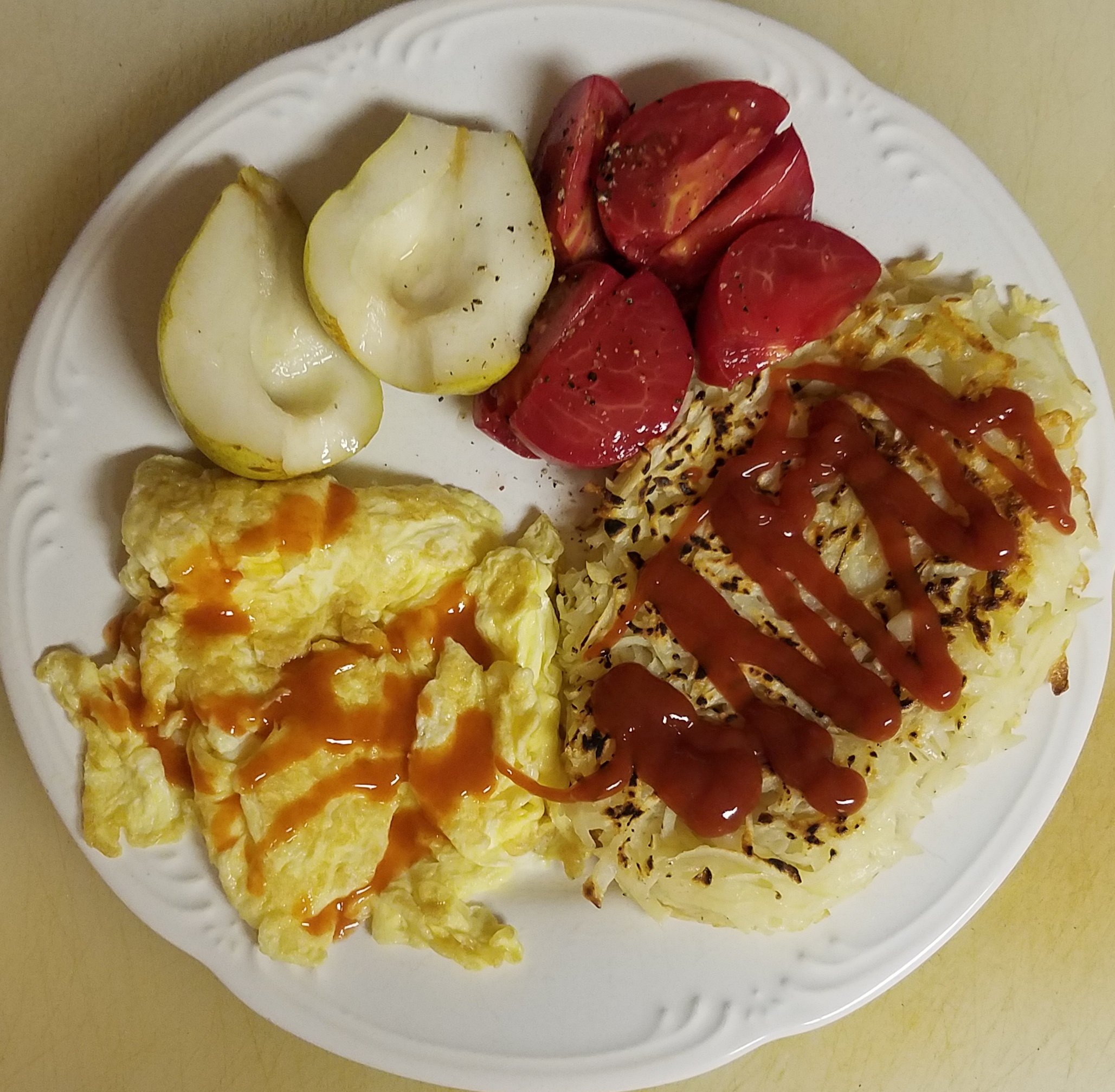
Breakfast made for guests and for myself once in a while.

If a person overnights at our home they are likely to be offered a breakfast of hash browned potatoes, scrambled eggs, and fruit in season. Add some coffee or homemade juice and it makes a fine breakfast. The meal in the photo includes tomato, a pear, and potatoes, all grown in our garden.

We haven’t had any overnight guests in a while, so I made the classic breakfast for myself. It seldom fails to satisfy and is a great beginning to a day.

Some mornings I have just toasted bread with apple butter or fruit preserves. Others, I re-heat leftover soup or make tacos. When bananas are ripening, I make a smoothie with aronia berries, kale, plant milk, protein powder and Greek yogurt. I don’t give much thought to breakfast until I’m preparing it. Patterns are well established and I know what to do.

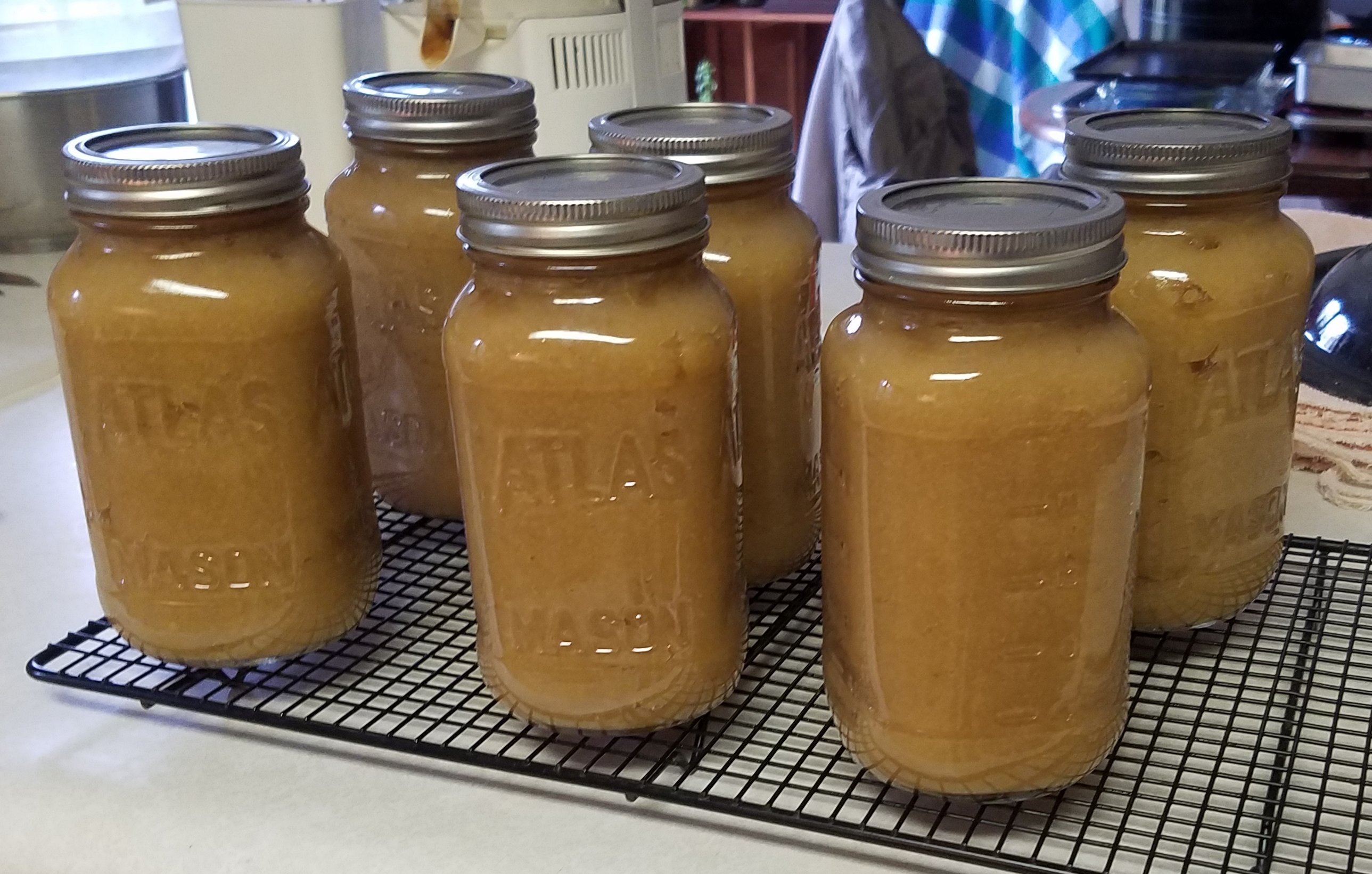
Today I worked on a care package for our child. Mainly, we went back and forth via email with ideas and requests. While that was happening, I made half a dozen jars of applesauce to include.

Applesauce made Friday, Sept. 22, 2023.

It rained off and on all day today. I managed to get in my half-hour walk along the lake shore. None of the outdoors work got done. There was plenty of indoors work to replace it.

Saturday is the first day of autumn. I’d ask where did summer go? That would be a bit ridiculous because I know where it went. It went into the garden, which produced food for the kitchen. I ate well this summer, including our home breakfasts.

Categories
Kitchen Garden

Late Summer Kale

Kale leaves from a single plant harvested Sept. 17, 2023.

Late season kale takes on a special quality when overnight temperatures get cooler or freeze. Toward autumn, I begin harvesting the whole plant and use the leaves until they are gone. Then I harvest another plant. The same goes for collards. I cut the stalk at ground level and take the plant to the composter where I sort through the leaves to pick the best for the kitchen. It’s another sign the season is turning.

Kale and collards are cold-hearty and can continue producing as late as November. The way things are going with weather, it could be until December this year. Occasionally, kale over winters.

Before joining Local Harvest CSA when we moved back to Iowa, I hardly heard about kale. I had never eaten it. When I worked on the farm beginning in 2013 I learned how to grow it. This year the bugs stayed away better than most years. Early season spraying with an insecticide containing Bacillus thuringiensis kurstaki (Btk), a naturally-occurring bacterium found in soil, suppressed green caterpillars which love kale. 2023 was a great kale year.

I freeze my allocation of kale early in the season. Once the freezer space is full, we eat it fresh from the garden or donate it to the food pantry. The plants produce so many leaves we always have plenty. Most people don’t know about kale and some don’t care for it. Our typical uses are as an ingredient in taco filling, smoothies, and in soups. We consume a lot of those menu items here in Big Grove. There are few better sources of leafy green vegetables than a kale plant. We are supposed to eat more of that than we do.

The cruciferous vegetable patch was a success this year with plenty of cauliflower and broccoli for freezing, a half dozen red and green cabbages stored in the refrigerator, and kale and collards as much as we want. It works better to keep all of those varieties together in the same plot. It helps focus the attention they need for successful growing.

Summer’s end is rapidly approaching. This morning I looked out the dining room window without my glasses and could see fuzzy stars in the clear, dark sky. There was an impulse to get my glasses from the bedroom, yet I resisted and stood there trying to take it all in before summer slips away. The progress of the kale patch is one more marker of summer’s end.

Categories
Kitchen Garden Writing

Apple Rush

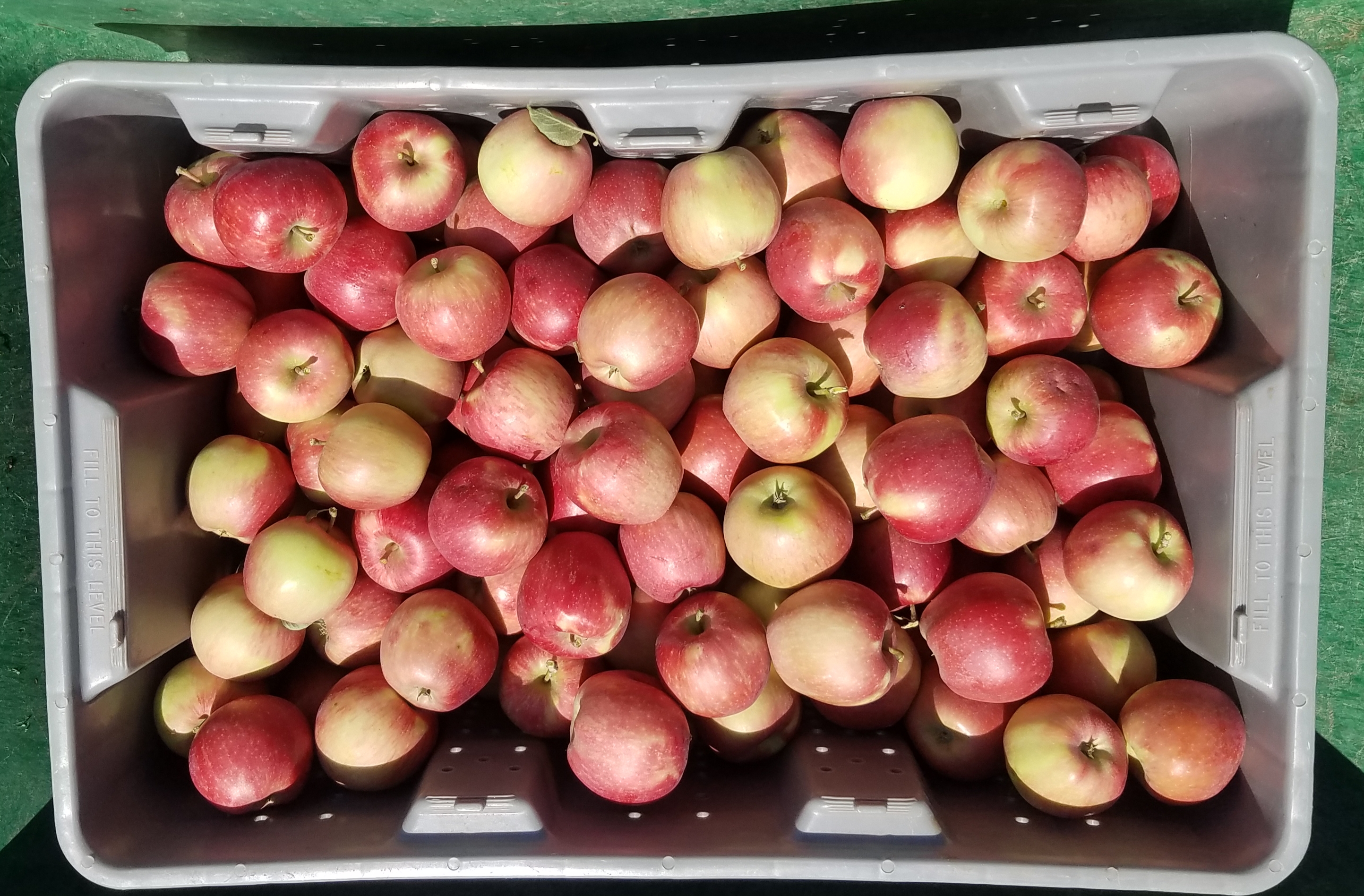
Apple time 2023. Red Delicious.

My focus in the garden turned to apples. By weight, it is the biggest crop I grow. Doing something useful with them drives me to spend much kitchen time processing them. Zestar! and Earliblaze are finished with Red Delicious remaining to close out the garden season.

Of the four varieties I grow, Red Delicious hang the longest on the tree. When they produce, there are many, many of of them. Our needs for juice, applesauce, apple butter, dried apples, and fresh eating are modest compared to the quantity on the tree. I’m already looking for placement of most of them in a Community Supported Agriculture project.

Tomatoes are finishing and it has been a good season. Because of spring trouble getting seedlings to take, there weren’t as many, or as many different varieties, as I had hoped. The difference this year compared to last is that we used most garden tomatoes in our kitchen instead of giving them away. Tomatoes are a brief delight of summer. Once ours are gone, I expect to buy very few tomatoes at the grocer.

I took down the portable greenhouse and noticed a problem with the zipper at the access point. I don’t know if it will be usable next year but I folded it up and put away the frame. Replacing it will be a spring decision, although I likely will. The portable greenhouses are good for a couple of seasons.

I need to figure out fall garden plot preparation. Where will the burn pile be? Where will the garlic go next month? Where will tomatoes go next year?

The burn pile is important because I move it around to deposit minerals throughout the garden. Because we are in a drought I won’t actually burn anything until rain comes. There needs to be plenty of space to pile it high while we wait.

I plan to plant 100 garlic seeds and it will likely be in the plot where the garden composter currently lives. The pallets used to make the composter are getting old and deteriorated. I will likely move the composter to the west side of the garden. I hang my Practical Farmers of Iowa sign on it, so on that side, it may be more visible from the street.

Finally, there are tomatoes, likely the most important crop I grow. This year, deer were able to jump the fence and eat many small tomato plants. Next year I plan to return to a crowding method of tomato planting. By giving deer no place to land inside the fence, they can’t jump in, and the plants grow better. The issue is it crowds me as well. I liked having four-foot rows between the tomatoes this year. It made it easier for me to get among the plants to weed and harvest. It made it easier for the deer as well. I may have enough fencing to install eight-foot tall chicken wire around them next year. This may be the compromise I choose to keep four foot rows. Which plot will tomatoes go? I’m not sure yet, although I favor following the garlic.

As home life turns to apple processing, I enjoy the sense of closure it brings. In years when there are few apples, gardening doesn’t seem the same. In the coming days I’ll embrace the apple rush. Who knows how many more there will be?

Categories
Kitchen Garden

End of the Earliblaze Apples

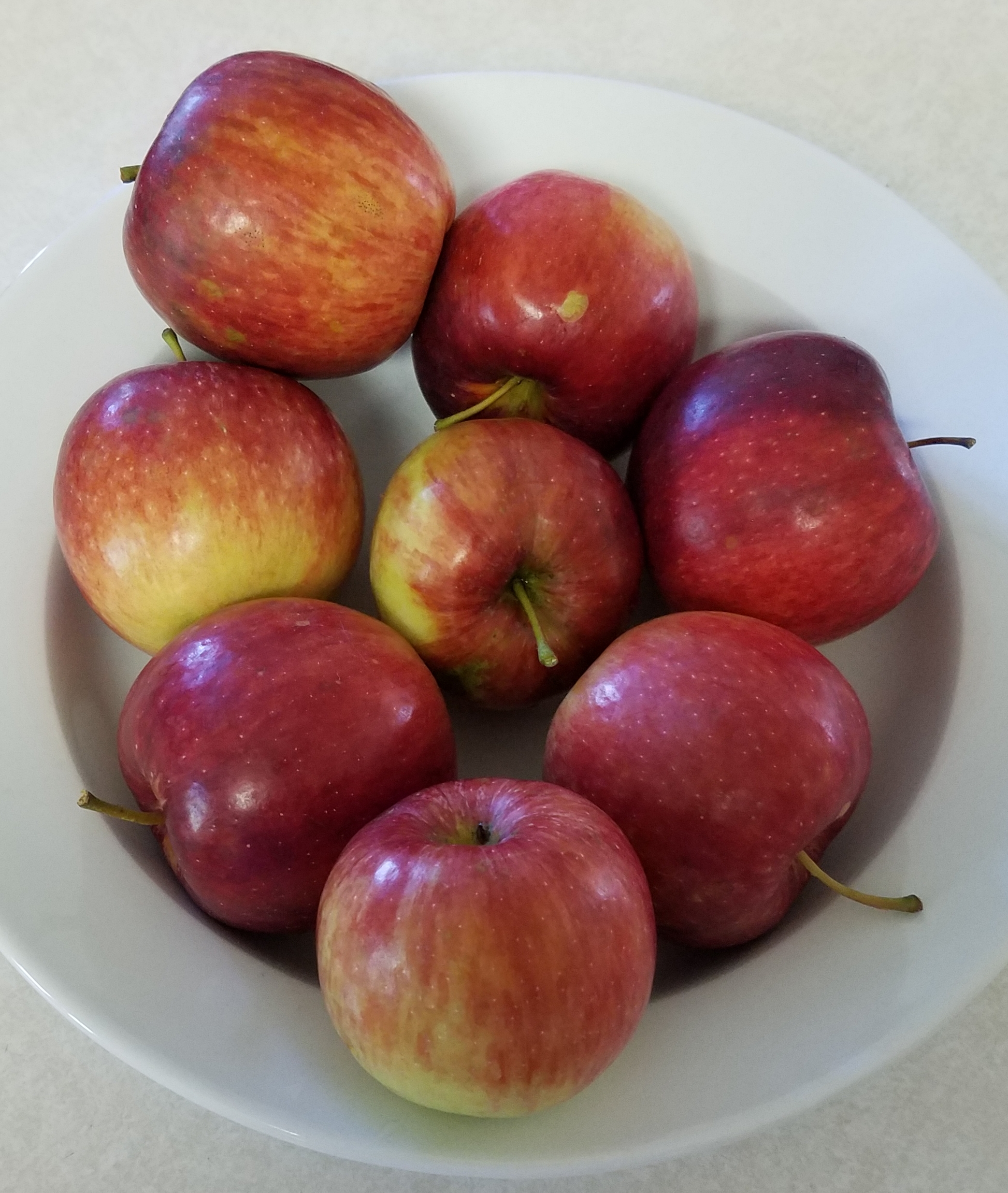
Bowl of Earliblaze apples

I finished what I’m doing with Earliblaze apples this year. The trees produced so much fruit I could not keep up. There will be plenty for wildlife to eat well into winter.

Besides eating them fresh, I made apple cider vinegar and applesauce for storage. I have a backlog of apple butter and dried apples, so none of that this year.

There is a brief break in apple processing while I wait for Red Delicious to ripen, maybe a week or two. After they do ripen, it will be a mad rush to the end.

When I planted six trees at home I didn’t know much about growing apples. I knew I wanted apple trees, in part because of family stories of my Virginia ancestors. I picked varieties that would space out the harvest. That’s about it. There were four varieties planted in 1994 and two remain. My learning about growing apples came mostly from working for seven seasons as a mapper (person who directs guests) at Wilson’s Orchard beginning in 2013. It was an unexpected job, but one for which I am thankful.

Paul Rasch and Sara Goering bought Wilson’s Orchard in 2009. Chug Wilson had planted more than 100 varieties of apples before he sold to them. During my tenure I learned about many of them. I would come in well before my shift and wander through the part of the orchard where trees were planted to test how they did.

What I value most about working there is countless conversations I had with Paul about apple culture. If I had a question, he had an answer. I would bring in photos of my home orchard for his advice. We talked about everything apples. Learning with an experienced apple grower was a perquisite of the job. It was great!

Years like this one I’m on my own for apples. My trees produced so many I don’t need outside apples. What I’m saying is I’m now an irregular customer of Paul and Sara’s orchard. I buy a couple of half-gallons of sweet cider in season, and if they have Gold Rush apples, I’ll get some for storage. For now, I have all the Earliblaze apples we can eat.