Categories
Writing

Working People Dream of Local Food

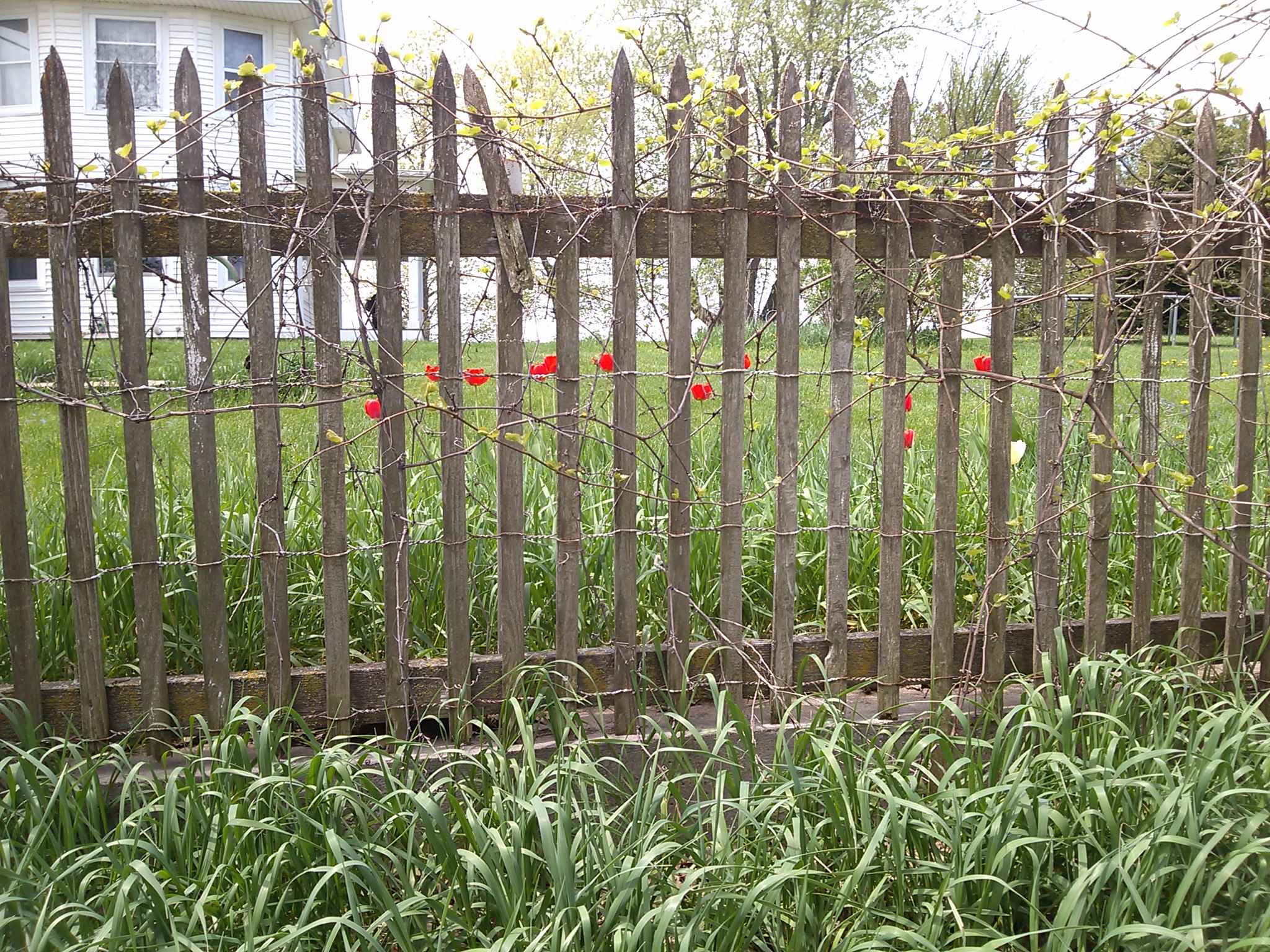
Tulips on the Fenceline
Tulips on the Fence Line

LAKE MACBRIDE— Preoccupation with mixed greens can be a good thing when working in a warehouse. The repetitive tasks, and long periods without human engagement create an open mind that will fill with worry if one lets it. Yesterday I got two bags of mixed greens from the CSA, and spent the second shift thinking about making a frittata made from local ingredients.

A couple of notes:

There is an abundance of Iowa artisan cheese. The trouble is the expense is more than a working person can afford on a daily basis. After trying many kinds of cheese, we settled on Cabot Extra Sharp Cheddar (yellow and white) which retails at less than $4.50 per pound. Not really local, but affordable, made with vegetable rennet and what one expects a sharp cheddar cheese to taste like.

Vidalia onions are in season, and were addressed here.

Mixed Greens Frittata
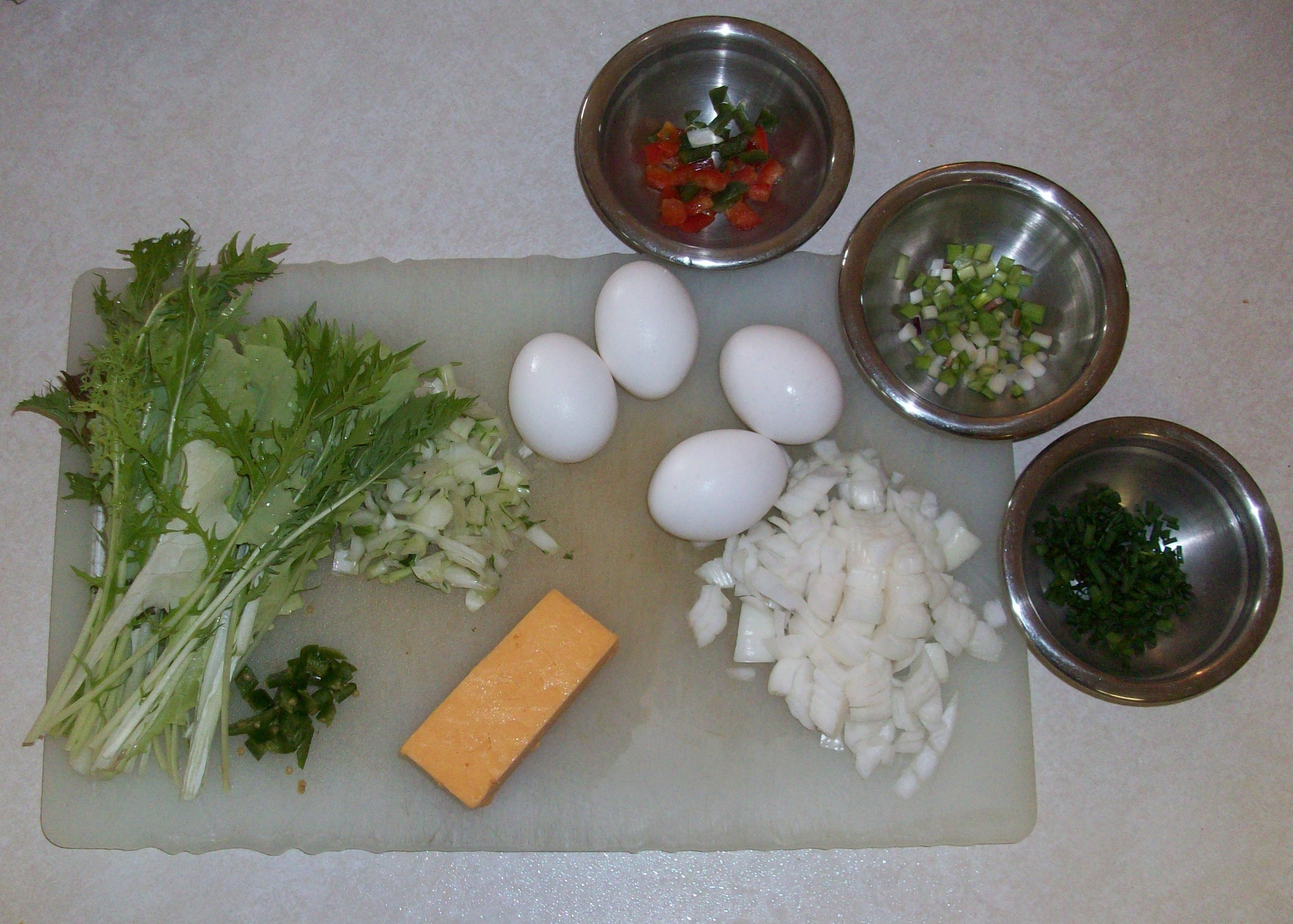
Frittata Ingredients

Making frittata is somewhat flexible. Part of my workingman’s dream of local food included the ingredients in our pantry: the mixed greens mentioned, half a Vidalia onion, sharp cheddar cheese, a Jalapeno pepper from last year’s garden and Farmer Kate’s bell pepper – both from the freezer, chopped stems of local Bok Choy, spring garlic and chives picked this morning in my garden, and four eggs – locally, but mass produced. Enough extra virgin olive oil to coat the frying pan.

One can see from the photo how the vegetables were prepared. The stems of the greens were cut into small bits and reserved. The remaining mixed greens were roughly chopped. Here is how:

Heat a non-stick frying pan on high heat. Coat the bottom with extra virgin olive oil and when the oil heats, add diced onions. Season with salt and pepper to taste. Cook the onions for a couple of minutes and add in the following order: bell and Jalapeno peppers, Bok Choy stems, chopped mixed greens stems, and spring garlic. Cook until the onions are translucent. Add the chopped greens and stir constantly until the leaves wilt. Don’t overly cook the greens.

Finished Frittata
Finished Frittata

Whisk four whole eggs in a bowl, and pour over the cooked vegetables to cover. Turn the heat to medium low and cover the frying pan with a lid. Cook about six minutes, or until the eggs are cooked through. Sprinkle a half cup of grated cheddar cheese on top, turn off the heat and cover with the lid. When the cheese is melted, transfer to a serving plate and garnish with fresh chives.

Serve with a slice of your favorite bread, a piece of fruit, and a cup of coffee for a working person’s breakfast.
Categories
Kitchen Garden

First Seedling Planting Day

Protected Seedlings, We Hope
Protected Seedlings, We Hope.

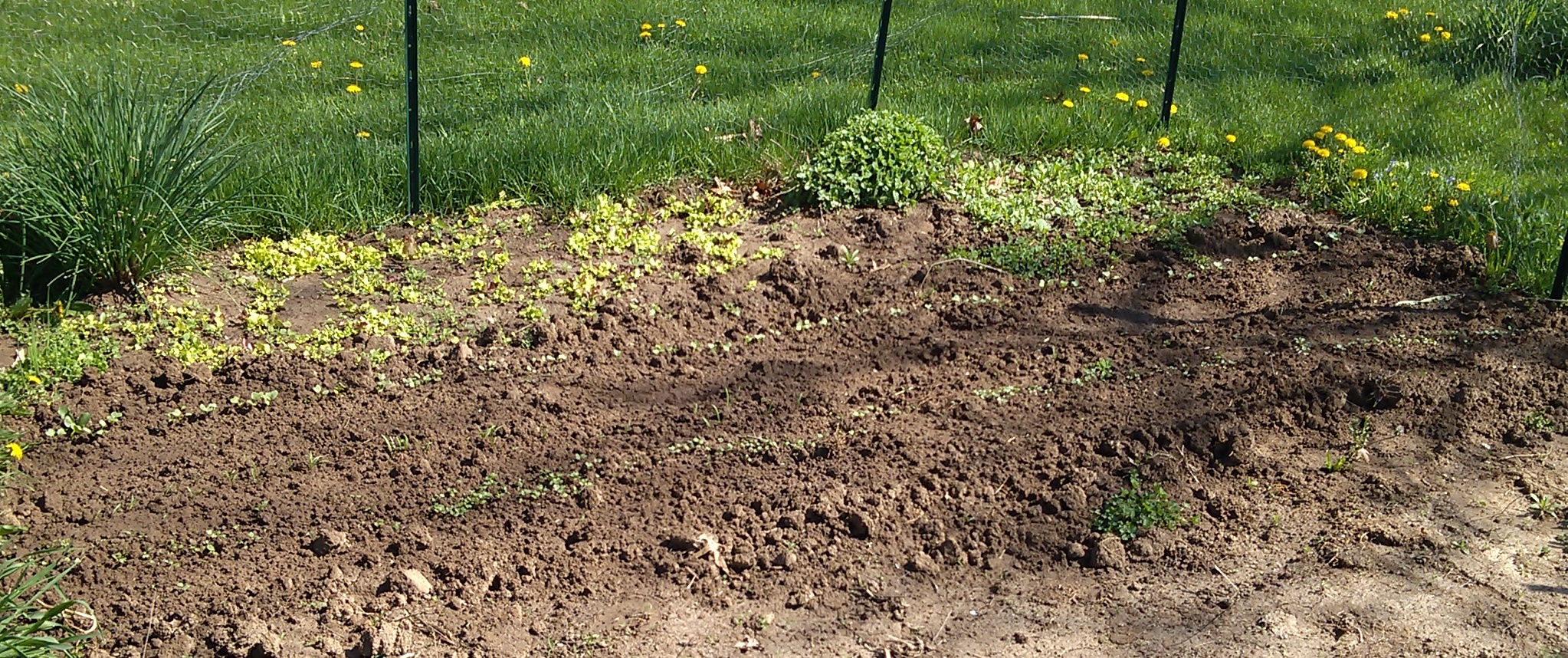
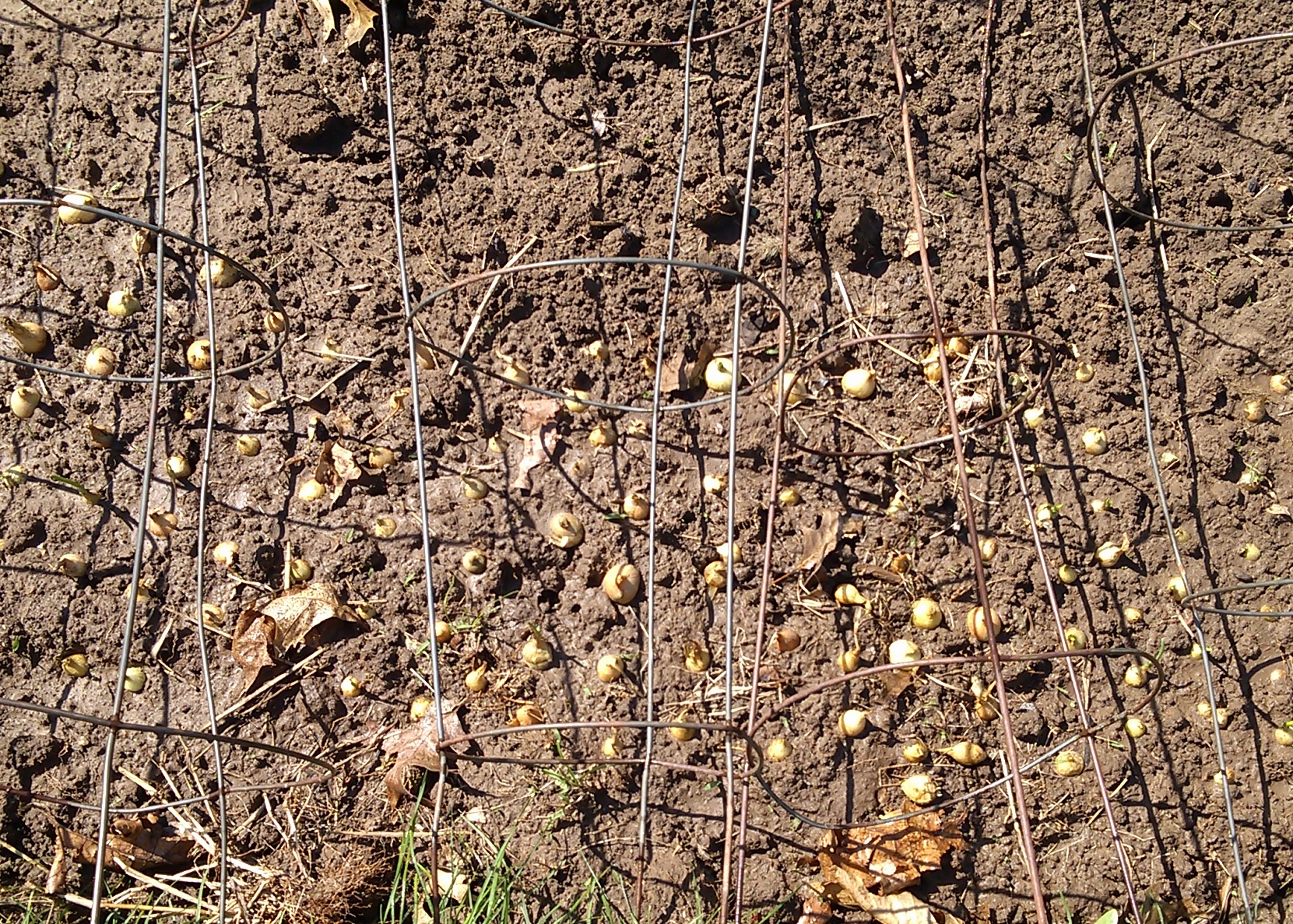
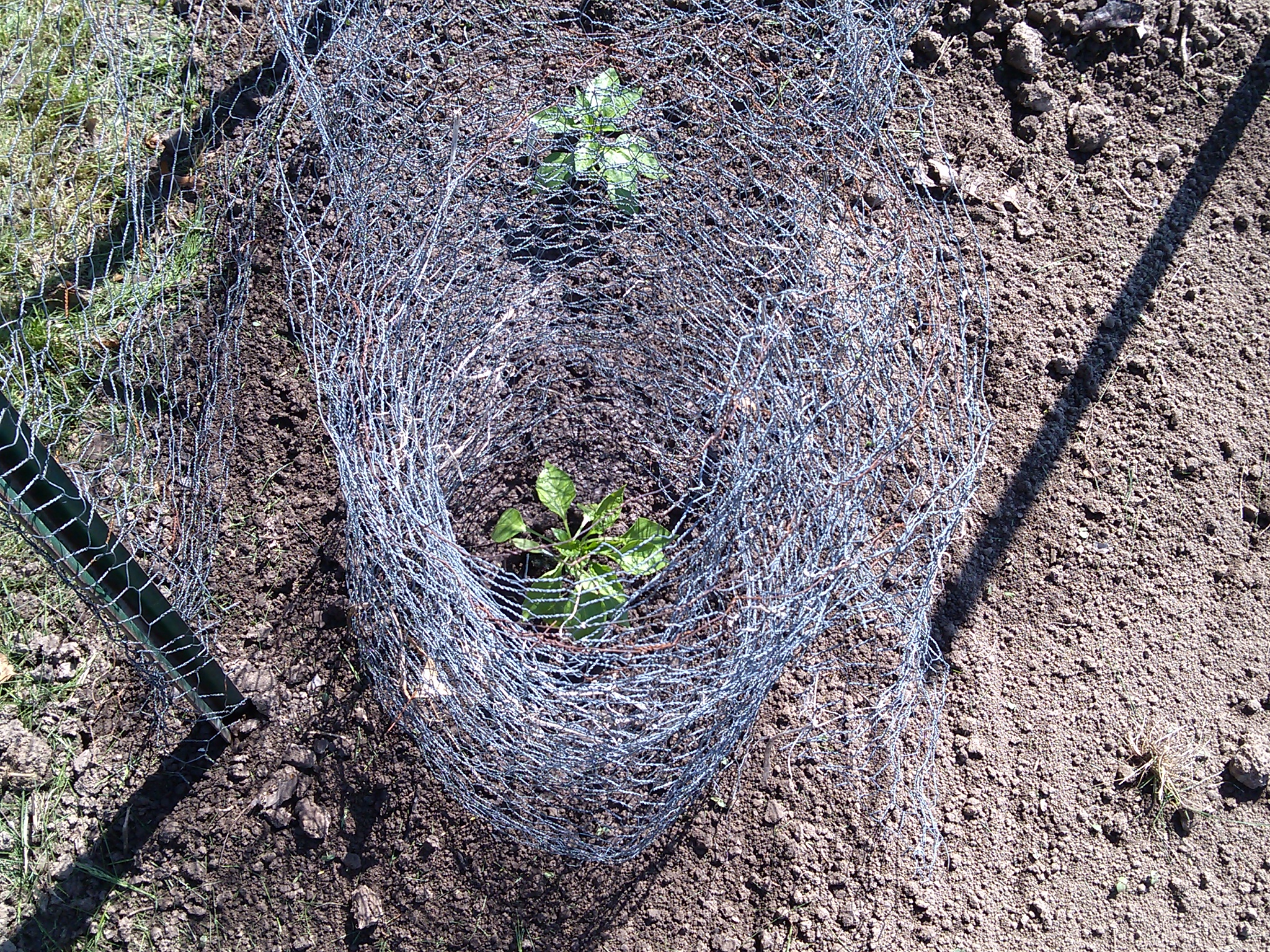
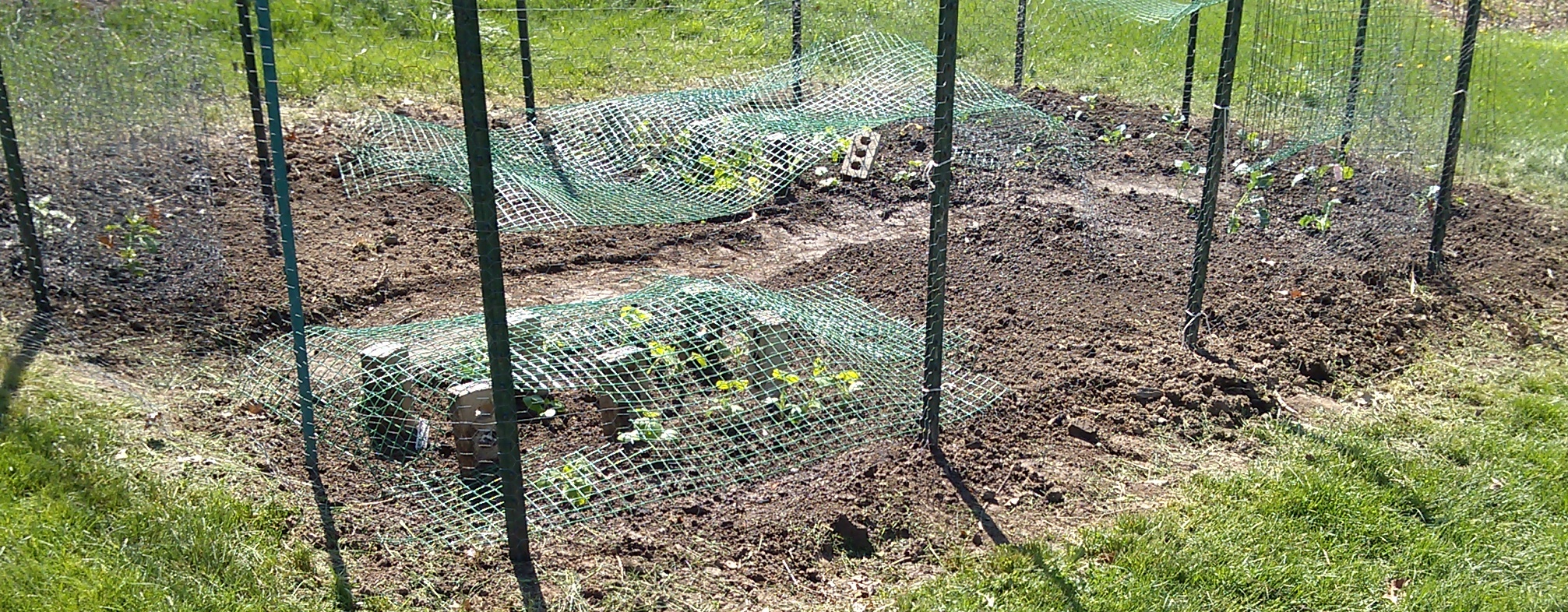
LAKE MACBRIDE— Our garden is on a deer path. They have likely been using it much longer than we, so when I put out new garden seedlings, they are protected as best as possible with existing fences, cages and stakes. Today, yellow squash and zucchini seedlings went in the garden in three by three foot sections. I placed them apart from each other so there would be less cross pollination. I also tended to the onions, which are rooting well, and planted Brussels sprouts, broccoli and Anaheim peppers. Here are some photos of the garden today:

Ready for Bees
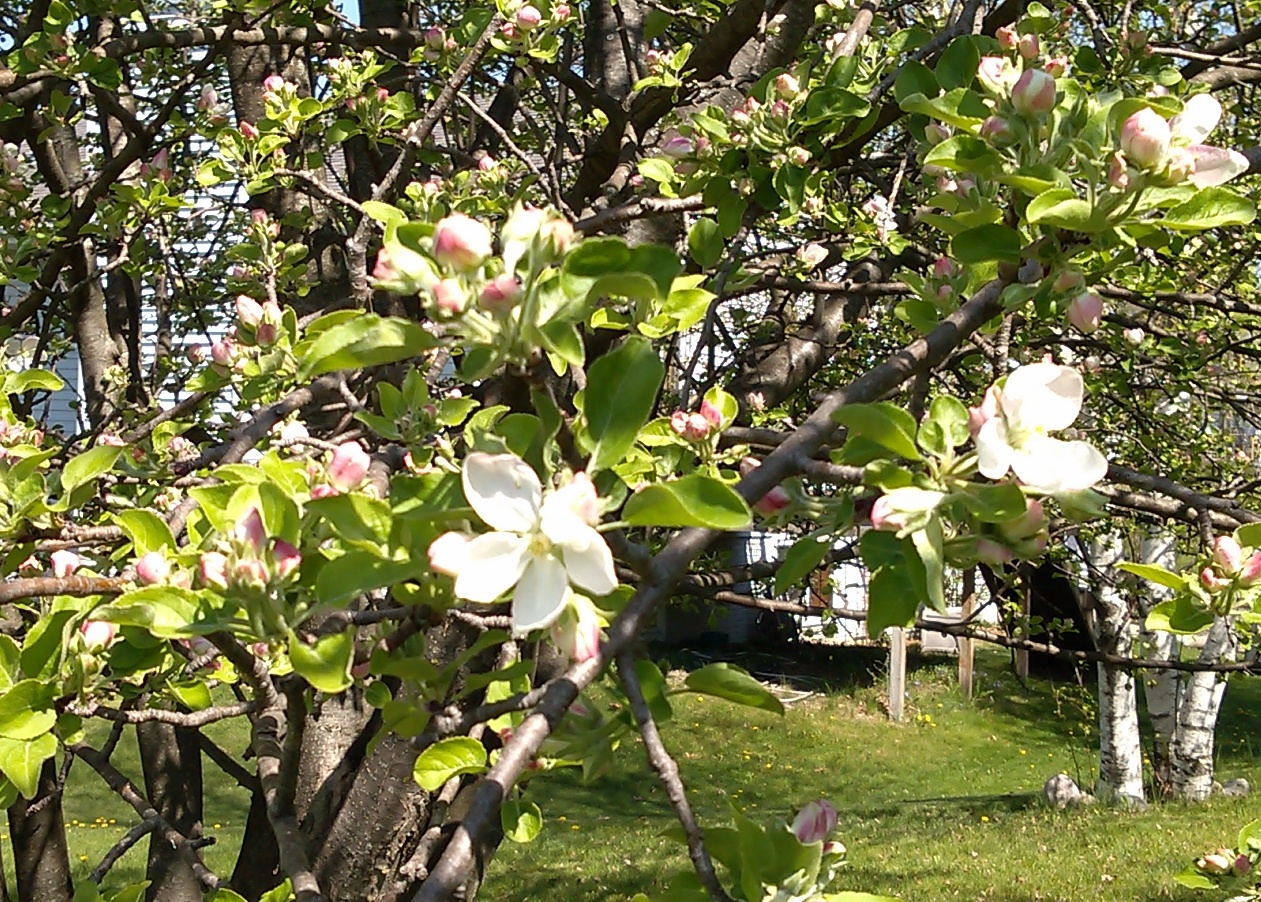
Apple Blossoms Ready for Bees
Spring Plot
Spring Plot
Spring Onions
Spring Onions
Anaheim Peppers in a Roll of Chicken WIre
Anaheim Peppers in a Roll of Chicken Wire
Categories
Writing

Preparing Bok Choy in a Home Kitchen

LAKE MACBRIDE— Yesterday, I brought home a bag of Bok Choy from the farm. It is fresh, in season, grown locally, and the makings of a dish to be served as part of a meal.

I asked a long time chef and caterer how he would prepare Bok Choy. He said he would steam it, and serve with seafood or pork. Seafood and pork don’t work well in the Midwestern semi-vegetarian kitchen, so I pursued another option, which was to use it in a stir fried vegetable dish. The meal idea was to use the stir fry mixture as the serving base for a home made veggie burger. A quick lunch for a working man.

A couple of notes.

If there is hope for a local food movement, it lies inside thousands of home kitchens, where cooks prepare meals for themselves and their families. A home cook’s kitchen has ingredients from all over, providing an individual and local context for ingredients. For example, there are Vidalia onions in my kitchen today. They were grown in Georgia, so not local, but in season.

In the freezer is a large zip top bag of sliced bell peppers. I bought a large quantity of seconds from a local grower last year, cut away the bad parts, and sliced them into long thin pieces. I froze them on a cookie sheet and bagged them to use later for stir fry.

Preparing Bok Choy Stir Fry

Depending upon how the Bok Choy comes (mine were still attached to the stalk of a plant), separate and pick through the leaves and wash them in a bowl of ice cold water. Drain, and if you have one, dry in a salad spinner. Otherwise, towel dry. Cut the thick part of the stem below the leaf and reserve. The stems are good to eat, and take a little longer to cook than the leaves.

Dice one half a large Vidalia onion, medium dice. Prepare the equivalent of one half of a bell pepper in long strips (or use bagged, frozen ones prepared as above).  Here we go:

Heat a wok or large skillet over high heat. When the pan is hot, coat the bottom with extra virgin olive oil. Add the diced onion, stirring constantly. Season with salt and black pepper to taste. Add the bell pepper and Bok Choy stems and stir constantly. When the vegetables are tender, add the leaves and stir constantly until they are wilted. Serve on a plate or bowl, with your favorite veggie burger and condiment on top.

Categories
Kitchen Garden

Mid-week at the Farm

Soil Blocks
Soil Blocks

RURAL CEDAR TOWNSHIP— Time at the farm represents mid-week for me. I have come to appreciate the weekend more, and finishing my farm work means only two more days until the weekend. The feeling is enjoyable.

My take-away from the farm was a feeling of contributing to something bigger than myself, and large bags of Bok Choy and lettuce for our home kitchen.

Things are moving in and out of the greenhouse at a rapid clip. Developed lettuce is planted in the hoop house, and a number of sturdy seedlings are already in the field. Each week we plant more in order to provide a steady flow of vegetables to CSA share holders. I have planted more types of lettuce than I knew existed.

The walk-in cooler is running, and filled with baskets and coolers with vegetables for this week’s share. Combine all this and a sense of purpose, with a clear, beautiful day, and how much better could life get?

Categories
Kitchen Garden

Time for Garden Planting

Hardening the Seedlings

When the Iowa City Farmers Market opened last year, I offered spring garlic, lettuce and radishes. This year, the cold, wet spring retarded progress in the garden. It has been a season without early produce while adapting to the climate reality.

The only question inhibiting garden planting is when will the last frost come? According to the 30-day forecast, we have had the last frost. If things turn cold, there is a box of old sheets that can be spread over the plants in the garden. It’s time to turn to planting.

The plan for my garden is sketchy at best. A gardener plays a balancing act between planning and doing. Whimsy and experimentation enter into it. Sometimes we do dumb things, and sometimes we reach for brilliance. A gardener’s process isn’t always logical, but it is hard to fail.

A home gardener can rely on the grocery store, and other growers, should something fail to produce. It is a food safety net we take for granted and it makes garden planning an expression of personality more than anything else.

Food is abundant and relatively inexpensive in Iowa. What matters more is the interconnectedness we have with other growers, large scale and small. Such relationships are the true fabric of our food system, and provide comfort and security.

One can accept that Florida, Texas, Mexico and California will continue to provide produce for the Midwest. However, when the quality and quantity of locally grown foods puts price pressure on out of state commodities, local food may gain more traction.

Planting a home garden is an important step in the local food direction.

~Written for Iowa City Patch

Categories
Kitchen Garden

Garden Prep Day

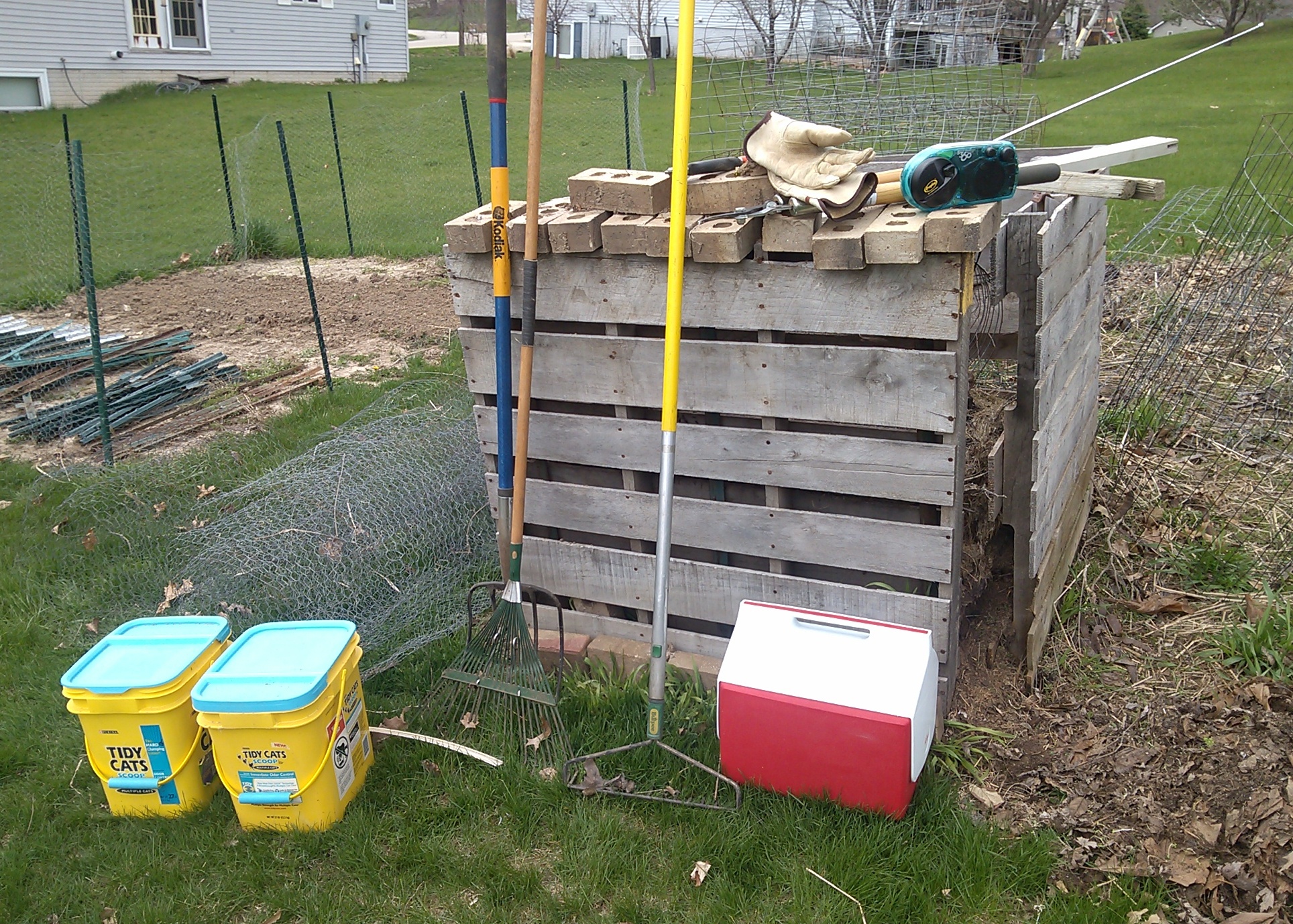
Garden Tools
Garden Tools

LAKE MACBRIDE— The schedule for the rototiller changed from next weekend to this shortly after writing yesterday’s post. No panic or complaints, I just got to work as soon as I found out.

First things first, a cooler full of drinks: three mason jars filled with filtered water, on ice. A solar powered radio set on the compost pile to listen to the Metropolitan Opera on public radio: a series of arias was featured yesterday. A ball cap and a pair of leather gloves completed the pre-work inventory.

The cold, wet spring delayed clearing the brush, so that had to be done first. Broken limbs and branches from the trees and lilac bushes were cut, collected and added to the brush pile. Next, I cleared last year’s growth from the remaining garden plots and piled that on. A light breeze was evident, light enough to determine it was okay to burn the brush. I did, exposing the third of three plots targeted for the dig.

When we moved to Big Grove, built our home, and established a garden, the lot was vacant, filled with a semblance of the tall grasses that once were here. The first shovel full of earth revealed the developer’s practice of skimming the topsoil and removing it. Heavy clay and hardly an earthworm was to be found below the grasses. Almost twenty years of working the soil changed all that. It is now filled with earthworms and the multitude of living things that make soil fertile.

With my long handled spade, I turned the plots slowly and methodically. The act of spading the soil connects to the memories of doing so each year. A gardener lives for this common thread to the roots of our humanity. Halfway through, my right hand started to cramp and I took a break to make dinner reservations and check in on my smart phone. When I returned, a couple of birds had landed to dine on the earthworms revealed by the digging. In all, it took three and a half hours to turn the garden plots. The rototiller arrived just as I was finishing.

The ashes from the burn pile and two buckets of corn gluten meal served to fertilize this year. I raked the ashes to spread them around the plot where the burn was, and cast the corn gluten meal over all three plots. The distribution was not as even as in the anhydrous ammonia application that was going on in a field about half a mile from here, but was more ecologically friendly.

The rototiller was an old Sears model with widely spaced tines. A neighbor had borrowed and shared it. I fired up the engine, gripped the handles, and allowed the machine to do its work. It became clear it would be the best tilling yet done in my garden. The soil was aerated, and light, and one could sense that living things would grow there. After cleaning the tiller, another neighbor came to pick it up. I raked the furrows level and cleaned up the workspace. My bird friends returned to finish their meal.

The day’s work produced three blank canvasses upon which to plant more of this season’s promise.

Categories
Kitchen Garden

My Vegetable Life

Dandelion Greens
Dandelion Greens

LAKE MACBRIDE— For the first time in a few days, the concrete driveway was dry when the sun came up this morning. Temperatures are in the mid-30s presently, with a forecast of snow and/or rain, and a high of 43 degrees today. No planting in the garden for now.

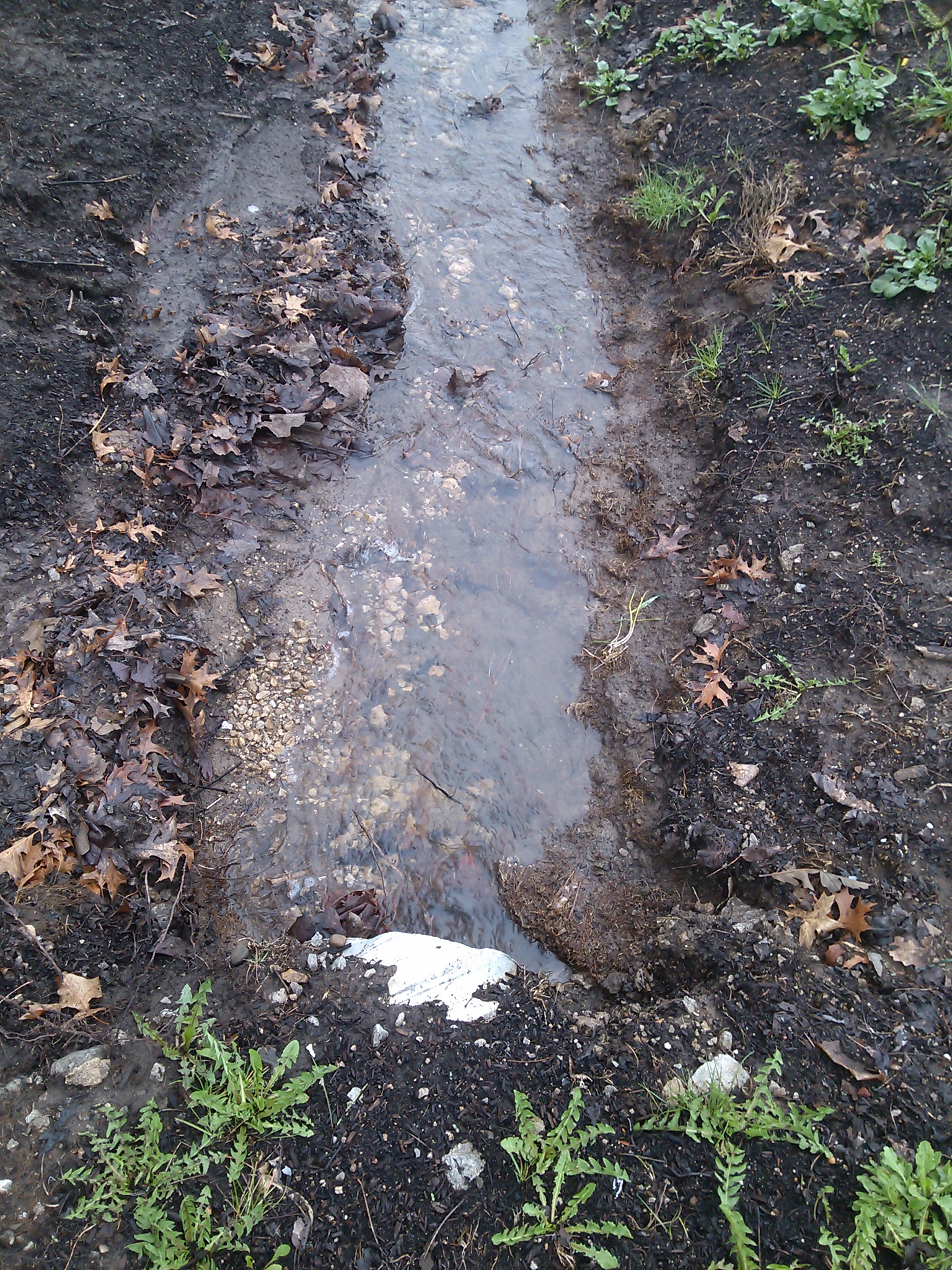
I failed to notice the dandelion greens while shooting the photo of the culvert at the end of our driveway. They are at a stage ready for salads and cooking. The wreck that was the contractor ditch work last fall yielded something positive, at least in a culinary way. When the rain abates, I’ll repair the ditch damage, but today will be harvesting the greens. There is a yellow squash from the grocery store in the kitchen, so maybe a side dish of squash sauteed in olive oil, with onions and dandelion greens. Mmm.

My work at the CSA earns me a share of the vegetable harvest, so we should have enough vegetables to use fresh once the shares start coming in. Likewise, my relationships with other growers, combined with our home garden should yield enough to put up some items for winter. I have been avoiding this planning of the garden for too long.

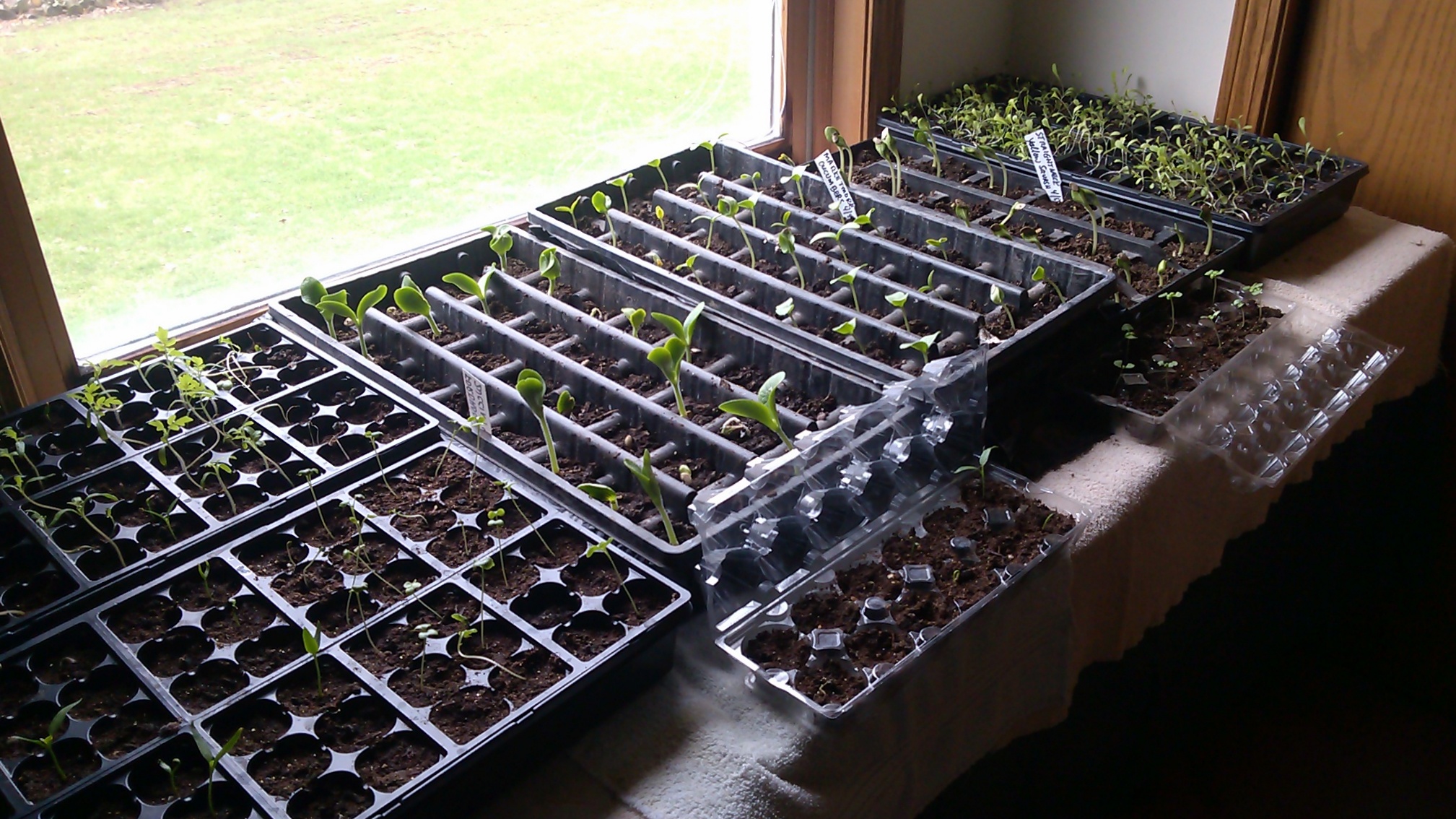
Garden Seedlings
Garden Seedlings

Immersion in the local food producing culture means my focus in the home garden can be on a smaller number of vegetables. Items like kohlrabi, cabbage, potatoes, sweet corn and fresh tomatoes can be outsourced to others who will provide them in abundance as part of the normal process. My space can be used for items that more closely integrate into our garden kitchen, which serves two purposes, cooking fresh and local ingredients, and putting up vegetables as specialty items for off-season.

In practical terms, this means an expanded herb garden, more leafy greens, different kinds of tomatoes (the CSA will provide heirloom and Roma), and more onions, turnips, broccoli, bell peppers, cucumbers and squash. I will also plant some different kinds of hot peppers. The intention is to use all of this fresh, with some of the spinach leaves frozen whole, and any excess either given away or sold at a farmers market.

On my canning repertory is: vegetarian soup stock (using turnip greens, and the green parts of leeks if I have them), various tomato products (diced, juice, sauce), an annual garden ends salsa (sweet and savory types), sauerkraut, pickled hot peppers, apples (sauce, butter, juice), and some other items. Notably absent is pickles, and I have not found a recipe we like. Whatever I grow in my garden plots will also support the canning effort.

Under overcast skies, there are greens to harvest, and much more planning to get done before spring bursts on the scene— which should be soon (we hope).

Categories
Kitchen Garden Writing

Thunderstorm at the Farm

RURAL CEDAR TOWNSHIP— It was raining on me while I was unloading large bags of soil mix near the greenhouse when the phone in my back pocket rang. They were calling from the house to tell me that with all of the thunder and lightning, it wasn’t safe for me to be working outside. I should come to the house.

The severe weather warning on the country music radio station reported hail and rain to be worst in Kalona, Frytown, Washington and the southwest corner of Johnson County. It was heading our way. I figured we would be safe in the greenhouse, but unloaded the rest of the bags, parked my car and headed inside with to wait out the storm with the rest of the crew.

In the country, a thunderstorm can be perceived as a massive formation of clouds stretching from horizon to horizon, covering us like a large bowl. It is a perspective one can’t get within in a large cluster of homes, or in town. A sense that the storm has its own integrity, producing rain, lightning and thunder— a dominant force of nature— a commanding presence that covers us. One shouldn’t argue with that, however much confidence we have in our own endurance. There was fresh coffee and apple pie inside— and conversation. We re-scheduled the crew for tomorrow.

It was a gully washer. When we built our home, the construction project leader, who was a retired farmer, cut a number of swales in the slope around our house with a 1949 Ford tractor. When it really rains, we can see Lyle’s handiwork all around us, as the swales fill with water and our basement stays dry. The rain flows around us to the ditch and lake below us.

The rain continued into the early afternoon. The ground needs the moisture, and we need protection from the lightning. It would be better if the planting was done, but that is not how this growing season is unfolding.

Categories
Writing

Bottling Apple Cider Vinegar

Apple Cider Vinegar
Apple Cider Vinegar

LAKE MACBRIDE— The aroma of evaporating apple cider filled the pantry for months. Today it was time for the sampling and the apple cider vinegar came out delicious. A renewable ingredient for our kitchen was born today.

Unlike anything I have tasted before, with an initial taste of apple followed by the twang of the vinegar, I’ll look forward to using it in salad dressings— bottle-by-bottle. If there is enough, the golden liquid will also be used to make apple butter during the harvest season.

When we talk about local food, this is it. The mother of vinegar came from a neighbor who said it has been in their family for more than a hundred years. The apples came from the back yard. Renewing the recipe is easy— just add more fresh apple juice to what’s left in the container.

Sometimes things work out better than we had planned.

Categories
Kitchen Garden

Watching and Waiting to Plant

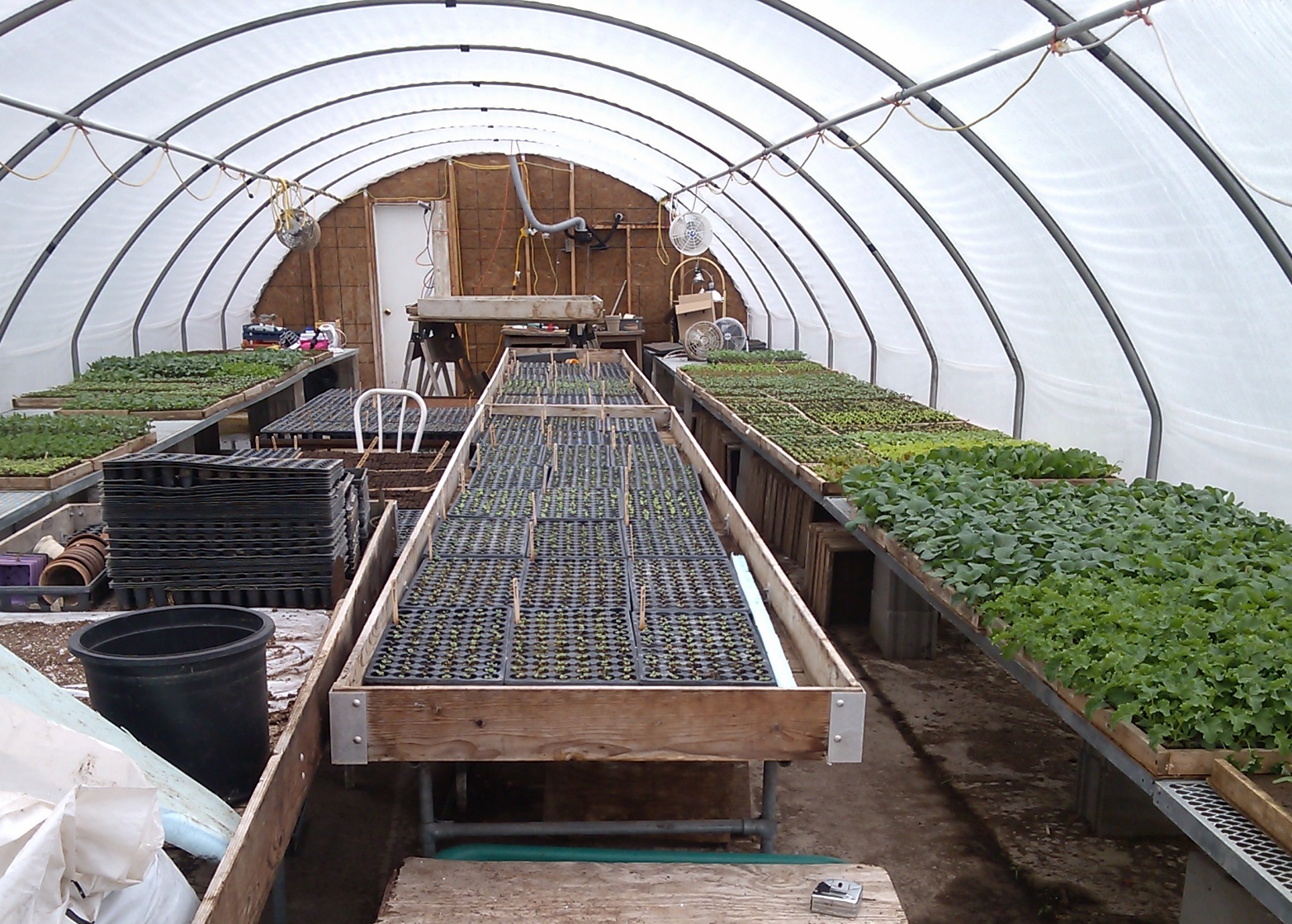
Greenhouse FillingRURAL CEDAR TOWNSHIP— Three of us were working in the greenhouse this week, and the weather forecast was for more cold weather. The season is running late, late enough that when compared to recent years, it is difficult to distinguish it as a season rather than another series of random freaky weather days. Said one grower, “we can deal with drought with irrigation, but cold weather is something else.” There is always a different worry for a farmer.

A few early items, spinach and lettuce, are in the ground, but most of the action continues to be growth in the greenhouse, and hoop house. It is early in the season, getting on later.

029The ground thawed in our garden, but because of the rain, it is too wet to plant. When conditions ease, there will be a lot of work to get the soil prepared and planted. For now, we work inside and wait.

One can’t help but be excited about the abundance of new growth, even if we had a hand in planting the seeds and nurturing them in the artificial world of the greenhouse.