Categories
Kitchen Garden

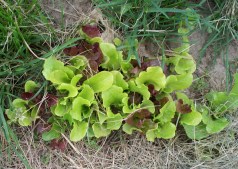
Turnip Leaves and Lettuce

Field Tile Protecting Celery Plants

I got naked as I get in the yard on World Naked Gardening Day.

Suffice it that under my Carhartt overalls, Oracle T-shirt, Dickies socks, Calvin Klein underwear, University Square Industries cap, Rugged Wear ventilated gloves and government-issued army boots my nakedness kept its own sensible and properly hidden vigil.

I worked our small plot of land the whole day. By the end of the shift I was drained with no energy left to drive 30 minutes each way to a political event in Coralville.

Onions Between the Composter and Daylillies
Onions Between the Compost and Daylillies

Contrary to the advertisements, I don’t think “nature” intended anything regarding humans wearing clothing to garden. In fact, there is not much “natural” about gardening. We have specific intent as to what will happen in each plot we plant. We cultivate things the same way we do with any aspect of human culture. “Gardening” is a human creation. The idea of taking off clothing to weed thistles borders masochism. The idea of turning soil with a spade and without shoes would be nutty.

Row of Peas
Row of Peas

A lot of gardening got done despite the clothing.

Except for driving my car from the garage to an impromptu parking spot on the lawn, and collecting grass clippings for the garden, my direct use of internal combustion engines yesterday was minimal.

I worry a bit about the nuclear reactor generated electricity stored in the batteries for my trimmer, but other than that, it was a low impact day.

The lettuce planted March 2 is ready to harvest. Too closely planted turnip seeds are producing leaves an inch long. They are tender and require thinning if I want any turnip roots from the row. There are some carrots in my sunken containers, but not as many germinated as expected. There is plenty of lettuce for salads and tacos, and the prospect of turnip greens both for salads and a batch of soup stock. Those things are going well in the garden.
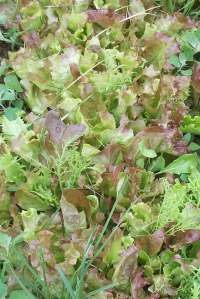
Belgian Lettuce
Belgian Lettuce

What’s going less well is the spring garlic. After producing in abundance for many years, this year’s crop will be less. I’m not sure why. Too, the extra warm weather is slowing growth of radishes. Hopefully the first row will mature in the next week or so. Both of these crops will be donated for charity sales planned for next weekend — that is, if they produce by then.

Thinking horizontally, and having great hope, I planted broccoli in two rows. Last year brassica oleracea cultivar didn’t produce, despite many efforts to protect the plants. Using a batch of old tomato cages as support, I buried chicken wire about an inch deep in the soil around each seedling. The cages are tall enough to keep deer away while the plants are young, and hopefully the rodents and rabbits won’t find their way through the chicken wire. Once the plants take off, I’ll high-fence the rows. Fingers crossed, since home-grown broccoli is the best and we missed out on it last year.

It took the usual two plus hours for the spring harvest of grass clippings. I cut the lawn short, collect the clippings using the bagging attachment, and piled them up for use in the next week or so. For one of the few time during the growing season, my lawn is shorter than the neighbors — not that I’m paying attention to that. Mulch is critical to minimizing well water use, and grass clippings are free but for the labor of collecting them. Today’s plan is to spread them around.

Garden Viewed from the North

Determined to capture new images, I took some photographs before going inside for the day. Our 0.62 acre lot is not big, but there is a diversity of habitat here. The rodents are free to leave any time they wish, and I attempt symbiosis with deer who have been traveling through our lot for much longer than our home has been here. Here’s a short gallery of some favorite new photos from Saturday.
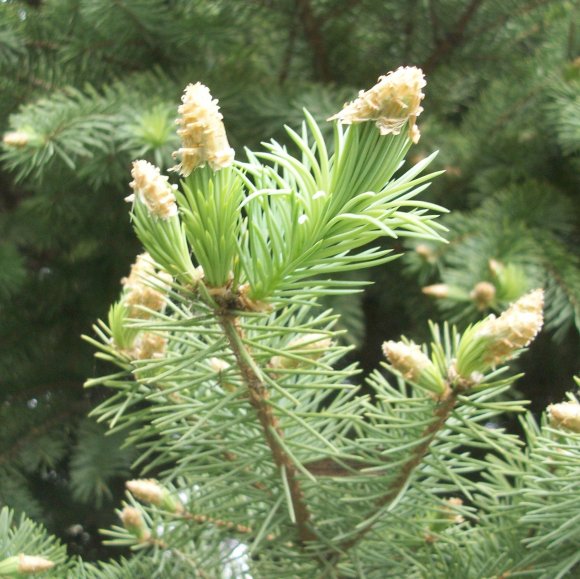
New Growth on the Blue Spruce
Bird's Next in the Golden Delicious Apple Tree Stump
Bird’s Nest in the Golden Delicious Apple Tree Stump
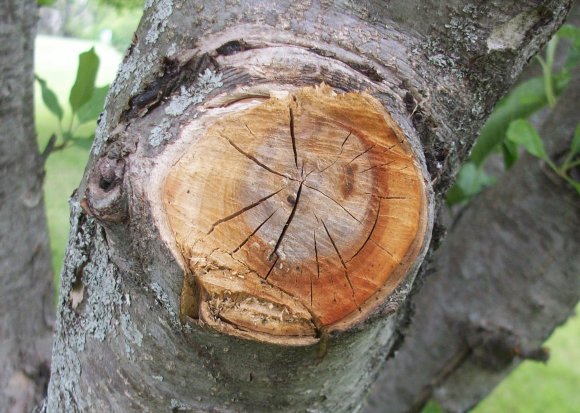
Apple Tree After Subzero Weather Pruning
Categories
Kitchen Garden

Pivot Point in the Garden

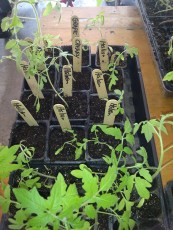
Seedlings
Seedlings

Tomorrow’s 142nd running of the Kentucky Derby serves notice the race is on to finish spring garden planting.

Planting is never completely done.

What I mean is putting seeds in the ground and moving the 10 trays of seedlings from our bedroom to the garden soil by Memorial Day.

The coming weekend will be prime time for planting.

Our warehouse club sent a notice of a fruit and vegetable recall yesterday. Here’s the scary first paragraph the company posted on their web site:

As a precaution, CRF Frozen Foods of Pasco, Washington is expanding its voluntary recall of frozen organic and traditional fruits and vegetables. We are performing this voluntary recall in cooperation with the Food and Drug Administration (FDA) and the Centers for Disease Control and Prevention (CDC) because these products have the potential to be contaminated with Listeria monocytogenes. The organism can cause serious and sometimes fatal infections in young children, frail or elderly people, and others with weakened immune systems. Although healthy individuals may suffer only short-term symptoms such as high fever, severe headache, stiffness, nausea, abdominal pain, and diarrhea, Listeria infection can cause miscarriages and stillbirths among pregnant women.

We checked all of the noted items in our freezer and there were no recalled items. The recall renewed interest in growing as much of our own food as we can and knowing the farmer on the rest. It is hard to avoid consumer products produced in large quantities, but the Listeria hysteria is a reason to minimize their use. The perfect attitude adjustment going into the garden work weekend.

There is a lot of work to do during the next three weeks. I’ve been reviewing weather forecasts since Monday and it looks like a chance of rain Saturday afternoon, but otherwise, clear.

It will be a rush of digging, raking, planting and mulching. A pivot point toward summer.

Categories
Living in Society

Politics Takes A Holiday

Political Sign at a Business

The Bernie Sanders campaign is laying off hundreds of staff members, indicating either he is planning to throw in the towel after California, or that he won’t be placing people currently on his staff in local political organizations for the fall campaign. Maybe both.

The presidential nominating party may not be over, but most of the guests have left and the hosts have begun cleaning up the mess, getting ready for a return to normalcy, which in Iowa means organizing for the June 7 primary elections where there are contested races, and the fall campaign beginning after the Labor Day weekend.

Political campaigns will work through the summer, and there is a filing period in August, but each year, regular people engage in the election cycle later and closer to the election. For folks like me, politics takes a holiday after the primary elections until the fall campaign. We have lives to live.

I’ve written about the county supervisors race which has been reduced to a series of special interest forums in Iowa City and Coralville, along with fund raisers and whatever else each campaign sees fit to do.

I missed the first forum last night. Bottom line was I couldn’t afford the $5 in gasoline and an hour of driving on a work night. Stephen Gruber-Miller covered the forum for the Iowa City Press Citizen and here’s a link to his article. They say people in the county seat can access video of the event on their local cable television channel, but the service does not include Big Grove Township.

My trouble with picking three candidates for supervisor is besides the incumbents, I don’t share a view of the county with any of them. My relationship with the county seat is tenuous at best, although I likely benefit from the economic engine that is the University of Iowa. I’ll pick one of the two business people for my third vote and see what decision the urban centers make for me. No need to decide until late in the race, early June most likely.

The other primary election that matters is for U.S. Senate and I support State Senator Rob Hogg over three other candidates.

Politicization of our lives has become a detriment to living, so the compulsion I felt toward campaigns during the George W. Bush years is in remission. I work on issues, but like with the climate crisis, they represent human values and shame on those who politicize them or frame them in the false paradigm that is conservative vs. progressive. People like billionaire Tom Steyer is who I have in mind, but it applies equally to all of the billionaire class members.

Steyer Quote

My summer will be eking out a living on the margins of society, hopefully making enough money to live on, reducing debt, and finding joy in simple pleasures. We don’t need politics for that.

Categories
Kitchen Garden

Kale in Sunlight

Kale Seedlings Sunning

Yesterday was a spring day as good as it gets. I took advantage of it and worked outside.

The kale seedlings have been slow-developing, so I put them in direct sunlight. The day’s growth was noticeable. I transplanted the scarlet variety into bigger pots to give them room to grow. They were laggards of the three varieties and best liked in my distribution network. Indoor bedroom germination has never been optimal, but a few hours in sunlight made a difference. More seedling sunning is planned today.

Yesterday’s garden work included planting three kinds of onions, basil seeds, Easter egg radishes, leaf spinach and arugula. I’m moving on to conditioning the soil for everything else.

A sign of the times, I planted the last seeds in pots: zucchini to get a head start for early May transplanting. It won’t be long before the danger of frost is past and everything can go into the ground.

Something is growing in the carrot planters, but I’m not sure it is carrots. Will wait until the leaves show what they are.

The first cut of lawn is the best. The unevenness of early growth gets smoothed over to produce a transient, semi-manicured look. There is a lot of trim work to do, with minor clean-up. The clippings fell where they may providing mulch for the expected long and dry spell. I’m first to admit I don’t care for lawn mowing. The restrictive covenants require me to do it about twice a month.

The apple trees won’t have a good year. Two of them have zero blooms and the Red Delicious has only a couple dozen. The pear tree should bear fruit based on the abundance of blooms. There were plenty of pollinators flying around, including a bumblebee trying to fly up my pants leg.

I gave some excess onion sets to a neighbor and she reciprocated with some “walking onions.” They were ready to eat, but I stuck them in the ground next to one of the composters.

There is always more to do in a garden. We are thankful for each day of clement weather and sunlight.

Categories
Environment Kitchen Garden

Warp and Weft of a Garden

Spring Lettuce
Spring Lettuce

Farming is more than putting plow to furrow. It is a multitude of experiences, evaluations and decisions made over time.

The same is true for gardeners. Each garden, each plot, has its own micro environment and climate. Not only sun and rain, but wind, topography and history play a role.

This year a friend changed rented land for her community supported agriculture project and stories about her struggles are going around the local food community. The new soil hasn’t been worked for organic vegetables, and is recovering from row cropping. I believe — everyone is confident — she will persevere through the change. Yet it will be a setback in a business that operates on thin margins and more physical labor than mechanization. It’s when the going gets tough that farmers get going.

Over the last 23 years my Big Grove garden expanded from a single plot to six, and I’m looking at adding more. That doesn’t count the five fruit trees which have been a source of produce for a number of years. Yesterday the pear tree burst out in full bloom.

I mistakenly planted a locust tree in one of the garden plots. It has grow to maturity, providing shade for two plots at the same time the frequency and severity of drought has increased. Shade serves to protect cucumbers, herbs and greens from constant, intense sunlight in the absence of precipitation. It took me a while to realize what’s going on and leverage it. Now I couldn’t imaging growing without it.

There are a hundred small things like the benefits of a locust tree that converge in the plots of my garden. When I think of retirement — more often now than previously — I can’t imaging life far from a garden and the diverse intricacies of what sustains me and enables vegetables to grow.

My garden and I are the same warp and weft of life that sustains us all.

Categories
Kitchen Garden

Heading Toward Derby Day

Photo Credit: Quad City Times

That yesterday was opening day in Major League Baseball, and day after tomorrow begins the Masters Golf Tournament in Augusta, were inescapable sports facts on social media.

Spring is about Derby Day for me. It’s a race to get the early garden work done by then so once the risk of frost is minimal the main seedling crops of tomatoes, peppers and the like can go into the ground.

Most years I have been able to take a break from gardening to watch the two-minute Kentucky Derby, taking in just enough of the pageantry to feel a bit queasy. The old saw is horse racing is the sport of kings and who wants or needs it? It’s just there.

Iowa political class member Jerry Crawford asserted last year he had two goals: delivering Iowa for Hillary Clinton and winning the Kentucky Derby. Hillary won the Feb. 1 Iowa caucuses, just barely, and his team Donegal Racing’s 2015 entry in the Kentucky Derby placed fifth. That’s about as close as my life gets to so-called kingmakers.

I’ve been hobbled in gardening by my hand injury. Yesterday I limited my work to planting seeds in trays and transplanting those grown — celery, broccoli and basil — into larger pots. No digging for me… yet.

It was 71 degrees in Alaska in late March, almost 80 degrees in Iowa yesterday. The Alaska temperature was highest in recorded history and not a good sign for the thawing tundra and its release of long banked methane gas.

While sports distracts many, for those of us listening to a different narrative such distraction puts many more at risk of stopping Earth’s engine of sustainability.

That matters even on this small plot in Iowa removed from much of the turbulence in society.

Categories
Kitchen Garden

First Spade of Soil

Close View of the Garden Before Tilling
Close View of the Garden

The first spadeful of earth was waterlogged. There was no frost more than a foot deep, so I’ll be ready to plant lettuce March 2.

My maternal grandmother called this planting “Belgian lettuce.” I follow the tradition whenever conditions permit. Reserving some lettuce seeds to plant in trays, the rest will be broadcast in a small plot. I will also plant some turnips — mostly for the greens.

The calendar shows it is winter, but spring is everywhere.

Categories
Kitchen Garden

Friday Garden Advice

First Seedlings
First Seedlings

Starting a garden is not always easy, especially if one lives in a city.

The main thing is planting the first time and that can be a big step.

The good news is the potential to stumble is more related to attitude than anything else. There is hope. Here are a few bits to get started.

A gardening journey can begin with a trip to the public library to browse the stacks. A lot of gardening books have it all and my current favorites are The Iowa Edition of the Midwest Fruit and Vegetable Book by James A. Fizzell, and MiniFARMING: Self sufficiency on 1/4 acre by Brett L Markham. The former is a comprehensive look at crops that grow well in the Midwest. The latter presents aspects of the growing process with an eye toward sustainability. Because gardening is popular, libraries tend to have a wide selection of research materials and other resources. Remember. Gardening is engaging in a local food system and book learning is only part of it.

Gardening is about changing one’s relationship with the food as much as providing food for the table — process more than produce.  A common mistake is inadequate attention to gardening’s social context. I’ve heard stories of people seeking solace in tilling the ground and nurturing plants from seeds to fruit and vegetables — a form of personal retreat. In most cases gardening involves others — family, fellow consumers, merchants, farmers and gardeners. Discussion of gardening issues and their resolution is endemic to the process and represents the broader context in which gardening occurs.

When people think of local food, most have sweet corn and tomatoes in mind. There is a lot more. A way to begin is to think about what fresh veggies and fruit to buy and which to grow. Because of the space it takes, I always buy sweet corn rather than grow it myself. The other way around with tomatoes and green beans. Squash takes a lot of space, and there are lots of great producers of it everywhere… another to buy. Bell peppers require a certain something I haven’t mastered, so I barter for mine, taking seconds from the farm. Why not buy local food when it is abundant, especially if you know the farmer and how the crops are grown?

If you have a small potential garden plot, I recommend picking 8-12 crops and focus on learning how to grow them well. Pick varieties to ripen throughout the season — spring greens and onions, a few herbs, cucumbers, tomatoes, green beans and kale are all easy to grow. The idea is to dip into the soil and experiment using available resources. Another part most people dislike is dealing with pests and predators. Use those books you checked out from the library and better yet, develop friendships with other gardeners and growers in your area — ask them questions, visit their farms. You’ll find gardening is one of the most popular activities and there is lots to talk about, especially when it comes to common problems.

With a positive attitude, there is little to lose in planting a garden. Once one turns the first spade of soil, there is a world worth experiencing in the microcosm of a back yard. Before long, you’ll be craving life in society to talk about your garden. It is about more than home grown fruit and vegetables.

Categories
Writing

First Day at Sundog Farm

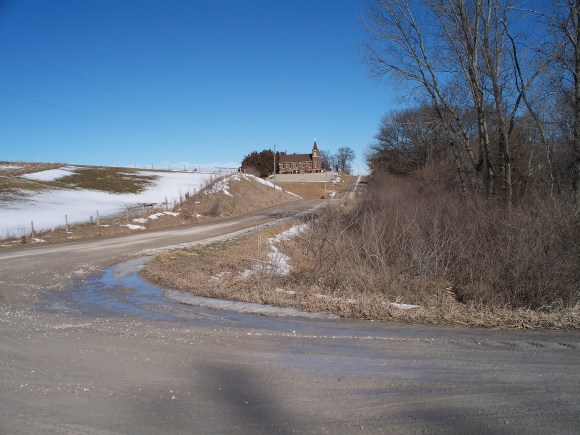
Rural Cedar Township
Shed Next to Tomato Cages
Five Gallons of Ice
Five Gallons of Ice
Crates Sunbathing
Crates Sunbathing
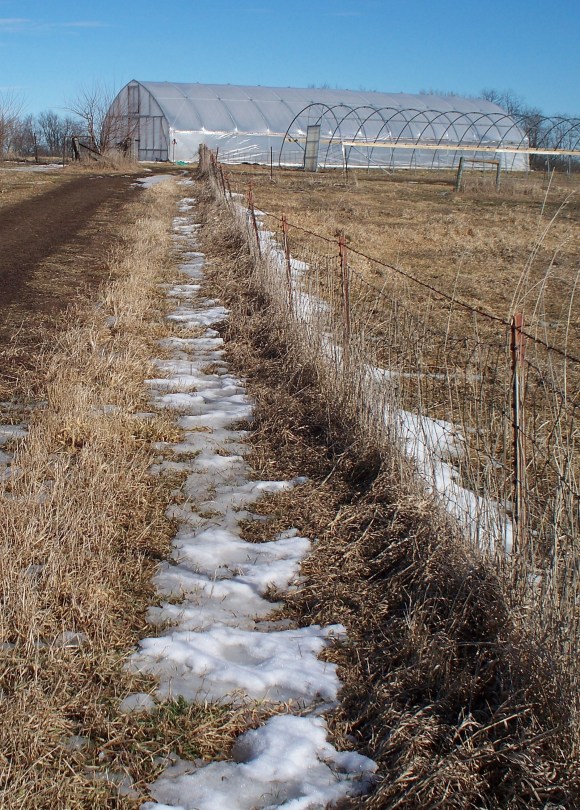
High Tunnel
High Tunnel
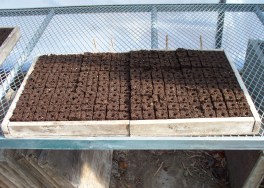
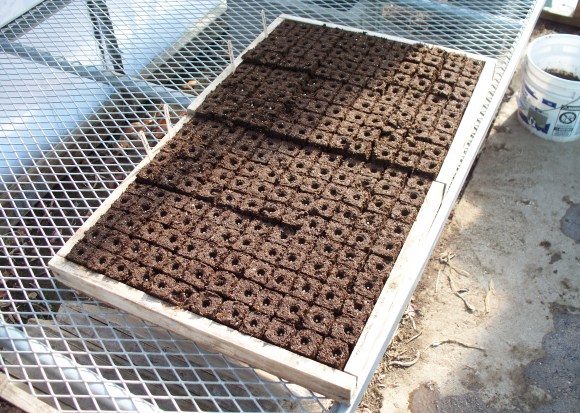
First Soil Blocks of 2016 Season
Categories
Writing

Local Food and the Face of the Farmer

First Tomatoes Ripening

Locally produced food is everywhere we look.

Local food may be what’s grown in a backyard garden, herb jar or patio pot. It may be heirloom livestock raised in grass paddocks, supplemented with carefully selected feed, and served in a local restaurant. It is definitely vegetables and fruit, increasingly available at farmers markets and roadside stands, from community supported agriculture operations, and even in chain supermarkets.

The local foods “movement,” is less coordinated than what media make it out to be. However, there is a consistent theme: it is small scale, farmers are interdependent, and the face of the farmer is visible in every apple, tomato and ear of sweet corn.

Many of us notice the increased availability of local choices when stocking our kitchens, a sign the food system is changing. After leaving a corporate job in 2009, I had a chance to work on half a dozen farms and gained a closer view of what local food farmers do. It is hard work made worthwhile by a network of cooperation among producers.

I met Susan Jutz, who operates Local Harvest CSA when two of her children were in 4-H with my daughter. Twenty years into the operation, Jutz has about seven acres in vegetables, pastures rented to local livestock producers, a large field in the Conservation Reserve Program, and a set of paddocks for her flock of ewes and spring lambs. Walking around the farm, you’ll find beehives, a greenhouse and a high tunnel, all adding to the economic structure of a farm using sustainable practices to produce shares for a medium-sized community supported agriculture project.

I began working at Local Harvest in March 2013 when I swapped labor for a share in the CSA. The work was physical, and I enjoyed it enough to return every spring since then. It was the beginning of understanding a local food network.

My first job was soil blocking in the greenhouse — making trays of small, square starter soil blocks where seeds are planted. In March, the ground is usually still frozen, yet I have to take off my coat and shirt in the warm workspace. The labor is physical, and a good opportunity to follow seeds turning to seedlings and then to crops with the season. Susan shared her greenhouse with other farmers with whom she cooperated to produce the contents of her member shares. Over time I worked on most of their farms.

One was Laura Krouse, owner/operator of Abbe Hills Farm near Mount Vernon, Iowa. Laura uses part of Susan’s greenhouse space in the spring and provides potatoes for Susan’s fall shares.

Because Krouse’s potato operation is large, she gains economies of scale. Using a tractor with a potato harvesting attachment, along with shared labor from other CSAs, and a large number of volunteers, she can harvest a field quickly. We harvested potatoes and washed them using a specialized root vegetable cleaner, bringing a load of potato-filled buckets back to Local Harvest for storage and distribution.

This is just one example of the cooperative ventures among farmers which include squash, eggs, carrots sweet corn and other vegetables for CSA shares.

While Susan and Laura have been operating for decades, since the local food movement got started in Iowa, the increased interest in local food is encouraging more farmers to enter the market.

I met Lindsay Boerjan who returned to her family’s century farm in Johnson County in 2011. To supplement family farm income, she used leftover material from a razed barn to construct raised planting beds. With manure from the cattle operation she runs with her husband and aunt and uncle, she planted the beds in vegetables for a CSA she began in 2015 with seven members. She hopes to grow her number of customers. Boerjan said she faced challenges as a female farmer.

“It’s predominantly an older male thing or career,” she said. “Should you want to make a career of it, it’s harder to wrestle in costs now the way they are.”

Boerjan is an example of a minimally financed operation, able to get started because she owns the land and is part of a larger farm operation. That Boerjan’s family owned the land and already farmed helped get her CSA going.

In January, Wilson’s Orchard in rural Iowa City announced it was entering the CSA market with a partnership with Bountiful Harvest Farm near Solon. Dick Schwab’s involvement in Bountiful Harvest is an example of a well-capitalized CSA start up. Schwab is a local entrepreneur who is involved in a variety of financial investments, including a timber business, an auto repair shop and more. He already hosted another CSA, Wild Woods Farm, on his acreage in rural Johnson County.  He has experience, owns the land and equipment needed to operate a farm, and has a network of marketing contacts that include Wilson’s Orchard.

Knowing the face of the farmer has been part of the local food movement. Today, people want to know more about where and how food is produced. Getting to know a farmer was important at the beginning of the local foods movement in Iowa, and still resonates. At the local supermarket, buyers stock the produce aisle with locally produced items, along with a daily count of local food items on hand and a life-size photographic cutout of the farmers who produced them.

Driven in part by mass media, consumers are concerned about a wide range of food issues that include contamination with harmful bacteria; dietary concern about consumption of carbohydrates, fat and sugar; the way in which plant genetics are modified to improve them; and more. Partly in response to media campaigns, annual sales of organic food exceed $30 billion in the U.S. (USDA). The increase in organic market share from national advertising campaigns is significant. If you get to know your local food farmer, what you may find is they benefit from this marketing, but their customers come and stay with them because of a personal relationship with the farmer.

Whether you grow herbs on a kitchen window, belong to a CSA or garden a plot in the backyard, it is all part of a local food movement that is just getting started and depends on knowing the face of the farmer.