Most of the meals I take are eaten alone. It’s just the way my spouse and my schedules work out. I am an early riser and have coffee around 3 a.m. with breakfast a couple of hours later. Lunch is not really a meal in our house. I graze bits and nobs throughout the day, maybe warm some leftovers or make a sandwich, and keep track of calories consumed. We plan and share dinner, which usually involves shopping, food preparation, and cooking. Sometimes I cook and sometimes we both cook a meal. Until I read Deborah Madison and Patrick McFarlin’s book What we eat when we eat alone, I had not given much thought to eating alone.
Healthy ideal or not, I feel set in my ways. As I age, it seems likely I will continue to eat more meals alone than together. Well, maybe until I move to a facility where residents take all of their meals in a group setting. We increasingly don’t like talking about those institutions as we age.
My spouse is heading over to stay with her sister for a week to ten days. This will give me an opportunity to consider all that eating alone means. From the gitgo some questions come to mind.
Do I cook a meal or grab something already prepared?
Are cooking alone and eating alone the same thing?
Why is what I eat different when eating alone?
What role do restaurants and food outlets play in eating alone?
Eating in the car. What’s that about?
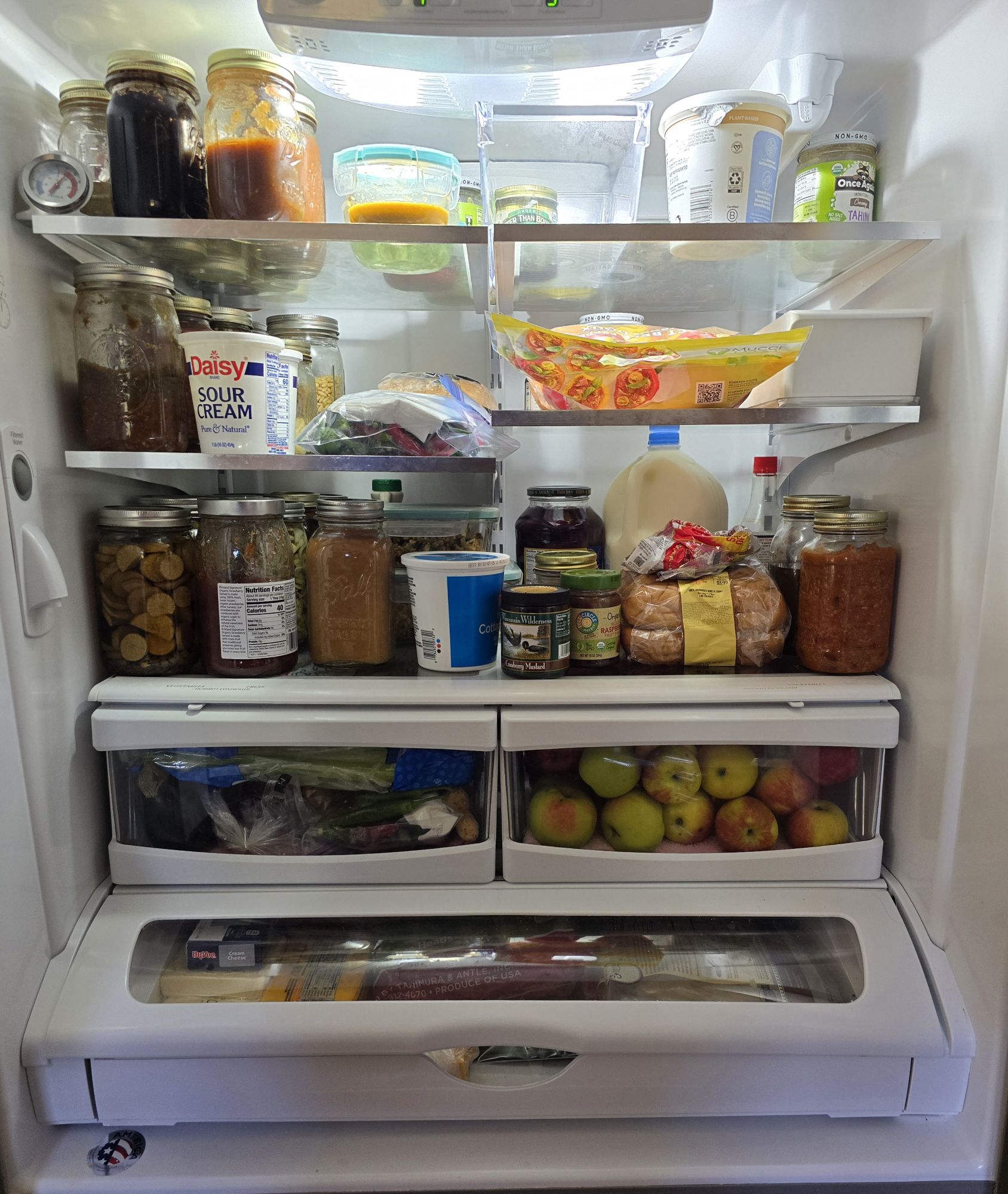
How do I shop differently to eat alone?
What role do leftovers play in eating alone?
This could be a rich field of inquiry. As of this writing, I don’t know where I am going with this. Stay tuned to find out.
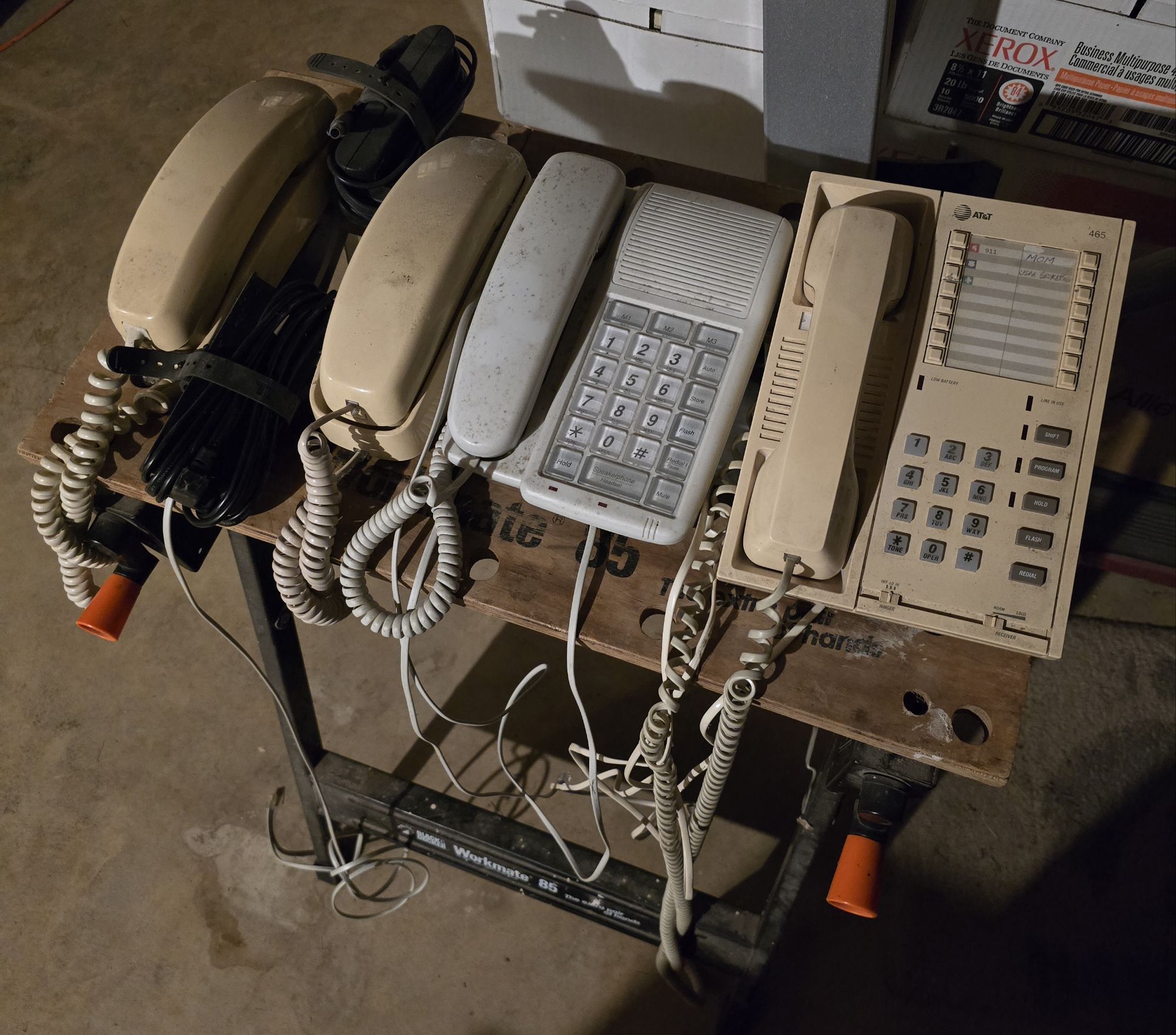
Last dusty telephones remaining in our home in 2025.
When my parents and I moved from Grandmother’s rented duplex they bought our first home. Recently a realtor posted room-by-room photographs of it on a website when the single family residence was on the market. I looked at each photograph, taking time for memories to rise. I have living memory of things that happened in most of the rooms. Very little remodeling was evident since we lived there. We moved before I entered first grade.
That time in the mid-1950s was for new beginnings, including being when Mother and Father first had a telephone account in their name. Mother remarked it was our own line, not a party line, what was called single party service. She had had a party line on the farm, so she was familiar. Having our own dedicated, direct line felt luxurious. It was private. I hardly remember either of them using the telephone in that house, although I am certain they did.
When my spouse and I built a new home in Big Grove Township, we felt very modern by specifying a telephone wall jack in almost every room. To even have had that discussion with our builder seems remarkable in 2025. Soon we came to rely on other communications devices.
First, my spouse had a bag phone while she closed her parents’ estate. I followed with a flip phone with which I took a photograph of Barack Obama in 2006. When the phone company could not resolve a hum in our land line, we discussed it and cancelled the account, moving our telephony to mobile devices. In 2012 I bought an Android smart phone while working on a political campaign. It freed me from the leash of wired telephony. The transition from wired service was complete.
We inherited a book from my in-laws who owned and operated a small telephone company in Western Iowa. Lines Between Two Rivers: A History of Telephony in Iowa tells the story of Iowa’s pioneers in leading the nation in the number of telephone companies. In it, the authors wrote:
The thrill of having the first phone in your home before the turn of the century must have been something, but in reality, we take it for granted today. From the whoop and hollar days, the Iowa telephone communications business has continued a tremendous growth, both in numbers and technology. The rural and small town areas have the same modern services as the larger populated cities. (Lines Between Two Rivers: A History of Telephony in Iowa, Iowa Telephone Association, Tom Griffith Chapter, Independent Telephone Pioneer Association).
Telephony was a marvel of technology, yet it was never more than a means to an end. It changed how people communicated with each other forever. Even the party line Mother did not like blurred boundaries between public and private life. Eavesdropping became part of early rural telephone culture. More frequent and easy contact, made us a society of gossips as connection to the rest of society became faster. It seems trite to refer to the telephone as the first social media yet comparisons are apt.
From farmers checking commodity prices in real time, to merchants ordering and tracking the status of shipments, to allowing faster access to emergency services when needed, telephony added something positive that we now take for granted. Mother was a telephone operator in her post-high school graduation life, providing her a source of income and personal prestige. She likely used the telephone more than Father, giving her a new kind of influence at home and in society. Being tied to a land line was part of how this culture evolved. When the cord cut loose, things went global.
My process of going through collected belongings in retirement is slow. What to do with the four telephones in the photo? We discussed it and will keep one of the Trimline sets for old time sake. It is branded ITT and has a sticker with the name of the phone company my in-laws owned. The other three? I will call the county landfill and ask about disposing of them. If they have a process to spare the landfill, I will follow it.
Who would have thought land line telephony would end? It seems unlikely we will return to wire telephony yet we will have a device if we do. Being ready seems like a good thing.
As the garden turned from tomatoes to apples, I captured plenty of images. Here are some of them.
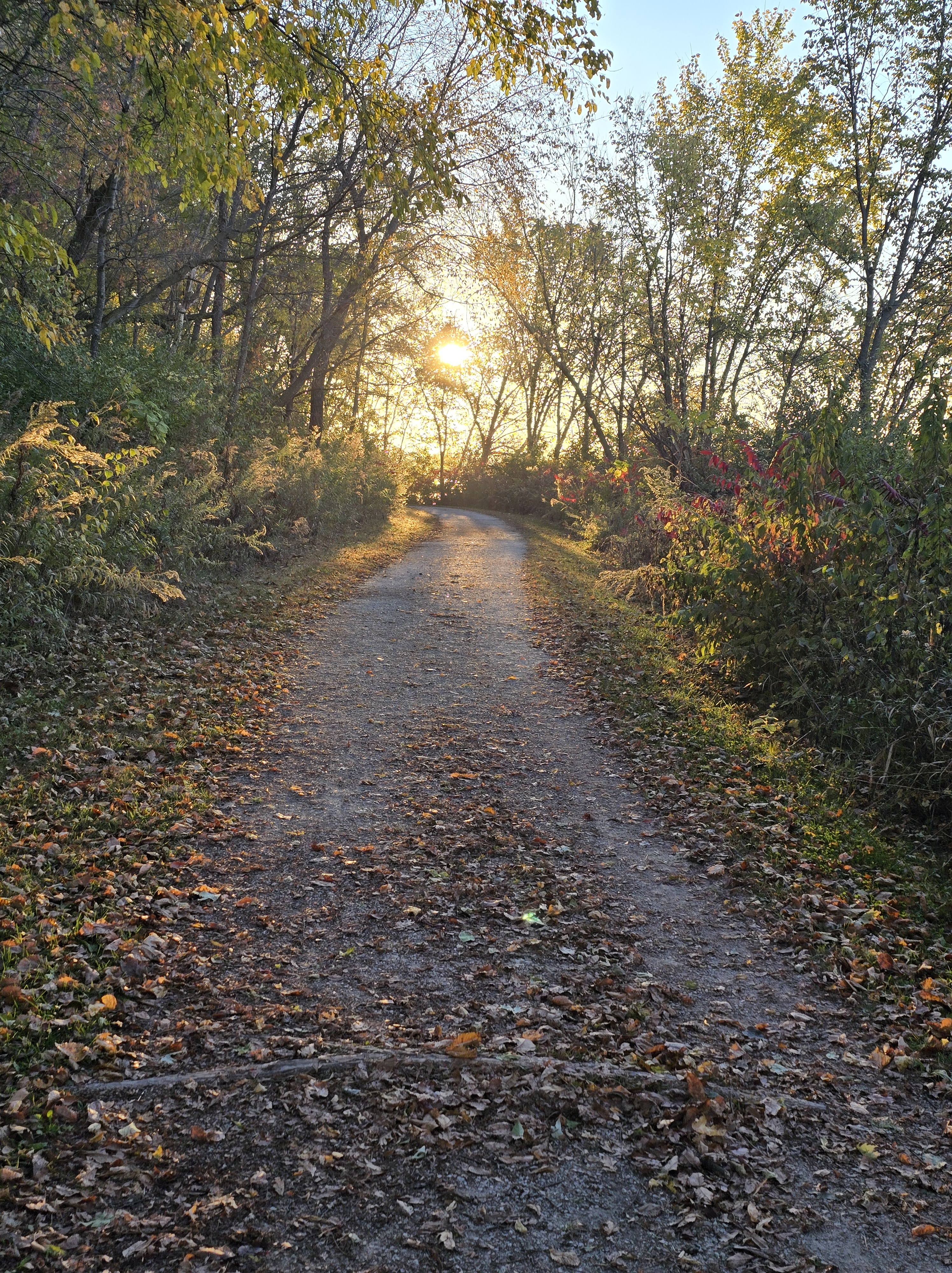
Last of the garden tomatoes.Collard greens.Gleaning the garden.Bur Oak tree acorns.Sunrise on the state park trail.Milkweed bugs.Sunrise on the state park trail.Red delicious apples.Tomatoes donated to the food pantry.Cold pickled hot peppers.Bowl of pears.Big salad for dinner.Wild flowers.
I’m getting to a place where I wrote the best of what I will about Labor Day. In 2022 I wrote this post, which covers the bases. No need to re-write it this Labor Day weekend. There is more to life than annual traditions.
It is no secret unions are in decline. In his new book, Coming Up Short: A Memoir of My America, Robert Reich points to the problem. The post-World War II economy was so affluent that unions did not seem necessary to most people in the wake of reforms that happened during the Franklin Delano Roosevelt administration. As a result, there was less impetus to form unions, and in right to work states like Iowa, a union could represent a workplace but workers were not required to join. The latest from the Bureau of Labor Statistics (2024) is, “The union membership rate of public-sector workers (32.2 percent) continued to be more than five times higher than the rate of private-sector workers (5.9 percent).” As we know from the administration’s move to invalidate union contracts among Veterans Affairs workers, the pressure will be on to diminish union strength among public-sector workers.
While summer is not over, the garden is winding down with leafy green vegetables, tomatoes, hot peppers, and apples remaining to be harvested. Instead of time off this weekend, I need to focus on work in my kitchen and garden, then digest what just happened. Short version: I withdrew from in-person society and reduced my contacts with people I know to focus on the immediate place where I live. I strove to make that life better.
Vegetables and fruit grew as well as they have ever done in my garden. The abundance produced from a small number of seeds and minimal cultivation is astounding. In particular, the green beans, cucumbers, and leafy green vegetables have been of good quality and mostly pest free. All five apple trees produced fruit. So did the pear tree. This year has been a bin buster.
As my concept of a kitchen garden matures, I have become a better meal planner and cook. One of the benefits of writing a meal plan has been a reduction in our grocery bill. If we write the meal plan to the garden, and then shop to the meal plan, the tendency is to spend less money, waste less food, and cook better meals. When I go to the grocer, my cart looks a lot different from other shoppers (yes, I look). More fresh fruit and vegetables and a small percentage of branded products. Life around the garden and kitchen makes more sense. I’m thriving in it.
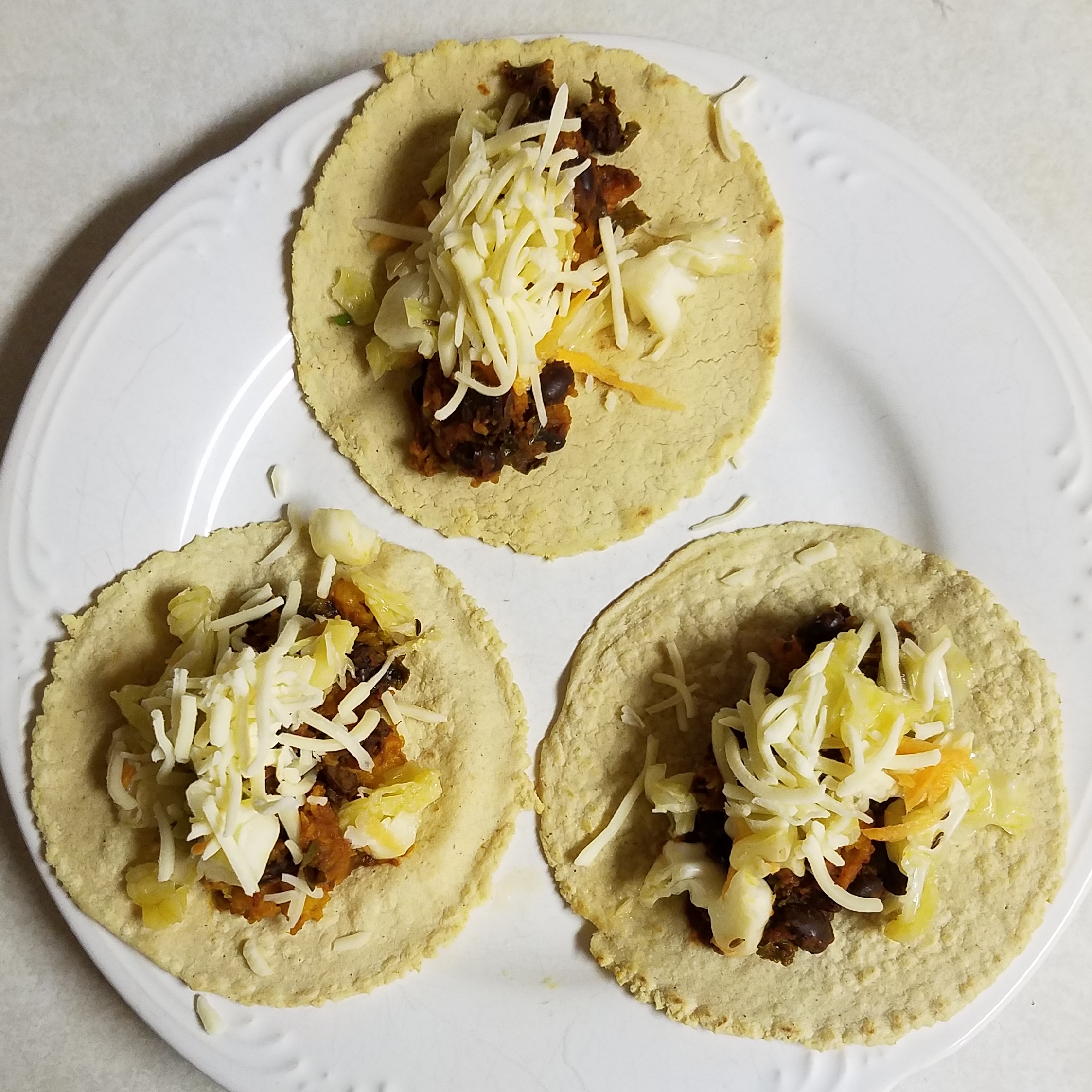
Right now I have three pots going on the stove: two tomatoes and one hot peppers. Learning to process these items took time, but I know where I’m going. I mostly can tomato puree from plum tomatoes. I pickle a couple of quart jars of sliced hot peppers and then make a hot pepper paste to use on tacos. I learned to can only what we need.
This summer I exercised daily, even when the weather kept me indoors part of the day. That, combined with counting calories, led me to lose about a pound of weight per week. I have a way to go to get my BMI below 30. However, I feel healthy and that is important.
It has been a summer of plain folk living our best life. There are challenges, yet it was a decent summer in a turbulent time. For that, I am thankful.
The last week has been a combination of ambient temperatures in the high 80s to low 90s, heat index of 105 or more, and thunderstorms. As a septuagenarian I stay inside with air conditioning once I finish early morning, outdoors chores to avoid passing out in the heat and humidity.
I took a box of cherry tomatoes to the community food pantry. My other Monday errands included filling the auto gas tank and lottery gambling. It was a quick trip, with exposure to people. I like the people part of it, and finishing while it’s relatively cool. Monday errands has become a thing in retirement.
It has been a struggle to mow the lawn, so the grass is growing long. I’ll need the cut grass for garden mulch and if nature dials down the humidity for a day or so, I’ll harvest it. I did manage to mow the ditch as it dried out, and before it got too hot. It was a workout.
When I was younger I would work strait through the heat and humidity. A few years ago I got woozy and had to lay down on the ground to recover. After that I decided to take better care of myself. As an Iowan I’m used to the heat and humidity. As a senior I learned to live another day.
Then there are the big salad dinners of summer.
Big salad (before dressing) with fennel, celery, cucumber, tomato, bell pepper, and broccoli from our garden.
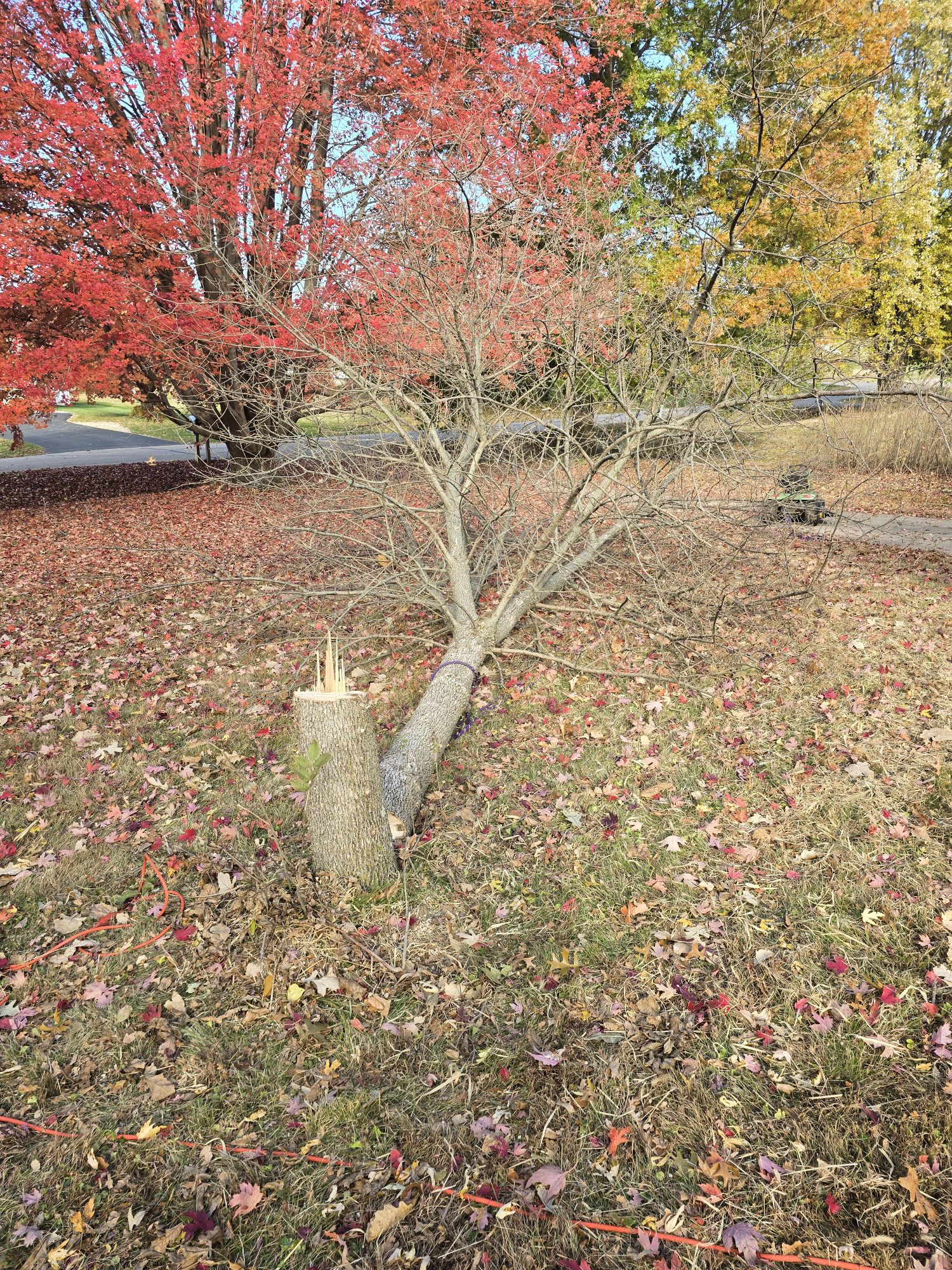
Stump cut to make a resting place for the gardener.
With four weeks left until Labor Day, summer is about finished. A lot of work remains. The only compensation I receive for any of it is the satisfaction of a job well done.
Is my work the same as working for an employer? I think so, yet there is an attitude shift when we work for ourselves. I find more personal risk and am particularly careful I don’t get injured or make a bad financial decision. There is no malarkey in my work life. It is based on empirical tasks, cash flows, and bank loans, all of which are necessary to piece together a life. Most things break down into short projects upon which I can work until completion. There is no overtime pay, or any of the benefits allowed many workers. My spouse and I pool our pensions and hope they cover the bills.
I came up in a work environment where I earned more money than needed for minimal survival. It enabled buying a house, saving for our child’s education, and then later, when our savings proved to be not enough, it allowed us to pay the student loan to take that out of the child’s bucket. I also earned enough money to be able to quit my job multiple times without immediate prospects. The biggest adjustment to living on pensions is there is no longer any “extra” money.
From the time I left the job where my spouse and I met, until we moved back to Iowa and our child left to attend college, she worked at home. The work she did was valued and important to raising our child. There was the avoidance of child care expenses, and a clear division of labor, yet it was more than that. It was a way of life that had little to do with money except treating it as the fungible commodity it was. Ours wasn’t a perfect life, yet we got by.
I resist framing what I do every day as a job. The old farm word for it is “chores.” It’s more than that. With our more sedentary lifestyle, we need exercise, a healthy diet, and some amount of socialization. I suppose that makes us more than a cog in the machine of life. I hope we are more than that.
Sunday morning I picked green beans because they were ready. About 20 minutes into the task I was drenched in sweat. With a forecast high of 89 degrees it became clear it would be another indoors day. Once again, I escaped into my two favorite spots in the house: my writing table and the kitchen.
After finishing chores I sat at the desktop and finished my post for yesterday. I also exchanged emails with a friend with whom I am doing this event.
We met in person on Friday and have the idea of talking about why we write books at the end of the time. We are curious about how attendees get information about complex topics. Do they read books to do so? Should be a good conversation.
I am into the second volume of my autobiography and she is into her third, so that’s the origin of that. She sent along a quote about why we write from Nairobi Williese Barnes that said, “(we write) to shift the conversation, challenge harmful narratives, and encourage accountability in the ways we support and uplift one another.” I don’t disagree with that sentiment.
She quoted me back from my own writing from posts on this blog:
So we write, partly to clarify our thinking, and partly to satisfy our need to reach out to others and express the value of our lives, one life among the billions of people walking on the planet. Whether anyone reads or understands our writing is not the point, although we hope they do.
Why am I writing here, in public? Part of it is self-expression, a basic human need. Part is using language to understand complex social behavior. …. Defining a broader moral lesson is the challenge as the memoir progresses.
There are few finer things on this jumping green sphere than writing about writing, especially with a friend.
I made it to the kitchen at about noon and endeavored to get busy. I started with doing the dishes. More accurately, I started with the laundry. On the last Sunday of each month I launder my bed sheets and catch up on other laundry that accumulated. This took a bit of time out of kitchen work as I did five loads. I managed to make what I call “minced salad.” That is summer vegetables suitable for eating raw diced into one eighth inch cubes and mixed together with extra virgin olive oil and apple cider vinegar. I season with salt yet the seasoning possibilities are endless. It came out well.
The garden is about finished with zucchini. I modified my zucchini bread recipe, substituting applesauce for the oil, and by wringing the water out of the zucchini with a towel. It is to set for 2-3 hours before cutting so I haven’t tasted it. It appears to have had the desired effect which was to decrease the moisture in the loaf and reduce cooking time. It should be good.
Zucchini bread baked on July 27, 2025.
The benefit of these activities is I can shut out the rest of the world and focus on our family. We need more time doing that. It is a way to go on living in turbulent times.
Donation to community food pantry on July 7, 2025.
The gutter clogged during a Saturday afternoon rainstorm. I looked at the forecast and rain was expected, on and off, for the next six hours. I decided to get the extension ladder and climb on the roof to clear the blockage so water wouldn’t overflow into the lower level of the house. I waited until the driveway showed signs of drying and went outside. Even though a misty-feeling drizzle hit my face, I persisted. From the time I got the ladder down until I returned it to its rack was less than 15 minutes. At 73 years, I should limit my time on the roof, yet the problem was immediate, the consequences of doing nothing were unacceptable. The situation wants a permanent solution.
I had a fitful night’s sleep the evening of July 4. Community fireworks were scheduled for July 5, so that didn’t keep me awake. News of the administration’s budget reconciliation was likely at the heart of my restlessness. That, with the courts enabling parts of their agenda. It’s as if every good public work I have done since graduating high school is being undone. It’s intentional, so my restlessness is not without reason.
Today there will be a decent harvest for the food pantry. Yellow squash, cucumbers, and leafy green vegetables, for sure. When the sun rises, I’ll take my daily walk on the state park trail and get into the garden. With the rain, the garden is really producing, to the benefit of our household and some who are food insecure.
Rain has consequences, both challenging and positive. A summer rainstorm provides opportunities to improve our lives, if we are open to seeing them.
As summer arrives on June 20th, I think about beverages I seek at least once each year. I hope to change all that and pick something as my standard beverage. That’s what I say at the beginning of each summer.
Diet Coke When I’m at the convenience store playing Powerball, once a summer I pick up a Coke or Diet Coke and drink it. This year it was Diet Coke because I am watching my caloric intake. It will be a cold day in hell when I try another of those. It has no flavor. Coke is not it. If Diet Coke was invented “just for the taste of it,” I don’t know what taste they are marketing. I won’t be yearning for another one of these.
Yoo-hoo A couple times a year I pick up a Yoo-Hoo chocolate flavored beverage at the convenience store. I probably should not. The beverage is made mostly from water, high-fructose corn syrup, and whey. I associate drinking Yoo-hoo with living in the south, yet that makes no sense. It was invented in Garfield, New Jersey in 1928 and has been owned by multiple international conglomerates. In a moment of weakness, I’ll likely have another. It fills a certain niche.
Iced Tea I buy the cheapest black pekoe tea bags and brew a pot of tea in an old Brown Betty. The first glass is poured hot, directly from the pot over ice. By far, this is the most refreshing beverage of summer. I make it a couple of times per summer for the refreshment and the remembrance of summers past.
Lemonade When I volunteered with the home owners association I bought a large container of lemonade mix for our annual meeting and potluck. I never used much of the container and from time to time I make some for myself. It is basically a sugar fix, something I need to watch. I may try making lemonade with Italian Volcano lemon juice. The flavor is great and I can control the amount of sugar.
Jack Daniel’s Old No. 7 Tennessee Whiskey I had a finger of this whiskey in a bottle I bought maybe ten years ago. I finished it off and decided it’s time to eschew distilled spirits unless I am celebrating with friends. It’s intoxicating effect is too much for this aging frame. The other thing is distilled spirits can be very expensive, even at the wholesale club.
Mass Produced Beer I used to buy a case of beer from the wholesale club each summer. I iced the bottles down in a cooler we got for a wedding present, and enjoyed one or two after a hot sweaty day of working outside. They are wanting $30 or more for the brands I like, so that one is getting sanded off in the woodshed. If I have a beer this summer, it will likely be with friends at the site in town where it was brewed.
Iced Water There is still nothing like a glass of water poured over ice. After all the trips down memory lane with the other beverages, I expect this will be the standby. It should be. Filtered water straight from the refrigerator is simply the best.
Editor’s Note: This post is one in a series of quick, short, fill-in posts while I spend most of my time and energy planting the garden. Things are looking good, yet I’m not there yet.
I was sidetracked by being a grease monkey for 90 minutes at the beginning of my outdoors shift. When I removed the wheel to replace the tractor tire, I did not realize the role the key plays. It uses friction to to keep the wheel turning as gears engage and turn the axle. No key, no movement.
I started the tractor and put it in reverse: nothing. A couple of YouTube videos later I understood what was wrong, retrieved the key I discarded from the trash and reassembled everything. The grease on my hands won’t come out using special soap, so I will have to wear it off. I drove the tractor to mow a patch in the garden… good as new.
My father eschewed being a grease monkey and encouraged me to find a different way to make a living. Toward the end of his life he was assigned duties as a forklift operator in the meat packing plant. He made a point of wearing decent clothing as he hauled pallets of meat around the warehouse. Decent meant a minimum of homemade repairs. His message was we could rise above the quotidian circumstances in which we came up and found ourselves. He graduated from college at age 40 as an example.
I was glad to resolve the issue created by mounting the wheel improperly. I resisted an urge to call the repair shop and ask them. I just solved the problem using tools available. Self reliance is essential if we will survive the authoritarian regime in Washington, D.C. We need to save our money for more important things like taxes, food, shelter, clothing, and healthcare. Today’s political trends have me living closer to the means of production. That’s a good thing.
Editor’s Note: I finished planting most of plot #3 on Wednesday. I’m waiting for the hot peppers to mature before transplanting them into the final row. Next step is preparing a tomato patch. In the meanwhile, my posts here will be shorter than normal. I do plan to return to “normal” at some point after the garden is in.
You must be logged in to post a comment.