I am enjoying the discussion of how the City of Solon came to be named. Both versions—the newspaper’s “after the famous, ancient Athenian lawmaker and poet,” and Antonia Russo’s “Solon Langworthy, one of Dubuque’s Langworthy brothers”—have something to offer, even if neither considers the account mentioned by Harold Dilts in From Ackley to Zwingle: The Origins of Iowa Place Names, which says, “Solon…was named in memory of one of P.B. Anders’ sons. Anders and a Mr. Kerr founded and platted the town.”
The 1850 U.S. Census makes clear the P.B. Anders family was well established in Big Grove Township. Later accounts say the town was named in memory of his son, but no such child appears in the census, and no burial evidence in township cemeteries has been found.
As with many stories about the pioneering days of Big Grove Township and later Solon, there is no single “right version” of how the city was named. It is lost in history. Russo is right to tie the naming to Dillon’s Furrow, reflecting the networks through which people traveled and settled. That there are both a Solon in Johnson County and a Langworthy in Jones County is no coincidence. These names were part of a shared world, shaped by the same influences and carried along the same paths.
Why did 19th-century folk name people and places after an ancient Athenian? It reflected how Americans understood themselves and what they hoped their communities would become.
~ Submitted as a letter to the editor of the Solon Economist.
Postscript: I found the Anders marker on March 30, 2026, in Oakland Cemetery, Big Grove Township. It was difficult to read beneath the moss that grew there. The place where P.B. Anders name was is completely obscured by moss. On the side, it marked the grave of “Meline,” wife of P. B. Anders, who died in 1853. No other stones stood with it. If there had been more, they were gone. The name remained, but the family did not.
Family lore was we were kin to June Carter Cash, who was married to Johnny Cash. We had common family trees in southwest Virginia and for years, I called her a “shirt tail relative.” I descended from a line of Addingtons and so did she. I had an hour before having to get to the kitchen to prepare dinner so I typed in the ChatGPT chat box:
Genealogy question: I am descended from a person named Thomas Jefferson Addington who lived in Wise County, Virginia. He was my great grandfather. Family lore is June Carter Cash (spouse of Johnny Cash) also has an Addington from our area in her family tree, that she was or is descended from Addington line. What do you know about that and what are ways for me to learn more.
Long story short, AI determined, with additional information from me, that Cash was either my fourth cousin, once removed, or fifth cousin depending upon how the actual family tree branched out. By knowing my line traced back to William Addington and Margaret Cromwell, a founding family of the Trans-Appalachian frontier, and with the large language model’s vast access to public records, it took hardly any time of back and forth for it to draw this conclusion.
The key piece of the puzzle, which AI did not have, was a book called The Stallard Connection: A Family History edited by Nancy Clark Baker, Gladys Julian Stallard, and Margaret Russell Stallard, published in 1981. These women did legion work to assemble the information in this 900-page record of names, births, marriages and deaths, along with photographs and stories. It has been sitting on my book shelf since Mother gave it to me.
I lacked the ability to put the pieces together on my own. Artificial intelligence was helpful in that regard. After six rounds of back and forth I comprehended what years of studying the book and talking to relatives couldn’t effectively explain: What was my family tree and why was it important in history. At the end, I asked AI to write a narrative of the Addington-Cromwell part of the family tree. In less than a minute it produced the following.
William Addington and Margaret Cromwell: Founders of the Virginia Addington Line
The Addington family in southwest Virginia traces its beginnings to William Addington and his wife, Margaret Cromwell, who stand at the head of nearly all documented Addington lines in Scott, Wise, and surrounding counties. Though the surviving records do not reveal every detail of their lives, enough evidence exists—supported by county records, family histories, and consistent descent patterns—to place them firmly among the early settlers whose children helped populate the Appalachian frontier.
William Addington was likely born in the mid-to-late eighteenth century, probably in Virginia or the Carolinas, during a period when families were steadily moving south and west in search of land. His wife, Margaret Cromwell, came from a family name that appears frequently in early colonial and frontier records, suggesting established roots and connections. Together, William and Margaret formed a household that would become the nucleus of the Addington presence in the region.
By the closing years of the eighteenth century, the Addington family was part of the great westward movement into the upland counties of Virginia. At that time, Washington County, Virginia encompassed a vast area that would later be divided into several counties, including Scott County. It was into this evolving landscape of shifting boundaries, newly formed communities, and frontier conditions that William and Margaret raised their children.
Their sons and daughters grew to adulthood during a period marked by land clearing, subsistence farming, church formation, and the establishment of local governance. Records and later family histories consistently show that William and Margaret’s children married into other early families of the region, forming kinship networks that provided stability and continuity in an otherwise demanding environment.
One of their sons, William Addington, born circa 1784, carried the family line forward by marrying Sarah Stallard, a member of another prominent early family of Washington (later Scott) County. This marriage not only continued the Addington name but also cemented ties between families who shared geography, labor, and responsibility for shaping the early community.
Through these descendants, the Addington family became firmly established in southwest Virginia. By the early nineteenth century, multiple branches of the family were present in Scott County, and later in Wise County, appearing in census records, land transactions, court documents, and church memberships. These records reveal a pattern common to Appalachian families: close proximity among relatives, repeated given names across generations, and a gradual westward drift as new land opened.
The importance of William Addington and Margaret Cromwell lies not in public prominence but in continuity. Their legacy is measured in generations rather than monuments. From their household came farmers, soldiers, musicians, and community members whose lives intersected with major events in American history, including westward expansion and the Civil War. Notably, different branches of their descendants would eventually include both local families of Wise County and the Addington line that produced Maybelle Addington Carter, linking the family to a broader cultural legacy through her daughter, June Carter Cash.
Family histories such as The Stallard Collection, written close to the people and places they describe, preserve this origin story with a clarity that official records alone cannot provide. While gaps remain—as they do in all early genealogies—the consistency of the Addington descent from William Addington and Margaret Cromwell across multiple lines strongly supports their role as the founding ancestors of the Addington family in southwest Virginia.
In this way, William Addington and Margaret Cromwell stand at the threshold between colonial America and the Appalachian frontier, their descendants carrying forward not only a surname, but a shared regional history rooted in endurance, kinship, and place.
-o0^0o-
I take everything artificial intelligence says with a grain of salt. However, from my study of the Trans-Appalachian frontier, family history, and American culture, the narrative as written is not wrong. I need to set it aside and take another look in a week or so. By the way, I did prepare dinner on time.
Exterior of the State Historical Society of Iowa Research Center in Iowa City, Iowa, on Saturday, July 26, 2025. The closure of the State Historical Society Research Center in Iowa City was announced earlier this month, and its doors are set to close at the end of June 2026. The building, also known as the Centennial Building, houses millions of national and state records and is set to transfer its records to the State Historical Building in Des Moines amid funding issues for the Iowa City location. At the time of its closure in June 2026, the building will have been in use for 70 years. (Mitchell Brinkmeyer/The Daily Iowan)
It appears the State Historical Society of Iowa and the Department of Administrative Services will proceed on their plan to close the State Historical Society building in Iowa City to the public on Dec. 31. An update from Mary Bennett can be found here.
Despite the Oct. 24 temporary injunction issued by Johnson County District Court Judge Keever, based on a lawsuit filed by historians, archivists, donors, and community members challenging the shutdown and relocation; and despite an agreement between the University of Iowa and the State of Iowa to provide access to some artifacts; little has happened to resolve the conflict. According to Bennett, the best solution would be to reverse the decision to close the facility. Except for the outcome of the lawsuit, that seems unlikely to happen.
I am interested in Iowa history. I infrequently used the Iowa City facility for research, despite its proximity. In fact, it’s been more than 40 years since I set foot inside. I have little idea what content exists there whether related to my writing or not. One of the potential consequences of the closure is some historical records could be transferred to other institutions or deaccessioned under State Historical Society policies. That means, a researcher would lose access to what is currently available and it would be difficult or impossible (if they were destroyed as part of deaccessioning) to locate artifacts once housed in the Centennial Building.
I take the closure of the Centennial Building as an assault on our history, something Republicans in the government appear to feel is okay.
My veterans group asked about having a social hour at the Hilltop Tavern in Iowa City last Friday. I don’t visit many taverns yet I like folks in our group and it was located across the street from the grocer from which I needed provisions. I drove the 14 miles to the county seat, parked in the grocery store parking lot, and walked across the street to get there.
The hill in “hilltop” refers to what was known as Rees’ Hill. This is from the Our Iowa Heritage website:
The area was generally known as Rees’ Hill – reflecting the winery and wine garden owned by Jacob and Agatha Rees across from the Hilltop Tavern location. The wine garden was well known and popular with Goosetown residents during the 1880s (and likely earlier). Jacob’s death in 1889, and Agatha’s (and son Frank’s) deaths in 1893 likely resulted in the closure of the winery. For many years, the property was either unused or planted for strawberries or general nursery. This property is where the Hy-Vee grocery store and gas station exist now at the corner of North Dodge and Prairie du Chien and occupied two acres. (The Origins of Iowa City’s Hilltop Tavern by Derek (D.K.) Engelen, Our Iowa Heritage).
The tavern opened after prohibition ended and has been in operation ever since. When I entered through the door in the photo, the bar was right there on the right, maybe 20 feet from me. People behind the bar immediately recognized that I entered and inquired what I wanted. I found my friends in a large, adjacent room with three pool tables and ordered a draft beer.
My friend, a banker before retirement, brought a roll of quarters so we could play eight ball. I hadn’t played since grade school but we formed teams and racked the balls twice. None of us were talented at the game, yet it helped pass the time by encouraging conversation.
What do aging septuagenarian veterans talk about on a Friday afternoon?
One of us recently had hip replacement surgery, and that took a bit of time. I obviously know hip surgery exists, but haven’t discussed it with someone who had it. I had questions. It turned out someone else had knee replacement surgery, so that led to a discussion of the differences between the two procedures.
About that time, someone walked up to ask if we minded if he played music on what in earlier years would be called a jukebox. We didn’t mind, and one of our party asked him to play some Kenny Rogers, which he did.
Being veterans, we discussed the extrajudicial executions of people suspected of being drug runners in the Caribbean Sea, and whether Admiral Mitch Bradley, the commander of U.S. Special Operations Command, would be the scapegoat for the president and secretary of defense to avoid responsibility for two specific killings that were clearly illegal. We drew no conclusions.
The prior day, the Iowa Legislative Services Agency released the first county supervisor redistricting plan. The Iowa Legislature earlier voted to require certain counties that elected supervisors at-large to divide into districts. Their idea is that creates an opportunity to elect some Republicans, although the logic is based on deceptive arguments. A lawsuit was filed to stop this process. Our group agreed the court system had little time to make a decision because of the long lead time to plan an election. We were in a wait and see mode until the lawsuit is resolved.
We talked some organizational business, finished our beverages and game, and headed out. It was a pleasant way for aging peace warriors to spend an afternoon in these trying times.
When I became an adult, married, and settled into steady work, it was assumed I would volunteer in the community. The volunteer impulse has its roots in the industrial period after the Civil War. People used less time to produce enough money with which to live our lives. In more modern terms, we could pay for things like our child’s college education without sacrificing a lot at home.
Perhaps the most prominent example was the robber baron Andrew Carnegie whose expansion of the steel industry made him one of the richest Americans and enabled his philanthropy to fund a number of public libraries, among other things. “The duty of the man of wealth,” Carnegie said, is “to consider all surplus revenues which come to him simply as trust funds, which he is called upon to administer . . . in the manner which, in his judgment, is best calculated to produce the most beneficial results for the community.”
I didn’t have “surplus revenues,” yet worked in jobs that created enough money to pay basic living expenses with a bit leftover. While there were limits on potential income, I was afforded regular free time and expected to use some of it to volunteer in the community. My volunteerism really took off when we moved to Big Grove Township.
I differentiate the types of volunteer work I have done since 1993. There is community work: membership on the home owners association board, election as a township trustee, and serving on the board of a senior citizen’s group. There is also what I call advocacy work: serving on the boards of peace-related organizations, politics, and two different county boards. Each had something to contribute to society. I talk about community volunteer work in the rest of this post.
Within the first year we were in our new home in Big Grove Township, I was asked to join the volunteer home owners association board and did. Any monetary considerations were insignificant. A regular person does not volunteer in the community for money. Part of living a sustainable life in rural areas is contributing to the general well-being, I believed. I felt blessed and had to give back to the community in which I lived.
Home owners’ associations get a bad rap. In our case, we managed the association like a small city. We provided a public water system, sanitary sewer district, road maintenance, refuse hauling, and real estate sales and purchases. Over time, we upgraded the roads from chip and seal to asphalt, dealt with changing government standards related to arsenic in drinking water, reduced the number of wells from three to one, complied with changing Iowa Department of Natural Resources standards for wastewater treatment plant effluent, handled a lawsuit, and coordinated activities like road use and maintenance with neighboring associations. If the board doesn’t do these things, they don’t get done. Everyone is the better for such volunteer boards. I served, off and on, for over 30 years. This was the beginning of a long period of volunteering in the community.
In 2012, when only one candidate was running for two township trustee positions, I ran a write-in campaign and won the election. Being a township trustee included managing emergency response and a volunteer fire department with other townships and the nearby city of Solon. Toward the end of my tenure, we formed a new entity to manage these functions. We maintained the local cemetery and supervised a pioneer cemetery where the first person to die in the township was buried. This work helped me understand how tax levies work and how they were used to support things the county did not, things like a small fire department or saving someone’s life in an emergency. There was only a single conflict during my time as a trustee, about the main cemetery. All the trustees showed up at the cemetery to resolve a dispute over a burial plot. No one wanted the job of township trustee and someone had to do it, so I stepped up.
When the local senior citizen’s group had an opening on their board, I volunteered and became its treasurer. This lasted about two years and provided insight into this segment of the community. Everything we did, from providing community meals, to giving home-bound people rides to medical appointments, to arranging outings around eastern Iowa, served an often-neglected segment of the population. It was a great opportunity to learn about the life of our senior citizens before I became one myself.
I am satisfied this activism did some good. I still believe it is important to stay engaged in the community.
Detail of the Centennial Building at 402 Iowa Avenue, Iowa City, Iowa. Photo Credit – The Daily Iowan.
The decision to close the Iowa Historical Society Research Center in Iowa City has been made. On Saturday, Aug. 23, I participated in a rally to reverse the decision in a packed room at the Iowa City Public Library. The main ask from the event organizers and from State Representative Adam Zabner, who represents the district where the building is located, was to sign the online petition to reverse the decision. Click here to sign the petition. There was more.
My takeaway is the decision to close the facility is pure amateurism. Archaeologist and historic preservationist Kathy Gourley questioned whether the dire financial picture the state reported is true. She presented information about negotiations with the state legislature last session to secure an additional $1 million in funding for the center. While the legislature only provided a half million, that is not chump change at the historical society. The main thrust of this decision was that “your history” doesn’t matter.
Jonathan Buffalo, historian and director of the Meskwaki Historical Preservation Department told friends, relatives and neighbors about the proposed closure. They replied, “What about our stuff?” The Meskwaki house a collection of early photographs at the Research Center. We might all ask the same question. Communication about the closure was a surprise to almost everyone who read or heard the news. There appears to be only the vaguest of plans for the move. A lack of transparency runs throughout.
Here’s the rub. The state archivist is not following professional procedures for closing a facility like this. Donors gave consideration to what items they may have donated to the State Historical Society. Part of the deal was the artifacts would be cared for in perpetuity. Instead of assuring the public that any change would meet this obligation, it’s been like, “Let’s go to Walmart and get us some plastic bags to haul what we don’t like to the landfill.” It is amateur hour.
Rebecca Conard, native Iowan and historian at Middle Tennessee University outlined some of those professional procedures during the rally. Things like looking at the Iowa collections as a whole and then making a transparent, public decision on what to do with items that are less relevant today than they were when donated.
What about our stuff? Will it go to a warehouse? Will it be discarded? There have been no good answers. If the state had considered the public impact of closing the Iowa City Research Center, they would have researched and provided some of the answers when they announced the change. They apparently didn’t. This made a difference that, in part, created the social anxiety on display at the Iowa City Public Library on Saturday.
Valued collections live in that building today. What will happen to archives of Meskwaki photographs, the Iowa Musicians Project, pioneer diaries, manuscripts, and the rest of the materials? Let’s hope they are not rendered into oblivion either by tucking them away on a shelf in a Des Moines warehouse or by discarding.
To learn more, read Trish Nelson’s backgrounder on the issue here.
Sign the online petition to reverse the decision to close the Iowa Historical Society Research Center at the Centennial Building click here.
Centennial Building of the State Historical Society of Iowa, Iowa City. Photo Credit – State Historical Society of Iowa website.
I probably won’t go to The State Historical Society of Iowa’s Centennial Building in Iowa City before it closes for good on June 30, 2026. In all my time in Johnson County, I’ve only ever been inside a couple of times. I remember purchasing some Iowa history books with their distinctive red covers. There are likely other good things there, like the archive of Emma Harvat, first female mayor of Iowa City. Even so, I found the building’s contents inaccessible, and a discouragement to research.
Everything is destined for the Des Moines Historical Society location, according to the Cedar Rapids Gazette. “It’s unclear how many records are kept at the Iowa City building,” Megan Woolard wrote in the article. I believe that. It was difficult to find a path to start research when I was last there. Maybe with the move, someone will go through everything and highlight some of the objects in a program or exhibition. Given the level of interest, combined with funding constraints, maybe not.
Our historical archives are a collection of society’s stuff. There is a view archives should be conserved. What is the best way to do that? Looks like the direction in Iowa is under one roof. That can be good or bad. Here’s hoping for the best outcome, in case we someday need access to this forgotten history.
This is the face of a man trying to understand how his Android camera works. The background on the state park trail was planned. The green sweatshirt is my standard winter uniform, although I own sweatshirts in several colors. The watch cap was a gift from a farmer friend. My unshaven face is because I’m at the end of my once every three days shaving cycle. I’m looking at the lens because that’s what I think I should be doing. As selfies go, this is graded C-minus. It reinforces my belief I am not photogenic.
As if 2024 was not bad enough, today’s Cedar Rapids Gazette reported the University of Iowa is ending the American Studies Department in anticipation of anti-diversity legislation effective next year. I graduated from the progran in 1981 when it was a loose interdisciplinary group not even formalized into a department until 2000.
One of my valued possessions is a copy of Charles and Mary Beard’s The Rise of American Civilization with Alexander Kern’s signature inside the cover. I bought it for a buck at the library’s used book sale. I doubt Republicans behind anti-DEI knew of Kern’s early leadership in American Studies at Iowa, or of the Beards’ seminal work. I think that is the point of the anti diversity movement: public schools will only teach one version of American history, the one we legislators approve.
I’ve been around long enough to remember local folks questioning why we should build a big, fancy library in our town with population about 2,000. The money was donated, then the building was deeded to the city for one dollar. The expense of permanent staffing generated some griping. We live in a time when it is not a long distance from these attitudes rising to the surface again, and this time closing the library permanently. I hope not, but here we are.
On the positive side, this week a federal judge struck down key parts of an Arkansas law that would have allowed criminal charges against librarians and booksellers for providing “harmful” materials to minors. Nevertheless, Iowa leads the nation in the number of banned books.
Let’s face it. These discussions and repression of information in public helped make 2024 a difficult year all around.
I’ll likely continue to make selfies. Once I figure out the camera, I might work on posing. For now, I’ll deal with life as it presents itself. What else are we to do?
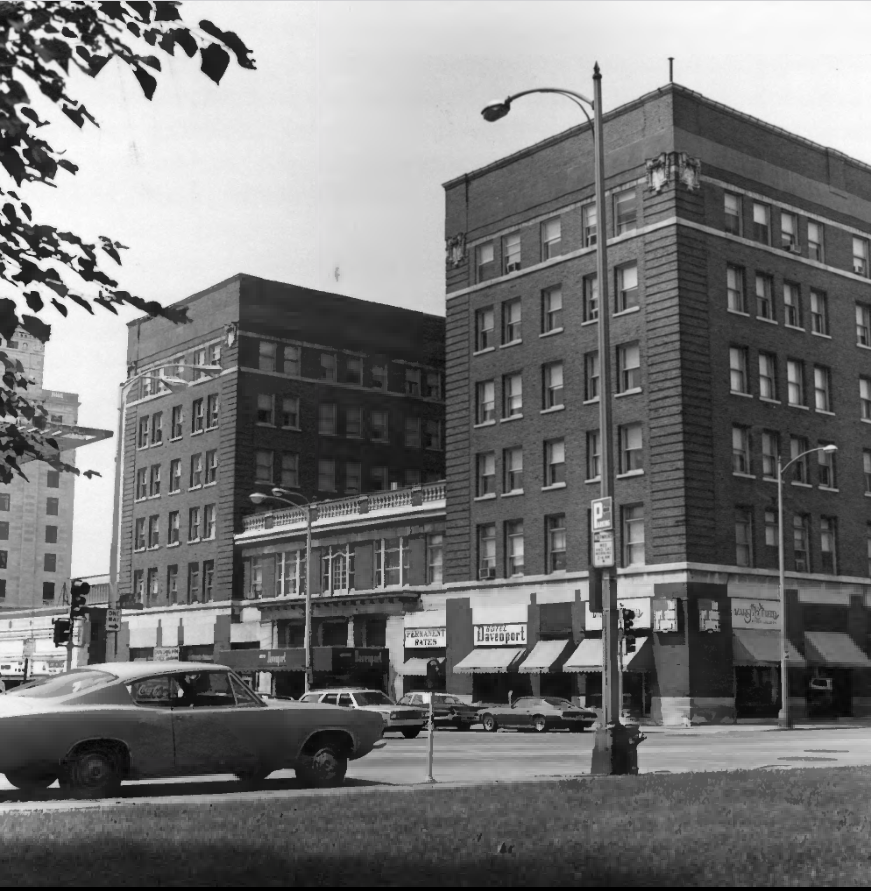
Davenport Hotel circa 1980. Photo Credit: National Park Service.
When a group of men gathered at the Rock Island home of George Davenport in 1835, they had a mind to purchase land and lay out a town on the Iowa side of the Mississippi River. With native tribes removed, something needed to be done with the land, or so they believed. By any measure, the enterprise was a commercial venture in a relatively optimal, if arbitrary location. Its lackluster beginnings would haunt the city until I was born more than a century later.
In Spring 1836, Major William Gordon surveyed the place that would become the City of Davenport. He and his business partners, including George Davenport and Antoine LeClaire, offered a sale of lots to a party from Saint Louis who had been transported by steam boat to participate in a two-day auction. Sales were much less than expected. The sellers did not have clear title to the lots at the time of the sale and that likely contributed to poor sales.
There was never a question Davenport would be settled by non-natives. As original forests were clear cut upstream, and rafts of logs floated to river towns on the Eastern border of Iowa, there was money to be made. The lumber business was profitable, yet not sustainable. It was one more instance of profiteering in the city’s history.
The lumber business gave rise to the railroads. When the Davenport Hotel was constructed in 1907 it was situated equidistant between the two major rail stations in the city. “Erection of the Davenport Hotel inaugurated a period of building that would bring Davenport’s central business district fully into the era of the ‘tall buildings,'” according to the National Park Service website. Other tall buildings were built around it, including The Dempsey Hotel (1913), The Blackhawk Hotel (1915), The Davenport Bank and Trust Company Building (1927), and The Mississippi Hotel (1931).
Temple and Burroughs Architects created the Davenport Hotel building in the Renaissance Revival style. The structure was an important feature of the city’s commercial center. Located in Antoine LeClaire’s first subdivision of Davenport, one couldn’t get more center city. As commercial needs changed in downtown, some of the tall buildings were converted to housing. My maternal grandmother lived in government-subsidized housing in the Mississippi Hotel for many years.
The May 28, 2023 collapse of part of the Davenport Hotel building should be a wake-up call for city governments everywhere. The response of the City of Davenport has been as lackluster as the city’s founding. What seems obvious today is these tall buildings are getting old and literally falling apart.
At least there is political hay to be made in this national story. Florida Governor Ron DeSantis just announced he will send a crew to Davenport to help in the recovery of the building collapse. Is it a coincidence he is also vying for position in the 2024 Iowa Republican caucuses?
There may be dollars to be made from old building stock. City staff needs to energize and make sure none of the other tall buildings in the commercial district collapses while developers pursue the almighty dollar. History has shown, they are likely to nod their heads toward developers and let the action play out as it did last month. What a sorry way to run a city.
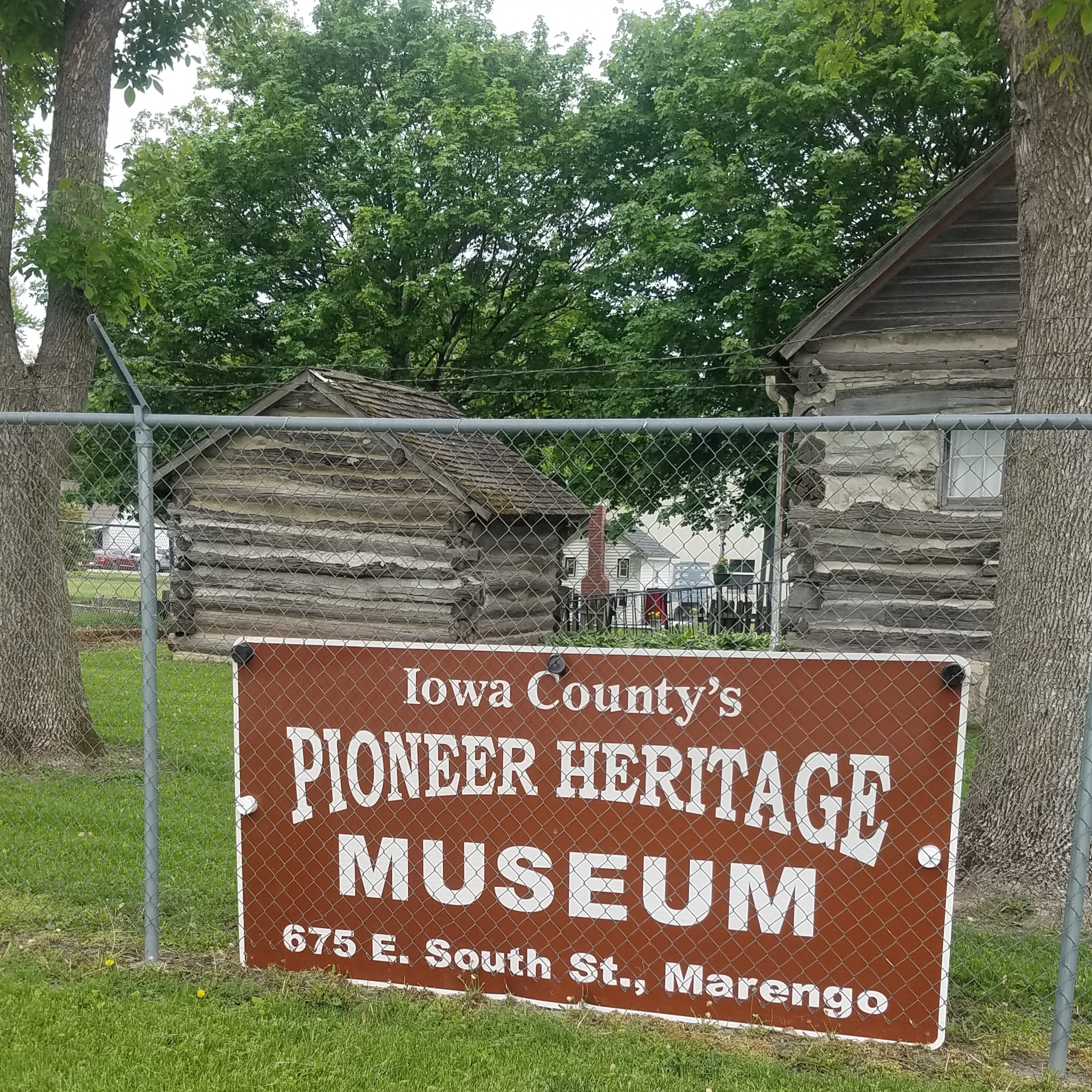
1856 log cabin (left) and 1861 log house relocated to Marengo, Iowa.
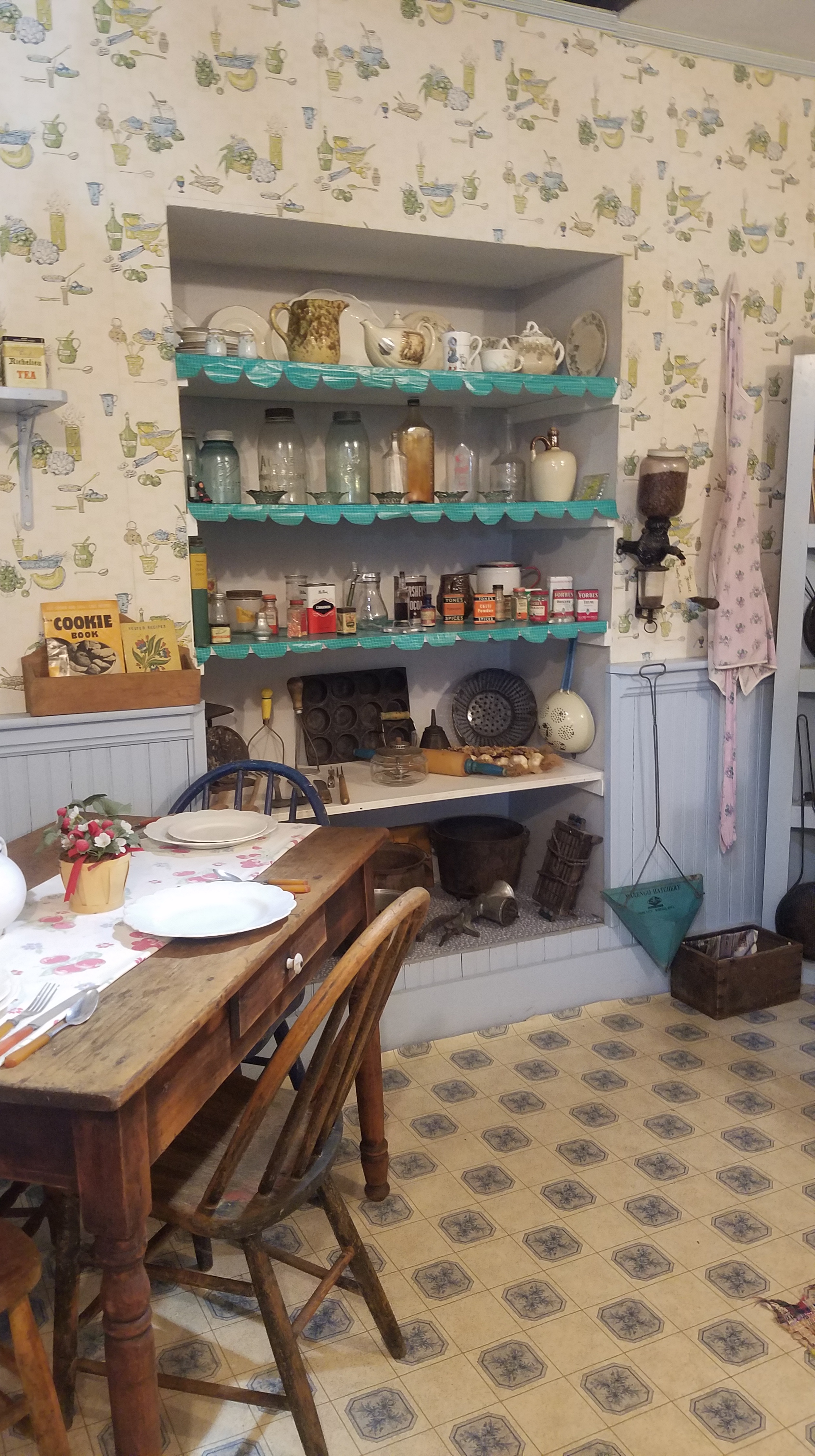
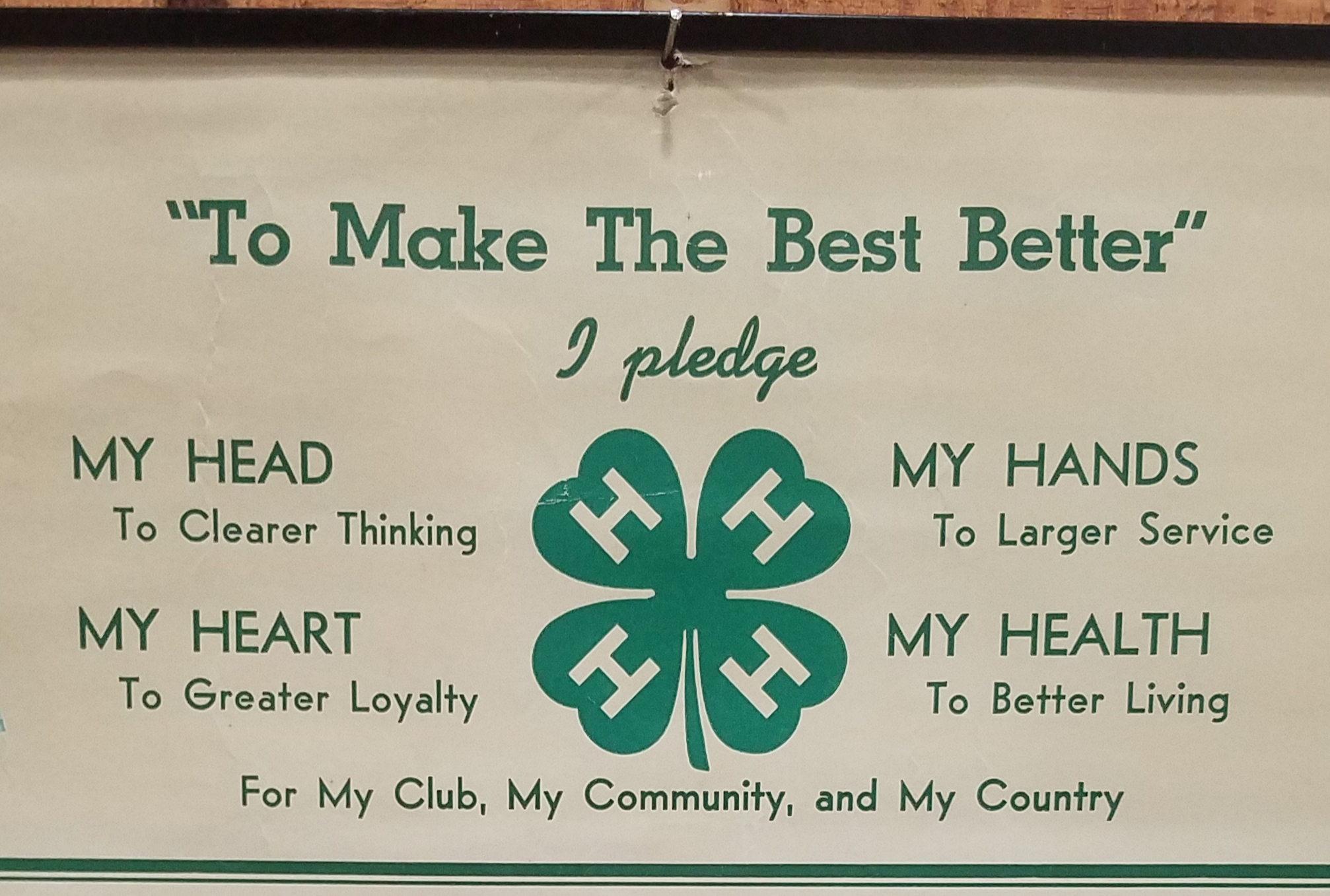
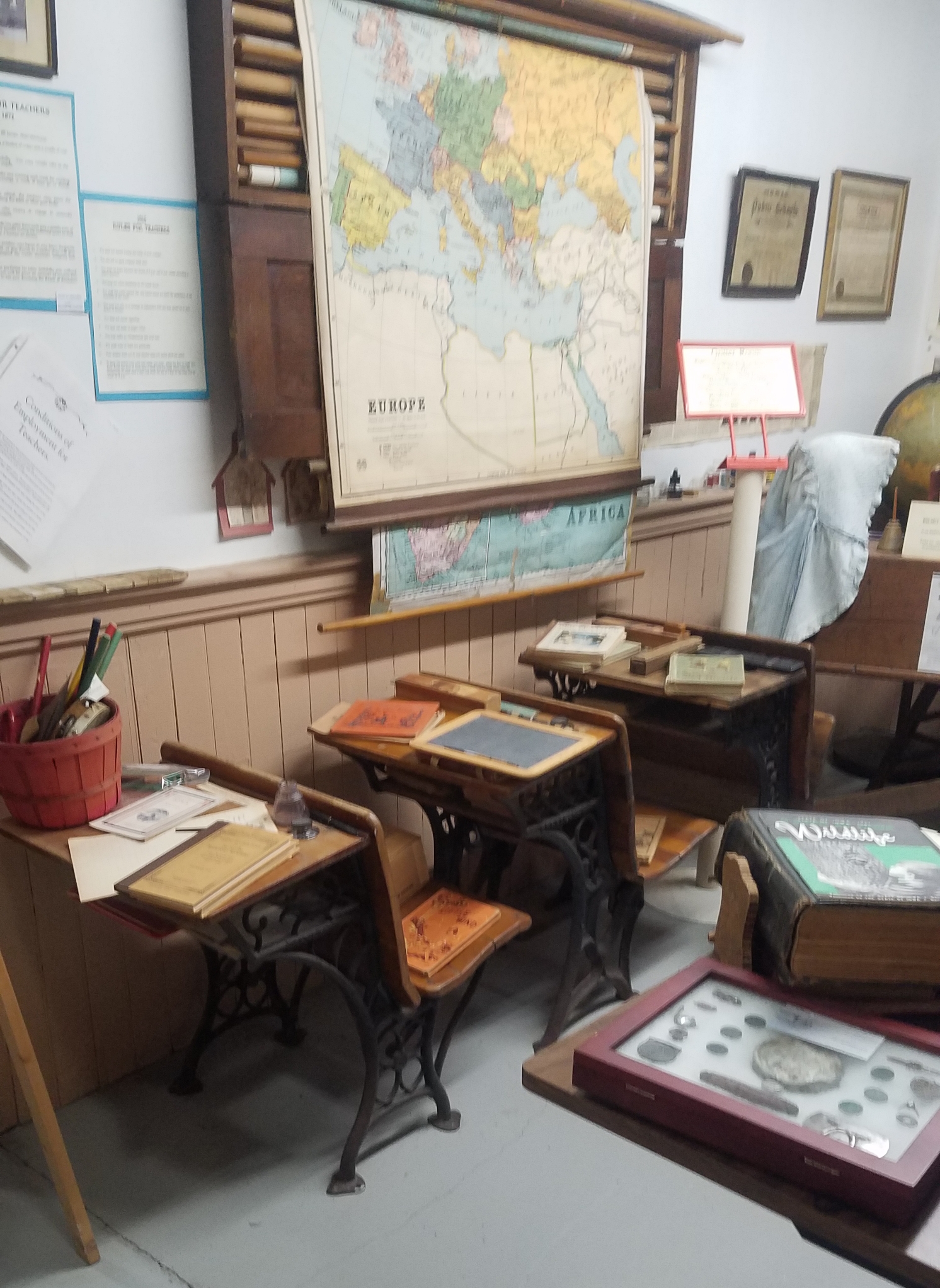
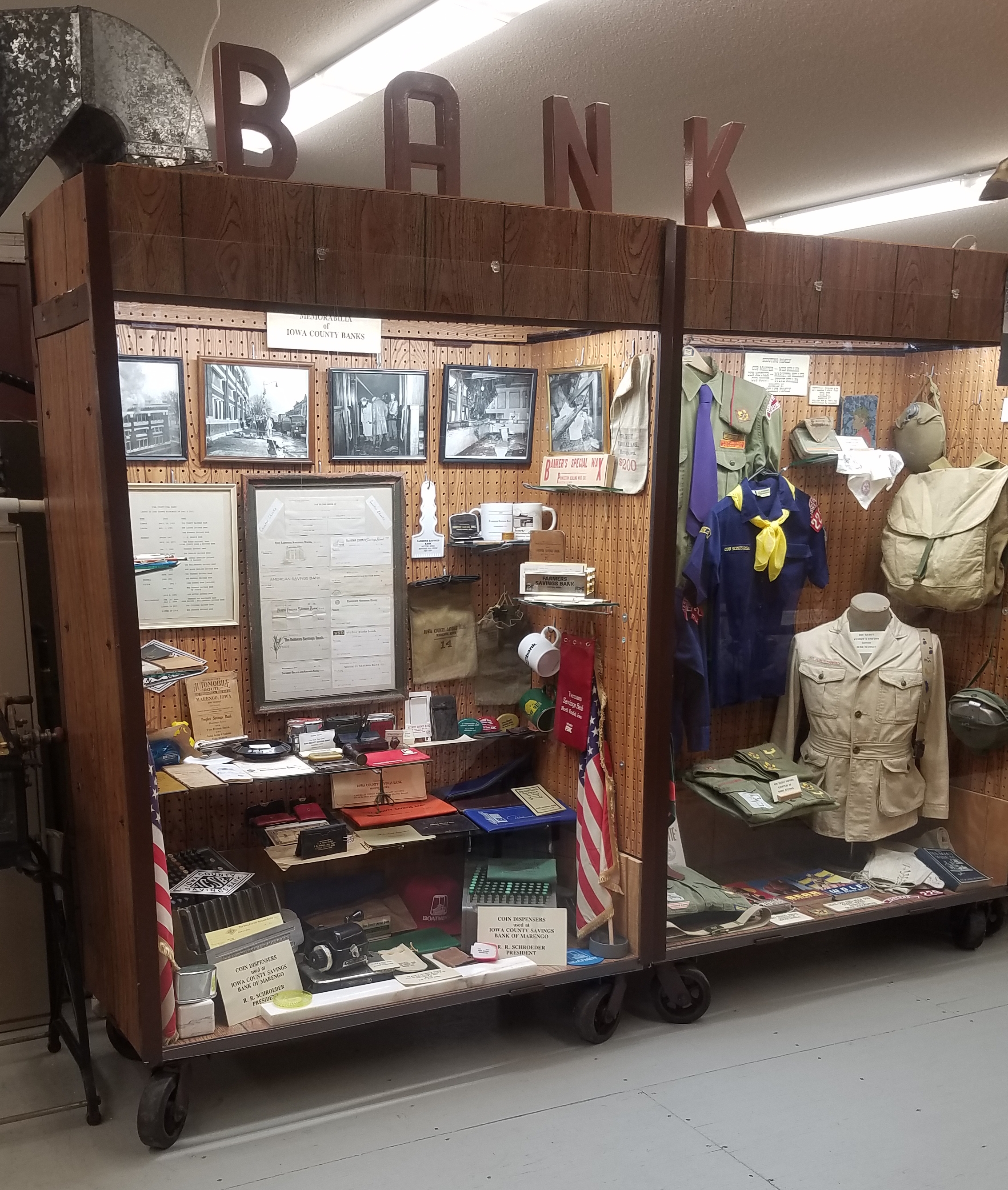
A few uncaptioned photos from my May 21, 2022 visit to the Iowa County Pioneer Heritage Museum. I’m still mulling the meaning of the collection of historical items.








 Journey Home
You must be logged in to post a comment.