Categories
Home Life Sustainability

Apple Blossom Time

Red Delicious Apple Tree

LAKE MACBRIDE— Apple blossoms are in full bloom, and it never lasts for long. Once bees pollinate, the petals fall in snowy softness, carpeting the ground as quickly as they went from pink to bloom.

One of the farms where I work is an apple orchard— a resource for learning about my four trees. I recently sent a question via email.

“Can last winter’s pruning cause a lot of blooms this spring?

I pruned my trees and the Red Delicious tree is loaded with blooms like it was last year. Not sure the pruning helped that, but I was expecting very little fruit because it was a branch buster last year.”

The answer came promptly:

“I spoke to my dad about your question. He said that pruning and the number of blossoms aren’t directly related. The exact reason is quite a long answer, but he said that you must just have a good tree!”

That’s a good enough answer for me, “it’s a good tree.”

I did my first experiment in making flour tortillas at home yesterday. They came out more flatbread than tortilla, so it needs more work. Trouble is we’re not running a test kitchen here and need to consume what we cook. We’ll enjoy the flatbread, but wait a couple of weeks for round two.

The dough recipe included some baking powder, which leavened the bread. Next time, I’ll omit it and see if the result is more tortilla-like.

There is a zero percent chance of precipitation through sunset today, so hopefully the ground will dry out, enabling preparation of more garden space for transplanting. There is a lot to get into the ground before Memorial Day.

The row croppers took advantage of last week’s drying conditions, and according to the USDA crop report, 70 percent of the corn and 20 percent of the soybeans are planted, putting spring planting right on its traditional schedule.

Reflecting on time spent with Physicians for Social Responsibility (PSR) last week, I am glad I participated in their national meetings. My primary interest in the group is their long history of nuclear abolition work. Dr. Ira Helfand from Massachusetts has been a prominent figure in the nuclear abolition movement, and it was good to spend some time with him. Likewise, the Washington, D.C. staff was there, along with chapter leaders from around the country. The organization has expanded its reach beyond abolition to include the relationship between health and climate change, and toxic substances in the environment.

I broached the topic of the effectiveness of non-governmental organizations (NGOs) in effecting policy change. In today’s political environment, more people associate with NGOs, and a lot of people make a living doing that work. My concern is that in the perpetual chase for grant money, the number of funders is reducing, and whatever may have been successful last year, is out of step this year.

In Washington, there is a small group of people working on nuclear disarmament and they talk among themselves constantly. This includes people in NGOs, the U.S. and foreign governments and citizen advocates. I met a number of these people during my treaty ratification advocacy work in 2009. However, there is a certain self-interest they have in keeping conversations alive that perhaps may be better off placed on the back burner.

We are entering an era when regardless of which political party dominates the Washington conversation, the same work goes on, and currently it is work that includes refurbishing the nuclear weapons complex with a great diversion of funds. A person can’t be happy about that.

Nonetheless, while NGOs may not be as effective as I would like, they are currently the only game in town, so I plan to re-engage with PSR over the near term. The work will include rolling out a program on nuclear abolition to local Rotary clubs, working in between gardening and yard care sessions.

Categories
Environment

Farming and Climate Change

PSR - IowaPrepared Remarks for the “No Talent, Talent Show” at the National Physicians for Social Responsibility Leaders Meeting in Cedar Rapids, Iowa, May 9, 2014.

Farming and Climate Change

Welcome to Iowa.

In Iowa, where we hold the first in the nation political caucuses, we view political discourse as a talent. I heard Mitt Romney speak down the hall from here in 2010, so this argument remains an open question. Whether political discourse is talent will be for our out-of-state guests to determine tonight. My subject is farming and climate change.

One can’t help but notice the bucolic setting in which we find ourselves tonight at this first ever national meeting of Physicians for Social Responsibility in Iowa. Within walking distance, the spring images of agribusiness play out in real life: plant genetics, row cropping, fertilizers made from natural gas and associated nutrient runoff— a chemically intensive food production system developed in the industrial era. It features enormous single-crop farms and animal production facilities based on a misguided hope of feeding the world from these fields.

Expand the circle several miles, and a few dozen small farms engage in sustainable practices, have crop diversity, use cover crops to enrich the soil, muck out barns for manure to spread on fields, and produce pasture fed meat and dairy products along with vegetables. The contrasts between the two models couldn’t be more different even if they have the same roots in Iowa’s fertile soil.

In Iowa, agriculture connects us to the rest of the world. When Russia, Ukraine and Kazakhstan suffered a drought in 2010 and stopped wheat exports, neighbors of mine planted winter wheat almost immediately on the news. The dead zones in the Gulf of Mexico can be traced directly to our land. When Iowa trade missions visit China, South Korea and Japan, the framing is export of commodities that include pork, beef, corn and soybeans. When our cultural missions visit Africa it is partly to propagate plant genetics and row crop methods, displacing native staple foods with corn and soybeans in the ersatz colonization we call international development.

It’s all good… or is it?

More than most people, Iowa farmers deal with the reality of the effects of climate change and I want to spend the rest of my time on their resistance to mitigating the causes of climate change.

During the drought of 2012, more than 6,500 daily heat records were tied or broken in the United States, including in Iowa. July 2012 was the hottest month on record in the United States. I was engaged as a political consultant that summer, and the work took me out among farm fields on a daily basis. I learned what stressed corn looks like and came to understand what drought means to crop production. That year, U.S. corn production decreased by almost 20 percent.

Conditions were so bad the governor called a meeting in Mount Pleasant to discuss the drought. Invited speakers included farmers from Iowa agricultural groups: the Cattleman’s Association, the Pork Producers, Corn Growers Association and the Iowa Soybean Association. None of my sustainable farmer friends were invited.

Their comments were similar: the way farmers would deal with the effects of the drought would be to plow the crop under, capitalize the loss over five years, and start planting again the next year. Not once during the meeting were the words climate change uttered by anyone. Iowa agriculture doesn’t connect the dots between extreme weather and how it is made more frequent and worse by global warming. They just deal with it as best they can.

Iowa Farm Bureau economist Dave Miller provided some clarity about where farmers are coming from at a recent conference in Des Moines. Miller is a farmer who also ran the now defunct Chicago Climate Exchange, a company that made a market in carbon with companies who voluntarily adopted a cap on CO2 pollution and traded carbon credits toward that end.

“If there is no profit in farming, there is no conservation in farming,” said Miller. “You can’t pay for conservation out of losses,” he added. Farming economics drive farming behavior and what he said to close his remarks has broader significance:

“Capital investment horizons are three to 20 years, but my farming career is 20 to 40 years. The climate conditions and those things are millennial.”

There it is, the Iowa resignation that climate change may be real and happening now, but what’s a person to do about it since it is much bigger than my life?

From the perspective of a single life of economic struggle, it is difficult to raise our heads and connect the dots between an industrial society that includes farming and its production of greenhouse gases that contribute to the droughts and extreme weather that make our lives worse.

This is where Physicians for Social Responsibility must step in and connect the dots. With education, by framing actions, by pointing to the health consequences of global warming and the changes in our climate it is producing.

We must do this with an eye toward the future, and an avoidance of alarmist rhetoric that deniers use against us. We must make it a tangible behavior in our daily lives. The words are familiar. We must use our standing as health professionals and recommit to preventing what we cannot cure in every action we take in constant vigilance of the gravest threats to humanity.

Thank you.

Categories
Work Life

Thursday Miscellany

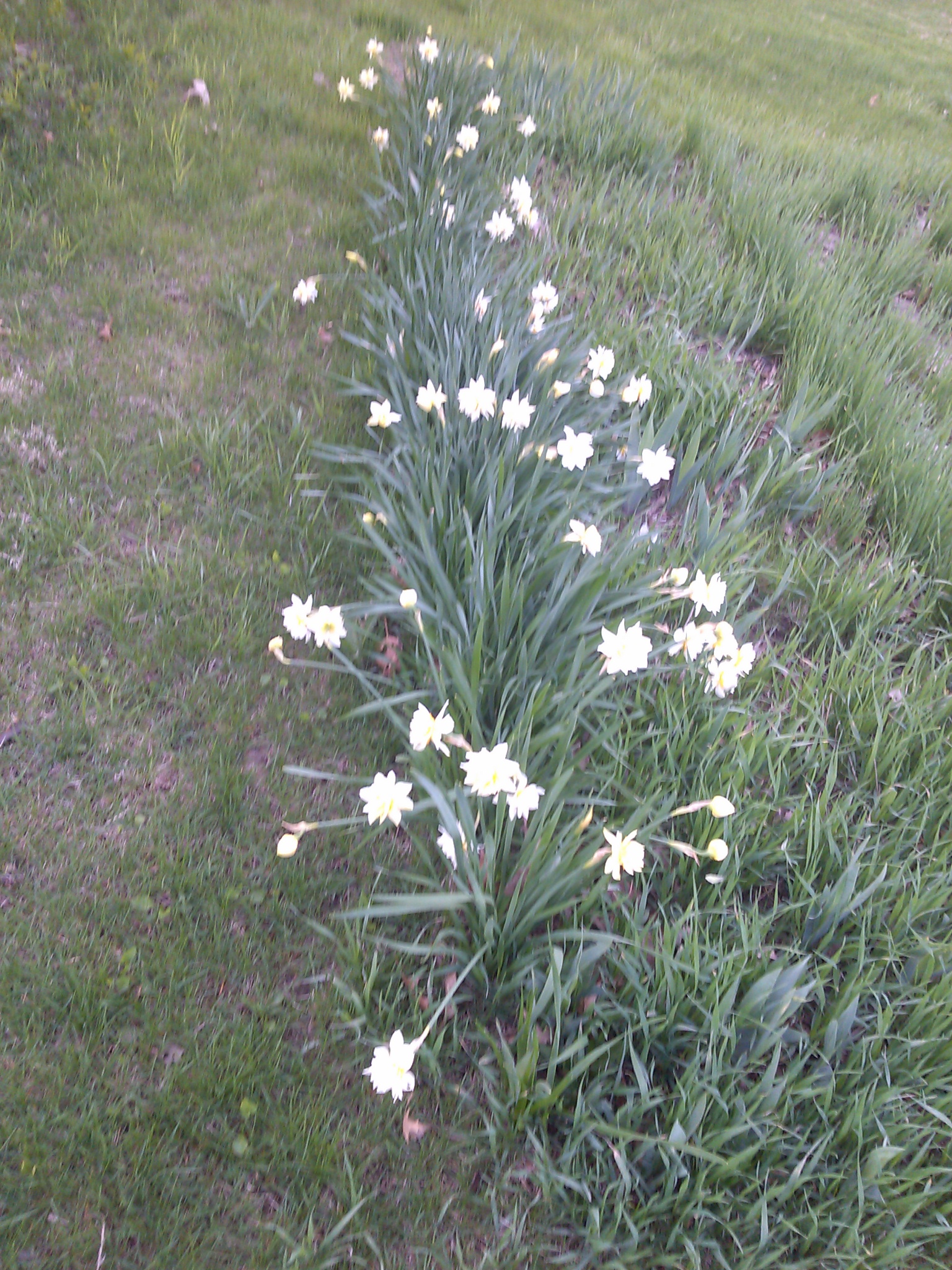
Spring Flowers
Spring Flowers Near the Garlic Patch

LAKE MACBRIDE— Sound sleep and dreams populated the last two nights as physical labor dominated much of my time this week.

Yesterday was a three job day, which made things easier and harder. Easier because the schedule drove everything, requiring less thinking. Harder because of the long hours and limited flexibility. I crashed into bed before the sun set.

Tuesday was also a full day: farm work, finance, gardening, and a long dinner meeting with the board of directors of a national NGO based in Washington, D.C. I had quinoa stir fry— my first time to eat the high protein vegetable— and decided to continue my moratorium on buying it for the time being. It is not good enough to cause trouble for indigenous people in South America who rely upon it.

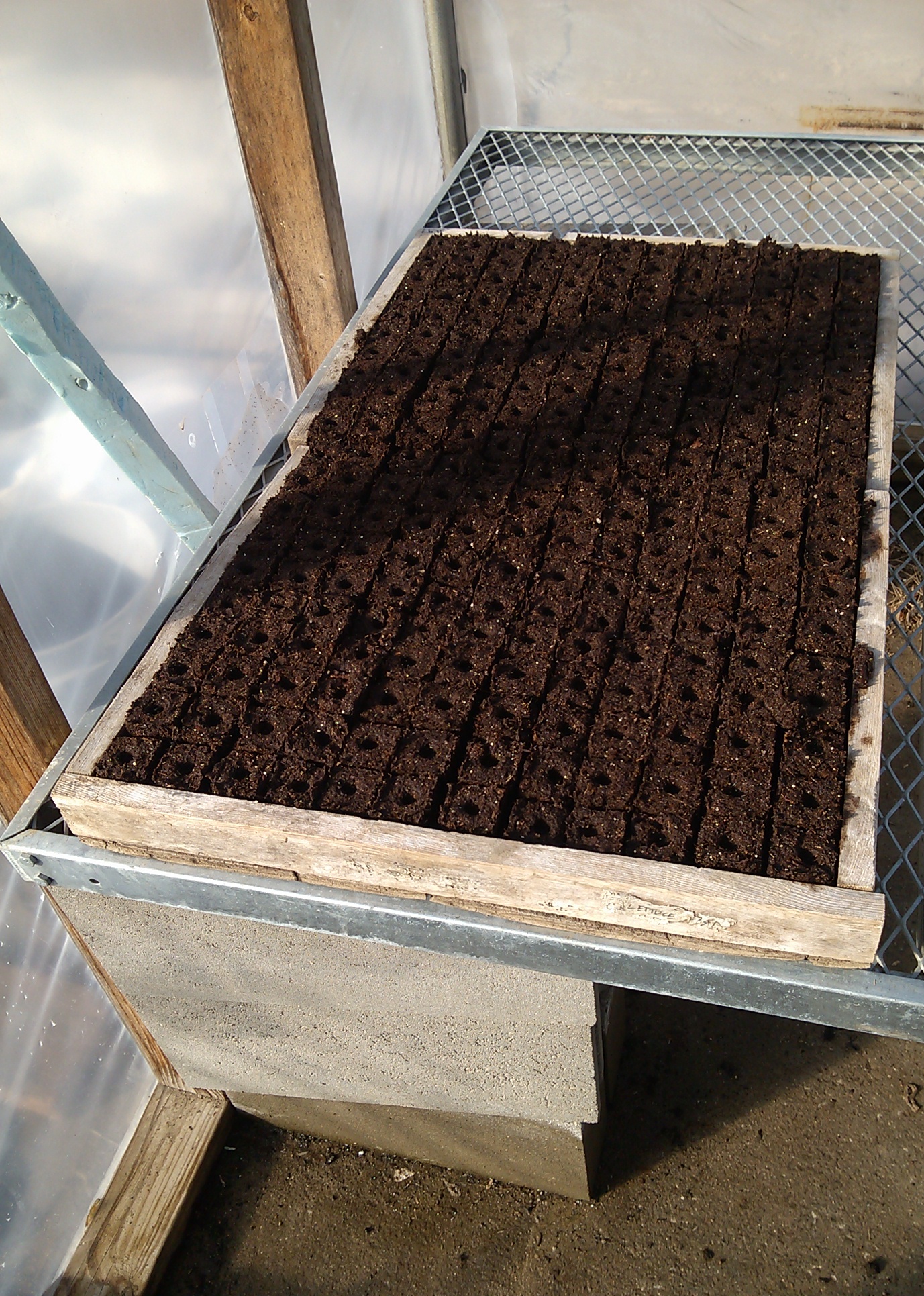
I’ve been neighboring. Folks next door asked where they could get some bales of hay to use in landscaping. A friend raises livestock, so I delivered four bales with my Subaru Outback after making seed planting trays in the germination shed. No one was home when I arrived, so I left them under the garage eaves and they left a check wedged in the brick work of our front yard planting area. The transaction was positive all around.

There is a sense that Spring is slipping away before everything can get done: making less time for Internet activities, and a web of opportunities elsewhere.

Categories
Social Commentary Writing

First Share and Living in Society

Asian Greens in Scrambled Eggs with Vermont Cheese and Pickled Bits and Pieces

LAKE MACBRIDE— The first share from the Community Supported Agriculture (CSA) farm was ready yesterday— asparagus, lettuce, baby bok choy and Asian greens. Anticipation over spring and summer cooking is building, even if living on bits and pieces from the pantry will continue until the full flow of local produce is unleashed. Picking up the share at the farm was a fine beginning.

We had more than two inches of rain since Earth Day, so outdoor plants are growing. The garden is too wet to work, although as soon as the soil dries, seedlings are ready to go into the ground. Meanwhile I will go on living in society, and that is today’s topic.

The phrase “in society” has a particular usage here. It is part of a spectrum of relationships with people that contrasts with “chez nous,” the French term that refers to “at home” or “with us.” Maybe there is something else on this jumping green sphere (thanks Lord Buckley for this phrase), “outside society” or “foreign,” but most of our lives are spent chez nous or in society. My tag “homelife” could be changed to “chez nous” and sustain the meaning.

Living in society is that set of relationships which sustains a life on the plains. It includes friends, family, neighbors, workplaces, institutions, retail establishments, and organizations with which we associate or interact. The relationships are interpersonal, that is, specific people are associated with each part of society— it is not an abstraction.

When young, we don’t see our life in society this way. We had an ability to live in the moment without a history of interpersonal relationships, anchoring us into something else. As we age, we are more like a character in a William Faulkner novel that must work to suppress the endless flow of memory.

If experience connects us, the way we live in society is based on thousands of previous interactions. For example, someone ran for the U.S. Senate after a long, productive life. If I saw him today in any of a number of settings— at a retail store, at the retirement village, at a literature reading, at a veterans meeting, at a public demonstration— I would think of the courage he displayed by taking on personal debt to challenge an entrenched incumbent politician who would otherwise have run unopposed. I would also think of our many conversations over a period of years. Our relationship is driven by my respect for his courage, and I picture him when I think about the associations we share. When I use the phrase “in society,” it might be referring to an interaction we had, or one like it with someone else.

My usage of the phrase “in society” may have been explained by others who are smarter, but because it is organic there is a peculiar sense to it on this blog. It is personal, but not really, because is it also public.

I am entering one of the richest periods of personal interaction in life. Old enough to have had experience, and young enough to gain new ones. Each day’s potential is vast midst the galaxy of people with whom I interact. Favoring the phrase “in society” enables me to talk about them without revealing where the specific interaction may have occurred. This protects people from unwanted intrusion into their lives, and enables the writing I do for a couple of hours each day.

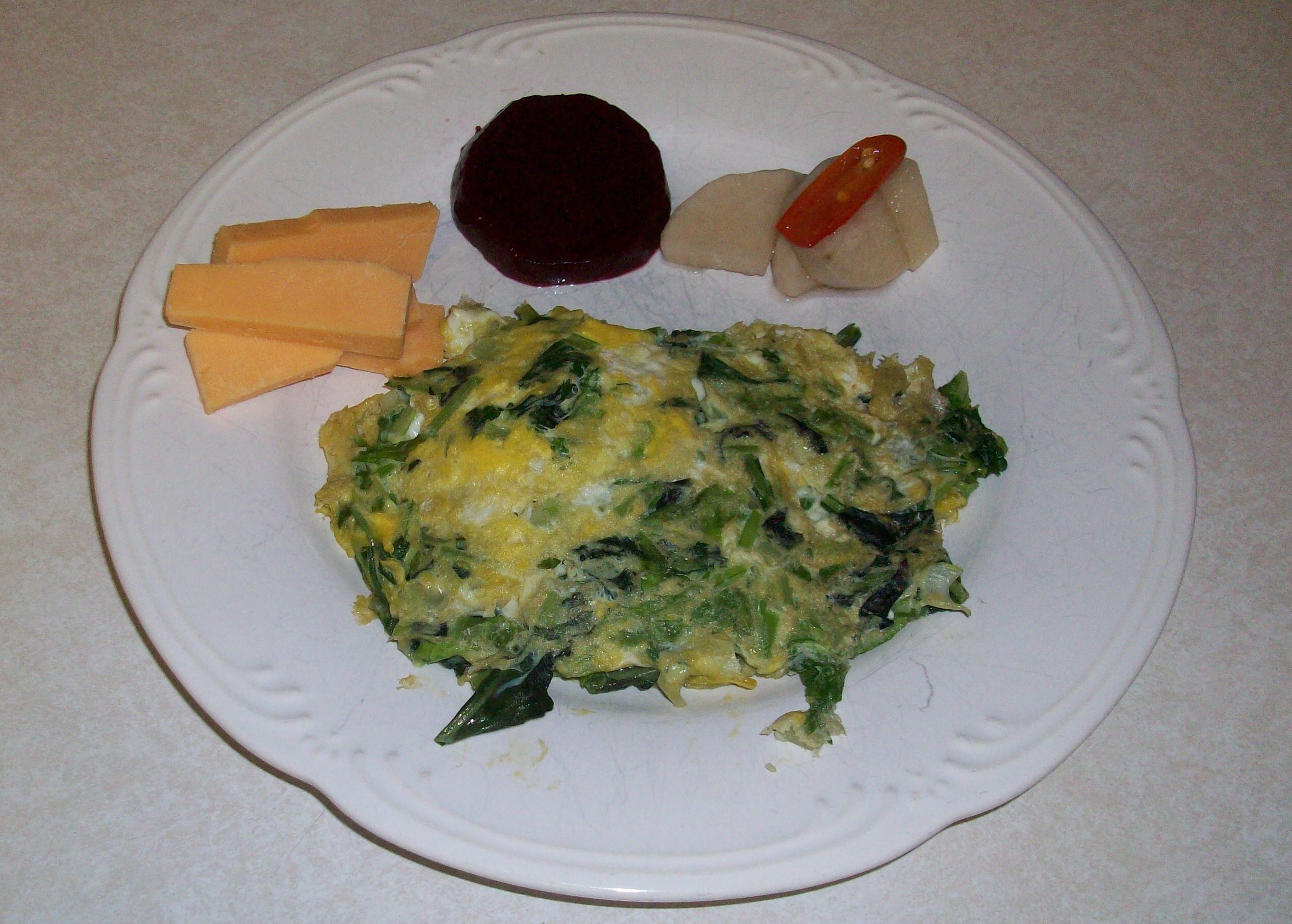
Chez nous, we would have had breakfast of Asian greens mixed with scrambled eggs, Vermont cheddar cheese and pickled veggies from last season. In society I am part of the local food movement and post photos of my breakfast. Maybe I am drawing a fine line, but it is an important one for a writer.

Categories
Kitchen Garden

Earth Day at the Farm

019
Planting Area Near the High Tunnel
015
Rhubarb
Hydrant
Hydrant
Field
View to the East
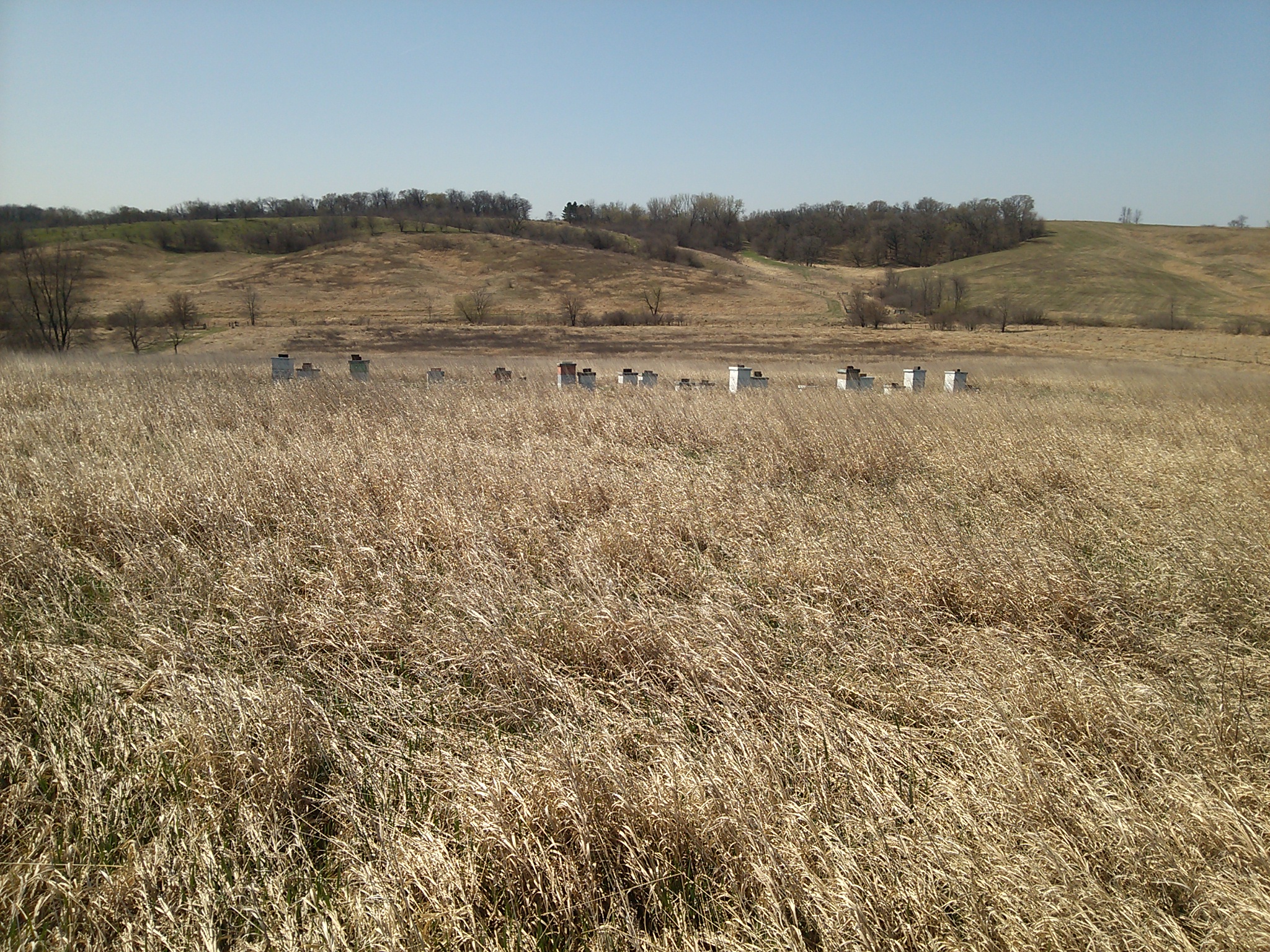
Bee Hives
Bee Hives
Categories
Kitchen Garden

Anyhydrous Days

Anhydrous Ammonia
Anhydrous Ammonia

LAKE MACBRIDE— Following a truck pulling a double bottom of anhydrous ammonia tanks, I snapped a couple of photos at a traffic signal. On my way to a shift at the warehouse, thoughts were turning to all the garden work needing done at home, and the closed environment at the warehouse seemed a distraction from more important things in the outside world.

This type of rig is out everywhere, although it is more common to see them being pulled by tractors in a field during spring than on the streets. It’s time to fertilize the fields for the row croppers.

We accept this type of wobbly evidence of conventional farming, rolling off on the shoulders of roads on busy traffic days, because of the importance of the farm economy to our community. As readers know, I work in the local food system, which in some ways is different, and in some ways, similar. In fact, the question, what is farming, comes up with regard to many diversified farms.

A rebellion is brewing among local food producers. Rep. Art Staed of Cedar Rapids posted this on his Facebook page yesterday:

I attended a meeting today organized by John Whitaker, State Executive Director of the IA Farm Service Agency. The meeting’s focus was on addressing and removing barriers to the production of local foods. We heard producer goals and concerns, and county concerns from a zoning and building perspective. We also studied legislative, financial, regulatory and other issues and perspectives. The goal is to encourage and support small farmers in their efforts to provide more fresh, local fruits and vegetables. This was an informative discussion, and I’m really excited to assist with this endeavor at the state level. More local meetings will be scheduled…

Staed put the best face on the issue, which is farmers are not always treated as farmers in this state. The biggest barrier to local food producers is that they are often treated as commercial operations by local governing bodies, rather than farming operations. They are deprived— wrongly, they believe— of the Iowa agricultural exemption from regulations. The meeting organized by John Whitaker is one of a number of them, and I’m carrying one of his business cards in my wallet, if you want a sign of where I’m at on the issue.

Staed is the ranking member of the local government committee in the Iowa legislature, which will play a key role in enabling all farmers to take advantage of the agricultural exemption, should the legislature act. Already, there is bipartisan support for doing something to relieve local food producers of unnecessary regulatory burdens that add a financial hardship that inhibits entry of new family members into diversified farm operations. More diversified farm operations would be better for our economy, and better for the environment.

We’ll see how this plays out, and there is a lot going on that hasn’t made it into the public eye. Right now, folks focus on those prominent anhydrous tanks, distracted from the movement toward parity that is stirring among farmers involved with local food production.

Categories
Work Life

Day in the Life

First Soil Blocks at the CSA

LAKE MACBRIDE— The winter of thinking and planning is over, leaving the doing and its requisite long days and short nights.

Yesterday began at 5 a.m. with finishing my newspaper article about the forestry meeting in town. Afterward, I spent a couple of hours at the farm, worked a shift at the warehouse, and attended a meeting about the global roll out of a nuclear abolition initiative with Rotary International. I returned home at 9:30 p.m. It was a long day.

Rotary International is engaged in its final work to eradicate polio around the world. What’s next for them may be working with others to bring an end to nuclear weapons. I signed up as one of three Iowa speakers for International Physicians for Prevention of Nuclear War, and its U.S. affiliate, Physicians for Social Responsibility, as we seek to engage Rotary Clubs worldwide. Rotary International and the International Red Cross Red Crescent Societies are the only non-governmental organizations recognized by the United Nations, and both have expressed an interest in nuclear abolition for humanitarian reasons. This is a really big deal, even if we don’t hear about it in the U.S. corporate media. I am thankful to be a small part of it.

The seeds planted indoors have sprouted. The growing season has begun.

Categories
Kitchen Garden

Where Will We Secure Our Food?

Garden After First Snowfall
Garden After Snowfall

LAKE MACBRIDE— A common belief about our food system is it’s a struggle between conventional and organic farming. Or, another way to frame it is industrial versus sustainable farming. To embrace any one of these over the others is a step down a slippery slope. According to the much hated agribusiness Monsanto, “the biggest problem with the debate over ‘organic’  and ‘conventional’ crops is that it suggests there are only two ways to grow food: a ‘good’ way and a ‘bad’ way. The reality is far different.” If a person knows anything about agriculture, it is easy to agree.

The global food system cannot be accurately characterized as any one thing because a transition to a sustainable food production model, one that can feed a global population expected to reach 9.6 billion people (potentially within my lifetime), is more complicated than any either/or scenario. In order to produce enough food, agriculture has to be diverse and scalable, but locally replicable. What does that mean? What it doesn’t mean is a bunch of Iowa farmers getting rich by exporting corn and soybeans overseas.

My friend Ed Fallon, organizer of the Great March for Climate Action, posted on Facebook, “it’s important to find ways to keep one’s food budget affordable while not violating one’s principles. For me, a combination of growing my own food, buying directly from local farmers, barter, and shopping at my local grocery store… keeps my food budget on par with what most people spend.” Whatever one thinks about Fallon, in this simple post he describes a food system that is sustainable, replicable and could be scalable.

A simple truth is that consumers, including home gardeners like me, should consider a food system that favors locally and sustainably produced food. The idea that we should exclude anything from our food system represents a step toward the extreme we shouldn’t take. Freshness and seasonality play an important role in developing a local cuisine and cuisine engenders life and makes it worth living.

The thing is, the cuisine I develop in Big Grove may be different from what I would develop anywhere else on the planet, based on what’s available. Fallon’s example relies upon supplementing one’s personal effort to secure food, and includes a commercial retailer. The one he mentioned in his post is a sponsor of his webcast program, but I don’t believe it matters a bit to substitute any retailer who is at the end of a world-wide food distribution system. In my case, I use several grocery stores to secure food I can’t get in my garden or through bartering. What matters more toward sustainability is decreasing reliance upon any one source of food when stocking the pantry. As Fallon indicated, it is possible to do so without violating one’s principles.

When we consider the meaning of my tagline, “sustainability in a turbulent world,” a local food system is as important as anything else we do. We have to eat to live, and while food obsession would not be a good thing, our outlook toward a local food system is as basic a need as anything. It is better to be inclusive of everything because as we develop a system of production, outside purchases, bartering, preparation, preserving and cooking food, the potential exists to sustain ourselves more locally. From a global perspective, each iteration of such a process is what makes a local food system scalable. This more than any one agricultural process or crop production system.

I’ll leave the macroeconomics of food production, packaging and distribution to others. What is more important is how individuals leverage what exists to improve the quality of their lives: a complex web of interdependence that is often forgotten, but remains as important as anything during our brief lives on the planet.

Categories
Kitchen Garden

Breeding Season

Tagged Cow
Cow

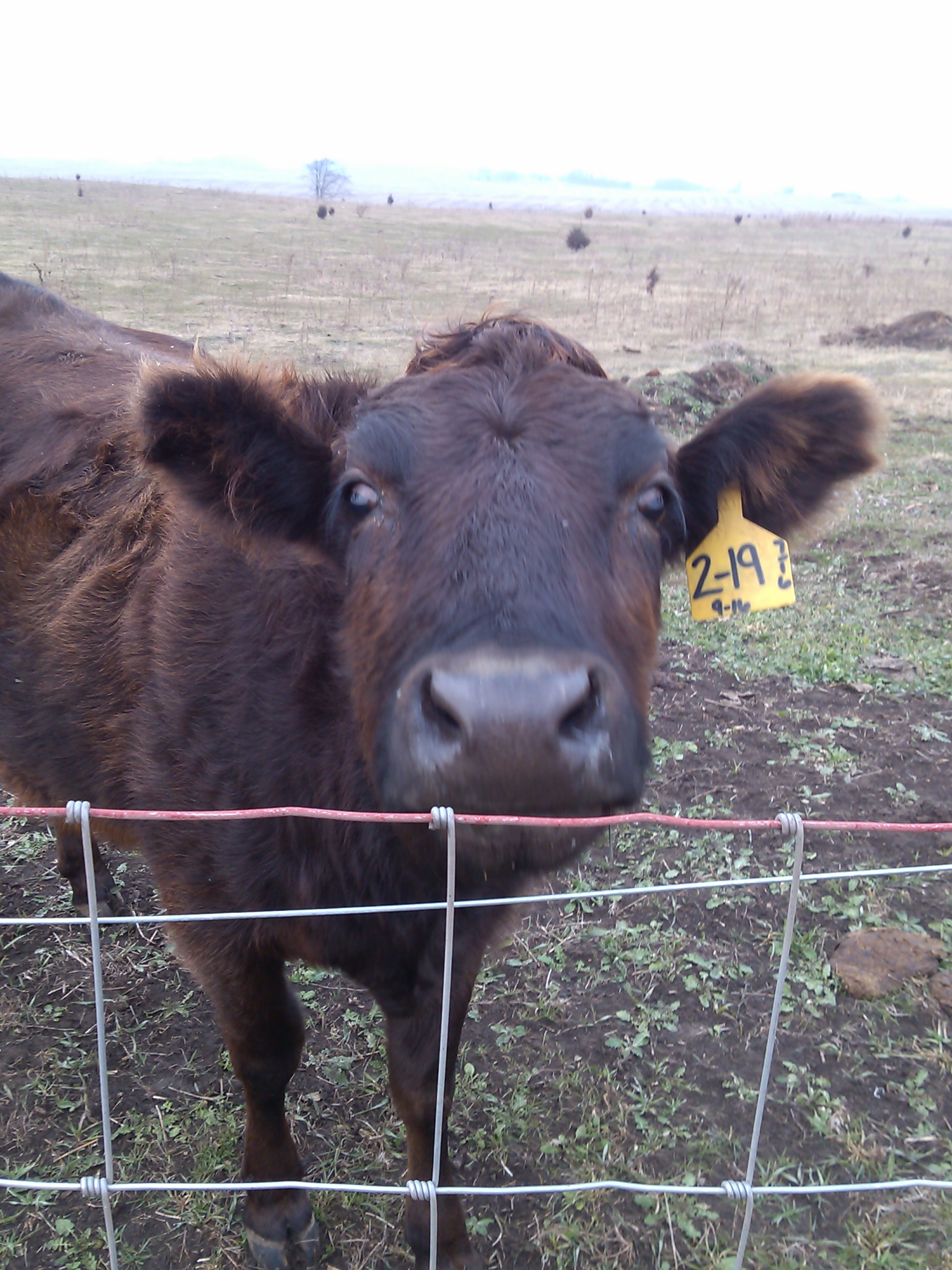
LAKE MACBRIDE— Breeding livestock is as old as dirt and the season for cattle and sheep is wrapping up now. Bulls and rams have begun their fall courtship, and the question remaining is whether or not the ladies are pregnant during the first go-around. Some farmers can “tell” if the females are pregnant, while others consult with a large animal veterinarian. The idea is to impregnate the livestock now for spring lambs and summer calves.

Cattle
Cattle

As a flexitarian, I’ve given little thought to where meat comes from since my days of working in a slaughterhouse more than 40 years ago. The animals with which I am familiar now are grass and grain fed and well cared for. While confinement operations are de rigueur in Iowa, in the local food system, we don’t talk much about concentrated animal feeding operations (CAFOs), except to criticize the environmental issues associated with them. We believe our way of managing livestock is better.

That said, my intersection with raising livestock is more tourism than economic activity. I enjoy reading about the complex solutions to cattle feeding involving corn, silage, alfalfa, distillers grain, corn stalks and grass, but wouldn’t want to spend my life in a constant analysis of nutrient values and costs. There is a knack, rather than a science to this, and farmers seem to do what pleases them with an eye to what others may be doing and saying.

At the end of the day, when a person works in the local food system there is exposure to the entirety of things people consume as food. Learning more about livestock this year has been another valuable lesson in sustainability.

Categories
Home Life Kitchen Garden Work Life

Turkey Wrangling and Friday

Loaves
Loaves

LAKE MACBRIDE— With the Thanksgiving holiday upon us, thoughts turn to turkey in a lot of households. Unlike during most of our vegetarian holidays, I am dealing with 100 locally grown, free range slaughtered birds tomorrow. Along with others, we are taking delivery from a local farm, sorting and weighing, and preparing them for delivery in the CSA shares next week. I’ve never been a dead (or live) turkey wrangler before, so despite the implications, I am looking forward to a new experience.

We see a lot of wild turkeys near our home. Mostly, they browse in the field near the lane to the highway, or are seen flying over the road. For those of us that remember when Iowa turkeys were an endangered species, it is always a happy sight. But enough turkey talk.

If the farm work has been winding down, it comes to a halt after delivering the final shares on Tuesday. We’ll settle up and settle in for winter. That it’s snowing as I write this post is a sign of the time of year. Confronted with the end of year holidays, it’s time to take stock of home life and work life, and make plans. This year’s planning will be as important as in any previous year.

Home life is patterned by habits formed over a lifetime: more indoor work— cooking, cleaning, writing and reading— and the part of work life devoted to research and development— studying opportunities and determining viability. As with most who live an alternative lifestyle, funding cash flow during 2014 will be a pressing issue, although I am not yet willing to sell plasma to do so.

If 2013 was anything, it was an experiment in lowly paid work, first in a warehouse, assembling kits for Whirlpool, and then on a number of farms. What I’ve found is my aging frame can take the work, but there are limits to how the tendons and muscles can tolerate increased physical activity. I am optimistic about performing physical work in more active jobs.

That said, I don’t plan to return to the warehouse, even though they invited me to return when the farm season was finished. The pay was low, and the social networking not good enough to distill further benefit. So what’s next? That’s the question for answering during the next few weeks. There are ideas, but no plans yet. I am thankful for the ability to be in this position as the snow falls and winter approaches.