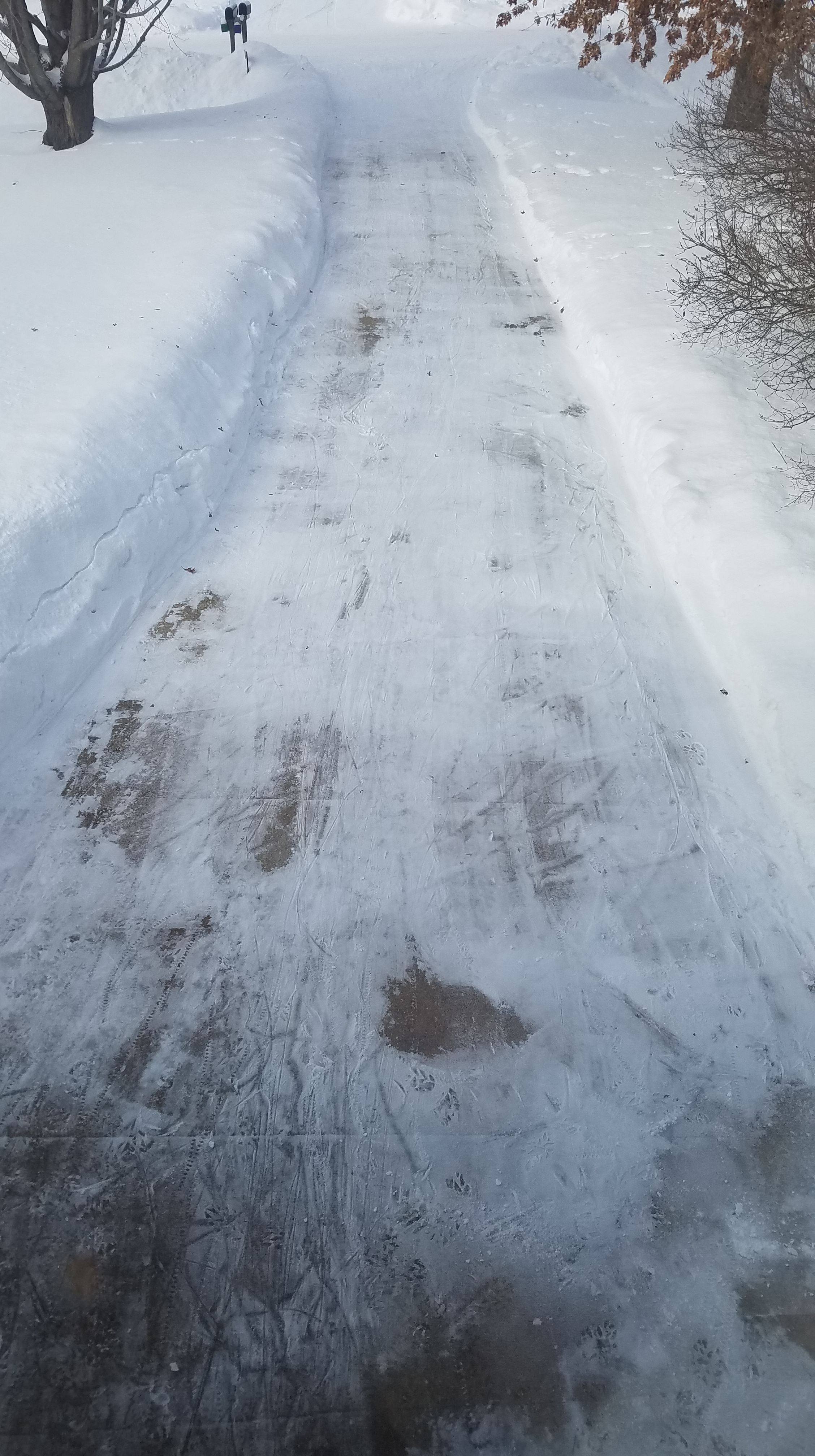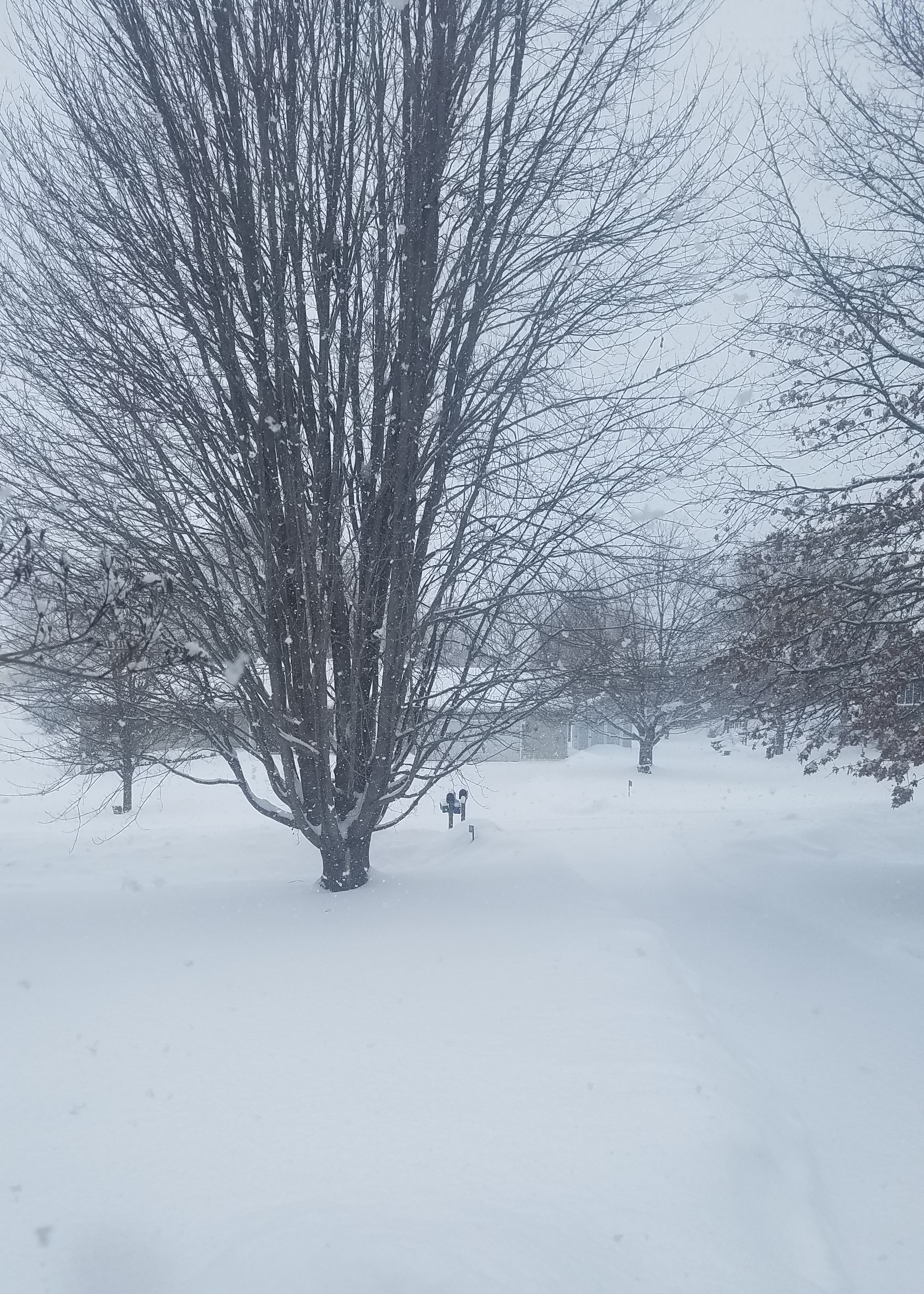
The gutters drained snow melt all day. High was in the mid-forties on Tuesday. We’ve been on restrictions for almost a year because of the coronavirus pandemic, it feels like something is going to bust loose as snow melts.
Feb. 22 the number of official U.S. deaths from COVID-19 passed the 500,000 death mark. For perspective, the Spanish Influenza killed an estimated 675,000 in the U.S. The population has more than tripled since 1918.
I’m scheduled for my first vaccine shot this weekend at the Methodist Church. The event was announced via email on Friday by the county senior center. Registration closed an hour later because there was so much demand.
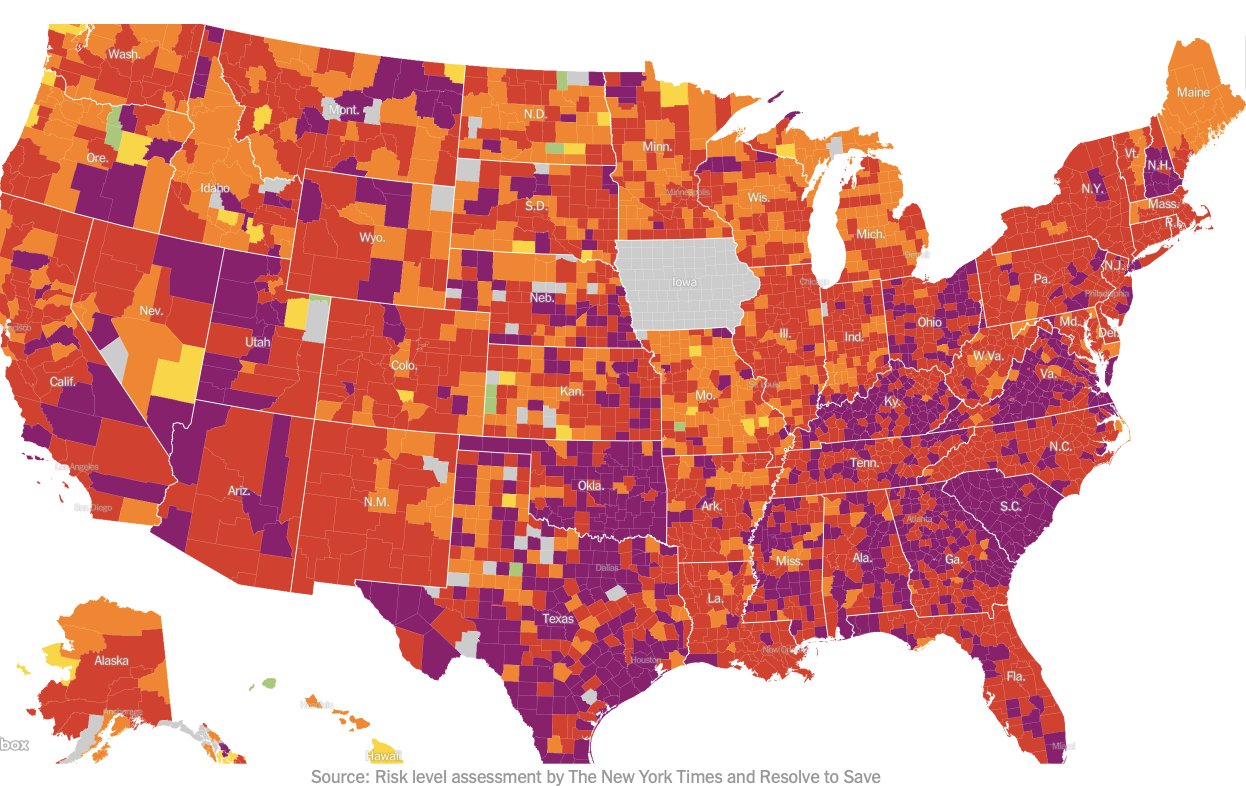
Dr. Anthony Fauci expressed hope CDC would establish guidelines for people who get fully vaccinated. That would be nice, although Iowans are not good listeners to this type of guidance. Iowa has the lowest percentage of people fully vaccinated of any U.S. state. It’s also a month before we would get our second dose of vaccine. Perhaps CDC will tell us what post-COVID-19 society will look like by then.
A year of restrictions is a lot. Because of video conferencing people are more accessible than ever. While such human contact is sometimes welcome, it’s not the same as being together in person. I turn down more video calls than I accept. Once the novelty wore off, I went back to being myself only with less human interaction. That’s not really who I am, though, and I look forward to doing more in society than securing provisions to stay at home.
The melt continues. The ground above the septic tanks is already showing. It won’t be long before the snow is gone and the scent of spring is in the air. With so much snow remaining, it is hard work to slog through it to get to the composter. Maybe in a couple of days the snow will be gone completely. It’s time in more ways than one to move forward.
A year ago Governor Kim Reynolds signed a proclamation of disaster emergency regarding COVID-19. It’s still on. I had to get out of the house today to preserve my sanity.
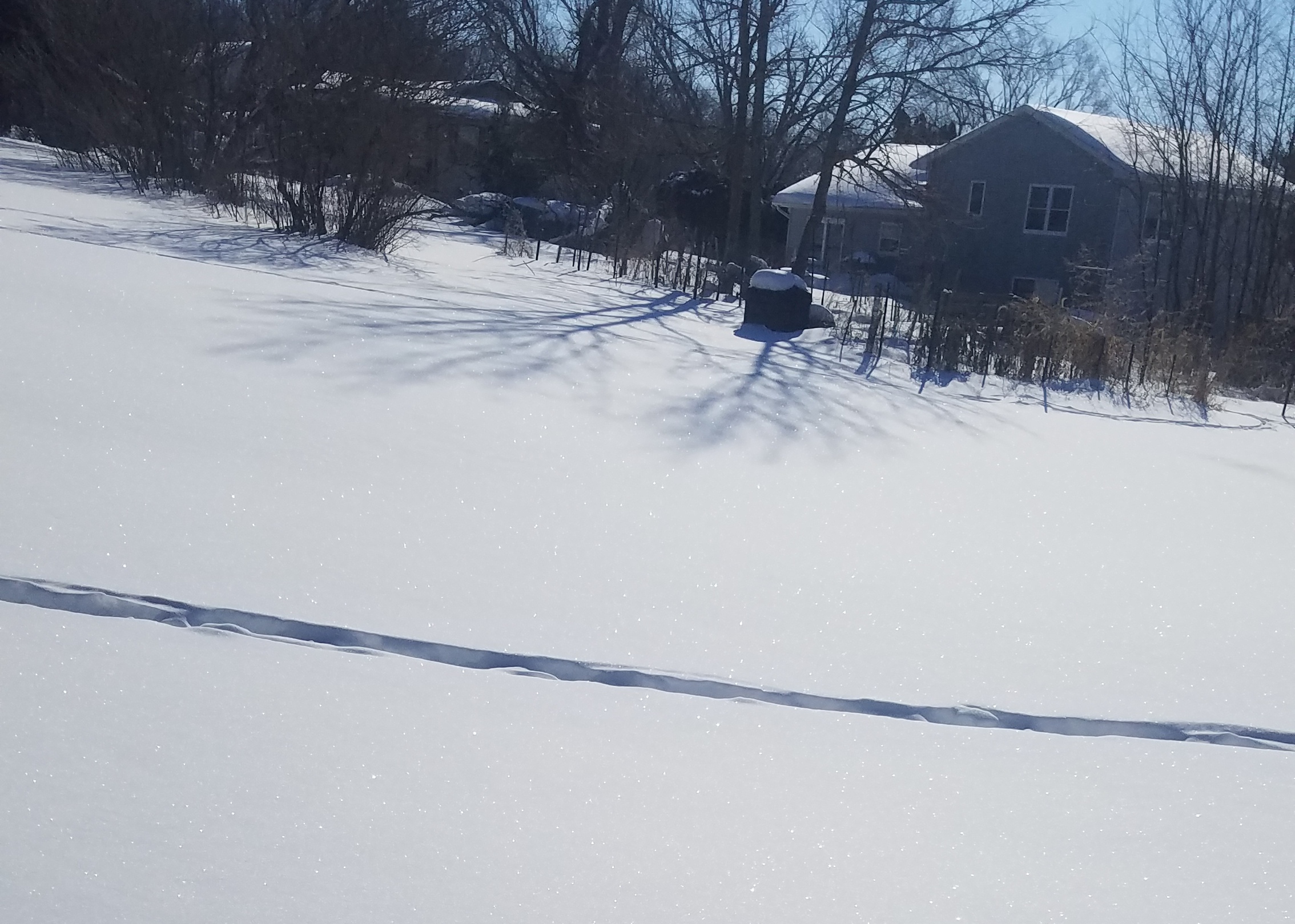
I put on my army boots with buckled overshoes bought in Indiana, my Carhartt coat from the home, farm and auto supply store, the U.S. Army issued scarf I wore in the Fulda Gap, my Johnny’s Selected Seeds stocking hat, and ventured into the unbroken snow. I found deer tracks and followed them to the black composter. It was a cure for cabin fever.
A large animal lay down in the snow near an apple tree, leaving a mark in the snow. I walked all around the house and emptied two five-gallon buckets in the composter. The ambient temperature was really comfortable and bright sunlight felt good. I wasn’t outside long, enough to break the spell.
On days like this it is tough to concentrate. I finished seasoning the new cookware and stored the pieces. I washed dishes, and viewed our daughter’s on-line stream. While there was plenty of work, I didn’t feel like doing much of it. Cabin fever.
Of course, it’s now tomorrow. A chance to begin work anew. Also it’s Friday, whatever cultural resonance that might evoke in the post work-a-day world of the coronavirus pandemic.
I cleared the driveway of snow a dozen times this year, including yesterday. There has been snow cover for weeks and it is expected to continue. It’s the first real winter, the kind we had when I was a kid, in a long time.
The record-setting cold that has gripped the central U.S. has pushed snow cover across the 48 contiguous states to an all-time high in the 18-year database of the National Operational Hydrologic Remote Sensing Center.
Snow covers about 73.2 percent of the U.S. to an average depth 6 inches (15 centimeters), according to the agency. A year ago 35.5% was covered to an average depth of 4.6 inches.
Restricted at home during the coronavirus pandemic, there are new things to explore. While tracing an internet order, I noticed the delivery vehicle had a satellite tracking device which updated location every 10 – 30 seconds. For a while, in between reading passages in a book, I followed the truck around our area on the map, noting where it stopped and the routing. The driver used roads I don’t normally think of using. There were a lot of stops. Anticipating arrival of the package, I opened the curtain and watched her truck pull up. Curiosity satisfied, I’m not going to spend a lot more time at this yet it’s something new to break the pattern of living at home with just the two of us. A different aspect of life in Big Grove.
I spoke to the local medical clinic to confirm my upcoming blood test and follow up appointment. They will provide the COVID-19 vaccine once it becomes available. They didn’t know when that would be. If they have it by my appointment, I can get it then. That’s the second opportunity in our area once the vaccine supply chain starts flowing.
It appears the new president takes the pandemic seriously and we have a chance to return to normal. At a town hall meeting in Wisconsin last night, CNN reported this from President Biden.
President Joe Biden would only commit to a return to normal by next Christmas during a CNN town hall on Tuesday, saying he did not want to boost Americans’ hopes when he could not be certain of a still-early vaccine rollout.
The prediction of nearly another year in pandemic-dampened conditions was admittedly not optimistic. But Biden still said it was as good as he could offer with any level of confidence.
“As my mother would say, with the grace of God and the goodwill of the neighbors, that by next Christmas I think we’ll be in a very different circumstance, God willing, than we are today,” Biden said. “A year from now, I think that there’ll be significantly fewer people having to be socially distanced, having to wear a mask.”
He added: “I don’t want to over promise anything here.”
The ambient temperature is six degrees below zero. The February streak of subzero days is a record according to meteorologists. The headline on the Weather Channel website is “If you think it’s cold now, just wait until Valentine’s Day and next week.”
It’s cold, but not that cold. Overall this winter seems warmer than usual. Why?
We are not in the 35 below zero range we hit a couple of years ago. That was the cold spell that caused 70-degree temperature swings, began killing our Locust tree, and caused long-stable sewer and water pipes to break around the neighborhood. It’s not that cold yet.
We are also missing a strong cold spell at or below minus 20 degrees. I follow these cold snaps to identify when I should prune the apple and pear trees. We didn’t hit one last year and thus far haven’t this year. Combine it with the fact 2020 tied for the warmest year on record and perhaps one can see why I’m skeptical regarding the hubbub about how cold it is. I just walked on the driveway and it is a quiet, refreshing, albeit cold night. The kind that sets the stage for hope and human activity.
I will attempt to get the buckets of compost from the garage to the bin in the garden. However, there is no hurry because even if I do dump them, the compost will not decay much until the temperature warms. There is also an eight inch pile of snow on top of the composter to clear.
The coronavirus pandemic was a killer as it closes its first year. Thus far 2.4 million people globally died of the coronavirus. In the United States, 485,000. In Iowa, 5,236. Every one of the deceased had a name known by others. The coronavirus is a pestilence the likes of which there is no living memory, except maybe among a decreasing number of centenarians.
One can lose track of hours and days in the pandemic. Each human interaction takes on special meaning. It’s precious because there are so few of them, and those we have are mostly through electronic media. When a human calls, it’s a big deal. We are tempted to pick up the telephone when it rings, even though it is reasonable to predict the caller is a machine wanting to ID me as a potential customer to buy an extended warranty on my 1997 Subaru.
Hopefully we’ll get enough COVID-19 vaccine in the community so everyone who wants it can get it. The vaccine is proving effective overseas where the population of anti-vaccine folks is lower than in the U.S. If the vaccines are working, and it appears they are, there is hope of ending the pandemic. In the meanwhile, we’ll stay home, keep warm, and if we have to go out we’ll do so only when it is necessary, and wear a face mask and stay socially distant. Because we have pensions, we can afford to do this. Others are not so lucky.
There is pruning to do, although not as much as last time. The Aug. 10 derecho felled a large branch on the Red Delicious apple tree, so I don’t want to stress it much more than it is. No living creature want more stress right now. One day this week I’ll put on my overshoes, a warm coat, hat and scarf, and go on walkabout to check the yard and neighborhood. I’ll take my mobile device with me in case some human calls.
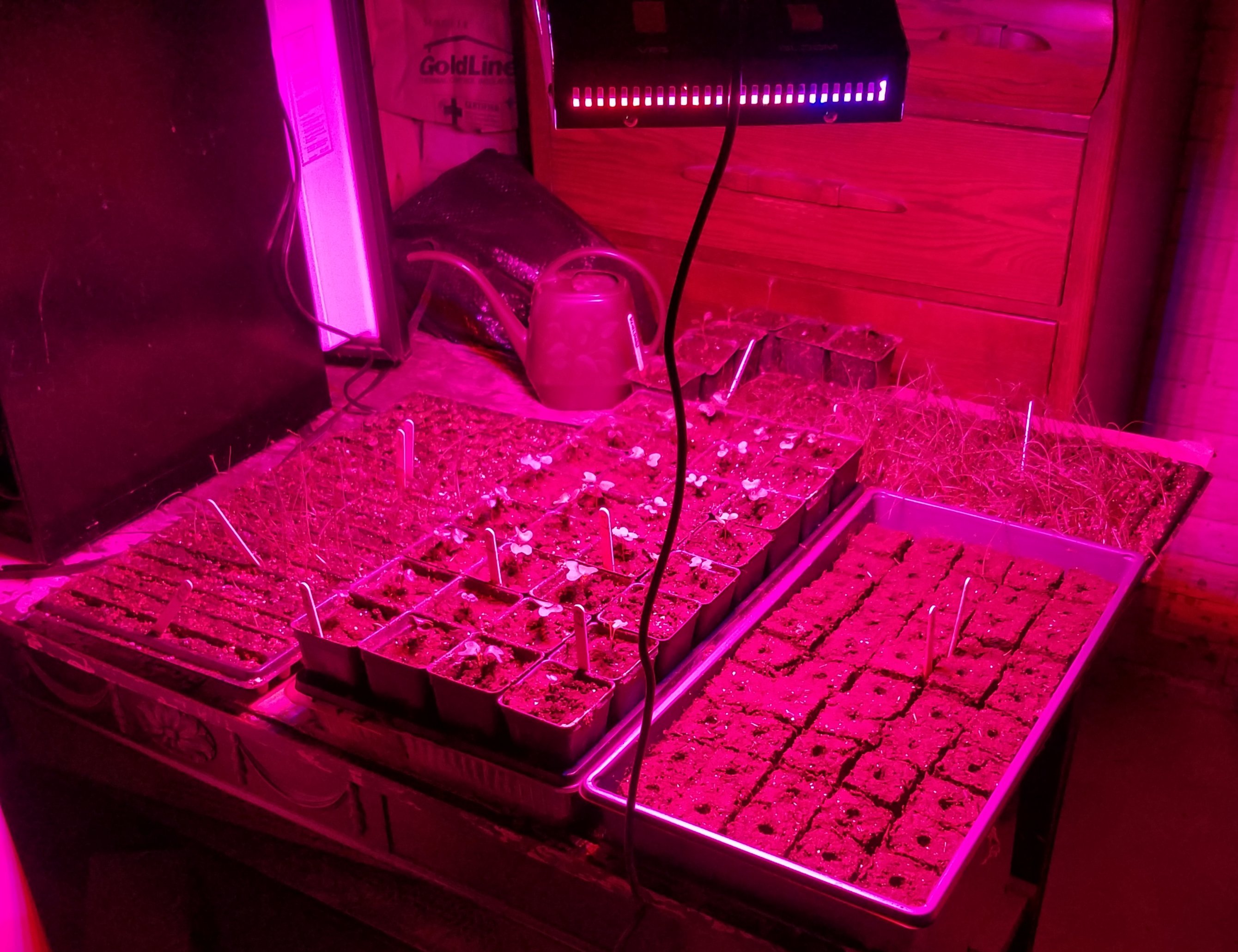
Kale, broccoli and collards germinated within three days. This is the first year using a heating pad and grow light indoors. My reaction is positive.
Already onions, shallots, leeks, basil and the cruciferous vegetables are in process. Despite more than a foot of snow on the ground the garden starts bring promise.
March 2 is the traditional day to sow lettuce seeds in the garden. If the ground can be worked, I will. Grandmother called this planting “Belgian lettuce,” regardless of the variety of seeds planted. With my new indoor setup I’ll be starting lettuce indoors as well, as soon as snow melts and the greenhouse can be assembled. Annual cycles of gardening have begun.
What’s different this year is the coronavirus pandemic. Iowa has had a slow start up in vaccine distribution with not much relief in sight for the near term. I know some of the places where vaccines will be available and as of yesterday, no appointments were available. The main impact is my decision to avoid working on the farm this year until being vaccinated. That means I’ll have to be more self-sufficient in my gardening. I believe I’ll be fine.
The outdoors temperature is forecast to remain cold for a while. Yet indoors, there is hope of a great garden.
An octogenarian friend talks about “shooting from the hip.” The way I take it is absent guidance, leaders will step up and help us navigate through difficult times together, leaving no one behind.
We need more of that because our political leadership is failing during the coronavirus pandemic and the resulting economic crisis.
Responding to a perceived need, and not any urging from government, my friend began organizing the logistics for a mass COVID-19 vaccination near where we live. With the structure in place, one hopes the supply of vaccine will be forthcoming. I expect it will be eventually.
People do plan for emergency response. They should. That such planning for a pandemic response appears absent from our government makes leaders among us shoot from the hip because the need is now, and it is real. Maybe that’s what our governor wants. She should just come out and tell us we are on our own. It is one hella way to go about a national and global crisis, though. It makes me wonder why we even have a government if it cannot respond adequately to a once in a hundred years pandemic.
The coronavirus pandemic has us cooking meals each night and nothing goes better with a bowl of soup made with pantry ingredients than warm from the oven flatbread.
The two people in our household consumed more all purpose flour during the last year than we have in a long time. I made a pizza each week, and am using up some gifted specialty flours — rice, almond, coconut, garbanzo bean — by blending them with all purpose to make flatbread.
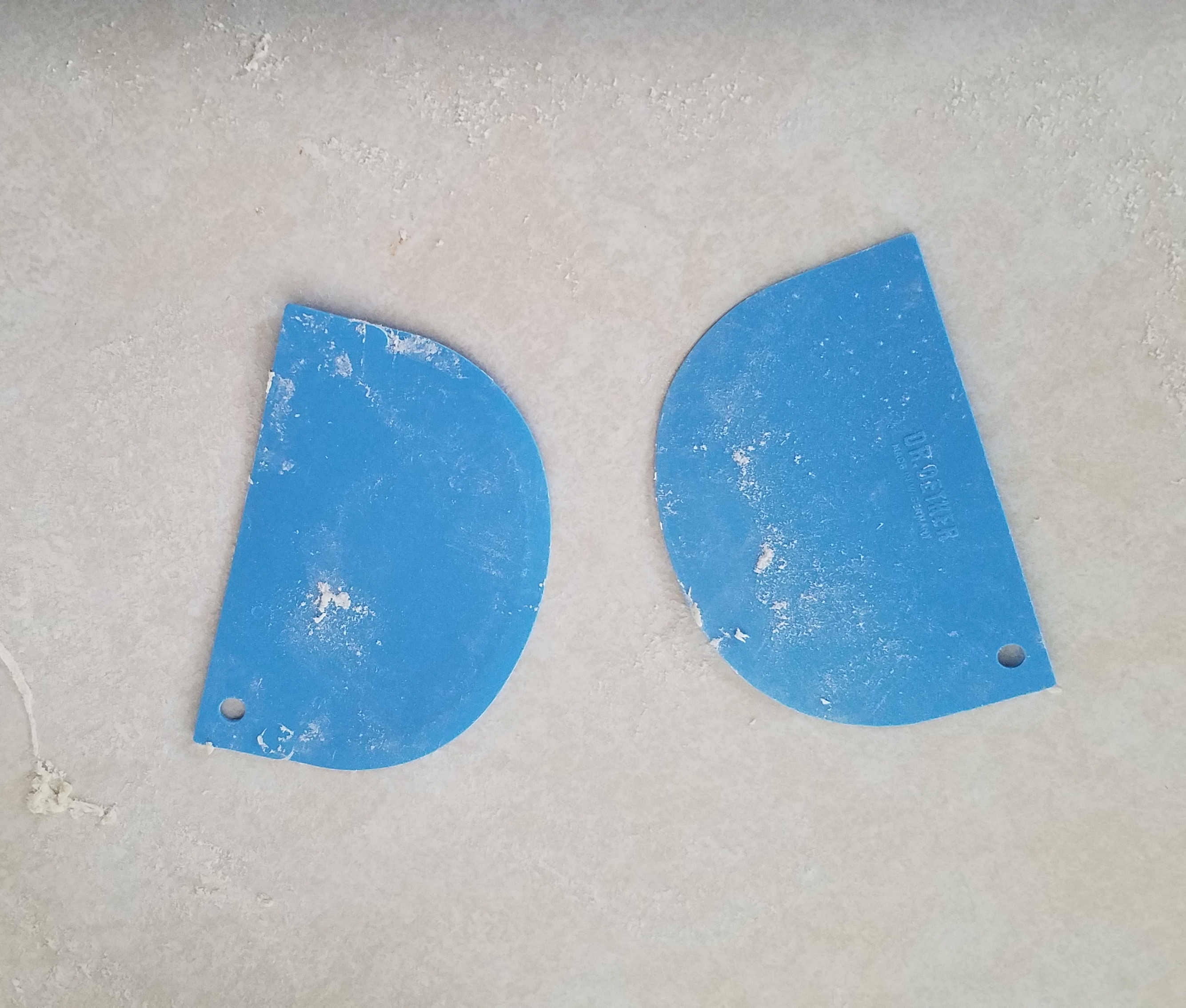
There is no dough recipe, just technique. To get started for a two-person loaf, a cup of warm water from the tap goes into a stainless steel bowl. Mix in a teaspoon of yeast, a scant teaspoon of sugar to feed the yeast, a dash of salt, and two tablespoons of flour. Let that rest for a few minutes, then apply cooking spray to a mixing bowl for the first rise in the oven. Turn the oven on to the lowest setting. I get out my two Dr. Oetker spatulas, bought in West Germany in the 1970s, and get to work, but they are more habit than need.
If I’m making a pizza dough, I start with a cup of all purpose flour. For flatbread I put a half cup of specialty flour in the bowl with the yeast mix and a half cup of all purpose flour. Using the spatulas, I mix and add flour until the stickiness of the dough subsides enough for it to come together. I flour the counter and knead, sprinkling more flour to relieve stickiness. I form a ball and put it in the rising bowl. Put a plate on the bowl and let it rise in the oven for an hour.
Take the dough out of the oven, set the rack in the middle, and preheat to 425 degrees. Punch the dough down and knead a second time on the counter. It will take more flour. Form the flatbread on a baking sheet and dock it. I use parchment paper to make clean up easier but an oiled pan will work, too. Cover the formed flatbread and let rise for 30-45 minutes until the change in shape is noticeable. Place it in the oven and bake for 12-15 minutes until the top begins to brown.
Serve plain or with butter, apple butter or another topping. To serve more people, adjust the water amounts by half a cup for each person. It is a quick, reliable accompaniment for any meal.
On Feb. 6, 2020, a 57-year-old California woman died suddenly after feeling ill for several days. She was the nation’s first known victim of the coronavirus.
Since then, more than 462,000 U.S. residents died from the virus, including more than 5,000 Iowans. Despite modern communications and improved record-keeping we don’t know the exact number of COVID-19 deaths. Causes of death can be complicated in normal times. Suffice it many have died of the virus, or complications from it, and it seems likely we will surpass the number of deaths during the 1918 influenza pandemic.
The combination of physical isolation and communication via social media has made the last year a weird one. Because of the isolation, especially by exiting my retail jobs, I felt healthier during this time than I have for a while. Social media, on the other hand, seems populated by people with their hair on fire about one or another aspect of the pandemic and government response to it. Of things I can control, turning social media off most of the time is one of them. The reduced diet of noise has been better for me. I recommend it.
A year after a national public health emergency was declared by the U.S. Department of Health and Human Services on Jan. 31, 2020, the death toll climbs, unrelenting. After surging, the number of hospitalizations were recently down in Iowa, which contributed to the governor’s decision to relax her recommended restrictions, according to news reports. Frequent email reminders from the state government, to take a survey and get tested for COVID-19 if needed, ceased some time ago.
In our area the senior citizens group is organizing logistics to do a mass vaccination (300 doses) at the Catholic Church in partnership with the local pharmacy. The idea is to help seniors with limited mobility get vaccinated. When doses of vaccine will be available is unknown. I signed up for the vaccine and to volunteer.
Friday afternoon, Iowa Governor Kim Reynolds issued a new proclamation of disaster emergency. Because of our age, we fall into the category “vulnerable Iowans.” Here is the governor’s guidance:
I continue to strongly encourage all vulnerable Iowans, including those with preexisting medical conditions and those older than 65, in all counties of the state to continue to limit their activities outside of their home, including their visits to businesses and other establishments and their participation in gatherings of any size and any purpose. And I encourage all Iowans to limit their in-person interactions with vulnerable Iowans and to exercise particular care and caution when engaging in any necessary interactions.
Governor’s proclamation of disaster emergency, Feb. 5, 2021.
This is Iowa. No mandates here. People are on their own. Just do the best you can.
The coronavirus pandemic is unlike anything I’ve known. So far, so good, despite a lack of political leadership in preparing for a potential pandemic, or, after it arrived a year ago, in mobilizing national resources to combat it. Iowa and the nation are playing catch-up.
For people in our group — financially stable, without major health risks, and able to live without working a job for pay — it is easy to figure out what we can be doing to stay healthy. Neighbors who contracted COVID-19 have recovered, except for those who died. There is no sense of everyone pulling together to get through the pandemic, which is disappointing.
We have become isolated in society, waiting to see the existential facts of what the virus is and what it does to us. It’s a sad day for a nation that mobilized to enter and win World War II. I suppose too many people don’t remember the people who fought that war to make the analogy meaningful. I remember and am doing what I can to help.
These days of contagion seem like a blank slate. By leaving the workforce after the coronavirus pandemic was declared, I found a form of freedom in each day’s beginning.
I hadn’t planned it, yet the pandemic forced my retirement. With our pensions and health care, mostly from Social Security and Medicare, we have adequate financial means to survive without paid work.
Each day begins with a chance to do what I want. I have a daily outline, though, so I know what tasks I told myself would be next.
Once the pandemic recedes, I may return to part time work for the socialization it provides. That is, if I can find people with whom I would enjoy working. Any additional income will find a place to be spent, yet income would not be the main objective.
For now the focus is on writing. I should get more disciplined and stick to my outlines. That seems too much like work. In January, my average daily output was 2,179 words. With editing, that number will be reduced in the final product. During the last draft before starting another section, editing takes more time. Partly it is figuring out what to say and how to draw on resources. Mostly it is reaching for a form of satisfaction in the written words.
There is a good month of winter remaining before I set up the greenhouse and plant cruciferous vegetable seedlings. There’s no time to dally on a blank page. I’m young enough to believe I can do what I want today and tomorrow. At the same time the work ahead is clear and will occupy my days.
For a moment I’ll bask in this moment, when the day seems like an endless expanse ready to be traveled. That alone can make life worth living.
A few onion sprouts poke toward the grow light from channel trays resting on a heating pad. Planted Jan. 20, more of them should germinate soon and rise up. I check them multiple times each day. Successfully growing them is not a given.
We are a distance from working in the garden. Tuesday I cleared a deep snowfall from the driveway in case we have to get out. A neighbor plowed a two-foot berm left by the snowplow at the end of the driveway. We are well-provisioned and can stay home for a while, that is, unless something happens. I would enjoy visiting friends over coffee in town. But for the coronavirus pandemic I would.
Joe Biden has been president for a week. Already he ramped up COVID-19 vaccine distribution to bring an end to the pandemic. News reports say if his actions are effective, we could see the end of major risks of the virus by the end of summer. Partly, it’s why we elected Biden.
Tuesday was a good day for research on my book. I found a historian who used information and artifacts about my Minnesota ancestors to write about Polish immigration. While I printed copies of historical documents when I visited Lincoln County, his work pieces together a story I couldn’t see on my own. He tied together the locations where my Polish ancestors lived in Pennsylvania, Chicago, LaSalle County, Illinois, and Lincoln County, Minnesota with a specificity I hadn’t found previously. His work gave context to their lives in a way I couldn’t see when I visited the home place and surrounding farm community. His short article presented a believable picture of life at the end of the 19th Century that informs understanding of my family history.
For the last few years I’ve had trouble reading. When I visited an ophthalmologist at the University of Iowa clinics, years ago in the before the mobile device era, he identified a condition where my eyes don’t always focus together, resulting in a kind of double vision. Over the years I’ve gotten used to seeing double. Before he identified the condition I wasn’t aware of seeing double. I improved my reading ability by sitting at my writing table with eyeglasses on, instead of reading without glasses in bed or in a recliner. There was more at work than slight nearsightedness. Reading earlier in the day at my table has been more productive. While I wear bifocals and have specially made eyeglasses for desktop computer use and reading, my sight is pretty good. For that, I’m thankful as I read a lot, Now maybe I can read more.
It is another day in the time of contagion. I look forward to the gardening season, yet while there is snow cover, indoor work continues.
You must be logged in to post a comment.