Categories
Living in Society

Shopping After the Pandemic

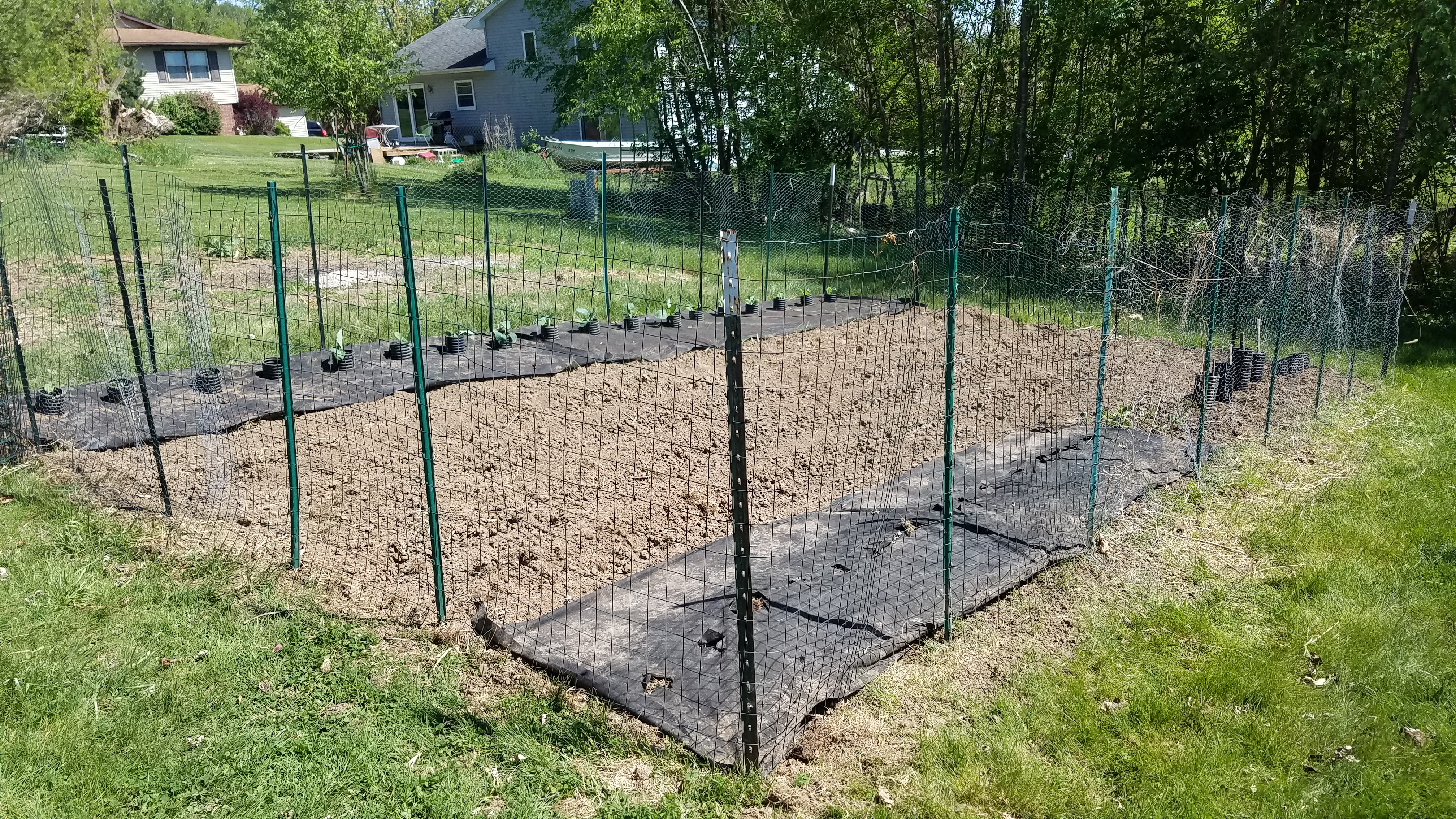
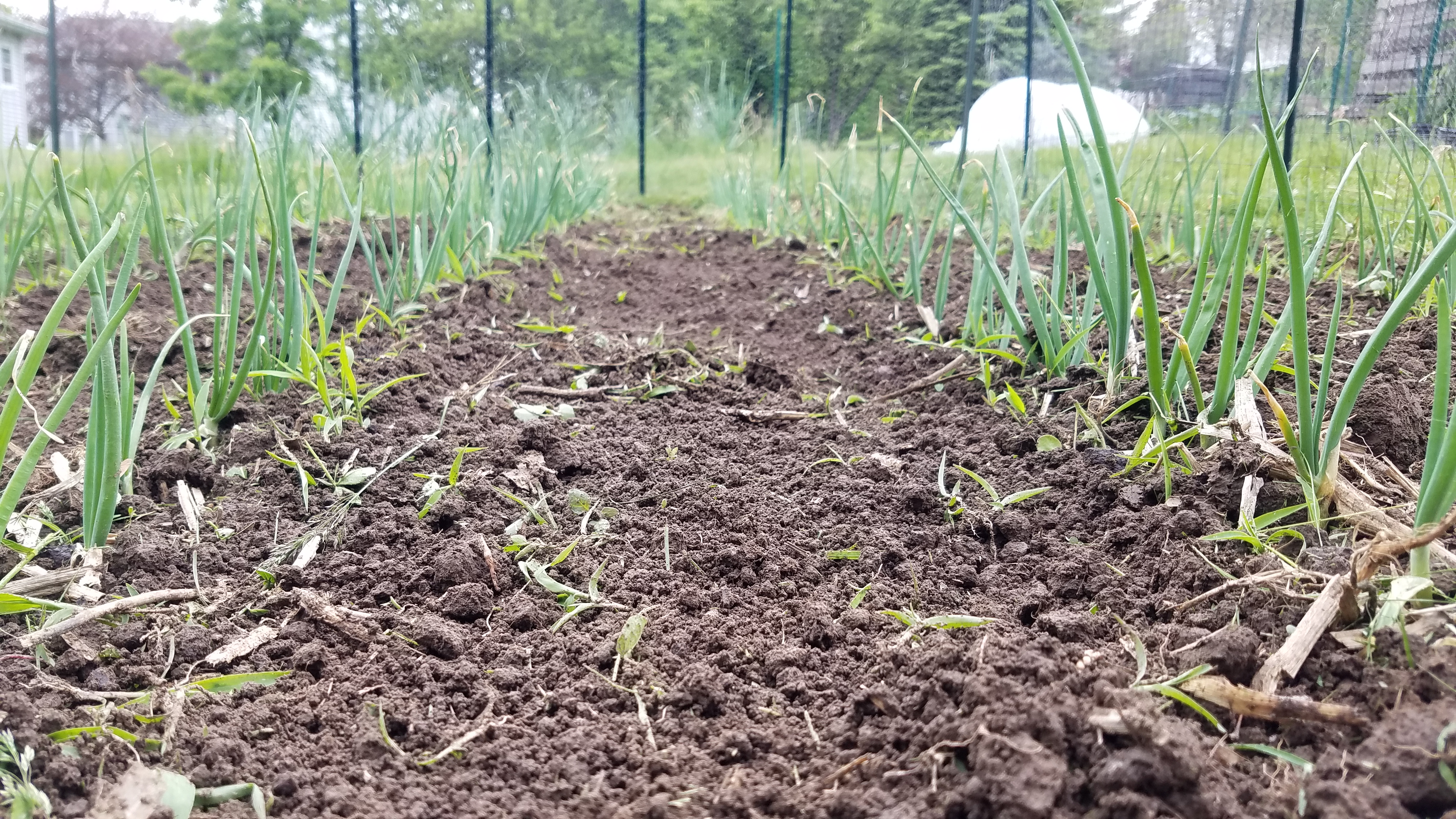
Onion patch after weeding, May 15, 2021.

Delivery vehicles ply the neighborhood on a daily basis, more than I remember. Increased numbers are partly a function of more online shopping due to restrictions of the coronavirus pandemic.

The U.S. Postal Service has always been here. UPS, FedEx, and Amazon are also here daily, often multiple times a day. The creamery a few miles away makes home deliveries of fresh dairy products ordered online. Will this level of online shopping persist when more people are vaccinated for COVID-19? Yes, it will.

A pandemic lesson learned is the value in quickly finding what one needs, ordering it, and receiving it within a couple of days without starting a vehicle. How does that impact local retailers? If Sears and Roebuck didn’t drive local merchants out of business, neither will the rise of online shopping. Rural retail has its roots in people ordering from catalogues. Here’s a refresher from the Sears Archives website:

The 1943 Sears News Graphic wrote that the Sears catalog, “serves as a mirror of our times, recording for future historians today’s desires, habits, customs, and mode of living.” The roots of the Sears catalog are as old as the company. In 1888, Richard Sears first used a printed mailer to advertise watches and jewelry.

The time was right for mail order merchandise. Fueled by the Homestead Act of 1862, America’s westward expansion followed the growth of the railroads. The postal system aided the mail order business by permitting the classification of mail order publications as aids in the dissemination of knowledge entitling these catalogs the postage rate of one cent per pound. The advent of Rural Free Delivery in 1896 also made distribution of the catalog economical.

History of the Sears Catalogue, Sears Archives.

We piled in our car and went to Sears as a family when I was a child. Frequently it was a special time together. Our lives were more about living than shopping in the 1960s. Automobile trips became family outings and visiting Sears was another trip to make. If father looked over the Craftsman tools while we were there, that was a side benefit. The pandemic taught us automobile culture was not as important as we may have believed.

In a life not far removed from the frontier, shopping wasn’t that important. When my great, great grandparents settled the Minnesota prairie, there were few retail merchants and no internal combustion vehicles. Making do is how they lived. Distribution infrastructure as we know it now did not exist at the time Sears mailed the first catalogues. The pandemic forced many of us to return to making do and online shopping became part of that.

The rise in online retail is significant. I placed my first order with Amazon.com on Dec. 23, 1998. In the early days, Amazon lost money to gain market share. Today they are profitable, more profitable than other large retailers, by a distance. Sears as we knew it is no more. Amazon’s gross revenue is astounding, far surpassing any locally owned store.

There is a nearby ACE Hardware store, about 20 miles away. They suffer from the same lack of inventory as every other local retailer. While helping customers find something, if they don’t have it in stock, they take us over to a computer terminal. They search the store’s inventory and if they find the item, place the order, and notify the customer when it arrives. Why couldn’t I cut out the middleman and find items online myself? I can and during the pandemic, I did.

America is becoming a land of rich people and the most of us who are not. While we don’t want to say it, we have returned to a form of post-serfdom society, similar to Poland during the partition era. Forced off the land and into wage earning, it has become harder to get along on wages. There is no unspoiled prairie to seek and start over. Time, money, and efficiency have become mainstays in our effort to live. If we can get inexpensive, efficient help, and save time by shopping on line, we will.

That is the future of shopping after the pandemic.

Categories
Living in Society

Masks Off!

Change is on the horizon regarding the coronavirus pandemic. Or maybe not.

On Thursday, May 13, the Centers for Disease Control and Prevention announced a new recommendation for people who are fully vaccinated against COVID-19.

If you are fully vaccinated, you can resume activities that you did prior to the pandemic.
Fully vaccinated people can resume activities without wearing a mask or physically distancing, except where required by federal, state, local, tribal, or territorial laws, rules, and regulations, including local business and workplace guidance.

Centers for Disease Control and Prevention website, May 13, 2021.

Color me skeptical. Physicians have been saying that once one is fully vaccinated the danger of contracting COVID-19 is minimal. That is, the vaccines are effective. At the same time, if vaccinated people discard their masks, what does that mean when a majority of Americans remain unprotected? This one is above my pay grade and I’m not going to attempt to analyze it.

The announcement represents a shift in a pandemic which is far from over. However, a lot of behavior adopted during the last 14 months will persist after the population becomes immune to COVID-19. Some examples:

  • More reading and writing.
  • I will remain retired. No more part time retail work to supplement Social Security and Medicare. I don’t miss catching seasonal influenza and other maladies.
  • Our home owners association will continue to meet via conference call. Doing so has proven more convenient for board members.
  • Continued dinner menu planning. It’s a stress reliever with better meals.
  • Limited travel off property. Exercise, provisioning and visiting our daughter are still on. Everything else is on hold.
  • Attendance at organization meetings only via video conference. It’s more efficient.
  • Fewer trips to retail outlets. More online shopping.
  • Continue to live debt free. Fingers crossed.

Likely other behaviors will persist. For now, though, masks off for us, though it depends.

Categories
Living in Society

Will the Pandemic End?

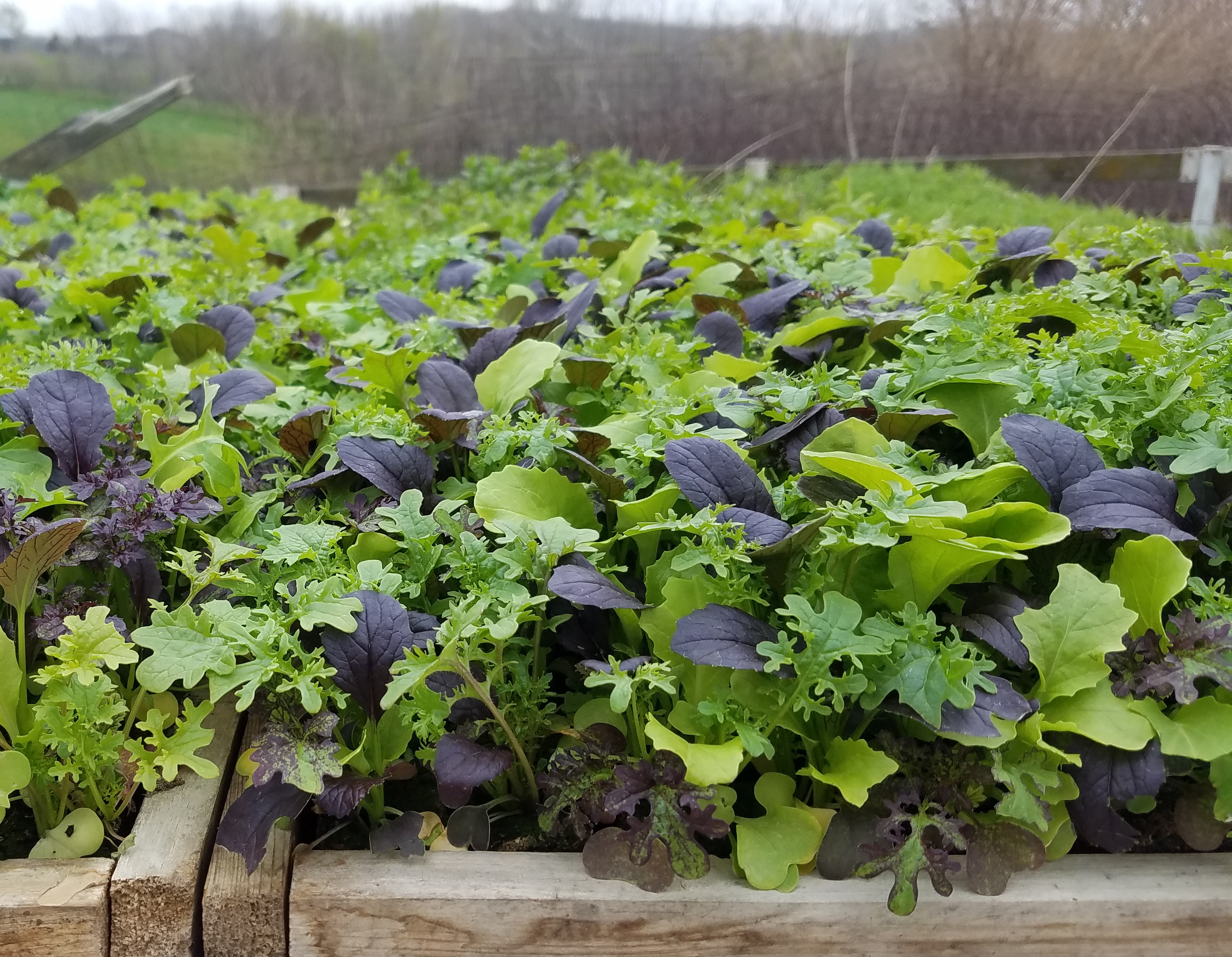
Plot #5 after Friday’s shift.

People are uncertain about resuming pre-pandemic social relations.

Yesterday on a Zoom meeting with 60 participants, the moderator took a poll of our vaccination status. About 93 percent of participants were fully vaccinated, everyone had a plan to get vaccinated, and they are looking to meet in person again soon.

Thursday my spouse and I attended a funeral service for a neighbor on line. No one inside the church wore a mask. The preacher mentioned it was the first time in a long time people could gather together for a funeral because of the pandemic. There were more people attending on line than in the image transmitted from the church.

During my shift at the farm we worked outside. All of us have been vaccinated, although we still wear masks when working inside the greenhouse. Outside, no masks are required. It felt good.

On a long telephone call with a friend, they said they wouldn’t go out again after the pandemic. At least not to the kind of event frequented before.

I organize our home owners’ association monthly meetings. Since the pandemic began we’ve held meetings via conference call. When the city library begins renting the meeting room again, that will be my sign it’s okay to meet in person again.

Uncertainty abounds in all of this.

The pandemic is real. People I know got sick and died from COVID-19. The same is true for almost everyone I know. Because of our pensions, our household can survive without outside work. We used to get so much of our lives from work, yet suddenly it wasn’t as important as staying healthy.

I like not being sick since the winter of 2019-2020. That’s a result of personal hygiene practices in play because of the coronavirus pandemic. I won’t abandon my face masks when going to the grocery store post-pandemic. If I take a job, it will be one in which I can avoid daily, random contact with people, or maintain proper protections when in person. It’s becoming a weird world for which I am not ready.

For now, the pandemic continues, and with it, social protocols. What worries me is not this pandemic, but the next one. People smarter than me say more are coming. Will we have learned anything from our time since WHO declared the global pandemic on March 11, 2020? The last year has not provided much hope we will.

Categories
Kitchen Garden

Pear Blossoms

Pear blossoms, April 27, 2021.

During this year’s fifth shift of soil blocking at the farm I got my groove back. That means I maintained a production rate of ten trays per hour. I’ve done better than that, although this year the supplier changed the composition of the soil mix and it’s taking some adjustment. It’s my ninth year at the farm under two different owners.

The farm crew is getting vaccinated against COVID-19 and we’re working through the unmasking process. When I work alone in the greenhouse I’m unmasked, when with others, masked. When the crew makes deliveries, the usual social distancing and masking protocols are followed. There is a fear that contact with so many people carries risk of transmission of the coronavirus. We don’t want the virus brought back to the farm. The good news is we are working through it.

At home, pollination is proceeding. Apple blossoms are open and petals have begun to fall after fruit set. The weather forecast is good for finishing fruit set before a frost. This is a key time in apple production.

The pear tree has fewer blossoms than in previous years yet there looks to be a harvest. Now that the sun is up, I’ll head out to the garden to take in the fragrances of the flowers before they disappear.

Categories
Living in Society

Leaving Walt Disney World

Seedling trays at the farm, April 23, 2021.

I won’t likely be returning to Walt Disney World, yet not for the reasons you might think. In the wake of the coronavirus pandemic, the consumer experience was shattered and one of the broken pieces is doing whatever we did for entertainment. Most of us won’t be going back to the way things were.

When our daughter was 11, I felt an urgency to provide her a theme park experience before she got too old. We went as a family, even though we couldn’t really afford a trip to Orlando. It was new even though it was the 25th anniversary of Walt Disney World. I remember it as a hot yet fun time where we could be ourselves. It was meaningful visiting Universal Studios and Walt Disney World together.

Lately folks are politicizing visits to Disney. Partly they accuse the corporation of playing politics. Please. Corporations have always played politics better than most. What is concerning to some is Disney recently announced cast members are permitted to display tattoos, wear inclusive uniforms, and display inclusive haircuts. I knew about the “Disney look” for many years and couldn’t see how they found enough non-tattooed people to staff the positions. Supposedly cast members being themselves has broken the willing suspension of disbelief many visitors bring with them to the park. Life is apparently crappy and folk need to travel to a theme park to forget about it. That’s a hella way to build a life.

There have always been guests at theme parks with grievances and disappointments. The new grievance of having one’s immersion into make-believe broken because Disney removed the Song of the South from Splash Mountain is something else. Something is missing.

I have no regrets about my trips to Walt Disney World, Disneyland, Sea World, Universal Studios, and the rest. It is a part of my privilege that I was able to go. So many were doing it, theme park trips came to be perceived as a norm for people who had the means.

What the coronavirus pandemic taught me is the important part of visiting theme parts was doing something as a family. It didn’t matter what we did and maybe that’s the point about Disney. Mickey Mouse is getting long in the tooth and society is ready to move on. The coronavirus pandemic changed several Disney employees I know… permanently. They are little different from the rest of us.

I’d like to suspend my disbelief in society’s promise. It’s okay with me if it’s with or without the Walt Disney Company. However, the pandemic taught me there’s a better way in sticking close to home.

Categories
Living in Society

Low Information Consensus

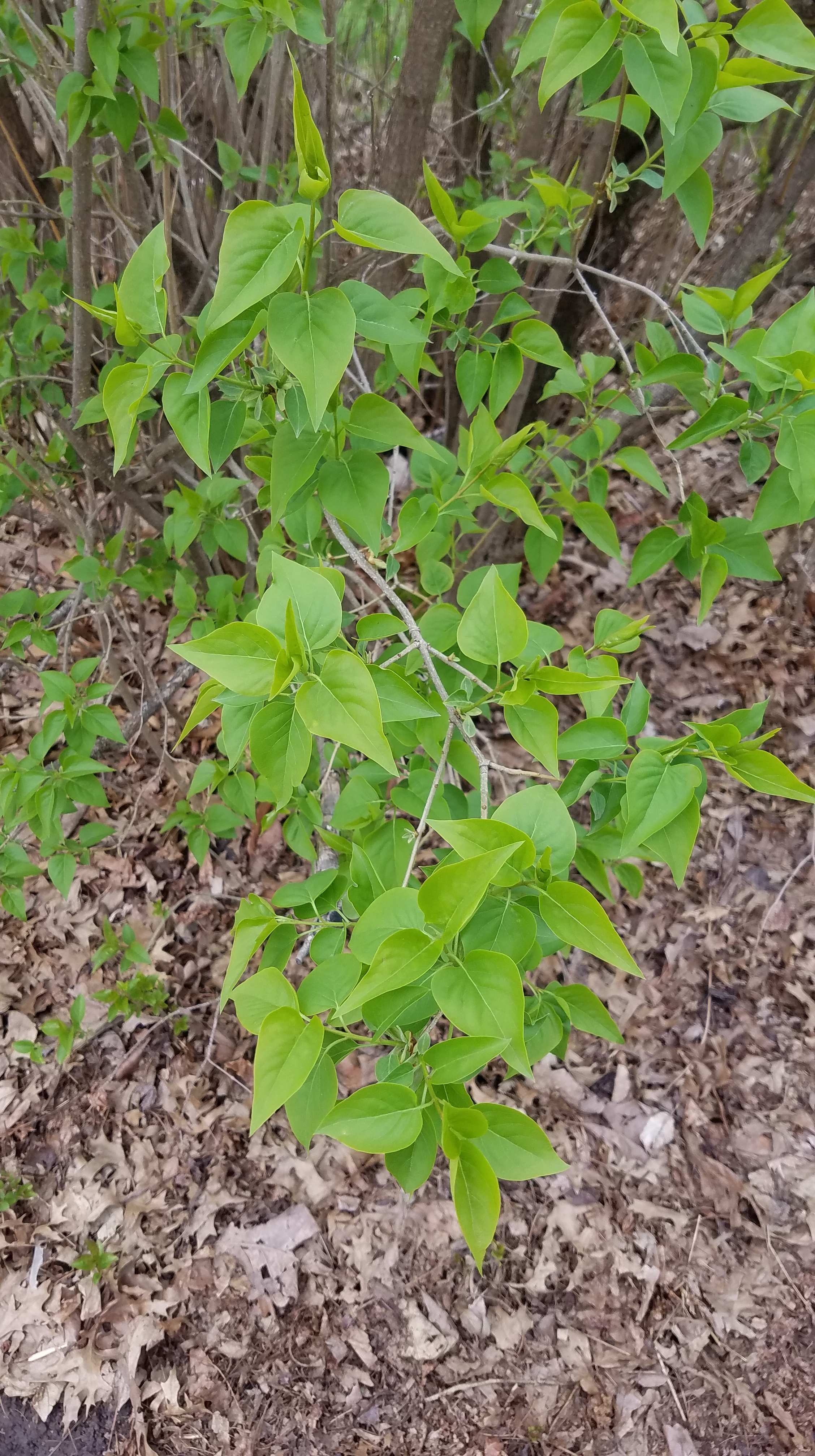
Lilacs leafing out, April 15, 2021.

An administrative law judge ruled in favor of a bar and grill employee who quit and filed for unemployment because supervisors would not follow protocols for operating their business during the coronavirus pandemic.

She requested the workplace follow COVID-19 guidelines, they didn’t, and she quit and filed for unemployment, according to Clark Kaufmann at Iowa Capitol Dispatch. The judge ruled that a reasonable person would have believed that the working conditions were unsafe and detrimental. She was awarded unemployment compensation.

Owner Kevin Kruse’s quote in the article is telling:

“I think this whole COVID thing was blown out of proportion for no worse than what it was,” Kruse said. “To me, this virus was not scientifically identified and the media just ran off with it like they did. People that would have had it — it would have been no different than having a bad case of the flu. And that is the common consensus of everybody that has come into this place throughout this whole last year.”

Clark Kaufmann, Iowa Capitol Dispatch, April 13, 2021.

This bears repeating: “the common consensus of everybody that has come into this place throughout this whole last year.” While not an example of scientific methods, this is the way many Iowans make decisions. A majority that includes folks like Kruse elected Republicans in the 2020 general election.

There is a utopian impulse in American life in which groups seek to separate from broader society to survive and thrive on their own. It shows itself in the manifest destiny myth, in our outlook toward business startups, and in things as simple as setting up a home. We have a fundamental belief in systems and our role as chief actors in them. The example of Iowa’s remade landscape and the farms and businesses that now populate it offers no more perfect example of utopian creations. I don’t know Mr. Kruse but it sounds like his business was founded on such a utopian impulse, whether he recognizes it or not.

Utopian impulses are commonplace, yet utopian projects or communities, for the most part, have not been enduring. While people continue to make life decisions based on the “consensus of everybody that has come into this place,” the inherent denial of the rest of society will bring with it a reckoning. The insular nature of enclaves like a single business or social gathering, especially as it excludes tolerance of diverse beliefs and adaptations based on scientific inquiry, will reduce the longevity of such groups. In the meanwhile it can be hell to live where such views dominate, as the judge affirmed.

The freedoms of living in the United States include the freedom to be poorly informed about society writ large. To the degree I respect and tolerate low information consensus, I hope its hegemony will be suppressed. I trust society can and will shake off such views.

I also hope my trust is well placed. As English theologian Thomas Fuller noted, “the darkest hour is just before the dawn.”

Categories
Living in Society

Haircut

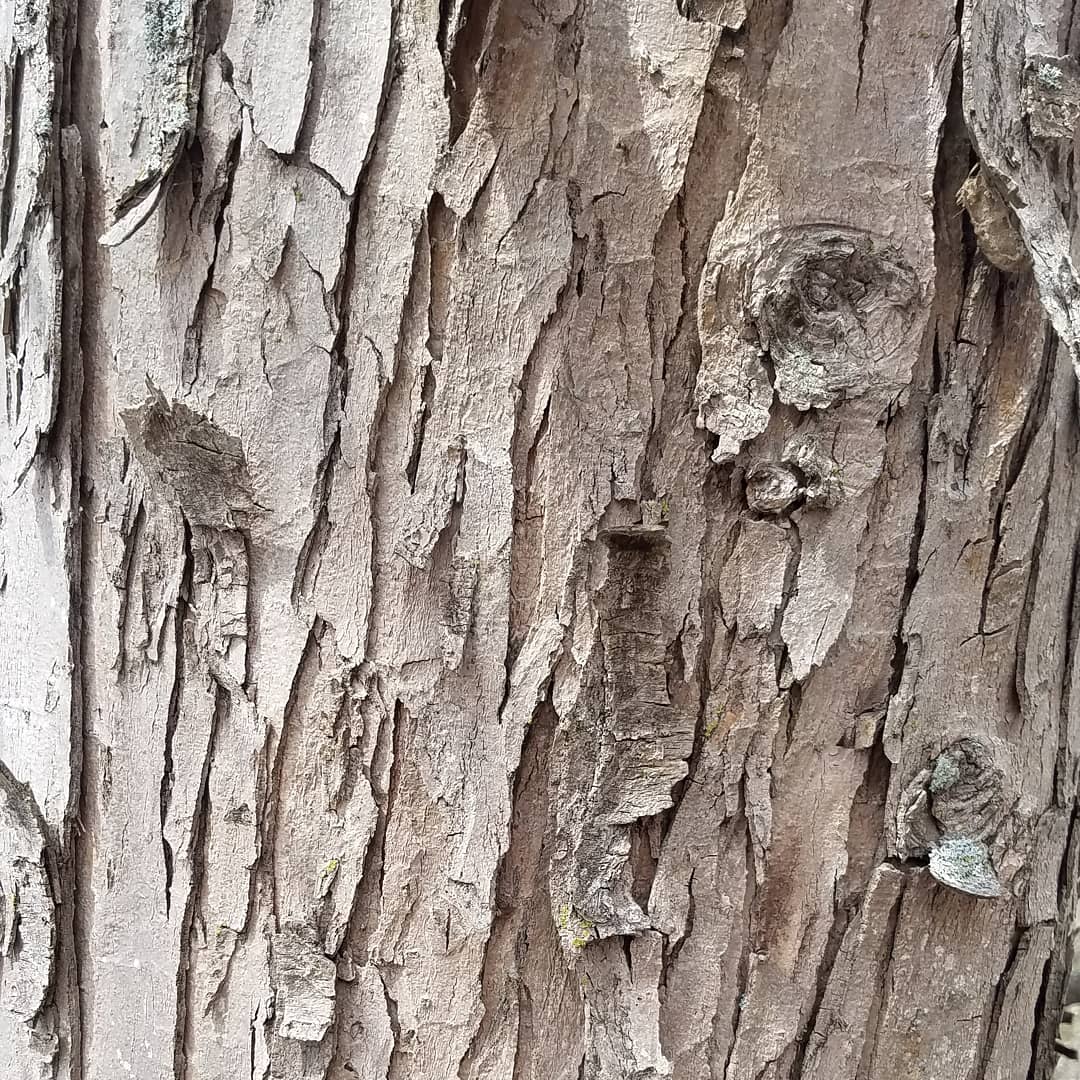
Tree bark on the state park trail, April 6, 2021.

For the first time since February 2020 I got a haircut at a professional shop. Despite two home haircuts during the coronavirus pandemic it was shaggy.

It felt good seeking a professional now that I’m fully vaccinated. The mask-wearing stylist asked me how I wanted it cut. As usual, I didn’t know. I suggested we look at the various sized combs that go with the electric clipper and she pulled four of them out of her drawer. We settled on number six.

My instructions were the same as always: tapered in back, a part on the left side, and cut it short in front so the outdoors wind doesn’t blow it into my eyes. We both wore masks during the session.

Getting my hair shorn was a welcome break from a year of contagion.

Categories
Living in Society Work Life

Amazon, the Merchant

Writing space in 2000 with a locally made central processing unit via which I ordered from Amazon.

We logged on to the internet from home for the first time on April 21, 1996. I made my first purchase from Amazon.com on Dec. 23, 1998. It was a gift card for my spouse.

During the first years on the computer I purchased a lot of VHS video tapes and almost no books from Amazon. Among those early purchases were The Great Train Robbery, Birth of a Nation, The Jazz Singer, The Seventh Seal and Roshomon, videos not available in local stores. I bought my first book in 1999, Decline of American Gentility by Stow Persons. It was unavailable in local bookstores even though Persons taught his course on American Intellectual History in Schaeffer Hall at the University of Iowa Pentacrest.

For books and videos, Amazon offered availability few others did. The immediacy of the internet made it preferable to driving half an hour to the nearest vendor in the county seat to place an order, then to return weeks later when the item arrived. When a person lives in the country, online shopping makes a lot of sense.

In 1998, Amazon.com reported a net loss of $124.5 million on $610 million in sales. They got better and are now very profitable. 2020 annual revenue was $386 billion with net income of $7.2 billion. They continue to grow and improve profitability, although no one dreamed they would dominate the marketplace as they do.

The trajectory of Amazon’s growth will accelerate as the company continues to control more of the supply chain and masters last-mile delivery (literally, the last mile(s) before the package reaches the customer’s door); This is the most difficult and complex aspect of fulfillment yet one of the most important touch points in terms of customer satisfaction.

Forbes Magazine, Feb. 21, 2021.

There are companies besides Amazon.com that moved their business model toward vertical integration, where all aspects of production through customer delivery were controlled. In the late 19th Century owners of such companies were called “robber barons” after feudal lords in medieval Europe who robbed travelers. The current owner of Amazon.com, Jeff Bezos, is easy to demonize as a robber baron, yet his business model requires customer satisfaction. A more practical criticism is to realize it is time for federal regulators to break up Amazon.com.

In Iowa, Teamsters Local 238 in Cedar Rapids is organizing local Amazon workers at facilities in Iowa City and Des Moines. Unions have had little recent success organizing private sector workers in Iowa. Most prominent union spokespeople in the state represent government workers. I am interested in Amazon from multiple perspectives.

If Amazon did not exist, there is little local retail infrastructure to replace them. For example, our local hardware store carries common items used to run a household. I enjoy going there first when I need something. One out of two times they don’t have what I need. Our local grocery store does not have many organic options. There are no specialty shops like books, fabric, and sundries. Bottom line, locals rarely have what I need.

When I look at recent online purchases, I’ve ordered a few things direct from vendors (a new Dell CPU and garden seeds). I get most clothing from J.C. Penney online, food from COSTCO, and books from Amazon. With the coronavirus pandemic more household sales went online.

In addition to retail availability, Amazon delivery drivers have become a presence in our neighborhood, as familiar as the United States Postal Service which also delivers some Amazon goods.

On Saturday I become officially “vaccinated” as it will have been two weeks since my booster shot of COVID-19 vaccine. Coming out of the pandemic I need new topics to write about and Amazon is in my sight. After 25 years of buying from them, I’m ready to do something else if they do not resolve some of the injustices created while growing their business, or if government regulators do not step in.

With a fixed income, managing money is important and lowest price for quality goods matters. Amazon is a suitable new topic for this blog.

As always, relevant reader comments are welcome.

Categories
Writing

Watching Sunrise

Sunrise Over Lake Macbride, Dec. 28, 2011.

I decided to watch the sun rise. There was an urge to grab my mobile device and take photographs. I resisted.

Not everything needs recording.

The sun rose east of the kitchen through the 25-acre woods. I made breakfast and viewed its changing colors. Another day’s beginning in Big Grove Township.

During the coronavirus pandemic my posts have become a diary of contagion. It wasn’t intended. Yet here we are, more than a year into the pandemic and despite the shipments of vaccines, there is a resurgence of cases of COVID-19.

These are uncertain times. We don’t know how a sunrise will play out, only that it’s the moment in which we live.

Categories
Living in Society

With People Again

Sundog Farm on March 28, 2021.

Sunday was my first shift of soil blocking at Sundog Farm this spring. Besides shopping, medical appointments, and trips to government offices, it was the first time out since being restricted by the coronavirus pandemic a year ago. There were people (wearing masks) and animals (who weren’t)… and four dogs!

To see a short video of farm life on Sunday, click here.

It was partly cloudy with intermittent snow flurries. We worked outside with me making 35 soil block trays (4,200 seedling blocks) and a varying seeding crew of four or five, socially distanced across the concrete pad, planting broccoli, kale, mustard greens and other early vegetables. Last year, at the beginning of the pandemic, I worked mostly alone in the greenhouse. Sunday felt a bit more normal. The farmer and I negotiated our barter agreement and will continue discussions next weekend.

While it was relatively easy for me to get the COVID-19 vaccine, it has been a struggle for the farm workers who are mostly 20-somethings. I’ve had two doses and they had one. Both the state and federal government could do more to get rural Iowa vaccinated.

It’s good to be back to work, though. Here is a photo of my first tray of soil blocks for the season.

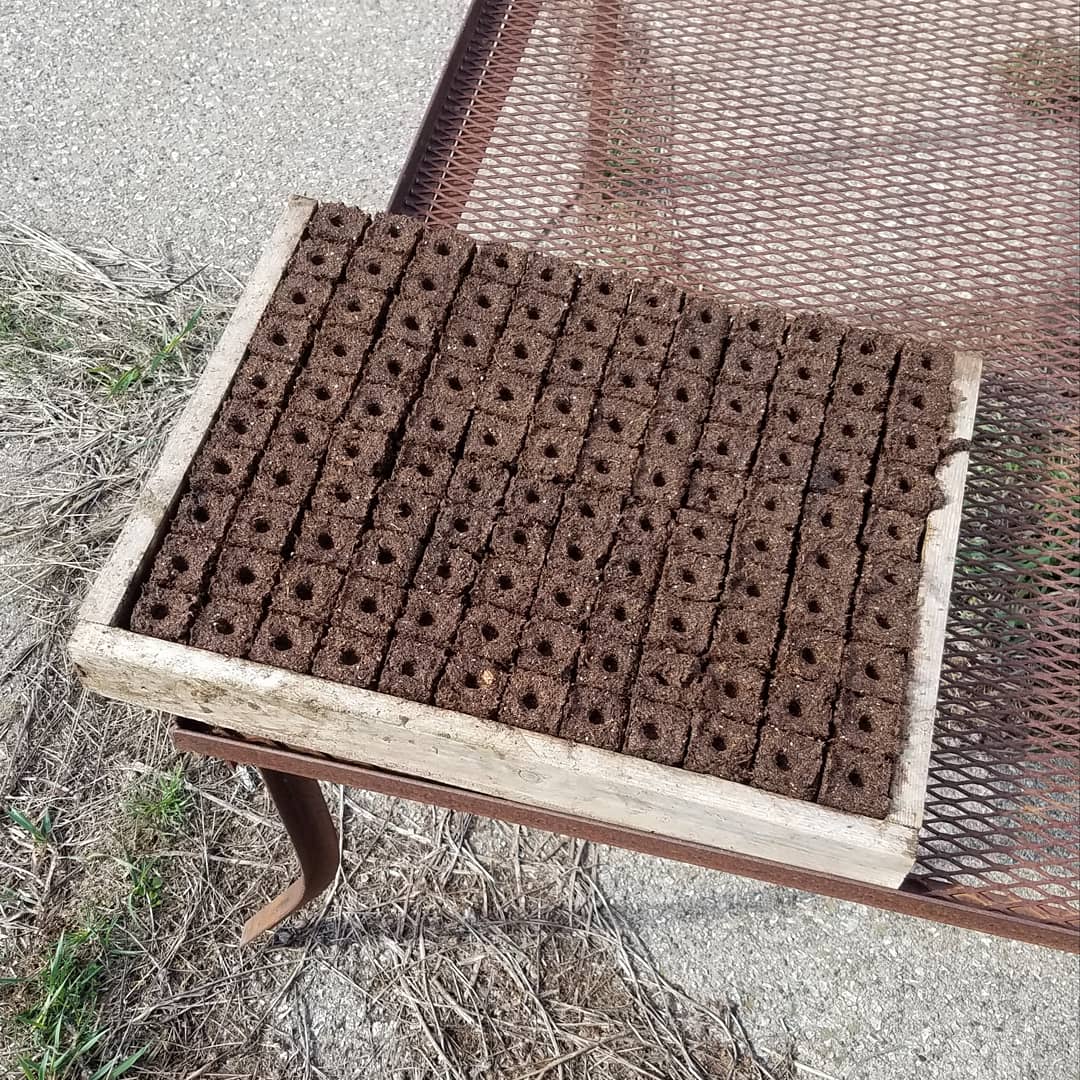
Tray of 120 soil blocks. March 28, 2021.