Categories
Environment Kitchen Garden

A Local Food Saturday

Saturday Farmers Market Produce

LAKE MACBRIDE— Herbs are abundant in the garden, so I have been making dishes that taste better with fresh herbs: red beans and rice with fresh thyme, pasta sauce with fresh basil, and bread with sun-dried tomato and fresh rosemary. Each iteration of a dish, prepared in a moment of time, has consequence in our lives. Every bowl of soup, sandwich and plate of pasta is different for a home cook. Sometimes the food is better than others— our homemade meals speak to who we are, what we want to be and what we can be.

The idea of local food Saturday is simple. In order for there to be a vibrant and sustainable local food system, individuals must want to find, purchase and cook with local food items. We have to make a market in the things we hold dear. That’s how I landed on the important role home cooks can play in sustaining a local food system. Saturday is a weekend choice that fits a lot of people. It’s not like I am the first to come up with this— I’m not.

It is possible, and rewarding, to change our outlook from a being a consumer who goes to market to being a producer of home cooked meals that includes local food. One could do as well to develop a meal plan that includes local food and local food outlets, since almost no one cooks all, or even most of their own food at home.

The act of buying is such a brief part of our lives. We should make the most of it by unchaining ourselves from the mega-mart and relegating grocery stores to a more proper role as supplemental sources of provisions. It costs nothing to change one’s perspective, and the financial and personal payoff can be superior.

What did I do with the items in the photo from last Saturday’s farmers market?

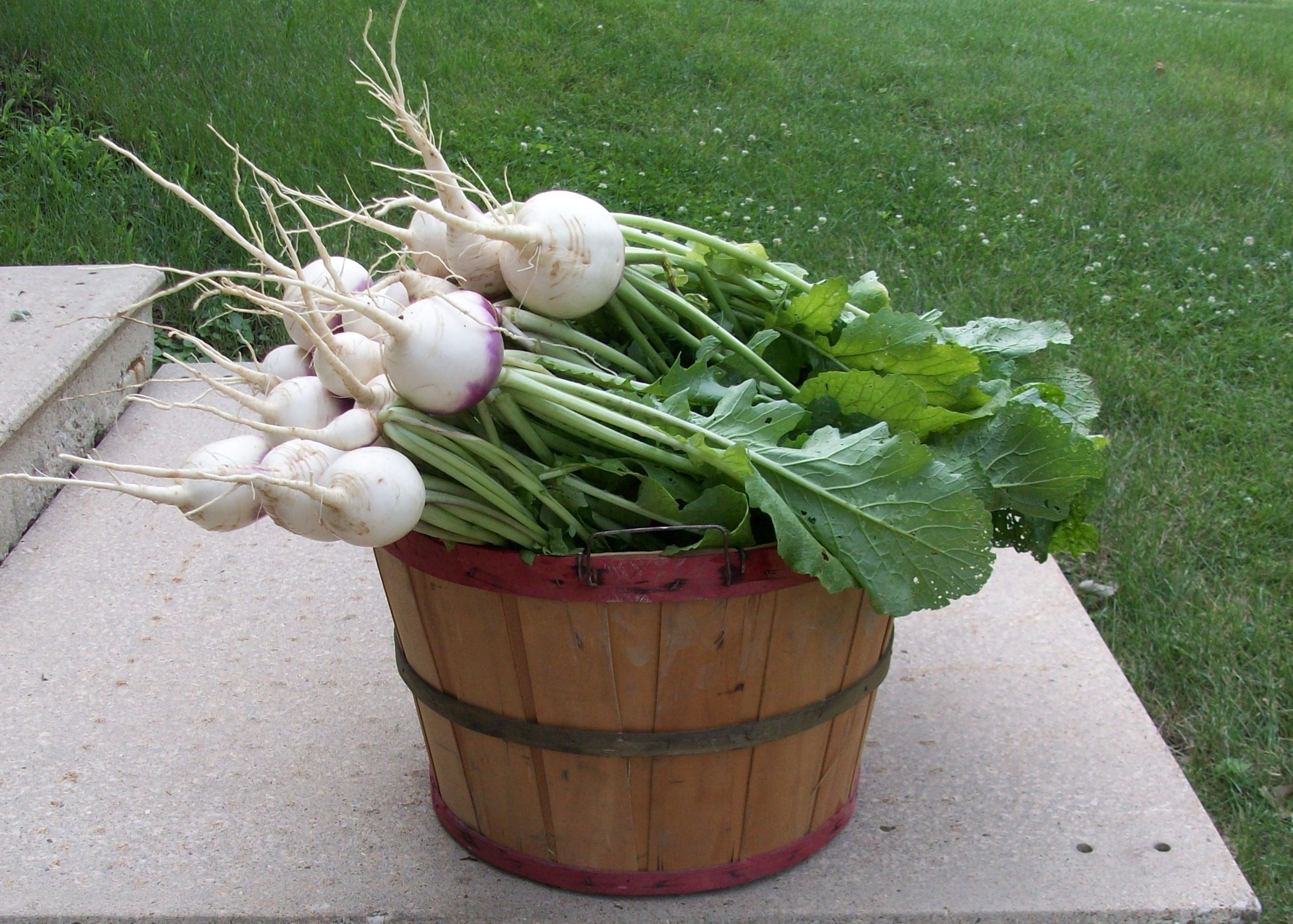
The turnips were an impulse purchase as I could have waited a week to get fresh from my garden. I cut and washed the greens, cutting about a cup into quarter inch strips for soup, and putting the remainder in a container to use as cooking greens later in the week. Using the bulbs, I made turnip soup that included a quart of homemade stock, carrot, onion, celery, the turnip greens and the finely sliced stalk of the broccoli in the photo. I added dried chervil, salt and a bay leaf to make four servings.

The kohlrabi was for an experiment cooking it with potatoes. There will be a number of kohlrabi from the CSA, and a couple are growing in the garden. I’m trying to figure out how to use them. They also go well in a salad, cut into raw, matchstick-sized bits.

The radishes, cucumbers and zucchini were for fresh salads. The garden and CSA are producing lots of lettuce, and we have salad almost every night— sometimes as a meal. Lettuce and other leafy green vegetables are an important part of a local food system, and because we produce our own, there are none in the photo. The yellow squash was to slice and cook with greens.

Broccoli was to steam with dinner as it is a favorite and the broccoli in the garden was not ready yet. One stalk is not much, so we also steamed the last of the fresh asparagus from the CSA. A vegetable side dish to soup and a salad seems a bit weird, but was delicious nonetheless.

Finally there is the local honey. I got it home and realized there was another open jar in the pantry. I made the previously mentioned bread with local honey, fresh rosemary, sun dried tomatoes and a custom mix of flours.

In all, I spent about two hours in the kitchen with local food preparation, not including the rising time of the bread. On average, people spend a lot less kitchen time in a day, but ganging up on the prep work on Saturday made for better meals later during the week.

The revolution in local food will come when we change our attitude from being a consumer of goods to a producer. There will be a time when our lives are more interesting than who gets booted on the television program “Chopped.” For some of us, that time is already here, at least on Saturday afternoons.

Categories
Kitchen Garden

To Market, to Market

Seedlings
Seedlings

CEDAR RAPIDS— Saturday was my first trip to a farmers market this season. An abundant garden, combined with a share from our CSA, reduced demand for outside produce. Until now, the cucumbers, zucchini and squash for our salads have come from the grocery store. Greenhouse operators now have local ones available, and that is reason enough to switch to the market.

There are more reasons. Depending upon how busy the farmers were at the market, they were a source of information about how they grew produce. It is a form of community knowledge about weather, temperatures and techniques for gardeners and producers that is hard to match. Hearing stories about how the early season was wet and cold, and the impact on growing, either taught me something new or ratified my own experience. Communal knowledge is part of being a producer, even small scale ones like a home gardener.

The market served to address some deficiencies in my planning this year. Not enough radishes, turnips behind schedule because of delayed planting, and kohlrabi fizzled as seeds. The farmers market made up for most of this.

The leafy green vegetables all looked good at vendor stalls, but my garden has plenty. I bought some broccoli to allow mine to grow a few more days before harvesting. Cucumbers, zucchini and yellow squash looked much better than what is available at the grocery store— everything did. Here’s what I ended up purchasing.

Farmers Market Supplies
Farmers Market Purchases

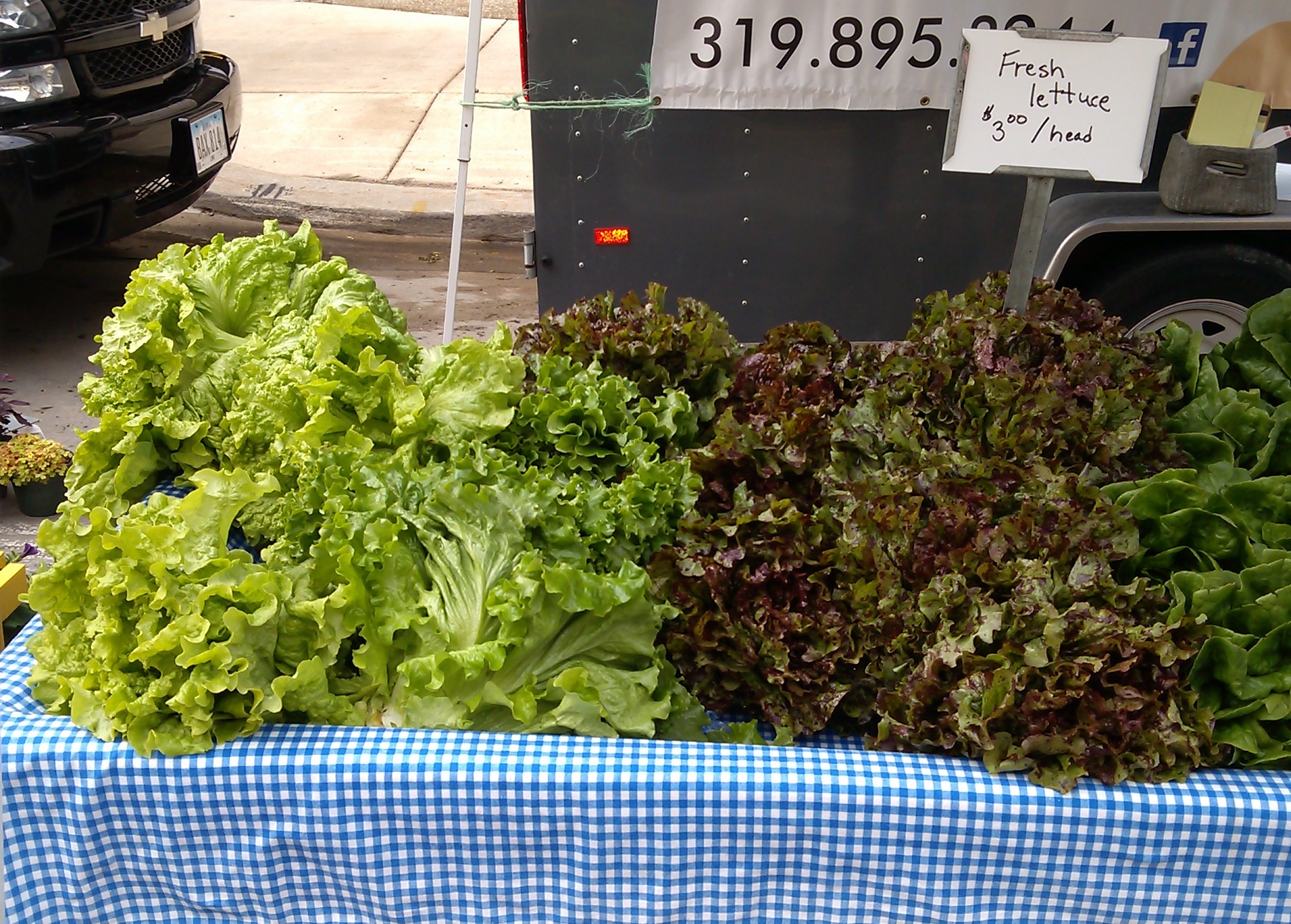
Some of the produce was cheap, turnips with greens for $0.50 each, cucumbers for a dollar. At $3 a head, lettuce seemed pricey, but I bought a pound of local honey because the pricing point seemed right at $5. Maple syrup was too dear, and I didn’t stop at any of the prepared food stalls. I budgeted the $18 I had in my wallet for the shopping trip, and spent it all.

Musician
Musician

My approach was to consider what was priced right and how items would fit into the coming week’s meals. Honey for bread making; radishes, cucumber, zucchini and yellow squash for salads; the turnips to make soup; broccoli for dinner that night and kohlrabi for an experiment of cooking it with potatoes— getting ready for the generous supply from the CSA. I kept looking at the beautiful greens, but sensibly resisted the temptation to buy more— really, I did.

As many as 20,000 shoppers come to the Cedar Rapids market on a Saturday. It’s what makes the market. It is cheap entertainment for a family, and produce is fresh and tasty raw material for an afternoon of transforming it into dishes and meals. There is a lot to write about farmers markets, but, importantly, they are a key part of the current local food system. How to use the combination of a home garden, grocery store, farmers market and CSA will be the topic of my next post. It is the case for sustainability of a local food system, beginning in a home kitchen.

Categories
Writing

Local Food Saturday

June 15 Market in Cedar Rapids

CEDAR RAPIDS— If local food will gain market share from the industrial food supply chain, there must first be a fulcrum. A home kitchen may be that fulcrum— a place where our consumer society can pivot toward growing, buying and preparing more locally grown food.

The trouble is people spend so little time in the kitchen, and when they do, the industrial food processors have done a lot of the cooking for us. Whether it be a frozen pizza, bagged lettuce, peeled fresh garlic imported from China, green peppers and watermelons from Florida, strawberries from California, yogurt, breakfast cereal, canned soup, salted snacks, and increasingly, prepackaged, calorie-counted microwavable meals. The folks at the industrial food supply chain want us to cook less as it’s more for them.

Local Lettuce
Local Lettuce

In a previous post, I argued that a revolution should take place in home kitchens and that the relationship between home cooks and local food is essential to sustaining a local food system. That revolution may be as simple as going to the local farmers market on Saturday to buy what we don’t have in our gardens or pantry, then spending a part of an afternoon preparing and cooking a few meals for the week. It sounds too easy.

Farmer's Stand
Farmer’s Stand

I have been demonstrating food preparation and cooking for our daughter a long time, beginning at home. When she moved to Colorado after college, I would visit and cook a meal in her kitchen using what she had on hand. One time someone had given her a large box of Colorado peaches in season and I made a peach crisp for dessert. The only baking dish she had was a glass pie plate, and we had no recipe, but it was one of the memorable dishes there. On another trip she was preparing to move and I spent a day while she was at work cooking everything I could find and filling every container in the kitchen with leftovers. By the time I was done there were more than two dozen prepared meals ready for her to microwave or heat up.

Farmers Market Food
Farmers Market Food

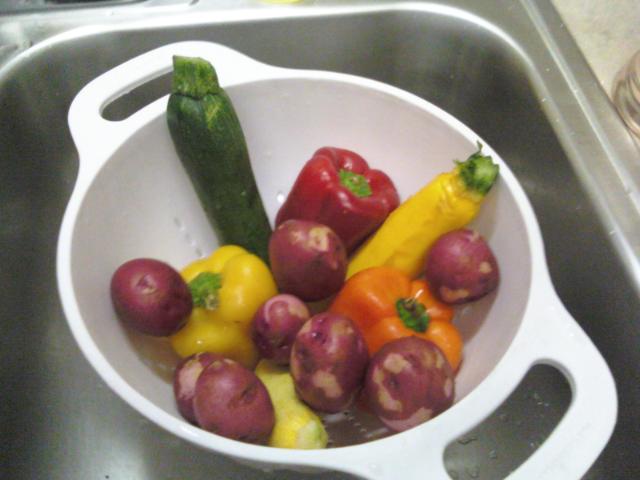
Imagine my parental delight when she sent me this mobile phone photo of produce she bought at a farmers market. She is learning how to cook, and not every meal is drive through or a restaurant chain, something the parent of a millennial fears is only supplemented with sugary drinks and expensive coffees.

Market Sign
Market Sign

My point is few people are as busy as a millennial. If there is a process, like having a local food Saturday, an increased portion of local food can be added to our diet. After my work at the newspaper this morning, I took the idea for a test drive to Cedar Rapids and visited their periodic market which includes locally grown food and a host of arts, crafts, music and other products of home industry. During the next posts, I intend to write about my experience and how having a local food Saturday would work.

I believe local food Saturday can fit into the busiest of schedules and be cost effective. This addresses two of the most often heard objections people name when asked to consume more local food, “I don’t have time” and “local food is too expensive.” There may be a better way in local food Saturdays.

Categories
Home Life Kitchen Garden

Starting Over with Soup

Spring Soup
Spring Soup

LAKE MACBRIDE— One is ready to take on the world after a bowl of home made soup. In between projects, several things at home are de derigueur. Going through the refrigerator and pantry finding ingredients to make soup is one of them. A fresh start to new beginnings using preserved and aging vegetables.

A job, project or activity can distract us from our home life. Home becomes a camp— a place to return from doing other things. Making soup can be a way to clean up loose ends and refocus our energies for what is next. It is a re-centering on home life.

Making soup is also being frugal— picking from items reaching the end of their shelf life and using them for a warm meal. It is a reversal of consumerism and can be celebratory and reassuring. Most often, the results are delicious, especially when served with a slice of home baked bread.

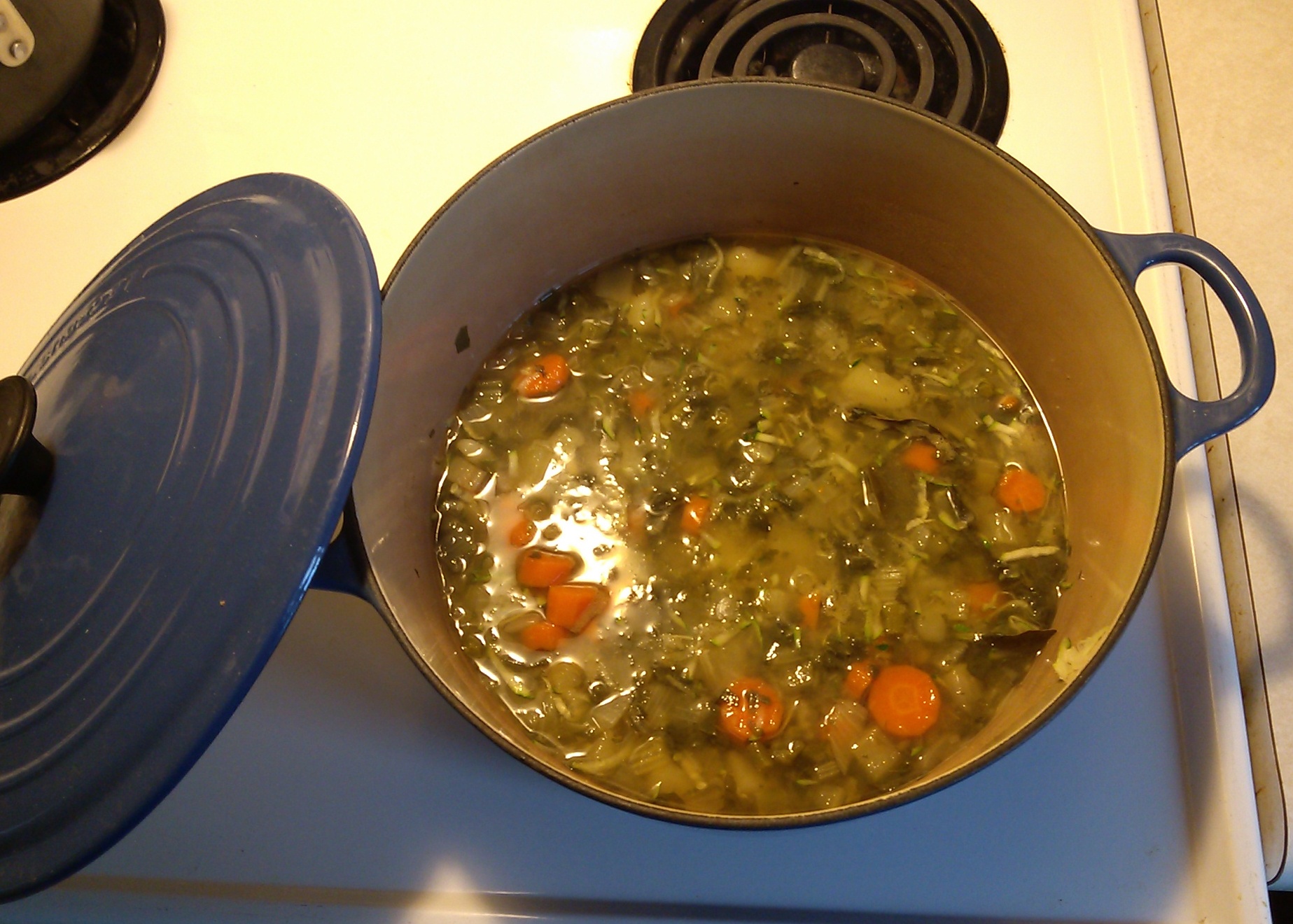
Still tired from my last day of warehouse work, I made vegetable soup today. There was no recipe, but learned behaviors came into play. This post is intended to share some of the learning.

Put a half cup of water in the bottom of a Dutch oven and bring to a boil on high heat. Medium dice or slice a large onion, three or four small carrots and a couple of stalks of celery and add to the pot. Season with salt and pepper and a couple of bay leaves. This provides the basic flavor profile. (In our house, we add pepper when the meal is served so each person can get as much as they want).

Next, add fresh ingredients on hand. Today, it was potatoes starting to develop eyes, part of a zucchini, and baby Bok Choy leaves beginning to yellow. Peel and dice three or four potatoes, fine dice the stems of Bok Choy and add them to the pot. Grate the zucchini with a box grater and reserve along with 20 or so Bok Choy leaves. If there were other fresh vegetables on hand, I would use them. Note that soup is about using things up, not buying specific items especially for the dish.

In the freezer is my soup project. Throughout the year I collect the cut bottoms of asparagus stalks, broccoli stems, beet greens, spinach and a host of other odds and ends of garden vegetables to use in soup. It is how gardeners deal with their irregular and surplus produce. From the freezer I added bits of broccoli stalk, some finely sliced asparagus, and chopped greens of an undetermined nature (beet greens I think) to the pot.

Add a quart of home made stock if you have it and cover the vegetables with water. Bring to a boil on high heat and reduce to a steady simmer. Simmer until the vegetables are cooked through, add the zucchini and Bok Choy leaves and stir until the Bok Choy is wilted. Re-season and it is ready to serve, a fit luncheon for contemplating the future on a rainy afternoon.

Categories
Kitchen Garden

Red Beans and Rice

Red Beans and Rice
Red Beans and Rice

LAKE MACBRIDE— Welcome new readers of On Our Own: Sustainability in a Turbulent World. Since I opened the site up to search engines, people from all around the U.S. have been taking a look and liking and following my posts. I sincerely appreciate the interest, as it inspires me to do a better job when I post here. Believe it or not, I spend time crafting the prose to develop my own voice from a perspective grounded in rural Iowa. One would think there would be fewer typos with all of that so-called writing.

By far, the most immediately positive post was my recipe for Buttermilk Biscuits. Recipes are a solution to problems in life, in this case, how to make a buttermilk biscuit that was light, crunchy and split into layers, and didn’t require the purchase of a quart of buttermilk at a time. If I knew recipes would be so popular, I would have posted more of them. Knowing how to do something, cooking included, is a step along a path of sustainability, so going forward, I’ll post recipes that solve problems in the kitchen from time to time.

Sometimes recipes are a conundrum. Red beans and rice is one of those. The dish is different things to different people, and mine is partly a remembrance of many Saturdays in a motel in Thomasville, Georgia, where I discovered the food network, and Emeril Lagasse’s version of Louisiana cooking. He taught me about the trinity— onion, bell pepper and celery— and my version showcases this basic ingredient. My red beans and rice is also about Midwest semi-vegetarian cooking, and it has become a way of weekend cooking to make extra portions for weekday luncheons. It goes like this:

Heat a dutch oven over medium high heat for a couple of minutes.
Add two to three tablespoons extra virgin olive oil, enough to generously coat the bottom of the pan.
Add crushed red pepper flakes to taste, about a teaspoon for starters, and cook them a minute or so.
Add one yellow onion, one bell pepper and two stalks of celery, medium dice, and sauté for a minute or so.
Season with salt, garlic powder, a prepared dry seasoning with hot peppers in it, and add three bay leaves. Add a few splashes of Louisiana-style hot sauce if available.
Continue cooking until the vegetables are soft.
Squeeze in the juice of a lime and stir.
Add one pint canned, diced tomatoes (fresh if you have them), one cup brown rice, one 15 ounce can prepared red beans (drained and washed), and a pint of home made soup stock. Add several sprigs of fresh thyme.
Stir, bring to a boil, and turn the heat down to just above a simmer. Cook until the moisture is absorbed and the rice is done.
In a separate frying pan, brown eight ounces of seitan in a couple of teaspoons of extra virgin olive oil and cook with thinly sliced spring onions. Set aside.
When the Dutch oven mixture is finished, and all the moisture is gone, re-season as appropriate. Add the seitan mixture and stir gently.
Serves five or six as a main course, more as a side dish.

Thanks again for reading my posts. I hope you will check back often.

Categories
Home Life Kitchen Garden

Buttermilk Biscuits

Buttermilk Buscuits
Buttermilk Biscuits

Here is a new recipe for buttermilk biscuits. It produces a light biscuit with a crunchy exterior, and uses one-half pint of buttermilk, which is the smallest size sold in grocery stores.

Ingredients:

2 cups flour
4 tsp baking powder
1/4 tsp baking soda
Scant teaspoon salt
4 tbs cold butter, grated
1 cup cold buttermilk

Preheat the oven to 450 degrees.

Combine the dry ingredients in a mixing bowl, grating the butter directly into the dry ingredients using a box grater or equivalent. Using your fingertips, mix the butter into the flour. Don’t over-do it. Add buttermilk and make a dough, which will be sticky.

Turn the dough onto a floured surface and fold in half 8-10 times. This action causes the biscuits to be flaky and separate along the ghost of the fold after baking. Press the dough into a one inch thick slab. Cut with a 2-1/2 inch biscuit cutter and place on a baking sheet.

Bake until the biscuits rise and are lightly browned on top, about 14-15 minutes.

Categories
Home Life Kitchen Garden

Food in the Afternoon

LAKE MACBRIDE— Food. The afternoon revolved around food after a once every two weeks trip to the grocery store. Root vegetables, a turnip for $1.09, a parsnip for $0.85, potatoes for $0.40 per pound, carrots from the fridge and a leek for $1.05. It’s chik’n stew tonight. With protein cubes from Morningstar Farms®, and vegetables past their prime, but good for stew. The pot is full of the simmering stew. Hope it tastes good, as there is enough to last ten days and I hate to waste— food.