Categories
Home Life Kitchen Garden

Garden – Yard Work Day

Fallen Apple Pile
Fallen Apple Pile

The ground is dry with eighth-inch cracks under the apple trees. There has been talk about a wet spring, yet the rasp on knees as I picked up wind-fallen apples before mowing was uncomfortable… and harrowing.

Relenting, I poured a gallon of water on the cucumber plants which were withered in the sun from lack of moisture. It helped—they recovered this time.

Ripening Apples
Ripening Apples

The garlic patch is also dry, in fact the whole garden could use rain. I had better see if the 50 percent chance of precipitation materializes later this morning and then water if it doesn’t.

The branches of the apple trees are burdened with fruit, making it difficult to get under them to mow. The walking mower wouldn’t start, so I spent half an hour cleaning and troubleshooting it. After replacing the spark plug and adding fuel, it fired up. I mowed under the fruit trees and in the ditch near the road pushing the small machine.

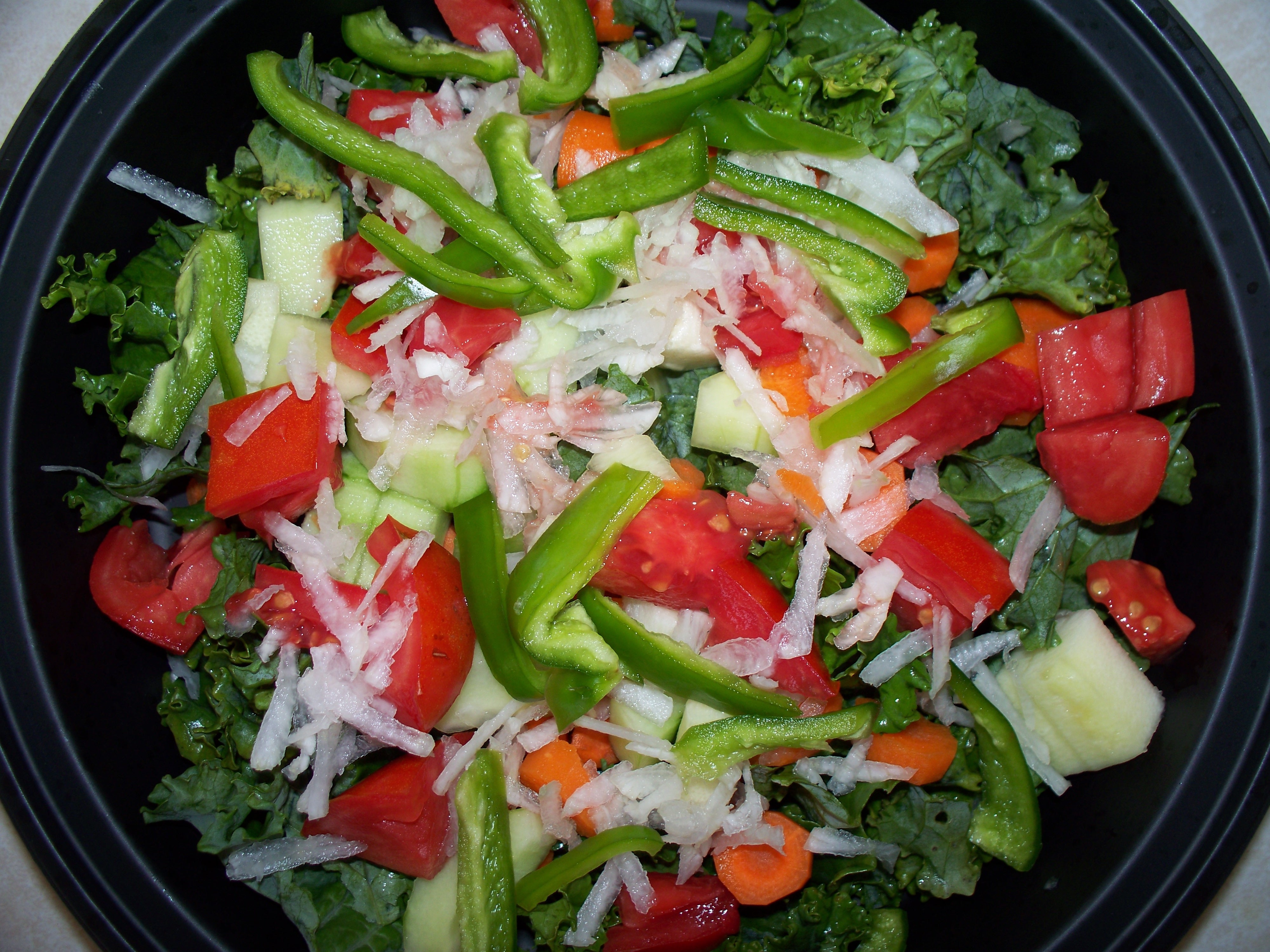
Taking a quart of canned whole tomatoes to the kitchen, I went back outside and gathered basil, Swiss chard and an Amish Paste tomato for pasta sauce. Along with a kale salad it made a satisfying dinner… sustenance against tough times.

Categories
Kitchen Garden

Make Real Food

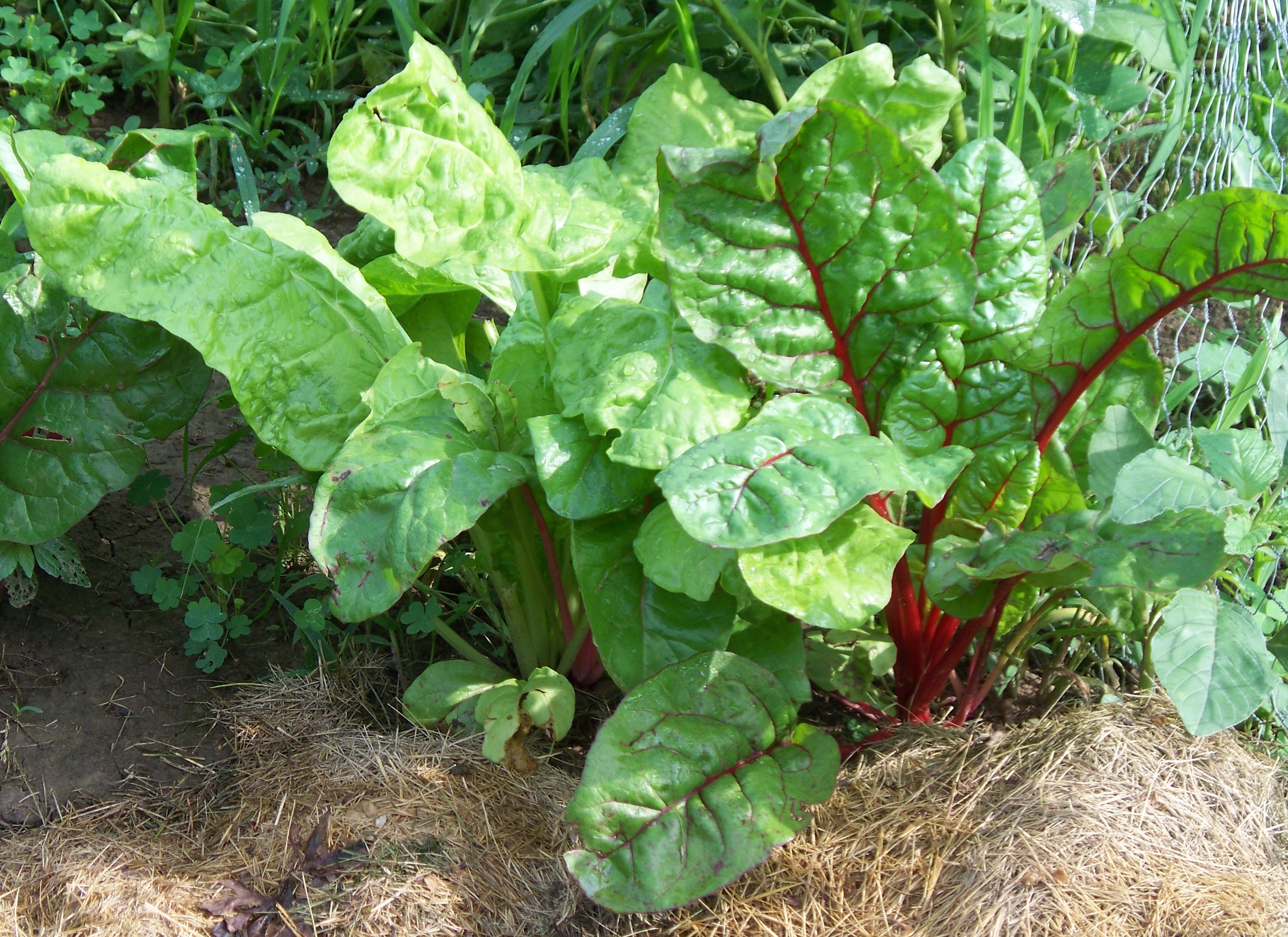
Swiss Chard Plants
Swiss Chard Plants

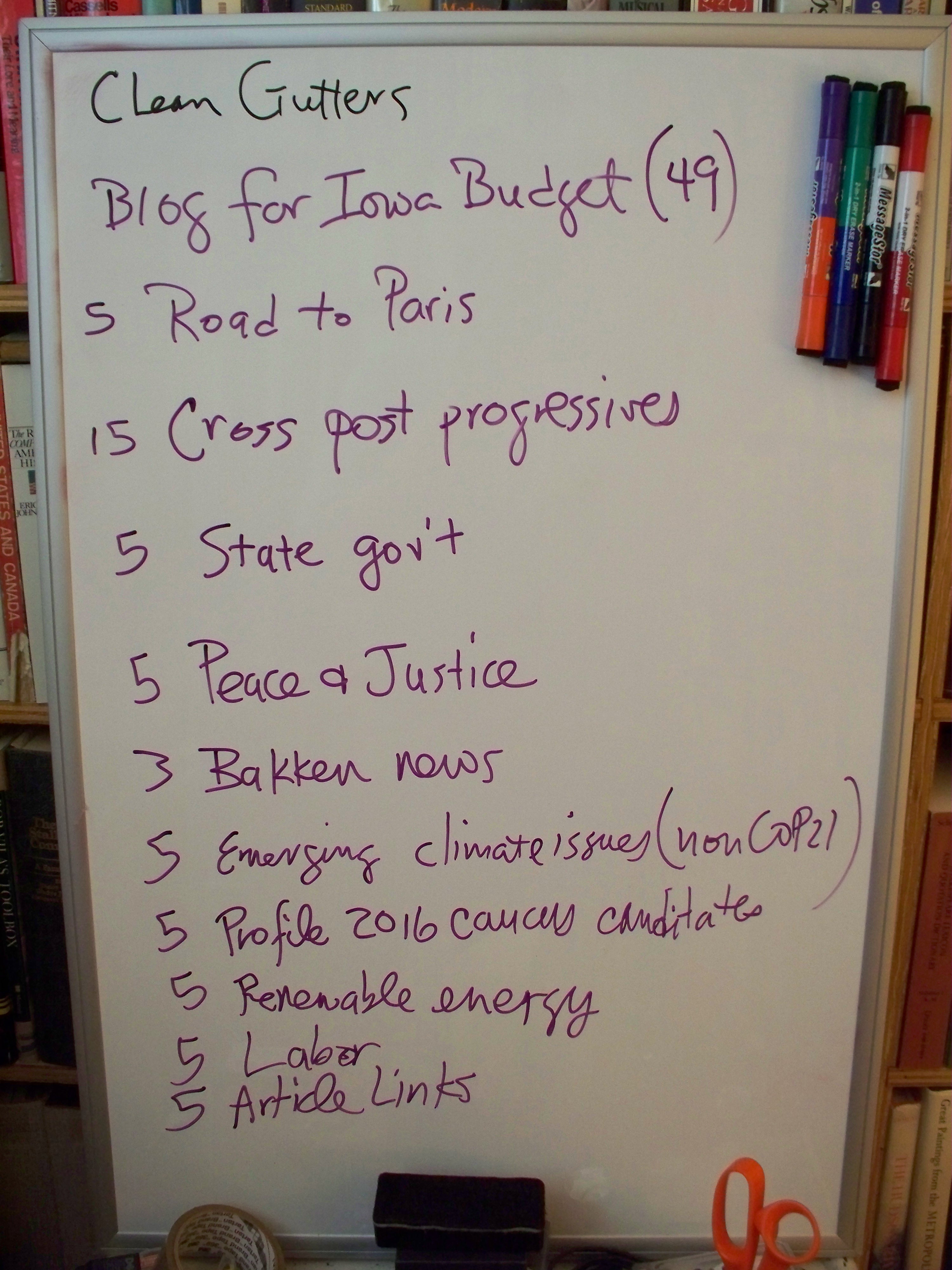
If a task or event is on the white board, it is likely to get some attention. Yesterday I wrote “make real food” on it.

I knew I would draw from the garden, ice box and pantry for the meal, but what I would make—had no clue.

It became is a sort of enchilada, but not really Mexican. The intent was to use Swiss chard and other summer vegetables. Here’s what I did:

  1. Cook 6 raw tortillas in a dry pan. Set aside.
  2. Make tomato sauce by draining a quart of diced tomatoes and processing them in the blender. (In retrospect, I should have seasoned the sauce, but left it just tomato puree).
  3. Prepare 6-8 Swiss chard leaves by removing the veins. Chop the veins and stems into bits and the leaves into one inch ribbons.
  4. Using olive oil, sautee one third onion, chard stalks and veins, quarter cup chopped celery seedlings, one third of a zucchini cut into quarter inch cubes, and season with sea salt.
  5. When the veg is softened, add one 15 ounce can prepared black beans.
  6. Add the Swiss chard leaves, a generous tablespoon of lemon juice, and stir gently until the leaves start to wilt. Remove from the heat and set aside.
  7. Into a rectangular baking dish pour enough tomato sauce to cover the bottom.
  8. Take a cooked tortilla and spoon the vegetable mixture on the middle. Sprinkle on a tablespoon of feta cheese, tightly roll the tortilla and place it in the baking dish on top of the sauce. Repeat until the dish is full.
  9. Pour the remainder of the tomato sauce on top, cover with aluminum foil and bake for about an hour in a 360 degree oven.
  10. Remove the casserole and place on a rack. Remove the foil and sprinkle more feta cheese on top. Let sit on the counter for 10-15 minutes to cool.
  11. Serve with a favorite accompaniment, such as hot sauce, sour cream or chutney.

The result made four generous servings.

Categories
Home Life

Keeping It Here

Why We Don't Use Lawn Chemicals
Why We Don’t Use Lawn Chemicals

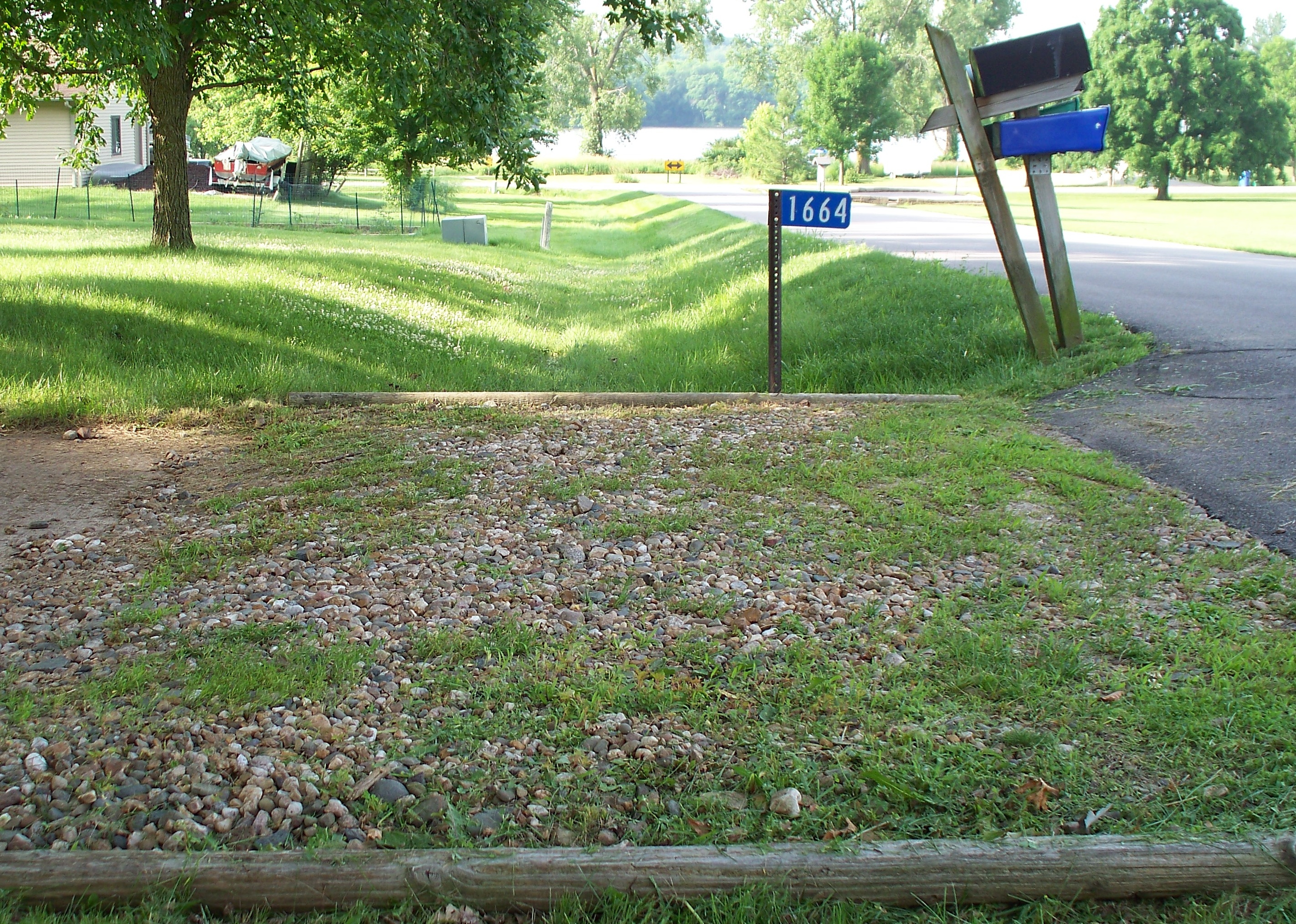
There’s a reason we don’t use fertilizer, weed killer and other chemicals on our lawn and garden. This picture of the ditch in front of our house tells the story. Whatever runoff we may generate will go directly into the lake.

Over the years, I’ve applied strategies to keep the rainwater on-site to keep things green and prevent soil runoff. It took a while, and the effort produced results. Ours isn’t the most beautiful yard, but the ditches on either side of the house don’t fill with runoff very often, and haven’t for years. Because of my approach, the garden requires minimal watering, and the lawn is left to live or die on its own.

It’s raining now with a 75 percent chance of rain in a couple of hours. It’s going to be a day of waiting. Waiting to work my to-do list, which was mostly planned for outside. Waiting for my interview subjects to get back to me for a story. Waiting to get to work inside.

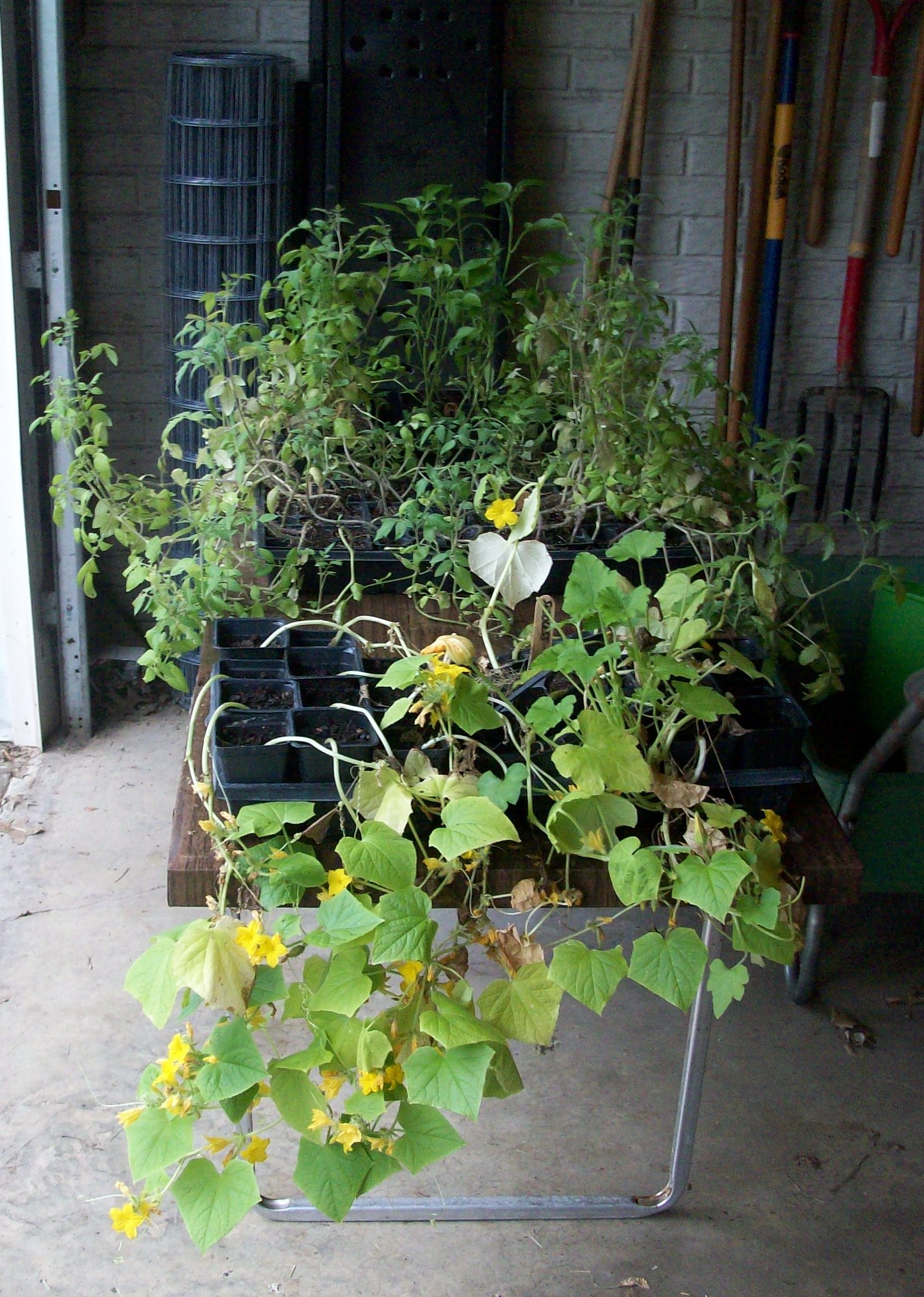
Extra Garden Seedlings

One thing to do is get the garage ready to return my car inside. When the gardening season begins, I use the space to work on seedlings. The only thing remaining to plant inside is another round of broccoli. All of the tomato, pepper and cucumber seedlings will be composted now that those transplanted into the plots have taken.

I’ll also spend a few hours in the kitchen—organizing, cooking and making sure perishables are moving along the right path. Did I mention we have a lot of kale?

Blog for Iowa Story Budget

Then there is ramping up for my stint as editor of Blog for Iowa beginning July 1 through Sept. 7. The 49 days of coverage amounts to at least 25,000 words and planning makes the work easier. The first three story lines are identified, and I could begin outlining their content. Or maybe I’ll wait, depending on how the day goes.

In any case, this is a rare day off all the jobs I hold, so I plan to make the most of it. No plans to leave the property today. I’ll be keeping my activity close to home—and liking it.

Categories
Kitchen Garden

Slow Food in Context

Fresh Kale
Fresh Kale

Weeding kale produced a peck of leaves for the kitchen. The garden plants are healthy enough I sent 12 kale seedlings reserved as replacements into town for re-distribution. They found a suitable home as I spent a couple of hours in the kitchen preparing dinner.

Yesterday was the first day in a while where life produced time to work in the garden when weather was sunny and without rain. The ground was soaked, making weeding easier. I hardly made a dent in the work, however, a garden waits for no one and there was plenty to harvest. In addition to kale, there were carrots, sweet peas and turnips.

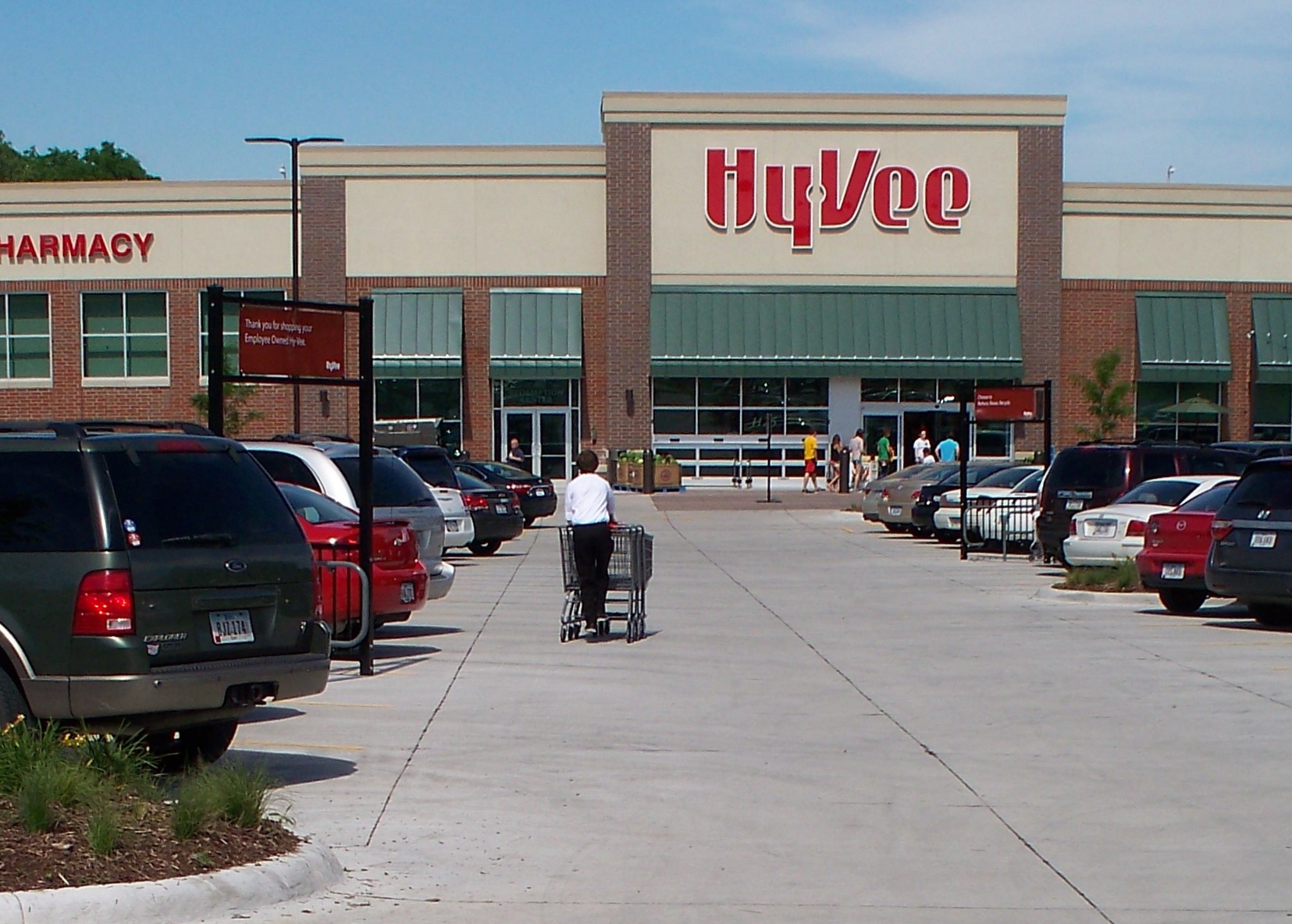
Hy-Vee North DodgeMy editor assigned a new story in the morning, so I went to Iowa City to interview the subject. On the way home, I stopped at the grand opening of the new Hy-Vee on North Dodge Street.

It was different from the store where we had shopped for more than 20 years. Expecting the latest in supermarket merchandising I was prepared—for the most part.

My shopping list included one item: a six-pack of beer for a beverage with dinner. Using the latest tactics to resist over spending, I grabbed a hand-held basket instead of a cart. I picked up one extra item, some Iowa-grown Jolly Time popcorn, which is a pantry staple and was on sale.

The produce section and bakery were just inside the front door. I stopped and took it in. The space was crammed full of people and products. About eight people were serving food samples on toothpicks. Management staff was present in abundance. It took me a while to find the regular produce section, which had a misting tube above, giving the broccoli, peppers and other items a shiny appearance, but condemning them to a shorter shelf life. I thought about the scruffy look of the produce I had just picked, and longed for another carrot just pulled from the ground.

It took me a while to find the dairy aisle, which was, of course, furthest from the front door. In all, I spent less than 15 minutes inside, and look forward to returning to evaluate the tens of thousands of items inside when there aren’t so many people.

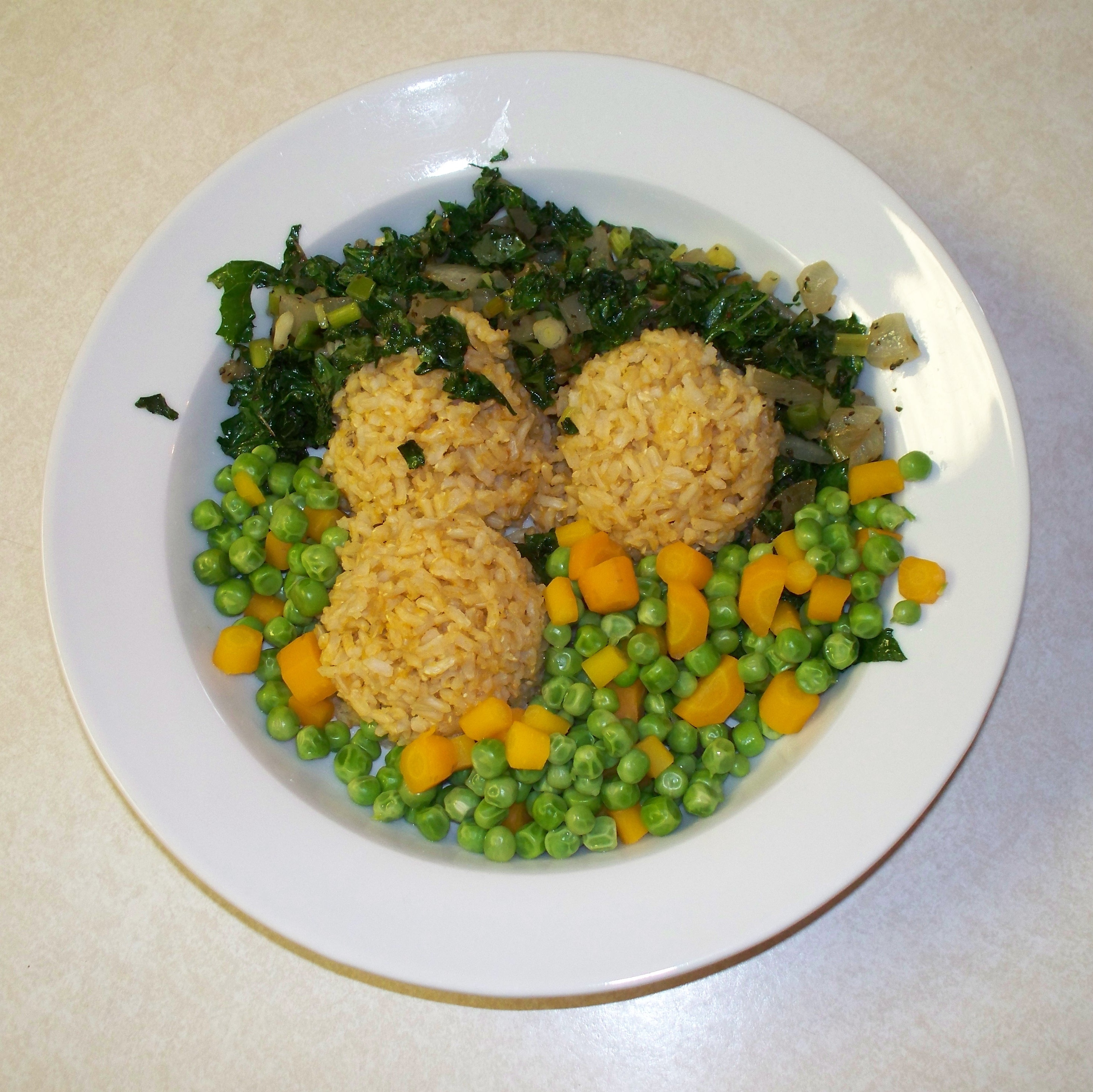
Preliminary Plating
Preliminary Plating

At home, I put the six-pack of LaBatt Blue in the ice box and brought the garden produce upstairs. I opened a beer.

The concept was a dinner made from locally produced kale, peas, carrots and eggs. I put rice on to cook and got to work cleaning the harvest. By the time I finished, almost three hours had elapsed.

Dinner was the process of preparation—including the trip to Iowa City—and a vision of the final plating.

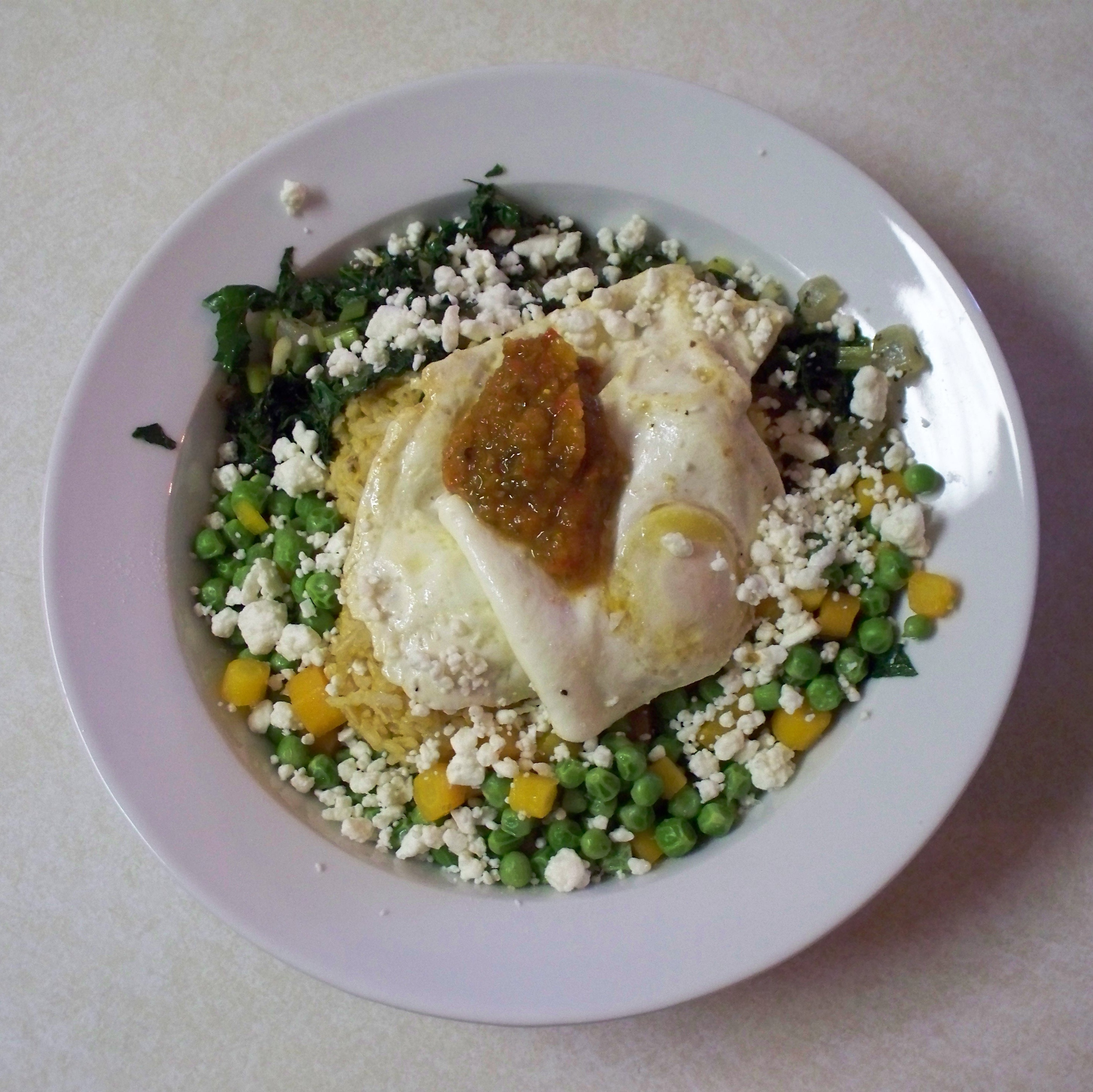
Final Plating
Final Plating

There were four distinct dishes: peas and carrots; kale sauteed with onions and spring garlic; brown rice cooked in vegetable broth; and eggs over easy. I plated the kale, rice and peas and carrots as above, then topped it with two eggs, sprinkled with feta cheese and a tablespoon of home made bell pepper sauce.

I covered one plate without the eggs and left it on the counter for Jacque’s dinner after work. Mine was too much to eat, so there were leftovers to be made into a breakfast burrito later in the week.

This was slow cooking. More than that, it was a life. A day of retreat from low wage work, doing things that matter. We need a slow food day in the context of busy lives—more than we understand.

Categories
Kitchen Garden

Mining the Freezer

Tomato, Pesto, Parmesan Farfalle
Tomato, Pesto and Parmesan Farfalle

Our freezer shows a little space, but is still loaded with food.

I grabbed a pint jar of pesto and about three dozen cherry tomatoes from the freezer, some Parmesan cheese from the ice box, and a box of farfalle pasta from the pantry to make dinner.

It’s easy.

Cook the whole box of farfalle al dente. Strain and pour the lot into a big bowl. Spoon about half a pint of pesto on top, add the tomatoes (cut in half or peeled, the latter being easier with thawed, frozen tomatoes), and a cup of Parmesan. Stir gently with a rubber spoon, salt and pepper to taste, and it’s dinner.

Serve with a vegetable, some white wine, or lime sparkling water, and it is dinner, as good as it gets.

Categories
Kitchen Garden

Foggy Kitchen Work

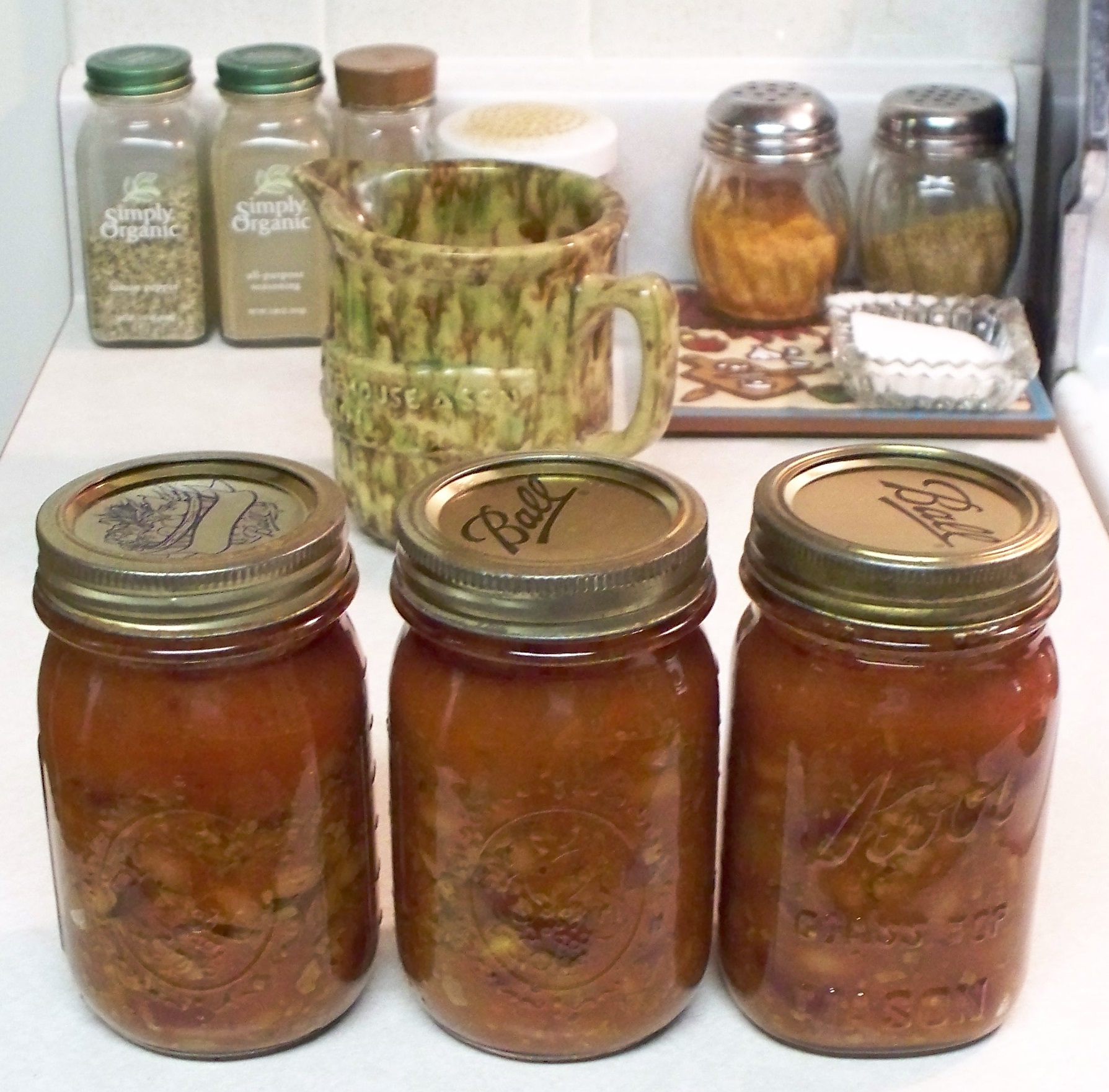
Canned Chili
Jars of Chili

What the hell?

The intent was to prepare dinner for my spouse who worked later than me on Saturday. The dish would have onions and tomatoes in it. Those things I knew.

From there the culinary session went into chaos as either I couldn’t make a decision, or more likely, refused to cooperate as I struggled to enter the real world of counter top, sink, stove top and oven. There were knives and heat involved, so it is a miracle the preparation left me unscathed.

It began with an onion that was beginning to sprout.

Onions are a staple in our kitchen, and we can’t grow or barter for enough of them. Having used up the local harvest, we were on our second bag from the warehouse club. Unexpectedly, one sprouted.

Not a catastrophe, and my mind turned toward preparing dishes using onions to eat for dinner and store for later. It would be pizza, chili and/or pasta sauce. That “and/or” became problematic, but no problem with the pizza.

A long-time pizza-maker explained that dough makes the pizza. We like it as thin as possible and the recipe is simple: a cup of warm water, a teaspoon of yeast, a scant teaspoon of sugar, pinch of salt and flour enough to bring the dough together in a sticky, but not too sticky ball. Then into a greased bowl in a warm oven, covered by a dish towel for about an hour. It takes practice and over 40 years, I’ve gotten the knack. So far so good.

What did I do for an hour? Partly I prepared the toppings for the pizza, including caramelizing two large onions seasoned with basil, made eight ounces of sauce, drained sliced Manzanilla olives and opened the bag of shredded mozzarella cheese I bought on closeout from the local grocer on the way home from work. Caramelized onions on pizza was something we discussed, and Saturday was the night to try them.

Using ample bench flour, the risen dough was dumped on the counter, kneaded a second time, then rolled with a pin. For the first time I decided to use parchment paper under the pizza dough to make clean up easier. Initially I hoped to put the pizza-laden parchment directly on the oven rack. I rolled up the flattened dough on the pin and transferred it to the parchment paper, which I laid on a large wooden paddle. The paddle was from the part of the plan where I thought the pizza would go directly on the rack. To call it a plan is not accurate. I transferred the works to a baking sheet.

I docked the dough and spread on a thin coating of olive oil. Next the sauce (seasoned with oregano and the remains of a jar of “Italian seasoning” rescued from our daughter’s Colorado apartment), then olives, then onions, then cheese all spread as evenly as possible.

12-15 minutes at 450 degrees and pizza perfection. If I had left it there, everything would have been fine.

I got out my kitchen-weary Dutch oven to make the chili or pasta sauce, having reduced the plan from “and/or” to “or.” In my mind, I was making both. Making a rough dice of another onion, I covered the bottom of the pan with tomato juice drained from two quarts of diced tomatoes. The idea was to steam fry the onions. As the juice evaporated, I added more. This part went well and the onions softened, becoming translucent. I added two small cans of tomato paste. Whoever invented tomato paste was brilliant as it both thickens and adds a pronounced tomato flavor to any dish.

Here is where things went awry. To season the dish, I added a scant tablespoon of chili powder, some cumin and incorporated everything so I could proceed to the next step. Then I added a heaping teaspoon of basil, which violated some unwritten rule, making the dish neither chili nor pasta sauce. When I seasoned the caramelized onions with basil, while the jar was still in my hand, I unwittingly dumped the rest of it into the nascent chili-pasta sauce. It’s not a crime, but it’s not chili.

Once the deed was done, I had to recover. With the chili powder, it would never make good pasta sauce, so I fetched some cans of organic kidney beans from downstairs. I drained and washed them and added them in along with a bag of Morningstar® Recipe Crumbles and covered with more tomato juice. It made nine pints of so-called chili.

A fine dinner was and will be had by all as the results of this work are consumed over the next week or so.

What the cookbooks by celebrity chefs don’t explain is the foggy dynamic of what actually goes on in a kitchen. Having cooked many meals with my late maternal grandmother, I understand what happened last night is not unusual. The extemporaneous practice of cooking is more often like that than not.

Through the haze of a long day’s work we look at life’s deteriorating produce, and a spice shelf where seasonings are older than fresh, and say, “something can be made here.” Even when ideas don’t quite come together in the mist of life, we can sustain ourselves. That is a life worth living.

Categories
Writing

Cooking – Sort Of

Soup Ingredients
Soup Ingredients

When there are two of us, dinner is usually a snap. I cook some dishes like there is a whole crew, and it leaves an ice box full of leftovers—it’s easy to grab a jar of homemade chili and call it dinner.

The six-pack of eight ounce packages of cream cheese needed to be used. Yesterday I made a spread of one package, roasted red peppers, three cloves of garlic, and a tablespoon of mayonnaise. Once the cream cheese is to room temperature, everything comes together in the food processor. Three cloves of garlic bordered on being too much, but the spread will serve for a couple of days.

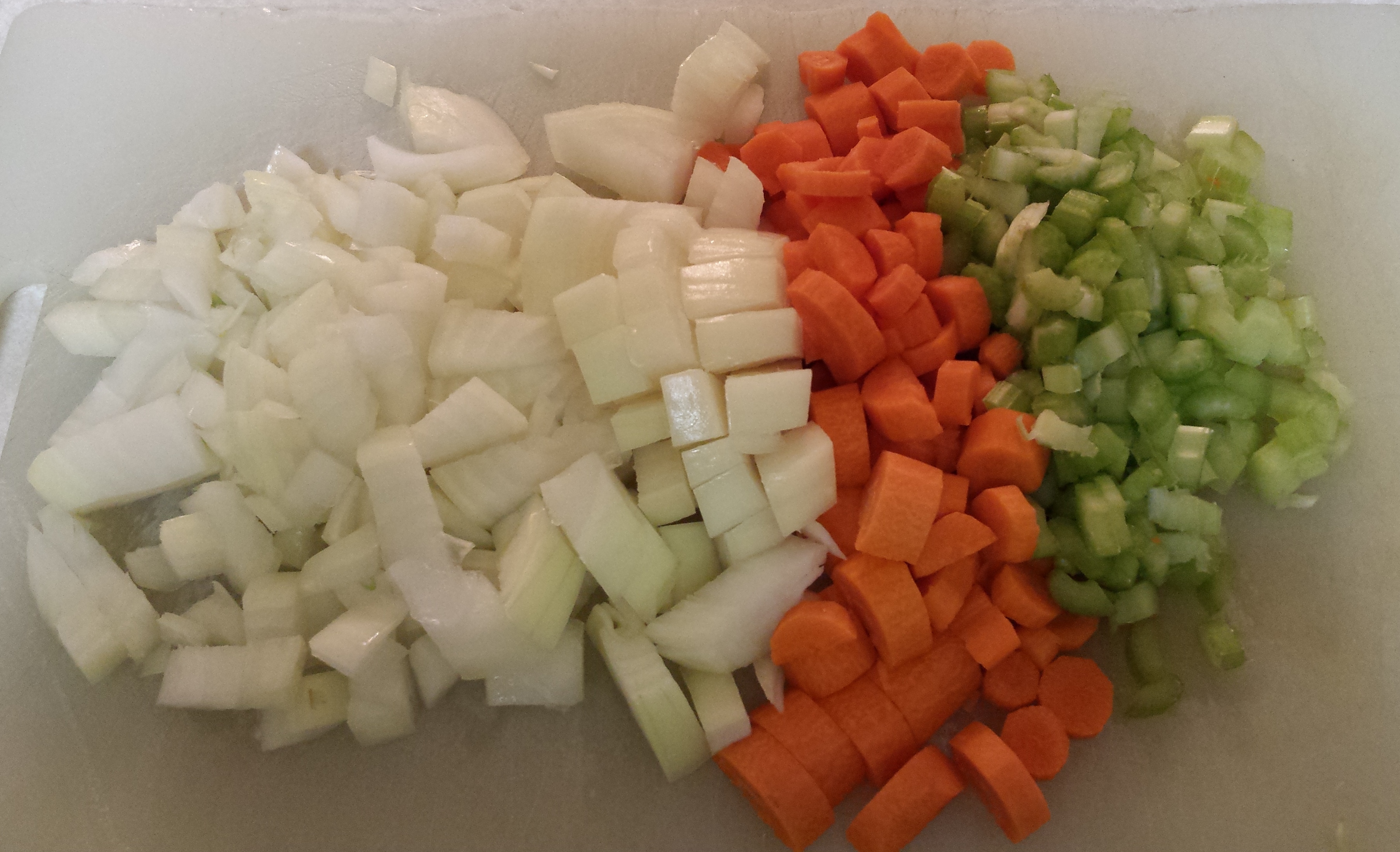
This morning a pot of mixed beans is cooking. On the cutting board are generous mounds of carrot, celery and onion. Once the beans are cooked, the whole lot will go into the pot with some bay leaves and enough homemade stock to cover. It will simmer a couple of hours until it becomes soup—just in time for lunch before I head over to the warehouse for a shift.

While there is prep work, and transformation with heat, is this really cooking? At a basic level it is. Acquired knowledge about spreads, soups and chili makes the work quick and easy. Even a long prep and cooking time, like there is with bean soup, is not hard. However, it is certainly not glamorous or particularly inventive. It is subsistence at the most basic level: turning raw material into food for sustenance.

As easy as this type of cooking is, there is a temptation to use prepackaged, precooked food as the main course in a cuisine. There are so many varieties of processed food, a person could go for months without having the same dish twice. At a price point of around $10 for a multi-serving package, processed food seems cheap, even if it isn’t. In the end, any home cooking is leveraged from the idea of controlling what we eat and the ingredients from which food is made more so than food cost. For the most part processed food is an infrequent convenience or comfort.

With the abundance of food in the U.S., it is hard to figure how people go hungry. They do. Even in our community of about 5,000 people we have a food bank that is well used. Perhaps we have gotten too far from producing meals in a kitchen from raw ingredients.

My mixed bean soup is easy to make, but there is a process to be learned and followed. It will make a dozen servings, and whatever the cost, that is cheap both in money and in work. We need to eat, so why not some bean soup? Why not indeed.

Categories
Home Life

Turning to Food

Vegetarian Stew
Vegetarian Stew

When the budget is tight we turn to meals from the pantry, cupboard and refrigerator. We cook.

It reduces the need to shop for anything but essentials. It enables dollars in the checking account to go to utility bills, fuel, interest and insurance. Cooking from the pantry produces great meals from forgotten times and ingredients.

From memory come preparations for roux, sauces, reductions, soups and stews that are filling and fill in the financial gap for those who live on part-time work without the regular big paycheck of a career.

Energy remains inexpensive in the U.S. kitchen, so there is no endless searching for firewood for the cook stove as there is in other countries. Just turn on the stove and there it is. Turning to food is turning to the source of our memory and being.

When I was young there was a mom and pop grocery store on the corner. Mother would send me the block and a half to pick up a forgotten ingredient for dinner. If there was a question when I arrived, they would call her for clarification. I mostly remembered, so it wasn’t a problem.

I remember the cost of 10-ounce bottles of soda pop at the store. Depending upon the brand, a six pack was either 54 or 60 cents. The idea of buying the sugary treat was present long before sodas became ubiquitous. One of the bottling works was on Washington Street, and we would watch the process through the large plate glass window on the sidewalk. I looked forward to earning enough money on my paper route to buy a whole six pack in varied types.

While in Colorado Springs helping our daughter move, I checked the pantry for dinner ingredients while she was at work. There was a lot to clear out before moving day. Some frozen chicken breasts, brown rice and vegetables made a delicious dinner for the two of us when she returned home. I used a meat thermometer to make sure the chicken was done and instructed her in how to use it. I remember the sun setting over Pike’s Peak as viewed from her front doorstep.

On Thursday, I sought ingredients for stew. I had a bag of steak tips vegetarian-style, and used organic carrots, the last of the summer potatoes, turnips and celery from the garden, and a big onion. After learning to make a roux, stews became an easy way to use up old vegetables and make several meals. I’m thinking about having some leftovers for lunch before my shift at the warehouse.

More than anything, maintaining a well-stocked pantry is a source of food security. If income slows down, we can draw the provisions down, ensuring we won’t go hungry while working toward better times.

That’s why tough times have us turning to food.

Categories
Kitchen Garden

Scent of an Apple

Last Apple Crisp
Last Apple Crisp

LAKE MACBRIDE— New Year’s Day was for rest and household chores. The bed sheets were laundered, along with work clothes. As the washer and dryer ran, I rearranged the ice box and cooked chili and apple crisp—two dishes that have long been part of our cuisine.

People who complain about Red Delicious apples have likely never tasted one directly from a tree. At the end of the season a bowl remained to make one last apple crisp.

As I cut and peeled, the apples were ambrosial. They yielded sweet, almost divine fragrance with each cut. Not the crisp freshness of new apples, but the mature, aromatic drift of delicious.

There were bad spots, but plenty of good slices for the bowl—just enough.

The issue with local food is a lack of citrus fruit in Iowa, impossible to live without. It may be possible to re-create a greenhouse environment—carefully modulating soil, moisture, temperature and light—to grow citrus in Iowa. Why would we want to?

In winter I use imported lemon juice: Italian Volcano organic lemon juice, and there are few better things in the kitchen. A couple of tablespoons in the apple crisp and the flavor turns from tasty to insanely pleasurable. Combined with the apple aromatics, it makes a dessert fit for kings and queens. Since there are no American royalty, we’ll have to eat it ourselves.

Over many years I have tinkered with the chili recipe and have it about right. At one point I read every chili recipe I could find, especially those produced in the neighborhoods where I grew up, including my mother and grandmother’s recipes. We are solid on this dish.

That said, even if there is a recipe, the cooking of each instance of it is always a little different. The ingredients are simple: onions, kidney beans, Morningstar Farms® Recipe Crumbles, tomatoes, tomato paste, cumin, chili powder and salt are the main ones. There are a couple of key elements to preparation.

Don’t use oil for this vegetarian chili. Instead, drain the tomatoes and use the liquid to cook the onions until translucent. When they are finished, add tomato paste until the liquid is the desired thickness. Pile in the rest of the ingredients and cover with tomato juice. When there is time to simmer the chili for 6-8 hours, use it. Don’t be afraid to add lots of beans.

While these aren’t really recipes, the dishes are common enough for cooks to find and modify their own. To learn how they taste, you’ll have to visit, unless you are royalty. In which case, nuts! Have your staff make your own.

Categories
Kitchen Garden

Blueberry Pancake

Blueberry Pancake
Blueberry Pancake

LAKE MACBRIDE—Some mornings pancakes seem the right breakfast. Mornings like today.

One cup flour (mixture of unbleached plus whole wheat)
One large egg
One cup fat free milk
One tsp baking powder
One pat salted sweet cream butter
150 grams fresh blueberries
Favorite topping

Put the liquids plus baking powder in a mixing bowl and stir with a whisk until incorporated. Add flour a tablespoon at a time. Stir, but not too much. Put half the butter on a hot pan and pour enough batter to make a pancake. Scatter blueberries in the batter. Flip, cook and serve with favorite topping.