Categories
Kitchen Garden

Using Apple Butter

Apple Blossoms

Although 2025 was an “on year” for apples — all five trees bore fruit — I skipped making apple butter because there were more than three dozen pints in the pantry. I need more uses for the thick, sweet, and tasty condiment than spreading on toasted bread and muffins, dolloping on applesauce cake, and spooning it on pancakes. It turns out there are more preparations I hadn’t thought about.

As a vegetarian household, using apple butter in meat cooking, while popular elsewhere, is not viable. That isn’t the end of the discussion. One must change their way of thinking about apple butter. It is good as a spread, yet can be considered as a fruit-based sweetener, thick apple concentrate, or a spiced apple paste. These considerations open a whole new world. It could be used as a replacement for honey, molasses, or applesauce without much recipe variation. Following are some ideas to try.

The first thing I did was to dish up a serving of plain Greek yogurt and swirl two tablespoons of aronia berry apple butter into it. I don’t know why I hadn’t thought of it before, yet after trying it, apple butter will be a recurring breakfast menu item to pair with yogurt.

We already use applesauce as an egg replacement in baking. Our corn muffins, or any other muffins serve as a useful home for it to replace an egg. The texture is always moist, firm and tasty. I will just substitue apple butter and use a bit less.

Using it on grilled cheese sandwiches hadn’t occurred to me. It might pair well with the sharp cheddar cheese I use to make them. I make about one grilled cheese sandwich per month, and next time I will spread some apple butter on it to discover the flavor.

We are not big cake eaters or bakers. We do have a recipe for a spice cake. Next time we make it, we will try substituting apple butter for the oil. Based on the experience with applesauce cake and muffins, I bet it will be moist and delicious, as well as change the spice profile.

I found a recipe for a barbecue sauce or ketchup that includes apple butter, tomato paste, vinegar, onion and garlic powder, and spices. There is nothing to lose by making a batch and trying it.

There was a recipe for a salad dressing made from one tablespoon each of apple butter, extra virgin olive oil, vinegar and mustard. Simple. The way we like our recipes.

Substituting apple butter for the sweetened, condensed oat milk I use when making steel cut oats is a possibility. The spices will add a variation in flavor. I make this dish about twice per month and will try it next time.

The next “on year” for apples is forecast for 2027. Hopefully I will use most of the apple butter in the pantry by then and make new.

Categories
Kitchen Garden

Hot Sauce Redux

Hot Pepper Paste

I’ve written about hot sauce so many times. It is ironic that the two other main people in my family have an aversion to capsaicin. Here I am again, though, writing about my enamored state regarding all things hot peppers.

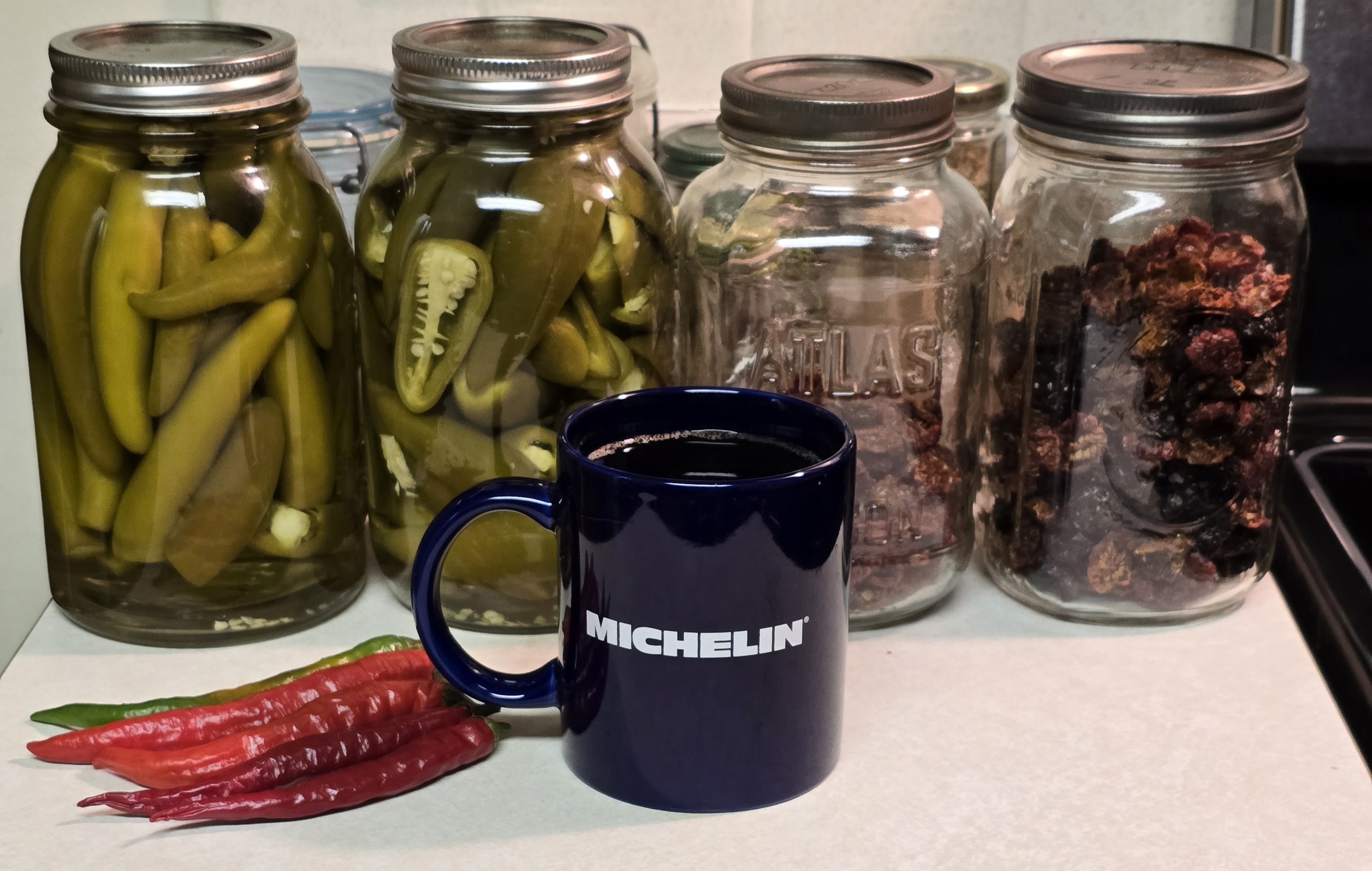
Slowly, over a matter of years, I developed hot pepper food products I use. When I make a lot of fluid pepper sauce, I typically water bath can it, mindful of how much acid goes into each batch. This year’s repeated food products are:

  • Ground cayenne pepper to fill an existing spice jar. I kept the extras whole for future use.
  • Red pepper flakes made from cayenne peppers.
  • Pickled whole or half serrano and jalapenos.
  • Pickled sliced jalapeno peppers for tacos.
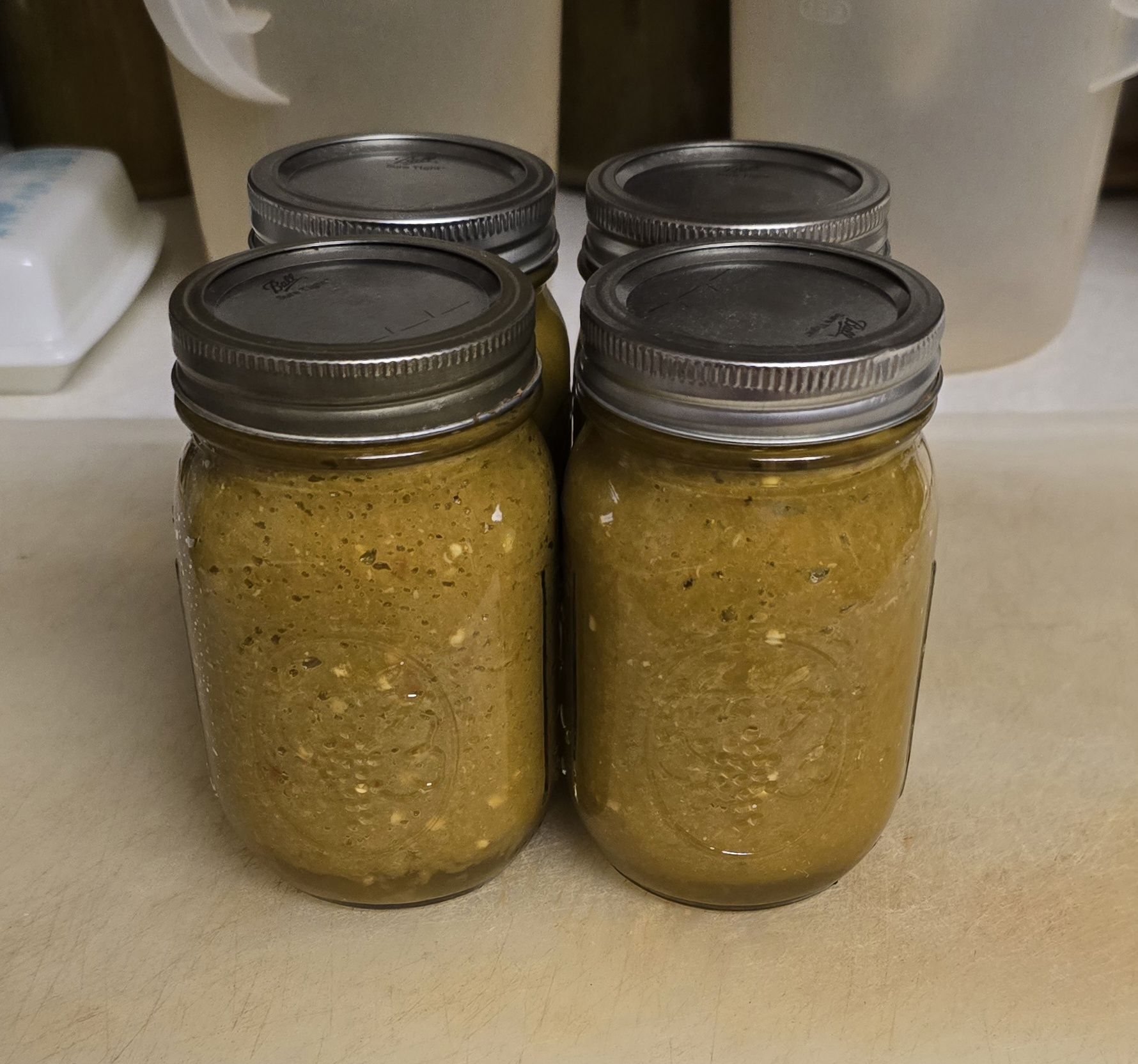
  • A jar of hot sauce, like the kind here.
  • Hot pepper paste, like here.
  • Strained hot pepper sauce.
  • Legacy hot pepper seasoning. Dried peppers and other spices mixed together and stored in large canning jars after the stove-side receptacles are filled. This is made with everything hot and few that aren’t. Also includes a large batch of Emeril Lagasse’s Essence.

I still keep a bottle of Frank’s RedHot in the refrigerator. It has a distinctive taste which I seek from time-to-time.

By now, the fresh peppers are gone. I found freezing them whole or halved was not the best option. This year hot pepper paste is doing journeyman’s kitchen duty. Making it used all remaining hot peppers. Hot pepper paste is a gardener’s friend.

Growing and using hot peppers is a never-ending journey. One I hope continues as long as I live.

Categories
Living in Society

Pesto Pasta Bowl with a Dash of Artificial Intelligence

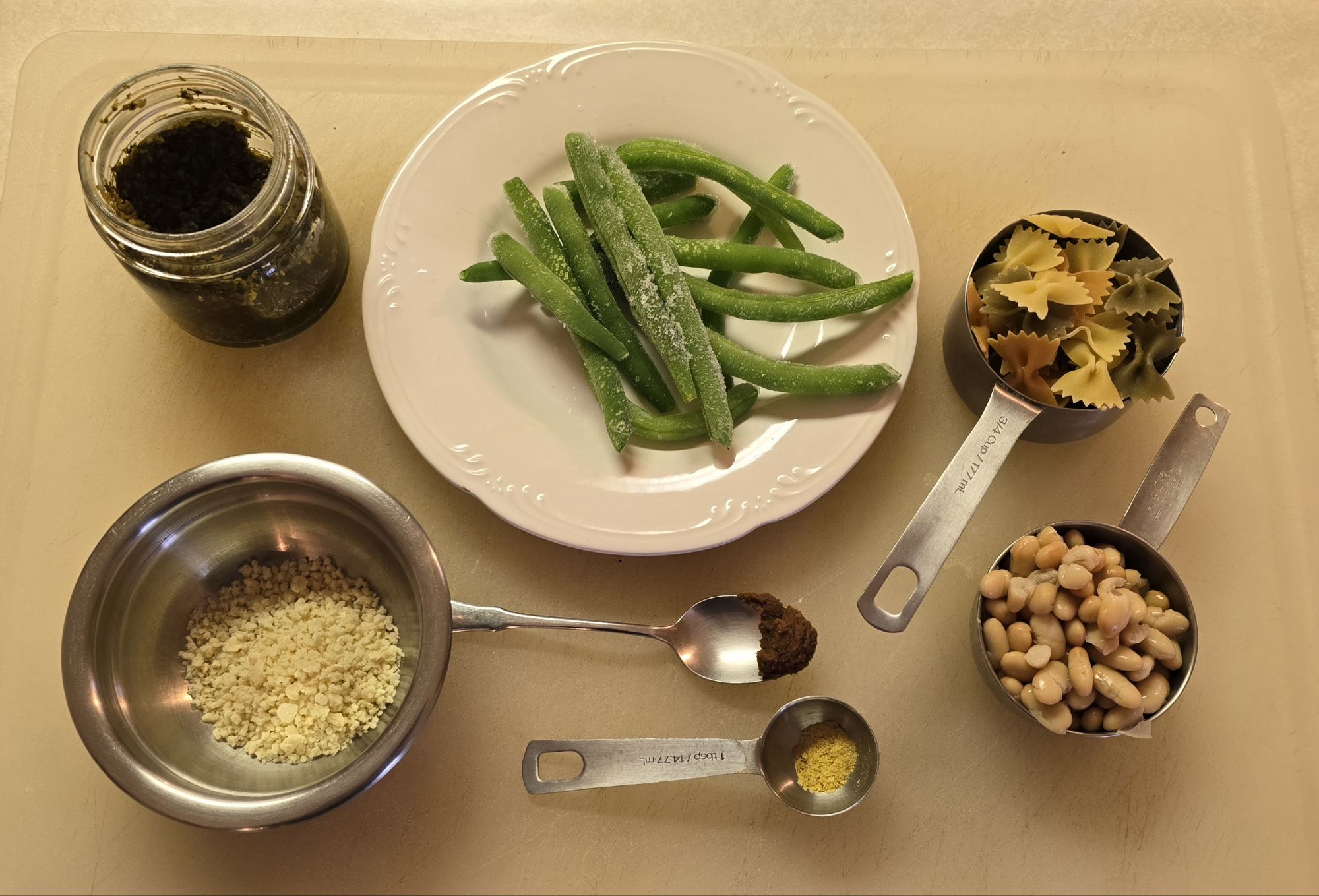
Ingredients for a pesto pasta bowl.

We can’t help but be appalled by the news story about a young man who died of a drug overdose after his interaction with ChatGPT about his dosage.

ChatGPT started coaching Sam on how to take drugs, recover from them and plan further binges. It gave him specific doses of illegal substances, and in one chat, it wrote, “Hell yes—let’s go full trippy mode.” (A Calif. teen trusted ChatGPT for drug advice. He died from an overdose, Lester Black and Stephen Council, SFGate, Jan. 5, 2026).

What’s that got to do with me asking the same artificial intelligence portal for advice about fixing dinner? More than a little.

I’m a beginning user of ChatGPT. When I asked the machine how I could get more protein in a simple pesto pasta dinner, I didn’t think twice about its recommendation of a half cup of cannellini beans, a serving of green beans, white miso and nutritional yeast. All four were on hand and I grew the green beans myself. I made the dish. After dinner I reported a bitter taste to the meal, which I attributed to the nutritional yeast. AI was in robust agreement and added, “That’s what experienced chefs do. Figure out what causes taste.” Stop stroking me, I thought to myself.

Earlier in my less than a year interaction with the machine, it asked me, “Do you prefer this tone?” It meant tone of voice in our interactions. After I asked what pronouns the machine preferred (you/it), this seemed like a natural follow up. I said okay and have had that tone in front of me ever since. I like it because it generates a fake phraseology which helps me remember ai is not my friend but a machine. In reading the article, Sam did not appear to have such division in his experience.

OpenAI, the parent of ChatGPT, uses what’s called a “large language model” to work its magic. Basically, it is a machine learning model that can comprehend and generate human language. Okay, that’s what the machine does. Here is the rub:

Steven Adler, a former OpenAI safety researcher, said that even now, years into the AI boom, the large language models behind chatbots are still “weird and alien” to the people who make them. Unlike coding an app, building a LLM “is much more like growing a biological entity,” Adler said. “You can prod it and shove it with a stick to like, move it in certain directions, but you can’t ever be — at least not yet — you can’t be like, ‘Oh, this is the reason why it broke.’” (A Calif. teen trusted ChatGPT for drug advice. He died from an overdose, Lester Black and Stephen Council, SFGate, Jan. 5, 2026).

Are we getting into a Star Trek IV: The Voyage Home scenario? Here is the plot, in case you missed it. Or maybe the HAL 9000 as in 2001: A Space Odyssey. It is concerning the makers of artificial intelligence have it going, but can’t control it. In Sam’s case, ai told him it couldn’t talk about drug use at first. Eventually Sam won the machine over to his personal detriment.

I can fix my pesto pasta bowl so it is less bitter next time. Once a young man’s life is gone, there is no next chance to improve. I predict ai will become very popular because it took the machine four seconds to generate a meal change that would add more protein yet fall in the domain of Italian cuisine. It knew about the issues with nutritional yeast, yet recommended it anyway. In before-ai life, I would be paging through cookbooks for an hour to get the same result. Maybe we should throw on the brakes… and I don’t mean the mechanical devices used on the first Model-T Fords.

In a society where humans have less and less in-person contact, it seems normal we would seek out a machine that speaks to us in a tone of voice we recognize and accept. What is not normal is the suspension of skepticism about the machine’s interaction with us. I learned to watch out or you’ll get a bitter pasta bowl.

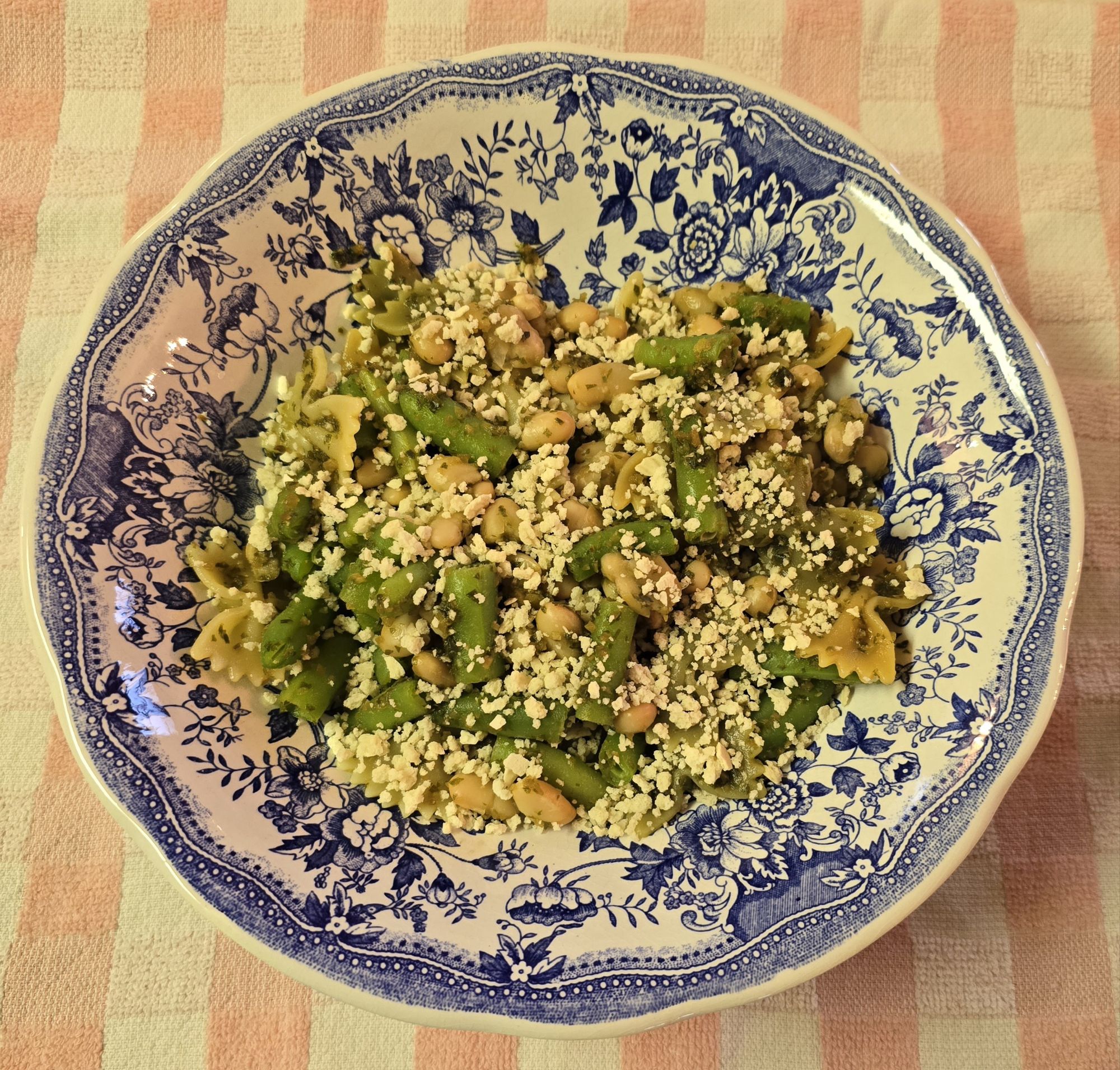
Pesto Pasta Bowl, Jan. 5, 2026.
Categories
Creative Life

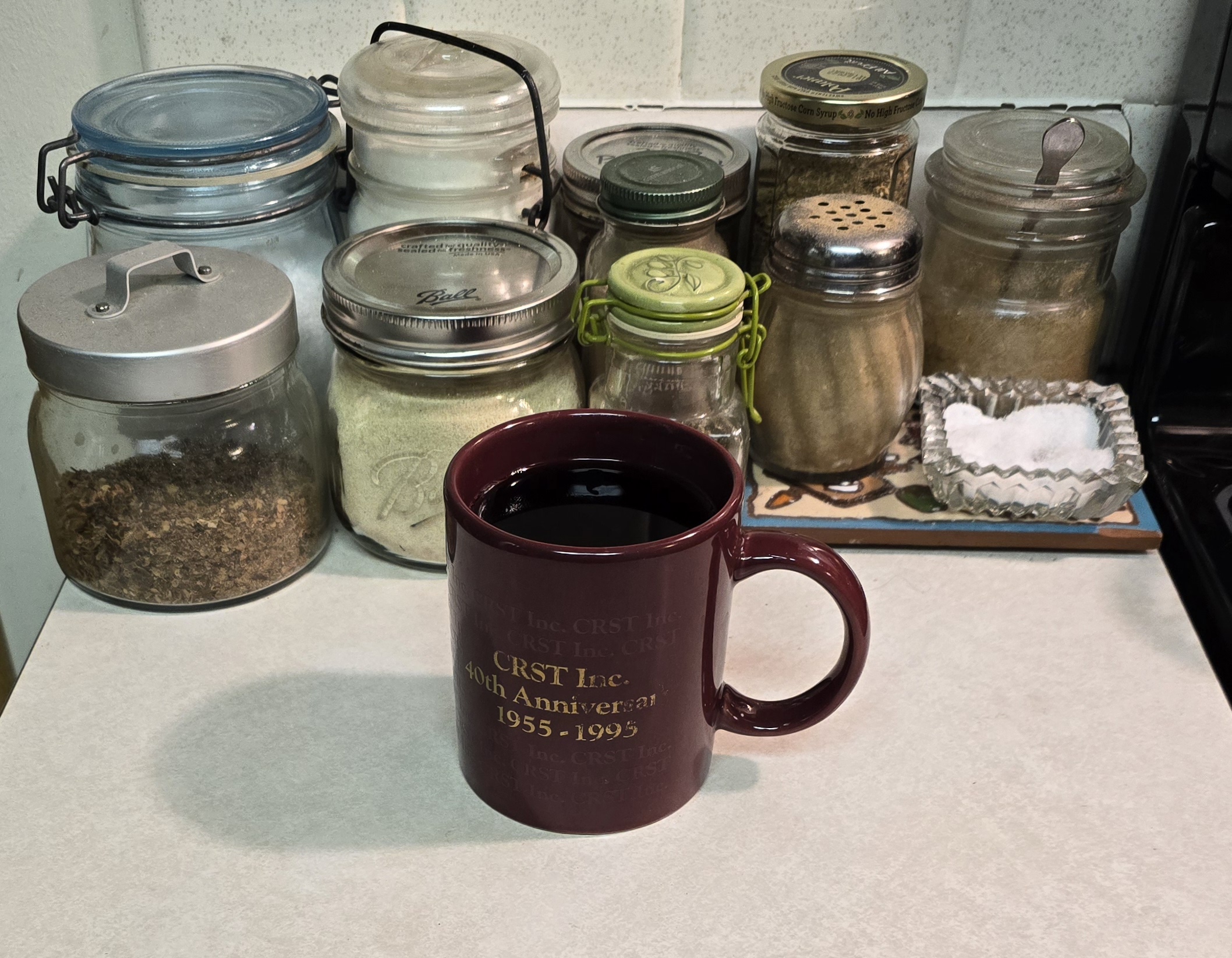
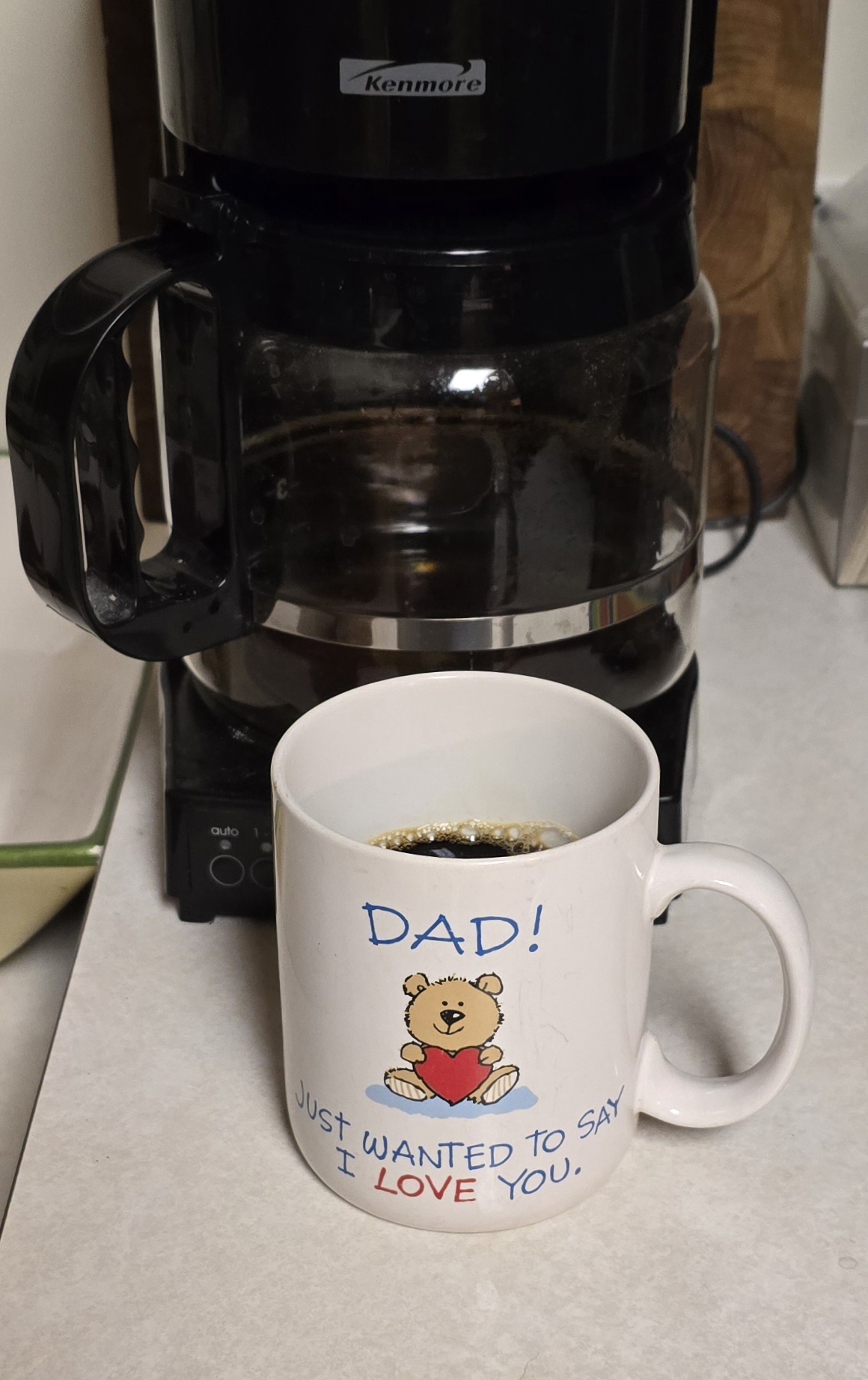
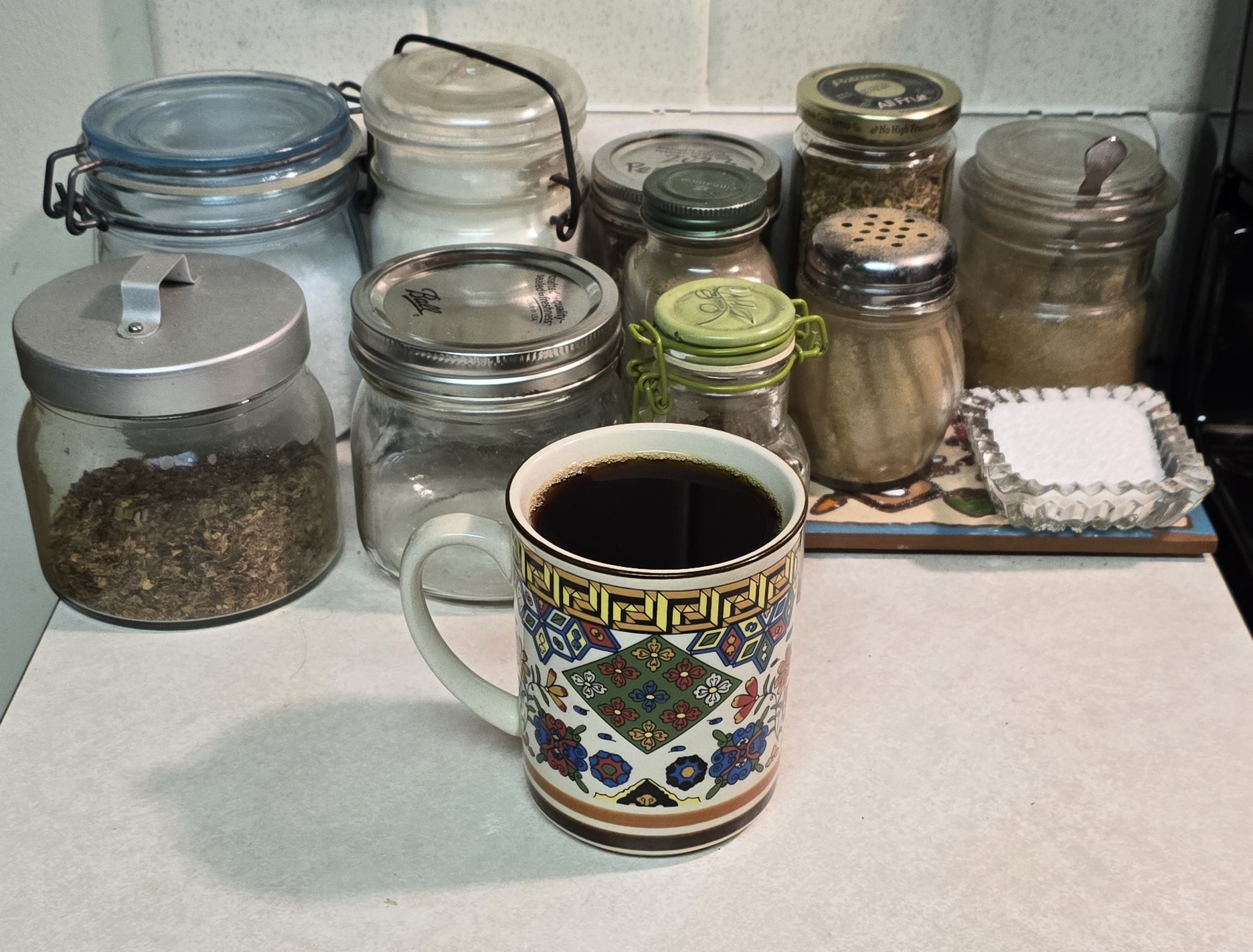
A Year in Coffee Mugs

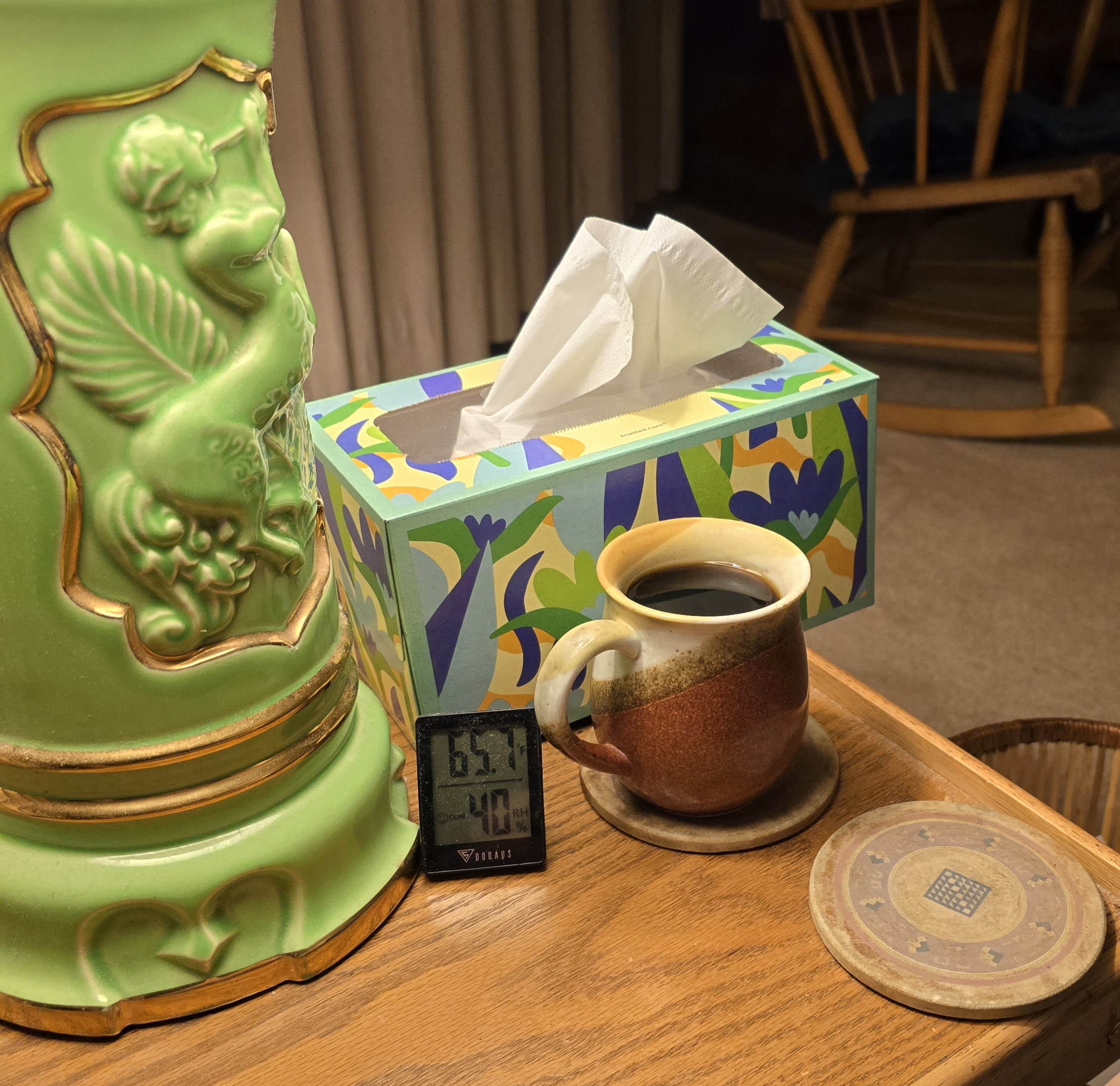
Coffee in my reading chair.

I drink a lot of coffee. At least one cup per day, mostly one pot per day. Each morning I usually post one picture of my daily cup on social media with a saying for the day. It makes a collection.

Mug used while not at home.
Categories
Kitchen Garden

Cooking Miscellany

Last fresh kale of the 2025 garden.

When gleaning the garden I picked a number of green cayenne peppers. Not wanting to mix them with the red ones, I ground them into a fine powder and have been using it in lieu of hot sauce on Mexican-style dishes. It is an unexpected treat.

While making tacos on our Taco Tuesday, I used the last of the fresh kale from the refrigerator. We almost made it to 2026. Now we turn to the freezer for leafy green vegetables. There is plenty for household use.

We make tofu stir fry on rice as a main course. I have been experimenting with pureed garlic. It is made with extra virgin olive oil and garden garlic. In stir fry, it mixes with the water used as a cooking medium and forms a tasty sauce. I will be pureeing more garlic as we use up the initial batches.

It’s almost time for another pot of barley-lentil vegetable soup. I will raid the freezer for ingredients, including grated zucchini and summer squash, diced celery, prepared pumpkin, and collards. A warm bowl of soup is appreciated this time of year.

I cleaned off my writing table because I spilled a giant cup of coffee on it. The damage was minimal but the drop cloth that protects it got wet and is draped over the car to dry. I found a bottle of furniture cleaner and treated the surface. Nothing says you are ready for what’s next like a clean writing surface.

Categories
Kitchen Garden

Kitchen in Late Autumn

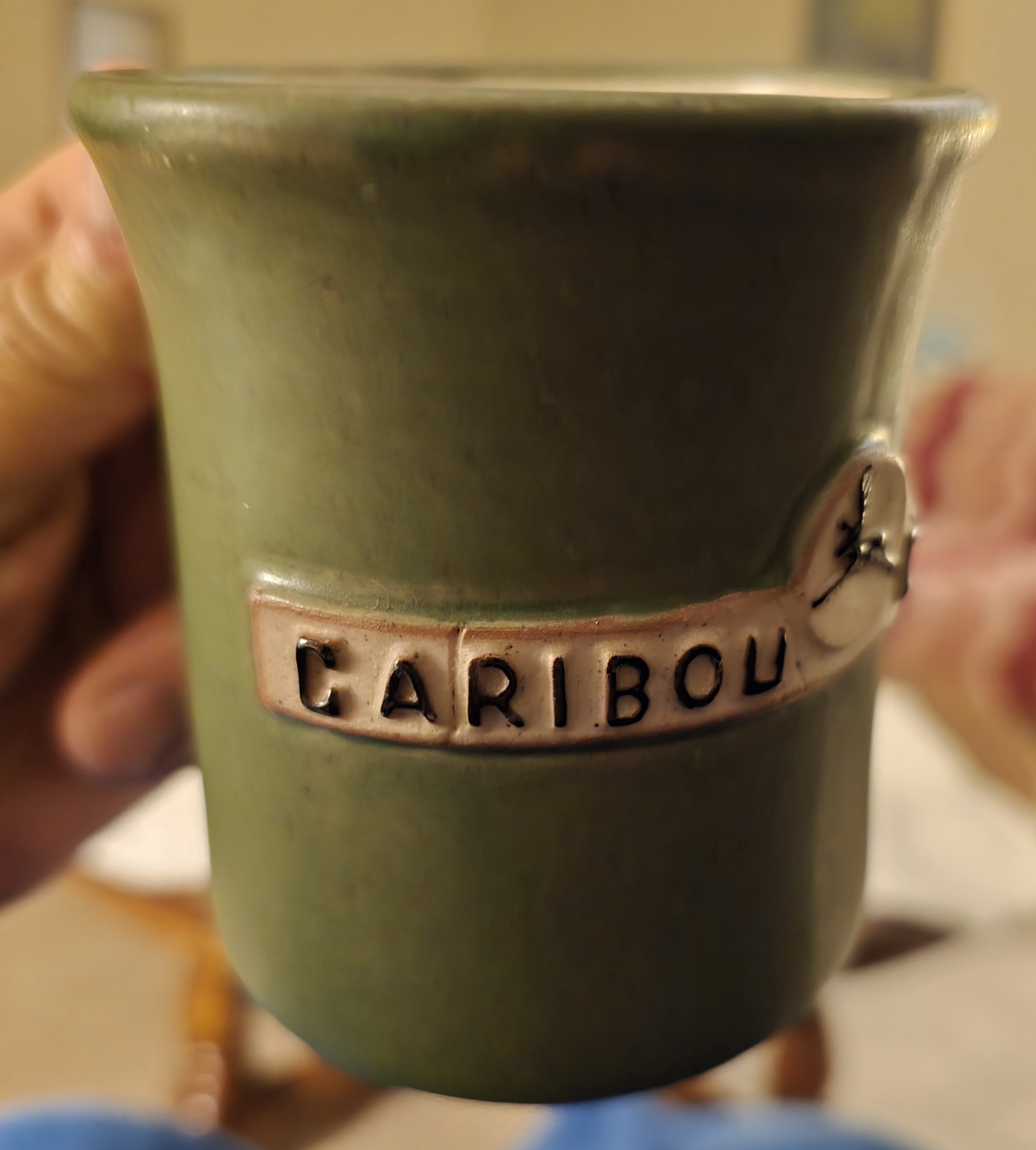
Coffee mug made by Alea when we worked together at the orchard.

I will spend my two Friday afternoon work blocks getting ready for the arrival of our child. Mainly, that means cooking. Great Northern beans soaked overnight and are heading for a traditional bean soup made with carrots, onion, celery, and bay leaves cooked in homemade vegetable broth. There will also be homemade cornbread. I am debating whether to make applesauce cake or pumpkin bread for dessert. We’ll see what happens. It goes without saying, supper will be completely vegan.

Ever since the fire ran them out of their apartment building, first to temporary quarters and then to a new rental in a western suburb, our home became a storage depot for stuff not needed now, but was worth keeping. More storage items are enroute as I type these words. I created a storage platform with the loft bed I made for their college dormitory. It serves.

This is a tribal time. We don’t spend time together at the end of year holidays, so this is what we do. Have a bean soup supper two weeks before Christmas Day. Life is good.

Categories
Kitchen Garden

Eating Alone – Quinoa

Quinoa from the pantry.

My spouse’s trip to her sister’s home extended into a third week. A typical behavior when I’m home alone is going through the pantry to see what new ideas I can experiment with while my mate is gone. I found we have a LOT of quinoa. Some I bought on discount at the home, farm and auto supply company before the pandemic, and the two boxes came from mail order. I decided to cook a quart of it in vegetable broth and see where things went.

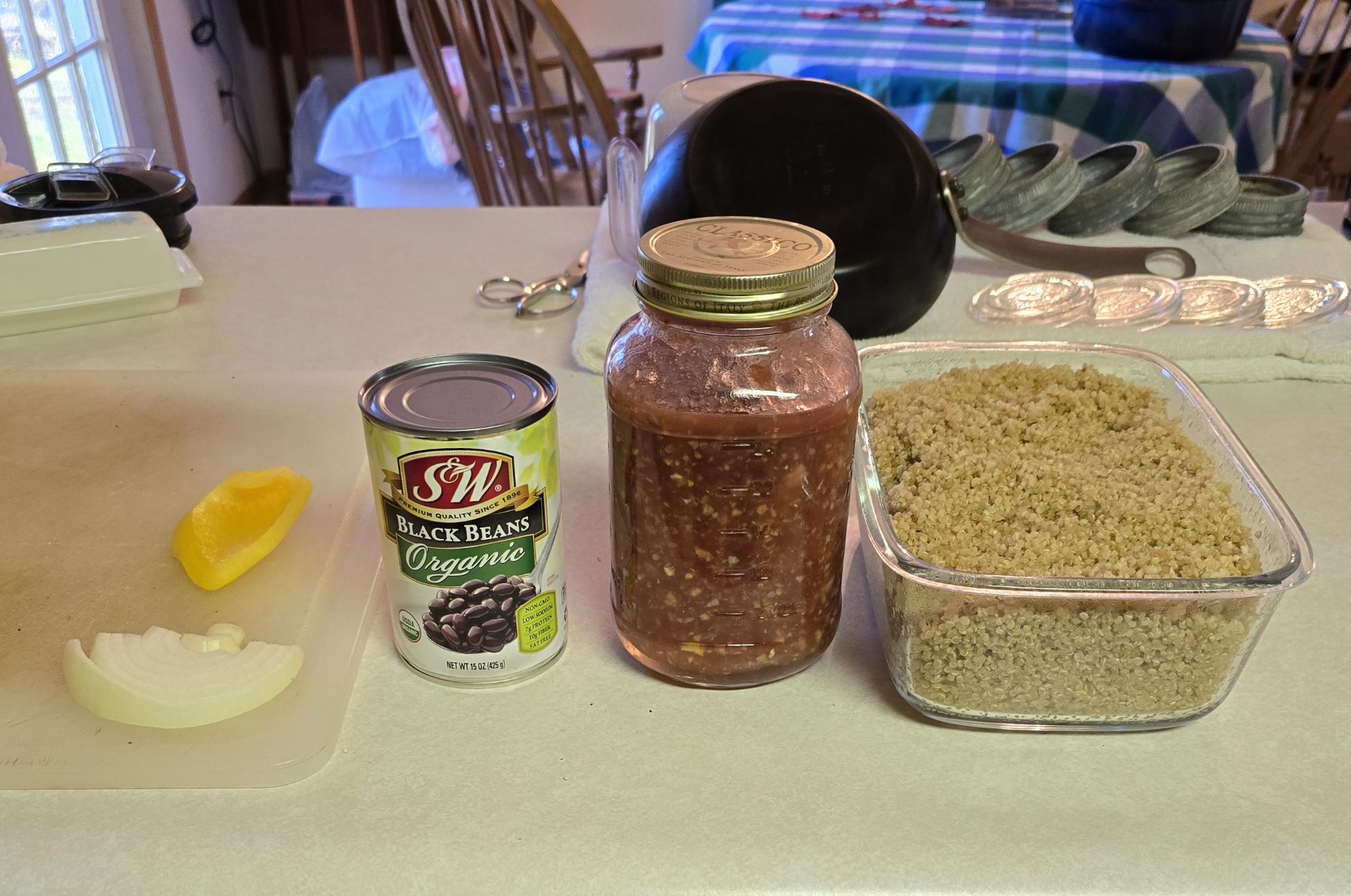
Quinoa bowl ingredients, including less than half the prepared quinoa.

I discovered a quart of uncooked quinoa makes a GIGANTIC amount of cooked. I tried some after cooking the batch and found it quite good by itself. It’s a nice change from other grains. I did research about using it and came upon the quinoa bowl. There will be a lot of those during the next week to ten days.

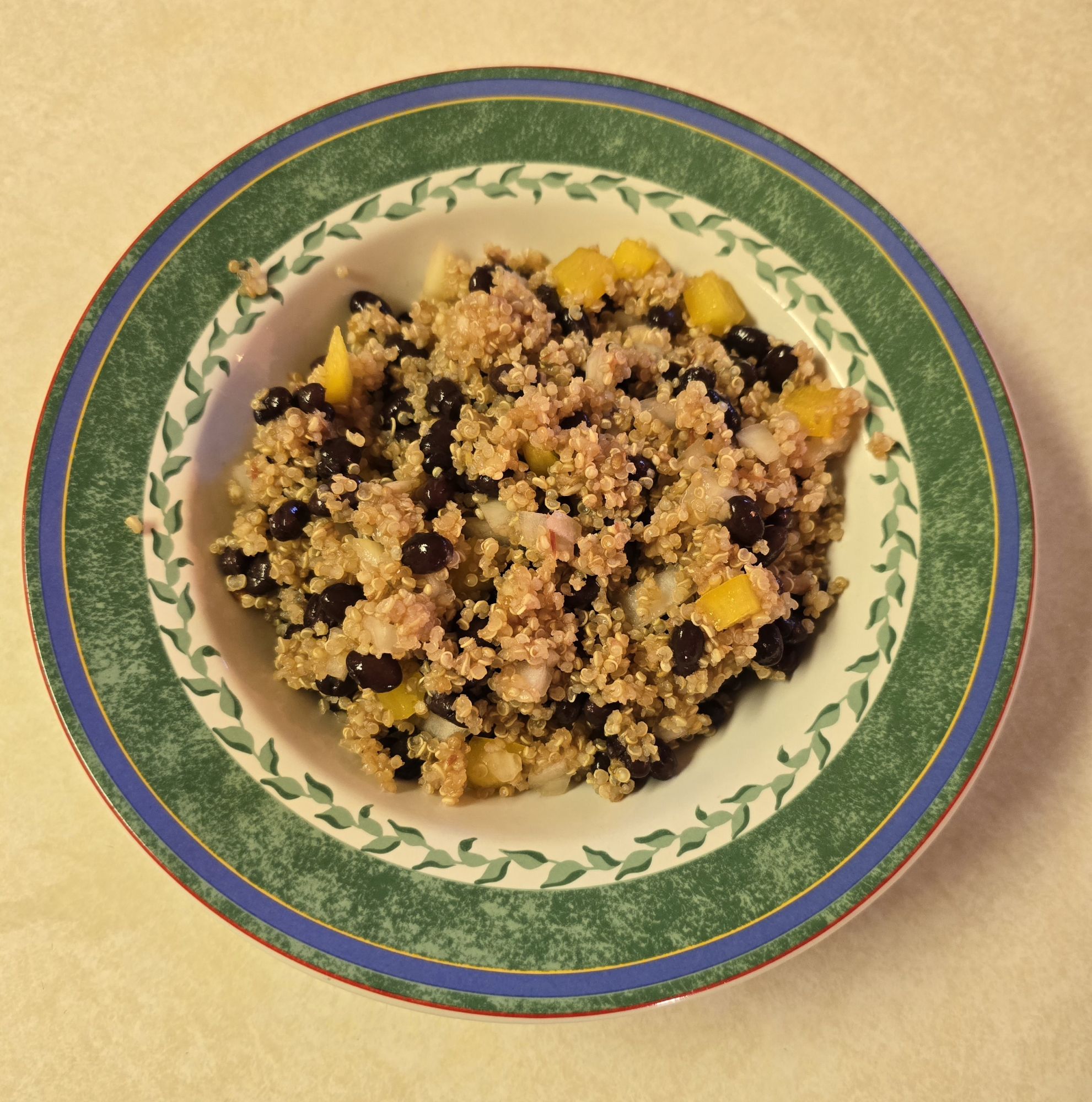
The premise is basic: use a base of cooked quinoa and mix it with other things. First up was a Mexican-style quinoa bowl. I used quinoa, canned black beans, homemade salsa, onion, and bell pepper. The vegetables were raw, and everything else cold. I put the ingredients in a bowl and mixed, and voilà: dinner is served. It hardly made a dent in the quinoa. As far as taste goes, I rate it 8 of 10.

Quinoa bowl.

These are going to be quick, simple, inexpensive, and tasty meals. Now the search for other inspiration begins.

Categories
Living in Society

Eating Alone – Mac and Cheese

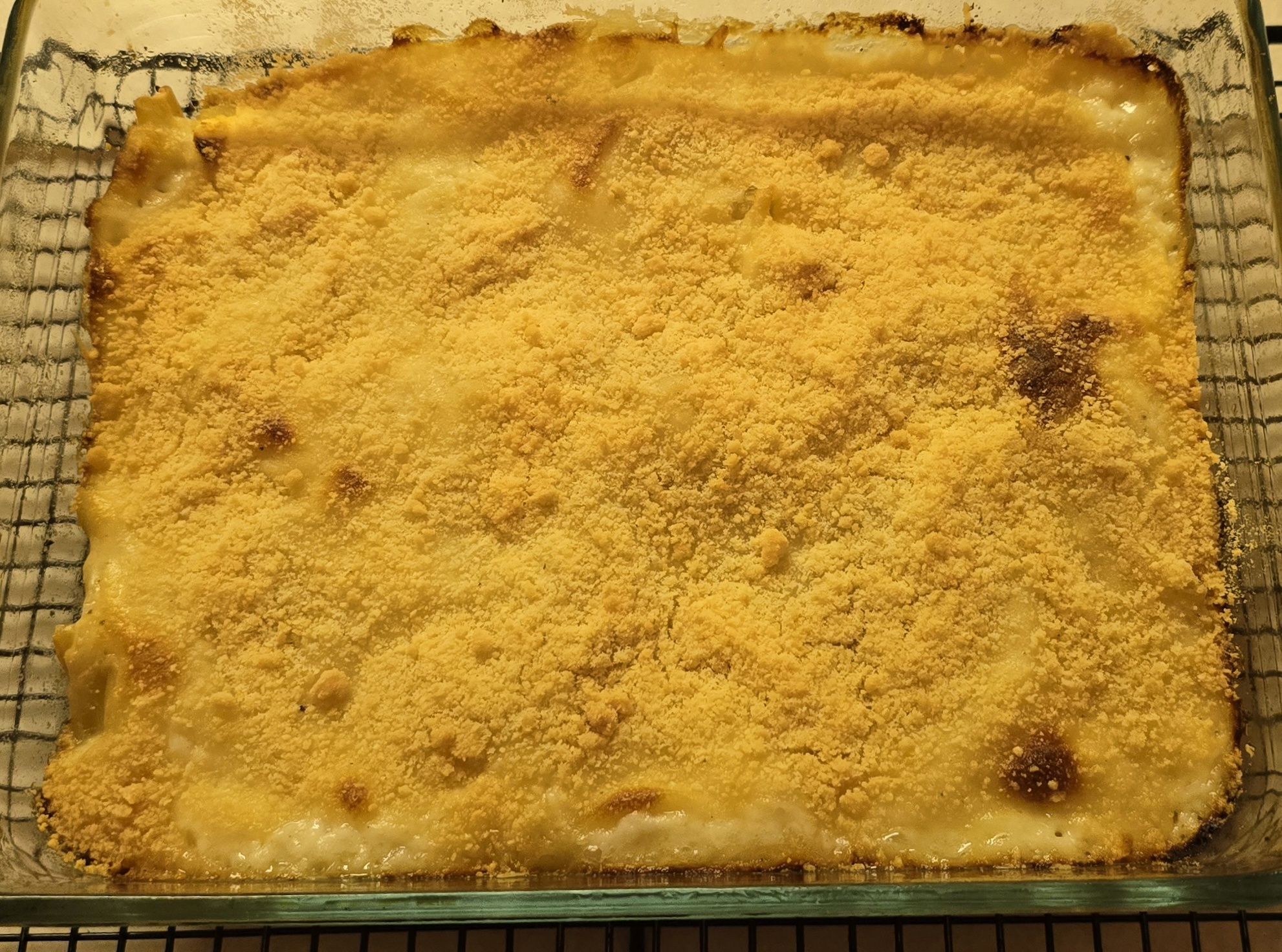
Home made mac and cheese.

My way of cooking macaroni and cheese changed. After some unsatisfying experiments with making it vegan, I now use cheese and butter when I am home alone for dinner. It is on the menu only one or two times per year, so I want it to be satisfying and memorable when I prepare it. I took inspiration for my most recent iteration from Massimo Bottura’s Kitchen Quarantine series during the coronavirus pandemic. Bottura layered the ingredients in a baking dish and I had an Aha! moment.

I have been a mixer. That is, the sauce, noodles, and other ingredients are placed in a bowl and mixed together, then moved to a baking dish and topped with something before baking. Bottura taught me to layer instead, which had never occurred to me. It could be life-changing. Here is what I did.

I preheated the oven to 350 degrees Fahrenheit and greased a baking dish. Next I made a béchamel sauce with four tablespoons each of butter and flour. These two ingredients make a roux, which is cooked a couple of minutes. Milk is added with constant stirring until medium thickness, or it coats the back of a spoon. I embellished the simple sauce by grating some nutmeg into it.

Boiled pasta was ready to go. Either cook it for the dish, or use leftovers. This time, I emptied partial containers of different kinds of dry pasta until I had two cups and cooked until al dente. My thinking is the pasta should be similarly sized, yet that is a personal preference. There are no rules.

Get the cheese ready. This can be anything the cook wants. I like a sharp cheese and used four ounces of white extra sharp cheddar, half a cup of feta, and four tablespoons of grated Parmesan. I had thought to use Gruyère and bought four ounces made in Wisconsin for the project, but it didn’t pass the taste test. If it were Swiss Gruyère, it would.

Next is the layering. A thin layer of sauce on the bottom of the baking dish to cover. Next the pasta spread evenly. Distribute the chunks of feta evenly, followed by the cheddar. The rest of the sauce goes on top, and then into the oven for 30 minutes.

At thirty minutes see where we are. I pulled the dish out and sprinkled the Parmesan on top. I turned the oven up to 400 degrees and let it bake until the crust began to turn brown. The result is in the photograph. Based on the taste, I am now a layer guy.

Mac and cheese is an old dish. In Medieval times it was pasta layered with cheese and baked, not unlike what I did. In the 18th and 19th Centuries, English and European cooks began using a béchamel sauce mixed with cheese (a.k.a. Mornay sauce), and mixing it with the pasta before baking. Let’s not even talk about those Kraft mac and cheese boxes that originated in the 1930s (Mixers, not baked).

My native impulses had me arrive at a rustic-style product that was the antithesis of processed food. If I learned anything by being a part of the local food movement, it is that this kind of dish is what I want.

Categories
Kitchen Garden

Simply Cooking

No-name dinner on Thursday night.

It began with opening the refrigerator and looking inside. I felt like cooking dinner for myself on Thursday night, yet wanted something different. I had a vague idea about cooking a frozen black bean burger and putting a sauce on it. I saw the half-used jar of tomato purée and a couple of tablespoons of sour cream on the top shelf. There was a partly used onion and bell pepper. Our kitchen always has plenty of garlic. I had just ground some cayenne peppers in the green state right before first frost. “I can make a dish out of that,” I said to myself.

Next came the mixing. I poured about a cup of tomatoes into a measuring cup, then scraped the remaining sour cream out of the container and added it. As the kids say, “Mixy, mixy.” It seemed too thin so I got out a jar of vegetable broth with miso paste and arrowroot dissolved in it, shook it up and added about a half cup. Finally, I added a scant teaspoon of cayenne pepper flakes and gave it a final stir.

I got out two frying pans, the smaller for the black bean burger and the larger for the sauce. Coating the bottom of each with extra virgin olive oil, I put the heat on. It takes about 10 minutes to cook the burger so I got the sauce going by sauteing the onion, bell pepper, and a diced jalapeño pepper until softened. Garlic next and as it cooked, it didn’t look like enough vegetables. I got a bag of mixed vegetables from the freezer and added a generous handful. I cooked the veg until everything was heated through and done. I added some powdered cayenne pepper to make sure the heat was at the right level.

Once the vegetables were ready, I poured on the sauce and cooked long enough to heat it through and let the arrowroot do its thickening work. There was some reduction yet that wasn’t the main feature of my cookery. I tasted it, and adjusted seasoning.

To serve, I put a spoonful of sauce on the bottom of a small bowl with the burger on top. I poured the rest of the sauce over it and garnished with sliced green onions. Not too much heat, and the plate stayed warm until it was eaten. This is what no-recipe cooking can look like.

Categories
Kitchen Garden Writing

Getting a Pumpkin

The pumpkin I bought at Kroul Farms on Saturday.

It has been a couple of years since I froze pumpkin for smoothies so Saturday I went to Kroul Farms which specializes in growing pumpkins. They have orange pumpkins and specialty pumpkins: a lot of them.

Specialty pumpkins at Kroul Farms.
More specialty pumpkins and a little pie pumpkin.

I took mine home for seven dollars and on Sunday I processed it.

First, cut it in half and remove the seeds.

This pumpkin yielded a cup and a half of seeds for roasting.

Cup and a half of pumpkin seeds.

Both halves went into a 400 degree oven and baked about 90 minutes until tender. The timing varies depending upon size of pumpkin and quality of the oven.

Baked pumpkin.

I let them continue cooking on the counter. Next I skinned them and put the flesh of both halves into a large bowl. The use for this pumpkin is smoothies. Since it will go into a blender, I only did a rough mash using a potato masher. The flesh was too wet for smoothies, so I used my conical strainer to drain it. It extracted 4-5 cups of liquid which will go into soup.

Straining the pumpkin flesh.

I cleaned the baking pans and then used an ice cream scoop to make portions on a piece of parchment paper lining the pans. They went into the freezer. Once thoroughly frozen, they go into a Ziploc freezer bag for storage.

Frozen portions of cooked pumpkin.

And that’s how I spent part of my weekend.

Roasted pumpkin seeds.