Categories
Environment

Holiday Talk about the Environment

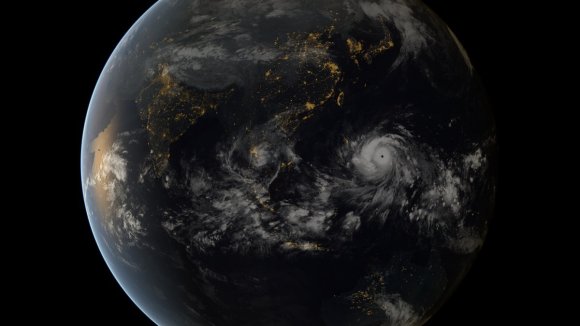
Typhoon Haiyan 2013 Photo Credit: EUMETSAT
Typhoon Haiyan

LAKE MACBRIDE— At a holiday gathering, talk was about the billionaire who came to Iowa to meet with people about the possibility of spending some of his/her fortune on environmental advocacy, and not the climate denier type. There had been a successful campaign to identify environmental voters during the recent election in Virginia, so what about Iowa and it’s first in the nation caucuses? I was told about, but not invited to the meeting.

The trouble with this kind of money is non-profits and consultants will fight over it like there is no tomorrow, especially when the prospect is seven figures as this is reputed to be. That’s been the history: a dog-eat-dog contest to woo and sway donors to support one cause or organization over others. There is no time for the parochial concerns of a few non-profit environmental groups or consultants fighting over donations. In my opinion only one concern matters most: climate change is real, it’s happening now, it’s not too late to do something about it, and we should do something about it before it’s too late. We need to stay focused on what’s most important.

My agreement with The Climate Reality Project restricts me from accepting funds for my advocacy, so in any case, I would be out of the fray. It doesn’t make me impartial, just less able to be diverted by advocacy funding and its work-products. While funding an environmental advocacy effort is an important part of an overall effort to solve the climate crisis, there is hardly agreement among Iowa environmental groups about what is the most important legislative objective, let alone consensus. It’s safe to say there won’t ever be consensus.

Some group or groups may secure funds, along with their expectations, deliverables and arc of expenditure. They’ll develop a plan, engage paid and unpaid staff, and set objectives to meet the requirements of the funder. All well and good, but tying the project to the Iowa caucuses would not be as productive as other use of the funds could be. Case in point: what ever happened to the Sensible Priorities of Ben and Jerry, the Vermont ice cream purveyors? There are photographs and memories, but the government continues to spend more money on the military industrial complex than is needed, the Sensible Priorities project notwithstanding. My fear is adding a well funded environmental advocacy group to the Iowa caucus process would be akin to adding another clown car in the parade, and Iowa doesn’t need that.

What would be better is to channel the positive efforts that are emerging on a number of fronts into a concerted, non-partisan effort, something advocacy funding seems unlikely to do.

One should be thankful that groups are working on various aspects of the climate crisis, but in the end, the recent mold of political advocacy needs to be broken and re-invented to be more inclusive. Common ground must be found with the climate deniers, whether we like it or not, and the way to do that is not by matching the Koch brothers and others, dollar for dollar. We’ll see what happens, but the conversation was a lot more interesting than the game on the T.V. screens ever could be. It mattered more as well.

Categories
Environment

Monday Morning

We Stand With YouLAKE MACBRIDE— Spending the weekend with 25 or so environmental organizers and activists kept me busy, and engaged. Meeting new people and matching names with faces is important to any social justice effort, and the weekend did not disappoint in that regard.

Erin Pratt and Patty O’Keefe from Minnesota 350, and Erika Thorne of Training for Change arrived in Iowa Friday night, and led the workshop Saturday and Sunday. The focus of the workshop included planning strategic actions and campaigns, leadership skills, and tools for building a local team. The logistics were well organized, but the stars of the show were the Iowans who participated for part or all of the workshop. Old friendships were renewed, and new ones initiated. It was all good.

That said, it’s Monday, and the recurring, and ever present question, what’s next, needs answering… again.

Is there anyone on the planet that believes something positive will come from COP 19, the United Nations Framework Convention on Climate Change conference of the parties in Warsaw? The web page on decisions coming from the conference hopefully says, “decisions will be available shortly.” I doubt it.

In order for COP 19 to take substantial steps to mitigate the causes of global warming after Warsaw, the United States and other security council members have to lead. Ours is a country where a significant number of people are pro-life, anti-UN, anti-taxes, and tuned out to most of what the rest of the world does. Because of the influence of this small, but powerful minority view, the chances of the U.S. government leading this year are between slim and none.

A lot of the conversations at our workshop were around political influence to address climate change. Political change is important, but do we have time to implement a carbon tax and dividend, or to amend the U.S. Constitution to overturn Citizens United? Both seem to be good intentioned, but hopeless pursuits. Investing our time and resources in such endeavors occupies bandwidth that could be used for other needed activities, the most important of which is organizing and educating our communities about the existential threat to our way of life represented by greenhouse gas emissions. For me, some part of today will be working toward that end.

Categories
Environment

Climate Disruption and Farming

Following are prepared remarks for my talk at the Iowa United Nations Association event, “Speaking of… The Environment!” held at Prairie Lights Bookstore in Iowa City, Iowa on Tuesday, Nov. 12.

Thank you Iowa United Nations Association for organizing this event, and to Prairie Lights Bookstore for hosting us tonight.

Climate change is real. It’s happening now. Just ask a farmer. There are few people as close to the intersection between the natural world and human activities as they are. Any conversation I have had with a farmer, included discussion of long term changes in our climate, and how they dealt with them.

Recently, I had a conversation with farmers about this year’s crazy weather: a wet spring that delayed planting, followed by drought conditions in July through September. It was bad, but the worse news was that we can expect more of the same during the next several years.

What does this mean? For one thing, this year’s soybean crop is in and reports from the field are that pods formed on the plants, but didn’t fill out with beans because of the lack of rain. What could have been a great year for soybeans turned into an average one because of drought conditions related to our changing climate.

According to a group of Iowa climate scientists and academicians, the consequences of climate change on farmers are easy to understand. “As Iowa farmers continue to adjust to more intense rain events, they must also manage the negative effects of hot and dry weather. The increase in hot nights that accompanies hot, dry periods reduces dairy and egg production, weight gain of meat animals, and conception rates in breeding stock. Warmer winters and earlier springs allow disease-causing agents and parasites to proliferate, and these then require greater use of agricultural pesticides.” In addition, changes in our hydrological cycle cause increased soil and water runoff, and complications with manure applications. There is also pressure on crop yields.

Everything I mentioned puts pressure on our food system. We can expect more of the same going forward.

There is overwhelming evidence that climate change is anthropogenic, or caused by humans, yet most farmers don’t accept it, even as they deal with its effects.

Scientists don’t know where the tipping point lies, but the effects of climate change on farm operations are clear, and getting worse. Yet, even as we adapt, and farmers do adapt, we can do something about the causes of global warming and climate change without changing our way of life or hurting our economy.

We could start by dealing with the fact that globally, each day we dump 90 million tons of CO2 pollution into the atmosphere as if it were an open sewer. That has to change.

I’m not alone when I say we can do something about the causes of global warming and climate change to protect our food system before it’s too late. We should. Thank you.

Categories
Environment

On Typhoon Haiyan

Typhoon Haiyan 2013 Photo Credit: EUMETSAT

LAKE MACBRIDE— The news about Typhoon Haiyan is horrifying. For the moment, it is hard to determine the exact damage, but these quotes from the corporate media provide preliminary estimates.

CNN: “No building in this coastal city of 200,000 residents (Tacloban, Philippines) appears to have escaped damage from Super Typhoon Haiyan.”

USA TODAY: “As many as 10,000 people are feared dead in one city alone after Super Typhoon Haiyan— one of the most powerful storms ever recorded— slammed into the central islands of the Philippines, officials said.”

CBS NEWS: “The central Philippine city of Tacloban was in ruins Saturday, a day after being ravaged by one of the strongest typhoons on record, as horrified residents spoke of storm surges as high as trees and authorities said they were expecting a ‘very high number of fatalities.'”

REUTERS: “The death toll is expected to rise sharply from the fast-moving storm, whose circumference eclipsed the whole country and which late on Saturday was heading for Vietnam.”

LOS ANGELES TIMES: “What may be the fiercest typhoon in recorded history smashed into the Philippines early Friday morning, carrying winds that make Superstorm Sandy look like a weak relative. Even Hurricane Katrina, the modern measure of nature’s disastrous force on the United States, pales when compared to the punch and expected devastation from Typhoon Haiyan.”

Typhoon Haiyan was the second category 5 typhoon in the Pacific Ocean this year. While we consider the damage, and what it means, it’s time for a moment of prayer for the dead, and for the survivors.

Categories
Environment Kitchen Garden

Adapting to Climate Change

Conference Welcome
Conference Welcome

RURAL CEDAR COUNTY— On a tour of an organic farm in Cedar County yesterday, talk turned to the impact recent unusual and severe weather events we have had. The story is similar to what others in the agricultural community have been saying.

Farmers are talking about two main weather events this year. The late, wet spring that delayed planting, and drought conditions during August and September. According to a recent gathering at the Farm Bureau, there will be more of the same during the next several years.

The late, wet spring caused some localized flooding on the property, but did not significantly impact the overall operations. They dealt with the weather. The apple crop was abundant because spring pollination conditions were almost perfect after a tough 2012, with the buds flowering after the last hard frost. A lot of apples were still on some of the trees.

Locally we lived through a period of six weeks without any rain. The effects of the summer drought on the vegetable crop were mitigated by irrigation using a drip tape system. There was plenty of water for irrigation, although like most farmers, he didn’t know how deep his well was dug. There was a farm pond should the well go dry.

Drought will reduce corn yield. We examined some ears on the stalk, and a second ear failed to form on many of them. What ears of corn were present did not fill out with kernels. Both conditions were attributable to the drought.

For the last several years, the ability to harvest vegetables later into the year exists because it was warmer later. Food can be harvested directly from the field, rather than drawn from storage and preserves during November and into December. My tour guide said he had only just begun to realize the persistent change, and was beginning to rethink his food planning for the 80 or so people who rely upon the farm for daily meals.

Farmers, more than most people, are sensitive to changes in the weather and climate. For 10,000 years the climate on earth has been stable, and this stability enabled the rise of agriculture, and along with it, our civilization. In Iowa, agricultural success is predicated on our assumptions about rainfall and the hydrological cycle. Things are changing, and what I saw yesterday is more evidence of that.

The era of climate stability is at an end, due largely to human activity. We continue to dump 90 million tons of CO2 pollution into the thin shell of atmosphere each day as if it were an open sewer. Without action on our part, adaptations like those on this farm will be ineffective over the long term. Whatever we were used to as normal has been disrupted by changing climate.

It may be evident to a farmer that the ecology of agriculture is changing in new ways. Yesterday’s farm tour was another example of why. Taking collective action to mitigate the causes of climate change has become the moral challenge of our time. We didn’t ask for this, but our personal involvement is as important as it has ever been as we work to sustain our lives in a turbulent world.

Categories
Kitchen Garden Work Life

Carrots and Farm Work on a Blustery Day

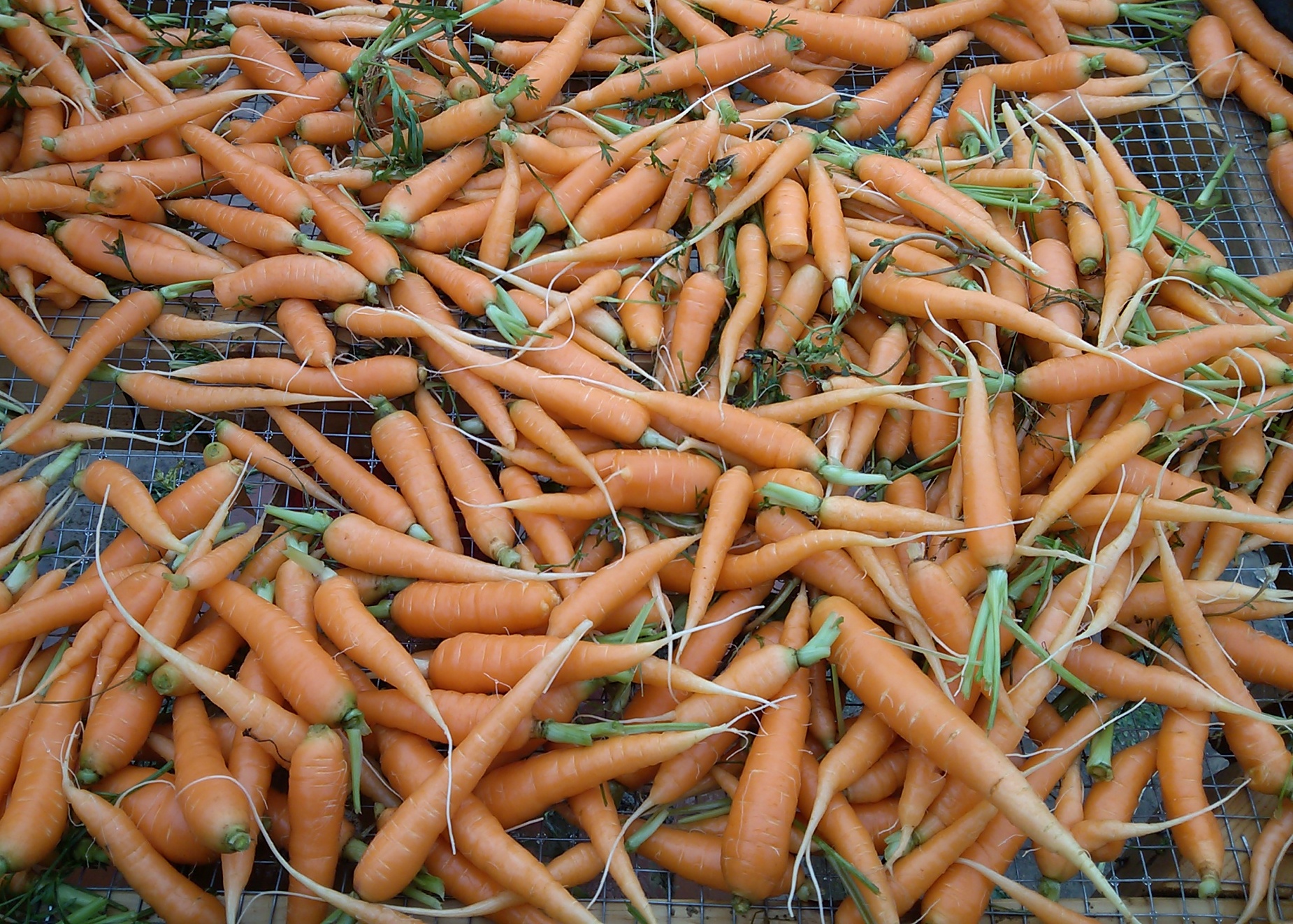
Fresh Carrots
Fresh Carrots

RURAL SOLON— It was a blustery day at the two acre farm where work took me yesterday. Carrots to harvest, tomato cages to deconstruct and roll up, and irrigation line to find and remove to the roads for later pickup. It was cold to the bone.

My time in the military prepared me for days like this. The key is to focus on the work and the cold will take care of itself, falling neatly into the background. Once one accepts there is no place to go to get warm, and nothing to do but the work, life doesn’t seem so bad and neither does the cold.

September HeatIt was recently reported that September was the 343rd consecutive month of above average global temperatures. No surprise there, and October will be the 344th. What I would rather see is a tally of the actions people take, on a daily basis, to reduce their carbon footprint. That and a measurement of the aggregate impact it has on global warming. We would do better to collect our progress and see how we are doing than tick off the number of months of doom.

Working in a sustainable agriculture operation is said to help solve the climate crisis. According to Wikipedia, sustainable agriculture is the act of farming using principles of ecology, the study of relationships between organisms and their environment. A couple of things seem most important. Sustainable agriculture is site-specific. What one farmer does on his/her land may last over the long term to satisfy human food and fiber needs, sustain the economic viability of farm operations, and enhance the quality of life for farmers and society as a whole. It is hard to find fault with this, and the connection to the climate crisis is clear.

Where it gets sticky is that as the environment changes, so too do the organisms encountered on a parcel of land. This suggests that the work of adaptation is never really complete in sustainable agriculture. Most farmers I know are engaged in a process of constant experimentation to determine what does and doesn’t work to solve ecological problems. What is worrisome is they seldom, if ever, talk in terms of adaptation to climate change, even if that is what sustainable agriculture represents at its core. Note to self: initiate this conversation.

After noon, the two of us harvesting carrots and working in the field were called to the barn for lunch. Grilled cheese sandwiches, vegetable soup and sweet carrot bread for desert. Much better than restaurant fare, and an unexpected perquisite to break the cold. Not to mention the conversation about the fall share, and our hopes, dreams and experiences. Brief and pleasant interval in another day’s work in our ever changing environment.

Categories
Environment

A Rising Challenge to Iowa Agriculture

DES MOINES— In the wake of 2013’s extreme weather roller coaster, marked by the wettest spring on record, followed by the second-driest July through September ever, a statewide group of leading Iowa science faculty and researchers released the Iowa Climate Statement 2013: A Rising Challenge to Iowa Agriculture at Drake University in Des Moines on Oct. 18. Below is the text of the statement. The document with the names of Iowa scientists endorsing it is here.

Iowa Climate Statement 2013: A Rising Challenge to Iowa Agriculture

Our state has long held a proud tradition of helping to “feed the world.” Our ability to do so is now increasingly threatened by rising greenhouse gas emissions and resulting climate change. Our climate has disrupted agricultural production profoundly during the past two years and is projected to become even more harmful in coming decades as our climate continues to warm and change.

Swings from one extreme to another have characterized Iowa’s 2013 weather patterns. Iowa started the year under the widespread drought that began in 2011 and persisted throughout 2012. But the spring of 2013 (March‐May) was the wettest in the 140 years of record‐keeping, creating conditions that hampered the timely planting of corn and soybean fields. During those months, sixty‐two Iowa counties experienced storms and flooding severe enough to result in federal disaster declarations.

By mid‐August, very dry conditions had returned to Iowa, subjecting many of the state’s croplands to moderate drought. These types of weather extremes, which are highly detrimental to Iowa’s crops, were discussed in our 2012 Iowa Climate Statement, where we also noted that globally over the past 30 years extreme high temperatures are becoming increasingly more common than extreme low temperatures. In a warming climate, wet years get wetter and dry years get dryer and hotter. The climate likely will continue to warm due to increasing emissions of heat‐trapping gases.

Climate change damages agriculture in additional ways. Intense rain events, the most notable evidence of climate change in Iowa, dramatically increase soil erosion, which degrades the future of agricultural production. As Iowa farmers continue to adjust to more intense rain events, they must also manage the negative effects of hot and dry weather. The increase in hot nights that accompanies hot, dry periods reduces dairy and egg production, weight gain of meat animals, and conception rates in breeding stock. Warmer winters and earlier springs allow disease‐causing agents and parasites to proliferate, and these then require greater use of agricultural pesticides.

Local food producers, fruit producers, plant‐nursery owners, and even gardeners have also felt the stresses of recent weather extremes. Following on the heels of the disastrous 2012 loss of 90 percent of Iowa’s apple crop, the 2013 cool March and record‐breaking March‐through‐May rainfall set most ornamental and garden plants back well behind seasonal norms. Events such as these are bringing climate change home to the many Iowans who work the land on a small scale, visit the Farmer’s Market, or simply love Iowa’s sweet corn and tomatoes.

Iowa’s soils and agriculture remain our most important economic resources, but these resources are threatened by climate change. It is time for all Iowans to work together to limit future climate change and make Iowa more resilient to extreme weather. Doing so will allow us to pass on to future generations our proud tradition of helping to feed the world.

Categories
Home Life

Dealing with the Storm

LAKE MACBRIDE— A neighbor posted this message to our community email list last night,

Dear Neighbors,
Our garden has produced tons of great tomatoes this year, more then we can or can. Tomorrow I will pull my trailer up to the road with some of the surplus tomatoes on it.  If you would like some home grown organic heirloom tomatoes help yourself.

It was a generous gesture, the kind of which we need more in this dog-eat-dog world, where the Darwinian struggle for existence is taken literally and has also taken a turn toward the coarser side of human nature. He posted before the storm rolled in.

One neighbor called the brief storm, “(the) worst in 20 years.” He and his family built about the same time we did, during the early 1990s. The rain was intense and the wind sharp. With the climate crisis, one expects this sort of storm, and seeing how it plays out is never a pleasant experience.

We lost a tree, some lilac bushes and a big branch from our favorite tree, the autumn blaze maple in front. The apple crop was mostly knocked from the trees. When the sun rises we’ll see what is left to finish ripening, and whether there was any structural damage. I won’t be going to the farm today while spending time with post-storm cleanup. It could have been a lot worse.

Next steps are to finish coffee and breakfast, make a list and start doing things on it when the sun rises. There’s a song about that.

Categories
Environment

Al Gore’s Optimism

Al Gore in Chicago
Al Gore in Chicago

Wednesday, the Washington Post published an Ezra Klein interview with former vice president Al Gore, titled, “Al Gore explains why he’s optimistic about stopping global warming.”

Gore finds there is reason to be optimistic that public sentiment is changing regarding the rapidly increasing amount of CO2 in the earth’s atmosphere and the fingerprints of man-made pollution found in severe weather occurring around the world. While climate deniers get upset, even outraged when people mention this fact, Gore believes it is possible to win the conversation on climate change. What does he mean by that? He explained,

I think the most important part of it is winning the conversation. I remember as a boy when the conversation on civil rights was won in the South. I remember a time when one of my friends made a racist joke and another said, hey man, we don’t go for that anymore. The same thing happened on apartheid. The same thing happened on the nuclear arms race with the freeze movement. The same thing happened in an earlier era with abolition. A few months ago, I saw an article about two gay men standing in line for pizza and some homophobe made an ugly comment about them holding hands and everyone else in line told them to shut up. We’re winning that conversation.

Winning the conversation on climate change means making it socially unacceptable to deny the science of man-made global warming pollution. According to Gore, “the conversation on global warming has been stalled because a shrinking group of denialists fly into a rage when it’s mentioned.” Focus on the word shrinking.

“… in spite of the continued released of 90 million tons of global warming pollution every day into the atmosphere, as if it’s an open sewer, we are now seeing the approach of a global political tipping point.”

According to Gore, it has already begun among politicians, including conservatives, who have grown weary of politicization of the science of global warming by climate deniers.

Another reason for optimism is the sharp and unexpectedly steep decrease in prices for electricity produced from wind and solar, providing a financially viable alternative to fossil fuels.

Some people really dislike Gore and what he represents. The film “An Inconvenient Truth” prompted some of this reaction,

The single most common criticism from skeptics when the film came out focused on the animation showing ocean water flowing into the World Trade Center memorial site. Skeptics called that demagogic and absurd and irresponsible. It happened last October 29th, years ahead of schedule, and the impact of that and many, many other similar events here and around the world has really begun to create a profound shift.

The truth about the man-made contribution to climate change is out. As it is understood, Al Gore’s optimism is expected to be vindicated.

Read the entire Ezra Klein interview with Al Gore on the Washington Post site here.

~ Written for Blog for Iowa

Categories
Environment

Iowa and Climate Change

Cedar Rapids Flood
Cedar Rapids Flood

What will climate change mean for Iowans? That climate change exists and is happening now is accepted by any Iowan who employs a rational thought process and considers scientific evidence. As the crazy talk from Ames last weekend indicated, not all Iowans are included in such a group.

That climate change is happening is also acknowledged by our government. In 2007, Iowa Code established the Climate Change Advisory Council, which produced a panel of reports about climate change and on how the state could reduce greenhouse gas emissions. The council was disbanded on July 1, 2011, shortly after the election that brought Terry Branstad back into Terrace Hill.

For now, the Iowa Department of Natural Resources (DNR) maintains a web page that lists climate changes Iowa is already experiencing, and it is worth noting what our government says about the effects of climate change happening now in Iowa. They include:

More Precipitation

  • Increased frequency of precipitation extremes that lead to flooding.
  • Increase of eight percent more precipitation from 1873 to 2008.
  • A larger increase in precipitation in eastern Iowa than in western Iowa.

Higher Temperatures

  • Long-term winter temperatures have increased six times more than summer temperatures.
  • Nighttime temperatures have increased more than daytime temperatures since 1970.
  • Iowa’s humidity has risen substantially, especially in summer, which now has 13 percent more atmospheric moisture than 35 years ago as indicated by a 3 – 5 degree F rise in dew-point temperature. This fuels convective thunderstorms that provide more summer precipitation.

Agricultural Challenges

  • Climate extremes, not averages, have the greater impact on crop and livestock productivity.
  • Increased soil erosion and water runoff.
  • Increased challenges associated with manure applications.
  • Favorable conditions for survival and spread of many unwanted pests and pathogens.

Habitat Changes

  • Plants are leafing out and flowering sooner.
  • Birds are arriving earlier in the spring.
  • Particular animals are now being sighted farther north than in the past.

Public Health Effects

  • Increases in heart and lung programs from increasing air pollutants of ozone and fine particles enhanced by higher temperatures.
  • Increases in infectious diseases transmitted by insects that require a warmer, wetter climate.
  • An increase prevalence of asthma and allergies.

Whether the DNR will continue to maintain this web site is an open question. The influence of agribusiness over Iowa’s government is no secret. Emblematic was the public clash between Iowa board of regents chair Bruce Rastetter, a Branstad campaign contributor and agribusiness leader, and Jerry Schnoor, a University of Iowa professor and former chair of the Iowa Climate Change Advisory Council. It is easy to predict that there will be pressure from agribusiness interests to minimize the importance of climate change. As Blog for Iowa reported, the Farm Bureau idea “they think it’s (climate change) always been happening and therefore is unlikely to have much to do with whatever us humans get up to down at ground level,” is ridiculous.

What Iowans can expect is increased politicization of the science of climate change, especially as President Obama’s plan for climate action is implemented.

There is overwhelming evidence that climate change is anthropogenic. Scientists don’t know where the tipping point lies, but the effects of climate change on humans are getting worse, and we can do something about it without changing our way of life or hurting our economy. We should do something about it before it’s too late.

~ This is part of a series of summer posts on climate change written for Blog for Iowa.