Categories
Work Life Writing

A First Effort

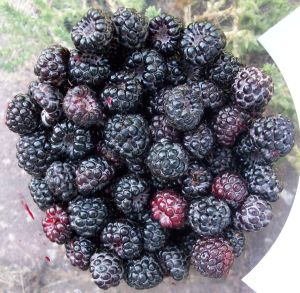
A Pint of Wild Blackberries

(Editor’s Note: This article was written July 3, 2009, shortly after my first retirement. It has been lightly edited to remove misspellings and grammatical errors I can’t bear to promulgate).

It begins by foraging for wild blackberries in Lake Macbride State Park.

Between a twenty five year career in transportation, and Independence Day 2009, gathering berries in the forest seemed a natural and appropriate way to mark my retirement at age 57. I knew that my work life would continue even if my employment for Iowa’s largest transportation firm was over. On this first day of what’s next, I hoped to wander the forest with my bag and gather what blackberries I may, an archetype of my life as an American salary man turned loose.

To say I lacked the commitment of a career in transportation misses the fact that I devoted much of my waking time and personal energy to being a successful transportation manager. At the same time, it was a bargain of time for money with what I now realize as little chance to get ahead. Transportation is not a traditional career as are medicine, the law, retailing, carpentry and plumbing. At the highest levels of transportation’s hierarchy executives are few in number and part of a clearly defined and relatively small social network. It was never my world, nor was there opportunity to make it my world, even if I was successful in delivering the business results my employers expected.

I figured this out late in the game, and it drove me to leave the business, not just recently, but in 1998 and 2003 as well. Finally, after a job as Director of Operations for CRST Logistics, Inc., my team achieved remarkable results, one last time, and I left the business.

Why did I sacrifice so much? I hoped to establish a home, meet the basic needs of our family, support our daughter’s start in life and leave time to enjoy ours. It was, among other things, for the ability to forage for wild blackberries.

And as the sun rises in the security of my partially finished study, I have concerns. I am most concerned that I will use the talents I have been given, the experiences I have had and the meager resources we have been able to accumulate, to contribute to life in society.

This means more than paying taxes and getting along with neighbors. It means considering life from my unique perspective and create an endeavor that brings peace and prosperity to a larger segment of society. The sacrifice we made resulted in a life that is economically better than many families. Our current life is a foundation upon which to build what is next. It has never been about the money or economic gain. It is about fulfilling life’s promise, and the moment I realized this and it sunk in, my so-called career in transportation was destined to end.

To start an autobiography at my age is not unusual. What is different is I want to cover the middle of life, beginning when I was married and age 32. There is another autobiography of the earlier period to be written. If I am lucky, I will get an opportunity to write that part as well.

I sense a pressing urgency to understand how I spent the middle years. If I hope to inform others of the perils of working for wages, this story should be told now, with certainty and the energy of a life lived for others. I want the story out so our daughter can benefit from it. This book will pull in parts of my whole life, but the focus will be living with a family, the meaning of labor, the consequences of delayed gratification and subservience, and the possibilities of living a life as a manager in a large company. It is a story I do not see others aware of or writing today.

My feeling about work is as old as the colonial days in Virginia. I suspect it is derived from the intellectual history passed down in my family through the generations. People indentured themselves to pay for their passage and get a start in the new world. They might indenture themselves for another contract period to pay for the passage of their family. It was a tough bargain and as many as half of the white emigrants are said to have come to the New World as indentured servants. I suspect my ancestors were among these people whose contracts were sold upon arrival in Virginia.

Henry David Thoreau wrote of the trade off we make in taking employment in Walden,

“…men labor under a mistake. The better part of the man is soon ploughed into the soil for compost. By a seeming fate, commonly called necessity, they are employed, as it says in an old book, laying up treasures which moth and rust will corrupt and thieves break through and steal. It is a fools life, as they will find when they get to the end of it, if not before.”

I am lucky to have figured this out while having a life expectancy of another quarter century. As I look through boxes of artifacts and papers I laid up before and during my working life, the papers are yellowing and dusty, diminished in importance. While I do not seek to be like Thoreau, I would learn from his writings.

I have worked for large and small businesses. I was in the military and worked for the University of Iowa. I worked brief periods of my time as an independent contractor. I belonged to a union, voted against unionization and managed union employees. I negotiated union contracts, the modern successor to the indentured servitude of the colonial days. I worked through 25 years in transportation to yield a nest egg insufficient to retire in the traditional meaning of that word. If I had stayed on, until age 65 or 68, I would not then have accumulated enough money upon which I could finish life, work free.

I seek to inform, not complain.

In a varied work life I gained experience in many facets of life, both in and outside my career. Reflections on a thousand meetings and experiences inform how lives devoted to labor can be improved. My hope and intention is that as I consider the detritus of a life in transportation my view will become more informed and I can help others, our daughter particularly, avoid the pitfalls of which Thoreau and others warn us.

On my last day of employment I had parked at a distance from the employee entrance, as usual. As I settled into my blue Chevrolet Colorado, I stopped to look at the building. I sat for a couple of minutes trying to remember entering for the first time.

A woman named Jean King took my application and gave me the Wonderlic test. There was a sign made from a 4 x 8 foot sheet of plywood that said “A Company on the Grow.” I worked most of my 25 years for CRST and saw it grow from a $60 million company to more than $820 million in revenue. I am pleased to have been a part of that.

The growth and success expanded the property, and while the main building was the entire company when I started in 1984, we acquired land from Wiley all the way to Edgewood Road along 16th Avenue. A grocery store was converted to CRST Van Expedited Headquarters and we built a training center for the asset divisions. There are major facilities in Birmingham, Alabama, Carlisle, Pennsylvania, Fontana, California and dozens of agent and sales offices dotted across the country.

What attracted me to the company was that it was owned by Herald Smith’s family and of a size where I could get to know everyone in the company. For most of my time there, I did. On my last day of work, Herald’s son, John called to wish me well.

These were things going through my mind as I sat in my pickup truck getting ready to go home. I started the engine and instead of driving to 16th Avenue to turn right and take Wiley to Edgewood, I exited the parking lot north and drove 12th Avenue east to Edgewood, seeking to have a different view of the drive home. I did not look into the rear view mirror.

Our life has been good by any standard. We have a roof over our head, clothes to wear and food to eat. There is plenty to occupy our time and we have hope that our daughter will experience success. We were able to send her to Cornell College in Mount Vernon and support her through her beginnings after college. I am not complaining about our quality of life, nor would I. We have had a good life, to a large degree because we have lived in the United States and in Iowa for most of our time.

Journal entry from July 2, 2009:

Lake MacBride. It is 20 minutes before I leave for the last day of work at CRST Logistics and I am ready for the change. There will be uncertainty but we have to have courage to get through each day’s challenges. I am not sure how much this means, but hope the new path leads to a brighter day.”

Post on Big Grove Garden July 3, 2009:

“Each year I walk to the state park and search for wild blackberries. They are typically ripe around Independence Day, and after walking to town and searching for them I gathered about a pint. The berries on the south side of the trail were more abundant and on the north, were almost finished. The variation in sunlight seems to matter, although not by much. From the looks of the plants, we are about a week into the season.

After a few years we learn how to look for the plants and some places there are a lot to be picked and others one or two. We build expectations based on remembrance of where the best spots were previously. To write these locations down is unthinkable as the knowledge resides within us, and we don’t want to reveal our best areas to others. This is a natural human behavior.

One of the best places in previous years is replaced with a natural gas substation. The town and the youth recreational complex adjacent to the elementary school continue to encroach upon the wild places. The odor of natural gas came from the pipes, reminding me of West Texas. It was disappointing to see the berry patch gone.

Once I had more than a pint, I looked at other things along the trail. The flowers are in bloom and abundant as home construction peeps into the once isolated trail.

I made it home and made oatmeal topped with a handful of the wild blackberries picked this morning.”

Perhaps the encroachment on the wild blackberries is evidence of the corruption and thievery of which Thoreau wrote.

E-mail to Mike Fouts, President of CRST Logistics, Inc. on July 5, 2009:

Mike:

Please let everyone know how much I appreciated the many goodbyes and best wishes last week.

The cards and gifts were more than a person should expect, and will be useful in my life in Big Grove and beyond. I wore the hat at the Coralville parade on Independence Day and young women wanted to hug me: surprising and happily accepted.

Two bits of news since Thursday are 1). My uncle sold his coffee shop last week, so that idea is out. 2). our daughter is talking about returning to Iowa in 2010, so it looks like we will be staying here for the present.

Thanks again for the thoughtfulness in celebrating my tenure with CRST Logistics. I found CRST Logistics to be, every day, without exception, a great place to work.

Best Regards, Paul
Paul Deaton
Solon, Iowa

I made wild blackberry jam with the day’s findings and we enjoyed it through the Christmas and New Year’s Holidays. What may have been on the periphery of our life became a main event. However, that is another story. Let’s dial back the clock to March of 1984 when we made the decisions that led me to a career in transportation.
Categories
Writing

A Writing Project

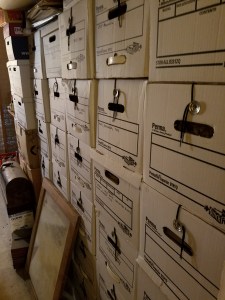
Bankers Boxes

Two years ago I conceived a plan to write an autobiography in 50,000 words. It’s time to refine and execute that plan.

Even as the whole thing seems unrealistic.

What caught my attention was downloading my Facebook and Twitter archives and seeing how how much information existed there. I reviewed my Gmail account and its 183,194 emails since March 2006, remembering I have another seven years worth from multiple email accounts on another drive. There are thousands of blog posts. That’s not to mention close to 100 bankers boxes, trunks, desks and the like filled with documents, recordings, images, mementos and other artifacts to be rediscovered. There are also thousands of books… and the garage… and people… and you get the picture. There are hundreds of everything to “help” my research.

What was I thinking?

I’m not famous or well known outside my local community, so who cares? I’m hoping our daughter would find such a work to be of interest — maybe a few others.

I’m old school in that when preparing for a life of writing, an autobiography is a first step. Right or wrong, I learned that in high school. I’m already at retirement age, so I better make this part of my life brief.

Before writing a major work, one must follow the Delphic maxim to “know thyself” and its later Socratic expansion, “the unexamined life is not worth living.” We have to take a look. Going through my archives will help me assess who I was and who I might be. I can also use the experience to downsize the amount of stuff accumulated over the years.

Finally, I don’t know a topic that is not complex and subject to context and multiple interpretations. A brief 500 words per chapter forces me to consider what’s most important and stick with it by condensing the raw material into a succinct and hopefully brilliant couple paragraphs.

If I fail to reach brilliance or even get it done, what will I have lost? Nothing.

So here goes.

Categories
Work Life Writing

A Place Built on Hope

First Day of Soil Blocking 2018 Photo Credit – Maja Black

As one makes one’s bed, so one finds it. ~ French Proverb ca. 1590

Today is my last day as a full-time employee at the home, farm and auto supply store. Reducing my schedule from five to two days a week should free time to work on other projects. At least that’s the hope.

We built a home in Big Grove and made it ours. I walked the lot lines before we broke ground and sat on the dirt high wall after the lower level was dug. We hooked up utilities, installed a door between the garage and residence, and moved in all on the same day in August 1993. No regrets.

Almost 25 years later our home needs updating and some maintenance. We’ve been spending our time living more than working here. Today’s transition will change that and I’m looking forward to it.

Fifty years ago I began working part time after high school at a department store. Despite how American business evolved since then, I made it across the finish line. I’m still here. We’re still here.

Now comes the downsizing, reducing and recycling — a frugality characterized by the fact we haven’t generated enough trash to set out our curb side receptacle in three weeks.

There will be industry as I’ve mentioned previously in these posts. However, one focal point is rebuilding stamina needed to work more hours each day. It’s not really retirement.

We never know what will happen to us. We make plans. We stay busy as best we are able. We contribute to a greater good if we can. We hope.

As I head through the door this morning I don’t know what today will bring. I’ll sleep tonight and wake up to a tomorrow that begins like so many others have.

Tonight I’ll sleep in a place built on hope.

Categories
Work Life Writing

A Stop En Route to the Finish

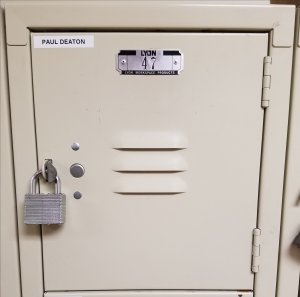
Work Locker

My supervisor at the home, farm and auto supply store unexpectedly called me to the office and offered a salary commensurate with the work I do.

“Commensurate with the work,” means closer to the average wages for the position as defined in the Bureau of Labor Statistics Occupational Outlook Handbook, which lists a job closely matching what I do.

He would convince me to either stay or continue working part time. I said I’d consider the offer and respond this week.

In every job I’ve held since leaving for military service, I’ve become a valued member of the team. In many cases, mostly when I worked for a large transportation and logistics company, I was replaced with two people after resigning. I understand the value of my work.

People have reasons for taking lowly paid work. This is especially true in my county, where there are numerous job opportunities for anyone willing to work. People take a low-wage job to generate income then move on to something better. We all have our reasons.

I took work at the home, farm and auto supply store and stayed because they offered a family health insurance plan to cover us until Medicare. Now that both of us are on Medicare, that reason was eclipsed by a desire to do other things. We have delayed gardening, talking, writing, reading, repairing and retooling our home for too long. That’s reason to retire March 16 while still young enough to accomplish some of that.

Opening the question whether to leave is also about security. Financial security partly, but physical health, being accepted in society, and the ability to live a life free from worry. The offer moved security to the front burner after simmering from the initial math of planning our retirement.

We are never completely secure. If a catastrophe happens in a life, people will invest everything they own to recover and return to a semblance of normal. Such normality is the endgame, especially in Iowa. Complete security does not appeal to people like me. I’m still a risk taker and know my limits.

I don’t know my answer and will mull it while soil-blocking at the farm. I did the math and the extra income would help pay down some of our debt. It is a bird in hand against the unknown of how could we generate extra funds in retirement. It would come with a cost I’m not sure is worth the price.

Today will be about figuring that out.

Categories
Home Life Kitchen Garden

Sixty Nine Days

Saturday Dinner

It’s sixty nine days until what I hope is my last day of work at the home, farm and auto supply store… and “full retirement.”

The paradigm upon which we based our life in Big Grove shifted. We settled here to be close to work, raise our daughter, and live happily ever after.

Our home is older (as are we), our daughter left Iowa after college, leaving us with the happily ever after. The latter has me stuck.

During bitter cold days, I spend most of my time in the living room, the kitchen, the bedroom, or at my writing table. This weekend I left the house once to get the mail. The tendency is to drift toward the last day of work, delaying everything until then. That’s not really an option with the community work I’ve undertaken and plans made. One foot in front of the other, onward I must go.

The ambient temperature warmed 46 degrees since yesterday morning. If I were a bear, I’d sense winter hibernation is almost over. Instead, this human is in between recovering from a week of physical labor and endeavoring to get busy with one of many projects. Today it’s not going as well as I’d like on either front.

I worked on a local version of dal, cooking the first recipe today. Using 1-1/4 cups lentils, three cups of vegetable broth, turmeric, cumin, hot red pepper, fresh garlic and vegetable oil, the first batch came out edible but not delicious. The idea is to replace the pre-cooked version I’ve been buying at the warehouse club with home made. The recipe creation process will take a while because each batch must be eaten: a person can only eat so much dal per week. After six or seven iterations, if I’m lucky, the finished dish might get to the delicious stage.

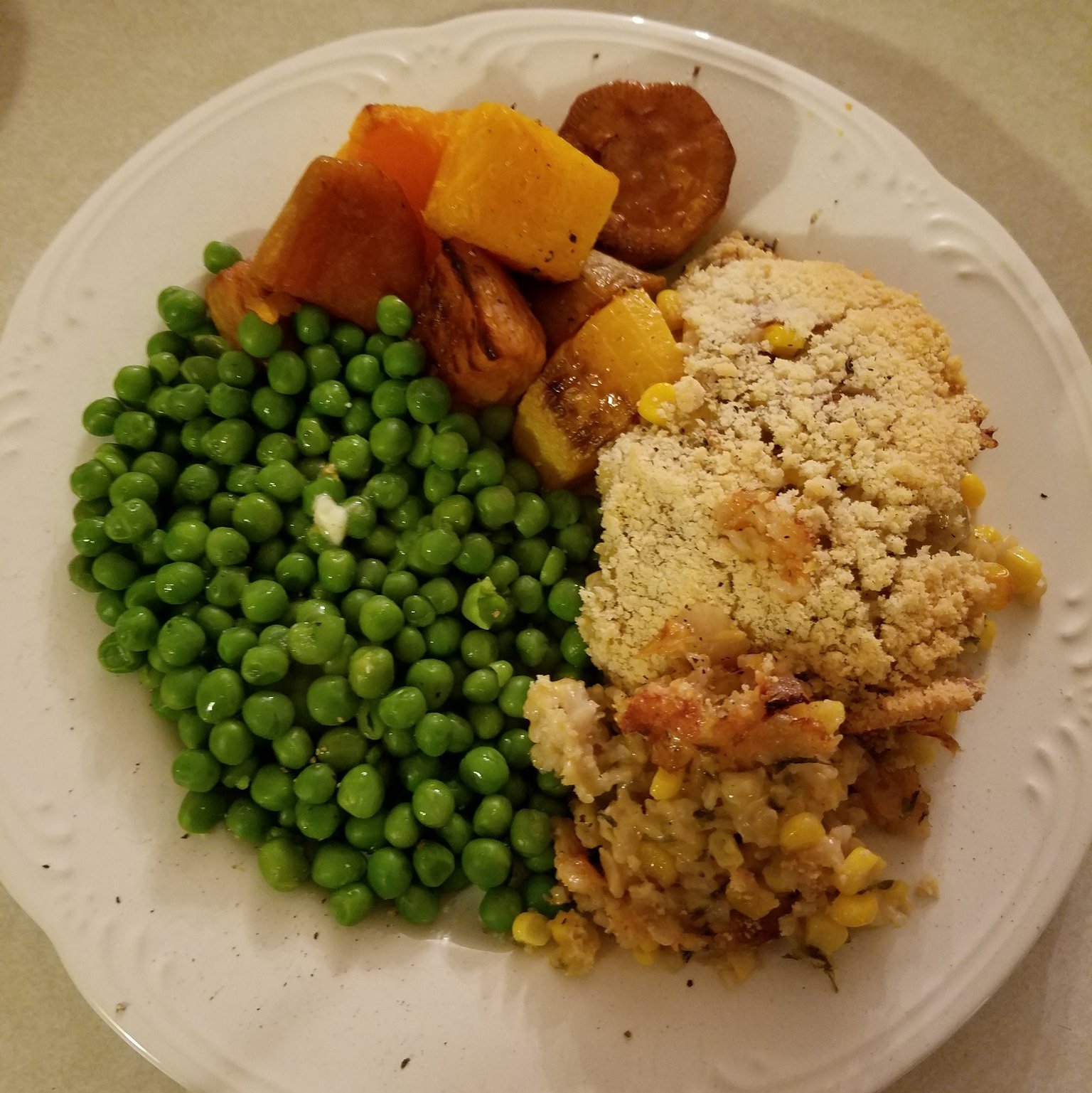
Last night I made dinner of corn-rice casserole, steamed peas and a mixture of roasted butternut squash and sweet potatoes. Saturdays have been my night to cook so Jacque has a meal ready when she gets off work. When Garrison Keillor was on A Prairie Home Companion, that provided background noise. Now the radio stays mostly off, or tuned to the classical music station. Another shift in the predictability of our lives.

All this is not to say I seek a rocking chair in which to sit until life departs this frame. Not at all. However, the combination of cold weather, bones, feet and back aching from physical work, and a restlessness about living happily ever after has me stymied.

Just as the cold snap is over, and there’s hope the recipe will eventually turn out well, I’ll get going. Sixty nine days out retirement seems unseen below the horizon. Much remains to be done and I feel myself waking and wondering what will be next.

I’d be good with happily ever after, but not ready to believe it’s possible.

Categories
Living in Society Writing

Five Easy Things to Improve Our Politics

Corner of Main at Market, Solon, Iowa

In a hopeful year, the U.S. Congress is back to work, on Jan. 8 the state legislature convenes the second half of the 87th Iowa General Assembly, and grassroots politics begins another cycle with the Feb. 5 annual Iowa caucuses.

Politics affects us all.

In a time when there is no time for us to get anything done, here are five easy things to improve our politics.

If you are free Feb. 5, attend your political party caucus, which begin at 7 p.m. Republicans and Democrats agree when to hold precinct caucuses and these meetings represent a chance to see what having an R or D next to your voter registration means.

Subscribe to elected officials’ newsletters. All of our federal and state representatives have a newsletter. If you don’t know who represents you, in the Solon area it’s currently U.S. Senators Chuck Grassley and Joni Ernst, U.S. Representative Dave Loebsack, State Senator Bob Dvorsky and State Representative Bobby Kaufmann.

Take time to learn about the gubernatorial candidates and vote in the June primary. Both major political parties have a primary election for governor.

Worry less about process and more about values. So many voters get tied in a knot about what governing bodies should and shouldn’t do before enacting laws or ordinances. The better question is what do our representatives stand for? Their values are clear in votes they have made.

Be civil when talking about politics with friends and neighbors. If you can’t, then change the topic to the weather. Most important is taking time to listen, followed by thinking before opening your mouth. It’s possible to hear people out with whom we disagree without discussions escalating into an argument.

Use these five ideas and I believe you will agree a better politics is possible.

~ Published in the Jan. 11, 2018 edition of the Solon Economist

Categories
Home Life

After a Holiday Weekend

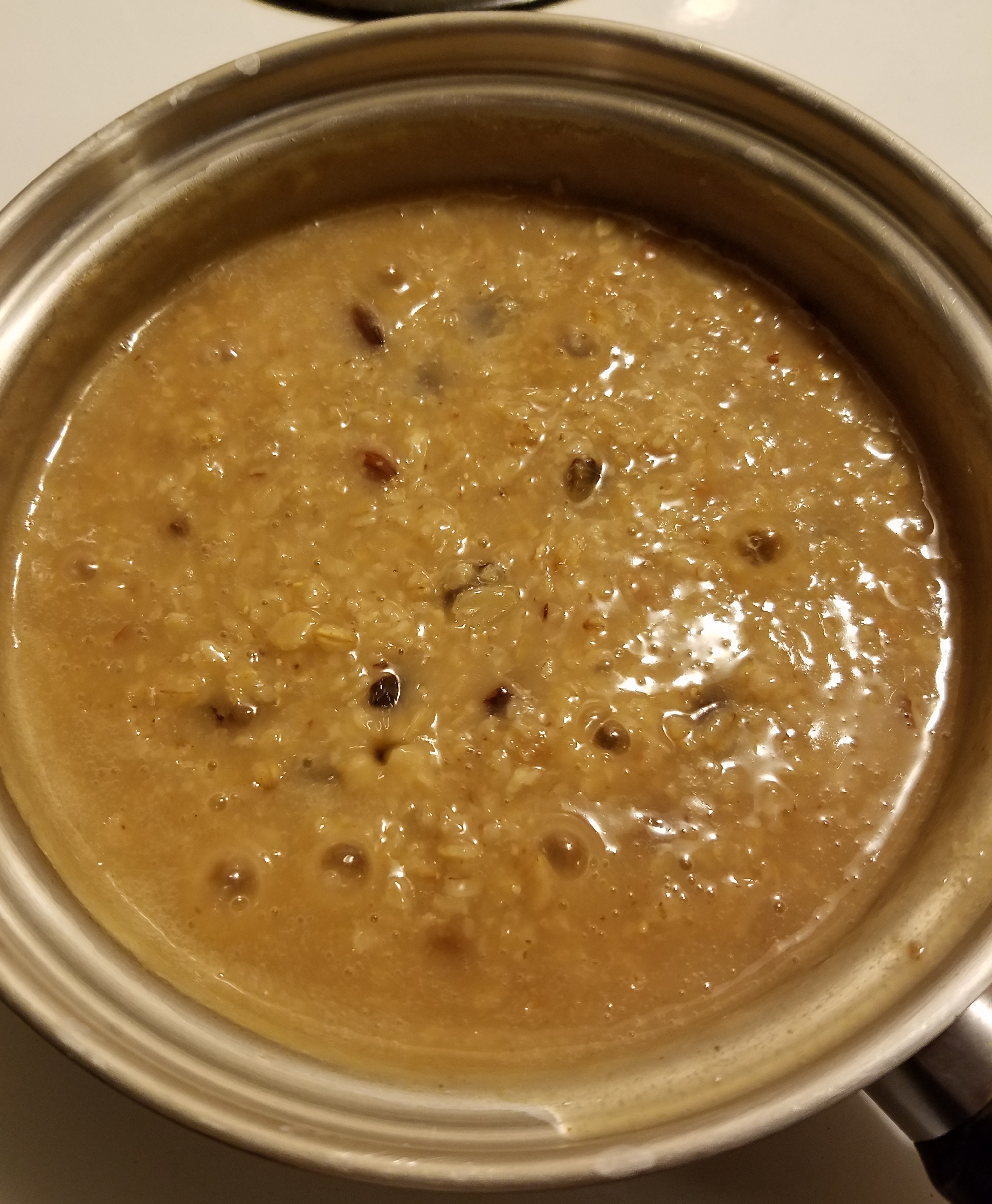
Muesli

Three-day weekends are rare at the home, farm and auto supply store. However, this year the retail store was closed Monday for the Christmas holiday.

I managed to get some things done. Mostly I slept, not understanding beforehand how much sleep I needed.

Three days was not enough time to catch up on sleep.

As I consider “full retirement” this spring, out of the box I’ll need two weeks to do nothing but catch up on sleep. Being bone weary makes it difficult to get things done and there is plenty I want to do after leaving full-time, lowly paid work. Getting rested equals getting started on a new life.

That’s not to say the weekend wasn’t festive. I made Christmas Eve dinner, baked shortbread cookies, and we spent time together and talked. We phoned and texted friends and family. We talked a lot.

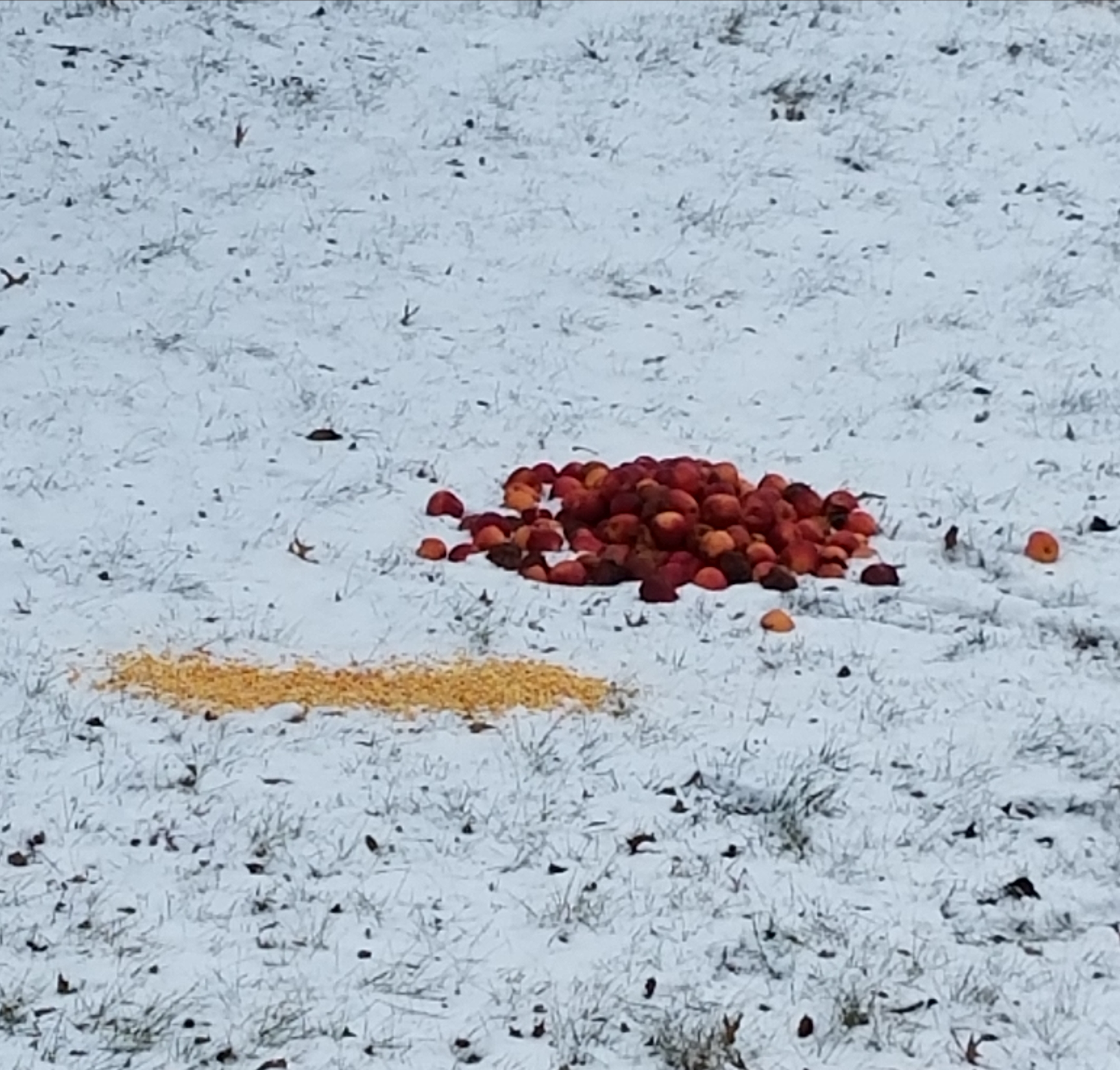
Corn and Apples for Wildlife

Birds were not coming to the feeder so I changed bird seed. I dumped piles of apples and whole corn for wildlife and watched as crows came first to feast. I spent no money and didn’t leave the property a single time after arriving home on Friday.

I long to take retirement. We can’t afford to stop working. How to sustain our lives needs to be worked out by spring. Treading water, I wrote our budget with enough income to cover expenses for 12 months. I’ll use that time to determine how to make things work. If it’s possible, we’ll figure it out.

I’m enrolled in the federal retirement program and Jacque signed up for federal health benefits. We each carry a deck of insurance cards — Medicare, Medicare supplement and Medicare Part D. We hope not to need any of them. Without the federal retirement program we’d both have to work until we die.

I’m counting on being able to write during retirement. I spent Christmas morning writing an article for the Cedar Rapids Gazette. One never knows if writing will be accepted, but it’s free to the newspaper and I have a unique perspective. I like publishing in the Gazette because of it’s comparatively large circulation. Fingers crossed. I’ll write more going forward.

I’ve had my car on the trickle charger for 12 hours so it should start this morning. Thursday is my appointment at the auto clinic to have the charging system diagnosed. Hopefully it can be diagnosed and fixed — the same hope for every 20-year old vehicle. The alternative is the scrap heap. I won’t need transportation as much after retirement. I budgeted half the gasoline next year compared to this, hoping to use even less.

The time between Christmas and New Years is weird. Because of the paid birthday off work I’m at the home, farm and auto supply store only three days this week. What’s nice about this time is the ability to withdraw from society enough to get our bearings.

That will have to be good enough this year.

Categories
Home Life Living in Society Social Commentary Writing

2017 in Big Grove

Coffee Station

BIG GROVE TOWNSHIP — I found a quart jar of whole bean coffee in the pantry, ground a quarter cup, and made a pot with my French press — a bitter yet delicious treat while reflecting on the past year.

I will need a second pot.

2017 was a year of treading water in a sea of challenges.

National political culture mattered this year. The inauguration of Donald J. Trump as president set a sour tone as his conservative and sometimes unqualified picks filled out the judiciary. His cabinet ate away at the foundation of our Democracy the way termites invade the weakest point of a structure to consume and thereby weaken it. If Barack Obama’s 2008 election freed me from the constraints of a transportation career, the 45th president fouled the air of creativity with his every move — spoken and unspoken. It was a time when capital was valued more than labor, with no better expression of it than the tax bill signed into law on Friday. Repression of Democratic ideals could be found everywhere we live.

My response to the toxic environment was to engage. I re-joined the county party central committee, our home owners association, and the Macbride Sanitary Sewer District. I also wrote: seven letters to the Solon Economist, two columns published in the Cedar Rapids Gazette, 24 posts on Blog for Iowa, two on Bleeding Heartland and 159 posts here. I finished reading ten books this year, most of those in the first few months of the year. I followed the circus that has been Republican control of the federal and state government, and developed some new friends. Moral: when the nation goes sour, get involved locally.

My work at the home, farm and auto supply store has been a physical drain. I applied for and was approved to start Social Security benefits with the first check arriving in late January 2018. I’ll be transitioning out of low-wage work before Memorial Day.

Wild Woods Farm and Sundog Farm kept me busy spring weekends, and I worked the fall apple season at Wilson’s Orchard. There were bits and pieces of other income. By the end of the apple season, I was ready to rest from farm work. Our balance sheet was unchanged year over year.

My health has been okay. I got a crown and transitioned to a new dentist as Dr. Erusha retired. I avoided seeing a physician and am past due for a checkup. The physical work at the home, farm and auto supply store, and on the farms, has been tolerable. My plantar fasciitis remains present, but subdued going into 2018. I’m in reasonably good health for a soon to be 66 year old male.

On a positive note, Jacque and I marked the 35th anniversary of our wedding this month.

“That which does not kill us, makes us stronger,” German philosopher Friedrich Nietzsche said. I’m still here. We’re still here. We managed to sustain our lives in a turbulent year. That alone is hope for a better future.

Categories
Writing

Going Home – Book Reading

Books

On several occasions, friends and family politely informed me I must downsize my book collection.

I resisted.

The specific enjoyment of working at a desk, surrounded by books, may not be everyone’s idea of idyllic, however, for me it is close to sublime. It’s who I am.

While pondering a work backlog in said enjoyably sublime, idyllic location, my mind began to wander. It arrived, somewhat predictably, on the question which book to read next? One thing led to another and finally to the context of the current series of posts about going home, my remaining time, and this analysis.

How many books can I read during the coming years?

Set aside what we all know about life — we could die tonight — and answering this question is useful to a bibliophile. Here goes:

I can read 50 pages a day if I keep at it. I don’t read books every day but expect to come close as I transition to full retirement next year. It’s an inexpensive way for a person with limited resources to stay engaged in society. Assume I read 50 pages, six days per week.

According to the Social Security Administration life expectancy table I can expect to live another 18.5 years. Assume I do. That would be 288,600 pages read. Sounds like a lot, yet it is a finite number.

How long is a book? Obviously they vary in length and some are more interesting than others and read faster. For purposes of analysis, I used the Harry Potter series (UK edition) as my guide to book length. The seven books in the series total 3,407 pages, averaging 486.7 per book. This is somewhat arbitrary but sounds about right. My reading potential is 592.97 books during the coming years. If I can do it, that would more than double the number of books I now read per year to 32.

There are issues with this hopeful analysis.

What if my eyesight fails? That’s possible and somewhat likely given the results of my infrequent visits to the optometrist. We’ve discussed macular degeneration, cataracts, optic nerve disorders like glaucoma, and the condition of my retinas. While my eye health is reasonably good, that could change. If it does, it could impact my ability to read. It could also restrict books read to large print editions or those available electronically where the font size can be enlarged. I don’t like thinking about it, but there it is: a bibliophile’s nightmare.

There is also a question of cognitive engagement. Will I be able to understand what I read for my life span? Will reading help resist neurodegenerative disorders like Alzheimer’s disease, Parkinson’s disease and Huntington’s disease? Will the head trauma I experienced at age 3 manifest itself in my remaining years in the form of a neurocognitive disorder? Will I experience a stroke or head trauma that will impact cognitive function? While less worrisome than loss of eyesight, if I lose the ability to comprehend what I read I’ll just have to deal with it.

An air traffic controller can land only one plane at a time and so it is with reading books. The most important question was my first one: which book will I read next? Carefully considered answers are important at full retirement age.

My friends and family are right, I should downsize my collection of books. Partly because given the remaining time I can’t read but a small percentage of them. I must focus on those relevant to my current life. Downsizing is also important because I don’t want my paternal legacy to be passing on an unorganized mountain of stuff for our daughter to spend her time going through. That would be rude and not what I want to be as a father.

I’m going home next year and hope to continue reading books. There’s a lot to learn and experience inside their covers. Reading helps sustain our lives in a turbulent world.

Categories
Home Life Writing

Going Home – 2018

Raw Vegetables

I’m going home now that my applications to the U.S. federal retirement program are approved.

My first payment from Social Security is scheduled around Jan. 24, 2018. We both have health coverage through Medicare, a Medicare supplement policy, and a prescription drug plan effective Jan. 1. We’ll need the money and hope we don’t need the health insurance.

It’s not clear what “going home” means today, but for sure, I’ll be leaving employment at the home, farm and auto supply store in the first half of 2018 — likely late winter or spring.

I don’t write in public about family, but plan to nurture those relationships.

Compensated work is on the 2018 agenda, specifically farm work for the sixth season at Community Supported Agriculture projects and at the orchard. I’d work for wages after my retail experience but need to transition out of driving a lift truck and lifting 50-pound bags of feed in long shifts. If I took a new job for wages, the commute would have to be less, the pay more, and personal fulfillment high. I hope to get better as a gardener, transitioning to a more productive vegetable patch and more fruit trees.

Uncompensated work is on the agenda as well. Scores of household projects wait for time and resources. I expect to have the time and some of the resources in 2018. We built new in 1993 and that reduced our home maintenance expenses in the early years. Things now need attention and preparation for the next phase of our lives in Big Grove. I expect to reduce the number of things we possess, converting current warehouse space to better livability.

I’ll continue to be active in our local community, but less outside Big Grove and surrounding townships. The home owners association, sewer district and membership on the political party central committee will serve as primary volunteer activities. I’ll also seek volunteer opportunities in nearby Solon. For a broader perspective I belong to the Arms Control Association, Physicians for Social Responsibility, Practical Farmers of Iowa and the Climate Reality Project.

Importantly, writing is on the 2018 agenda. I’ve been planning an expanded autobiography and that will be the first major project. With it I hope to develop a process to research, write and re-write a 20,000-word piece for distribution, if not publication. If my health holds and the wolves of an increasingly coarse society are held in abeyance, there will be additional projects. My first six decades have been in preparation for this. I believe positive outcomes will result.

I’m going to home to the life we built for ourselves. We’re not from here, yet after 24 years we have deep roots in this imperfect soil. I’m ready to settle in and grow.