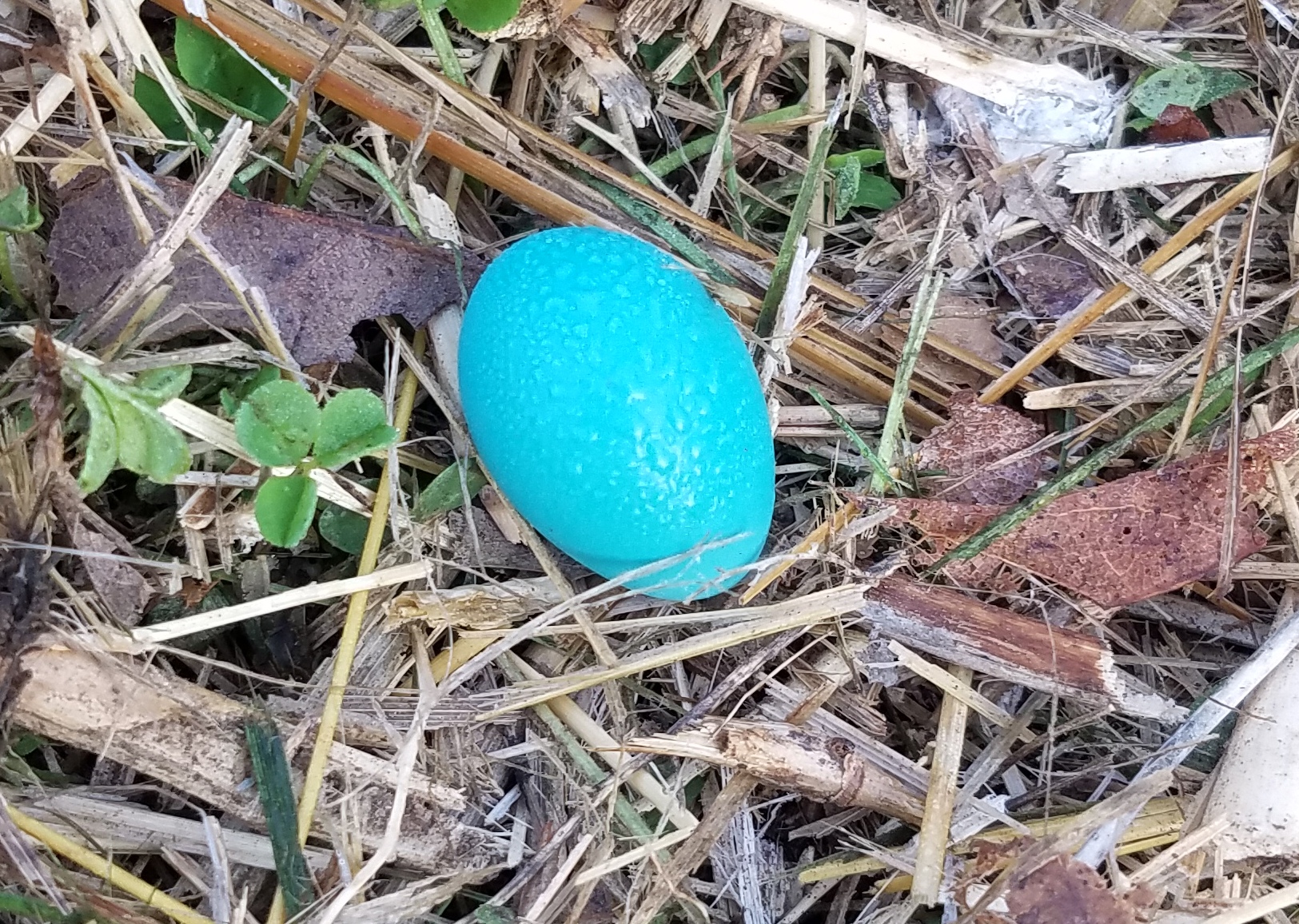
Two robins were moving around the garden in a way that was not normal. The expectation was they would be poking in the ground, searching for earthworms. When I went to water the garden, in the middle of nowhere, I discovered a robin’s egg sitting in the mulch. The birds didn’t appear to know what to do, if anything.
Since there was no nearby nest in which to put the egg, I left it there. It remained intact, yet abandoned, the next morning. On the third day robins continued to maintain a vigil. Without incubation, the egg is a goner.
Three fruit trees are blooming and the fourth is not far behind. Except for a lone bumblebee I have not observed much pollination activity. It looks to be a great bloom, although without pollinators that would be as far as it gets.
The message this morning is there are uncertainties in life to be observed. What we do about uncertainty remains an open question.
I won’t likely be returning to Walt Disney World, yet not for the reasons you might think. In the wake of the coronavirus pandemic, the consumer experience was shattered and one of the broken pieces is doing whatever we did for entertainment. Most of us won’t be going back to the way things were.
When our daughter was 11, I felt an urgency to provide her a theme park experience before she got too old. We went as a family, even though we couldn’t really afford a trip to Orlando. It was new even though it was the 25th anniversary of Walt Disney World. I remember it as a hot yet fun time where we could be ourselves. It was meaningful visiting Universal Studios and Walt Disney World together.
Lately folks are politicizing visits to Disney. Partly they accuse the corporation of playing politics. Please. Corporations have always played politics better than most. What is concerning to some is Disney recently announced cast members are permitted to display tattoos, wear inclusive uniforms, and display inclusive haircuts. I knew about the “Disney look” for many years and couldn’t see how they found enough non-tattooed people to staff the positions. Supposedly cast members being themselves has broken the willing suspension of disbelief many visitors bring with them to the park. Life is apparently crappy and folk need to travel to a theme park to forget about it. That’s a hella way to build a life.
There have always been guests at theme parks with grievances and disappointments. The new grievance of having one’s immersion into make-believe broken because Disney removed the Song of the South from Splash Mountain is something else. Something is missing.
I have no regrets about my trips to Walt Disney World, Disneyland, Sea World, Universal Studios, and the rest. It is a part of my privilege that I was able to go. So many were doing it, theme park trips came to be perceived as a norm for people who had the means.
What the coronavirus pandemic taught me is the important part of visiting theme parts was doing something as a family. It didn’t matter what we did and maybe that’s the point about Disney. Mickey Mouse is getting long in the tooth and society is ready to move on. The coronavirus pandemic changed several Disney employees I know… permanently. They are little different from the rest of us.
I’d like to suspend my disbelief in society’s promise. It’s okay with me if it’s with or without the Walt Disney Company. However, the pandemic taught me there’s a better way in sticking close to home.
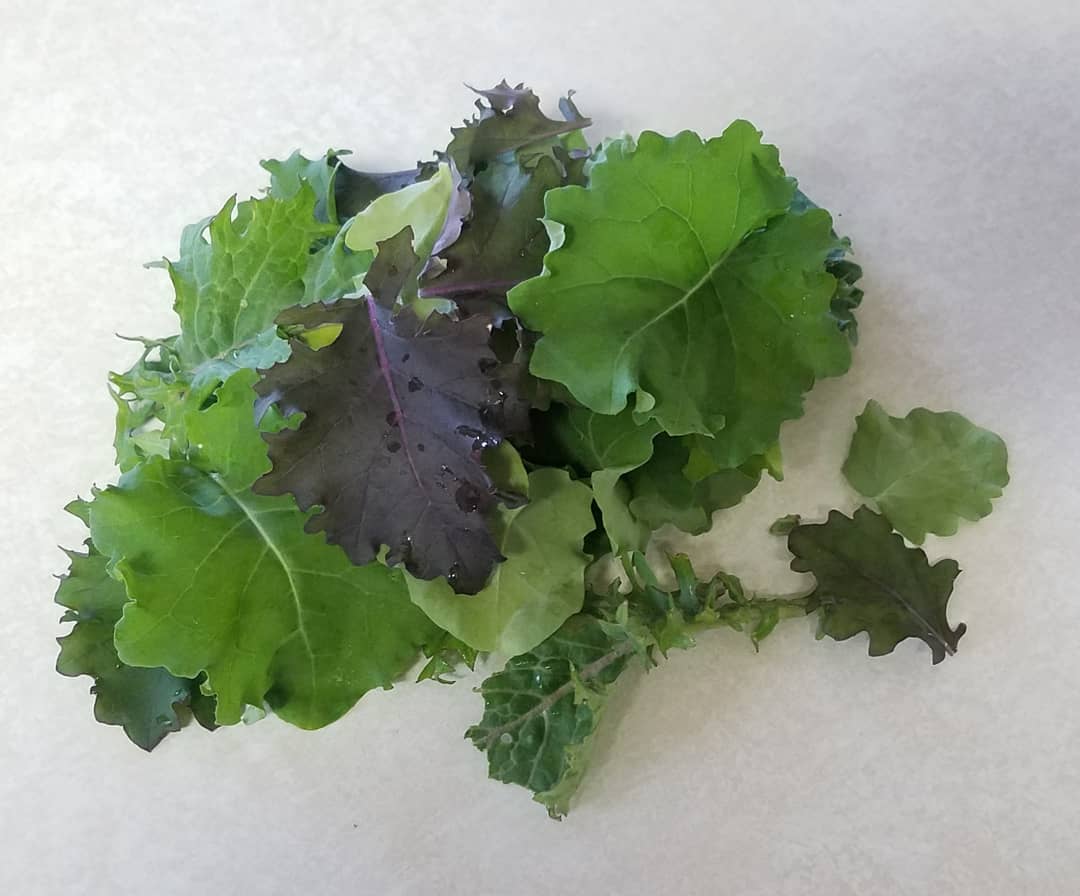
Red Russian kale over-wintered so we had fresh kale for our stir fry dinner Sunday night. I mixed it with some Winterbor and Redbor leaves collected while re-potting plants for final growth in the greenhouse.
This year’s garden work is just beginning.
I’ve been on spring break from writing my autobiography. If asked, I am working on the book. It’s been a long spring break. More accurate is the project is stalled and in need of a completed manuscript. It’s time to set aside new writing, crank up the engine, and edit what I have: some 170,000 unedited words.
Writing the book has been like mining a vein of coal to see where it goes. I often got caught up in its adventure and that part of the process is not finished. Why write an autobiography except to experience and find meaning in memories?
I spent Sunday afternoon considering two photo albums I made years ago. One of photos taken beginning in 1962, and another of images of Father taken over the years he and Mother were married from 1951 to 1969. I didn’t write anything. I simply looked at the images and tried to remember some of the moments. This is part of the autobiographical process, but doesn’t work toward a finished manuscript. More material from the vein to be sent above ground toward the tipple.
To get things on track, I will review the outline, then go through the words written. Last winter I spent time on the first five points of the outline. I previously wrote at length about the 1980s and 1990s. I know the story ends either at the beginning or end of the coronavirus pandemic, yet how it ends is unclear. That meaning must be extracted from the tumult and tension of daily living.
I don’t argue with other writers who say a daily goal with follow-through is needed. As today’s shift begins, gardening and writing are both on the schedule. I’ll add an hour to work on a plan beyond today.
Easter was a time for us grade schoolers to don special clothing and attend Mass with Grandmother and our parents. There was a special Easter dinner, an egg hunt, a basket of treats, and Grandmother’s insistence on photographs of us dressed in our special outfits. We anticipated Easter throughout the year, which for me modeled the liturgical year.
Easter celebrated the Paschal mystery and was a special time, equal in its celebration to Christmas. Its main subject is the passion, death, and Resurrection of Jesus Christ – the work that God the Father sent His Son to accomplish on earth. Easter is central to being Roman Catholic.
What I didn’t realize then, but do now, is celebration of Easter with Grandmother was a cultural heritage derived from peasant life in Poland and carried to the United States by her grandparents. I wrote about the settlement of the Wilno, Minnesota Polish community and the bargain of establishing Saint John Cantius Catholic Church there. In a rich cultural life, Easter played an important role on the Minnesota prairie. Church life was also central to my growing up. It was a cultural impetus that eclipsed everything else in my life for a long time. In college, I even considered studying to be a Catholic priest.
Father attended Easter Mass with us but was not baptized Catholic. His interest, he told me, was in associating with the church community to locate patients for his nascent chiropractic practice. He was in process of conversion at the time of his death and neither made it to a chiropractic practice nor Catholicism before he died in the meat packing plant accident. Even so, the church was packed to the rafters at his funeral Mass celebrated by the Right Reverend Monsignor B. L. Barnes.
It is hard to shed the culture in which I came up, nor would I want to. Although Easter doesn’t mean as much these days, and I may go to hell because of it, I continue to note the occasion if only by celebrating the spring renewal of life all around us. Our grasp on today is tenuous and the well of our experience is both thirst-quenching and a potential drowning site. On Easter Sunday we must find renewal where it lies and work toward the potential for good rather than doom. The Pascal mystery teaches us there is hope and that’s a fit lesson for this time of contagion.
Writing space in 2000 with a locally made central processing unit via which I ordered from Amazon.
We logged on to the internet from home for the first time on April 21, 1996. I made my first purchase from Amazon.com on Dec. 23, 1998. It was a gift card for my spouse.
During the first years on the computer I purchased a lot of VHS video tapes and almost no books from Amazon. Among those early purchases were The Great Train Robbery, Birth of a Nation, The Jazz Singer, The Seventh Seal and Roshomon, videos not available in local stores. I bought my first book in 1999, Decline of American Gentility by Stow Persons. It was unavailable in local bookstores even though Persons taught his course on American Intellectual History in Schaeffer Hall at the University of Iowa Pentacrest.
For books and videos, Amazon offered availability few others did. The immediacy of the internet made it preferable to driving half an hour to the nearest vendor in the county seat to place an order, then to return weeks later when the item arrived. When a person lives in the country, online shopping makes a lot of sense.
In 1998, Amazon.com reported a net loss of $124.5 million on $610 million in sales. They got better and are now very profitable. 2020 annual revenue was $386 billion with net income of $7.2 billion. They continue to grow and improve profitability, although no one dreamed they would dominate the marketplace as they do.
The trajectory of Amazon’s growth will accelerate as the company continues to control more of the supply chain and masters last-mile delivery (literally, the last mile(s) before the package reaches the customer’s door); This is the most difficult and complex aspect of fulfillment yet one of the most important touch points in terms of customer satisfaction.
Forbes Magazine, Feb. 21, 2021.
There are companies besides Amazon.com that moved their business model toward vertical integration, where all aspects of production through customer delivery were controlled. In the late 19th Century owners of such companies were called “robber barons” after feudal lords in medieval Europe who robbed travelers. The current owner of Amazon.com, Jeff Bezos, is easy to demonize as a robber baron, yet his business model requires customer satisfaction. A more practical criticism is to realize it is time for federal regulators to break up Amazon.com.
In Iowa, Teamsters Local 238 in Cedar Rapids is organizing local Amazon workers at facilities in Iowa City and Des Moines. Unions have had little recent success organizing private sector workers in Iowa. Most prominent union spokespeople in the state represent government workers. I am interested in Amazon from multiple perspectives.
If Amazon did not exist, there is little local retail infrastructure to replace them. For example, our local hardware store carries common items used to run a household. I enjoy going there first when I need something. One out of two times they don’t have what I need. Our local grocery store does not have many organic options. There are no specialty shops like books, fabric, and sundries. Bottom line, locals rarely have what I need.
When I look at recent online purchases, I’ve ordered a few things direct from vendors (a new Dell CPU and garden seeds). I get most clothing from J.C. Penney online, food from COSTCO, and books from Amazon. With the coronavirus pandemic more household sales went online.
In addition to retail availability, Amazon delivery drivers have become a presence in our neighborhood, as familiar as the United States Postal Service which also delivers some Amazon goods.
On Saturday I become officially “vaccinated” as it will have been two weeks since my booster shot of COVID-19 vaccine. Coming out of the pandemic I need new topics to write about and Amazon is in my sight. After 25 years of buying from them, I’m ready to do something else if they do not resolve some of the injustices created while growing their business, or if government regulators do not step in.
With a fixed income, managing money is important and lowest price for quality goods matters. Amazon is a suitable new topic for this blog.
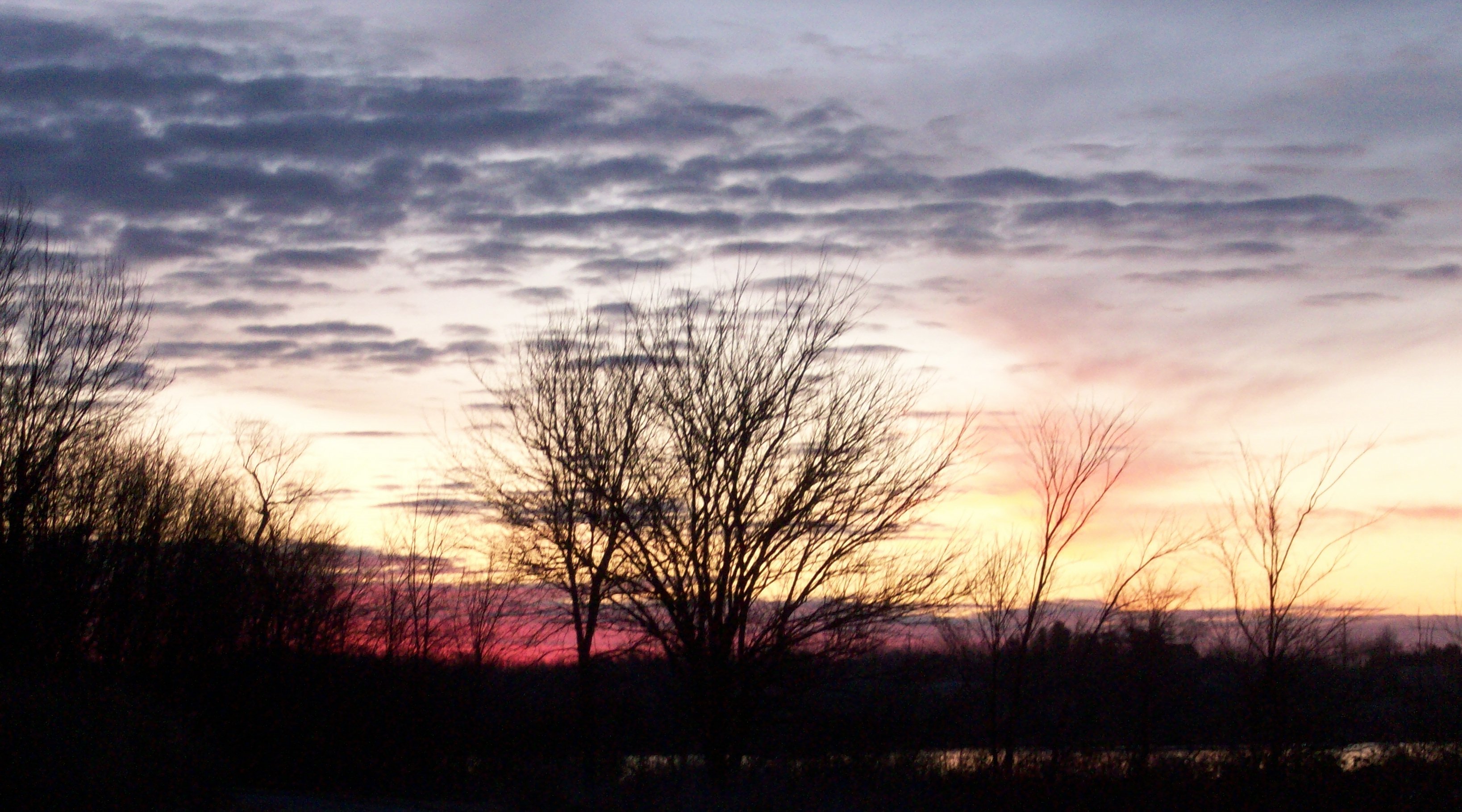
I decided to watch the sun rise. There was an urge to grab my mobile device and take photographs. I resisted.
Not everything needs recording.
The sun rose east of the kitchen through the 25-acre woods. I made breakfast and viewed its changing colors. Another day’s beginning in Big Grove Township.
During the coronavirus pandemic my posts have become a diary of contagion. It wasn’t intended. Yet here we are, more than a year into the pandemic and despite the shipments of vaccines, there is a resurgence of cases of COVID-19.
These are uncertain times. We don’t know how a sunrise will play out, only that it’s the moment in which we live.
A lone concertina-player walked on a darkened stage playing single notes of Love Makes the World Go ‘Round to begin the overture to the Michael Stewart and Bob Merrill musical Carnival. Because of the close relationship between the schools, our high school stage crew helped Saint Ambrose College produce the musical a few years after its release on Broadway.
I feel like that concertina player during these beginning days of spring. I must get my notes out before the rush of spring’s portending promise leads to a bustling season. While the arrival of the coronavirus vaccine may not have been “direct from Vienna” like the carnival in the musical, there is hope enough people will get vaccinated to move on from the dull winter of contagion.
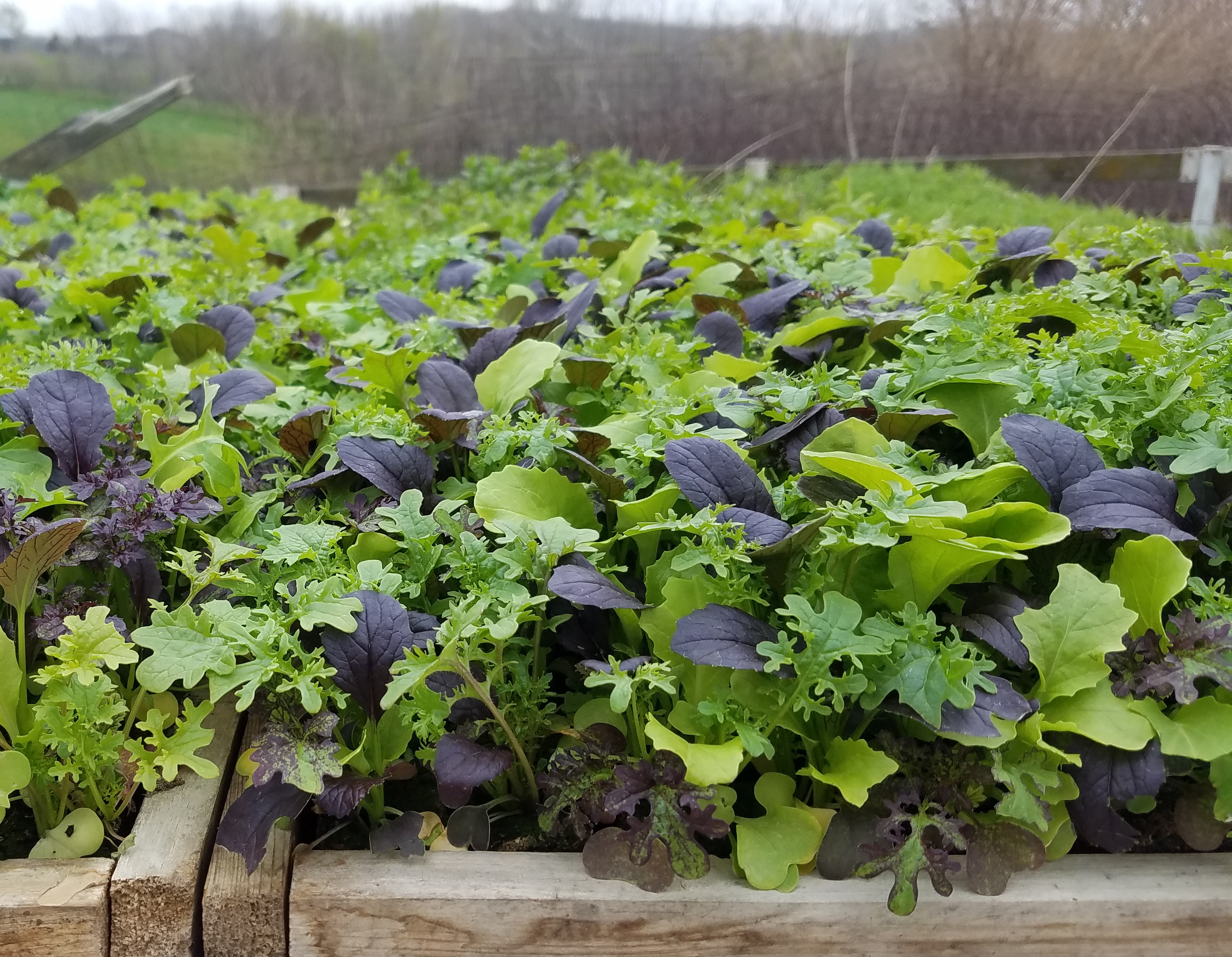
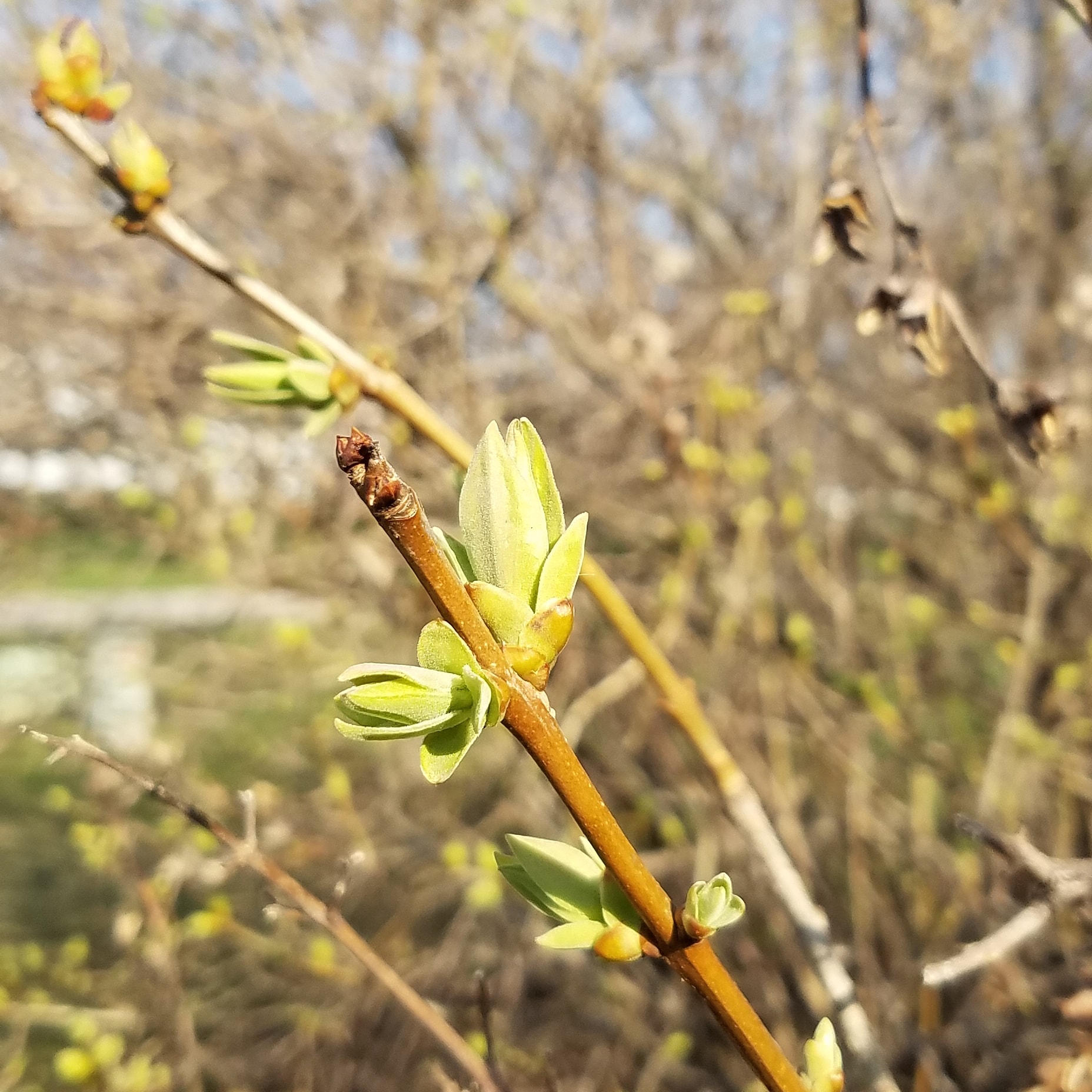
Already lilacs are budding, grass is greening. While it was exceedingly dry the first months of 2021, today’s forecast is rain. I’m torn between needing rain and wanting to work the soil enough to get early lettuce and peas in the ground. Such is spring.
I planted a tray of 50 beet seeds in soil blocks and moved them from the greenhouse to the heating pad under a grow light. They are germinating. The purpose is to get them started and have more success when they go into the ground. Beets grow when direct seeded, yet by starting them in blocks and planting them evenly there are less complications. I have big beet plans this year.
Spring is a time to increase outdoor exercise. I met with a dietician yesterday and she reinforced the importance of exercise in regulating glucose. I don’t know that what she said was new to me, but it finally sank in. Exercise uses sugar stored in our muscles and liver. As our body rebuilds these stores, it takes sugar from our blood. This is a good thing when it comes to living with diabetes without taking medicine.
Grandmother was about ten years older than I am now when she was diagnosed with diabetes. While living in Mainz, Germany, a package arrived from her unannounced. It contained all of the gelatin and instant pudding boxes from her pantry along with a note. With diabetes, the doctor said she shouldn’t eat them any longer. Her frugality insisted upon finding them a home. My A1C is below seven percent, yet having the diagnosis now will help me live longer with it. Since there isn’t a cure, that may be the best I can do.
Also this spring I began listening to internet radio. I found a station in Hanga Roa on Easter Island that plays blues, reggae, and progressive rock… the good stuff. It’s here if you want to listen during the pre-dawn hours of an early spring day.
Editor’s note: This was gleaned from a March 20, 2009 post on my Facebook page. My work in transportation and logistics exposed me to the deepening relationship between Chinese manufacturers and American markets during the 1990s. It was in Louisville I attended some Elite Eight basketball tournament games while attending the truck show. I also attended concerts arranged by show management with Alabama, Kenny Chesney and Reba McIntire. While geared more toward independent contractors and small companies, I was able to meet with staff from our company’s major suppliers.
During our descent, I saw the white flowering dogwood spread over the city. Grass was green and skies clear, a great day for flying and learning about the culture of trade shows. Our host sent his concierge to pick us up at the airport and deliver us to the Mid-America Truck Show.
This trade show is a chance for manufacturers, insurance companies, massage therapists, truck stops, software companies, advertising outlets and everyone who seeks the dollars found in trucking to show up. Back in the 1990s, we bought a copy of the attendees list, and discovered that the vast majority of attendees come from within a 250 mile radius to the show. It is a big event, and local in focus.
Some folks plan to buy their new truck here. Hawkers demonstrate how to reduce knee and back pain. Recruiters hope to take a driver application. Truck stop operators hope to meet up with clients. There are too many booths to take it all in.
What I did notice was a number of booths set up by Chinese companies. In one, I found Buzz, a ten-year acquaintance, introducing the Chinese manufacturers to his American contacts. In others, five or six Chinese sat in small circles in the booth in front of their wheels or oil seals, looking like they were isolated from this sea of truckers, tattoos, and facial hair. That they were here is a sign of the times, and if their behavior seemed odd this time, I am confident that they will learn how to work this crowd. One of my traveling companions said that he was surprised to see the Chinese here, instead of working the OEM (Original Equipment Manufacturer) crowd: that is where their best impact could be made.
The Louisville Truck show is our industry writ large. It was okay to see it yesterday, for what may be my last time. Louisville in Spring is, for me, more about the dogwood.
The schools and most of the neighborhood are on spring break so I’m taking one as well. I’m not sure when I’ll return to posting, and to be honest, I’m not concerned about that now.
I’m worn down by the coronavirus pandemic and need to give writing a rest. Friday we get our second dose of the Pfizer COVID-19 vaccine. By April the antibodies should have formed and I’ll be ready to go again.
As always, thanks for following and reading Journey Home. May this post find you well and strong.
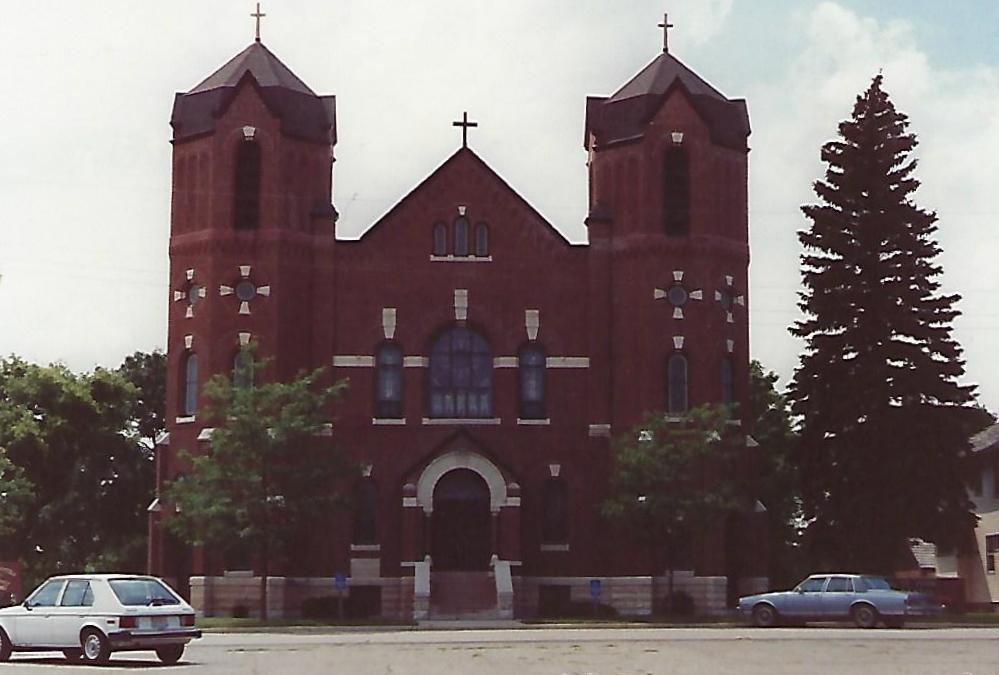
Saint John Cantius Catholic Church (rebuilt), Wilno, Minnesota, July 1991.
Editor’s Note: This is an excerpt from a memoir in progress during the coronavirus pandemic of 2020-2021.
The river between two hills, where a house would have been on either side, looked just as Grandmother described it. It was more stream than a river, though, and the land forms were rises in the prairie rather than hills. Nonetheless I recognized the place.
On an overcast rainy day in July 1991, I made my first and only trip to the Nadolski family home place in Royal Township, Lincoln County, Minnesota.
Maria Nadolski, Grandmother’s aunt, lived on the far side of the stream that separated the two houses. Maria owned a piano. Grandmother, Mae as we called her, wanted to learn to play that piano. Maria said no. Mae carried that story of rejection with her until the end of her life. Maria’s house and the piano are long gone.
On another rainy day in Davenport, not far from where I was born, Mae told a story about the stream flooding after a heavy rain, cutting the houses in Royal Township off from each other. She repeated the story from time to time, as she did the story about her aunt and the piano. I believe the remaining house I saw in 1991 is where Mae was born Salomea Nadolski on June 24 or 25, 1898.
After she died on Feb. 7, 1991, I made the trip to her birthplace. The trip was a form of summer vacation when we lived in Lake County, Indiana. After we had lunch in Davenport, we drove to Ames. We spent the rest of the day visiting our daughter’s maternal grandparents.
I provisioned up in Ames. Early the next day I drove to Pipestone National Monument where I toured the site and bought souvenirs, including a small turtle carved of pipestone. They were intended as gifts from near where the Nadolski branch of the family settled. I’m not sure if there was an actual connection between my family and the quarry.
“I drove into Ivanhoe about 1:30 p.m., to the county recorder’s office first,” I wrote. I discovered my great, great grandparents Maciej and Franciszka Nadolski had been landowners, and had two acreages in Royal Township.
Upon reviewing my trip notes for this book, I found I got a lot done those two days.
“From past trips I realize if I do not write down what happened soon, years from now I will not remember what happened,” I wrote. It was prescient. I would have forgotten much of the trip without the notes taken.
In Ivanhoe, the Lincoln County seat, I located the Roman Catholic priest who served the Wilno Church where Mae had been baptized. Father Paul Schumacher was at his church in Ivanhoe and we had a conversation outside the rectory. He was preparing to go somewhere. I wrote of our meeting:
The priest took a $20 stipend to say Mass for the members of the Nadolski family – living and deceased, and to defray postage costs, if any are needed, if he found any record of the wedding (of Frank and Katie Nadolski) or my grandmother’s baptism. He said he was very busy, and these things take time, but there may be nothing. I guess priests have much to do with the living, and the genealogist’s concern must seem a frivolous inconvenience. We’ll see if anything comes from him. Bread upon the waters.
The next day, July 11, 1991, Father Schumacher mailed Mae’s Certificate of Baptism by the Reverend J.F. Andrzejewski dated July 10, 1898 at Saint John Cantius Catholic Church in Wilno. The original church was built in 1883.
The certificate showed Mae’s birth date as June 25, 1898 and her parents as Frank Nadolski and Kat Sowinska. Godparents were Ladislaus Kuzminski and Maria Nadolski. Consistent spelling of names and event dates were not the strong suit of Nineteenth Century rural Minnesota. Great grandmother’s name has multiple spellings in different documents. Mae’s birth date and name have multiple variations as well. There was no mistaking who they were, despite the discrepancies.
Maciej and Franciszka Nadolski first settled this land. When I arrived, the current owner showed me the barn he had recently built and let me use his boots to walk around in the muddy fields. He clearly had plans for the property, and while he didn’t say it, I believed he was preparing to raze the old house. I walked in the field as far as the creek and took photos. Somewhere along the way I lost the lens cap to my camera. I picked up some smooth stones — brought there by a glacier.
The farmer let me go inside the house, which was one large room in the original structure and two bedrooms upstairs. At some point a kitchen had been built on. By any standard it was small for a family that produced many daughters and a son in a three-generation home.
More than anything I marveled at the small size of the home and wondered what kind of life they led. I don’t know, but assume their lives included family, church, farming, and relationships with people living near the unincorporated hamlet of Wilno. History shows they were part of a colony of Polish immigrants in 1883.
The name of Mae’s grandfather, Maciej Nadolski appears on a copy of an undated plat map I made during the visit. The road to nearby Wilno is evident on the map. A family story is Maciej traveled to Wilno for church, and was known to drink adult beverages and socialize in town. On occasion, when inebriated, he would fall into the wagon afterward and the horse would take him home.
Historian John Radzilowski wrote about the Polish community in Wilno in the Spring 2002 issue of Minnesota History:
Polish immigrants transformed their environs into places they and their children could call home. In addition, they created an inner cultural and spiritual realm filled with drama and emotion that helped them make sense of their new world. Far from home, amid Poles they hardly knew and strangers from other ethnic groups, they formed communities and a hybrid culture that blended American and Polish customs into a coherent whole.
During my trip I stopped at the Lincoln County courthouse and photocopied five different warranty deeds in his name concerning two parcels in Section 19 of Royal Township and four warranty deeds for two lots in the City of Ivanhoe. It is said Maciej Nadolski moved from the farm to Ivanhoe soon after buying the two properties.
Beginning in February 1882, 40 Polish settlers bought land from the railroad in Royal Township. Great, great grandfather bought his parcel on Sept. 22, 1883. Radzilowski puts these land purchases in context:
The Wilno colony in southwestern Minnesota’s Lincoln County was typical of Polish settlements in Minnesota. It was formed by brothers Franciszek and Grzegorz Klupp with the support of the Archdiocese of St. Paul and the Chicago and North Western Railroad. The archdiocese provided approval for the colony’s Polish parish and Polish-speaking priest, and the railroad sold land to prospective settlers and provided plots for a church and cemetery.
Colonists were recruited through newspaper ads and by agents who received commissions for the settlers they signed up. Franciszek Klupp canvassed the streets of Chicago and LaSalle, Illinois, and Pennsylvania’s coal-mining towns for Wilno recruits. Unlike settlements formed gradually by chain migration from the Old Country, planned colonies like Wilno were created almost overnight from immigrants living in American urban enclaves.
Maciej Nadolski was born in Poland. He emigrated through Philadelphia and took wage work as a coal miner in Allegheny, Pennsylvania. He was recruited from there to be part of the new colony near Wilno. In 1887, Marcin Mazany described the area in Winona’s Wiarus newspaper:
The Polish colony of Wilno, Minnesota, consists of 200 Polish families who work as farmers. The soil here is extraordinarily fertile, the water healthful and clear as crystal and the people are free; the land provides easy sustenance to those who are willing to work on a farm and who wish for clear air and a life that is more agreeable than in the great, overcrowded cities.
By 1888, the Wilno area was described in Wiarus as “a happy Polish settlement.”
When my maternal ancestors emigrated from Poland to Minnesota, Poland did not exist. It had been partitioned three times beginning in the late 18th Century and completely dissolved for more than the century before 1918. Serfdom had been abolished on May 3, 1791, yet the partitions mostly nullified abolition. Serfdom’s vestiges persisted into the mid-Nineteenth Century. My ancestors came from the cohort of former Polish serfs. Our stock was peasant subsistence farmers for whom life in Europe, especially after the end of serfdom, made them want something better.
Most of the Polish settlers in the new Wilno colony didn’t know each other before moving there. The organizing principle of the colony was for the Winona and St. Peter Railroad Company to deed land in Wilno for a Roman Catholic Church and cemetery to support a new, Polish-speaking community to whom they hoped to sell land. St. John Cantius Roman Catholic Church was built in 1883 and served to bring the community together. In this these Polish immigrants began a new, American life.
Lincoln County was one step out of the frontier in 1883. The first white child was born there in 1869. The first newspaper was published in 1879. In 1874 there was a grasshopper infestation that continued for a couple of years. The presence and perceived threat of Indians was real. There were wolves to contend with. If the Poles were coming to Royal Township to become subsistence farmers, the county had not previously seen a lot of success in it.
As I studied this period and culture, a couple of things were on my mind.
The historical accounts make scant mention of women. While writing about Nadolski land ownership and the Wilno colony for this book, I had an epiphany that Maciej was married to Franciszka Nadolski and her name appears on some of the deeds. It would be a mistake to leave women out of the story. After considering what artifacts survived from that time, the historical narrative makes more sense: there was a rich cultural life embedded into the hard work of subsisting on the Minnesota prairie.
Until writing this book, I did not understand there was a Wilno colony and what it was. When I visited Wilno in 1991, the place did not seem like much. That’s partly because automobile culture had been dominant for a long time since settlement. Early settlers just made do with what they had. The rise of mass marketing and consolidation of business and wealth was yet to come.
The colony developed indigenous solutions to common problems of commerce and agricultural cooperation. While the railroad said they might run the line through Wilno when the original plots were sold, they ended up platting a new town of Ivanhoe (a.k.a. New Wilno) to the south because there would be more land sales to benefit the railroad. As an inland community it is remarkable the hamlet of Wilno survived at all.
The Polish immigrants’ connection to the Catholic Church was a main part of the settlement. If the railroad had not given land to the church, there would have been no colony. While there were established settlers in the county in 1882, they were not Polish. As the Poles arrived, their common language and culture created insularity as they farmed, congregated, and socialized among themselves. Over time that changed, yet it was a cultural trait that persisted through my grandmother who was born there, and in some form was passed down to me.
As I wrote these paragraphs, I began thinking about how few cultural connections we have today. Anyway, we don’t have them the way the original Polish settlers of the Wilno colony did. We have many friends and some family. During the coronavirus pandemic we email, text, telephone, and video conference with them a lot. It’s not the same. Broader community connections especially like the church, although other cooperative ventures as well, have been broken by mass communication, consolidation of business, and concentration of wealth. While my ancestors may have escaped post-serfdom life as wage earners in partitioned Poland, in the United States today, with wages stagnant, unemployment high, and jobs that create a sense of community scarce, we may be returning to our serfdom roots.



 Journey Home
You must be logged in to post a comment.