Categories
Living in Society

Curating a Personal Library

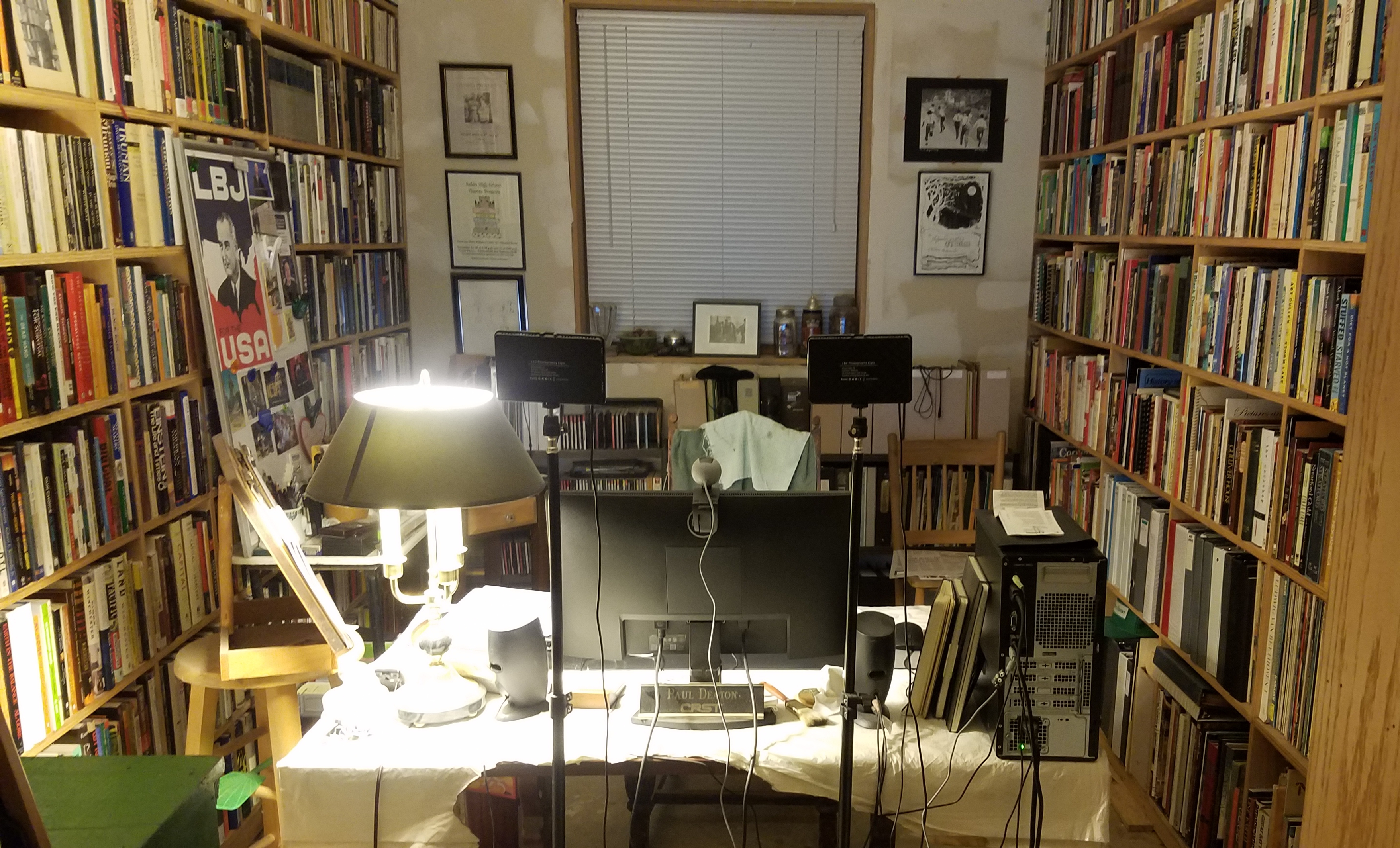
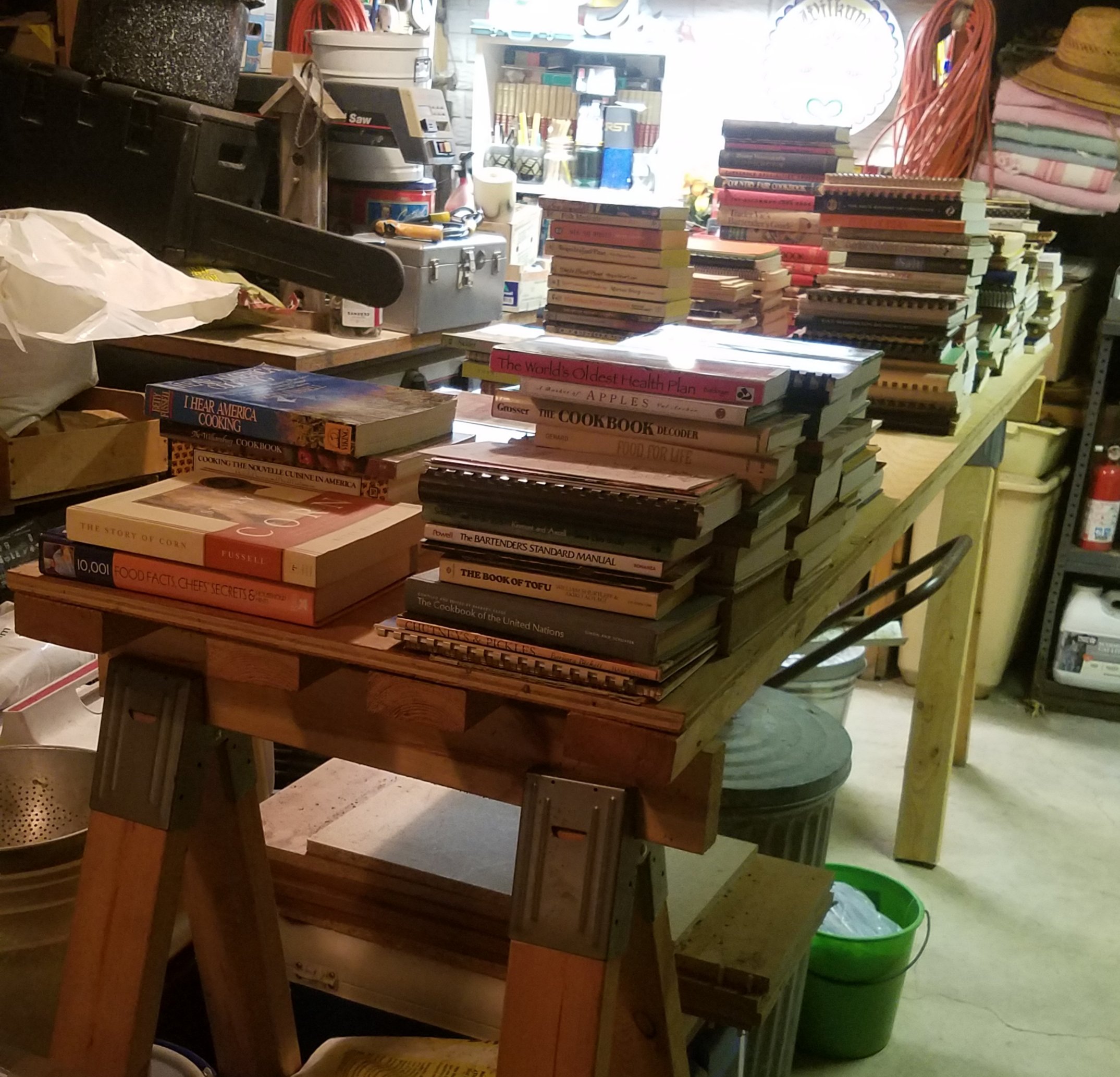
Author’s workspace on Nov. 13, 2023.

A library is curated, which means it inherently contains the biases of the librarian or curator. How will books be organized? When space is at a premium, which go to a thrift shop and which go into a box for potential future use? Which books should be acquired and which checked out of a library? I have a lot of books — a few thousand in my writing room alone. My collection of books, papers and other media is idiosyncratic. That’s as it should be. The meaning of the collection goes little further than the door through which I took this photo. My library mostly serves my writing.

As winter approaches, the pace of my reading increased. I’m reading about 50 pages a day and more if the text is engaging. Since the coronavirus pandemic began I read an average of 58 books each year. A recent Gallup poll found Americans started 12.6 books per year and finished five of them on average. This chart from the poll tells the story that reading books in America is in decline:

When I retired during the pandemic I adopted a firm rule that no matter what, I’d read at least 25 pages per day. This is harder when garden work is in full swing, and easier when I’m more home bound in winter. What I didn’t plan is how to curate the books and papers accumulated since the 1950s. Curation includes acquisition and disposal, two skills I haven’t practiced with consistency in decades.

I used to buy books at thrift shops and yard sales, but I haven’t been to one of those in years. I do buy new books, mostly based on recommendations from people I know on social media or related to my writing projects. The whole thing is hodge-podge and it shows.

Work on my autobiography energized the curating process. In addition to telling my story, writing includes going through possessions the way a Forty-Niner panned for gold in the California Gold Rush. The yield has been more than a few good nuggets.

In addition to preparing a bound book, I hope to reduce possessions by 75-90 percent. You can’t take it with you and our millennial child may never be able to afford a house. Nor would I want them to accept and store all my stuff. When they visit, we discuss what is of interest and what is not. It is a recurring thing we do that I enjoy.

Who knows when I’ll need to refer to a 1920s book titled Rural Sociology? I want to be able to find it when I do. Will I ever need to refer to my facsimile of the 1771 edition of the Encyclopaedia Britannica? With Google I likely won’t need it to gather information, yet there are reasons to keep it… idiosyncratic ones. Should I keep my copy of Charles and Mary Beard’s The Rise of American Civilization, purchased at the local library used book sale to which it was donated by the estate of Alexander Kern? Kern was one of the first American Studies professors in the program in which I matriculated. His more important papers reside in the University of Iowa Special Collections. Don’t get me started on the problems with the Beards’ book. I feel I should keep it just for those issues.

Using the verb to curate is not likely the intended use for what I do with my collection of stuff. Cataloguing the books is out of the question. Like most people, I seek truth and meaning in my life. Part of that is dealing with too many books, papers and media by making something of them the way my forebears mined coal. I want a work product both recognized and useful to others.

Based on the numbers in the Gallup Poll, I’m different from most Americans when it comes to reading and collecting books. I’m okay with being different.

Categories
Reviews

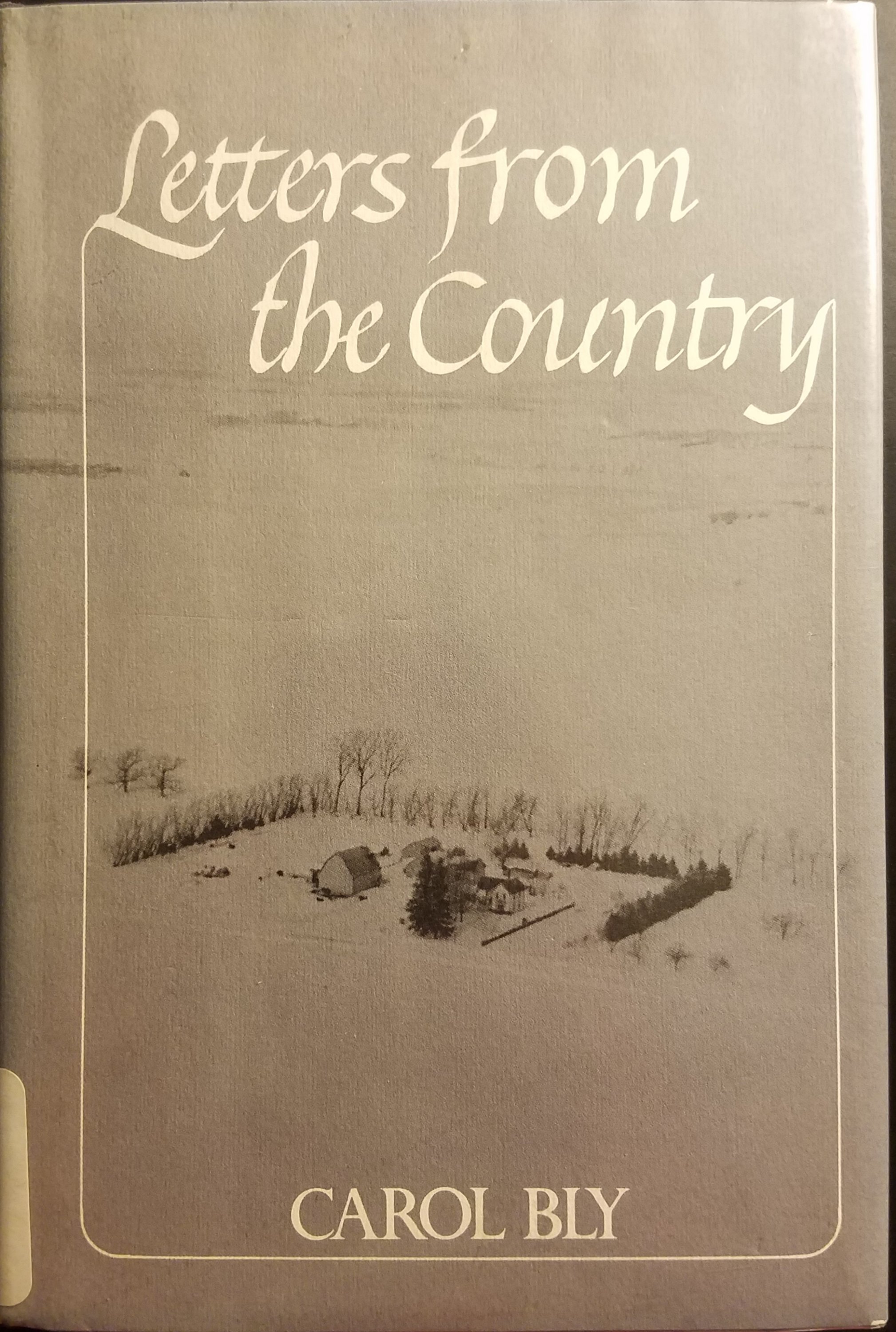
Book Review: Letters from the Country

It was a long time getting to Letters from the Country by Carol Bly. My copy is a discard from the Lake County Indiana Public Library where I picked it up from a used book shelf. We moved back to Iowa in 1993, so the purchase was more than thirty years ago. Attracted by the idea of letters from southwestern Minnesota, where my family bought land from the railroad in 1883, the book failed to stand up to time when I recently read it. If its insights and comments were relevant when it was written in the 1970s, such relevance escapes the reader in a time of internet connections, processed food, sports utility vehicles, and 24/7 right wing talk radio.

There are some truths buried in this time capsule of a book, particularly about how rural people interact with each other. It is a learned protocol of avoiding difficult things in life. Things like problems that have complex solutions that are not obvious, or telling someone “thanks for sharing ” immediately after they spill their guts about something intensely personal that affected them greatly. Away from the distractions of large cities, there is a sense that people have to live with each other and therefore don’t tend to burn any bridge with someone they might see in the neighborhood, or at the convenience store, library, or American Legion. For the most part, this means avoiding talk about politics unless one knows the politics of everyone in the room.

People don’t take well to being told what to do or how to live their lives. Bly’s book is full of that and partly, it’s why it seems outdated. Times have changed. She writes about bringing intellectual pursuits from the city to rural areas, which is a noble idea. Today, folks just get into their SUV and drive to Chicago to see the latest exhibition at the Art Institute. Or they fly to New York to see what’s on Broadway. For the time being, arts and the humanities are taught in rural public schools. The annual cycle of K-12 school musical, dramatic, and literary productions are part of the fabric of rural society. The direction our politics is heading may remove these topics from curricula in the near future to focus on skills needed to get a job, raise children, and get along well enough to not rock the boat of social mores.

Some of the letters mention the frequency with which rural folk write their congressman. Not writing is a sign of a decent level of satisfaction in the community. That’s why, Bly wrote, rural folks don’t write that many letters. If current elected officials seem out of touch with reality, it’s not because they don’t know what’s going on with citizens. They choose to address their concerns while adding a layer of indoctrination in the new ways of a national conservative culture. Why talk about poor air and water quality — real problems in Iowa — when citizens can be scared by tales of bogeymen laden with fentanyl illegally crossing the border with Mexico. The latter pays a political premium.

I didn’t dislike Letters from the Country. I do want to say more than “thanks for sharing” to the author. What I will say is it is good to read Bly’s analysis of what’s wrong with country folk and their way of life. Maybe it just needs updating. That would be a fit project for someone to take as long as it is not me.

Categories
Living in Society

Banned Books Week

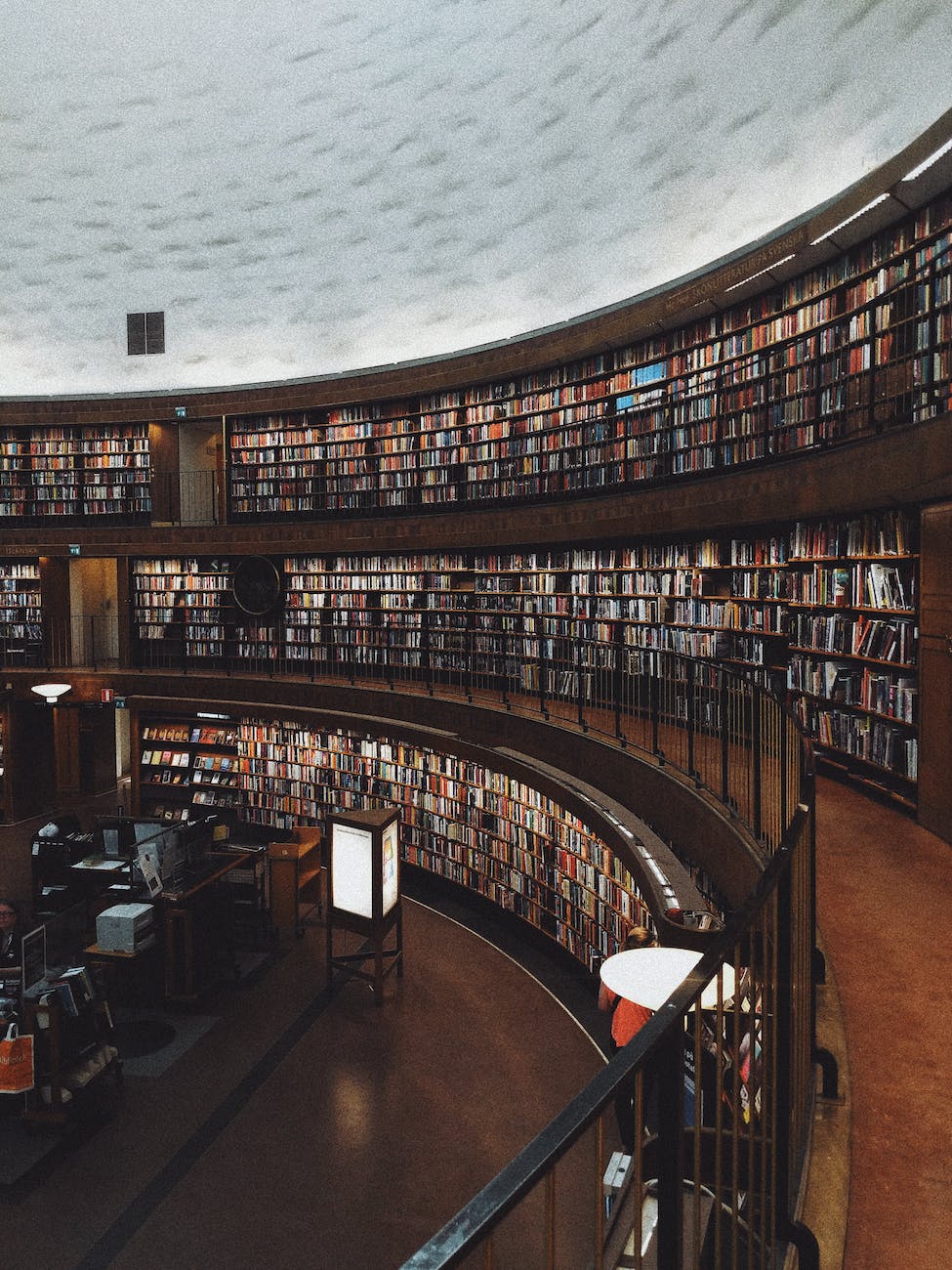
Photo by Olena Bohovyk on Pexels.com

Banned Books Week, sponsored by the American Library Association, is ongoing. At the same time, states like Montana, Missouri and Texas severed ties with the 150-year old institution as part of a public debate over what and how to teach about race, sex and gender. Like with public attitudes about vaccines and climate change, the ALA is caught up in larger social movements driven by ignorance and stated religious and racial preferences. Banned Books Week took on a different meaning this year.

Books about LGBTQ people are becoming the main target for book banning. Citizens don’t want their children exposed to that in any form. A large percentage of complaints about books come from a small number of highly active adults. Their impact has been nationwide.

The larger question is whether public libraries will survive. If the content of K-12 school libraries has some basis in how sex education, race and gender roles are taught, public libraries are designed to serve the broad needs and interests of the citizenry. To understand whether public libraries will survive, we must look at how they originated. The following 2015 article by Ben Young from the Solon Public Library website describes our local library’s history originating with a young women’s club and voluntary funding through donations.

In the mid 1960’s, to serve all members of the community all year round, the Solon Young Women’s Club established a library in Solon. In its earliest days, the library was beneath the downtown bandstand. It had no windows, and whenever it rained, water would run from one side of the library to the other. The library was funded from cookbook sales, local businesses, rummage sales, the City Council, food sales, and a stage show. Most of the books were purchased or donated by individuals around the Solon area.

The library was staffed with volunteers from the Solon Young Women’s Club and the Solon Study Club. At first, the library was only open on Wednesdays and Saturdays, usually in the afternoon. To promote the use of the library, it would also open its doors whenever the Solon High School had band concerts on Wednesday evenings.

In 1967, the City Council voted that the library would come under the sponsorship of the City of Solon and thus, the Library Board was created. A year later, the library moved across Main Street into the old print shop that is now Solon Swirl. A few years later when that building was sold, the library relocated to its third location which was the former Solon jail and firehouse on Iowa Street.

Space soon became limited with the growth of the community and the Library Board initiated plans for a new building. After several years of fundraising and planning, the Solon Library moved to its current location at 320 West Main Street. The building had its grand opening ceremony on June 24, 2001.

Solon Public Library website.

The conversion from volunteer staffed and publicly donated funding to government supported was significant. In addition to providing a stable financial platform and human resources management system, a direct connection to elected officials that didn’t previously exist was formed. Support for our local library continues to remain strong, but the new political element could mean loss of funding and other restrictions as political winds change. They are changing in many parts of the state and country.

In my interview with School Board Member Jami Wolf, we discussed the fact that book banning has not been elevated to the board. Hopefully teachers, librarians and parents will work through any questions about library resources without such escalation. That’s as it should be.

Cutting off the ALA is a mistake for states that choose to do so. The ALA provides a modest amount of funding for programs, and does good in underfunded libraries, especially in rural areas that have trouble affording books, computers and other library resources.

Iowa and other states should resist severing ties with the ALA for political, cultural or policy reasons. By establishing a dialogue with the ALA, states could resolve issues for which the organization has resources to help. In a time when every community is concerned about costs, severing ties with the ALA would be akin to cutting off one’s nose to spit one’s face. That is this years message during banned books week.

Categories
Living in Society

Don’t Tell Us What To Read

Shelf of books about Iowa.

A fundamental right in the United States is to choose what we each read, see and hear. The First Amendment of the U.S. Constitution gives us this right. Where is the boundary between educating our children and providing them free access to all forms of cultural expression regardless of content?

This is not a new question and society has been answering it in different ways for as long as I can remember. The Iowa legislature decided to codify where the boundary is and passed a law last session. Based on the new law, the Urbandale School District pulled almost 400 books from their stacks and curricula. Most districts are expected to be overly cautious in their approach to compliance. The state has been less than helpful in providing guidance on how schools and libraries should handle the new law. Urbandale reversed course on many of these books. There needs to be binding guidance from the state board of education before districts begin pulling books. State Senator Janice Weiner posted on X, “IMO all districts need to write and demand binding guidance.” In the military my drill instructor would describe this situation as it is playing out in real life a “goat screw.”

Control over which books K-12 students could access at school was evident in the 1950s and ’60s. We didn’t call it K-12 back then. When I was young, teachers kept an eye on my reading and made their opinions known. If they didn’t like a particular book, I read it at home where my parents supervised me. I got my first library card in 1959 and have been reading books from the library ever since.

My first conflict was in eighth grade over a book written by Ian Fleming, one of the 007 series. The priest saw I had it and confiscated it because of James Bond’s interaction with women. I discussed it with my parents and eventually bought another copy from the corner drug store with my allowance.

In high school I heard about J.D. Salinger’s book Catcher in the Rye and wanted to read it. It was prohibited and unavailable in the school library, or even in our local bookstores. I went across the river to a Rock Island bookstore where I bought it, and read that one too. I was free to manage the conflicts between teachers and my reading.

Fast forward from the 1960s and here’s where the controversy over boundaries for student reading seem to be heading, according to the Cedar Rapids Gazette editorial board:

Our public schools will be shackled by authoritarian, politically motivated edicts intended to dictate what hundreds of thousands of Iowa students can and can’t learn in school. State actions that historically have been aimed at improving public schools will be used instead to narrow their educational missions to please a minority of outraged parents whose complaints are being elevated by Republican politicians eager to attack public schools.

It’s called “parents’ rights,” but the rights are only for parents who agree with Moms for Liberty.

We don’t need state lawmakers to intervene in local disputes over books. There are processes in place locally to challenge books. Just because banning a book is not easy does not mean the local process is flawed. And one school district’s decision should not affect other school districts.

Editorial, The Cedar Rapids Gazette, Feb. 10, 2023.

What I can’t abide is the state Legislature regulating which books should be allowed in schools. This decision should be between teachers, librarians, and parents. The claim parents don’t know what books are in schools or somehow don’t have input seems bogus. If the Legislature wants to do something on libraries, fund online access to card catalogs throughout the state. We don’t need lawmakers telling us what to read.

Categories
Living in Society

Cold Saturday

Blue Bells.

I planted peas yesterday. It seems late getting them in, yet like everything in gardening, we sow our seeds and hope for the best. There is nothing like a bowl of sugar snap peas in the refrigerator for snacking.

Cooler ambient temperatures have made it difficult to get in the garden. Meanwhile, seedlings started indoors have used up almost every available space. We need a few days in a row of better weather to get at least the cruciferous vegetables in the ground. Fingers crossed we’ll get that this week.

I finished reading William Styron’s memoir about depression, Darkness Visible: A Memoir of Madness. It made me think about whether or not I have been depressed. My tendency is to say no, yet after reading Styron, I’m not sure. I certainly haven’t had debilitating depression like he did. When I heard him read from The Long March at university, he had no appearance of being depressed. He recovered from his depression and wrote the memoir. The fame of it eclipsed that of his previous books. Despite depression, Styron achieved a level of success few writers have.

Depression has not played any significant role in my life.

Darkness Visible raises the question of suicide. Styron lists many successful, creative people who took their own lives. He considered suicide himself. I’ve considered what suicide is, yet have not been tempted to take that step in my creative endeavors. I accept that I’m alive, and thanks to my parents I felt valued as a child. That carried me through difficult times in my life. I’m more worried about unintentionally killing myself by things such as falling off the roof during my twice annual inspections, flipping the John Deere tractor while mowing the ditch, or by falling down the stairs because there is no handrail. These situations need resolution soon.

The best news is I continue to crave sugar snap peas grown in our garden. Growing them keeps me engaged with life and chases the blues away. I can’t wait to get back out in the garden… So I can chill a bowl of peas in the refrigerator.

Categories
Writing

Great Book Sort #1

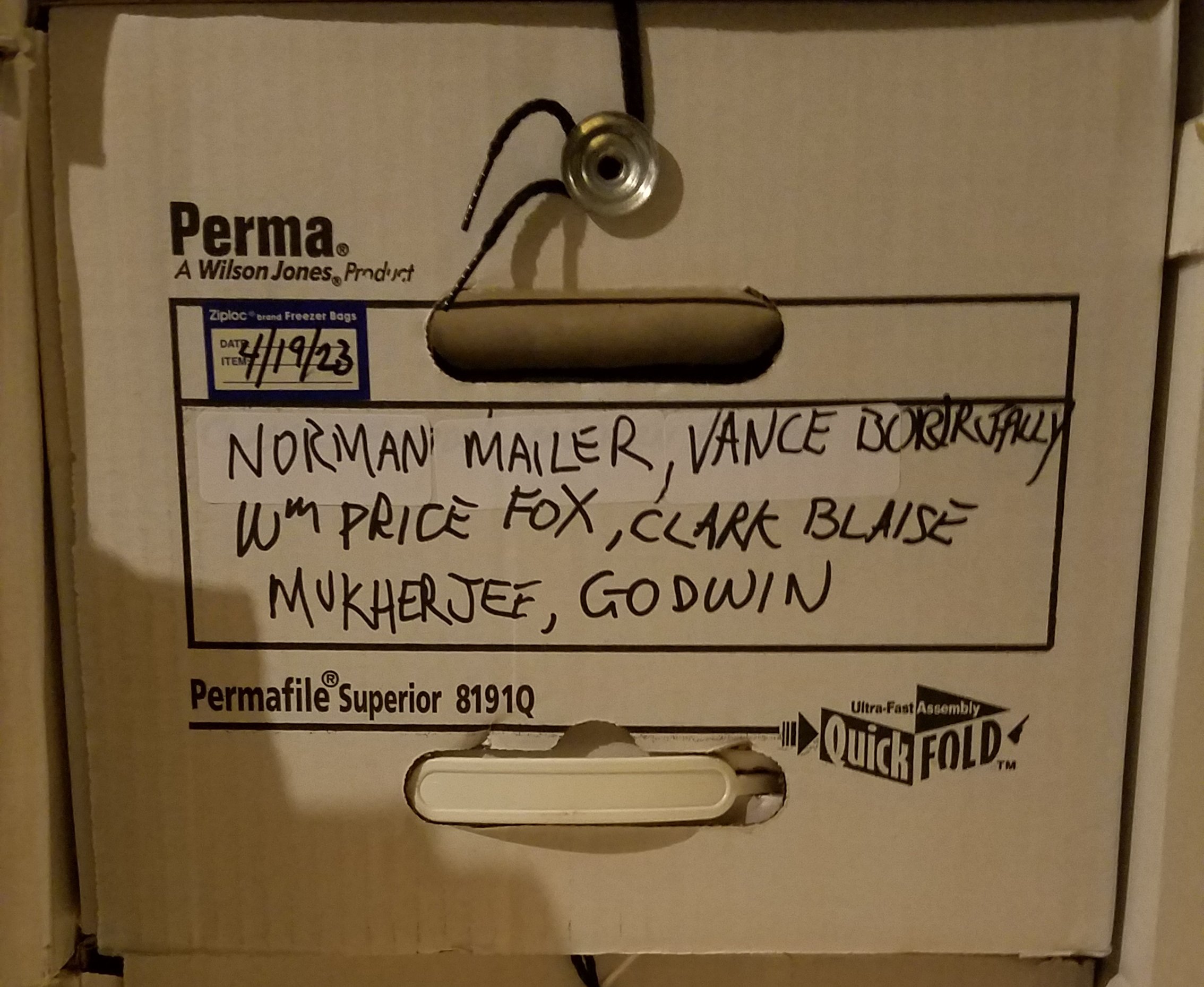
File box full of books.

This year I donated roughly 700 books to the public library used book sale and to Goodwill. Goodwill is less picky about what they will accept, so they received the majority of them. Many of my donations still had the Goodwill price tag from when I bought them. Library downsizing has only just begun.

All but The Moviegoer of my collection of Walker Percy novels went into boxes and out the door. I felt a bit sad about that, but as Vonnegut said, “So, it goes.” I had to decide about my collections by author. Other authors, that I worked equally hard to collect, went into bankers boxes with the names and date packed on the outside. Who knows if one will get into the boxes again, yet they are available and take up no precious shelf space. A few — Bellow, Didion, Irving, Morrell, Faulkner, and William Carlos Williams got their own special shelf space. It wouldn’t be my library without those authors.

I wrote previously about poetry and that decision seems solid. The shelves are easily accessible so when I want to read poetry I can get at the stacks.

Cookbooks are impossible. Half of what I gave away was cookbooks. I can’t seem to part with many more. Yet I must. Truth is, I hardly use cookbooks any more. Having learned how to cook, they serve as cultural artifacts related to places and people with which I have some connection. Reference material for the church where I was baptized, or the American Studies department where I got my degree. In seventy years of living, we generate a lot of connections. A cookbook has usually been involved. They also serve as examples of how to prepare a particular dish or ingredient. Keeping many of them takes up space that could be devoted to other topics. This sorting is far from over.

Hundreds of books about Iowa history and by Iowa authors needs reduction to a shelf of about a dozen to hand off to our child when they are ready. I also wrote about this. More of those got boxed up, leaving the first tier to be read and re-considered on the shelf.

The space for books about U.S. presidents is settled at eye level on two long shelves. The ones by or about presidents in my lifetime is sorted. I had two copies of Eisenhower’s White House memoirs and one is on the bench waiting to be packed up for Goodwill. I have a blank space for the second volume of Obama’s presidential memoir. No space was left for a Trump memoir, I mean, you got to be kidding me.

My African-American studies section has grown, and I need a space for American Indian books. I can’t bear to part with all the ancient writings, although the chances of reading some of them are slight. I may get into Plutarch’s Lives, or I may not. Keeping them for now.

Art books take up too much space. Having so many is a function of my interest in certain artists like Picasso, Joan Miró, Georgia O’Keeffe, Warhol, Hopper, and the like. Some I bought at the artist’s retrospective, and some I picked up at used book sales. Until I get to the point of running out of space, most of them will stay right where they now are.

A byproduct of sorting is finding more books to read. The to-read shelves are packed to overflowing. I’ve also found some lost friends, like George McGovern’s autobiography, Grassroots, and Joe Biden’s Promises to Keep. I put Biden’s memoir into a box, thinking he would never be president. Now it’s up in the presidential lineup.

The great book sort is proving to be beneficial. I have a better understanding of what I have, and organized them into projects for future writing. For now, there are some empty shelves. There won’t be for long.

Categories
Living in Society

Reading While Aging

Books by Iowa-connected folks.

On the corner of my sorting table rest piles of recently read books. I am shocked at the level of retention from the experience. It is not as much as I want. Is there an issue with reading while aging, or not?

In an article titled, “Reading in Normally Aging Adults,” authors associated with the American Psychological Association present the following article abstract which describes the physiological and cognitive process. Sorry, it is a bit long, yet everything in it is important.

Skilled reading requires coordination of knowledge about language with a broad range of basic cognitive processes. While changes due to aging have been documented for many of those cognitive processes, the ability to read declines little during healthy aging. Aging is associated with slower reading, longer eye movements and more regressive eye movements, but the qualitative patterns of older adults’ eye movements in response to lexical characteristics (e.g., frequency) and sentence characteristics (e.g., word predictability) largely resemble those of younger adults. The age-related differences in reading behavior are due in part to older adults’ reduced visual abilities. In addition, they may result from compensatory strategies wherein older adults rely more on their intact semantic intelligence and less heavily on perceptual processing of text, or alternatively they may be a consequence of older adults being less adept at effectively coordinating word recognition with processes of oculomotor control. Some age-related declines are seen when reading comprehension and text memory are assessed at lower levels of representation for complex sentences. However, older adults perform as well or better than younger adults when higher-level meanings of a text are assessed. These high levels of performance reflect older adults’ ability to draw on crystalized semantic intelligence that provides well-organized structures in long-term memory of the patterns that tend to occur in natural language. (PsycInfo Database Record (c) 2022 APA, all rights reserved)

Reading in normally aging adults by Gordon, P. C., Lowder, M. W., & Hoedemaker, R. S. APA PsychNet.

My take away is that while my vision has somewhat deteriorated, mental capacity remains strong, and I can draw on information and experience gained in my past to better and more quickly understand what I am reading. According to other articles I read this morning, reading can maintain mental functioning, and stave off common mental illnesses among the elderly like Alzheimer’s disease.

The money quote is, “However, older adults perform as well or better than younger adults when higher-level meanings of a text are assessed.” In theory, these psychologists say, since I have visual acuity, I retain the potential to be as good a reader as anyone.

Why am I worried about the piles of books read yet little remembered?

The abstract points to a borderline area of reading: the interaction between read text and the stored intelligence in my brain. To what extent am I processing what I read in context of past reading experience, and to what extent am I taking in text to gain new experiences? My fear is it is the former. If we read, it should be to expand our knowledge and experience, not to intake words and sentences as a form of confirmation bias.

Because I curate a large home library, I plan to continue reading for as many months and years as possible. My daily reading goal is 25 pages from a book. For the most part, I exceed that amount depending upon how engaging the writing has been. Importantly, I want more than to check off the daily reading goal box on my to-do list. I want to gain knowledge and experience that will help me better cope with society. I want to read to become a better writer.

By year’s end I will have read almost 60 books. If the text is being assimilated into my existing cognitive capacity, there is nothing wrong with that. I take up each new book with hope it will reveal something about society, something specific in life, an answer to a question or something about myself. I also read to see how other authors write. As long as I take a few minutes to appreciate each book after finishing it, I am of an age where everything read becomes part of my world view.

Categories
Living in Society

Reading 2022

Sorting books for library downsizing.

The garlic rack converts to a table by using a remnant of a 4 x 8 sheet of 3/4-inch plywood used to build our child a loft bed for college. I laid it down on top of the two by fours used to hold garlic as it dries. The rack is tall enough so garlic leaves don’t touch the floor. As a table I can work without bending over. It is a useful space to sort things out.

I read 50 books thus far this year. They are listed on the Read Recently page which is updated after I finish each one. Here are the highlights of this daily activity.

By far, the most interesting book was Year of the Tiger: An Activist’s Life by Alice Wong. She was born with spinal muscular dystrophy and her book stands out as a tale of living an active life with a disease that confines her to a wheelchair. In her discussion of Twitter, she describes how the social media platform is used by disabled persons who may have no other public voice. As Elon Musk acquired and is changing the platform, I hope he improves the disability community’s ability to participate in this aspect of society.

Memoirs and biography were too small a portion of the books I read. As someone writing their own autobiography, I should be reading more in this category. Each of the four I read was important. I enjoyed Loretta Lynn: Coal Miner’s Daughter more than Ted Kennedy: A Life by John A. Farrell and Like a Rolling Stone by Jann S. Wenner. Lynn’s book was relatable in a way Kennedy and Wenner are not. A person can take only so much of the life story of rich people. I associated Joan Liffrig-Zug Bourret, who died in the care center in town this year, with the many cookbooks she published at her Penfield Press. Her memoir, Pictures and People: A Search for Visual Truth and Social Justice tells a story that goes well beyond her chronicling of the Amana Colonies in Iowa.

When We Cease to Understand the World by Benjamín Labatut seemed unique and necessary. The Chilean author presents, as The Guardian put it, “an extraordinary ‘nonfiction novel’ that weaves a web of associations between the founders of quantum mechanics and the evils of two world wars.” It was unlike anything else I recently read.

I read fiction for diversion and to see how other writers do their work. Amor Towles’ The Lincoln Highway was the best of the lot this year.

In poetry, how did I miss Mary Oliver in my life? I don’t know but Devotions: The Selected Poems of Mary Oliver was well-written and engaging. I’ll be returning to this excellent volume.

Rising Tide: The Great Mississippi Flood of 1927 and How it Changed America by John M. Barry tells a story essential to anyone who is from or is writing about life in the Mississippi basin.

Related to my autobiography was The Trader at Rock Island: George Davenport and the Founding of the Quad-Cities by Regena Trant Schantz. This is an essential book about the settling of the Midwest. What was most surprising is it was just published in 2020. I would like to have read this when I was a teenager in Davenport.

There were no real clinkers in this year’s books. What made a difference in reading more was setting a daily goal of reading 25 pages in a book. I hope readers find my review of 2022 reading to be useful. I’d love to hear what you are reading in the comments.

Categories
Living in Society

Ron’s Book Sale

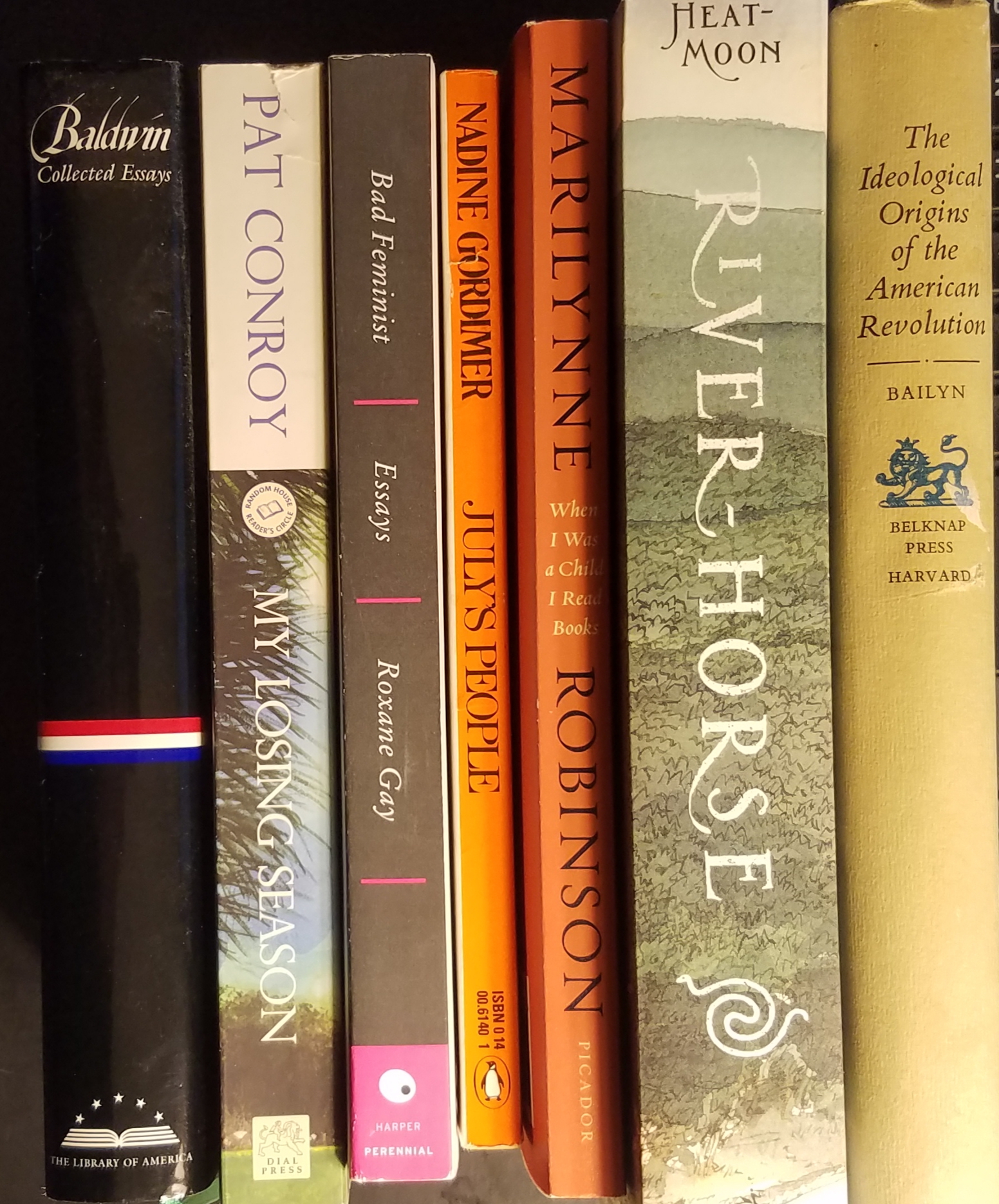
Books acquired at Ron’s Memorial Book Sale at the Solon Public Library.

What does a person do with 1,800 books after the owner dies? If one supports our local library, they have a book sale and donate the proceeds to Friends of the Solon Public Library. That’s what my friend Pat did after her husband Ron died just before the World Health Organization declared COVID-19 a pandemic in 2020.

While visiting Pat after COVID-19 had been normalized in Iowa, she offered me what books I wanted. I took one, and said I would just wait until the sale to buy more. Sometimes a person has to show up.

Besides sating my immediate reading wants and perceived needs, the sale was a chance to catch up with people in the community. The people I knew had retired or were scaling back to part time work. Our community has a small yet devoted group of readers and will show up for a book sale.

A younger me would have brought home a lot of books. Instead, I made a free will donation for these seven. I hope to read them all, likely beginning with Pat Conroy’s memoir. It will not be the same as having a conversation with Ron, who was not only well-read but could talk intelligently about almost any topic. Reading Ron’s books is no substitute for those conversations, yet that is where we are.

Iowa is among the least educated states in the country. Those of us outside academia who pursue intellectual interests get to know each other and support our public library. In our community of several thousand people there are not many of us. When someone dies, or experiences a stroke, dementia, or Alzheimer’s Disease it is a substantial loss. We are of an age when that possibility is tangible.

The first snow fell in small flakes as I left for the sale. It continued while I was browsing books, and until I arrived home. Winter has not arrived, just a reminder of it. For me that means hunkering down in the warmth of our home to read and write until spring. Those of us who remain must go on living. That’s what I plan to do.

Categories
Home Life

Reading Today

State Park Trail.

Gentle rain suppressed my desire to attend the Amana free-will donation fire fighters breakfast this morning. It is part of my project to get to know Iowa County, which became part of my state house district and will remain so for the next ten years. It was a solitary endeavor and therefore easy to delay until next year. Now that the garden is in, we can use the rain.

I have indoor projects requiring attention, more than I care to admit. A main one is to develop a reading plan for the rest of summer. I closed May re-reading The Great Gatsby, a Memorial Day weekend favorite. Today I hit something of a wall.The books on my to-read shelves seem a tedious chore. Where did my reading mojo go?

Maybe I need a break. My program to read at least 25 pages of a book each day has been good and I look forward to resuming progress. During a break, I need to take stock of what I’m reading and figure out what I need to read. This post is toward that end.

Some dynamics are at work in my reading life. I have been a book buyer since I had an income as a grader. I have been a keeper as well. As a result, I have a large home library which contains as many unread books as those I read. My buying slowed in recent years, yet there is plenty to read a step or two away from my desk. I also bought books with a vague notion of building collections around a topic. For example, I have eight books about Iowa authors and the University of Iowa Writers ‘ Workshop. It is a collection waiting to be read when the spirit moves me.

Research for my autobiography set me on a path to read books to understand the background against which I was born, educated, worked and lived. This year, The Trader at Rock Island: George Davenport and the Founding of the Quad Cities by Regena Trant Schantz is an example. I bought it soon after publication and read it during the time I wrote about the 1950s in Davenport. It was a useful reference about a story that had not been adequately told until Schantz wrote her book. There will be others on my list like this.

I don’t write much poetry yet I read it each year to gain exposure to how other express themselves. I read Devotions: The Selected Poems of Mary Oliver this year and am looking for my next book of verse. Over the years, I built a large collection of unread poetry, bought mostly at thrift stores and used bookstores. There is plenty from which to choose without leaving the house.

Books about writing are a mixed bag. I have a shelf of them and once or twice a year I read someone different. I have yet to read one this year, so I’ll pick one.

A lot of my time is spent talking to people in person or online. I get book recommendations frequently. Sometimes they work out and sometimes not. It tends to stretch my understanding of what is worth reading. If left to my own devices, I would read and re-read the works of William Carlos Williams, Saul Bellow, Joan Didion, John Irving, Vance Bourjaily and David Rhodes over and over and over again in an unending loop. Recommendations are important to maintaining an active mind.

I have an appetite for good fiction and read a couple books per year in this category. The most recent is The Lincoln Highway by Amor Towles. With Gatsby, they are the only two fiction books read this year. Perhaps another is in order for the summer. Whatever summer fiction I read, I don’t want it to be too much work.

Finally, there are cooking books. These serve the endless quest to determine new dishes for our kitchen garden. I’m at the point as a home cook where I don’t consult with recipes very much. I know the range of ingredients and techniques and fit them into meeting the needs of ovolacto-vegetarian me and my vegan spouse. One of my projects is to build a cookbook shelving unit for the kitchen-dining room and reduce the number of cookbooks to what will fit on it. That’s a project for winter, though, so I’m still exploring.

With that in mind, here is my draft of a summer reading list:

  • Les Halles Cookbook: Strategies, Recipes, and Techniques of Classic Bistro Cooking by Anthony Bourdain.
  • The Groveland Four: The Sad Saga of a Legal Lynching by Gary Corsair.
  • Seven Sinners of Shiloh and other Poems by Franklin Walker.
  • The Hidden History of Neoliberalism: How Reaganism Gutted America and How to Restore Its Greatness by Thom Hartmann.
  • Goliath: The 100-Year War Between Monopoly Power and Democracy by Matt Stoller.
  • The Government of the Tongue: Selected Prose 1978 – 1987 by Seamus Heaney.
  • Sarajevo: An Anthology for Bosnian Relief edited by John Babbitt, Carolyn Feucht and Andie Stabler.
  • From Oligarchy to Republicanism: The Great Task of Reconstruction by Forrest A. Nabors.
  • Drawdown: The Most Comprehensive Plan Ever Proposed to Reverse Global Warming edited by Paul Hawken.
  • Siberian Dream by Irina Pantaeva.
  • Gone Girl by Gillian Flynn.

Wish me luck and/or comment with your recommendations.