Categories
Environment

A Reckoning Came

Hot Peppers from the Garden, Oct. 12, 2018.

Even if we knew our ecosystem was close to the tipping point of global warming and its consequences, it is hard to be ready for the recent Washington Post headline, “The world has just over a decade to get climate change under control, U.N. scientists say.”

The Intergovernmental Panel on Climate Change published its latest report a week ago. 10-14 years remain to address global warming and climate disruption to which it contributes, according to the authors. If our global society doesn’t address it, scientists find we will likely pass a tipping point toward climate breakdown from which there is no return.

Can we take adequate climate action in time?

“Even if it is technically possible, without aligning the technical, political and social aspects of feasibility, it is not going to happen,” said Glen Peters, research director of the Center for International Climate Research in Oslo. “To limit warming below 1.5 C, or 2 C for that matter, requires all countries and all sectors to act.”

I’m not hopeful society will react adequately.

Recycling programs are a case in point about society’s failures.

Driven by a desire to take volume out of waste streams, curbside recycling programs came up after the environmental awareness created by the Apollo moon flights and the widely circulated “Earthrise” and “Blue Marble” photographs. It just made sense to recycle materials like metal cans, cardboard, paper, glass and plastics that could be re-used. Along with that came a push by manufacturers to create containers that were recyclable. By any measure the programs were successful for a long time.

Time intervened and today, more and more communities are either scaling back or dropping their recycling programs. The reason? Contamination of waste, increased collection and processing costs, and lower sales prices for recycled material. Who is getting blamed? China. Here’s an explainer from a Pennsylvania television station:

The recycling markets, whether it’s paper, plastic, glass, or other items, are financially unstable now, local recycling coordinators said.

The cost of recycling, including collection and processing, is increasing, while the prices for recyclables sold is decreasing.

One reason, they said, is China. They control a huge portion of the world’s recycling markets and they now insist on taking recyclables that are not termed “contaminated,” meaning mixed with other materials. In fact, China is no longer accepting any recyclables from the United States.

Recycling is something individuals and families can get their arms around. To hear this story, Americans are no good at it. If we can’t do something as tangible as recycle plastics, cans and glass in a way to enable them to be recycled, how can we be expected to reduce vehicular fossil fuel emissions, use of lawn fertilizers, home heating oil and gas, and a host of other consumer products right in front of us? Take that to the next level and how are we to reduce greenhouse gas emissions in agriculture by changing our food choices to reduce consumption of meat, corn and soy found throughout grocery store aisles? What about the unseen manufacturing plants that use coal, oil and gas to create mundane products like cheap cat litter, toilet paper, hot dogs and home appliances?

What the IPCC is saying is time is short and we have a difficult task in front of us. It involves personal behavior which we have been no good at, and collective behavior that in the current political environment seems impossible.

An obvious precedent to these times is the extinction of Neanderthals after the rise of so-called “modern humans.” How they went extinct is not fully understood, but several theories have been advanced.

“Hypotheses on the fate of the Neanderthals include violence from encroaching anatomically modern humans, parasites and pathogens, competitive replacement, competitive exclusion, extinction by interbreeding with early modern human populations, and failure or inability to adapt to climate change,” according to Wikipedia. “It is unlikely that any one of these hypotheses is sufficient on its own; rather, multiple factors probably contributed to the demise of an already widely-dispersed population.”

Where do we go from here? The IPCC report is no surprise. It is a wake-up call for folks who haven’t engaged in mitigating the effects of global warming and climate disruption. At what point do we get enough people engaged? The day of reckoning has passed, now it’s up to us. We’ll see if we can become better at it.
Categories
Environment Work Life

Working in the Heat

Image of Earth 7-6-15 from DSCOVR (Deep Space Climate Observatory)

Independence Day at the home, farm and auto supply store was a time to catch-up with organizing the warehouse, process expired pet food, reposition tall pallets of wood shavings, and generally clean up. The usual receiving activities slowed down as delivery drivers had the day off.

The store was pretty busy and comme d’habitude, management tried to feed us lunch: fried chicken with sides from a chain restaurant headquartered in Orange City.

I resisted. I also didn’t criticize because they were trying to be nice on the holiday we all had to work. We all should be nice when we can.

A couple of projects involved being outside in the blazing heat and humidity. I persisted and got the work done.

When working outside at home I get done early in the day to avoid mid day heat. I’ll work outside all day when the heat index is up to 90 degrees, but that’s the upper limit. With the heat and humidity we’ve been having that meant days indoors even though the sky was clear. It was weird.

According to this morning’s newspaper heat records are being set all over the world. In the Northern Hemisphere we’ve had the hottest weather ever recorded during the past week as a massive and intensive “heat dome” settled over the eastern United States.

In addition, the northeastern Atlantic Ocean is cooler than normal. Partly this means there may be less hurricane-strength storms this season. My worry is it’s being caused by melting of the Greenland ice sheet. If Greenland goes completely, the historical record shows the Atlantic meridional overturning circulation (AMOC) will slow down significantly or stop. That could mean disruption of the growing season in Europe and of their food supply. According to Scientific American, AMOC is the weakest it’s been in 1,600 years.

“The grand northward progression of water along North America that moves heat from the tropics toward the Arctic has been sluggish,” wrote Andrea Thompson. “If that languidness continues and deepens, it could usher in drastic changes in sea level and weather around the ocean basin.”

I think of the blue marble and how all of us on earth are connected.

“No single record, in isolation, can be attributed to global warming,” wrote Jason Samenow in the Washington Post. “But collectively, these heat records are consistent with the kind of extremes we expect to see increase in a warming world.”

There are so many signals and indicators of climate disruption in the global environment that such disclaimers may serve some editorial purpose but are immediately useless. The world is warming and there are consequences.

It’s about more than working outside on a humid and hot day at the home, farm and auto supply store.

Categories
Environment Writing

Morning Coffee, Climate Change and the 2018 Midterms

U.S. Army Mermite Can

I first drank coffee in the Army… on top of a hill… during the dead of winter… from a mermite can.

Steam rising from the lid proved irresistible when ambient temperatures were below zero and we had just slept on the ground. What else were we going to do but drink coffee? It was there.

We each have a personal history of drinking coffee. I asked one of the greenhouse seeding crews if they remembered their first cup. Some had specific memories, others did not. For me, it was the windy hill in Germany back in 1976.

Coffee was first discovered in Ethiopia in the 11th Century and spread throughout the temperate zones of the planet. It is currently being grown in more than 60 countries. Brazil, Vietnam, Columbia, Indonesia and Ethiopia are the largest coffee producers by annual export weight. Coffee has become ubiquitous as any foodstuff can be.

Making Coffee

The sources of our coffee are under pressure because of climate change. Yields are declining in part because a warmer atmosphere holds more water vapor, creating unseasonable and extreme weather events. Likewise, warmer temperatures expanded the range of the coffee berry borer. Coffee rust is a detrimental fungus increasing its range as the planet warms and winters no longer kill it off in mountainous regions where coffee grows. The impact of global warming caused climate change is not trivial.

We would like to drink a cup of Joe without worry. When we go to the warehouse club there is a long, abundant aisle of coffee produced all over the world. A cup of coffee continues to be affordable at restaurants. It hardly seems like a problem. It isn’t… at least not now.

The science of global warming is virtually undisputed. What seems less certain is how it will impact our personal lives going forward. The Earth’s ecosystem is complex and specific regions have had different issues. We’ve had our share of droughts in Iowa, but there has also been enough rainfall to produce crops. Some days it seems the only persistent idea about Iowa’s climate is that rain remains. When it comes to coffee, what happens six inches in front of our noses is not as important as the global environment in which humans live.

There’s the rub.

With the 2016 election of a Republican to the White House, all eyes are diverted from our most pressing problems. Challenges to the study of climate change is one of those pressing problems and not only because I may be deprived of my daily cup of coffee.

The administration walked away from policy decisions we’ve made to reduce greenhouse gas emissions. It is cutting funding for climate research. It is censoring and targeting government scientists. One could reasonably say the government under Republicans has abandoned science as a consideration in policy-making.

As Americans, we know what to do. We must repudiate the direction Republicans are taking our society by voting them out in the 2018 and 2020 elections. I’d rather linger over my morning coffee than get involved in politics again. However, personal political engagement is the price of a livable future.

Categories
Environment Home Life

Inside Chores and Climate Marches

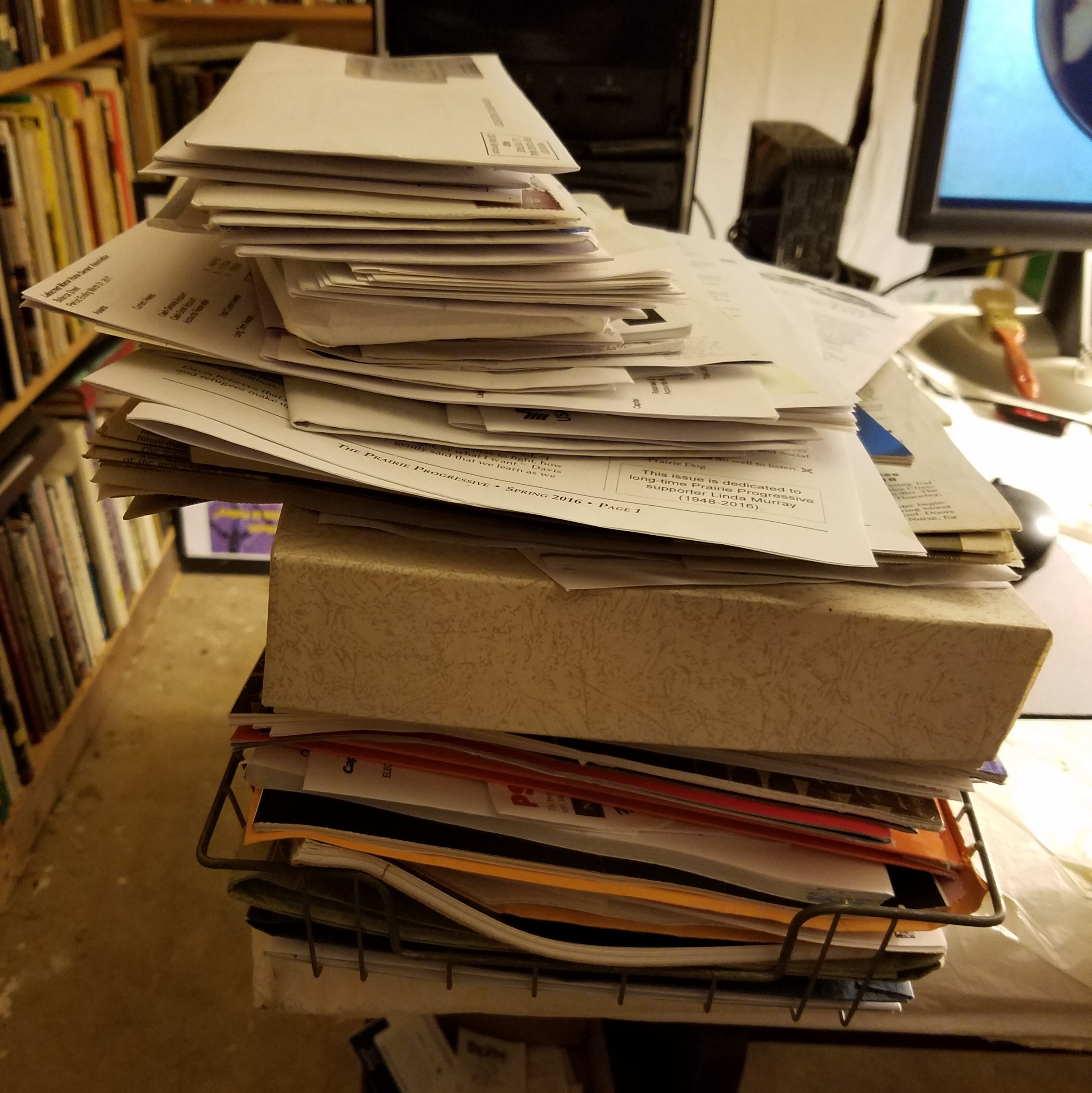
Overflowing and Neglected Inbox

Rain began mid-morning and is expected to continue until sunset.

Let it rain.

It’s an opportunity to work on inside chores before spring planting.

I’ll tackle a long-neglected inbox and use produce in the ice box and freezer to make soup. There’s plenty to do in the jumble the garage has become since winter — moving the lawn tractor toward the door, organizing the planting tools and cleaning shovels, rakes and bins for the season. I’m antsy about getting the garden planted — I accept it won’t be this weekend.

A few friends are participating in the People’s Climate March today. CNN and the Washington Post covered the District of Columbia march. There are several marches in Iowa and elsewhere. The key challenge for participants and other climate activists is determining what to do in a society where the importance of action to mitigate the causes of climate change garners slight interest.

“Surveys show that only about one in five adults in the United States is alarmed about climate change,” Jill Hopke wrote in The Conversation. “This means that if climate activists want this march to have a lasting impact, they need to think carefully about how to reach beyond their base.”

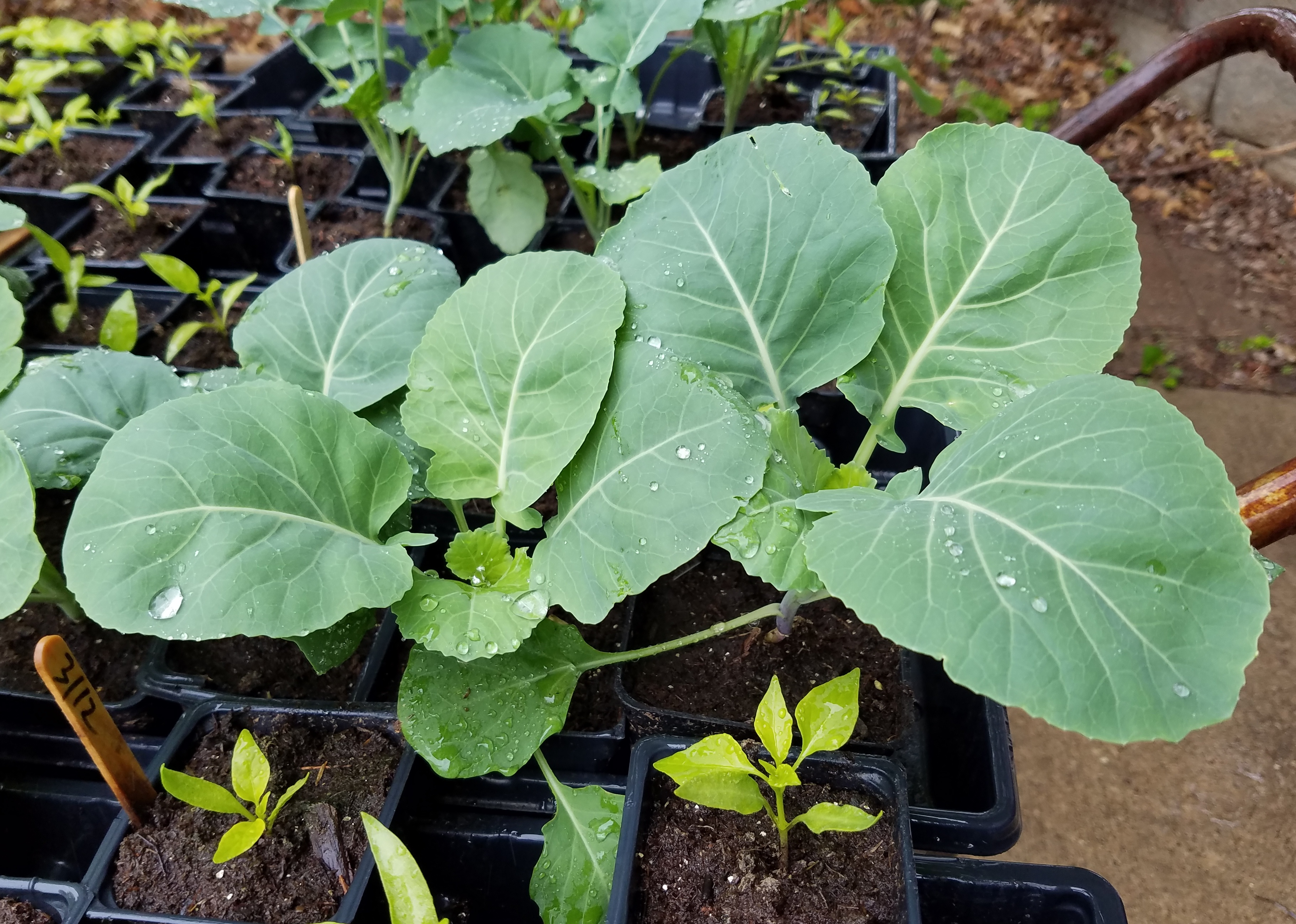
Collard Seedlings in the Rain

The unanswered question is how shall people outside the activist community be recruited to take climate action and by whom?

There are no good answers and no reason for climate activists to lead the effort. However, we can’t give up if we value society’s future.

The main issue is the increase in atmospheric greenhouse gases since the beginning of the Industrial Revolution. The good news is there are renewable sources of energy for transportation, manufacturing and electricity. How will society make climate change action ubiquitous with a majority of the world population?

Mass demonstrations can play a role in an effort to raise awareness about climate change. So can articles written by journalists, scientists, bloggers and organizations. At a minimum we can each strive to live with as light an environmental footprint as possible. We can explain to our friends, family and neighbors. Everyone has the potential to do something.

Today’s cool weather and gentle rain is a reminder.

“Staying out of the cold and warm inside? So are we,” Richard Fischer of Bernard wrote this afternoon via email. “Due to the weather we’re moving the event over to Convivium Urban Farmstead and Coffee shop, 2811 Jackson St., Dubuque.”

We must consider our lives in the built environment and let it rain. Have faith in today’s potential and adjust, knowing as long as rain comes and sustains our gardens and farms we too will be sustained.

There is much we can do when it rains. We can act on climate before it’s too late.