It was 2:30 p.m. by the time I took my daily walk along the lake trail. Many people were out as the ambient temperature approached 50 degrees Fahrenheit. It was a wholly different community in the afternoon compared to morning.
A large flock of geese swims on the lake. I don’t know why they linger. Ice had formed on parts of the surface, and waterfowl took to standing on it in groups. If it remains this warm, I’m not sure they will migrate further south. The lake has plenty in it to nourish them.
I was told by someone close to me I get a bit grouchy during winter. The warm weather encourages me to get outdoors, although communing with geese and other waterfowl doesn’t seem to relieve the condition. Breathing outdoors air is good for us, and the stench from nearby hog lots has mostly been absent. When spring comes farmers will spread manure on their fields and we locals will notice. This is part of living in Iowa, although anymore, grouchiness is endemic to living in the United States. We should treasure those among us who can resist this.
While checking the mail toward sunset, my neighbors were outdoors with their small children in the warm air hanging colored lights on a tree for the holidays. While walking back to the house, I remembered when our child was little. I said “hello” and minded my own business. Those early family memories are precious and fleeting. I didn’t want to intrude.
And so it is, we are living a life and then all of a sudden realize it is shorter than we thought it would be. My reaction to winter is to nestle into my writing room, turn on the space heater, and try to make progress on my autobiography. I also avoid thinking about my ultimate death and return to dust. Except for the manure spreading farmers, I look forward to spring. So it goes.
We are nine, going on ten years into the Russo-Ukraine War and there’s no sign of resolution. Russia determined the Ukrainian people are part of Russia and annexed Crimea on Feb. 20, 2014. Russia now occupies one fifth of the Ukrainian land mass.
Ukrainian President Volodymyr Zelenskyy arrived in Washington, D.C. Monday as part of the Biden administration’s “last minute push to convince lawmakers to pass a supplemental funding bill, as officials warn that the money for Ukraine is running out,” wrote the Associated Press. I ask myself, “What are we doing in Ukraine?”
For a while, the Oct. 7 Hamas attack on Israel pushed Ukraine out of the news. Conflict over the failure of the long-standing idea of a two-state solution to Israeli and Palestinian claims over the Holy Land, that began after the fall of the Ottoman Empire, took the headlines. This is mostly because every person I know has an opinion on the long-standing conflict in the Middle East. It was a more current thing to talk about rather than hundreds of thousands of people dying in the Russo-Ukraine War. Historian Lawrence Wittner wrote about this on the IPPNW Peace and Health Blog.
Grinding on for nearly two years, Russia’s massive military invasion of that country has taken hundreds of thousands of lives, created millions of refugees, wrecked Ukraine’s civilian infrastructure and economy, and consumed enormous financial resources from nations around the world.
And yet, despite the Ukraine War’s vast human and economic costs, there is no sign that it is abating. Russia and Ukraine are now bogged down in very bloody military stalemate, with about a fifth of Ukraine’s land occupied and annexed by Russia.
Yesterday, Senate Majority Leader Chuck Schumer posted the following on Threads:
Schumer doesn’t tell half the story and it is not because of the word limit on Threads. When communicating in or to media, the Majority Leader needs to keep it simple. Surprised he hasn’t said something like “Russia bad, Ukraine good.” Maybe Schumer is right to say it like that. I am of an age I want to know more of the story.
Atlantic Monthly writer Tom Nichols wrote about communications on Monday.
President Joe Biden is trying to run for reelection on a record of policy successes. In modern American politics, this is a nonstarter: Many Americans no longer tie policy successes or failures to individual politicians. Instead, they decide what they like or don’t like and then assign blame or credit based on whom they already love or hate.
Tom Nichols, The Glare of Presidential Power, The Atlantic Daily, Dec. 11, 2023.
“Many American voters now want a superhero, not a president,” Nichols stated. What these voters don’t want is to think about is the devastation in Ukraine attributable in large part by United States support for the war.
In a Dec. 10 substack article titled, “Ukraine’s Percolating Hatred of America,” Matt Bivens, M.D. wrote:
We’re coming up on the two-year mark of this completely avoidable and utterly mismanaged disaster. The beautiful Ukrainian countryside is devastated. Enormous sums of money, and the lives of hundreds of thousands of young soldiers, have been squandered. Millions have fled Ukraine, including many of the young men. The old men — those too tied to their communities to go into hiding from the draft — are who’s left to carry on the fight.
Bivens addresses the “the burden of guilt that the United Statesbears for this pointless tragedy.” The story he tells is appalling on multiple levels. I won’t summarize except to say it should be more widely circulated than it is on substack.
My bottom line on Ukraine is we elected people to manage the support we have provided to the country. We should support Ukraine in this fight against Russia. How much support is enough? Today that question refers to financial support Republicans are unwilling to give as the president proposed it. To me, the country elected Joe Biden and when Ukraine’s war with Russia is flagging we have a choice to make. Do we continue as we have been doing and fill the president’s order for more funds? Or do we take stock of where we are and either go all in, or move on to other pressing problems? Those are tough questions for a citizen to answer. For now, I support the president.
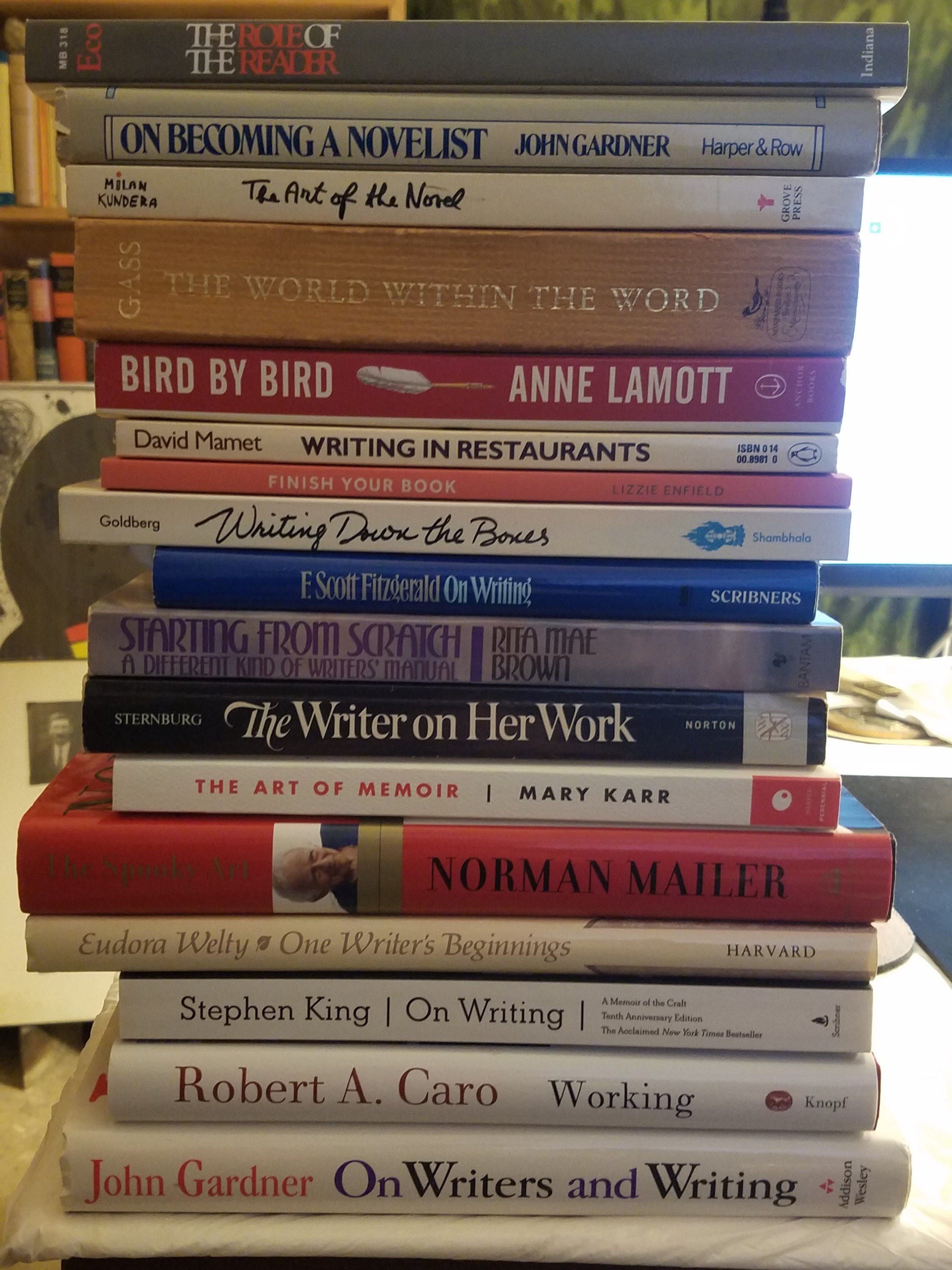
Over the weekend I read Anne Lamott’s Bird by Bird: Some Instructions on Writing and Life. Apparently I was the only person in the known universe who had not heard of her. Printed right there — inside the front cover — are 17 other published works of her fiction and nonfiction. My copy is the 25th Anniversary Edition! I’ve been here all along. Where has she been?
I couldn’t write like her. First, I don’t think I am capable of her stylistic renderings. Second, I prefer a more utilitarian approach. Maybe number two is a reason people have trouble finishing my longer works. The book was entertaining with a couple of nuggets I might actually use. The namesake one, “Just take it bird by bird,” is something similar to what I heard long ago during a Dale Carnegie course, “An air traffic controller can land only one plane at a time.” So it has been without knowing Lamott.
I don’t need to review Lamott’s book because it speaks for itself. I posted a photo of the cover on social media and so many people commented it was one of their favorites. Besides, there are 9,858 Goodreads reviews already.
What I do want to say is it is important to take a break from writing and read a book on being a writer and all that means. At a certain point such books are an easy read with a lot of head-nodding. In a long term project like my autobiography is, one that stretches into years, it is important to walk away for a while and listen to what others say about writing to gain a sense of perspective and hope. Reading about how to write can also be a way to break writers’ block.
I’ve taken to opening the garage door and standing outside in the predawn darkness. Today, stars were out. Because of the layout of trees in the yard, I couldn’t identify any constellations. It was just starlight shining down on me with a reminder we are all stardust. To put it in more utilitarian language, the way scientist Neil DeGrasse Tyson did, “The four most common chemically active elements in the universe—hydrogen, oxygen, carbon, and nitrogen—are the four most common elements of life on Earth. We are not simply in the universe. The universe is in us.”
My writing desk circa 1980. Five Points, Davenport, Iowa
Editor’s Note: Part of my autobiography in progress presents my experiences regarding work juxtaposed with the Reagan Revolution. This opening of part two is how I introduce the dialectic between my work experience, family life, and social changes after Ronald Reagan was elected president in 1980. This social environment would affect our family a lot through the years. Per every author who writes about writing, this is not the final draft.
Working title: Transition from bachelor to husband
Returning to Iowa from military service, it was tough to find work after graduate school. I made a conscious decision to stop moving from place to place, from activity to activity, and settle down. In June 1981, I looked for work that would pay the bills to stay in Johnson County. Then, and to some extent now, that’s where social action is for young, liberal-minded people in Iowa.
Buying every local newspaper, I marked each job in the help wanted pages with an “X” after contacting the company. The work environment had changed from a decade previously when all a person had to do was make the rounds of major employers to find a good paying, union job. No more.
My application for work got extra points for consideration at the university because of my military service. That led to more job offers. I took a job at the College of Dentistry because it was offered. At the University of Iowa there was a small retirement plan, no pension, and no health benefits.
About a month later, on Aug. 3, 1981, the Professional Air Traffic Controllers Organization (PATCO) went on strike. President Ronald Reagan ordered them back to work and on Aug. 5, he fired 11,345 workers who did not cross the picket line, breaking, and ultimately decertifying the union. While on a later business trip to Philadelphia, I met Reagan’s chief counsel in the PATCO action. We discussed the strike and Reagan’s handling of these government employees. My understanding of the action was confirmed. It was political.
What started in 1981 with the PATCO strike continues, without apology, as part of Reagan’s legacy of breaking unions. The unintended and maybe not considered consequence of Reagan’s union policy was to make life harder for middle class workers like me.
I met my future spouse at the beginning of the Reagan Revolution while we both worked at the University of Iowa College of Dentistry. We got to know each other, and a year after the PATCO strike, I proposed marriage on Aug. 18, 1982.
I basically wear a uniform: jeans, t-shirts, sweatshirts, socks, underwear, footwear, and that’s pretty much it. I own a couple of woven shirts with a collar, and I kept one blue blazer from when I worked in transportation and logistics ending in 2009. I am a plain dresser these days.
Among issues discovered during the year-end budget reconciliation was an unexpected $451.52 spent on clothing for me. I was stunned. Clothing. For me. I researched each transaction and purchases were my basic wardrobe: three pair of jeans, three pair of footwear, t-shirts and underwear. These were not designer items, although I bought them new. I’ll be getting the broad axe out for this budget item.
The single wardrobe change this year was buying longer t-shirts to cover my behind when bending over in the garden. It was with a sense of social responsibility that I now possess seven “tall sized” t-shirts with logos like The Legend of Zelda, NASA, Smokey the Bear and Star Wars. I bought the cheapest cotton ones available and they should last a long while unless I get into something while working in the garage or outdoors.
The problem with blue jeans began when I started buying inexpensive Lee jeans while working at the home, farm and auto supply store. They fit well but were poorly constructed and wore out quickly. Now I’m buying Levis which in their current iteration as a company are durable and should last. Levis cost double the price of Lee, yet represent the better value.
Footwear wears out. I bought a pair of rubberized boots to wear while removing snow from the driveway. The soles fell off my previous pair. I also got a new pair of slippers for $13.28 to wear in the lower level of the house where I do my writing. I don’t want to track things from the unfinished lower level to upstairs and the old ones wore out. I got an inexpensive pair of red Skechers for fancy when my walking shoes wore out and my “fancy” Nikes changed to walking shoes.
I continue to use my Army-issued combat boots when digging in the garden. I walked all over the Fulda Gap in Germany in them, and have run hundreds of miles in them while in the military. What should I say? They are well broken in and nowhere near end of life. They are good shoes to last almost 50 years.
I don’t do a lot of styling around here, not even with scarves. The outerwear is pretty old, and the caps I wear are mostly advertising for tires, farms, seed companies, a Twitch stream, and The Climate Reality Project. Some of the caps date back to the 20th Century. I get a lot of wear out of these items.
Though not really complaining, this post helped me calm down about the expense. Any more, peeling myself off the ceiling has become an important part of aging. Hopefully the four and a half c-notes was money well spent and the 2024 expense will be cut at least in half or completely eliminated.
Lafayette Flats, Buffalo, New York. Photo Credit – Wikimedia Commons.
Millennials seem unlikely to purchase homes in the same numbers as my cohort did. So many are sharing an apartment or house and paying rent. It becomes difficult for them to build equity the way I did when we paid down a mortgage. There are other consequences of living with others in a shared apartment or house.
The worm has turned on millennial home purchases according to some. When student loan payments were paused during the coronavirus pandemic, newly available funds were directed into home-buying. According to CNN, “The Department of Education said Wednesday it has approved the cancellation of nearly $5 billion more in federal student loan debt, bringing the total amount of student debt relief provided under the Biden administration to $132 billion for more than 3.6 million borrowers.” This should be a catalyst for more home-buying in the millennial cohort. Maybe they will catch up.
The other part of this financial equation is the lack of good-paying jobs. In part, this is driven by consolidation and outsourcing of functions in the business world. Pay packages have changed so more of compensation goes into hourly wages or contractor fees. Thanks Ronald Reagan and the Republicans for this crappy economic environment for younger people.
The change in types of jobs available also has to do with automation. The automation revolution began some time ago, yet it is taking off with force in 2023. Anything that can be done by a computer or robot will be. Human workers? Not needed as much any more.
Stuck living together with unrelated others is an issue, in particular, during the continuing coronavirus pandemic. According to the University of Minnesota, older adults made up 90 percent of U.S. COVID deaths in 2023. While the younger people the virus targets may be less likely to die of COVID, they continue to get sick and it’s debilitating. A goal for mixed households is to prevent the coronavirus from entering the residence. If it does get in, isolating individuals so they don’t contract it in close proximity to each other is a priority. For some that means shutting the door to a private room if they have one and not leaving one’s room except to use the plumbing.
I had a conversation this week about what food could be eaten in isolation from COVID without going to the kitchen or refrigerator often. It came down to only items that could be eaten as is, or made with boiling water. It didn’t take long to develop something both nutritious and filling. I had some ideas to contribute to the conversation.
When I was younger, I rode buses a lot. From time to time I encountered Hispanic men heading North for agricultural work from Mexico and points south. They solved the food issue for a long journey by making a meal of two cans of food: one beans with sauce and the other some kind of vegetable. They carried the full trip’s supply with them in their bags. It was shelf stable, filling, and reasonably nutritious. They could eat them while standing in a bus station and did.
When my group of Army officers left Germany in 1979-80, one of my buddies was assigned to the U.S. Army’s Fort Natick Labs. He participated in development of meals, ready to eat (MREs). Modern versions of these are available to the public, yet are too expensive for a person who has to share an apartment in order to live in a large city. They make nutritional eating, and people keep them in their bug-out bags to use in case of an emergency. The reality is there exists a generation that can’t afford to live, even in the most ideal economic circumstances, let alone in difficult situations during a time of contagion.
Eventually all the housing stock will become available as older generations die off. Perhaps prices will decline enough for millennials to buy. When I was born, I came home to a three generation home where an aunt and uncle lived along with Grandmother, Mother and Father. It was how they coped with limited income from mostly menial or low-skilled jobs. If I believe being related to housemates makes a difference, it’s because I have experience it has. Multi-generational households are a tradition that goes back deeply into my Appalachian roots. My forebears were dirt poor in many cases.
Being unrelated to others in a shared house is something different, though. I don’t have good advice for those who must do so. What may be the first step is realizing shared households have become a permanent fixture in the American landscape, a significant change from what has been. With such acceptance may come peace of mind if not riches. Peace of mind is well needed in a modern society that evolved around wealth migrating to the richest among us. It’s become a place where we must fend for ourselves.
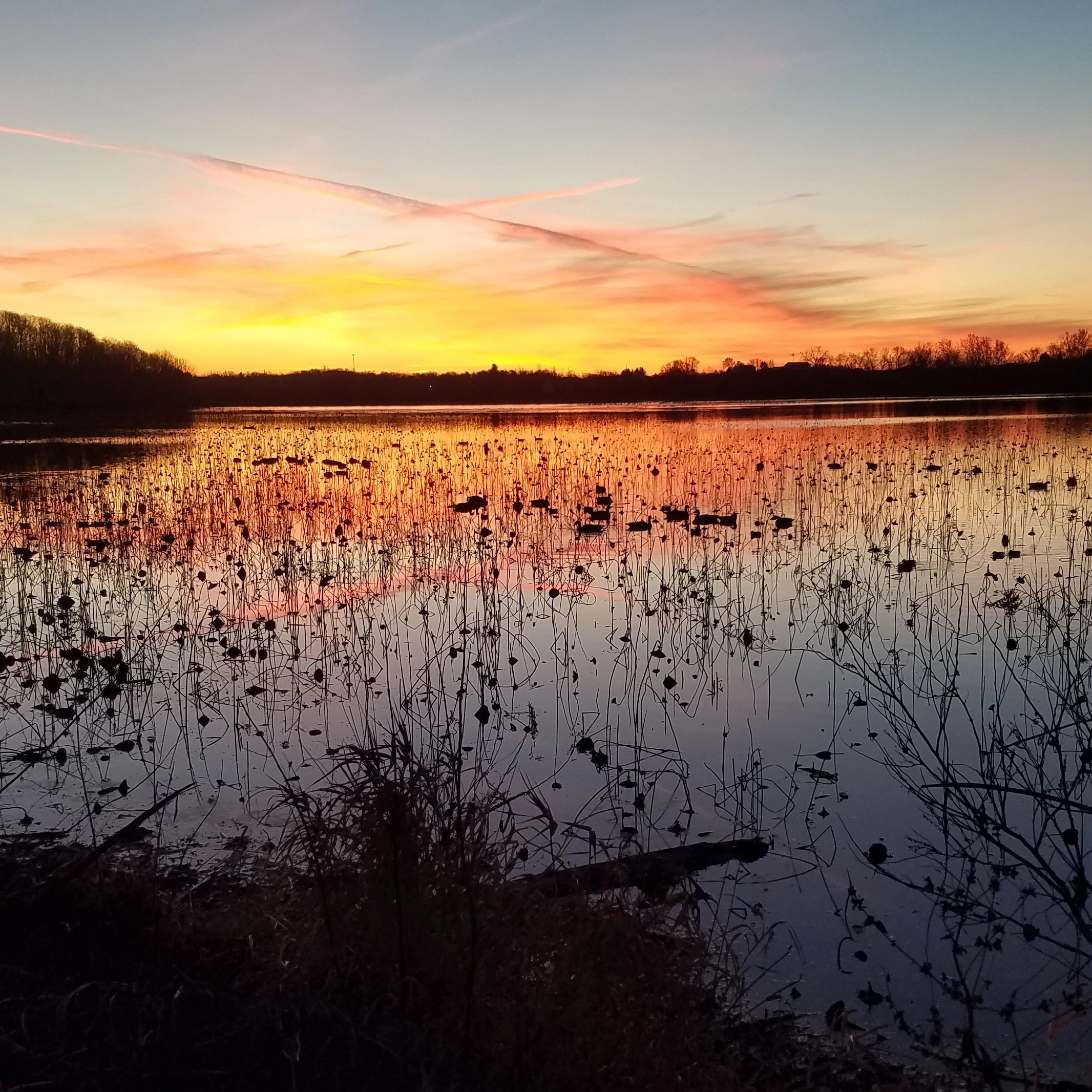
Waterfowl swimming in dawn’s light on Dec. 7, 2023.
The nearby City of Solon contributed about $1,000 to a four-year study of the Silurian Aquifer. By comparison, The U.S. Geological Survey contributed $153,000, Johnson County contributed $310,700, and the City of Marion, much larger than Solon, and a subject of the 2011 Silurian Aquifer study, didn’t give one penny. Johnson County is hosting the study and expected to eat cost overruns of about $50,000 thus far, Josh Busard, Director of the Johnson County Planning, Development and Sustainability Department said in a meeting I had with him yesterday.
I’ve been following sustainability of the Silurian Aquifer, where much of east-central Iowa draws groundwater, for almost 20 years. The meeting with Busard was prompted by County Supervisor Rod Sullivan after I sent him a link to this post. After the meeting, the good news is there is plenty of groundwater for the next couple years. Cut to the chase: Y’all should be conserving water where ever you live. The study is about a year from completion, said Busard.
The study is important locally because Solon, Tiffin, and North Liberty are among the fastest-growing cities in the state. Solon alone grew 50 percent in the 2020 U.S. Census. If Solon does nothing more than build out already approved subdivisions within city limits, it could easily add another 750 to 1,000 residents. That’s not to mention the many subdivisions surrounding the city. Each new person will bring increased demand for water. The entire area draws from the Silurian Aquifer.
I have a lot to say about what the study does and doesn’t do. I’ll save that for another post.
The main outcome of my meeting was to get up to date on what the county is doing. It is always positive to find someone else working on the same issues. We had a good conversation. Busard sent me some public documents to which I link below. If interested in the sustainability of the Silurian Aquifer, I recommend you read them.
Waterfowl on the move, Tuesday, Dec. 5, 2023 on Lake Macbride.
My first was a handheld transistor radio purchased about 1963. I used it to listen to KSTT AM’s weekly Top 40 countdown. That year, the station moved from the Hotel Davenport to a new building at 1111 E. River Drive. When I was in high school we would drive past the station and wave at the disk jockey through the large picture window that faced the street. The corner drug store distributed paper copies of the KSTT Top 40 list and I tried to get one each week so I could follow along with the countdown. I have a couple of those in a scrapbook. The thing about radio was I could listen without the supervision of parents. If I plugged in the earphone, they wouldn’t know I was listening in bed. As a grader, that was important.
There was a large radio in the basement of the American Foursquare home from which I attended grade and high school. It was more a piece of furniture, standing taller than my waist. There was an AM dial yet I mostly used it to receive short wave signals from around the world. I spent a lot of hours roaming the dial and seeing what people said in English. It felt good to be exposed to radio signals from outside the United States. This is something I wouldn’t have done in my Midwestern life without that old radio.
I have few memories of listening to the radio in the series of Volkswagen vehicles I owned in high school and at university. I suppose I did listen to the radio, yet it made no lasting impression on me.
Upon arrival in Mainz, Germany in December 1976, I bought a General Electric multi band radio at the Post Exchange. It used batteries or could be plugged in. It gave up the ghost during the last few years, yet it produced high quality sound as I searched the AM, FM, and shortwave dials. I recall listening to live reports from the Vatican on Armed Forces Radio. The conclave of cardinals was electing a successor to Paul Paul VI and the reporter described the smoke rising from the Sistine Chapel after each vote. It seemed like a big deal when Pope John Paul I was named pontiff. It surprised everyone when he died 33 days into his pontificate.
While serving as an infantry officer, our unit had a long deployment to Baumholder for a training exercise that brought in much of Eighth Infantry Division and some of V Corps. The training was about readiness for a potential invasion of West Germany by the Warsaw Pact Armies through the Fulda Gap. I had roles to play at Baumholder, yet was also responsible to maintain garrison operations back at the kaserne in Mainz-Gonsenheim where we were based. I drove home from Baumholder most Saturday afternoons in my Chevy Truck while listening to Armed Forces Radio. The play list those days was old serialized mystery plays like The Shadow. The same playlist each Saturday helped make the 110 kilometer trip pass quickly. As each program ended, I ticked off the miles on the journey home.
In 1988 our family moved to Lake County in Northwest Indiana. We lived in a tract home in a neighborhood where all the homes appeared to have a similar design that included a ranch-style structure situated on a crawl space. Our version had a detached garage where most of my stuff lived in boxes. I had some space on the built in living room book shelves, an easy chair I received as a Christmas gift, and in the corner of the dining area we placed a word processor where I could write. I listened to local radio in our garage, mostly on weekends when I worked on projects.
Indiana, during the six years we lived there, was in transition. The heyday of large steel mills had ended and was being replaced by smaller, more efficient steel production facilities. Manufacturing across the Midwest was suffering because of the Reagan Revolution which drove it to locales where labor was cheaper. The local radio warned about developing a “steel-mill mentality” and to develop interests, especially among younger people, outside the mills.
There was a radio swap show on Saturday mornings. On it, callers would report items for sale and leave contact information. At the trucking terminal I managed, one Friday there was a theft from one of the parked trucks. The stolen consumer goods turned up on the radio swap show.
Folks in Lake County were mostly good people, although of an attitude that reminded me more of grouchy Bucks County, Pennsylvania folks than Iowans. Our daughter went to public school beginning in Kindergarten and it was a type of experience where kids, especially Hispanic kids, would be pulled out of school without notice, never to be seen in school again.
I traveled extensively throughout Indiana, visiting most parts of the state in my six years there. The radio was a constant companion even if I can’t recall to which stations I listened. About the only sure thing was listening to one of the two Chicago traffic radio stations when I had to make a trip into the city.
We moved back to Iowa in 1993 which was the heyday of Iowa Public Radio’s Saturday afternoon lineup. Programs like Thistle and Shamrock, Mountain Stage, and A Prairie Home Companion made an afternoon leading to supper time for me. It was more times than I can remember. I also listened to Car Talk while working in the garage on Saturday mornings. Listening to Iowa Public Radio on Saturdays was a thing until it wasn’t, due to budget cuts, Garrison Keillor retiring, and the coming to the air waves of local musician Bob Dorr who dominated the afternoons. To be honest, I could take only so many instances of Dorr going through his collection of vinyl LPs. It was the end of an era.
Today I mostly listen to afternoon news reports on public radio while fixing dinner, classical music when working in the kitchen during the afternoon, and to country music while driving in my automobile. The garage radio is usually tuned to country music. Automobile listening has become more important because the station to which I tune in is targeted by political advertisers. I can tell who’s got the dough for ads and who doesn’t. That, along with messaging, informs my view of what Republicans in the state are up to. Democrats don’t spend as much on radio advertising, simply because they don’t have the dollars.
The story of my radio listening isn’t just this. However, this post provides a sample of my life, something basic to my personality.
When our child lived in Colorado, before Keillor went off the air, I cooked dinner for us in their apartment with a Prairie Home Companion on in the background. It was a shared family experience that remained important to us. I value such memories. They can’t be repeated, only remembered. Memory of radio listening has become increasingly important as I age.
Yesterday I updated my profile picture across much of my internet presence. The 2011 image I had been using was taken in our garden by my spouse. That I’m now choosing a selfie is a sign of the times, the meaning of which is to be determined. Eventually the new image will be propagated throughout my accounts. I felt it was time for a change. An indoor shot in lieu of a garden image is indicative only of the season in which it was taken. The books in the background? Don’t make too much of those as it was a setting of convenience. In December it’s time to move most activities indoors and I spend a lot of each day in my writing room where there are shelved books.
The more impactful change is deactivating my X account on Nov. 22 after 15 years on the platform. That, combined with becoming more active on Threads decreased my personal mental tension almost immediately. I’ll miss certain people and accounts from X, yet the clean break will serve me longer term. So far, so good with Threads. There is so much more positive engagement on Threads it’s hard to believe that vibe will persist. In any case, there’s no going back to X.
I think the myth of the “big account” sustains X. That is, folks there feel like all the key players for their conversations remain. Likewise Threads in particular, but other new microblogging sites as well, have a paucity of news accounts. Some great news and commentary folk from X are moving or setting up accounts on other microblogging platforms, yet don’t post a lot. X is not dead, but gonna die, I predict, once news and political accounts abandon it. For now, I have newspaper subscriptions to get news when I need it. If I get desperate, there is always radio and cable television to backstop me.
As the year winds down, it’s time for budgeting as well as determining if this life in Big Grove Township is sustainable. Living on a fixed income has been challenging. I hope we can make it this way for a long while. Sadly, in American society, life is more often about financial numbers than fulfilling our wants and needs. This blog is an attempt to change that.
The challenge of winter is to continue exercising at least half an hour each day regardless of weather. Taking a shovel to a couple inches of snow on the driveway is a natural, yet as warm as it’s been, isn’t a consistent source of exercise. Walking the trail is out, although some neighbors do it. I don’t enjoy the slippery surface the snow and ice mixture creates. A few days ago, I was getting a bit panicky as I hadn’t found anything to do.
I ended up searching the internet for ideas and came up with walking in place. I tried it a few days last week and based on how I felt after my half hour sessions, it is a better form of exercise than trail walking. Going forward, when I can get outside, I will. When I can’t, I’ll put on a CD and listen to music while stepping in place for a half hour. It’s something I can do until it’s time to begin working in the garden.
The message of this post is pretty simple. Unless we stick to the idea we need exercise in addition to what we get on an average day, our health will suffer for it. I’ve come to believe keeping at it — doing a set amount of daily exercise — is as important as the exercise we do. So, problem solved — for now.








 Journey Home
You must be logged in to post a comment.