Categories
Sustainability

A Long Path Ahead

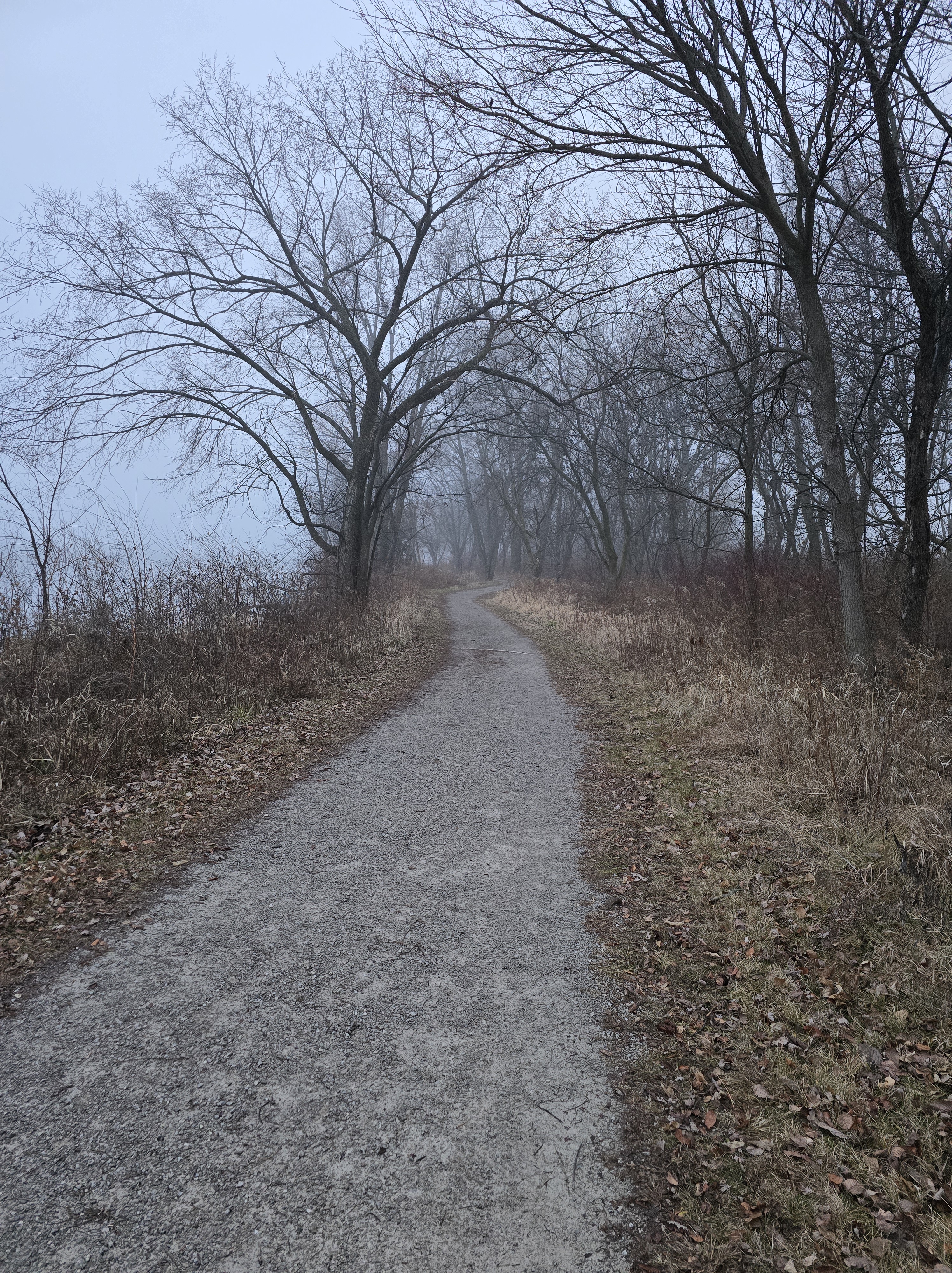
Trail walking in the state park.

The near-death experience that was my case of COVID-19, especially the hallucinations and becoming temporarily unhinged from reality, was a wake up call. Life can be snatched from us on a moment’s notice. I lived to tell the tale, and every day I wake in good health is a blessing.

What will I do with my remaining time? That is the wrong question. I will continue down the path I started so many years ago: to be a writer, to live a life where I enjoy good health, and where I have the stamina needed to take each next step. My relationships with family and friends are important, so is living in a just society. There is a whole separate life in this. I hope to embrace and cherish it.

The coronavirus upset my schedule to get back to work on the second part of my memoir. Once I get caught up in real life, I will take up that project. Publishing the first volume was an unexpectedly positive experience. Now I want to finish the second book so I can move on to other things.

Friedrich Nietzsche first said, “Out of life’s school of war — what doesn’t kill me, makes me stronger.” I’m not at the stronger part yet, although I’m building stamina as I walk the long path into the future.

Categories
Kitchen Garden

Home Made Tomato Soup

Grilled cheese sandwich with home made tomato soup and a home made pickle.

This tomato soup is much better than what Mother made from condensed soup out of a can. I’m confident if she were here, she would enjoy mine better than hers. This is a simple recipe, worth writing down.

Tomato Soup

When tomatoes are in from the garden, cut out any bad spots, halve them, and cook in a large stock pot for about 20 minutes until the skins loosen. No extra water is needed. Turn off the heat and let them sit for a while, maybe half an hour or the time it takes for a long walk on the trail. Extract as much of the tomato water as you an using a meshed funnel. Once it stops dripping, reserve the liquid. Use the wooden mallet to press the pulp through the screen, leaving behind the skins and seeds. The skins and seed go into the compost.

In a 3-quart saucier place roughly a half inch of tomato water. Once it is boiling, add two medium diced carrots and one medium yellow onion, also diced. Salt to bring out the moisture. Black pepper to taste. Add a generous tablespoon of Italian seasoning and incorporate. Cook until the vegetables are softened.

Add the tomato pulp. You will need about eight cups, but match everything to the amount of tomatoes you have. Bring it to a boil and then turn the heat down to a simmer. Cook until the carrots are tender, about 30-40 minutes.

Put the mixture in a blender and blend until the carrots and onions are incorporated. Return it to the saucier and it’s finished.

Optional: garnish with fresh basil, croutons, or a dollop of sour cream. A milk lover could add a cup of heavy cream to the saucier and incorporate before serving. Makes roughly four servings.

Categories
Living in Society

My COVID-19 Journey

Positive test result for COVID-19 on Sept. 1, 2024.

I expected the coronavirus would find me eventually. I also expected the vaccines would protect me. Although I got sick as could be, and at one point thought I was going to lose my mind or die, I didn’t. So all those vaccines — and I had every one of them — served me well.

The memoir I am writing will end with the coronavirus pandemic, in which we continue to be. This post is to record my experience of getting sick with COVID-19 so that when I get to writing the end of An Iowa Life, I will have these notes.

It started about a month ago with a mild, persistent cough.

I didn’t think much of it, that it would go away on its own. It was only after attending the August 24 special convention in North Liberty that I began to cough more frequently and to cough up phlegm. After I tested positive on August 29, I found at least three other people who attended the convention tested positive about the same time. Because I had symptoms for so long, it is hard to pinpoint the beginning of the infection on a time line.

For the most part, it doesn’t matter how or when I contracted the virus. I’m no longer on the board of health where staff studied these things looking for societal solutions. In aggregate, public health requires data to combat the spread of the coronavirus. What matters more is I, as an individual, do have it and it persists. I thought I was going to die.

For this instance of COVID-19, emails, text messages and medical reports tell a story.

To T. (Aug. 28, 2024, 5:44 p.m.): “I have gotten sick since we met and could not hardly get out of bed today. I wanted to tell you in case I’m contagious. Symptoms are coughing, headache, dizzyness and loss of appetite. Hopefully this will break soon. Take care of yourself.”

To E and M. (Aug. 29, 2024 7:22 a.m.): “I went dark on the internet the last 36 hours because I have been bedridden with a terrible cough and general malaise. I looked up the symptoms and the search result was influenza, which I doubt. So the forecast for me speaking on Friday is partly cloudy. Will advise if I can make it.”

This 36-hour period of coughing and feeling bad included not eating for the duration, no coffee, and mostly lying in bed. Toward the end of the period I began to dream psychedelic images and when I attempted to wake, I did wake, and the dreams continued in real life. I couldn’t tell the difference between dreams and reality. I felt as if I had lost all memory. At this point, I felt death must be imminent. I was able to gather my wits, take a home COVID-19 test and telephone the local clinic.

To T.: (Aug. 29, 2024, 4:27 p.m.): “I did get a positive test for COVID 19 today.”

To E and M. (Aug. 31, 2024, 2:23 p.m.) “I forgot to tell you I tested positive for COVID on Thursday. At least three others who were at the convention tested positive about the same time. I saw an MD Thursday afternoon and appear to be on the mend with couple scripts of cheap medicine plus acetaminophen. Blood count is good, lungs clear. I spent an 90 minutes in the garden today and it worked wonders.”

To T.: (Aug. 31, 2024, 6:04 p.m.) “I think the worst is over. The medicines seem to be working and once I began eating and taking acetaminophen my headaches went away. The x-ray turned up a partially collapsed lung, but clear otherwise. Clinic gave me breathing exercises to hopefully reinflate that part of my lung. Blood work showed tracks of COVID in a couple of tests but my blood counts are good. Doc offered paxlovid but I declined because my symptoms began outside the window in which it is effective. (Why is the doc asking me what I want to do for meds?) I worked 90 minutes in the garden today and it was a huge benefit, the best medicine. So focusing on the positive, eating tacos and listening to Dylan tonight.”

Following are some edited extracts from my medical records:

H.R. at 8/29/2024 1:43 PM (Via telephone)
Pt calls to state that he’s been coughing for about 1 month, 1 week ago, cough started producing some white, yellow, clear and a few streaks of red 3-4 x total; and had a home test turn +COVID today 8/29/24. Nose with occasional clear to white secretions; has decreased appetite; has body aches; has fatigue and sleeping a lot. Wondering what to do? Per Dr. – OK to see pt today.

A.C. at 8/29/2024 2:30 PM (In person)
History of Present Illness
Patient presents secondary to having cough that has been ongoing for the past month. The past week the cough has gotten worse since changing color. It is now brown discoloration. He has had a few episodes where he has coughed up some blood. He has not been take anything OTC for his symptoms. He has had myalgias and overall has not been feeling well

Diagnosis: COVID 08/29/2024
Prescriptions: Benzonatate 200 mg; Prednisone 10 mg.

S.H. at 8/29/2024 4:51 PM (Via telephone)
Patient was informed that Hemoglobin and white blood cell count were normal.

A.C. at 8/30/2024 10:02 AM CDT
CRP level highly elevated secondary to COVID, glucose level elevated secondary to illness, liver enzymes elevated secondary to same.

A.C. at 8/30/2024 10:06 AM CDT
Some atelectasis noted, take deep breaths as often as possible, no pneumonia noted.

On Thursday, Sept. 5, I finished the course of prescription drugs and most of the symptoms are in remission. I continue to be tired during the day and somewhat restless at night. My stamina is diminished. I read a study indicating the coronavirus can persist in tissues for as long as 14 months after being infected. It is uncertain whether continuing to take COVID home tests will produce anything other than a positive result.

I’m not sure when I’ll return to regular writing here. Thanks to everyone reading along. I feel like the coronavirus has been living with me and distracting me from what I want to do. I suppose it has been.

UPDATE: On Monday, Sept. 9, 2024, my COVID home test result was negative.

Categories
Living in Society

Going Dark to Heal

I became ill beginning August 26 and have not recovered. On August 29, I tested positive for COVID-19 and visited a clinic that afternoon. I felt like I was going to die, but didn’t. Thanks to a dedicated local medical staff, I am on the mend.

On the plus side, copies of my memoir arrived this week. New writing will have to wait until the virus is in remission.

Thanks for reading my posts.

Categories
Living in Society

Labor Day 2024

Author at Kraft Foods Oscar Mayer plant on Second Street in Davenport, Iowa Nov. 25, 2011

Following is a chapter of my privately published memoir, An Iowa Life.

A Union Job

With classes and examinations finished, I headed back to Mother’s home for the summer. Several high school classmates applied for summer jobs at industrial workplaces in the Quad-Cities. The post-World War II economy was still humming at John Deere, International Harvester, J.I. Case, and other manufacturers. I took a job at Oscar Mayer and Company where my maternal grandmother and father had worked at different times.

It had been two years since Father died at the plant while loading an elevator. He had been the chief union steward and knew almost everyone. It was a safe, comfortable place to work where the folks who knew Father looked out for me. During one of my first shifts, a millwright who was good friends with Father, asked me if I wanted to see where he died. I passed on the opportunity and took no rain check. It was too soon.

I experienced being a union hire, Iowa-style. Once Oscar Mayer’s human resources representative finished orientation for our group of new hires, he reminded us that the company was an at-will employer in an at-will employment state. At-will means an employee can be discharged for any reason or for no reason. He then left the room so a union representative could recruit us to join. There was never a question that I would join the union, and I did. I worked for Oscar Mayer that summer and two years later in 1973. When I left, I secured a union retirement card. At $4.04 per hour, with overtime, I earned enough during the summer of 1971 to pay my bills during sophomore year at university.

Three college students worked as “maintenance helpers” that summer. It meant we performed a variety of work, usually helping one of the millwrights or welders on projects too big for one person. I spent time in almost every plant department and at the warehouse on Schmidt Road in the West End of Davenport. I learned to drive a forklift, but mainly, I was there to perform physical work. It was hard work.

I was skeptical about productivity. As summer help, a group of us did routine maintenance jobs, like picking up trash on the roof, and cleaning up large piles of metal that had accumulated over the year. But mostly, I helped millwrights and welders repair things in the plant. The work was important, but we were never very busy.

When the production line went down, it was all hands-on deck to repair whatever went wrong and avoid idleness among line workers. The cost of down time was estimated in the tens of thousands of dollars per hour, which seemed like a lot in the early 1970s. I remember trying to break loose a vat of resin with a jackhammer. The resin was used to remove hair that hadn’t burned off the animal at a previous station. Once it cooled and congealed, the line went nowhere until it was removed. I had plenty of supervisors as I ran the tool in the black brick the resin had become. We got the line back into production.

There were days when we were assigned a job at the warehouse. The old timers interpreted a trip to the warehouse as a full day’s work regardless of what had to be done. The times I went with millwrights to the warehouse, whatever needed fixing took a couple of hours. We always spent the full day doing the work. Instead of eating lunch in the company cafeteria, my co-workers looked forward to items off the roach coach which plied the neighborhood with sandwiches, snacks, and beverages. The plant foremen had full understanding about our use of time, and were part of the problem, if there was a problem. When a company recruiter offered me a job to become a plant foreman before college graduation, I turned it down. After my work experience, I did not want a job where lack of productivity was the norm.

My co-workers at the meat packing plant no longer work there, and I lost communication with them as soon as I returned to college that fall. Maybe I learned something from them. There is more to life than staying constantly busy.

Staying busy has never been my priority. I seek truth and meaning in life and feel no need to occupy every moment with items from a to-do list. In fact, there are several ways constant industry creates problems. We become task masters of an arbitrary list and block out the potential of life around us while we concentrate on what we thought was important in the morning.

While we may be skeptical of what a day will bring, and how busy we are, we should enjoy the anticipation of different work and what the roach coach may bring. If we do that, I suspect we will recognize opportunities that we otherwise wouldn’t have known exist. Productivity and industry are important in business, but in our lives, we must take time to wonder. That is a form of industry too often neglected.

It was easy to get a job at the plant. I belonged to a union, the Amalgamated Meat Packers and Butcher Workmen of North America, Local 431. Wages were good, plant conditions were dangerous, and the work was physically hard. I never felt in danger in the plant, despite Father’s death. In my work as a millwright’s assistant the first summer and on the cleanup crew the second, I got to see most of what went on throughout the plant and warehouses. It was not pretty.

Meatpacking was much different in 1971 from what it is today. The plant took in live hogs from farmers and processed about 500 of them each day. There was very little waste. There was a “hog hotel,” which was a place where hogs were kept in smaller pens and fed so they would be calm for slaughter, usually the next day. One of the dirtiest jobs I had was at the end of the production line where a rendering tank processed the final remains from the cutting floor into lard. What was left was shipped to a processor to make fertilizer. My job was to work with a millwright to remove and replace giant paddles inside the tank. It was among the dirtiest jobs in the plant. I learned about using hearing protection and lockout/tagout. The union had negotiated a payment for extra cleanup to perform that work. My millwright made sure I knew to request the pay on my timecard.

People who worked on the production line did not look happy. The work was repetitive and physically demanding, requiring a person to be on their feet for an eight-hour shift. A lot of the work was mindless. Stamping a USDA inspection marking on carcasses, picking through hog innards to find a certain organ, or making the same cut hundreds of times a day. The pay and benefits were perceived to be good by most workers, so they put up with the mindless quality of the job to bring home a paycheck. After the first summer, it was clear a career in meatpacking was not in my future.

Categories
Living in Society

A Vegetarian

Slicers drying on the counter.

It is ironic that I used to be a member of the Amalgamated Meat Cutters and Butcher Workmen of North America Local 431 and am now vegetarian. This is because in 1982 I married a vegetarian who recently became vegan. More precisely, I am an ovo-lacto vegetarian, as long-time readers of this blog may know. It is not hard to get enough food as a vegetarian in the United States. There is no deprivation in it either.

In my childhood home, countless meals were prepared in the kitchen, typically by Mother. When my grandmother visited, usually on Sundays, she helped prepare food. I don’t recall Father cooking hardly at all.

Because Father worked at Oscar Mayer, where there was a butcher shop for employees to buy meat at a discount, meat was a main course at most evening meals. We had a family cuisine different from other families in the neighborhood. Although I don’t recall exactly how it differed, it became a discussion topic among my friends and neighbors.

I learned how to cook, beginning at university. With fresh ingredients and an array of information sources about culinary preparations, I got better over the years. Any more, I don’t like eating in restaurants. Partly because I prefer food I cooked myself as I know what’s in it and it tastes better. Partly it is an economic consideration: eating at home can be less expensive.

Our meals resemble non-vegetarian fare often: pasta sauce, pizza, chili, casseroles, and tacos all adapt well to being vegan. What is more interesting, though, is making soup with fresh ingredients from the garden. It is almost always good, always different, even when fresh produce is less available in winter. Stir fry is another difficult to do badly meal that changes with the seasons. Over forty years we developed a cuisine distinctly our own and we enjoy it. It also keep us nourished.

There is no going back to eating meat. It doesn’t fit into our culinary world view. I’ve moved beyond meat to another place where plants provide what nourishment we need. In many ways, it is a better place.

Categories
Living in Society

Les Grandes Vacances

Passport and Notebook

When I arrived in Paris in September 1974, the place was emptied of most of its people. I did not understand the cultural phenomenon of millions of French people flocking to the coast, countryside, and other vacation destinations, leaving urban areas almost deserted. A few shops were open in Paris that summer, although not many. Traditionally les grandes vacances happen in August, yet people were gone into the first week of September that year.

With my book at the printer, I’ve been taking an August hiatus from work on the second part of my memoir. Life goes on and for me there is no vacation. That’s mostly because there is no extra money to pay for lodging, meals and travel excursions. Vacationing is anathema to my current personality anyway. There are few destinations to which I am drawn these days.

Like the weekends during my trip to Brittany, les grandes vacances form part of my outlook while I spend more time in our Midwestern kitchen processing garden produce. August is about tomatoes, apples, leafy green vegetables and such. There are a few cucumbers and squash left in the refrigerator to be used. It’s not a bad tradeoff with traveling to the mountains or some such.

Four candidates for the Democratic nomination to be county auditor. (l to r) Neuman Abuissa, Shannon Patrick, Alex Stanton, and Julie Persons. Persons won on the first round of voting.

Saturday was the special convention to elect a nominee for Johnson County Auditor. Mayor of Swisher Julie Persons won on the first ballot. I know Julie from her involvement in the House District 91 campaign and believe she will make a good county auditor. In fact, all four of those running were qualified.

What I like most about the convention is the chance to talk to people I seldom see any more. In August 2024, there are way fewer of my cohort involved with county politics. Between deaths, retirements, and people moving away, I am becoming a survivor. If there were more interest in county politics in my precinct, I would have stepped down long ago.

I sat with a friend who recently published their memoir and is awaiting publication of another book. We talked about books and topics we choose to write about. They were an early reader of my memoir and we’ve done a lot together since we met in 2005.

Of course there were my local buddies. We are getting too old for this stuff, yet the fact is few younger people are willing to step up. We do what we want with regard to politics, hoping to advance Democratic causes and elect our candidates.

I commented to someone I watched more television last week than I have in the last ten years. It just felt right to have the Democratic National Convention on in the background. It seems good that Kamala Harris got the nomination and there are only 72 days left until the election. The excitement of a younger, energetic presidential candidate can be sustained that long without breaking pace. I plan to do two or three things daily related to the campaign. Before we know it, election day will be here.

In the meanwhile, there is kitchen and garden work to do today. Not before I take a long walk on the state park trail and consider the wonder that is August.

Categories
Kitchen Garden

Kitchen Days

Making vegetable broth with bits and pieces from the refrigerator.

When there is a large garden, there are long days in the kitchen. Friday morning I made vegetable broth with bits and pieces from the refrigerator. It came out particularly dark, which is caused by leaving the onion skins on. I needed it to make potato leek soup for dinner and a rice casserole for tomorrow. It looks like there will be a quart or two extra. Vegetable broth is a staple of our pantry.

I have four crates of tomatoes stacked in the kitchen waiting for disposition. Half of them are plum tomatoes and half slicers. I don’t count the cherry tomatoes in this, but there are plenty of them as well. The plums will get canned as soon as they are fully ripe. I don’t know what to do with the slicers, but maybe pints of tomato sauce.

The best thing about a kitchen day is there is little expenditure of money. A majority of ingredients were grown at home and those bought at the store were at the end of their shelf life and needed to be used up. Living on a fixed income makes non-spending days an important part of the mix.

Being kitchen-focused for a day is one aspect of a living whole life as a pensioner.

I’ve been outdoors several times today and it is gorgeous. I saw the first Monarch Butterfly of the season landing on milkweed. On my trail walk this morning, children were gathering at the bus stop for the first day of public school. Autumn is in the air, although I need a few more kitchen days of summer before it arrives.

Categories
Living in Society

Reaction to the DNC

I have been watching the Democratic National Convention at the United Center in Chicago as much as I can. Tonight, I plan to tune into CSPAN only for Kamala Harris’ speech. I am worn out with all the talking and, as Michelle Obama suggested, am ready to “Do Something!”

These quadrennial conventions are a chance to bring out the long-time members of the party to remind us of who we are. The Reverend Jesse Jackson was pushed on stage in a wheelchair and waved. Like Jackson, some of our most popular figures are aging.

President Biden, former presidents Obama and Clinton, and Nancy Pelosi looked as if they lost the edge of their speaking ability. This is distressing regarding Barack Obama in that he is only 63 years old. Their delivery wasn’t as sharp as other speakers or as a former version of themselves. Their speaking ability did not match the energy of the delegates in the arena. Each of these speakers reminded us of who we are as Democrats and in doing so, played an important role in the convention. My only beef was that Bill Clinton should have learned how to pronounce our Vice President’s first name.

Hillary Clinton and Michelle Obama did well with delivery of their speeches. Oprah Winfrey got a prime speaking spot and gave us a history lesson. The women fared better in speech delivery than the men. Any more, that just seems normal to me.

As speakers keep reminding us, there are only 75 days left until the election. It’s go time. It’s time to do the things we know we should do to get out the vote and bring everyone we can under the tent.

It will be challenging, yet we are not going back.

Categories
Living in Society

Stick to Your Knitting

Mariannette Miller-Meeks at the Iowa State Fair, Aug. 13, 2010. Photo credit – Wikimedia Commons.

My Congresswoman Mariannette Miller-Meeks told a whopper in her August 18 newsletter to constituents.

“Since the Biden-Harris Administration took office, Medicare Part D premiums have skyrocketed, increasing by 57%,” Miller-Meeks wrote. I am on Medicare Part D drug coverage, so I pulled out my records. They show a much different story.

In 2021, the year Biden took office, my monthly premium for Part D was $15.50. In 2022, it was $10.50; in 2023, $7.50; and this year the monthly premium is $0.50 per month. The last is not a typo. I called the insurance company to make sure they did not make a mistake. They told me they didn’t. In addition, the coverage has gotten better.

These are not skyrocketing prices, in fact they are the opposite. I don’t know where the Congresswoman got her information but she should stop listening to those people and focus on real problems. Where I come from we call that sticking to one’s knitting.

I understand the Congresswoman is not a fan of the Biden administration. However, using her official newsletter to promote blatant falsehoods should be out of bounds for her or for any public official.

We can do better by electing Christina Bohannan to replace Miller-Meeks in the First Congressional District on Nov. 5.

~ A version of this letter was published in the Cedar Rapids Gazette on Aug. 22, 2024.