LAKE MACBRIDE— During the next few months I’ll be making a restaurant crawl to every eatery in our area. The results of this activity will be written about and linked on the circled page above. Click on the image to find the beginning list of restaurants with links.
RURAL CEDAR TOWNSHIP— A task list arrived via email from the farm at 8:17 a.m. It included work in the germination shed and the high tunnel. After arriving, and before getting very far, thunder and lightning began, and after a phone call to the owner, we decided to stop work in the structures until after the storm passed. It meant a coffee break in town.
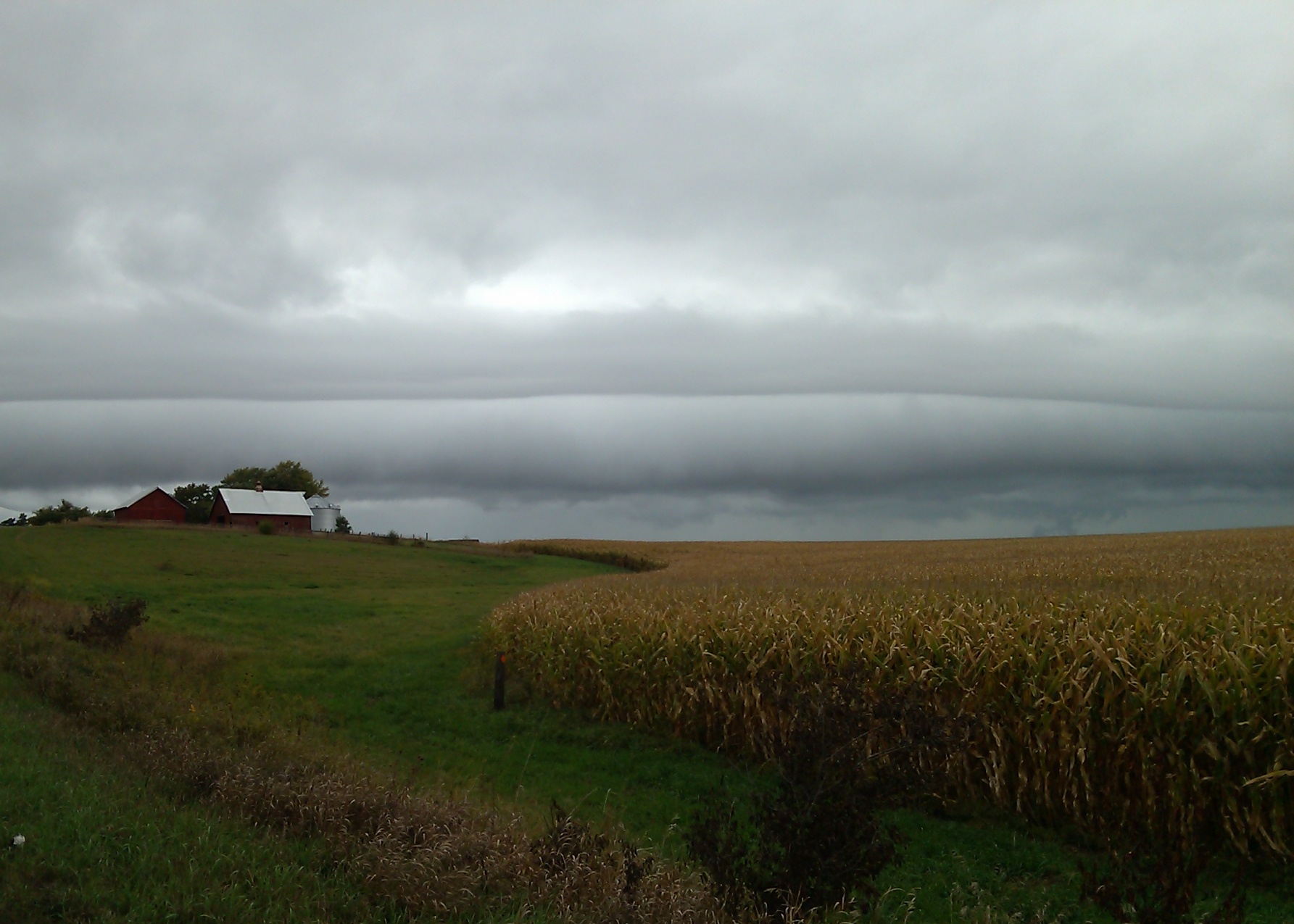
I watched the cloud formations move in, and they threatened and thundered, and ultimately did not bring much rain. As soon as it begins to clear, I’ll head back to finish what was started. In the meanwhile, I made hot sauce, and an apple crisp from Cortland apples is baking in the oven.
Thunderstorm Rolling In
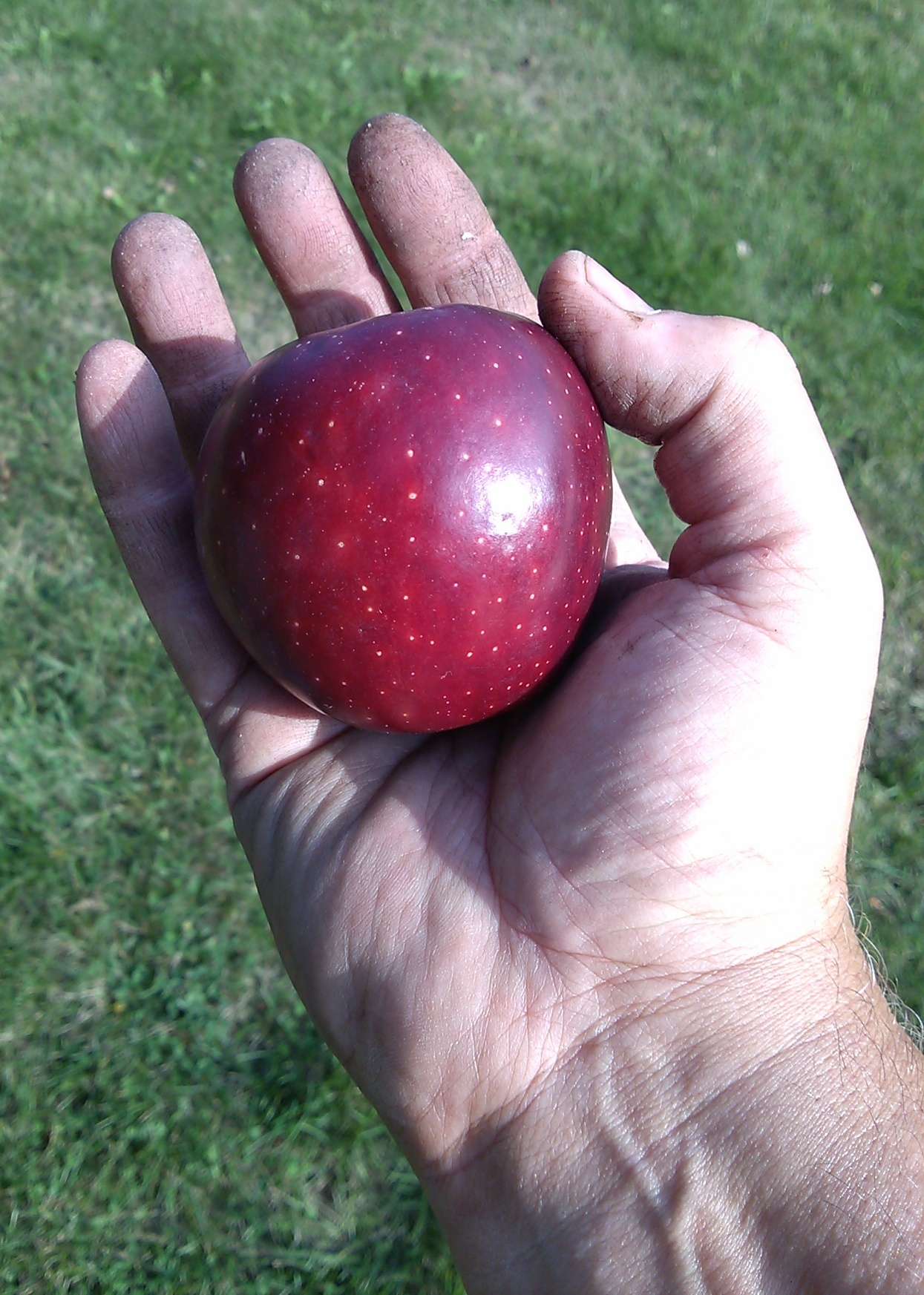
A Cortland apple is a cross between McIntosh and Ben Davis apples, introduced in Geneva, New York in 1902. When peeling and cutting the slices, the browning of oxidation doesn’t occur as quickly as with other varieties. They are popular with people of a certain age, and last week I stopped by and picked the rest of what was on the trees at the orchard. There is enough to test my theory that any apple can be made into apple crisp… more than once.
The western sky is beginning to clear. As soon as the apple crisp is out of the oven, it’s back to the high tunnel to plant more seedlings. Better have that coffee soon.
LAKE MACBRIDE— Two hours were spent outside eating apples from the tree… and picking them. Their ripeness was perfection, and as sweet as an apple could get, these seemed sweeter, especially the Golden Delicious.
With a two-year supply of condiments already in the cupboard— apple butter, pear butter, apple-pear butter, raspberry jam, grape jelly, wild black raspberry jam and others— the question is what to do with the three remaining bushels of apples. The answer is clear, eat them out of hand, bake them, and make applesauce.
Apple Harvest
My four trees produced more than 24 bushels of apples this season, the most I can recall. Growing conditions were almost ideal, and the fruit is mostly bug and fungus free. Having never sprayed these trees, they are as close to organic as can be.
As the season turns to winter, I’ll store some for as long as possible for apple crisp, and maybe an apple pie. To remind me of the brief dash of brilliance that was this summer’s apple crop.
LAKE MACBRIDE— Arugula volunteered in the tomato patch and we had a simple pasta with it last night for dinner. It has been growing for three additional years since the patch was planted in arugula. Here’s the recipe:
Put a pot on to boil one pound of pasta.
In a large bowl, add five medium tomatoes sliced in wedges, two cups roughly chopped arugula, 1-1/2 cups chopped fresh basil, one teaspoon dried, flaked oregano leaves, one half cup olives, two tablespoons balsamic vinegar, three tablespoons olive oil and salt and pepper to taste. When the pasta is cooked and drained, add it all to the bowl and mix gently with tongs. Add one cup of Romano or Parmesan cheese and continue to mix. Serve immediately. Makes five to six servings.
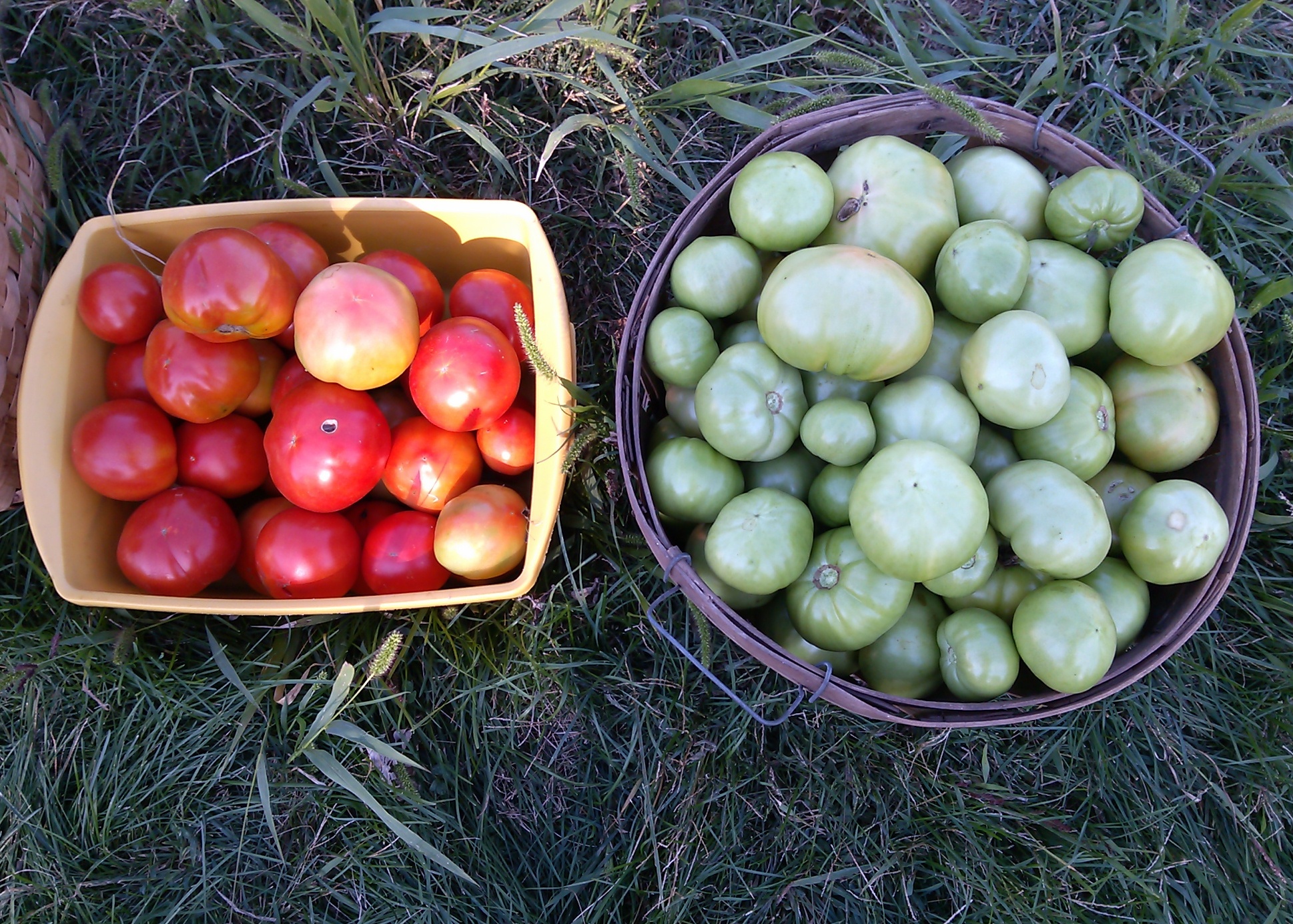
Red and Green Tomatoes
After the garden is through, we glean it. This means going through the plots, removing the plants and picking the last bits of fresh vegetables. Last night I gleaned half of the tomato patch and it yielded the arugula and green and red tomatoes. I also raked the mulch and put it in a pile to use later.
The best green tomatoes will be wrapped in newspaper to ripen indoors, and the lesser ones will go into a garden ends salsa which will include hot and bell peppers, ripe Roma tomatoes, onions, garlic and whatever else is found while clearing the garden spaces. I may make fried green tomatoes from the biggest slices as I have been experimenting with a buttermilk and cornmeal coating this year.
The empty garden plot will store a brush pile until the branches are either chipped for mulch or burned. It is time to consolidate all the piles of fallen branches around the yard and mow the lawn.
Adding to my to-do list: make soup stock from fresh turnip leaves, harvest and dry the rest of the herbs, and glean the rest of the garden. I saw at least one more patch of volunteer arugula, and there will be a few Brussels sprouts, more tomatoes and the turnip roots. There is leftover garlic from my shares at the CSA, and some may get cracked and planted.
With all of this end of season activity, some delicious dishes are in the works.
LAKE MACBRIDE— We are from a week to ten days from the first hard frost. Suddenly it’s time to clear the garden, make a brush pile, and cover the ground with what mulch there is. We’ll make a gleaning pass over the plots, and bring in everything that is ripe or can ripen to use this fall and winter. Cookery gradually turns from fresh and local to working out of the pantry and stores. There is a happy and sad part of the change in seasons.
The happy part is found in being born a city person. Working indoors part of the year comes naturally. As a child of the 1950s, reading, media consumption, writing, email, and social media fit in with a general outlook of being on an island in a complex sea of society. More than 60 years later, after a career in a competitive business, my core values are unshakable. They are a platform from which I can view society and plunge in when the time is right to engage in fights worth our blood and treasure.
The sad part is over the years, in our compound on the lake, I have become an outdoors person, and spring through fall is the best part of the year. That was particularly true this year when farm and yard work kept me outside much of the time. The outdoors part of the year is not finished, yet winter’s approach is unmistakable. Its time to roll up the garden hose in the garage and make sure the automobiles are winterized.
The season’s home canning is almost finished with 18 pints of “fallen apple butter.” After the recent storm, I picked up the fallen fruit (three types of apples and some pears missed during the harvest) and made them into a commemorative apple and pear butter. The only thing remaining to can will be some hot sauce with fall peppers (on the stove now), applesauce and perhaps some more canned tomatoes or a garden ends relish after the gleaning. Come November, it will be another plunge into the vortex of the holiday season, then starting anew in 2014.
The seasonal farm work is also winding down. I am finished at one farm, wrapping up at another on Thursday, and the work at the orchard ends after two more weekends. The time is right to consider what’s next in the cycle of life on earth.
for a presentation and discussion about climate change and what we can do about it.
Monday, Sept. 30 at 6:30 p.m. at the Solon Public Library, 320 W. Main St., Solon Iowa.
The link between climate change and more frequent and intense weather events is no longer in doubt. Climate Change is real, it’s happening now, and we can and should do something about it. This hour-long event will present the science of climate change, discuss its causes and effects, and lay out ways to address the causes of climate change and prepare for it.
Iowa State Senator Rob Hogg is a fourth generation Iowan who represents the 33rd Senate District in the Iowa legislature. He is the author of the new book, “America’s Climate Century: What Climate Change Means for America in the 21st Century and What Americans Can Do about It.”
Paul Deaton is a native Iowan and Solon area resident since 1993. He is a member of the Climate Reality Leadership Corps, part of a global initiative with more than 5,000 leaders trained personally by former vice-president Al Gore.
LAKE MACBRIDE— Combines are in the field, just beginning the corn harvest. There are a lot of brown corn plants standing in the field… another sign that winter is coming. The Farm Journal reported that 11 days ago, so this is not news. It is just that to read something in the media is one thing, and to see life actually unfolding is quite another.
There is a lot to write about from the farm, and then again, there isn’t. Working on a vegetable farm has been a rich experience. It has been a month since I began working most weekdays, and it is physically and mentally rewarding work. There is an endless succession of visitors and workers to the farm, and always something going on in the neighborhood. On Thursdays I deliver directly to our customers in North Liberty. When we talk about farm to market, there is no middleman and they see the face of the farmer as it is with soil from the field stuck to my clothes.
Last night I dreamed about where we spent my preschool years. The Clifton Hill area of Davenport has not changed much since the early 1950s when our family lived there. It is a scrappy neighborhood where people don’t spend a lot on education, and spend more disposable income on tobacco products than anything according to one survey. The crime rate is high compared to the national average, with rape and assault being the most frequent. On the plus side, the number of murders scores below the national average.
Clifton Hills is a blue collar neighborhood, but since the time we lived there, the blue collar jobs fled the Quad Cities, and 65 percent of those employed are now white collar workers. It is past time when the type of work is designated by the color of shirt a worker wears, as it is a meaningless appellation.
The home where I grew up sold for $58,000 in 2010 according to the assessor’s office. Visually, it hasn’t changed much, and in dreams and memories my recollections of life there are clear. Why I would remember last night’s dream of the old neighborhood, when my life is so different, is hard to understand. Nor is it important to remember. I accept the origins of my life in society. It’s just another thing in the cycles of time. Not unlike the corn harvest, it comes on schedule when conditions are right.
LAKE MACBRIDE— During the more than four years since retirement, writing 300 to 750 word posts each morning has become a way of life— something to start the day, clearing the path for engagement and productivity. As the seasonal farm work ends in October, I hope to regroup and refocus here, but what the hell: it is hard to predict what will happen.
I do know this. The website pauldeaton.com will continue for another year, as I renewed my agreement with WordPress. It has been worth the $18 per year for the domain name registration and mapping. Now comes the task of writing something worth reading. I hope readers will hang in as the process works.
SOLON— Readers have asked for a review of Salt Fork Kitchen. While I did attend the grand opening on Sunday, I’m not ready to give the new restaurant a full review after only one visit.
Salt Fork Kitchen will struggle with the fact that it occupies space where restaurants have continuously failed since our family moved to the area 20 years ago. When one walks in the door, the experience is dejá vu, and all the work done by the new proprietors competes with memories of meals and experiences past. The bar is in the same place, the tables appear the same as the last go-around, and while the framed images on the wall are different, the look is as it has been. Strike one.
Huevos Borrachos
There is often a thick looking man leaning on the railing outside the main entrance smoking a cigarette. He was there Monday, day two of the restaurant, and one presumes he is affiliated with the business. There is a reason Iowa went smoke-free, and his presence and the aroma of burning tobacco in the air is not inviting. Strike two.
On the positive side, the wait staff was friendly and helpful, and my breakfast of huevos borrachos, or drunken eggs, was different and tasty. The coffee was good.
The bill was reasonable. I was the cashier’s first customer, and she handled the transaction cheerfully. Percentage-wise, I left a big tip, with hopes that next time first impressions can be set aside to take stock of what has the potential to be a great local eatery.
Salt Fork Kitchen didn’t win me over the first time, but this is a small community, and a person has to eat breakfast or lunch in town from time to time. I’ll be back, with a more balanced view of Salt Fork Kitchen.
UPDATE: 10/22/13 The Solon Economist wrote an article about the opening of Salt Fork Kitchen. Find it here.
LAKE MACBRIDE— During 2013, in addition to our own garden, I spent time working with or studying the following fruit and vegetable producers that are part of the local food system in our area. They are listed in alphabetical order.
 LAKE MACBRIDE— During the next few months I’ll be making a restaurant crawl to every eatery in our area. The results of this activity will be written about and linked on the circled page above. Click on the image to find the beginning list of restaurants with links.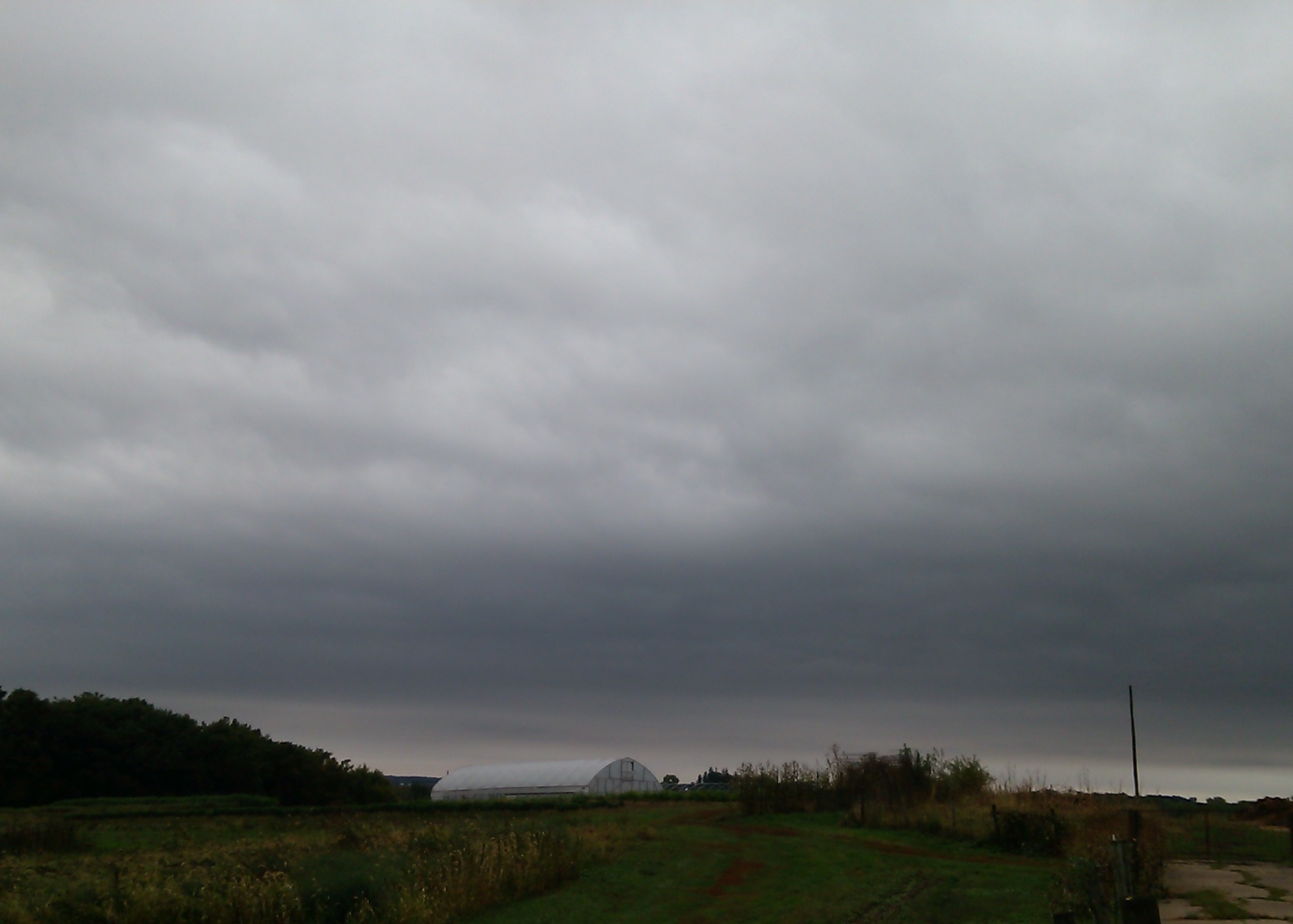





 Journey Home
You must be logged in to post a comment.