LAKE MACBRIDE— It has been a day of staying busy indoors. The driveway is loaded with snow, and without any need to leave the property, we didn’t. Tomorrow is the big dig to get ready for work and a trip to the grocery store, but not today.
There was some kitchen work. I brought the last of the fall apples upstairs, setting aside some for baking, and made apple sauce of the rest. The Winecrisp and Gold Rush apples were past their prime, but stored well. I also made a pot of winter soup which is simmering as I type. The malady about which I wrote Saturday is on the mend. What I know is health care is about staying healthy, and I’m working on that.
The good news is I feel well enough to start reading again and picked out a book. By tomorrow I hope to be ready to wield a shovel and dig the way out to the road that leads to town.
LAKE MACBRIDE— Newspaper writing and club demonstrations have taken a toll on everything else as I developed a process to incorporate new work and income into this life. Winter is a good time for it.
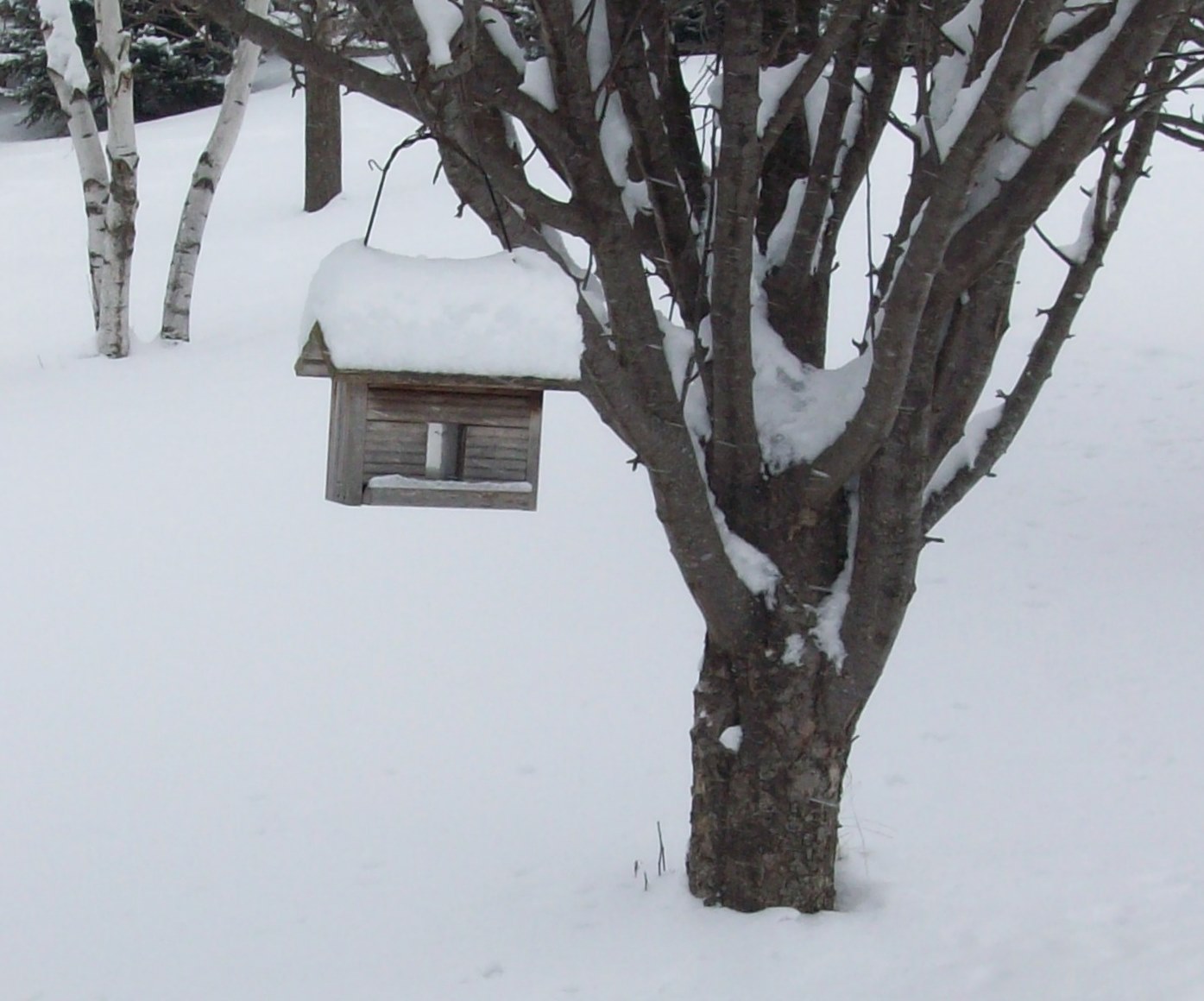
Seven adult deer were browsing in our yard. With a full girth, they appeared healthy, but were seeking food where there was none. One rose on its rear legs to nibble a pine tree. Others browsed the stubble that is the winter garden. One was favoring its right rear leg, limping along. A herd of scavengers.
The refrigerator light came on as I opened the door. It illuminated heads of cabbage, a drawer full of root vegetables, organic carrots and celery from California, and leftover soup and apple cider. The end of fresh food is near.
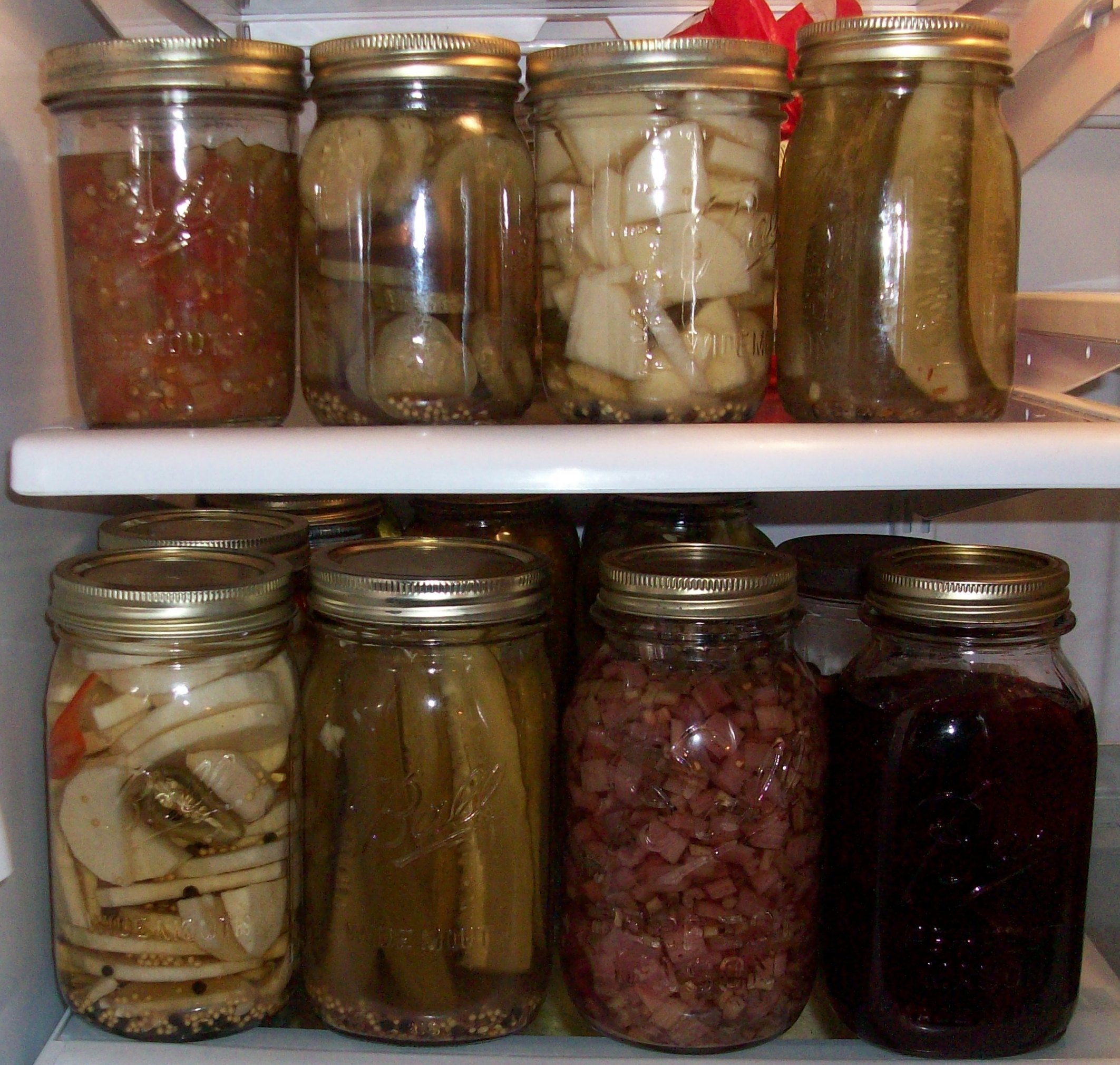
There are pickles. Beets, cucumbers, radishes, tomatoes, chard stems, sauerkraut… the makings of zakuski. All one needs is a bottle of vodka and friends stopping over. The former is more available than the latter, as in 21st century Iowa, unexpected guests are mostly youths seeking empty cans and bottles for their deposits, and strangers who want something. Such guests are seldom invited inside. Vodka acquired decades ago evaporates in unopened bottles.
It’s my weekend, with no paid work until Wednesday. It’s time to finish up winter work— taxes, garden planning, vehicle maintenance, house cleaning— and get ready for spring.
LAKE MACBRIDE— Exposure to society can bring sickness and disease. After living without significant illness, not even a cold since leaving my life in transportation, I’ve been waylaid by what I’ll call a “bug.” The last two nights found me sleeping under a dense array of blankets and afghans after work until morning, snoring profusely while letting the malady run its course.
In addition to the afghan treatment, I’ve been taking acetaminophen and Saint John’s Wort, the latter presented in a solution of vodka. One hopes the illness will have a short arc of persistence.
Two paychecks into my job as a part time supervisor for a company that does in-store product demonstrations at a warehouse club, it has been a struggle to arrange a process for living that will keep life moving forward. The new job is likely the source of the bug, as I have been exposed to countless people, some 1,500-2,000 per day, learning to supervise a diverse crew of folks demonstrating and selling retail products. I like the work, if not the bug. I wrap up my training this weekend, and will then have a more normal schedule— a new beginning.
As things sort out, 2014 has promise. Hope for financial viability, a hope to write more, with some of it paid. Moving into a new encampment— a staging area for the corps of discovery that is sustaining a life in a turbulent world.
LAKE MACBRIDE— Grab your partner, the band is tuning up.
In Des Moines, the Iowa House passed two bills today. One favors the tobacco industry in it’s language for controlling e-cigarettes (HF 2109), and another prohibits termination of pregnancy using telecommunications technology (HF 2175). The former got more votes than the latter, although both were equally ill considered. We’ll learn who voted which way in the journal tomorrow, but the final votes were 72-22 for HF 2109 and 55-42 for HF 2175.
This curious explanatory language is part of HF 2175, “the inclusion of this explanation does not constitute agreement with the explanation’s substance by the members of the general assembly.” What the hell? If that’s the case, why not put in language like, “doctors will be smitten by god if they break this law?” Then they would really have something to write to constituents about in the weekly newsletter.
We are back to the good old days when the Republicans pass bills in the House because they can, messaging them exuberantly into the abyss also known as the Senate inbox. All that’s missing is anti-abortion activist Kim Pearson. I haven’t been following the Senate as closely but their six percent allowable growth proposal appears equally dead on arrival in the House. The only caveat here is the e-cigarette bill may have a chance in the Senate because of Democratic support in the House.
Let’s not forget the executive branch. Yesterday the state auditor reported the governor’s budget overspends state revenues by $144 million. Sounds like the governor is planning to pay for things using one-time money in the surplus, something he repeatedly criticized Chet Culver for doing as part of his 2010 campaign.
As a friend wrote this morning, “there is no budget surplus. We are underfunding nearly every category in the budget.” The legislature will have to work through this before leaving Des Moines for the midterm elections— or not. Well, who knows what they might do? There are good people in the Iowa legislature, but one wouldn’t know it by the work they produced this week. And, it’s only Tuesday.
LAKE MACBRIDE— Iowa is having a regular winter. By that I mean the cold temperatures and snow resonate with winter memories from grade school. In the late 1950s and early 1960s, it was nothing to bundle up and walk to school in 20 below zero weather. It was accepted as another part of life in Iowa. Not so much any more.
With the advent of radio, television, the Internet and mobile phone mass messaging, information and opinions about the weather are easy to disseminate. Opinions, like a two hour school delay, or cancellation because of inclement weather, blast forth to citizens with a clear and present danger. Keep the kids safe, it’s too cold outside.
It’s hard to argue with taking precautions so children don’t get frostbitten toes and fingers. At the same time, I don’t believe my parents were any less concerned than today’s parents when they tied a scarf around my face so tightly that my neck got stiff, and sent me through the subzero weather for a several blocks walk to school. Something else has changed.
Tempted to insert comments about the nanny state that regulates behavior so as to mitigate liability should some child be hurt in the cold, that’s not where I’m going. School administrators have a job to do, and one hopes they are doing the best they can.
This cold weather is clear evidence of the effects of global warming, just as the weird winters of recent memory, early springs and droughts have been. Not going there either, although there’s a lot I could say.
On this 14 below zero morning, I’m remembering my college anthropology teacher June Helm, and her lectures about working with indigenous people in the Northwest Territories. How people lived in a climate we recognized, but seemed so different.
They made lives grounded in their environment, and what was available. It was something hard to emulate then, when we were used to availability of a wide variety of goods at the end of nascent global supply chains. Our lives seemed so abundant and protected compared to what we now call the First Nations Helm discussed. Their lives were spare, different, diverse, and resilient. That seems relevant.
The anthropology department at the University of Iowa was just getting started when I was in college. I was an undisciplined student who received a low grade. Nonetheless, I learned we needn’t distance ourselves from the shivering cold, but can embrace it. We can make a life in it. Importantly, if within a circle of family and friends, we are unaware of what others take for granted, and separate from mass culture, it’s okay to build on that.
This knowledge doesn’t make the cold less bitter. It does help one cope, and that is something brilliant on another cold night before sunrise in Iowa.
NORTH LIBERTY— On the front page, below the fold, is my first article written for a newspaper— The North Liberty Leader. I have two beats, the Iowa City Community School District Board of Directors, and the Solon City Council. We’ll see how it goes, but the work has been a plus.
Most importantly, I now have an editor who reads what I write and provides feedback. Every writer needs that, although in the era of social media and blogs, few have it. In my evolution as a writer— from high school work in the 1960s, to fledgling efforts in the 1970s, to graduate school, and through today, my writing has gotten better. Now there is a structure for improvement and I like it… a lot.
While life will continue to be busy as a low wage worker, at least part of my time is compensated for doing what I love. That is like Thanksgiving in February.
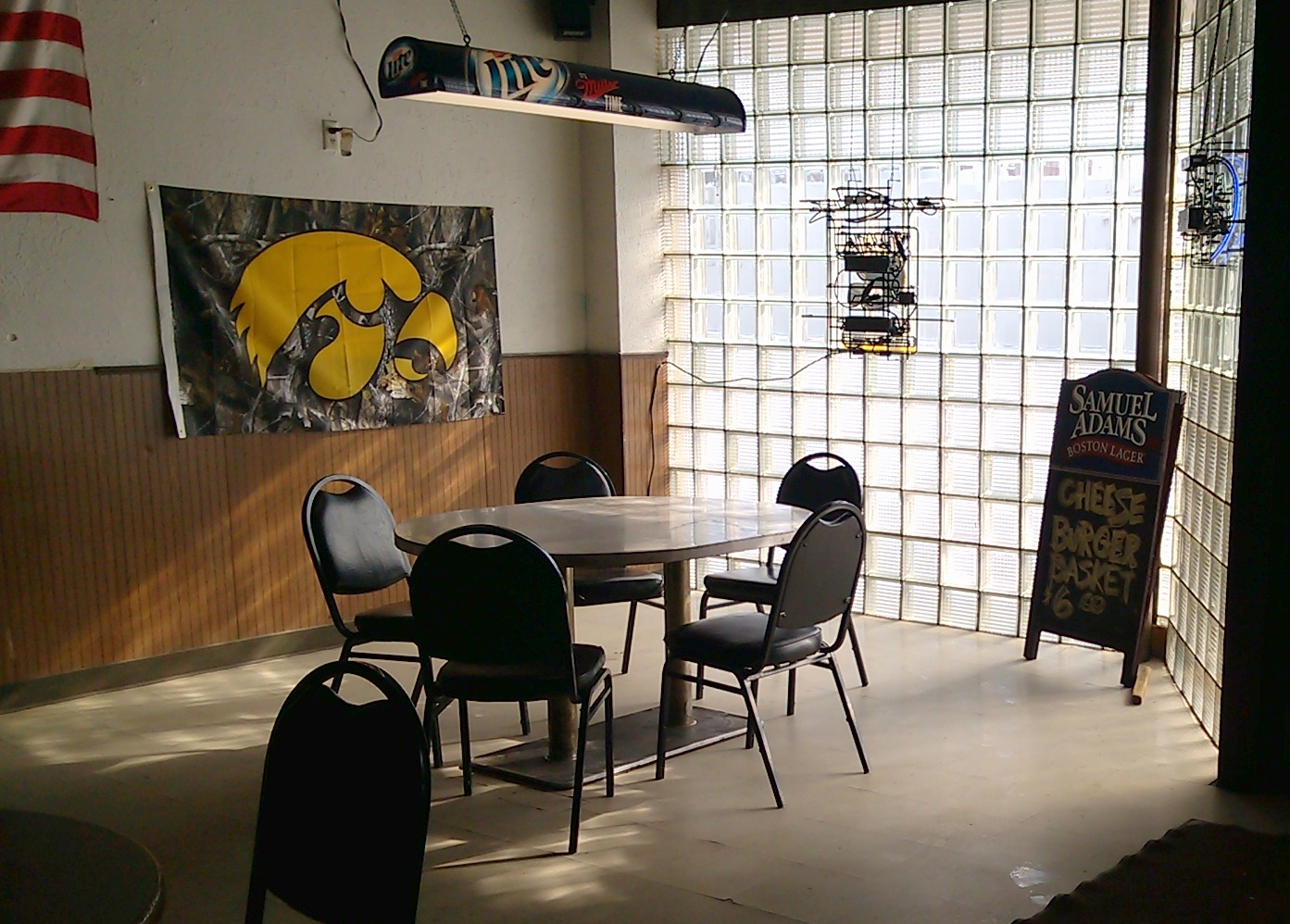
SOLON— Solon Station is a place to grab the special and go when on Main Street at lunch time. At 1:40 p.m. they were still serving— a cheeseburger basket for $6. I took a seat at the worn wooden bar and checked in on my mobile phone while waiting for the bartender/cook to prepare my plate.
The Special
Pub grub is about our local culture and Solon Station typifies the genre. It is industrial food service fare, cooked fresh, and served up with one’s favorite beverage. The menu is a limited selection of appetizers, sandwiches and pizza. There is a Sam Adams sandwich sign featuring the daily special, which in good weather can be found outside on the sidewalk.
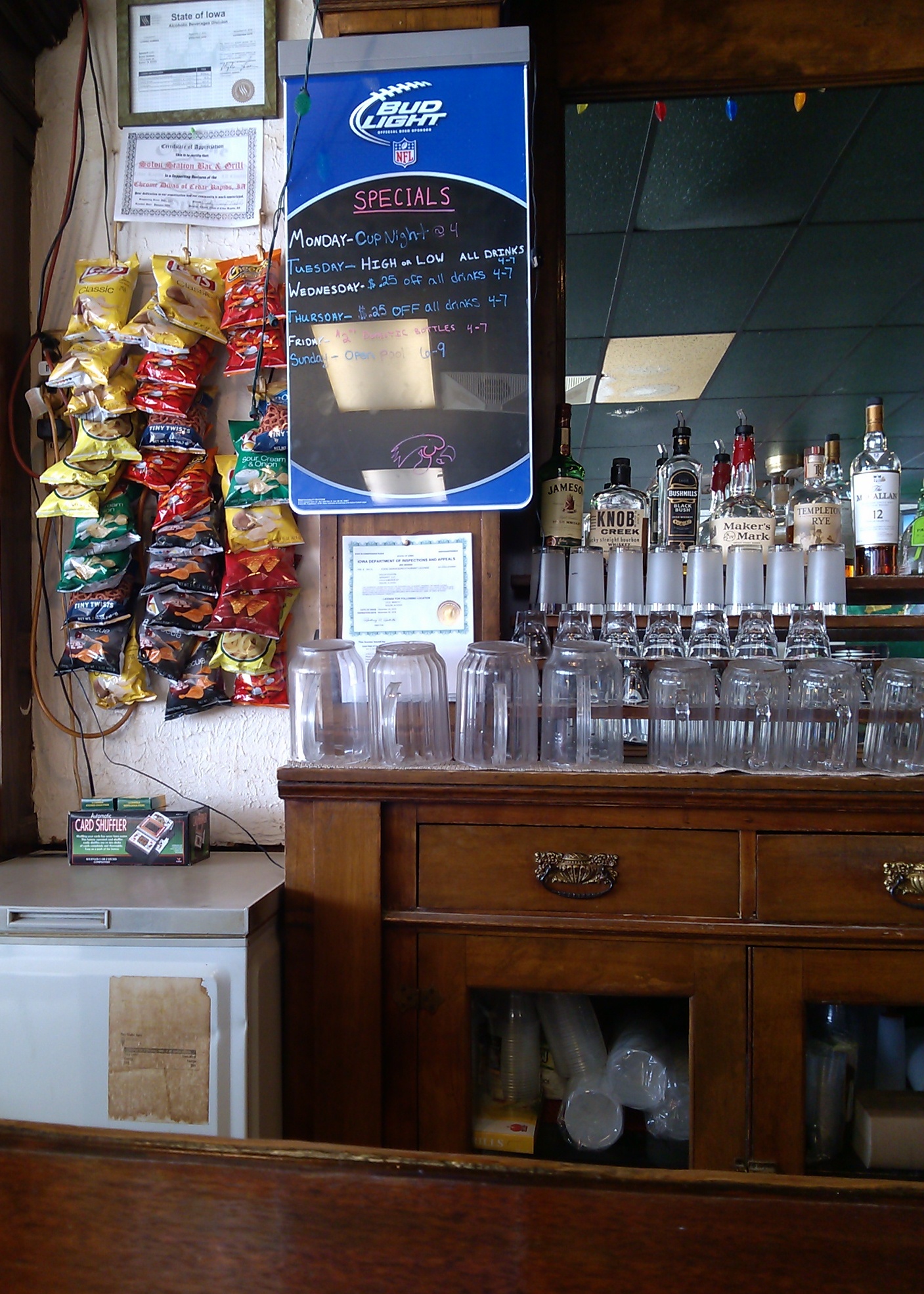
Back Bar
I asked the bartender whether the increased competition for food and beverages on Main Street was affecting business. She said they were doing okay.
Neighborhood bars are a place where the idea of fun is “cold beer on a Friday night. A pair of jeans that fit just right. And the radio on.” Solon Station is a place to go for karaoke, buckets of beer, cup nights, and when one needs a break from the fam. Check out their Facebook page for more reasons to visit.
According to the bartender, the back bar is the original and is lined with bottles of popular spirits like Templeton Rye, Patrón, Jameson, Tanqueray, Stolichnaya and Maker’s Mark. Nothing too fancy here. Solon Station is an example of what remains of neighborhood bars in the area.
Sunlit Alcove
Sunlight illuminates an alcove near the entryway— the place to hold a meeting, or play cards on a slow afternoon. It is reminiscent of small bars and restaurants more likely to be found in Europe than a bedroom community like Solon.
As the saying goes, “come visit Solon Station for great service, cold drinks and hamburgers so good, you’ll become addicted.” In more than twenty years of living outside of town, I haven’t made many trips to a bar. After yesterday’s visit, Solon Station may be a more frequent stop on this native Iowan’s itinerary.
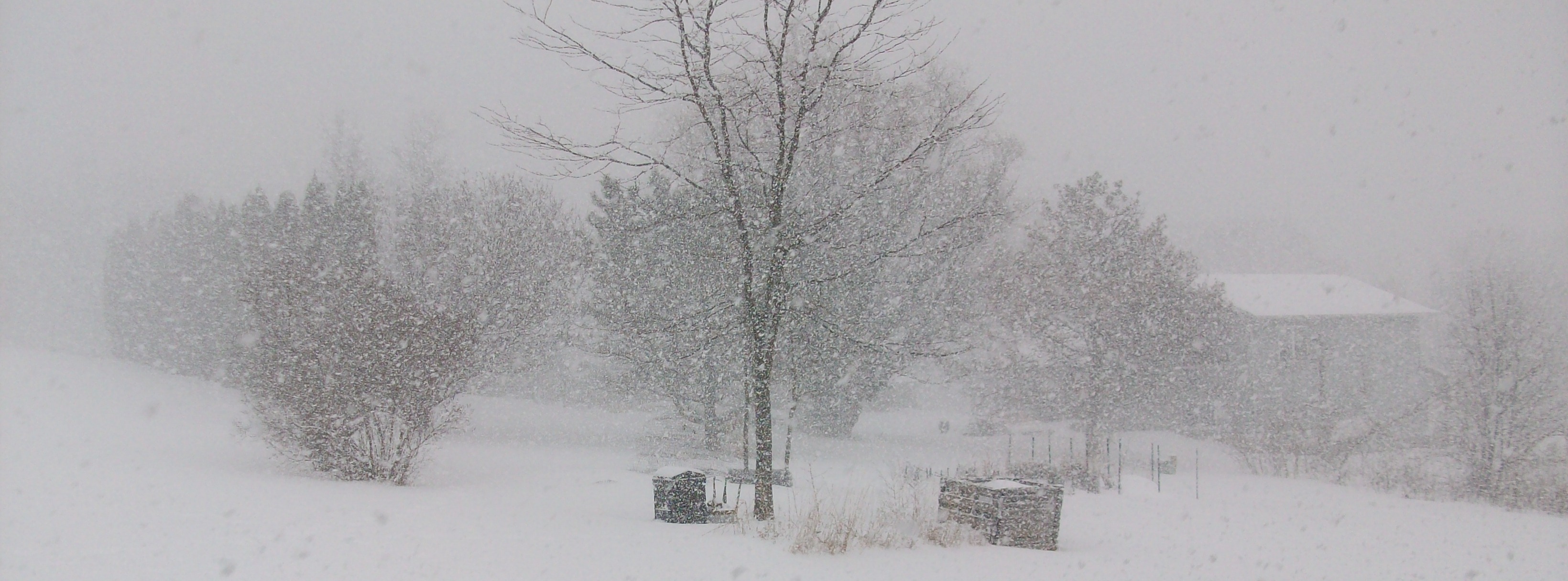
LAKE MACBRIDE— The sound of scraping entered the house and overpowered the muffling noise of the furnace fan. It will require work to get to town for a meeting. At least the snow plow did its part.
The driveway is snow-packed from the car tires, so whatever fell last night won’t be easy to remove. Work was planned for indoors this morning: to write a story for the newspaper. Snowfall is a happy coincidence that will break the quiet and be part of today’s process of fresh air, physical labor and writing. It’s as good as it gets.
Whatever funk descended upon me in December is gone. The new jobs, the promise of spring, and hope that a sound financial platform will enable better writing portend great things. Here’s hoping I’m equal to February’s promise.
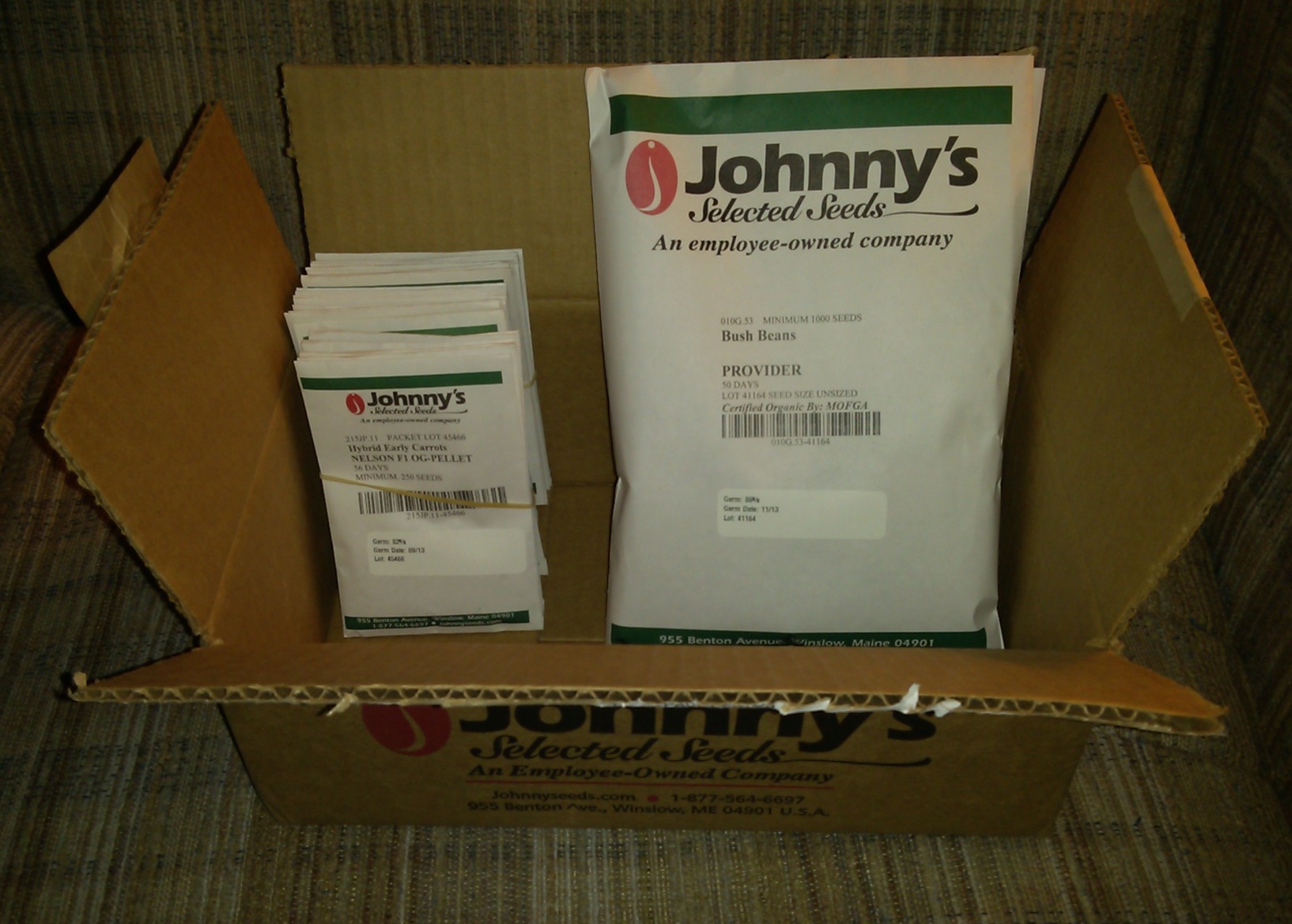
LAKE MACBRIDE— People have been talking about the coming storm like they never experienced an Iowa winter. Yes, we should be safe… but what else? On wintery days, I drive Jacque in to work so she doesn’t have to broom the snow from her automobile after her shift. While back at home waiting, I’ll make a dinner to be heated up when she returns, and begin garden planning. There are about 50 kinds of seeds including 36 purchased this year to be plotted out on a chart, but first, dinner.
Pecos Pasta
We make chili in big batches. To use some of the leftovers, we make a dish called Pecos Pasta. It is simple. Take a cup of dried elbow macaroni and prepare according to the instructions. Drain the noodles and pour back into the pot. Add one quart of leftover chili, one cup frozen cut corn, and heat until the mixed begins to boil. Turn the heat down to low simmer, and top the dish with shredded sharp cheddar cheese. Cover with a lid and heat thoroughly until the cheese melts.
I’ll drink a beer with Pecos Pasta when we have them, but last year’s case is long gone, so water will suffice (Note to self: put a quart of cider in the refrigerator). A quick and tasty meal that satisfies as the wind howls outside.
Only two dates are sacrosanct in our garden: March 2 and July 25. The former is when “Belgian lettuce” is planted, or as soon as the ground can be worked thereafter. The idea is to broadcast last year’s leftover lettuce seeds and see what germinates. I don’t know why it is called Belgian, except that’s what my maternal grandmother called it. The latter date is when to plant the fall crop of turnips. In our garden, turnip greens are a primary crop used to make soup stock by the gallon. Besides those dates and crops, everything else need looking up and planned. There is plenty of work to keep me busy until the end of her shift.
This morning I began working on our income taxes, and it looks like we sent in enough early payments last year to receive a small refund. I report all of our income and pay taxes on it— some don’t, but I do. As a self employed writer and farm worker, my business tax rate is 15.3 percent of 92.35 percent of income. For example, if I earn $1,000 dollars, the tax rate applies to $923.50 and amounts to $141.30, or 14.13 percent of the total.
The Internal Revenue Service began doing this to capture people who work like employees, but are considered to be independent contractors by the company from whom they are compensated. Seems to me they could be chasing some of those corporations who make the big bucks and pay no taxes instead of folks like us trying to get by. In the end, our overall federal tax rate, including the business tax, was 4.7 percent of total income, so not much to complain about here. It is well worth it to participate in our society.
LAKE MACBRIDE— A common belief about our food system is it’s a struggle between conventional and organic farming. Or, another way to frame it is industrial versus sustainable farming. To embrace any one of these over the others is a step down a slippery slope. According to the much hated agribusiness Monsanto, “the biggest problem with the debate over ‘organic’ and ‘conventional’ crops is that it suggests there are only two ways to grow food: a ‘good’ way and a ‘bad’ way. The reality is far different.” If a person knows anything about agriculture, it is easy to agree.
The global food system cannot be accurately characterized as any one thing because a transition to a sustainable food production model, one that can feed a global population expected to reach 9.6 billion people (potentially within my lifetime), is more complicated than any either/or scenario. In order to produce enough food, agriculture has to be diverse and scalable, but locally replicable. What does that mean? What it doesn’t mean is a bunch of Iowa farmers getting rich by exporting corn and soybeans overseas.
My friend Ed Fallon, organizer of the Great March for Climate Action, posted on Facebook, “it’s important to find ways to keep one’s food budget affordable while not violating one’s principles. For me, a combination of growing my own food, buying directly from local farmers, barter, and shopping at my local grocery store… keeps my food budget on par with what most people spend.” Whatever one thinks about Fallon, in this simple post he describes a food system that is sustainable, replicable and could be scalable.
A simple truth is that consumers, including home gardeners like me, should consider a food system that favors locally and sustainably produced food. The idea that we should exclude anything from our food system represents a step toward the extreme we shouldn’t take. Freshness and seasonality play an important role in developing a local cuisine and cuisine engenders life and makes it worth living.
The thing is, the cuisine I develop in Big Grove may be different from what I would develop anywhere else on the planet, based on what’s available. Fallon’s example relies upon supplementing one’s personal effort to secure food, and includes a commercial retailer. The one he mentioned in his post is a sponsor of his webcast program, but I don’t believe it matters a bit to substitute any retailer who is at the end of a world-wide food distribution system. In my case, I use several grocery stores to secure food I can’t get in my garden or through bartering. What matters more toward sustainability is decreasing reliance upon any one source of food when stocking the pantry. As Fallon indicated, it is possible to do so without violating one’s principles.
When we consider the meaning of my tagline, “sustainability in a turbulent world,” a local food system is as important as anything else we do. We have to eat to live, and while food obsession would not be a good thing, our outlook toward a local food system is as basic a need as anything. It is better to be inclusive of everything because as we develop a system of production, outside purchases, bartering, preparation, preserving and cooking food, the potential exists to sustain ourselves more locally. From a global perspective, each iteration of such a process is what makes a local food system scalable. This more than any one agricultural process or crop production system.
I’ll leave the macroeconomics of food production, packaging and distribution to others. What is more important is how individuals leverage what exists to improve the quality of their lives: a complex web of interdependence that is often forgotten, but remains as important as anything during our brief lives on the planet.





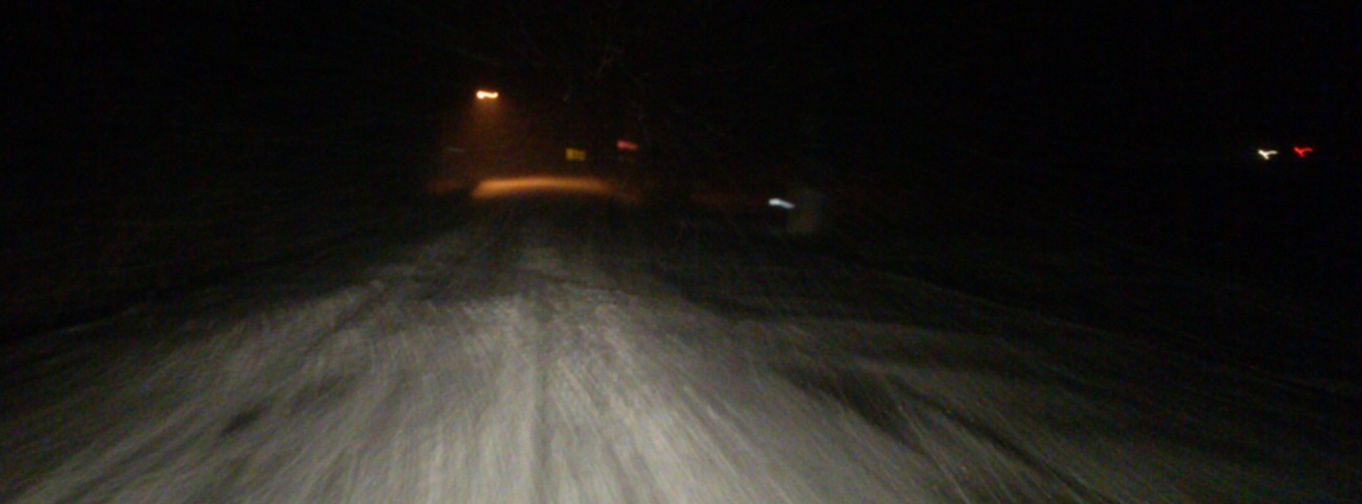
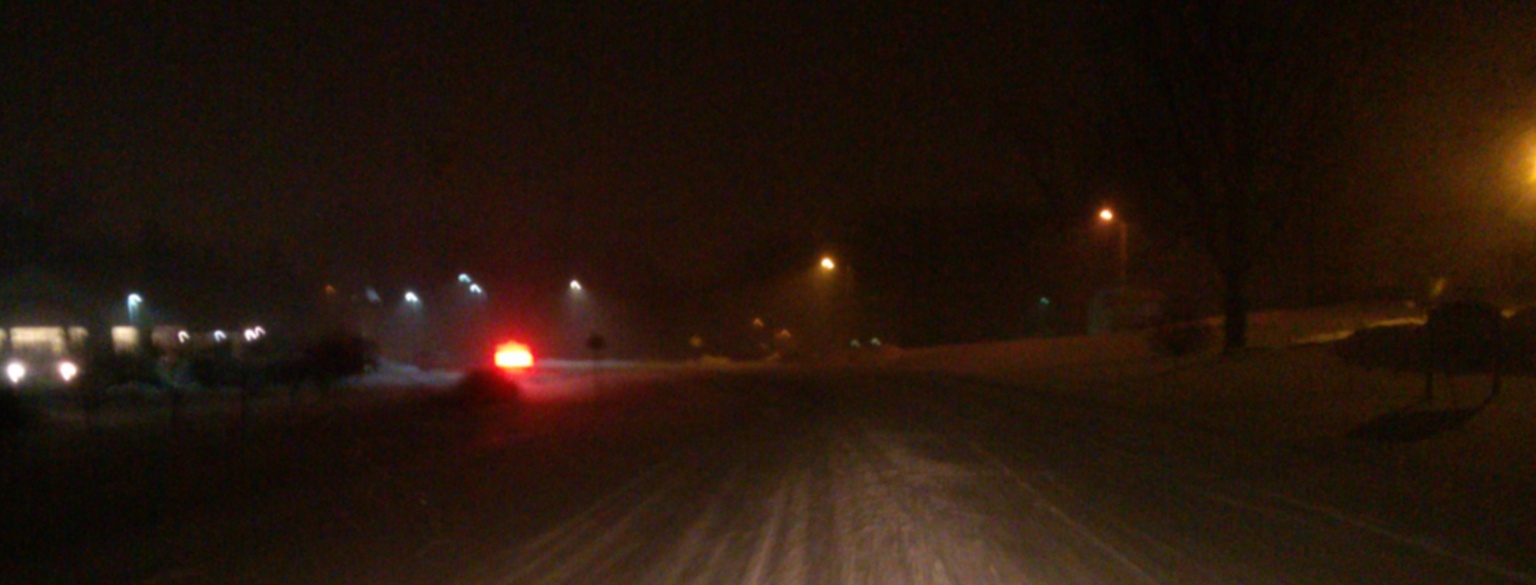


 Journey Home
You must be logged in to post a comment.