Categories
Creative Life

A Life of Photos Part VIII

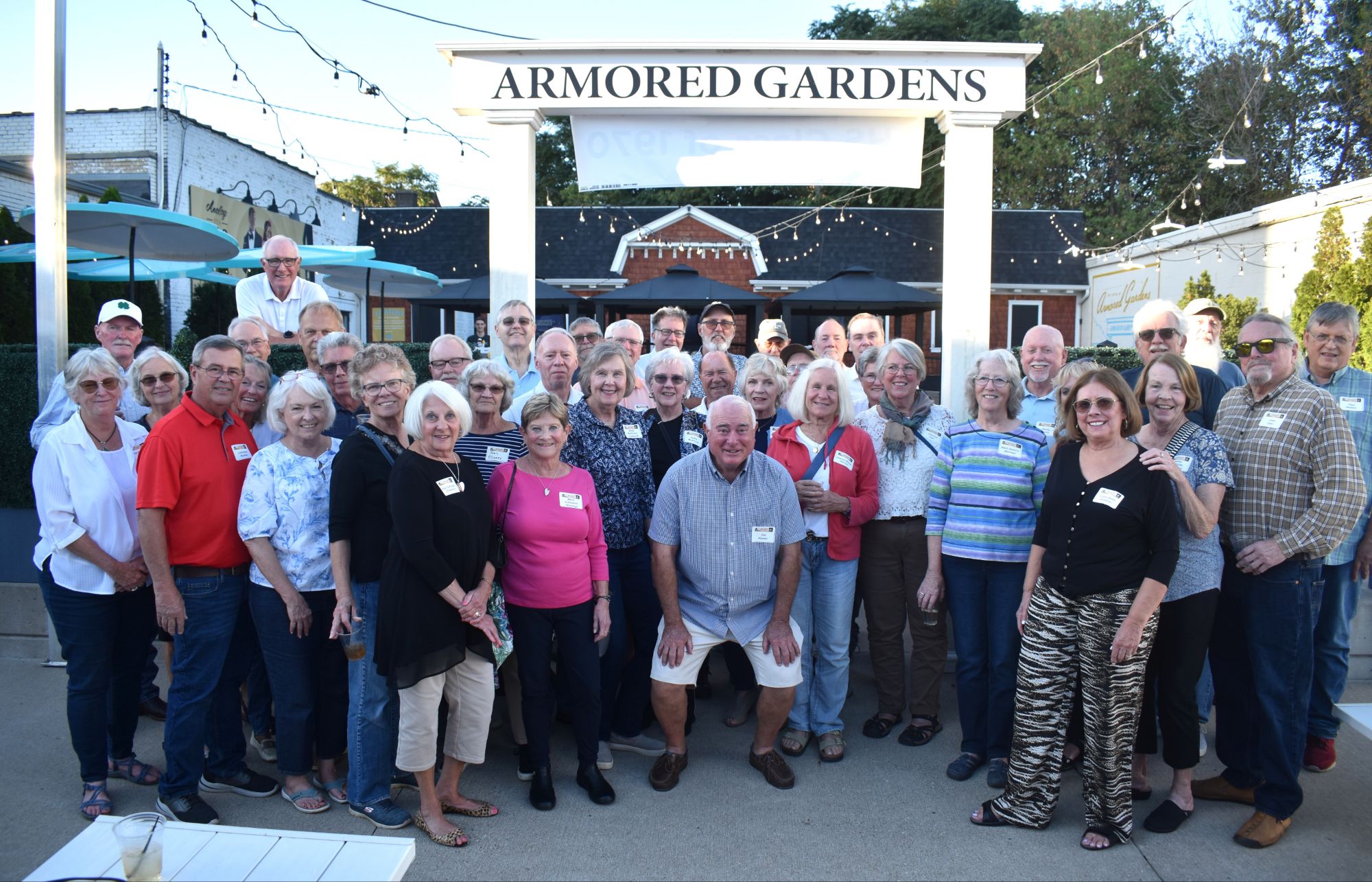
AHS High School Class of 1970 reunion on Sept. 25, 2025.

It’s one thing to take a posed photo — another to decide how it should be used: framed, shared online, or tucked away. That’s what this post explores.

We hired a photographer for our 55th high school class reunion. My instructions were to catch people looking at the lens with eyes open. I count 42 cheerful faces in this group photo. Of a class that numbered 260, that’s a lot still living. A few faces are partly hidden yet the image captures what was most important: proof we were there and together again.

Anyone who uses a camera seems likely to take posed photos. In the digital age it is easy to post them in social media and forget. Likewise, without being tethered to film, we can take many multiple shots of the same pose and then easily pick the best one to use. This is basic modern stuff.

The roots of my interest in posed photography, like so many creative things, lies with my maternal grandmother. I wrote about this in my book, An Iowa Life.

Mae was an influence on my photography. She purchased inexpensive cameras at the drug store and used them to record moments with the family. After researching the Polish community near Wilno, Minnesota, I came to believe her behavior with cameras in the 1960s had its roots in the inner cultural and spiritual realm filled with drama and emotion described previously. The surviving photograph of her sister Tillie’s confirmation is one example of this. The desire to pose and capture a photo was something creative I didn’t understand at the time. We were plain folk and when we got dressed for church, or to attend an event, it was a big deal. Mae wanted to capture those moments on film, consistent with her Polish upbringing. It’s a natural impulse that presents an interpretation of who we were. Of course, we always wanted to put the best foot forward in these constructed frames. (An Iowa Life by Paul Deaton).

When I was a grader, use of a photograph was simple: put it in an album. Such albums were defined more by the time frame in which film was exposed than subject matter. It was as if to say, “I just took these photographs, let’s save them.” On occasion we would make multiple prints of a “good” photo to give or mail to friends and relatives. Anything that did not make it into an album was stored in the envelope in which it came from the processor, along with the negatives. Eventually they accumulated in shoe boxes.

On May 4, 2008, I took my first photograph with a Kodak Easy Share digital camera. It changed everything. In particular, the subject matter of images was less about posing and more about casual capture, landscape and still life. We could snap photos like there was no tomorrow because of the lack of constraints caused by film. The number of images stored on a camera, and then transferred to a computer, exploded. A photograph became less special the way my grandmother understood it. It became a fungible commodity where without close examination everything looked the same. I mean, who had time for close examination of all those digital photographs?

With the rise of social media after 2006, a new place to save photographs began. When I post a photo on my BlueSky account, I do so with the idea other people might appreciate the work. Sometimes one goes viral but most of them get a few likes and then move on in the endless feed. Who knew looking at photos would become doom-scrolling? Social media lacks the permanence of a print or album, yet it is something important.

Most of the photographs from my high school class reunion will likely sit in a folder on the cloud until I want them again. I may get an 8 x 10 version of the reunion class photograph and put it in a standard frame. Partly to keep it handy to evoke its memories. Partly because as one person on our planning committee wrote, “regrettably, we will likely lose more classmates before our 60th reunion.” According to Social Security actuarial tables, 10 or 11 of the people in this photo are likely to die by then. The meaning is obvious. It remains what may be the last time I saw some of my friends. Isn’t this the reason we take photographs?

Categories
Living in Society

AI in Big Grove Township

Moon setting at sunrise.

An advertisement circulates that the only AI people over 40 use is ChatGPT. Okay. I don’t pretend to know a lot about AI, and my experience with ChatGPT began in earnest only last week. I accept that AI can be a reasonable part of life, although I don’t understand the bigger picture. Larry Ellison of Oracle is one oligarch who talks like he gets it.

“I think it’s very, very clear: AI is a much bigger deal than the Industrial Revolution, electricity, and everything that’s come before,” Ellison said in a video conversation with former UK prime Minister Tony Blair.

“We will soon have not only artificial intelligence but also — much sooner than anticipated —artificial general intelligence and then, in the not-too-distant future, artificial superintelligence.” (Oracle’s Larry Ellison on AI: ‘Most Important Discovery in Human History’, Cloud Wars, Feb 25, 2025).

Bigger than electricity? We mere mortals must live our lives and depend upon basic science that produces electricity. How shall we adapt to AI? Who will change our flat tire on a long stretch of deserted Iowa highway?

This recent statement is tainted by my memory of Ellison from when I attended OpenWorld in 2006. He was onstage with a penguin to announce Oracle’s full support for Red Hat Linux. In other words, he was co-opting the open source software and branding Oracle’s support. What a prick. Well, the penguin was interesting, if concerned about being in a room full of people.

What did I learn last week? I asked, “What are best practices for using ChatGPT in writing?” The answer was long and confirmed my natural impulses on how to use it. To a degree, AI is all about what I’m thinking. It cautioned me to use ethical and transparent practices:

Disclose AI assistance when appropriate (especially in journalism or academia).

Don’t claim AI-generated content as wholly your own if it’s substantial.

Always fact-check: AI can make confident errors.

I found ChatGPT is an uninspired writer. The assignments I entered returned something wooden and definitely not mine. Its editing skills were positive for short paragraphs. I expect to spend time determining how I might use it. When I get stumped on how to word something I’ll paste the paragraph into the dialogue box and see what comes back. I have yet to use something the machine sent back without further editing. It will become one more tool among many in the writer’s workshop.

The machine helped improve the structure of my daily life. Through five iterations, I wrote daily work plans. The culmination was a template to use on writing days. Even without a daily plan, I have ideas on what to do to forget my worries and work on things in my personal life that need it. ChatGPT brought everything into sharp focus and I’m the better for it.

My morning wake up regimen began after a visit to a podiatrist for plantar fasciitis. By the end of last week, the machine and I added exercises to address not only plantar fasciitis, but balance, upper body strength, and my core. The process was much quicker than looking through websites or books on my shelf. After a few days, I’m feeling positive results. In a few months, I will take another look at the regimen.

In my quest to become a better photographer, I asked the machine to help me with a plan to capture half a dozen shots of the No Kings rally on Oct. 18. It proposed a series of different types of shots and refined it when I uploaded a map of the site with a description of the topography. It even gave me specific places to stand to get the shots. When doing an amateur photo shoot, we have to be alert for developments as they happen. Having a plan makes the experience better and hopefully produces better photographs.

There is a balance between using ChatGPT and Google search. The search engine incorporates AI, although I find it a bit annoying. Spare me the machine-generated narrative and just give me the facts. It won’t take long to determine which method to use for different types of queries.

Because of the internet we have AI in Big Grove Township. As we spend more time at home in retirement, managing daily affairs keeps us engaged and that’s good for our longevity. Like many people, I seek to spend less time online. ChatGPT is not really helping yet I want to use it. There in a nutshell is humanity.

Categories
Kitchen Garden

Apple Cider Vinegar

Apple cider vinegar fermenting on the counter on Oct. 10, 2025.

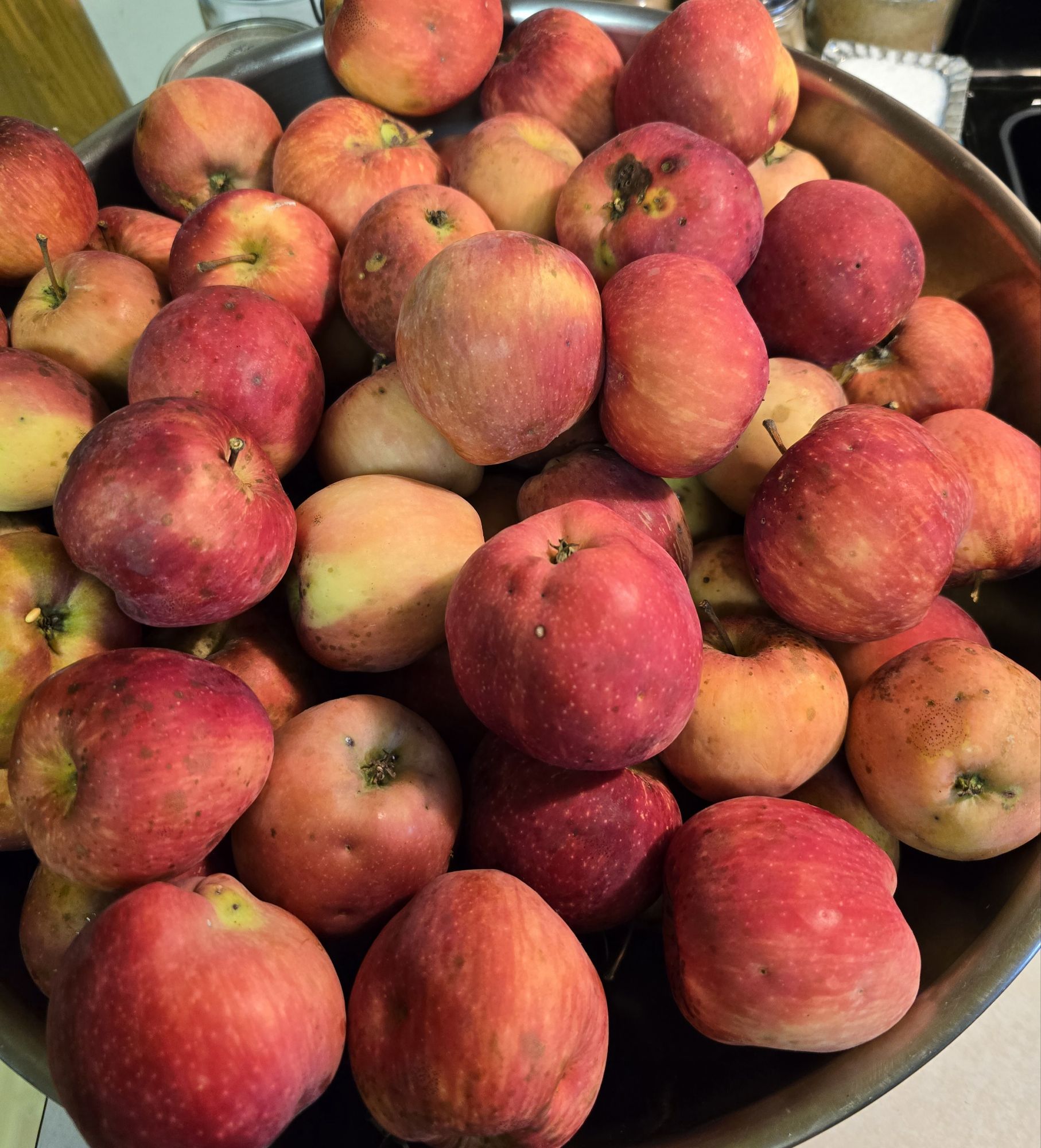
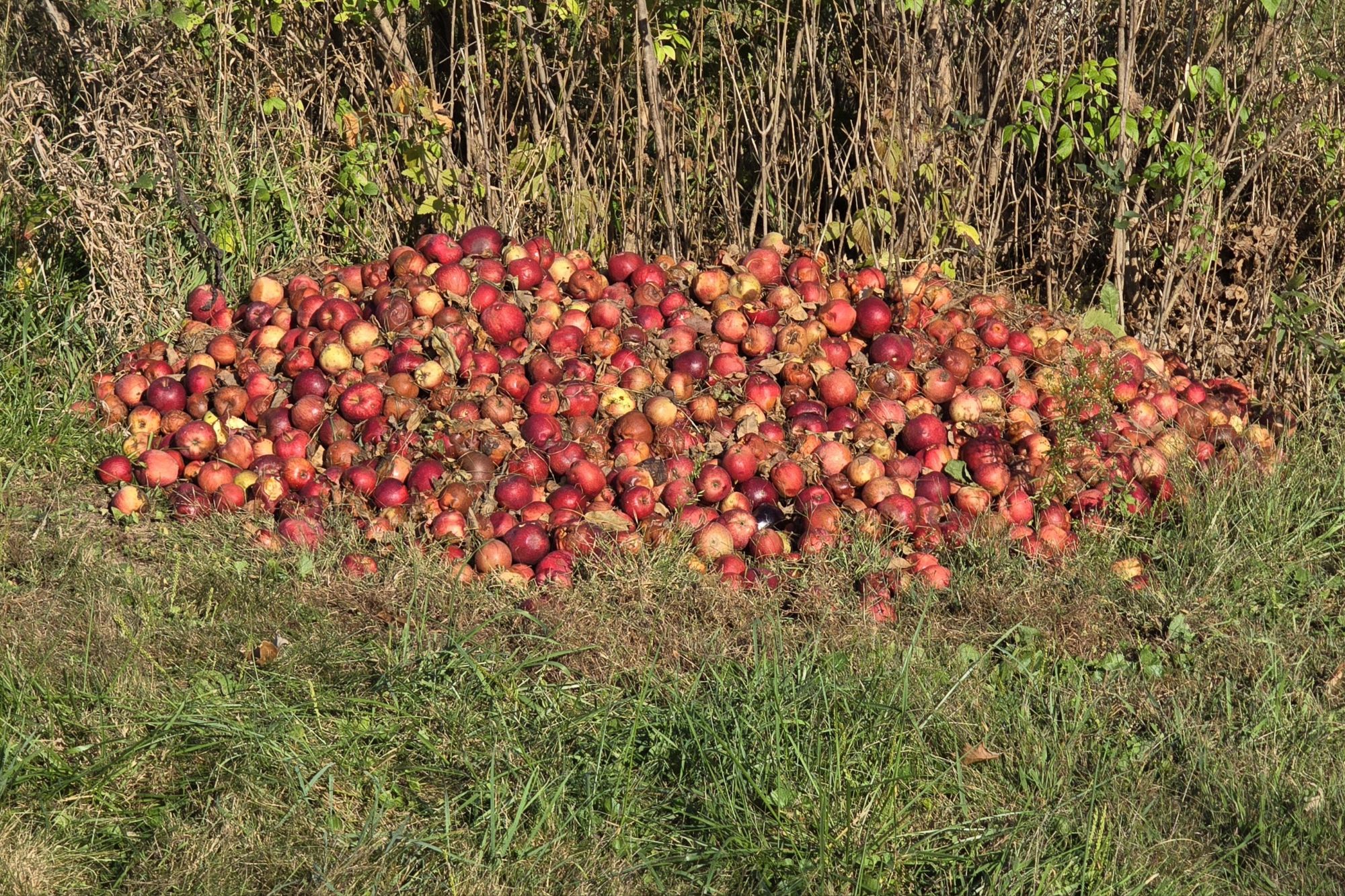
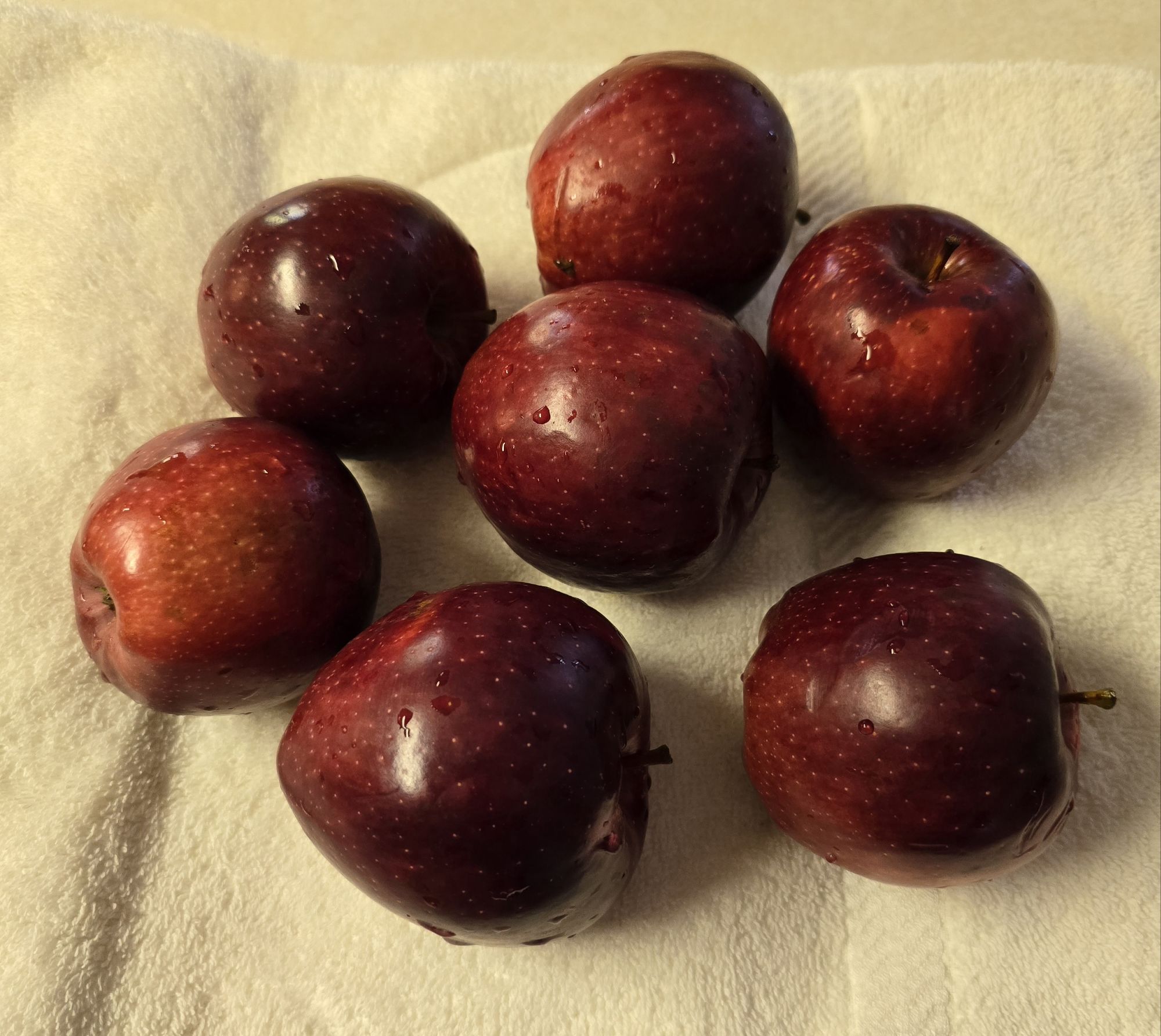
On Friday, I finished the last jar of apple cider vinegar. It’s been a big apple year, and it’s not over yet. Red Delicious still hang on the tree, and three bushels wait by the furnace. The remaining apples are for snacking or recipes like applesauce cake and cider. We don’t drink much cider, but the stuff from the backyard is every bit as good as what you’d get at an orchard or the store.

In 2013, a neighbor introduced me to home vinegar making. I’ve written about it half a dozen times on this blog and it is really simple. Here is a handy process outline:

  • Have home grown apples or know someone who does. It is too expensive to buy apples from a retailer for vinegar.
  • Apple selection is important. I don’t spray my trees, or do much of anything to grow bigger apples. I use Red Delicious apples for cider vinegar because I have so many of them in good years. They are also sweet with plenty of sugars for fermentation. After they ripen, I harvest a large quantity and sort them into categories: near perfect fruit (for refrigerator storage), best (fresh eating), seconds (culinary uses), gnarly apples with some usable flesh, and wildlife food. I find the gnarly apples make excellent cider because in paring them to cut away the bad spots, more apple skin goes into the juicer and gives the liquid a darker, more desirable color.
  • Equipment. My toolbox includes a Juiceman Juicer (the kind advertised on television back in the ancient days when I viewed the medium), a paring knife and a chef’s knife with large cutting board, two large Rubbermaid plastic pitchers, two different cone funnels, a large slotted spoon for skimming apple scum after juicing, a basting tool, and ten half gallon Mason jars. Vinegar will ferment on its own yet to speed up the process, I add an eighth of a teaspoon of Red Star Premier Blanc yeast, used primarily in wine-making. While not really hardware, it is a tool.
  • Set up work stations. You will need five: an apple sorting area (mine’s near the furnace), an apple washing station, a cutting station, a juicing station, and a fermentation station. Once fermentation begins, I have a shelf in a dark pantry where it finishes.
  • I did not keep time records. From the washing station to the fermentation station took roughly 12-15 hours to produce five half gallons over six daily shifts.
  • Make the vinegar.

Here are some notes.

  • Things go more quickly if larger apples are used. In a home garden that is not always possible. As mentioned, I use gnarly apples which takes more time.
  • Do a lot of work at each station. For example, cut and pare a large pile of apples at a time. Accumulate a big bowl or two of cut apples before juicing them. Focusing on a single task for a longer duration seems easier.
  • Keep the juicer clean. Stop juicing as many times as needed to ensure the solids are not backing up and blocking something.
  • The liquid coming from the juicer has four main components. A buoyant pulp that should be skimmed off and composted before pouring the extract into the Rubbermaid pitchers through a cone funnel. Allow the liquid to rest in the pitchers until it separates. There will be three layers: the top is grated bits of apple skins and flesh, the middle is the amber cider, and some apple particles sink to the bottom. If I have a quart or less left over at the end of a shift, I put that in a Mason jar and let it separate overnight.
  • Prepare the jars. Pour out what’s left in them — a mix of last year’s vinegar and the mother. I always keep a little vinegar in the jars to protect the mother until I’m ready for a new batch. Once the jars are clean and dry, place some of the mother back in and pour enough of last year’s vinegar to cover it.
  • I use the baster to get through the top layer to the cider in the middle. One baster at a time I transfer the liquid to the half gallon jars. When the jar is half filled, I add the one eighth teaspoon of yeast so it gets mixed in adequately.
  • Leave at least one inch of headspace in the jars. Then cover them with a cotton cloth secured by a rubber band.
  • Now we wait for fermentation to begin. it won’t take long, within a hour or so. As it begins, make sure there is enough headspace. Every batch is a little different depending on the fruit. I give fermentation a couple of days on the counter to get started. A reason I leave them on the counter a couple of days is so I don’t forget they are active. Once you finish this step they can be moved to pantry.

If I miss a few years, I have plenty of vinegar stored in one liter bottles to last. Like with anything, I use the oldest vinegar first. Pro tip: Clean all the equipment, especially the juicer, every day at the end of the shift. You will be glad you did.

Gnarly apples make the best vinegar.
Categories
Creative Life

Fall Photos

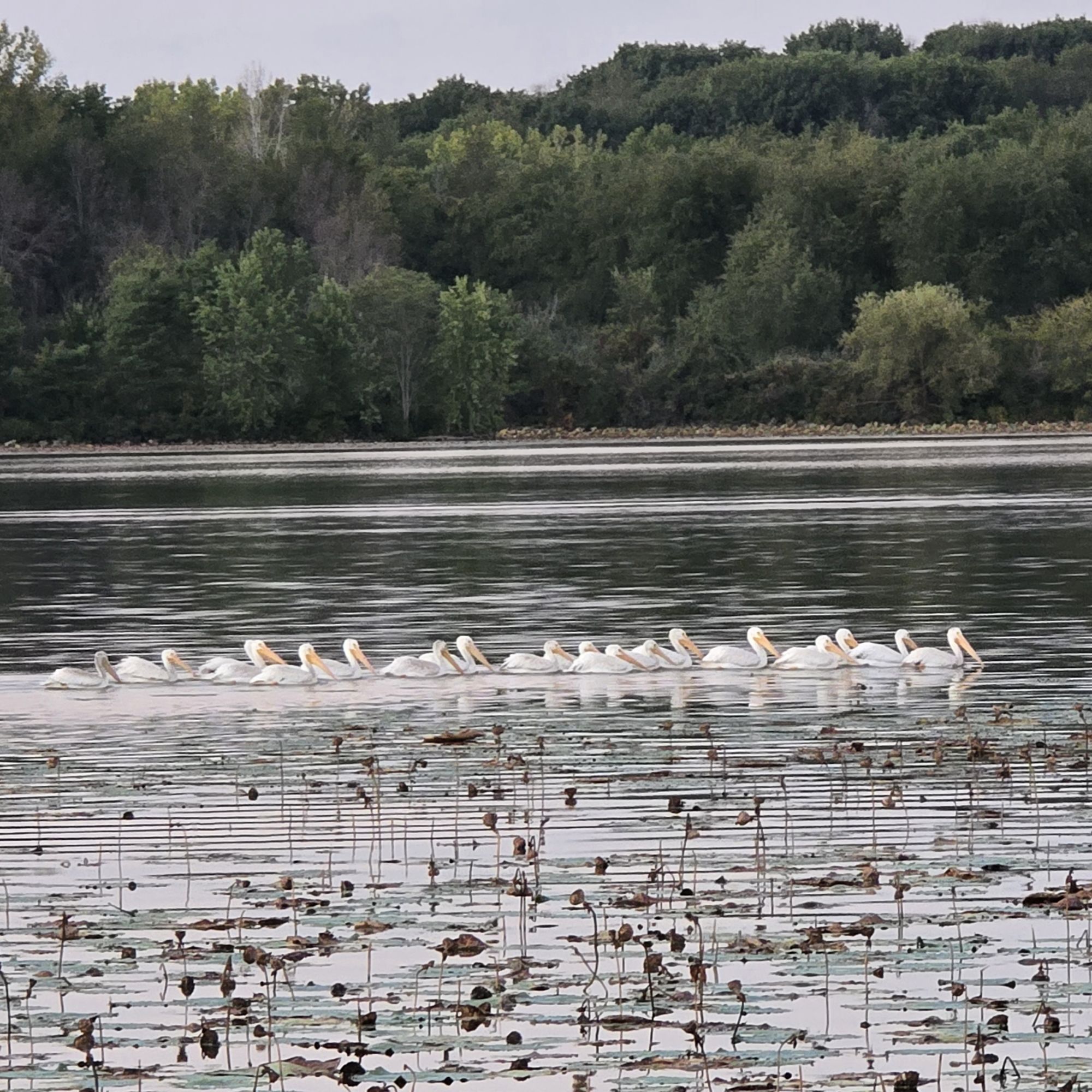
Pelican migration.

This week was all about the shift to autumn—putting up hot peppers, processing apples, and getting ready for winter. Add a high school class reunion on Sept. 25, and it’s already been a busy season. Here are some of the best recent shots.

Sunrise on the state park trail.
Categories
Living in Society

Still More on AI

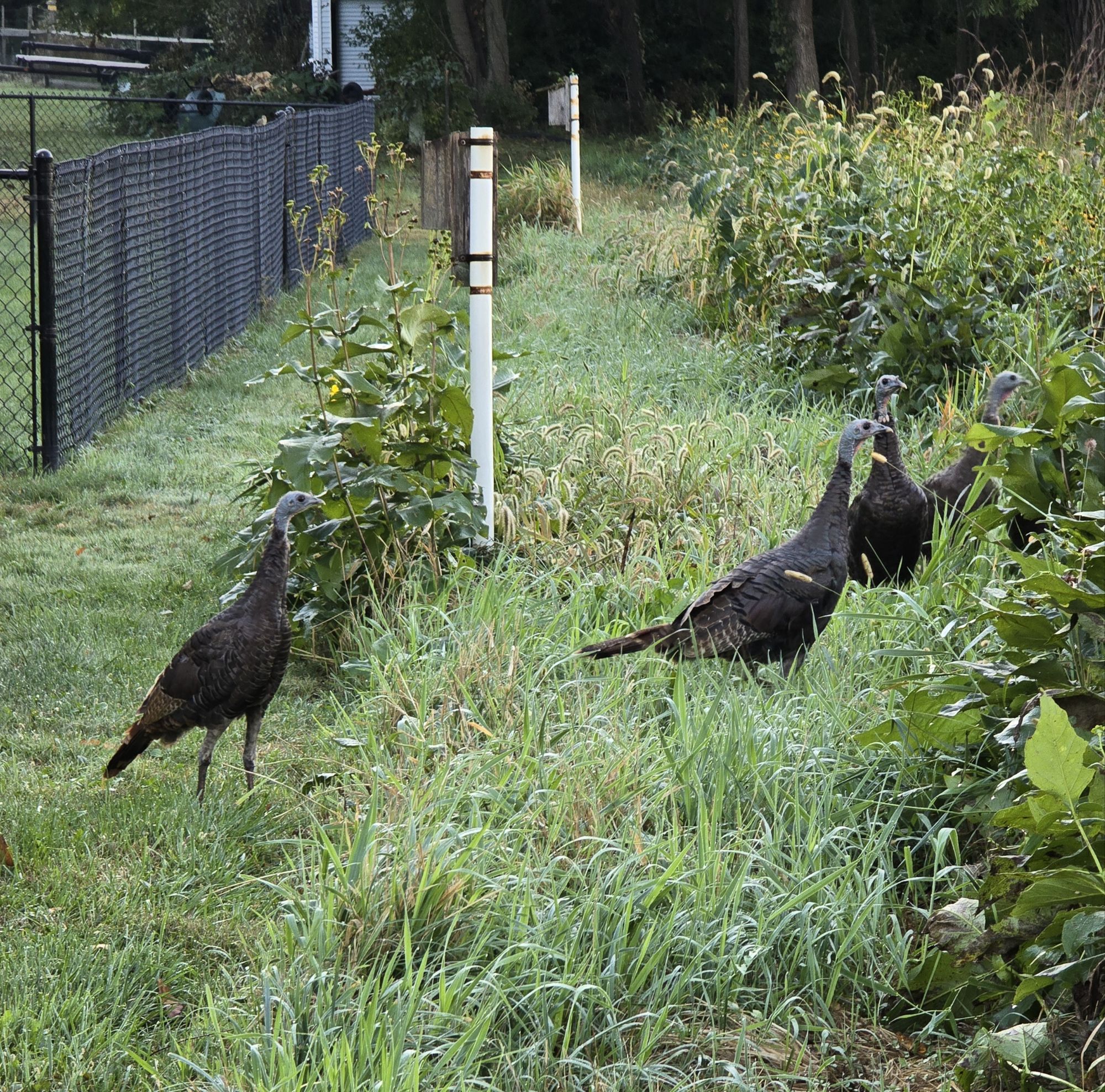
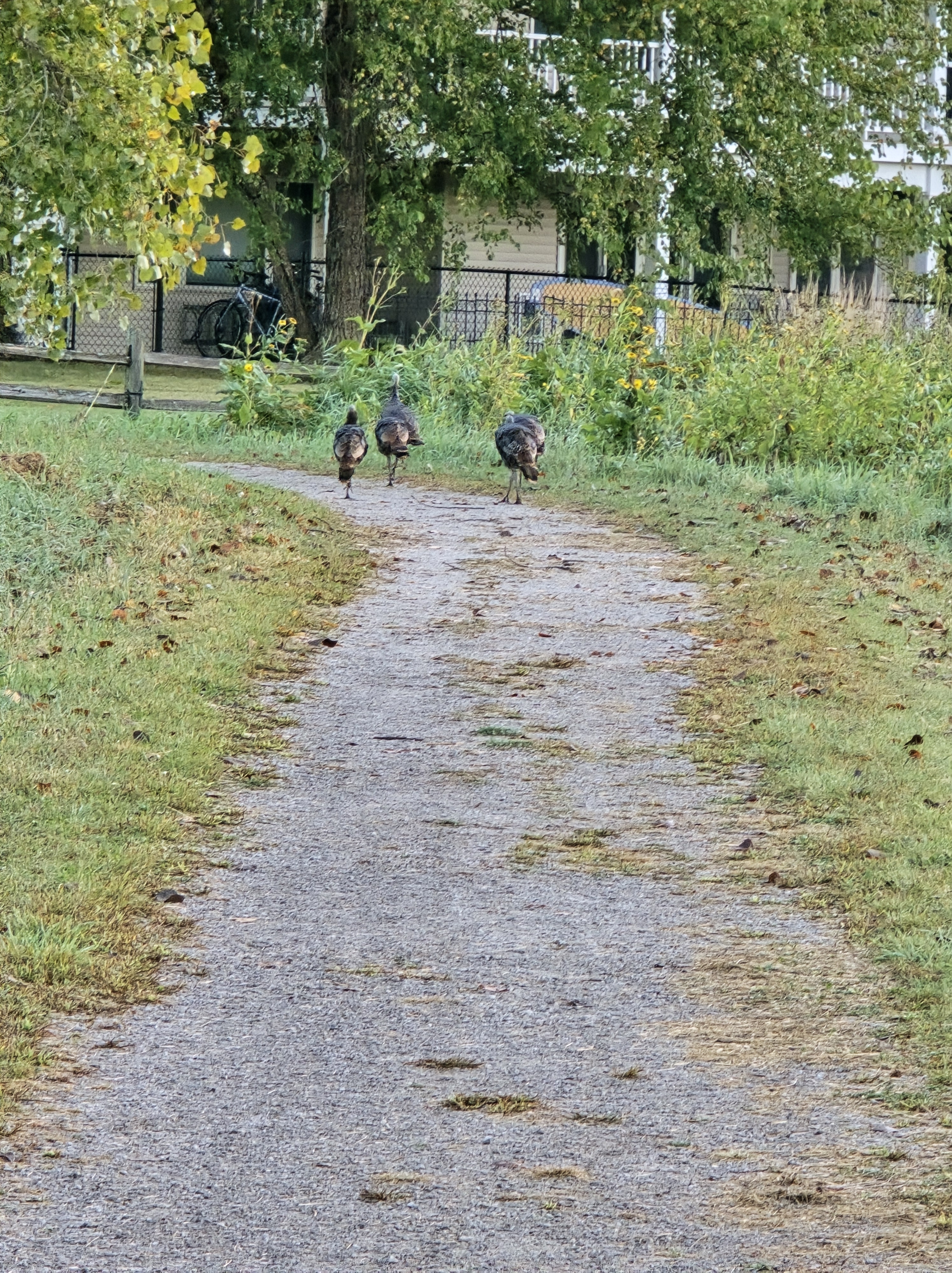
Wild turkeys walking on the state park trail.

Artificial intelligence is everywhere on the internet. The most common encounter I have is in responses to queries on Google search. It is annoying, yet that feeling might be my failure to adapt to modernity. Time will tell.

In an article posted at the National Library of Medicine, author Michael Cheng-Tek Tai wrote, “Artificial intelligence, known by some as the industrial revolution 4.0, is going to change not only the way we do things, how we relate to others, but also what we know about ourselves.” Like it or not, AI is already affecting me in those ways.

Earlier this month I got a free account with ChatGPT and began querying. Thursday, I typed in the dialogue box, “I received a number of responses to queries in October. In about 100-150 words, please analyze and describe them.” Following is the response I received.

In October, your responses showed a thoughtful, organized approach to learning and productivity. You explored practical topics such as meal planning, time management, and writing effectiveness, often asking for customized, actionable outputs like recipes, essays, or PDFs you could use on your mobile device. Your questions balanced curiosity and precision — for instance, refining a vegetarian enchilada recipe to fit available ingredients or requesting productivity adjustments for specific times of day. You also engaged with public affairs by seeking factual background on Dr. James Zogby, reflecting intellectual breadth. Overall, your October queries reveal a pattern of reflective self-improvement, efficiency-minded planning, and attention to detail across both creative and analytical pursuits.

I don’t often receive such positive responses to questions in real life. Of course the machine is giving back what I gave. I recall Dale Carnegie’s reminder, “Remember that a person’s name is to that person the sweetest and most important sound in any language.” Since I got my account, the machine never mentioned my name, although it remembers stuff about me better than I do. The machine is quite seductive.

Once I start something, I am quick to adapt, and I don’t reject AI out of hand. I find uses for the technology even though I remain generally skeptical about machine responses to my queries. Substantial impacts in my life, less than two weeks in are:

  • Instead of providing detailed sources for its work, the machine presents a returned narrative with a few links. The Zogby query is a good example. It gave me significant things to know about him. I know each one of those to be true from studying his work. It won’t always be the case, so a new dimension of query returns using AI is evaluating the quality of the information. The seductive tone of responses might have me overlooking this important aspect.
  • It can help with writing. AI is limited to what is currently available on public sources on the internet. That means I can’t usefully ask it to write long essays for me. What I can do is when I’m stumped about how to word something, type a draft sentence or two into the dialogue box and ask the machine to edit it. Without asking, it produced multiple examples of better ways to word something. If I continue to use it like this, it will be a time saver. I am confident AI won’t get it right for how I write. It will make me think about language in a constructive manner.
  • I’m four days in using AI to help plan a more productive day. With its”Balanced Day Plan,” I immediately eliminated a background concern that there is too much to do and not enough time in which to do it. I am fond of the saying an air traffic controller can only land one airplane at a time. So it is with tasks I have before me. AI finds a way to get it all into a day. If it can’t, it tells me. This serves as a stress reliever, helping me focus on the task at hand, and I do a better job with it. For example, I need to drink more water to stay hydrated. The balanced day plan actually schedules it, resulting in me drinking more water. This pursuit is just getting started and my best hope for AI lies herein.
  • There are plenty of tools to use ingredients on hand to make dinner. A most formidable one is my years of cooking experience, especially since when I lived in South Georgia 25 years ago. Because ChatGPT is interactive, a thread about vegetarian enchiladas can go back and forth, resolving issues, until I have something usable. Each cook has different approaches to doing that work, and using AI to help with cooking may be a short-duration fad. It does have capabilities to use if we ask the right questions.

Next step is to just use it. If I discover anything more, I will be sure to post about it.

Categories
Kitchen Garden

Hot Pepper Paste

Hot pepper paste.

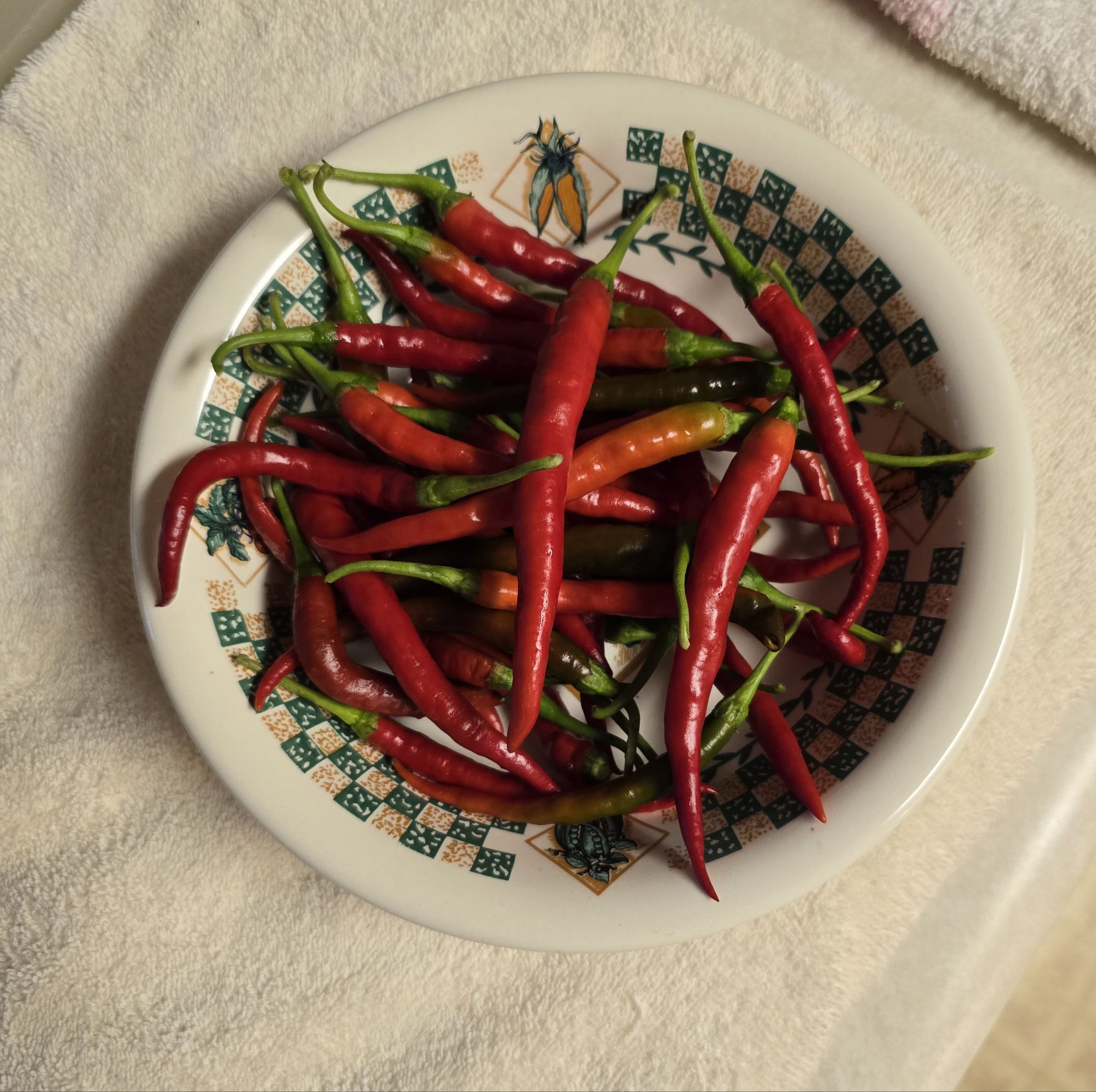
The fall abundance of hot peppers found its resolution in jars of homemade pepper paste. This thick, tangy blend of peppers, garlic, sugar, and salt—simmered in a vinegar-and-water solution—became the perfect answer to the bags of jalapeño, serrano, Santo Domingo, and Anaheim peppers piling up in the refrigerator. The cayenne peppers were easier: they went to the dehydrator and became red pepper flakes. Yet this hot pepper paste, the result of weeks of simmering, blending, and refining, was a more patient project—one that bottled the heat of summer for the cold months ahead. It may be a permanent resolution of fall pepper abundance.

As hot peppers came from the garden into the kitchen in late summer I tried things. First, I made a quart of salsa to put on Mexican-style fare. Next I sliced jalapeño peppers and pickled them in home made apple cider vinegar. Two quarts of pickled peppers stored in the refrigerator will provide condiments for a full year. Then I began taking excess to the food pantry. I made cold pickled serranos and jalapeños. This was only the beginning of the crop. What next?

After stemming and slicing the peppers in half, I brought each batch to a boil in a mix of 1½ cups 5% white vinegar and 1 cup water. Once boiling, I turned the heat down to a simmer and let them go for about 20 more minutes. At first, I strained away most of the vinegar-water solution and put the peppers in a blender and pulsed until they were pureed. This produced a thick paste to use on tacos, or as an ingredient to replace fresh hot peppers when the season is over. I felt I was on to something.

As harvest continued I tried different pepper blends and moisture contents. A number of experimental jars collected in the refrigerator. The concept seemed good, yet our refrigerator is already too full to handle the abundance. I decide to try water bath canning the product and learned about pH.

I made the final product with all but a few reserved hot peppers from the refrigerator and the solution described. To that I added six ounces of garlic cloves, generous tablespoons of sugar and kosher salt. Once simmered, I put the mix into the blender, liquid and all. The coloring is due to jalapeño peppers that ripened to red. I returned the puree to the cooking pot and took all the jars of earlier experiments from the refrigerator and stirred them in. Once warm, I put the paste into pint Mason jars and water bath canned them.

I don’t know how others deal with excess hot peppers, yet I don’t know how else I would do it. Experimentation is an important part of my kitchen-garden. This hot pepper paste is something I will use and probably use up before next year’s harvest. Everything about the process makes life better.

Categories
Living in Society

Who to Read in Socials

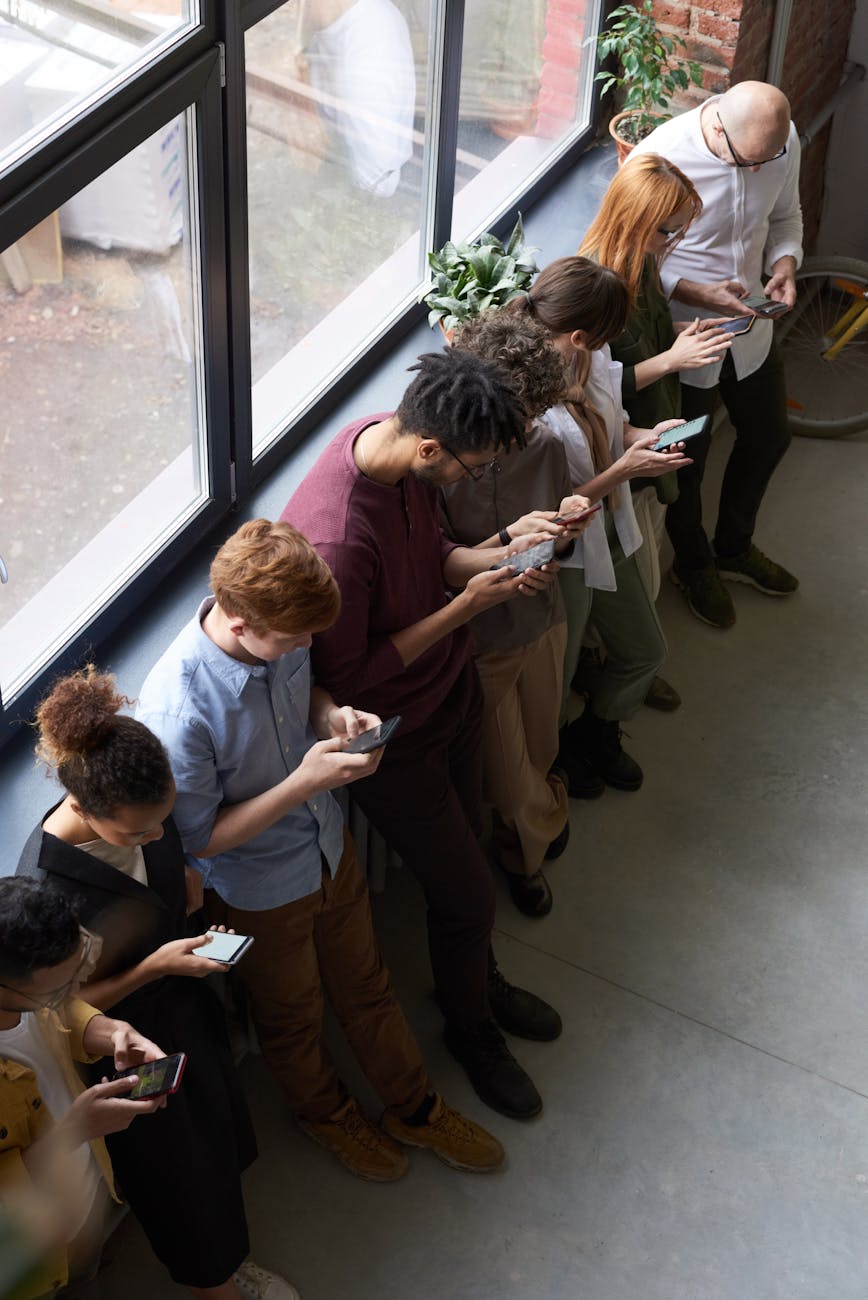
Photo by fauxels on Pexels.com

Like every progressive activist, I want news from reliable sources — newspapers, newsletters, blogs, and social media. The question is always, “Who is active and can tell me something I haven’t heard elsewhere?” Heather Cox Richardson’s Letters from an American is the top Substack, with more than 1.3 million subscribers. It’s a must-read. There are others, less well known and on different platforms. Here are five to consider. Hopefully, this provides some value as we trek across the internet wasteland.

Olena Halushka is a Ukrainian politician and activist. Her daily posts on BlueSky keep the terrorist acts of Russia in Ukraine in front of me. She was a member of the Kyiv City Council and a contributor to Ukrainska Pravda, the Atlantic Council, EUobserver, The Washington Post, and Foreign Policy. Find her on BlueSky here: @halushka.bsky.social

Nina Elkadi is an Investigative Reporter at Sentient, and freelance writer from Iowa who reports on agriculture, water, and the environment. Her work also explores the manipulation of science and how corporate negligence affects consumers and workers. I had the pleasure of meeting Elkadi in Iowa City. She posts on BlueSky at @ninaelkadi.com

Alice Miranda Ollstein is a senior health care reporter for POLITICO, with a focus on sexual and reproductive health. She is often first to market with major stories on her beat. She also monitors social media and reposts articles I find valuable and leading edge. Subscribe to her posts at the POLITICO website or follow on BlueSky at  @alicemiranda.bsky.social .

Hannah Ritchie is a Scottish data scientist, senior researcher at the University of Oxford, and deputy editor at Our World in Data. Her work focuses on sustainability, in relation to climate change, energy, food and agriculture, biodiversity, air pollution, deforestation, and public health. I read Ritchie because she brings a fresh voice to the subject of coping with the climate crisis.
Her first book, Not the End of the World, was published in 2024. Find her on BlueSky at @hannahritchie.bsky.social

Ana Marie Cox I’m likely dating myself here. Cox is a frequent critic of the Substack culture and simply a very interesting person. I have been following her since the Wonkette days and yes that was a thing. In addition to media criticism, she posts frequently about her trials and tribulations in the gig economy. She is contributing editor at @newrepublic.com; co-host of Space the Nation (sci-fi meets politics); plus @pastduepodcast.com. Follow her on Buttondown at https://newsletter.anamariecox.com/ or on BlueSky at @anamariecox.bsky.social. Her BlueSky account is mostly reposts of stories that track her eclectic interests.

What are your favorite reads on the World Wide Web? Feel free to leave a comment.

Categories
Kitchen Garden

Scion of Hawkeye

Red Delicious apples picked in early October.

The Iowa story of the Red Delicious apple is best told on the Stark Bro’s website. What stands out to me is that 1893, the year of the first International New Fruit Show where Jesse Hiatt of Peru, Iowa exhibited his chance seedling, the Hawkeye apple, also saw the World’s Columbian Exposition in Chicago. The Exposition embodied the late nineteenth century’s drive to catalog, classify, and display the world’s cultures, species, and artifacts—a hallmark of the Age of Imperialism.

Clarence Stark was not a fan of the Ben Davis apple widely planted in Iowa and the Midwest at that time. While Ben Davis stood up to winter, grew almost anywhere, and did not bruise easily, it lacked flavor. Stark literally got on his horse and went out to find better. When he found the Hawkeye at the New Fruit Show, he immediately liked it. Somehow Hiatt’s association with it had gotten lost. The two came together at the second show.

Clarence was elated. He could not get to Iowa fast enough. The Stark brothers made the trip immediately and bought the sole rights from Hiatt, named the apple “Stark® Delicious” (only after naming ‘Golden Delicious’ in 1914 did it become ‘Red Delicious’) and secured a registered trademark. (A Delicious Discovery: Red Delicious Apple, Stark Bro’s Nurseries and Orchards).

That Red Delicious was first found in Iowa is the reason I planted it in my backyard in April 1995. It has been a good tree. Even with large parts of it damaged in wind storms and the Aug. 10, 2020 derecho, it produces an amazing amount of fruit every other year. If Stark Bro’s propagated it to the extent flavor was diminished after adapting the cultivar to mass markets, the tree in my backyard continues to produce great-tasting fruit. I’d say they were delicious, but that would be too punny.

I am thankful to have planted this Red Delicious tree 30 years ago. It came from a time of robber barons seeking to buy anything of value and profit from it. To a minor extent, Stark Bro’s did that as well. As the apple business changes, stores are less reliant on Red Delicious. Because of the flavor, I wouldn’t trade my tree for anything.

Categories
Living in Society

Further Thoughts on AI

Milkweed gone to seed.

On Oct. 1, the machine at ChatGPT told me I had used my allowance of queries for my free account. It was fine. It offered me a lesser quality query until my account reset. I logged out instead and quickly found other things to do.

After re-reading my post about using AI, which includes an essay I asked the machine to write, I decided it was a good call to refrain from using ChatGPT in my autobiography. The main issue is it relies on what is available on the internet on a given topic. Because my autobiography is being written from journals, photographs, memories and other in-real-life documentation, such information is not available for the machine to read. It will produce a present-biased, internet-derived account about whatever I ask about my life. That is not what I want in this project.

While it did a reasonable job drafting something from the contents of this blog, it only knows me that way and that is a deficiency that cannot be easily corrected. For example, I asked the machine to write a brief autobiography of me. It’s response tells the story: “I couldn’t find enough reliable public information to write a full, detailed 1,000-word biography of Paul Deaton of Iowa.” This was despite my essay of that name, which lives on this blog and is my most popular post since I began in 2007. Either the machine is lazy, or it has programming that discourages this type of query. This discovery of the limits of ChatGPT is of value.

What can I use ChatGPT or another AI program to do? I see three applications based on asking these questions of the machine.

Give me ideas in how to use ChatGPT as diarist. I have been journaling since 1974 and the evolution of styles and content is striking. They developed over time. Naturally the machine wants to talk about events in my journal all day so it can learn as much as possible about me. I won’t do that, yet the occasional query can help me find direction in that kind of writing. It also made these suggestions for how to use the machine: “The key is deciding whether you want me to be: An analyst (finding themes and patterns); A recorder (storing entries); An editor (shaping them into narratives); or A mirror (asking questions back).” Even though I am alone when journaling, I don’t need a machine partner with which to interact.

What are some ideas for vegetarian and vegan enchiladas? Using ChatGPT to determine what to cook and eat seems solid. I entered on-hand ingredients and the machine suggested a specific recipe that used them. It provided grouping of ideas by flavor-type, such as hearty and savory, bright and fresh, protein-rich, toppings and finishing touches. So often, my ideas are pulling out a familiar cookbook and paging through it. AI could be an alternate way of figuring out what’s for dinner. There is value in that.

What are some ways to balance household work for today? I also entered tasks for the day. Personal productivity is important and the machine gave me useful ideas on how to structure my day. Because we are creatures of habit, we need to break out of what we do to improve how much we get done in a day. AI did not hesitate to tell me I scheduled too much to do, suggesting tasks that could be done tomorrow. It also changed how certain tasks were scheduled in the day, for example, moving cooking to the afternoon and spreading meal prep throughout the day. Going forward, I expect to use AI to help restructure how I spend my time. It may get to the point where I’m satisfied with how my new daily schedule is going. If so, then I will step away from AI for a while. I do know I was productive but exhausted by mid afternoon the first day I tried using an AI planner. This despite more scheduled rest and recovery time throughout the day.

It seems important we get AI out of our system. Like with everything, moderation of use seems essential.

Categories
Living in Society

Cage Match

Early steel cage wrestling match. Photo Credit – Online World of Wrestling website.

In July, word came from the president he was considering a cage match wrestling event to be held on the White House lawn. As the Skydance – Paramount merger closed on Aug. 7, and UFC signed an exclusive deal with Paramount+ four days later, the UFC match to celebrate the nation’s 250th anniversary appears to be inevitable and will be aired on Paramount stations, including CBS, the former home of Edward R. Murrow and Walter Cronkite.

Trump’s affection for professional wrestling is well known, as is his induction into the WWE hall of fame in 2013. Regardless of concerns about propriety, a cage match is an expression of the president’s character. The event is expected to host some 20,000 of his closest fans on the lawn and be available to countless others via the internet. From where do cage matches come?

The American Wrestling Association (AWA) was a professional wrestling promotion based in Minneapolis from 1960 until 1991, according to Wikipedia. It was founded by Verne Gagne and Wally Karbo, originating as part of the Minneapolis Boxing & Wrestling Club. Unlike modern professional wrestlers of the WWE, Gagne was an amateur wrestling champion who was an alternate on the U.S. freestyle wrestling team at the 1948 Summer Olympics. He ran the AWA with a conservative sensibility, Wikipedia said, firmly believing that sound technical wrestling should be the basis of a pro-wrestling company. Cage matches reflect no basis in technical wrestling as Gagne had come to know it. I submit they are about the fans.

Father and we kids attended a professional wrestling match at Municipal Stadium in Davenport. The stands were not packed although because of the popular Saturday morning television program, All Star Wrestling, the event drew a good-sized crowd. Patrons were unruly, with arguments breaking out among them. I almost got into a fight after mouthing off to a stranger. That day there was a cage match during which constructing a cage of chain-link fencing was part of the spectacle. Was that real blood when one wrestler crushed another against the cage wall? It was hard to say from the bleachers. Young women would visit the motel across the river where the wrestlers stayed and attempt to accompany them on tour. Such plebeian entertainments were typical in my home town. This is a crowd that later would evolve into MAGA cult members.

Once one admits a cage wrestling match is not sports, then what kind of spectacle is it? I have to believe we could all be pursuing more constructive use of our time. It’s a free country, though, and a wrestling star is president. Celebrating professional wrestling is just one more way our culture is getting away from us as the country marks its 250th birthday.