Save Me the Plums: My Gourmet Memoir by Ruth Reichl
I’d not heard of Ruth Reichl before a news reporter recommended this book. I had heard of Gourmet Magazine and have no memories of ever reading it.
I liked the book for these reasons:
It provides a window into the New York world of Condé Nast. As a Midwesterner New York seems exotic even though my brother in law lives there. It’s important to gain a broader understanding of the publishing world and to know something about it. Save Me the Plums provides that.
We all need some light summer reading to escape the sh*t storm our current politics, public health crisis, and climate crisis create in 2020. The food writing in Save Me the Plums is unlike anything I’ve read. While not sure of the attraction of something that tastes like sea foam, Reichl takes us into a world few of my cohort experience for themselves.
The book is well written and that makes a difference.
Recommend, especially if one is part of the broader American food movement. One wouldn’t want to be Ruth Reichl yet her story is interesting, different and valuable.
Kohlrabi greens with spring onions and garlic, steaming in vegetable broth.
I’m determined to grow shallots and onions this year. I took the solar powered radio to the onion patch, took down the fence, and weeded until it was done.
The onion starts purchased from the home, farm and auto supply store are growing but not yet forming bulbs. The shallots growing from seed look like they will be something, and soon three varieties of storage onions started from plants will need thinning so there is room for them to grow.
If the garden produces storage onions it would be for the first time. I’m following the guidance of my mentor so there’s hope of success in the form of a bin full of onions stored near the furnace over winter.
A few dozen onions from 2019 remain in the bin. I am so confident of onion success I’m planning to caramelize a big batch of them and transition to reliance on what I grow. More than anything, onions are a mainstay of our kitchen and growing them a key part of making our kitchen garden more relevant.
Among the weeds I found was lamb’s quarters, which grows in abundance without doing anything but planting other things. Lamb’s quarters grows everywhere in Iowa on its own. While culinarians forage these leaves to include in gourmet preparations, in a kitchen garden a cook needs only so many greens. I ate a few of the tender top leaves and composted the rest. They are a tasty green, less bitter than some I grow intentionally.
Around the country protests continue in the wake of videos of the May 25 murder of George Floyd in Minneapolis. The Cedar Rapids Gazette reported large turnout for demonstrations in nearby Cedar Rapids and Iowa City last night. No one knows how long demonstrations will continue or how long it will take government to act on them. The expectation is government will act.
In 1968 after the assassination of Dr. Martin Luther King Jr., and ensuing riots in American cities, it took six days for President Johnson to respond by signing the Civil Rights Act. I don’t see any such action coming out of the Trump administration whose reaction has been to build a fence around the White House and seek to retain power by winning the Nov. 3 election.
While we need to eat, the progress of my onion patch may be the least of our worries. What happened to George Floyd shouldn’t happen to anyone. There is systemic racism in the United States, and we must each do something to address it. What will be the enduring legacy of the Black Lives Matter movement? With our current federal government that remains an open question.
If daily life took its course without our engagement we would be reading more words and fewer books.
With the rise of social media a lot more words are being published and many readers get “glued to their phones” as they take in all the words and video they can within a circle of friends and followers.
Long form reading in books is an essential part of staying informed. It took a conscious effort to stop my entropic slide to reading no books each year to include long-form reading in daily life. Ironically this began by using the social media tool Goodreads. By setting a low annual goal of 16 books per year in 2018 I surpassed it and have increased my book reading every year since. In the first five months of 2020 I read 26 books.
Reading short pieces, newspaper and magazine articles, and social media posts is an important part of securing new information about our lives in society. At the same time erosion of book reading leaves us the less.
The current book on my night stand is Save the Plums: My Gourmet Memoir by Ruth Reichl who spent ten years as editor in chief of Gourmet magazine. An intellectual masterwork? No. I found Reichl’s reference to William Carlos Williams annoying, yet the pace is quick, the chapters short, and the language a straightforward narrative. It’s how a person with a specific experience wrote autobiography. The more experiences of writing styles we have, the better writers we can be. If you forced me to put this book in a category, it is summer reading and a part of a broader universe of reading material.
We seek in reading, in any format, an understanding of the person behind the writing. When I review my social media feeds, some people I know personally and have done things with. Others I know by their writing. There’s a reason it’s called “social media.” There are people behind the posts or at least that’s what we hope.
That is less true of book reading where the author may be present in every page yet strive to minimize their personality or presence in the words. Can a book stand separately from it’s creator as a work of art? I don’t see how it’s possible to separate the work from the author’s social context. In that regard, historians are the worst. There is an ideology of history writing and to attempt to hide or diminish it is a disservice to the reader (Oscar Handlin). There is a politics and poetry of writing history. There are books on those subjects. It is possible, and I’d argue necessary, to both adore historians (Robert Caro) and despise them (Doris Kearns Goodwin) that has nothing to do with the information presented on a book’s pages.
I look at reading the way I view being a food consumer: I seek to know the face of the farmer and in the case of reading, the face of the author. That’s true of any reading I do. I am more likely to trust, read and comment on something an acquaintance posts because we physically met and I’ve followed them in social media long enough to understand something about their social context. The same is true for writers in mass media. I want to know who they are and what their history is rather than read a single sensational story. As a reader and human, I’m in it for the broader picture.
The rise of artificial intelligence is producing computer generated writing. I think we need to inoculate ourselves against this fake writing by spending time learning about authors and reading their published work. As the noted philosopher Taylor Swift wrote, “the fakers gonna fake, fake, fake, fake, fake.” We need to be able to shake them off. That requires us to be informed readers.
If we are going to read more at least some part of our lives should be engaging the authors of those words. Obviously it’s less possible for dead writers. Yet we are living now and should be spending part of our time reading full-length books both as a supplement to short form reading and as escape from it. Entropic decline in long form reading is something we must address in our lives. That is, unless we accept the mutation of humans will eventually include genes for mobile phone adaption.
The day began with a loud volley of lightning strikes west of the house. I don’t recall hearing so many at once. When hail pelleted the windows it felt like were in for the worst.
It didn’t last long and there was no damage to the garden or anything else I inspected after the clouds moved on.
Thus began another warm, wet day in Big Grove Township.
The morning work project was to organize the garage so both vehicles could be parked inside. Mission accomplished.
I found a cooking preparation for Fordhook chard that can be applied to other leafy green vegetables with great results:
Bring half a cup of vegetable broth to a boil in a Dutch oven. Clean the leaves from the stem of the chard. Finely slice the stems, three spring onions, three cloves of garlic, and add to the Dutch oven. Cook 2-3 minutes, stirring constantly. Add roughly chopped leaves and cover. Cook for 2-3 minutes in the steam then stir to get the other side cooked, a couple more minutes. When the chard decreases in volume mix the leaves and bits and pieces and serve. Makes two servings.
When the garden has many varieties of leafy green vegetables a basic kitchen preparation like this is important.
We are not out of the impact of video footage depicting the murder of George Floyd being released in social media. While there are no demonstrations here, the crowd of protesters in the county seat grew to about a thousand on Wednesday. The president’s amateurish way of handling the crisis will prolong more than end the violence. We can all feel the vacuum of leadership sucking.
The coronavirus rages. 106,198 people died of COVID-19 in the United States as of yesterday. No end to the pandemic is in sight, although there is hope for a vaccine. The plan after a successful vaccine is unclear. The president’s failed leadership is evident: he should set expectations and take bold action to assist with the response. He has done neither. Meanwhile, society is deteriorating into chaos with one state legislator saying yesterday to a group that opposes mandatory vaccination laws, “COVID-19 isn’t even killing anybody.”
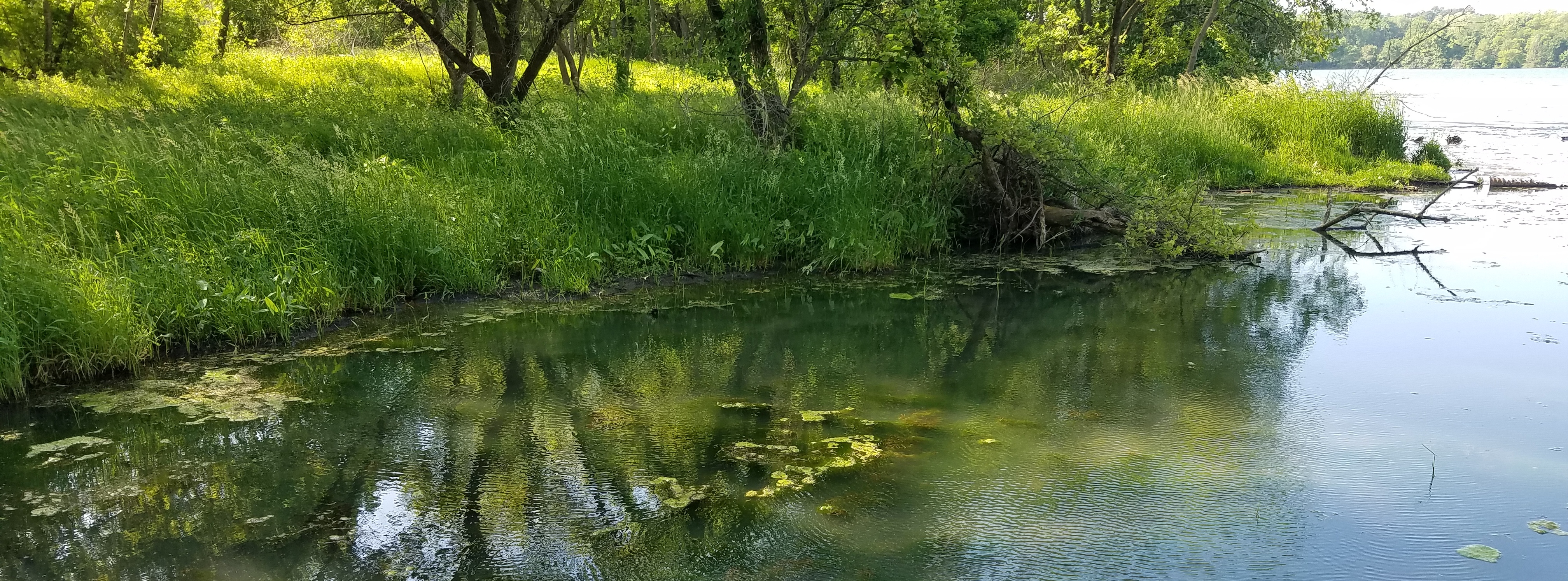
On the state park trail near where I live most people don’t wear protective equipment. The Iowa Department of Natural Resources does not require it although they request people otherwise maintain social distancing. Joggers, hikers and bicyclists haven’t been wearing facial masks, although I spotted a family group wearing them while taking a hike.
My activities outside home are restricted to grocery shopping, drug store visits, gasoline purchases, medical visits, and a shift per week at the farm. The farm crew moved on site at the beginning of the pandemic and has been self-isolating since then. I work alone in the greenhouse when I’m there. Other than at the farm, I wear one of my homemade face masks whenever I’m with people anywhere else.
I have been participating in TestIowa, the statewide COVID-19 response application. The app suggested I was eligible to be tested so I went to a drive-up clinic at nearby Kirkwood Community College. The result was negative. After visiting clinics for a diabetes follow up I made a list of conditions I’m experiencing. There were a dozen. I’m at a loss to say when all that happened but I feel pretty good. Feeling good likely hinders the effort to address these conditions as well as I otherwise might.
As spring turns to summer I’m ready for change. It’s a time when the morning thunderstorm is both familiar and frightening — a time to persist in doing what’s right for our family and for the broader society.
Vice President Joe Biden in a May 2010 rope line in Cedar Rapids, Iowa.
Now that the primary elections are behind us it is time to look ahead politically toward the general election.
Get ready to vote for Joe Biden as president.
Biden is the only thing standing between us and another four years of a president who seeks to dismantle everything we’ve come to know.
Think I’m exaggerating?
During the coronavirus pandemic the president has suggested cutting payroll taxes multiple times. If he did, it would be an assault on Social Security and Medicare.
Donald Trump repeatedly said if elected to a second term he would cut Social Security and Medicare to address his out of control budget. Twice (Jan. 23 & March 2) he walked those comments back tweeting he would protect Social Security and Medicare. Which is it? Do you trust him?
Even today as the Congress contemplates a new pandemic relief bill Republicans are talking about raiding the Social Security Trust Fund. Some view the trust fund as a piggy bank they’d like to break open and spend if they could.
I’m not concerned for myself but for our daughter and her cohort. Since I was a teenager I knew there would be something to retire on in Social Security and contributed through payroll taxes for 50 years. I’d like the programs to be solvent and available for them.
Is Biden perfect? No. Get over it. Get ready to vote for Joe Biden on Nov. 3.
~ Published in the June 4, 2020 edition of the Solon Economist
At the farm the major crops for the CSA vegetable shares are in. We took time off from new seeding and begin fall crops next week. At home initial garden planting finished yesterday and a few sections have been replanted. Every available spot in our seven plots has been planted — the best space utilization since we moved here in 1993.
Time to consider some lessons learned. This post is about planning and I hope there will be others about technology, seed starting and other aspects of gardening in the near future.
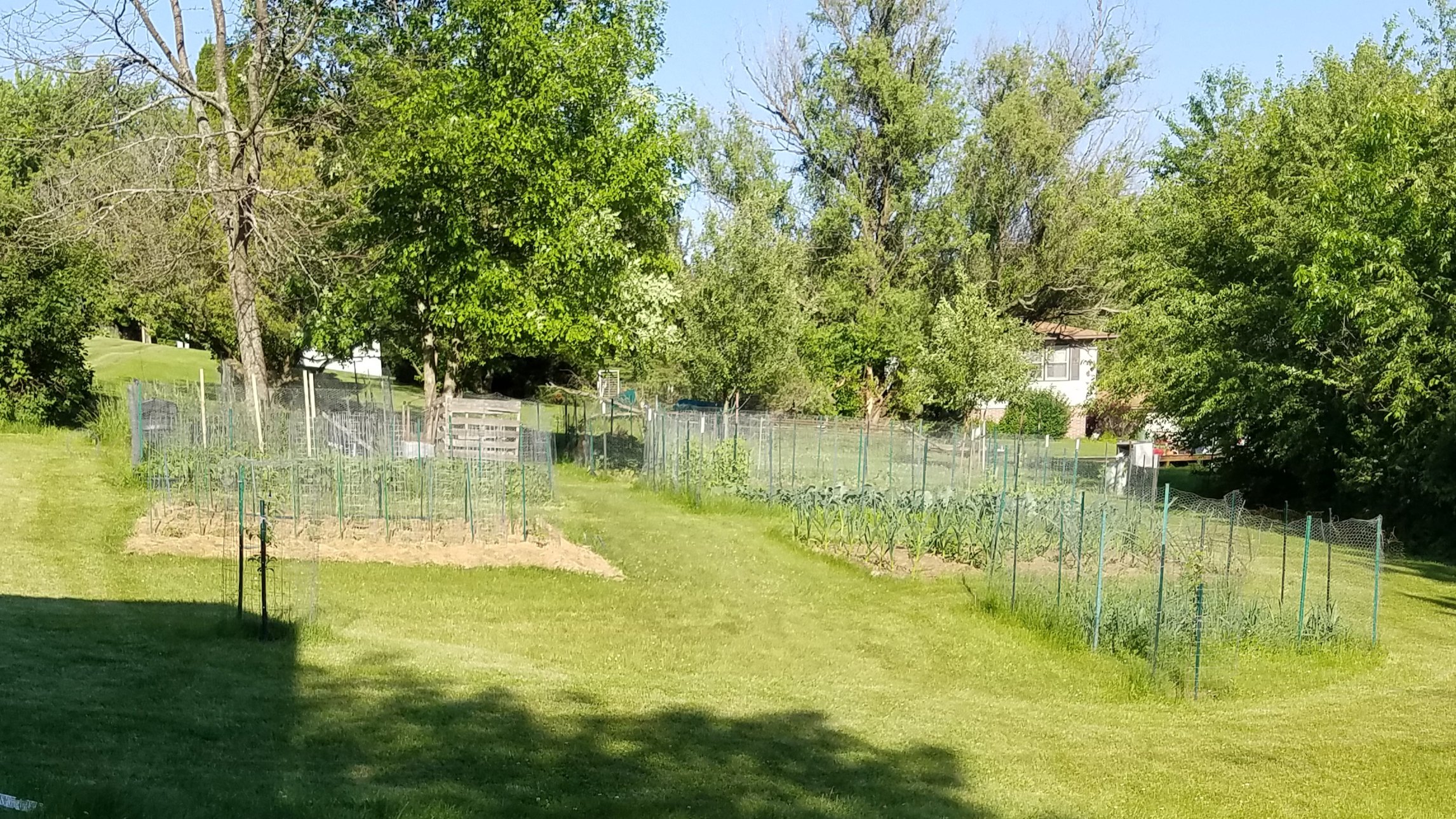
With the exception of adding two apple trees near the west entry to the garden the layout remained the same as last year. Seven plots with three in specialty crops (tomatoes, onions and garlic) and four divided into rows with three-foot sections in each to separate varieties.
Since I began starting seedlings at the farm a few years ago I produce more than I need. This results in a tendency to use them, over-planting some leafy green vegetables which produced in abundance yielding restricted space availability for other crops. Family and friends can only eat so many leafy green vegetables.
I put in a lot of broccoli for freezing (33 plants), more kohlrabi than we will use, and varieties I don’t normally grow (mustard greens, two kinds of chard, okra, collards) because I got free seeds at the home, farm and auto supply store. I’m glad for the experience growing these varieties yet intend to harvest everything in one section of greens this week and replace it with more desirable tomatoes, many of which are mystery tomatoes from a wide variety of free packets from work. Even though the plan was to reduce the number of tomato plants because I canned a lot of them in 2019, I’m gravitating back to the number of plants I had because of the abundance of greens and tomato seedlings.
The main tomato patch is planned by variety (slicers and plums) although I got which is which mixed up when preparing the seedlings for transplant. There are also five plantings of cherries in another plot. Tomatoes make a great gift, so if they all produce, there will be no problem finding homes for them if the canning jars and freezer are full.
Each year I get a little smarter about deer deterrence. In addition to fencing everything with four foot chicken wire, I’ve used two tactics. I position plants deer like furthest away from the fence. This year I put the okra in the center of a plot so they can’t reach over the fence and eat the leaves. The high fence (five feet with an exposed section at the bottom) around the tomato patch also serves to keep them away from eating tender shoots and has improved production. I also use what I call gang planting. That is, I plant rows closer together so deer do not have a place to land if they jump the four foot fence. This year I spaced the rows more properly to enhance production. We’ll see how that goes. Since I began working on these issues, deer have been a minor inconvenience rather than a problem. I appreciate their help cleaning up fallen apples when there is fruit.
There are the questions of rabbits and small rodents. The main trouble with rabbits is when the new bunnies are born and they get into everything. Mature rabbits tend not to dig under the fences, partly because I don’t regularly mow the lawn or use any kind of spray or fertilizer. There is plenty for them to eat more readily available. The undisciplined litter of bunnies is unaware of these “rules.” Their reign of terror on the vegetable patch is short because predators reduce the population quickly. Thus far I live and let live with rabbits, although am skeptical that will be a long term condition of gardening. We keep a watchful eye on each other.
Planting potatoes in containers eliminated the problem of burrowing rodents eating into the tubers before I dug them. They continue to nibble at bulbous roots like beets, radishes and carrots in the rows. I’ve come to accept it as resolved through detente and just live with the damage. At such time there is not enough left for our family from their foraging my attitude could change. I rarely see the rodents although I am aware of their presence. They broke into the sealed compost container for kitchen waste.
The last planning issue is bigger, beginning with trees I situated in the garden that got away from me — the locust tree is dying, and the three oak trees planted the year our daughter graduated from high school (one for each of us) need to be thinned to one. The shade they provide has protected crops in the blistering sun of planetary warming and in times of drought. They became part of the overall garden design although that was adaptation rather then planning.
I have big ideas. One fall I’ll clear the plots early and take the locust down and cut two of the three oaks as they are planted too closely together and have grown too tall to transplant them. At the same time I may hire a landscaping firm to create a deer-proof enclosure and re-structure the plot layout to improve space utilization. That would enable me to get rid of a lot of the chicken wire. I’ll also build a shed to store garden tools so I don’t have to continuously wear a path (now visible from space) from the garden to the garage. These things have been delayed because of financial constraints. Soon we may be in a position to act on them.
Thirty seven years of gardening leads me to this formal reflection about what I’m doing. Next up will be technology which is making a big, positive impact in getting the plots planted and will hopefully improve yield.
When the news goes to hell, like it did on Friday, I retreat.
In an on line chat about poetry I wrote a follower, “Hope things are going better in Canada than they are here.”
“They are, very much so here in B.C.,” he responded. “I’m not a flag waver type but this present moment produces a real sense of refuge.”
On Friday moving to Canada was not out of the question.
To where did I retreat? I worked outdoors from 7 a.m. until 4 p.m. on Saturday. I harvested grass clippings for mulch, put in the seventh garden plot, and called initial garden planting done.
I picked kale and delivered it to one of the library workers. Our public library remains closed because of the coronavirus pandemic yet they continue to run limited operations behind locked doors. Next week they begin curb side materials pickup as they determine how best to reopen. The local newspaper featured a photograph of the librarian wearing a mask in from of the building. Our library is the most obvious local indicator of the progress of the pandemic and economic recovery.
Once again, a video shared in social media — the May 25 murder of George Floyd by a police officer in Minneapolis — sparked demonstrations and violence broke out in cities around the United States. Coverage dominated the news, eclipsing every other story, including the coronavirus pandemic which has now resulted in more than 100,000 U.S. deaths according to official statistics. It is a sign of the times I didn’t hear of Saturday’s demonstrations in the county seat, or in nearby Cedar Rapids until after working in the garden. There were no demonstrations where I live.
The thing about a retreat is it has a fixed beginning and end point, leaving us with the question what do we do next? It’s not complicated.
Above everything else, addressing the lack of leadership in our current government is a priority. That means voting the Republicans out of office in the 2020 and 2022 election cycles. It is difficult to see how any substantial change will be possible, in any area of society, until that is done. I’d much rather be writing about the climate crisis, income inequality, and social justice. For that to have meaning, we need leadership to set different priorities and move the country toward solutions. We can point out solutions to the climate crisis and income inequality, and that black lives matter all we want. To make a difference, our only hope is to change our government.
My last paycheck from a job was in April after retiring from the home, farm and auto supply store. Our expenses came down dramatically during the pandemic so there was money left from our pensions to pay down debt and donate to political campaigns. We’ll be doing more of that. Better than that will be to develop a positive message about who we are as Iowans and as Americans and to share that broadly. Living with a demagogue as president has been frustrating. We have to believe our best days are ahead of us and take action to work toward that end.
Someone asked for the recipe when I posted this photo in social media. I was taken aback.
There was no recipe, I just made it out of the rhubarb and my experience. In a kitchen garden we don’t open a lot of cookbooks.
Ingredients arrive from multiple sources and we consider them, make dishes and meals, using what is available in the ice box, garden, pantry, and our imagination. Experience comes into play. It is a way to source food, cook and eat that isn’t emphasized as much as its value warrants.
Living with a kitchen garden is as good a way to produce meals as I know. It takes some experience but rather than ask, “what is the recipe?” an alternative is “How would this product be made palatable, nutritious and tasty?”
Here’s how I responded to the question:
I saved and diced all the rhubarb that was in my CSA share. It filled this dish. In a mixing bowl I put the rhubarb, one scant cup of granulated sugar, a tablespoon of ground cinnamon, sprinklings of ground cloves and ground allspice, a pinch of salt and two tablespoons of all purpose flour and mixed until incorporated. I returned the mixture to the clean baking dish and sprinkled about one to two tablespoons of water on top. (If I was making apple crisp I would use lemon juice here. Rhubarb is already plenty tart).
For the topping, just use any that you like. This one has a stick of chilled, cubed salted butter, a cup of rolled oats, two thirds cup packed brown sugar and a pinch of salt. I use a pastry cutter to blend everything together, leaving it in chunks. Sprinkle the topping evenly and baked 35 minutes in a 375 degree oven.
That’s a recipe of sorts. If a person eats ice cream, a scoop on the side of a warm, just out of the oven serving of rhubarb crisp would be divine. Or as close to that as we humans can get.
No one wants to die early of COVID-19. This morning Johns Hopkins University reported there have been 1.7 million diagnoses of the disease in the United States and more than 100,000 people died because of it in less than four months.
May the souls of the departed rest in peace. May their families and friends find comfort as we go on with our lives.
I participate in TestIowa, the State of Iowa’s on line COVID-19 testing program. On Monday I was approved for testing and made an appointment at a drive-through test site 11 miles from home. Yesterday I arrived early for my appointment and there was no waiting. The site was well organized with lots of staff, including a half dozen uniformed Iowa National Guard soldiers directing traffic and maintaining security. The site could handle lot more tests than they were. The deep nasal swab used to take a culture was uncomfortable yet tolerable. The results should be posted to my on line portal by Saturday. This post is not about me.
I’m thinking about George Floyd who died after a Minneapolis policeman knelt on his neck while he was being arrested. In a time of ubiquitous cameras and recorders the incident was captured on video multiple times and posted on the internet. It rightly provoked outrage. Four police officers were fired after Floyd’s death yet that shouldn’t be the end of it. Why weren’t they arrested? We know the answer. There was no justice for George Floyd. He did not deserve to die.
While passing the milestone of 100,000 deaths from the coronavirus garnered attention yesterday we cannot forget the systemic racism that permeates our culture. Americans are not free unless all of us are free. The death of another black man in the hands of police is evidence we are bound to racism that shows itself only rarely. Its roots run much deeper.
How do we address that? I don’t know but unless we recognize racism for what it is in our lives there will be no addressing it. We have to do more than react when another black man dies. That death tally is not being closely followed yet it is as important and more enduring than the coronavirus.
Shopping in person is my least favorite thing in the third month of the coronavirus pandemic.
I dislike losing control and exposing myself to maladies real and imagined. Since the pandemic is real, personal shopping activities are reduced to a minimum. That bodes ill for the economic recovery. Our household will be just fine with less shopping.
Some stores require customers wear a mask and others don’t. I have two clean, homemade masks in the car with me and wear them into retail establishments. Most retailers have taken action to protect their workers, but customers? “The customer is always right” has taken on new meaning.
In our neighborhood things are loosening up. We live next to a large lake. Foot traffic to the boat docks and trail was heavy over the long weekend as families made their way to get out of the house. A couple of residents are planning yard sales in early June. Rest assured there will be no social distancing in those driveways and garages. One neighbor plans to walk the streets to distribute popsicles in celebration of a child’s birthday. Don’t get me started on the ice cream truck that plays an annoying version of Scott Joplin’s The Entertainer while hawking wares. At least the parcel delivery drivers wear masks, if the USPS contractor does not.
The small town convenience store is a barometer of what’s going on in the community. I had to get gasoline to finish mowing so I stopped at one on the way to the CSA to pick up our weekly share. I paid at the pump. Tension rested over everything as I stood fueling. They were busy yet activity seemed subdued compared to previous holiday weekends. No one was wearing protective equipment. I used only my right hand to touch anything. When I got back in the car I cleaned up with a sanitizing wipe kept for that purpose.
I didn’t go inside to play the lottery, which I normally like to do. Last time retail clerks wore masks and gloves, although they hadn’t put up a plexiglass barrier like other convenience stores. That was several weeks ago and they may have changed. Money is dirty whether there is a pandemic or not.
We are out of milk. That’s the sign it’s time to make a shopping trip. Dread it though I do, I’ll venture out. I have a list so I can spend the least possible time inside the store. There won’t be any impulse purchases today and that’s bad for the economic recovery as well.
Being an American is a mixed bag. We have some of the smartest people on the planet working on big issues, but everyday folk could care less. Part of the problem is a lack of political leadership. Part of it is tied to a progressive deterioration of learning. Everything gets politicized and in practice facts have been cut loose from their mooring. We are on our own to study and make a determination of what to do with our lives. Some call that “freedom.” I call it re-inventing the wheel.
If the past weekend taught anything it is summer will not be repressed. People have priorities and one of them is re-enacting trusted and valued behaviors. In the age of the coronavirus people will have their summer. I believe most of us will survive. What do I know?
 Save Me the Plums: My Gourmet Memoir by Ruth Reichl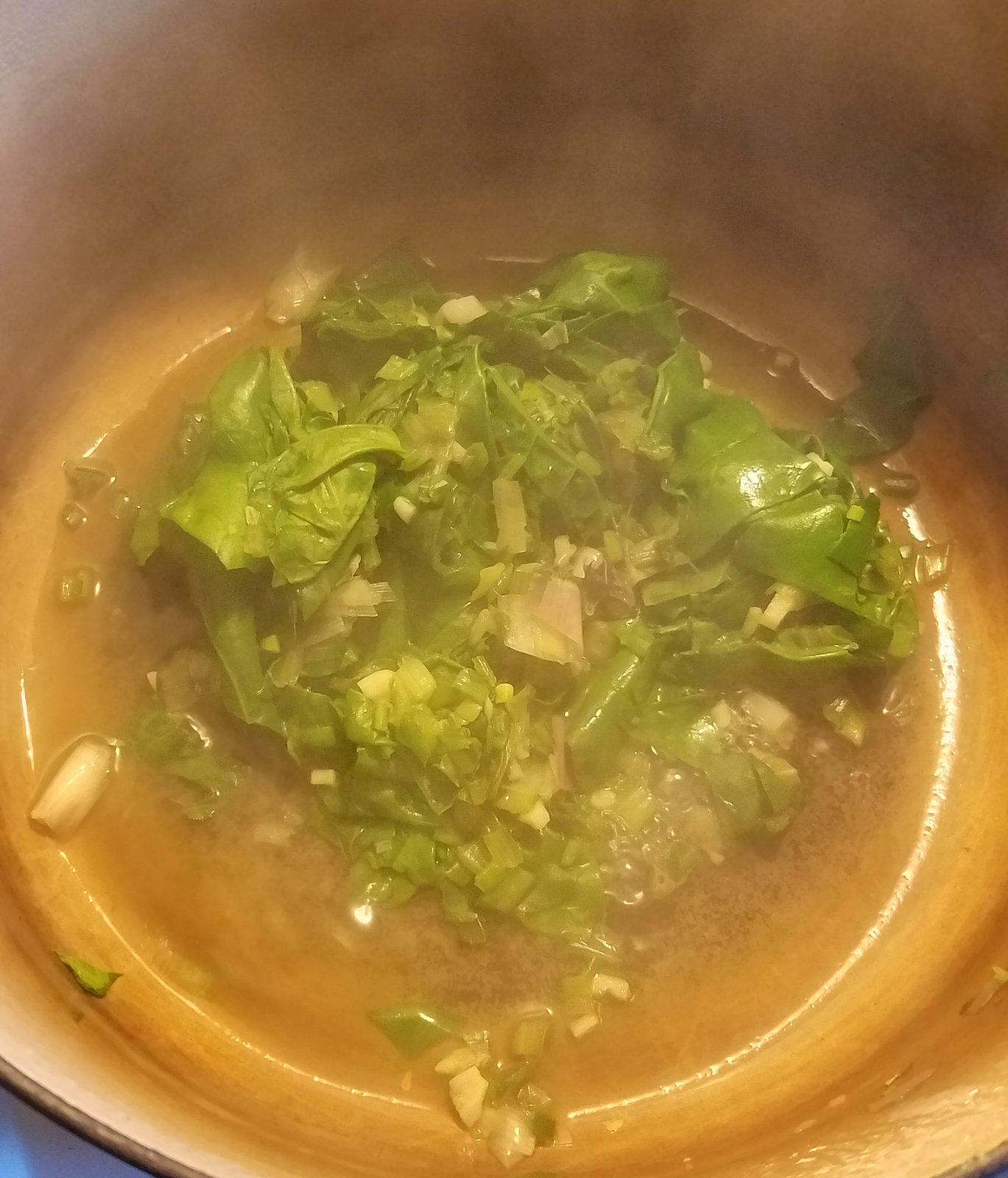





 Journey Home
You must be logged in to post a comment.