The second No Kings Rally in Mount Vernon, Iowa, on Oct. 18, 2025, was much better attended than the previous one. I did not count yet there were at least 500 people participating. The rally started off with a gathering outdoors at the First Street Community Center, then walked a block or so to line the streets at Highway One and First Street. Here’s what the rally looked like.
Community Center RallyCrowd size.Another crowd shot.The U.S. is all of US.
About all I heard from the speaker was, “something, something, Heather Cox Richardson.”
I found some farmer friends with whom I talked about apple trees. Former Iowa House member David Osterberg was there. He represented us when we first moved to Big Grove Township. Former Congressman Dave Loebsack arrived early to get a good perch. We reminisced about his first election to the Congress in 2006. Here are Dave and Terry Loebsack with their flags.
Terry and Dave Loebsack at the No Kings Rally in Mount Vernon, Iowa on Oct. 18, 2025.
There were hundreds of people, and many signs.
Release the filesNavy Vet fighting for Democracy again!Stand Up!No Kings I love America!Along Highway One.More signs.
The crowd stretched for blocks.
On the corner.Looking up hillLooking toward the hilltop from the end of the protest line.
And these…
Costumed protesters.Flags.
The clear autumn day was a backdrop for everyone to feel good about standing up for our rights. A lot of work remains to take back our government for everyone. Days like this make us hopeful. The feeling is infectious.
Beef and meat prices have little immediate impact on our family of vegetarians. About the only time I noticed the price of meat was while buying some for a low-income household. My money would have gone farther if prices were not so high.
“Beef prices have climbed to record highs after cattle ranchers slashed their herds due to a years long drought in the western United States that dried up lands used for grazing and raised feeding costs,” reported Reuters. “By the beginning of the year, the herd had dwindled to 86.7 million cattle, the smallest number for the time period since 1951, according to U.S. government data.”
Sounds like the impact of the climate crisis. Just saying.
The president said he is looking at doing something. “(The price of beef is) higher than we want it, and that’s going to be coming down pretty soon too. We did something,” Trump said in typical obfuscatory language. “We are working on beef, and I think we have a deal on beef.”
When the president says he “did something,” he is fighting a fire he started. That’s one heckuva way to run a government. This is also true with the collapse of the soybean market for American farmers, and so much more.
Here’s the core of it. Many people feel meat is an important part of an American diet. Cattle supply is one thing yet the Trump tariffs are another driving up prices. “The Trump administration’s tariffs are hitting major beef suppliers such as Brazil — and are set to push prices for American consumers even higher,” reported the Washington Post.
It’s no secret livestock farming is a primary cause of the climate crisis. Farmers and scientists are seeking solutions like anaerobic manure digesters in confinement livestock operations. They capture methane released as manure is processed into liquid fertilizer and bedding material for cows. The better solution is to find other sources of nutrition than meat.
I endeavor to set aside the drama of politicians in Washington, D.C. We, as a society should reduce our consumption of meat. There are plenty of other great tasting, nutritious things to eat. Likewise we can and should address the climate crisis… before it’s too late. The meat of it is eat less meat.
Garden with seven plots assigned letters for this post. Photo is from late October 2022.
Garlic will soon be in the ground, which means gardening season is officially wrapping up. What a year it was — easily the most productive garden I’ve had. There’s nothing left to do except pick the occasional, persistent leaf of kale and live from the pantry and freezer for a while. Time for a quick recap of how 2025 went. I labeled the plots on this October 2022 photo so you can follow along.
Plot A is a utility storage plot and has been at least since 2022. If I were to build a garden shed, it would go here. Two composters work here and the rest is a weedy mess with a lingering fence. Some spring flower bulbs I brought from Indiana mark the northern edge. There are a few Iris hidden in the weeds. The original Iris bulbs came from my in-law’s home soon after we moved here. The idea is to remove them and replant in front of the house. This was a garlic patch one year. The remains of garlic bulbs grow year after year. I harvest some of the scapes and let them go. The two oak trees I planted from acorns aren’t big now but eventually will be. That will consume nutrients from the nearby soil. I am leaving them both for now. The rest of the plot needs a good clearing when I have energy.
Plot B is a problem plot. The last time I planted the whole thing in a single crop was garlic harvested in 2024. The problem is when I first dug it I planted a row of tree seedlings. I got so busy at work I managed to transplant only two of them and a locust tree grew to be very large. It blew over in the Aug. 10, 2020 derecho, leaving a stump. This year I used the stump site as a burn pile in hope the stump would also be burned. I did plant a covered row on the west edge. In it grew some of the best lettuce and herbs I’ve yet had from our garden. When I clean it up, this is where next year’s leafy green vegetable plot will be.
Plot C is a large, main plot. This year I grew bell peppers, eggplant, multiple summer and winter squash varieties, four varieties of cucumbers, celery and green beans. Conditions were great for all of these. I made regular trips, sometimes twice a week, to local food pantries with extra squash and cucumbers. I restocked the freezer with grated zucchini and yellow squash for soup. I diced celery and froze it in pint bags, also for soup. I pickled enough cucumbers to last for a while. Green beans were particularly abundant with enough to freeze some. Next year, this plot returns to tomatoes. It is just the right size to hold my 70 cages.
Plot D was fallow this year, except for a 4×20 fenced area for hot peppers. Like everything else this year, the peppers grew in abundance. I piled grass clippings on the rest of the plot for use as garlic mulch. Tuesday I cleared all the clippings and next comes turning over the soil and tilling. I hope to plant 125 or so cloves this week.
Plot E was tomatoes. There are only three plots big enough to hold all of my tomato cages, plots C, D and E. The spring decision to plant more Granadero and Amish Paste plum tomatoes was solid. I made my canning plan for two dozen pints of sauce and had plenty for fresh eating. As a byproduct, I get a tomato liquid I can and use when making soup. The cherry tomatoes were abundant. I tried dehydrating cherry tomatoes and San Marzano plum tomatoes. The resulting nuggets have a rich tomato flavor and I can use them in a number of dishes or eat them for a snack. I plan more of that next year. As in recent years, I took the extra tomatoes to local food pantries.
Plot F was mostly leafy greens and cruciferous vegetables. This plot is a mainstay and it reflects how our eating habits changed. In spring I froze all the greens we need for the coming year. The quality was exceptional. During spring, I also make and can vegetable broth using greens and scraps from the garden. This is mostly for soup making and cooking rice. I harvested fennel, cauliflower, broccoli, and cabbage here. Greens will continue to produce past first frost, well into November or December. The most popular greens I give away are collards. My favorites are kale and chard. A person cannot have enough stored cabbage.
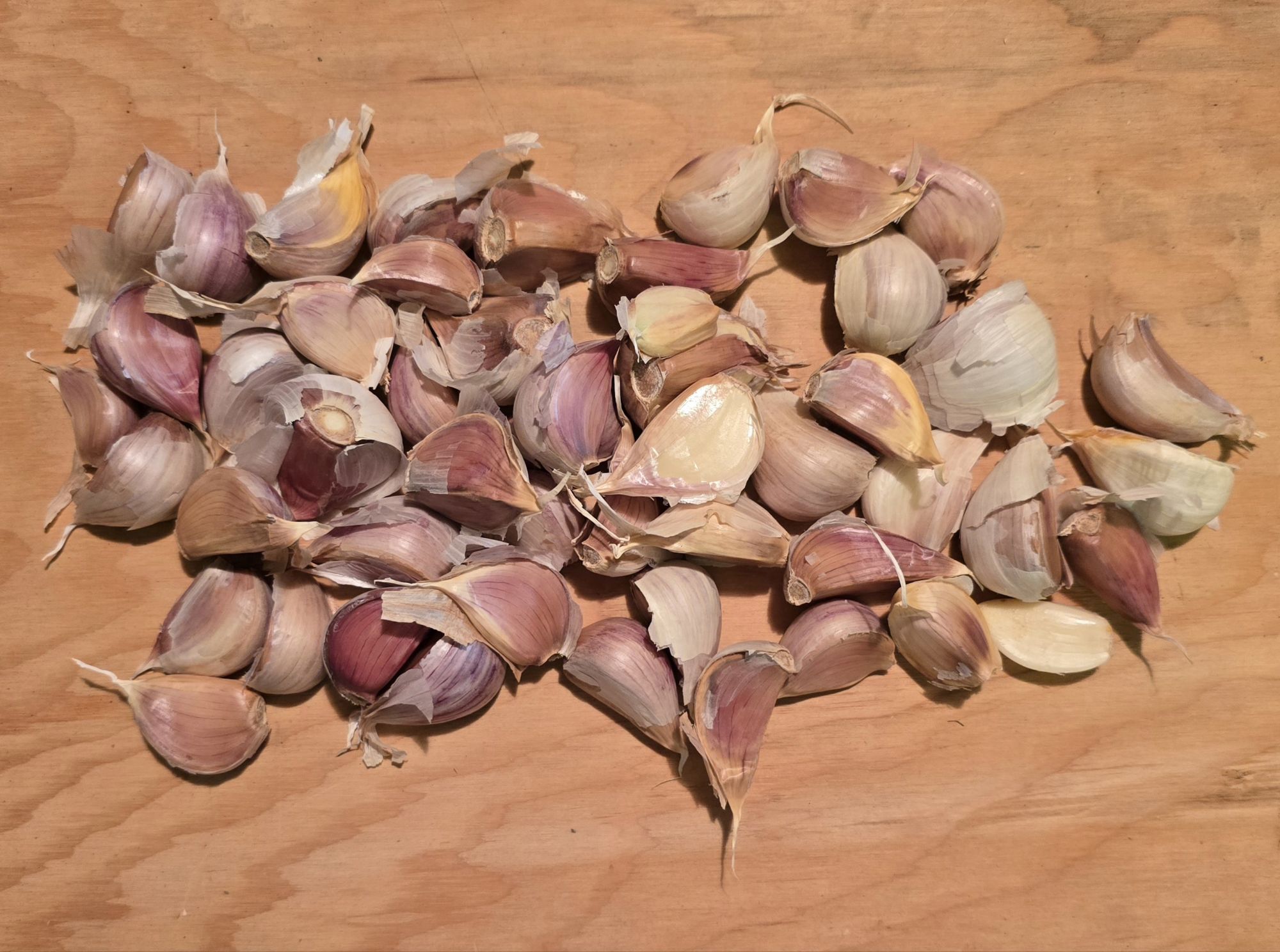
Plot G was this year’s garlic crop. Because I had COVID last year during garlic planting time, it didn’t get into the ground until spring. There were more smaller cloves, yet I got enough big ones to use as seed, and there are plenty of decent-sized heads to use in the kitchen.
The two small trees in the photo are Zestar! and Crimson Crisp apple trees. This year was the first they produced enough to do something with the fruit. The pear and other apple trees are across the yard and they had a banner year as well.
So that’s the big picture of my 2025 garden. I can’t wait to get the garlic planted and take it easy for a while.
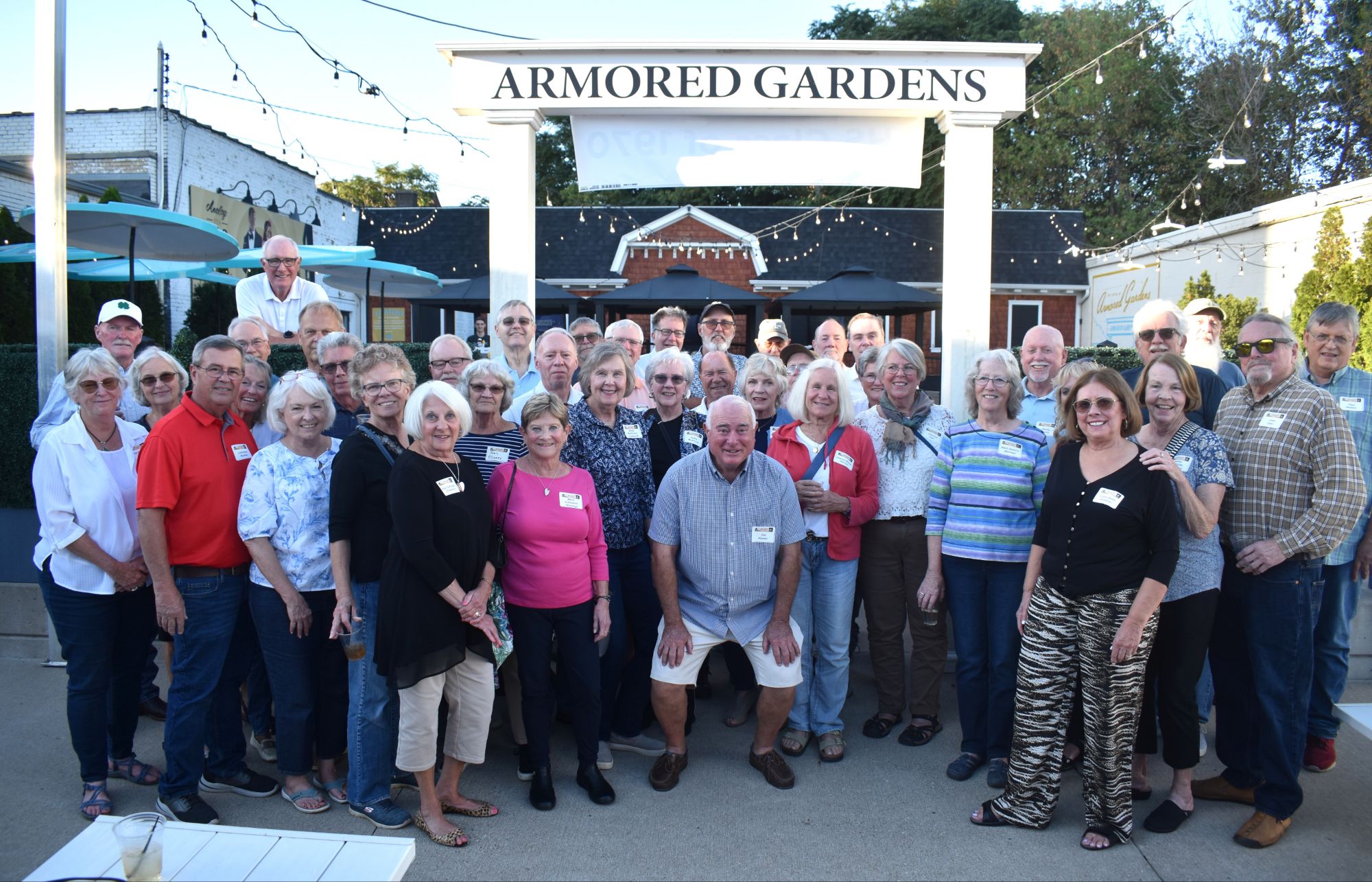
AHS High School Class of 1970 reunion on Sept. 25, 2025.
It’s one thing to take a posed photo — another to decide how it should be used: framed, shared online, or tucked away. That’s what this post explores.
We hired a photographer for our 55th high school class reunion. My instructions were to catch people looking at the lens with eyes open. I count 42 cheerful faces in this group photo. Of a class that numbered 260, that’s a lot still living. A few faces are partly hidden yet the image captures what was most important: proof we were there and together again.
Anyone who uses a camera seems likely to take posed photos. In the digital age it is easy to post them in social media and forget. Likewise, without being tethered to film, we can take many multiple shots of the same pose and then easily pick the best one to use. This is basic modern stuff.
The roots of my interest in posed photography, like so many creative things, lies with my maternal grandmother. I wrote about this in my book, An Iowa Life.
Mae was an influence on my photography. She purchased inexpensive cameras at the drug store and used them to record moments with the family. After researching the Polish community near Wilno, Minnesota, I came to believe her behavior with cameras in the 1960s had its roots in the inner cultural and spiritual realm filled with drama and emotion described previously. The surviving photograph of her sister Tillie’s confirmation is one example of this. The desire to pose and capture a photo was something creative I didn’t understand at the time. We were plain folk and when we got dressed for church, or to attend an event, it was a big deal. Mae wanted to capture those moments on film, consistent with her Polish upbringing. It’s a natural impulse that presents an interpretation of who we were. Of course, we always wanted to put the best foot forward in these constructed frames. (An Iowa Life by Paul Deaton).
When I was a grader, use of a photograph was simple: put it in an album. Such albums were defined more by the time frame in which film was exposed than subject matter. It was as if to say, “I just took these photographs, let’s save them.” On occasion we would make multiple prints of a “good” photo to give or mail to friends and relatives. Anything that did not make it into an album was stored in the envelope in which it came from the processor, along with the negatives. Eventually they accumulated in shoe boxes.
On May 4, 2008, I took my first photograph with a Kodak Easy Share digital camera. It changed everything. In particular, the subject matter of images was less about posing and more about casual capture, landscape and still life. We could snap photos like there was no tomorrow because of the lack of constraints caused by film. The number of images stored on a camera, and then transferred to a computer, exploded. A photograph became less special the way my grandmother understood it. It became a fungible commodity where without close examination everything looked the same. I mean, who had time for close examination of all those digital photographs?
With the rise of social media after 2006, a new place to save photographs began. When I post a photo on my BlueSky account, I do so with the idea other people might appreciate the work. Sometimes one goes viral but most of them get a few likes and then move on in the endless feed. Who knew looking at photos would become doom-scrolling? Social media lacks the permanence of a print or album, yet it is something important.
Most of the photographs from my high school class reunion will likely sit in a folder on the cloud until I want them again. I may get an 8 x 10 version of the reunion class photograph and put it in a standard frame. Partly to keep it handy to evoke its memories. Partly because as one person on our planning committee wrote, “regrettably, we will likely lose more classmates before our 60th reunion.” According to Social Security actuarial tables, 10 or 11 of the people in this photo are likely to die by then. The meaning is obvious. It remains what may be the last time I saw some of my friends. Isn’t this the reason we take photographs?
An advertisement circulates that the only AI people over 40 use is ChatGPT. Okay. I don’t pretend to know a lot about AI, and my experience with ChatGPT began in earnest only last week. I accept that AI can be a reasonable part of life, although I don’t understand the bigger picture. Larry Ellison of Oracle is one oligarch who talks like he gets it.
“I think it’s very, very clear: AI is a much bigger deal than the Industrial Revolution, electricity, and everything that’s come before,” Ellison said in a video conversation with former UK prime Minister Tony Blair.
“We will soon have not only artificial intelligence but also — much sooner than anticipated —artificial general intelligence and then, in the not-too-distant future, artificial superintelligence.” (Oracle’s Larry Ellison on AI: ‘Most Important Discovery in Human History’, Cloud Wars, Feb 25, 2025).
Bigger than electricity? We mere mortals must live our lives and depend upon basic science that produces electricity. How shall we adapt to AI? Who will change our flat tire on a long stretch of deserted Iowa highway?
This recent statement is tainted by my memory of Ellison from when I attended OpenWorld in 2006. He was onstage with a penguin to announce Oracle’s full support for Red Hat Linux. In other words, he was co-opting the open source software and branding Oracle’s support. What a prick. Well, the penguin was interesting, if concerned about being in a room full of people.
What did I learn last week? I asked, “What are best practices for using ChatGPT in writing?” The answer was long and confirmed my natural impulses on how to use it. To a degree, AI is all about what I’m thinking. It cautioned me to use ethical and transparent practices:
Disclose AI assistance when appropriate (especially in journalism or academia).
Don’t claim AI-generated content as wholly your own if it’s substantial.
Always fact-check: AI can make confident errors.
I found ChatGPT is an uninspired writer. The assignments I entered returned something wooden and definitely not mine. Its editing skills were positive for short paragraphs. I expect to spend time determining how I might use it. When I get stumped on how to word something I’ll paste the paragraph into the dialogue box and see what comes back. I have yet to use something the machine sent back without further editing. It will become one more tool among many in the writer’s workshop.
The machine helped improve the structure of my daily life. Through five iterations, I wrote daily work plans. The culmination was a template to use on writing days. Even without a daily plan, I have ideas on what to do to forget my worries and work on things in my personal life that need it. ChatGPT brought everything into sharp focus and I’m the better for it.
My morning wake up regimen began after a visit to a podiatrist for plantar fasciitis. By the end of last week, the machine and I added exercises to address not only plantar fasciitis, but balance, upper body strength, and my core. The process was much quicker than looking through websites or books on my shelf. After a few days, I’m feeling positive results. In a few months, I will take another look at the regimen.
In my quest to become a better photographer, I asked the machine to help me with a plan to capture half a dozen shots of the No Kings rally on Oct. 18. It proposed a series of different types of shots and refined it when I uploaded a map of the site with a description of the topography. It even gave me specific places to stand to get the shots. When doing an amateur photo shoot, we have to be alert for developments as they happen. Having a plan makes the experience better and hopefully produces better photographs.
There is a balance between using ChatGPT and Google search. The search engine incorporates AI, although I find it a bit annoying. Spare me the machine-generated narrative and just give me the facts. It won’t take long to determine which method to use for different types of queries.
Because of the internet we have AI in Big Grove Township. As we spend more time at home in retirement, managing daily affairs keeps us engaged and that’s good for our longevity. Like many people, I seek to spend less time online. ChatGPT is not really helping yet I want to use it. There in a nutshell is humanity.
Apple cider vinegar fermenting on the counter on Oct. 10, 2025.
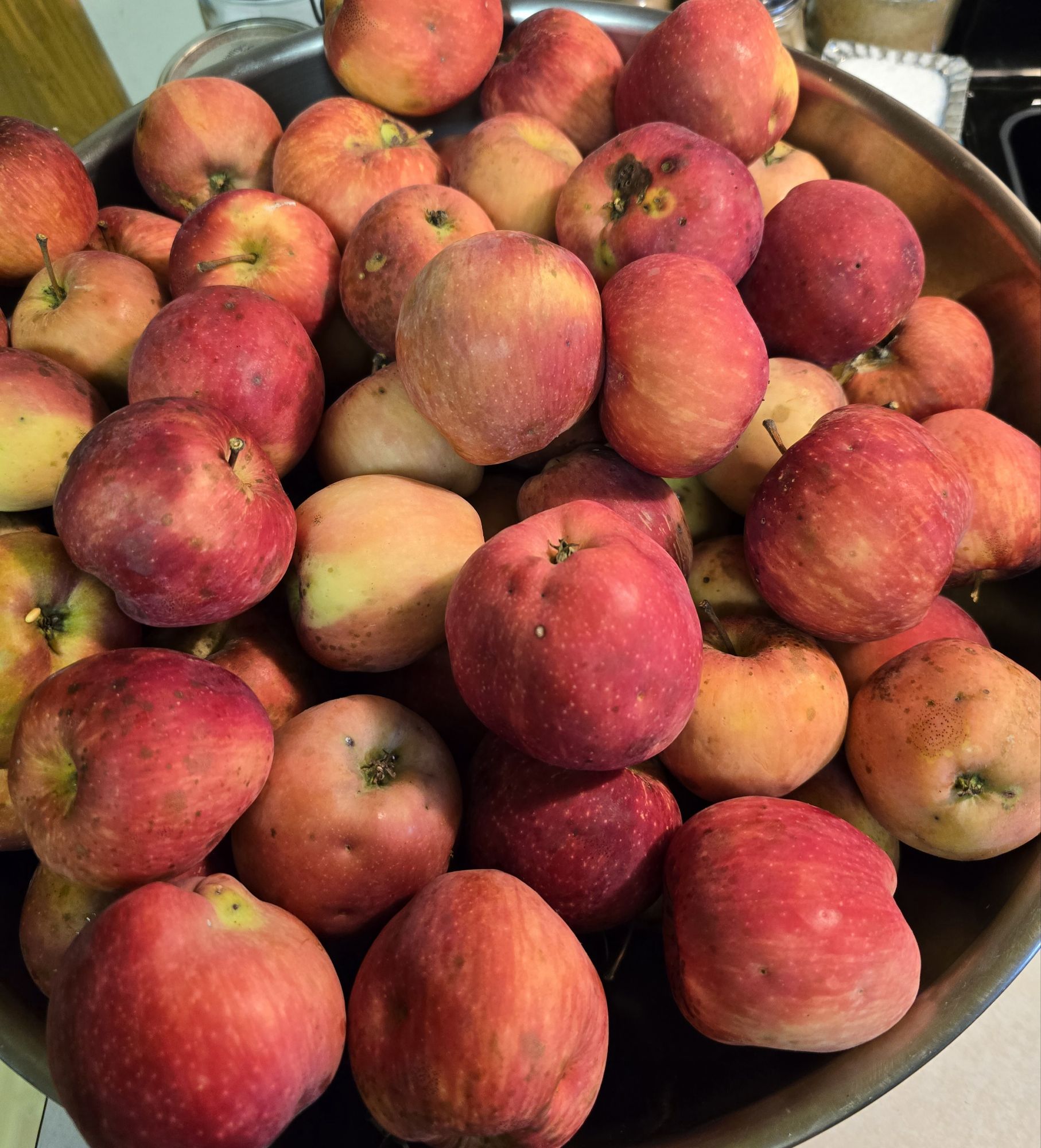
On Friday, I finished the last jar of apple cider vinegar. It’s been a big apple year, and it’s not over yet. Red Delicious still hang on the tree, and three bushels wait by the furnace. The remaining apples are for snacking or recipes like applesauce cake and cider. We don’t drink much cider, but the stuff from the backyard is every bit as good as what you’d get at an orchard or the store.
In 2013, a neighbor introduced me to home vinegar making. I’ve written about it half a dozen times on this blog and it is really simple. Here is a handy process outline:
Have home grown apples or know someone who does. It is too expensive to buy apples from a retailer for vinegar.
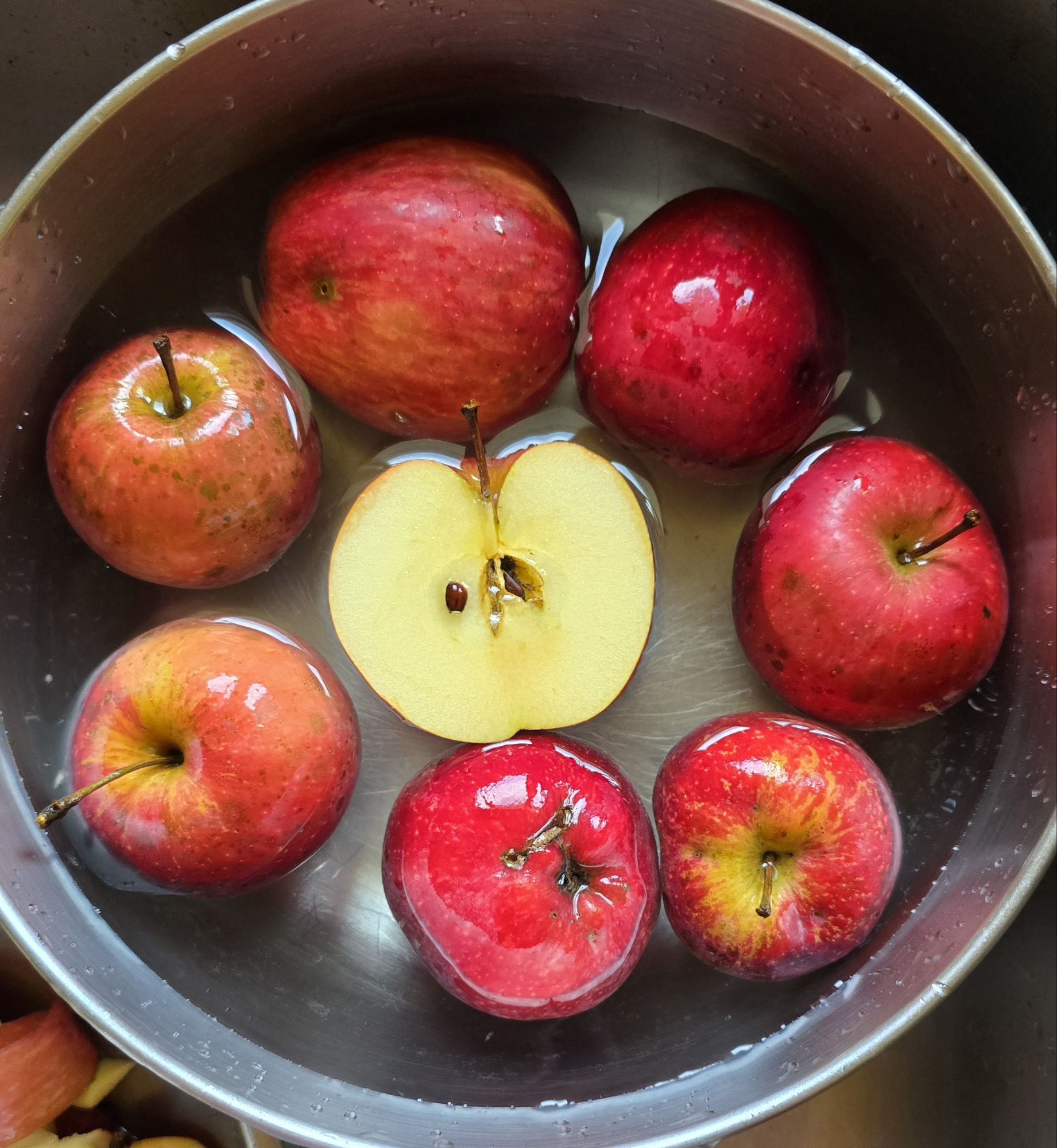
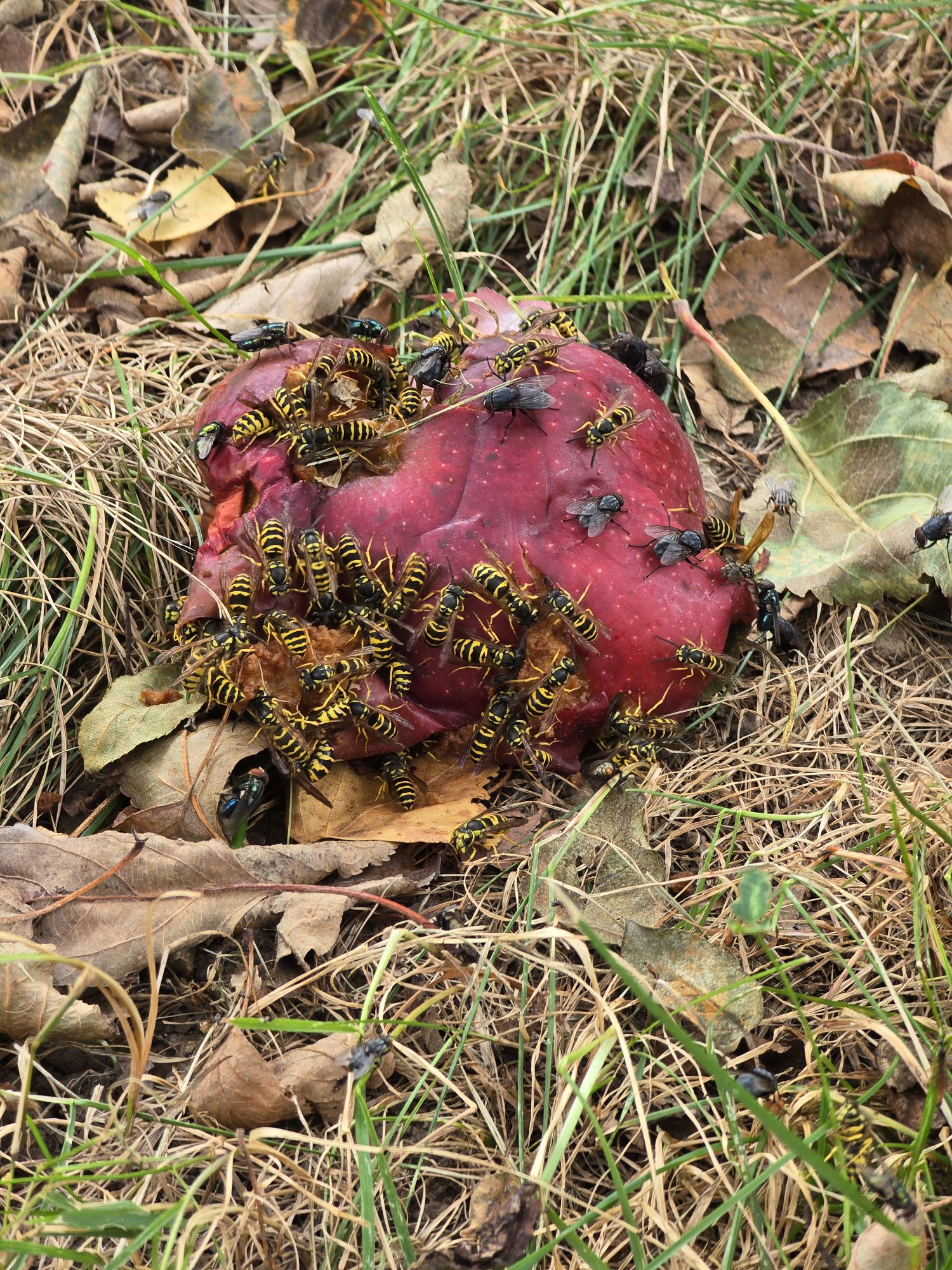
Apple selection is important. I don’t spray my trees, or do much of anything to grow bigger apples. I use Red Delicious apples for cider vinegar because I have so many of them in good years. They are also sweet with plenty of sugars for fermentation. After they ripen, I harvest a large quantity and sort them into categories: near perfect fruit (for refrigerator storage), best (fresh eating), seconds (culinary uses), gnarly apples with some usable flesh, and wildlife food. I find the gnarly apples make excellent cider because in paring them to cut away the bad spots, more apple skin goes into the juicer and gives the liquid a darker, more desirable color.
Equipment. My toolbox includes a Juiceman Juicer (the kind advertised on television back in the ancient days when I viewed the medium), a paring knife and a chef’s knife with large cutting board, two large Rubbermaid plastic pitchers, two different cone funnels, a large slotted spoon for skimming apple scum after juicing, a basting tool, and ten half gallon Mason jars. Vinegar will ferment on its own yet to speed up the process, I add an eighth of a teaspoon of Red Star Premier Blanc yeast, used primarily in wine-making. While not really hardware, it is a tool.
Set up work stations. You will need five: an apple sorting area (mine’s near the furnace), an apple washing station, a cutting station, a juicing station, and a fermentation station. Once fermentation begins, I have a shelf in a dark pantry where it finishes.
I did not keep time records. From the washing station to the fermentation station took roughly 12-15 hours to produce five half gallons over six daily shifts.
Make the vinegar.
Here are some notes.
Things go more quickly if larger apples are used. In a home garden that is not always possible. As mentioned, I use gnarly apples which takes more time.
Do a lot of work at each station. For example, cut and pare a large pile of apples at a time. Accumulate a big bowl or two of cut apples before juicing them. Focusing on a single task for a longer duration seems easier.
Keep the juicer clean. Stop juicing as many times as needed to ensure the solids are not backing up and blocking something.
The liquid coming from the juicer has four main components. A buoyant pulp that should be skimmed off and composted before pouring the extract into the Rubbermaid pitchers through a cone funnel. Allow the liquid to rest in the pitchers until it separates. There will be three layers: the top is grated bits of apple skins and flesh, the middle is the amber cider, and some apple particles sink to the bottom. If I have a quart or less left over at the end of a shift, I put that in a Mason jar and let it separate overnight.
Prepare the jars. Pour out what’s left in them — a mix of last year’s vinegar and the mother. I always keep a little vinegar in the jars to protect the mother until I’m ready for a new batch. Once the jars are clean and dry, place some of the mother back in and pour enough of last year’s vinegar to cover it.
I use the baster to get through the top layer to the cider in the middle. One baster at a time I transfer the liquid to the half gallon jars. When the jar is half filled, I add the one eighth teaspoon of yeast so it gets mixed in adequately.
Leave at least one inch of headspace in the jars. Then cover them with a cotton cloth secured by a rubber band.
Now we wait for fermentation to begin. it won’t take long, within a hour or so. As it begins, make sure there is enough headspace. Every batch is a little different depending on the fruit. I give fermentation a couple of days on the counter to get started. A reason I leave them on the counter a couple of days is so I don’t forget they are active. Once you finish this step they can be moved to pantry.
If I miss a few years, I have plenty of vinegar stored in one liter bottles to last. Like with anything, I use the oldest vinegar first. Pro tip: Clean all the equipment, especially the juicer, every day at the end of the shift. You will be glad you did.
This week was all about the shift to autumn—putting up hot peppers, processing apples, and getting ready for winter. Add a high school class reunion on Sept. 25, and it’s already been a busy season. Here are some of the best recent shots.
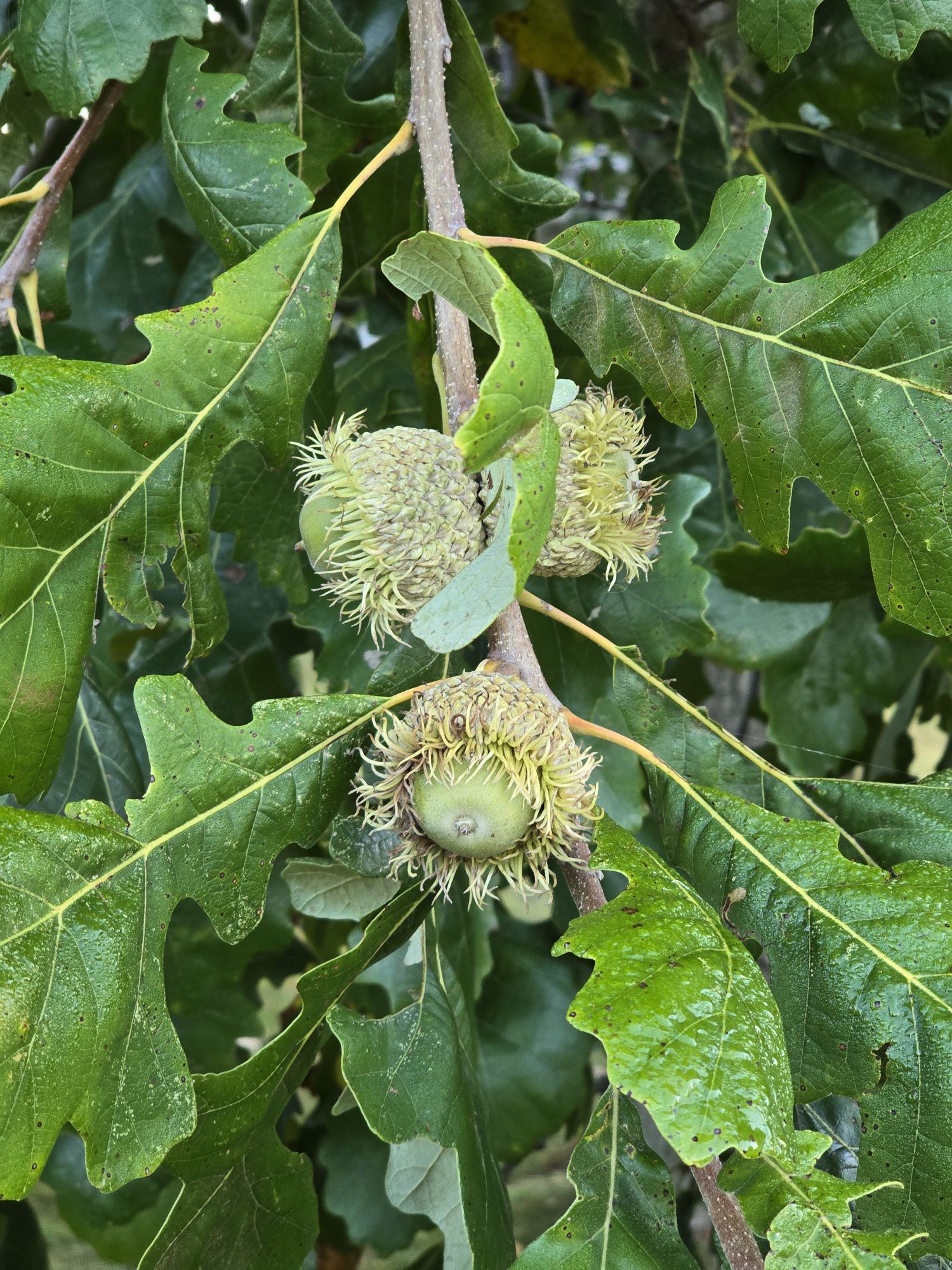
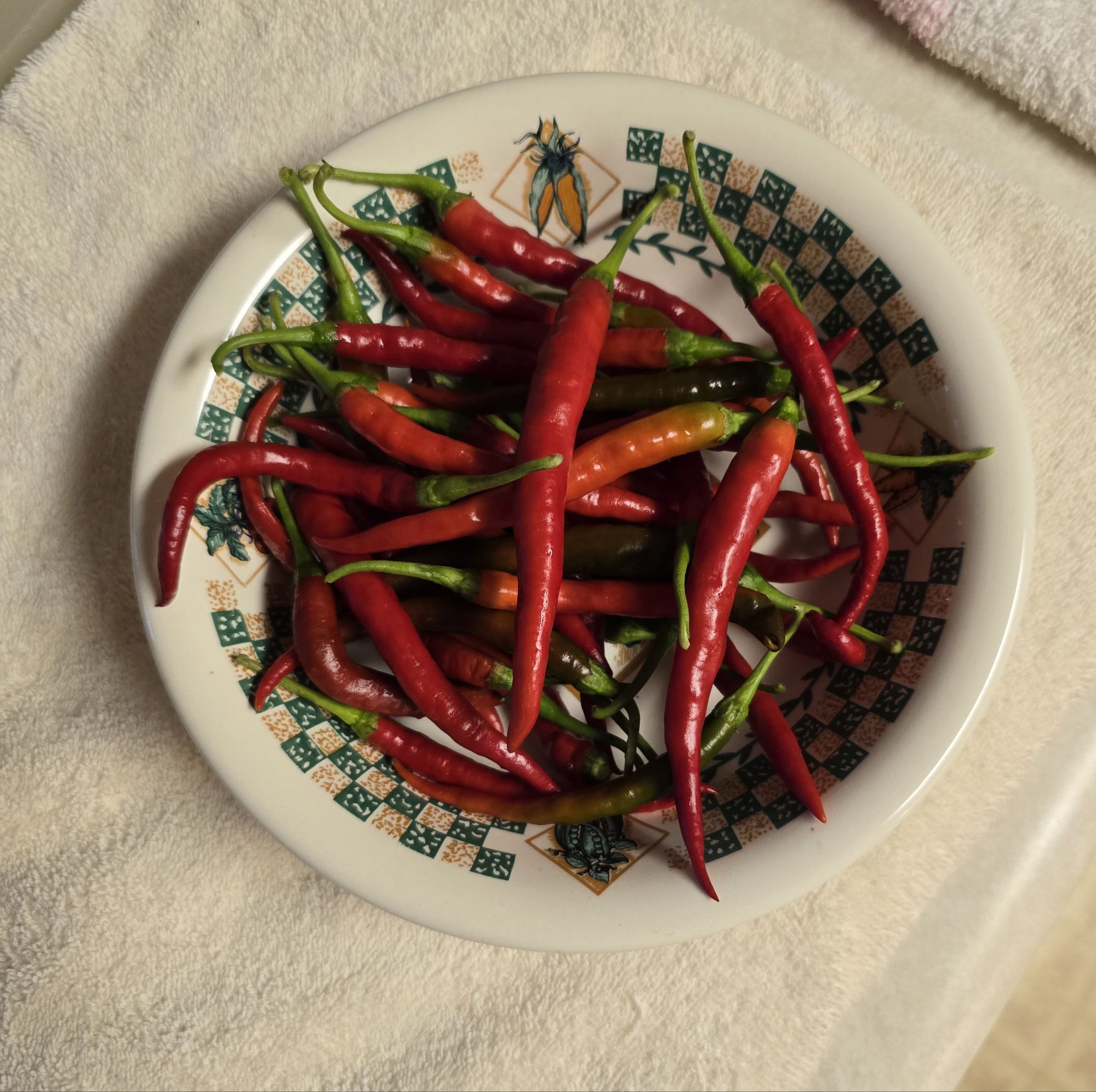
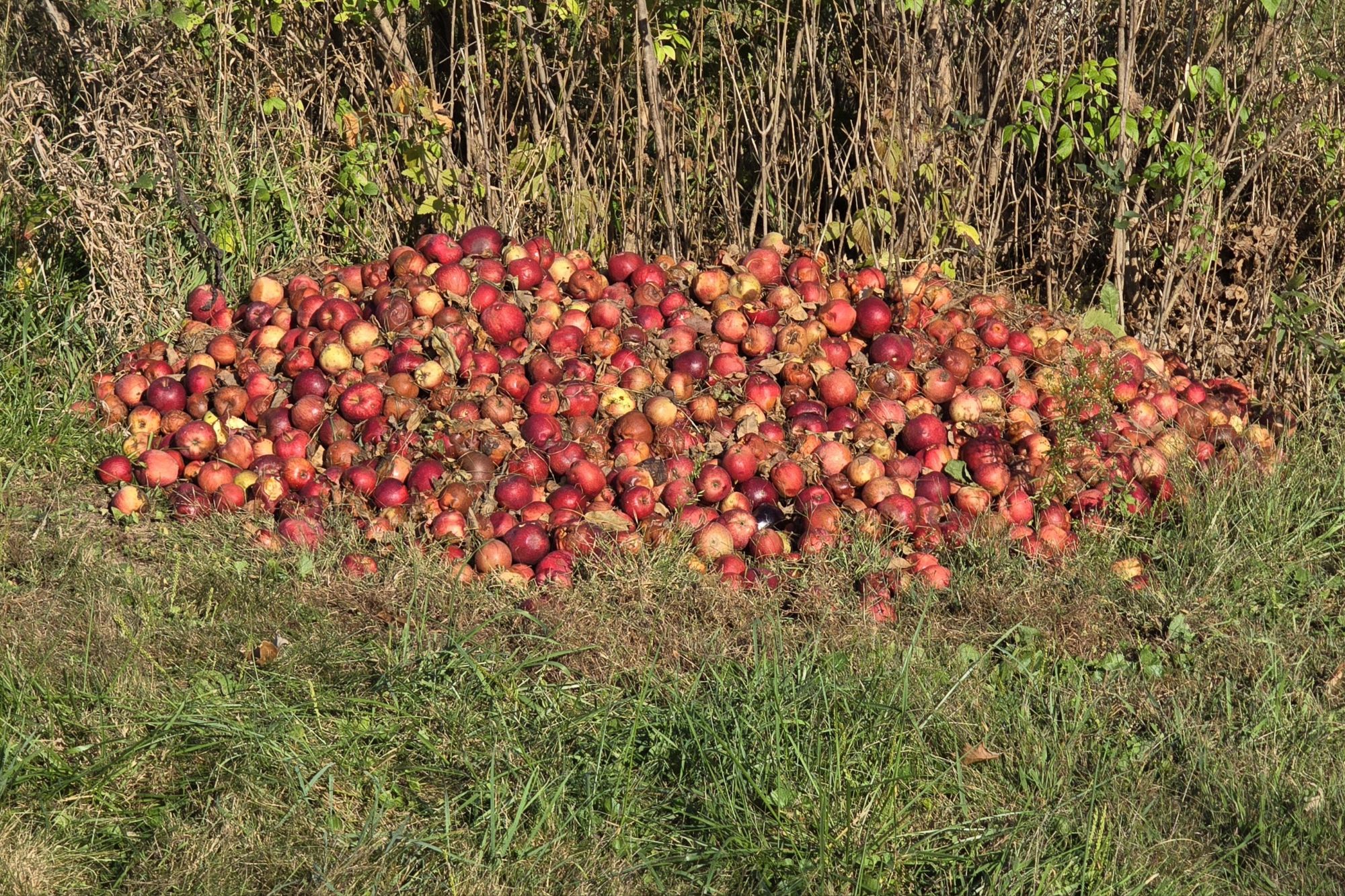
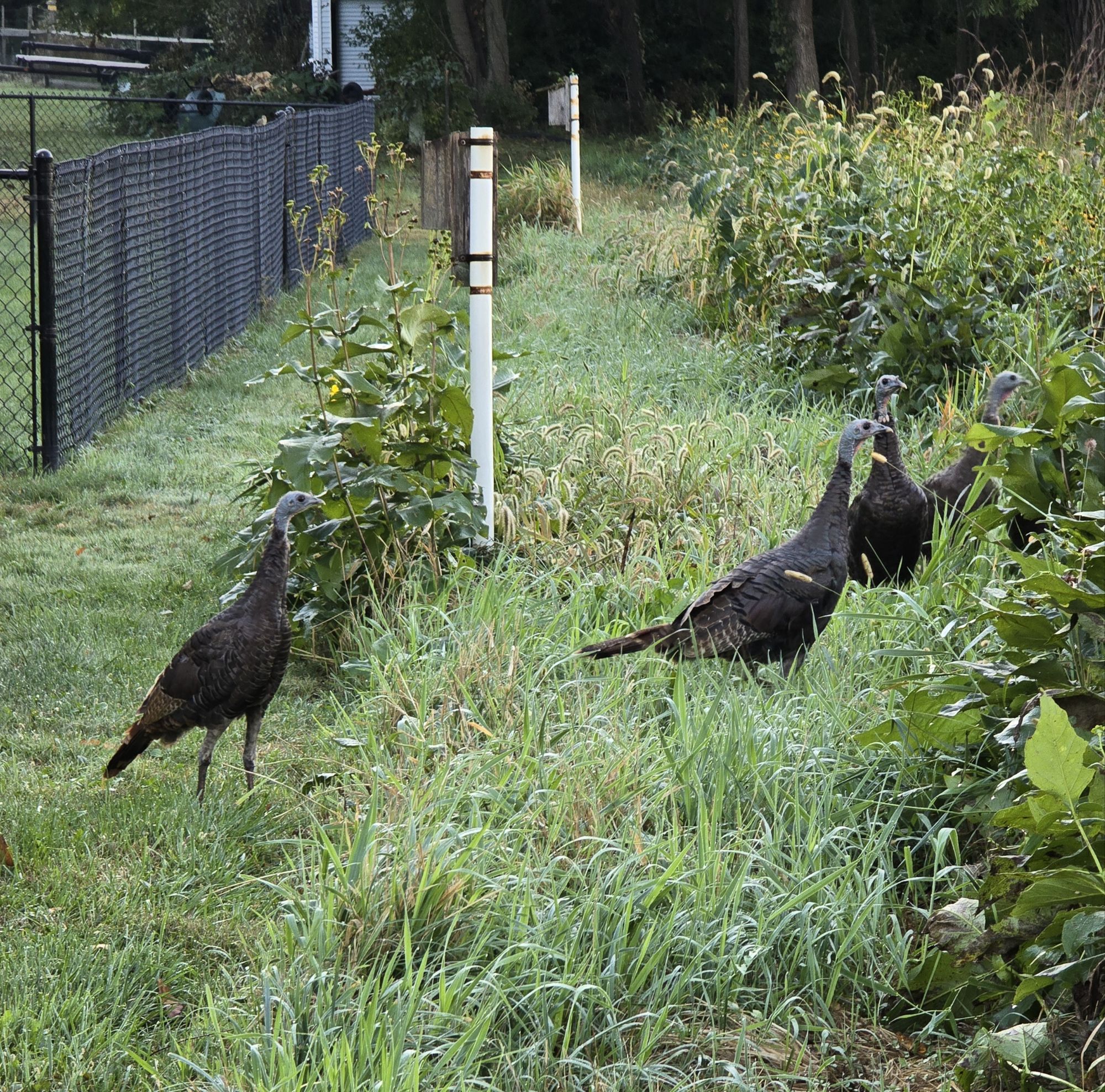
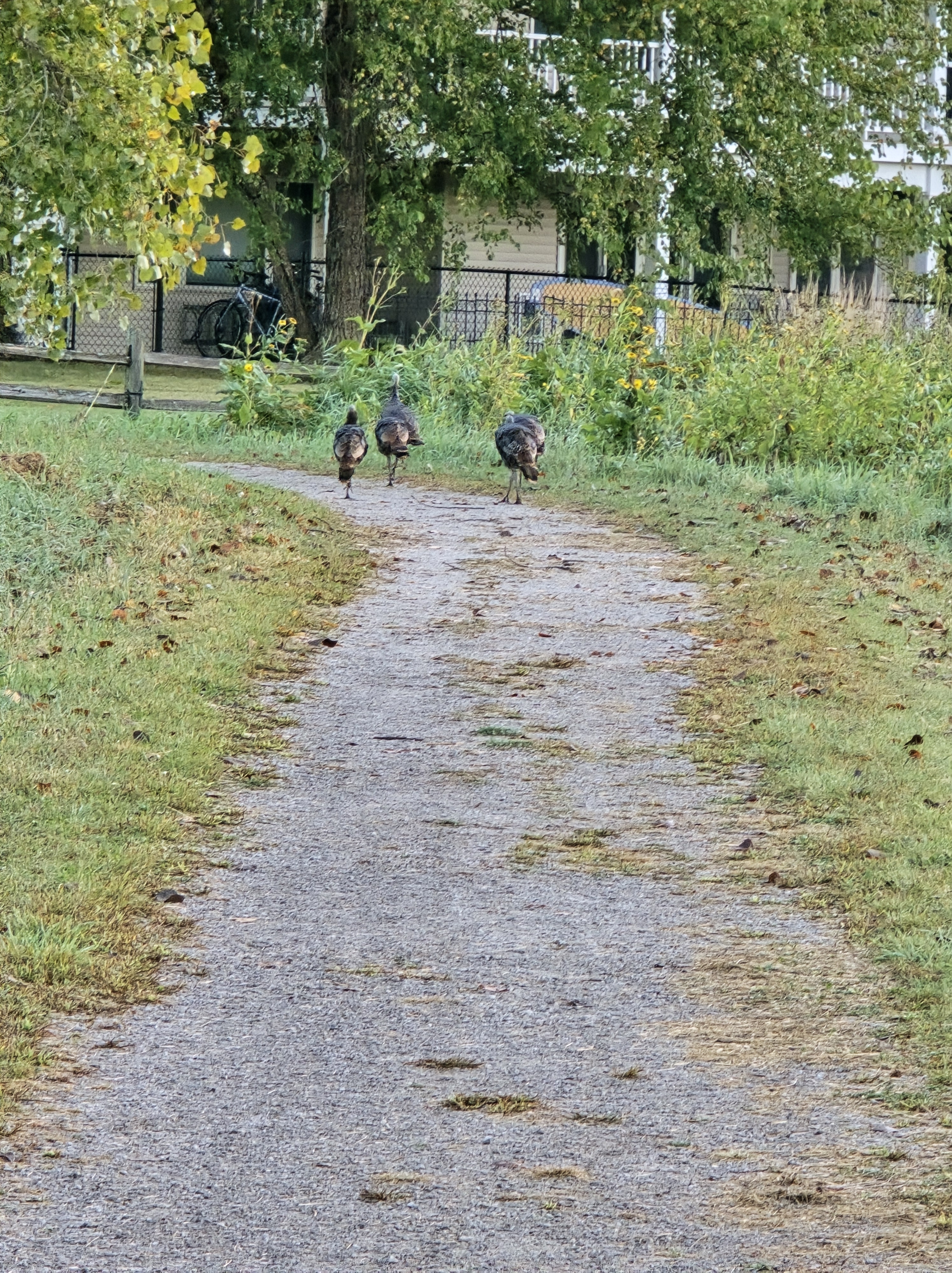
Bur Oak acorns.Gnarly apples make the best vinegar.Moon setting at dawn.The cayenne peppers keep coming from the garden. I dehydrate them, whiz them in the food mill and put them in jars for the kitchen and for gifting.Part of apple sorting is putting the low grade ones in a pile for wildlife. By spring they will be gone.Mist rising from the lake surface as overnight temperatures got into the 40s.Making apple cider vinegar dominated my work periods this week.Wild turkeys… likely aware hunting season is upon us.A high school classmate took this photo of the venue for our class reunion. That’s the Rock Island Arsenal bridge over the Mississippi River in the background.Sunrise on the state park trail.
Artificial intelligence is everywhere on the internet. The most common encounter I have is in responses to queries on Google search. It is annoying, yet that feeling might be my failure to adapt to modernity. Time will tell.
In an article posted at the National Library of Medicine, author Michael Cheng-Tek Tai wrote, “Artificial intelligence, known by some as the industrial revolution 4.0, is going to change not only the way we do things, how we relate to others, but also what we know about ourselves.” Like it or not, AI is already affecting me in those ways.
Earlier this month I got a free account with ChatGPT and began querying. Thursday, I typed in the dialogue box, “I received a number of responses to queries in October. In about 100-150 words, please analyze and describe them.” Following is the response I received.
In October, your responses showed a thoughtful, organized approach to learning and productivity. You explored practical topics such as meal planning, time management, and writing effectiveness, often asking for customized, actionable outputs like recipes, essays, or PDFs you could use on your mobile device. Your questions balanced curiosity and precision — for instance, refining a vegetarian enchilada recipe to fit available ingredients or requesting productivity adjustments for specific times of day. You also engaged with public affairs by seeking factual background on Dr. James Zogby, reflecting intellectual breadth. Overall, your October queries reveal a pattern of reflective self-improvement, efficiency-minded planning, and attention to detail across both creative and analytical pursuits.
I don’t often receive such positive responses to questions in real life. Of course the machine is giving back what I gave. I recall Dale Carnegie’s reminder, “Remember that a person’s name is to that person the sweetest and most important sound in any language.” Since I got my account, the machine never mentioned my name, although it remembers stuff about me better than I do. The machine is quite seductive.
Once I start something, I am quick to adapt, and I don’t reject AI out of hand. I find uses for the technology even though I remain generally skeptical about machine responses to my queries. Substantial impacts in my life, less than two weeks in are:
Instead of providing detailed sources for its work, the machine presents a returned narrative with a few links. The Zogby query is a good example. It gave me significant things to know about him. I know each one of those to be true from studying his work. It won’t always be the case, so a new dimension of query returns using AI is evaluating the quality of the information. The seductive tone of responses might have me overlooking this important aspect.
It can help with writing. AI is limited to what is currently available on public sources on the internet. That means I can’t usefully ask it to write long essays for me. What I can do is when I’m stumped about how to word something, type a draft sentence or two into the dialogue box and ask the machine to edit it. Without asking, it produced multiple examples of better ways to word something. If I continue to use it like this, it will be a time saver. I am confident AI won’t get it right for how I write. It will make me think about language in a constructive manner.
I’m four days in using AI to help plan a more productive day. With its”Balanced Day Plan,” I immediately eliminated a background concern that there is too much to do and not enough time in which to do it. I am fond of the saying an air traffic controller can only land one airplane at a time. So it is with tasks I have before me. AI finds a way to get it all into a day. If it can’t, it tells me. This serves as a stress reliever, helping me focus on the task at hand, and I do a better job with it. For example, I need to drink more water to stay hydrated. The balanced day plan actually schedules it, resulting in me drinking more water. This pursuit is just getting started and my best hope for AI lies herein.
There are plenty of tools to use ingredients on hand to make dinner. A most formidable one is my years of cooking experience, especially since when I lived in South Georgia 25 years ago. Because ChatGPT is interactive, a thread about vegetarian enchiladas can go back and forth, resolving issues, until I have something usable. Each cook has different approaches to doing that work, and using AI to help with cooking may be a short-duration fad. It does have capabilities to use if we ask the right questions.
Next step is to just use it. If I discover anything more, I will be sure to post about it.
The fall abundance of hot peppers found its resolution in jars of homemade pepper paste. This thick, tangy blend of peppers, garlic, sugar, and salt—simmered in a vinegar-and-water solution—became the perfect answer to the bags of jalapeño, serrano, Santo Domingo, and Anaheim peppers piling up in the refrigerator. The cayenne peppers were easier: they went to the dehydrator and became red pepper flakes. Yet this hot pepper paste, the result of weeks of simmering, blending, and refining, was a more patient project—one that bottled the heat of summer for the cold months ahead. It may be a permanent resolution of fall pepper abundance.
As hot peppers came from the garden into the kitchen in late summer I tried things. First, I made a quart of salsa to put on Mexican-style fare. Next I sliced jalapeño peppers and pickled them in home made apple cider vinegar. Two quarts of pickled peppers stored in the refrigerator will provide condiments for a full year. Then I began taking excess to the food pantry. I made cold pickled serranos and jalapeños. This was only the beginning of the crop. What next?
After stemming and slicing the peppers in half, I brought each batch to a boil in a mix of 1½ cups 5% white vinegar and 1 cup water. Once boiling, I turned the heat down to a simmer and let them go for about 20 more minutes. At first, I strained away most of the vinegar-water solution and put the peppers in a blender and pulsed until they were pureed. This produced a thick paste to use on tacos, or as an ingredient to replace fresh hot peppers when the season is over. I felt I was on to something.
As harvest continued I tried different pepper blends and moisture contents. A number of experimental jars collected in the refrigerator. The concept seemed good, yet our refrigerator is already too full to handle the abundance. I decide to try water bath canning the product and learned about pH.
I made the final product with all but a few reserved hot peppers from the refrigerator and the solution described. To that I added six ounces of garlic cloves, generous tablespoons of sugar and kosher salt. Once simmered, I put the mix into the blender, liquid and all. The coloring is due to jalapeño peppers that ripened to red. I returned the puree to the cooking pot and took all the jars of earlier experiments from the refrigerator and stirred them in. Once warm, I put the paste into pint Mason jars and water bath canned them.
I don’t know how others deal with excess hot peppers, yet I don’t know how else I would do it. Experimentation is an important part of my kitchen-garden. This hot pepper paste is something I will use and probably use up before next year’s harvest. Everything about the process makes life better.














 Journey Home
You must be logged in to post a comment.