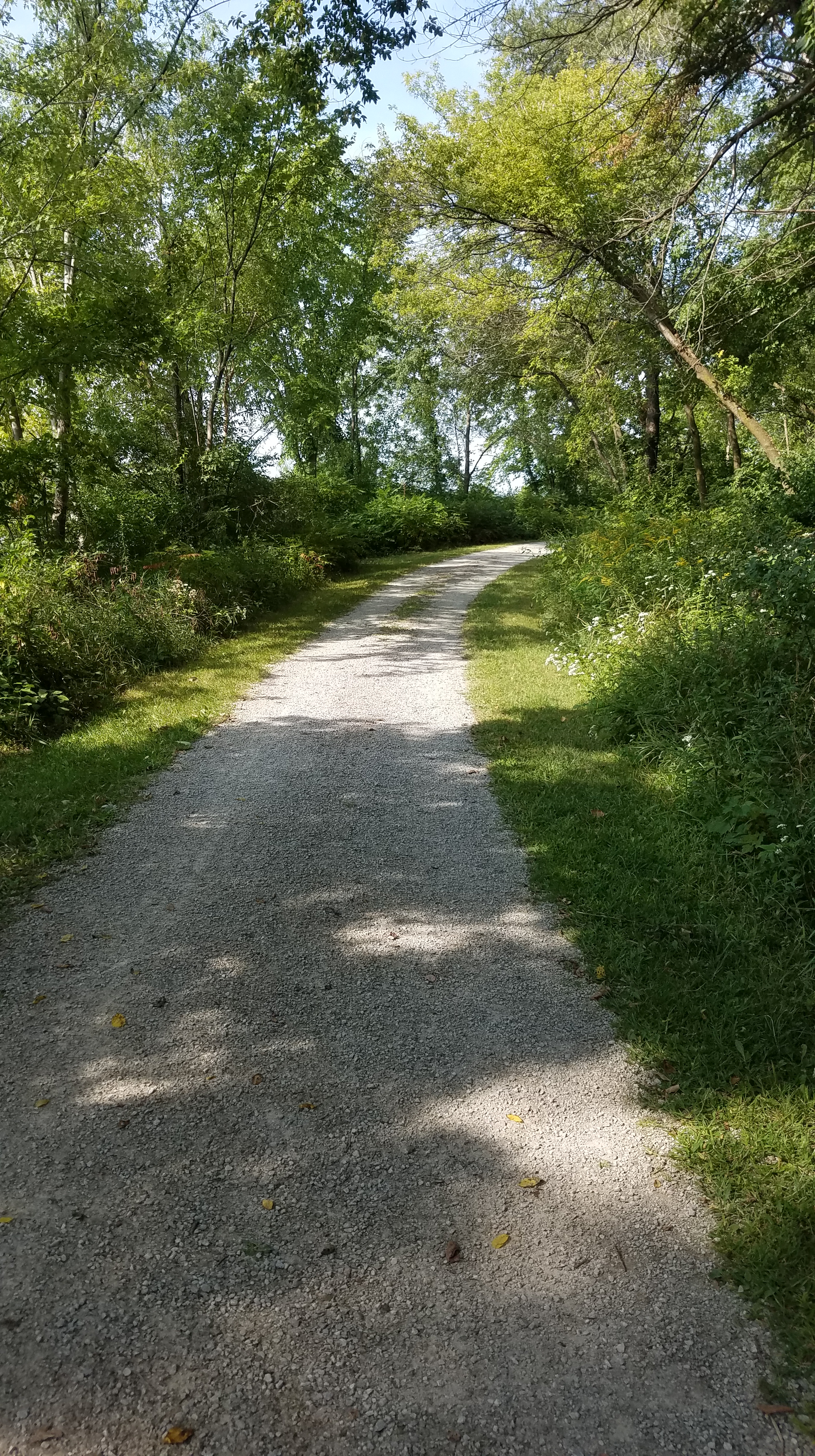
The neighbor who owned the grocery store in town for 40 years took to walking the state park trail in retirement. He used a cane and we stopped to talk from time to time. I was wondering where he was last Monday. It turned out he died at home on Sunday.
I didn’t know the family well, although I stopped at their home on association business a couple of times through the years. Seems like a lot of people in our association died the last few years — at least five since 2018. While we are well below general U.S. statistics for deaths per 100,000 population, when people we know die, it has greater impact.
Being in the community for more than 29 years makes a difference. When people move out or die, we notice the broken relationships. The trail remains, with its joggers, bicyclists, and walkers. On Monday morning, when the work week begins, there is a loneliness on the abandoned gravel path.
Maybe I’m making too much of the song “She Had Me at Heads Carolina” by Cole Swindell. It says a lot about contemporary culture in the context of the decline in public schools.
"Heads Carolina, tails California"
Maybe she'd fall for a boy from South Georgia
She's got the bar in the palm of her hand
And she's a '90s country fan like I am
Hey, I got a Chevy, she can flip a quarter
I'd drive her anywhere from here to California
When this song is over, I gotta find her
'Cause she had me at "Heads Carolina"
I’ll have more to say. One thing, though. What does it even mean to have “the bar in the palm of her hand?” Don’t @ me because I know the answer to my question. It’s related to these lines from Shakespeare’s As You Like It:
All the world's a stage,
And all the men and women merely players;
They have their exits and their entrances,
And one man in his time plays many parts...
I’ve been thinking about this song for a week or so and haven’t processed it. It is a successful song on a couple of levels. It sets a context for the action of a protagonist removed from broader society. At some level we all want that — a place of our own with comfortable surroundings. Yet what is the challenge in that? What is the social good? What is that context of a bar where people catch up with each other and socialize? How is this not a form of veiled misogyny? I’ll be thinking about this for a while.
In the meantime, here is a link to the YouTube video.
We had already entered the fall campaigns after Labor Day. Seven days of summer remain and there are 53 days until the midterm election when a lot rides on the outcome. Will it be a fair election? We hope so.
In Iowa, where Republicans dominate the political landscape, Secretary of State Paul Pate prides himself on following election rules. As long as Republicans win, I don’t anticipate any funny business counting votes. Lately, especially after the recruitment of church-going folk to register and vote, Republicans tend to turn out.
Four congressional seats plus one U.S. Senate seat are on Iowa ballots. Most voters are interested in federal races. Pollsters and political prognosticators I read show Iowa favoring Republicans. Democratic candidates in these races have other ideas. It is conceivable there will be close races, yet Democrats are all playing catch-up.
After the Democratic build up to the 2016 and 2018 elections, and the subsequent deflating when Republicans won by a lot, I’m not hopeful. In 2020, my precinct in Johnson County turned solidly Republican. Iowa is returning to its Republican roots, although it is not the same Republican party as it was when Robert Ray held the governorship for 14 years.
My main volunteer work this cycle have been writing letters to the editors of newspapers and financial donations from a limited budget. I do not attend a lot of fund raisers because my funds are spent the day after my pension hits the bank. I wrote post cards to voters a couple of times. I attend meetings of the Johnson and Iowa County Democratic central committees. I am getting too old for door knocking and telephone canvassing. I stay busy with politics, but it’s different from when I re-activated after the 2004 Iowa Precinct caucuses. As a septuagenarian, I slowed down.
As we head into the home stretch, a large majority of voters have made up their minds and are simply waiting to vote. The rest of the campaign involves finding those who haven’t decided and persuading them to vote for our candidate. Candidates who do a good job of that have a chance to win. If they aren’t organized to do so, they don’t. It’s pretty cut and dried.
I retain hope Democrats will win some races. Some of the local races have Democrats running unopposed: County Attorney, County Treasurer, and County Recorder. It’s time to do what good we can before polls close on Nov. 8.
Box of matches from The World Trade Center, Summer 1980.
I have two main memories of the World Trade Center in Manhattan. The first is from 1980, of having a post-Broadway show dessert and drink at Windows on the World located on the 107th floor. The second was viewing it on television after the first plane hit the north tower on Sept. 11, 2001. The attacks began while I was at the Moline airport where I had been scheduled to fly to Philadelphia. All flights were cancelled so I returned to my office in Eldridge, Iowa where televisions were tuned to the breaking news.
Sunday was a day to remember those who lost loved ones on Sept. 11, 2001. May we never forget their lives and legacy.
President George W. Bush, on whose watch the 9/11 attacks occurred, was among the worst of our recent presidents.
My memory of George W. Bush is from Philadelphia, shortly after the terrorist attacks of Sept. 11, 2001. I was on Interstate 95 heading into the Bartram Gardens area where I managed a trucking fleet. Bush’s motorcade was on the other side of the interstate heading back to the airport to return to Washington. In that moment, whatever hope I had Bush would pull the country together after the terrorist attacks was dashed. He made the trip early in the morning and finished by 10 a.m. It was a publicity event that had little impact on the national interest. It was unclear to me why he would spend so much money for what must have been a one to two hour publicity event. I remember other things didn’t make sense during the Bush administration. More than this, his invasion of Iraq made the least sense and proved to be a costly error. That is, unless one was a contractor who profited from the debacle.
The deceased and injured deserve our thanks, memories and support. Support for public servants injured during the attack and its aftermath, those who worked at ground zero after the carnage, was slow in coming from the Congress. We enjoy our symbolism and stories of valor and just work, yet beyond yesterday’s remembrance, events fade further into the cesspool of memory that is contemporary America.
I’d like to remember The World Trade Center as that place we visited in 1980. The realities of the War on Terror and killings of innocents in the Iraq War won’t let me. Instead, we have maudlin remembrances of politicians and a vague notion that “Patriot Day” means something.
On the day after we are better prepared to see who we are as an American society. The view is much worse than it was on the 107th floor of The World Trade Center.
For septuagenarians, an overnight visit from a child is a big deal.
We prepared for weekend guests most of the week. That meant cleaning the house and making space for extra people to sleep. I emptied the vacuum cleaner dust trap many times. There were countless loads of laundry. It seemed like a miracle, yet by the time they arrived we were ready. We are thankful for the work of preparing for a visit.
Our child lives close enough for a weekend visit to make sense. Time together was limited. We had dinner of tacos Saturday and my homemade corn tortillas were well-received and eaten up. I prepared a grab and go meal of vegan applesauce muffins with a fresh apple and some peanuts for an early Sunday departure. We are thankful for the time together, the chance to plan a meal and share it with someone other than ourselves.
The main challenge of aging is to live independently for as long as possible. In part, that means taking care of our health — eating a proper diet, exercising, regular visits to health care professionals. Part of it means a solid financial platform — making do with a fixed income and living from our own resources. There is also a part about dealing with potential and actual emergencies, although I try not to let that dominate my life. Once those parts have been addressed, everything else is optional.
Well, sort of. As we age, we need help from other humans.
The lilac bushes planted soon after we settled here need cutting back. After delaying this work the last couple of years, I hired a professional to do it in the fall. The windows and doors need attention after 29 years. We never built the deck I had planned or finished the lower level of the house. We replaced the roof in 2010 and it will need replacing again in a few years. All of that requires the help of professionals.
For now I can mow the lawn and work in the garden. I’m hoping to continue that work into the future, at least for another ten years. Whether the lawn tractor we inherited from my father-in-law’s estate back in the 1990s will make it that long is doubtful. I rely upon having a good tractor mechanic in town and being able to locate new parts for repairs. I avoid thinking about it when he talks about slowing down and retiring.
Making the transition from a work life to a home life sneaks up on a person. What was once a sideline to a career takes center stage in the form of yard, garage and garden work, and cleaning the house to prepare for visitors. I’m glad to have lived this long, and being aware of these parts of life is essential to successfully aging in America.
Even though we are not rich, we are better off by having a family and home… and by preparing for overnight guests.
Kinney is the Democrat running in Iowa Senate District 46.
I hadn’t received a push poll telephone call until yesterday. I participated in the whole thing, yet it was terrible. The pollster must have been seeking dim-witted jamokes to persuade voters of the efficacy of their chosen candidate, in this case Dawn Driscoll, who is running against Kevin Kinney for the Iowa Senate in District 46.
Driscoll did almost no visible campaigning before Labor Day. A few campaign signs appeared along major thoroughfares after that. She recently held an event with Governor Kim Reynolds and Congresswomen Mariannette Miller-Meeks. If her campaign begins with a push poll, there is no telling how much mudslinging there will be from Republicans before the Nov. 8 election.
“A push poll is an interactive marketing technique, most commonly employed during political campaigning, in which an individual or organization attempts to manipulate or alter prospective voters’ views under the guise of conducting an opinion poll,” according to Wikipedia. The key word here is “manipulate.” This poll attempted to manipulate me by misrepresenting Kinney’s positions. Because I know better, the sole alteration of my views of the campaigns was to reaffirm support for him.
I’ve been represented by Democrats in the Iowa Senate since we moved here, notably with the long tenure of Senator Bob Dvorsky (1993-2018), followed by Zach Wahls (2019-present) after Dvorsky’s retirement. It is only with the recently completed decennial redistricting we have to contemplate a Republican representing us. While the urban centers in the county remain strongly Democratic, Republicans have been able to peel off a few precincts around the central cities.
The contest with a new district that leans Republican is proving to be the worst of modern politics for regular voters like me. Push polling is just the tip of the iceberg of the Republican threat.
The loss of social relationships as we age is expected and well-documented. Not only do we miss people who died, such as parents, grandparents, and friends, there is no replacement for relationships that stretch back in time for decades. People are gone and the sense of loss remains tangible.
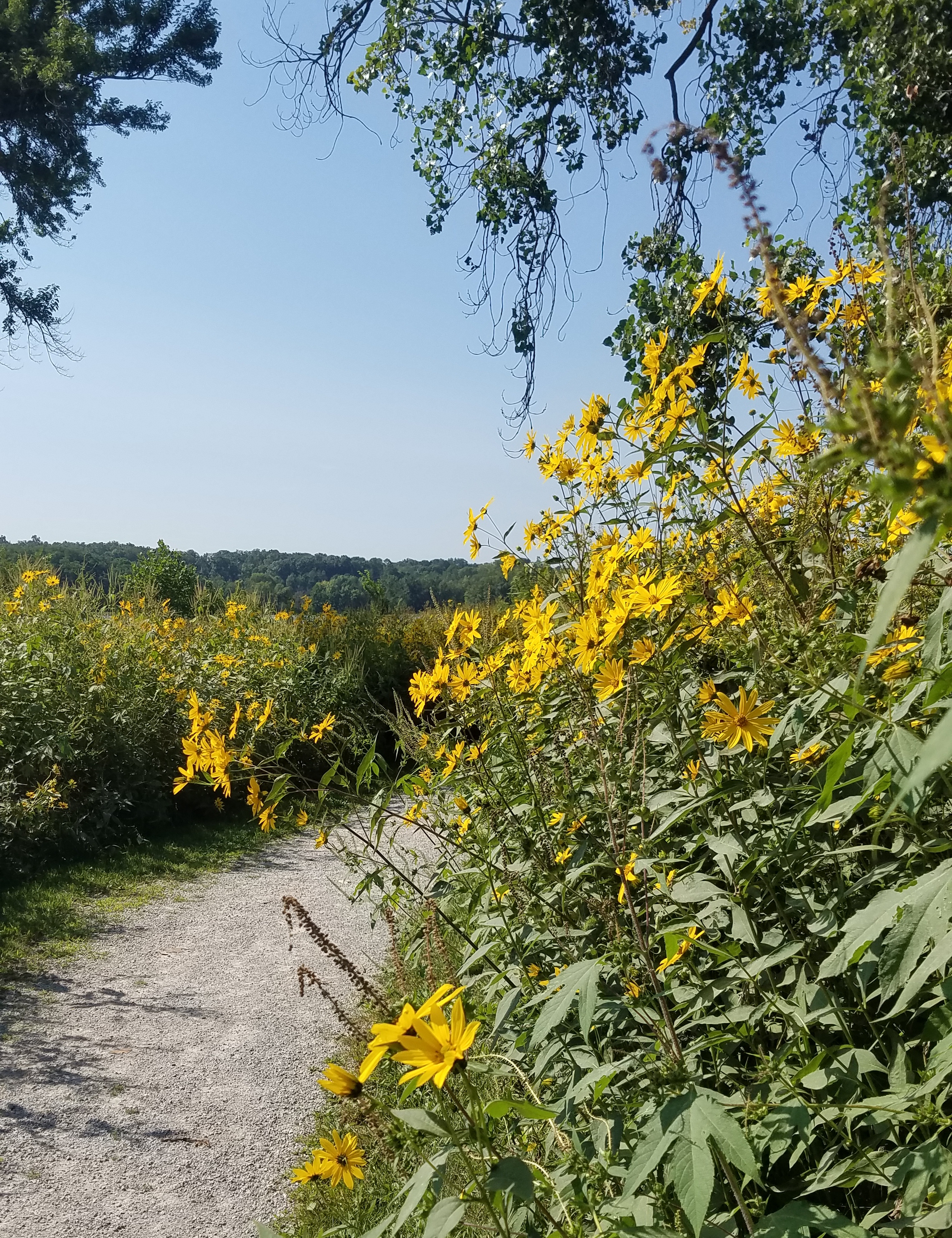
I find there are more invitations to do things than time allows. This seems especially true in retirement, yet maybe I’m simply more aware of what’s going on. This social situation is complicated by living on a fixed budget. Given the choice to get out of the house and attend an event, most often, I opt to stay home. Keeping the auto parked in the garage saves on fuel. Besides food and sundry shopping, and walks along the state park trail, I seldom leave the property. I don’t see that changing near term.
My trips to the county seat have been reduced to as close to zero as they can be. There are trips to the doctor or pharmacy. Most of the other groups to which I belonged have faded to the background.
There are political events because of the Nov. 8 midterm election. I attend few political fundraisers. I donate to candidates online and try to stick to a tight budget. Once I log in each month and make my two or three donations, that’s it until the next monthly pension check arrives.
There are groups of which I’d like to be a part. The group of seniors in our nearby town does a lot of good and they would welcome some help. I love our public library, even if I don’t go there that often. They need volunteer help, too. That is the short list of what I’m interested in doing.
Coping with loss and loneliness is part of aging in America. I’m like everyone else in that regard.
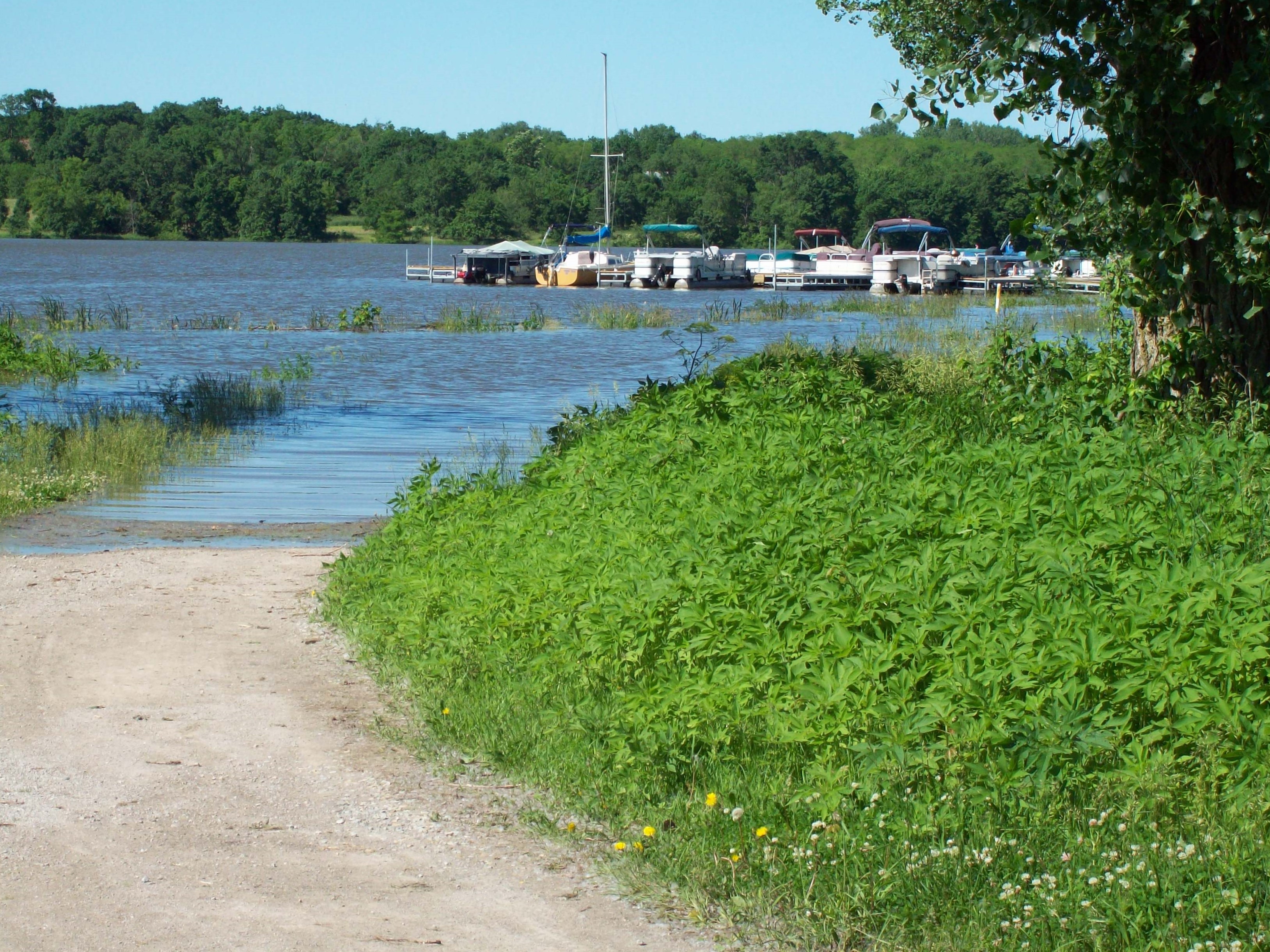
Flood water from Lake Macbride reached within 600 feet of our home on June 14, 2008
We did not fear the 2008 flood, even though it rendered roads and bridges near us impassible and destroyed significant parts of Cedar Rapids and Iowa City. There was a lesson to be learned from it.
As the water level rose, flowed over the Coralville Dam spillway on June 10, then back-filled Lake Macbride, it would have taken much more than there was to flood our home near the lake. When the flood crested on June 15, we were relieved.
Lake Macbride is part of the water storage system for the Coralville dam and the reservoir created behind it. 2008 flooding was greater than any in recorded history, yet the system worked as well as it could have given the volume of water. Because news media were focused on the natural disaster, we had plenty of information upon which to make decisions: Should we sand bag the house? Should we move everything to the upper level? Should we evacuate? By closely monitoring the news, we were able to survive with minimum disruption in our lives.
The Aug. 10, 2020 derecho was another catastrophic weather event, only this time, there was little advance warning. The City of Cedar Rapids may never be the same after much of the tree canopy was destroyed. Straight-line winds have become a repeating occurrence on our property. The 2013 event did more damage than the derecho, yet in the latter electricity was out for four days. It took time to recover from this event, have a tree service remove broken limbs, and clean up debris. Everyone in the neighborhood had piles of firewood after the storm.
To what extent were the 2008 flood and the 2020 derecho made worse by climate change? In his essay on the 2008 flood, Eugene S. Takle summarizes where we are.
When rare and extreme weather events seem to increase in frequency, either locally or regionally, both statisticians and thoughtful lay people begin to wonder if something unusual is going on. They ask not only whether climate change was involved, but also — and more urgently — whether such extreme conditions will be repeated soon or nearby. The question is much more than academic…
Was Climate Change Involved by Eugene S. Takle. Published in A Watershed Year: Anatomy of the Iowa Floods of 2008, edited by Cornelia S. Mutel.
Our troubles as a society lie elsewhere, outside the rational thinking of scientists.
The lesson learned from these natural disasters is to be alert and pay attention to what one can’t control. The lesson applies to more than natural disasters.
Sixty years ago I did not foresee where we would arrive in our politics and society. The idea that corporations could and would spend countless fortunes to manipulate voters to support candidates who did not serve their best interests is mind-boggling. Yet here we are.
Everything is corrupt, including political office holders, news media, law enforcement, our judiciary, our distribution system, and an extraction economy that impoverishes people who remain out of plain sight. It is a harsh judgment, yet is increasingly and undeniably true. We may have been able to survive floods, derechos, and straight line winds, yet our biggest problem is one we made for ourselves.
The approaching danger to be addressed is one of our politics. Republicans controlled both chambers of the Iowa legislature and the governorship after the 2016 election. They used their majority to advance policies that serve interests which align with right-wing conservatives and business concerns. At the same time, 45 of 150 Iowa legislative races have candidates running unopposed this cycle. The apparent lack of interest in running for office is as much a problem as the Republican trifecta.
This year, because of the recent U.S. Supreme Court decision on Dobbs v. Jackson Women’s Health Organization, which overturned Roe v. Wade, the number of female voter registrations is up. It is hard to know what this means, other than that women who value the right to an abortion, to make their own health care decisions without intervention of politicians, are taking action by registering to vote for candidates who support that right. Whether this movement will persist after the Nov. 8, 2022 election is an open question.
The American political system is far from perfect. If we want to address the dangers of climate change in the form of extreme weather events, as we must, that political system is our only, best hope. We must all get more engaged than we have been.
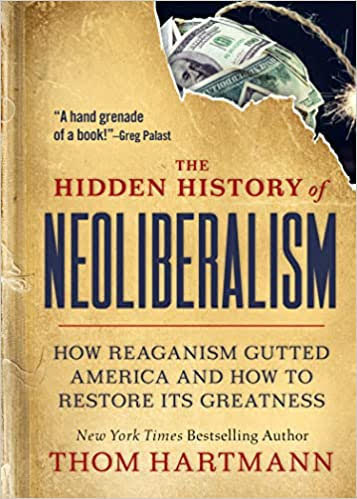
Thom Hartmann’s latest in the Hidden History Series, The Hidden History of Neoliberalism: How Reaganism Gutted America and How to Restore Its Greatness, is scheduled for release on Sept. 13. Well-written and timely, it takes a deep dive into neoliberalism with direct application to life in Iowa.
As the guardrails are removed from our Democratic Republic, it is important to examine how we got to a place where people believe government should have only a minimal role, if any, in our economic life. Hartmann’s new book fills that need. Not only does he explain what neoliberalism is, he says it is time for us to turn our backs to it.
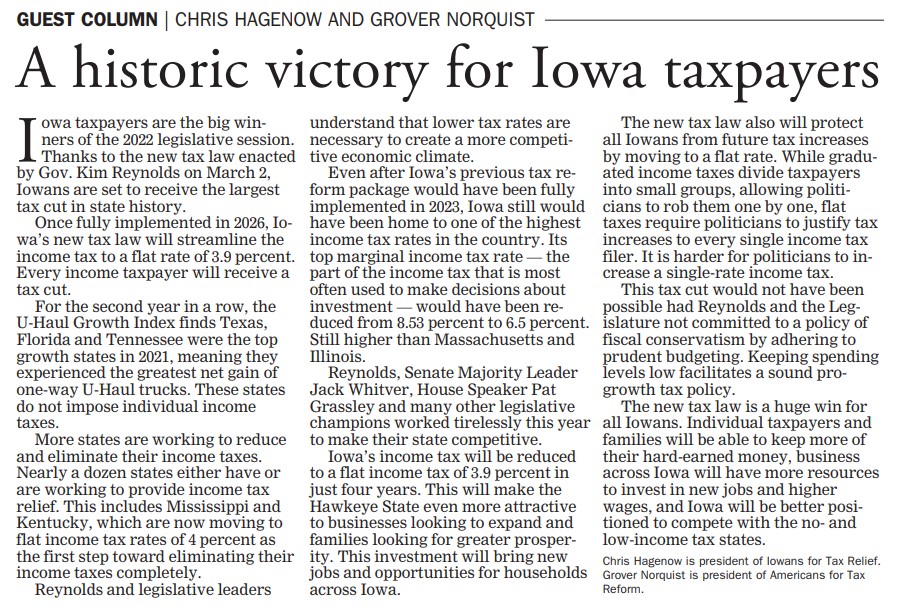
My focus is on Iowa and the recent Republican rout of Democrats by taking the governor’s office and large majorities in both chambers of the legislature. Without saying what they were doing, Governor Kim Reynolds and the Republican crew embraced neoliberalism principles about which Hartmann writes. Their policies include reducing taxes, gutting government spending, reducing licensing requirements, and other tactics to minimize the impact of regulations on business and enable the invisible hand of the global free market to work its magic. For goodness’ sake, there was even a Grover Norquist opinion piece in the June 7 edition of the Cedar Rapids Gazette!
Reading Hartmann brought this aspect of the Republican culture war into focus. It is neoliberalism at its zenith.
If Iowa Republicans had their way, society as we know it would be dissolved, leaving scattered family units headed by white, male patriarchs. Such families would have many children. Women might well take a subservient role to men in public life. If you listen to Republican rants from the state capitol, they already believe their chosen tribal relationships are in place. If Republicans declare war on trans people, or others who don’t lead what they consider to be a traditional life, they will fight until every one of them has been run out of the state or marginalized. It’s a crusade!
Like all the books in the Hidden History series, The Hidden History of Neoliberalism is a great weekend read with depth of thought hard to find on television or radio. I’ve been reading Hartmann’s series for the last couple of years, and each time his explanations and historical research bring something new to my attention.
For example, I lived through the U.S. plot to overthrow Chilean president Salvador Allende, the C.I.A.-backed military coup by Augusto Pinochet, and the restructuring of Chilean society by Milton Friedman and his gang of Chicago school neoliberals. Hartmann highlights the relevance of Friedman’s work during this fifty-year-old event to today’s Republican governance. “The blank slate of a new Chile offered the perfect laboratory for Milton Friedman’s Chicago Boys to try out their exciting new neoliberal experiment,” Hartmann wrote. Neoliberals have been hard at work creating a radical, right-wing culture that seeks to dominate our politics.
Thom Hartmann
According to Hartmann, America could go one of two ways: continue down the road to neoliberal oligarchy, as supported by the GOP, or choose to return to FDR’s Keynesian economics, raise taxes on the rich, reverse free trade, and create a more pluralistic society. The Hidden History of Neoliberalism is a primer in how the United States got to this point.
In a June 29 interview, I asked Hartmann what progressives should do about the clear and present danger of neoliberalism.
“The best way to combat what they are up to is expose it,” he said. If Democrats would speak more loudly, in a consistent enough fashion, the Republican policies of supporting great wealth, and white, male supremacy would be easy to organize around. Hartmann acknowledged organizing Democrats to work on a single thing is complicated.
Hartmann is essential progressive reading and I recommend The Hidden History of Neoliberalism. While readers await the new book, the others can be found at https://hiddenhistorybooks.com/
Happy autumn reading!
Thom Hartmann is a four-time winner of the Project Censored Award, a New York Times bestselling author of thirty-two books, and America’s #1 progressive talk radio show host. His show is syndicated on local for-profit and nonprofit stations and broadcasts nationwide and worldwide. It is also simulcast on television in nearly 60 million U.S. and Canadian homes.
To buy a copy of the Hidden History of Neoliberalism: How Reaganism Gutted America and How to Restore its Greatness,click here. The book is available Sept. 13, 2022.
In 2021, 15.8 million wage and salary workers, 11.6 percent of the workforce, were represented by a union according to the Bureau of Labor Statistics. It is a small, yet mighty segment of the American people.
The flip side of this is 313.7 million Americans are not represented by a union. To me, that is the more significant number. Most of us have plenty of non-paid work to do.
I wrote about my relationship with unions in 2007.
I have been on just about every side of the union issue, beginning with my membership in what was then called the Amalgamated Meat Cutters and Butcher Workmen of North America in 1971 (where I hold a retirement card). I worked at the University of Iowa while AFSCME unsuccessfully tried to organize us in the early ’80s, and supervised groups of teamsters from Local 238 in Cedar Rapids, and Local 142 in Philadelphia. In Philadelphia I negotiated the contract with the local business manager. My mechanics signed cards when I ran a trucking terminal near Chicago, and ultimately decided the teamsters union was not for them. Based on this experience, I know a bit about unions.
If you believe unions are strong in 2022, some of them are. There are high profile news stories about organizing Amazon workers and Starbucks employees. Time Magazine reported last October the number of work stoppages over contract issues had doubled. Simple facts of the American economy emerging from the coronavirus pandemic — higher corporate profits, a Democratic president who supports organized labor, and a shortage of workers — have created a pro-labor sentiment. My advice is for workers to get what they can, while they can, as this environment may not endure once corporations determine how to cope with workforce changes.
Rick Moyle, executive director of the Hawkeye Area Labor Council AFL-CIO, wrote in this morning’s Cedar Rapids Gazette we should hold elected officials accountable.
The bottom line is that we can no longer allow our elected officials to say one thing on the campaign trail and do just the opposite once elected. They bank on people forgetting the statements and promises they have made. Working people can no longer afford to be duped into partisan rhetoric and hot button topics. We must come together and hold our elected officials accountable, regardless of party affiliation.
On Labor Day Hold Politicians Accountable by Rick Moyle, Cedar Rapids Gazette, Sept. 5, 2022.
Ahead of Labor Day, AFL-CIO launched what it believes is the largest voter organizing drive in history to restore America’s promise. “All told, more than 100,000 volunteers will reach at least 7.7 million working people between now and Election Day,” according to an article at Iowa Labor News.
On June 28, 1894, Congress passed an act making the first Monday in September of each year a legal holiday. President Grover Cleveland signed it into law. Even though I retired during the pandemic, and its been many years since I carried a union card, I believe I’ll take the day off, work at home, and thank a union.



 Journey Home
You must be logged in to post a comment.