In Iowa there is more to living in society than any single issue or election. Unlike members of the Congress, we aren’t in a constant state of campaigning. We view those with whom we interact as people first, which makes life more tolerable. There are cultural nuances where we chose to live.
Some voters I know pick politicians based on their position regarding abortion. A significant part of the electorate finds that to be sufficient qualification to earn a vote and serve in elected office.
In Dobbs vs. Jackson Women’s Health Organization, the U.S. Supreme Court created a political mess with real-life consequences by upending established precedent in Roe v. Wade. Straightening the resulting mess will be part of the work of the 118th Congress.
Several years ago, I volunteered with a group that served the needs of older citizens. Almost everyone from the community volunteered to help in some way. The topic of politics almost never came up in conversation among volunteers. It was avoided. Such restraint was a form of glue that held the organization together enough to accomplish good work.
A focus on abortion alone does injustice to everything else we value. Where is the role in our politics for addressing environmental issues? What about economic issues? What about corruption? What about access to health care? Regardless of election outcomes, our work on these issues and more will continue.
Our values persist beyond a single issue or election cycle.
~ First published on Oct. 5, 2022 in The Little Village. A version also appeared in the Quad-City Times on Oct. 7, 2022.
Unite! “Unite Against Book Bans is a national initiative to empower readers everywhere to stand together in the fight against censorship.” Please visit this site to learn how you can help! ~Becky
The Nov. 8 midterm election will be here before we know it. What then?
What we value persists beyond elections. Voters I know pick their politicians based solely on their position on abortion. Right next to that in importance is same-sex marriage. Other issues are deemed less important or not worthy of consideration. If a politician is anti-abortion and anti-same-sex marriage, half the electorate finds that to be sufficient qualification to earn a vote and serve in elected office.
In rural Iowa there is more to living in society than any single issue. Unlike members of the Congress, we aren’t in a constant state of campaigning. There are cultural nuances in the places we chose to live. We view those with whom we interact as people first and that makes rural life tolerable for most.
Several years ago, I volunteered with a group that served the needs of older members of society. Almost everyone from the community volunteered in some way. It was almost expected. Unless one knew the politics of another person among volunteers, the topic almost never came up in conversation. It was avoided. Our politics were something held private and kept from social discourse. Such restraint was a form of glue that held the organization together. That organization and others like it accomplished and continue to accomplish good work.
As we head into the midterms, candidates are focusing a message on the U.S. Supreme Court’s decision that overturned Roe v. Wade this year. The issue resonates because while we once had legal precedent that was settled law, with President Trump’s three appointees to the high court, we discovered it wasn’t as settled as we thought. Whether that is a winning issue for politicians, I don’t know. However, the ground shifted below us, requiring us to re-invent all the terms of Roe, something that may or may not be possible. It is, however, a political mess with real life consequences.
A focus on Dobbs, the case that overturned Roe, does injustice to everything else we value. Where is the role in our politics for addressing environmental issues? What about economic issues like the concentration of wealth among a small percent of the population and the damage that does? What about corruption in our politics without proper limits on campaign contributions? What about our inability to enable residents of our state to access needed health care? If we talk mostly about Dobbs during the remaining days of the election cycle, these issues and more get relegated to the back burner.
I guess we’ll just have to pick them up again after the election because they won’t resolve by themselves.
On Saturday former president Jimmy Carter celebrated his 98th birthday with a parade in his hometown of Plains, Georgia. I had no dog in the 1976 campaign that elected him president. I was serving in the U.S. Army in Germany and felt that with Nixon gone, the electorate should have free reign to either keep Gerald Ford or pick someone else. I feel Carter was unjustly criticized during his administration.
However, I broke with Carter after his July 15, 1979 speech, known as the “malaise speech,” in which he said, “The erosion of our confidence in the future is threatening to destroy the social and the political fabric of America.” I couldn’t abide by that and caucused for Ted Kennedy at the 1980 Iowa caucuses.
In his concession speech at the Democratic National Convention, Kennedy said, speaking of Ronald Reagan,
The great adventures which our opponents offer is a voyage into the past. Progress is our heritage, not theirs. What is right for us as Democrats is also the right way for Democrats to win. The commitment I seek is not to outworn views but to old values that will never wear out. Programs may sometimes become obsolete, but the ideal of fairness always endures. Circumstances may change, but the work of compassion must continue. It is surely correct that we cannot solve problems by throwing money at them, but it is also correct that we dare not throw out our national problems onto a scrap heap of inattention and indifference. The poor may be out of political fashion, but they are not without human needs. The middle class may be angry, but they have not lost the dream that all Americans can advance together.
Protecting women from the intervention of politicians in their health care is important. It is also an issue precipitated by Democratic failure to adequately support Hillary Clinton during the 2016 general election. This failure enabled Trump’s three Supreme Court picks.
What are the values that bring communities together? A right to self-determination is one of them yet there are more. As we head into the midterm elections, we would do well to recall what Kennedy said at the end of his speech, “For me, a few hours ago, this campaign came to an end. For all those whose cares have been our concern, the work goes on, the cause endures, the hope still lives, and the dream shall never die.”
Jack Kerouac’s 1950 book The Town and the City was a white whale of fiction, rejected by most publishers. It was a conventionally-styled book, written before Kerouac developed his own style. It is said to be influenced by Thomas Wolfe. The problem for publishers was the book’s 1,100-page length. Paper and binding costs money and a long first book would eat into their profits. Eventually, the book was shortened and 15,000 copies were printed by Harcourt Brace, with 4,500 held in a warehouse without bindings in case it sold. It didn’t sell. Today, few are interested in this roman à clef comparison between Lowell, Massachusetts and the New York City of the beat poets. It is probably for the best.
Today we talk about the migration of people from the countryside to cities, as rural areas are being hollowed out. Patrick J. Carr and Maria J. Kefalas wrote about it in their 2009 book Hollowing Out the Middle: The Rural Brain Drain and What it Means for America. Robert Wuthnow examined the sociology of rural America as it related to the ascension of Donald Trump to the presidency in his 2019 The Left Behind: Decline and Rage in Small-Town America. There are trends in rural life, yet there is more than that.
Rural elected officials are the ones cutting budgets that handicap the Department of Natural Resources in doing their job. How regulations pertaining to water and air quality are enforced impact rural residents especially. Why do rural folks so often vote against their best interests? I submit it’s because they vote for candidates who reflect their position on LGBTQ+ (against same-sex marriage) and abortion (none permitted) and look no further. The crap legislation that moves state revenue from public schools to private and hollows out rural community life are part of the package. It is easy to say vote Democratic to avoid this.
The national media persist in depicting American society as divided along clear ideological lines. In rural Iowa life is more nuanced than that. I know how most of my neighbors vote. Practically, that’s a minor consideration in being part of a community.
When I say nuanced, a long time Republican neighbor stopped their car to comment while I was putting out political yard signs. I mentioned the candidates were both on the right side of issues important to our subdivision. These conversations are the glue that binds the community. We don’t have enough of them.
What I’m saying is don’t be like Kerouac and bloviate about divisions the popular culture left behind. Take time for a conversation with a neighbor. Donate to the food bank. Write a letter to the editor of the local newspaper if you are lucky enough to still have one. Forget about the divide between rural and city folk as is depicted in media.
If you talk to enough voters in rural Iowa, it is easy to see where things land on abortion and same-sex marriage. The best we can do is encourage people that there are other, equally important issues.There may be no changing one’s firmly held beliefs on an issue or two. At the same time, our lives go on and there are real threats to the environment, our economy, and our way of life. While we hold fast to our beliefs, we must also be open to change in areas that serve the common good. The false division of rural and city should be relegated to history the way Kerouac’s book has been. It turned out his second book, On The Road, was a much better read in any case.
Like many Americans, after my paid work life ended, I planned to use my pension from Social Security as a basic financial support system. So far, so good.
I’m not sure I’m finished with paid work. The prospect of earning a couple hundred dollars a month to supplement my pension remains. A disruption in Social Security could devastate our lives, leaving the future uncertain. We need a contingency plan for dealing with changes to Social Security.
The Social Security system is a key campaign issue in 2022. Republicans and their libertarian financial backers have not liked Social Security since FDR proposed it. The latest is the Republican proposal to sunset all laws every five years, about which I wrote in August. Feeling some pressure from challenger Michael Franken, U.S. Senator Chuck Grassley spoke to reporters, including Caleb McCullough, who published this story in the Cedar Rapids Gazette on Sept. 29.
Grassley: No sunsetting Social Security, Cedar Rapids Gazette, Sept. 29, 2022.
Grassley adopted a majority view of Social Security with this article. While he hits some highlights — not changing the benefits for current and soon to be retirees, and removing it from sunsetting every five years — his statement is vague enough to leave anything open. Grassley said any changes to Social Security would involve “broad consensus.” What we don’t know is if he means the consensus of all U.S. Senators or just the Republican caucus.
Do voters believe him? I posted the clipping on Twitter and the answer was a resounding no in the replies. Of course Twitter serves as an echo chamber for views, so reading those replies is not a scientific data collection method. There was consensus among posters Grassley could not be believed.
Since leaving the workforce during the coronavirus pandemic I spend more time at home. I try not to think about worrying things all the time. Yet it is like the embers of a campfire waiting for new wood to burn. For the moment, I’ll warm my hands on the present, vote Democratic, and watch for new information in my news feeds.
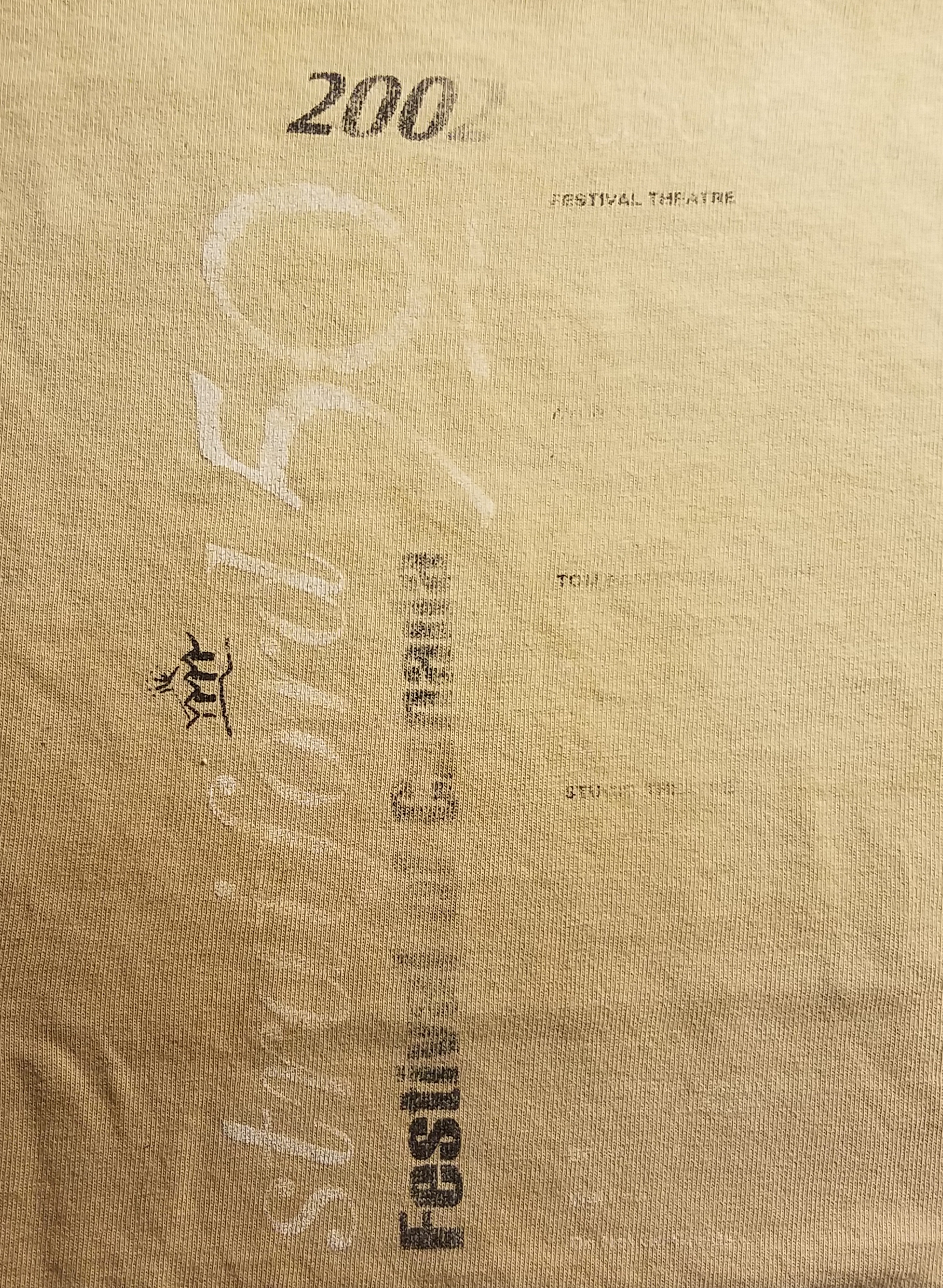
Worn t-shirt from the 50th anniversary of the Stratford Festival of Canada in 2002.
Passing Down History
I have conversations about stuff with our child. It is specific stuff. It is my stuff, eventually to be her stuff, at least some of it.
For example, a couple hundred vinyl LPs rest on my bookshelf. A lot of good music there, a lot of great memories. The technology is old and hardly portable. The sole album for retention to pass down is Beethoven’s Opera Fidelio because it was a memory from childhood. That will make it easier to dispose of the rest of them, I hope.
I want to pass down some of my Iowa history books but there are too many of them. I have hundreds. My guidance was to select maybe three or four of the best ones to pass down. My work is cut out. To get started, here are the first dozen that came to mind. It is a first draft of the list for posterity and by no means final.
Iowa’s Groundwater Basics: A geological guide to the occurence, use, and vulnerability of Iowa’s aquifers by Jean Cutler Prior, Janice L. Boekhoff, Mary R. Howes, Robert D. Libra, and Paul E. VanDorpe.
Eastern Iowa Prehistory by Duane Anderson.
Black Hawk: An Autobiography dictated to Antoine LeClaire, edited by Donald Jackson.
Wakefield’s History of the Black Hawk War by Frank Everett Stevens.
Hunting a Shadow: The Search for Black Hawk: Eye-Witness Account by Participants compiled and edited by Crawford B. Thayer.
The Emerald Horizon: The History of Nature in Iowa by Cornelia F. Mutel.
In Cabins and Sod Houses by Thomas H. Macbride.
Robert Lucas by John C. Parish.
Executive Journal of Iowa 1838-1841, Governor Robert Lucas edited by Benjamin F. Shambaugh.
The Trader at Rock Island: George Davenport and the Founding of the Quad Cities by Regena Trant Schantz.
The Life and Times of Samuel J. Kirkwood, Iowa’s War Governor by H.W. Lathrop.
Iowa: The Middle Land by Dorothy Schwieder.
Reducing the number of history books to three or four is an impossible task, although one worth considering as I write my autobiography. We’ll see how the list changes over time. By spring, I should have a better idea.
Figuring out what to pass down becomes more important as we age. Partly we seek to let go of the past. Partly we seek to make room for a future.
The gardening season flashed by. The main issue this year was weeding: I didn’t keep up. Nonetheless the garden produced an abundance of vegetables and the integration of garden with kitchen and our local food bank yielded less wasted produce. Despite the failures, things are heading in a positive direction.
Suppression of weeds is done mostly by landscape fabric and grass clippings. I tried reusing landscape fabric from last year, yet it allowed too many weeds to penetrate the porous membrane. Likewise, my yard doesn’t produce enough grass clippings to mulch all the plants. This fall I plan to harvest enough grass clippings to over winter the garlic and then figure out what to do about next year.
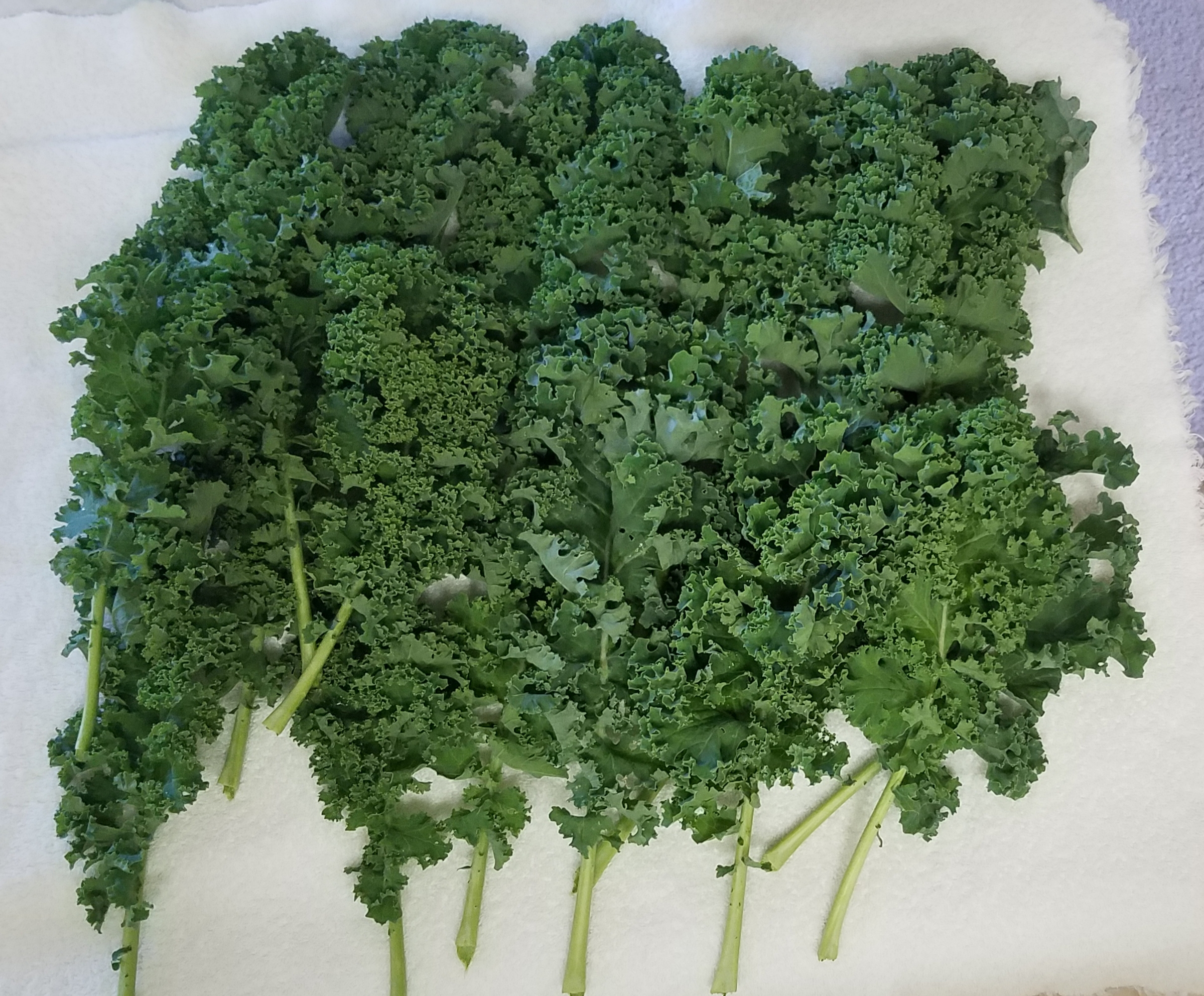
Among the most successful crops were garlic, tomatoes, peppers, cucumbers, zucchini, broccoli, herbs, eggplant, leafy green vegetables, and potatoes. Almost everything I grew under row cover did well. Marginal crops were celery (which didn’t get as big as I like it), peas (not enough yield), and tomatillos (did not grow large enough). Failures were onions, cauliflower, and beets, which produced no crop at all.
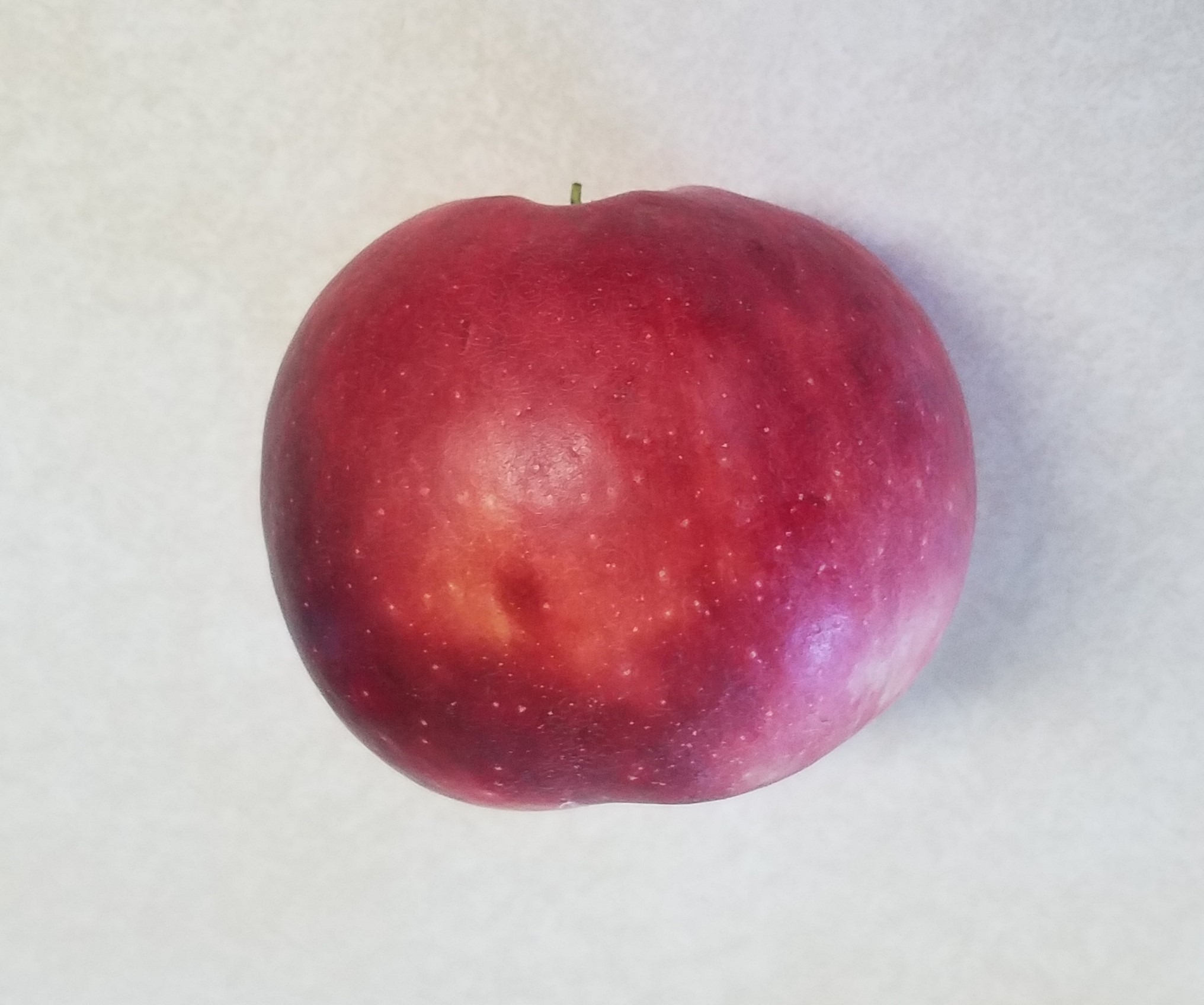
This was an off year for apples, although I harvest some of each of four kinds. I need to do something different to grow pears that are shaped the way they should be. The pears are one of the sweetest things we eat all year. Even with their deformities they are satisfying.
There was a lot of learning, although my experiences get incorporated with others I’ve had and are hard to attribute to a single season. More than anything this year, I noticed the abundance of insect life. I saw many more species than in previous years. I don’t know if they have been there all along or are expanding into the environment provided by my overgrown weeds. In any case, there seemed to be more beneficial insects and less enemies and that’s a good thing.
The weeds attracted significant small bird life. They perch on the tomato supports and fencing to feed on weed seeds and insects. The birds are particularly welcome.
The garden is big enough to offer a varying landscape for wildlife. Deer no longer jump the fence to eat plants. Rabbits are staying away as there is plenty of clover and other food in the yard for them. The presence of rodents is minimal (planting potatoes in containers helped). Squirrels are busy harvesting acorns from the oak trees. In many respects, this is what I have been working toward.
It is time to begin deconstruction of the garden and store the stakes and fencing. Soon it will be time to order seeds for next year. I need a solid few days to consider what happened this year and improve on next. It is a cycle, one in which we enjoy being a part. The 2022 garden was a success.
Autumn begins at 8:04 p.m. CDT today with the Autumnal Equinox. What I have to share is this photo of wildflowers along the state park trail and the thought spring and summer passed too quickly.
Christina Bohannan – Photo Credit Bohannan for Congress
Control of the U.S. House of Representatives could boil down to whether Christina Bohannan beats incumbent Mariannette Miller-Meeks in Iowa’s First Congressional District on Nov. 8. I’m voting for Bohannan. You should, too.
I met Bohannan before the pandemic at a coffee shop in Iowa City. My first impression was she was smart and engaged. As I’ve gotten to know her, she proved to be a compassionate, knowledgeable leader: the kind we need in the Congress. She will represent every district resident.
Her opponent made a case to elect Bohannan by going off the deep end once she got to Washington, D.C. Miller-Meeks quickly swallowed the extreme Republican Party narrative hook, line, and sinker. Bohannan remains a normal Iowan. There is value in that.
Like former Congressman Dave Loebsack, Bohannan is a college professor. She is a current colleague with former Congressman Jim Leach at the University of Iowa College of Law. Both have endorsed her. She is a mother and a state representative. What else is there to say?
Christina Bohannan is the Democrat in this race. That may be enough to earn our vote on Nov. 8: a Congresswoman who listens to and acts on behalf of all constituents.
~ First published in the Southeast Iowa Union on Sept. 20, 2022.
It is a bit weird, although correct, to call it late summer. Autumn doesn’t begin until Sept. 22 this year.
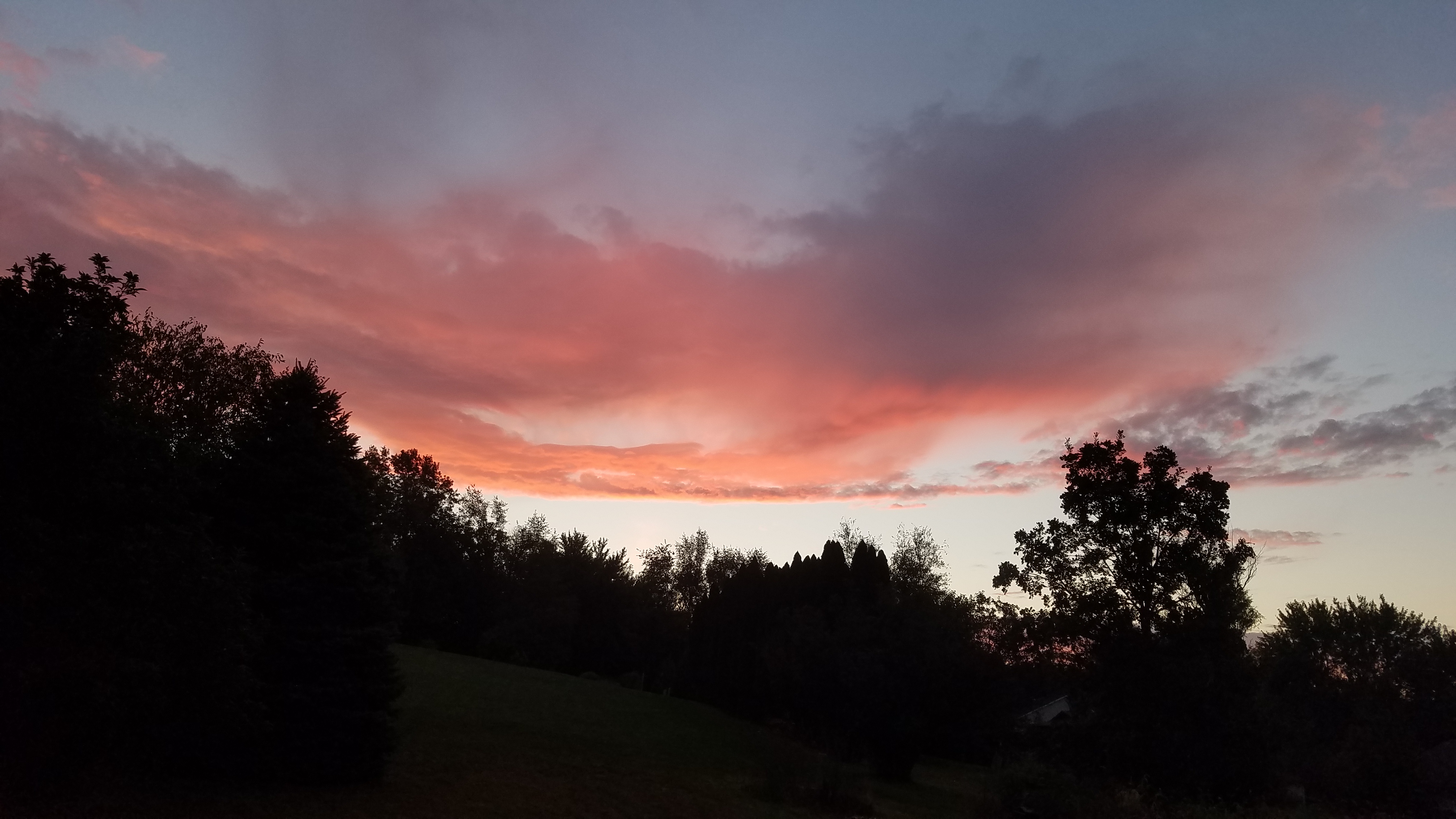
We had lightning and rain overnight. The ground remains wet this morning. Leaves on deciduous trees have begun to turn. Yellow wildflowers along the state park trail got frosted, even if it wasn’t cold enough for frost.
There were overnight thunderstorms in the county seat, enough to halt the big football game at Kinnick Stadium — three lightning delays totaling 236 minutes in duration. The home team shut out the opponent once the game resumed after midnight.
Today, I’m considering what’s next.
We are out of the coronavirus pandemic as much as we will be. While Governor Kim Reynolds was early, her Feb. 3 declaration that the coronavirus was to become normalized in daily, routine public health operations on Feb. 15 is a convenient bookend to a distinct phase of my life: The Coronavirus Pandemic Time.
I’ll continue to monitor for COVID-19 symptoms and get tested if there are any. If I get the virus, I’ll follow Centers for Disease Control protocols for isolation and treatment. I’ll continue to wear a face mask inside crowded retail establishments, and wear a mask indoors when with groups of people and the local risk is high. Periodic immunizations will become part of the fall health regimen the way influenza immunizations have been. That’s that.
The main consideration is how I will spend time going forward. During the pandemic I developed a routine that varies little from day to day. Events and activities from the world outside my routine seem like an intrusion. I want to contribute to society, yet not in the same way I have since my retirement from transportation in 2009. Solving this problem, the problem of how to engage in society, begins with shedding the old skin of a life lived well yet has become obsolete.
First comes a shedding of the past and remainders of past engagements. This is neither quick nor easy. It turns out it is difficult to leave a group to which so much of oneself has been given to create. Old habits die hard, as the saying goes. I’ve been at this for more than a year and there is a long way to go.
Next is to determine what’s most important. That’s not easy either. It is work that comes after late summer rain.






 Journey Home
You must be logged in to post a comment.