As part of the resistance, the machinery of a Republican government will be clanking in the background no matter what else I am doing, even as it needs improvement, maintenance, and breaks down intentionally. I am doing my part and want to do more. I also have to move the rest of my life forward.
It is important to write my way out of 2025 and this post outlines how I intend to do it. One word at a time, one post after another, emails again and again until a flood is unleashed. I worked all my life to do this, so there is no stopping now. The carpentry of my life dovetails with the rest of society even less since Jan. 20. This post is about writing in this new, broader context.
A cleanser from my journals:
Here in my basement I continue to make preparations, to write what I believe will provide the basis for change in the point of view of American life. The change from “the other” to the recognition that we are all part of the whole, of the one, that there is no other, just the one. (Personal Journal, Iowa City, Iowa, May 26, 1983).
I am 31 days into a streak of daily blog post writing. I expect that to continue, but it is not compulsive (I hope). I make a post to get daily words flowing in an organized manner. Correcting and revising each post, then hitting the schedule button is its own closed sphere of narrative. Some are better than others, and that is to be expected. The hour or two spent posting is like turning on the lights in my shop. I can immediately see better.
Equally important are the emails I write. Email is a dying art form, with text, Discord, Reddit, social media, and other venues taking more of our time and writing energy. In emails I work through things on a variety of topics. Each has a recipient potentially giving feedback. I spend a lot of time on a single email because it has import not only in answering someone’s inquiry, but represents an attempt to make more generally cogent and applicable statements. The group of people with whom I engage in the email is diminishing.
Finally there is the book. Doing the math, I need to write about a chapter a week, leaving time at the end of the year to pull everything together. That would present me with a draft for final editing and potentially publishing in 2026. The key at this point is when I get in a groove to keep writing until I have written it out. Hopefully such grooves will present themselves frequently. I drafted the first six chapters, so I’m about where I need to be today.
Recently two cable guys were at the house to fix a problem with the internet service. They wanted to see where my computer was, so we crammed into my book-lined space and stood there chatting. Not many people besides family enter here. It is my hideaway from the ubiquitous politicization of our lives and poor governance by Republicans. It is my safe space until I write my way out.
Before deactivating my Facebook account, I posted a photo of Rainer Werner Fassbinder as my profile picture. The New German Cinema was in vogue in Iowa City during the early 1980s. I saw more than 20 films by Fassbinder during a two-year period. He died on June 10, 1982, of a drug overdose/suicide. The joke was that as prolific as I was on social media, as Fassbinder was in film, I ended my own Facebook life by deactivating it, partly because I felt addicted to it. I suspect no one got the joke.
The changes in my social media use mentioned in yesterday’s post have had an immediate effect. Maybe not exactly cause-effect, but since I removed social media from mobile, I have been sleeping more soundly and more hours of it. I reduced mobile device screen time by half yesterday, to about three hours. I seem to be getting back to having seven or eight hours of sleep in a night. While that takes time from doing things I love, it is likely good for my health. Other positive changes seem to be happening.
It took a while this year, yet I am deep into revision of my current book. I had 63,000 words on January 1, yet the whole thing needs restructuring. I spent part of yesterday working on a new outline. It’s not finished. Having written the first book, I learned a lot about how to create a readable narrative. I plan to apply those skills as the major re-write begins. I will start with a solid outline and then, from the beginning, rewrite each chapter as if it were a stand-alone piece. The main epiphany is I need to focus on a smaller set of narratives. I’m thinking 25-30 stories. My whole life won’t fit, and there is no reason for it to do so. It’s not like I’m Robert Caro writing the biography of LBJ.
Yesterday one of my shoes wore out while I was walking on the state park trail. Water began to seep through the hole in the sole and by the time I finished 30 minutes of walking, my left foot was drenched. When I got home, I tossed the shoes in the trash and dried my feet. I made a note to buy a better pair of walking shoes soon.
There are a lot of moving pieces today. Having more rest and a new pair of walking shoes seems like a necessity. Also humor can help if people get the jokes.
Editor’s Note: As I prepare for my exit from Facebook, I came across this list of quotes from a long time ago. They remain some of my favorites.
“For the great enemy of truth is very often not the lie– deliberate, contrived and dishonest– but the myth– persistent, persuasive, and unrealistic. Too often we hold fast to the cliches of our forebears. We subject all facts to a prefabricated set of interpretations. We enjoy the comfort of opinion without the discomfort of thought.” ~ John F. Kennedy
“No ideas but in things” ~ William Carlos Williams
“If each citizen did not learn, in proportion as he individually becomes more feeble and consequently more incapable of preserving his freedom single-handed, to combine with his fellow citizens for the purpose of defending it, it is clear that tyranny would unavoidably increase together with equality.” ~Alexis de Tocqueville
“Water and air, the two essential fluids on which all life depends, have become global garbage cans.” ~ Jacques Yves Cousteau
“Early apples begin to be ripe about the first of August; but I think that none of them are so good to eat as some to smell. One is worth more to scent your handkerchief with than any perfume they sell in the shops. The fragrance of some fruits is not to be forgotten, along with that of flowers. Some gnarly apple which I pick up in the road reminds me by its fragrance of all the wealth of Pomona, carrying me forward to those days when they will be collected in golden and ruddy heaps in the orchards and about the cider-mills.” ~ Henry David Thoreau
“Am I in earth, in heaven, or in hell? Sleeping or waking? mad or well-advised? Known unto these, and to myself disguised! I’ll say as they say and persever so, And in this mist at all adventures go.” ~ William Shakespeare
“Radix malorum est Cupiditas” ~ from Chaucer, but older
“It’s always the old who lead us to the war. Always the young who fall. Now look at all we’ve won with the saber and the gun. Tell me is it worth it all?” ~Phil Ochs
“No. Try not. Do… or do not. There is no try.” ~Yoda
“Good navigators are always skeptical, not of the presences of things, but of what they see and understand. Good navigators are almost always lost.” ~Robert Finley
“Why, this is very midsummer madness.” ~ William Shakespeare
“You know? There’s the most extraordinary, unheard-of poetry buried in America, but none of the conventional means known to culture can even begin to extract it. But now this is true of the world as a whole. The agony is too deep, the disorder too big for art enterprises undertaken in the old way. Now I begin to understand what Tolstoi was getting at when he called on mankind to cease the false and unnecessary comedy of history and begin simply to live.” ~Saul Bellow
“We must do away with the absolutely specious notion that everybody has to earn a living. It is a fact today that one in ten thousand of us can make a technological breakthrough capable of supporting all the rest. The youth of today are absolutely right in recognizing this nonsense of earning a living. We keep inventing jobs because of this false idea that everybody has to be employed at some kind of drudgery because, according to Malthusian-Darwinian theory, he must justify his right to exist…The true business of people should be to go back to school and think about whatever it was they were thinking about before somebody came along and told them they had to earn a living.” ~R. Buckminster Fuller
“No man is an island, entire of itself; every man is a piece of the continent, a part of the main. If a clod be washed away by the sea, Europe is the less, as well as if a promontory were, as well as if a manor of thy friend’s or of thine own were: any man’s death diminishes me, because I am involved in mankind, and therefore never send to know for whom the bells tolls; it tolls for thee.” ~ John Donne
“We harbor no illusions about the difficulty of bringing about a world without nuclear weapons. We know there are plenty of cynics, and that there will be setbacks to prove their point. But there will also be days like today that push us forward – days that tell a different story.” ~ Barack Obama
“And our mouths shaped words, And our destiny was shaped. With words we made our sacred songs, We took possession of language, And our being was borne on words.” ~ N. Scott Momaday
“As we come marching, marching, we battle too for men, For they are women’s children, and we mother them again. Our lives shall not be sweated from birth until life closes; Hearts starve as well as bodies; give us bread, but give us roses!” ~ James Oppenheim
“Fill ‘er up with love please won’t you mister? Just the hi-test is what I used to say… But that was before I lost my baby, I’ll have a dollar’s worth of regular today.” ~ Phil Ochs
“An individual has not started living until he can rise above the narrow confines of his individualistic concerns to the broader concerns of all humanity.” ~ Martin Luther King Jr.
Just give me the warm power of the sun. Give me the steady flow of a waterfall. Give me the spirit of living things as they return to clay. Just give me the restless power of the wind. Give me the comforting glow of a wood fire. But please take all of your atomic poison power away. ~ John Hall
“But your flag decal won’t get you Into Heaven any more. They’re already overcrowded From your dirty little war. Now Jesus don’t like killin’ No matter what the reason’s for, And your flag decal won’t get you Into Heaven any more.” ~ John Prine
I won’t miss Joe Biden because he became the face of America during his presidency, leaving a positive, persisting imprint across our government.
Althea Cole (Jan. 19) and Mike Hayes (Jan. 26), have been saying in the Gazette they won’t miss President Biden. They ran him down with words and stomped him like he was a dust ball in their closet. You may not miss Joe Biden but you will miss his policies.
I’ll mention three.
The Broadband Equity, Access, and Deployment (BEAD), an Iowa program authorized by the Infrastructure Investment and Jobs Act of 2021 is bringing broadband to rural parts of the state where it had not been before. People I speak with say it is life-changing. Thank you, Joe Biden.
More than $200 million in National Institutes of Health funding comes into Iowa, supporting more than 2,500 jobs. Clinical trials and research are a part of so many of our lives. They include research into the prevention and treatment of cancer, which the governor highlighted in her condition of the state address. Biden supported this funding.
The Infrastructure Investment and Jobs Act is expected to send Iowa $3.9 billion in Federal highway formula funding for highways and bridges. We all use highways and bridges. Again, thank you, Joe Biden.
It’s a free country and people can say what they want. What I’ll say about Cole and Hayes is they are not being Iowa nice even though they should be.
~ Submitted as a letter to the editor of the Cedar Rapids Gazette
Editor’s Note: This is a draft of the opening chapter of Part II of my memoir. Its purpose is to introduce some major themes in the narrative and stand alone as a story.It is also a work in progress. I removed the full names of people I know for this post.
After my post-master’s degree tour of racism in America, I stayed in Iowa City. The reasons were not complicated.
I had to decide whether to be in a relationship with someone, and Iowa City was a regional social hub offering a large pool of potential friends and mates. The rest of the state seemed a primitive agricultural landscape, desolate and barren of intellectual engagement. As a young Iowan possessing two degrees, and aspiration to do better than merely survive, of course I chose to live in Iowa City.
Iowa City seemed an excellent place for a writer. It offered a broad intellectual life, not to mention, was the home of multiple writers’ workshops and groups. I expected to find other writers of varied skills, along with what it took to support a writing community. Nowhere else in Iowa could I find that.
In the pre-internet days, relationships were in person or they were difficult. A long-distance relationship involved telephone calls, letters, and the occasional audio cassette. We made our life where we lived and it took a year for me to discover what was in Iowa City and what was possible. The year beginning in summer 1981, became my year of being a writer.
I knew how to live in Iowa City as a writer. Writers came and went at the shared house on Gilbert Court during my undergraduate studies. The pattern was simple. Find a place to live and write, find income and resources to pay bills, and then go on living with a view toward producing poetry or prose. It was no different when I finished graduate school.
When I moved out of JG’s basement, I found a small apartment with a kitchen in a divided single-family dwelling. My apartment search benefited from most students being out of town on summer break.
On a pre-rental tour, a tenant still lived there. I deduced she was a writer of some kind. “A writer’s workshop type,” I noted. She had photographs of writers on the walls, and many books by workshop alumni in a living room pier cabinet. My quick analysis of her book shelves was she displayed the kinds of books I avoided. My future landlady had had a run in with her and described her as “a little backward.” I didn’t care that much about the drama. I was ready to move in and get started with the next iteration of my life.
The second-floor apartment at 721 Market Street had six windows. It helped me feel more in touch with the world after living in a windowless basement. It literally gave me perspective on quotidian affairs on the street. I felt included with events going on around me in the vibrant county seat. I also felt power in the old part of the city. It took me two days to settle in.
If I had an idea about being an Iowa City writer, it was modeled on John Irving’s time there in the 1960s and ‘70s. He began his first book, Setting Free the Bears, as part of his Master of Fine Arts thesis at the University of Iowa Writer’s Workshop. His second book, The Water-Method Man, was set in Iowa City and contained settings one can easily recognize. I carried this model of Irving with me throughout my life. Eventually, John Irving displaced Joan Didion as my favorite writer, although that will be much later in this story. I read The World According to Garp while living on Market Street.
More than anything, I sought to define my writing life as unique in a society of sameness. I had no intention of applying to the Writer’s Workshop, carrying a bit of residual skepticism about it from my days living with Pat Dooley, Darrell Gray, Pat O’Donnell, and other Actualist writers and artists I met in 1973 and ‘74. Gray described his time at the workshop as a “two years of duty on the U.S.S. Prairie Schooner which houses the Famous Poets School, a singularly enigmatic vessel that always seems on the verge of ‘going somewhere.’” I sought to enable my native, if somewhat naive impulses and culture. I hoped to discover what that meant, yet not in the context of the writers’ workshop.
I had three main accomplishments during 1981. By describing myself as a “non-academic Americanist,” I hoped to distance myself from formal structures of creativity. If I didn’t produce much writing beyond my journal, I neither wanted to be pinned down by ideas of fiction, non-fiction, poetry, or other categories of writing. As I read an 1855 facsimile edition of Walt Whitman’s Leaves of Grass, I felt I could embrace Whitman, who wrote, “I too am not a bit tamed, I too am untranslatable, I sound my barbaric yawp over the roofs of the world.” I felt just below the roof line at the Market Street apartment because I was.
In furtherance of putting my recent life in the past, I culled writings from my archives and produced a self-published book Institutional Writings. It was intended to be about the bonds that connect us to our common humanity yet it was more than that. It represented work I had done in institutional settings and was also my departure from institutions to seek a new creative path. I printed and distributed about a dozen copies to friends and family.
Finally, after settling in and suffering what I described in my journal as depression, I pieced together a life and was filled with the desire to do things. Throughout this year, old and new friends were supportive of what I sought to do, even if none of us fully understood it.
From a logistics viewpoint, the pieces were coming together. What I realized now, and didn’t then, was I needed something to write about. That gap made it difficult to get words down on paper in the time with most of my future ahead of me.
I kept a journal that recorded movies I saw, books read, and people I encountered. I described parts of my search for paid work. That journal was the primary work-product of the period from May 1981 until July 1982.
It was my time to be a writer, especially after I moved to my own apartment. The need to pay bills to support my new lifestyle emerged as a dominant force. Work was available. The money I banked in the military would eventually run out, so I needed income to pay monthly bills. I had no idea of supporting myself beyond the next rent payment. I could live paycheck to paycheck indefinitely, working a job that would leave enough energy each day for writing. The chance of long-term employment with decent benefits had already begun to fade from American society as Ronald Reagan was inaugurated president that year.
I looked for work that would pay bills to stay in Johnson County. It was tough to find work after graduate school, mostly because I hadn’t looked for any job since I enlisted in the military in 1975. I made a conscious decision to stop moving from place to place, from activity to activity, and settle down. I began the job search with what I knew. Buying every local newspaper, I marked each job in the help wanted pages with an “X” after contacting the company. The work environment had changed from a decade previously when all a person had to do was make the rounds of major employers to find a good paying, union job. No more.
My application for work got extra points for consideration at the university because of my military service. That led to more job offers. In July 1981 I took a job as a clerk at the College of Dentistry because it was offered. At the University of Iowa there was a small retirement plan, no pension, and no health benefits. The income resolved my immediate needs.
About a month later, on Aug. 3, 1981, the Professional Air Traffic Controllers Organization (PATCO) went on strike. President Ronald Reagan ordered them back to work and on Aug. 5, he fired 11,345 workers who did not cross the picket line, breaking, and ultimately decertifying the union. While on a later business trip to Philadelphia, I met one of Reagan’s attorneys in the PATCO action. We discussed the strike and Reagan’s handling of these government employees. My understanding of the action was confirmed. It was political.
What started in 1981 with the PATCO strike continues, without apology, as part of Reagan’s legacy of breaking unions. The unintended and maybe less considered consequence of Reagan’s union policy was to make life harder for middle class workers like me.
Beginning that July, I had a year to see if I could be a writer.
During my young life, several residences stood out as hubs of personal creativity: my apartment on Mississippi Avenue in Davenport, my bachelor officer quarters in Mainz, Germany, and my apartment at Five Points in Davenport. The apartment on Market Street in Iowa City was my last stand in creative endeavor. The coming year would either make or break my effort to write a book. During that time, I acclimatized to living in Iowa City and did many things. Starting a book was not one of them.
One of JG’s friends was MAM, a nurse who was studying printmaking at the University of Iowa College of Art. She maintained an apartment not far from Market Street. During that year, I felt welcomed to stop by after a run or enroute somewhere else. She and her artist friends provided an ad hoc forum to discuss creative ideas. I got several ideas about how to live and be creative in Iowa City from her. While I wanted more than a creative dialogue with her, I accepted the relationship for what it was and moved forward. I repeated this familiar pattern with other female artists I had known.
MAM encouraged me to purchase a bicycle, which I did. I bought a Puch Cavalier, one of the last of their bicycles made in Austria. She would give me maps of places to ride, including a route south through Sharon Center. I rode a lot, and eventually rode a century organized by the Bicyclists of Iowa City. The two of us met at the finish line and had something to eat at the Sanctuary Pub afterward.
The Century was the first time I experienced glycogen burn-out. My legs were shaking so badly, I didn’t know what to do. I stopped and rested at the side of the road until the shaking abated. I slowly made my way, first walking, and then riding, to the next rest stop where I ate fresh fruit to replenish my glucose supply. I spent a lot of time on my bicycle, mostly riding by myself.
MAM also encouraged me to keep running, which I did… for long distances. I would run out Prairie du Chien Road to the Coralville Reservoir and back. There was only so much to do in my apartment, so exercise helped me be constructive and feel stronger. That summer I ran the Bix 7 in Davenport, a road race that attracted international participants during the Bix Beiderbecke jazz festival weekend. Some of my Iowa City artistic friends, including MAM, came along to make it a fun day.
When I began work at the Dental College, I met a new group of people. Occasionally we got together and did things like seeing the movies Return of the Secaucus 7 and Gallipoli. Because we got to know each other at work, social activities seemed to fit. Mostly, though, we had one-on-one relationships.
MC worked in the records department in the lower level of the Dental Science Building. She followed her husband from Ohio to Iowa where he worked on his graduate degree in art. During my breaks I would often hang out with her. Eventually I helped her make a Super 8 film called “One Hundred Years in Iowa City.” In addition to exposing film for the project, we had many meet ups and conversations about cinema as an art form. We took advantage of Iowa City’s vibrant film scene. Our friendship was valuable to my creative life.
I continued to play music with JP who I met in graduate school. JP and MP were from California. MP worked at the Cancer Registry while he finished his master’s degree. They expressed a self-defined idea of being Californians. He was a fan of Stan Rogers and played many of his songs. From time to time, he would play at the Mill Restaurant Open Mike. We often played together. He was more talented at guitar-playing and singing than I.
My high school friends and former college roommates DB and DC were constantly in each other’s orbits through letters, telephone calls, and in-person visits. Both of them visited me in Iowa City, and DC brought his spouse TC. We continued our practice of talking about creative matters then, and for many additional years. My military friend from Mainz, LP, sent me an audio cassette in which he admonished me to re-join the military. I did not. Apparently, I was complaining about a lack of female companionship to my high school friend GG. During a phone call, he passed along the advice to “just fall in love.” Communication with old friends was constant during my time on Market Street. I didn’t always take their advice.
There were plenty of significant events in Iowa City. I heard Toni Morrison read at Old Brick, Chaim Potok at the Iowa Memorial Union, and James Laughlin, founding publisher of New Directions, at the Lindquist Center. The Morisson event was notable for a bat circling above the author as she read. I noted the Potok lecture was almost identical to the one he gave in 1975 when I lived on Mississippi Avenue in Davenport. I wrote in my journal about a Laughlin event:
On James Laughlin: Tonight in deteriorating body the consciousness that went in and out of the lives of so many of the 20th Century’s “great” writers lectured on William Carlos Williams. Full of memories, reading poems from a text prepared by many, he spoke of his view of Williams. He read poems and almost came to tears. And this is what remains of those like Williams. The stories of a friend who has survived, to tell of poems and flowers and love, engaged in humanity. (Personal Journal, Iowa City, Iowa, April 22, 1982).
I saw one or two films each week that year. I had been deprived of most films while serving in the military. I wasn’t sure what they meant to me, other than another form of intellectual engagement in which to find nourishment. The New German Cinema was in vogue in Iowa City. I saw several films by Rainer Werner Fassbinder who died on June 10, 1982, of a drug overdose/suicide. His work had a lasting impact on me.
A writer must eat. My journal includes an early discussion of gardening and cooking. I lived within walking distance of the HyVee Grocery Store on North Dodge Street and John’s Grocery at Market and Linn Streets. I became more aware of buying ingredients for cooking. Among the dishes I described in my journal were soup, chili, souffle, and Sergeant Juan San Miguel’s hot sauce. I wrote about the importance of growing my own food as soon as I had sufficient resources to buy a house on a plot big enough for a vegetable garden. I enjoyed cooking.
In the kitchen – I’ve got a pot of bean soup cooking, a cultural heritage to be sure, a family tradition, a piece of ethnicity. I’ll enjoy cooking and eating that soup and really, this gives me a lot of satisfaction – cooking. But I have little desire to make a living or an income from my interest in cooking. It is a source of satisfaction, yet I like doing it here in the privacy of my kitchen, where I’m busy writing and thinking. (Personal Journal, Iowa City, Iowa Jan. 10, 1982).
Cooking was part of living a good life. I believed cooking and eating was not for mere nourishment. We created a meal of each repast, seeking to please our palate, and soothe our souls. Contentment with our diet is equated to soothing our souls. “Before we commence anything else, we must first of all get our kitchens in order,” I wrote.
“If I could but learn to cook chicken well, I believe my troubles would be over.” (Personal Journal, Iowa City, Iowa, March 21, 1982).
In May 1982 I went on an extended weekend getaway to Northeast Iowa. I stayed at the Guttenberg Inn and visited Galena, the Vinegar Hill Lead Mine, Harper’s Ferry, Gays Mills, Wisconsin, and other places. I remember a walk I took from the motel to town on May 13:
I walked down the hill to town, along the river and through town – I noticed people in their homes, shades up, in the kitchen, or watching television. How it distresses me to see those televisions going. I admit I like to watch certain T.V. shows, but the engagement of a Thursday night: Television – ugh! Here, as in so many other things, this national, institutionalized force captivates the people. They seem to have no will of their own.
In their tidy houses, with well-trimmed lawns, and groomed gardens, life goes on, but there is something missing here. (Personal Journal, Guttenberg, Iowa, May 13, 1982.)
The time alone in Northwest Iowa served me well. I had to make something better from my life.
On April 16, 1982, President Ronald Reagan issued a proclamation that designated Memorial Day, May 31, 1982, as a day of prayer for permanent peace. Beginning at 11 a.m. local time, Americans were to unite in prayer. I don’t recall participating in this event. That weekend I did write at length about being a writer when I returned to Iowa City.
Shall I go on writing? There are so many things in the world to be done, yet I go on writing.
I think a majority of people in my generation would “like to be a writer.” That is, they would like to deal with images. But a writer cannot deal solely with images. He must address the realities of his and all the people’s situation. The writer must be socialized into the culture of which he writes. As a member of a culture, a writer has a vested interest in his culture. He seeks the continuance and survival of the vital elements of his culture.
Too, he seeks change. Not only change that is the essence of a day’s spontaneity but change in terms of his conception of both the past and the present. Although a person can have misconceptions about the nature of the world, the meaning of the world, he is required to act based on this knowledge.
In every case, this is far less than a science of action. In fact, the notion of science we share is obsolete. There is science only insofar as we can all agree on what that is.
But shall I go on writing? Yes, at least in the pages of this journal. For it is one of the things that has sustained me for so long I cannot give it up yet. Nor shall I. Yes. I will go on writing. I’ll fill the pages of this and many another book like it. For this is the path I’ve chosen. (Personal Journal, Iowa City, Iowa, May 30, 1982.)
Though committed to writing, the journal posts ended abruptly after the July 11, 1982, entry. JC and I began dating and became more than work acquaintances.
January turned into a tough month for writing. The main concern is a lack of productivity in writing my autobiography. I’ve written in it on nine days this month for a gain of 1,814 words. Volume two stands at 64,739 words today and is quite rough. While thinking about memories and documents and how they might fit the narrative is part of my time usage, I need to get more words in the draft. Six days remain in January, so I may be able to do improve the editing and word count.
This makes my 23rd post on Journey Home this year. There is more to write about, and once I sit down and write a first paragraph, the rest flows pretty easily. Because of my long experience writing blog posts, this work comes easily and for now I expect to write regular posts. Viewership is up in January.
I expect to deactivate my Facebook, Instagram, and Threads accounts by the end of the month. I joined FB in 2008 to follow our child. They don’t use it any longer. I am of an age where I experience being alone as many elderly people do. Social media reinforces loneliness for me. I’d rather do things besides social media to address this. We’ll see if I actually pull the plug, yet at the end of the Meta Blackout, I’m not missing those platforms very much.
I continue to spend a lot of time writing carefully worded emails. I am a fan of Gmail because it stores every email written through that platform. For my autobiography, I am reviewing older emails, even before I joined Gmail in 2006, for potential content and history. Email is personal, so I expect there will be more of it when I pull the plug on Meta.
While it is not writing, telephone and video calls have become more important. There are more of them and they have a longer duration. Voice communication is becoming increasingly important.
While the weather continues to be wintry, I spend most time indoors. My reading and writing have increased even if I was discontented about progress on my autobiography. This is a winter of discontent, yet I feel a burning hope for better days… for days when I’m planning my next big writing project.
It never helps to drive for more than a few minutes on an Interstate Highway in Iowa. I focus on keeping the car in my lane with the radio off. If my mobile device rings, I let it go to voicemail. When I look through the windshield at the landscape, it feels bad. It has been so long since the prairie was ripped up that people forget it once existed.
“More than 80% of Iowa was once covered in tallgrass prairie,” according to the Story County Conservation Center. “But over time as land use changed (we built cities, roads, agriculture fields, etc.) this critical habitat has diminished: Today, less than 0.1% of the original prairie remains.”
Iowa now has an extraction economy and the landscape shows it, even when the fields are green in July and August.
The ambient temperature averaged around 40 degrees on my trip home from Des Moines. That’s too warm for mid-January yet these are not normal days. There is scant snow on the ground, a harbinger of more drought to come. These conditions recur and appear to be the new normal. Desolate, dry, and barren are words I never thought to use to describe my home state. They fit.
So what is next in this place?
I have to figure out how to get news. I get a squinchy feeling every time I say I subscribe to the Washington Post, yet I need a national newspaper and every one of them has issues. Better the devil I know.
The Cedar Rapids Gazette announced the next in a series of cost savings efforts. They are reducing the number of printings they do to three per week. The online daily edition will continue for now. I read that over coffee before starting each day.
The local weekly paper, the Solon Economist, has about 600 current subscribers. I have not been impressed with its work since being purchased by the Daily Iowan a year ago. Among things that are missing is getting the newspaper posted online in a timely manner. Between Dec. 26 and Jan. 9, they did not post any of three expected editions online on publication day, until after I emailed the editor and asked what is up. My subscription will continue as long as they are in business.
I don’t watch television and infrequently turn the kitchen radio on. They will not be a major news source.
The internet has lots of stuff on it. The exodus of many newspaper reporters from their newspapers to Substack is having an effect on news coverage. There are too many Substacks, and not enough time to read all of them. They lean toward opinion, rather than news.
As far as social media goes, I’m keeping Facebook, Instagram and Threads. For now, Threads is where you will find most of my text posts. I cut back followed accounts on Facebook and Instagram where I don’t know the human behind them in real life. I’m also on BlueSky which has been a good place to read news-like stuff, yet it is not appealing as a place to find community. I spend too much time on social media and am actively working to reduce that.
Email has been and continues to be the best source of news. We don’t talk much about the role of email, and maybe we should. I spend as much time on email as I do on any single social media account. The time spent there rewards me with news.
It occurred to me, somewhere between Colfax and Williamsburg that I can’t delay the decision about how to get news. This will be a busy year as long as I find good health and economic security. News is the lifeblood of an engaged citizen. We must be picky about which outlets we use.
The trail began to melt on Sunday. Thanks to overnight temperatures in the single digits, the surface was frozen again on Monday: perfect for winter walking. A light breeze chilled my face, yet I persevered and encountered only two regular trail walkers while I was out for my fast-paced, 30-minute walk. It was chilly!
I dreamed last night I had to untangle the shoe laces of a pair of my army boots. I still have two pair (acquired in 1976) I use in the garden. The shoe laces were exceedingly long and well tangled. Unlike most dreams, this one persisted into waking. Its meaning is clear. I need to go through the stacks of notes, mail, and things to do on the dining room table and get organized for a rapidly approaching spring. What seemed different this time is my acceptance of the dream as reality. I got the shoelaces untangled just as I awoke. Indoor planting of garden starts is just a few weeks away.
I’ve been reading my hand-written journals from May 1981 until July 1982. It was a year I worked as a writer in what is now a UNESCO City of Literature. I wasn’t a particularly good fit for Iowa City, yet the rest of the state seemed a primitive agricultural landscape, desolate and barren of intellectual engagement. As a young Iowan with two degrees, and aspiration to do better than merely survive, of course I chose to live in Iowa City. Besides my journal I didn’t do much writing during that time.
I did write a lot in my journal, which fills three volumes. I wrote frequently about how to escape the “institutional” realms of writing that included the University of Iowa Writers Workshop and other formal programs. I wanted to be a writer, yet not like “those writers.” My reading turned to familiar places as I dealt with the urge to write.
I was enamored of Tom Wolfe because his writing came from a place of reality. He and several others were parents of the New Journalism, publicized in his 1973 book. He immersed himself in his subjects, spending months in the field gathering facts through research, interviews, and observation. I didn’t have a lot of role models outside institutions, but Wolfe was one.
Another role model was William Carlos Williams, the pediatrician/poet. Prompted by a talk given by Williams’ publisher James Laughlin, I wrote this in my journal the next day:
William Carlos Williams: I’m not exactly sure where in my world view to put him. I think his position as doctor/poet, his molding of those two professions into one homogeneous lifestyle is admirable. But, to the extent that they remained two separate elements in his life, his life was a failure.
I think his poetry, at least as much as I have read, is poetry for the learned… yet one more attempt to elevate himself from among the people among whom he worked. It served him as a diversion from being a doctor. Well there may be people who would argue that diversion is necessary, the diversionary aspect of any activity adds connotations of the Victorian era for me. While James Laughlin states that the elements of Williams’ life were inseparable, he, too, is immersed in that ideology. He, too, is suspect.
I think I have a lot to learn from Williams, his problems notwithstanding. He is full of energy. He is above all else animated — filled with life. This is an example to be taken to heart. To be weighed and brought into my own life. (Personal Journal, Iowa City, Iowa. April 23, 1982).
I thought I could quickly dispatch the requisite words for my autobiography from this period in a couple thousand words. The more I read the journals, and invoke living memory, it is clear that year was more formative in my life. I wrote about writing, gardening, cooking, exercise, and about the meaning of being alone without feeling lonely. I will read this writing from 44 years ago again before my autobiography is done.
I wrote both of my U.S. Senators to urge them to keep the government operating until the Congress and the President can agree on a budget. They each responded to my message.
Both pointed out the continuing resolution to fund the government until March 14, 2025. Voting for that resolution was the purpose of me contacting them. I expect they both had already planned to vote for it when my email found its way into their offices.
“I think you will agree that our nation is facing a spending crisis directly caused by the absence of sound fiscal policy and rampant, uncontrolled spending sprees,” Ernst wrote in response. One assumes Republicans will remedy that issue now that they have the trifecta of the executive and both chambers of the U.S. Congress. Such assumptions are a stretch because when Trump visited Capitol Hill this week, tax cuts for the wealthy and associated spending were the main course. In retrospect, it has been Democratic administrations that pulled the reins on such spending. Time will tell if Ernst was sincere.
For Senator Grassley’s part, he said, “Unfortunately, the appropriations process in Congress is broken and it must be fixed. Out of control spending is saddling our kids and grandkids with unprecedented debt. But shutting down the government is a waste of money.” One assumes, as with Ernst, Grassley will work in the Congress to fix this. The U.S. House couldn’t pass the needed appropriations bills in the 118th Congress. The Republican majority is even slimmer in the 119th. To Grassley’s credit, his response provides a longer explanation of the appropriations process. I believe this was already written when my email reached his office, nonetheless, I am happy to have it.
My point is that we should take advantage of the available tools to contact our elected officials to advocate for things. I use the process sparingly because I don’t want to wear out my welcome. While this may seem like a form of Kabuki Theater, it is the process we have. Below are Senators Ernst and Grassley’s written responses to me.
Here is Senator Ernst’s full response:
Thank you for taking the time to contact me about the importance of keeping the government funded and open. It is important for me to hear from folks in Iowa on policy matters such as this.
As you may know, Congress recently passed a continuing resolution to fund the government through March 14, 2025. Like many Iowans, I am sick and tired of Washington’s dangerous habit of governing from one emergency to the next. Our federal government cannot continue lurching from one short-sighted, band-aid funding bill to another.
While I am pleased we were able to avoid a government shutdown, all of the appropriations bills were waiting to be voted on for several months. Senator Chuck Schumer (D-NY), who controlled the calendar in 2024, refused to bring those bills to the floor for a full Senate vote or allow senators an opportunity to offer their own input. Instead, he let the government come far too close to shutting down too many times.
You may be interested to know, I introduced the Shutdown Accountability Resolution to compel Congress to do its job. This effort would mandate the Senate remain in session and continue working in the event of another potential government shutdown. If enacted, my resolution would also authorize the tracking down, arresting, and escorting of Senators to the chamber if they refuse to show up and do their job.
I think you will agree that our nation is facing a spending crisis directly caused by the absence of sound fiscal policy and rampant, uncontrolled spending sprees. You may be interested to know, for the past decade, I have proudly presented a monthly Squeal Award to highlight an expense or program the federal government is wasting your tax dollars on. But I don’t just call out the waste, I offer a commonsense solution to end it. A full list of my Squeal Awards can be found here: https://www.ernst.senate.gov/public/index.cfm/make-em-squeal. Iowans elected me to cut Washington’s pork and make ’em squeal, and that’s exactly what I’m doing!
Please know that I will continue fighting to make Washington more accountable and fiscally responsible. Feel free to contact my office with any further information, as I always enjoy hearing from Iowans.
Joni K. Ernst, U.S. Senator
Here is Senator Grassley’s full response:
Thank you for contacting me with your support for keeping the government funded. As your senator, it is important for me to hear from you.
I appreciate hearing of your thoughts about the negotiations in Congress to fund government operations up to March 14, 2025. I value your perspective on this issue.
Unfortunately, the appropriations process in Congress is broken and it must be fixed. Out of control spending is saddling our kids and grandkids with unprecedented debt. But shutting down the government is a waste of money.
The U.S. House of Representatives considered three continuing resolutions (CRs) in December 2024. The first CR funded federal government operations, disaster relief programs, and needed extensions. However, opposition was raised to extraneous provisions that greatly increased the length of the bill and it was pulled from consideration. The extraneous provisions included: several bipartisan bills, reforms to the pharmacy benefit manager (PBM) industry, and reauthorizations of the Workforce Innovation and Opportunity Act and the Older Americans Act. A second, paired down CR that also suspended the debt limit for two years was opposed by a majority of the U.S. House of Representatives. The third CR, H.R.10545, did not include the debt limit suspension and also significantly limited the number of extra provisions on the bill. H.R.10545 passed the U.S. House of Representatives by a vote of 366 – 34.
On December 21, 2024, I joined a majority of my colleagues in the U.S. Senate in passing H.R. 10545, the American Relief Act, by a vote of 85 – 11. H.R.10545 temporarily continues funding federal government operations at current levels through March 14, 2025, with some additional funding provided for the Presidential Inauguration and several defense programs. It also provides $100 billion in emergency disaster-relief supplemental appropriations, and $10 billion in emergency economic assistance for farmers. My office worked closely with Senate appropriators to ensure funding also was made available for the needs we have in Iowa after our severe storms in early 2024.
The CR further provides funding for select health care programs, certain Medicare extenders, delays planned Medicaid DSH payment reductions, and extends certain public health programs and authorities. Finally, the CR extends the 2018 Farm Bill authorities and funding levels until September 30, 2025, and it extends authorities for other programs that were set to expire.
One of the most fundamental constitutional responsibilities afforded to Congress is the power of the purse, which grants Congress the authority to raise and spend revenue to operate the government and to carefully examine spending decisions. The federal budget is primarily funded through twelve annual appropriations bills. Emergency spending, such as for natural disasters, is handled on an as-needed basis.
The federal fiscal year begins on October 1 of each year. If appropriations bills are not signed into law by September 30, lawmakers and the president must agree on a temporary spending resolution, known as a continuing resolution, to keep the government open for business. If that fails, the unfunded parts of government shut down.
History has repeatedly shown that shutting down the government is bad policy and bad politics. It costs taxpayers money to shut down the government and even more to re-open it. A government shutdown reduces essential services for the American people, erodes the trust of the American people, and limits the ability of Congress to conduct oversight over federal government operations.
Government shutdowns don’t make for a great bargaining tool. Eventually, the heat gets so bad that Congress votes to reopen the government and the members who were pushing for certain policy changes usually don’t get what they want. Instead, Congress is in the same spot, but now is stuck with a last-minute omnibus bill or a long-term continuing resolution, neither of which allow Congress to carefully analyze spending and make necessary tough decisions. In short, shutdowns have always been a losing proposition for fiscal conservatives.
I believe Congress needs to stop governing from crisis to crisis, respect the appropriations process, and fulfill its constitutional responsibility to keep the government funded. For that reason, I am a cosponsor of the Prevent Government Shutdowns Act of 2023. This bill would permanently end government shutdowns by creating an automatic CR to keep the federal government open if budget negotiations are not finalized before key spending deadlines. The bill would prohibit Members of Congress, congressional staff, and Office of Management and Budget (OMB) officials from traveling outside of Washington, D.C. during the automatic CR. It would also prevent Congress from recessing or from considering legislation unrelated to appropriations bills for the first 30 days of an automatic CR and then would make exceptions for consideration of a Supreme Court Justice or Cabinet Secretary nomination or reauthorization legislation.
I value your perspective on the appropriations process as Congress begins working to finalize FY25 appropriations and looks to FY26 appropriations. I am committed to holding the line on unnecessary spending and looking for solutions to ensure the long-term financial health of the United States.
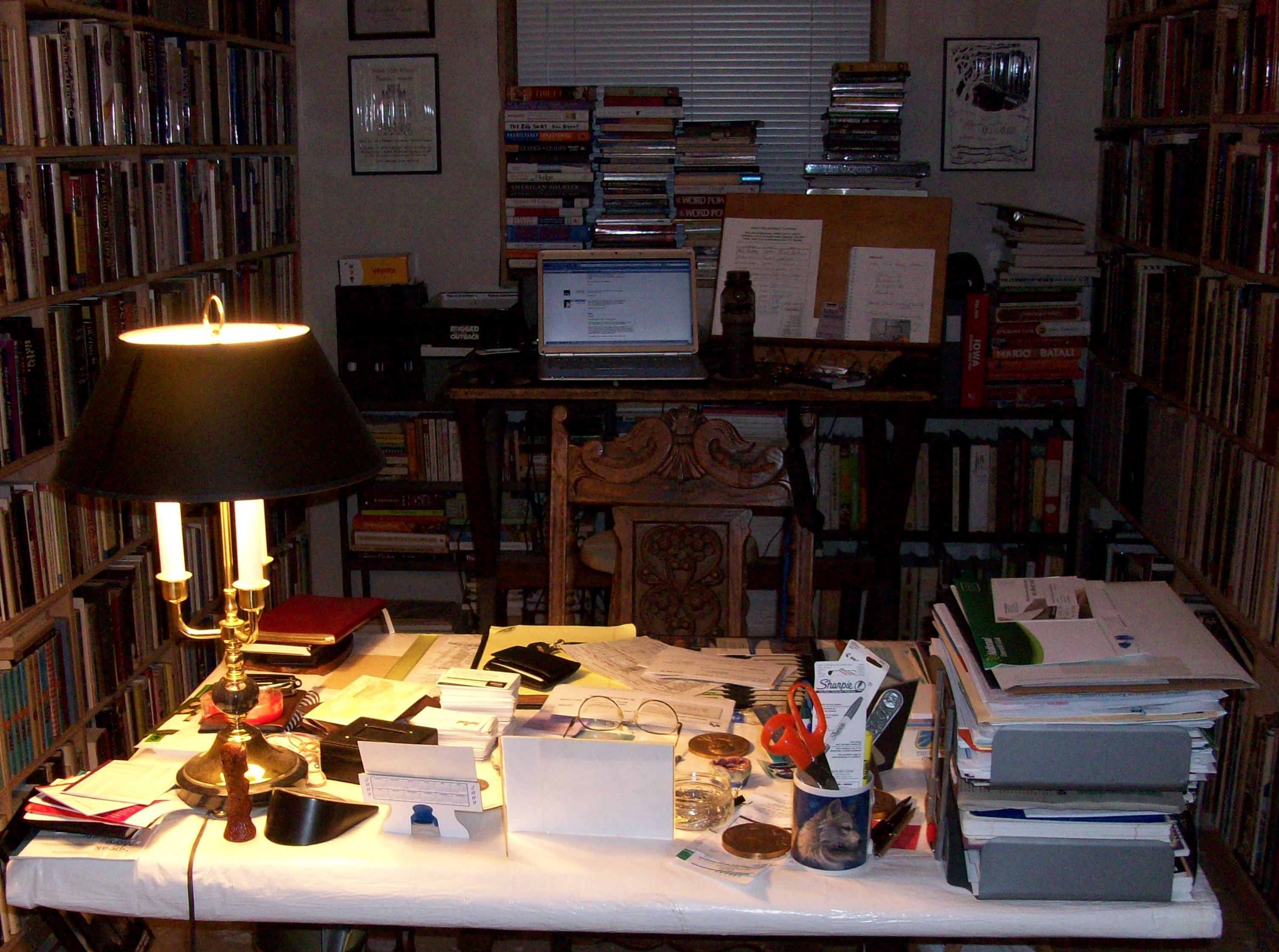
Writing space at Five Points in Davenport Iowa. 1980.
This excerpt from my personal journal was written on May 30, 1982.It reflects what I felt after a three day retreat in Northeast Iowa near Guttenberg, Harper’s Ferry, and Galena, Illinois.Most significant in this piece is the first instance of a decision to follow the path of short, written pieces like daily journal entries, and later, letters to the editor, newspaper articles, and blog posts in my writing. This decision was key to what I became as a writer. I couldn’t get rid of all the male pronouns without changing the meaning, yet I wrote it intending it to be gender neutral. It is lightly edited.
Shall I go on writing? There are so many things in the world to be done, yet I go on writing. I think a majority of people in my generation would “like to be a writer.” That is, they would like to deal with images. But a writer cannot deal solely with images. He must address the realities of his and all the people’s situation.
The writer must be socialized into the culture of which he writes. As a member of a culture, a writer has a vested interest in his culture. He seeks the continuance and survival of the vital elements of his culture.
Too, he seeks change. Not only change that is the essence of a day’s spontaneity but change in terms of his conception of both the past and the present. Although a person can have misconceptions about the nature of the world, the meaning of the world, he is required to act based on this knowledge.
In every case, this is far less than a science of action. In fact, the notion of science we share is obsolete. There is science only insofar as we can all agree on what that is.
But shall I go on writing? Yes, at least in the pages of this journal. For it is one of the things that has sustained me for so long I cannot give it up yet. Nor shall I. Yes. I will go on writing. I’ll fill the pages of this and many another book like it. For this is the path I’ve chosen. (Personal Journal, Iowa City, Iowa, May 30, 1982.)





 Journey Home
You must be logged in to post a comment.