SOLON— Salt Fork Kitchen, 112 E. Main St., is slated to open for Sunday brunch on Sept. 22 from 8 a.m. until 2 p.m., with jam session. My friend Bill posted this note about the grand opening on Facebook,
I’ve been helping open Salt Fork Kitchen, Solon’s newest restaurant, get up and running. Supplied by it’s own farm (Salt Fork Farm). Chef Jay, and crew sport a great menu. Everything made from scratch from fresh ingredients. Sauces, by Jay, are incredible, as is everything. Home made bread, and biscuits, and yesterday was hummus making. I could go on, and on, so please come by, and enjoy. Grand opening this Sunday, September 22nd, 8:00 to 2:00. Jam session so follow, so bring your fiddle, guitar, or bluegrass bongos.
The restaurant grew from Salt Fork Farms and readers can find more information at the website saltforkfarms.com. Here is a snippet,
Salt Fork Kitchen is a long time dream of Eric’s. It will be a locally sourced, made from scratch restaurant providing quality food at a fair price for you, and the farmer.
The article I wrote with background information can be viewed here. If work schedule permits, I plan to stop by for the opening.
LAKE MACBRIDE— Hydration is important while working in the field, and water is the preferred beverage. Water drawn from the well at one of the hydrants on the property. What else would it be?
Once in a while, I stop at a convenience store in town, and buy a plastic bottle of sweetened soft drink. It’s a very expensive treat. I drank so many this year that two bags of empties accumulated to drop at a local octogenarian’s garage where they are process for the bottle deposits and donated to a local non-profit organization. I’d rather stick to water for a lot of reasons.
Why would first lady Michelle Obama catch flak for saying, “water is so basic, and because it is so plentiful, sometimes we just forget about it amid all the ads we watch on television and all the messages we receive every day about what to eat and drink. The truth is, water just gets drowned out?” Drinking more water, instead of sugary drinks, is something we just do on the farm, albeit things are different in the city, where most people live.
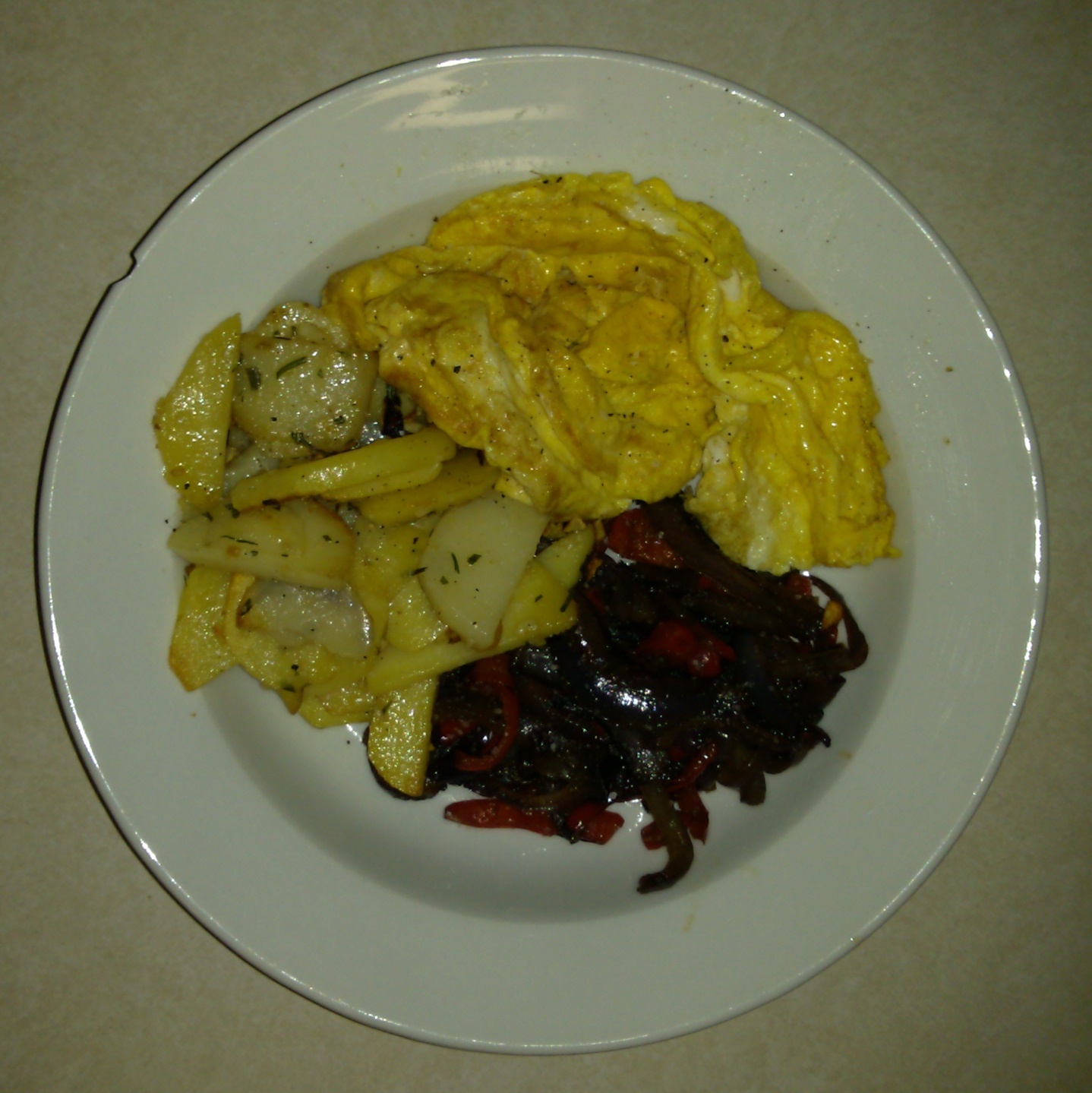
When I got home from deliveries for the local CSA, I made a farm worker’s dinner of caramelized onions and peppers, potatoes with rosemary and garlic and scrambled eggs. For beverage, a glass of chilled tap water, without prompting. It’s just the best thing to drink.
LAKE MACBRIDE— Only time for a brief post before heading out to job three of a four job day. Already this morning I finished proof reading the newspaper and worked on preserving bell peppers. Next the orchard, followed by work on the farm and then canning if I am still up to it. Sunday is anything but a day of rest in Big Grove.
My biggest ever crop of apples is turning into something of a bust because I can’t make time to harvest and preserve the first two trees. Then yesterday I read about Arctic® Apples, the genetically modified organism that is designed to repress creation of the enzyme that turns apples brown when exposed to air (after cutting or biting into) or bruised. In other words, the traditional way of knowing an apple is going bad is repressed, and this creates a longer shelf life for the fruit.
Not an issue here, where in the race against nature’s clock, I hope to eke out one or two dozen more pints of apple butter before the first picks go bad. I need the browning action to know where I stand. But in the industrial food supply chain, shelf life matters… a lot.
The new cultivar is going through the regulatory process in Canada and the U.S. presently. Friends of the Earth created an on-line petition to encourage Gerbers to continue to use non GMO apples to make applesauce and other products. From the perspective of having my own supply, and working in a large local orchard that produces cultivars going back to the 17th century, what the hell?
LAKE MACBRIDE— There is an idea about egg salad, but I don’t really know how to make it. Peeling three hard-cooked eggs, I halved them to remove the yolks, and minced the whites finely into a bowl. Two slices of home made dill pickle finely minced, and half of a medium onion, also finely diced went into the bowl.
In a separate bowl, adding to the cooked yolks, a teaspoon of celery seed, half a cup of light salad dressing, and a squeeze of yellow mustard, I stirred thoroughly and added it to the rest of the ingredients, mixing as I went. It’s what I call egg salad, but is it really egg salad?
Call it what one will, spread on two slices of bread, and eaten with an ear of corn on the cob, it made dinner.
I may not know much about egg salad, but know less about the situation in Syria. It sounds really bad, and has for a long time. It is something to refrain from comment until a few people much smarter than me weigh in. The Carter Center weighed in, as did Pope Francis, and Bishop Desmond Tutu. Economist Robert Reich weighed in, even though it is not really his bailiwick. Will wait a while and see who else has something to say.
Let’s hope the U.S. doesn’t end up with egg on our face, because no one seems sure how they might make a meal to sustain a life using that.
SOLON— Happy hour turned into dinner hour as a group of participants in the local food system spent the inaugural Friday afternoon at Big Grove Brewery. It was farmers night out. The new restaurant got a collective thumbs up from the group.
My happy hour choice was a beer brewed in the building, one of two on the menu. I haven’t developed a lexicon for beer criticism, but it was reminiscent of the Stone City Brewery fare, cloudy and strong. It was called Big Grove IPA, and the happy hour special had us buying two glasses at a time and passing them as people joined us at the table.
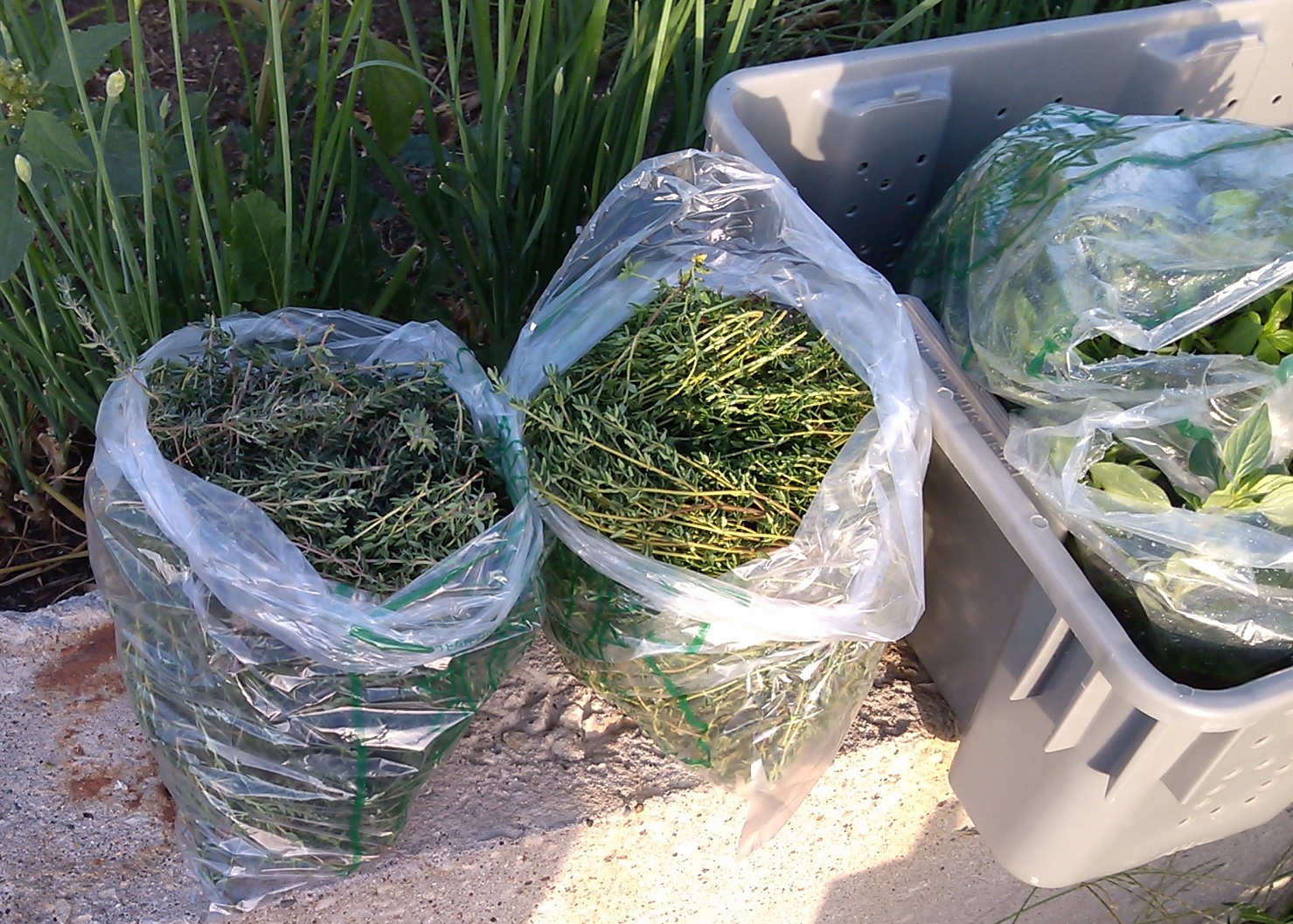
Our group included suppliers to the restaurant, and the first thing we did was try to figure out how the chefs would use the pound of thyme that was picked that morning. We couldn’t tell from the menu.
There is some vegetarian fare on the menu, and I tried the tomato and eggplant caponata, which is grilled focaccia topped with an eggplant ragout, sliced tomatoes, Parmigiano Reggiano and fresh basil. For only eight bucks, we can afford to return.
Every seat was filled, with people waiting. Even the outdoor patio was full, despite the 100 degree heat. Looks like Big Grove Brewery is off to a good start.
L to R: Trish Nelson, Caroline Vernon, Dr. Alta Price, Paul Deaton, Dave Bradley. Photo by Dan DeShane
DAVENPORT– Editors and contributors to Blog for Iowa met with our publisher on Thursday, Aug. 22, at a local restaurant to discuss the future of our blog. We plan to be around through our tenth anniversary on April 2, 2014 and beyond. That we could sustain this work for so long is the result of the efforts of editors and contributors over the years, but none of it would have been possible without our publisher, Dr. Alta Price of Bettendorf. Dr. Price renewed her commitment to Blog for Iowa, which “is paid for privately to the tune of $15 a month” according to to the footnote on the front page.
Horticulturalist Dan DeShane brought fresh tomatoes to the restaurant, which he sliced on the spot and offered. Bags of organic sweet corn and tomatoes were exchanged. But the “meat” of the dinner was conversation about issues we write about on the blog: media, ALEC, the Iowa legislature, health care, climate change, and others, including Howard Dean who got us started.
After the meal, we went to Cobblestone Place where Progressive Action for the Common Good (PACG) held its monthly community networking night. The group was hosting Evan Burger and Adam Mason from Iowa Citizens for Community Improvement (ICCI) for a discussion about the group’s campaigns, including Iowa water quality. Dr. Price serves on the board of PACG.
We don’t get together often, but when we do, there is new energy. Blog for Iowa plans to be around as the online information source for Iowa’s progressive community for years to come.
LAKE MACBRIDE— By 10 a.m. this morning I had cooked and cut sweet corn from the cob and made a large batch of hot sauce using five different types of peppers, onion, garlic and tomatoes from our garden. Waiting for the water to boil, I have one of five crates of tomatoes cored and ready to skin— the ones with bad spots are cut up and in another pot, to be processed into tomato sauce. That’s not to mention the buckets and buckets of apples ready to be made into something: apple butter first, then apple sauce, then more juice to can, and along the way some apple desserts. It has been and will be a busy day.
It is always a race against time and decay when preserving fruit and vegetables. Everything seems to come in from the garden at the same time and can intimidate. The secret is not to get wigged out, but do what one can to process the ones needing it first. That’s why I’m working tomatoes now. They were seconds when I started, and there are so many apples, they can wait and go to the farm.
In addition to the kitchen work, I delivered apples not good enough for recipes but great for livestock, and traded them for chicken eggs. Then off to the CSA to load the truck for tonight’s deliveries.
By the time I got home with the CSA share, it was time to clean up the kitchen so our house guest could prepare for a work potluck tomorrow. We made a simple dinner of corn on the cob, sliced tomatoes, steamed broccoli and freshly made apple juice. If your bones are weary at the end of a day, it isn’t all bad that they are weary from securing delicious local food for the dinner plate, made with your own hands and labor.
LAKE MACBRIDE— There’s a lot of work to do in a summer kitchen. One almost forgets that in addition to preserving the harvest, it is important to cook and eat in harmony with the season’s abundance. Yesterday at the the grocery store there were bags of two large loaves of French bread for sale at $0.99. I bought one, brought it home, sliced and toasted it, and topped each piece of bread with salad dressing, a slice of tomato, salt and pepper. As is said of good and tasty food, Yum!
On Wednesday, we were discussing abundance at the farm. Extra sweet corn, cantaloupe and cabbage were offered, along with small onions, seconds of potatoes and peppers. I took some of each and made a stew for dinner using potatoes, sweet corn, onion, peppers, potatoes, zucchini, yellow squash, carrot, celery and home made turnip stock: a fitting side dish for a meal of corn on the cob and sliced tomatoes. The cabbage was made into sauerkraut, and the cantaloupe were some of the best we’ve eaten.
This is not to mention the apples which are falling from the tree at a rate of a peck every hour or so. I got out the juicer and added apple juice to the vinegar jar, and bottled a gallon to drink fresh and add as the cooking liquid for apple butter— all using fallen fruit. There are lots more apples in buckets and bowls, and on the trees, and this is only the first variety.
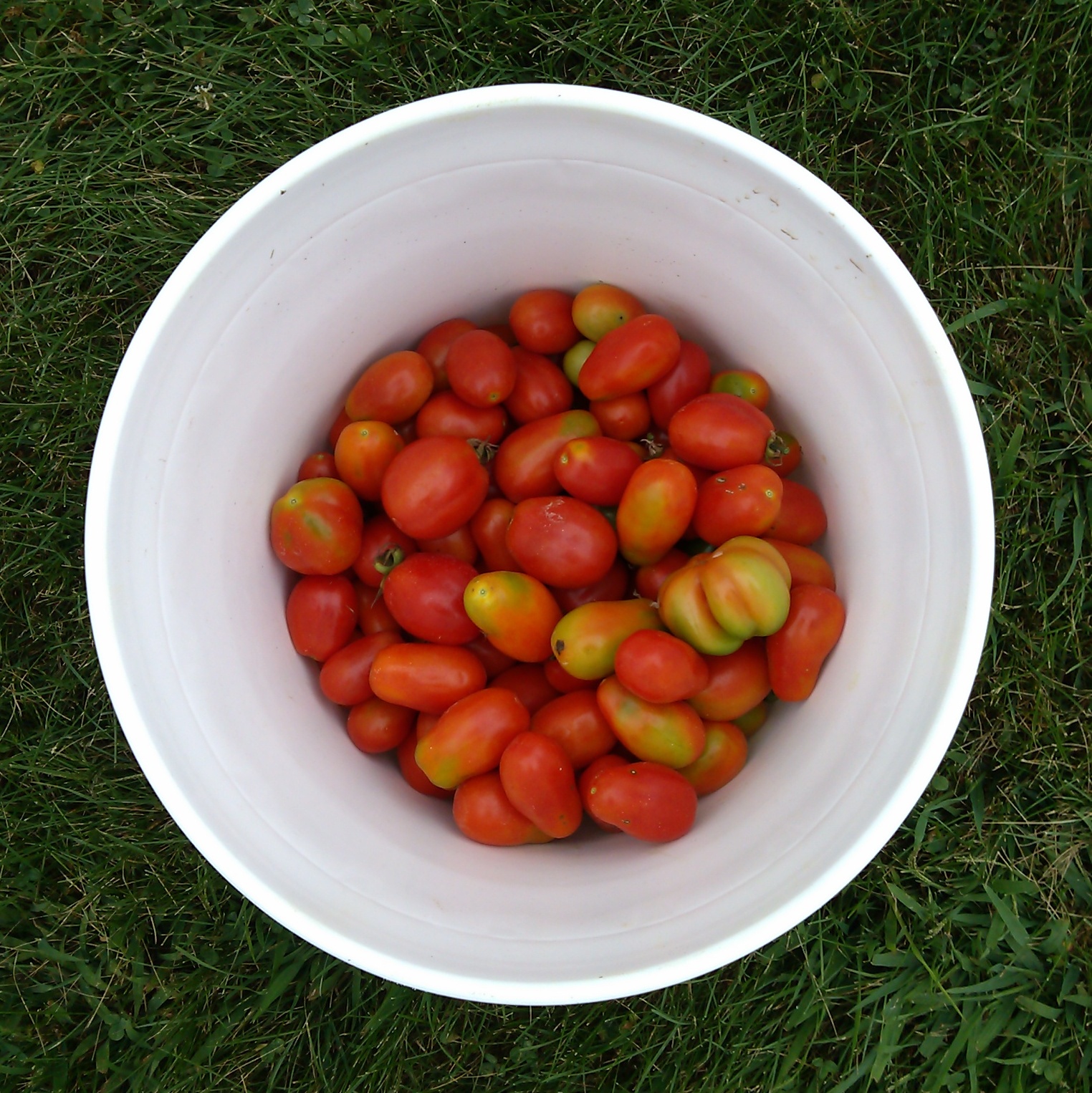
Roma Tomatoes
In a household-based local food system, we are not consumers. We may purchase items in the grocery store and farmers markets, but the act of buying is not what we are about. It is more the act of processing that is central to a home cook’s food system, and it has ramifications that stretch throughout the food supply chain.
Some gardeners and growers are a bit stressed figuring out what to do with the abundance. Because everyone has lots of tomatoes, peppers, potatoes, etc., selling them would be at depressed prices. It is important for a home cook with a local food system to recognize this happens each year and be ready for it. Unlike city dwellers who escape the summer heat, people with home-based local food systems don’t take an August vacation.
When I use the phrase, “local food system,” it is with a micro perspective. Rather than being a socially engineered process, on a grand scale, that competes with the industrial food supply chain, it means how individual kitchens leverage food availability to stock the pantry with ingredients to use all year. It includes some shopping, but more importantly, gardening, cultivating trees, working for food, bartering and foraging. Food preservation includes refrigeration, freezing, canning, dehydrating and if one exists, root cellaring.
This is not a throwback to the invention of the Mason jar, first patented in 1858. It goes much further back to the cultivation of land and domestication of livestock. It is also a statement of how we live in a post-consumer society. The idea is to live well. If we are lucky, and diligent, we can.
Richard Engel of NBC news testified to the United Nations Security Council on July 17, “’We’re all bloggers and punks and rebels with cameras. There is absolutely no respect for career journalists anymore,’ said Engel, who was kidnapped by pro-regime gunmen in northern Syria and held for five days in December 2012.”
Engel was one of four journalists addressing the U.N., calling for world leaders to do more to protect reporters risking their lives in conflict situations. This in light of the 600 journalists killed during the last ten years and 41 killed in Syria alone during the last year. If one has seen Engel’s reports, he gets into the thick of conflict to collect and deliver stories for the corporate media. He’s also on the micro blog twitter.
The Associated Press wrote a story on Engel’s testimony and it can be read here.
It is a marvel there are people like Engel, who put themselves in harm’s way for what they believe is a greater good. In our house we don’t watch television most days, and my Engel fix comes from his 140 character tweets @RichardEngel. It has a democratizing effect, giving meaning to his quote at the U.N., “we’re all bloggers.” He often comes up next to the orchard where I work, @anamariecox and @realDonaldTrump.
Engel was trying to maintain the special status of his profession, something hard to do when there are tens of millions of bloggers, and ubiquitous social media outlets, all chattering away 24-7. With the erosion of the importance of newspapers, magazines and television in many people’s lives, and politicized everything, there are a few who stand out as superior working employees of the fourth estate. What is the fourth estate anyway? I can almost remember it, and it has new meaning with Richard Engel in it.





 Journey Home
You must be logged in to post a comment.