Categories
Environment

Interview with Ed Fallon

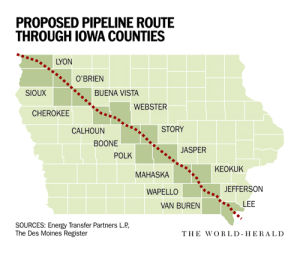
Bakken-Pipeline-Proposed-RouteBlog for Iowa caught up with Ed Fallon in Iowa City at a March 11 fundraiser for his Iowa Pipeline Walk along the proposed route of the Dakota Access oil pipeline from the Bakken shale formation through Iowa to Illinois.

Fallon presented a slide show of his experiences on last year’s Great March for Climate Action across the U.S., and answered questions during an event attended by about 35 supporters.

Discussions ranged over a variety of related topics. Two seemed most important: eminent domain and an environmental study of the Dakota Access pipeline.

Rep. Bobby Kaufmann (R-Wilton) is leading a bipartisan effort to restrict use of eminent domain by private companies like Dakota Access in Iowa.

“I intend to introduce legislation in the Government Oversight Committee,” Kaufmann said in an email to constituents. “My committee is funnel proof and next week I will introduce an Eminent Domain Omnibus bill that will attempt to address the numerous eminent domain abuses going on throughout the state.”

When asked about the legislation, Fallon acknowledged the several bills filed regarding eminent domain had not yet been finalized into one.

“My biggest hope is it defines public use so clearly that you can’t come in and build a pipeline across Iowa and use eminent domain to build that,” Fallon said. “Because it’s not oil that’s being used here, it’s not being produced here, it’s being refined in Texas and shipped for the most part overseas.”

A bipartisan group of legislators sent a letter to the Iowa Utilities Board asking the regulatory body commission an environmental impact study of the proposed Dakota Access oil pipeline.

According to the Cedar Rapids Gazette, the letter raised eight concerns:

1. Safety risks and hazards associated with the product(s) to be transported through the pipeline;

2. Potential damage to water, land, soil, water, air and wildlife/wildlife habitat during construction;

3. Threats to the environment, farmland, wildlife and public health as a result of spills or explosions;

4. Spill prevention and clean up provisions;

5. Liability for damages to both public and private property and sufficiency of resources to cover such liability;

6. Adequacy of inspection/monitoring/enforcement mechanisms and resources;

7. Responsibility for planning, training, and equipping for emergency response;

8. Indirect impacts of the oil extraction process facilitated by the pipeline that may affect public health and safety as well as environmental security.

“If studying the environmental impact is something we do before we decide to move forward on this, then that has value,” Fallon said. “But if it’s something we do after the fact, after the damage is done, after the decision is made, then it’s kind of a moot point.”

During the question and answer session, Jack Knight of the Allamakee County Protectors indicated that delaying the IUB approval process through an environmental study was a valuable tactic in preventing the oil pipeline from being built.

Opponents of the Dakota Access oil pipeline have a bigger issue and Fallon touched upon that during our interview.

“Based on what the entire scientific community is telling us, that oil needs to remain in the ground,” he said. “Really this conversation about the pipeline is a sidebar, but a really important one.”

For more information about Fallon’s work, Blog for Iowa recommends, “Hitting the Pavement,” in the March 16 issue of the Newton Daily News, or follow him on FallonForum.com.

~ Written for Blog for Iowa

Categories
Sustainability

Physicians Release ‘Body Count’

Body Count CoverDoctors group releases startling analysis of the death and destruction inflicted upon Iraq, Pakistan and Afghanistan from the “War on Terror” in Body Count.

WASHINGTON, D.C.– On March 19—the 12th anniversary of the onset of our country’s ill-fated military intervention in Iraq—Physicians for Social Responsibility (PSR) released the latest edition of Body Count for North American distribution.

The report, authored by members and colleagues of the German affiliate of the Nobel Prize-winning International Physicians for the Prevention of Nuclear War (IPPNW), is a comprehensive account of the vast and continuing human toll of the various “Wars on Terror” conducted in the name of the American people since the events of Sept. 11, 2001.

This publication highlights the difficulties in defining outcomes as it compares evaluations of war deaths in Iraq, Pakistan and Afghanistan.  Even so, the numbers are horrific.  The number of Iraqis killed during and since the 2003 U.S. invasion have been assessed at one million, which represents five percent of the total population of Iraq.  This does not include deaths among the three million refugees subjected to privations.

Dr. Hans-C. von Sponeck, UN assistant secretary general and UN humanitarian coordinator for Iraq (1998-2000) calls the report, “a powerful aide-mémoire of their legal and moral responsibility to hold perpetrators accountable.”

“With the U.S. and Canadian governments now poised to escalate its military  involvement in Iraq and Syria to counter the real and exaggerated threat posed by ISIS, the lessons of Body Count can contribute to a necessary conversation  regarding the extreme downsides of continued U.S./NATO militarism,” said Robert M. Gould, M.D., Physicians for Social Responsibility. “Hopefully it can help the North American public better understand the links between the devastation caused abroad and the escalating military budgets that lead to  increasing detriment of our communities and social fabric at home.”

Body Count takes a clear and objective look at the various and often contradictory—reports of mortality in conflicts directed by the U.S. and allied forces in Iraq, Afghanistan and Pakistan. The result is a fuller picture of the devastation and lethality to civilian non-combatants throughout these regions. Unfortunately, these deaths have been effectively hidden from our collective consciousness and consciences by political leaders seeking to pursue military solutions to complex global issues with little, if any, accountability.

Body Count underscores the scope of human destruction that helps fuel widespread anger at the Coalition Forces. It similarly provides the context to understand the rise of brutal forces such as ISIS thriving in the wake of our leaders’ failures. After an estimated cost of at least three trillion dollars over a decade of warfare, we need to fully account for our responsibility and learn the appropriate lessons to avoid a tragic exacerbation of the explosive situation we face today.

To download Body Count at the Physicians for Social Responsibility web site, go to: http://www.psr.org/resources/body-count.html

Categories
Environment Living in Society

Monday Before Spring

Garage Wall
Garage Wall

Winter persists—mostly because of its recent vigor.

Half a dozen bald eagles stood on the ice at the Coralville Reservoir yesterday while I drove to work. Perhaps they were fishing a section of open water near the bridge. Perhaps they were waiting for spring to arrive before departing. They were still there on the drive home.

I planted the first seeds in trays last week: broccoli, basil and celery. I’ve been parking my car in the driveway leaving the garden workshop set up inside. It will be that way for a few weeks, although I hope to accomplish a lot during the work day planned for Friday.

It feels like elected officials, especially those from fossil fuel producing states, have crawled into the barn of my life over the winter.

Mitch McConnell (R-KY), a proponent of coal mining and use, is not new, but there’s more. Ted Cruz (R-TX) is now overseeing NASA and wants to focus more on space than on studying Earth. Perhaps he want to seek a Planet B where we can live after his ilk have thoroughly pillaged this one. James Inhofe (R-OK) heads up the Environment and Public Works Committee, and halted any possible action to mitigate the human causes of climate change. Sen. Tom Cotton’s (R-AR) letter to Iran meddles with negotiations that have been years in the making, involving substantial coalition building. The Senate Foreign Relations Committee under Bob Corker (R-TN) seeks to pass a law to force the administration’s hand in Iran. Corker did not sign the Cotton letter in hope of building a veto-proof bill in the senate.

Maybe we should invoke Saint Patrick to drive the snakes out.

The trouble is even a saint would be pressed to deal with this crowd.

War is PeaceElections matter, and the public doesn’t really care unless it affects them personally. That’s one take that provides a bit of sanity, but only for a while.

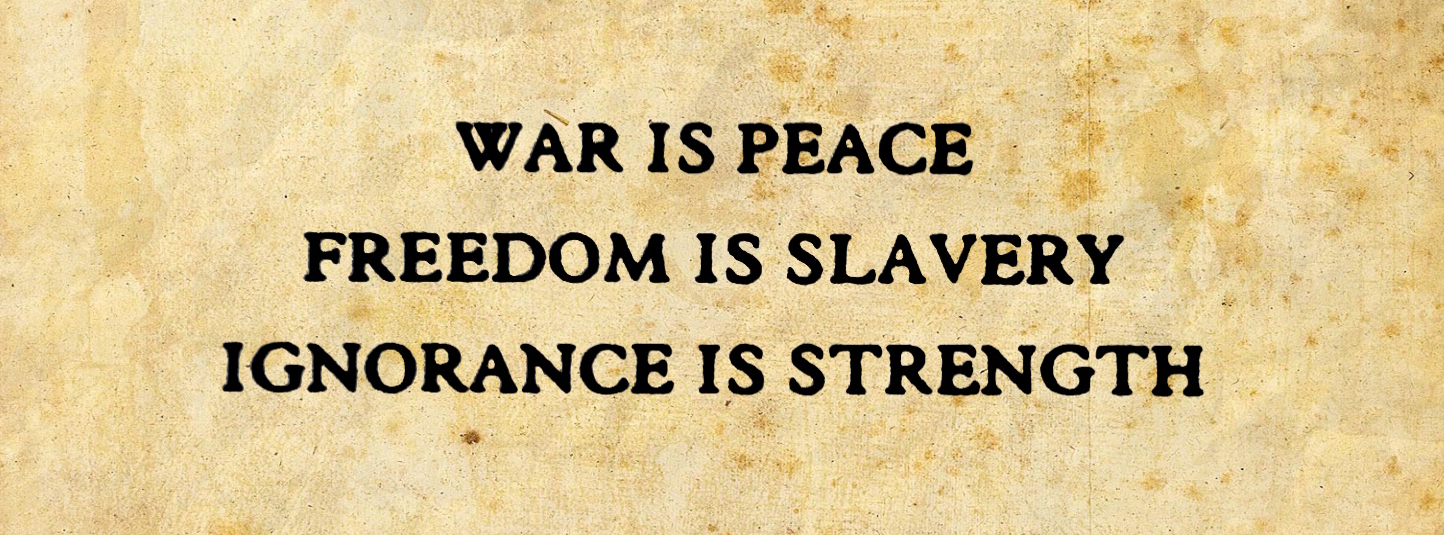
It is like we are in a dream in which the meaning of everything is unhinged. “War is peace. Freedom is slavery. Ignorance is strength,” as George Orwell wrote in 1984. “In a time of universal deceit—telling the truth is a revolutionary act.”

We are not yet revolutionaries, although maybe we need to be.

Theodore Roosevelt said it well.

“No man can be a good citizen unless he has a wage more than sufficient to cover the bare cost of living and hours of labor short enough so that after his day’s work is done he will have time and energy to bear his share in the management of the community, to help in carrying the general load.”

The power in Washington and on Wall Street is everywhere endeavoring to suppress this basic American instinct.

We must resist as spring comes to Iowa.

Categories
Sustainability

Letter to Senator Joni Ernst – Iran Letter

USSenateSenator Ernst,

When you won election as U.S. Senator with 588,575 votes, I decided to step back from criticism of my government, just as I did when I entered the U.S. Army during the Ford Administration. That’s what soldiers do, or at least did during the difficult times of reorganizing our military after the Vietnam War. The lessons I learned then serve now in our partisan and toxic era of politics.

Your signature on the recent Tom Cotton letter to the Islamic Republic of Iran was unneeded, counterproductive, and some say treasonous. As a former member of the U.S. military, I expected more restraint from meddling in ongoing international negotiations from a field grade officer in the Iowa National Guard.

I’ve read the letter and it reflects a type of audacity with regard to the Iranian leaders that has no place in international affairs.

Your tampering with the negotiating process with Iran served no useful purpose to Iowans who seek a world with less war and less nuclear armed states. Luckily the current negotiations are based upon resilient foundations and inoculated against such blatant political posturing.

I urge you to represent my Iowa views and support the administration’s negotiations to bring Iran’s nuclear program into compliance with their obligations under the Nuclear Non-proliferation Treaty.

I also hope you will pursue with equal vigor, fulfillment of the U.S. obligations under the Non-proliferation Treaty.

Thank you for reading my letter.

Regards, Paul

Categories
Environment

Climate Reality Project – Iowa Training

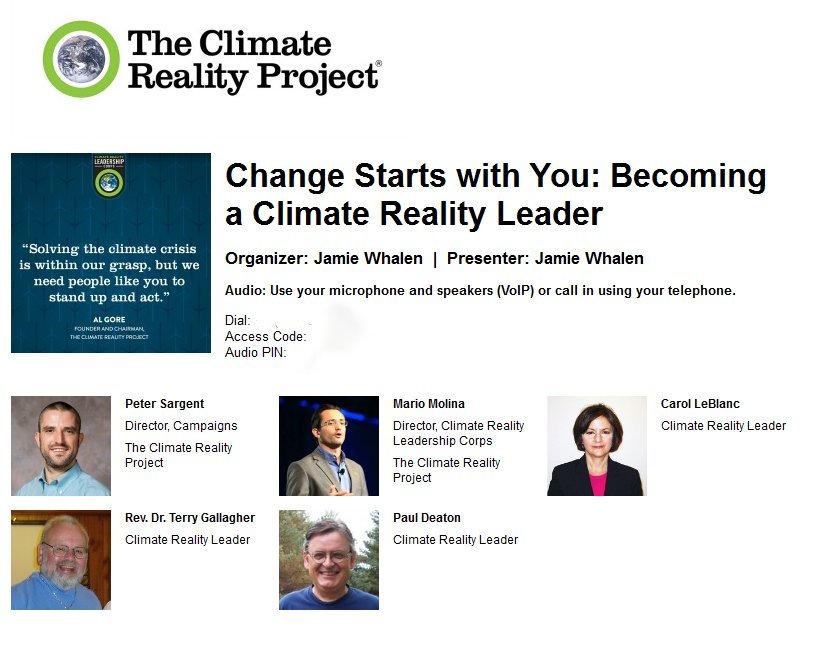
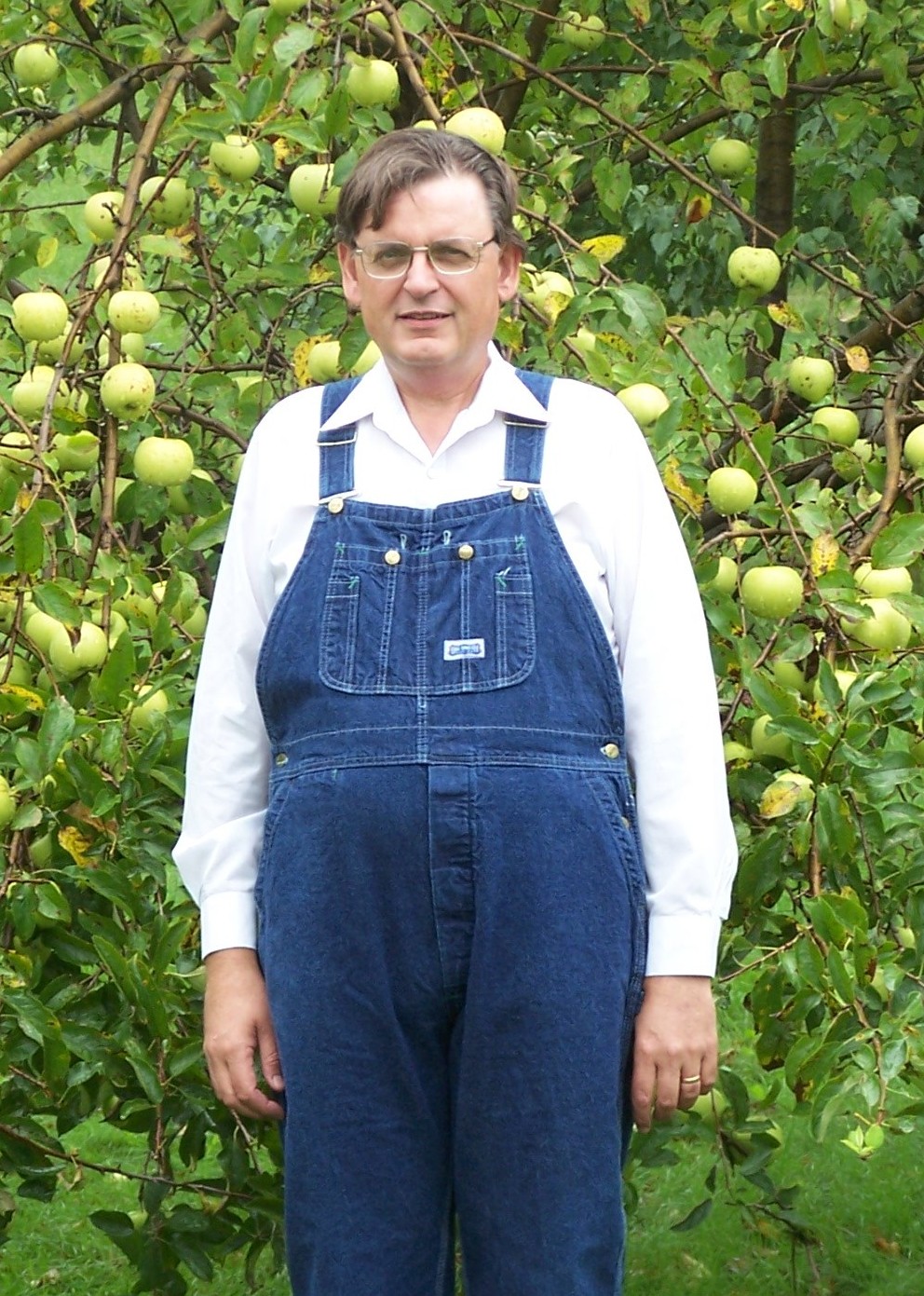
Paul Deaton(NB: I submitted this brief bio to The Climate Reality Project to be posted on the web site as part of the promotion of the Iowa training May 5-7). Paul Deaton of Solon, Iowa retired in 2009 after a career in transportation and logistics, seeking a way to sustain a life in the rural community he calls home. He became a Climate Reality Leader in Chicago in 2013 as a continuation of advocacy work he had been doing since his participation in the first Earth Day on April 22, 1970.

“Iowans see the effects of global warming and climate change in their daily lives, but often don’t get beyond discussing the weather,” he said. “The understanding of global warming and its impact on severe weather events I gained at the Chicago training has been invaluable in increasing awareness of how weather is connected to climate.”

Becoming a Climate Reality Leader provided tools and resources to address everyday concerns about Iowa’s record flooding, severe storms and changes in the hydrologic cycle. As an agricultural state this matters.

Home of the first in the nation Iowa caucuses, there is a political tone to many conversations about our environment.

“I’m proud to be a part of the Climate Reality Project and the work of sustaining our lives in a turbulent world.”

This is how The Climate Reality Project edited my submitted comments:

Paul Deaton knows that if you want proof of climate change, all you need to do is ask a farmer. As a native of Iowa, Paul has seen how farmers and rural communities have had to face the devastating effects of climate change. In 2009, Paul retired from his career in transportation and logistics to advocate for sustainable ways to support life in the rural community he calls home.

Paul has played an active role in his community, including being elected as a Township Trustee, serving on the county Board of Health, and serving on the Boards of multiple non-profit organizations.

Paul joined the Climate Reality Leadership Corps at our training in Chicago in 2013 where, he says, he received “the tools and resources to address everyday concerns about Iowa’s record flooding, severe storms and changes in the hydrologic cycle.” Since then, he has given presentations to community groups across Iowa, helping them connect the dots between recent extreme weather events, climate change, and agriculture.

Environmental advocacy is the centerpiece of Paul’s volunteer efforts, and he is “proud to be a part of the Climate Reality Project and the work of sustaining our lives in a turbulent world.”

Categories
Environment Living in Society

Train Wrecks and an Ag Summit

Galena Train Derailment

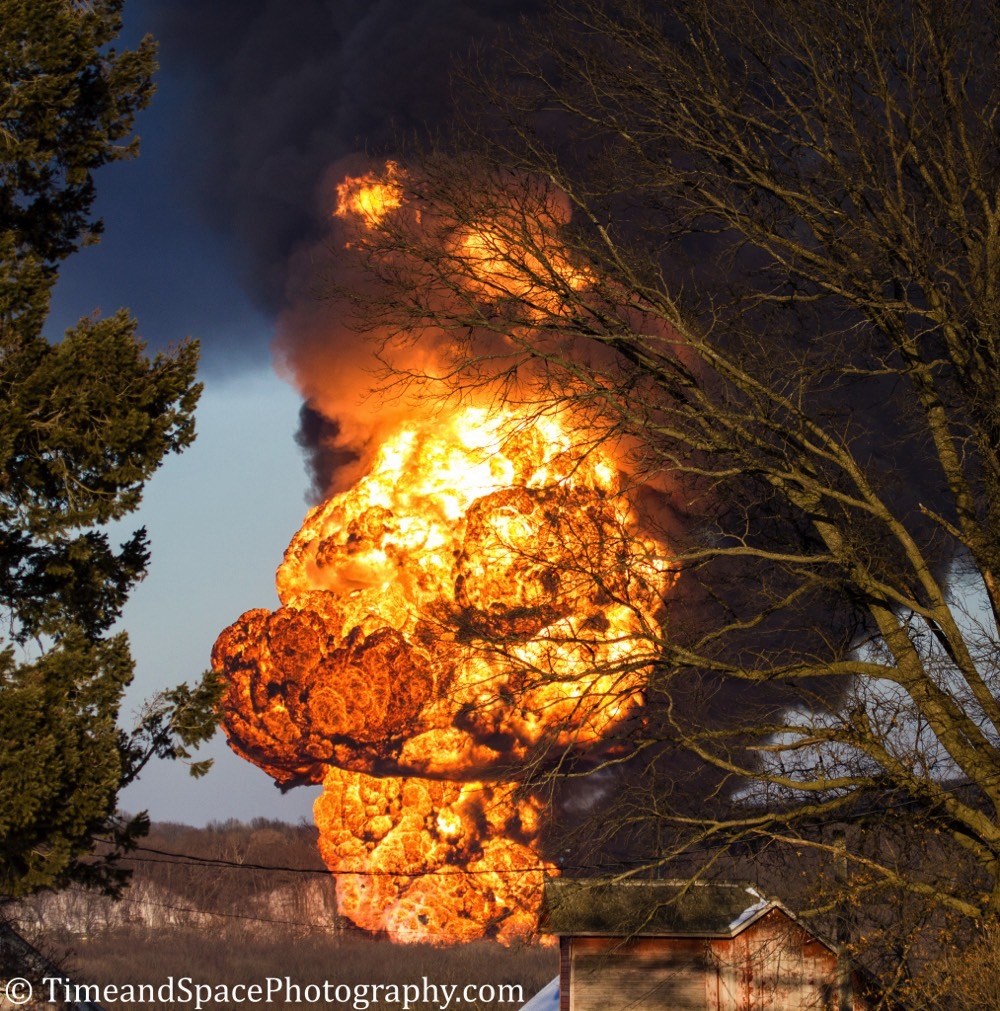
As punctuation to my article Why Bakken Oil is Dirty, last Thursday’s BNSF oil train derailment in a remote area near Galena, Ill. tells the story better than I could.

It is the third Bakken oil train derailment in the last three weeks according to National Public Radio.

Carrying light sweet crude to market from the Bakken field, the train derailed on tracks inaccessible to first responders, rupturing at least five tank cars of 21 that left the tracks, igniting a pyre that could be seen for miles. No one was injured and officials are investigating the causes. Because of the location, accessible only via a bicycle path, fire fighters decided to let the fire burn itself out. Remediation of the oil spill will be difficult because of the location, but no oil has made its way to the Mississippi River yet. As I write, the fire is still burning.

BNSF was quick to report the rail cars were a newer, safer model voluntarily designed to be less prone to rupture. Critics say it’s not good enough. Being a level headed Iowan, I’m willing to wait until the investigation is complete before condemning anyone but ourselves and our addiction to fossil fuels.

“In the coming days, we need to look at not just the safety of the rail cars, but the safety of what is being put into those cars,” U.S. Senator Dick Durbin told NPR. “There is mounting evidence that stricter standards are needed in the handling of Bakken crude which appears to be particularly volatile. We can’t wait. The safety of our communities depends on it.”

News coverage of the accident revealed that the State of North Dakota will require oil producers to remove excess natural gas from the crude oil before shipping it by rail to help reduce volatility, according to NPR. What exactly that means, and whether it will make a difference is uncertain. It confirms what I said in my last article about the volatile nature of the Bakken crude oil being shipped, and the role the refining process plays in its volatility.

Photo Credit: Quad City Times

While the Galena fire burned, Bruce Rastetter’s Des Moines Ag Summit proceeded on schedule, serving up Republican nostrums the way cattle in a CAFO are fed. All twittering eyes were on the summit, leaving a void among Democrats. Democrats don’t have anything similar to this, so it was a great way for Republicans to build party support. Disagreement and agreement with looney ideas is part of Republican party-building, and they are getting better at it with each election cycle.

Iowa Citizens for Community Improvement, who demonstrated at the Ag Summit and held their own event, are neither Democrats nor lefties, despite repeated corporate media attempts to characterize them that way. In my experience, they are issue-oriented individuals who band together to make points about life in Iowa, using visible, direct action tactics in their advocacy. The reason they receive media characterization at all is Democrats cede the space to Republicans on these presidential candidate cattle calls. There is nothing else for political reporters and bloggers to cover.

Rastetter contributed over $60,000 to the Branstad-Reynolds re-election, and $1.49 million to various candidates over the last 16 years according to FollowtheMoney.org. Who is the Democratic equivalent? Maybe Fred Hubbell, who gave $60,000 to the Hatch-Vernon campaign.

Hubbell may be well known to political insiders but most Democrats only know vaguely that he is an attorney, if they even know that. He would be no useful substitute to the hated, loved, and very public Rastetter.

Democrats had the Harkin Steak Fry as a comparable event, although last year’s was to have been the last. Maybe it will return, but that’s up to Harkin, not us.

For the first time in a long while, I didn’t hear that our county party was having an off-year caucus last week until after it had begun. I arrived home from work just as it was finishing. If a couple of people hadn’t been covering it on twitter, it would have passed unseen. That’s a train wreck of a different kind.

As we hope for spring, society begins to make more sense. For now, winter’s cold remains, and there’s plenty to keep us busy as we sustain our lives on the Iowa prairie.

Categories
Environment

Are Property Rights a Climate Action Tool?

WHY-WHY-NOT-MELBOURNE2-4_0For many, protecting property rights is high on the list of priorities. It’s the American way, shouldn’t it be so? A related and perhaps better question is whether climate advocates should use eminent domain as a tool to advocate against energy related projects.

Answers are elusive.

When the U.S. Supreme Court decided in Kelo v. City of New London that the general benefits a community enjoyed from economic growth qualified private redevelopment plans as a permissible public use under the Takings Clause of the Fifth Amendment, property rights advocates were up in arms. There is a role for eminent domain when governments initiate the process, but private developers should have no such rights, they said.

Kelo may mean that when U.S. infrastructure projects are developed by foreign corporations (TransCanada Corporation’s Keystone XL Pipeline) or by U.S. corporations (Energy Transfer Partner’s Dakota Access Pipeline or Clean Line Energy Partners’ Rock Island Clean Line), foreign or private domestic entities have the right to initiate condemnation process and take easements and other property to build their projects.

In a March 2 article in the Des Moines Register, William Petroski reported, “a majority of Iowans support plans for a crude oil pipeline in Iowa and a wind electricity transmission line project, but they overwhelmingly oppose the use of eminent domain for both projects.”

Politicians have argued that these projects create jobs, decidedly temporary ones, and in today’s economy people should accept such jobs, implying they should also cede eminent domain rights to U.S. or foreign corporations. This couldn’t have been clearer than the Keystone XL Pipeline bill passed in the U.S. Congress, vetoed by President Obama.

Kelo is not without emerging challenges.

On Feb. 18, the Iowa Supreme Court heard oral arguments in Clarke County Reservoir Commission v. Edwin D. and Deloris A. Robins Revocable Trust. The case is an appeal of an April 8, 2014 lower court decision wherein “Judge Sherman W. Phipps of the Fifth Judicial District of Iowa ruled in favor of CCRC’s ongoing Squaw Creek Watershed project, confirming it is for a public use, public purpose or public improvement as defined in the Iowa Code,” according to Amy Hansen of the Osceola Sentinel-Tribune. Developers seek to make a recreational lake much larger than the size required to serve water needs for the community to enhance property values as they sell adjacent lots.

Whatever the outcome of challenges to the Kelo decision, climate advocates are damned if they do and damned if they don’t regarding use of eminent domain as a tool. The contrast between the Rock Island Clean Line and the Dakota Access Pipeline exemplifies the problem.

On Aug. 20, 2014 while on the Great March for Climate Action, David Osterberg of the Iowa Policy Project said Iowa needed a way to get wind-generated electricity out of western Iowa to markets. His view is not unique among climate action advocates. The Rock Island Clean Line offers one such solution, but some property owners along the proposed route won’t allow an easement voluntarily. Osterberg said the Rock Island Clean Line wasn’t perfect, but it did offer a solution to shipping electricity to markets. The implication is that eminent domain may have to be used by a Texas company to build the project, although Osterberg did not say that specifically.

Use of eminent domain to stop the Dakota Access Pipeline is favored by climate action advocates. Because Bakken Oil is dirty, advocates seek to obstruct access to market through Iowa. Eminent domain has made unlikely partners in the Iowa legislature, where Senator Rob Hogg, who has given more than 100 presentations for The Climate Reality Project founded by Al Gore and is author of America’s Climate Century, began partnering with Rep. Bobby Kaufmann, a crop and livestock farmer and small business operator who is also a member of the Farm Bureau and National Rifle Association, to oppose the Keystone XL Pipeline on eminent domain grounds.

As the Iowa Utilities Board evaluates the proposal for the Dakota Access pipeline, eminent domain has more traction than the argument that fossil fuels should be left in the ground because of their contribution to anthropogenic climate change. Climate action advocates favor the latter argument, but will support the former.

Property rights advocates like Kaufmann are unlikely to go both ways on the eminent domain issue.

“The Bakken (Dakota Access) Pipeline and the Rock Island Clean Line should pick out baby names and choose a honeymoon destination, because the two issues just got married,” said Kaufmann in a Jan. 31 interview with the Solon Economist. “You’ve got two different companies that want to ship two versions of energy. They’re both private Texas companies and both want to ship a product out of our state without allowing anyone in our state to tap into it.”

Use of eminent domain hinges upon “public use.” Set aside creation of a number of temporary jobs and the public use of conveyances for energy related products is elusive, especially with the Dakota Access Pipeline. In any case, corporations benefit more than people in both Iowa projects and with the Keystone XL Pipeline.

Property rights can be a tool for climate action advocates, but it has been an imperfect one at best.

Categories
Environment Writing

Snow Fell

Snowstorm
Snowstorm

Snow fell as I drove home on Mehaffey Bridge Road through the lakes—a crystalline, sparkling snow. The wind blew as the sky darkened with imminent nightfall. I had turned the radio off.

I passed a frozen pond where a herd of deer and a flock of wild turkeys browsed—for what I couldn’t discern. A bald eagle flew overhead while entering the lane to our house. What other wildlife existed in the winter landscape went unnoticed, obscured by three historic species.

It is a time of change. This morning there is no Iowa City Press Citizen as the newspaper returned to a Monday through Saturday issue. They had been doing a brief cover, then inserting another Gannett Company paper, Des Moines Register, inside. Today the county seat is again without a daily newspaper.

That’s not to say there isn’t news. It’s just that people get news from a lot of other sources, including talking with neighbors and friends in person and over electronic media. Since I began writing for newspapers, I have read ours more. Despite the informative stories found inside each issue, news and news writing are not what they were, and the Monday issue is frequently quite thin. I predict newspapers will survive, but they compete for eyeballs in a way that has changed and continues to change. The economics of competition has led to less news coverage in newspapers and everywhere as we focus on the obvious.

I arrived home and turned the radio on to A Prairie Home Companion. That has changed too. One wonders how long it will continue once Garrison Keillor moves on.

Thinking about the mango-orange spread I bought last week, I put two tablespoons in a dish, added four tablespoons of home made salsa, mixed them together, and opened a bag of organic tortilla chips for a welcome home snack. Jacque was at work and not expected for a couple of hours.

The sweet taste of the mango came first, then the heat of capsaicin. It was crunchy, sweet, salty and spicy all at once. A perfect example of what living in these times means. We want it all at once.

We don’t often linger in falling snow to see what else is there. I’m certain it’s more than deer, turkeys and eagles.

Categories
Environment

Why Bakken Oil is Dirty

Bakken-Pipeline-Proposed-RoutePeople who care about hydraulic fracturing say the oil coming from the Bakken formation in North Dakota, Montana and Saskatchewan is dirty. It is. All oil is dirty, and my two cents is we should leave what’s there in the ground. That won’t go over well in North Dakota where discovery of the Parshall Oil Field in 2006 created an oil boom.

What makes Bakken crude oil problematic is that it contains more volatile organic compounds (VOCs) than oil shipped from wells in other regions of the country. This makes the oil more flammable, so when there is a train derailment, as there was in Lac-Mégantic, Quebec in 2013, the oil easily ignites and creates hell on Earth. (Read Adam Federman’s article in Earth Island Journal here).

Because so little public study has been conducted on Bakken crude oil and the operations that produce it, scientists don’t fully understand why the oil is so flammable. There are suspected causes.

The Bakken formation shale oil boom developed from almost nothing to more than a million barrels of crude oil daily in a short period of time. According to Federman, the infrastructure doesn’t exist in the Bakken to fraction off the VOCs as is done with other oil production facilities. The oil is shipped with the VOCs in it, making Bakken crude oil more flammable. There’s more Bakken crude oil today, it poses a real threat to public safety, and the transportation modes used are not regulated well enough for the commodity’s characteristics.

One of the frequent concerns in the Bakken is there are not enough suitable rail cars available to meet shipping needs. Lack of transportation capacity to get the oil to market is an issue. This created a business opportunity, and that’s what the Dakota Access pipeline is about.

Debate over trucks vs. rail vs. pipeline to transport Bakken crude oil is wasted time. Each mode of transportation has its own issues, and most transportation experts agree pipeline is the safest of the modes of transportation. Regardless of transportation mode, if there is a spill, first responders will be required to deal with a commodity on which they have in most cases received inadequate training. That problem could conceivably be fixed, but awareness of the issue hasn’t adequately emerged as we wait for the Iowa Utilities Board’s public healing on the Dakota Access oil pipeline.

Combine the increased flammability of Bakken crude oil with lack of proper shipping regulations and capacity, and we know why it is called dirty oil.

Categories
Environment

Road to Paris Comes Through Iowa

WHY-WHY-NOT-MELBOURNE2-4_0On Tuesday, The Climate Reality Project announced three North American trainings, one of which will take place within a short commute from my home. Here is the announcement email I received from colleague Mario Molina:

Dear Paul,

Our New Delhi, India training is coming to a close, and we have some important news to share with you as we continue along the Road to Paris.

We’re hosting three trainings in North America this coming year — and we’re going to need your help to grow the Climate Reality Leadership Corps! Below are the upcoming training locations and dates:

Cedar Rapids, Iowa: May 5-7
Toronto, Canada: July 9-10
Miami, Florida: September 28-30

Will you share this exciting information with your networks today? We know some of our best new Climate Leaders will be sent to us from you, and we trust your judgment. As a matter of fact, our training in New Delhi boasted the highest ever referral rate from existing Climate Reality Leaders.

Each one of these trainings is a key stop along The Road to Paris, and it’s extremely important that by the time COP21 descends on Paris, we have a strong, loud, and dedicated group of leaders to demand climate action.

Training applications are now open, so don’t let these future leaders wait. Their opportunity to make a difference in this crucial fight for a safe climate could be waiting in Cedar Rapids, Toronto, or Miami.

Thank you for your unwavering commitment to climate action, and for inspiring your friends, family, and colleagues to join you.

Warm Regards,

Mario E. Molina
Climate Reality Leadership Corps Director
The Climate Reality Project