Categories
Living in Society

Big Grove Political Update

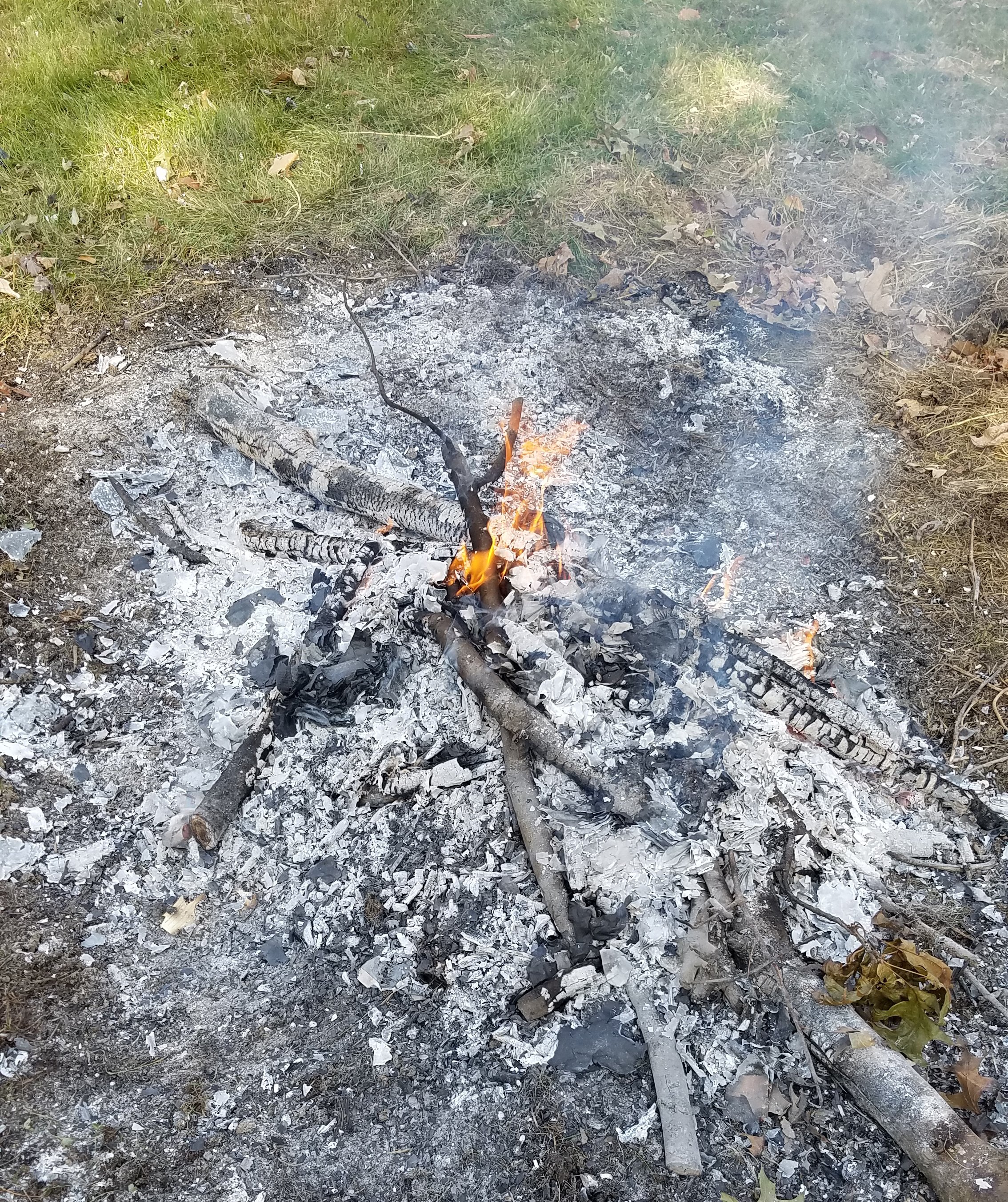
Burning Brush, Nov. 8, 2019

Since signing a caucus commitment card for Elizabeth Warren on Sept. 15, all campaign activity increased in the state’s most Democratic county.

Traveling to Des Moines for the Nov. 1 Iowa Democratic Party Liberty and Justice Celebration was beyond the ken of my life in Big Grove. The event did kick off a final phase of the race to the Feb. 3, 2020 Iowa caucuses — campaigns are getting more serious because it’s now or never.

I favor doing well in the general election over a caucus victory for Warren. After all, there are 49 other states plus territories to weigh in by next summer’s Democratic National convention. Super Tuesday looms just ahead of the caucus when a quarter of the delegates will be selected. As the likely temporary chair of my caucus, it is important to be equitable in approach to candidates, keeping an eye on the bigger picture. The long haul to the general election is what matters most on Feb. 3.

Big Grove precinct went for Obama in the 2008 general election, and then for him again (just barely) in 2012. In 2016 Trump was a favorite here, winning by 54 votes. With effort, Big Grove precinct can swing back to support the Democratic presidential nominee and hopefully down-ticket candidates like U.S. Senator and U.S. Representative as well. There are primaries in both federal races which will garner more attention after Feb. 3.

The initial canvass of my precinct began. The first people contacted either don’t know for whom they will caucus or support Minnesota Senator Amy Klobuchar. Klobuchar would be my second choice. There was also a lone, vociferous Biden supporter.

I attended the county central committee meeting on Thursday and was surprised to see an organizer for Senator Michael Bennet still pitching his campaign. While there is surge capacity among campaigns, if a candidate doesn’t already poll at five percent or more, it is difficult to see their path to winning the Iowa caucus, let alone winning the nomination. Pete Buttigieg is arguably the only candidate who thus far surged to rank in the top tier of Democratic candidates. I’m just saying if candidates are not registering among voters there is no path to the nomination.

I’m also thinking of John Edwards who placed second in the 2008 Iowa caucuses but hadn’t built adequate campaign structure in South Carolina and Nevada. He couldn’t compete in Super Tuesday states. This cycle’s March 3 Super Tuesday may not decide the nominee, but it’s hard to see how candidates who go all-in in Iowa to get a ticket out, like Castro and Harris, can ramp up quickly enough to gain momentum by Super Tuesday. Anything is possible, but is it realistic?

I’ve been under the weather for several days, focused on getting better. My walk list rests on the steps waiting for healing. I worked outside during my shift at the home, farm and auto supply store and burned brush yesterday. Outdoors work has been needed time for reflection and healing.

Kale continues to grow despite overnight temperatures in the 20s. I brought it inside, cleaned it, and added some to a pot of soup. For lunch I plan kale and black bean tacos with chili sauce from New Mexico peppers. I’ll soon return to a hundred percent, ready to continue the canvass, and return to work toward the general election. Politics isn’t everything in my life. It is something.

Categories
Living in Society

Health Care for All

Roasted Pumpkin Seeds

A colleague at the warehouse club had it right. When he was ill enough to require treatment he went home to Mexico and walked into a clinic. Afterward he returned to work.

The distance between Iowa and rural Mexico notwithstanding, that’s what local health care should be. A person should be able to walk into a nearby clinic seeking treatment without cost or worry.

Instead we have an impossible discussion of how health care needs of Americans should be met.

Is it the responsibility of government to make sure every person within our borders gets health care they require? According to Gallup, after the Patient Protection and Affordable Care Act (ACA) was signed into law, the percentage of people who told pollsters government should not be involved in health care increased to a majority. After the inauguration of the 45th president, the trend changed with 57 percent of poll respondents saying government should make sure all Americans have health care coverage. Voters are divided.

The Kaiser Family Foundation found an answer among Democrats as to how government efforts to ensure people have health care coverage should change. 39 percent of poll respondents said the ACA should be replaced with a Medicare-for-all plan, 55 percent said the government should build on the ACA. The simple truth is many Democrats don’t favor a candidate who supports Medicare-for-all and have concerns such support will result in losing the general election.

In the Democratic primary contest four candidates are emerging as leaders: Joe Biden, Pete Buttigieg, Bernie Sanders and Elizabeth Warren. If any one of these candidates were the Democratic nominee for president I would support them in the general election. There could be surprises in the time leading up to the March 3, 2020 Super Tuesday primary election. However, it is a safe bet saying the nominee will be one of these four people.

Each has addressed health care delivery and the approaches vary. Biden and Buttigieg favor a method of health care delivery that allows continuance of private health insurance. Sanders and Warren favor Medicare-for-all. Here’s a brief statement about each position:

Joe Biden: “As president, Biden will protect the Affordable Care Act from these continued attacks. He opposes every effort to get rid of this historic law – including efforts by Republicans, and efforts by Democrats. Instead of starting from scratch and getting rid of private insurance, he has a plan to build on the Affordable Care Act by giving Americans more choice, reducing health care costs, and making our health care system less complex to navigate.”

Pete Buttigieg: “We must ensure that everyone has an affordable option for health coverage that guarantees access to care when they need it.” To differentiate himself from Sanders and Warren, Buttigieg calls it “Medicare for all who want it.”

Bernie Sanders: Medicare for All. “We say to the private health insurance companies: whether you like it or not, the United States will join every other major country on earth and guarantee healthcare to all people as a right. All Americans are entitled to go to the doctor when they’re sick and not go bankrupt after staying in the hospital.”

Elizabeth Warren: “Elizabeth supports Medicare for All, which would provide all Americans with a public health care program. Medicare for All is the best way to give every single person in this country a guarantee of high-quality health care. Everybody is covered. Nobody goes broke because of a medical bill. No more fighting with insurance companies.” On Friday, Warren released her plan to pay for Medicare for All.

Democrats appear to enjoy candidate debate over health care coverage, but here’s the rub: nothing, and I mean nothing, will happen on any of these plans without consent of the Congress.

Dial back for a moment to the inauguration of Barack Obama. If there were a way to create a public option for health care, the 44th president would have done it. There wasn’t, even with a filibuster-proof, Democratically controlled Senate. In a best case scenario this cycle, Democrats can hope for a Senate majority numbering in the low fifties. The master of delay, avoidance and obfuscation Mitch McConnell will kill any efforts on the part of a Democratic president to dream big and work hard to implement any of the proposed changes to government health care. For this reason it is critical to focus as much on the U.S. Senate races that are up this cycle as the presidency.

Like most Democrats I will support our eventual presidential nominee regardless of plan for health care programs. It is good the four leaders have a plan. What matters more is how hard they will work to implement some part of it. Equally ranked in importance is the primary election for Iowa’s U.S. Senate race and regaining a Senate majority. This is no time for distractions as much as we Democrats may like the debate over health care.

Categories
Home Life

Hard Break from Autumn

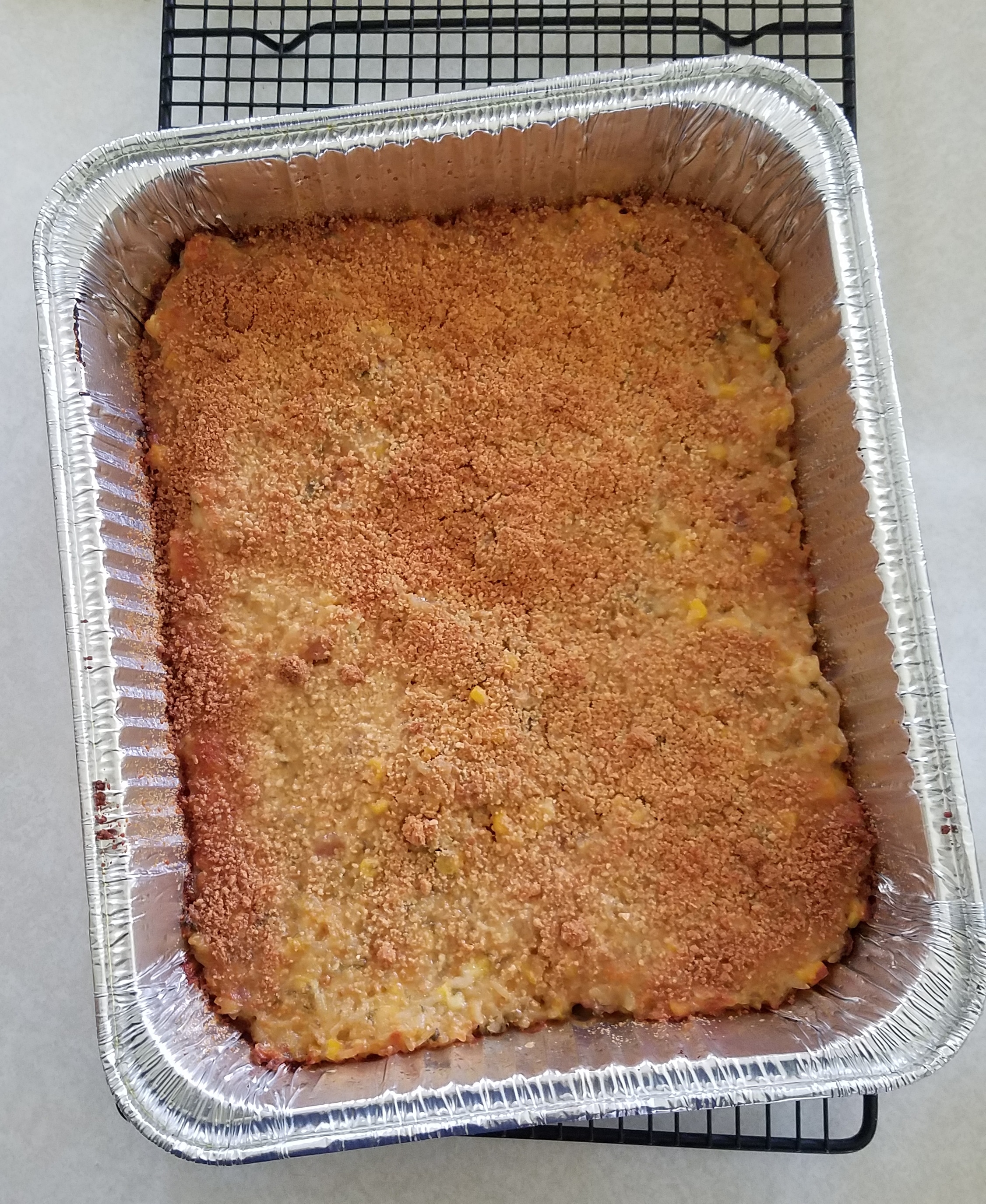
Corn-rice casserole for the annual orchard potluck dinner.

A hard break from autumn accompanied last week’s snowfall.

Outdoors there is garden clean up, raking leaves, and another mowing to be done, however, we’ve turned mostly inside.

A main issue has been determining how to get exercise without an active garden and walks along the lake. Yesterday I cleaned and set up the NordicTrack ski machine. This morning I tried it. It will serve for a while and, in any case, seems more focused than walks along the lake and yard work.

As orchard season ended I took an eleven day hiatus from carb counting. The point was to see the impact formal training and weeks of habit had on daily food consumption. Some things were easy: eating only one slice of bread at a meal, portion control, and selecting snacks that had less than 15 carbs in them. What was harder was dealing with cravings. I was mostly, but not always able to do so. At the end my average weight remained unchanged at a 15 percent loss. Clothes still fit and if I exercise daily indoors, I may have to get pants a size smaller. I went back to carb counting this morning and return to the clinic for more tests in three weeks.

The time between harvest and year’s end has been for reflection and for making plans. After a struggle when I retired in 2009 our situation stabilized with adequate income to meet short term needs and engaging work in the community. I feel fortunate to be approaching my 68th birthday with an ability to think beyond it.

I expect to continue to write short posts, although a format change at On Our Own is overdue. Before changing the look of the blog I want to print out past years for the book shelf. Financial constraints held me back from making a paper archive every year so I’m behind.

There is other writing to do. I recently ran into a former editor at the Iowa City Press Citizen and we discussed freelancing. It would take a compelling reason for me to seek publication more than I get in letters to the editor of the Solon Economist or an occasional guest opinion in the Cedar Rapids Gazette. If anything, the next period will be one of working on an autobiographical work. Whether that has import beyond family and close friends seems doubtful. It’s what an educated person does or at least that’s the paradigm through which I view it. Our daughter might appreciate the effort of culling old papers and artifacts so there is less for her to deal with when we’re gone. I don’t plan to be gone anytime soon.

Perhaps a few more autumn days lie ahead. The forecast looks dry through the end of this week. I took a vacation day from the home, farm and auto supply store to clean up the garden. If all goes well we’ll be able to turn inside when winter arrives in earnest.

Categories
Environment Home Life

October Snow

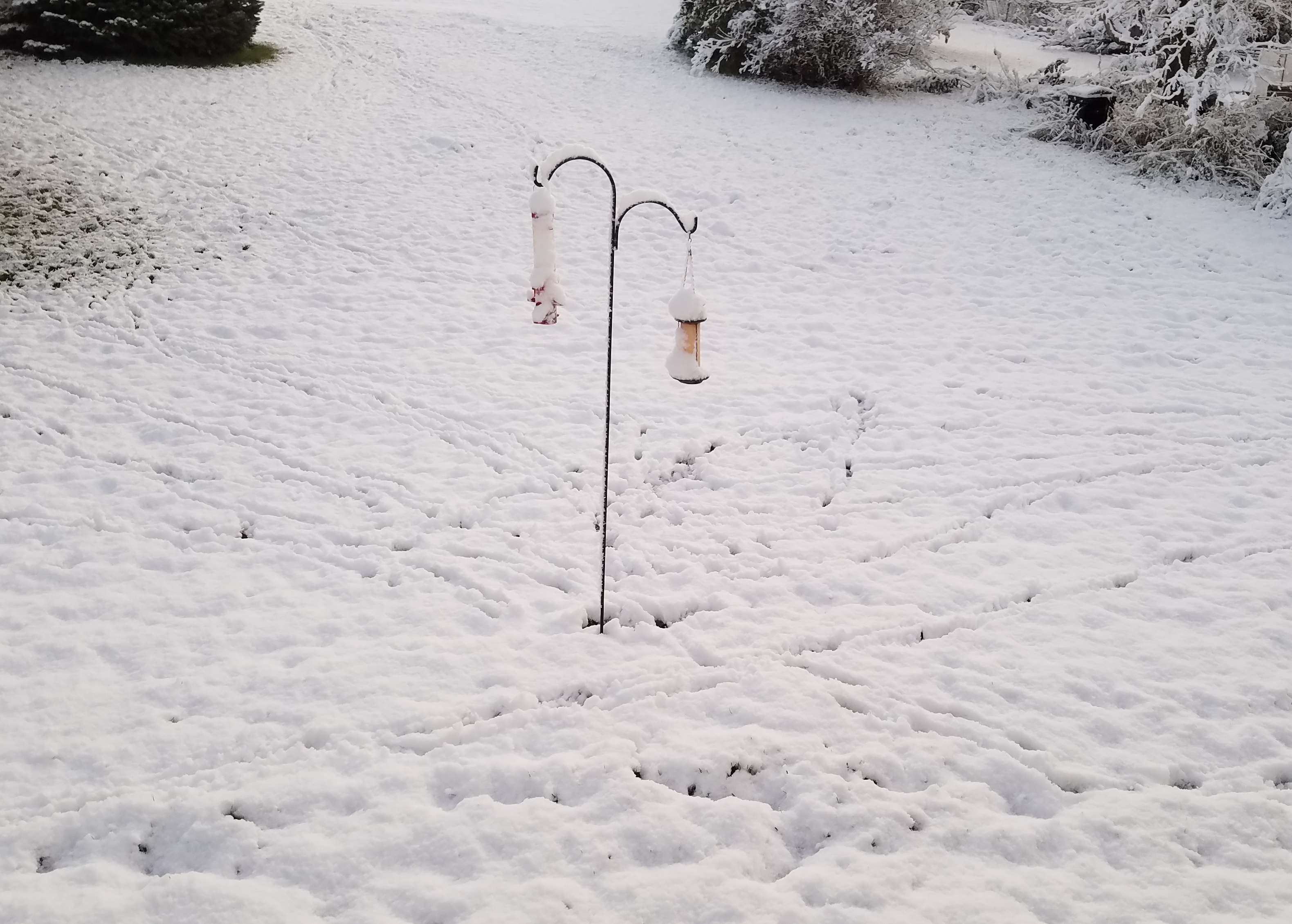
Animal tracks to the bird feeder

What should we make of Tuesday’s October snowfall? Not much, I guess.

It was another day in the neighborhood, where melting snow delayed yard and garden work, and a final mowing with grass clipping collection.

It’s unclear whether further mowing will occur.

Weather has me turning inward. A technician is schedule to inspect our furnace, a pack of 9-volt batteries is ready to install in smoke detectors, and I bought a new snow shovel to replace the aluminum one that proved too flimsy.

I’m also prioritizing November reading.

October has been a great month for this blog with the most monthly views since I began blogging in 2007.

It’s time to take a breather before the rush to year’s end. After today’s shift at the home, farm and auto supply store, that what I plan.

Categories
Living in Society

Michael Franken For U.S. Senate

Michael Franken, Photo Credit – Campaign Website

Michael Franken (D-Sioux City) announced his intention to run for the Democratic nomination for U.S. Senate on Monday, Aug. 26. There are now five candidates to challenge Joni Ernst.

Franken has been telephoning potential donors and appearing at events around the state since the announcement.

Why should Iowa Democrats be interested in this retired U.S. Navy Vice Admiral? The answer to that question lies in another: who is best able to defeat incumbent Joni Ernst in the 2020 general election?

The first step to answering these questions is identifying the field. Kimberly Graham, Theresa Greenfield and Eddie Mauro entered the race first. In addition to these four, Cal Woods of Des Moines also announced. There may be more.

While it may be en vogue to declare oneself a “progressive,” any of the five Democratic candidates would be more progressive than the incumbent. A debate over who is the “most progressive” Senate candidate has already begun. It is a distraction from qualities most needed: an ability to do the work, raise sufficient funds, and connect with both primary and general election voters who aren’t politically active compared to those who normally vote in a Democratic primary election.

As a former infantry officer, it seems unusual to me for a general officer to be anything but conservative in their approach to politics. Democratic general officers I have known have had progressive ideas but have to run the same gauntlet to earn that second and third star. The Vice Admiral rank has three stars. We wish Franken good luck as he enters the race.

Here’s Franken’s unedited announcement press release followed by his introductory video.

Retired Three-Star Admiral Mike Franken to Run for US Senate
Sioux County Native Served Almost Four Decades in the Navy

Sioux City, IA — Today, retired three-star Admiral Mike Franken announced that he is running for U.S. Senate against incumbent Joni Ernst.

In an introductory video, Franken underscored his deep Iowa roots and leadership lessons from the Navy.

“I made a lot of tough calls during my time in the Navy, and I’m not afraid to stand up for the proud progressive principles that Iowa Democrats share,” said Franken. “But in Washington, Republicans like Joni Ernst and Mitch McConnell never stand up to Donald Trump, and too many DC Democrats aren’t championing bold solutions for the climate crisis, the cost of health care, and Wall Street greed.”

Mike Franken was born and raised in rural Northwest Iowa. He spent his formative years working on farm equipment and trucks in Lebanon Farm Shop alongside his father. Mike was a hired farm hand, welder, construction worker, truck driver, and worked at Sioux-Preme Packing Company to pay for college.

Military service is a tradition in his family going back to his German immigrant grandfather who fought in World War I and his father who fought in World War II.

A military career introduced the world to Mike, but he always considered Iowa to be home. He lived on four continents as a naval officer, commissioned the destroyer USS Winston S. Churchill, commanded a squadron of ships and an international task force at sea, and served as the ground task force commander for the 4,000 US personnel on the continent of Africa. He was the first director of the POW/MIA defense agency tasked to find and identify fallen servicemembers worldwide. Franken spent years in senior policymaking, strategy, and planning roles for the Defense Department. As chief of legislative affairs for the Navy, he oversaw the authorization of a $150 billion budget. He retired from military service as a three-star admiral in October of 2017.

Even while serving on the other side of the world, Iowa has always been on Mike’s mind and in his heart. Shortly after his retirement from the military, Mike moved back home and now lives in Sioux City, Iowa.

Mike and Jordan, his wife of 30 years, have two children.

For campaign information go to FrankenforIowa.org.

~ Written for Blog for Iowa

Categories
Work Life

Apple Season Seven in the Books

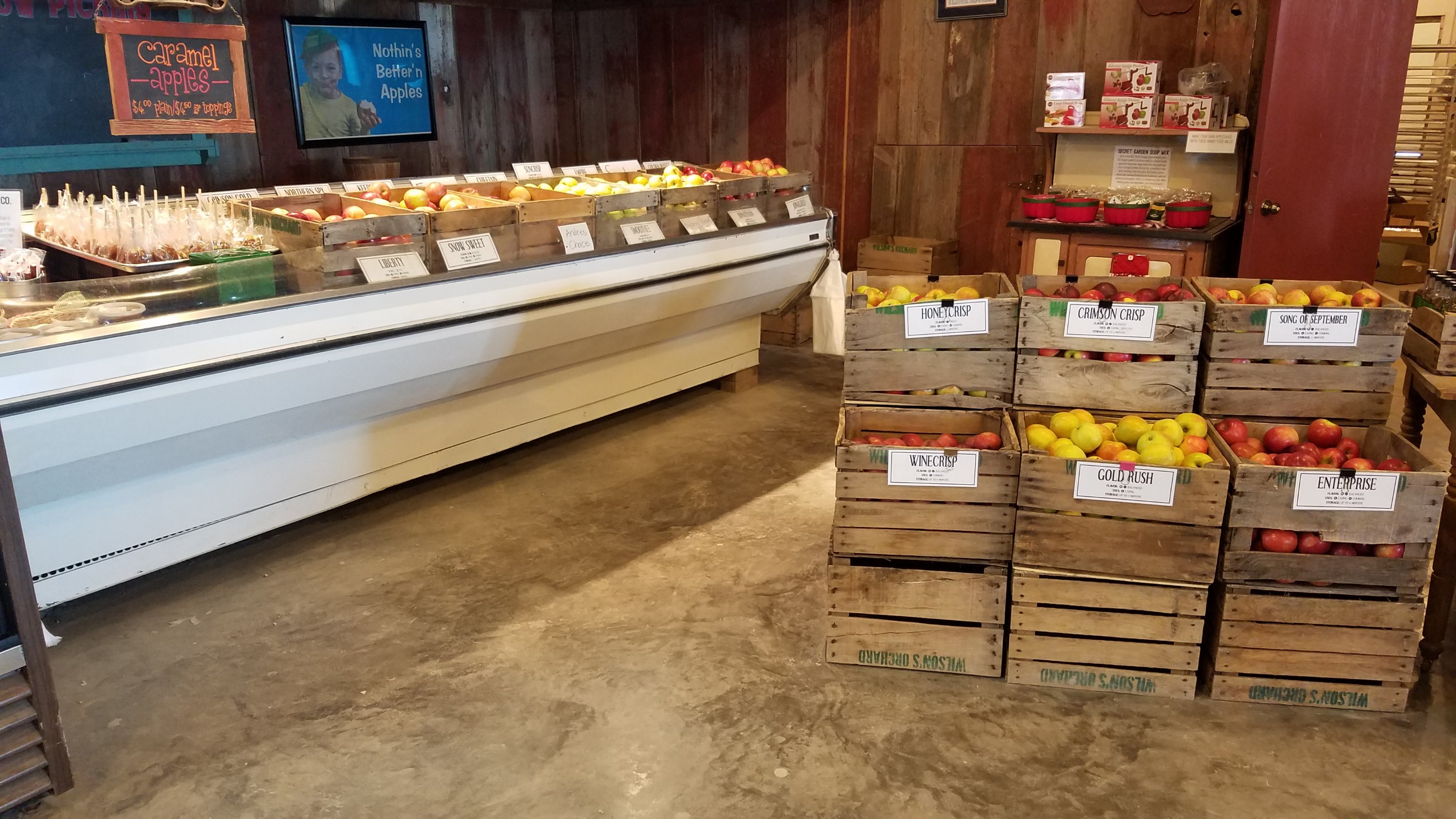
Showcasing 22 varieties of apples at Wilson’s Orchard, Oct. 27, 2019

On a brilliant Autumn day I finished my seventh season at Wilson’s Orchard where I work in the sales barn.

It has been a positive experience with my friends and co-workers Barb, Sara, Paul, Jack, Alex, Karen, and Kyle, as well as with the rest of our seasonal staff.

When I began work in 2013 it was for the money. Over the years weekly consultations with our chief apple officer about fruit growing have become the most valuable part of the experience. Socialization one experiences on a fall weekend with thousands of visitors seeking a recurring, positive activity is unique and needed as we age.

Rows of apple trees at Wilson’s Orchard Oct. 25, 2019

I spent more time walking among the trees this year. It is important to view where each week’s apples were and their picking conditions. It’s helpful to customers and kept me grounded in the reality of the orchard. Feedback when a customer using my directions returned from picking made the extra hour most weeks rewarding.

We grow more than 100 varieties of apples and 2019 was a great year for our crop. We finished the season with an abundant variety of apples available for customers, including some that don’t produce every year.

The operation has gotten better at managing apples. I recall years when all we had on the last weekend was Gold Rush and Enterprise. This year 25 varieties were available in the sales barn. If you’re going to manage an orchard having such a variety is an acquired and important skill.

I spent more time discussing apple selection and usage this year. As I talked about which fruit to use for applesauce, crisp and pies, I found myself tending toward traditional usage. The ways people use apples are traditional for a reason and some of the old varieties like Cortland, Jonathan and McIntosh continue to be in demand. Not every orchard grows them.

Home storage apples. My Red Delicious on the left, Wilson’s Orchard variety on the right.

It has been tough giving up every weekend from Aug. 1 until Oct. 31 to maintain this job. When it rains on Saturday or Sunday I don’t work and this year it rained a lot. Inclement weather translated into a 32 percent decrease in income in August and September compared to last year.

With seasonal work done I’ll return to get some Gold Rush apples for storage before the Oct. 31 final day of the season. Next weekend is our post-season potluck, one of the best in terms of food quality I attend. When the entire staff gathers one realizes it takes a lot of talented people to put on the show each year.

I was asked to return next year, and most likely will.

Categories
Living in Society

More About the Solon School Board Election

Major news outlets like the Iowa City Press Citizen and the Cedar Rapids Gazette have provided minimal coverage of the Nov. 5 Solon School Board election. There is a need for information about the election in our community. I’ve been working to fill that need.

The candidates on the ballot for two seats on the school board are Adam Haluska (incumbent), Lauren O’Neil, Carlos Ortega, Jennifer Stahle, Seth Wear and Jami Wolf.

Thursday the Solon Economist published candidate responses to standard questions beginning on page A1. The on-line newspaper is accessible by subscription only and people should subscribe if they live in the school district. It’s still only $30 per year. The Economist office on Main Street has copies for sale. If the Economist provided the only candidate information a voter had, a reasonable voting decision could be made.

Following are some considerations for choosing two candidates on or before Nov. 5. Hopefully my process will help readers with theirs.

There was school board turbulence this year.

With our daughter long graduated from Solon High School, activities of the school board and administration had fallen into the background. As long as there was no turbulence, I favored people I knew and incumbency during elections. I have also been willing to give newcomers a chance to be on the board if they made their case.

There was turbulence this year over the contract negotiation with the union, so much so the manner in which the negotiations were handled rippled through the community. At the public candidate forum it was asserted by a questioner that teacher turnover last year was the highest it has been in 40 years. This is cause for concern.

Throw the bums out?

Is turbulence created by acknowledged mistakes cause to vote out the three remaining incumbents who participated?

Three directors remain because Jim Hauer decided not to run for re-election and board president Tim Brown previously announced his plan to leave the board when his term is up in 2021. That leaves incumbents Adam Haluska, Rick Jedlicka and Dan Coons. The latter two have not announced their intentions for the 2021 election.

As much as I enjoy the scene from the Grapes of Wrath in which sharecroppers are being told to leave their land, prompting the question, “who do we shoot?” bum-throwing-out is not a universal sentiment. It is a maybe.

Statements like “throw the bums out” serve little purpose. What seems more important and often heard is “they support the administration more than employees,” and its variant “the administration supports X candidate.” Creating this division between staff and the board is the wrong approach because the progress and success of a board is dependent upon a close relationship with staff, including teachers and the administration. I witnessed this while covering the Iowa City Community School District board meetings for the North Liberty Leader. A school board relies heavily on the administration, in particular on those responsible for financial affairs and budgeting.

I spoke with a couple dozen voters since beginning this series of posts and the sentiment is Adam Haluska should not get a second term because of his participation in this year’s contract negotiations. I haven’t decided, however, it seems unlikely I will vote for him again.

If contract negotiations are an acknowledged error from which board members learned, the dynamic of the election changes. Instead of seeking remedy to grievances by removal of board members who were part of the fiasco, the better question is now that the district completed a major series of infrastructure projects, beginning with the high school, how do we make a board that will consider the needs of current and future students, the needs of every student and family? That must be a focus of our decision on Nov. 5.

Questions and some answers

Here are some questions I find myself asking about the candidates with short answers. My answers are subject to change as I continue to discuss candidates in the community:

Should Haluska be voted out because he was on the board during the contract negotiations? All of the people I interviewed said yes.

How will the candidate approach the work if elected? Being a candidate is about engagement with the community. To a large degree, being on the school board is too. Haluska and Stahle both touted the new district phone application at the public forum. They apparently don’t understand how this will, by its nature, exclude people from the conversation. A computer application is an easy answer that doesn’t fundamentally change what may be communicated. There has to be a better way.

Should the gender mix of board members matter? My position is we should elect the best candidates regardless of gender. Lauren O’Neil and Jami Wolf are standout candidates because of their approach to the election. O’Neil’s engineering background lent strength to her forum performance. Wolf is engaged with students and parents and seeks inclusion of every student in her current volunteer work with the district. There are risks and rewards with each of them, but both are credible candidates. In her own way, Stahle is also a credible candidate.

Who will protect the teachers? As a union member and teacher at Kirkwood Community College, Carlos Ortega would be a voice for teachers on the board.

Who has reached out personally? That likely differs depending on a voter’s level of engagement. The candidates seem very approachable, so a person could reach out to them if desired. The people I interviewed had not had much direct contact with candidates. Standouts for me regarding voter outreach are Carlos Ortega, Seth Wear and Jami Wolf. The Solon Economist article remains a main source of information for most voters.

What is the electorate that will determine election results? The coalition of long-time Solon families was important in it’s day. That era is fading as new families, many attracted to the school district, make the Solon area their home. There are more voters in the rural parts of the district than within city limits and it’s difficult to predict how they will vote. I believe voter turnout will be higher than the 498 who voted in the 2017 school board election. I also believe candidates can move their margin to victory by bringing a few dozen voters who don’t usually vote in a school board election to the polls.

Which candidate will bring diversity? There are no easy answers. The Solon community is less diverse than others in which I’ve lived. When considering all six candidates Carlos Ortega is a standout regarding diversity because he was raised in Mainz, Germany, studied foreign languages in college, and teaches in the International Programs Department at Kirkwood Community College. Jami Wolf assured me diversity was a priority. She worked toward inclusion of students in her involvement with the district and would continue if elected.

Most of my community of friends and neighbors is still in the process of deciding for whom to vote on Nov. 5. My questions and answers may not fit every voter and I’m fine with that. A lot depends upon electing two school board members who can take our district into an uncertain future while giving students the skills and experience to meet the challenges it brings.

Thanks for reading. To view the series of posts, click on this link to the tag 2019 SSB Election.
Categories
Living in Society Writing

Writing About the School Board Election

Before the Poll Opens, Nov. 3, 2010

Today’s edition of the Solon Economist hasn’t been posted on line. The paper copy will arrive with the letter carrier late today, although I may try to find one on the way to my shift at the home, farm and auto supply store.

Once I read the school board candidate questionnaire responses, I will have finished gathering most of the input to determine which two of six candidates for whom I’ll vote on Nov. 5. After determining my votes I’ll begin outreach to friends and neighbors asking them to vote with me. My initial canvass indicated many people don’t plan to vote this election. In a low-information, low-turnout election, that could be the difference in which candidates are the top vote-getters.

When writing about the election there is a line between public and private information. I’ve been diligent about keeping emails, phone calls and meetings private even if they help inform my choice of candidates. It would be unfair and wrong to disclose publicly what someone told me privately. I can see why journalists and responsible bloggers try to keep those separate.

Neither of the major newspapers, the Iowa City Press Citizen nor the Cedar Rapids Gazette, has provided much coverage of the election. There was an initial report after the filing deadline, but since then, nary a printed word. Because of that, readership of this blog, where I am covered major aspects of the campaigns, catapulted to new highs.  The blog set records for number of page views of single post, daily, weekly and monthly statistics. Because of the school board articles my annual readership is the highest it’s ever been with 10 weeks left in the year. The number of views rivals my best days as a freelancer at the Iowa City Press Citizen.

I shouldn’t have to fill the gap in news coverage but that’s where this lands. I feel a responsibility to get the story right while knowing my point of view is influenced by living in the community since 1993. Because of relationships with friends and neighbors I have a deeper understanding of segments of our community. I work toward unbiased reporting while my academic studies indicated that’s not really possible. Every writer, including me, has some axe to grind.

Writing about the school board election includes fairness and presentation of accurate information. Without that, what’s the point? I’m working without an editor so I had a misstep or two, which were fixed as quickly as feasible. No one is perfect. I feel a responsibility to our community to create a reasonable narrative from diverse and uneven information from and about the candidates. It is not obvious what that narrative should be.

It has been my pleasure to interact with the six candidates during the last week or so. It takes courage to put one’s name in the arena of competitive elections. As I’ve written previously, there are no clinkers this cycle, only the challenge of securing facts upon which to make our decisions. Hopefully these posts contribute to that endeavor.

Thanks for reading. To view the series of posts, click on this link to the tag 2019 SSB Election.
Categories
Living in Society

A Single Solon School Board Candidate Forum

L to R: Carlos Ortega, Jennifer Stahle, Seth Wear, Jami Wolf, Lauren O’Neil and Adam Haluska. Oct. 22, 2019

Most chairs at Palmer House Stable in Solon were filled with local voters ready to hear candidates for school board make statements and answer questions for 90 minutes on Tuesday. It is the only public appearance at a single venue by the candidates: Adam Haluska, Lauren O’Neil, Carlos Ortega, Jennifer Stahle, Seth Wear and Jami Wolf.

After spending time reading about and researching them I wanted to hear them in person. Little information is available to the public so attending the forum and reading the candidate survey responses in this week’s Solon Economist will serve as main information sources for voters.

Dean Martin, a neighbor and former school board member (2007-2015), explained the forum rules and asked the questions. Solon City Councilor Lauren Whitehead served as time keeper. I had a front row seat and recorded audio. My impressions of the field changed during the event.

If voters want the board to continue down the established path, based on the forum performance the clear choices would be Adam Haluska and Seth Wear. The two male candidates were articulate in demonstrating deep knowledge of school board activities and planned initiatives. Wear even released a budget analysis of the district prior to the forum as part of his campaign. Solon needs a more diverse school board to work with a more diverse student population. The male dominance of the current board should change this election. That means at least one of these two, and maybe both, should be sacrificed.

The current board botched implementation of the collective bargaining law signed by Governor Terry Branstad in 2017. They hired an attorney to ensure compliance, which in itself was a prudent decision. However, as one candidate said, there really was no contract negotiation between the board and the teachers union. The result of that misstep was the highest teacher turnover in the district in 40 years.

Bullying, intolerance, and mental health issues are real. Solon parents schooling children who are “different” outside the district is also a real phenomenon. Candidates mentioned budgetary constraints repeatedly when diversity, special education, and mental health were discussed. While most lauded the district as one of the best in the state, that may be true only if students follow a conventional path. From experience we know individuals fall through the cracks and the district is not as good as it could be. To their credit, most candidates acknowledged this.

Lauren O’Neil demonstrated poise, was knowledgeable, and offered viable approaches to problem-solving. Her work as an engineer would be a positive contribution to the board. My concern is how she would handle situations if her spouse is elected to city council when school district and city interests intersect. I emailed her the question.

Jami Wolf demonstrated a substantial ability to consider board decisions from the perspective of students and parents. That is her strength as a candidate and something lacking in the board actions around recent contract negotiations. Based on her performance she would be an advocate for diversity in the district. Whatever shortcomings she may have are more than made up for by what she brings to the table. As she mentioned in her closing statement, she has something different to offer the board.

Jennifer Stahle was confident and seemed competent. She mentioned her two-year participation on the School Improvement Advisory Board a couple of times. Her participation on that board gives her an inside track to ongoing initiatives like the phone application to improve district communication. She would be a candidate who could continue the current board ‘s direction.

Carlos Ortega disclosed a new bit of information. He is a union member at Kirkwood Community College. He is a neighbor and people I know who know him believe he is a strong candidate with a solid family life. He would be the sole union member on the school board.

The forum provided dimension to the candidates. They seemed more well-rounded and thoughtful. The event made the decision for whom to vote more difficult.

I spent more time understanding candidates this cycle than in previous school board elections. In a low information, low turnout election personal relationships will be important. The fact I have personal connections with several candidates will play a role in determining how I vote. Depending on how the rest of the week goes, I should be able to pick two by the weekend.

Thanks for reading. To view the series of posts, click on this link to the tag 2019 SSB Election.
Categories
Living in Society

Before the Solon School Board Forum

Tonight will be the only forum in which six men and women running for two seats on the Solon School Board appear together in public and answer questions.

The forum begins at 6:30 p.m. at the Palmer House Stable, a small venue donated for the event. The forum is co-sponsored by the Solon Education Association and the Solon Parent Teacher Organization.

Last night I spent 90 minutes reading the responses to the questionnaire I sent to all six candidates. On the top of our lists, in alphabetical order, are Carlos Ortega (NP), Seth Wear (D), and Jami Wolf (R). On the bottom, also in alphabetical order, are Adam Haluska (R), Lauren O’Neil (NP), and Jennifer Stahle (R).

In alphabetical order, here is one sentence why the candidates were ranked as they are:

Haluska: The incumbent is not convinced a major change is needed on the board.

O’Neil: Her spouse is running for Solon City Council on Nov. 5 and she didn’t mention it or clarify how conflicts of interest between the city and school board would be resolved if both were elected.

Ortega: He recognized the need for diversity and better communication in the district and teaches at Kirkwood Community College.

Stahle: She was the only candidate that did not answer my email questions, referring me to the forum tonight and this week’s candidate comparison in the newspaper.

Wear: He recognized the rift between staff and the administration and would like to “begin to rebuild that trust and openness with the staff that is currently lacking.”

Wolf: She recognized the need for diversity in thought and perspective on the board, for better communication in the district, and has worked in the district previously while currently volunteering.

There is more to the story than one sentence. I want to emphasize that all six candidates have qualifications that would be important on the school board. This is a low-information, low-turnout election and what I received ahead of the forum from each candidate is an important part of how we ranked them. Tonight’s forum and the questionnaire expected in Thursday’s Solon Economist should enable us to finalize for whom we will vote.

Thanks for reading. To view the series of posts, click on this link to the tag 2019 SSB Election.