Categories
Living in Society

Money and Theresa Greenfield

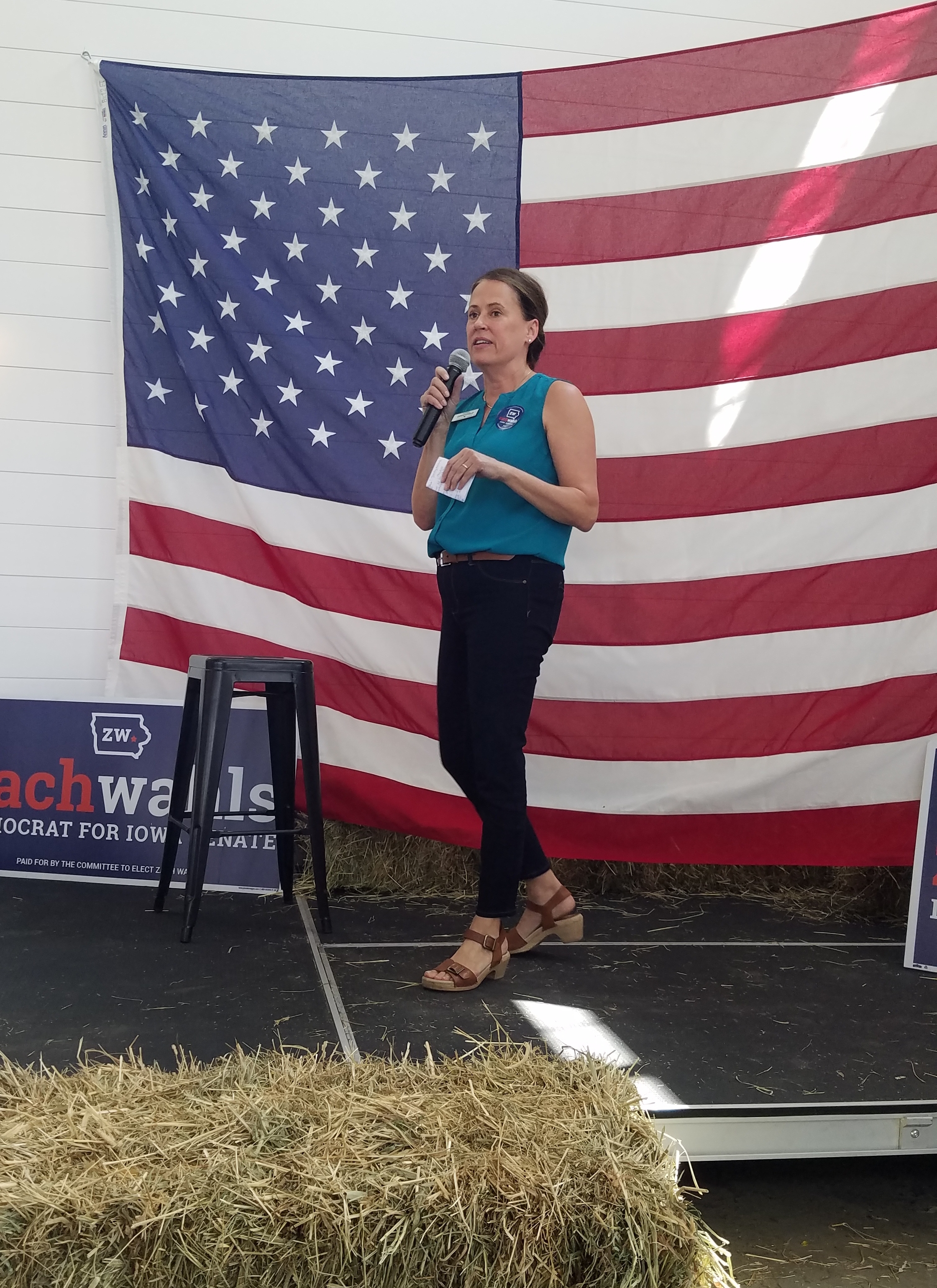
U.S. Senate Candidate Theresa Greenfield, Walker Homestead, Johnson County, Iowa. July 14, 2019

Theresa Greenfield is a Democrat running for U.S. Senate and appears ahead in the money game.

She got positive press after third quarter fundraising numbers were released. She raised $1.1 million in Q3 compared to Joni Ernst who raised less than $1 million. Ernst had $4 million on hand.

Greenfield was bullish, saying to The Hill, “It’s clear that the momentum and energy is on our side to flip this Senate seat, and I’m so proud of what our grassroots campaign has already been able to accomplish to lay the groundwork to win this race next year.”

Not so fast.

Campaign money is not the only money in the 2020 elections. Greenfield’s campaign eschews donations from corporate political action committees and secured 92 percent of donations at $100 or less. These are positive things. Even so, millions of dollars will be spent on this election by both major parties, political action committees, and others. Not all of it will be from donations that meet a candidate’s criteria, because legally, the campaign can’t coordinate activities with outside groups. The Democrat will benefit from big money spending regardless of how donations to their campaigns are filtered. A significant source of money, the DSCC, has backed Theresa Greenfield to take on Ernst. There will be others.

Underlying the last paragraph is a notion that in 2020 the Iowa U.S. Senate election will be a fair fight. It won’t. Brian Slodyko of Associated Press posted a story yesterday titled “‘Dark money’ ties raise questions for GOP Sen. Ernst of Iowa.” The author opens,

An outside group founded by top political aides to Sen. Joni Ernst has worked closely with the Iowa Republican to raise money and boost her reelection prospects, a degree of overlap that potentially violates the law, documents obtained by The Associated Press show.

As we’ve seen in the results of the Russia and Ukraine investigations of the president and his campaigns, Republicans appear to be a lawless bunch. Ernst has repeatedly demonstrated there is little daylight between the president and her. What you see is what you get.

After hearing three Democratic senate candidates speak at Iowa events and taking a phone call from a fourth, I found each to have positive qualities. In this race money matters as much as any other aspect of a campaign. Sure we’d like to overturn Citizen’s United in an effort to take money out of politics. Public financing of campaigns might also be good. Democrats have to win elections under the current rules before there is an opportunity to change campaign financing laws. Or we could break the law as Ernst and her cadre of close supporters may have done. Democrats have become the party of law and order and I don’t see Greenfield or the others breaking the law.

We want and need to flip the U.S. Senate to a Democratic majority so if our presidential candidate wins, they have a chance to govern. Republicans want to hold this seat for similar reasons. With 33 U.S. Senate seats on the ballot, there are enough to flip control, but only so many competitive races in which big money could make a difference. The Iowa seat is one of them.

Each of the Democratic candidates for U.S. Senate has asserted they are best to unseat Joni Ernst. Which is accurate? Answering this question assumes playing by rules of logic that simply aren’t being used by Republican and right wing Ernst supporters.

A winning quarter of fundraising may not be enough to stand down the challenges of the influence of third party money in our elections. It is a positive start, but only part of the picture.

~ Written for Blog for Iowa
Categories
Home Life

Into Winter

Iowa Winter

After I returned from a shift at the home, farm and auto supply store I scrubbed and cut up potatoes to roast for dinner. Roasted potatoes, a burger patty and frozen peas made a dinner — comfort food as winter approaches.

The Thanksgiving leftovers are gone, our pantry and ice box are full. There was no need to grocery shop after my shift comme d’habitude.

In eight weeks it will be time to start onions, leeks, and shallots inside, then begin soil blocking at the farm a week or two later. For now there’s indoors work of reading, writing, cooking and cleaning.

A neighbor put out bird feeders to attract birds, then expressed concern that cats were hanging around, chasing the birds away and prompting her dogs to bark at them. I wrote a response.

This is an interesting topic. Although I don’t have any solution to the issue of dogs barking at wandering cats, by putting out bird seed, like I have, a person attracts a variety of animals to the yard, which includes not only birds but mice, voles, chipmunks, squirrels, raccoons, deer, and maybe others.

Because of our proximity to the state park, we see almost every species native to Iowa here.

The bird feeder also brings predators of small animals, including cats, but also hawks, owls, and foxes. Then there are the scavengers like possums, turkey vultures and crows.

My point is when we decide to place a bird feeder out we are creating an ecosystem, especially if we fill feeders year-around. If members have pets, they should be kept on a leash or indoors, that’s long been our policy. However, there is a bigger ecosystem that will continue, even in the event pets can be controlled.

On that note, we head into winter.

Categories
Living in Society

Fixing the Leak, Kamala Harris is Out

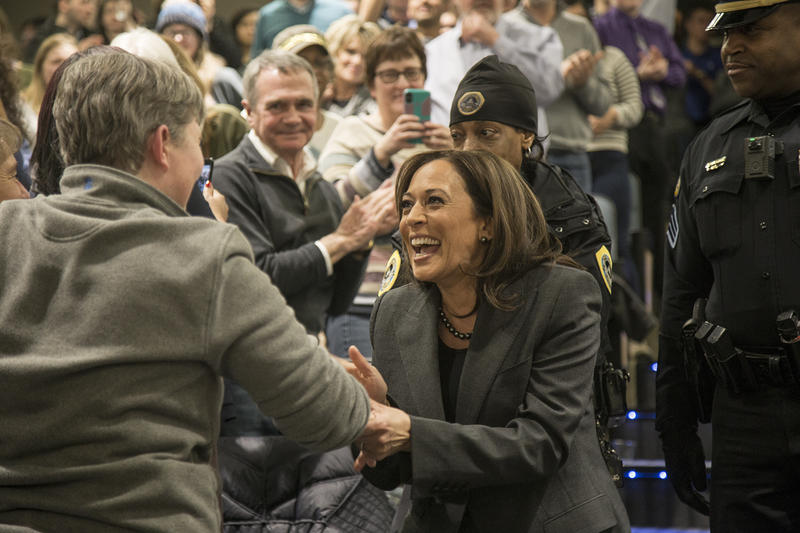
Kamala Harris in Iowa. Photo Credit – Clay Masters, Iowa Public Radio.

A plumber arrived yesterday at our home to repair the leaking water heater. I asked for permission to watch him work.

He removed the cover panel, turned the water back on ever so slightly, and a pinhole in the copper tubing feeding the household showed itself. He turned the water back off.

The model and serial number of our water heater is printed on its side, with a phone number to the manufacturer. He called them and sadly, the replacement part, a heat exchanger, is no longer being manufactured. The technician on the telephone suggested some parts houses who might have one in stock and identified a newer model with the same footprint as our current unit. He provided pricing and an estimate of the time to replace the heat exchanger if one could be found in a parts house.

Next the plumber called a recommended parts supplier and asked them to see if a part could be found. If they can’t find one, we’ll install the new unit, what else would we do? He patched the leak with a section of high pressure water hose and buttoned things up. The whole process took less than an hour.

While he worked I told him I work at the home, farm and auto supply store the next couple of days and Friday would be best to schedule the repair or replacement. It turns out his boss’s spouse works there part time as well. He is the plumber the store manager calls to make minor repairs. It is a small world.

Yesterday Kamala Harris suspended her presidential campaign. I received an email within the hour of news hitting the internet that included this:

I’ve taken stock and looked at this from every angle, and over the last few days have come to one of the hardest decisions of my life.

My campaign for president simply doesn’t have the financial resources we need to continue.

I’m not a billionaire. I can’t fund my own campaign. And as the campaign has gone on, it’s become harder and harder to raise the money we need to compete.

In good faith, I can’t tell you, my supporters and volunteers, that I have a path forward if I don’t believe I do.

During Harris’ first trips to Iowa, I felt she could win it all. Her campaign had such organizational strength and energy. She appeared to be doing the right things to secure the nomination and then roll easily toward victory in the general election. Others have opinions of why her campaign failed to gain sufficient traction, I do not.

Elizabeth Warren commented about the presence of billionaires in the Democratic nominating process in an email which arrived eight hours later:

Kamala Harris and Kirsten Gillibrand — two women senators who, together, won more than 11.5 million votes in their last elections — have been forced out of this race, while billionaires Tom Steyer and Michael Bloomberg have been allowed to buy their way in.

Our party and our democracy deserve better.

While I didn’t hear Kamala Harris in person, her strength as a U.S. Senator, history as an attorney, and ability to attract some of the best political organizing talent in the state made her a contender. We all realize it takes money to run a presidential campaign. The competition for the nomination is the less for her exit.

Categories
Living in Society

Why I Support Elizabeth Warren for President

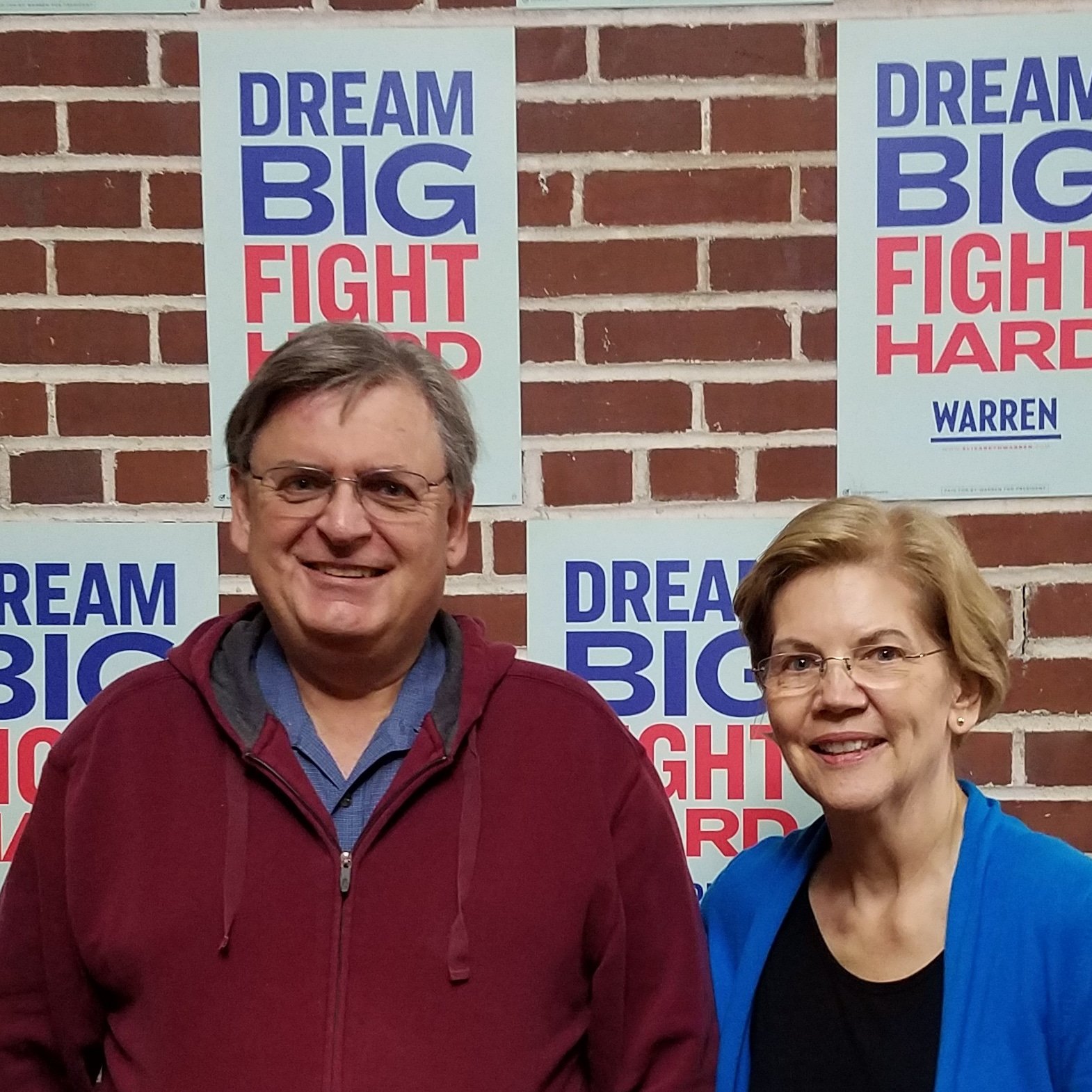
The author with Elizabeth Warren at the Iowa Memorial Union, Iowa City, Iowa on Dec. 2, 2019.

I will support Elizabeth Warren during the run up to the Iowa Caucuses on Feb. 3, 2020.

We need a president able to dream big and fight hard for progressive values. Of the candidate’s I met and studied this cycle, Warren is the one.

I had a moment with Warren yesterday, during which I thanked her for introducing the No First Use Act in the U.S. Senate. Her reply was, “I can’t believe we don’t have that yet.

After hearing her in person for the third time, I’m ready to pick a presidential candidate and dash to the Iowa Caucus finish line.

My support for Warren is no secret. When asked why I support her my answer has been a variation of “I like the work she did organizing the Consumer Finance Protection Bureau in 2011, I followed the progress of Ted Kennedy’s U.S. Senate seat and was happy when she got it back from the Republican in 2013, and if she had run in 2016 I would have caucused for her.” My decision to endorse Elizabeth Warren is more complicated than what I say to people.

An epiphany occurred last night when she spoke about forming the Consumer Finance Protection Bureau. There was a brief window, she said, before which creating CFPB was not possible and after which it wouldn’t be possible either. In that crack of opportunity she helped push open the door and created the bureau. In many ways our politics has become the art of recognizing what is possible, when it is possible, and then doing it. That’s the kind of president we need in 2021.

I lived long enough to recognize a political mandate. Lyndon Johnson had that after his election to a full term in 1964. Johnson’s work in the U.S. Senate and as president serves as a monument to the art of what’s politically possible. No Democratic president has had such a mandate or accomplished so much since then.

The closest Republicans came to a mandate in my life was the re-election of Ronald Reagan in 1984 when he won 58.8 percent of the popular vote and 49 of the 50 states in the Electoral College. Scandal, the Democratic majority in the U.S. House of Representatives beginning in the 99th U.S. Congress, and Democratic control of both legislative chambers in the 100th Congress held the president at bay. Republicans have had no mandate, even during the Trump administration when they controlled the presidency and both chambers of the legislature in the 115th Congress.

The inherent Republican falsehood of acting as if they had a mandate created a toxic political environment in which the only things that got done were those related to their wealthy supporters and corporations, or stoked their base of support. Such toxicity led the electorate to vote for a Democratic majority in the U.S. House of Representatives in 2018. The Republican Senate now delays, obfuscates and fails to hold votes while packing the judiciary with their nominees.

It’s unlikely Democrats will have a mandate like Johnson did in my lifetime. That’s what makes Warren’s candidacy appealing. Absent a mandate, Democrats must move quickly when opportunity for substantial, progressive change presents itself. Based on what I’ve heard from Elizabeth Warren, she’s ready.

The chief executive has a lot of power to act on her own. Yesterday Warren said she would do everything she could to exercise the power of the executive branch. That’s what President Obama did. Without congress working with her, that may be all she can do. As we’ve seen with the cycles of national politics since Johnson, it is not a scenario for curing what’s toxic in our politics. Warren acknowledged that yesterday and asked those present to stick with her during the primary, during the general election, and after inauguration to hold government accountable to the people. If she could inspire the electorate to do that, she’s on her way.

The most important reason I support Elizabeth Warren is her unending commitment to tackle the problem of corruption in our government. Whether or not she is nominated, or elected as president, I expect her campaign against corruption to continue.

I wrote why support for Elizabeth Warren persists in October. We need a liberal as president and Warren is that. She’s also a woman and my response to critics of her gender remains the same, we will never have a female president if we don’t nominate one.

For these reasons and more I endorse Elizabeth Warren’s candidacy for the Democratic nomination for president. I’ll continue to dream big and fight hard all the way to the general election, and beyond.

Categories
Living in Society

A Leak During The Political Season

Black Friday at the home, farm and auto supply store.

The sound of footsteps in the hallway told me something was wrong. There was leaking.

I pulled on my jeans, shut off the main water line, and took a look.

The safety bucket on a table under the tankless water heater was overflowing. I dumped the bucket outside and began mitigating the damage.

Shutting off electricity and natural gas to the unit, I isolated the heater by closing the intake and outlet valves, then made sure the leaking stopped. Once it did, I turned the household water back on. Success! At least we have cold water until a plumber can get here.

This minor trauma occurs just as the political season enters my least favorite part: the final nine weeks before the Iowa caucuses.

Iowans are privileged to get attention in the presidential nominating process. The blessing and curse of first in the nation caucuses is presidential candidates get vetted, a non-standardized process. As new information comes out, media and engaged party members take it in and process it. Sometimes voters switch support for candidates after new information arrives, sometimes they hold fast. We know a lot more about them today than we did last January.

My support for Elizabeth Warren grows stronger with each day. Every new revelation or negative ad or statement evokes a response. She’s thoughtful, persistent and driven. For Warren the key challenge of the next Democratic president is confronting the corruption in our governance. Warren has the background and skills for that task. All of these are qualities I value in a president.

The rock of candidates is Bernie Sanders. His message has been consistent since I first heard him speak in 2014. The only significant campaign change has been his October heart attack. I view him unchanged and he’s back on the trail. I won’t be a fan until Sanders switches his party registration to Democratic.

I haven’t been to a Biden event although he’s leading national polls. He doesn’t seem like the same Biden we got to know in 2008. Some of his most loyal fans from then have found someone else. During an open election Democrats divide into camps to support different candidates. It can become rancorous. If Biden’s the nominee I’ll work hard to elect him.

The biggest surprise has been some of the U.S. Senators in the race haven’t done better. I’m referring specifically to Kirsten Gillibrand, Kamala Harris and Cory Booker, any of whom would have made a fine nominee.

I also heard Julián Castro, Marianne Williamson, Amy Klobuchar, Jay Inslee, John Hickenlooper, Michael Bennet, John Delaney, Tulsi Gabbard, Sherrod Brown, and Pete Buttigieg speak in person. Of these I favor Brown (he decided not to run) and Klobuchar (who is my second choice).

While I’ve been more involved with politics than expected this cycle, the national results matter more than the brief bump someone gets in Iowa, New Hampshire, South Carolina or Nevada. That California and Texas are holding their presidential primaries on Super Tuesday, makes the 15 jurisdictions and Democrats Abroad voting March 3 more of a decider than the four early states. I look forward to supporting the eventual nominee in the general election.

I’m hopeful of retaining Iowa’s Second Congressional District in the Democratic column. I’d also like to see Joni Ernst defeated in an effort to regain control of the U.S. Senate. Neither of those contests will be easy and my political activism will be figuring out how to help the eventual nominees after the June primary. I feel a need to do more than donate money to them.

There you have it. My view of the election cycle in context of dealing with a plumbing problem. For one of these I need an expert, for the other some tolerance of an as yet incomplete vetting process and common sense on Feb. 3 and beyond.

I’m confident I will find these things. Hopefully the plumber in a couple of hours.

Categories
Reviews

Book Review: The Hidden History Of The Supreme Court

Thom Hartmann Photo Credit – Thom Hartmann Website

The Hidden History of the Supreme Court and the Betrayal of America by Thom Hartmann is a quick but important read for people who want to review the history of the Supreme Court.

At 168 pages, the book takes readers through the founders’ vision of the courts, the Powell Memo, the growing influence of fossil fuels companies on the court, judicial review, and the constitution’s preference for property rights over human rights. Hartmann also covers the court’s involvement in key American movements and issues, including labor, abolition, racism, abortion, environmentalism, and the rise of the TEA Party. The final section of the book offers solutions to “save the planet, democratize, and modernize the Supreme Court. It’s a page turner.

“But isn’t Hartmann preaching to the choir?” engaged readers might ask.

What’s important about this book is it exists at all.

Blog for Iowa, and others like it in Iowa and around the country, rose up in the years after the 2004 general election offering an alternative voice to right wing talk radio, evangelical Christianity, and a media landscape where the Fairness Doctrine no longer applied and cable news companies gained hegemony with partisan, conservative messages 24/7. In addition to progressive national and state-based blogs, radio and television personalities competed to gain a progressive audience. Thom Hartmann is one who survived and thrived. He is currently the number one progressive talk show host in the United States according to the about the author section of the book.

The purpose served by The Hidden History of the Supreme Court and the Betrayal of America is presenting a narrative of the key elements of the Supreme Court’s history to a progressive audience.

So often ideas about the Supreme Court are formed by snippets of information in various media about specific decisions, the judicial nominating process, and groups like the Federalist Society which lobby the government for appointment of certain types of judges. Increasingly social media is a key driver for informing our opinions, yet it presents an incomplete picture. It is not enough. What has been lacking is a more comprehensive look at the supreme court told in language that is easy to understand. Hartmann delivers that and more.

Here’s a clip of Thom Hartmann reading from his book. The Hidden History of the Supreme Court and the Betrayal of America is available from the publisher and most places where books are sold.

~ First published at Blog for Iowa

Categories
Home Life

Thanksgiving 2019

Tree Decorating Contest the the Solon Public Library

Happy Thanksgiving readers!

Thanksgiving week continues to be a special time. There is a certain something in the air. As a writer I should do a better job describing that. Doing so would reduce what’s special to mundane. Let’s not go there.

We all need time to recharge after this long year. The days find me planning next year’s garden, determining how to improve our community in the months ahead, and budgeting. Those are markers along the way that don’t get to what’s special this week.

It seems unlikely we will decorate our home for year-end holidays. We’re in the middle of down-sizing, organizing, and re-arranging for coming years. Translation: stuff is pulled out everywhere. The library in town displayed the results of a competition to decorate Christmas trees. We took it in last night and gained a bit of holiday spirit without the work it would have caused us at home. That will have to do.

Thanksgiving is a quiet time for us. With our daughter a thousand miles away and all four of our parents deceased, there is little reason to get too carried away. We will celebrate with a special meal that includes home made baked beans, wild rice, baked sweet potatoes, a relish tray, sweet apple cider from the orchard and an apple crisp made with backyard apples. It will be good, filling and with some calculated adjustments and portion control, nutritionally balanced.

According to the American Farm Bureau, the cost of a Thanksgiving dinner for 10 people is $48.91 this year. Ours would feed the same number at a fraction of the cost, due to no meat products on the table and producing and sourcing items from our garden or from the local food projects where I work. When most food is produced close to home, eating well is not expensive.

There’s more to the special feeling of Thanksgiving than food. Describing it escapes me. I’m better off not knowing what it is and basking in the glow of its exceptional character. At least for this year.

Categories
Living in Society

Debate Watching

Re-used Elizabeth Warren Sticker

Lightning strikes illuminated a dark November sky as I drove my aging Subaru toward Solon for a debate watch party at El Sol Mexican Restaurant.

El Sol is one of the treasures of our community. Not because they stayed open an extra hour so we could watch the Democratic debate in Atlanta until its end, but because they contribute to the community in countless ways each year.

That the Elizabeth Warren campaign chose to hold a watch party in town, and picked this family-run restaurant, is evidence of how personalized they have become.

Whether Warren will win the nomination is an open question. Based on Saturday’s Des Moines Register/CNN/Mediacom poll, winning the Iowa caucuses is within the reach of four and maybe more candidates. Iowa matters less to Democrats than it did during the 1976 cycle, or even in 2008 where Barack Obama did two things: won the delegate count and contributed to dividing the party in a way that persists until today. As I wrote previously, the aggregate of early state caucuses and primaries through March 3 Super Tuesday will be more meaningful in determining who is viable and who has a path to the nomination. It could be Warren. It could be another.

The politically correct way to post about a chosen candidate on social media is to assert a best-picture narrative about them without reference to other candidates. Coralville political activist and Kamala Harris supporter Nick Westergaard stated it succinctly in a post promoting Harris on his Facebook page. “If you have a candidate already,” he wrote, “write your own post like this and talk about them there.” Such political correctness has to do with getting through the time until the Feb. 3 caucuses without fracturing the party further on social media. Social media means a lot less than its denizens, the author included, assert. What matters more is the statements people make in-person and off line.

I knew half of the attendees at the Warren debate watch party and half I met for the first time. It was hard to hear the television set so we couldn’t catch every sound bite. We talked more generally about the community, politics and our shared experiences. I spent most of the evening chatting with a local activist I’ve known for decades.

Two issues about the general election process won’t go away.

Will the 2020 electorate pick a woman as president? Among Democrats, nominating a woman as our candidate to face the Republican nominee can be done. Elizabeth Warren is in the top tier of candidates and I believe both Amy Klobuchar and Kamala Harris could be within striking distance, at least in Iowa. Based on conversations within my precinct, I believe Klobuchar and Warren could both be viable. The general election is where doubt arises about electing a female president. There continues to be resistance to electing a woman, especially once one gets outside the privileged liberal centers of the state. Johnson County, where I live, voted for Hillary Clinton in 2016. We were the only county in the state to do so. The other edge of this sword is we won’t have a female president unless we nominate one.

Giving up private insurance in favor of Medicare for All will be a non-starter, especially for people who were covered by private insurance during an illness. I hear this everywhere, including at the Warren debate watch party. This objection cannot be overcome through policies, snappy arguments or well-crafted verbiage. A significant, nonpartisan slice of the electorate wants government out of their health care insurance decisions. As we are painfully aware, the Patient Protection and Affordable Care Act was lauded by many Democrats but fell flat among people who felt it was an intrusion into their personal lives to be mandated to get insurance or face a penalty. Because “Medicare for All” is weighted with diverse meanings in the electorate, it seems unlikely to go anywhere as presented by some Democratic presidential candidates.

When Medicare was signed into law in 1965, it was possible only because Lyndon Johnson had a broad mandate to make bold, progressive change. The same mandate of the 1964 election is not replicable today after the rise of conservatives, right-wing talk radio, the Moral Majority, cable news, and dark money institutions like the Heritage Foundation and the Federalist Society. There is also substantial division among Democrats. Even if Democrats retain a majority in the U.S. House of Representatives and gain a slim majority in the U.S. Senate, the time after Obama’s election when Democrats controlled the executive and legislative branches of government is a reminder of how little can get done in an age of political obstruction.

Even though our debate watch party was small in comparison to those in the county seat, I was glad for the chance to meet new people and talk about politics. I’m not sure of the value of the actual debates. Certainly news media outlets benefit by having stories to write, yet the short responses and interactions of candidates don’t serve the electorate well. Even though the staging makes it look like an even competition, it’s not. What mattered more was conversations at our table as the talking heads faded to the background.

I look forward to the ultimate presidential nominee, something we won’t know until spring at the earliest. I left two bucks in the boot near the restaurant door to support a new fire station as I returned to my vehicle.

Categories
Home Life

Under the Weather

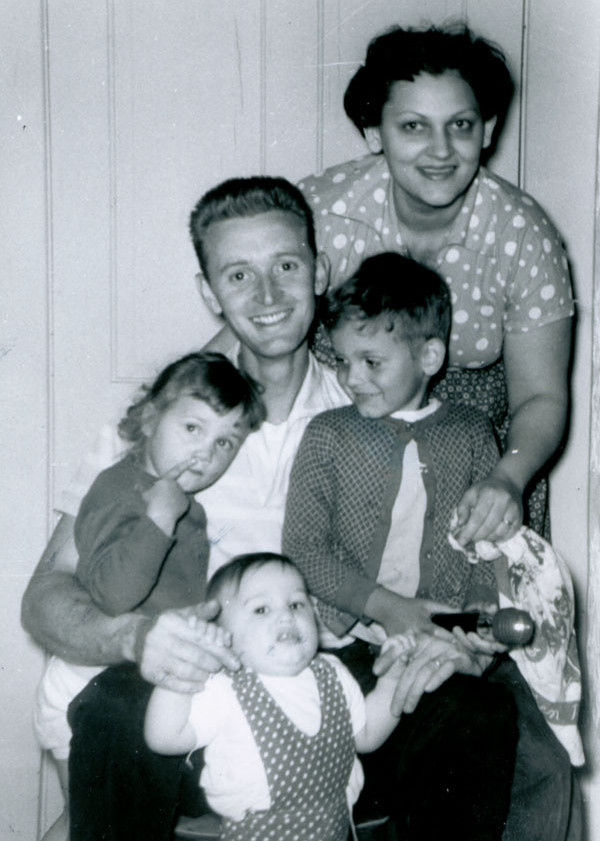
Mom with her family about 1957.

On a bleak, drizzly Sunday morning I visited our parents’ grave with my sister. Cemetery workers had piled sod on top of Mom’s grave with a carve-out for the foot stone designed to look like Father’s. We are waiting for delivery.

I was glad to visit before winter.

We met our brother at an Italian restaurant in the dying mall. We all had salads with iced water to drink, a sign of dietary requirements of the times. The food was good in a way Italian restaurants can be. The conversation started on Democratic politics. We don’t agree on who should be the next presidential nominee so we moved on to the topic of our family history.

Of our parents’ generation, aunts in Florida and Virginia are the only ones remaining. Sister contacts them every so often. I heard from both in the last five years via email or snail mail. Last time I visited my aunt in Virginia was in 1983. I haven’t seen the one in Florida for longer than that. Word is the family kept Cox Hollow when my great aunt died, and we didn’t discuss who owns the home place in the Appalachian hills where one branch of the family is buried. None of us have seen the family cemetery where ancestors who fought for both the Union and the Confederacy are buried. The stories we share as siblings are common ones, although each time we retell them some new nuance emerges. The luncheon was okay.

Suffering a cold for the last two weeks, I continued to make a life. I also cancelled a lot of plans.

Tonight I’m scheduled to attend a house party for the U.S. Senate candidate Michael Franken in Marion. We’ll see how I feel after work. The local Elizabeth Warren organizer arranged a Democratic debate watch party in town, which because it is so close, I also plan to attend. The debate starts at 8 p.m. local time and that is pretty late to be out for me. Organizing for the caucus doesn’t happen on its own and I hope to recover from my illness soon to help the effort.

The ambient temperature warmed and we are getting respite from wintry weather. We are in a dank, in-between time of hoping for relief from what ails us, and from the emotional burdens life presents. Thankfully today is another day to live.

Categories
Living in Society Writing

Presidential Coat Rack – Republicans

Lake Macbride Trail – Autumn 2019

Like a coat rack in the back hallway of our childhood home I hang memories on each of the American presidents who held office since graduating from high school.

The worn hooks are Richard Nixon, Gerald Ford, Jimmy Carter, Ronald Reagan, George H.W. Bush, Bill Clinton, George W. Bush, Barack Obama and Donald J. Trump.

The memories are personal and integrated into who I am as an American living in Iowa. To the degree I’m American, these memories are sharable.

Book ended by the most reviled, Reagan and George W. Bush also deserve their own special place in hell. I worked to find some redeeming qualities about each of them. It was hardest with the current president.

I looked up President Trump’s inaugural address and listened to it again. My memory was turning off the video on inauguration day after the sentence, “This American carnage stops right here and stops right now.” The speech came from left field, from a country I did not know.

Watching the entire speech for the first time yesterday I can see why his core supporters like him. I can also see truth in the Politifact fact-checking of the speech. Trump referred to “all Americans.” Since day one of his administration I haven’t felt included in this group. That feeling has been stoked ever since with little hope of resolution. For Trump, “all Americans” includes only his supporters.

The other memory of Trump is how outside interests funded by dark money have run the administration. It began when the Heritage Foundation sent out swat teams to investigate each aspect of the executive branch shortly after the inauguration. It continued with the Federalist Society proposing judges to fill the many vacancies held open by Senators Mitch McConnell and Chuck Grassley while Barack Obama was in office. Grassley recently pointed to Trump’s policy regarding the appointment of judges as a key reason for Republicans to hold their nose and support the president’s re-election effort. My memory is Trump as the disengaged, self-centered billionaire in an office he recognizes he has no capacity to manage.

While Ronald Reagan ranks among the worst presidents, his administration was buffered by his affable manner and effective use of media to convey a sense of warmth as him minions stripped away a society risen from the ashes of the second world war. His work was intentional and directed, like all of the Republicans who held this office. Reagan must be given credit for the intermediate-range nuclear forces agreement (INF) with the Soviet Union. It was a big deal then and gave those of us in the nuclear freeze movement hope. Trump, with the counsel of John Bolton, threw the INF into the trash heap.

My memory of George W. Bush is from Philadelphia, shortly after the terrorist attacks of Sept. 11, 2001. I was on Interstate 95 heading into the Bartram Gardens area where I managed a trucking fleet. Bush’s motorcade was on the other side of the interstate heading back to the airport to return to Washington. In that moment, whatever hope I had Bush would pull the country together after the terrorist attacks was dashed. He made the trip early in the morning and finished by 10 a.m. It was a publicity event that had little impact on the national interest. It was unclear to me why he would spend so much money for what must have been a one to two hour publicity event. I remember other things didn’t make sense during the Bush administration. More than this, his invasion of Iraq made the least sense and proved to be a costly error. That is, unless one was a contractor who profited from the debacle.

Richard Nixon was proof there would be consequences for lying liars who held the office of president. He did form the Environmental Protection Agency but that was only a calculation that doing nothing to protect the environment would hurt him politically.

Gerald Ford was a non-entity who was not Nixon and that is my memory of him. Instead of seeing his failure to get a grip on the economy, I entered military service and spent most of my time in a confined silo that interacted with the presidency in a much different way. I accepted the premise of his presidency, that it was a time to heal after the disaster that was Nixon.

Conservatives who gave us Reagan ultimately didn’t care for George H.W. Bush. Bush’s foreign affairs experience helped his administration deal with the breakup of the Soviet Union without going to war. The United States became the only super power under his leadership. In domestic affairs, Bush was a supporter of the Americans with Disabilities Act. While he had some redeeming qualities, conservatives continued to have too much sway in his administration. I was satisfied when Bill Clinton defeated him in the 1992 general election.

I also have memories to hang on Democratic presidents. None of them were saints. All of them did things I didn’t care for. They were welcome respite from a conservative movement that continues to gain strength long after the coalition that elected Ronald Reagan was formed. My story about Democratic presidents is for another day.