Categories
Living in Society

Business as Usual

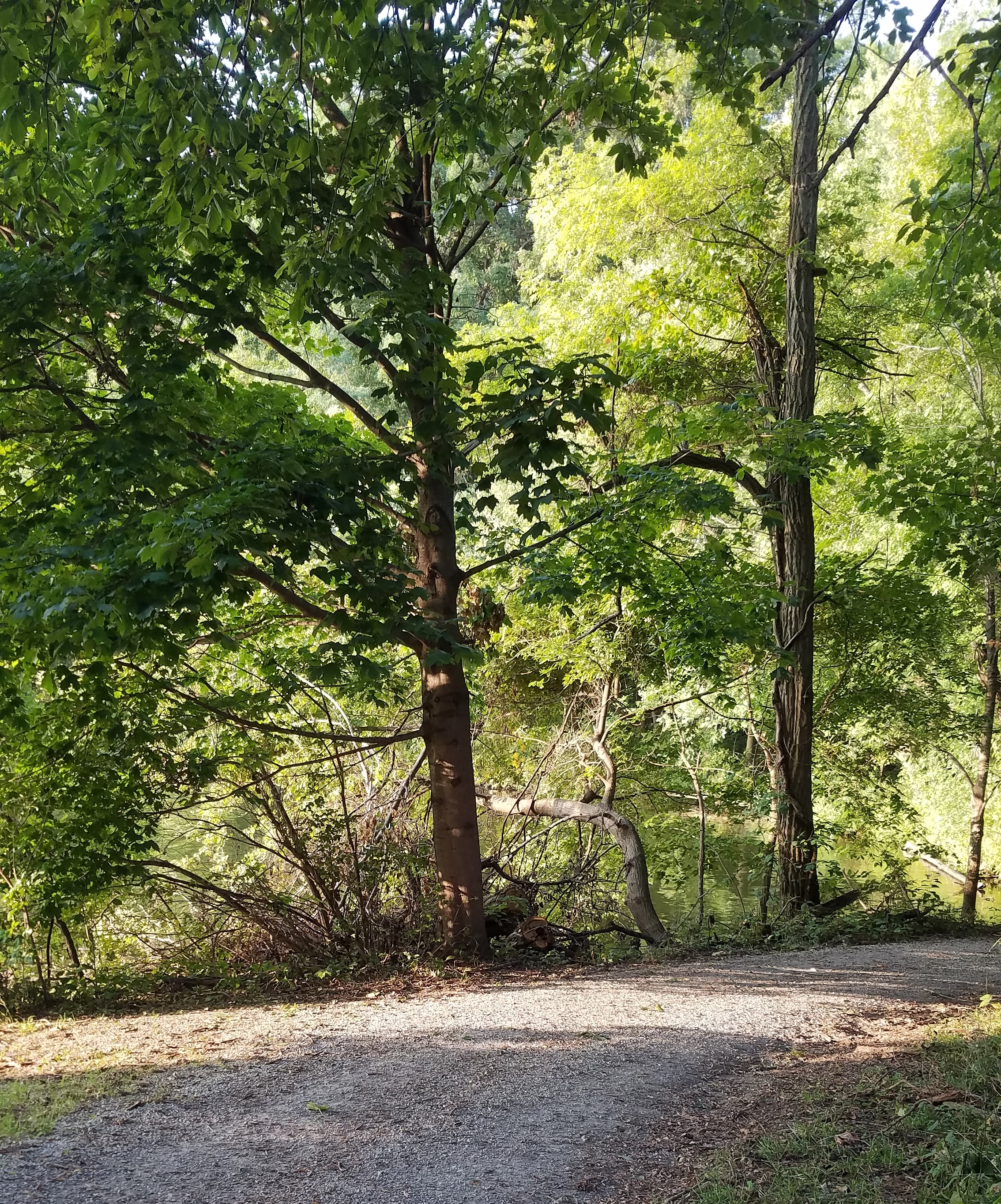
Cottage Reserve from Lake Macbride Beach

In a first for this blog I’m publishing a post by another author. I met Kim Painter during her election campaign for Johnson County Recorder in 1998. She continues to serve as recorder. I have the Painter yard sign I put up back then but don’t use it any longer because she has run unopposed for reelection. Readers may recall I frequently write about Big Grove Township. The Cottage Reserve, the subject of this article, is located in our township.This article first appeared in The Prairie Progressive in print edition. It is reprinted here with permission of the author.

Business as Usual by Kim Painter

Once in a great while, though you think you know what your job is and what it means, the earth of the greater wide world beyond will shift, sending you off-balance in a signal moment of realization. Suddenly the job is not what you thought, but rather all that and much more. For me, it’s happened a few times. Once, when same-sex marriage went from being a contentious back-room LGBT community issue to a national, front-burner fastball coming hard across the plate. Suddenly the media spotlight was intense, emotions ran high, and I was operating at a whole different level than on a day-to-day basis. Day-to-day kept coming to be sure, but so did this other social and civil rights issue with a life and velocity all its own.

It happened more recently when a gentleman wrote to me asking for some assistance with a research project. The man was F. Wendell Miller Professor of History at the University of Iowa, Colin Gordon. He wanted all our deed document images from 1900-1950. It was a new kind of request, for which there was no current template.

He explained that he hoped to get the digitized images into a file to run through optical character recognition (OCR) software. He and his class would then scan for phrases like “the Caucasian race” to locate what we now call ‘racially restrictive covenants.’ Back then, they were called business as usual. I was hooked on the idea, and proceeded to work with our software vendor and county IT staff to load the entire 50 years of deed documents into a file for him. It was a privilege to play a small role, and it is a marvel that today, all documents of this sort in Johnson County and Iowa City are online and mapped. The work is found here: https://dsps.lib.uiowa.edu/mappingsegregationia/.

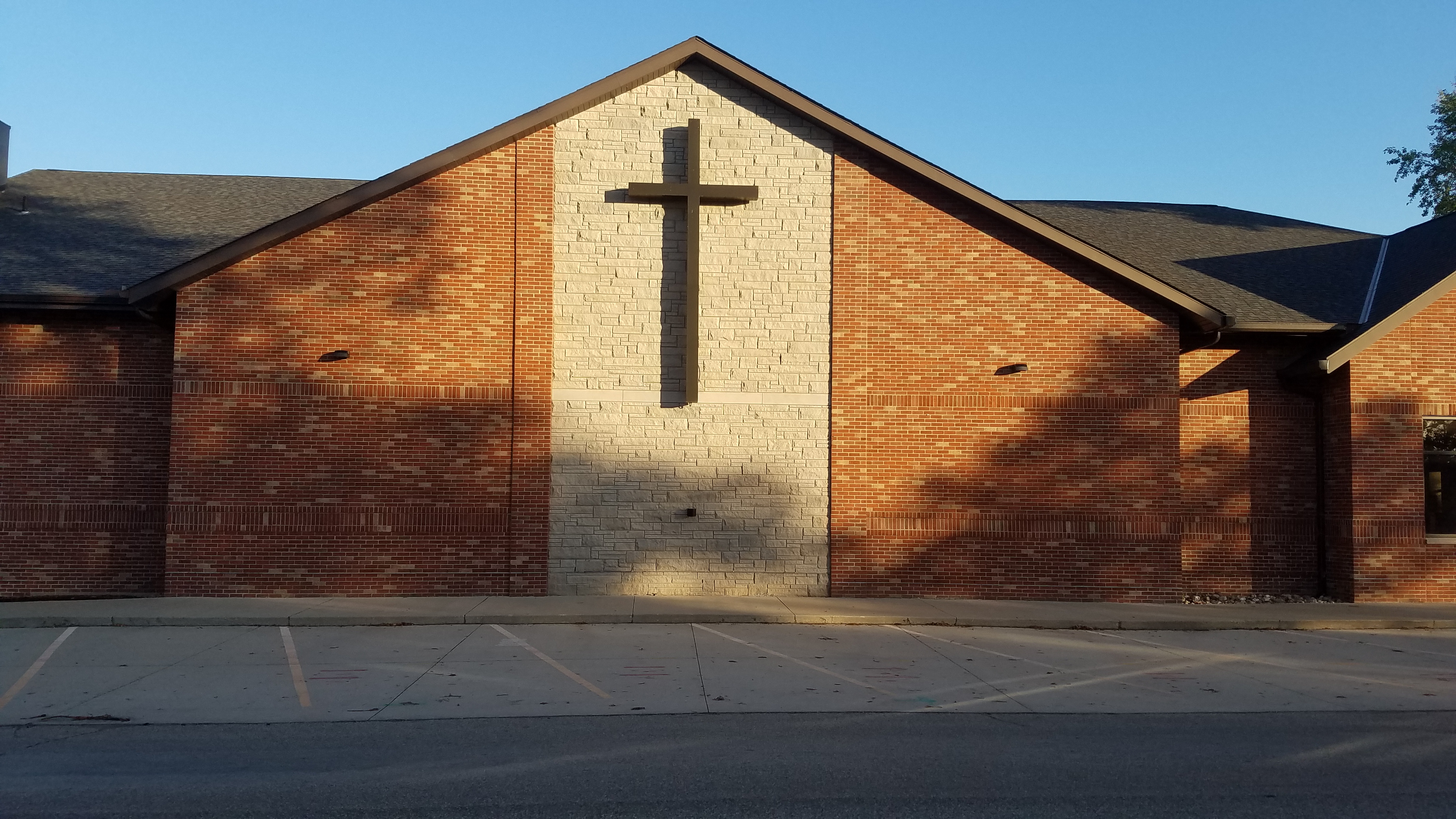
As I began this article I was struck to recall a third occupational epiphany, a personal one. Some 15 years ago, I was printing off some covenants and restrictions for a customer with questions about a potential property boundary dispute. The situation was unfolding out around Lake Macbride, at what is known as the Cottage Reserve. My eyes stopped on a page, widening considerably, as I slowly comprehended in full the following verbiage:

(6) The said Cottage Reserve area is hereby platted for the sole use and benefit of the Caucasian Race, and no lot or parcel of ground shall be sold, owned, used, or occupied by the people of any other race except when used in the capacity of servant or helper.

Please note the awful and purposeful use of the word “used,” as in “used in the capacity of servant or helper.” There’s no mistaking that meaning. People of color are able to occupy space on this property only if being used… by white people.

As if the above weren’t clear enough, consider the fast-following item (7). It prohibits the ‘keeping or maintaining of hogs, cattle, horses or sheep.’ So in near proximity to reserving the Reserve for the sole benefit and use of the Caucasian race, people of color are categorized alongside hogs, cattle, horses, or sheep.

Again, there is no mistaking the meaning. This is what we thought at the time. This is what we ordained and enforced in legal documents. It is a mark of racism’s insidiousness that such documents were so
often mundane in one paragraph — stipulating maximum heights of garages or number and kind of outbuildings, delineating collective
use of shared roads or wells—only to pivot in the very next to equating entire swaths of humanity to livestock, allowing their presence only if white owners were using them.

Often, when the topic of reparations is raised, one observes the heads of certain kinds of white people exploding, if quietly. People of that sort might seek enlightenment in these covenants and restrictions, which were stipulated in property transactions from the early 1900s until outlawed in 1948. They were of like kind across the nation.

Consider the financial implications of the sheer volume of parcels
restricted in this manner. Tote up the generational losses of wealth caused by the absence of just one home and its plot of land from one family. Have you ever borrowed against your home and land? Think of all those who help kids through college by doing that very thing, and how many people of color had no means to do so. How many lost educations, how much lost income, what final tally of all the wealth lost forever to families over time? It is breathtaking to contemplate. And it all starts on pieces of paper, the day-today documents that come through an office as people buy and sell homes and property. It is that simple, and that monumental. In way, it mirrors racism itself.
Categories
Living in Society

Lynching in Iowa?

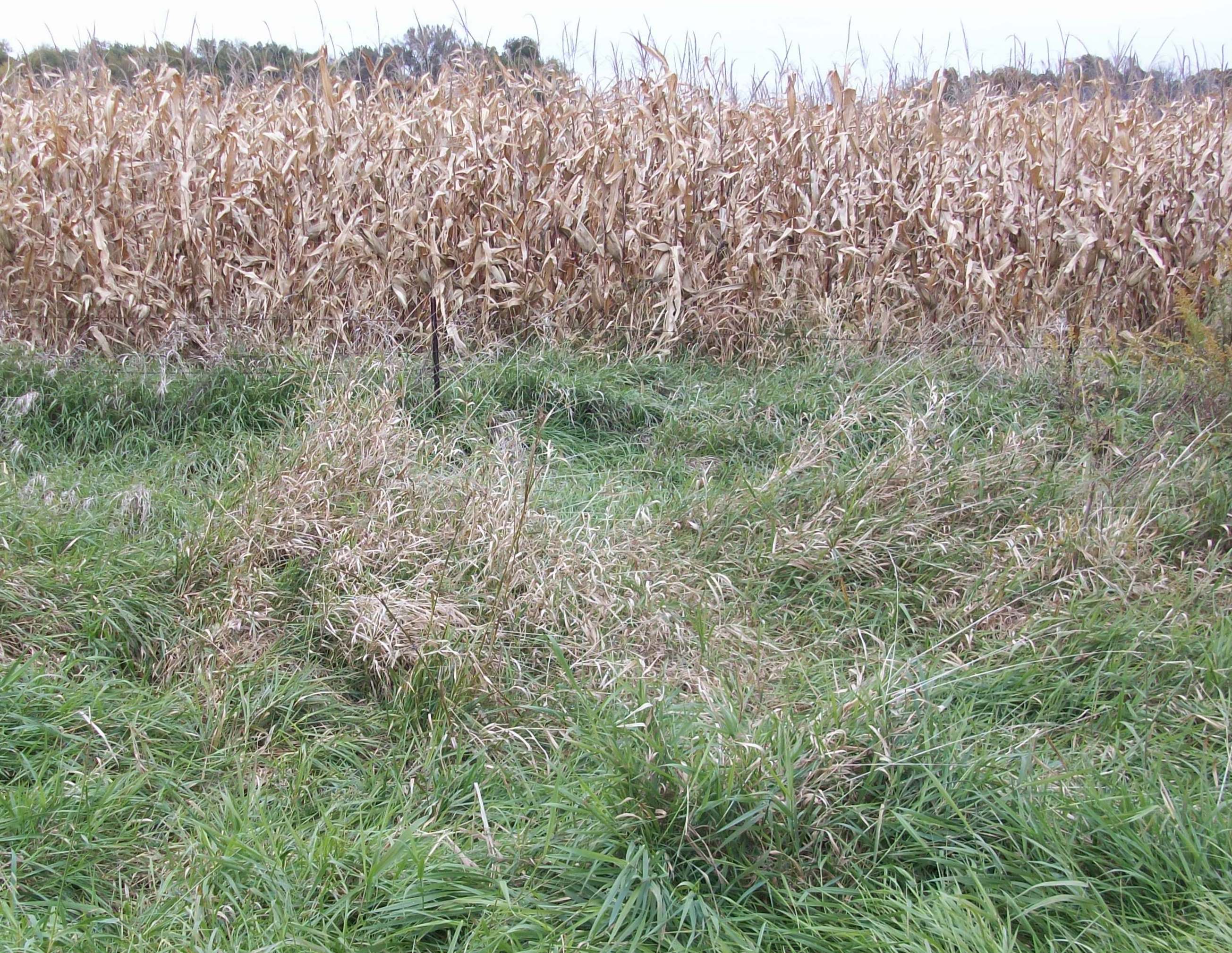
Field Corn in the Fall

Editor’s Note: Iowa DCI, Grinnell Police Department and Iowa-Nebraska NAACP held a press conference at 12:30 p.m. on Tuesday, Sept. 22. DCI announced four suspects had been apprehended and charged. There was no indication the crime was based on race. Coroner’s report indicated a cause of death consistent with strangulation. Investigation is ongoing. A number of major media companies attended the press conference and one assumes they will continue the story. I left this unedited and will let them tell the rest of the story.

The burned body of Michael Williams of Grinnell was found in rural Kellogg on Wednesday. The Iowa Division of Criminal Investigation is treating the death as a homicide. A hate crime has not been ruled out. Williams was black in a city that is 92 percent white.

“As if taking his life was not bad enough,” Powell Mejias, the victim’s mother wrote. “On Sept. 16 the perpetrators of this crime moved his body to Jasper County, dumped him on the side of the road, then set his body on fire.”

News has been scant. The Perry News headline is “Lynching possible in death, burning of Grinnell man.” Here are a couple of links to news stories.

Newer coverage from the Daily Beast.

Link to Perry News.

Link to The Scarlet and Black.

This is Iowa in the time of Donald Trump. Black Lives Matter.

Categories
Living in Society

Work Ahead

Burn pile, Sept. 18, 2020.

On the driveway, under starlight, I remembered Ruth Bader Ginsburg.

It will be a busy fall Saturday.

For the first time since the coronavirus pandemic began with the governor’s March 9 proclamation there is a can and bottle drive at the high school. We don’t drink many beverages that come in cans yet I have six cases of glass bottles to recycle. I don’t know which charity gets the deposit refund although one person organizing the drive is a member of the school board.

While in town I plan to deliver seven sets of political yard signs. My supply of most signs is close to depleted. We are supposed to get more from the Biden-Harris campaign this month.

Yesterday we re-submitted requests for absentee ballots. A judge ruled our first requests, and those of thousands of others, were invalid because of a paperwork issue. Make no mistake. We will vote.

I expect politics to dominate our daily lives until the election results are known. The Commonwealth of Virginia began early voting on Friday. The line lasted for hours and is a harbinger of what’s to come. Turnout is expected to be higher than normal for a presidential election.

These are not normal times.

Categories
Living in Society

Derecho Clean Up Persists

Turn around on the Lake Macbride State Park trail.

Tuesday morning I cut the fallen locust tree trunk into segments and stacked them along with other firewood produced after the derecho.

It will take several more shifts to cut and sort the remaining damaged tree branches. One of the oak trees needs removal once there is room for it to fall. After that I can get the garden ready for winter, beginning with garlic planting in a couple of weeks.

The call of politics dominates my awareness. I spend time each day improving our chances in the Nov. 3 election. I’ll be spending more time. The stakes in this election are too high to sit on the sidelines.

I’ve learned to take care of myself in times of stress. That’s something we all can and should be doing. As the sun rises it’s difficult to see what today will bring. We must be active agents, not only in our own lives but in our lives in society regardless what light shines on us.

Voting begins on Oct. 5, 19 days from now. One can feel the surge of Americans moving toward election day. Part of it we can’t influence. Part of it we can and that’s where I’ll spend my daily political time. I hope readers will join me by making sure close friends and relatives have a plan to vote.

Categories
Living in Society

Eroding Liberal Centers

Tomatillo casserole with potato, onion, tomatoes, garlic and basil.

Johnson County, Iowa, where I live, is distinctively Democratic. The Republican Iowa legislature doesn’t much care for our deviance from their plans.

In 2010 we were the only county in the state to vote for Democratic U.S. Senate candidate Roxanne Conlin. In 2014, Johnson County stood alone in voting for Jack Hatch as governor. “We are the most Democratic county in the statewide races by a very consistent margin,” election official and long-time blogger John Deeth wrote.

Said margin doesn’t mean beans in the scope of statewide elections. If one subtracts Johnson County from statewide and presidential results since 2000 the political outcome and the winners would have remained the same.

Let’s be clear, my political precinct voted for Donald Trump by a substantial margin, as did several others. When I write Johnson County is liberal I’m referring to the urban centers comprised of Iowa City, Coralville, and to a lesser extent, North Liberty. Rural areas near Lone Tree, Tiffin and Solon are more like the rest of the state than the liberal metropolis.

Republicans have noticed and are taking aim.

The county would ban concentrated animal feeding operations if we could. There are votes on the board of supervisors to do so. Managing CAFOs was one of the first areas of the law where the legislature preempted local control, saying hog and cattle lots would be managed from Des Moines.

The Johnson County supervisors raised the county minimum wage. Not every municipality in the county went along with the change. Some other counties also raised the minimum wage. The state legislature preempted local control over minimum wage, nullifying Johnson County’s ordinance.

Protesters in Iowa City have long sought to shut down Interstate 80 as a way to stop business as usual and gain attention for their causes. I participated in one such interstate shutdown in 1971. Republicans increased the penalties for this infraction, although the Iowa Highway Patrol, which is responsible for the interstate, hasn’t been able to prevent protesters from attempting to close it. Protesters closing the interstate highway remains a sore spot for Republicans.

There was talk in the legislature of penalizing so-called “Sanctuary Cities.” I worked with a local group of faith and labor leaders to get the Iowa City Council to declare the county seat a Sanctuary City. They declined to do so because of the stigma attached to the appellation. That hasn’t stopped Republicans from calling our county a Sanctuary County, and our cities Sanctuary Cities.

Our county favors reasonable gun control. No one wants to take guns away from everyone. Most of us would ban the AR-15 and other assault and military-style weapons, and better control the way in which sellers at gun shows operate. The Iowa legislature, especially under House Majority Leader Matt Windschitl, will have none of it.

The effect of constant Republican efforts to erode what makes Johnson County a liberal center is not without its effects. The reaction to Republican preemption in governance has been to make us more liberal. At the same time our liberal nature is isolating us within the state.

Republicans keep after us, including attacks on the keystone of our local economy, the University of Iowa. Through decreased funding, and installation by the board of regents of President J. Bruce Herrald, a man without substantial academic credentials, they erode what’s best about the university and as a byproduct, our economic life.

Iowa City is also hard-hit by the coronavirus pandemic. The state would not allow a mask wearing mandate and the city and county implemented one anyway. I was in the county seat yesterday and the percentage of mask-wearing people was about 50 percent. Enforcement is close to zero. It’s no wonder there is uncontrolled spread of the virus in the county.

If the Trump administration ever finishes the U.S. Census count, there will be political redistricting for the 2022 election. Iowa expects to keep its four congressional seats. I expect Johnson County will gain at least one full time state legislator and we will elect a Democrat in that district.

It seems possible to regain control of the Iowa House of Representatives this election cycle and we are working toward that end. People say it’s possible to flip the Iowa Senate as well, but I doubt it. The Republican Party of Iowa is in full campaign mode, defending every seat where a Republican is running. Even former governor Terry Branstad is returning to the state to help with the campaign, announcing yesterday he is leaving his post as U.S. Ambassador to China. If anything, the political landscape will result in Democrats becoming even more concentrated geographically and Republicans harder to beat.

To some extent Johnson County Democrats painted a target on their back by pursuing liberal policies. That leads me to say while Republicans take aim at us liberals, I hope the rest of Iowa Democrats are using the diversion to gather strength and rebuild Iowa as a progressive state. We should be a progressive state and the only way we will return to our roots is by developing a statewide Democratic footprint. I’ve been around long enough to believe that’s possible.

Republican attacks on our county are irritating yet tolerable. They are not going to end soon and hopefully will provide cover for our Democratic friends and allies throughout the state. The Nov. 3 general election will be a bellwether to show us which way the state is going.

Categories
Living in Society

Rain Continues

Derecho Woodpile

From drought to rain the last week has been unrelenting.

The garden continues to produce and grass is growing again creating another task once the landscape dries.

Doesn’t look like drying will happen today.

I am helping the local political party distribute campaign yard signs. There are few parts of the county north of the interstate highway I don’t recognize. I’ve gotten requests from voters on some new streets yet when I look for them the same roads and streets are in memory to find them. I remember a lot of door knocking from past political campaigns.

I stopped to refuel my 1997 Subaru Outback. At the convenience store no one was wearing a mask. Not a single person. I couldn’t see through the window whether the cashiers were, although I hope so. Keeping my distance at the fuel pump I sanitized my hands once back in the driver’s seat. Risk avoidance is a key part of dealing with the coronavirus pandemic. I resisted the temptation to go inside and buy a Powerball ticket.

It’s just as well it’s wet outside. I have an indoors project with a deadline and it’s easier to avoid distraction when it’s raining. I’m about to make my second French press of coffee for the day. It may not be the last. I’m digging into the history of our community. There’s a lot of food for thought and memory. It should keep me busy all day.

Categories
Living in Society

Turn to Autumn

Rural Polling Place

It feels like summer is turning to fall as the general election approaches. It’s the final stretch.

Whether disinformation and obfuscation combined with intentional confusion regarding absentee ballots will be a winning strategy for the president’s re-election remains to be seen. Think about that sentence. What the heck kind of politics is that?

Even with Russian operatives echoing the president’s talking points (or is he parroting them?) the people with whom I discussed the election this weekend feel we have to do something about this president. Even lifelong Republicans feel Donald Trump should be voted out of office and plan to vote for Joe Biden as president.

Perhaps some in the United States support this approach. I believe a majority do not and will show up on election day.

There are some, myself included, who believe where there is evidence Trump should be prosecuted, stand trial, and if found guilty, imprisoned. It’s certain if Joe Biden wins the Nov. 3 election he won’t pardon the then former president after Jan. 20, 2021.

I reviewed our budget and made some political donations yesterday. I will also be spending part of each day working on electing Democrats. On the Labor Day holiday there are no good excuses to hold back. It’s all hands on deck!

Categories
Living in Society

Is Rural Iowa Different?

Saint John Lutheran Church, Ely, Iowa.

A lot is being made about the differences between voters who live in rural parts of the state compared to those who live in our cities and urban areas.

It’s a false distinction. The same social, economic and political forces are at work no matter where one lives. None of it favors regular people like us.

Why does everything cost more? Why do we have to drive so far for health care? Why is our broadband inconsistent at best if we have it? Why can’t farmers sell milk for at least the cost of production? Why are there patents on seeds? Why does new farm equipment cost so much? Many questions, few answers.

Why do more than half of working people in predominantly rural counties work in another county? The answer to this is easy. Farming does not pay unless one is a big corporation. Someone in most farm families has to work outside the farm to make ends meet and such jobs are mostly urban.

When people say of politicians, “We need someone who understands the rural areas,” it is true. It is also code for something: hard work, poverty, a lack of economic justice, and a type of Christian religious faith. For the most part it is about being a Caucasian farmer.

Of recent writers, Sarah Smarsh came closest to capturing what being rural means in her book Heartland: Working Hard and Being Broke in the Richest Country on Earth. The book resonated so closely with how I grew up yet I lived in Iowa’s third largest city. There are differences between the urban county where I grew up and the rural county I know best (Cedar County). Those differences are not significant. Try telling that to someone who lives in a rural area and you’ll find self-righteousness and resentment.

I won’t resolve this false dichotomy. Just as Jack Kerouac’s more conventional first book, The Town and the City gave way to the “spontaneous prose” of On the Road, it is difficult to focus on it for long when so much more about society is engaging.

Suffice it the assertion of ruralness isn’t about being rural. It’s about having dignity, justice and equal treatment under the law. It’s about a return for the hard labor so many farmers invest as part of their lives. At some point labor should be rewarded for its sacrifices instead of return on equity going to the richest people and corporations like Monsanto, Cargill, John Deere, DuPont and Archer Daniels Midland.

Iowa’s well-developed road system is partly to blame for the rural-urban divide. Because of inexpensive gasoline it is easy to drive to a metropolis when shopping for food, building products, household goods and clothing. When there are no rural jobs, a commute of less than an hour might produce income far above what farm earnings can be. Americans, rural or urban, are at a distance from producing their own food, shelter and clothing. Let’s face it. Who wants to live like Old Order Amish? I’ve met enough young people trying to escape that life to say not many. Yet we still see horse drawn carriages using Iowa’s rural road systems.

Use of the rural trope drives me a bit crazy. Not crazy enough to call the suicide hotline, yet enough to be a catalyst. The thing about catalysts is they can get us to where we should be going faster, the way iron is a catalyst for making ammonia. If people who live in rural areas want to get ahead, they need to steel themselves against language that would divide them from the rest of us. That includes their own language. We are stronger together and fabricating a rural-urban divide is counterproductive. That is, if we want society to advance toward something positive.

~ A version of this post appeared in the Sept. 13, 2020 edition of the Cedar Rapids Gazette.

Categories
Reviews

Book Review: The Hidden History of Monopolies

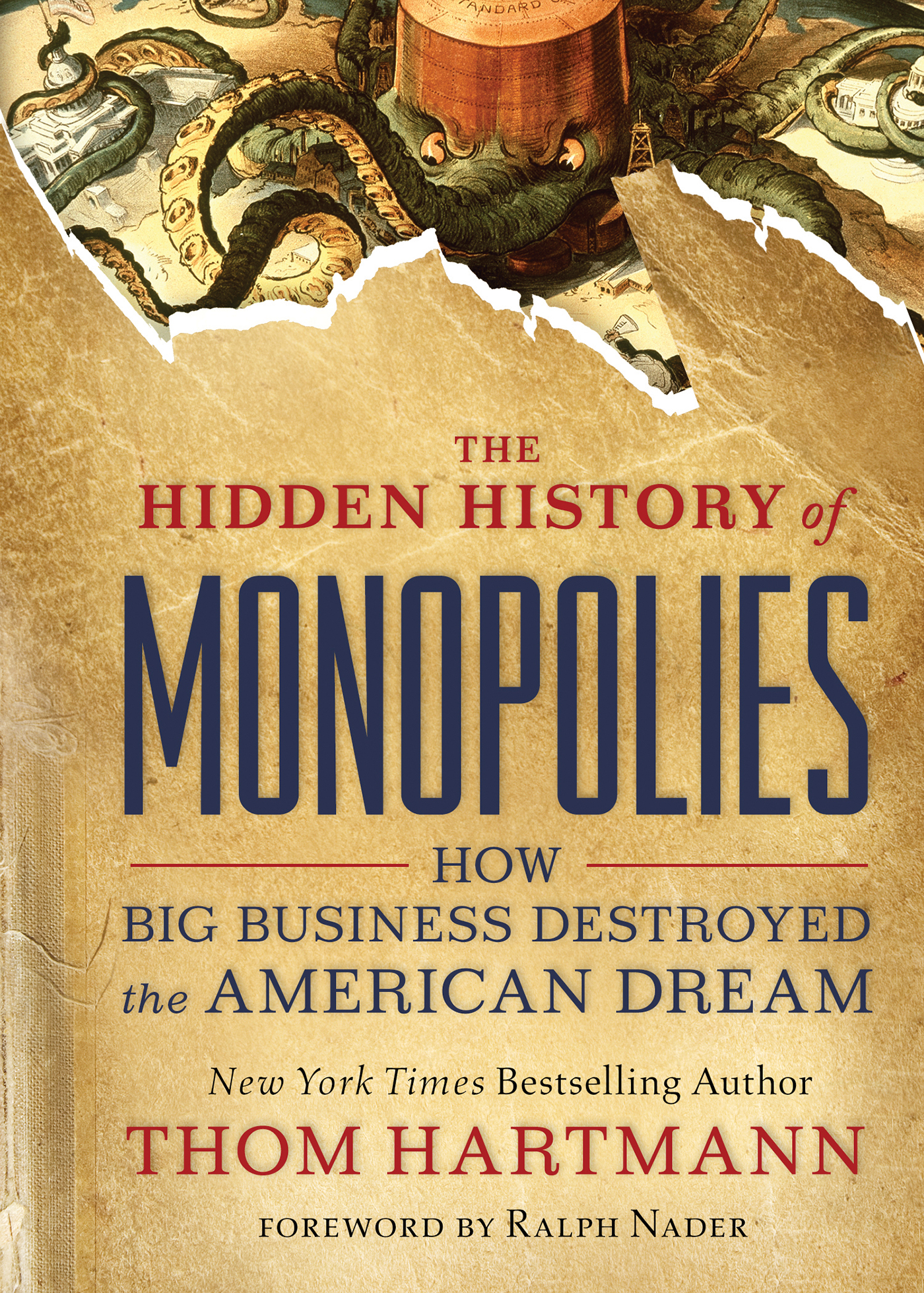
In The Hidden History of Monopolies: How Big Business Destroyed the American Dream, Thom Hartmann takes the reader from the founders’ fight against the monopoly of the British East India Company to the borking of the country by President Donald J. Trump.

Like his other Hidden History books, this one is a quick but important read for people who want or need to review the history and origins of today’s concerted, well-organized campaign by corporations to control commerce, government, and thereby our lives.

“Today, giant corporatism — the commercialization of just about everything at the expense of our civilization’s civic, spiritual, health, and safety values, and other conditions needed for the well-being of future generations confronting poverty, addressing planetary climate crises, and averting nuclear war — is crushing our democracy,” Ralph Nader wrote in the book’s forward. “It is corrupting our elections, and astonishingly enough, controlling the vast commons — public lands; public airwaves; vast pension and mutual funds; and industry-creating, government-funded research and development — owned by the American people.”

Thom Hartmann

We’ve heard the phrase “taxation without representation” as it pertains to the founding of the United States. Hartmann turns this around to what was really at stake: a monopoly on tea and other products sanctioned by the British government. It was concern with monopolies, the British East India Company specifically, not taxation that caused the Boston Tea Party. Founder Thomas Jefferson had monopolies on his mind even after the U.S. Constitution was ratified in 1789 according to Hartmann.

Nontheless, monopolistic practices grew during the 19th Century with the rise of industrialization. In his book The Robber Barons: The Classic Account of the Influential Capitalists Who Transformed America’s Future, Matthew Josephson described the rise of men like John D. Rockefeller, J. Pierpont Morgan, Cornelius Vanderbilt, Andrew Carnegie and others who pioneered vertical integration of companies, a form of monopoly. Their actions led to significant control over oil, railroads, steel making, coal mining, banking and other industries during the Gilded Age.

Beginning in 1887 with the Interstate Commerce Act, the U.S. Government began to regulate big business. It was followed by the Sherman Antitrust Act of 1890, and the Clayton Antitrust Act of 1914. If the founders opposed monopolies and they formed anyway, it was the role of government to regulate them. Hartmann well-describes this history.

It was president Ronald Reagan, under the guidance of Robert Bork and the Chicago School economists, who began de-fanging antitrust regulations.

Many of us are familiar with the July 1, 1987 nomination of Robert Bork to the U.S. Supreme Court and how Senator Ted Kennedy rose in the well of the U.S. Senate to oppose the nomination within 45 minutes of its being made. Previously, along with Milton Friedman, Bork pioneered the phrase, “consumer welfare.” It changed everything.

“In essence, (Bork) argued, it didn’t matter where a product was produced or sold, or by whom,” Hartmann wrote. “All that mattered was the price the consumer paid. As long as that price was low, all was good with the world.” The corollary was that business profitability was another measure of antitrust. Since Reagan the latter gained preeminence. This is referred to as the borking of America.

By the end of the book I became highly agitated and outraged that our government has become an instrument of corporations intent on shaking down the American people, giving any return on capital to a group of about 100 billionaires as Hartmann describes.

The Hidden History of Monopolies is written in classic Hartmann style and can be read over a weekend. If readers are concerned about banking abuses, dairy farmer bankruptcies, insulin price fixing, the cost of internet and telephone service, big agriculture, and more, Hartmann traces their roots to giant corporations and a systemic borking of America that deregulated business and freed corporations from constraints.

Highly recommend.

Don’t have time to read the book? Here’s a fifteen minute interview of Hartmann by David Pakman that covers some of it.

~ Written for and first published on Blog for Iowa.

Categories
Living in Society

Turn Around

Turn around point on a two mile run.

Some days I don’t leave the Lake Macbride watershed while exercising. What we do here flows to the Iowa River and then downstream to the Gulf of Mexico.

Our personal goal is to contribute as few pollutants as possible to the watershed. We’re not the only ones who live, play and work here though.

The lake is polluted with nutrients from runoff. Evidence of surface algae and beach closings because of e. coli. contamination are standard. It didn’t used to be this way. Locals continue to use the lake for fishing, boating and other recreational activities. I stay out of the water and use the extensive trail system for bicycling, jogging, walking and soaking up Vitamin D.

Over the weekend I worked with the county Democratic party in a campaign sign distribution activity. Our home was one of five sign pick up locations throughout the county. Activity was slow. Most people continue to deal with the aftermath of the Aug. 10 derecho and with this week’s resumption of K-12 school. People are aware of the Nov. 3 election, and mostly know for whom they will vote for president, but not engaged in politics at any significant level.

I have a back up bicycle I will dig out and get ready to ride while I figure out what to do with the blown tire of my main one. The goal of exercise is to find four activities that produce a good sweat after 25-30 minutes and can be done easily from home. Bicycling and jogging I’ve written about. There is also a ski machine which serves for indoor and winter exercise. Need to come up with one more type with the ultimate goal of rotating exercise daily. I’m monitoring the condition of my feet, knees, hips and lungs as I venture into jogging for the first time since 2014. As I age I’m monitoring a lot more than that.

Next week I return to the clinic to review the newest panel of blood tests. Since my last one I’ve been exercising more, gave up beer and alcoholic drinks, and started a prescription to address elevated LDL cholesterol. I feel I’ve been doing the work. We’ll see if the results show it.

Life could be worse than living in the Macbride watershed. Whatever concerns we have about living here at least we don’t live in the COVID-infected metropolis. While I provided easy access to yard signs I wore my mask. I’ll be using my masks for a while.