Categories
Milestones

On Toshi Seeger

SeegerLAKE MACBRIDE— One of the few letters I received from a celebrity was from Toshi Seeger. During the early 1970s, while seeking where to purchase a copy of Pete Seeger’s book, “How to Play the 5-string Banjo,” I sent him a note. She wrote by return mail, “Peter returns your greetings and thanks— he’s off giving benefits and I’m left with six months of mail.” She sent me five copies of the book to use in music lessons. It was an unforgettable act of generosity. Toshi Seeger died this week.

Singout published an obituary which can be read here: http://singout.org/2013/07/10/toshi-seeger-passes/. Whether you are a fan or not, you should read it. There were not many people like her in our history.

When we talk about the progressive movement in the United States, there is no better example than Toshi Seeger. She will be missed.

Categories
Home Life Kitchen Garden

Transition Kitchen

Morning Shade
Morning Shade

LAKE MACBRIDE— Scum is forming on the surface of the crock liquid, and that’s a good thing: a sign of bacteria working the cucumbers, transforming them into pickles. Sounds kind of gross, but hopefully fermentation is going as it should— there are only so many times one can check the progress in a day, then it’s time to move on to something else.

Saturday’s weather was hot, but otherwise gorgeous. The work outside was invigorating and sweaty. The pest du jour was swarms of gnats which, upon arrival in the garden, were a reminder to apply repellent. An application of imitation vanilla around my nose and mouth took care of the annoyance, and unintentional ingestion of gnat protein.

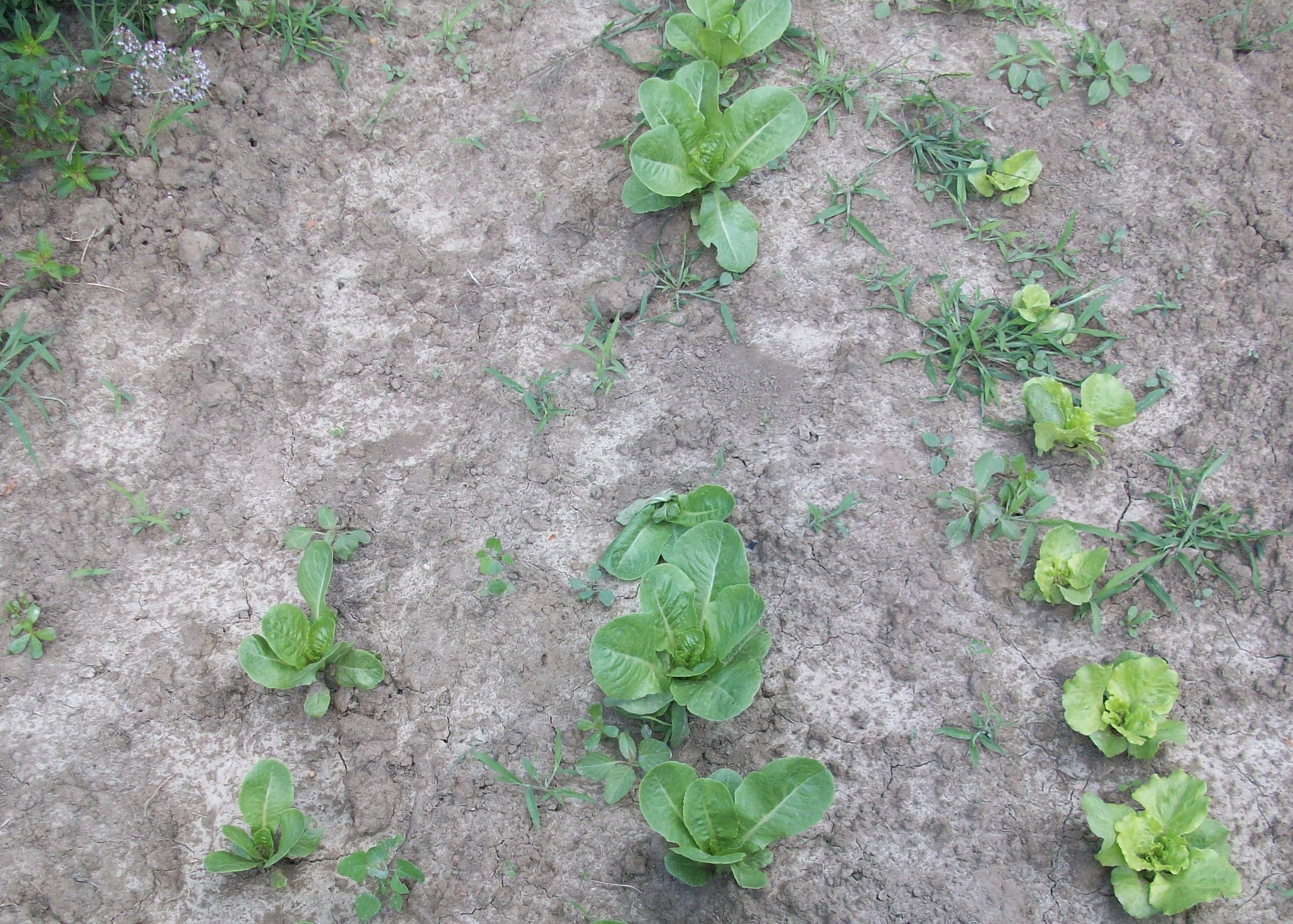
The main garden task was to turn over soil where the spinach and radishes were to plant lettuce seedlings. It seems hot to be planting lettuce, but with the shade of the locust trees protecting the plot in the morning, I am hopeful of another crop. Much of gardening consists of experimentation and my newly found ability to start seeds in the garage has me doing more of it this year.

I cleaned up the plot, removing the fence to cut the grass, weeds and small trees growing around its base. Then I picked a bushel of lettuce from the previous plantings, and sorted, washed and dried it to make two bags for salads. There were a couple of small turnips, one of which was later grated onto a dinner salad. When the work was done, the garden plot looked well groomed.

As the kitchen fills with food, it is time to process the new and do something with the old. I separated the leaves from the stems to make a quart jar of dried oregano for winter cooking. I cleared some space in the freezer by removing bags of last year’s Anaheim, Jalapeno and red and green bell pepper and cooked them in a Dutch oven in a cup of white vinegar. When they were tender, I ran them through a food mill and put the resulting green hot sauce in a Mason jar in the refrigerator to use in Mexican-style dishes.

Using four pounds of yellow squash and zucchini, I made a casserole, which will keep for a few days. The idea was to use the squash, and I made a large recipe with the idea of following the chef’s instructions to produce the desired result. Next time, and it won’t be long, I’ll scale it down to portions for a household of two.

How many kohlrabi can a person eat in one season? I intend to find out. I made mashed potatoes for dinner using leftover roasted turnips and two kohlrabi cut into half inch dice and cooked in a separate pan. When the potatoes and kohlrabi were cooked, I added them to a large bowl with the turnip and mashed them. Once the blend seemed right, I added some salt, butter, sour cream and chopped fresh rosemary. It seems wrong to mixed potatoes with cruciferous vegetables, but what came out passed the taste test.
After dinner, I inspected and watered the garden. The new lettuce will need watering more often, and there is more to harvest Sunday: zucchini, green onions, herbs and broccoli. Chard and collards are plentiful, but there are enough leafy green vegetables in the refrigerator, so they’ll stay in the garden for now.

Septoria Leaf Spotting blighted some of the tomato plants. The ones with the first cherry tomatoes look like they will make it to harvest, but not much longer. I noted the last planted tomatoes have not shown evidence of the disease. Will observe them as the season progresses to see if any conclusions can be drawn. We are a week or two away from some ripe cherry tomatoes.

This is how it goes in a kitchen garden. A constant activity that is not tremendously exciting, but a template for living and eating well on mostly locally grown food and the work of our hands. Life could be a lot worse than this.

Categories
Social Commentary

Independence Day

Memorial Day Flags 2012We hear a lot about the founders today, and the truth is who they were, as people, is clouded in the river of time. One admires the portrait of John Adams written by David McCullough, and particularly the personal risk to which Adams put himself on his trip to France in the winter of 1777. In Thomas Jefferson’s Notes on the State of Virginia one can find a guide to living that serves in the 21st Century, with the notable exception that labor to maintain a lifestyle, once provided by slaves, must now be sought elsewhere through mechanization or wage laborers.

The more we study the opening of the Old Northwest Territory, and the land speculation related to it, we realize that Benjamin Franklin, George Washington and other founders who participated in this could easily have fit in with the gang on Wall Street that nearly brought down our global economic structure in 2008. But as was said, seeing who they were as people is a murky endeavor at best, so on Independence Day were can refrain from making judgments and be thankful for what we have as a nation.

What can be said is we often neglect to recall the dispossession of the natives in Iowa and further east, which amid today’s flag waving is equally important. Would Black Hawk and Poweshiek have ceded the land of the Black Hawk Purchase if they had fully understood what their signatures meant? We don’t know that either.

So what we are left with is history and documents from the times, all of which have their ideological outlook or viewpoint, or as Howard Zinn might have called it, “their politics.” Of interest is the following account of an Independence Day celebration in Jones County, Iowa shortly after settlement. Members of our family settled in Jones County shortly after the Black Hawk War, so this is a personal history as well. Happy Independence Day from On Our Own.

An Excerpt from The History of Jones County, Iowa, published Chicago, Western Historical Company in 1879.

“A grand county celebration of the Fourth of July, took place in pursuance of the resolutions and suggestions of the Board of Supervisors, made at their June meeting in 1861. The celebration was on Thursday, the 4th of July. 1861.

The perilous condition of the country brought men of all parties together to observe the anniversary of our national birth, and to repeat anew their vows to freedom. Early in the morning, teams, singly and in companies, began to throng from all parts of the county toward the point which had been designated by the Board of Supervisors, near the center of the county. At 10 o’clock, A. M., the scene was the strangest of the kind ever encountered in the West. The road ran along a high ridge, and on both sides of it and on each of the wide and gently sloping spurs, shooting out every few rods, were horses, wagons, buggies, carriages, men, women, children and babies by the thousands; and, in every direction, the American flag floated in the light and refreshing breeze, which, with the shade of the sufficiently abundant oaks, tempered the heat of a warm summer day. Such an assembly in a city is common enough, but this was an assembly in the wilderness. Not a house, not a sign that man had touched nature here was visible, save in the few brief days’ labor of the Committee of Preparation. It was a fitting place wherein to assemble on such a day and for such a purpose, when the nation was in its life and death struggle for existence.

The Committee of Arrangements had done as well as could be hoped for in the short time allowed them, and better than could have been expected. On the rather steep slope of a spur, north of the road, a staging had been erected facing up the slope, and, in front of this, seats sufficient to accommodate, perhaps, one thousand persons. Back of the stage, and at the bottom of the ravine, a well had been dug some ten or more feet deep, and, at the bottom, a barrel fixed. It was a comical sort of a well, but it served the purpose, in a measure, for some hours.

On another ridge and back of the wall, stood the six-pounder, manned by the Wyoming Artillery Company, in gray shirts, under Capt. Walker. The other military companies were the Canton Company, Capt. Hanna; they wore red military coats, were armed with rifles and were fine looking; the Rough and Ready?, of Rome, Capt. L. A. Roberts, with blue military coats, white pants and glazed caps, sixty-five men, also fine looking; Carpenter’s Company, Rome. Capt. Carpenter, eighty men, with gray coats, likewise made a fine appearance; the Greenfield Company, mounting eighty men, John Secrist, Commander: these were in frock coats and wore white plumes; they, too, showed well, and still more in drill and fitness for the most desperate fighting; the Scotch Grove Guards, from Scotch Grove. Capt. Magee, formed a large company; these wore no uniforms, but their appearance indicated they were the right men for fighting. There were six companies of young men, all formed and drilled, in the space of three months. It appears that all these entered the army in due time and did good service.

The proceedings at the stand were patriotic and entertaining. During the reading of the Declaration of Independence, the general attention was close, and the responsibilities of the hour seemed to impress all minds. The singing with the Marshal waving the star-spangled banner to the words, was very effective. The address was by a Mr. Utley— a good Union speech, and was very generally approved. Music by the various military bands was abundant and lively. The picnic that followed was much enjoyed by all who partook of the dainties provided for the occasion. The military went through with some of their exercises and then the proceedings of the afternoon began, which consisted of speeches from different persons, when, owing to a want of an abundant supply of water, the vast assembly was dispersed at a much earlier hour than it otherwise would have been.

It was evident that the loyalty of Jones County could be relied upon, and that her citizens were ready to do their full duty in crushing out treason.”

Categories
Home Life Kitchen Garden

Making Pesto and Other Things

Fresh Kale
Fresh Kale

LAKE MACBRIDE— Summer’s harvest has been bountiful and we are less than two weeks in. Keeping up with the vegetables we grow and get from the CSA, has been a challenge of cooking, preserving, refrigerator and freezer space, and rotation. Thus far, little that was brought into the house spoiled. We are thankful to have enough food to eat in a society where so many people go hungry. Even our small town of 2,037 souls requires a food bank, making adequate food for everyone a tangible, local issue.

Yesterday was the first pick of green beans and we steamed them for dinner. Over the years Asian aphids have been a pest for this annual favorite— to the extent I quit planting them for a while. This year they were pristine in the basket. Not sure what happened, but I suspect row-crop farmers didn’t care for the damage to soybeans, and “did something” during the past few years.

I picked broccoli for dinner, and some Swiss chard. Spinach is ready to harvest, the last before the fall planting. There is also lettuce ready to go and plenty of herbs. The apple trees are still looking good: no sign of dreaded Popillia japonica, or Japanese beetle, which during previous years had made its debut by the first of July. Last year was a horrible year with them, and they are sure to arrive soon.

A summer indulgence is to make pesto. The process is simple. Into blender put a cup of first cold pressed extra virgin olive oil, with equal amounts of chopped garlic scapes, basil leaves and kale leaves with the stems removed. Blend the mixture, adding enough olive oil to make it a liquid, or additional garlic and basil to thicken it. Then add a handful of pine nuts, half a cup of Parmesan cheese and salt to taste. Blend until the mixture is a thick puree. The recipe produced enough to fill Mason jars with pesto for the freezer. I reserved some for immediate use, of course.

The thing about pesto, is it can be made with a number of summer greens and herbs. It’s a way to preserve the summer harvest. The other thing is a person can consume only so much of the delicious spread/sauce at a time. For now, we’re living the high life and contemplating dishes, other than just spreading it on bread, in which to use it. Pesto pasta will definitely be one dish on the menu.

Once one is plugged into the local food system, there is little cost to make pesto, except for the olive oil, which is always a luxury. During the summer harvest, a gardener and cook can live in the lap of luxury, even on a limited budget.

Categories
Home Life

Garage Day

Buckets Drying
Buckets Drying

LAKE MACBRIDE— Proofreading the newspaper didn’t take long this morning, so after making the smoothie mentioned yesterday, I inspected the cruciferous vegetables and found very few green caterpillars. Either the sunlight chased them away, or they were gone. I picked ten cucumbers, but my focus was on cleaning the garage.

Things had gotten spread out, rendering the garage space unusable. My car has been parked outside since spring began, and nothing seemed in a place when it could be found. By the end of the afternoon, the trash cart was full, there was room for both cars inside, and serious progress was made getting rid of things.

Walnut Logs
Walnut Logs

Some sections of walnut tree trunk have been sitting on the radial arm saw for a while— a long while. Time has come to either make something from them or get rid of them. I harvested them in the 1990s in Ames after lightning struck the tree and felled it. I cut them into 16 to 28 inch pieces to haul them around in our Plymouth Horizon. We got rid of the last Horizon in 2002, so that’s an idea of how long they have been in the garage. Too long.

Buckets, Plates and Flower Pots

The buckets for gardening had gotten disreputable, so they all got washed. Same for the flower pots and vases. I re-seeded some cucumbers that didn’t germinate in the tray and watered the four trays of seedlings. They will get planted this week.

On a bulletin board near the work bench were pinned a number of magazine clippings of Adirondack chairs. The images were to be the inspiration to build a couple of our own. Like so many ideas, its diaphanous suggestion was torn asunder by a life occupied by a career. I took the clippings down and put them into the recycling container.

With a clean board, I pinned a poem by Wisława Szymborska, translated as “A Man’s Household”— a Polish poet for a descendent of Poles. A few other photos were already in the garage, a photo of our daughter at Lake Michigan, a post card of some textile workers holding a large 48-star American flag, a photo of my father when he was a toddler, a photo of my maternal grandmother and her second husband. It is the beginning of something hopeful— a place to make dreams into something tangible.

Categories
Home Life

Moment in Time

Fishing Trip
Fishing Trip

LAKE MACBRIDE— Today will be a work day, but before I get to it, there is this image of a fishing trip to South Dakota from the 20th Century. Among the men in the picture are my great, great grandfather, and my great grandfather. We don’t have a lot of photos of them, and this is the only known image of my great, great grandfather. He is seated in the foreground, baiting a hook.

With the explosion of photography, there are too many images to count and assign a meaning. So many people carry cameras all the time, on devices that are more powerful computers than were imaginable during the 1990s when I secured this image by photocopying the page of the book where it was published.
We select and bring artifacts into our narratives, just as this photo is now part of this blog.

Behind every narrative, there are moments in time when they are made, and when they take on meaning. In a consumer society, we can forget where things come from, the meaning of an artifact being the fact of its collection. That someone planned the fishing trip, invited guests and made this image using technology of the era is forgotten.

We seldom see the face of the photographer, but he or she is an unseen part of the narrative, as is the technology and the people who created it. The narrative of our lives is unavoidably collaborative, with people we know and those we don’t.
It would be presumptuous to pretend otherwise.

Today, I feel the presence of so many people who have influenced, fed and nurtured me. Whether they are here or not doesn’t matter. What matters if continuing the search for truth and meaning in the world, and creating a useful narrative out of these moments in time. Something that serves a greater good than a single life on the Iowa prairie.

Categories
Kitchen Garden Living in Society

Vegetable Gardening and DOMA

After the Storm
After the Storm

LAKE MACBRIDE— When President Bill Clinton signed the Defense of Marriage Act (DOMA) in 1996, it seemed wrong. It was one more in a series of his actions I didn’t like. The political reasons for denying federal employee benefits were easy to understand. The blatant discrimination was not, and time and the Supreme Court of the United States (SCOTUS) decision yesterday vindicated the judgment of those who felt like I did.

Yesterday, bills were introduced in the U.S. House and Senate to remove DOMA completely, as some don’t feel SCOTUS went far enough in saying, “DOMA is unconstitutional as a deprivation of the equal liberty of persons that is protected by the Fifth Amendment.” The decision was good enough for me, although I downloaded the text and will read it— comparing it to Iowa’s Brien v. Varnum, dated April 3, 2009, that held the state’s limitation of marriage to opposite-sex couples violated the equal protection clause of the Iowa Constitution.

After three days of rain, thunder, lightning and hail, I spent time in the garden yesterday. Contrary to my previous post, I found hail damage, particularly on leaves of cucumber and squash plants. The damage was not severe, but a lot of leaves had small punctures.

Food production is outpacing our kitchen’s ability to store and process it. This afternoon’s local food shift at home will include harvesting turnips, preparing and freezing broccoli, planting seedlings and rearranging the fencing in the plot where the green beans are located. With the rain and fair weather, combined with more knowledgeable planting, this year’s garden is already a bin buster. More food will be given away as the week progresses.

At the farm, I soil blocked for the seventeenth week yesterday. The seeds planted are for fall harvest of cucumbers, broccoli and cabbage. While I was working, one crew had finished and was doing bicycle maintenance near the machine shed, and another was processing kohlrabi for share holders. The germination building was completely empty, and when I entered to get trays for soil blocking, the temperature was intensely warm. Seedlings trays were on wagons under a nearby tree to avoid the heat while they waited for planting.

With the rain, trip to Des Moines and farm work, everything is behind this week. Hopefully today will be a catch up day as I endeavor to stay on the property, with nose to the grindstone.

Categories
Home Life

Busha’s Birthday

Mae Jabus

LAKE MACBRIDE— My grandmother was born on June 24 or 25, 1898 at home on the farm, west of the Catholic church in Wilno, Minn. The official record is unclear as to the precise date, and the clerk in the recorder’s office in the county seat told me that often births were not directly reported, but only when someone from the farm made it into Ivanhoe.

The church records show she was born Salomea Nadolski on June 25, 1898, and baptized on July 10, 1898 by the Rev. J.F. Andesejewski. Her godparents were Ladislaus Kuzminski and Maria Nadolski. I believe this version of the truth is closest.

The certified copy of the birth record I got from the county seat in Ivanhoe listed place of birth in Royal Township, Lincoln County, Minn. as Soluma Nadolski on July 10, 1898. Parents listed as Frank and Katie Nadolski.

Her certificate of death lists June 24, 1898 as the birth date of Mae N. and then Selmae M. Jabus, and those names and date were provided by my mother. The newspaper listed her as Mae M. Jabus in the obituary. Whatever may be official, we called her Busha after our daughter was born.

She told countless stories of life on the farm near Wilno and those stories came to life when I visited the home place, the church and the county seat after she died. If I am a story teller at all, it is because of her.

Her birthplace was still standing when I visited, and the owner kindly let me look around inside. I think he and his wife were looking to tear it down and build a more modern home for their growing family, although he didn’t say it. By today’s standards, the house was very small. There were shirttail relatives everywhere I went, including a gent who lived across the road from our home place. He was not doing well so we chatted only for the briefest of moments. He was connected through my great grandfather.

Like many descendents of Polish immigrants, my grandmother was fully assimilated. She still spoke Polish, but only with her sisters, and to the occasional wrong number who also spoke the language. There are stories about that for another telling.

Despite all the stories that have been and might be, I’ve been thinking about Busha’s life as I knew it the last couple of days. When I last saw her, she had moved to a nursing home where she used to work. She was mentally alert, and worried that the staff was stealing from her, even if there was not much to steal. She fumbled with her hearing aid so she could pay attention to what I had to say.
She got it to work, and we talked as we always had.

It has been 115 years since she was born, plus or minus a day. I feel so lucky to have known her for so long. The memory of so many things we did together persists as the sun sets over the Iowa prairie. I’m glad for that.

Categories
Home Life

Some Summer Pest Problems

Cucumber Plants
Cucumber Plants
Tomato Leaves
Tomato Leaves
Zucchini Leaves
Zucchini Leaves
Categories
Social Commentary

Spring Ends

New Pioneer Garden
New Pioneer Garden Toward Sunset

LAKE MACBRIDE— Spring ended at the New Pioneer Food Co-op in Coralville where we did periodic shopping for specialty items. A man with a microphone attached to his ear was speaking to a group of wine-sippers on the mezzanine. His words drifted over the bakery, frozen food cases and rows of brightly packaged dry goods, barely audible. A few patrons shopped with carts, and after a while I went outside to wait on a bench for fulfillment of the trip— a month or more of supplies that can’t be purchased elsewhere.

A fly got into the house yesterday, signifying the invasion of insects. There were broccoli beetles at the farm on Wednesday, and something is eating the cucumber leaves in our garden. The small white butterflies continue to lay their eggs near the broccoli and Brussels sprout plants. A dash of chemicals would kill the pests off, but I don’t use them in the garden. Today’s activities will include identification of the cucumber pest and research on organic remedies. Summer’s struggle may not reach epic proportions, but the cucumber problem kept me awake last night. The pest control part of gardening is less exciting than harvesting.

Some rain fell last night, but not much. The wet spot on the driveway will soon evaporate, leaving what is expected to be a hot, dry day. There is a 30 percent chance of rain mid-afternoon, so here’s hoping it does rain. We don’t want another drought, and any rain would save watering.

Aaron Copeland’s “Appalachian Spring” is playing over the radio waves, a version conducted by Leonard Bernstein. Somewhere there is a cassette tape of the piece. It is one of my favorites and I listen to a version of it most springs— n informal ritual. The radio has moved on to “Blue Danube” by Johann Strauss. It must be a morning of popular favorites on the classical station.

A pot of pasta sauce is simmering on the stove. It was made with yellow and red onions, salt, finely minced garlic scapes, fresh basil, a quart jar of tomato sauce from last year’s garden, and a can of prepared tomato paste. It will make a lunch, so I had better get busy working up an appetite. Spring is over, and the hot, long work of summer begun.