Categories
Social Commentary

Turning on the Television


LAKE MACBRIDE— It took a bit to remember how to operate the remote controls for our old-school tube television last night. I was loathe to hear President Obama’s plan “to degrade and ultimately destroy the terrorist group known as ISIL.” Information about the speech had been leaked during the day, and there was plenty of commentary in social media about what Obama would say. It is always best to hear bad news directly from the president.

There is little to say, except view or read the speech for yourself. Although the following comment is more significant than its introductory nature indicates:

As Commander-in-Chief, my highest priority is the security of the American people. Over the last several years, we have consistently taken the fight to terrorists who threaten our country. We took out Osama bin Laden and much of al Qaeda’s leadership in Afghanistan and Pakistan. We’ve targeted al Qaeda’s affiliate in Yemen, and recently eliminated the top commander of its affiliate in Somalia. We’ve done so while bringing more than 140,000 American troops home from Iraq, and drawing down our forces in Afghanistan, where our combat mission will end later this year. Thanks to our military and counterterrorism professionals, America is safer.

Because of the work of government officials, there is an unprecedented level of security in the U.S. People feel secure from external terrorists, if not from the occasional gun-toting sociopath who opens fire in public places. There is a price for this security, and it is not only monetary.

The U.S. is becoming increasingly isolated from the rest of the world despite our substantial footprint in almost every country in the form of diplomatic workers, non-governmental organizations, businesses and tourists. It is as if by creating the homeland defense security bubble we have built the equivalent of the Great Wall of China. It serves to protect, but also to isolate us. The latter is an unintended consequence.

American tolerance for an intrusive government is high. While the Central Intelligence Agency, the National Security Agency, the Internal Revenue Service, and the Federal Bureau of Investigation keep an eye on us, that doesn’t seem to bother most people. It is accepted as a price of freedom and we are free to do what we will in society, more than in most other countries.

There is another price. The isolation created by a strong homeland security gives us a false sense of comfort— that we can avoid political discussions and participate in a consumer culture without regard for externalized costs like CO2 emissions and exploited workers. In an increasingly connected world, where we can receive reports about what is going on all across the globe without leaving home, this is ironic.

Maybe people just don’t want to think about the rest of the world. There are plenty of personal struggles that can eclipse external affairs, but consider this: if we don’t engage in a global society it will leave important matters to politicians, our government and the military. We all know the regard in which we hold those institutions presently.

I’m glad to have a television, and a connection to some channels. I’m also glad most of my time is spent in the real world, talking to and working with people, trying to make a difference in something bigger than myself. It’s also why I don’t turn on the television very often.

Categories
Home Life Sustainability

A Humanitarian Campaign

Iowa City Nuclear Free SignThis is the first in a series of new posts about the humanitarian campaign to abolish nuclear weapons.

“Since the end of the Cold War we have acted as though the problem of nuclear war has gone away. Unfortunately it hasn’t.” ~International Physicians for the Prevention of Nuclear War (IPPNW)

“I am very worried that people don’t think there is a real danger that nuclear weapons will be used. I hope you will read these materials in order to truly understand how bad a nuclear exchange of any kind will really be. Nuclear weapons are a real and present danger. A nuclear detonation can happen, and in fact will happen, if we don’t get rid of the weapons.” ~Rotarian Action Group for Peace

“Nuclear weapons are unique in their destructive power, in the unspeakable human suffering they cause, in the impossibility of controlling their effects in space and time, and in the threat they pose to the environment, to future generations, and indeed to the survival of humanity.” ~International Federation of Red Cross Red Crescent Societies

“The willingness of the world as a whole to move forward in a constructive manner to eliminate nuclear weapons has never been more evident.  Yet a very small number of States stand in the way, trying to block progress and to find a comprehensive solution to the problem that goes on year after year in paralysis and obfuscation.” ~The Holy See

Here is a brief video framing the discussion, narrated by Ira Helfand, co-president of IPPNW:

To read more about the international campaign to abolish nuclear weapons, click here.

Categories
Social Commentary

News from the Lake

East Wall of George's Buffet
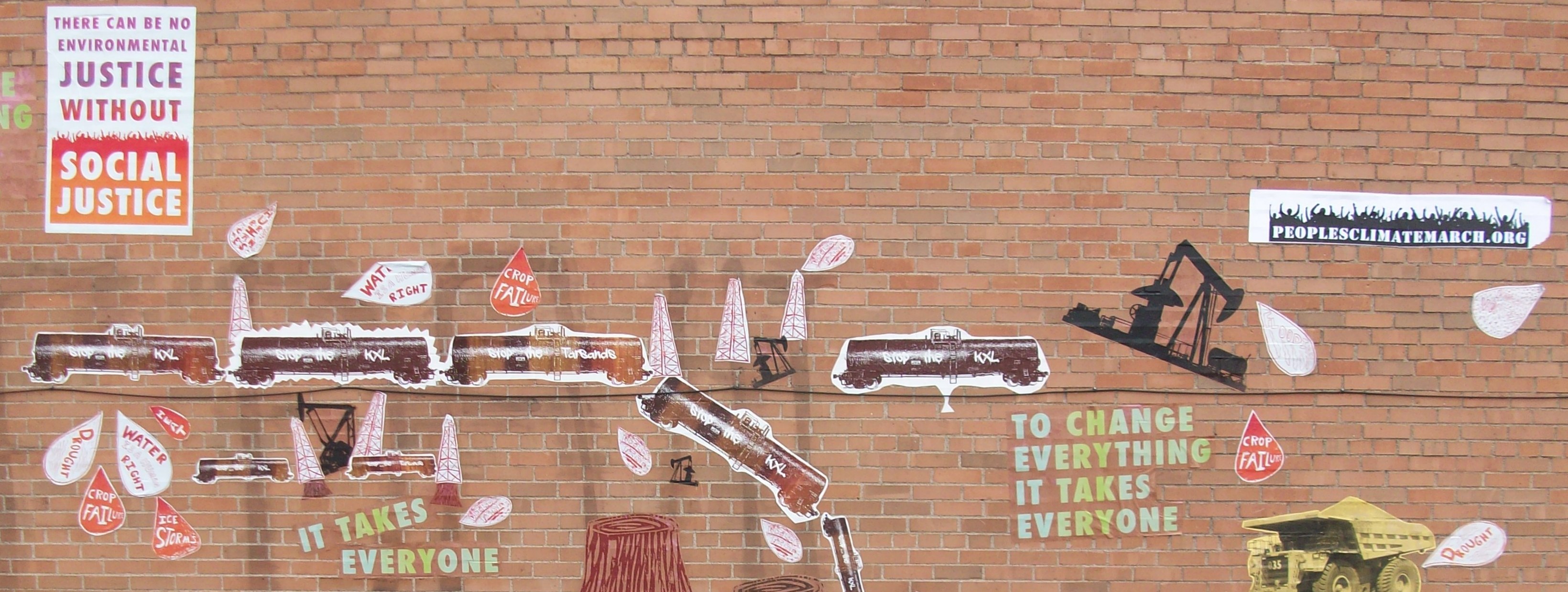
East Wall of George’s Buffet – People’s Climate March Advertisements

LAKE MACBRIDE— A steady rain fell and continued through the night, providing respite for the weary and sound sleep. Having thought I would retreat from society on a day mostly off work, it proved to be impossible, beginning with the trip into town to vote.

Two measures were on the ballot yesterday. Voters approved a $25.5 million bond issue to build a new middle school, a performing arts center to replace the one at the current middle school, and a special education classroom in a 698-294 vote. Voters also approved renewal of the Physical Plant and Equipment Levy of $1.34 per $1,000 in assessed value when the current levy expires on June 30, 2017.

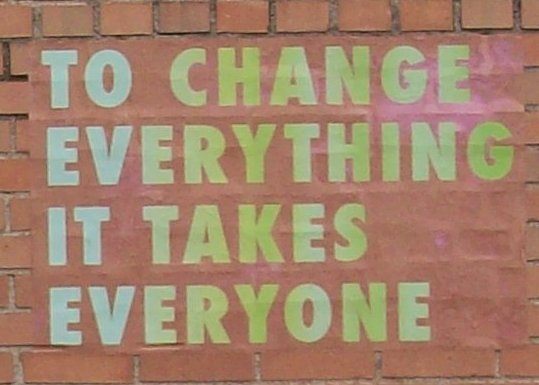
To Change EverythingThe City of Solon was platted in 1840 and named for the Athenian statesman and poet. Ironically, the school district mascot is the Spartans, and the rivalry between Athenians and the Spartans has played out in the community ever since we moved here. Relevant to yesterday’s vote, debate has been about improvement of the auditorium facilities for use between the performing arts departments, and sports enthusiasts. Sports boosters defeated performing arts in the first battles and now we have a ginormous sporting complex in the city. Engaged residents of the district have decided it is time to invest in the performing arts. A ground breaking is expected in 2015.

In addition to passing through the city, I visited the county seat to pay property taxes. I also spent some time in the auditor’s office to see where my tax dollars go. My sense was that county government workers aren’t used to a lot of questions, but I received the answers I wanted.

Poster on the Unitarian Church
Poster on the Unitarian Universalist Society Building

Advertisements for the People’s Climate March on Sept. 21 in New York City have appeared in a couple of locations in downtown Iowa City. I have been engaged to speak for five minutes about the humanitarian campaign against nuclear weapons at a supporting rally in the Iowa City pedestrian mall. That is, assuming I can get off early enough from work at the warehouse.

September and the start of school is always prime time for social movement initiatives, and a lot is at stake with regard to mitigating the causes of global warming. As the saying goes, “to change everything, it takes everyone,” and we are a very long way from engaging everyone in addressing the climate crisis.

The other piece of September news is that every freaking politician I know is doing some kind of event. Between the frequent text messages, email invitations, snail mail and telephone calls, it is impossible to miss the fact that an election is coming, and a lot is at stake. My ability to contribute in kind and financially is limited this cycle, but it is good to know politicians are working. That in itself is a form of news.

Categories
Work Life

Low Wages and Maria Fernandes’ Fatal Nap

Photo Credit: Dunkin' Donuts
Photo Credit: Dunkin’ Donuts

LAKE MACBRIDE— What working person hasn’t taken a nap in their vehicle? Part time and temporary workers with multiple jobs are unlikely to get enough rest, so why not set the alarm clock and snooze after arriving early for a shift, or during a 30-minute lunch break? At the meat packing plant where I worked during summer breaks from college, there was competition for the prime snoozing spots before clocking in the regulation six minutes before starting a shift. One’s vehicle provides a level of security and privacy— it’s also convenient.

The story of Maria Fernandes, who died in her automobile while sleeping between part time jobs at three New Jersey and New York Dunkin’ Donut shops, hit the corporate media in full force last week, and they were atwitter. The best coverage I found was in RT, the Russian 24/7 news channel:

A New Jersey woman who worked four jobs, who sometimes “wouldn’t sleep for five days,” according to a co-worker, died Monday while napping between shifts in her car on the side of the road.

Maria Fernandes died in her 2001 Kia Sportage after inhaling carbon monoxide and fumes from an overturned gas container she kept in the car, according to the New York Daily News.

The 32-year-old Newark woman pulled into a WAWA convenience store lot in Elizabeth, New Jersey for a nap early Monday. She left the car running. The carbon monoxide and gasoline fumes were the likely cause of death, authorities said.

Fernandes was found dead in the car around eight hours later when EMTs responded to a 911 call of a woman found in a vehicle with closed windows and doors. Emergency workers sensed a strong chemical odor upon entering the vehicle, authorities said.

What will the story of Fernandes mean to broader society? Regretfully, not much once the news cycle is finished. Hers is one more sad story in the life of working people.

There is media discussion of Fernandes becoming emblematic for low wage workers, and some connect her death to the current political discussion about the need for an increase in the minimum wage. Advocates will likely use her story to make a case for unionization and other favored topics. But something is missing. Let’s follow the RT story down the rabbit hole:

About 7.5 million Americans are working more than one job, according to the U.S. Bureau of Labor Statistics. Those jobs often leave people short on income compared to full-time work, said Carl Van Horn, director of the John J. Heldrich Center for Workforce Development at Rutgers University.

“These are folks who would like to work full-time but they can’t find the jobs,” Van Horn said. “They wind up in these circumstances in which they are exhausted. More commonly it creates just an enormous amount of stress.”

Workers in the United States are earning an average of 23 percent less than earnings from jobs that were lost during the economic recession that began in 2008, according to a recent report, as wealth inequality in the U.S. has shot to record highs, according to various indicators. Many long-term unemployed are considering abandoning their job search following years of stagnant economic growth.

Maria Fernandes is not a victim of her own choices, except maybe the one to leave her car running while she slept in it. Closer to the truth is that many companies want part time or temporary workers to avoid paying benefits, and this runs contrary to the expectations built for those of us in the baby boom generation. The movement to part time and temporary work is an inexorable march toward stripping costs from business operations— something few in the corporate media have covered as it relates to Fernandes.

That she could work in three locations with the same corporate brand and wear the same uniform in each, yet not work for the same company, gets to a core issue. By its structure, Dunkin’ Donuts and companies like it, are designed to distance themselves from workers, and create gross margin and related profits that flow to the richest one percent of the population. In this case to the parent company, Dunkin’ Brands Group, Inc. (NASDAQ: DNKN), led by Nigel Travis. There are layers of distancing from the company, presumably related to the goal of avoiding the costs and troubles of lowly paid workers.

The circumstances around Maria Fernandes’ death captivated attention for a news cycle. One must ask the question what will we do about it, and hope there will be an answer.

Categories
Reviews

Book Review – The Home Place

The Home Place by Carrie La Seur
The Home Place by Carrie La Seur Photo credit: Harper Collins

Why do we read fiction? To find books like The Home Place by Carrie La Seur.

For most of us the exigencies of an engaged life leave us drained of energy, with diminished capacity to cope with complexities. Working multiple part time jobs, facing economic realities and people problems far scarier than any fiction, each day can leave us worn and used— more than we thought was possible. A good novel can be both welcome respite and escape from all of that, which is what I found in The Home Place.

I don’t know La Seur hardly at all.

We worked briefly together, along with many others, on an advocacy campaign to stop three coal fired power plants from being built in Iowa. We stopped two out of three.

I offered to volunteer for her Plains Justice, but the person who interviewed me never called back.

My experiences of Montana are quite different from those depicted in the book. If fiction is to be successful, it must be true to the author’s own experience rather than worrying much about others. The book seems deep in that.

What matters more is La Seur did not get the memo from authors like Tom Wolfe, Norman Mailer, Joan Didion, Hunter S. Thompson, Truman Capote and others that there was a new journalism that blended fiction and non-fiction. I’m glad she didn’t, or if she did, that she rejected the notion to present a novel more traditionally.

For what we need is twofold— an escape from the quotidian struggle for existence in a turbulent world, and ability to reach catharsis. The Home Place provided both.

The book seems well written and engaging. La Seur’s personality resonates throughout the pages, and she seems an active participant in the narrative. Whether that is good or bad is for others to consider. For me, I needed a break, and The Home Place provided that.

Categories
Home Life

Days Full of Life

Kitchen Work Station

LAKE MACBRIDE— As I pulled out of the parking garage at the warehouse, my mobile phone rang. It was the orchard calling to say the family event was cancelled due to the rain storm so I wouldn’t be working. Unhesitatingly, I redirected the car, considering what to do with newly found time.

The first option was to attend the fundraiser for my state senator. He and his wife had visited the warehouse to gather provisions for the event. I had asked for the address to send a check since I would be working. Having given my regrets, I headed home.

A few weeks ago the newspaper published a story about a cupcake baker who set up shop on the road to the warehouse. Years ago, a trucking firm sold their large terminal on a corner lot to a developer, and a commercial strip mall has been expanding there for a number of years. The cupcake purveyor located in some of the new space.

There were young children with parents at the counter and tables. The din was so much I could barely hear the person at the counter ask if it was my first visit. It was. She explained the offerings, and I picked tiramisu and vegan which I expected from proofreading the newspaper article. The cupcake had a very thick layer of butter cream frosting— too much really. A return seems unlikely, but I wish the company well. They aren’t going for the cranky writer crowd anyway.

What I needed was sleep. Upon arriving home, I headed to the bedroom for what was to be a nap. I woke three hours later, having slept soundly.

Fruit flies showed up for the first time this season flying above the kitchen compost bucket. They have been a long time coming, beginning to appear only a couple of weeks ago in the enclosed garden compost bin. Whatever the delay, they weren’t missed. I need to empty the bucket daily.

 After making a snack, I returned to bed and slept through until I could sleep no more. I awoke realizing there is life to be lived, and had better get to it.

Categories
Home Life Kitchen Garden

Onions, Garlic, Basil and Tomatoes

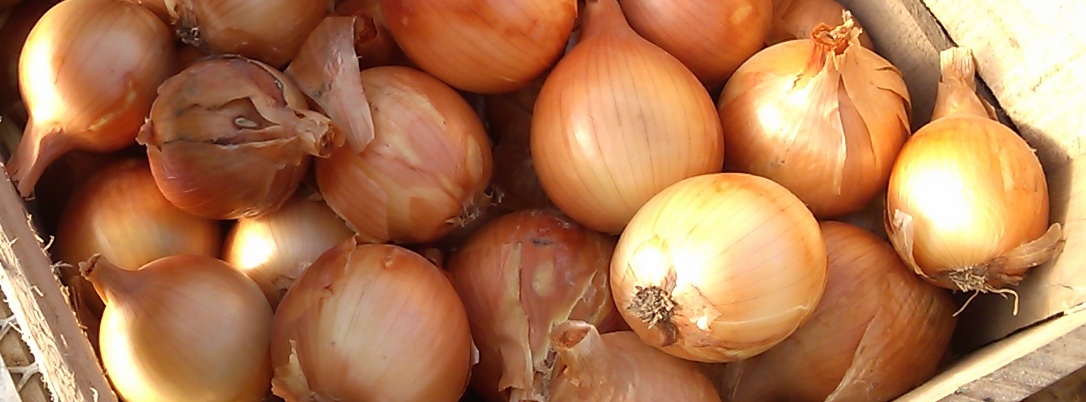
Storage Onions
Storage Onions

LAKE MACBRIDE— Yesterday began with two and a half hours of volunteer work at the CSA. The labor in our barter arrangement has already been provided so I’m free to volunteer for general farm chores like working onions.

Onion Cleaning and Sorting

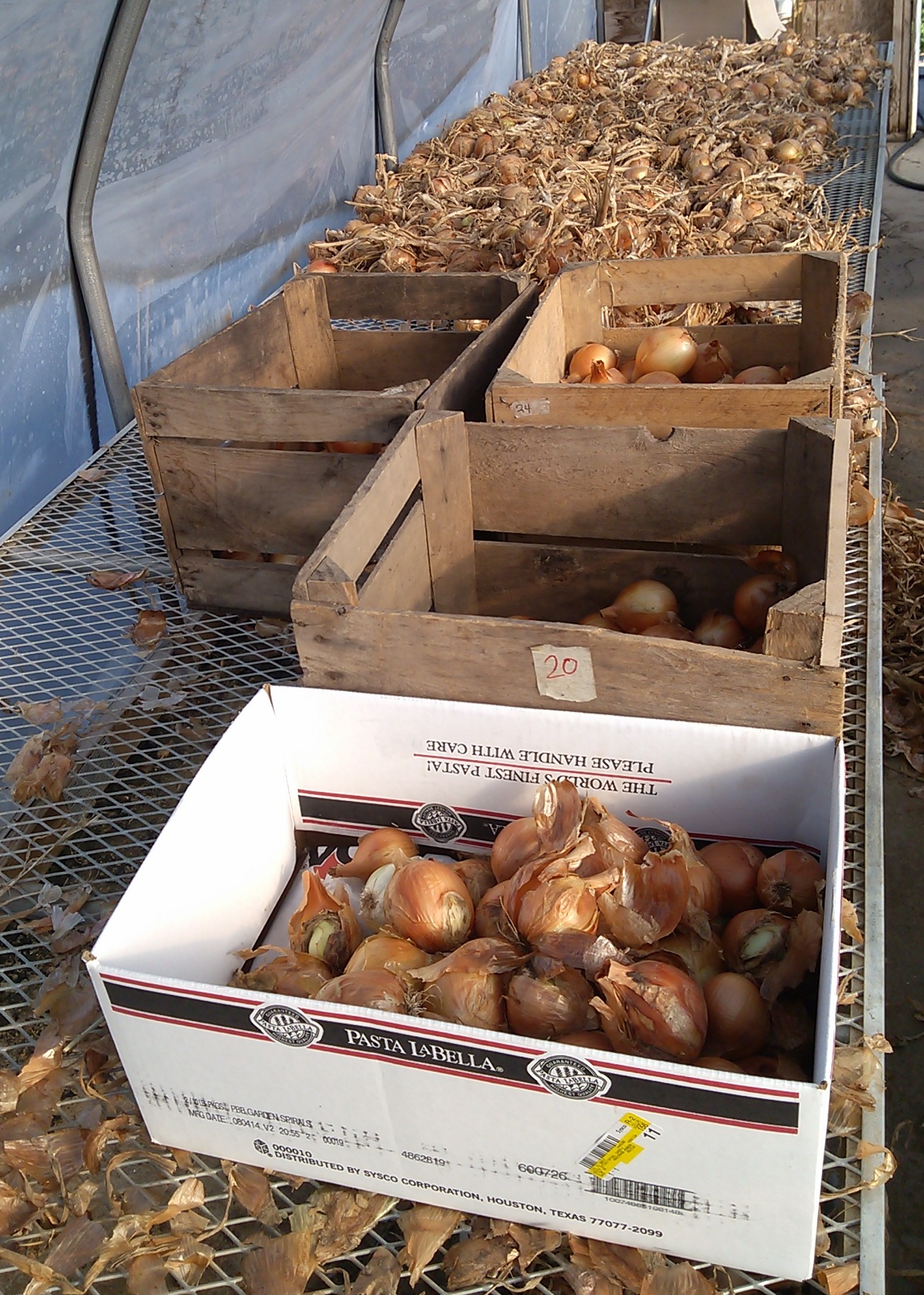
Once the seedling operation moved outside, the germination house was used to cure onions on the long wire racks. They are ready for the next step, which is cleaning and sorting.

There are five sorting types: big and small storage, ready for distribution, seconds, and those to be composted. I trimmed the tops and roots and sorted. The onion worker got to keep the seconds, so last night was salvaging usable sections of onion. By bedtime, a couple of big bags of peeled onions were in the ice box ready to use.

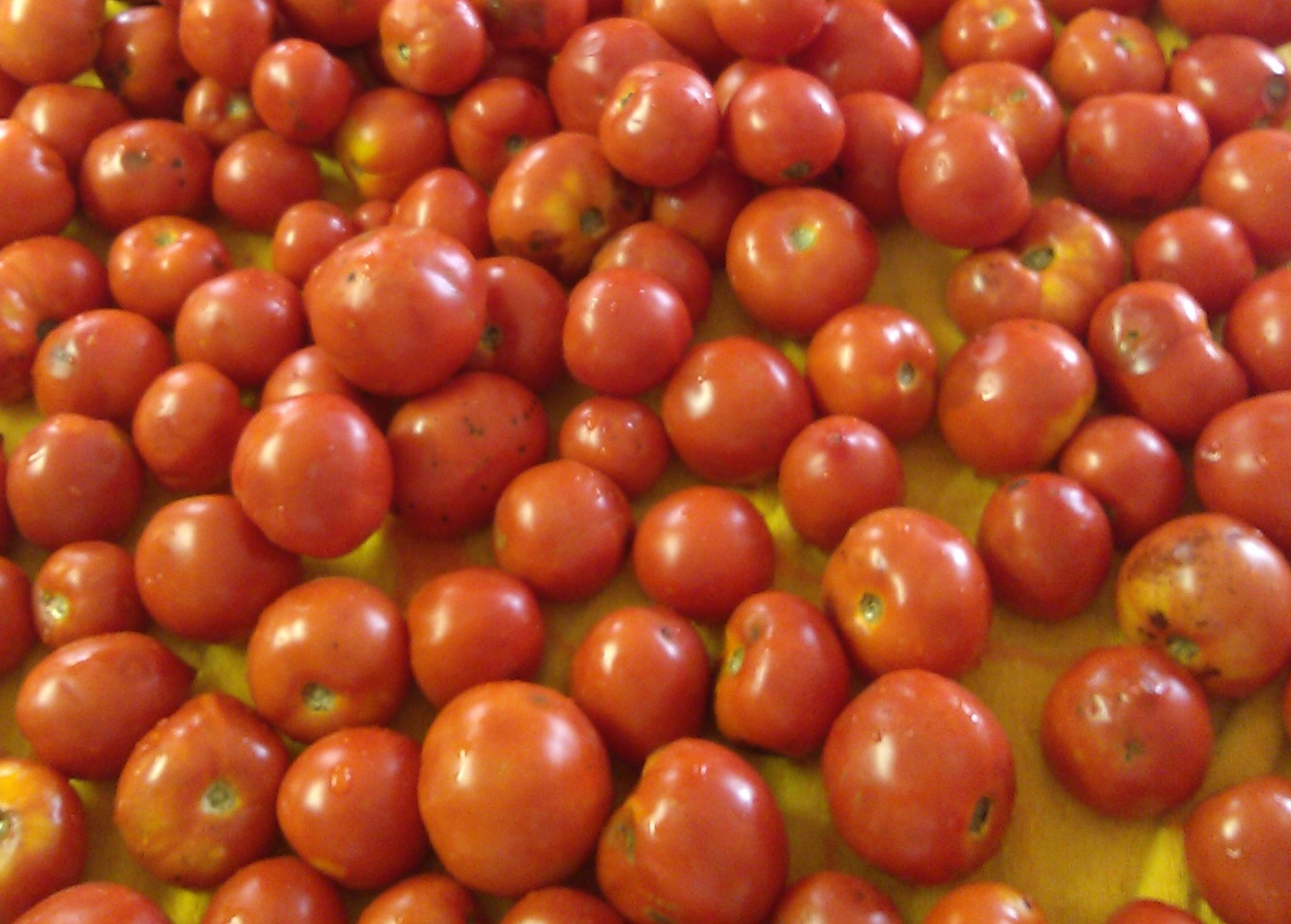
Basic pasta sauce is of onions, garlic, basil and tomatoes, so as I write, a big batch simmers on the stove. All of the produce is from our garden, or the CSA. Except for the salt, it is 100 percent local. There is always an exception in local food. The tomato sauce will be frozen in quart zip top bags.

Making tomato sauce is elemental. This batch is from the edge between fresh garden produce and compost, where we often live our lives. In cutting away the bad parts of the onions and tomatoes—picking through basil leaves—there was more compost than usable produce.

Between our concept of ourselves and our inevitable transformation to dust is a sliver of life. If we don’t grow food and make tomato sauce, what else would we do? There really is nothing else, except to go on living.

Categories
Juke Box

Juke Box – Bloody Sunday Sessions

Categories
Work Life

Labor Day 2014

Working the Garden
Working the Garden

LAKE MACBRIDE— Labor Day means a work day in Big Grove, and that’s fine with me.

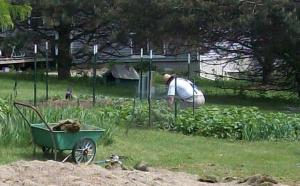
Today began by finishing and filing two articles for the newspaper. After a session of garden work, and making juice from some apples I picked two days ago, I’ll work a shift at the orchard. Then, the CSA share will be ready for pickup, as they are working today as well. The new vegetables will need processing, so there will be a lot more to do before sleep comes again.

During my transportation career I made a point to go into the office on Labor Day. I felt that was my job, and a day to get caught up on work the exigencies of managing a multimillion dollar operation blocked out. Any more, it is a day to do work that in another life would just be called living.

This summer pushed the envelope of how much formal work can be crammed into a schedule. As many as eight paid jobs needed doing, and still they didn’t generate enough income to get past regular bills, a few emergency expenses, and paying down a small amount of debt. While it has been a struggle, worklife is also about framing.

I reject the class frame. Neither am I middle class nor working class, although if I were, the latter seems more appropriate. We’re not serfs either. Those frames belong to others. I look at myself as a writer in an Iowa City the City of Literature sort of way. Here’s what I mean.

What I do more now than ever is spend time writing. Everything else supports that work. A small bit of my income comes from writing, but alone, it is not sustainable. So I sign on to do specific part time or temporary work for pay. The few hours each morning at my desk it supports are what matters most.

Fame or notoriety will escape me most likely. The challenge these days is to find meaningful venues for my writing. For Labor Day, though, I just plan to work.

Categories
Home Life

Leaves Fall, Harvest Coming In

Tomatoes
Tomatoes

LAKE MACBRIDE— The season turned— to sweet corn, celery, pepper and aronia berries— before we knew it. Now it’s a game of keeping up with the fall harvest, making some delicious meals with the fruits of labor, industry, genetics and climate.

Sweet corn is a favorite, and my spouse spent the better part of Sunday putting up 180 ears with her sister. We don’t have room in the freezer, so it is stored in theirs. We also have two dozen ears fresh from other local sources and ready to cook in the kitchen. Over the years I’ve gotten away from growing our own sweet corn as the yield has been small for the amount of space it takes. Leveraging the work of others makes more sense.

Peppers are coming in and this year’s crop looks great and is abundant. A little goes a long way with hot peppers, but the three types are doing exceptionally well. There will be plenty of them to preserve and eat fresh.

The experiment in celery produced a couple of bunches. The quality is very good, so it is worth expanding upon again next year.

We bought two pounds of aronia berries from a local grower. Here’s what he wrote in the promotional literature:

What we do have for sale right now are aronia berries. They were unfazed by the winter. Aronia berries are native to North America; they are very astringent, like a wine grape, and have twice the anti-oxidants of cranberries, four times that of blueberries.We have used aronia berries for jam (alone and with blackberries), in bread, in muffins, and in salsa. There are many recipes available on the Internet. We can send recipes if you are interested.

They are frozen, waiting for suitable use.

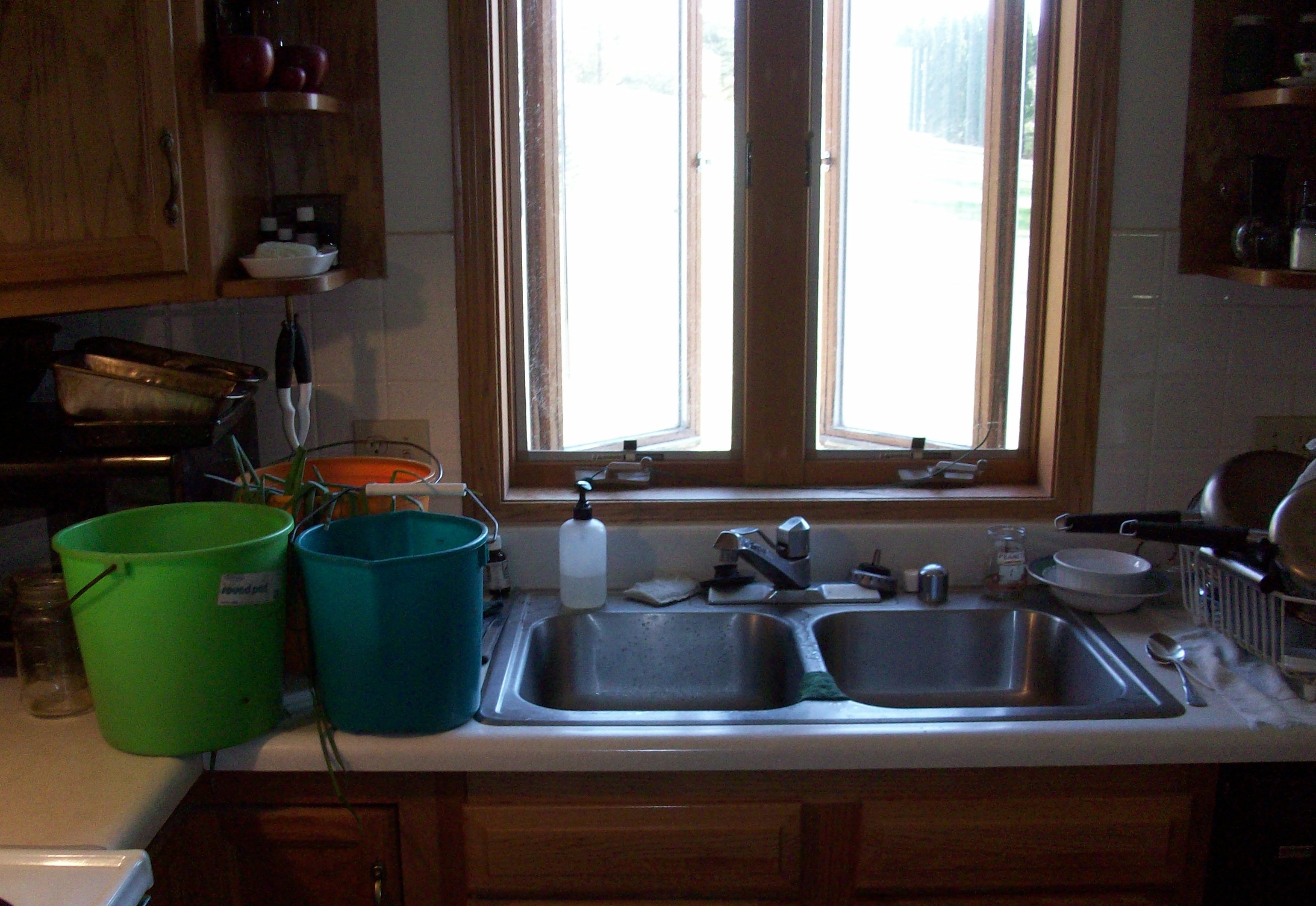
Lastly, there is everything else from gifts, the CSA and from our garden. The kitchen is a processing way station, counters clean and at the ready for another day of putting up.

Side note: one of the neighbor’s trees has begun to drop leaves. A precursor, perhaps, to an early frost.