LAKE MACBRIDE— It is a late frost this year. Oct. 20 and the tomatoes and peppers are still growing, inspiring hope to pick more before the season finally ends. I gave away a bushel of kale on Saturday, confident there will be more.
In between part time jobs there are blocks of time with which to build a life. There are fewer of them, but between interactions with members of the public and spells of writing in public, there is a private life about which I haven’t and won’t write much here.
In most ways, mine is the plain life of a common person. The profound awakening I had as a grader—that Cartesian view about communication with others through media—shaped much of who I am and have been. Realizing it was not unique to me has shaped my life as I moved from school to worklife to homelife. I don’t mind being a commoner.
Part of each week is spent with people in public, and discontent seems to lie below craggy surfaces. Some appear to have had a rough life, and take little joy in human interactions. Others, especially people accompanied by children, are more positive and joyful. Life in society is a mixed bag, and that is not news.
For me there is much more than getting through to the next day. Since Monday is my Friday, I am resolved to get something done during these weekdays. To transform this quotidian existence into something at least as beautiful as the fall colors—or as close as I can get.
LAKE MACBRIDE— The general election is 18 days away, and how my ballot will shape up is finally clear. This coming week, the two of us will head into Iowa City and vote at the auditor’s office. The down-ticket races and issues have been challenging to make a reasonable decision.
In particular, the township trustee election has no candidate on the ballot. As chair of the board of trustees, I made the following press release regarding the absence of a candidate on the ballot:
FOR IMMEDIATE RELEASE
October 17, 2014
SOLON, Iowa– DeWayne Klouda is running a write-in campaign for Big Grove Township Trustee in the Nov. 4 election. He currently serves as a trustee and was appointed this year upon the retirement of Elmer Vanorny. He has prior service as Township Clerk, beginning in 1998. He is familiar with the roles and responsibilities of the township, which include managing the township budget and the Tri-Township Fire Department, operating Oakdale Cemetery, custodian of the pioneer cemetery at Fackler’s Grove, and resolving lot line disputes.
Klouda’s filing paperwork was delayed by the U.S. Postal Service, so his name is not on the ballot.
We seek to make voters aware of this campaign and hope voters in Big Grove Township will consider writing in DeWayne Klouda for township trustee on their Nov. 4 ballot.
Late breaking situations like this are why I don’t like voting early. This year, I will be in the Chicago area in early November, so won’t be around to vote on election day.
The U.S. Senate election is garnering a lot of media attention, and the Republican advertising campaign has been thorough, well crafted and abundant. Counting how many impressions of Joni Ernst have filtered into my no-television lifestyle would be tough. Suffice it to say her name is everywhere I go. This last week, her sign advertising has begun to crop up, along with new radio ads I hear on my way to work. There are web ads everywhere, and bumper stickers. She will have no problem with name recognition.
Bruce Braley’s name is also most places I go, although there have been less impressions of Braley than his opponent. My sense is that because Ernst and her third party supporters appear to be outspending Braley in an attempt to buy this senate seat, the outreach of her messaging has been effective, the way anything that is well capitalized can be. The benefit for Braley, is many voters that matter most don’t seem to like what they are hearing from Ernst.
When I talk about “voters that matter most,” I refer not to polling subjects, but to people I meet and know who are less partisan in their approach to elections. It seems clear to me that neither candidate has cracked the code to get these votes, other than to work hard at it. It’s hard to tell because people don’t want to talk about the election the way they did during the 2006 and 2008 cycles. As I work my network to turn out votes, people plan to vote for Braley or one of the less well known candidates, but not Ernst. My network has a Democratic bias.
I proofread our local paper and there have been very few letters to the editor supporting one candidate or another. Because I read the stories from text files, I’m not sure who is buying ads in the paper, and can’t provide a meaningful evaluation there.
My state representative is bringing Senator Rand Paul to a fundraising event at his political family’s farm. His challenger is publishing an ad with a photo of himself with Vermont Senator Bernie Sanders. There is talk that these two senators are evaluating a 2016 presidential run—key word is evaluating. I suspect they are here more to help Ernst and Braley and other candidates. Neither one of them seems likely to pull in the less partisan voters, although Paul has moderated some of his views in a way that will appeal to some of them.
October will soon turn to November when we’ll know the result. In the meanwhile, there is work to be done in the ground game Democrats are counting upon to win.
SOLON— One was planning to harvest corn until Sunday, when he would turn to beans. Half the beans are already in and the fields have been too wet to get the equipment in the last few days. Talk is about how much propane will be needed to dry the harvest.
“It could easily run up to a thousand gallons,” he said. He plans to take a slower approach to erode less of his margin.
Another is cleaning up the fields and barns after a long season. Picking up and stacking tomato cages is the last big task before turning to livestock and wintering.
While no farmer, I’m still picking kale, peppers, apples and a few tomatoes, delaying the garden clean up for another week. There’s a lot to be done before settling inside for winter. People winter too.
Fall Colors
Not really ready for winter and don’t want to be. Perhaps that’s why I let the scraggly bits of green shoots grow on top of the tomatoes. That’s why I hope for an ability to use more of the abundant kale. Eventually I’ll get the extension ladder out of the garage and pick the high apples. But I’m not ready for the last lawn mowing, mulching the garden, or inspecting the gutters one last time before the cold. Perhaps it all seems too much like death.
So not ready for that. I left the house.
Fall Colors
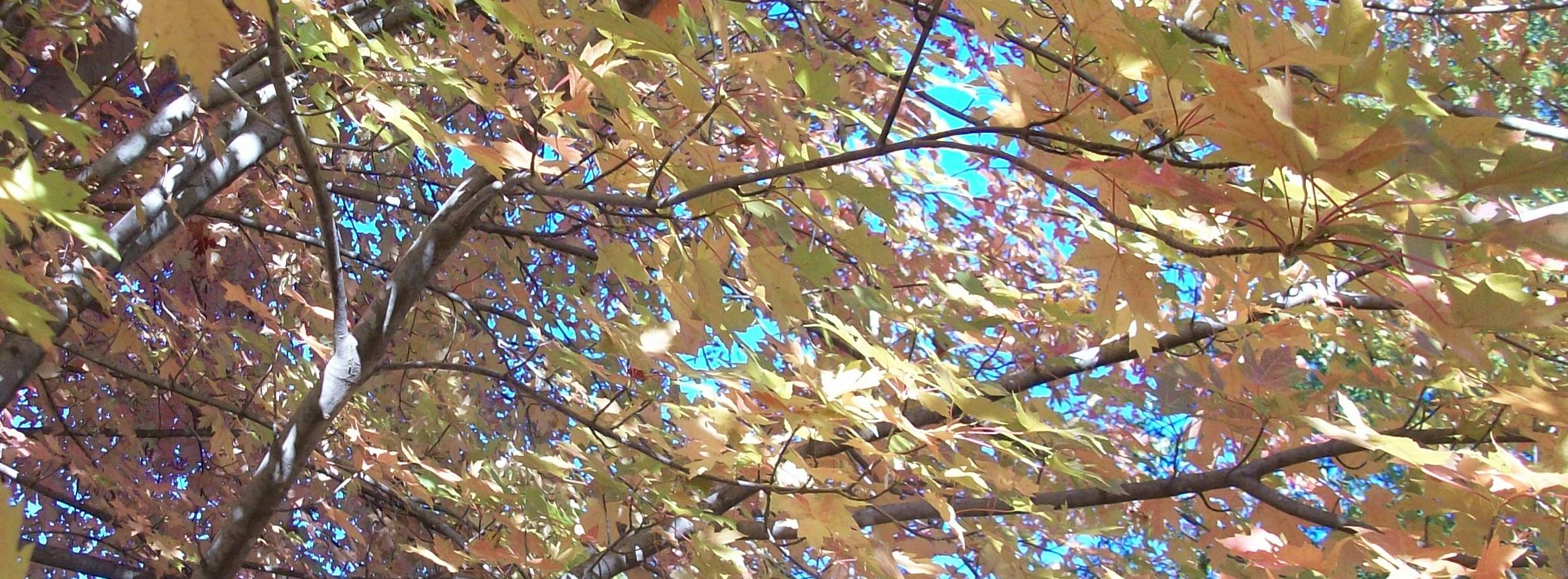
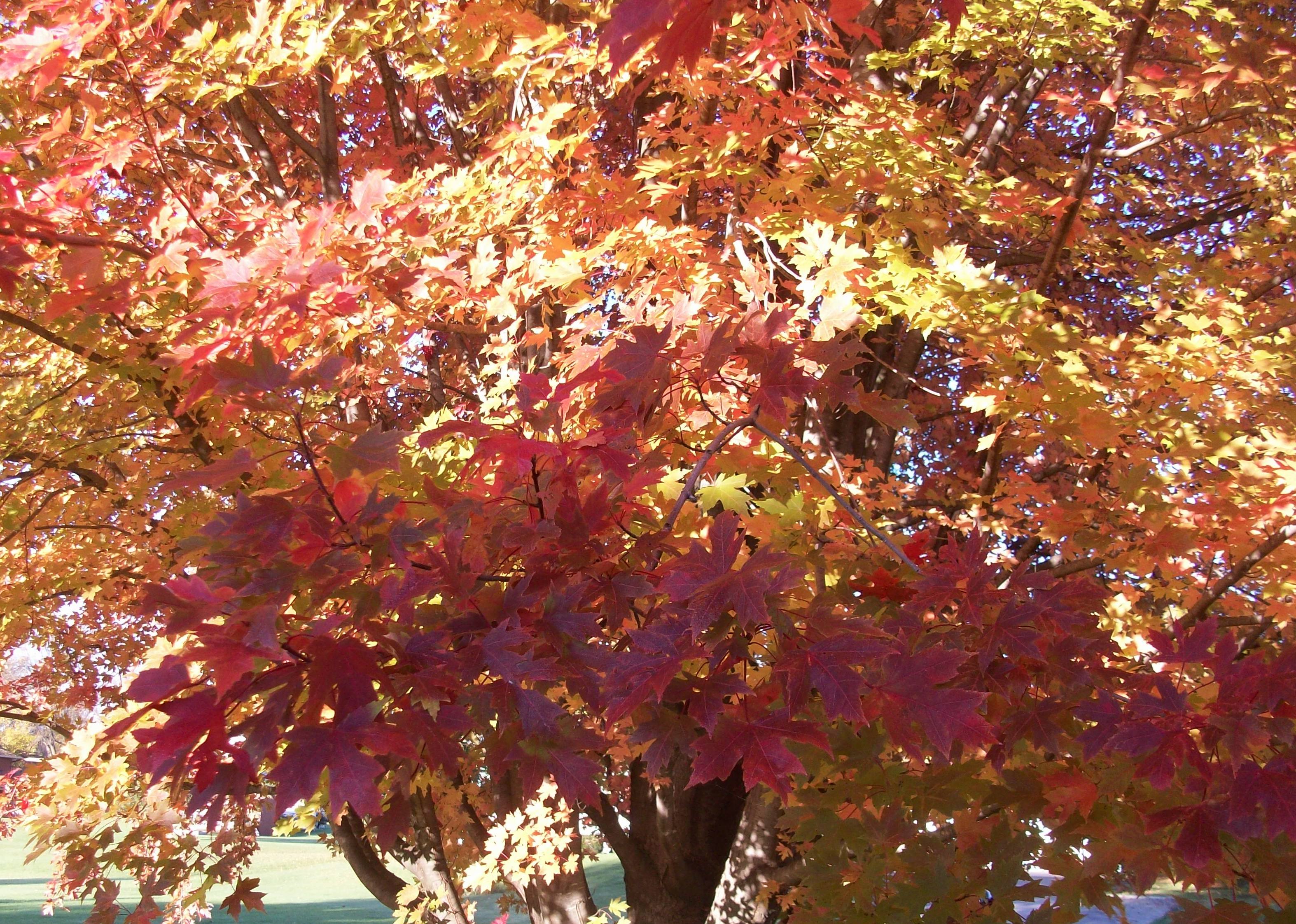
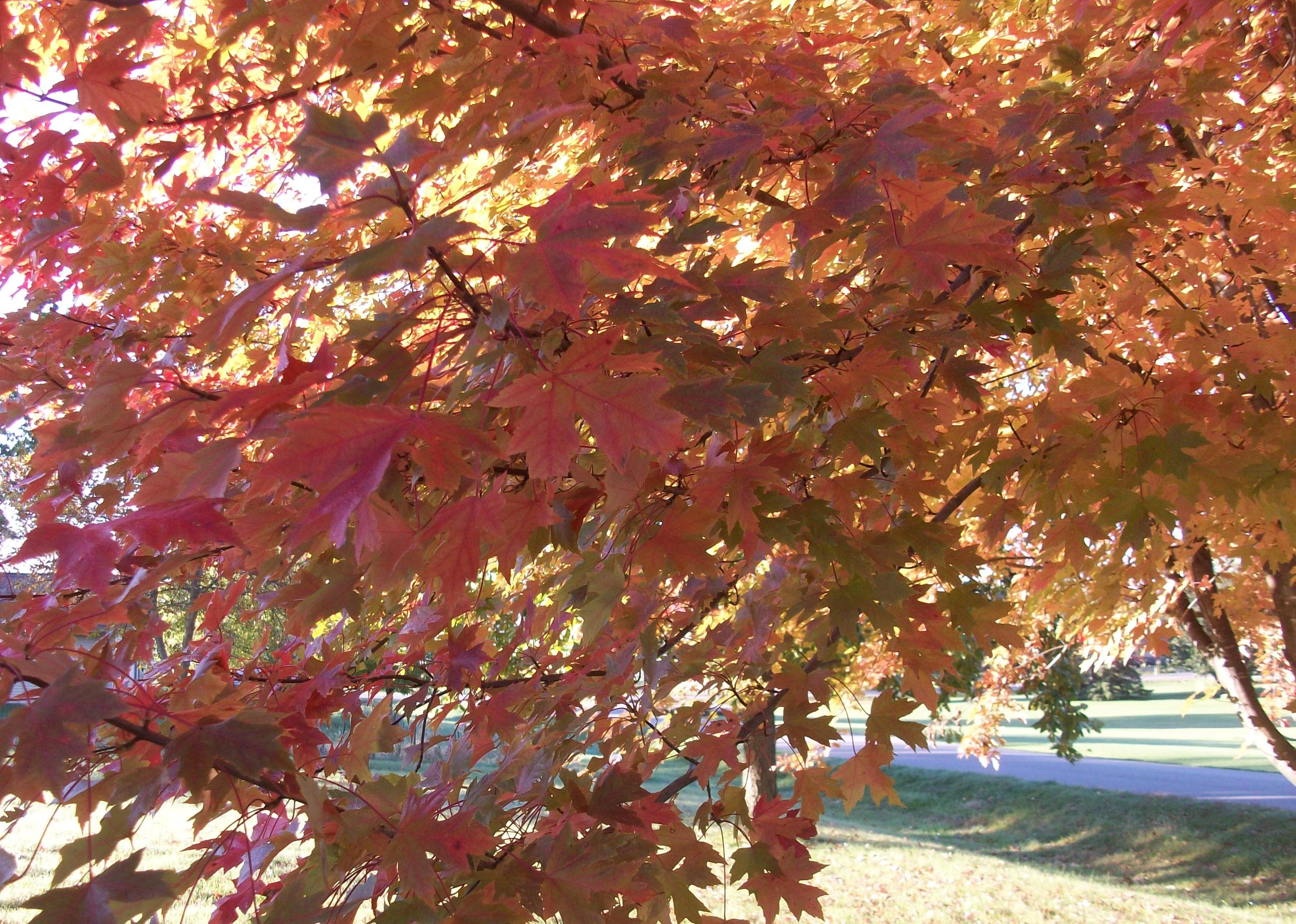
The fall colors are just slightly past their peak, and still beautiful. They are breathtaking really, and hard to capture in digital images.
I drove to town to buy a newspaper because my first article appeared in the Iowa City Press Citizen this morning. While I’m mostly digital, having a print copy of my first still means something. I spent the last 75 cents in my pocket on a second copy.
There is a shift at the warehouse this afternoon. To get ready for a celebration, I pulled a couple of beers out of the box to chill while I’m working. Expiration date July 2014, so I hope they are not skunked. Is that still a thing?
Whatever end there is to this season, and it is palpable all around us, here’s a toast to the idea that it will not be our last trip around the sun. May we sustain our lives on the prairie for yet another year, with an abundant harvest, a great margin on our work, and fresher beer.
“We hold these truths to be self-evident, that all men are created equal, that they are endowed by their Creator with certain unalienable Rights, that among these are Life, Liberty and the pursuit of Happiness.”
These first words to the Declaration of Independence, written by Thomas Jefferson, and proclaimed on July 4, 1776, are what most U.S. residents think of when considering equality—we all are created equal.
A month earlier, George Mason had written the Virginia Declaration of Rights, which included, “all men are by nature equally free and independent, and have certain inherent rights of which… they cannot deprive or divest their posterity; namely, the enjoyment of life and liberty, with the means of acquiring and possessing property, and pursuing and obtaining happiness and safety.”
As Jefferson and Mason both understood, liberty meant the right to own property, including slaves, something each of them did.
Whatever liberty and the enjoyment of life we have gets parceled out unevenly at birth. We are more alike genetically than different, but the circumstances into which we enter life and live make us more different with each passing day. The cards are already dealt in terms of family, religion, and social and economic status when we are born.
For those who come into a life of wealth and property—an increasingly small portion of the population—life can be good. For the rest of us, it can also be good, but we have to find our own happiness and hope our liberties are not eroded by the government our forbears helped create to protect them. That is hard to do in today’s political environment.
The influence of money in politics favors the wealthiest among us and has been eroding the commons and our well-being since the beginning of the Industrial Revolution. We held back the Robber Barons once. It seems unlikely the political will exists to do it again… yet.
On this Blog Action Day, what matters more is not the life we possess at birth, influenced by others. What matters is the way we seek common ground and lend each other a hand in times of adversity.
For if there is inequality in the circumstances in which we find ourselves, and there is, it’s whether and how we come together to fight oppression and get back to the best part of what the founders intended that will help resolve the greatest inequalities among us.
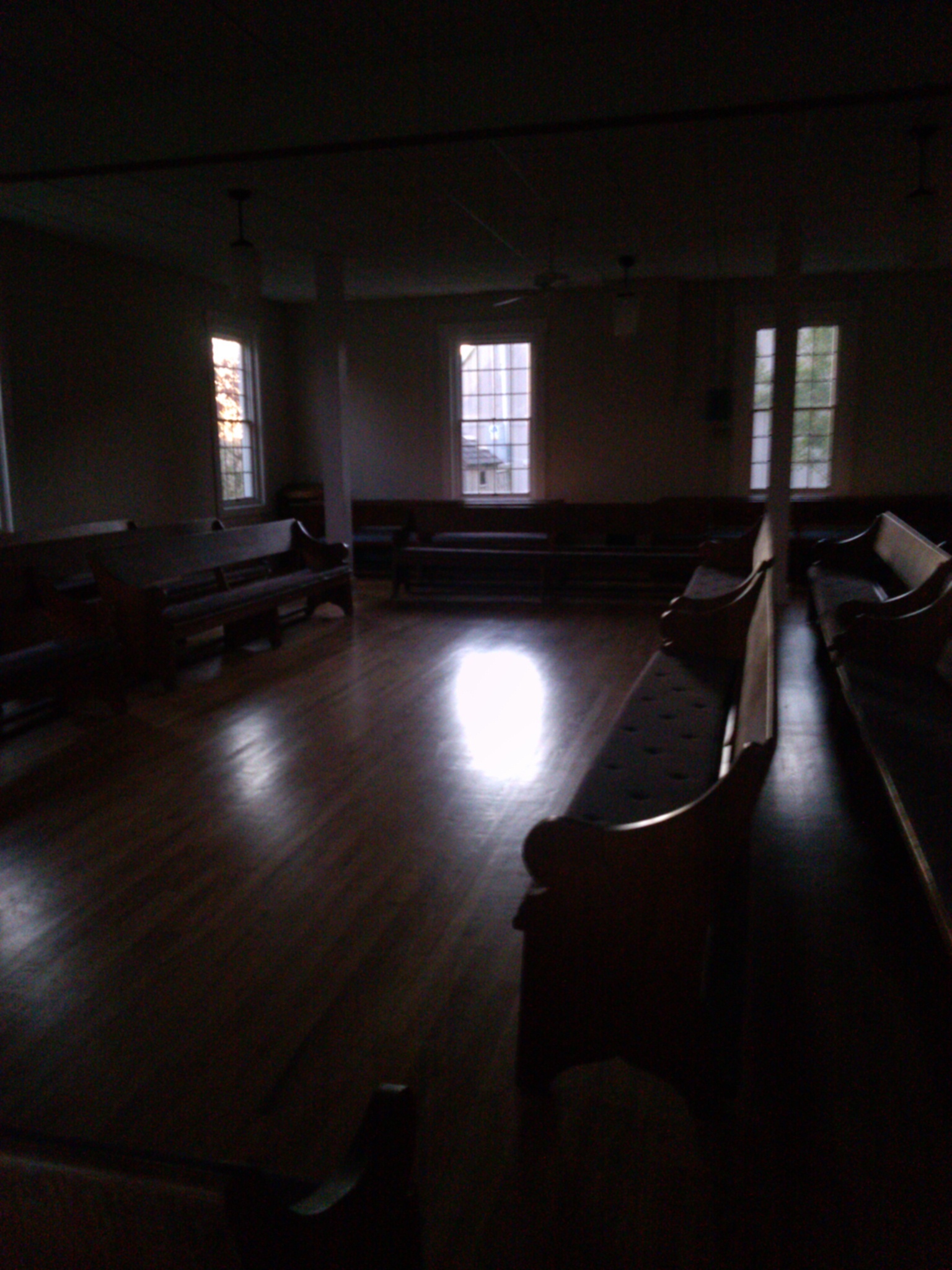
WEST BRANCH— After my talk at the Quaker school, I drove west through the darkened town. The streets were familiar as I had walked them each two years ago during a political campaign. I remembered faces and conversations as each one passed. It’s not my town, so I let the memories go into the night. I was ready to be home.
West Branch is the liberal center of Cedar County, with part of the city situated in Johnson County. There are two Quaker meetings, and the birthplace and presidential library of the first Quaker president, Herbert Hoover. The city is about more than Quakerism. There was no time for that as I drove into a western sky glowing from Coralville’s bright lights.
2012 was the worst heat and drought I remember. It was relentless. I wore shorts and blue short sleeve shirts to door knock during the campaign, covering almost every street in every town, and most unincorporated areas in the district. I approached farmsteads scattered midst the drought stricken corn to tell our tale. It was a scorcher and we lost the election.
Some say people receive their information about politics from the television, but I don’t know about that. I get most of mine from people I know or meet, experiences I have, and a few trusted news sites on the Internet. There is a headiness in being involved with politics, mostly from meeting the candidates, some of whom are recognizable in the broader society. The trouble is we can’t live our lives in isolation. Like it or not, we are connected to the body politic, and to accomplish things, one is required to engage.
Yet on some nights all we care about is getting home, and Saturday night, home was enough. That and driving through the darkness to something other than the ersatz illumination of a city on the horizon—toward sleep and tomorrow’s promise.
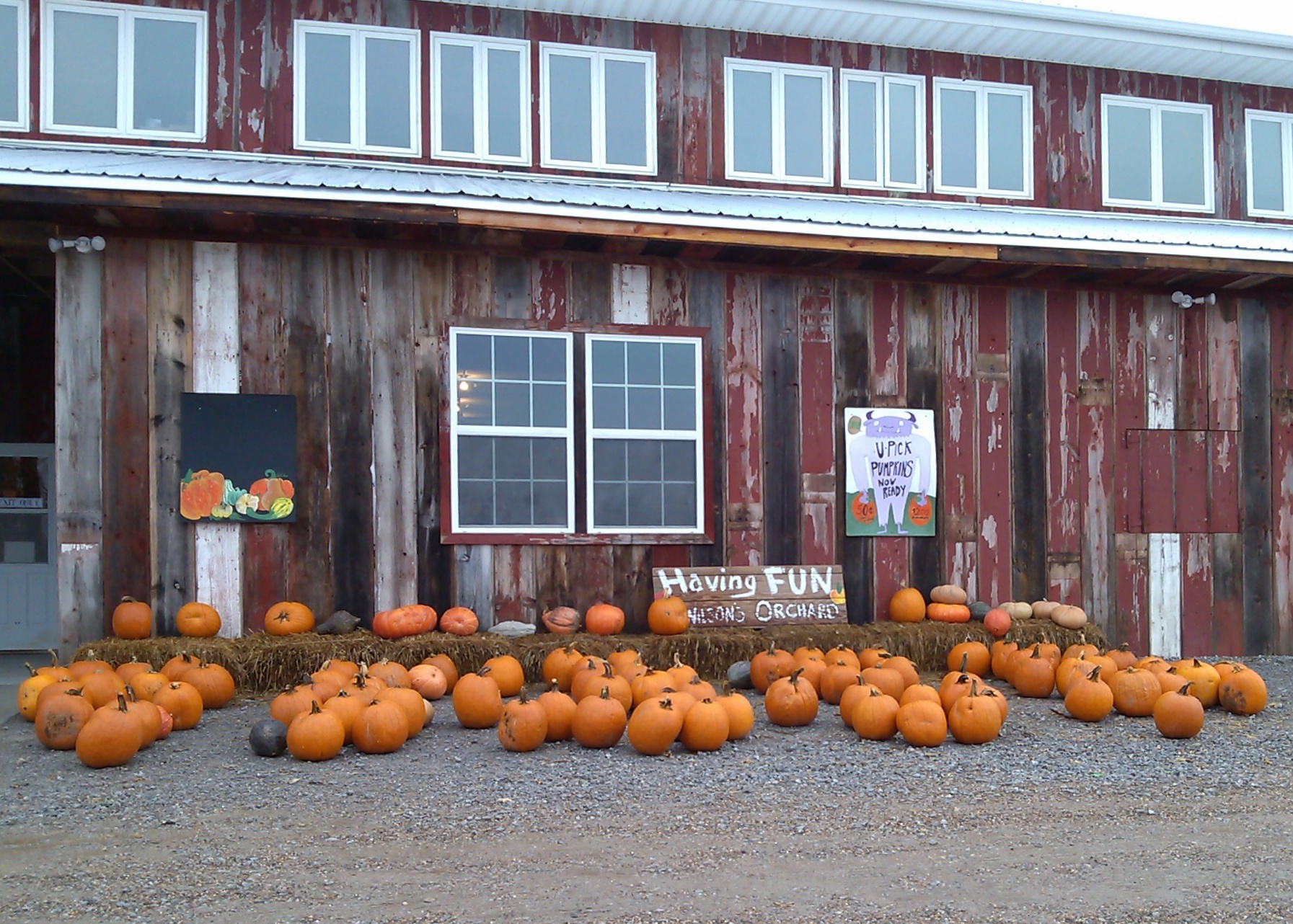
RURAL IOWA CITY— Saturday was my last day working as a mapper at the orchard. I enjoy the work a lot, and hope to get hired again next year, but for now, it’s over. The season continues through the end of the month, as soon, all the apples will have been picked.
As a mapper, I greeted visitors and helped them find apples in the u-pick operation. It was fun, and importantly, it was a chance to weave narratives, scores of times during a shift. I have been able to hone my story-telling skills by repeating and improving on the narrative of how to find the best apples. That part of the experience is best, in addition to working with other great people.
Yesterday was also the end of my farm work for the season. I’m down to three paying part-time jobs, and one of those ends in December. It’s time to look for something else to produce income now and in 2015. I have a sound financial model, now I need to execute it.
The coming weeks are expected to be a time of adventure, and exploration as I contemplate answers to the question, “what’s next?”
LAKE MACBRIDE— “Only 15 percent of Americans are paying very close attention to the midterm elections—a number that is both very low and, apparently, significantly lower than the midterms in 2006 and 2010,” according to the Washington Post. Sounds about right. One of eight people are paying attention.
While my friends and family are engaged, the vast majority of people with whom I interact are not. When it comes down to Nov. 4, many seem unlikely to make the trip to the polls and vote, and won’t without prodding in a meaningful way.
In Iowa, the race most are watching, including folks inside the Washington beltway, is the Braley-Ernst contest. Along with my activist friends, we are doing everything we can to support Bruce Braley’s candidacy. It may not be enough to win, and the senate majority hangs in the balance of this and a half dozen similar races around the country.
“I think we have a wonderful opportunity this year to do something that I’ve only had a chance to have four of in thirty-four years have happen to me, and that’s to have a Republican colleague,” said Senator Chuck Grassley last June. “Bottom line, our chances are a lot better now than a year ago. It looks like now we’ve got a chance of winning six out of ten, some people would say six out of fourteen seats that are in play. I don’t know, but the chances are good.”
According to Nate Silver of FiveThirtyEight.com, Republicans have a 56.4 percent chance of winning the senate majority, so Grassley had a point, there is a reasonably good chance. In the Iowa race, the 538 forecast is a 65 percent chance of a Republican victory, with a two point lead. While Ernst is leading, Braley’s chances are also good, as the 90 percent probability range includes the potential for a Braley win. With low interest, the election will hinge upon voter turnout.
Predicting voter turnout is challenging at best. Already a record number of early ballots have been cast, with most being Democratic. There is no recent comparable election, at least in the survey done by Pew Research Center, which shows interest in the 2014 midterms well behind both 2006 and 2010. “Perhaps Americans have gotten used to the idea of partisan control of at least one chamber of Congress being on a knife’s edge,” wrote Seth Motel in an article for Pew titled, “For Many Americans, a ‘meh’ Midterm.”
What does the lack of interest in the 2014 midterms mean here?
Where they exist, it favors incumbents. People who have represented me in the U.S. House of Representatives and state legislature seem likely to be the same next year. My state senator is running unopposed, but for the other challengers, gaining traction against an incumbent, where there is low voter interest, has proven difficult. People outside political activists and operatives truly are not interested in the midterms.
Because the retirement of Senator Tom Harkin created an open seat, what happens in the U.S. Senate election doesn’t have a recent precedent in Iowa. We live in a state ranked fourth in the nation in health, safety, housing, access to broadband, civic engagement, education, jobs, environment, and income according to the Organization for Economic Cooperation and Development (OECD). This is good news for incumbents, however, how it will play in the senate race is an open question.
Joni Ernst will get an updraft from the governor’s race, where Branstad leads Hatch in recent polls by some 22 points. Democrats counter that they have a superior ground game and the ability to make up substantial ground before the polls close because of it. But Jack Hatch is no Tom Vilsack, and the times have changed since Vilsack won his come from behind election for governor in 1998 by overcoming a similar polling deficit. Ernst’s two point lead over Braley indicates she does not appeal to no-preference voters the way the incumbent governor does, and people I meet are willing to split the ticket. In addition to lack of interest, the outcome of no-preference voters will be more important than partisan registrations to either party’s victory.
For now, it’s a horse race, more than in previous years. One that will go to the finish line. It may not be a photo-finish as the polling within the margin of error suggests, but all there is left to do is work to increase interest and make sure that more than one in eight voters go to the polls.
LAKE MACBRIDE— It was a glorious moonrise last night with a spectacular lunar eclipse this morning. Stars could be seen throughout the sky, and neighbors turned on their lights to come outside and look.
The Milky Way was evident, and Orion’s belt was high in the southern sky. Even though I studied astronomy briefly under Dr. James A. Van Allen back in undergraduate school, I know the names of few constellations. Too, I feel no compulsion to name everything I see in the sky, but would rather take in its twinkling light just looking.
Who doesn’t want to live in glory and the spectacular on this blue, green, and increasingly brown sphere?
The day began earlier in the kitchen. I checked the kale in the dehydrator and rotated the trays. Having run out of ideas, and with a full freezer, turning kale into small flakes to be added as a soup ingredient is the last thing to do. A little will go a long way, and plenty of kale remains growing in the garden to be eaten, given away, and processed. Kale has been a success story this year.
I bottled the red pepper flakes made from Bangkok peppers and the dust from the funnel made me sneeze. Last night I processed a jar of whole dried peppers leftover from a previous year—a second vintage of red pepper flakes. My intent is to use the Bangkok first, give some away, and whatever is left next season will be composted. Half a dozen habanero peppers were in the jar. They’ll go into the compost today.
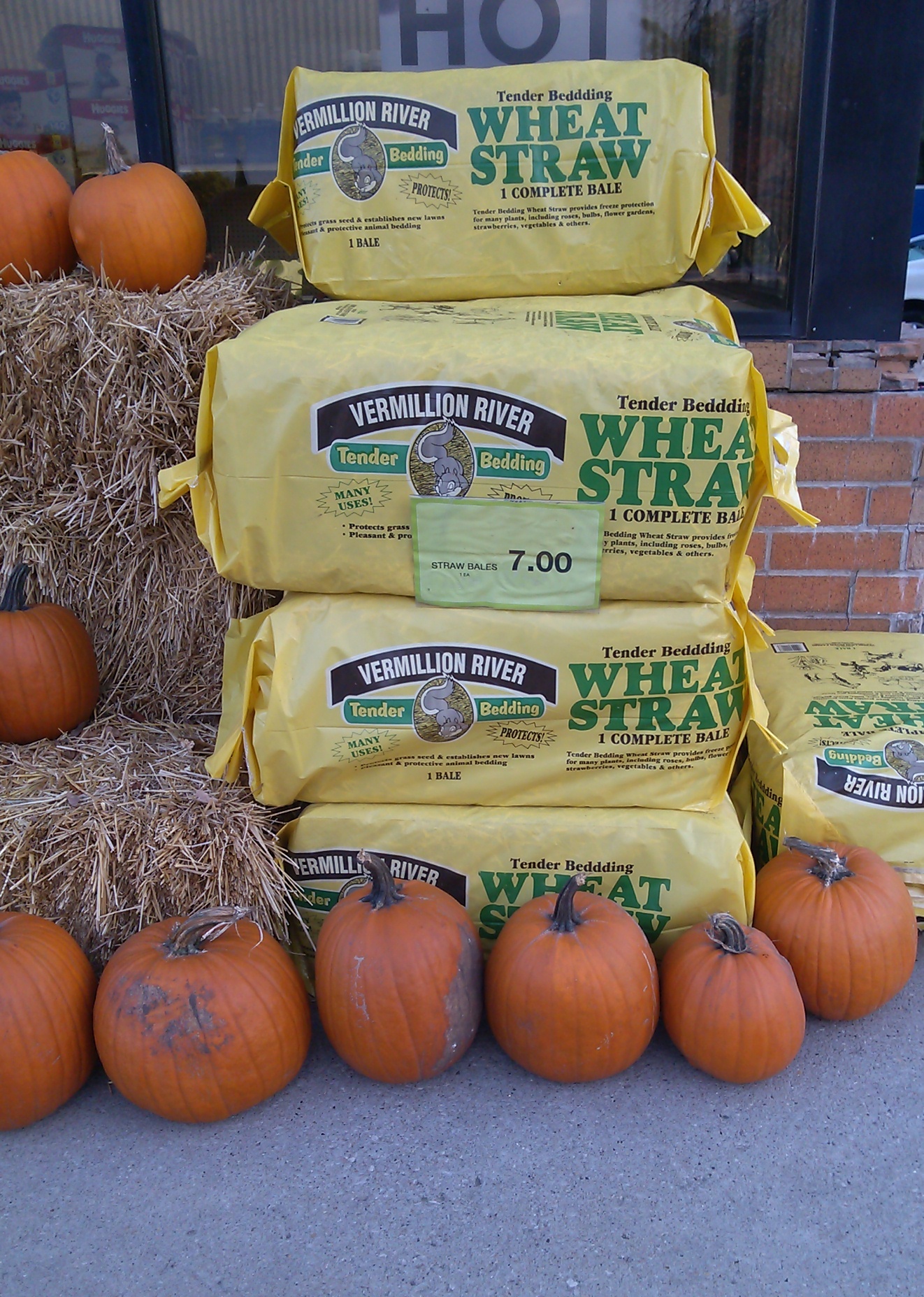
Wheat Straw
Morning coffee yesterday was with a friend at a grocery store in Iowa City. We discussed food security, politics and people we knew in common. The store was selling plastic bags of baled wheat straw. Why on earth anyone would want such a thing when the local hay is in is beyond me. But there it was.
Importantly, I reflected on my post on gatherings. Writing it helped clarify things, and as I picked hot peppers and tasted the Red Delicious apples from the tree, it occurred to me that this life, my life going forward, shall be reduced to a few important things. While working for the logistics company, I learned it is important to take care of ourselves. Without that, it is impossible to get anything else done. Once we are physically, socially and economically secure, the focus turns outward to working in society. To mitigate our changing climate, to abolish nuclear weapons, and to protect others with food security, economic justice and public health. This is a life worth living.
As I enjoyed my celebratory spread on crackers, it seemed much was possible—a sound foundation to sustain a life in a turbulent world.
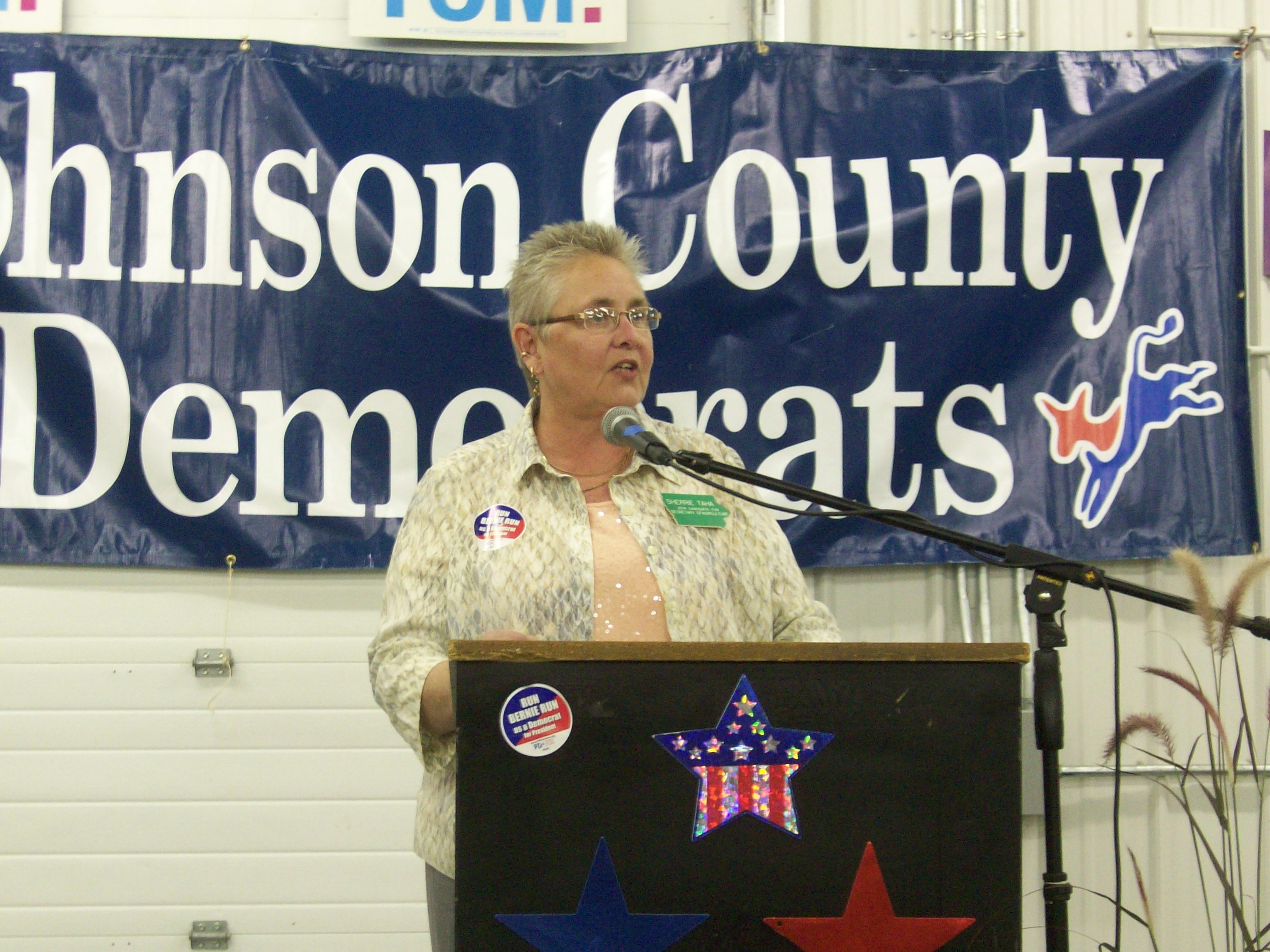
The fact that Sherrie Taha, candidate for Iowa Secretary of Agriculture, supports reduction of food imports to Iowa only makes sense.
“Rather than import the bulk of the food we eat from outside of our state, we need to reintegrate local food production back into our local economies,” said Taha. “We have great farmers markets. Now it’s time to take local food production to the next level and keep the bulk of our food dollars recirculating in our local communities.”
Set aside the inherent risks of recurring drought on the California Central Valley, and turbulent world-wide food pricing, and there remains the commonplace that Iowans can grow more of their own food. If local food production were diversified and scaled up, Iowa could do what it does best to produce more meat, dairy and vegetables for local consumption, and improve the state’s food security.
It’s a message few have heard, and not enough may have heard to tip the general election in Taha’s favor.
Last Sunday, Taha spoke in Iowa City. Her speaking slot followed a number of high-profile speakers that included Rep. Dave Loebsack, Rep. Bruce Braley, Michigan Senator Debbie Stabenow and Vermont Senator Bernie Sanders. After Sanders, a segment of the crowd dispersed, but most would have liked what Taha had to say if they stayed.
“If you eat, if you drink water, if you breathe the air around us, you have a personal stake in how the Iowa Department of Agriculture and Land Stewardship (IDALS) works,” she said. “What that means to me is that along with the corn growers and the soybean association, I’ll invite groups like the Iowa Environmental Council, the Sierra Club, and consumer groups (to get involved at IDALS). We all have to have our interests addressed. Decisions that are made (at IDALS) need to take into consideration the long-term best interests of every Iowan.”
Taha went on to enumerate reasons to consider voting for her, focusing on her experience as a commissioner for the Polk County Soil and Water Conservation District. She said Iowa needs a better process for reducing soil erosion and improving water quality than the voluntary nutrient reduction strategy instituted during the incumbent’s administration.
While Taha faces an uphill battle against an entrenched incumbent, it is hard to concede that global food security can be left to proponents of the industrial model for agriculture. Because of Iowa’s prominent role in agriculture, the person who leads IDALS matters and it should be Sherrie Taha.
Click here to learn more about Sherrie Taha and to get involved with her campaign.
JOHNSON COUNTY— It is possible to fall into a trap of believing that the world and society are about us— our small circle of friends and family and how we live. That would be perilous.
Not only is it impossible to live outside the broader context of global society, believing so isolates us from serving any greater good, and ultimately from taking care of our personal needs. A day’s events can become “all about me,” and the most pressing issues of our time—man-made contributions to climate change, nuclear proliferation, economic justice, food security and public health— can wrongfully be set aside. Not only does this affect society, it filters down to each of us in one form or another.
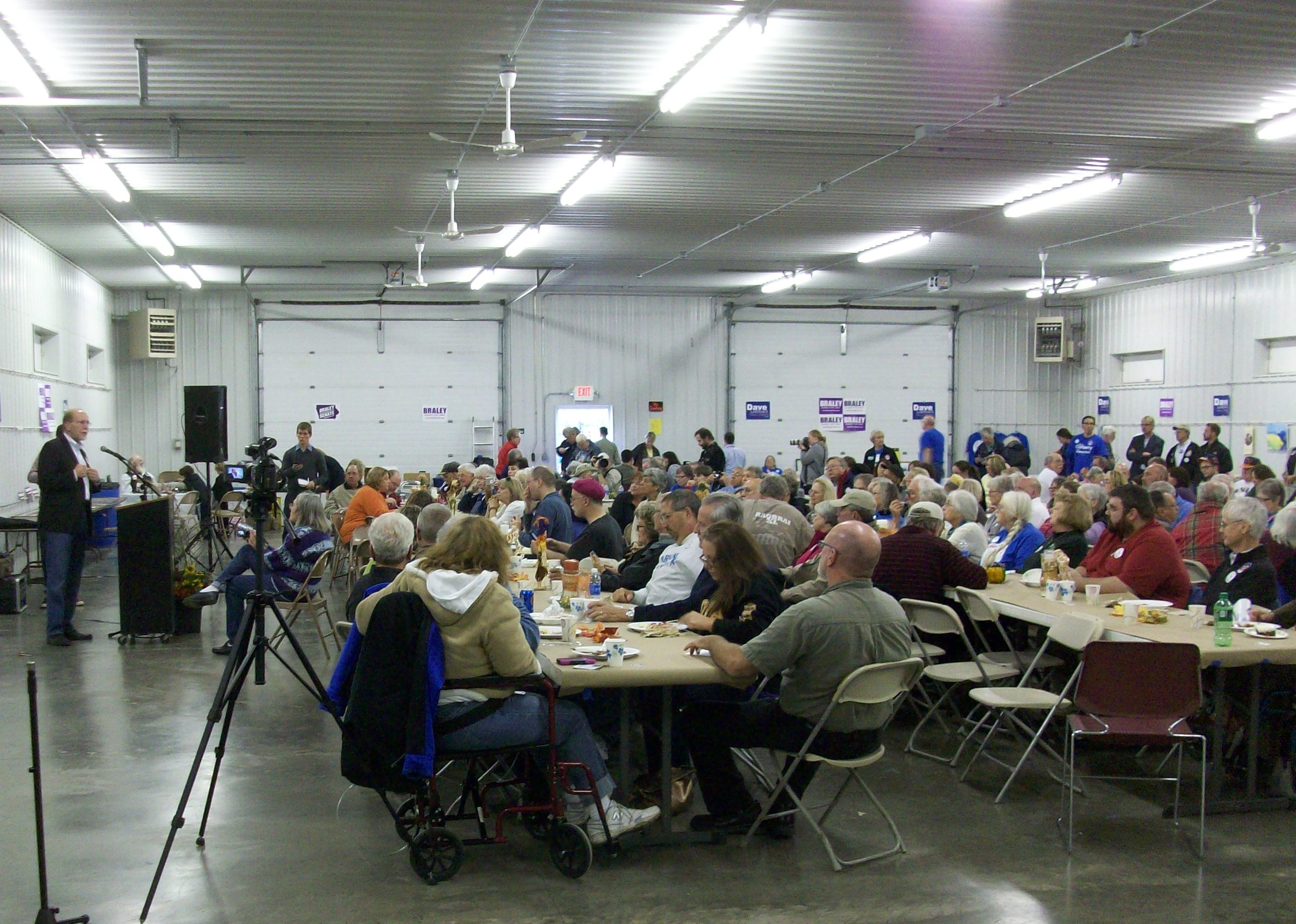
This weekend, I participated in different ways in a number of gatherings of people in diverse settings. Based on my personal interactions with hundreds of people, the definition of “us” needs broadening before substantial social progress is possible.
Make no mistake, there is a culture of “me.” I see it in everything I do outside our home. At the convenience store people line up to serve their addictions, whether it be tobacco, alcohol, sugar, gasoline or salted snacks. At the warehouse three generation families disperse in the aisles like an infantry squad on patrol exploring a foreign land. At the orchard, large groups of young friends bring along their usage of “perfect” or “awesome” as they head out to pick apples. At the political barbeque, activists gather to hear speeches and espouse judgments of each. At the same time, in the vast emptiness that is Iowa’s agricultural land, soybeans and corn stand ready for harvest and nary a person can be found as they were at home or in town, distracted from the leaching of nitrogen from last night’s rain. The culture of me creates isolation but not loneliness, even as people gather informally together in these settings.
To express my opinion, other than to select what is in this article, would be one more futile voice in the wind, and who has time for futility?
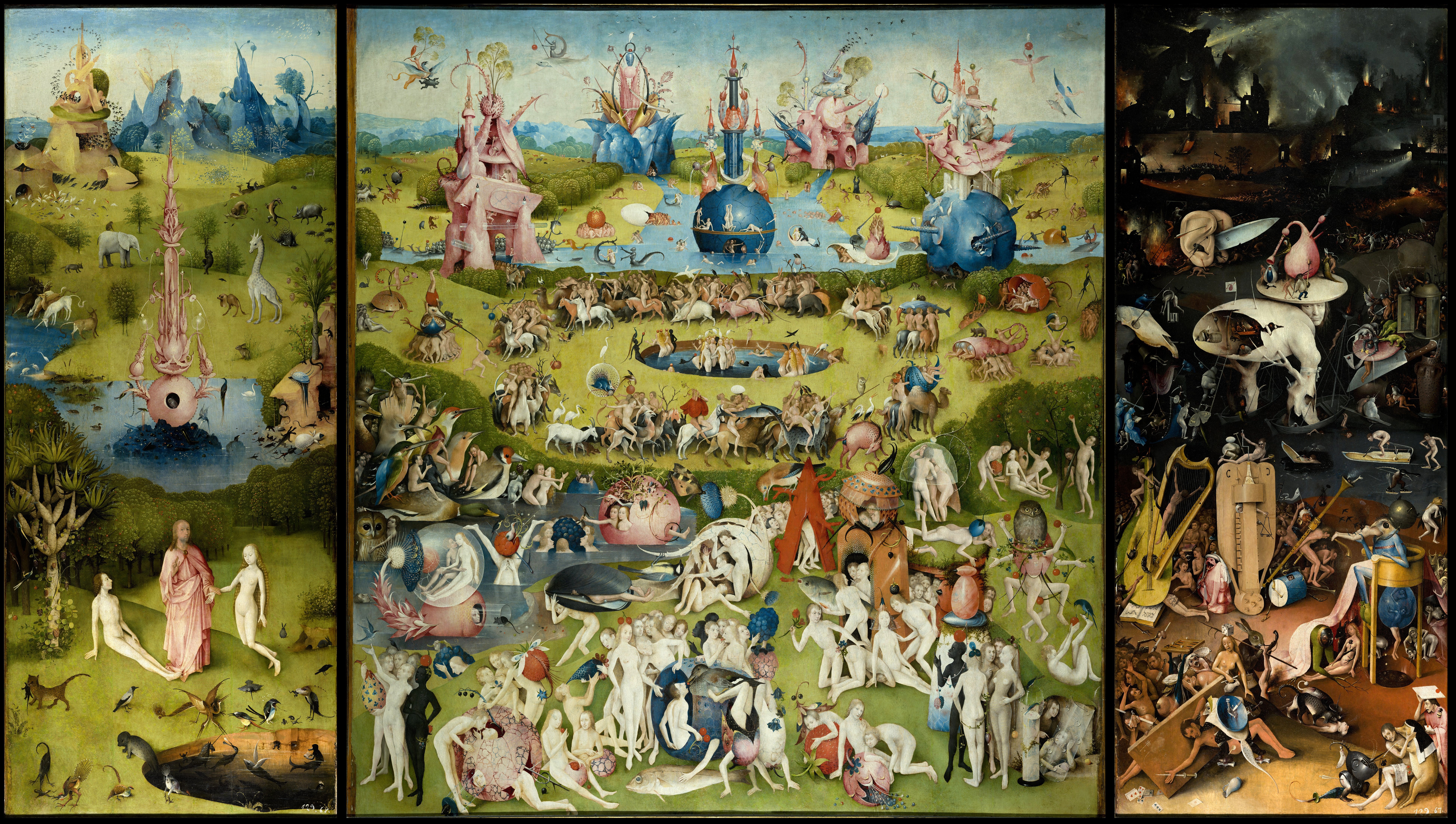
What I saw and participated in this weekend was a reminder of how little humanity has changed since Hieronymous Bosch made the painting below in the late 15th century. In a way we each seek our own giant strawberry to hold and consume. Despite ease of communication, we live compartmentalized and focused on personal delights, eschewing a broader perspective except as it serves our needs.
What to do about this weekend’s observations is uncertain. Figuring it out is important to sustaining a life at risk in so many ways as the days pass, and as people disengage from society.




 Journey Home

You must be logged in to post a comment.