Categories
Living in Society

Her Story Beginning Tuesday

USSenateJoni Ernst will make history two ways tomorrow when she is sworn in as Iowa’s next U.S. Senator. Both are because of her gender. She will be the first female to represent Iowa in the U.S. Congress, and the first female military veteran to become a senator in the history of the upper chamber. Here’s hoping her accomplishments during the next six years transcend gender.

“I am there to work for Iowa and to work for what I believe is the best path for the United States of America,” Ernst said in a Des Moines Register interview.  “I would love for people to give me the benefit of the doubt just as I give others the benefit of the doubt.”

Ernst won the 2014 general election and there’s little reason not to give her the benefit of a doubt. If Iowa progressives were to walk away from Ernst and senior colleague Chuck Grassley, the chances of their issues being heard in Washington would be reduced from slim to none.

Let’s say the slate is clean for Ernst. What are are the expectations?

If Ernst mirrors Chuck Grassley’s constituent services operation that would be a plus. Whether one agrees with Grassley or not, his office is consistently efficient at getting back with a response. When I have visited Grassley’s office in Iowa or in Washington, staff would take an appointment and devote reasonable amounts of time to hear me out. Ernst should do no less.

One of my concerns about Ernst during the campaign was that she is a field grade military officer. Her appointment to the Senate Armed Services Committee is equally concerning. Control of the military should be in the hands of civilian political leadership rather than the cadre of military officers. Ernst recently decided to stay in the National Guard so she begins with a liability. The test for Ernst will be whether she can take the necessary steps to reduce the U.S. military budget. In particular, the nuclear complex budget is bloated, with a plan to modernized weapons that have little practical use on the modern battlefield. Will Ernst be a yes-woman for military expenditure or will she demonstrate thoughtful restraint in cutting the defense budget? We’ll be watching.

Incoming Senate majority leader Mitch McConnell has a to-do list that includes forcing approval of the Keystone XL pipeline, repeal of the Patient Protection and Affordable Care Act, and approving new sanctions against Iran instead of allowing the diplomatic process begun by the Obama administration to continue. Ernst is expected to support McConnell’s initiatives as a junior senator.

The senate Republican caucus was well disciplined when they were in the minority. They rarely broke ranks until the voting got close. They blocked many Democratic initiatives, something the Democrats will presumably do during the 114th Congress now that the tables are turned. One expects Ernst to keep her nose to the grindstone and a low profile as she gets started in the senate. That includes sticking with Republicans where it matters.

All told, Ernst has an opportunity to distinguish herself. Whether she is able to rise above politics and do so is an open question that soon will be answered.

Categories
Work Life

Holidays End

My List - Rough Draft
My List – Rough Draft

This weekend is arguably the end of the holiday season. I previously suggested the holidays end Super Bowl Sunday, this year on Feb. 1, but who except people working for large corporations can write off the whole month of January?

So the work begins.

Part of the work is paid, and more paid work is needed in 2015. Partly to make up for one-time revenue streams that ended, and partly to ensure financial stability which ultimately will lead to financial sustainability. My preference is to find additional free lance writing jobs and some portion of research and development will be devoted toward that end.

The easy resolution to the income shortfall would be to take one of the many $9.25 per hour part time jobs that are available in the area. If it fit in my existing schedule, such a job would fill the cash flow gap short term. I may end up doing this, but am not ready to give up on other options yet.

2015 is planned to be a down-sizing year and some one-time income could be realized by selling some items. This may fill the February cash flow gap, buying me more R & D time, if January affords enough time to work on it. We’ll see if that happens.

At this point the road to a successful 2015 is open and full of opportunities. With an open mind and a ready attitude I have taken the next steps toward sustainability and a life worth living on the Iowa prairie. Here’s hoping for a happy new year.

Categories
Living in Society Social Commentary

Step Forward

Robber BaronsLAKE MACBRIDE—

Having bit my tongue for several years about the state of our electorate, 2015 will be a time of writing about our politics and society in a process of working through ideas, to determine a path by which progressive ideas can gain more solvency in government.

Meeting so many people since 2012—in politics, in retail sales, in farm work, and in writing—my understanding of how society works, and the attitudes of people who live in it has grown. Society is not what I thought—at all.

My formative years began when in 1959 I secured a card for the public library bookmobile that stopped near our house. I read biographies about people important to the growth of our culture. There were a lot of them, although the names I remember are the Ringling brothers, Thomas Edison and George Washington Carver. I gained an understanding that through personal industry, thrift and good ideas, a person could create things that mattered in society and made life better.

I wasn’t the only person who learned this as the ideas grew from the founders and persist. Matthew Josephson articulated this American idea in his 1934 book The Robber Barons.

In a brief cycle, the laissez-faire political philosophy of a Jefferson, having given free reign to self-interest, would stimulate the acquisitive appetites of the citizen above all. These, whetted by an incredibly rich soil, checked by no institutions or laws, would determine the pattern of American destiny. The idealism of Jefferson’s Declaration of Independence, and his Inaugural address of 1801, would be caricatured in the predatory liberty of the “Valley of Democracy” where, as Vernon Parrington has said, Americans democratic in professions, became “middle class in spirit and purpose;” where freedom came to mean “the natural right of every citizen to satisfy his acquisitive instinct by exploiting the natural resources in the measure of his shrewdness.”

With minimal modification, Josephson’s language could describe attitudes of an electorate that in the same year brought us U.S. Senator Joni Ernst and Representative Dave Loebsack. It elected State Senator Bob Dvorsky and State Representative Bobby Kaufmann. It is a spring which nurtures dichotomies: people worked long hours to elect President Obama while others fly the confederate flag; row croppers manage the land with chemicals while others restore it to prairie; consumers are more connected to the world, while seeking small enclaves to live their lives in isolation. The picture isn’t clear, but clarity is coming.

Josephson describes what so many people want to get to—satisfying our acquisitive instincts through exploitation of a world that hangs in a balance because of human activities since the dawn of the industrial revolution. This is a bankrupt idea in light of what we know about the interconnectedness of our lives, but it persists, driven by a social setting in which church, family and work play a pronounced role.

The rest of understanding will come. While beginning the new year I plan to spend more time in the garage, yard, garden and kitchen while continuing my work in sales, writing and other odd jobs assembled to sustain us financially. Hopefully that will be a sustainable framework for exploring these ideas.

There is everything to gain and nothing to lose as we sustain our lives in a turbulent world.

Categories
Home Life

Toward 2015

Island in the Lake
Island in the Lake

LAKE MACBRIDE— After a shift at the warehouse, The plan is settling in to mark my 64th new year. Bottles of prosecco and Sutliff hard cider chill in the ice box. There is plenty of food to make something celebratory.

Prediction: falling asleep before midnight.

One thing seems certain about the coming year—getting wiser before older. That and work more in the garage, yard, garden and kitchen.

I expect to keep writing.

Categories
Home Life

Food and Sundries

Bits and Pieces
Bits and Pieces

LAKE MACBRIDE— Food and sundries are the second highest cash output in our budget and December has been a doozy. Suffice it that we have plenty of food in the house.

The phrase “food and sundries” is indicative of the fact that things like water softening salt, facial tissues, cleaning supplies hygiene products and other household consumables get lumped into this budget category. When we lived in Indiana, it was too much work to segregate the two expenses since mostly they were purchased at the grocery store.

That has changed a bit with growing and bartering for more of our food. I am loathe to change something that has been a basic part of our budget process for decades.

Is there budgetary savings by living off the refrigerator, freezer and pantry? Hope so. That means cooking more and I look forward to a few traditional dishes.

January will be a month of main courses designed from beans, chick peas, grains, nuts, rice, eggs, tomatoes, frozen vegetables, pickles, sauerkraut, soups, and bits and pieces from the pantry. Real cooking, and real downsizing. It should mostly be good.

As for the budget, I haven’t quite adjusted to buying at the warehouse club, so for now, a curtailment of intake is in the cards. That too should be good.

Categories
Living in Society Social Commentary

On Income Inequality

A Second Pile of Brush

LAKE MACBRIDE— We hear a lot about income inequality and for me, those able to amass wealth should be congratulated—then they should pay a fair share of taxes. Neither happens with any regularity.

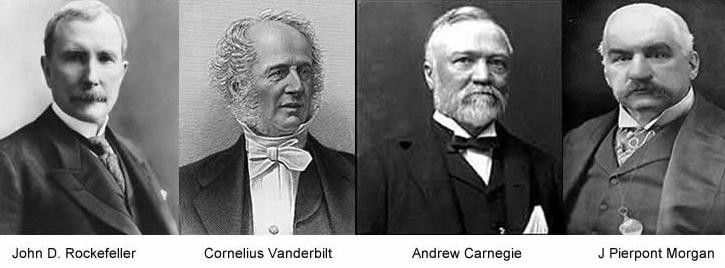
Feigning moral outrage at the wealthy getting wealthier isn’t possible for me. There are no massive scale opportunities for vertical integration of businesses like the railroads, steamship lines, oil companies and telegraph like there were in the Gilded Age. Investors like Warren Buffet vertically integrate segments of their business, and reap substantial profits for doing so, however theirs is a portfolio of diverse and far reaching business activities. The failure of any one wouldn’t matter much in the broader scope of their enterprises. That Buffet et. al. are skilled businessmen goes without saying. Let them have their loot and plunder, I say.

For the rest of us, the plight of the rich only matters when it impacts us directly. For the most part, it doesn’t. If a percentage of each consumer purchase filters back to some palatial estate, as long as we can afford basic necessities, what does it matter? We won’t be going backward from industrialization. The benefits of manufacturing particularly, whether it be home construction materials, food, clothing, transportation or modern health care, are worth more than the antiquated idea of doing everything by and for ourselves. We should be self-reliant, but take advantage of labor saving products and devices with reason.

When it comes to sustainability, there are paths though the seven stages of man that yield respect, viability and a light footprint on the earth among the small percentage of people who own the vast majority of wealth. We don’t want to admit it, but we are peasants all, and that is a tough life, but not terrible.

Next up on my reading list is The Robber Barons by Matthew Josephson.

Written in the wake of the 1929 Wall Street crash, the initial chapter is rich in a way today’s narratives about social and financial matters are not. There is a lot of information I didn’t know or had forgotten. I look forward to reading the book in what is normally one of the coldest months of the year.

We know part of the story.

In a direct line from the industry and frugality of founding father Benjamin Franklin, a group of men seized the opportunity of an expanding frontier following the Northwest Ordinance of 1787. They made their mark converting an agrarian economy to one based on discovery, exploitation and manufacturing using natural resources that were part of the commons.

“Shortly before or very shortly after 1840 were born nearly all the galaxy of uncommon men who were to be the overlords of the future society,” wrote Josephson. This coincides with the settlement of Iowa after the Black Hawk War, and indeed my life and those of my forbears touched the industrialization of the country. Everything from my great, great grandfather buying land in Minnesota from the railroad, to the method of land surveying, to living along U.S. Highway 30 where the Rockefeller trust anonymously bought land at every intersection they could. Their fingerprints remain on much of how we live our lives.

Today, some revere the wealthiest in our society. I am willing to give them their due, but that’s it as our post-Sept. 11, 2001 country approaches what can be called living a plantation life.

In the 1962 forward to The Robber Barons, Josephson wrote about revisionists who would change the contemporary popular dislike of the robber barons. “This business of rewriting our history—perhaps in conformity to current fashions in intellectual reaction—has unpleasant connotations to my mind,” Josephson wrote. “Recalling the propaganda schemes used in authoritarian societies, and the ‘truth factories’ in George Orwell’s anti-utopian novel 1984.”

Little has changed since the 1960s, except the rich continue to get richer, as they run out of resources to exploit in our global village.

There is an intellectual case to be made about the social problems of income inequality, but who believes what politicians and media pundits (or even academics and social scientists) say? Some of us would rather consider the riches in our own lives than seek justice from the wealthiest people. We are a long way from reaching a tipping point in public opinion that would yield a different result.

The American public is asleep on the importance of income inequality to their lives. Just as the continuing resolution to fund the government passed two weeks ago without notice, people don’t seem to care as long as their lives continue as expected most of the time.

Income inequality is not good, but it has been with us for a long time—going back at least to the Peasant’s Revolt in 14th century England.

The lesson is we had better take care of each other because the rich don’t care as long as their wealth increases. That is advice upon which we can sustain a life.

Categories
Home Life

Book Reading

Book Shelf
Book Shelf

LAKE MACBRIDE— Long form reading was slight in 2014. A daily hour or two of reading articles from screens displaced reading books, and my reaction is mixed.

Part of me wants there to be more long-form reading, and part of me understands the new dynamic of staying in tune with what is going on in the world through reading many articles on multiple topics. It is unsettling.

I keep close track of the books I read. If there are less of them, each one played a role in daily affairs. No real clinkers made it to the following list of the twelve books I read this year:

Tomatoland: How Modern Industrial Agriculture Destroyed Our Most Alluring Fruit by Barry Estabrook

Hard Choices by Hillary Rodham Clinton.

The Home Place by Carrie La Seur

The Great Gatsby by F. Scott Fitzgerald

The Wrong David by Christa WoJo.

Command and Control: Nuclear Weapons, the Damascus Incident, and the Illusion of Safety by Eric Schlosser.

Mastering the Art of Soviet Cooking: A Memoir of Food and Longing by Anya von Bremzen

The Pruning Book by Gustave L. Wittrock

Gardening with the Experts: Pruning by Moira Ryan

Miracle Fair: Selected Poems of Wisława Szymborska translated by Joanna Trzeciak.

The Men Who United the States: America’s Explorers, Inventors, Eccentrics, and Mavericks, and the Creation of One Nation, Indivisible by Simon Winchester.

My Life by Bill Clinton.

Two of these are the result of being on social media, The Home Place and The Wrong David. They would not likely have been read if I hadn’t been on twitter. I know Carrie La Seur from before she returned to Montana, and reviewed her book on Amazon.com. Christa WoJo is an Internet marketer and writer living in Panama. WoJo describes her book as about “drunken Americans behaving badly in France.” Both were quick and engaging reads primarily for diversion.

In a way, all of the books were read for diversion from a life too full of low paying jobs. The most practical reading was Hillary Clinton’s secretary of state memoir. If she will be running for president, I felt it important to know what she did in that role with more detail than may be found in a single article. Besides, like her husband, she is an interesting person.

Suffice it to say that I want to read more in long form. My new year’s resolution is to work toward that end.

Categories
Home Life

Christmas Miscellany

Baked falafel and Kalamata olive sauce

LAKE MACBRIDE— It has been a quiet Christmas holiday and that’s okay.

Our family has never been very big, even when nieces and nephews from both sides are considered. There are shirt-tail relatives, of course. If we connect the threads, that could include all of humanity, something that may be wondrous, but is not practical for a holiday gathering.

Our daughter came home for Christmas the weekend of Dec. 12, so the holiday decorations have been up since then. In past years we started decorating on our wedding anniversary, and continued until Christmas Eve. With decorating done early, there was one less thing to do on the actual holiday.

Christmas day I visited my mother and we talked for two and a half hours—more than we have in a long time. After that, I came home where there was not much action because of illness. I made baked falafel and Kalamata olive sauce for what turned out to be my Christmas dinner. Like with the quiet, I was okay with that. I took the first photos in my new project.

We don’t exchange gifts any longer, but I bought a couple of books which arrived Dec. 23. I’m halfway through Barry Estabrook’s Tomatoland: How Modern Industrial Agriculture Destroyed Our Most Alluring Fruit. It will be a quick read and I won’t be buying any winter tomatoes in the foreseeable future. In queue is Selected Letters of Norman Mailer. Mailer was prolific, and the new tome already has been a valuable research tool on contemporary writers.

We went to the New Pioneer Food Cooperative in Coralville together. Going to NewPi is a couple of times a year trip for me. I placed some rolls from the bakery, vegan sausage for gumbo, and some fair trade organic cocoa mix in the wagon. I can’t help but price compare with the warehouse where I work, and the coop is sky high with brands both places carry.

The benefit of NewPi is the wide variety of organic and local foods. They even have bottles of vinegar made with the same mother as the jars we have in our pantry. I don’t know how they manage a diverse inventory when the grocery business is going the opposite direction, but I am glad to be able to visit them once in a while.

I wrote 61 newspaper articles for three papers in 2014, with the last one making yesterday’s front page. It has been a learning experience to freelance, and a different kind of writing. Some editors have been better than others, and each has provided solid lessons in the craft of writing. I am thankful for the opportunity our local paper provided to get me started, but glad I moved on to the Iowa City Press Citizen. More articles are planned in 2015.

 The holidays are in full gear. With my work at the warehouse, I’ll stay busy until Jan. 1 as we want to end the year with zero carry-over product demonstrations. That means I’ll be working almost every day until we are finished. For a while, the warehouse work is my only job—the first time since I can remember there has only been one. And that’s okay for a while.

Categories
Living in Society

ACA Resilience To Be Tested

ForwardLAKE MACBRIDE— When the U.S. Senate passed the continuing resolution to fund the government (CRomnibus) on Dec. 13, who knew what was in it?

The folks at CoOportunity Health, an Iowa nonprofit insurance cooperative established by the Patient Protection and Affordable Care Act (ACA), should have. If they didn’t, they would find out three days later when the U.S. Department of Health and Human Services, Centers for Medicare and Medicaid Services (CMS) notified them and the Iowa Insurance Commissioner that it would not provide solvency funding in the amount of $60 million.

CoOportunity had booked 2015 accounts receivable from the federal government in the amount of $125.6 million to meet projected claims. The shortfall in CRomnibus funding triggered a process wherein the Iowa insurance commissioner, Nick Gerhart, petitioned and was granted a court order appointing him as rehabilitator of the nonprofit.

The bottom line is that CoOportunity created health insurance policies under the ACA offering a very low premium—based upon the government subsidizing the risk. They attracted more customers than expected. A subsequent adverse claims experience resulted in deterioration of the companies financial reserves, and the funding cut in CRomnibus crippled the company. (Read analysis by the Lincoln Journal Star here).

Like it or not, Iowa is involved with fallout from the health insurance marketplace.

What does all of this mean to individuals and businesses who participate in the marketplace? The insurance commissioner was clear in a Christmas Eve press release:

The Iowa Insurance Division determined that CoOportunity Health is in a hazardous financial condition. On Dec. 23, 2014, Insurance Commissioner, Nick Gerhart, applied for and the Polk County District Court issued an order appointing the Commissioner as rehabilitator of CoOportunity Health. The company will continue in existence, but the Commissioner, as rehabilitator, is granted authority to manage the company. The Commissioner will assume management of the company; attempt to correct existing problems; continue operations; maintain policyholder accounting; and develop a plan of rehabilitation or petition the court for liquidation.

Most policyholders may find it in their best interests to find other coverage before the end of open enrollment, which ends Feb. 15, 2015.

Will people who signed up for CoOportunity health insurance on the marketplace be insured in 2015? According to the commissioner,

Yes, if you enrolled on or before Dec. 15, 2014, and you continue to make your premium payments.

No, if you signed up on Dec. 16, 2014 or later you will not have coverage with CoOportunity Health. You have until the end of open enrollment, which ends Feb. 15, 2015, to enroll in another plan.

In simpler language, Republicans can and will do anything they can to de-fund the ACA.

The other ACA-related issue that affects Iowans is the U.S. Supreme Court case King v. Burwell wherein the plaintiff seeks to strike down the health insurance subsidies provided by the federal government where states chose not to manage the health insurance marketplace. If the court strikes the subsidies, it is an open question what Iowans will do to secure coverage in the ACA marketplace, as federal subsidies are a basic idea of what the law does. Without them, participants could ill afford to pay the entire premium amounts.

Here’s what we know and knew before recent events:

It is better not to get sick, even if one has health insurance.

After taxes, health insurance is the biggest single cost in our household, representing significantly more than the mortgage payment was when we had one. We must face the music and pony up the health insurance money as a first priority.

It would have been cheaper for the federal government to put people my age into Medicare early, than to pay the subsidies to insurance companies.

For those of us fortunate enough to have had a health insurance plan throughout our adult years, the CoOportunity plan offered in the marketplace was inexpensive, but was new, and a bad deal. It did not have the network of providers we wanted. For example, instead of seeing a doctor three miles from my house, we would have had to travel to Cedar Rapids for treatment with CoOportunity. In the end, CoOportunity had inadequate capitalization and the idea of a member-owned cooperative was not sustainable, at least in Iowa.

The political will to take care of people’s health care needs, whether by the government or by other means, does not exist in Iowa and elsewhere. We are on our own when it comes to sustaining a life in a turbulent world.

There is a lot more that can be said about the ACA and the Republican opposition to it. Here’s hoping Democrats built enough resilience into the law.

Categories
Juke Box

Juke Box – Blue Christmas