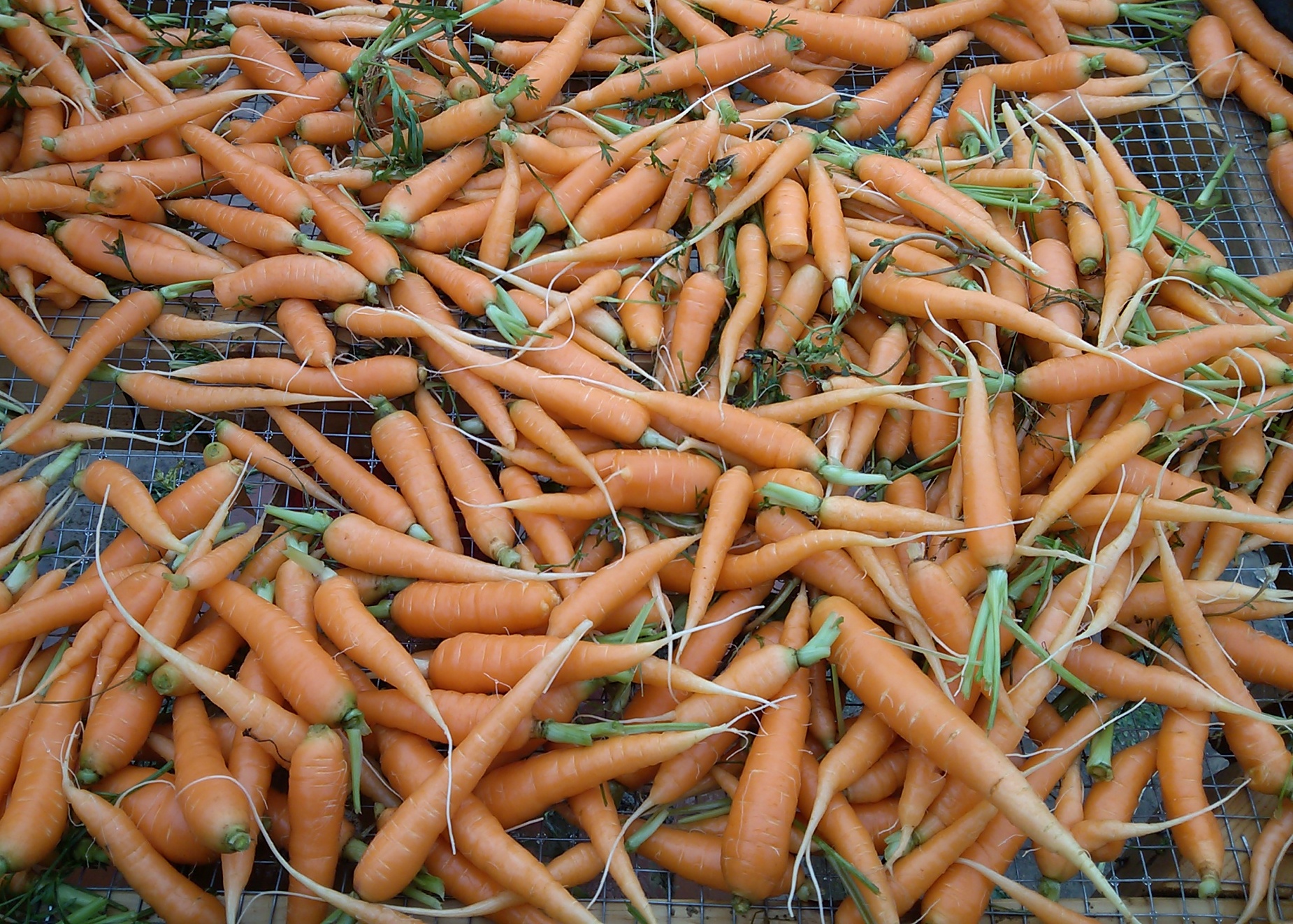
LAKE MACBRIDE— As the sun set on Monday I was washing 75 pounds of spinach at a friend’s farm. The two acres is a community supported agriculture project, and that morning, a lot of food remained in the field. The day’s work was to get as much of it harvested as five of us could. During a nine hour shift, we harvested spinach, carrots, daikon radishes, rutabaga, turnips and beets, loading up a 1973 Econoline van until we tested the limits of its capacity. A second vehicle was needed to transport the produce to off-site storage.
We left three rows of daikon radishes in the field because 600 was all we needed for member shares. Farm workers took home seconds of carrot and daikon, so today at home will be cleaning them and preparing a few dishes.
The season’s farm work is winding down, and as it does, thoughts turn to what’s next. It’s not clear right now. Maybe clarity will come with keeping my hands busy in the kitchen where there is a full refrigerator and all the root vegetables in canvas bags, waiting to become what’s next. Better soup than compost. If choices in life were as simple as making soup from the bounty of November’s root vegetables wouldn’t that be the top?
RURAL CEDAR COUNTY— On a tour of an organic farm in Cedar County yesterday, talk turned to the impact recent unusual and severe weather events we have had. The story is similar to what others in the agricultural community have been saying.
Farmers are talking about two main weather events this year. The late, wet spring that delayed planting, and drought conditions during August and September. According to a recent gathering at the Farm Bureau, there will be more of the same during the next several years.
The late, wet spring caused some localized flooding on the property, but did not significantly impact the overall operations. They dealt with the weather. The apple crop was abundant because spring pollination conditions were almost perfect after a tough 2012, with the buds flowering after the last hard frost. A lot of apples were still on some of the trees.
Locally we lived through a period of six weeks without any rain. The effects of the summer drought on the vegetable crop were mitigated by irrigation using a drip tape system. There was plenty of water for irrigation, although like most farmers, he didn’t know how deep his well was dug. There was a farm pond should the well go dry.
Drought will reduce corn yield. We examined some ears on the stalk, and a second ear failed to form on many of them. What ears of corn were present did not fill out with kernels. Both conditions were attributable to the drought.
For the last several years, the ability to harvest vegetables later into the year exists because it was warmer later. Food can be harvested directly from the field, rather than drawn from storage and preserves during November and into December. My tour guide said he had only just begun to realize the persistent change, and was beginning to rethink his food planning for the 80 or so people who rely upon the farm for daily meals.
Farmers, more than most people, are sensitive to changes in the weather and climate. For 10,000 years the climate on earth has been stable, and this stability enabled the rise of agriculture, and along with it, our civilization. In Iowa, agricultural success is predicated on our assumptions about rainfall and the hydrological cycle. Things are changing, and what I saw yesterday is more evidence of that.
The era of climate stability is at an end, due largely to human activity. We continue to dump 90 million tons of CO2 pollution into the thin shell of atmosphere each day as if it were an open sewer. Without action on our part, adaptations like those on this farm will be ineffective over the long term. Whatever we were used to as normal has been disrupted by changing climate.
It may be evident to a farmer that the ecology of agriculture is changing in new ways. Yesterday’s farm tour was another example of why. Taking collective action to mitigate the causes of climate change has become the moral challenge of our time. We didn’t ask for this, but our personal involvement is as important as it has ever been as we work to sustain our lives in a turbulent world.
LAKE MACBRIDE— At the end of the season, before the last gleanings from the garden have turned to compost, home cooks prep and cook and preserve to make use of summer’s bounty.
Foraging in the refrigerator as if it were foreign turf, forgetful of how the mix of cut onions, diverse greens and leftovers arrived, the best is culled for a hearty fall soup. Kale and onions, Brussels sprouts and broccoli stalks, celery and carrot, a turnip, some potatoes, frozen sweet corn, and everything else suitable goes into a large, stainless steel stock pot.
Tomatoes are selected from the counter, their numbers diminishing without replenishment from the garden patch. Cutting away the soft and dark spots, they were cored and pulsed on low speed in the blender, skins and all. The red puree was poured all at once into the simmering ingredients. A handful of leftover farfalle, bay leaves, some dried red and black beans, and chervil were added. The pot simmered more than an hour on low heat. It was soup for dinner.
At 3:15 a.m. I brought the graniteware water bath canner from downstairs to the kitchen. Using the wire rack, four quarts and a pint of applesauce, plus the pepper puree made this weekend, were lowered into the pot which was then filled with warm tap water. Moving the heavy pot to the stove, I turned the heat on high to process the jars of summer goodness. Now breakfast.
While working in the local food system, one never knows when or where the next paying job will come along. I finished the season at the orchard yesterday, at one CSA the work is clearing the field, which won’t take too long, then there is the planting in the high tunnel and fall share help, which will end soon as well. There is the prospect of cutting firewood at another farm, but weather seems likely to intervene before long. It begs the question, what’s next?
While invited to return to the warehouse after the season, it doesn’t pay enough given the investment in health and well being required. It is a fallback position to pay some of our bills should no other opportunities present themselves. There are a lot of low wage jobs around town, but they present the same problem of occupying space without providing enough income. I’m confident something will materialize.
While there is fresh food, I’ll continue to eat well and stock the pantry for winter. Mostly, we eat to live, and there is still time to make deposits in the food pantry. Hopefully there will be enough reserves to see us through until spring.
RURAL SOLON— It was a blustery day at the two acre farm where work took me yesterday. Carrots to harvest, tomato cages to deconstruct and roll up, and irrigation line to find and remove to the roads for later pickup. It was cold to the bone.
My time in the military prepared me for days like this. The key is to focus on the work and the cold will take care of itself, falling neatly into the background. Once one accepts there is no place to go to get warm, and nothing to do but the work, life doesn’t seem so bad and neither does the cold.
It was recently reported that September was the 343rd consecutive month of above average global temperatures. No surprise there, and October will be the 344th. What I would rather see is a tally of the actions people take, on a daily basis, to reduce their carbon footprint. That and a measurement of the aggregate impact it has on global warming. We would do better to collect our progress and see how we are doing than tick off the number of months of doom.
Working in a sustainable agriculture operation is said to help solve the climate crisis. According to Wikipedia, sustainable agriculture is the act of farming using principles of ecology, the study of relationships between organisms and their environment. A couple of things seem most important. Sustainable agriculture is site-specific. What one farmer does on his/her land may last over the long term to satisfy human food and fiber needs, sustain the economic viability of farm operations, and enhance the quality of life for farmers and society as a whole. It is hard to find fault with this, and the connection to the climate crisis is clear.
Where it gets sticky is that as the environment changes, so too do the organisms encountered on a parcel of land. This suggests that the work of adaptation is never really complete in sustainable agriculture. Most farmers I know are engaged in a process of constant experimentation to determine what does and doesn’t work to solve ecological problems. What is worrisome is they seldom, if ever, talk in terms of adaptation to climate change, even if that is what sustainable agriculture represents at its core. Note to self: initiate this conversation.
After noon, the two of us harvesting carrots and working in the field were called to the barn for lunch. Grilled cheese sandwiches, vegetable soup and sweet carrot bread for desert. Much better than restaurant fare, and an unexpected perquisite to break the cold. Not to mention the conversation about the fall share, and our hopes, dreams and experiences. Brief and pleasant interval in another day’s work in our ever changing environment.
RURAL SOLON— While finishing a shift of deconstructing tomato cages, I walked along the row of frosted bell pepper plants toward the gate. It snowed yesterday and hard froze last night. I picked six pepper survivors for the flat side upon which to sit on the baking sheet. There was a lot of food that survived the snow and frost, but we enjoy stuffed peppers a time or two during each year, and that was my choice.
When it was time to begin preparing the meal, I cored, parboiled and stuffed the peppers with a mixture of rice, eggs, a blend of Italian cheeses, cooked onion and garlic, and dried rosemary and sage. They were topped with leftover pasta sauce and went into a 350 degree oven for 22 minutes. We had a working family supper, served with sweet corn and fresh tomato slices.
On a cold day food fresh from the oven, made with local ingredients raised by people we know is as good as it gets. It is a simple pleasure, one that bears repeating if that is possible.
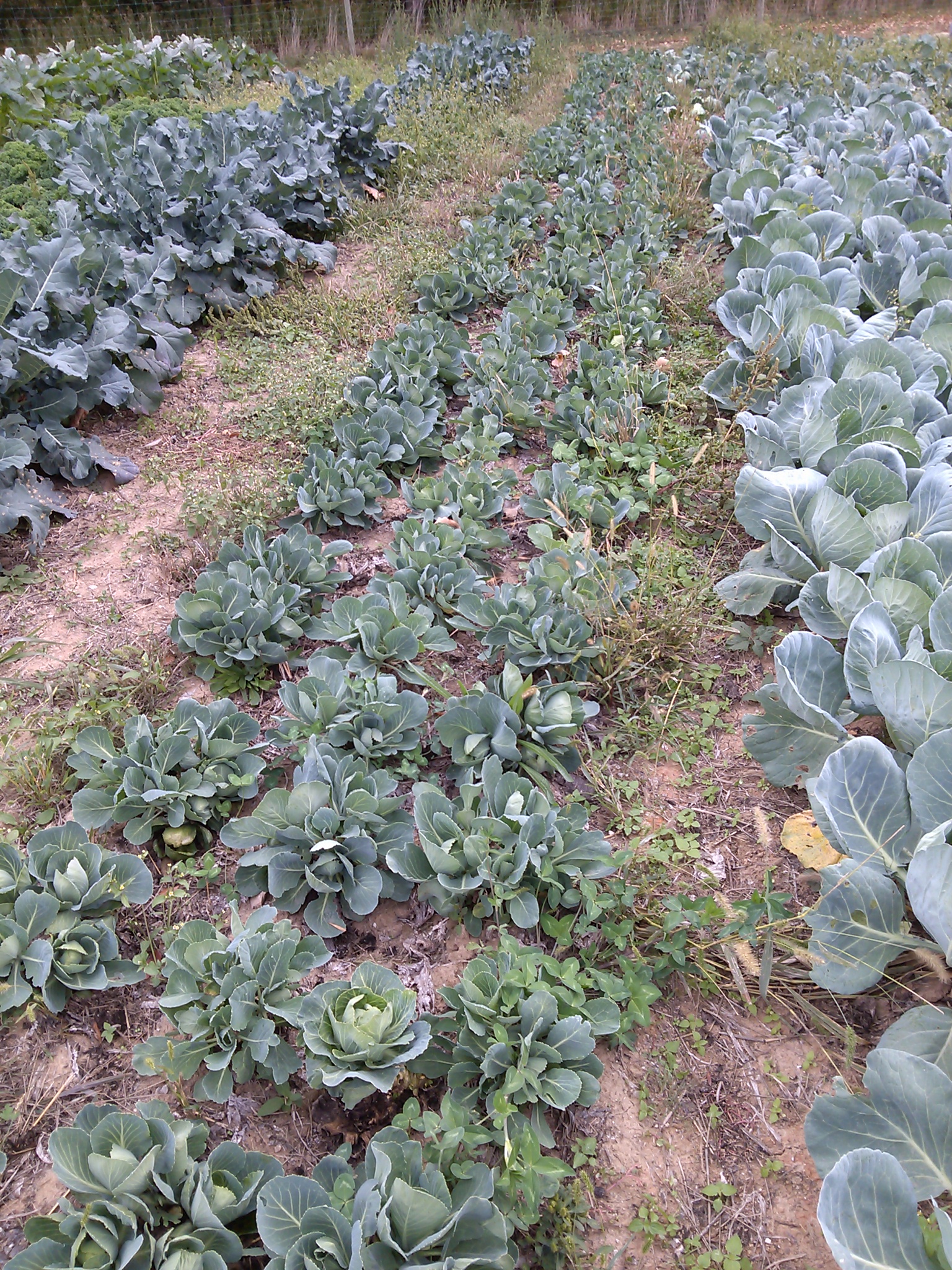
LAKE MACBRIDE— On Friday we diverted from planting in the high tunnel to harvesting cabbage at another farm: 400 heads of cabbage in 80 minutes plus travel and storage time. Frost is coming, and we need the cabbage for the fall shares. As we used to say as union workers in the meat packing plant, “it all pays the same.”
Actually, farm work doesn’t all pay the same. There is a complex web of reliance among farmers, and when one needs something, another reaches out to help, making a deposit in the relationship bank. Who knows when we may need to make a withdrawal?
There is a frost advisory Sunday morning from 1 until 8 a.m. Whatever plants need saving should be covered with the worn sheets kept for that purpose. Mostly, it is the leafy green vegetables and the pepper plants, since the tomatoes are done. Gleaning plot #3, and harvesting is on today’s agenda, so whatever might get bitten by tomorrow’s frost will come in. That is, except the greens, which will continue growing outside until the last minute.
The days are getting shorter, and attention turns toward inside work. There is a lot to be done before the end of the year. When isn’t there?
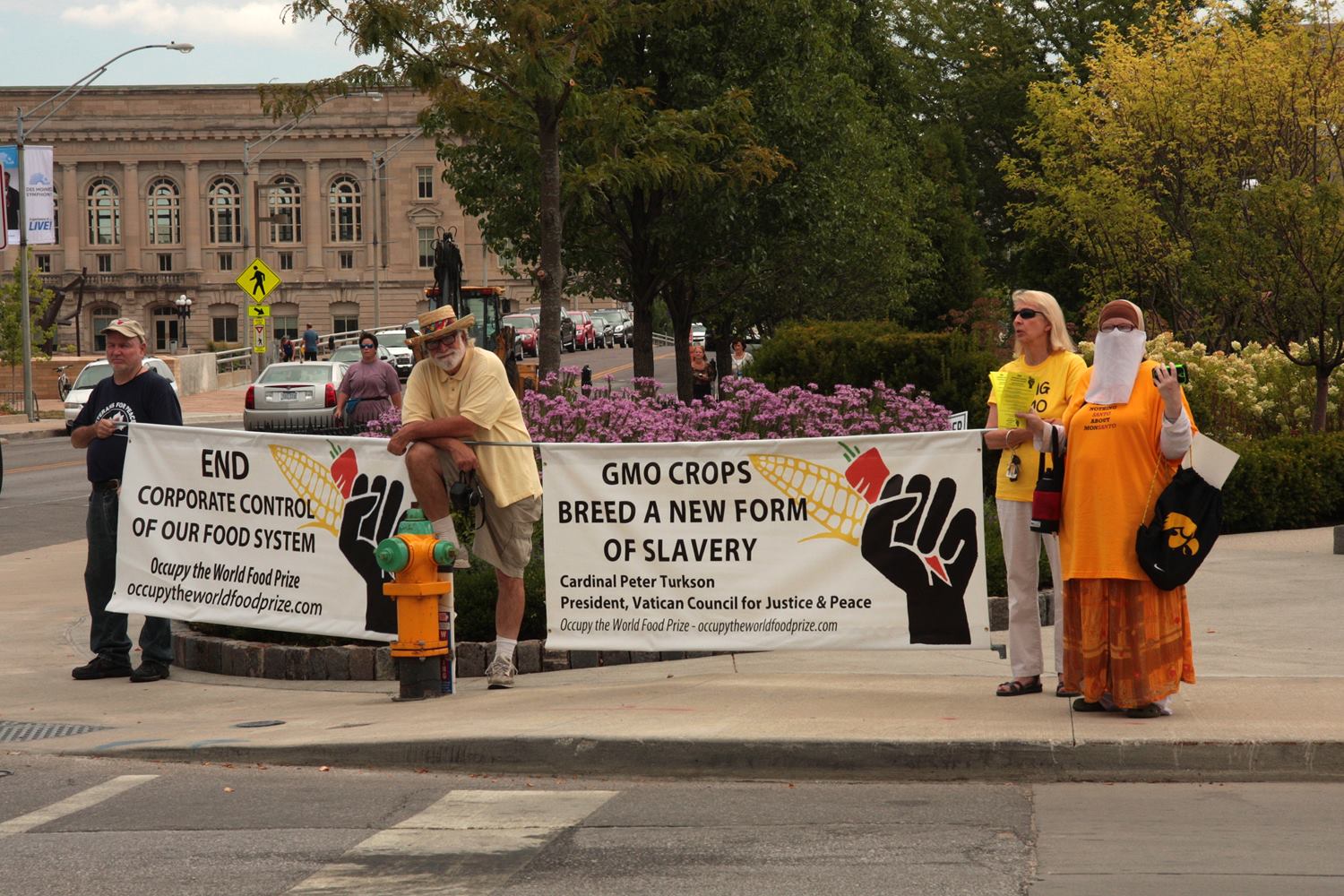
Jim Hightower and his speech, From Factory Farms to GMOs, The Upchuck Rebellion Is Taking Root, has top billing at the Occupy the World Food Prize event on Wednesday, Oct. 16, at 7 p.m. at First United Methodist Church in Des Moines. Maybe that position should have gone to the special guest, Ghanaian Cardinal Peter Turkson.
Leave it to the Roman Catholic Church to point out one of the evils of the agricultural revolution that is genetically modified organisms (GMOs): over-reliance on corporations during third world development. In an article in the National Catholic Reporter, Rich Heffern quoted Cardinal Turkson, “making growers reliant on proprietary, genetically modified seeds smacks of the ‘usual game of economic dependence,’ which in turn, ‘stands out like a new form of slavery.'” Few people I know are talking about GMOs in terms of slavery, but the type of dependency U.S. corporations seek to create in Africa and elsewhere is tangible, and a normal part of development. Cardinal Turkson is at the center of this issue. (For more information, click here).
Cardinal Turkson is president of the pontifical council for justice and peace, a member of the Roman Curia, and potentially the first black Roman Catholic pope. He will be part of the World Food Prize Borlaug Dialogues, and has accepted the invitation to speak at Occupy the World Food Prize. As the National Catholic Reporter pointed out on Oct. 7, he will be talking to both sides in the GMO debate.
During an interview with Des Moines activist Ed Fallon, Occupy the World Food Prize organizer Frank Cordaro said, “our lessons from the occupy movement have taught us that the global financial system controls everything… and lo and behold, we discovered this World Food Prize, and when you look under the covers, it is completely owned and scripted by corporate ag.” “It’s not a world food prize, it’s a corporate world food prize,” Cordaro told National Catholic Reporter in a separate interview.
This year’s World Food Prize laureates are three individuals who have been instrumental in the development of GMOs used by Monsanto and Syngenta Biotechnology, and their companies underwrite a substantial part of the costs of the World Food Prize. Their election to the hall of laureates appears to be self-serving of corporate interests.
Cardinal Peter Turkson is expected to speak against the use of GMOs during the Borlaug Dialogues, which are another attempt by corporations to control the message about their business through so-called opposing views. The dialogues are another in a series of corporate attempts to create a false sense of rational discussion, when, like this year’s laureates, it is self serving at best.
The event flyer for the Occupy the World Food Prize is here. The World Food Prize website is here.
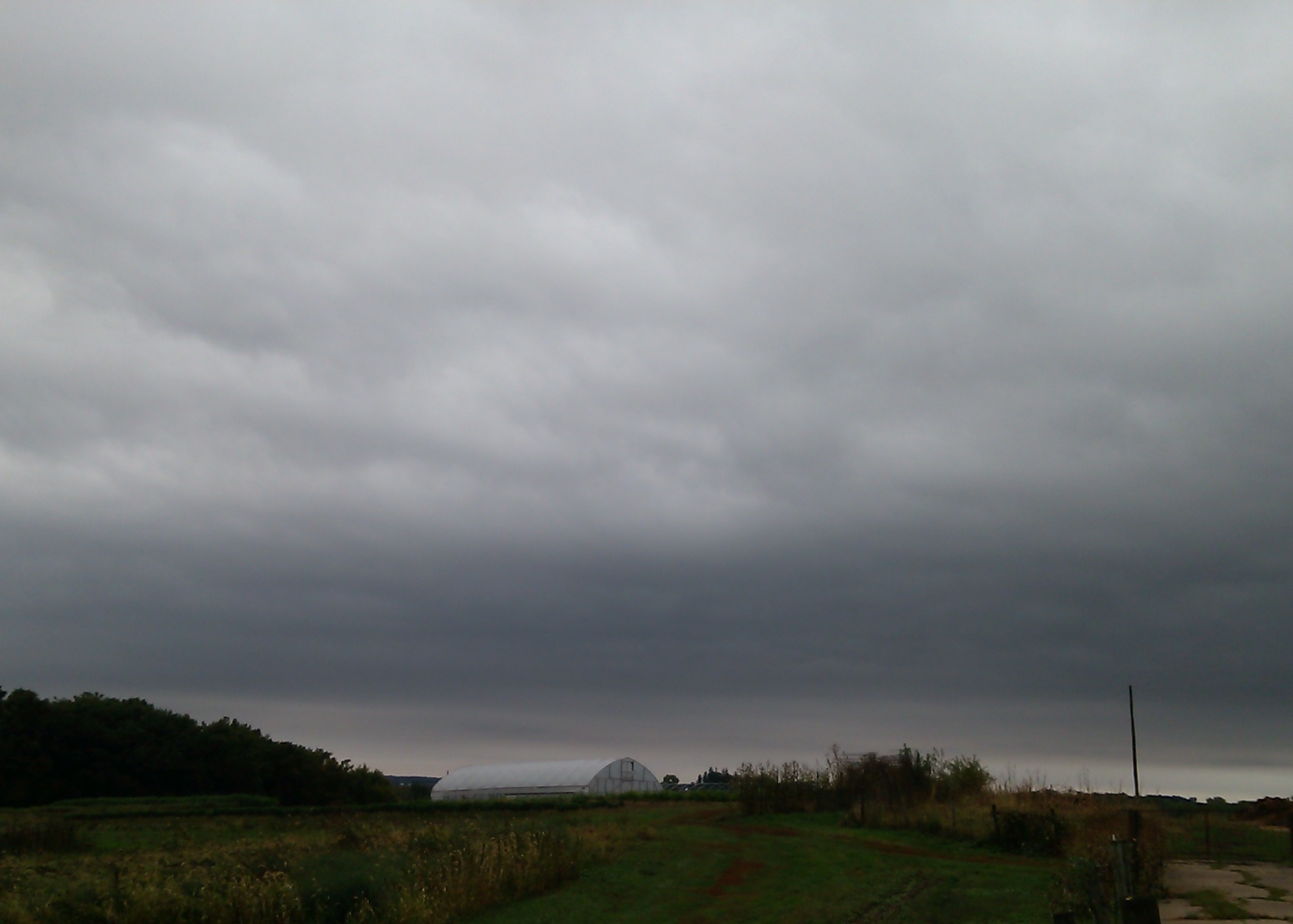
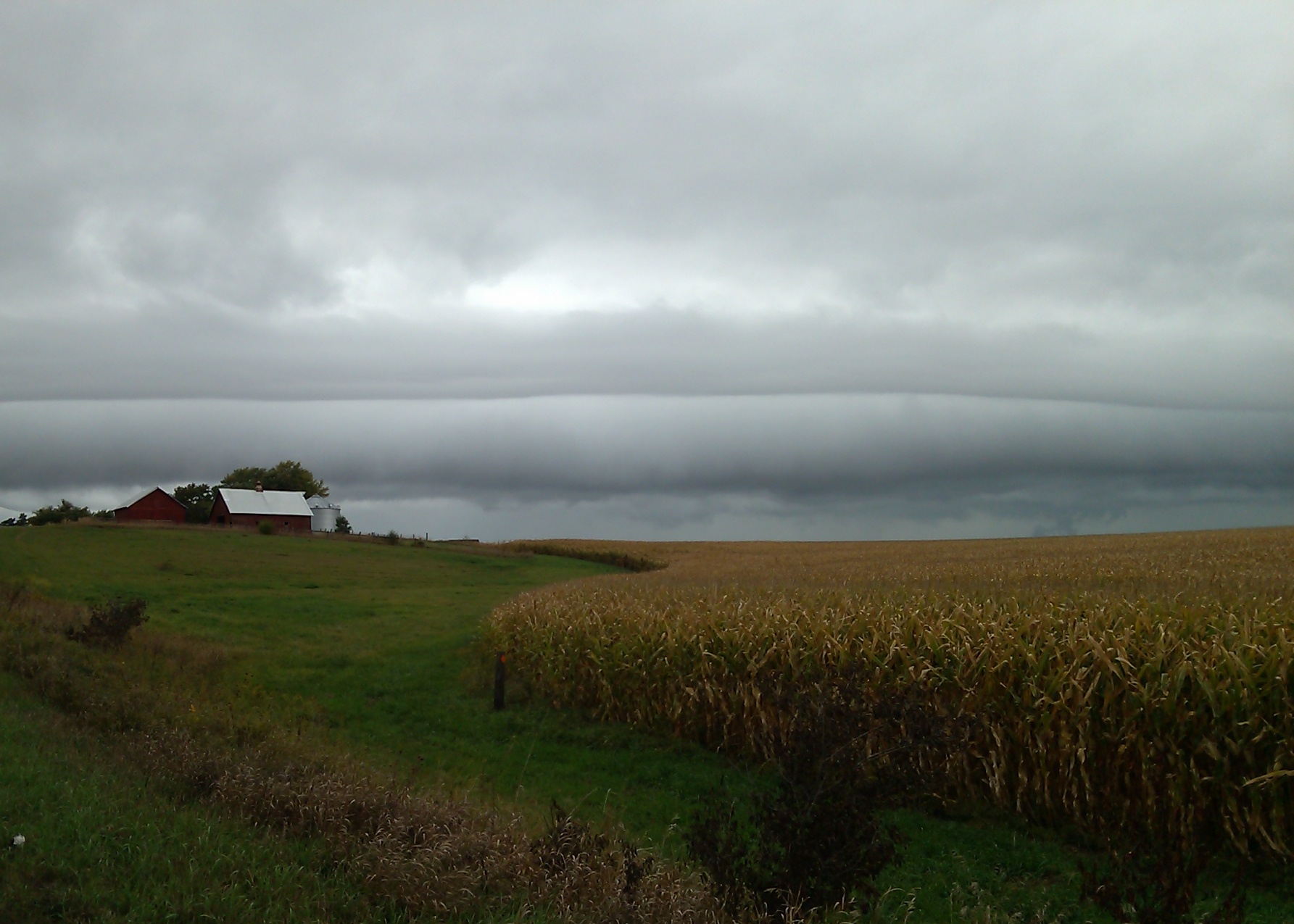
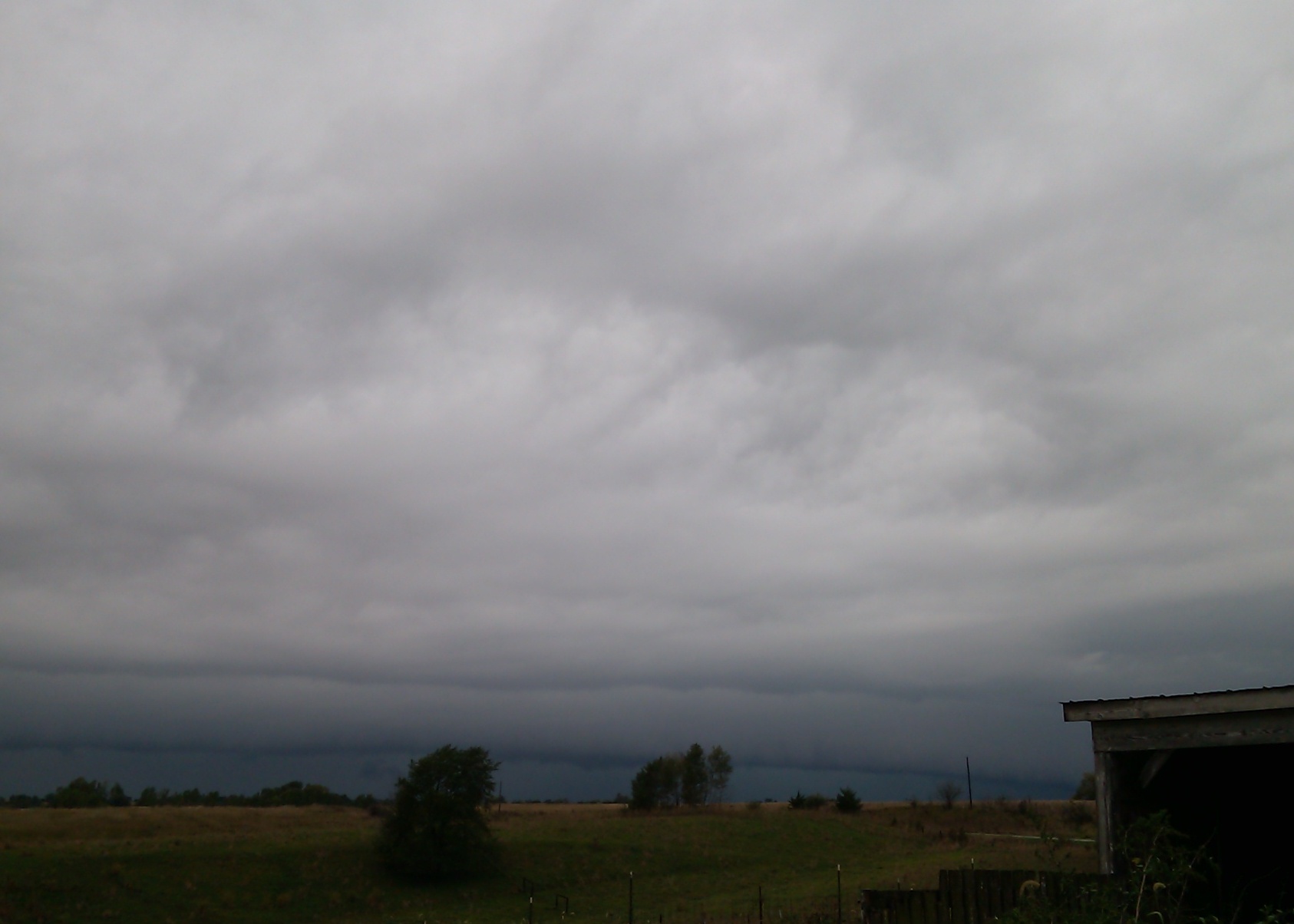
RURAL CEDAR TOWNSHIP— A task list arrived via email from the farm at 8:17 a.m. It included work in the germination shed and the high tunnel. After arriving, and before getting very far, thunder and lightning began, and after a phone call to the owner, we decided to stop work in the structures until after the storm passed. It meant a coffee break in town.
I watched the cloud formations move in, and they threatened and thundered, and ultimately did not bring much rain. As soon as it begins to clear, I’ll head back to finish what was started. In the meanwhile, I made hot sauce, and an apple crisp from Cortland apples is baking in the oven.
Thunderstorm Rolling In
A Cortland apple is a cross between McIntosh and Ben Davis apples, introduced in Geneva, New York in 1902. When peeling and cutting the slices, the browning of oxidation doesn’t occur as quickly as with other varieties. They are popular with people of a certain age, and last week I stopped by and picked the rest of what was on the trees at the orchard. There is enough to test my theory that any apple can be made into apple crisp… more than once.
The western sky is beginning to clear. As soon as the apple crisp is out of the oven, it’s back to the high tunnel to plant more seedlings. Better have that coffee soon.
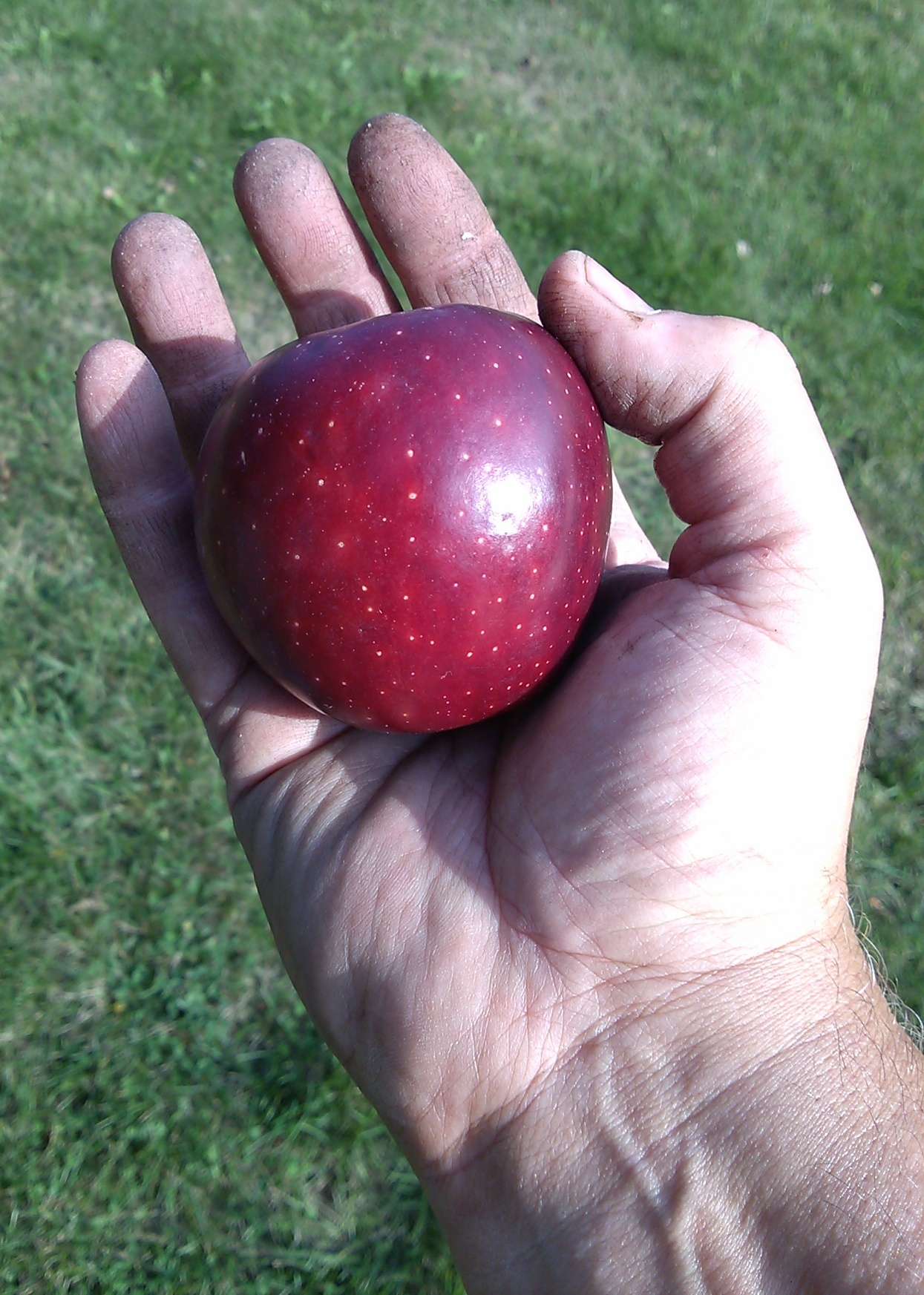
LAKE MACBRIDE— Two hours were spent outside eating apples from the tree… and picking them. Their ripeness was perfection, and as sweet as an apple could get, these seemed sweeter, especially the Golden Delicious.
With a two-year supply of condiments already in the cupboard— apple butter, pear butter, apple-pear butter, raspberry jam, grape jelly, wild black raspberry jam and others— the question is what to do with the three remaining bushels of apples. The answer is clear, eat them out of hand, bake them, and make applesauce.
Apple Harvest
My four trees produced more than 24 bushels of apples this season, the most I can recall. Growing conditions were almost ideal, and the fruit is mostly bug and fungus free. Having never sprayed these trees, they are as close to organic as can be.
As the season turns to winter, I’ll store some for as long as possible for apple crisp, and maybe an apple pie. To remind me of the brief dash of brilliance that was this summer’s apple crop.
LAKE MACBRIDE— Arugula volunteered in the tomato patch and we had a simple pasta with it last night for dinner. It has been growing for three additional years since the patch was planted in arugula. Here’s the recipe:
Put a pot on to boil one pound of pasta.
In a large bowl, add five medium tomatoes sliced in wedges, two cups roughly chopped arugula, 1-1/2 cups chopped fresh basil, one teaspoon dried, flaked oregano leaves, one half cup olives, two tablespoons balsamic vinegar, three tablespoons olive oil and salt and pepper to taste. When the pasta is cooked and drained, add it all to the bowl and mix gently with tongs. Add one cup of Romano or Parmesan cheese and continue to mix. Serve immediately. Makes five to six servings.
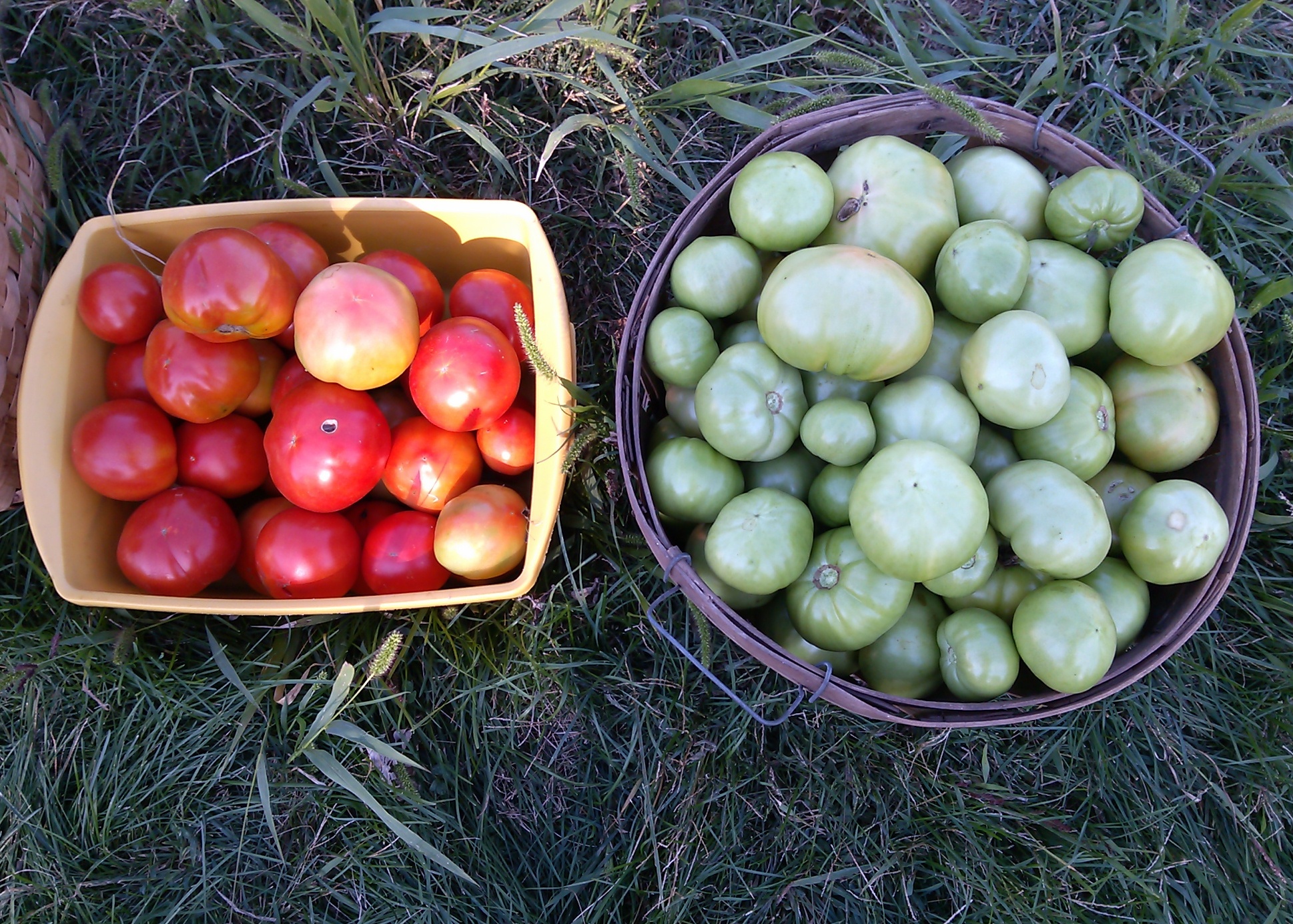
Red and Green Tomatoes
After the garden is through, we glean it. This means going through the plots, removing the plants and picking the last bits of fresh vegetables. Last night I gleaned half of the tomato patch and it yielded the arugula and green and red tomatoes. I also raked the mulch and put it in a pile to use later.
The best green tomatoes will be wrapped in newspaper to ripen indoors, and the lesser ones will go into a garden ends salsa which will include hot and bell peppers, ripe Roma tomatoes, onions, garlic and whatever else is found while clearing the garden spaces. I may make fried green tomatoes from the biggest slices as I have been experimenting with a buttermilk and cornmeal coating this year.
The empty garden plot will store a brush pile until the branches are either chipped for mulch or burned. It is time to consolidate all the piles of fallen branches around the yard and mow the lawn.
Adding to my to-do list: make soup stock from fresh turnip leaves, harvest and dry the rest of the herbs, and glean the rest of the garden. I saw at least one more patch of volunteer arugula, and there will be a few Brussels sprouts, more tomatoes and the turnip roots. There is leftover garlic from my shares at the CSA, and some may get cracked and planted.
With all of this end of season activity, some delicious dishes are in the works.





 Journey Home
You must be logged in to post a comment.