Categories
Kitchen Garden

Pushing the Tomato Limit

A Day's Tomato Harvest
A Day’s Tomato Harvest

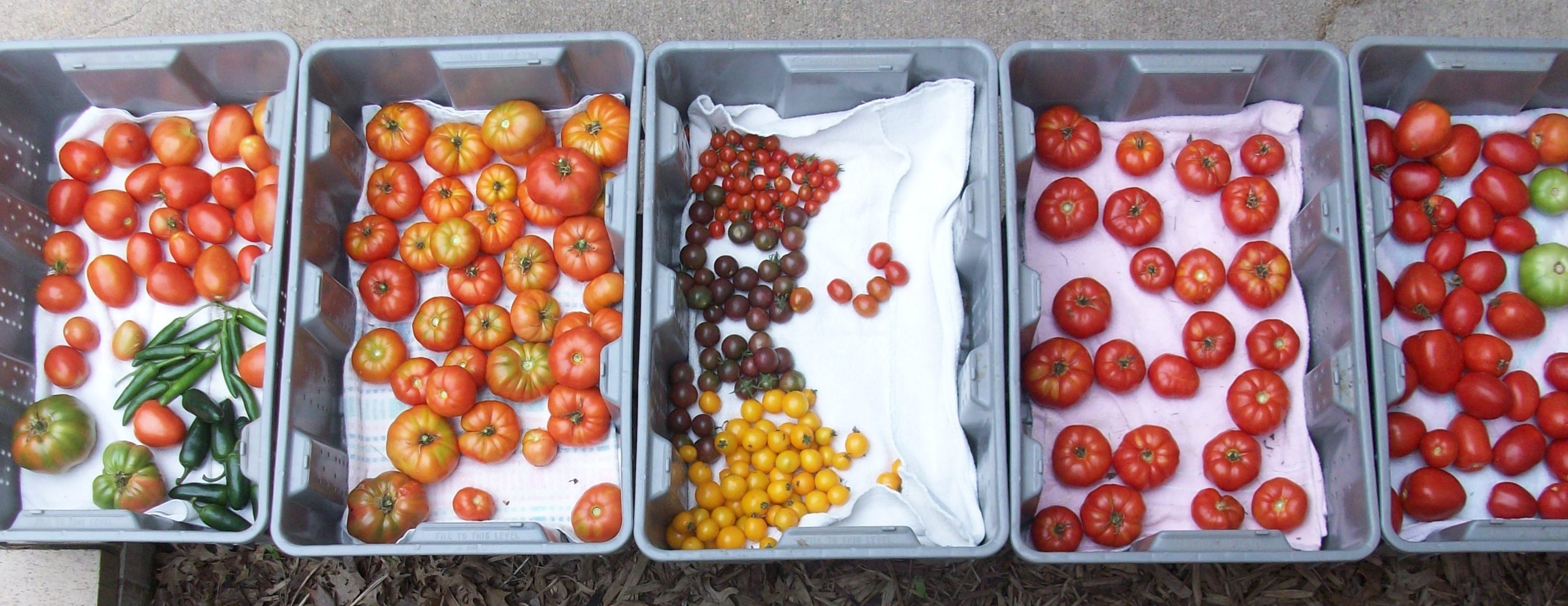
LAKE MACBRIDE— A friend declined my offer of a bag of tomatoes yesterday, indicating we have entered that time of garden tomato abundance— ready or not.

It has been a mixed tomato bag during this summer of cool nights and no rain. The heirloom tomatoes are producing, but traditional varieties, notably beefsteak, are not doing as well. My garden is producing more because of its diversity of seeds (12 varieties), and large number (32+) of plants. There will be no tomato shortage in Big Grove.

After abundance, and limited outlets to get rid of the fruit, the pressing urgency to preserve what we can’t eat fresh has arrived. A couple of thoughts about that.
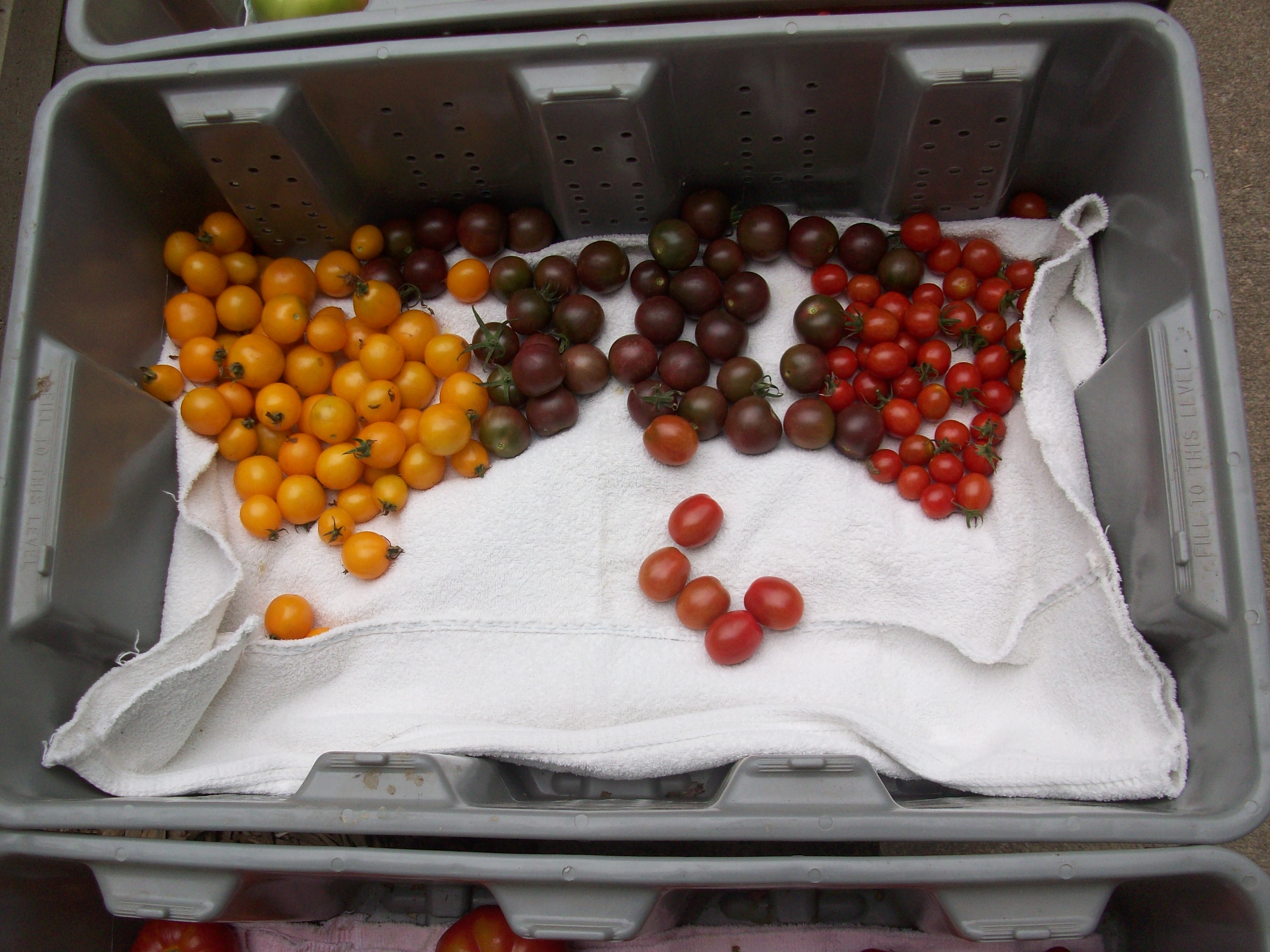
Cherry Tomatoes
Cherry Tomatoes

A friend suggested frozen cherry tomatoes hold up well, so a tray or two will be devoted to an experiment. I have my doubts, but it is worth a try.

The Roma-type tomatoes will go into sauce and juice. The pantry already has enough diced and whole tomatoes to last until next season, so the focus will be on thick tomato sauce to use with pasta and in chili. The juice is a by-product, and the thought of discarding it gains no traction, so it will be canned in quarts.
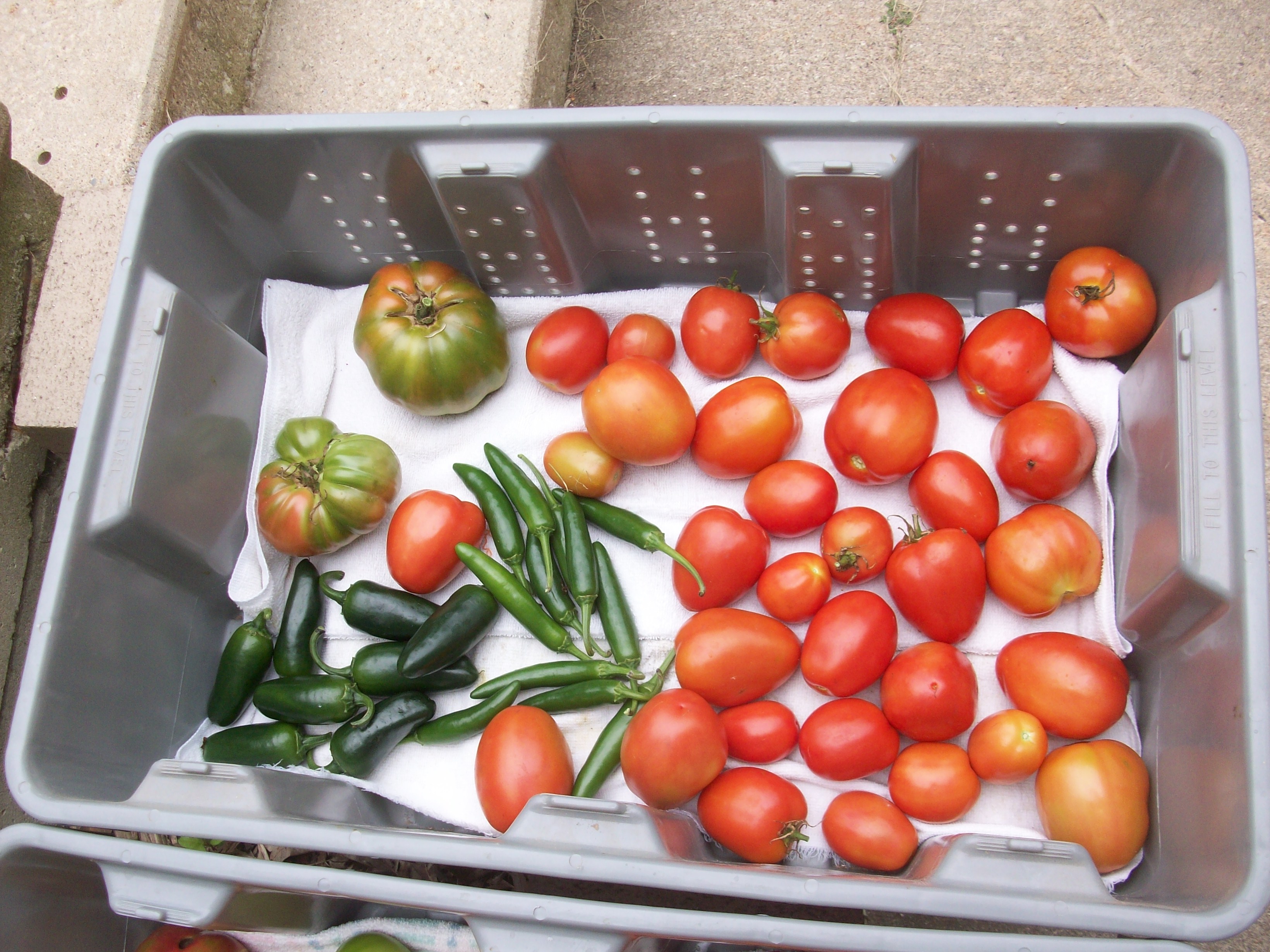
Peppers and Tomatoes

Roma is also a good tomato for salsa and hot sauce. There was plenty canned in previous years to meet our needs. I should say my current needs, since I am the only person in our household who eats it. At the same time, by following lessons learned at our CSA, there will be a bumper crop of Serrano and jalapeno peppers, which shouldn’t go to waste. Some form of canned salsa or hot sauce seems inevitable.

I planted a smaller tomato for canning whole, but they haven’t begun to come in yet. If and when they do, I’ll execute the plan and add them to the storage shelf.

It is tomato heaven or hell, depending upon your perspective. It’s all good here, although it adds more work to an already busy season— part of sustaining a life in a turbulent world.
Categories
Kitchen Garden

Cooking in Big Grove

Broccoli Florets
Broccoli Florets

The harvest is strong at the CSA and the abundance has been reason to engage in cooking again. It’s not that we haven’t cooked meals. It’s that there is so much to do in this brief time on the planet that like simmering pasta sauce from last year’s tomatoes, the activity was moved to the back burner.

Our own garden looks to produce a lot of tomatoes, peppers, a few cucumbers, and some celery. There is also a lot of fruit on the apple and pear trees.

There may be an eggplant or two from our garden, kale enough to feed the entire subdivision, and whatever I manage to get in the ground for second crop. At the grocery store on Tuesday, zero is the number of fresh vegetables purchased because we have more than we can possibly use— local food luxury.

The garden got away from me this year, and yesterday I mowed down the garlic patch. The bulbs were too small for kitchen use, and there is a supply of garlic scapes in the fridge for daily use until the bulbs from the CSA have cured. If I get to it, I plan to spade the ground and cover it with grass clippings.

Eggplant is a blessing and a curse. I made a casserole of tomato sauce, chunks of sliced eggplant, fresh mozzarella, and a cooked mixture of onion, diced eggplant, zucchini, fresh cherry tomatoes and kale for dinner last night. It was very tasty, but a person can enjoy eggplant only for so long during the season. Eggplant produces abundantly in this climate, and the rounds I baked and froze last year went into this year’s compost. Will eat it at the beginning of the season, but for how long afterward is an open question.

There is also cabbage from the CSA. Coleslaw is a typical dish. During my recent pantry review, I found plenty of canned sauerkraut— enough to last another year. There is also soup aplenty, so we’ll be sharing the extra cabbage.

 Someone at the CSA made pickles with kohlrabi and freshly grated ginger. I’m seeking that recipe for refrigerator pickles as a way of dealing with an abundance of kohlrabi.

One of the several challenges for a local food system is to prepare the harvest into a portioned, nutritious meal, then to sustain that activity for the entire year. Ingredients are always a combination of garden, pantry, farms and merchants, but it is the knowledge and action of cooking that makes local food viable. Cooking is physical labor and practice more than head knowledge. In a local food system we get plenty of both.

Categories
Kitchen Garden

First Tomatoes

First Tomatoes
First Tomatoes

LAKE MACBRIDE— Earlier this week the first tomatoes were harvested from our garden. Two types of cherries which were sliced up and placed on a dinner salad. Few things are as good as a fresh tomato.

There are some 32 tomato plants in our garden and we hope there will be an abundant harvest. One never knows with the tomato blight, the uncertain weather, and bugs. We don’t spray anything on our tomatoes, and take what they will produce— less deductions for certain conditions. It has been enough.

First tomatoes are another benchmark along the year’s progress. Later this year than previously, but just as delicious.

Categories
Environment Kitchen Garden

Dry Weather Returns

30 Pounds of Broccoli

LAKE MACBRIDE— When the ditch in front of our house dried enough to run the lawn tractor through, it was a sign that dry conditions were returning to Big Grove. 140th Street remains flooded, but most of the other roads in the county are passable. After an exceptionally wet and pleasant spring and early summer, the hot, humid weather has returned and we need rain.

Forcing myself outside, away from kitchen work, I pulled weeds from very dry soil before the day got too hot. I watered the vegetables, hoping dew and rain later in the week will nourish them— will be watering again before nightfall.

Broccoli Closeup
Broccoli Closeup

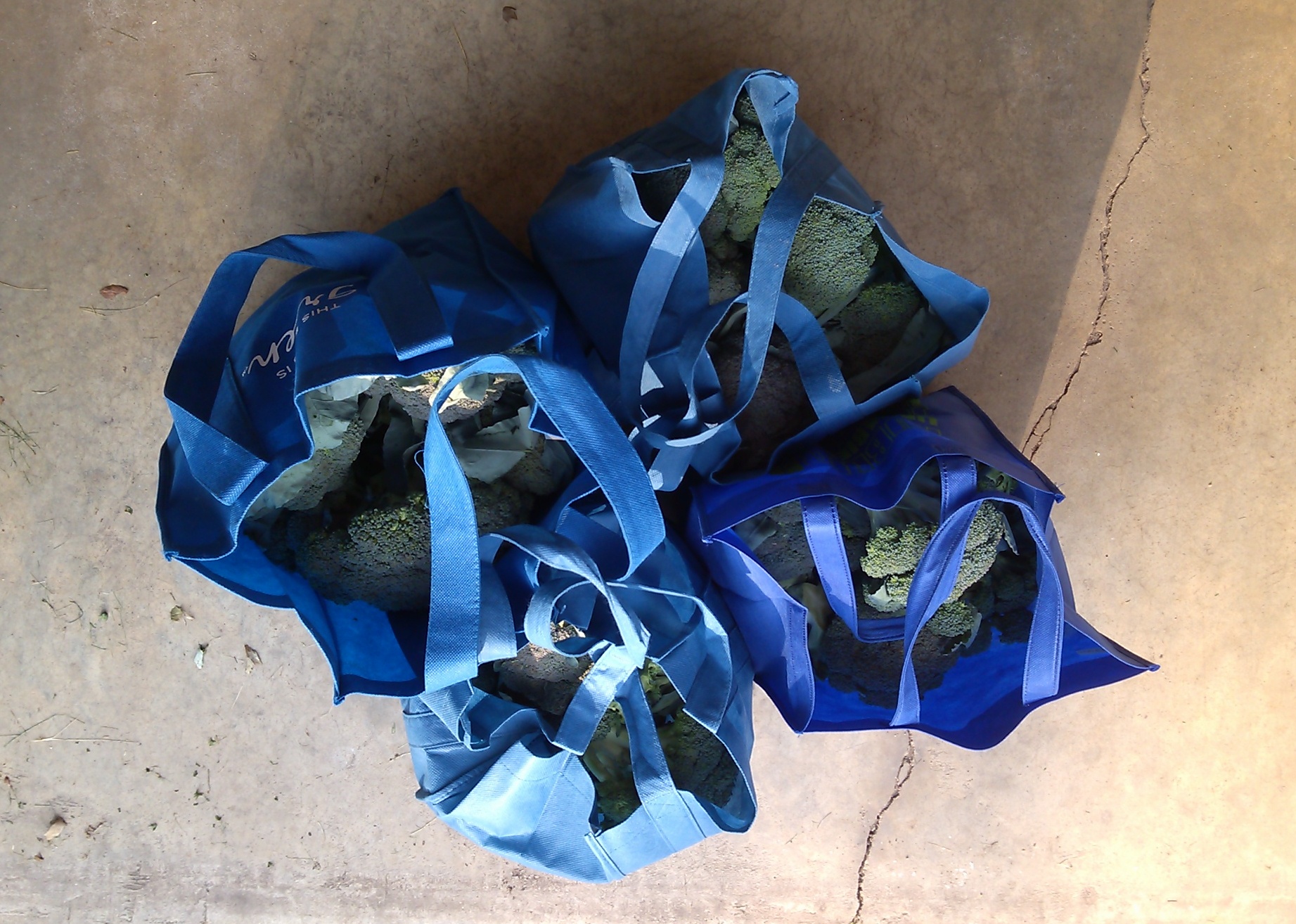
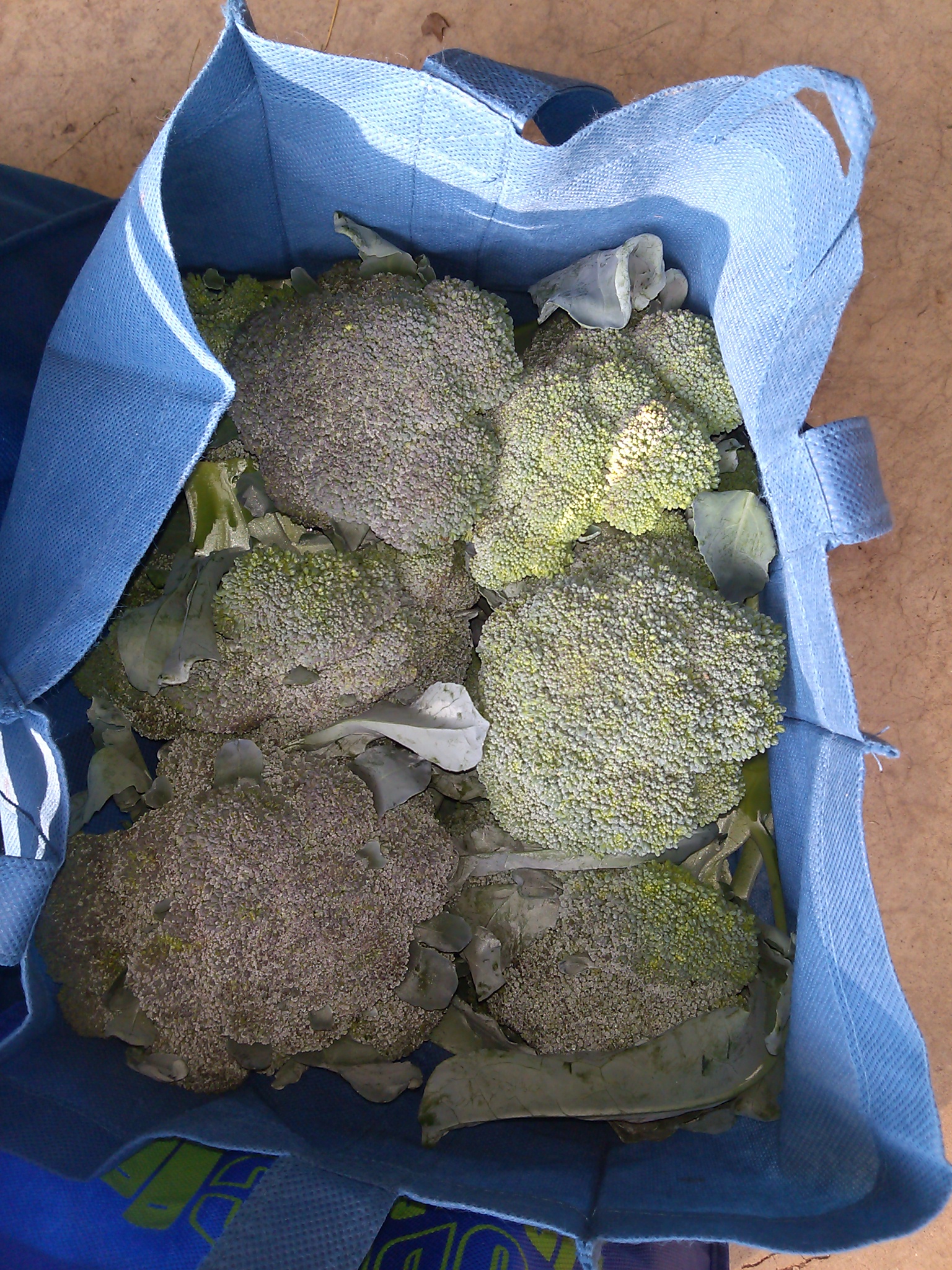
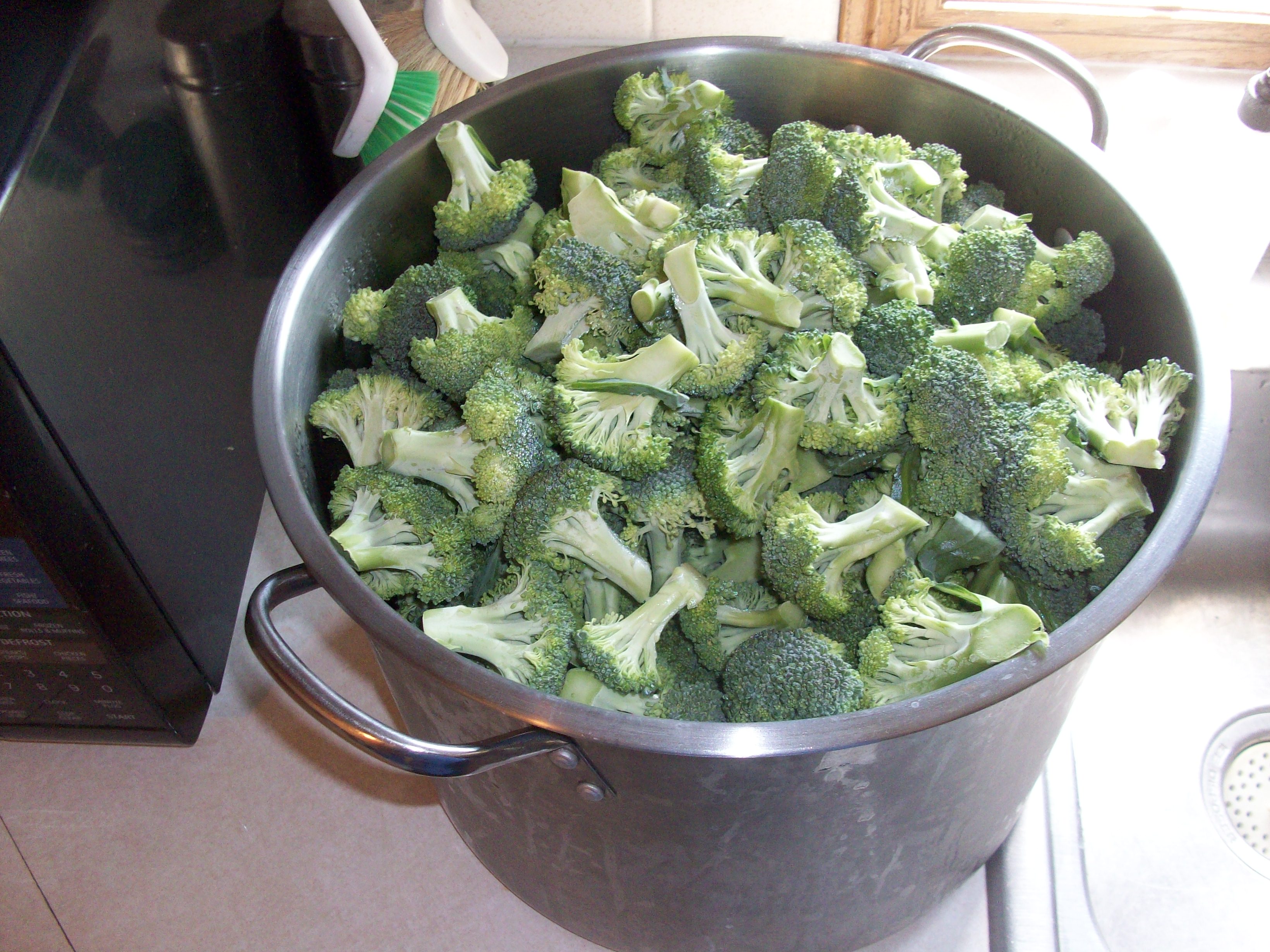
The last 24 hours has been what local food enthusiasts live for— securing broccoli for the winter, blanching and freezing it. It is work, with these outcomes: the best heads were kept fresh to cook later in the week; some of the best looking florets ever are processed and freezing; stems will be converted to soup, which then will be canned for later use; the freezer is getting a thorough cleaning of last year’s produce to make room, some of them going into the aforementioned soup; frozen rhubarb will be converted to sauce and canned; blueberries? Who knew?; and finally, vegetables that were frozen and are now coming in fresh will be composted.

Last night and today’s work is positive in so many ways.

That said, would it be better to buy frozen broccoli from the store during winter? When one lives close to the means of production, the answer is an emphatic no.

Categories
Kitchen Garden

Garlic Harvest

Garlic Harvest
Garlic Harvest

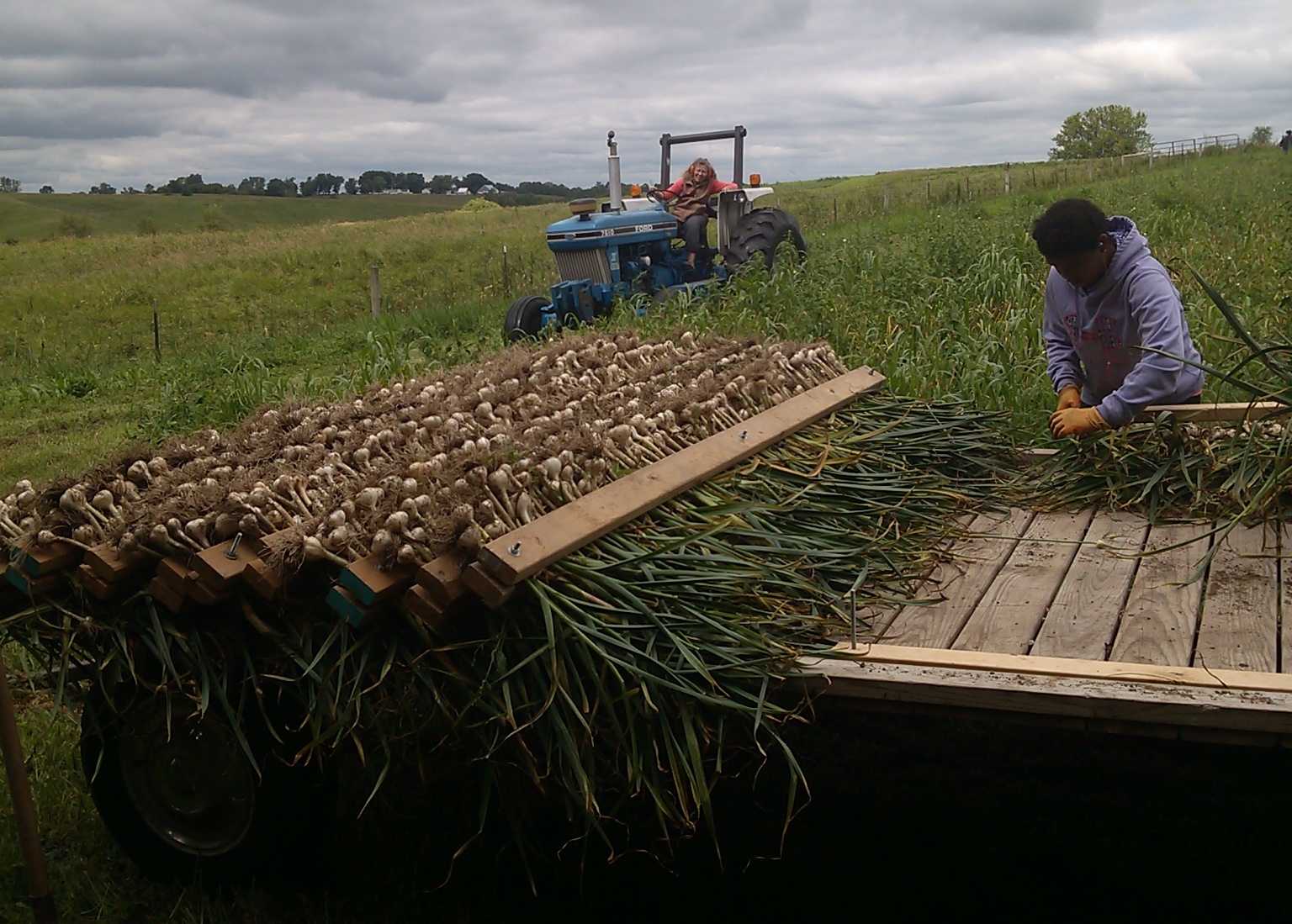
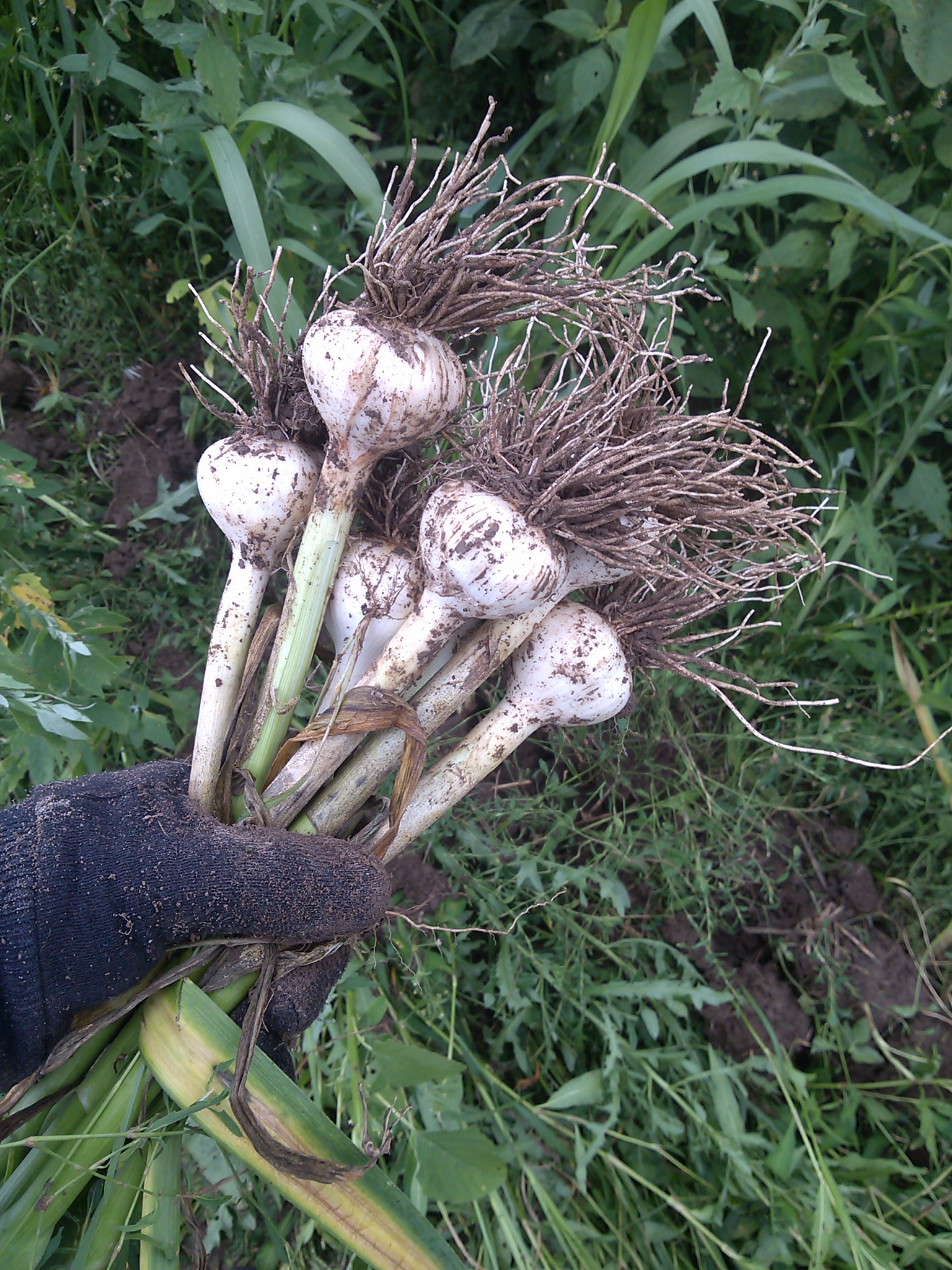
RURAL CEDAR TOWNSHIP— This week’s work at the CSA was helping with the garlic harvest. Now is the time to get it out of the field, even as a few garlic scapes linger in the ice box.

It was all hands on deck yesterday, and I did my share— in some cases picking the garlic I remember planting last fall. The crew size varied during my shift with as many as 16 workers at a time busy digging, cleaning, racking and carrying. It has now been a complete year since we had to buy garlic for our household.

Fresh Garlic
Fresh Garlic

The work was not demanding, but at the end of the day, my hands were cramping uncontrollably for a while. The trouble dissipated with deep sleep, and today I feel as normal as a 60 something ever does.

It felt good to be a part of this year’s garlic harvest.

Categories
Kitchen Garden Writing

Summer Thunderstorm

Red Crust Pizza
Red Crust Pizza

LAKE MACBRIDE— Rain was brewing when I went outside early this morning. One could sense it in the warm, electrified air. It came and poured two inches in the garden cart left outside to get washed out. The storm winked the power a couple of times, although not long enough to stop my work on a newspaper article. In all, it was a decent, if unneeded rain.

Temperatures in June averaged 70.3° or 0.6°above normal, while precipitation totaled 9.94 inches or 4.92 inches above normal, according to state climatologist Harry Hillaker. This ranks as the 55th warmest and third wettest June among 141 years of records. The only calendar months with greater statewide precipitation averages were July 1993 (10.50”), June 2010 (10.39) and June 1947 (10.33). The rainfall isn’t done for today.

I’m taking a break between two news articles due this weekend. Cleansing the writer’s palate with new words in a different frame. The first story is filed, and the second will be before going to the orchard to confirm my work during the apple season that starts today.

It is an unusual Saturday off from the warehouse. I cancelled outdoor work because of the forecast for more rain, so besides at-home work on the newspaper and two other gigs, the day is mine. My spouse is working this afternoon, so I’ll have the house to myself much of the day.

Yesterday I was invited to luncheon at the CSA. As a part time worker, I get included in special events and attend when my schedule permits. Eleven farm workers dined on pizza, coleslaw, steamed broccoli, zucchini cake and watermelon. Only a few ingredients came from off the farm. I opined that the watermelon was from Florida, but was guessing.

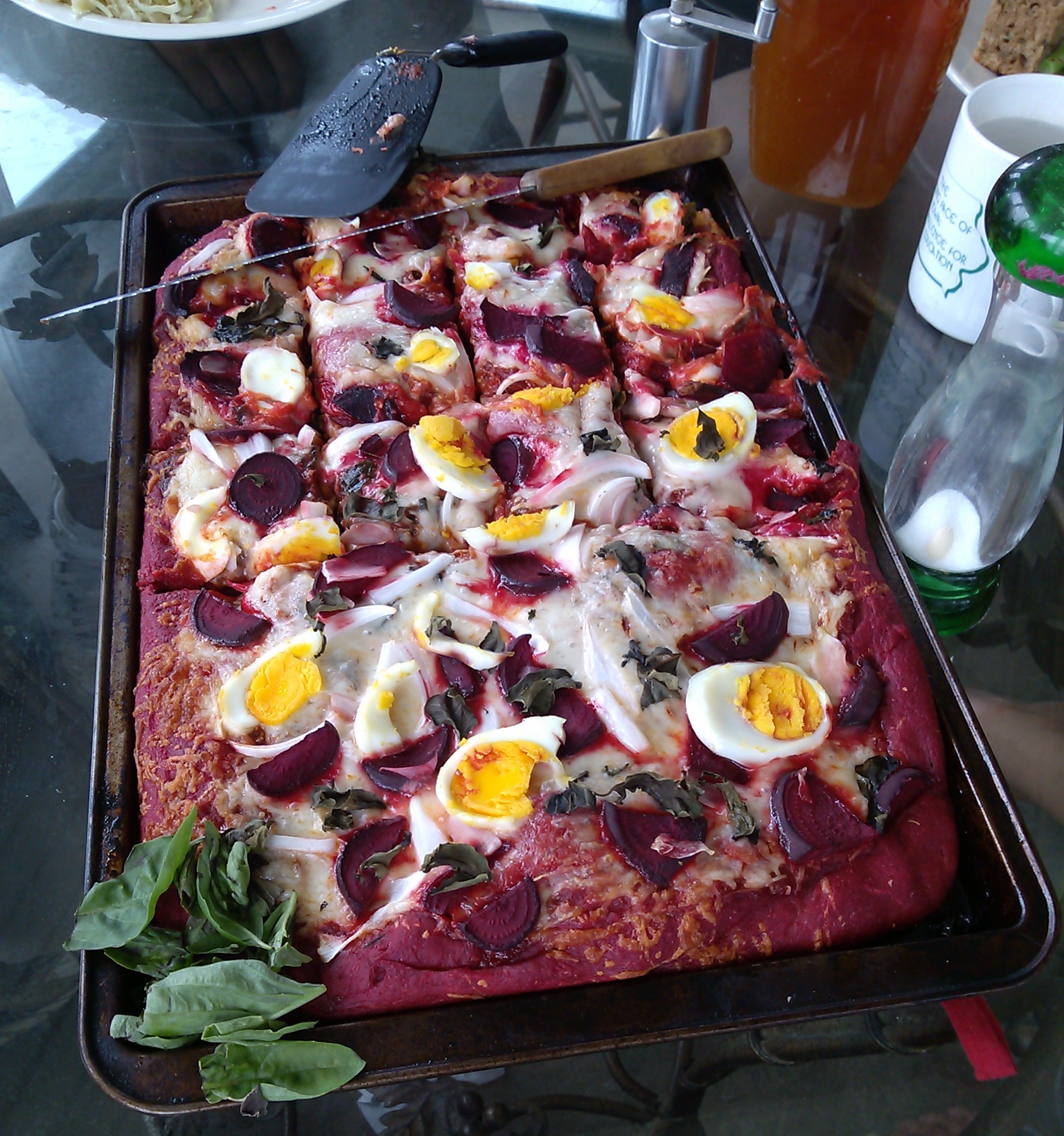
The pizza dough was turned red by adding beet puree. Topped with a tomato sauce, mozzarella cheese, sliced beets, onions, sliced hard-cooked eggs and basil, not only was it delicious, it was beautiful. The rest of the meal was standard, in-season local food fare, simply prepared.

I am working on a piece about Alice Waters and asked each farm worker individually if they knew who she was. Six of eleven (55 percent) did not recognize the name. On a farm where the major effort is organic, locally grown ingredients, and using them to create a specific type of cuisine, I was surprised more people had not heard of her. Waters is not as well known as some foodies might think.

A discussion of breaking vegetarianism led us down a weird conversational path. Someone said so many vegans and vegetarians break their eating habits with bacon. Most everyone at the table had some type of hog slaughtering experience, so for about 20 minutes that became our conversation.

When people live close to the means of production, the conversation seems reasonable. We covered home slaughtering of a market animal that died unexpectedly the day before shipping, working in a slaughter house, visits to confinement hog operations, a story about consumption of male hog gonads, chitterlings, lard rendering, using bacon grease in cooking, and many more topics. A porcine version of Moby Dick, if you will, told by people who know their subject.

I’m willing to bet fewer people would eat bacon if they knew where it came from.

Yesterday I transplanted celery and snipped off the leaves from the extra seedlings. It was the best tasting celery ever. We’ll see how much it produces. This morning’s rain should help.

Categories
Kitchen Garden

Summer Soup with Turnips

Front Moving In
Front Moving In

LAKE MACBRIDE— The rain has been less than normal according to the state climatologist.

The three spring months of March, April and May averaged 45.5° or 2.8° below normal while precipitation totaled 8.82 inches or 1.40 inches less than normal. This ranks as the 32nd coolest and 68th driest spring among 142 years of record. This season was uneventful compared to the two previous springs with 2012 setting a record for warmest spring and 2013 being the wettest on record.

Plants in the garden, including weeds, seem to be thriving, despite the news.

Turnips
Turnips

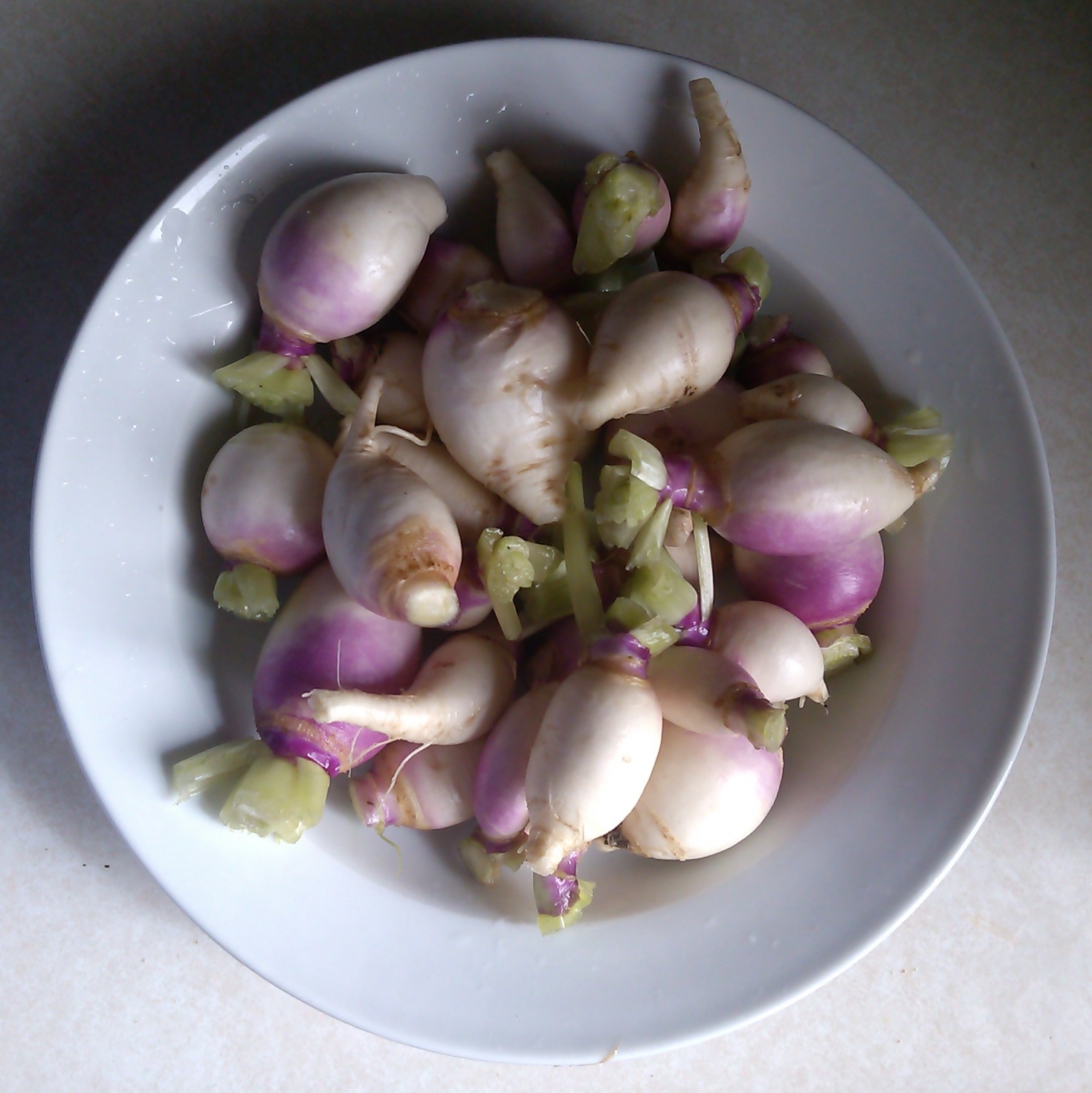
With the recently referenced turnip harvest, it became time to make summer soup. Here are some basic directions, however soup doesn’t have many rules, so readers should feel free to add what’s fresh, going bad and available.

Peel and slice a bowl of spring turnips into 1/8-inch rounds and place into the bottom of a Dutch oven. Pour a quart jar of soup stock on top and turn the heat to high.

Peel and cut two large carrots into rounds, dice a stalk of celery and an onion and add them to the pot.

Roughly chop cooking greens and add.

Drain and wash one can prepared black beans, and add.

When the liquid comes to a boil, add a quarter cup pearled barley. Add dried chervil leaf, dried bell peppers  and three bay leaves. Salt and pepper to taste.

Add a quart of canned tomato juice and more soup stock to cover.

After coming to a boil, reduce the heat to a slow simmer and put the lid on, stirring occasionally.

Serve on a bed of rice or with crackers.

Categories
Kitchen Garden

Kale and Garlic Scape Pesto

Garlic Scapes
Garlic Scapes

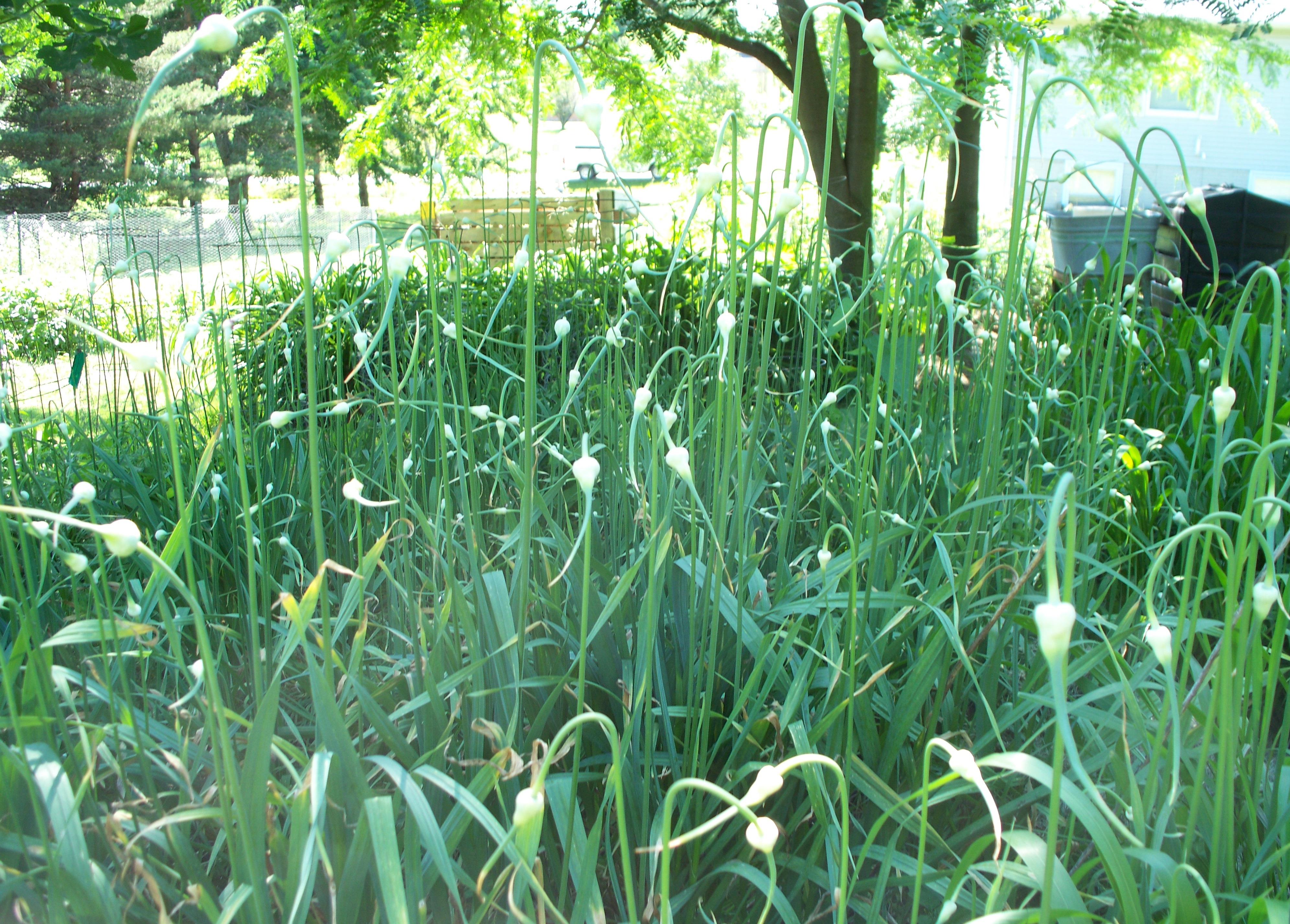
LAKE MACBRIDE— There were big coolers full of garlic scapes and kale available at our CSA pickup point this week. It’s time to make:

Kale and garlic scape pesto

2 cups garlic scapes cut into thin slices
8-10 leaves kale, stems removed and rough chopped to make processing easier
2/3 cup toasted walnuts
Extra virgin olive oil
 to achieve desired texture (1 to 1-1/2 cups)
1 cup grated Parmesan cheese
Salt and pepper to taste

Place scapes, kale, and nuts in the bowl of a food processor and grind until well combined and somewhat smooth but not completely pureed. Slowly drizzle in oil and process until desired texture is achieved (hint: not too much). Empty the contents into a mixing bowl and add cheese, salt and pepper to taste. Put it into small canning jars and keep one in the refrigerator and freeze the rest.

Categories
Kitchen Garden

Rabbits Have Returned

Unsuspecting Predator of the Garden
Unsuspecting Garden Predator

This fellow may look cute, but I caught it approaching the trays of seedlings set near the front steps. Celery, peppers and broccoli were within inches and moments of rabbit consumption when I pulled up in my vehicle after returning from the newspaper. There were three of them frolicking in the long, wet grass last night.

As long as they stay out of the garden, I don’t mind. There is clover to eat, and little human contact toward the back of the lot near the mulberry and Blue Spruce trees.

Elmer FuddI’m no Elmer Fudd, and won’t go hunting rabbits. Other natural predators almost always take their toll and reduce the population. By mid-summer there are usually no noticeable rabbits.

That said, it wouldn’t take long for a rabbit to decimate certain crops, so I train a wary eye on them when they are out and about in the habitat we created— one that suits them so well.

A lot is at stake during the 2014 midterm elections. Some of us would say there is always a lot at stake– with every legislative session, with every local initiative, with every city council and school board meeting, and with every encounter with a neighbor, friend, relative or stranger. Just about everything matters on the Iowa prairie. There is plenty to write about.

At the solstice, moving into my second of three months of summer editorship of Blog for Iowa, it is important to get the lay of the land politically. There is no way to do it other than from a ground view, and that means a few things are worth mentioning… in addition to rabbits.

First, there are only two political campaign subjects that people I meet in daily situations are talking about: Hillary Clinton and Terry Branstad.

HillaryClinton-HardChoicesCopies of Clinton’s recently published memoir are available everywhere books are sold and people are talking about her. The conversation goes something like, “what do you think about Hillary Clinton?” The question is both probing and indicative of the asker’s interest in her. I have little response, except to say “we’ll see if she runs.” She has become such a superstar that the idea of getting up close and personal with her is a dream (or if readers are wingers, a nightmare).

Regarding the governor, people say they have had enough of him. With his political barn signs dotting the landscape, extensive name recognition, and a well-funded campaign war chest, he holds the advantage going into the summer campaign. Many people won’t decide on the gubernatorial race until late October, so there is time for Jack Hatch to close the gap if he works smart.

Something else noticeable at the ground level is how intent most people seem in their lives, to the exclusion of concerns outside their immediate sphere of influence. All of the busy-ness precludes action on solutions to global problems and is more of a concern than whether people are ready for Hillary or tired of Branstad. As Marshall McLuhan’s global village failed to take root in the U.S., it is needed more than ever.

Categories
Kitchen Garden

Garden Log 2014-06-21

Turnips
Turnips

LAKE MACBRIDE— Yesterday was a muddy morning in the garden with dirt getting all over. When a gardener says he is close to the earth, that is it means. Using the hose, I washed off my legs and shoes, and took a shower after processing the vegetables.

I harvested turnip greens for soup stock and this morning there are more than four gallons processing a batch at a time in the water bath. In late July I hope to plant more for fall harvest, and supplemental stock. Considering a cost between $3 and $4 per box at the store, soup stock is money.

Despite the general disaster in the first garden plot, the kale looks nice, and there is spinach between the weeds. The lettuce and arugula grew, but are past picking. The space needs replanting, but it will be a different crop.

The tomatoes look fabulous with luxuriant leaves and many flowers.

Apples are coming along and it will be a small crop.

Four trays of seedlings remain to be planted. As soon as the ground dries out a bit, it shall be done.

Already it is solstice, and the days get shorter from here. It won’t be a great gardening year. It will be good.