Categories
Kitchen Garden

Kale in Sunlight

Kale Seedlings Sunning

Yesterday was a spring day as good as it gets. I took advantage of it and worked outside.

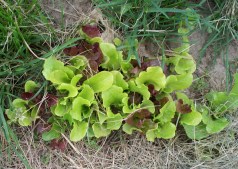
The kale seedlings have been slow-developing, so I put them in direct sunlight. The day’s growth was noticeable. I transplanted the scarlet variety into bigger pots to give them room to grow. They were laggards of the three varieties and best liked in my distribution network. Indoor bedroom germination has never been optimal, but a few hours in sunlight made a difference. More seedling sunning is planned today.

Yesterday’s garden work included planting three kinds of onions, basil seeds, Easter egg radishes, leaf spinach and arugula. I’m moving on to conditioning the soil for everything else.

A sign of the times, I planted the last seeds in pots: zucchini to get a head start for early May transplanting. It won’t be long before the danger of frost is past and everything can go into the ground.

Something is growing in the carrot planters, but I’m not sure it is carrots. Will wait until the leaves show what they are.

The first cut of lawn is the best. The unevenness of early growth gets smoothed over to produce a transient, semi-manicured look. There is a lot of trim work to do, with minor clean-up. The clippings fell where they may providing mulch for the expected long and dry spell. I’m first to admit I don’t care for lawn mowing. The restrictive covenants require me to do it about twice a month.

The apple trees won’t have a good year. Two of them have zero blooms and the Red Delicious has only a couple dozen. The pear tree should bear fruit based on the abundance of blooms. There were plenty of pollinators flying around, including a bumblebee trying to fly up my pants leg.

I gave some excess onion sets to a neighbor and she reciprocated with some “walking onions.” They were ready to eat, but I stuck them in the ground next to one of the composters.

There is always more to do in a garden. We are thankful for each day of clement weather and sunlight.
Categories
Environment Kitchen Garden

Warp and Weft of a Garden

Spring Lettuce
Spring Lettuce

Farming is more than putting plow to furrow. It is a multitude of experiences, evaluations and decisions made over time.

The same is true for gardeners. Each garden, each plot, has its own micro environment and climate. Not only sun and rain, but wind, topography and history play a role.

This year a friend changed rented land for her community supported agriculture project and stories about her struggles are going around the local food community. The new soil hasn’t been worked for organic vegetables, and is recovering from row cropping. I believe — everyone is confident — she will persevere through the change. Yet it will be a setback in a business that operates on thin margins and more physical labor than mechanization. It’s when the going gets tough that farmers get going.

Over the last 23 years my Big Grove garden expanded from a single plot to six, and I’m looking at adding more. That doesn’t count the five fruit trees which have been a source of produce for a number of years. Yesterday the pear tree burst out in full bloom.

I mistakenly planted a locust tree in one of the garden plots. It has grow to maturity, providing shade for two plots at the same time the frequency and severity of drought has increased. Shade serves to protect cucumbers, herbs and greens from constant, intense sunlight in the absence of precipitation. It took me a while to realize what’s going on and leverage it. Now I couldn’t imaging growing without it.

There are a hundred small things like the benefits of a locust tree that converge in the plots of my garden. When I think of retirement — more often now than previously — I can’t imaging life far from a garden and the diverse intricacies of what sustains me and enables vegetables to grow.

My garden and I are the same warp and weft of life that sustains us all.

Categories
Kitchen Garden

Outdoors Weekend

Spring Flowers
Spring Flowers

It was a time to spend outdoors.

The sounds of children playing, dogs barking and yard equipment running dominated the air waves of an unseasonably warm and dry Saturday and Sunday. I heard hardly any of it as I dug in the soil, cleaned out the garden composter and planted.

Yesterday’s average temperature was 16 degrees above the historical average, and we’re running two inches of precipitation behind historical averages. At 80 degrees, the high temperature was well below the record of 93 degrees set in 1896. It was warm nonetheless.

In predawn darkness I watered the seedling trays and noted the peppers are beginning to sprout. It took about two weeks in our bedroom. I planted a tray of seeds for extras, including scarlet kale, tomatoes and Swiss chard. I think I’m done with seed planting, with the next step being transplanting selected seedlings into larger containers.

I prepared and installed containers of Yukon Gold and Kennebec potatoes behind the compost bins. I planted Cherry Belle and Rudolf round radishes and purple top white globe turnips in nearby rows. The small bag of red onion sets from the home farm and auto supply store went into the ground between the composter and the day lilies. I harvested about three cubic yards of compost which is piled up and ready to use. Things are shaping up nicely in the Locust tree plot.

It seems late for pea planting, yet I used up the remainder of my Sugar Ann Snap Peas in last year’s kale bed. Even if they don’t produce, if they sprout they will fix some nitrogen in the soil planned for tomatoes in about a month.

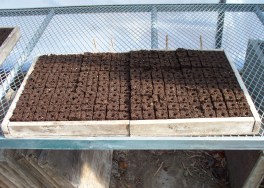
On Sunday I worked at the community supported agriculture project, soil blocking 30 trays for new seeds. There was a crew to plant seeds, tend the greenhouse and plant a number of trays of seedlings in the second high tunnel. I worked until my shoulders ached and will return tonight after my shift to finish the trays I couldn’t get done.

I was tired at the end of each day and glad to be alive in the garden.

Categories
Kitchen Garden

Heading Toward Derby Day

Photo Credit: Quad City Times

That yesterday was opening day in Major League Baseball, and day after tomorrow begins the Masters Golf Tournament in Augusta, were inescapable sports facts on social media.

Spring is about Derby Day for me. It’s a race to get the early garden work done by then so once the risk of frost is minimal the main seedling crops of tomatoes, peppers and the like can go into the ground.

Most years I have been able to take a break from gardening to watch the two-minute Kentucky Derby, taking in just enough of the pageantry to feel a bit queasy. The old saw is horse racing is the sport of kings and who wants or needs it? It’s just there.

Iowa political class member Jerry Crawford asserted last year he had two goals: delivering Iowa for Hillary Clinton and winning the Kentucky Derby. Hillary won the Feb. 1 Iowa caucuses, just barely, and his team Donegal Racing’s 2015 entry in the Kentucky Derby placed fifth. That’s about as close as my life gets to so-called kingmakers.

I’ve been hobbled in gardening by my hand injury. Yesterday I limited my work to planting seeds in trays and transplanting those grown — celery, broccoli and basil — into larger pots. No digging for me… yet.

It was 71 degrees in Alaska in late March, almost 80 degrees in Iowa yesterday. The Alaska temperature was highest in recorded history and not a good sign for the thawing tundra and its release of long banked methane gas.

While sports distracts many, for those of us listening to a different narrative such distraction puts many more at risk of stopping Earth’s engine of sustainability.

That matters even on this small plot in Iowa removed from much of the turbulence in society.

Categories
Home Life Kitchen Garden

Recipe Search

Kennebec and Yukon Gold Seed Potatoes

I called off work at the farm because of the six stitches in my right hand. I had hoped to resume soil blocking today, but not yet.

On deck is transplanting basil into larger plastic pots, preparing containers for potato planting, and radishes, turnips and spinach planted in the ground as the temperature rises to 70 degrees and rain holds off until late afternoon.

With these tasks I can set my own pace and take breaks if pain in my right hand returns.

Mercy Hospital Auxiliary Cookbook 1977

Over the years I’ve collected several hundred cookbooks, including one from the hospital where I was born. Published in 1977, Cooking For… Mercy’s Sake is full of ingredients and ideas I won’t likely use — American cheese, lard, meat and seafood, and a host of prepared food and food mixes.

Still, I search through the recipes, seeking the name of a contributor I know and recipes that can be adapted to our fresh food, locally produced lifestyle. The cookbook committee wrote this poem as introduction:

Recipes are certainly handy
When making cookies, pies and candy.
On the pages of this cookbook you’ll find
Favorite recipes of every kind.
We thank all our friends who took their time
To write their recipes, line by line.
Good luck to you and may you have fun
Trying these recipes, one by one.

On first reading, there’s not much there. Because of my relationship with the hospital I’ll give it another read to see if I can find something adaptable.

My life is about much more than food. While I write a lot about consumables, I’m also preoccupied with the journey — hopefully a long one — through my later working years to full retirement and old age. I didn’t think this would be the case, but as I finished writing for newspapers and took a full-time job there is an undeniable feeling that a corner has been turned. I know part of what’s around the corner and much is also a mystery. I’ll need nourishment along the way, but the unfolding journey is what life has become about.

My take on this is pretty simple, and it goes back to Joan Didion, “We tell ourselves stories in order to live.” I’m trying to make a life in that sense.

Didion explained, “We live entirely… by the imposition of a narrative line upon disparate images, by the ‘ideas’ with which we have learned to freeze the shifting phantasmagoria — which is our actual experience.”

I respect the narratives of others, but can’t adopt them as mine. It is about disengaging from established narratives and experiencing what’s next.

Each day is an adventure in that regard, one to seek joyfully.

Categories
Kitchen Garden

Winter Gardening

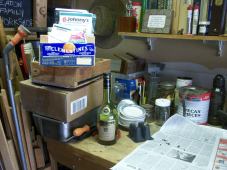
Workbench in Late Winter

Chives, lettuce and garlic are up in the garden, beckoning my presence.

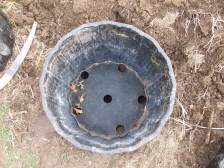
On yesterday’s last day of winter I spent a couple of hours burying four large plastic tubs for an experiment in carrot growing. 18-inches deep, I filled them with compost. After settling overnight, they will be re-filled and planted with four varieties of carrot seeds from Johnny’s Selected Seeds: Yaya F1 OG (hybrid early carrots) Bolero F1 (hybrid storage carrots); Purple 68 F1 (hybrid specialty carrots); and Laguna F1 OG (hybrid main crop carrots).

I have enough seeds to plant a spring and fall crop.

Carrot Containers
Carrot Container

Anyone who has planted carrots is familiar with the main challenge: providing deep, loose soil for the roots to grow. Last year’s crop was a moderate success in the ground, but I didn’t dig the bed deep and it showed. Over the winter I read about growing carrots in containers. Since I had the tubs, there wasn’t much additional work to cut drainage holes and place them in line 10-12 inches deep.

With rainfall, the new soil may settle. Judging from the locust tree roots I cut to make the holes, there is plenty of soil moisture, although a higher percentage of clay a foot deep. It’s an experiment. We’ll see how it goes.

Raised Beds Next to Compost Bins

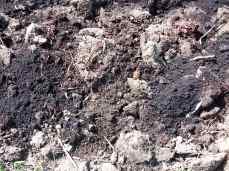
Today’s garden task is to consolidate and blend the remaining compost. There are two bins and a pile of decomposed apple pomace and horse manure. There is plenty to build soil in most of the garden plots.

Categories
Kitchen Garden

First Spade of Soil

Close View of the Garden Before Tilling
Close View of the Garden

The first spadeful of earth was waterlogged. There was no frost more than a foot deep, so I’ll be ready to plant lettuce March 2.

My maternal grandmother called this planting “Belgian lettuce.” I follow the tradition whenever conditions permit. Reserving some lettuce seeds to plant in trays, the rest will be broadcast in a small plot. I will also plant some turnips — mostly for the greens.

The calendar shows it is winter, but spring is everywhere.

Categories
Kitchen Garden

Too Many Falafel

Veggie Burgers
Veggie Burgers

Hope of spring arrived with warm ambient temperatures last weekend. It prompted me to clean the garage, roll up the garden fencing left out after making the burn pile, consider locations to plant Belgian lettuce, and inspect the compost piles and bins.

It won’t be long before gardening begins. It has begun.

In the meanwhile, we continue to cook and eat the stores from gardens and shopping trips past.

A jar of dried chick peas had been sitting on the counter.

I hydrated and boiled them, making enough to fill two plastic tubs — normally that many would last a couple of months. The idea was to use them up.

First I baked falafel. It was a lot of food with the second tub of chick peas leftover. Breakfast has been four or five falafel ever since, making a different sauce for each small batch. There were too many falafel.

Next came veggie burgers. I used chick peas, black beans, oatmeal and a mixture of cooked garlic, onion and bell pepper. Seasoned with parsley, celery salt and herbs from the pantry, with an egg as a binder, there were three extra patties which I froze for future use.

I also made a big batch of flavored iced tea. Using tea bags found in a canning jar in the cupboard, I put four in a teapot and poured boiling water over them to steep. In the back of the ice box I found a quart jar of simple syrup and a bottle of organic lemon juice.

On the bottom of three-cup canning jars I measured a quarter cup each of lemon juice and simple syrup. I poured hot tea on top, screwed on the lid and put them in the ice box. The cost was much lower than the Arnold Palmer – Arizona Iced Tea brand iced tea – lemonade drinks sold in convenience stores everywhere. It tasted much better too.

This weekend was of rest, reading, cooking and a bit of garage and garden work. Brief respite before returning to the farm next Sunday for my first session of soil blocking. Homelife in a busy life that generates too little income but rewards our labor in other ways.

Categories
Kitchen Garden Living in Society

Sunday Morning Rising

High Tunnel
High Tunnel

Lettuce and basil germinated in the tray planted last week, reminding me of why I garden.

It is a chance to witness life as cold sets in for one last spell. Soon winter will turn to spring. I can’t wait. For now, suffice it that the seedlings rise to face the sun through a bedroom window.

The emergence of hearty weeds among my seedlings was unexpected and easy to remedy. We all have weeds growing in our garden, even when it is planted a couple of months before last frost. I continue to pluck them out to make room for what I intended.

The death of Associate Supreme Court Justice Antonin Scalia yesterday was unexpected. It sparked conversations in social media, which for practical purposes includes formal news organizations. Scalia was quail hunting at an exclusive ranch in West Texas — a place where Mick Jagger and the Dixie Chicks have hung out. The event ramped up my understanding of opinions and attitudes regarding the meaning of Scalia’s legacy and the process of choosing a replacement.

By all accounts, Scalia’s was a brilliant if acerbic legal mind.

The Congress is in recess, so President Obama has the option to make a recess appointment. That would be the cleanest way to go, with the selected associate justice serving until the end of the next session. Why would Obama forego the possibility of a lifetime appointment? As he indicated in his remarks on Scalia’s passing, he won’t. However, I pulled a Scalia and began with the text of the Appointments Clause of the U.S. Constitution. There is no time limit on gaining the consent of the U.S. Senate. They have given their advice already: “leave the position open until the next president is sworn in.”

When a nominee is presented to and blocked by the Senate, and if the Supreme Court divides evenly by ideology, the situation would contain both good and bad. There is no guarantee justices will divide by ideology. If they do, the powder keg that is the Supreme Court docket this session would sustain lower court decisions. Winners would include labor (Friedrichs v. California Teachers Association) and losers would include the TEA Party (Evenwel v. Abbott; Harris v. Arizona Independent Redistricting), undocumented immigrants (US v. Texas) and women’s reproductive rights (Women’s Whole Health v. Hellerstedt; Zubik v. Burwell). It seems too early to say all of this will actually happen.

With Scalia deceased, three remaining Supreme Court justices will turn age 80 by the end of the next presidential term. The stakes in the 2016 presidential election could not be higher. Ronald Reagan’s Supreme Court nominee Anthony Kennedy was appointed in February of Reagan’s last year in office, so there is precedent for Obama. Precedent means little in the toxic political environment in which we live.

Life is never as simple as germinating seeds rising toward the sun on a Sunday morning. There will always be weeds in the garden, and so it is with yesterday’s news as Scalia was plucked out by God’s hand.

Categories
Kitchen Garden

Friday Garden Advice

First Seedlings
First Seedlings

Starting a garden is not always easy, especially if one lives in a city.

The main thing is planting the first time and that can be a big step.

The good news is the potential to stumble is more related to attitude than anything else. There is hope. Here are a few bits to get started.

A gardening journey can begin with a trip to the public library to browse the stacks. A lot of gardening books have it all and my current favorites are The Iowa Edition of the Midwest Fruit and Vegetable Book by James A. Fizzell, and MiniFARMING: Self sufficiency on 1/4 acre by Brett L Markham. The former is a comprehensive look at crops that grow well in the Midwest. The latter presents aspects of the growing process with an eye toward sustainability. Because gardening is popular, libraries tend to have a wide selection of research materials and other resources. Remember. Gardening is engaging in a local food system and book learning is only part of it.

Gardening is about changing one’s relationship with the food as much as providing food for the table — process more than produce.  A common mistake is inadequate attention to gardening’s social context. I’ve heard stories of people seeking solace in tilling the ground and nurturing plants from seeds to fruit and vegetables — a form of personal retreat. In most cases gardening involves others — family, fellow consumers, merchants, farmers and gardeners. Discussion of gardening issues and their resolution is endemic to the process and represents the broader context in which gardening occurs.

When people think of local food, most have sweet corn and tomatoes in mind. There is a lot more. A way to begin is to think about what fresh veggies and fruit to buy and which to grow. Because of the space it takes, I always buy sweet corn rather than grow it myself. The other way around with tomatoes and green beans. Squash takes a lot of space, and there are lots of great producers of it everywhere… another to buy. Bell peppers require a certain something I haven’t mastered, so I barter for mine, taking seconds from the farm. Why not buy local food when it is abundant, especially if you know the farmer and how the crops are grown?

If you have a small potential garden plot, I recommend picking 8-12 crops and focus on learning how to grow them well. Pick varieties to ripen throughout the season — spring greens and onions, a few herbs, cucumbers, tomatoes, green beans and kale are all easy to grow. The idea is to dip into the soil and experiment using available resources. Another part most people dislike is dealing with pests and predators. Use those books you checked out from the library and better yet, develop friendships with other gardeners and growers in your area — ask them questions, visit their farms. You’ll find gardening is one of the most popular activities and there is lots to talk about, especially when it comes to common problems.

With a positive attitude, there is little to lose in planting a garden. Once one turns the first spade of soil, there is a world worth experiencing in the microcosm of a back yard. Before long, you’ll be craving life in society to talk about your garden. It is about more than home grown fruit and vegetables.