Categories
Kitchen Garden

Pandemic Provisioning

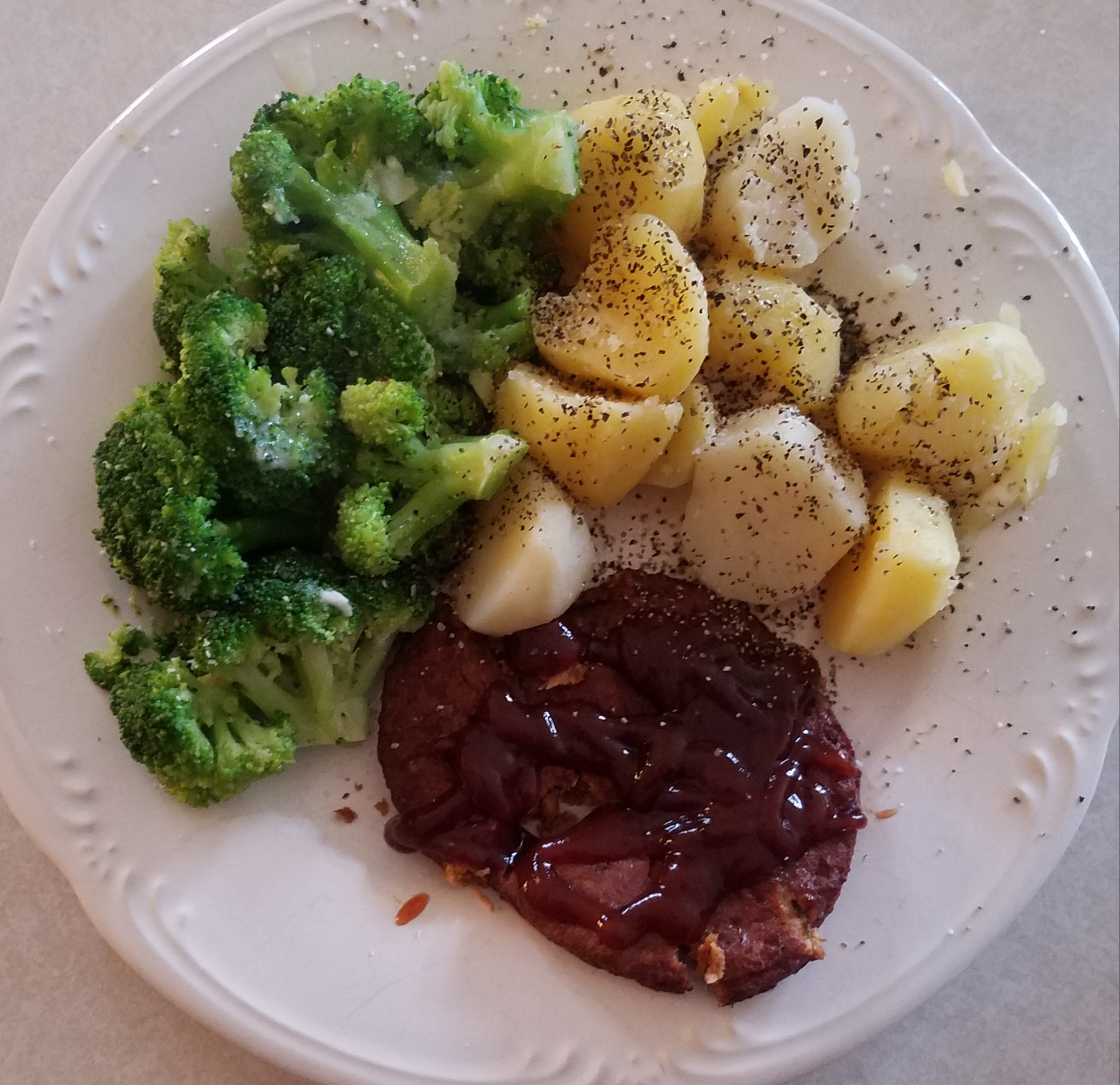
Dinner March 16, 2020.

A foundational aspect of our lives in Big Grove Township is reliance on others when it comes to food. We use the international supply chain which brings items closer to home so we can buy them at the grocery store.

At the same time, we spend 24 percent of our food dollars on products where we know the face of the farmer. That’s a lot more than most families and it results in a pantry full of staples like potatoes, onions, carrots, canned tomatoes, frozen vegetables, pickles and apple products.

Our regular habits prepare us for a month of quarantine without the coronavirus pandemic. We’d suffer for lack of milk and eggs, yet in a global society where millions go hungry each night, it’s more inconvenience than any kind of deprivation. We’ll get by.

The meal in the photo is our home food story. One third Farmer Kate’s potatoes, one third frozen organic broccoli from the wholesale club, and one third a commercial, mass produced soybean burger from the grocery store. The garden broccoli crop wasn’t so good last year and we’ve depleted the freezer of our own. That’s where the food supply chain comes in handy.

I don’t know if I’ll venture to work at the home, farm and auto supply store tomorrow. After the management team arrives later this morning I’ll phone in and see what protections they offer employees. I work in the warehouse and am isolated from most customer contact. All the same, retail is a people-contact job and there is more risk there than in staying home. If I choose to stay home, there will be no compensation.

I’d feel better about the isolation if it were warm enough to work in the yard. Yesterday morning patches of snow remained on the ground. It should melt today as ambient temperatures are expected in the mid-forties this afternoon. Instead of working outside, I read and wrote in the usual places. About 5 p.m. I started peeling potatoes and making dinner. It wasn’t much, but will sustain us as we ride out the coronavirus pandemic over the coming weeks.

Categories
Kitchen Garden

Seeding During the Pandemic

Kale and Broccoli Seedlings at Two Weeks.

Most of the usual seeders were absent from the greenhouse as I made blocks for 3,840 seedlings. Those who did work tried to stay at least six feet away from each other, although it was hard given the confined space.

“You may be the vector,” I said to one.

“No, you are the vector,” they replied.

It was in fun, but a serious note rang heavy in the atmosphere. None of us wants to die from the coronavirus.

I worked mostly alone as the farmers tended sheep in the barn. There are now 45 lambs and they are not ready to be outside all the time. Before she left I reviewed my planting plan with the farmer, made adjustments, and planted the following for my garden:

Early White Vienna Kohlrabi, Ferry-Morse, 55 days.
Swiss Chard, Mixed Colors, Ferry-Morse, 30-60 days.
Fordhook Giant Swiss Chard, Ferry-Morse, 60 days.
Florida Broad Leaf Mustard, Ferry-Morse, 48 days.
Southern Giant Curled Mustard India, Ferry-Morse, 56 days.
Bibb Lettuce, Ferry-Morse, 57 days.
Buttercrunch Lettuce, Ferry-Morse, 65-70 days.
Parris Island Cos Lettuce, Ferry-Morse, 68 days.

I noticed the kale and broccoli planted March 1 germinated with a high rate. Some of the seeds planted last week have already sprouted, although it will take celery a couple weeks.

19,920 seedling blocks made during the first five weeks. The crew will begin transplanting to the high tunnel maybe this week.

Categories
Kitchen Garden

Spring Song

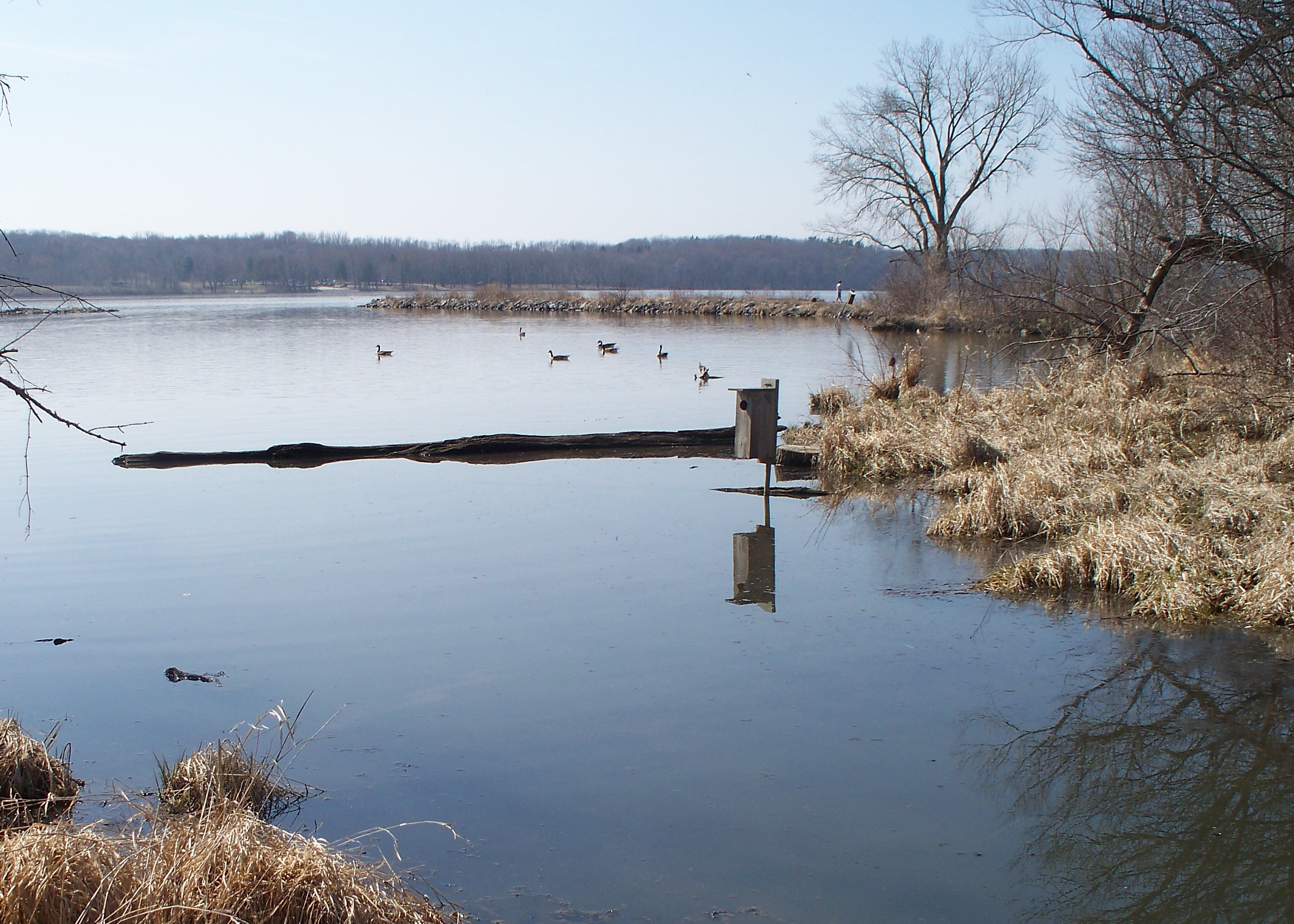
Spring on Lake Macbride

The surface of the ground crunched as I walked the compost bucket out to the bin. The ground was frozen.

Grass has been greening up with the recent rain and ambient temperatures above 70 degrees. The frosty morning wasn’t a permanent setback as green grass was visible through the glaze of frozen rain.

Farmers have produced first batches of maple syrup, so it’s undeniable spring is close by. This in-between time on the margin of winter is unsettling. I want to get going on the garden… but not yet.

The sound of bird songs returned. Voices of children playing outdoors are evident. The trickle of water in the downspout informs us of the spring melt, that despite crunching under my boots it won’t be long.

This is my spring song.

Categories
Kitchen Garden

Refilling the Seed Gaps

Onions Drying

One batch of onion seeds germinated poorly so I seeded the failed blocks with Cilantro, Parsley and Dill.

Cilantro, Ferry-Morse, 28 days.
Parsley, Ferry-Morse, 70-90 days.
Dill, Ferry-Morse, 70 days.

This is my first attempt to grow onions at home and there’s a lot to learn. Once the seeds germinated, I moved them upstairs into sunlight. They grew long and spindly, laying down over each other in the tray. Carefully, I trimmed the tops to about two inches and they sprung up. The expectation is they will start to right themselves and grow more vertically.  The backup plan is to buy and beg some onion starts in case these don’t mature. For the time being I’m not giving up on them.

Categories
Kitchen Garden

Celery – In!

Spring Plants from Indiana

It was another busy day at the farm for seeding session #4.

I planted one tray of

Conquistador Celery, Johnny’s Selected Seeds, 80 days.

and one tray with

Georgia Southern Collard, Ferry-Morse, 75 days.
Pak Choy Toy Choy, Ferry-Morse, 30 days.
Teton Hybrid Spinach, Ferry-Morse, 45 days.
Cilantro, Ferry-Morse, 28 days.

Space is beginning to fill with trays.

I delivered a box of flower seeds for the farm’s coming garden class at a local food pantry.

We talked, a lot, about everything. We were chatty.

I enjoy my time with eight people talking and seeding trays of soil mix. I don’t say a lot, just do my work and bask in the sounds of another day on the farm.

The lamb count is now 40 and there are five new goats.

Categories
Kitchen Garden

Frozen Ground

Burn Pile

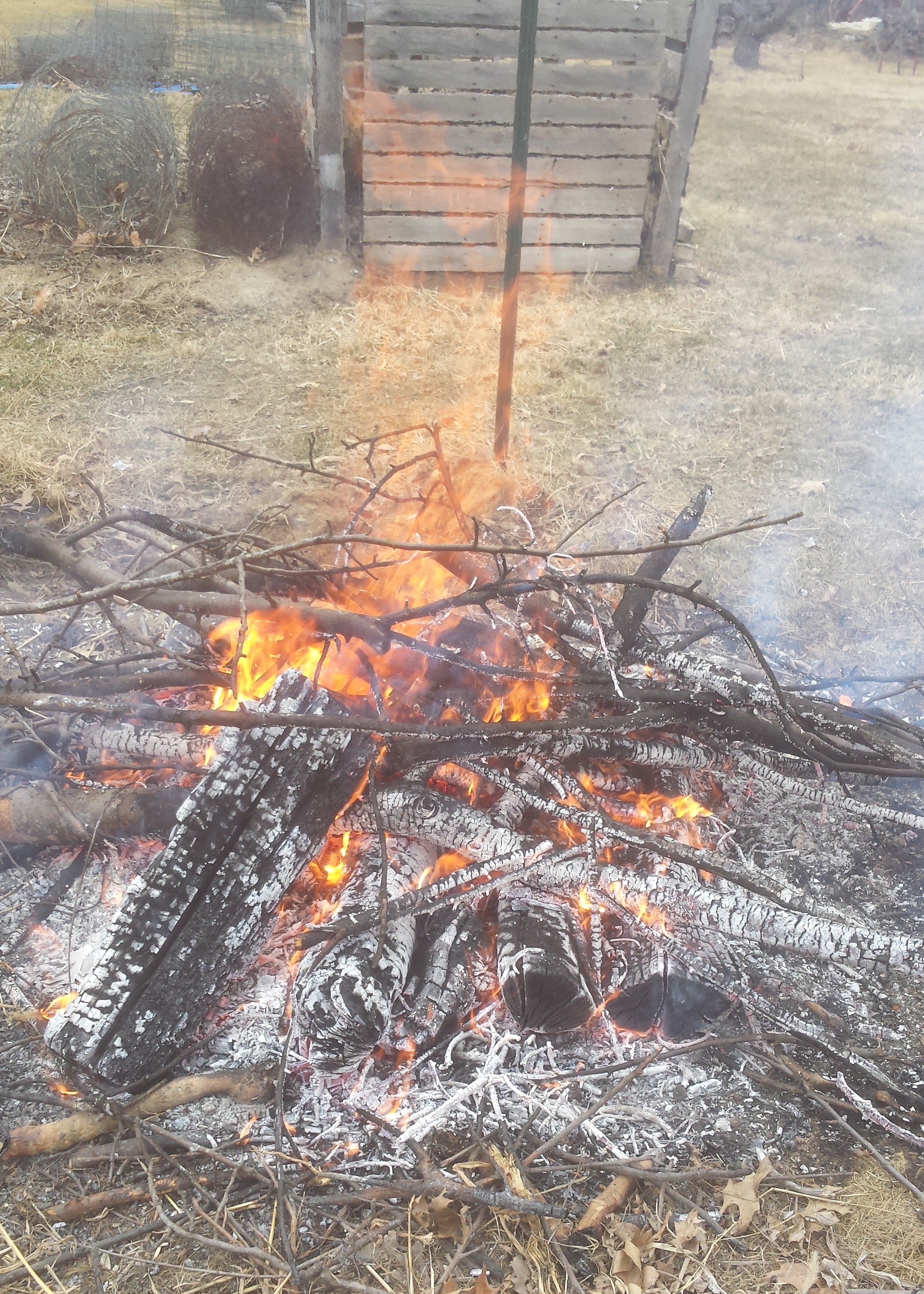
A friend grows straw for the home, farm and auto supply store and he isn’t in the fields yet. The ground is frozen.

In addition to producing wheat straw he grows commodity crops and has a tough row to hoe… literally.

I enjoy interacting with him and his crew as they remove a hundred bales from a gooseneck trailer and put them on pallets. Once re-stacked, I move them indoors with a lift truck.

I have been drafting emails to groups of which I am a part since I woke. Gotta stay on top of all that so when the ground thaws I can get my spade in it. Not yet… but soon.

Categories
Kitchen Garden

Belgian Lettuce 2020

Belgian lettuce patch with arugula

Today I planted Belgian lettuce. There is nothing particularly “Belgian” about the seeds. According to my maternal grandmother it is called Belgian lettuce because it is planted March 2. It’s the tradition and that’s that.

I planted arugula as well because when everything is mixed together in a salad it will taste great. I planted:

Lettuce

Mesclun Mix of Seven Varieties, Ferry-Morse, 40-80 days.

Arugula

Arugula/Roquette Heirloom Variety, Ferry-Morse, 40 days.
Rocket Salad Coltivata Da Orto, Ferry-Morse, 60 days.

The ground was still frozen about an inch below the surface, so no other planting today. This morning’s activities signal the beginning of the garden.

Categories
Kitchen Garden

Kale Planting 2020

Kale March 1, 2020

Kale is a money crop in my garden. By that I mean I learned how to grow it and have had success most years since. I distribute a lot of free kale to friends and neighbors. Today was the day to plant it along with broccoli. The varieties are:

Kale

Redbor, Johnny’s Selected Seeds, 55 days.
Winterbor, Johnny’s Selected Seeds, 60 days.
Red Russian, Ferry-Morse, 50 days.

Broccoli

Imperial, Johnny’s Selected Seeds, 71 days.
Calabrese, Ferry-Morse, 70-90 days.

Something was weird about the Calabrese seeds from Ferry-Morse. It appeared broccoli seeds were mixed with another kind, rendering the packet pretty useless for predictability. I planted some of each as the main broccoli crop will be Imperial anyway. We’ll see what happens.

Sundays in the greenhouse have become a day to which I look forward. The goats are due to drop kids any day, and of course we are well into lambing season. Our crew of five or six people works well together. I enjoy the conversation with twenty-somethings, although some of them will soon turn thirty.

I’m not sure the onions planted previously will make it. Some of them are tall and spindly. Others haven’t come up. The soil is damp so we’ll see how they come out. At this point if they fail I can get starts elsewhere.

My small, portable greenhouse arrived this week. Instead of keeping flats of seedlings on a short stack of pallets near the garage door and moving them inside at night, I’ll keep them here. I’m not sure how exactly it works, but look forward to learning.

The weather has made this year’s start better than 2019. Let’s hope it continues.

Categories
Home Life Kitchen Garden

First Big Grove Garden Plot

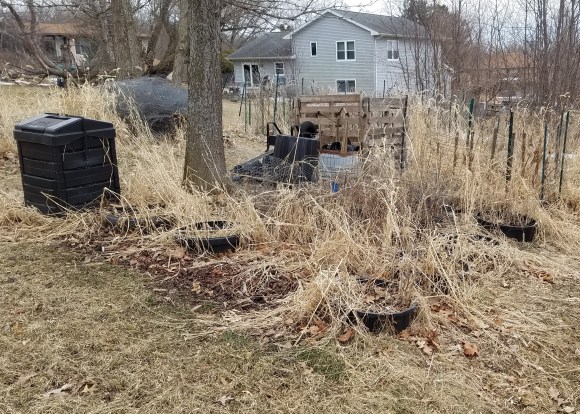
First Garden Plot, Feb. 24, 2020.

I planted our first Big Grove Township garden in Spring 1994. What I grew is lost in memory.

Yesterday the original plot looked a wreck with desiccated weeds and a hodge-podge of sunken containers, fencing, two composters, a wheel barrow, an old wash tub, six-inch pieces of drainage tile resting on a couple of pallets, and a locust tree. The locust tree was intended for transplant but it got away from me.

I don’t know if the locust tree will recover from last winter’s extremely cold temperatures. The tips of branches in the crown did not leaf out last spring. If it doesn’t recover I’ll take the tree out even though the shade it provides protects plants and conserves moisture during our increasingly hot, dry summers. The plot was not meant to be a permanent residence for trees.

A friend in Cedar County gave me black plastic tubs in which feed for their animals was delivered. I cut large holes in the bottom for drainage and buried them to grow potatoes, radishes, lettuce, basil and sundry root crops. Mostly it was for potatoes which when planted in the ground fed small rodents who thrive with us in the garden. The containers worked to keep them away from the roots.

Composters are necessary for a garden to turn organic matter into fertilizer. One is an open air composter made from pallets retrieved from the home, farm and auto supply store. Garden waste goes in there. The other is a sealed, black plastic container for organic household waste such as peelings, fruit cores, and other fruit and vegetable matter generated from the kitchen. That is, it used to be sealed. Over the years something got inside and has been pushing stuff out of the entry point chewed into the plastic. I should fix or replace it. Until I do it remains a place to dump the kitchen compost bucket and produces some usable compost. The next time I move it there will be compost.

If I had a garden shed I would not use the plot for storage. I continue to think about building a shed, but that’s as far as it has gotten. It won’t be this year, or probably next.

Despite all the useful clutter, the plot continues to be productive. Last year I grew broccoli, eggplant, radishes, basil and beets there. The year before I grew cucumbers. The containers are always busy with multiple crops each year. As I plan this year’s garden I see better utilization of this plot.

Ideas about 2020 in plot #1: Belgian lettuce on or about March 2; potatoes in containers on Good Friday; radishes in a container; a crop of something, cucumbers, eggplant, or maybe hot peppers to change from cruciferous vegetables planted here last year. These are ideas, and the beginning of planning. We’ll see how it unfolds, although Belgian lettuce seems certain a week ahead of the date.

I remember digging this plot in 1994, measuring the distance from the property line, a memory of nothing growing in the yard except grasses and a mulberry tree in the Northeast corner. I barely knew how to garden then. In the interim, my views of how to garden have changed for the better.

Based on the 15-day weather forecast, winter is finished. As temperatures climb and the remaining snow melts we had just better accept it we won’t have had much of a winter. It is time to lean into the growing season as soon as Mother Natures enables us. Soon it will be Spring.

Categories
Kitchen Garden

Leeks

Starting Leeks

I planted leeks in soil blocks at home today. They were,

King Richard, Johnny’s Selected Seeds, 75 days. One row of ten.

Megaton, Johnny’s Selected Seeds, 90 days. Three rows of ten.

American Flag, Ferry-Morse, 150 days. One row of ten.

This is a further experiment in starting plants at home. In the past I hadn’t paid attention to different leek growing times but American Flag is double that of King Richard. I double seeded King Richard and American Flag because they are from previous seasons. If both seeds sprout in each cell I’ll thin them.