Categories
Work Life

From Middle to Working Class

Construction Site
Construction Site

LAKE MACBRIDE— Today’s usage of the phrase “middle class” is meaningless. It is a marker for a world dreamed up while writing talking points for political campaigns. A middle class so created, never existed. It was as if we took the broken theories promulgated during the rise of mass society, and switched things around so that economic means was the determinant of whether one was or was not in the middle class. With the one percent of wealthiest people at the top, and roughly 15 percent of people who live in poverty at the bottom, the 84 percent in between are now dubbed middle class.

In our cultural background is the idea that we were all created equal, and have innate talents, some more so than others, that could and should be developed so that by application of native skills we can rise and fall in society. The so-called American dream is centered around this notion.

To some extent, the story is re-enacted as occasionally a mail room clerk rises to become chief executive officer of a large corporation. Such instances of rise in a workplace are limited in number, increasingly so, as businesses consolidate, on a global scale, under fewer corporate CEOs. In this world, the society of business is better served by increasing the number of people available to become mail room clerks, at the lowest possible wages, than by creating opportunities to get out of the mail room. Such stories are important to keeping people in their place in the economic pecking order, and I suspect that is why they are so popular.

If “middle class” is a meaningless phrase, “working class” is not. The long story of immigration to North America includes countless people who traded work for passage across the Atlantic and a chance for freedom and prosperity. I am thinking of my own ancestors and their cohort, who arrived in the 17th century in what would become the state of Virginia. They came, not as landed gentry, but as working people, delaying start up of their own farms to work for someone else who needed labor, and to secure it would pay travel costs to secure indentured servitude. This story is also part of the American dream— that through individual efforts and sacrifice, a person could become a landowner, and thereby rise in society. There were likely more indentured servants that rose to become landowners than mail room clerks that became CEOs, but their story is told less often.

Indentured servitude doesn’t exist in the same way in the 21st century, but it serves as an example of how people will make deals with the capital class to get ahead. Such deals include working for a labor broker to earn less than a living wage, in some cases, less than minimum wage, so that business can have sufficient low-cost labor to meet its needs. Without a sufficient working class, the capital class would be out of business. Working class rights, not middle class rights, should be the focus of our political leaders. It’s not, at least that I can see.

If one sits in lunchrooms and listens to working class concerns, the conversations are not about the minimum wage, unions, or much at all to do with the relationship between labor and capital. The discussions are about personal relationships, health issues, post-traumatic stress disorder of veterans, and addiction to tobacco, crack and sugary drinks.

While being a member of the working class doesn’t provide a pension, or health insurance, or security of almost any form, it is how a large segment of Americans live. We ought to be hearing more about it from the corporate media, from politicians, and from each other. If we believe in the possibility of social progress, our focus should rightly be on the working class, as it is here that the American dream was born. Neglected, it is where the dream will die.

Categories
Work Life Writing

Sustaining a Creative Life

Barn WallLAKE MACBRIDE— Today, the key element in sustaining a creative life in Big Grove Township is magnesium sulfate, or Epsom salt. A thirty minute foot bath provides a form of relief few other things can provide. I recommend it, although for the most part, people already know about it, and for some it works, for others, not so much. Well-cared for feet are something we take for granted, but shouldn’t, because they are an important foundation to creativity.

When I was at university, I shared a house with a constantly changing group of creative people. We had our own rooms, and shared the living room, bathroom, and kitchen. Every once in a while we had a joint clean up activity, although housekeeping was not a priority. My contribution was to attempt to keep the kitchen clean, and recall doing a lot of everyone else’s dishes. I didn’t mind and enjoyed seeing pots and pans my grandmother had given me mixed in with everyone else’s kitchen gear.

Writers, poets, musicians, artists, a drum maker, a publisher, an aquarium builder, a travel guide and emerald seller, an auto mechanic, and guests of all kinds passed through the doors of that place. Some found notoriety in what would later become the city of literature, but mostly, people were not well known, except to each other.

I briefly shared my room with some buddies from Davenport. One went on to become a librarian. Another, who practiced martial arts, moved to California, and eventually got a credit on the Hollywood movie “The Matrix.”

A woman arrived halfway through my stay. She found a part time job, and spent every morning at a table in the entryway writing. As an early riser, I often ran into her, but tried not to interrupt. She hooked up with a poet, and eventually left with him for California, taking one of my grandmother’s saucepans with them on the train. I don’t think we called it hooking up during the early 1970s.

Later, the poet was known to sit at a typewriter with a gallon of cheap wine and write until he finished the bottle. This lifestyle is said to have led to his early death. I don’t know what happened to her.

That house was a place to camp out while pursuing other things. For me it was finishing a mandatory, but uninspiring bachelor’s degree. It was there I spent a morning tie-dying T-shirts while listening to my commencement address on the radio. I declined a job offer from the Oscar Mayer Company, which had provided a four year scholarship. When the summer ended, my sparse belongings went into storage, I took what money I had, converted it to American Express traveler’s checks, and went to Europe with my backpack for what began without a plan, but ended being twelve weeks of youth hostels, art museums and train rides. My backpack was stolen when I arrived in France, and that is another story.

There is no defined path to sustaining a creative life. Instead, we secure food, shelter and clothing, protect our health and well-being if we are able, and go on living. If we are creative, it is that spark of interest in society that sustains us, or can, if we recognize it— and Epsom salt and other common elements to help ease the pain of living.

Categories
Kitchen Garden

In the Greenhouse

Bedding Plants
Bedding Plants

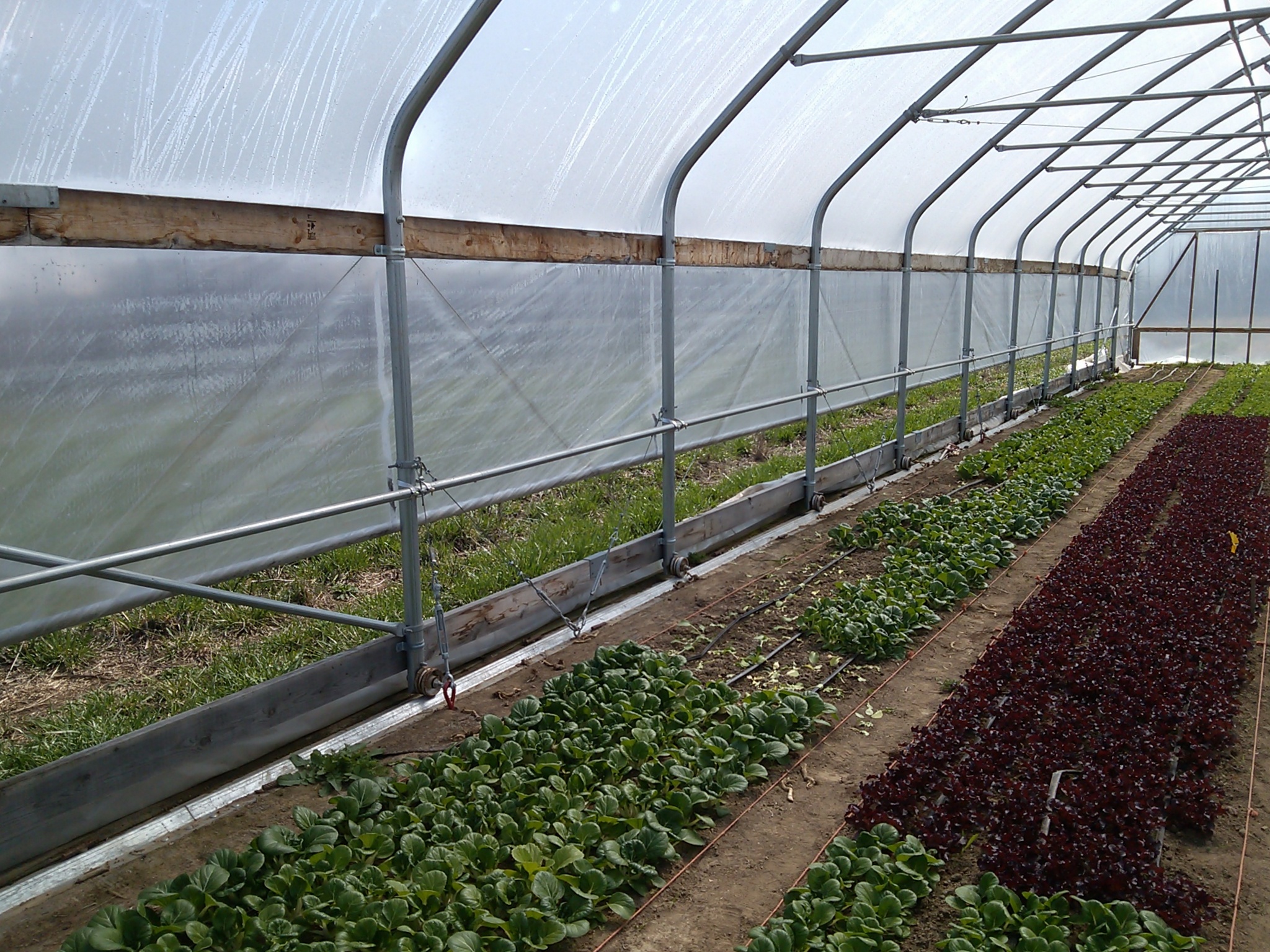
RURAL CEDAR TOWNSHIP— It’s the fifth week of making soil blocks for the farm, and flats of seedlings are filling the tables. It is warm inside the greenhouse, and most days I work in jeans and a T-shirt. There is a sense of accomplishment, even though nothing has been planted in the ground except a few items in the hoop house.

There is a small community of growers and talk centers around plants and ultra-local events. Soil quality, weather, temperatures— all leading to a bigger question— when to get into the ground during this cold spring? On a farm there will be a practical answer to this question. Here’s hoping to get out of the greenhouse soon, and into the fields.

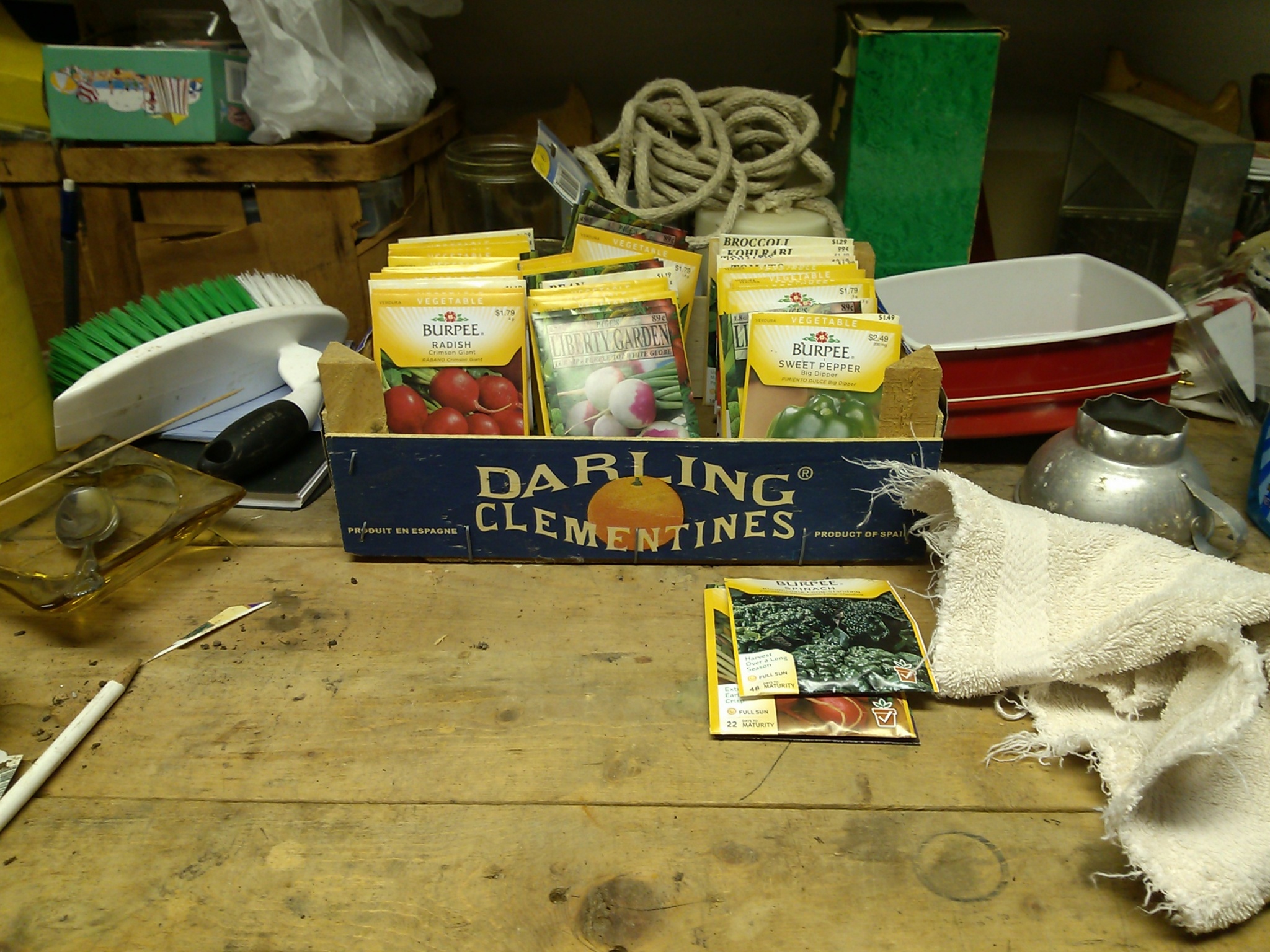
GARDEN NOTES: On the home front, I dug, raked and planted the first seeds in the garden. A two foot by ten foot patch where I broadcast Arugula (Rocquette) on the eastern end, and the remainder in a mix of three 45 days to maturity lettuce seeds (Black Seeded Simpson, Gourmet Blend, and Simpson Elite). The watering cans went missing, so I dumped dishpans full of water into a colander to diffuse the initial flow. It worked well.

Inside, I set up a table near the only south-facing window, where I consolidated all of the indoor seedlings. Things are coming along nicely— for the most part. After consulting with the CSA, I abandoned the project of starting onions from seed and replanted those cells with Cayenne pepper seeds. The Rosemary mostly did not take, so I marked the ones that did and planted broccoli in the rest of those cells. I made what I am calling “bombs,” planting all of one kind of seeds in each of several old flower pots. A basil bomb, a mint bomb, and an arugula bomb will hopefully be available for the kitchen. Some have already sprouted.

Categories
Social Commentary

Main Street Today

Main Street
Main Street

SOLON— The city recently upgraded the street lights, sidewalks and business entryways to make Main Street more appealing. Mostly successful, Main Street is welcoming… and more handicapped accessible.

With the rise of our automobile culture, combined with an ongoing movement from rural to urban areas,  Main Street suffered. What was a stable rural community developed into a place to live away from work in nearby Iowa City, Coralville and Cedar Rapids— a bedroom community.

Main Street Shops
Main Street Shops

What’s left on Main Street is a conglomeration of businesses: places to eat and drink, a grocery store, a hardware store, a barber shop, a newspaper, and insurance and financial services offices, all serving the needs of locals. It is typical of this part of Iowa.

The city bought a property on Main Street and is expected to tear down the existing structure to build a city hall. A microbrewery with a newly imported chef from the Culinary Institute of America in Napa Valley is under construction, scheduled to open in July. It’s not like Main Street is dead, it’s not.

Main Street
Main Street

What Main Street isn’t, is a place for a person to open a business with the idea of earning a living from the local population. Do the math. The city had 2,037 people during the 2010 U.S. Census. Add in nearby rural subdivisions outside city limits, and there are maybe another 4,000. In order to generate revenues of $100,000 per year locally, that is about $17 from every man, woman and child in the area. Parting with a 20 dollar bill still means something here, and creating a local, sustainable business seems challenging at best.

The key to success in any business is finding customers. There is no foot traffic to speak of here, so a beginning assumption is that every customer will have to be attracted to a business as a destination. With so many destinations, a Solon business must have a unique offering, and that is the challenge for entrepreneurs. In order to start a business with prospects of success, the work must necessarily begin with two elements that are more important than capitalization: a unique offering and customers willing to come to Main Street.

As we search for a sustainable life on the Iowa prairie, one considers opening a business on Main Street. It is possible to open. The better question is can a local business endure? During the coming months, I will be working on an answer.

Categories
Kitchen Garden

Getting Started in the Garden

Seedlings
Greenhouse Seedlings

LAKE MACBRIDE— Thursday will be the day to get started in the garden. Temperatures have been above freezing for a few days, so by then, the ground should be thawed enough to turn over and plant lettuce. I use the broadcast method for lettuce— a local tradition.

Six kinds of lettuce seeds are germinating in a seed starter. These will be grown into heads of lettuce, a first for me this year. Although it is a late start, it’s time to get going.

The garden is already active, with garlic, chives and oregano overwintering. The daylilies sprouted, as have other bulbs. This year I plan to relocate some of the bulbs from the garden to other places around the property. I say that every year, but this time it may be for real.

Spring has sprung, and it is about time.

Categories
Home Life

A New Furrow

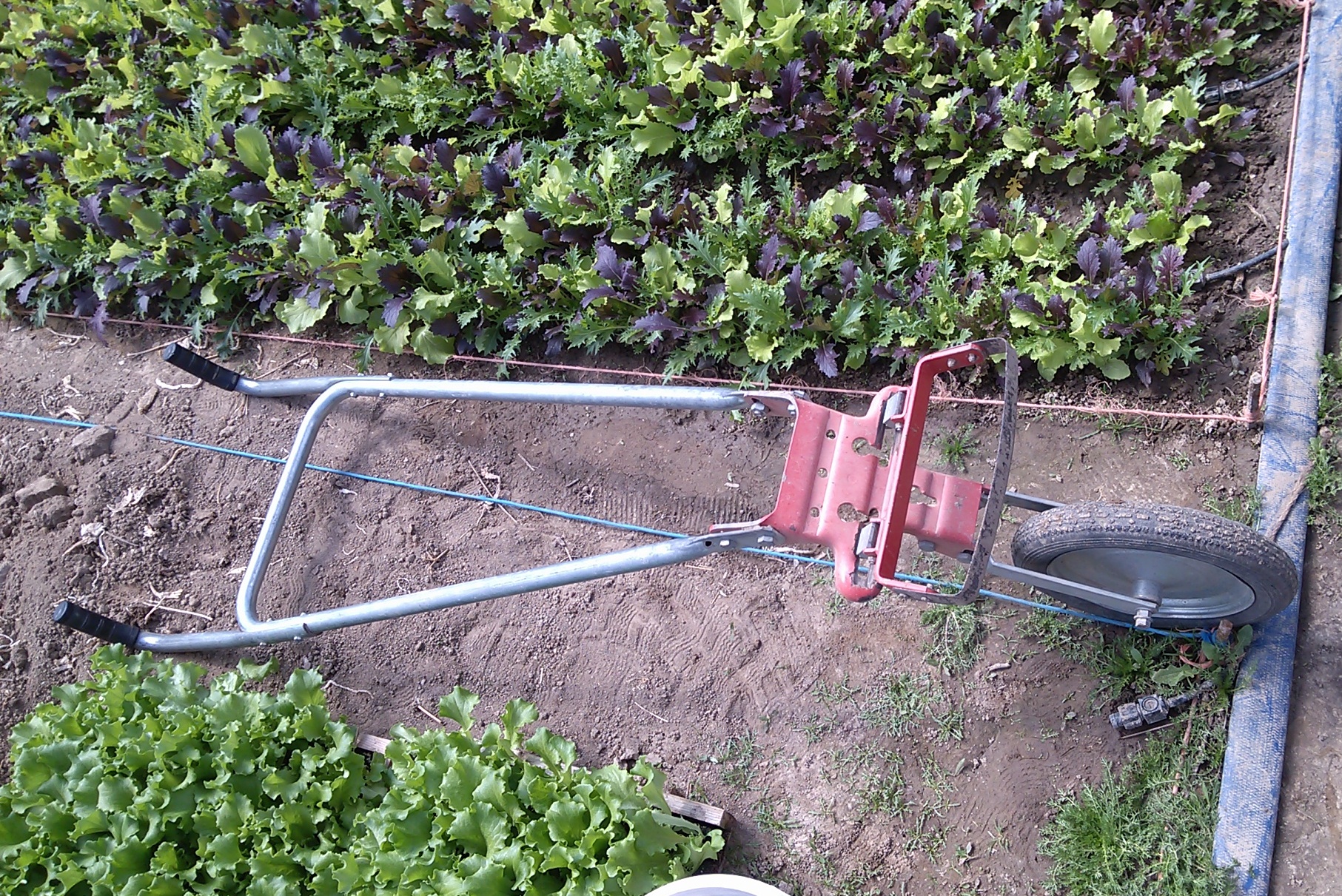
Dillon's Furrow Marker
Dillon’s Furrow Marker

LAKE MACBRIDE— March roared in like a lion, disrupting the solitude of our lake side home, and any short-term plans. New car, new jobs, new schedule, new everything it seemed.

Indoors activities dominated as snow fell, and the ground stayed frozen. To get back to a semblance of normal, there is comfort food: a Dutch oven of red beans and rice is simmering on the stove. A throwback to when I spent weekends preparing lunches for work during what now seems like ancient times— enslaved as I was to a career path I didn’t understand. Lunch today should be delicious.

While a lot is going on, it is not reactionary. More like letting loose the hounds on a life long in preparation. I have come of age. Remembering Yeats, “the ceremony of innocence is drowned.” Whatever naivety persisted is confronted with the existential need for action, tempered by diverse experience. The idea is to change, enabling a sustainable future. By now, it is well beyond the idea stage.

Like Lyman Dillon, I am at the ready to plow the furrow that would become a new road. I am ready to tame the wild turbulence of an angry March and turn it into sustainability. My commission comes from no Dutchman Van Buren, with his philosophy that free men on free soil comprised a morally and economically superior system. I have no fixed philosophies, just that slavery to a permutation of culture for its own sake is bankrupt. It is time to dig in.

Categories
Milestones

Change at the Solon Farmers Market

SOLON— While taking photographs on Friday, a couple of legion members were walking back to the hall in their uniforms. Someone had died. It turned out to be Booky Buchmayer, the man who sold produce at the Solon Farmers Market. On most days, he was the only farmer at the market, although I am not sure how much of the produce he grew himself. He brokered melons from Muscatine, and sweet corn from Rebal’s roadside stand on Highway One. He was a fixture of Solon, and his passing creates a vacuum in local society. Below is an edited version of his obituary from the Brosh Chapel web site. May he rest in peace.

Raymond “Booky” Buchmayer, 85, of Solon, died Saturday March 23, 2013 at Mercy Hospital in Iowa City. Funeral Services were held Friday, March 29, at Brosh Chapel in Solon. Burial followed in Oakland Cemetery with full military rites provided by the Solon American Legion, Stinocher Post #460.

Raymond was the first born of Otto and Agnes (Kriel) Buchmayer on Sept. 4, 1927 in Solon. He graduated from Solon High School and attended Cornell College for three years. He then attended and graduated from Bricklayer Trade School. He married Elaine Schindler on Jan. 17, 1953. She died Dec. 31, 1996. Raymond served in the U. S. Army during WWII and was an active member of the Solon American Legion where he served as past commander. He was the adjunct for the American Legion 1st District and a member of the Bricklayers Union Local #3. Raymond worked as a bricklayer for over 50 years with Larson-Unzeitg before retiring in 1990. He was a member of the Solon Volunteer Fire Department and worked for Mark’s Auto Body. Raymond was a member of the Solon United Methodist Church.

Raymond loved hunting, fishing and mushroom hunting. He loved to travel to new places, his large family and his morning coffee trips uptown Solon with the guys. He was active in the farmers market in Solon and famous for his melons. He married Betty Jo Brumwell Lamansky on Feb. 14, 2004 at the Solon United Methodist Church and his family really grew. Holidays, weddings and new babies kept him busy in his retirement years.

Raymond is survived by his wife, children, grandchildren, great-grandchildren, step-children, step-grandchildren and step-great-grandchildren.

Raymond was preceded in death by his parents, wife Elaine, infant son John and infant sister Irene.

“A gentle giant with a big heart”

In lieu of flowers, memorials may be directed to the Solon Fire Department, Solon United Methodist Church, and the Solon Veterans Memorial.

Categories
Kitchen Garden

First Day in the Garage and Garden

Garage Resources
Garage Resources

LAKE MACBRIDE— With temperatures in the mid-50s, and a day off work, how could I not spend the day in the garage and garden under azure skies? I cleared the first plot for the spinach, lettuce and herbs and turned the first spadeful of soil. Ice persisted two inches below the surface, but it won’t be long before the ground is warm enough to plant. I brought the trays of seedlings outside to take in the full sunlight of spring.

The front yard needs some work. Last year, a backhoe service dug down to the waterline, repaired a leak, and left a sinking spot near the house. We also had the septic service pump our tank last year: the ground covering the lids needed something. The soil was warm enough above the septic tanks to sow grass seed. As I did, I noticed the view of the lake now that our neighbors removed their diseased pine trees. The sense of isolation created by the treeline is gone. I am thankful for the view of the lake, glad to surrender a bit of privacy to see open water from our front steps again.

Screwdrivers
Screwdrivers

Last fall a contractor sowed grass seed mixed with soil in the community-owned ditch. The late winter runoff furrowed the ditch, requiring attention. The plan is to rake up the leaves and cover the trench this weekend, instead of waiting for the contractor’s return.

This year is the big sort. A process of downsizing— casting aside items no longer needed to sustain a life on the Iowa prairie. There are challenges for the sort in the garage, as a person can always predict a use for many things found there. Nonetheless, either they will be used, or they won’t. Decisions will be made. The big sort will reduce the detritus accumulated after auctions and trips to the home store, down to a more meaningful level. It didn’t go well yesterday.

It started with sorting the woodpile kept under my workbench. The first woodworking project will be making a box to carry my gardener’s boots— calf-high, rubberized for protection from dirt in the garden and manure on the farm. Now that I work on a farm, I’ll need the boots with me, and the box of boots will ride along in my car.

I sat on a five-gallon white plastic bucket and handled the wood scraps one-by-one, looking for the right sized pieces. A piece of hardwood leftover from my father-in-law’s project to make a weather station; another removed from decrepit drawers acquired at auction; some with hand-cut dovetails from another era. I got halfway down the pile and stopped. Partly because I found the scraps needed to make the box. Partly because the flow of memories was too much to take in all at once. It seemed impossible to get rid of any of them.

Bulletin Boards
Bulletin Boards

The day proceeded with similar storm and stress. In a society that seeks a reason for everything, with that certain Iowa intrusion into private lives, my garage and yard time is to unravel the genome of a life proscribed by others. A place and time of freedom in a post-Enlightenment Iowa life.

I brought the seedlings inside at the end of the day, and placed the ones planted yesterday on the heating pad— hoping to encourage germination and a bountiful harvest.

Categories
Kitchen Garden

Chickens, Opossums and Things

LAKE MACBRIDE— Good Friday is my first day without external obligations since I can’t remember. The sky is clear, temperature already warming— some part of today will be spent outside preparing the yard and garden for a dallying spring.

Work at the farm this week was cutting more soil blocks for planting. Some of the first trays of lettuce were being moved to the big hoop house on the top of the hill. The gravel roads are thawing, leaving a film of dust/mud on my new-old vehicle. It is great to be part of a farming operation. I’ll be washing my car more often.

Do opossums have a social network that clues them into where chickens roost? Or, are they constantly trolling the universe in their egg-seeking ways? Whenever an opossum crosses our yard, it looks like it is smiling, the full mouth of teeth preventing closure. When I spot one, they seem very busy, going somewhere with a fierce intensity. Of worldly creatures, the only one more sinister in appearance is the human. Everyone I know that raises some chickens has an opossum story.

There will be other posts this weekend, but for now, I am going to relax at home, finish my coffee, and contemplate what is next this morning, this weekend, and in this one life of the billions on the planet.

Categories
Work Life

Wage Workers in Iowa

NORTH LIBERTY— One of my work mates is an Iraq War veteran. Stationed in Tikrit, his military occupational specialty was fueling, although military contractors did most of the fueling work. He had a lot to say about war profiteers, including members of the Bush-Cheney administration. Locals he met did not like the American presence in Iraq. “Too many car bombs,” he said, something they experienced less when Saddam Hussein was in power.

Our supervisors discourage us from talking while we are in our cells (a.k.a. work stations), but when the computer network went down for about 45 minutes last night, we had a chance to talk. For me, that meant mostly listening.

I have been working as a temp in a warehouse in North Liberty for about two weeks. Not sure I could hack it— repetitive motion, standing and walking except during lunch break— my focus has been on staying healthy, and getting the work done as best I can.  My goal is survive, and beyond that, to learn everyone’s name and a little about them. Employees turnover at a rapid pace, so I haven’t yet done very well on getting to know people. Mostly, it’s nose to the grindstone.

It turned out that the Iraq War veteran found another warehouse where he can work through a temp agency for about two dollars more an hour. He is scheduled to start there on Monday. There was no surprise, as the discussion was overheard in the lunchroom the previous day. I wished him good luck with his new job, in case we didn’t get to speak to each other on Thursday.

Living paycheck-to-paycheck, and working poor was something I had not experienced until now. Measuring each week by the number of checks that will arrive, knowing it is enough to barely make regular expenses, can be a grind. I can see why my work mate took the new job— some might say, it’s a no-brainer. But a different view, is that temp work does not provide the means to earn a living wage in any case, at least temporary warehouse work. It was not designed to do so.

These jobs are part of the American outsourcing movement— clear evidence that the changes in a worker’s life regarding wages, and for whom we work, aren’t only happening when jobs move to Asia or Mexico. They are endemic to the Iowa experience.

My hourly wage costs the company $0.154 per kit I assemble. Add on whatever the temp agency gets for their fees, and it is not much. There are no paid benefits. In the context of the entire operation, the expense includes management, supervisors, equipment, material moving, overhead, supplies and external transportation. Inherent is the idea that there are cost savings to the principal manufacturer by doing business this way. And jobs are created, somewhere between 125 and 150 of them where I work.

My work mate and I worked well together. Probably because of our common military experience. At the end of the day, that may be all we had together, as our logistics process, like any in the transformation of the American workplace, could easily be changed, eliminated or improved. In many ways, logistics is a facilitator of the transformation of business. Wage workers have to take it how they can, and sometimes that means switching jobs for another $80 per week.