LAKE MACBRIDE— Christmas is a busy time for retail workers. The end of year holidays, stretching from Halloween until the Super Bowl are a key time for companies to close sales that impact annual results. A lot of part-time and seasonal workers are needed to get everything done.
The working poor I know have their hands full of wage-earning opportunities at multiple jobs. For most, having Christmas Day off is not a benefit. It is a time to bank wages for the slow times coming later in winter. If hours were available Christmas Day, many would gladly work them.
My previous retail work ended when I left home to attend college. It was a part-time job stocking shelves in the drug department of a box store. We handled everything from sanitary napkins to record albums. As long as I had money to fuel my car, eat out with friends once in a while and buy some personal items, most of the dollars went into savings for college. In retrospect, it wasn’t many dollars, but a dollar had more buying power in the late 1960s.
My high school job is an example of how some view the current role of low wage jobs in society. They are dreaming. It bolsters an argument to keep minimum wage where it is, or eliminate it altogether. The truth is today people pay living expenses from low wage jobs like I had, and work at more than one job to earn enough to keep the bill collector from their door. Low wages are not about getting people a start in their work life. Working poor is a never ending vortex of not enough money to pay expenses with little time for a break, let alone a vacation or holiday.
There is help for working poor and I don’t refer to government social programs. It is social networking. Car broke down? A loaner is offered. Don’t have a car? Rides are shared. Turned out of your apartment? There is a couch or extra room. Need a job? Maybe you can work where I do. Social networking has always been around. When working poor it is a necessity and way of life.
We live by the choices we make in life, and no one chooses to work poor. The progressive lament that working poor is wrong isn’t helping as life goes on and we make up for losing a day’s wages somewhere else as one of our employers closes for the Dec. 25 holiday. There is no holiday when working poor.
LAKE MACBRIDE— Budgeting. We think of spreadsheets and calculations that determine our balance sheet— and ensuring there is enough action in the works to produce enough income to pay expenses. In December, it’s about considering this year and preparing for the next, and it is not all about finances.
What shall we do next year? Once some answers are framed, the budget process begins. Two things are clear this holiday season. Our household is in better shape this year than last, and there are opportunities beyond basic survival.
Our household relies upon a mix of part-time jobs to fund expenses. I outlined my approach in 2013, and the basic framework is unchanged. Where the financial budget is lacking will be made up by new adventures in part-time work.
This year’s challenge is how to use time.
As readers will recognize, my time has been spent gardening, writing, cooking and in part-time paid work. This won’t change. However, there are some new things on the horizon.
We need to downsize, and there is a full-time job just doing that. Next year will partly be about that.
I want a book to sell at speaking events. Framing topics, writing and editing one is high on the list. Most likely it will be a collection of past writing, which fits in with downsizing.
We moved to Big Grove in 1993, and our house is showing wear. It is time to make a list of projects and work on some of them.
While this isn’t much of a plan, it is a framework of how to spend a year. That is a beginning to proper budgeting.
LAKE MACBRIDE— During the run-up to the Nov. 18 vote on S-2280, a bill to approve the Keystone XL Pipeline, I messaged Senators Tom Harkin and Chuck Grassley, asking them to vote no. Harkin voted no, Grassley yes.
Senator Grassley sent along an explanation of his vote, which is pasted below. As he indicated, the motion failed to pass the Senate. What this letter doesn’t say is that I asked him to vote no, without any other comment. I have been around politics too long to believe that logic and rational thinking have much to do with why a U.S. Senator votes a certain way.
The framing of Grassley’s response points out the challenges opponents of the pipeline will have once the 114th Congress convenes. His arguments are rational in their way, if misguided.
It is hard to disagree with building a pipeline per se. There are many pipelines in the world, and they are a mode of transportation that serves the oil and natural gas industry, which in turn supports political stability. As Grassley pointed out, building pipelines creates jobs.
This is not a partisan issue. In Hillary Clinton’s secretary of state memoir, she mentions building pipelines several times, always as a solution to energy problems which in turn increases political stability around the globe. It will be hard to win the argument against Keystone XL because of the existential fact of it being a pipeline.
If oil prices continue to decline, the economic conditions which made the Tar Sands viable will erode. The reasons for declining oil prices are complex, but it boils down to a combination of increased U.S. shale oil production, lack of willingness by OPEC to curb production, and our society’s addiction to fossil fuels. It seems unlikely that the oil and gas industry will allow prices to get too low, and we are not in control here, except for our personal energy choices.
Something’s got to give to reduce reliance on fossil fuels. Plugging an electric car into our household grid is not an answer if all we do is switch our energy source from gasoline to coal and nuclear, both of which have their own risks to human health. Grassley doesn’t directly mention decreasing reliance on fossil fuels as an issue in his response.
The argument about what happens to the oil in Texas is unresolved, despite Grassley’s assertion otherwise. The issue with refining, in light of increased U.S. oil production, is one of limited capacity. It has been a while since I was familiar with refining operations, but I suspect refineries are still running every minute they can to keep up with demand.
Could the refineries re-tool to handle Tar Sands oil? Yes, definitely. Is there an economic reason to do so when there is plenty of Middle East oil entering the Gulf of Mexico at a low price? Probably not in the short term, and there appears to be little interest in increasing refining capacity in light of the current regulatory environment. Going forward, one would expect the Tar Sands crude oil to be exported the way U.S. light sweet crude currently is—because the refineries are already doing all they can to keep up with imports.
Grassley’s right to say we should decrease our reliance on imported oil. The simple fact is there is not enough oil being produced in North America to meet U.S. needs, and as I mentioned, there are economic constraints to refining capacity. What is missing is affirmation of the need to decrease use of fossil fuels, and that’s more the problem with the response.
The trouble for opponents of Keystone XL is that Grassley takes apart many of their arguments in a way that will build political support for a likely re-consideration of the project in 2017, if not in 2015. It is important to read his response and learn from it… and hope the climate doesn’t reach the tipping point while we dance around what most needs doing: reducing and eliminating our reliance on fossil and nuclear fuels.
Charles E. Grassley
Washington, D.C.
December 4, 2014
Thank you for taking the time to contact me. As your Senator, it is important for me to hear from you.
I appreciate knowing your concerns regarding the crude oil pipeline from Canada to Nebraska called the Keystone XL pipeline. On November 18, 2014, the Senate held debate and voted on S. 2280, a bill to approve the Keystone XL Pipeline. I was an original cosponsor of this bill and supported its passage. However, the bill failed by a final vote of 59-41, one vote short of the 60 votes necessary for it to pass the Senate.
The pipeline would supply more than 800,000 barrels a day of Canadian crude oil to U.S. refineries and help to counteract both insufficient domestic oil supplies in the United States and reduce dependence on less reliable foreign sources. The Keystone XL pipeline is a $7 billion, 1,700 mile pipeline that would create thousands of private-sector jobs at no cost to American taxpayers.
In 2008, TransCanada applied for a presidential permit from the State Department to construct and operate the pipeline. Due to environmental concerns, the State of Nebraska approved a modified route in January, 2013. Following this modification, the State Department released a draft Supplemental Environmental Impact Statement (SEIS) on the new presidential permit application. The State Department noted that oil sands development would go ahead regardless of the production of the pipeline by using different pipelines or rail to get to market. The report essentially found that the pipeline would not accelerate greenhouse gas emissions or significantly harm the environment along its route.
After nearly six years of rigorous regulatory review, the State Department issued its fifth environmental review on January 31, 2014. This fifth review reached the same conclusion as earlier reviews. It found that the pipeline will have no significant impact on the environment and is the safest way to transport the oil. It also found that rejection of the pipeline will not affect Canada’s decision to develop these oil resources. The administration had been in the middle of a 90-day review period for federal agencies assessing the State Department’s environmental study when, on April 18, 2014, the State Department announced an indefinite extension of the agency comment period.
Opponents of the Keystone pipeline argue that the pipeline will not increase oil and gas supplies in the United States, rather, that all of the Canadian crude would be sold to world markets. Even President Obama reiterated this claim when he said the pipeline would allow the Canadians to “pump their oil, send it through our land, down to the Gulf, where it will be sold everywhere else.” However, the Washington Post “Fact Checker” disproved this claim. It noted that the State Department’s final environmental impact statement specifically disputed claims that the oil would pass through the United States and be loaded onto vessels for ultimate sale in foreign markets. It found that the crude oil would almost certainly be refined in the United States, with at least 50 percent of the refined products remaining in the U.S. market. It stated, “market conditions could change, of course, but there is little basis to claim that virtually all of the product, or even a majority, would be exported.”
The energy and economic development benefits of this pipeline are too important to delay any longer. We need an all-of-the-above approach to meet the country’s energy needs and give consumers choice. That means oil, ethanol, electricity from wind, and nuclear power. A pipeline would be safer than transporting oil by rail. Canada will produce this oil with or without U.S. involvement in the shipment. I’d rather work with one of our strongest allies than continue to get oil from the volatile Middle East or Venezuela.
What is needed now in the United States is an increased supply of oil. It is simple economics. If you increase the supply, you decrease the price. We are still relying on a very finite amount of oil. We must increase our own domestic supply of energy while promoting the use of alternative sources of energy at the same time. I will continue to support these goals with your thoughts in mind.
Again, thank you for taking the time to contact me. I appreciate receiving your comments and urge you to keep in touch.
LAKE MACBRIDE— Part of writing a newspaper article is waiting for people to get back.
Phone calls are a mixed bag. I prefer email or text message responses because they allow me to consider my questions—and the subject to consider answers—before hitting the send button.
My stories are somewhat uncoupled from time so I like to get solid quotes which shine the best possible light on people interviewed.
I have half a dozen queries out, and it’s as far as I can go. I wait.
This year’s holiday season is already unlike any previous. Mom went in for surgery last week, and our daughter was here over the weekend because of her work schedule. It’s still eight days until Christmas.
Our decorations are up ahead of schedule, and that’s a good thing. With all of the family visits more regimented and some finished, there will be time to do other positive things.
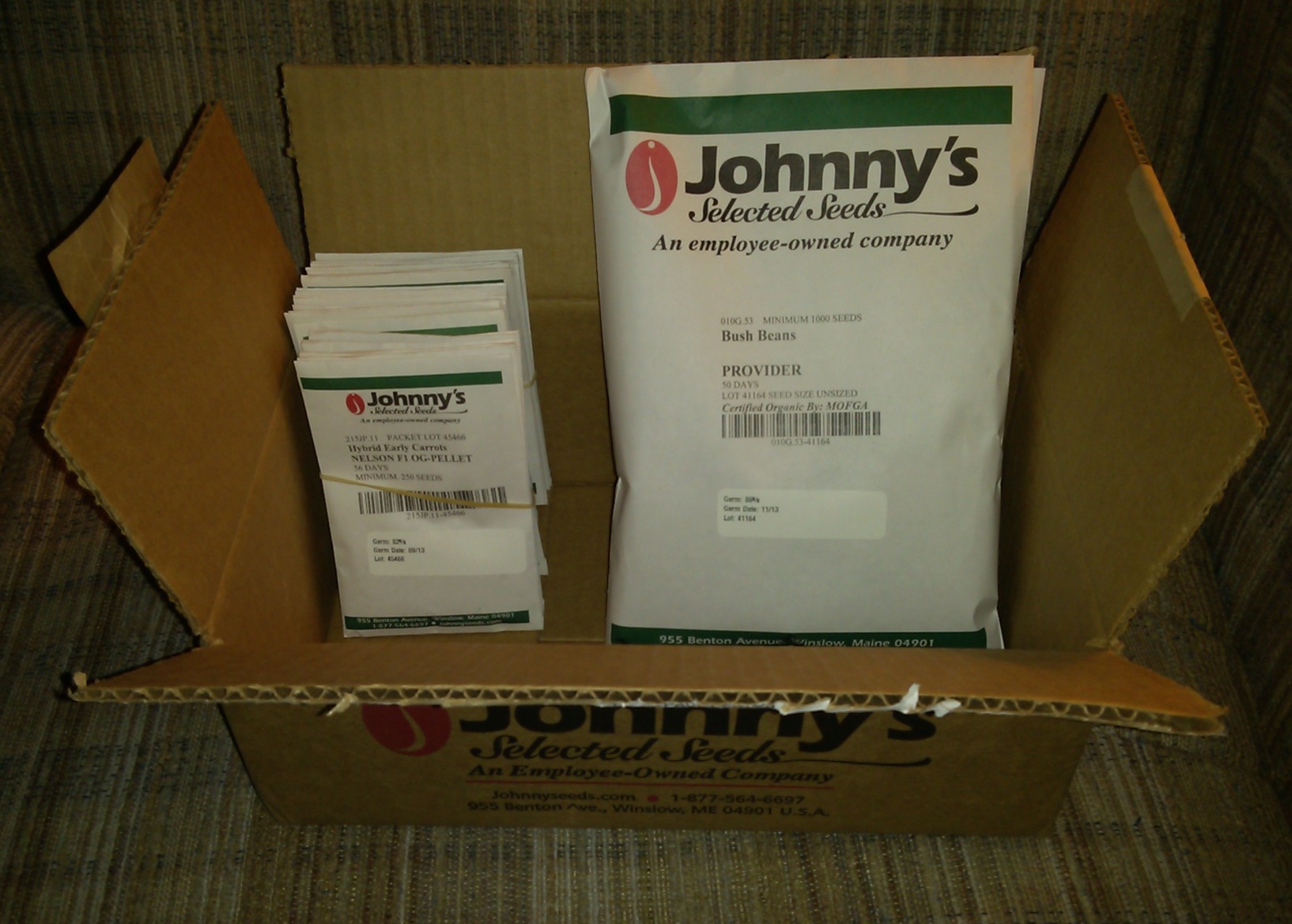
My first order for garden seeds shipped on Monday. The Winterbor kale is back ordered, which is better than last year, when it wasn’t even available. The garden will get a good start, as I already have the starter soil and trays.
My first two responses have arrived via email, so I had better get back to my newspaper article.
I re-read Jennifer Jacobs’ 50 most wanted Democrats article twice and have to say I disagree with her framing.
In the first place, the Republican caucuses are a place where only registered Republicans who show up get to vote, not “where each Iowan gets one vote,” as Jacobs asserts.
Second, I know very few Iowa Democrats who jumped on board some presidential hopeful’s campaign because they were able to associate with people on this list. For example, when Dave Loebsack co-hosted Evan Bayh at Jim Hayes’ home in Iowa City, a crowd gathered, but to say it helped Bayh during his 2008 presidential bid, other than to help him decide to bow out, would be optimistic and self serving. Who would even say that besides someone like Jacobs?
Third, the selection of political activists for the list also serves Jacobs’ point of view. These are folks with whom she presumably has a relationship, and depends upon to present a “balanced” view of Democratic politics. Her view is anything but balanced, and stroking this group only builds her relationship with them, rather than saying anything about how Democrats select candidates.
Finally, this group more represents the problem with the Iowa Democratic Party than a leverage point for presidential hopefuls to gain support. If this list is our set of leadership, we are doomed to defeat as long as they are around. Jacobs clearly gets that wrong. What’s needed is a new, more diverse and much younger set of faces.
If we recall Dunbar’s number, Jacobs has limits on cognitive recognition, and setting fifty Democrats may be a reasonable limit for that part of the political spectrum, at least in her world.
A couple of points:
Is Roxanne Conlin not able to gather a crowd or raise money for Dems? Everyone who believes that, stand on your head.
Jerry Crawford? Really?
Zach Wahls? Besides a flash of celebrity, what does he add?
This sentence about Sarah Benzing is a killer. “Although the latest campaign she managed, Bruce Braley’s, was branded the worst U.S. Senate campaign in the country, Benzing has a good track record.”
I don’t seek to run people down, and know many people on this list. I’m just sayin’. Jacobs is trying to frame who we are as Democrats. If we sit by and let that happen, we had better get used to Republicans running the state.
LAKE MACBRIDE— People don’t connect the dots between lower gasoline prices and the shale oil boom.
Yesterday I filled my gas tank for $23.70, with the per gallon price in the mid-$2.40 range. That’s not low compared to when I commuted to Eldridge and fueled at Walcott for $1.02 per gallon for what seemed like months. Neither is it like when I was young and gas wars yielded prices below $0.30, enabling me to top off my tank for a buck or two. However, we are now below $3 per gallon with the prospect of going lower, so prices seems low in a short-term, relativistic way.
There is no doubt that the revolution in shale oil production through hydraulic fracturing is causing the lower oil and natural gas prices in the U.S. The shale boom is replicable world-wide (at least to some degree) because shale is a common and abundant form of sedimentary rock. In some ways, the game changing of shale is just getting started, even though it began in the 1940s.
When I was in my 20s, we thought shale oil was inaccessible. Hydraulic fracturing is a technology that revolutionized exploration, development and production of shale oil. In light of higher oil prices, it became profitable. Some credit goes to politicians, but most credit goes to the oil companies who persistently lobbied for a relaxed regulatory environment with anyone who could be influenced from the president on down.
What does this mean besides lower gasoline prices? Three things seem most important.
The arguments for and against hydraulic fracturing are reasonably accessible.
“Hydraulic fracturing is highly controversial, proponents advocating economic benefits of readily accessible hydrocarbons, and opponents concerned for the environmental impact of hydraulic fracturing including contamination of ground water, depletion of fresh water, degradation of the air quality, the triggering of earthquakes, noise pollution, surface pollution, and the consequential risks to health and the environment,” according to Wikipedia.
There is plenty of meaning in the existential fact of hydraulic fracturing and use of its products. What is less discussed is the impact on climate change, and the impact on renewable energy development.
While shale oil production is booming, 2014 will be the warmest year on earth since record-keeping began, and a clear departure from the climatic conditions in which the industrial revolution emerged. It’s hot and getting hotter world-wide. The climate has changed and is changing.
It is a scientific fact that man-made pollution is contributing to the warming planet. Natural gas is a fossil fuel that emits carbon dioxide when burned. While part of domestic carbon emission reductions during the last ten years have come by switching from coal to natural gas for electricity generation, there are problems.
Methane released as a byproduct of hydraulic fracturing operations is a more potent greenhouse gas than CO2. Methane leakage would reduce the value of the air pollution reduction realized by shifting electricity production from coal to natural gas. Some say methane leakage could negate any gains made in CO2 reductions from switching from coal to natural gas.
As a fossil fuel, natural gas should be viewed only as a so-called bridge fuel, although the clear and present danger is that it will be perceived as a destination fuel and become a permanent fixture in our energy mix.
That raises the third issue. There is a broader economic impact that the Bulletin of the Atomic Scientists (BAS) spelled out in a Dec. 10, 2014 article. Not only is gasoline cheap in a shale gas development scenario, it is impacting the U.S. energy mix, and nuclear power and renewables are taking the hit.
The basic argument about bridge fuels is that the shale boom and its products can act as “bridge” fuels, curbing emissions while non-fossil energy sources such as renewables and nuclear energy are ramped up.
As we have seen in Iowa, new nuclear power has become financially untenable unless its excessive costs can be passed along to rate payers.
Not only are new nuclear power plants imperiled because of the economics of the shale boom, existing nuclear plants have been as well. “While cheap gas is not the only culprit eroding the profitability of nuclear energy, it is the straw that is breaking the camel’s back,” wrote BAS.
What’s more important is the economics of shale gas are suppressing development of renewable energy. As we have seen in Iowa, without government subsidies of renewable energy, production of new renewable capacity languishes. In the current political climate, it is uncertain whether renewable energy subsidies will continue, and for how long.
While the economics of wind and solar may be reaching parity with fossil fuels in some markets, we are not there yet, and the subsidies are essential to continuing development of alternatives to fossil fuels.
It is important that we extend our reach beyond personal or family budgets and do what is right about the shale boom. That means developing the political will to finish a transition to a fossil fuel free world.
Easier said than done, but the price society will pay for failing to do so is much higher than what we see at the gas pump.
Congress put an unexpected gift under the Christmas tree the National Defense Authorization Act (NDAA) has become.
The U.S. is poised to give a foreign mining company 2,400 acres of national forest in Arizona that is cherished ancestral homeland to Apache natives. Details of the proposed land deal can be found here.
The giveaway of Apache burial, medicinal, and ceremonial grounds is currently within the bounds of Tonto National Forest. Resolution Copper, a subsidiary of the Australian-English mining company Rio Tinto and BHP Billiton, is to be the beneficiary of Congress’ largesse at the expense of Apache natives.
News of the land provision in the NDAA was kept under wraps until late Tuesday, when the bill was finally posted online. The land deal appears on page 1,105. The bill passed the U.S. House on Thursday 300-119. The bill now goes to the U.S. Senate where it is expected to pass during the lame duck session.
The Resolution Copper website describes the deal as “developing an Arizona copper resource to benefit the world. Located near Superior, Arizona, the project hosts one of the world’s largest untapped copper resources.”
“Since time immemorial people have gone there. That’s part of our ancestral homeland,” Terry Rambler, chairman of the San Carlos Apache Tribe said, referring to the overall area in question. “We’ve had dancers in that area forever—sunrise dancers—and coming-of-age ceremonies for our young girls that become women. They’ll seal that off. They’ll seal us off from the acorn grounds, and the medicinal plants in the area, and our prayer areas.”
Rambler said whether Rio Tinto’s economic assertions are true or not, it may not matter.
“It seems like us Apaches and other Indians care more about what this type of action does to the environment and the effects it leaves behind for us, while others tend to think more about today and the promise of jobs, but not necessarily what our creator God gave to us,” he said.
This year Congress named the NDAA the “Carl Levin and Howard P. ‘Buck’ McKeon National Defense Authorization Act for Fiscal Year 2015” after the retiring Senate and House Armed Services Committee chairmen. Arizona Senator John McCain is said to have been instrumental in getting the mining deal added to the law.
“The Resolution Copper project has the potential to utterly transform these communities (near Superior, Arizona),” wrote McCain in an article in AZCentral. “At full capacity, the mine could create as many as 4,000 jobs and produce roughly 25 percent of our nation’s domestic copper supply. Arizona as a whole will likely benefit from tens of billions of dollars in increased economic activity over the lifespan of the mine.”
This is who we have become as a nation. Exploring for and producing every last resource on the globe, regardless of long standing and legitimate concerns, for the sake of jobs.
Where will the copper go? It will be traded on the world market. One of the buyers is expected to be the country with the biggest shopping cart. Today’s that’s China. Another indicator of the times in which we live.
The government favors the military, and since the NDAA is expected to pass each and every year, what better place to hang an ornament of interest to the richest corporations in the world? The goal is economic development, but at what cost? Politicians like John McCain don’t answer that question.
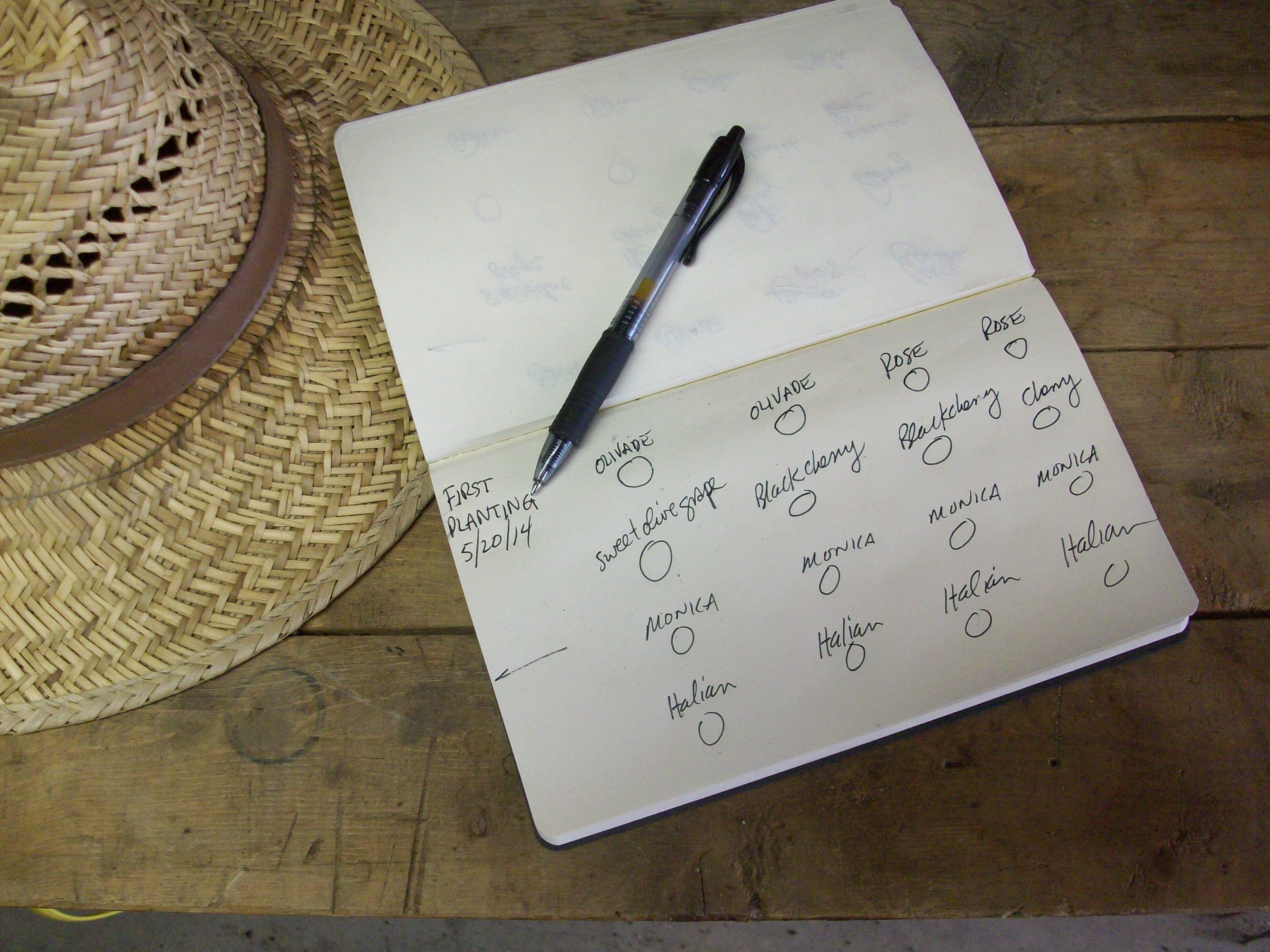
LAKE MACBRIDE— The box of seeds from last season sat on the workbench for months. I brought it inside to begin garden planning—something I am loathe to do. In fact, I’m still thinking about mowing the lawn one more time before winter really gets here. After all, it is forecast to be in the forties next week… I can’t give it up.
Like it or not, time passes and the seasons with it. I need to let go of what did and didn’t get done this year and begin planning for 2015. Right after I put up the holiday decorations.
Yesterday, a reminder of life’s fleeting nature arrived as Mother was admitted to the hospital after suffering severe pain in the night. The physicians and specialists are attempting to diagnose what happened and what risk it may pose. Our small family is on watch as they do their work.
That our plans don’t always work out as we thought is a given. That I will continue to plug away at making the garden more diverse and productive represents hope. Hope that life will continue in some semblance of what it has been during my years on the planet.
Quixotic? I don’t think so. Utopian? Maybe a little. Idealistic? Yes, definitely. While the idealism of youth get burnished with experience, there is a basic urge to go on living. Should we lose that, all hope would be gone.
In a turbulent world, with its cacophonous voices, we go on living. Some days are better than others, but there is always hope that this year’s garden will be better than last, and will sustain our lives–at least for a while.
LAKE MACBRIDE—Some mornings pancakes seem the right breakfast. Mornings like today.
One cup flour (mixture of unbleached plus whole wheat)
One large egg
One cup fat free milk
One tsp baking powder
One pat salted sweet cream butter
150 grams fresh blueberries
Favorite topping
Put the liquids plus baking powder in a mixing bowl and stir with a whisk until incorporated. Add flour a tablespoon at a time. Stir, but not too much. Put half the butter on a hot pan and pour enough batter to make a pancake. Scatter blueberries in the batter. Flip, cook and serve with favorite topping.






 Journey Home
You must be logged in to post a comment.